Hubbry Logo
Banu AbsBanu AbsMain
Open search
Banu Abs
Community hub
Banu Abs
logo
8 pages, 0 posts
0 subscribers
Be the first to start a discussion here.
Banu Abs
Banu Abs
from Wikipedia
Banu ʿAbs
(Arabic: بنو عبس)
Ghatafan, Qays, Adnanite
Nisba(al-)ʿAbsī
LocationSaudi Arabia, Oman, Qatar, Eritrea, Kuwait, Jordan, United Arab Emirates, Palestine, Syria, Lebanon, Yemen, Egypt, Arab world, Malaysia, Europe, United States, Canada, Brazil
Descended fromAbs ibn Baghid ibn Rayth ibn Ghatafan
Populationest. 2,000,000
BranchesBanu Rasheed, Banu Rawaha, certain branches of the Mahas peoples
ReligionSunni Islam (Primarily), Christianity (Minority)

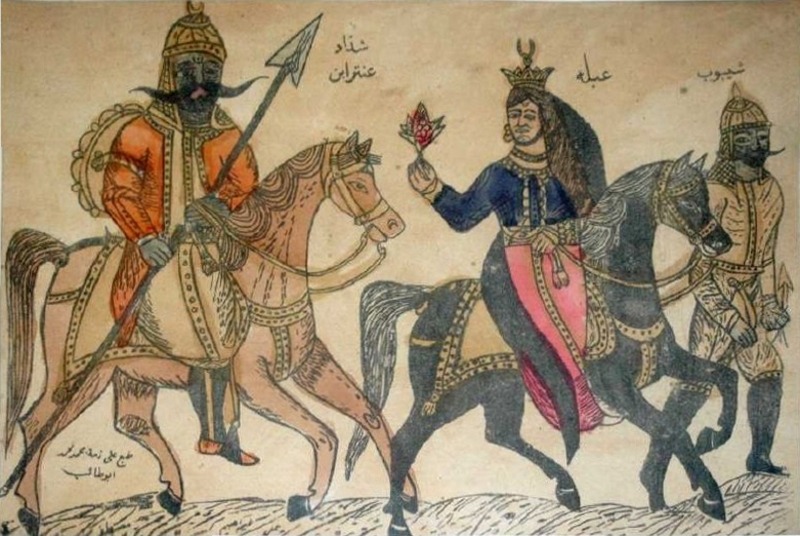
The Banu Abs (Arabic: بنو عبس, [ˈbænuː ˈʕæbs] lit. "sons of ʿAbs") are an ancient Bedouin tribe that originated in central Arabia. They form a branch of the powerful and numerous Ghatafan tribes. They still inhabit the Arabian Peninsula and North Africa but have spread to many other regions of the world, as well. Their descendants today include the large Al Qubaisat tribe located in United Arab Emirates, Bani Rasheed tribe located in Saudi Arabia, Qatar, Yemen, Kuwait, United Arab Emirates, Oman, Sudan, Eritrea, and Jordan, and the Banu Rawaha located mostly in Oman and the UAE. They are known to be the second strongest tribe after The Prophet's Tribe. Parts of the Mahas tribe of the Butana region in Sudan are also linked by blood to the Banu Abs due to intermarriage between the Sudanese Rashaida tribe and the Mahas peoples. One of the earliest stories concerning this tribe was the famous classical love and war story of Antar and Abla.

Genealogy

[edit]

The Banu Abs are of the Northern Adnanite Arabs, meaning they descend from Adnan. The Banu Abs line of patrilineal descent, from Abs all the way back to Adnan, is as follows: Abs ibn Baghid ibn Rayth ibn Ghatafan ibn Sa'd ibn Qays ibn Mudar ibn Nizar ibn Ma'ad ibn Adnan.[1]

Map of the Arabian Peninsula in 600 AD, showing the various Arab tribes and their areas of settlement. The Lakhmids (yellow) formed an Arab monarchy as clients of the Sasanian Empire, while the Ghassanids (red) formed an Arab monarchy as clients of the Roman Empire A map published by the British academic Harold Dixon during World War I, showing the presence of the Arab tribes in West Asia, 1914

History

[edit]

The Banu Abs was a branch of the Ghatafan clan, inhabiting the outskirts of Medina in modern Hejaz, an area called today Hurrat Bani Rasheed.

The tribe is known for its independence and bravery, as it had been called one of the Jamarat of the Arabs, or the most powerful tribes that took no allegiance to anyone but themselves. The earliest stories regard tales of war and chivalry before Islam, in the famous war of al-Dahhas wal Ghabra, between them and their brother tribe, the Banu Dhubyan, which had lasted almost 40 years. The war had ended when Zuhayr ibn Jadhima of the Banu Abs had called for an end to the bloodshed, asking the wealthy merchants of both tribes to pay the losses caused by the war. Their traditions further recall 3,000 of them repelling a Sasanian attack of 20,000.

Absi traditions tell of their prophet Khalid ibn Sinan who taught them Biblical monotheism, and the worship of God as "al-ahad al-samad", prior to Muhammad.[2] It was told that Khalid saved his tribe (accounts differ on how) and that most men of the Abs rejected this prophet at the time.[3]

During the Arab conquests some Absis remembered their prophet Khalid again; others, like Ubayy ibn Amara ibn Malik, accepted Muhammad as prophet and are now ranked as Companions.[4] Some Absis settled at Manbij in Syria,[5] others at the Nile. In North Africa one Ka'b, a close relative of Khalid (some say the son of his daughter), adopted some Berbers as clients, and spread the word of Khalid amongst them alongside that of Muhammad.[6]

As Muslims the Abs (and some Berbers) insisted on their veneration for Khalid; some have claimed that Khalid prophesied the 'last' prophet after him, who in Islam is Muhammad.[7] Another tradition has it that King Zuhayr had predicted Muhammad, but Zuhayr is not called prophet for that.

On Khalid's status, the Muslims have historically been divided. Other Arab tribes had either suffered false prophets, as the Asad suffered Tulayha; or, like the 'Ad and the Thamud, they received the preachings of their prophets, disbelieved, and were destroyed[8](although some living tribes have claimed a rebirth from those dead tribes' surviving prophets, as Yemenis claim of Hud). Also if the bedouin Khalid were accepted as a prophet between Jesus and Muhammad this is constrained by Q. 12:109, which insists that Apostles must come from the towns.[9]

Antarah ibn Shaddad

[edit]

Antarah ibn Shaddad al-Absi (c. 525–615), or 'Antar al-Absi, was one of the seven great pre-Islamic Arab poets and the protagonist of the great story Antar and Abla. Throughout this non-fiction story, he displayed chivalry, bravery, and eloquence in the Arabic language. This earned him the name among all of the Arabs of the Peninsula as the "Complete Knight". Furthermore, he was the author of the Divan and he was a warrior. His father was a leader of the Banu ʿAbs tribe named Shaddad and his mother was Zabiba, an African Abyssinian slave who was originally captured during a battle between the invading Banu Abs tribe and the ancient Abyssinian army (specifically the Kingdom of Aksum).

This most famous member of the Banu Abs tribe has had a cultural impact beyond Arabia and even into the modern era. A number of modern cultural artistic works are inspired by the warrior-poet 'Antar. These include Nikolai Rimsky-Korsakov's Symphony No. 2, which is based on the legend of ʿAntar, as well as the first Palestinian opera composed in 1988 by Mustapha al-Kurd, of which Antarah ibn Shaddad was the primary subject.

Role in medieval Syria

[edit]

The Banu Abs gained significant wealth and property in Syria and influence in the Umayyad caliphal court mainly through the marriage of the Umayyad caliph Abd al-Malik (r. 685–705) to the Absi noblewoman Wallada, the daughter of al-Abbas ibn al-Jaz ibn al-Harith, a great-grandson of Zuhayr ibn Jadhima. [10] Wallada mothered Abd al-Malik's sons and successors al-Walid I (r. 705–715) and Sulayman (r. 715–717).[11] Abd al-Malik granted estates to Wallada's father al-Abbas and her first cousin al-Qa'qa ibn Khulayd ibn al-Jaz, including the massive estate which developed into the town of Hiyar Bani Qa'qa or Hiyar Bani Abs in northwestern Syria near Manbij where the family established itself.[11][12] Al-Walid I granted further estates to al-Qa'qa near Damascus and Manbij and made him his katib (scribe or secretary).[11] The caliph appointed another member of the tribe, Khalid ibn Barz ibn Kamil ibn Barz, governor of Jund Dimashq (military district of Damascus).[13] Al-Qa'qa backed the abortive efforts by al-Walid I to replace Sulayman with his son Abd al-Aziz ibn al-Walid as caliphal successor.[12] Al-Qa'qa's uncle Abd Allah ibn al-Jaz was a prominent dignitary in Syria and al-Qa'qa's brother Husayn was a companion of Caliph Sulayman.[11]

Al-Qa'qa's sons al-Walid and Abd al-Malik, both named after their Umayyad kinsmen,[14] served as the governors of the junds (military districts) of Qinnasrin and Homs under Caliph Hisham ibn Abd al-Malik (r. 724–743).[11] Al-Walid and Abd al-Malik (al-Qa'qa's sons) played a role in the unsuccessful attempt to install Hisham's son Maslama as his successor over his nephew, the appointed successor al-Walid II (r. 743–744).[15] As a result, they were both tortured to death by al-Walid II's governor of Qinnasrin, Yusuf, the son of Umar ibn Hubayra al-Fazari.[16] Al-Walid ibn Qa'qa's son Thumama later served as a commander under the Abbasids, who toppled the Umayyads in 750, and led summer expeditions against the Byzantine Empire.[14] His son Uthman became a semi-autonomous local leader in Jund Qinnasrin in the aftermath of the Fourth Muslim Civil War (813–819).[14]

As late as the 10th and 11th centuries, the Banu Abs continued to occupy Hiyar Bani Qa'qa and the neighboring Wadi Butnan valley, as well as Hadhir Qinnasrin south of Aleppo. The tribe, like other old-established tribes in Jund Qinnasrin, had become largely sedentarized while maintaining their tribal structure and customs.[17] The local 14th-century historian Abu'l-Fida that in his time, the lands of Kura al-Hiyar (Hiyar Bani Qa'qa) were desert and inhabited by wild animals, but that the Abs and their brother tribe of Fazara, and other Arabs, still encamped there.[18]

Modern era

[edit]

The modern Banu Abs tribe is quite large and scattered across the region. Significant populations of this tribe can be found in Saudi Arabia, Oman, Eritrea, Palestine, Yemen, Sudan, Kuwait, Egypt, and Jordan. In addition, branches of the tribe can be found in the United Arab Emirates and elsewhere in the Arab World, as well as in Malaysia, Europe, the United States, and Brazil. Members and descendants of the tribe may carry the tribal name or some variation thereof, such as: Alabsi, Al-Absy, al-Absy, Al'Absy, Al Absy, Al-Absi, al-Absi, Al'Absi, Al Absi, Absy, Absi, Absey, Abzi, etc.

Culture

[edit]

The modern Bedouins in Arabia value ancient Arab traditions including chivalry, honor, bravery, honesty, nobility, hospitality, and generosity. While the Banu 'Abs share such values with their tribal neighbors, they are famous for their unique tribal cultural values. In addition to the aforementioned Bedouin mores, the Banu 'Abs greatly value very ancient traditions that are held in high regard. This helps distinguish them from the many other tribes in Arabia. The main branch of the Banu 'Abs tribe has succeeded in preserving their traditional dress, language, and ethics despite the Westernization of some of their neighbors. The traditional dialect of the tribe is a form of Hejazi and Najdi Arabic. Specifically, it is a mix between the dialect of the northern peoples of Ha'il, the standard Bedouin dialect and Hijazi Arabic. The Banu 'Abs tribe has its own tribal emblem or symbol, which is a practice that is common amongst Arab tribes. This symbol has been lost to some branches of the tribe which settled in other regions.

Branches of the Banu Abs located in other countries uphold their clan-based traditions such as maintaining a clan head to whom all respect is directed and from whom tribal edicts are delivered, upholding traditional codes of honor and utmost family loyalty, and establishing and holding tribal Diwans. Maintaining and respecting family traditions is an important aspect of what differentiates members of the Banu Abs diaspora. At the same time, they have also adapted to their local cultures, incorporating traditions, stories, legends, foods, and music from the lands where they have settled.

While the original Banu Abs have their own tribal emblem, many of the scattered branches outside of Saudi Arabia have developed their own independent tribal crests and flags to identify, and take pride in, their section of the extended family. Some branches of the tribe have also developed their own mottos, fables, and proverbs.

It is a common practice for branches of the Banu Abs tribe to maintain private family genealogies and histories that trace their patrilineal lines from their modern members all the way back to Abs, Adnan, Ishmael, Abraham, and ultimately to Adam. These private family histories of their ancestors also record notable details about historical members of the tribe. These histories can include dates of birth and/or death, mention of wars or battles participated in, various deeds done and honors earned, details of personalities and reputations, information on the crafts, trades, and businesses that the people engaged in, any peculiar or interesting causes of death, and other notable events or actions.

Social work

[edit]

The sheer numbers, and widespread nature, of the Banu Abs clan have contributed to the formation of various tribal organizations, divans, cultural groups, and charitable trusts.

One example is the 'Abs Universal Organization for Social Development. This is a non-profit organization dedicated to:

"Social, cultural, economic and humanitarian organization. It aims to improve the living conditions of Rashaida people and in particular the Rashaida people in the Sudan, Eritrea and poor areas. Also, it aims to raise the level of education and cultural knowledge for Rashaida people in the whole Arabic world."

- The organization includes some charities. The charities are going to build some schools and hospitals in some poor countries that are home to Rashidi people.

The President is Mr. Fayez Albghaili Al- Rashidi

Secretary-General is Mr. Mubarak Al-Duwailah

Deputy of Secretary-General Dr. Abdullah Saad Alawaimrai"5

Descendant branches

[edit]

Banu Rasheed

[edit]

The Bani Rasheed or Rashaida peoples are the sons of Rasheed Al-Zaul Al-Absi. Rasheed Al-Zaul was one of the Banu Abs tribe's most famous warriors, living in the 7th century. Afterwards, his progeny named themselves after him. The Rashaida peoples are currently located in Saudi Arabia, Kuwait, Sudan, Eritrea, Jordan, Yemen, Libya, Tunisia, United Arab Emirates, Oman.

Al Hubus

[edit]

The Al Hubus, or Habsi tribe, are one of the largest tribes of Oman. The inhabitants of this tribe reside in the Eastern region of Oman, and Ras al-Khaimah alongside the Shuhooh. They descend directly from Banu Abs, and branch into several other large tribes. Some of the most notable are: the Jawaber (Al Jabry, which is distinct from Bani Jabir of Yemen or Hamdan, present in other parts of Oman), Yal Thaneen, Aial Mahara, Aial Abdu, Awlad Habn, Al Ghassassina, Bani Bu Said, Maqadima, Ghananima, Sawalem, Najyah, and the Asiyrah.

Like their central Arabian cousins, the Habsi tribe and its many branches are known for their courage, strength, and bravery.

Mahas people

[edit]

The Mahas people are a tribe that are descended on the matrilineal side from a combination of the Banu Khazraj of Arabia (of whom the Nasrid dynasty of Granada was also descended) and the Nubians. There is some intermarriage between the Rashaida peoples and the Mahas peoples of the Butana region in Sudan. Due to their intermarriage with the Rashaida peoples, some branches of the Mahas are partially linked to the Banu Abs tribe, as well. It is unclear when exactly they intermarried, and which full name they would carry, whether back to Adnan (of the Rashaida and Banu Abs) or Qahtan (of the Khazraj). Members of the Mahas that are descended from the Banu Abs are, by blood, technically a combination of Adnanite, Qahtanite, and Azdite.

Notable members

[edit]

Pre-modern

[edit]
  • Khaled ibn Sinan
  • Antarah ibn Shaddad
  • Harith ibn Rab'i al-Absi: Also known as Abu Qatada al-Ansari, he was one of the companions, or Sahabah, of Muhammad. He participated in the battle of Uhud in 625 CE and he took part in the events of Hudaybiyyah. He also took part in the Battle of the Camel in 656 CE, serving in the Rashidun Caliph Ali's forces. During this battle he was armed with a bow and sword and wore a white turban while he served as a commander of a contingent of 1000 cavalrymen. His wife was Kabsha bint Kab ibn Malike and his son was named Qatada ibn al-Harith.
  • Hudhayfah ibn al-Yaman: Hudhayfah (died in 656 CE) was one of the Sahabah (companions) of Muhammad.
  • Qurra ibn Sharik al-Absi: Qurra ibn Sharik (or Sharif) al-Absi was the governor of Egypt in 709–715 CE, under the Umayyad Caliphate. A sharif from Qinnasrin, he was previously the governor of his home province in Syria before being relocated to Egypt by Caliph Al-Walid I.
  • Ka'b ibn Hamid al-Absi: Served as commander of the Caliph's household guard under the Umayyad Caliph Sulayman, and his successor Caliph Umar II, between 715 and 720 CE (History of al-Tabari, Vol. XXIV, The Empire in Transition). According to the cited source, after Sulayman's death, Ka'b assisted in the initial transition of power between him and his son, Umar II.
  • Hudhaifa ibn al-Ahwas al-Absi: Ruled as the Umayyad-appointed governor of newly conquered Islamic Spain (al-Andalus) for a period of one year in 728 CE (1984, Aḥmad ibn Muḥammad Maqqarī, The History of the Mohammedan Dynasties in Spain: Extracted from the Nafhu-t-tíb Min Ghosni-l-Andalusi-r-rattíb Wa Táríkh Lisánu-d-Dín Ibni-l-Khattíb, Volume 2, 665pp).
  • al-Qa'qa' ibn Khulayd (or Khalid) al-Absi
  • Thumama ibn al-Walid
  • Ali ibn Ziyad: Ali ibn Ziyad at-Tarabulsi al-Tunisi al-'Absi (d. 799) more commonly referred to in Islamic scholarship as Ali ibn Ziyad or Imam al-Tarabulsi, was an 8th-century Tunisian Muslim jurist from Tripoli.
  • Uthman al-Absi al-Kufi: He was a traditionalist, a hàfiz, a lawyer, an historian, and commentator born in Kufa, Iraq (159 - 235 AH / 775 -849 CE). (Sourced from: Review of The Muslim West and the Mediterranean , Issues 31–34, Association for the Study of the Humanities in North Africa , 1981)
  • Abd Allah al-Qaysi: Abu Muhammad Abd Allah ibn Muhammad ibn Qasim ibn Hilal ibn Yazid ibn Imran al-Absi al-Qaysi was an early Muslim jurist and theologian. He died in 885 or 886.
  • Al-Tutili: Abu'l-ʿAbbās (or Abū Dj̲aʿfar) Aḥmad ibn ʿAbd Allāh ibn Hurayra al-ʿUtbī (or al-Qaysī) al-Absi (died 1126), nicknamed al-Aʿmā al-Tuṭīlī or the Blind Poet of Tudela, was an Andalusian mūwallad poet who composed in Arabic.
  • Sidi Khaled ibn Sinan al Absi (or Sidi Khaled ibn Sounan Elabsi): A prominent Muslim holy man. The Algerian town in which he is buried is named after him.

Modern

[edit]

See also

[edit]

References

[edit]

Bibliography

[edit]
Revisions and contributorsEdit on WikipediaRead on Wikipedia
from Grokipedia
The Banu Abs (Arabic: بنو عبس), an ancient Adnanite Arab tribe descended from Abs ibn Baghid within the Ghatafan confederation of Qays 'Aylan, inhabited the Najd region of central Arabia during the pre-Islamic era. This nomadic Bedouin group is renowned for its protracted tribal warfare, particularly the War of Dahis and al-Ghabra against their kin the Banu Dhubyān, a conflict ignited by a disputed camel race that escalated into decades of intermittent hostilities emblematic of asabiyyah-driven feuds in Jahiliyyah society. The tribe produced the celebrated poet-warrior Antarah ibn Shaddad, born to an Arab father of the Abs and an Ethiopian slave mother, whose epic exploits, romantic pursuit of Abla, and one of the suspended Mu'allaqat odes exemplify pre-Islamic ideals of valor, eloquence, and tribal loyalty. Upon the rise of Islam, Banu Abs elements pledged allegiance to Muhammad, contributed to early Muslim campaigns, and later dispersed into various clans across the Arabian Peninsula, with lineages persisting in modern Saudi Arabia and neighboring regions.

Origins and Genealogy

Etymology and Early Settlement

The designation Banu Abs (بنو عبس) literally means "sons of ʿAbs" in Arabic, deriving from the eponymous tribal ancestor ʿAbs ibn Baghīd ibn Rāys ibn Ghatafān, a figure within the traditional genealogical framework of northern Arabian tribes. This nomenclature reflects the patrilineal structure common among Adnanite Arab tribes, where group identity traces to a common forebear rather than a semantic root for ʿAbs itself, which lacks a documented etymological meaning beyond proper nomenclature in historical sources. As a branch of the Ghatafān confederation, the Banu Abs coalesced as nomadic Bedouins in central Arabia during the pre-Islamic period, with their core territory encompassing the highlands, including regions around present-day . Traditional accounts place their emergence within the broader migrations and alliances of ʿAylān tribes, engaging primarily in camel herding and raiding across the arid steppes east of , though no precise founding date exists due to the oral nature of early tribal records. Their settlement patterns remained fluid, centered on seasonal grazing lands rather than fixed villages, fostering a warrior ethos amid inter-tribal rivalries in the Nejd plateau.

Ancestral Lineage and Tribal Affiliations

The Banu Abs trace their patrilineal ancestry to ʿAbs (or Ubayy) ibn Baghīd ibn Rayth ibn Ghatafan ibn Saʿd ibn Qays ʿAylān ibn Mudar ibn Nizār ibn Maʿadd ibn Adnān, positioning them among the Adnanite Arabs of northern Arabian origin. This genealogy, preserved in classical Arab historical texts, links them to the broader Mudar confederation through Qays ʿAylān, a lineage shared with tribes emphasizing descent from ancient Semitic progenitors. As a major branch of the tribal confederation, the Banu Abs shared immediate ancestry with Banu Dhubyan and Banu Ashjaʿ, all sons of Baghīd ibn Rayth under the eponymous . The group, known for their nomadic pastoralism in central and northern Arabia, formed part of the expansive alliance, which encompassed , Sulaym, and other offshoots, often allying against Qahtanite southern tribes like and Tamim in inter-tribal feuds. In the mid-6th century CE, the Banu Abs asserted dominance within , with chieftain Zuhayr ibn Jadhima establishing the as vassals circa 550 CE, reflecting their strategic affiliations in pre-Islamic power dynamics east of . These ties underscored the Banu Abs' role in regional confederations, balancing autonomy with alliances against rivals such as Bakr ibn Wāʾil.

Pre-Islamic History

Major Inter-Tribal Conflicts

The most prominent inter-tribal conflict involving the Banu Abs was the War of Dahis and al-Ghabra, a prolonged feud with their kin tribe, the Banu Dhubyān, both branches of the confederation. This war, one of the longest in , stemmed from a dispute over a horse race judged unfairly, escalating into decades of raids and battles. The inciting incident involved a race between Dahis, the mount of Qays ibn Zuhayr al-Absi, and al-Ghabra, belonging to Harb ibn Umayyah al-Dhubyani; allegations of interference by Dhubyān partisans in favor of al-Ghabra led to accusations of cheating and ignited the broader conflict. Lasting approximately 40 years in the late 5th to early 6th centuries CE, the war featured intermittent skirmishes, including notable engagements where Banu Abs warriors demonstrated prowess in cavalry charges and poetry-recited valor. , the famed poet-warrior of Banu Abs, played a legendary role, slaying numerous foes and composing verses extolling tribal honor amid the fray, as preserved in classical Arabic anthologies. The conflict drew in allied tribes like Fazara on the Dhubyān side, amplifying its scale through cycles of retaliation over grazing lands, camels, and prestige in . The war concluded through exhaustion and , with Zuhayr ibn Jadhima of Banu Abs advocating truce, compensating losses to restore fragile among the feuding branches. This episode underscored the volatile tribal dynamics of pre-Islamic central Arabia, where minor disputes could fracture larger confederations, fostering a of heroism documented in oral epics and later sirah literature. While accounts derive from poetic and narrative traditions compiled post-Islam, they reflect empirical patterns of intertribal raiding verified across multiple classical sources.

Contributions to Arabic Poetry and Oral Tradition

The Banu Abs contributed prominently to pre-Islamic Arabic poetry via figures like ʿAntarah ibn Shaddād al-ʿAbsī, a warrior-poet whose verses form part of the esteemed Muʿallaqāt, seven odes regarded as pinnacles of jahiliyyah literature for their mastery of form, imagery, and thematic depth on heroism, love, and desert life. ʿAntarah, son of Shaddād al-ʿAbsī—a respected tribesman—and an enslaved Ethiopian woman, rose from initial marginalization to tribal renown through martial exploits and poetic skill, with his Muʿallaqah invoking personal valor amid tribal feuds. His works, emphasizing chivalric ideals and resilience, were composed and disseminated orally, reflecting the Bedouin reliance on memorization for cultural preservation. Tribal conflicts, notably the protracted War of Dāhis and al-Ghabrā (circa late 5th to early 6th century CE) against the Banu Dhubyan, spurred poetic output from Abs poets, including ʿAntarah's battle verses that boast of victories and lament losses, embedding historical events in verse for intergenerational transmission. These compositions, recited at gatherings and by rawīs (specialized memorizers), reinforced Abs identity through praise of kin, satire of foes, and ethical codes like generosity and honor, influencing the broader corpus of pre-Islamic . Such poetry not only documented raids and alliances but also served didactic roles, with ʿAntarah's diwan—later compiled—exemplifying how Abs bards elevated vernacular to literary heights before Islamic codification.

Antarah ibn Shaddad and Legendary Figures

al-Absi (c. 525–608 CE), a prominent pre-Islamic and , belonged to the Banu Abs tribe and is one of its most celebrated historical figures. Born to , a of Banu Abs, and an Abyssinian slave named Zabiba, Antarah's African maternal heritage resulted in his dark complexion, which initially led his tribe to treat him as a slave and deny his paternal lineage. He proved his valor in battles, compelling his father to acknowledge him as a free tribesman. Antarah participated in the War of Dahis and al-Ghabra, a prolonged inter-tribal conflict between Banu Abs and their kin tribe Banu Dhubyān, which erupted around 509 CE over a disputed horse race between steeds named Dahis and al-Ghabra and lasted approximately 40 years. His martial exploits during this feud, including single combats and raids, are referenced in his surviving poetry and elevated him to legendary status within Arab oral traditions. One of his poems, preserved among the —a collection of acclaimed pre-Islamic odes—boasts of his prowess and defies prejudice against his skin color, declaring themes of unyielding heroism and tribal loyalty. Central to Antarah's legend is his for 'Abla bint Malik, a noblewoman from a related Abs lineage, whose hand he sought through feats of bravery amid tribal customs restricting unions across status lines. While historical records confirm his poetic allusions to this romance, later medieval compilations like the Sirat Antar (a folk epic from the 13th century onward) romanticize it into epic quests, portraying Antarah as a near-mythic slaying armies, recovering treasures, and embodying chivalric ideals. These embellishments, drawing on pre-Islamic motifs, blend verifiable poetic evidence with fictional expansions, reflecting how Banu Abs valorized warrior-poets in their cultural memory. Beyond Antarah, Banu Abs lore features other semi-legendary warriors tied to the same conflicts, such as tribal leaders who invoked poetic oaths or mediated feuds, though none achieved comparable renown. The tribe's emphasis on oral epics preserved these figures as archetypes of pre-Islamic Arabian honor, where skill intertwined with to forge enduring tribal identity.

Islamic and Medieval Period

Adoption of and Early Conquests

The Banu Abs embraced Islam during the early years of Muhammad's mission, with tribal delegations approaching him among the earliest groups recorded, prior to the Hijra in 622 CE. Prominent early converts from the tribe included al-Yaman Dhu'l-Yaman and his son Hudhayfah ibn al-Yaman; the father, originally from the Meccan branch of Abs, accepted Islam in Mecca around 615 CE, endured persecution, and migrated to Medina as an ally of the Banu al-Ashhal from the Aws tribe. Hudhayfah, who converted alongside his father, became one of Muhammad's trusted companions, known for his role at the Battle of Uhud in 625 CE where he relayed critical tactical knowledge of Meccan hypocrites, and participated in subsequent expeditions including the Treaty of Hudaybiyyah in 628 CE. After Muhammad's death in 632 CE, the Banu Abs demonstrated loyalty to Caliph Abu Bakr, refraining from the widespread apostasy that characterized the Ridda Wars (632–633 CE); unlike tribes such as the Banu Hanifa or Tamim that rebelled or withheld zakat, Abs maintained allegiance to Medina, avoiding subjugation by forces like those of Khalid ibn al-Walid. This fidelity positioned them favorably for integration into the expanding caliphate. Banu Abs warriors contributed contingents to the early conquests under Caliphs Abu Bakr and Umar (632–644 CE), joining campaigns against the Byzantine Empire in Syria and the Sassanid Empire in Iraq. In the Syrian theater, al-Absi commanded a Banu Abs detachment on the left flank during key engagements leading to the fall of Damascus in 635 CE and the decisive Battle of Yarmouk in 636 CE, where tribal cavalry supported the Muslim army's outmaneuvering of Byzantine forces numbering around 100,000. In Iraq, Hudhayfah ibn al-Yaman advised Umar during the conquest of al-Mada'in (Ctesiphon) in 637 CE, leveraging his knowledge of Persian dispositions from earlier Ridda-era intelligence, and was appointed governor of the region, overseeing administration until approximately 644 CE. These efforts helped secure Abs tribal settlements in conquered territories, laying groundwork for their later prominence in Umayyad Syria.

Political Influence in Umayyad Syria

During the , the Banu Abs, as a prominent tribe within the confederation of northern Arab tribes, gained political leverage in through strategic alliances with the Marwanid branch of the Umayyads, particularly amid the Qays-Yaman tribal rivalries that shaped provincial administration and military recruitment. Following the Second Fitna (680–692), Caliph (r. 685–705) shifted patronage toward Qaysi tribes to counter the influence of the southern Yaman factions, such as the Kalb, who had dominated under earlier Umayyad rulers like . This realignment involved deploying Qaysi forces to secure and suppress revolts, including those in and Jazira, thereby integrating Banu Abs warriors into the caliphal armies stationed around . A pivotal factor in Banu Abs' ascent was Abd al-Malik's marriage to Wallada bint al-Abbas al-Absiyya, a noblewoman from the tribe, which forged direct kinship ties and elevated their status at the court. This union produced Caliph (r. 715–717), reinforcing Abs loyalties and securing land grants and appointments for tribe members in Syrian territories, particularly in northern regions where Qaysi settlements expanded. The marriage exemplified Umayyad efforts to co-opt Qaysi elites, transforming potential adversaries into pillars of regime stability, as evidenced by Abs participation in campaigns against Abd Allah ibn al-Zubayr's forces in the circa 692. Banu Abs influence peaked under Qays-favoring caliphs like and Umar II (r. 717–720), with tribe members holding key posts, including commands in the household guard and defenses. However, this prominence waned during the later Umayyad period as factional strife intensified, culminating in Qaysi revolts against perceived favoritism toward other groups, though Abs retained some administrative roles in until the Abbasid overthrow in 750. The tribe's Syrian entrenchment reflected broader Umayyad reliance on tribal networks for , yet also sowed seeds of division by exacerbating Arab-Arab conflicts over resources and power.

Military Roles and Alliances

The Banu Abs established prominent positions within the Umayyad military and administrative framework in , leveraging marital alliances with the caliphal family to secure influence and resources. Caliph (r. 685–705) wed Umm Aban bint Zuhayr ibn Jadhima, a member of the tribe descended from the chieftain Zuhayr ibn Jadhima, and she gave birth to key successors including (r. 705–715) and (r. 715–717). These ties enabled Banu Abs leaders to accumulate substantial landholdings and wealth in Syrian territories, integrating tribal contingents into the caliphate's expeditionary forces and garrisons. As a Qaysi tribe affiliated with the Ghatafan confederation, the Banu Abs navigated the entrenched Qays-Yaman tribal schisms that permeated Umayyad politics and warfare, occasionally aligning against core Umayyad interests during internal crises. In the civil unrest of 743–744 CE, elements of the Banu Abs joined Damascene Yemeni (southern Arab) partisans opposing Caliph al-Walid II, motivated by opposition to his policies favoring certain Qaysi factions over others. Such alliances underscored the tribe's strategic flexibility, providing military manpower in Syrian-based campaigns while exploiting kinship networks for leverage amid the caliphate's reliance on tribal levies for expansion and internal stability.

Descendant Branches and Modern Continuity

Historical Offshoots

The Banu Abs produced notable historical offshoots through lineage splits and migrations beginning in the early Islamic era. One prominent descendant branch is the Bani Rashid (also rendered as Bani Rasheed or Rashaida), which traces its patrilineal origin to Rashid al-Zaul, a 7th-century warrior from the Banu Abs known for military exploits during the formative years of the Islamic conquests. This offshoot emerged as distinct by the medieval period, maintaining affiliations while expanding influence in the and regions before further dispersals. The Bani Rashid's separation from the parent tribe reflected typical tribal dynamics, where prominent figures' descendants formed semi-autonomous clans amid alliances and conflicts, such as those involving Umayyad where Banu Abs elements held sway. Historical records indicate this branch's warriors participated in regional power struggles, preserving oral genealogies that affirm direct descent from Abs ibn Baghidh via al-Zaul's line, with an estimated formation around the late 7th to 8th centuries CE. Unlike the core Banu Abs, who remained tied to central Arabian , the Bani Rashid adapted to broader migrations, influencing networks in and beyond by the . Other minor offshoots arose from Banu Abs factions during the medieval Islamic expansions, including clans that integrated into larger confederations like those in and the , though these lacked the cohesive identity of the Bani Rashid. Genealogical traditions preserved in tribal histories emphasize kinship ties to Abs, with splits often driven by feuds or conquest opportunities rather than formal schisms, ensuring continuity of descent amid Arabia's fluid tribal landscape.

Presence in Contemporary Arabia

Descendant tribes of Banu Abs, such as the Bani Rashid (also known as Rashaida), continue to inhabit regions of the , including the in , , , and . The Bani Rashid trace their origins to Banu Abs through figures like Rasheed al-Zaul, maintaining Arab ethnic identity and nomadic pastoral traditions adapted to modern contexts. While significant portions of the Bani Rashid migrated to and in the mid-19th century following tribal conflicts, residual populations remain in , where they engage in herding camels, sheep, and goats, alongside partial sedentarization due to state policies and economic shifts. In the , the Al Qubaisat tribe represents another branch claiming direct descent from Banu Abs, residing primarily in emirates like and contributing to the country's tribal social fabric. These groups preserve genealogical records (nasab) linking back to Abs ibn Bughaydh of the confederation, though exact population figures are elusive due to intermarriage and ; estimates for Bani Rashid in the Peninsula suggest thousands, integrated into national frameworks without dominant political autonomy. Tribal identity persists in cultural practices, such as oral histories and alliances, but has diminished in influence amid 20th-century state consolidation in and Gulf monarchies.

Culture and Social Structure

Pre-Islamic Customs and Honor Systems

The Banu Abs, a nomadic tribe within the confederation inhabiting central Arabia's region during the pre-Islamic era (circa 5th-6th centuries CE), upheld a customary rooted in 'asabiyyah (tribal solidarity) and tha'r (blood vengeance), where personal and collective reputation demanded swift retaliation against insults, , or kin harm to preserve clan prestige. Disputes often escalated into prolonged feuds due to the obligation to avenge wrongs, either through direct reprisal or negotiated blood money (diyah), reflecting a causal dynamic where unchecked vengeance perpetuated cycles of violence amid scarce resources and mobile . A defining illustration is the War of Dahis and al-Ghabra (approximately 500 CE), a nearly 40-year conflict with their kin tribe Banu Dhubyān, ignited by a horse race dispute in which Abs champion Dahis allegedly lost due to Dhubyān interference, prompting the slaying of Hudhayfa ibn Badr al-Absi and subsequent raids that claimed hundreds of lives. This feud, resolved only through arbitration by poet Zuhayr ibn Abi Sulma, exemplifies how minor provocations—tied to symbols of tribal prowess like racing steeds—amplified into existential threats to honor, with warriors bound by oath to pursue vendettas regardless of numerical disadvantage. Hospitality (diyafa) and generosity formed counterbalancing virtues, mandating protection for guests under truce (aman), even amid enmity, while raids (ghazw) against outsiders tested bravery and redistributed wealth to affirm leadership through displays of valor and largesse. Women played roles in upholding honor, joining laments at battle sites or inciting warriors via poetry, as noted in Abs traditions of collective wailing to invoke ancestral spirits and shame retreat. Poetic oratory codified these customs, with Abs bards composing odes to glorify exploits, decry , and negotiate truces, ensuring deeds endured in oral as metrics of worth beyond mere lineage. Such systems prioritized empirical survival—raiding for camels and pasturage—over abstract equity, fostering resilience but also inter-tribal depletion until external pressures or mediators intervened.

Evolution of Tribal Governance and Kinship

In pre-Islamic Arabia, the Banu Abs tribe, a branch of the Ghatafan confederation originating in central regions near modern Hail, maintained a segmentary lineage system rooted in patrilineal descent, where kinship ties defined social units from nuclear families to larger clans (bani) and the tribe itself. Authority rested with sheikhs selected through consensus among elders, emphasizing qualities like generosity, martial prowess, and mediation in feuds, as exemplified by Shaddad ibn Zabyan, who led the tribe during the protracted War of Basus (circa 5th-6th century CE) against the Banu Bakr over a camel-killing dispute that escalated into decades of raiding. Tribal governance operated without centralized institutions, relying on customary law ('urf) for resolving conflicts via blood money (diya) payments or retaliatory raids, with kinship solidarity (asabiyyah) enforcing collective responsibility and protection. The advent of Islam in the 7th century introduced ideological shifts toward supratribal unity under , yet Banu Abs governance evolved incrementally, preserving kinship hierarchies while integrating Islamic principles like (consultation) into decision-making. Early caliphs, facing tribal apostasy during the (632-633 CE), reasserted control by appointing tribal leaders as governors or military commanders, allowing sheikhs to retain local in exchange for and , as seen in Banu Abs participation in the conquests under figures like of allied tribes. Kinship networks adapted by incorporating mawali (non-Arab clients) into client-patron bonds, diluting pure agnatic exclusivity but strengthening military mobilization, though persistent rivalries—evident in Umayyad-era factionalism between northern (, including branches like Abs) and southern tribes—undermined full centralization. By the Umayyad (661-750 CE) and Abbasid periods, Banu Abs segments sedentarized in and , forming semi-autonomous units within junds (military districts) while upholding tribal diwans for stipend distribution based on lineage and service, reflecting a hybrid blending caliphal oversight with customary sheikh-led councils. evolution emphasized genealogical records (ansab) to claim precedence in land grants and offices, yet and fiscal demands eroded nomadic raiding economies, fostering endogamous marriages to consolidate clans against state encroachments. In contemporary Arabia, Banu Abs descendants in and sustain informal through sheikhly mediation in disputes and alliances with monarchies via marriages, adapting patrilineal structures to national legal frameworks while invoking historical for social cohesion.

Notable Members

Pre-Modern Warriors and Poets

ʿAntarah ibn Shaddād al-ʿAbsī stands as the preeminent warrior-poet of the tribe in , active during the late 6th century CE. Born to , a prominent warrior of the Abs clan within the confederation, and Zabība, an Ethiopian slave, ʿAntarah overcame initial enslavement and tribal prejudice stemming from his maternal lineage and dark skin to earn recognition through exceptional valor. His martial feats included decisive interventions in tribal skirmishes, where he reportedly slew numerous adversaries, safeguarding Abs interests against rivals such as the Bakr and tribes. ʿAntarah's renown extended to poetry, with his Muʿallaqah—one of the seven canonical pre-Islamic odes purportedly suspended in the Kaʿbah—celebrating themes of for his ʿAblā, heroic endurance, and the Bedouin code of muruwwah emphasizing courage and loyalty. Composed in the qasīdah form, his verses vividly depict , equine prowess, and personal triumphs, such as single-handedly routing enemy forces, which solidified his status as the "Black Knight" archetype in Arab lore. These works, preserved through oral transmission and later compilations like the Dīwān ʿAntarah, underscore the intertwined roles of poetry and combat in affirming tribal prestige. The Banu Abs' martial-poetic tradition also manifested in the protracted War of Basūs (c. 494–534 CE), a with the allied Banu Dhubyān over a she-camel's blood, escalating into decades of raids that exemplified the tribe's warrior ethos. While specific poets from this conflict are sparsely attested beyond ʿAntarah's contemporaries, the event immortalized Abs fighters' tenacity, with verses lamenting losses and glorifying vengeance, reflecting broader Jāhiliyyah values of honor-driven vendettas. Figures like Khālid ibn Sinān al-ʿAbsī, a semi-legendary pre-Islamic reformer with purported prophetic claims, occasionally invoked poetic in tribal discourses, though his legacy leans more toward religious than warfare.

Modern Descendants and Leaders

The principal modern descendants of Banu Abs are the Bani Rasheed, also known as Rashaida, who trace their origins to Rashid al-Zaul, a prominent 7th-century of the tribe. This group maintains Arab ethnic identity and is distributed across Saudi Arabia's region, as well as coastal areas of , , , , , the , and . Additional branches claiming descent include the Al Qubaisat tribe in the . These communities preserve elements of and tribal kinship structures amid urbanization and migration pressures in the and . Contemporary leadership among Banu Abs descendants operates through decentralized tribal sheikhs or nazirs, who mediate disputes, represent communities in regional conflicts, and uphold customary governance. In eastern , for instance, Rashaida nazir Ahmed Baraki has participated in inter-tribal dialogues to de-escalate tensions, as documented in agreements reached in October 2023. Similarly, Abdullah Salmi, a Rashaida leader, has voiced positions on alignments during Sudan's ongoing conflicts, rejecting certain alliances in early 2023. In and Gulf states, such roles remain informal, integrated into national frameworks without prominent national-level figures publicly identified as Banu Abs descendants in recent records. Tribal genealogies, while central to identity, rely on oral traditions and lack comprehensive empirical verification beyond self-reported lineages in ethnographic studies.

References

Add your contribution
Related Hubs
User Avatar
No comments yet.