Hubbry Logo
search
logo
1671333

Beer engine

logo
Community Hub0 Subscribers
Read side by side
from Wikipedia
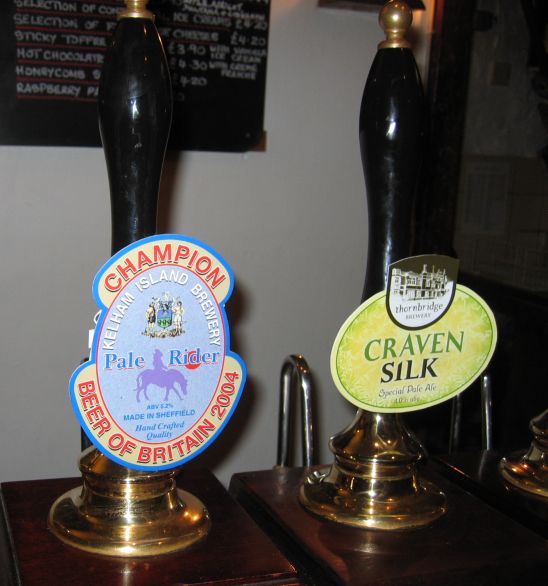
Beer engine handles on a bar

A beer engine is a device for pumping beer from a cask, usually located in a pub's cellar.

The beer engine was invented by John Lofting, a Dutch inventor, merchant and manufacturer who moved from Amsterdam to London in about 1688 and patented a number of inventions including a fire hose and engine for extinguishing fires and a thimble knurling machine. The London Gazette of 17 March 1691 stated "the patentee hath also projected a very useful engine for starting of beers and other liquors which will deliver from 20 to 30 barrels an hour which are completely fixed with brass joints and screws at reasonable rates."

The locksmith and hydraulic engineer Joseph Bramah developed beer pumping further in 1797.

The beer engine is normally manually operated, although electrically powered and gas powered pumps are occasionally used;[1] when manually powered, the term handpump is often used to refer to both the pump and the associated handle.

The beer engine is normally located below the bar with the visible handle being used to draw the beer through a flexible tube to the spout, below which the glass is placed. Modern hand pumps may clamp onto the edge of the bar or be mounted on the top of the bar.

A pump clip is usually attached to the handle giving the name and sometimes the brewery, beer type and alcoholic strength of the beer being served through that handpump.

The handle of a handpump is often used as a symbol of cask ale. This style of beer has continued fermentation and uses porous and non-porous pegs, called spiles, to respectively release and retain the gases generated by fermentation and thus achieve the optimum level of carbonation in the beer.

In the 1970s many breweries were keen to replace cask conditioned ale with keg versions for financial benefit, and started to disguise keg taps by adorning them with cosmetic hand pump handles. This practice was opposed as fraudulent by the Campaign for Real Ale and was discontinued.[citation needed]

Beer dispensed through a sparkler
Porcelain beer taps in Tournai, Belgium

Swan neck

[edit]

A swan neck is a curved spout.[2] This is often used in conjunction with a sparkler - a nozzle containing small holes - fitted to the spout to aerate the beer as it enters the glass, giving a frothier head; this presentation style is more popular in the north of England than in the south.[3]

Sparkler

[edit]

A sparkler is a device that can be attached to the nozzle of a beer engine.[4] Designed rather like a shower-head, beer dispensed through a sparkler becomes aerated and frothy which results in a noticeable head.

The sparkler works via the venturi effect. As the beer flows through the nozzle, air is drawn into the beer. Consequently, the beer will have a head, whether or not the beer is alive (fresh).

Real ale only produces a head whilst the yeast is alive, when yeast produces carbon dioxide. Typically, after three days of opening a barrel of beer, the yeast will die, and the beer will be flat.[citation needed] A sparkler will disguise flat beer, replacing the missing carbon dioxide with nitrogen and oxygen.

Whether or not the beer is alive (fresh), whisking the beer changes the texture, and gaseous composition, which can change the taste.

There is an argument that the sparkler can reduce the flavour and aroma, especially of the hops, in some beers.[5] The counter argument is that the sparkler takes away harshness[6] and produces a smoother, creamier beer that is easier to quaff. [7]

Breweries may state whether or not a sparkler is preferred when serving their beers. Generally, breweries in northern England serve their beers with a sparkler attached and breweries in the south without, but this is by no means definitive.[8]

Pump clips

[edit]

Pump clips are badges that are attached to handpumps in pubs to show which cask ales are available. In addition to the name of the beer served through the pump, they may give other details such as the brewer's name and alcoholic strength of the beer and serve as advertising.

Pump clips can be made of various materials. For beers that are brewed regularly by the big breweries, high quality plastic, metal or ceramic pump clips are used. Smaller breweries would use a printed plastic pump clip and for one-off beers laminated paper is used. There are variations on the material used, and the gaudiness or tastefulness of the decoration depending on how much the brewery wants to market their beers at the point of sale. Novelty pump clips have also been made of wood, slate and compact discs. Some even incorporate electronic flashing lights. Older pump clips were made of enamel.

The term pump clip originates from the clip that attaches it to the pump handle. These consist of a two-piece plastic ring which clamps to the handle with two screws. Plastic and laminated paper pump clips usually have a white plastic clip fixed with a sticky double-sided pad that pushes onto the handle.

See also

[edit]

References

[edit]
[edit]
Revisions and contributorsEdit on WikipediaRead on Wikipedia
from Grokipedia
A beer engine is a manually operated piston pump designed to draw cask-conditioned beer from a cask, typically stored in a cooler cellar below the bar, up to the dispensing faucet at the bar counter in pubs and taverns. This device, also known as a hand pump, revolutionized traditional beer serving by replacing gravity-based methods, enabling efficient and temperature-controlled dispensing of real ale without the use of pressurized gas.[1] It consists of a sturdy handle mounted on the bar that connects via flexible tubing to a piston and valve system in the cellar, preserving the beer's natural carbonation and flavor profile during the pull.[2] Invented by John Lofting in 1691 and improved by English engineer Joseph Bramah, who patented an enhanced version in 1797, the beer engine became a standard fixture in British public houses by the early 19th century, allowing larger pubs to serve fresher beer from multiple casks kept at optimal cool temperatures of around 10–13°C (50–55°F).[1] The mechanism operates on simple hydraulics: pulling the handle creates suction in the piston, which lifts the beer through the tube while check valves prevent backflow, delivering a smooth pour often enhanced by a swan neck spout and optional sparkler for a creamier head.[2] Today, beer engines remain iconic in the serving of cask ales, particularly in the UK where organizations like the Campaign for Real Ale (CAMRA) advocate for their use to maintain authentic brewing traditions. Modern versions, mandated by hygiene regulations since the 1990s to use stainless steel or plastic for beer-contacting parts,[3] have seen a resurgence with the global craft beer movement, though they compete with keg systems in many establishments.[2] Key manufacturers like Angram, established in 1974, continue to produce durable brass-handled models that emphasize the tactile, ritualistic experience of hand-pulled beer.[2]

History

Invention

Prior to the invention of the beer engine, beer in English pubs was typically served by direct tapping of wooden casks placed behind the bar or on a stillage, a method that often resulted in spills, exposure to dust and contaminants, and hygiene risks from inadequate sanitation of the casks and serving utensils. Wooden barrels, the standard for storage, were prone to bacterial infections such as those from acetobacters or lactobacilli, which could impart sour flavors and spoil the beer during transport or serving, especially when casks were repeatedly broached in open pub environments without modern cleaning methods. These challenges limited efficient storage away from the serving area and contributed to inconsistent quality and health concerns in 17th- and 18th-century taverns.[4] The beer engine originated with John Lofting, a Dutch inventor, merchant, and manufacturer who relocated from Amsterdam to London around 1688. In 1691, Lofting secured a patent for "a very useful engine for starting beers and other liquors," which employed a siphon system to draw beer from multiple barrels stored in a separate location, such as a cellar, thereby reducing contamination risks and improving serving efficiency for public houses. This innovation addressed the limitations of on-site cask tapping by allowing up to 20-30 barrels to be dispensed per hour through piped lines.[5] Further advancements came in 1797 when English inventor and engineer Joseph Bramah patented a method for retaining, clarifying, preserving, and drawing off malt liquors (British Patent No. 2196), specifically designed as a beer engine using piston action and airtight seals to pull beer efficiently from cellar casks to the bar counter. Bramah's design, built upon hydraulic principles he pioneered, enabled more hygienic and controlled dispensing by minimizing exposure during transfer and incorporating features for easier cleaning of the lines. This patent marked a significant step in transforming pub service from labor-intensive manual pouring to a more reliable pumped system.[6][7] By the early 1800s, these inventions had evolved into piston-based designs that became the foundation for modern beer engines.

Development and Evolution

The development of the beer engine began with early attempts at mechanical dispensing in the late 17th century, when John Lofting patented a simple syphon pump in 1691 that relied on atmospheric pressure to draw beer from casks. This rudimentary device marked an initial shift away from gravity-fed systems but was limited in efficiency and range. By the late 18th century, Joseph Bramah, building on his foundational 1795 patent for a hydraulic press, advanced the technology with his 1797 patent for a piston-based beer pump (GB Patent No. 2196), which introduced a more reliable manual mechanism using a handle to create suction and draw beer upward from cellar storage. This piston design established the core operational principle of the beer engine that persists today, enabling consistent dispensing without the need for direct access to casks at bar level.[8] In the 19th century, refinements focused on enhancing durability and practicality to meet the demands of expanding pub trade during the Industrial Revolution. Manufacturers increasingly adopted brass for pump components due to its corrosion resistance and hygienic properties, replacing earlier, less robust materials and allowing for longer service life in humid cellar environments. Iron elements were incorporated in structural supports and fittings to provide added strength, particularly in larger installations serving high-volume establishments. These material advancements coincided with standardized pub layouts that integrated dedicated cellars for cask storage, positioning the beer engine as a central fixture on bar counters connected via underground pipes, which optimized space and maintained beer quality by keeping casks cool and away from dust.[9][10] The 20th century saw adaptations to address labor demands in busier pubs, particularly after World War II. Electric-powered and gas-powered variants emerged in the mid-1900s as alternatives to manual pumping in larger venues, reflecting broader mechanization trends in hospitality while preserving the beer engine's role in real ale service.[11][12]

Design and Components

Pump Mechanism

The pump mechanism of a traditional beer engine relies on a simple piston and cylinder assembly to create the suction necessary for drawing beer from a cask located below the bar level. The cylinder forms an airtight chamber, typically made of brass or modern materials like plastic or stainless steel for hygiene compliance, while the piston acts as a plunger that moves within this chamber. When the handle is pulled, the piston retracts, generating vacuum pressure that pulls beer upward through the connected line into the cylinder. This design, patented by Joseph Bramah in 1797 and largely unchanged since the early 1800s, ensures efficient transfer of cask-conditioned ale while preserving its natural carbonation.[13] Integral to the mechanism are check valves, which are one-way valves positioned at the inlet from the cask line and the outlet toward the faucet. These valves, often non-return types, open under suction to allow beer to enter the cylinder during the piston's upward stroke and close to prevent backflow during the downward return. By maintaining unidirectional flow, the check valves eliminate the risk of air ingress or beer reversal, ensuring consistent dispensing without contamination.[13] The handle operation is facilitated by a lever linkage that directly connects the bar-top handle to the piston rod. This sturdy mechanical linkage, usually a pivoting arm or rod assembly, translates the bartender's pulling motion into linear piston movement within the cylinder, with each full stroke calibrated to deliver approximately half an imperial pint of beer. The ergonomic design requires moderate force, promoting a rhythmic pulling action that draws beer into the chamber on the intake and positions it for release on subsequent strokes.[13][14]

Delivery System

The delivery system of a beer engine encompasses the components that transport cask-conditioned ale from the pump to the point of dispense, ensuring optimal flow, temperature stability, and pour quality. Central to this is the beer line, which consists of insulated vinyl tubing—typically featuring a 3/8-inch inner diameter—that extends from the cask in the cellar to the pump cylinder.[15][16] This tubing is often bundled within a protective "python" system, where foam insulation and circulating cold water maintain the beer's cellar temperature of 11–13°C (52–55°F) during transit, preventing warming that could lead to off-flavors or excessive foaming.[17] The line's design supports the low-pressure suction created by the pump, facilitating a steady draw without introducing external gases like CO2.[18] At the dispense end, the swan neck serves as a curved extension to the faucet, arching upward before descending to direct the beer flow precisely into the glass. This configuration allows the spout to reach near the bottom of a standard pint glass (such as a 568-ml Nonic), promoting a controlled pour that minimizes turbulence and helps achieve a balanced head while reducing overfoaming issues common in unassisted cask dispensing.[19] By aerating the beer gently through its arc, the swan neck contributes to the characteristic creamy texture of cask ale, particularly in regions like Northern England where it is standard.[19] To uphold hygiene standards, a drip tray is installed directly beneath the faucet, acting as a collection basin for any incidental spills, foam overflow, or drips that occur during pouring. Constructed typically from stainless steel for durability and ease of cleaning, the tray features integrated drainage—often plumbed to a floor sink—to swiftly remove liquids and inhibit bacterial growth or pest attraction, in line with health code requirements for draft systems.[16] Daily rinsing with fresh water and periodic deep cleaning ensure the tray remains sanitary, supporting the overall integrity of the beer engine's operation.[16]

Accessories

Beer engines can be equipped with various accessories that enhance the dispensing process, improve presentation, or add aesthetic and branding elements without altering the core mechanism. These optional components allow publicans to customize the setup for specific beer styles, regional preferences, or marketing purposes. The sparkler is a small, perforated nozzle attachment that screws onto the end of the swan neck spout on a beer engine. It features multiple tiny holes, functioning like a miniature showerhead to agitate the beer as it pours, incorporating air and nucleating carbon dioxide bubbles to produce a thick, creamy head and a cascading effect ideal for cask-conditioned ales. This aeration helps create the signature frothy presentation associated with northern English dispensing styles, though its use is debated for potentially stripping aromas or over-carbonating naturally conditioned beer. Sparklers are particularly valued in regions like Yorkshire and the North West, where they align with traditional pour expectations for better head retention.[20][21][22] Pump clips serve as removable badges or plaques affixed to the handle of the beer engine, providing essential marketing information such as the beer's name, brewery origin, alcohol by volume (ABV), and sometimes stylistic descriptors or promotional imagery. Typically made from durable plastic, metal, or foamboard with a clip mechanism, they enable quick changes when switching beers, helping patrons identify options at the bar and encouraging trial of new or seasonal cask ales. These clips play a key role in pub merchandising by visually differentiating pumps in multi-tap setups, often featuring eye-catching designs to influence customer choices amid competitive selections.[23] The font, or pump cover, is a decorative housing that encases the upper portion of the beer engine mechanism on the bar counter, offering both protection from dust and spills and opportunities for branding. Often constructed from polished metal, plastic, or wood with customizable engravings or logos, it stylizes the pump's appearance to match pub aesthetics or brewery themes, such as illuminated versions for low-light environments. This accessory shields internal components like the piston while elevating the visual appeal, contributing to the traditional British bar ambiance without impacting functionality.[24]

Operation

Manual Dispensing Process

The manual dispensing process for a traditional beer engine begins with thorough preparation to ensure the cask-conditioned ale is in optimal condition for serving. The cask must be vented at least 24 hours prior to dispensing by fitting a soft spile into the shive to release excess carbon dioxide, allowing the beer to condition naturally without over-pressurization.[25] The beer line connected to the beer engine should be primed by flushing it with a cleaning solution followed by cool water to remove any residues and ensure a clean flow path. Throughout, the cask is maintained at a temperature of 11-13°C (50-55°F) in a stillage, promoting proper settling of yeast and finings for clarity and flavor stability. Once prepared, the dispensing involves a specific pulling sequence on the handpump handle to draw and serve the beer. An upward pull on the handle performs the intake stroke, creating a vacuum in the pump's cylinder that draws approximately half a pint of ale from the cask through the line into the chamber, with check valves ensuring one-way flow and preventing backflow.[26] A subsequent downward push on the handle then dispenses the beer from the cylinder through the swan neck spout into the glass. This sequence is repeated—typically two full strokes—for a standard pint, with a brief pause after the first pull to allow initial foam to settle and integrate.[18] The pouring technique emphasizes control to achieve the desired presentation and mouthfeel characteristic of cask ale. The glass is tilted at a 45-degree angle and positioned directly under the swan neck to direct the flow along the side, minimizing agitation and excessive foam formation during the initial dispense. As the glass fills to about two-thirds capacity, it is gradually straightened to build a creamy one-inch head, with the server adjusting pull speed to retain natural carbonation while avoiding over-foaming or flatness.

Powered Variants

Powered variants of beer engines employ mechanical or pneumatic assistance to dispense cask-conditioned ale, offering alternatives to traditional manual operation for scenarios requiring greater efficiency or reduced physical labor. These systems maintain the core principle of drawing beer from unpressurized casks at cellar temperature but incorporate power sources to facilitate flow, particularly in larger pubs or those with extended line lengths.[10] Electric pumps, often featuring motor-driven diaphragm or piston mechanisms, were widely adopted in UK pubs during the mid-20th century to handle high-volume service. These devices, activated via a button, lever, or sensor at the bar, eliminate the need for repeated hand-pulling, allowing bar staff to dispense consistent measures—typically half-pints or pints—without physical exertion. By the 1970s, approximately 40% of real ale in the UK, and even higher proportions in regions like the Midlands and North, was served using such electric pumps, driven in part by the Weights and Measures Act 1963, which prohibited short measures and encouraged metered dispensing for accuracy.[12][11] Gas-powered systems utilize CO2 or mixed gases to assist in pressurizing the cask headspace, enabling automated flow control that simulates the suction of a manual beer engine while preventing oxidation. A key example is the cask breather (or aspirator), introduced in the 1970s, which connects to a CO2 supply and activates on demand during dispensing to replace extracted beer volume with inert gas, forming a protective blanket that extends cask shelf life from 2-3 days to up to 6 days. This method ensures steady pressure (typically around 5 psi) without dissolving excess gas into the beer, preserving natural carbonation levels. The Campaign for Real Ale (CAMRA) initially opposed cask breathers in 1982 for potentially altering beer character, maintaining this stance until 2018, when members voted to adopt a neutral position, recognizing their role in consistent quality for longer-distance or high-demand setups.[10] Hybrid models integrate manual handles with powered assistance, such as electric motors or gas-driven diaphragms, to provide operator control while boosting efficiency; these became prevalent in pub installations from the 1950s onward as draught systems evolved to meet growing demand. For instance, systems like the Flojet G56 series use gas propulsion (CO2 or air at up to 90 psi) to push beer through lines up to 800 feet horizontally or 100 feet vertically, supporting multiple taps at rates of 300 gallons per hour in busy environments. This design reduces effort compared to pure manual operation and accommodates smaller-diameter lines, minimizing waste and maintaining beer quality by avoiding foam-inducing surges.[27][28]

Cultural and Modern Aspects

Role in British Pub Culture

The beer engine plays a pivotal role in serving cask-conditioned ale, which relies on natural carbonation developed during secondary fermentation in the cask and is best maintained at cellar temperatures around 10–14°C to preserve flavor and condition.[10] This method aligns directly with the Campaign for Real Ale (CAMRA)'s definition of real ale, established since the organization's founding in 1971, as beer that has continued to ferment in the cask, remains unpasteurized and unfiltered, and is dispensed without artificial carbonation. By drawing beer from cooled cellar storage via a piston pump, the beer engine ensures the ale arrives at the bar in optimal condition, embodying the traditional British approach to ale that CAMRA has championed to safeguard against the rise of kegged, pressurized beers.[9] In British pub culture, the beer engine facilitates a distinctive ritual centered on the bartender's skill in "pulling a pint," where rhythmic tugs on the handpump's lever draw the ale through chilled lines to form a proper head in the glass, symbolizing attentive hospitality and craftsmanship.[29] This manual process encourages interaction between staff and patrons, slowing the pace of service to foster conversation and community, with the row of polished engines often serving as a visual focal point behind the bar that evokes tradition and authenticity.[29] Pump clips attached to the handles further enhance this ritual by identifying available beers, allowing customers to select based on brewery and style at a glance.[30] A notable cultural aspect is the north-south divide in cask ale serving styles: in the north and Midlands, a sparkler attachment on the spout creates a creamier head by aerating the beer, while southern pubs typically pour straight for a looser, frothier head that retains more hop bitterness. This regional variation influences beer presentation and reflects local traditions in pub culture.[31] The prevalence of beer engines is particularly notable in England and Wales, where they have shaped pub architecture to include dedicated cellar access for cask storage and cooling, ensuring efficient dispensing while maintaining the beer's integrity.[10] In southern England, such as Dorset, variations include direct gravity service from casks in some rural pubs, but handpumps dominate urban and suburban venues. Northern pubs more commonly feature handpumps drawing from cellar casks, highlighting regional architectural adaptations while both areas emphasize cask ale traditions.[32] This architectural integration underscores the beer engine's enduring cultural status as a hallmark of English and Welsh pub heritage.[32]

Current Usage and Challenges

Beer engines continue to play a key role in dispensing cask-conditioned real ale across the UK pub landscape, with the British Beer & Pub Association reporting that cask beer accounted for approximately 15% of on-trade beer sales in 2021, primarily served via these traditional hand pumps in dedicated real ale outlets.[33] Despite a significant post-pandemic decline, with cask ale volumes down approximately 40% from 2019 levels as of 2021 and further annual decreases of around 7% thereafter, beer engines persist in a significant portion of pubs, particularly those emphasizing heritage and quality draught.[34][35] The resurgence of craft beer since the 2010s has bolstered beer engine usage, as independent breweries—numbering over 2,000 by 2017—have revived interest in cask-conditioned styles, blending traditional real ale with innovative flavors to attract younger consumers.[36] Recent surveys indicate growing appeal among Gen Z drinkers, with 25% regularly ordering cask ale as of 2025, marking a more than 50% increase from the previous year and signaling potential stabilization for beer engine-equipped pubs.[37] In response to ongoing challenges, CAMRA and brewers launched a bid in 2025 to nominate cask ale for UNESCO Intangible Cultural Heritage status, aiming to preserve its traditions amid declining sales.[38] Key challenges include stringent hygiene regulations, which classify beer as a food product and mandate line cleaning at least every seven days using approved detergents to prevent microbial contamination and ensure consumer safety.[39] Competition from keg systems intensifies pressure, as these provide consistent carbonation, temperature stability, and faster service, capturing a larger share of the draught market amid shifting consumer preferences toward chilled, pressurized beers.[40] Additionally, the manual operation of traditional beer engines proves labor-intensive in busy environments, with slower pull rates and physical effort required for each pint potentially straining bar staff during peak hours.[41] Innovations address these issues through stainless steel upgrades in pump components, enhancing durability, corrosion resistance, and ease of sanitation to comply with modern food safety protocols.[42] Integration with temperature-controlled cellars, maintaining casks at 11–13°C, further supports adherence to contemporary standards by minimizing spoilage risks and preserving ale quality from storage to dispense.[43] Powered variants briefly mitigate manual labor by automating pulls while retaining the beer engine's aesthetic and functionality.[44]

References

User Avatar
No comments yet.