



Community hub
Recent from talks
Contribute something
Nothing was collected or created yet.
Billy Edd Wheeler
View on Wikipedia
 | This article needs additional citations for verification. (September 2024) |
Key Information

Billy Edd Wheeler[1] (December 9, 1932 – September 16, 2024) was an American songwriter, performer, writer, and visual artist.
His songs include "Jackson" (Grammy award winner for Johnny Cash and June Carter) "The Reverend Mr. Black", "Desert Pete", "Ann", "High Flyin' Bird", "The Coming of the Roads", "It’s Midnight", "Ode to the Little Brown Shack Out Back", "Coal Tattoo", "Winter Sky", and "Coward of the County" (which inspired a 1981 television movie of the same name) and have been performed by over 160 artists including Judy Collins, Jefferson Airplane, Bobby Darin, Richie Havens, The Kingston Trio, Neil Young, Kenny Rogers, Hazel Dickens, Florence and the Machine, Kathy Mattea, Nancy Sinatra, and Elvis Presley. "Jackson" was also recorded by Joaquin Phoenix and Reese Witherspoon for the movie Walk the Line. His song "Sassafras" was covered in the folk rock era by Modern Folk Quartet and The West Coast Pop Art Experimental Band.
Wheeler was the author-composer of eight plays and musicals, a folk opera (Song of the Cumberland Gap), commissioned by the National Geographic Society, and three outdoor dramas: the long-running Hatfields & McCoys at Beckley, West Virginia, Young Abe Lincoln at Lincoln Amphitheatre, Lincoln City, Indiana, and Johnny Appleseed, at Mansfield, Ohio. He has authored six books of humor, four with Loyal Jones of Berea, Kentucky: Laughter in Appalachia, Hometown Humor USA, Curing the Cross-Eyed Mule, and More Laughter in Appalachia, and two as sole author: Outhouse Humor, and Real Country Humor / Jokes from Country Music Personalities. His first novel, Star of Appalachia, was published in January 2004, and his second, co-written with Ewel Cornett, Kudzu Covers Manhattan, in 2005. Song of a Woods Colt, a book of poetry, was published in 1969. Travis and Other Poems of the Swannanoa Valley (With Some Poems and Prayers by Dr. Henry W. Jensen) was published in 1977. He was the featured author in Appalachian Heritage magazine's 2008 winter issue, which included 16 of his original paintings. North Carolina’s Our State magazine featured him in its December 2007 issue. In 2018, Wheeler published a book of memoirs entitled Hotter Than A Pepper Sprout, a Hillybilly poet's journey from Appalachia to Yale to writing hits for Elvis, Johnny Cash & More.
Biography
[edit]Wheeler was born on December 9, 1932, in Boone County, West Virginia. He graduated from Warren Wilson College in 1953, and Berea College in 1955.[2] After serving as a student pilot in the Navy, he served as Alumni Director of Berea College. Wheeler recorded a couple of albums for Monitor Records, then from 1961 to 1962 he attended the Yale School of Drama, majoring in playwriting.[2] With Ewel Cornett, he co-wrote the musical Hatfields and McCoys, which has been performed annually since 1970 by Theatre West Virginia in the Grandview Cliffside Amphitheatre (part of the New River Gorge National River area).[3][4] He was married to the former Mary Mitchell Bannerman. They had two adult children, Lucy and Travis, and lived in Swannanoa, North Carolina.[3]
In the 1968 book by Milt Okun Something to Sing About: the personal choices of America's folk singers,[5] Wheeler's choice was "Turtle Dove" ("Fare Thee Well"). He died at his home in Swannanoa, North Carolina, on September 16, 2024, at the age of 91.[6]
Discography
[edit]Albums
[edit]| Year | Album | Chart Positions | Label | |
|---|---|---|---|---|
| US Country | US | |||
| 1961 | Billy Edd: USA | — | — | Monitor |
| 1962 | Billy Edd and Bluegrass, Too | — | — | |
| 1963 | A New Bag of Songs | — | — | Kapp |
| 1964 | Memories of America | 6 | 132 | |
| 1965 | The Wheeler Man | — | — | |
| 1966 | Goin' Town and Country | — | — | |
| 1967 | Paper Birds | — | — | |
| 1968 | I Ain't the Worrying Kind | — | — | |
| 1969 | Nashville Zodiac | — | — | United Artists |
| 1971 | Love | — | — | RCA |
| 1972 | Some Mountain Tales About Jack | — | — | Spoken Arts |
| 1979 | Wild Mountain Flowers | — | — | Flying Fish |
| 1995 | Songs I wrote With Chet | — | — | Sagittarius |
| 2001 | Milestones (A Self Portrait) | — | — | |
| 2006 | New Wine From Old Vines | — | — | |
Singles
[edit]| Year | Single | Chart Positions | Album | ||
|---|---|---|---|---|---|
| US Country | US | CAN [7] | |||
| 1964 | "Ode to the Little Brown Shack Out Back" | 3 | 50 | 3 | Memories of America |
| 1968 | "I Ain't the Worryin' Kind" | 63 | — | — | I Ain't the Worryin' Kind |
| 1969 | "West Virginia Woman" | 51 | — | — | single only |
| "Fried Chicken and a Country Tune" | 62 | — | — | Nashville Zodiac | |
| 1972 | "200 Lbs. O' Slingin' Hound" | 71 | — | — | singles only |
| 1979 | "Duel Under the Snow" | 94 | — | — | |
| 1979 | "Ring the Bells of Freedom" | — | — | — | |
| 1980 | "Humperdink, the Coon-Hunting Monkey" | — | — | — | |
| 1981 | "Daddy" (with Rashell Richmond) | 55 | — | — | |
Awards
[edit]Wheeler was inducted into the Nashville Songwriters Hall of Fame in 2001, the West Virginia Music Hall of Fame in 2007, and the North Carolina Music Hall of Fame in 2011.[8] He received an honorary Doctor of Humane Letters degree from his two alma maters: Berea College in 2004, and Warren Wilson College in 2011.[citation needed]
He has received 13 awards from ASCAP[citation needed], the "Best Appalachian Poetry" from Morris Harvey College, and Billboard Magazine’s "Pacesetter Award for Music and Drama". In June 2005, Country Music Television voted "Jackson" one of the 100 Greatest Duet Songs of Country Music.[citation needed]
Bibliography
[edit]- Song of a Woods Colt, Droke House (Anderson, SC) 1969
- Travis & Other Poems of the Swannanoa Valley, Wild Goose, Inc.
References
[edit]- ^ Spencer Leigh interview Archived June 2, 2008, at the Wayback Machine
- ^ a b Manheim, James. "Billy Edd Wheeler: Biography". allmusic.com. Retrieved December 19, 2019.
- ^ a b "Theatre West Virginia 2005 Program" (PDF). Theatre West Virginia. Archived from the original (PDF) on November 19, 2006. Retrieved December 19, 2019.
- ^ "Production History". Theatre West Virginia. Archived from the original on May 11, 2015. Retrieved December 19, 2019.
- ^ New York: Macmillan Company ISBN 978-0-02-592820-6; pp. 192-94
- ^ "West Virginia native, songwriter Billy Edd Wheeler dies at 91". Wtrf.com. September 17, 2024. Retrieved September 21, 2024.
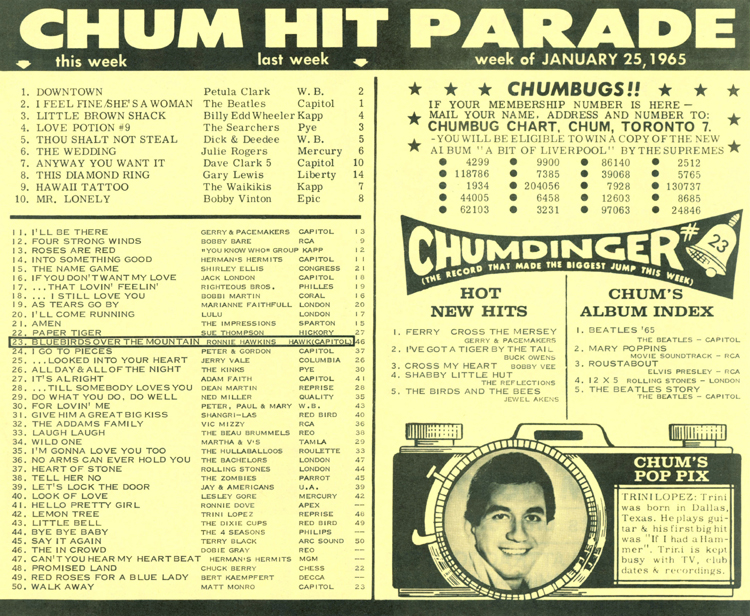
- ^ "CHUM Hit Parade − January 25, 1965". Chumtribute.com.
- ^ "2011 Inductees". North Carolina Music Hall of Fame. Retrieved September 10, 2012.
External links
[edit]- Billy Edd Wheeler, official web site
- Billy Edd Wheeler discography at Discogs
- Billy Edd Wheeler at IMDb

Billy Edd Wheeler
View on GrokipediaEarly Life and Education
Childhood and Family Background
Billy Edd Wheeler was born on December 9, 1932, in Whitesville, Boone County, West Virginia, to Mary Isabelle Wheeler and Dutch Perdue.[3][5] Born out of wedlock, he was initially raised by his maternal grandparents, Leda Jane and Samuel, before his mother married coal miner Arthur Stewart when Wheeler was five years old.[6] The family then relocated to the Highcoal coal camp, a company-owned community in Boone County established around 1900 by the Anchor Coal Company, where Stewart worked as a miner.[7] Wheeler's formative years unfolded in the rugged Appalachian region amid the lingering effects of the Great Depression, marked by profound economic hardships and a stark rural lifestyle. The family resided in a modest white wooden company house among about 200 similar dwellings, lacking modern amenities such as running water—they relied on nearby creeks—and featuring outhouses for sanitation.[7] Miners like his stepfather faced precarious employment, paid partly in scrip redeemable only at the company store, and the constant threat of job loss, which could mean immediate eviction from their homes.[8] These conditions instilled a deep awareness of poverty and instability, shaping Wheeler's early worldview in the coalfields.[9] Family dynamics were complex and often strained, with Wheeler's mother providing nurturing support amid the challenges of coal camp life, while his relationship with stepfather Stewart was marked by tension and abuse, prompting multiple runaway attempts to his grandfather's home 15 miles away—including a harrowing dash through a mile-long train tunnel.[7] His mother encouraged creativity by gifting him a $14 Sears Roebuck guitar for Christmas, fostering the storytelling traditions prevalent in Appalachian families through tales shared among relatives like his uncle Vincent, who had a wooden leg from a mining accident.[7] Wheeler's initial creative sparks emerged in this environment, as he began writing poetry during his childhood and absorbed folk music influences from radio songs he sang along to and local camp gatherings.[10] He practiced guitar fervently until his fingers bled, learning chords from a neighbor and composing his early verses inspired by daily life, such as a song about his paperboy route.[7] These experiences in the Appalachian coalfields laid the groundwork for the cultural elements that would later permeate his songwriting.[11]Academic Pursuits
Billy Edd Wheeler began his higher education at Warren Wilson College in Swannanoa, North Carolina, enrolling in the early 1950s and graduating in 1953.[5][12] The small, liberal arts institution emphasized practical work and community involvement, allowing Wheeler to explore his emerging interests in music and the performing arts through campus activities.[13] Seeking further development in the humanities, Wheeler transferred to Berea College in Kentucky, where he majored in English with a focus on drama and earned his Bachelor of Arts degree in 1955.[5][1] At Berea, known for its commitment to Appalachian culture and arts education, he immersed himself in extracurricular pursuits that sharpened his creative talents. He actively participated in theater, contributing to productions.[14] Wheeler also wrote for college publications, honing his skills in narrative and poetic expression, and engaged in music-related endeavors that foreshadowed his future as a songwriter.[1] His coursework in English literature and drama, combined with these hands-on experiences, built essential foundations in storytelling, performance, and lyrical craftsmanship that informed his subsequent multidisciplinary career.[5]Professional Career
Entry into Songwriting and Music
After beginning his songwriting career in the late 1950s, Wheeler attended the Yale School of Drama from 1961 to 1962, studying playwriting. After serving as a Navy pilot and working as Alumni Director at Berea College, Wheeler began submitting songs in the late 1950s while pursuing further education. He relocated to New York City around this time to establish a career in writing plays and songs.[2] There, he immersed himself in the city's vibrant creative scene, seeking opportunities as a folk singer while submitting his compositions to publishers and producers.[15] Wheeler apprenticed as a songwriter at the Brill Building, a renowned hub for pop and folk music composition, where he honed his craft amid the era's burgeoning songwriting industry.[3] Wheeler's initial songwriting credits emerged in the late 1950s and early 1960s, beginning with "Rock Boll Weevil," a folk-infused track recorded by Pat Boone in 1959.[2] This was followed by notable early works such as "Ode to the Little Brown Shack Out Back," a humorous novelty song he wrote and recorded himself in 1964, which was subsequently covered by artists including Hank Locklin in 1965.[16] His entry into the field was shaped by the folk revival movement of the time, with influences from groups like the Kingston Trio drawing on Appalachian traditions and rural narratives that Wheeler knew intimately from his upbringing.[2] Early collaborations further propelled his transition, particularly his partnership with songwriting duo Jerry Leiber and Mike Stoller, whom he met through industry connections in New York around 1960; together, they co-wrote tunes like "The Reverend Mr. Black," recorded by the Kingston Trio in 1963.[15] These efforts led to publishing deals, including with Hill & Range Songs, Inc., which helped place his material with recording artists. Wheeler also began performing, taking on local folk gigs and appearances that showcased his guitar work and storytelling style, gradually building his reputation within the revival scene before shifting toward broader country and pop outlets.[15]Major Songwriting Achievements
Billy Edd Wheeler's songwriting career gained prominence in the early 1960s with narrative-driven compositions that captured the essence of rural American life, particularly drawing from his Appalachian roots. His breakthrough came with "The Reverend Mr. Black," a character study of a compassionate preacher confronting injustice, which the Kingston Trio recorded in 1963 and propelled to the Top 10 on the Billboard Hot 100. This song exemplified Wheeler's skill in blending folk storytelling with social commentary, establishing him as a versatile writer capable of appealing to both folk and country audiences.[17][4] One of Wheeler's most enduring hits was "Jackson," co-written with Jerry Leiber in 1963 and reimagined as a spirited duet. Nancy Sinatra and Lee Hazlewood's 1967 version reached No. 14 on the Billboard Hot 100, showcasing the song's playful banter between quarreling lovers dreaming of escaping to Jackson, Mississippi. That same year, Johnny Cash and June Carter's rendition climbed to No. 2 on the Billboard country chart, earning a Grammy Award for Best Country Vocal Performance by a Duo or Group and highlighting Wheeler's ability to craft witty, relationship-focused narratives with broad crossover appeal.[18][2][19] Wheeler's compositions continued to yield major successes in the country genre throughout the decade. His humorous tribute to rural simplicity, "Ode to the Little Brown Shack Out Back," became a No. 3 Billboard country hit for Wheeler himself in 1964, evoking nostalgic memories of outhouse life with lighthearted verse. In 1967, "Burnin' Bridges" found success through Jack Scott's recording, contributing to Wheeler's growing reputation for evocative, emotionally resonant ballads. Later, Wheeler co-wrote "Coward of the County" with Roger Bowling, a poignant tale of restraint and revenge that Kenny Rogers took to No. 1 on the Billboard country chart in 1979, selling over a million copies and solidifying Wheeler's impact on narrative country storytelling.[2][20][21] Beyond these chart-toppers, Wheeler's songs were recorded by an array of prominent artists, amplifying their reach. Elvis Presley featured Wheeler's "It's Midnight" on his 1974 album Promised Land, where it charted at No. 20 on the Billboard country survey as the B-side to "My Boy," while Hank Williams Jr. had a Top 20 country hit with "A Baby Again" in 1969. Johnny Cash also cut several Wheeler tunes, including the introspective "Blistered," underscoring the writer's affinity for themes of hardship and redemption. Over his career, Wheeler earned 13 ASCAP awards for airplay and sales, recognizing the enduring popularity of his catalog among over 100 artists.[4][18][22][18] Wheeler's lyrics often wove threads of Appalachian life, humor, and vivid storytelling, transforming personal anecdotes into universal tales. Songs like "The Reverend Mr. Black" and "Coward of the County" employed dramatic arcs to explore moral dilemmas and family loyalty, while "Ode to the Little Brown Shack Out Back" infused everyday rural scenes with affectionate wit, reflecting Wheeler's upbringing in West Virginia's coalfields. This thematic focus not only resonated with listeners but also influenced the folk-country revival, blending regional authenticity with accessible narratives.[3][23][4]Recording and Performance Career
Billy Edd Wheeler began his recording career in the early 1960s with folk-oriented albums on the Monitor label, including Billy Edd: USA (1961) and Billy Edd and Bluegrass, Too (1962), which showcased his Appalachian roots through original compositions and traditional influences.[24] Transitioning to Kapp Records, he issued several albums in the mid-1960s, such as A New Bag of Songs (1963), Memories of America: Then and Now (1964), Songs By Billy Edd Wheeler (1965), The Man From West Virginia (1966), and another self-titled effort later that year, blending folk, country, and narrative-driven tracks he penned himself.[24][1] These releases highlighted Wheeler's shift toward commercial country-folk, with production emphasizing his warm baritone and guitar work.[18] Among his charting singles as a performer, "Ode to the Little Brown Shack Out Back" reached No. 3 on the Billboard Country chart and No. 50 on the Hot 100 in 1964, a humorous ode to rural outhouses that captured his storytelling flair.[25] Another notable recording, "The Coming of the Roads," reflected on Appalachian modernization and appeared on his 1966 Kapp album, though it gained wider acclaim through covers by artists like Judy Collins.[24][26] Wheeler also performed on national television, including an appearance on The Ed Sullivan Show in 1961 alongside Leon Bibb, singing folk material that aligned with the era's revival scene.[27] In the 1960s and 1970s, Wheeler toured extensively, performing at folk festivals such as the Newport Folk Festival in 1969 and various Appalachian-themed concerts that celebrated regional heritage through his original songs.[28] These appearances often featured intimate sets emphasizing narrative ballads, drawing crowds interested in authentic mountain music.[5] Later in his career, Wheeler focused on regional performances in North Carolina and West Virginia, where he incorporated storytelling into his shows, blending music with spoken anecdotes from his life to engage local audiences at venues like churches, civic clubs, and small theaters.[11][29] This approach sustained his presence as a live artist into the 21st century, prioritizing personal connection over large-scale tours.[30]Literary and Theatrical Contributions
Billy Edd Wheeler demonstrated remarkable versatility as a writer, producing works of humor, poetry, fiction, and memoir that often drew from his Appalachian roots to explore themes of rural life, wit, and personal reflection. In collaboration with folklorist Loyal Jones, he co-authored several influential collections of humor, including Laughter in Appalachia: A Festival of Southern Mountain Humor (1986), which compiles jokes, anecdotes, and tall tales celebrating regional storytelling traditions; Hometown Humor, U.S.A. (1991), featuring over 300 stories from small-town America on topics like politics, farming, and daily absurdities; Curing the Cross-Eyed Mule: Appalachian Mountain Humor (1989), a robust anthology of mountain folklore and comedic vignettes; and More Laughter in Appalachia (1995), expanding on the success of its predecessor with additional poems, riddles, and humorous sermons. These books, published by August House, underscore Wheeler's skill in preserving and amplifying the lighthearted spirit of Southern culture through accessible, entertaining prose.[31][32][33][34] Wheeler's poetic output included Song of a Woods Colt (1969), a collection evoking the rugged beauty and hardships of Appalachian existence through lyrical verses that blend folklore and personal insight, published by Droke House. He ventured into fiction with novels such as The Boston Cowgirl (2021), a genre-bending historical tale following a privileged young woman thrust into 1880s Texas frontier life, where she learns resilience amid adventure and cultural clash, released by Longhorn Publishing. In his later years, Wheeler penned the memoir Hotter Than a Pepper Sprout: A Hillbilly Poet's Journey from Appalachia to Yale to Writing Hits for Elvis, Johnny Cash & More (2018), a candid recounting of his multifaceted career, family influences, and encounters with music legends, published by Red Alder Press. These literary efforts, totaling over a dozen books, established Wheeler as a chronicler of American heartland experiences.[35][36][37] Wheeler's theatrical contributions further showcased his storytelling prowess, as he authored eight plays and musicals, many as outdoor dramas that brought historical narratives to life on grand scales. His most enduring work is Hatfields & McCoys (1970), for which he wrote the book and lyrics, with music by Ewel Cornett, which dramatizes the infamous West Virginia-Kentucky family feud and premiered on June 20, 1970, at the Grandview State Park amphitheater near Beckley, West Virginia; produced annually by Theatre West Virginia, it has endured for more than 50 years, drawing audiences to explore themes of vengeance and reconciliation in Appalachia. Other notable pieces include Young Abe Lincoln (premiered 1987 at Lincoln State Park in Indiana), depicting Abraham Lincoln's early life and moral growth, and John Brown (circa 1974), a historical drama on the abolitionist's raid, commissioned for outdoor performance in West Virginia's Eastern Panhandle. These productions, often blending music, dialogue, and spectacle, highlight Wheeler's ability to adapt regional history for educational and entertaining theater.[38][4][39]Personal Life and Death
Marriage and Family
Billy Edd Wheeler married Mary Mitchell Bannerman, daughter of Warren Wilson College's first president Dr. Arthur Bannerman, on November 3, 1963, at the college's Old Chapel in Swannanoa, North Carolina.[6] The couple's union lasted over six decades, providing a foundation for Wheeler's multifaceted career.[3] After graduating from Berea College in 1955, Wheeler returned to Swannanoa, where he had earlier attended Warren Wilson Junior College from 1951 to 1953, and the couple purchased land there in 1963 to build their home.[30] This relocation from Kentucky back to the Swannanoa Valley offered personal stability amid Wheeler's professional commitments in New York and beyond.[6] Wheeler and Mary raised two children, daughter Lucy and son Travis, in their Swannanoa home, where family life intersected with his creative endeavors.[40] The family's residence in this rural North Carolina community served as a supportive anchor, enabling Wheeler to balance extensive travels for songwriting, performances, and literary projects while maintaining close-knit domestic routines.[30] Career demands occasionally strained family time, yet the household fostered an environment conducive to Wheeler's pursuits.[30] In addition to his professional work, Wheeler pursued painting as a personal hobby, often dabbled in oil paintings of local scenes, such as those at nearby Charles D. Owen Park.[30] This creative outlet influenced family dynamics, as he shared meals and inspirational moments with Mary, drawing ideas for art and songs from everyday domestic life.[41] The couple's shared appreciation for artistic expression strengthened their bond and enriched the home atmosphere in Swannanoa.[30]Final Years and Passing
In the later decades of his career, Billy Edd Wheeler retired from extensive national touring during the 1980s and 1990s, transitioning to a focus on writing, local performances, and community involvement in the Asheville and Swannanoa areas of North Carolina, where he had settled with his family.[23][42] He remained active in regional folk music scenes, participating in events like the Swannanoa Gathering and sharing his Appalachian storytelling through intimate gigs that celebrated rural traditions.[43] This period allowed him to deepen his contributions to local culture, including advocacy for educational initiatives such as the Carver Optional School in Swannanoa.[44] Wheeler's creative output continued unabated into his later years, exemplified by the 2018 publication of his memoir Hotter Than a Pepper Sprout: A Hillbilly Poet's Journey from Appalachia to Yale to Writing Hits for Elvis, Johnny Cash & More, which reflected on his life and roots in West Virginia.[37][13] He also sustained involvement in theater, with productions of his plays, such as the long-running outdoor drama Hatfields & McCoys, continuing to draw audiences and promote Appalachian heritage through Theatre West Virginia.[1] In his final years, Wheeler dedicated time to fostering appreciation for mountain folklore and humor, often through writings and appearances that highlighted the resilience and wit of Southern rural life.[3][45] Wheeler passed away peacefully at his home in Swannanoa, North Carolina, on September 16, 2024, at the age of 91, from natural causes associated with advanced age.[1][40] His daughter, Lucy Wheeler, announced the death on his official Facebook page, noting he was surrounded by family.[46] Public celebrations of his life followed, including a service on October 4, 2024, at Warren Wilson Presbyterian Church in Swannanoa, and another on October 6, 2024, at St. Albans High School in West Virginia, where friends and admirers gathered to honor his multifaceted legacy.[47][48]Legacy and Recognition
Awards and Inductions
Billy Edd Wheeler garnered significant recognition for his songwriting prowess, earning 13 awards from the American Society of Composers, Authors, and Publishers (ASCAP) between the 1960s and 1980s, corresponding to key career milestones such as the chart-topping success of "Jackson" in 1967 and "Coward of the County" in 1979.[4] These honors celebrated the enduring popularity of his compositions, which were recorded by major artists and achieved widespread airplay and sales during that era.[1] Wheeler's contributions were further acknowledged through multiple hall of fame inductions. He was inducted into the Nashville Songwriters Hall of Fame in 2000, recognizing his role in shaping country music narratives.[2] In 2007, his home state honored him with induction into the West Virginia Music Hall of Fame, highlighting his Appalachian heritage and multifaceted artistry.[4] This was followed by his 2011 induction into the North Carolina Music Hall of Fame, reflecting his educational ties to the state and regional impact.[49] Additionally, the Country Music Hall of Fame and Museum recognized him in 2014 as part of its "Poets and Prophets" series, an affiliate honor that showcased his lyrical storytelling.[17] In 2004, Berea College bestowed upon him an honorary Doctor of Human Letters degree, honoring his broader cultural and educational influence.[2]Influence on Music and Culture
Billy Edd Wheeler played a pivotal role in popularizing Appalachian folk narratives during the 1960s folk revival by blending vivid storytelling with accessible melodies that bridged traditional mountain music and mainstream country and pop genres. His early folk albums, such as The Wheeler Man (1965), featured witty, character-driven songs like "The Reverend Mr. Black," which became a Top 10 pop hit for the Kingston Trio in 1963 and captured the moral complexities of rural preachers in coal country.[1][4] Songs like "Jackson," a 1967 duet hit for both Johnny Cash and June Carter (No. 2 country) and Nancy Sinatra and Lee Hazlewood (Top 20 pop), exemplified his ability to infuse Appalachian humor and relational dynamics into broader audiences, earning a Grammy for best country duet and helping elevate regional voices amid the era's folk boom.[3][1] Wheeler's thematic focus on rural humor, hardship, and resilience inspired generations of songwriters, particularly in narrative-driven country music. His empathetic portrayals of Appalachian life—seen in ballads like "Coal Tattoo" and "The Coming of the Roads," which lamented mining's toll on communities—influenced artists such as Hazel Dickens and Neil Young, while his story-song structure informed the style of performers like Kenny Rogers.[3][23] Rogers' 1979 No. 1 country hit "Coward of the County," co-written by Wheeler, embodied this legacy through its tale of quiet vengeance and family honor, a style that defined Rogers' career as a master storyteller and inspired a 1981 CBS TV movie.[1][50] Over 200 artists, including Elvis Presley and Judy Collins, recorded his works, amplifying his influence on blending folk authenticity with commercial appeal.[3] Through theatrical works, Wheeler contributed to the preservation of Appalachian cultural heritage, notably with his outdoor drama Hatfields & McCoys, first produced in 1970 by Theatre West Virginia and featuring his original music and lyrics. The play dramatizes the infamous 19th-century feud between West Virginia's Hatfield and Kentucky's McCoy families, drawing annual summer audiences to the Cliffside Amphitheatre in Beckley and sustaining regional identity by reenacting historical events tied to the area's coal and timber heritage.[4][51] This long-running production, performed over five decades, has boosted tourism in southern West Virginia by attracting visitors to feud-related sites and fostering economic activity through its 17-show seasons, while educating on the feuds' role in Appalachian folklore.[52][53] Following his death on September 16, 2024, tributes underscored Wheeler's multifaceted legacy in music and culture. The New York Times obituary highlighted his empathetic chronicling of rural Appalachian life, crediting songs like "Jackson" and "Coward of the County" for their enduring cultural resonance across genres.[3] Similarly, MusicRow praised him as a Nashville Songwriters Hall of Fame inductee whose prolific output as songwriter, playwright, poet, and painter preserved and popularized Southern mountain traditions for global audiences.[18]Musical Works
Albums
Billy Edd Wheeler released a series of albums primarily in the folk and country genres throughout his career, beginning in the early 1960s with labels like Monitor and Kapp Records. His discography encompasses over 15 albums, including studio recordings, compilations, and later independent releases, reflecting his evolution from Appalachian folk influences to broader country and regional sounds, though none achieved significant commercial chart success.[54][55][17] Wheeler's debut album, U.S.A. (1961, Monitor Records, MF-354), featured folk interpretations with collaborator Joan Sommer, marking his entry into the recording scene with traditional American songs. This was followed by Billy Edd and Bluegrass, Too (1962, Monitor Records, MF-367), which incorporated bluegrass elements into his original compositions.[54][55] Transitioning to Kapp Records, a MCA subsidiary known for folk and pop releases in the 1960s, Wheeler issued A New Bag of Songs (1963, Kapp KS-3351), showcasing his songwriting with tracks like early versions of his hits. Memories of America (1964, Kapp KL-1425) collected folk narratives inspired by American traditions. Ode to the Little Brown Shack Out Back (1965, Kapp KS-3425) highlighted humorous rural themes and was produced to capitalize on his novelty song style. The Wheeler Man (1965, Kapp KS-3443) received marginal chart attention, emphasizing his West Virginia roots. Subsequent Kapp releases included Goin' Town and Country (1966, Kapp KS-3479), Paper Birds (1967, Kapp KS-3533), and I Ain't the Worryin' Kind (1968, Kapp KS-3567), the latter also noting limited commercial performance.[54][55][17][56] In 1969, Wheeler moved to United Artists Records for Nashville Zodiac (UAS-6711), a concept album blending astrology with country narratives, produced during his Nashville songwriting peak and achieving modest sales. His 1971 RCA Victor release, Love (LSP-4491), shifted toward romantic ballads under the label's country division.[54][55][17] Later works embraced regional folk traditions. The compilation The Music of Billy Edd Wheeler (1973, Avalanche AV-LA119-F) collected his originals from prior sessions. Wild Mountain Flowers (1979, Flying Fish FF-085), on the Chicago-based folk label Flying Fish, featured acoustic arrangements of Appalachian-inspired tunes. In the 1980s, My Mountains, My Music (1975/1980s reissue, Sagittarius Records SR-1975) and Asheville (1982, Sagittarius SR-1282) captured his return to independent regional releases focused on North Carolina locales.[55][54] Posthumous collections include Songs I Wrote with Chet (1995, Sagittarius CD-SRI994), a tribute to collaborations with Chet Atkins, and Songs and Legends of the Outer Banks (1996, Kitty Hawk KHR-1996CD, with Paul Craft), preserving coastal folk narratives. Later releases included the retrospective Milestones: A Self Portrait (2001, Sagittarius SR-2001) and New Wine From Old Vines (2006, Sagittarius), featuring reinterpreted songs from his catalog. No major albums were released after Wheeler's death in 2024.[55][24][57]Singles
Billy Edd Wheeler released several singles as a performer primarily during the 1960s and 1970s, focusing on country and folk styles through labels such as Kapp and United Artists. His recordings often highlighted humorous or narrative-driven songs reflective of Appalachian life, with modest chart success on the Billboard country charts.[1] His most successful single was "Ode to the Little Brown Shack Out Back," released in 1964 on Kapp Records (K-617) with "Sister Sara" as the A-side, which peaked at No. 3 on the Billboard Hot Country Singles chart.[1] Another early charting release was "The Coming of the Roads" in 1966 on Kapp (catalog K-739), backed with "The Doves of San Morey," which entered the lower regions of the country charts and received notable airplay for its poignant depiction of rural change.[58] Later singles on Kapp included "I Ain't the Worryin' Kind" in 1968, peaking at No. 63 on the country charts. Wheeler transitioned to United Artists in 1969, releasing "West Virginia Woman," which reached No. 51 on the Billboard country chart, and "Fried Chicken and a Country Tune," peaking at No. 53 the same year; both tracks garnered regional airplay in Southern markets. Additional 1960s–1970s singles on these labels, such as "Blistered" / "After Taxes" (1963, Kapp) and "Half a Man" / "She" (1967, Kapp), contributed to his performing career but did not achieve significant national chart positions, instead building a dedicated following through radio play and live performances.[55]| Year | A-Side / B-Side | Label (Catalog) | Peak Chart Position (Billboard Country) |
|---|---|---|---|
| 1963 | Blistered / After Taxes | Kapp (K-550) | - |
| 1964 | Sister Sara / Ode to the Little Brown Shack Out Back | Kapp (K-617) | 3 |
| 1966 | The Coming of the Roads / The Doves of San Morey | Kapp (K-739) | (charted lower) |
| 1967 | Half a Man / She | Kapp (K-845) | - |
| 1968 | I Ain't the Worryin' Kind / (unlisted) | Kapp (K-1020) | 63 |
| 1969 | West Virginia Woman / (unlisted) | United Artists (UA-50368) | 51 |
| 1969 | Fried Chicken and a Country Tune / (unlisted) | United Artists (UA-50546) | 53 |