
Hubbry Logo
BixinBixinMain
Open search
Bixin
Community hub
Bixin
logo
7 pages, 0 posts
0 subscribers
Be the first to start a discussion here.
Bixin
Bixin
from Wikipedia
Bixin[1]
Skeletal formula
Skeletal formula
Names
IUPAC name
(2E,4E,6E,8E,10E,12E,14E,16Z,18E)-20-Methoxy-4,8,13,17-tetramethyl-20-oxoicosa-2,4,6,8,10,12,14,16,18-nonaenoic acid
Other names
cis-Bixin; α-Bixin; 9-cis-6,6'-Diapo-ψ,ψ-carotenedioic acid, 6-methyl ester
Identifiers
3D model (JSmol)
ChEBI
ChEMBL
ChemSpider
ECHA InfoCard 100.027.499 Edit this at Wikidata
UNII
  • InChI=1S/C25H30O4/c1-20(12-8-14-22(3)16-18-24(26)27)10-6-7-11-21(2)13-9-15-23(4)17-19-25(28)29-5/h6-19H,1-5H3,(H,26,27)/b7-6+,12-8+,13-9+,18-16+,19-17+,20-10+,21-11+,22-14+,23-15+ checkY
    Key: RAFGELQLHMBRHD-IFNPSABLSA-N checkY
  • InChI=1/C25H30O4/c1-20(12-8-14-22(3)16-18-24(26)27)10-6-7-11-21(2)13-9-15-23(4)17-19-25(28)29-5/h6-19H,1-5H3,(H,26,27)/b7-6+,12-8+,13-9+,18-16+,19-17+,20-10+,21-11+,22-14+,23-15-
    Key: RAFGELQLHMBRHD-SLEZCNMEBU
  • O=C(O)\C=C\C(=C\C=C\C(=C\C=C\C=C(\C=C\C=C(/C=C/C(=O)OC)C)C)C)C
Properties
C25H30O4
Molar mass 394.511 g·mol−1
Appearance Orange crystals
Melting point 198 °C (cis-isomer)
217 °C (trans-isomer)
Insoluble
Hazards
NFPA 704 (fire diamond)
NFPA 704 four-colored diamondHealth 1: Exposure would cause irritation but only minor residual injury. E.g. turpentineFlammability 1: Must be pre-heated before ignition can occur. Flash point over 93 °C (200 °F). E.g. canola oilInstability 0: Normally stable, even under fire exposure conditions, and is not reactive with water. E.g. liquid nitrogenSpecial hazards (white): no code
1
1
0
Except where otherwise noted, data are given for materials in their standard state (at 25 °C [77 °F], 100 kPa).
☒N verify (what is checkY☒N ?)

Bixin is an apocarotenoid found in the seeds of the achiote tree (Bixa orellana)[2] from which it derives its name. It is commonly extracted from the seeds to form annatto, a natural food coloring, containing about 5% pigments, of which 70–80% are bixin.[3]

Applications

[edit]
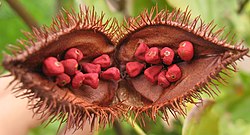
Red seeds of the achiote tree
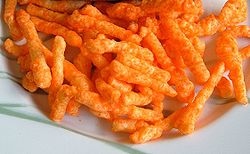
Bixin is one of the colorants used in the snack Cheetos.

Several thousand tons are harvested annually.[4]

Chemical properties

[edit]

Bixin is unstable. It isomerizes into trans-bixin (β-bixin), the double-bond isomer.[1]

Chemical structure of trans-bixin

Bixin is soluble in fats and alcohols but insoluble in water. Upon exposure to alkali, the methyl ester is hydrolyzed to produce the dicarboxylic acid norbixin, a water-soluble derivative.

Chemical structure of norbixin

References

[edit]
Revisions and contributorsEdit on WikipediaRead on Wikipedia
from Grokipedia
Bixin is an orange-red apocarotenoid pigment that constitutes 70–80% of the color content in the arils surrounding the seeds of the Bixa orellana tree, a species native to tropical regions of . Extracted as the principal oil-soluble component of , it imparts vibrant yellow-to-red hues and has been utilized as a natural colorant since pre-Columbian times by for food, body paint, and textiles. Chemically, bixin has the molecular formula C25H30O4 and features a chain of nine conjugated double bonds with carboxyl and methyl groups, existing primarily in cis or all-trans configurations; it is insoluble in but soluble in oils and alcohols. Its in B. orellana seeds involves the sequential enzymatic conversion of via lycopene cleavage dioxygenase, bixin , and norbixin carboxyl methyltransferase, a pathway that has enabled biotechnological production in engineered . In contemporary applications, bixin serves as a (E160b) for coloring products like cheese and , , baked goods, snacks, and processed meats, while its hydrolyzed form, norbixin—a water-soluble diacid—is preferred for aqueous-based items such as and beverages. Beyond coloring, emerging research highlights bixin's pharmacological potential, including activity via Nrf2 activation, effects, and applications in and , though these remain under investigation.

Natural Occurrence

Plant Source

Bixin is a pigment derived exclusively from the seeds of Bixa orellana L., a or small belonging to the Bixaceae family. Native to the tropical regions of Central and , including areas from to , this plant has been cultivated for centuries as the primary source of , a containing bixin. The species thrives in humid tropical environments and has been introduced to other regions such as parts of and for commercial production. Bixa orellana typically grows to a of 3 to 6 meters, forming a bushy canopy with alternate, heart-shaped leaves that measure 10 to 20 cm in length. It produces clusters of small, hermaphroditic flowers that are white to pinkish in color, blooming year-round in suitable climates but peaking during the . The flowers give way to distinctive fruits: ovoid, spiny capsules that turn from green to bright red at maturity, each containing approximately 30 to 50 small, angular seeds enveloped in a vibrant orange-red rich in bixin. These seed pods split open naturally to reveal the coated seeds, which are harvested for extraction. Cultivation of requires a with annual rainfall exceeding 1,000 mm, temperatures between 20°C and 30°C, and well-drained, fertile soils to prevent waterlogging. The plant is propagated primarily from seeds sown in nurseries during the early rainy season, with seedlings transplanted to the field after 3 to 4 months; initial seed production can begin 1 to 2 years after planting, though full yields are achieved by the third year. It is grown extensively in South American countries like and , as well as Central American nations, with limited cultivation in introduced areas of and ; the crop is relatively low-maintenance, tolerating poor soils but benefiting from organic amendments for optimal growth. Brazil dominates global production of seeds, accounting for the majority of the world's output, which totals around 30,000 metric tons annually (as of 2024), primarily used to produce extracts. In Brazil, major growing regions include the states of and , where yields can reach 300 to 600 kg of seeds per hectare under good management, supporting the plant's role as a key agroindustrial crop.

Pigment Composition

The annatto seeds of Bixa orellana contain approximately 5% total pigments by weight. These pigments consist of 70–80% bixin and 20–30% norbixin, the latter being the hydrolyzed, water-soluble form of bixin. Bixin, a cis-apocarotenoid, is the primary compound responsible for the orange-red coloration of annatto. Minor pigments include trace amounts of other carotenoids, such as , cryptoxanthin, , and . The pigments are concentrated in the , the outer waxy coat, which is mechanically removed and separated during processing to yield the colorant. Pigment content varies by variety and environmental factors, with bixin levels typically higher in fully ripe pods due to accumulation during maturation. A typical yield is 40–50 mg of bixin per gram of aril, though concentrations can range from 10 to 60 mg/g depending on cultivar and growing conditions.

History

Pre-Columbian and Traditional Uses

Bixin, the primary pigment extracted from the seeds of , was utilized by pre-Columbian Mesoamerican cultures such as the Maya and for , ritual adornments, and as a for textiles and . These indigenous groups applied the vibrant red-orange color derived from bixin to symbolize blood, fertility, and vitality during ceremonies, often incorporating it into sacred practices like the preparation of beverages for priests and elites. Archaeological evidence of residues, including bixin, on artifacts dates back to approximately 1600 BCE in the , indicating early adoption in ritual and decorative contexts. In Amazonian indigenous practices, bixin from B. orellana seeds served multiple purposes, including coloring food, skin adornment during ceremonies, and as a natural . Tribes such as the in and Tsáchila in used it for body and hair painting in daily and ritualistic settings, while also employing it medicinally for and digestive ailments like and . The pigment's application extended to protective uses, functioning as a and treatment for snakebites among various Amazonian groups. The cultural significance of bixin underscored its role in representing life force and protection across pre-Columbian , with evidence of its spread from origins in northern to and Mesoamerican societies through trade networks. Lowland groups like the and Guarani traded bixin as a paste for body paint and rituals, facilitating its adoption by diverse tribes for similar symbolic and practical applications before European contact in 1492.

European and Modern Adoption

Bixin, the primary pigment in seeds from the tree, was introduced to in the by Spanish explorers returning from the , where it had been used traditionally for and . This marked the beginning of its adoption as a natural colorant in European industries, transitioning from indigenous practices to colonial trade goods. Early European interest focused on its vibrant orange-red hue, which was valued for enhancing the appearance of foodstuffs amid limited preservation techniques. In , annatto—rich in bixin—was first employed to color as early as the , primarily to mask the paler tones of winter-produced and simulate the richer yellow of summer milk, thereby improving market appeal. This practice helped conceal variations in quality due to seasonal milk differences, establishing as a staple in British cheesemaking. By the , its use expanded across and into for coloring , , and other products, driven by growing industrialization and demand for uniform visual standards in food trade. The late 19th and early 20th centuries saw synthetic dyes, such as those derived from introduced around 1856, temporarily supplant natural colorants like in the due to their lower cost and brighter shades. concerns over synthetic additives, including reports of and regulatory scrutiny starting in the mid-20th century, prompted a revival of natural alternatives like in food applications by the 1970s, driven by consumer preference for safer options. Commercialization of extracts, containing bixin as the key , began in the early 1800s, facilitating its integration into global supply chains. As of , annual global production of dried annatto seeds is approximately 30,000 metric tons, with as the leading producer and major exporter to and the , supporting its role in international and non-food sectors. was designated as E160b as part of the European E numbering system for food additives introduced in 1962 by the . In the , amid a broader shift toward ingredients, bixin-rich saw renewed adoption in , where it serves as a safe, plant-derived colorant for lipsticks, soaps, and skincare products, aligning with growing demand for organic formulations. This evolution reflects annatto's enduring versatility, evolving from a colonial to a of modern markets.

Biosynthesis

Pathway Overview

Bixin biosynthesis occurs seed-specifically in the aril tissue of Bixa orellana seeds, where it is produced as a C25 apocarotenoid derived from the C40 carotenoid precursor through a series of oxidative modifications. This pathway represents a specialized branch of metabolism, converting the linear polyene structure of into the characteristic mono-methyl ester of a dicarboxylic apocarotenoid. The process begins with the symmetric oxidative cleavage of lycopene at the 5,6 and 5',6' double bonds, generating 9'-cis-bixin dialdehyde as the initial apocarotenoid intermediate. This dialdehyde undergoes oxidation of both aldehyde groups to carboxylic acids, forming norbixin, which is subsequently methylated at one carboxyl group to yield the final pigment bixin. These sequential transformations occur within the plastid and cytosol compartments, ensuring efficient channeling of metabolites during seed development. The pathway is temporally regulated, becoming active primarily during seed maturation, with peak transcript levels of biosynthetic components observed in immature seeds (stages S3 and S4). The core pathway was elucidated in 2003 through heterologous expression and genetic analysis of B. orellana genes in Escherichia coli. Evolutionarily, bixin synthesis exemplifies an adaptation of the ancient carotenoid catabolism machinery, highly specialized in Bixa orellana to generate this apocarotenoid for seed coloration and ecological roles, though homologous enzymes in other plants can produce trace amounts of bixin.

Key Enzymes and Genes

The biosynthesis of bixin in Bixa orellana is mediated by three key enzymes that convert into the final . The first enzyme, lycopene cleavage dioxygenase (LCD, also known as BoCCD1), performs the initial oxidative cleavage of at the 5,6 and 5',6' positions to produce 9'-cis-bixin dialdehyde; multiple isoforms (BoCCD1-1, BoCCD1-3, BoCCD1-4, and BoCCD4 family) contribute to this step, with BoCCD4 localized in plastids. This is followed by bixin aldehyde dehydrogenase (BAL, or BoALDH), which oxidizes the dialdehyde to norbixin, the corresponding . Finally, norbixin carboxyl methyltransferase (BCM, also referred to as BoCSy or BoBMT) catalyzes the of one carboxylic group of norbixin to yield bixin. The genes encoding these enzymes—BoLCD, BoBAL, and BoBCM—were cloned from B. orellana in 2003 and are predominantly expressed in developing seeds, where bixin accumulates in specialized chromoplasts. analyses have confirmed their differential expression during seed maturation, with peak levels coinciding with bixin synthesis. of these genes in has validated their functionality, enabling the reconstruction of the full bixin biosynthetic pathway in a microbial host for potential synthetic production. While bixin biosynthesis is highly specialized in B. orellana, homologous enzymes exist in other plants that can produce trace amounts of bixin. Seed-specific expression of these genes restricts bixin accumulation to seed arils. Climatic conditions and UV radiation can influence overall bixin yield and concentration (ranging from 12–23 mg/g).

Chemical Properties

Molecular Structure and Isomers

Bixin possesses the molecular formula C25_{25}H30_{30}O4_4. Its IUPAC name is (2E,4E,6E,8E,10E,12E,14E,16Z,18E)-20-methoxy-4,8,13,17-tetramethyl-20-oxoicosa-2,4,6,8,10,12,14,16,18-nonaenoic acid. The molecule features a linear polyene chain characterized by nine conjugated double bonds, which contribute to its vibrant orange-red coloration. At one terminus, it bears a methyl group (-COOCH3_3), while the other end terminates in a group (-COOH). This apocarotenoid structure arises from the oxidative cleavage of at the 5,6 and 5',6' positions during in Bixa orellana. Bixin exists primarily in stereoisomeric forms differing in the configuration of its double bonds. The stable form is all-trans-bixin, which predominates in processed extracts due to its thermodynamic favorability. In contrast, the naturally occurring isomer in seeds is 9'-cis-bixin (also known as cis-bixin), which constitutes the major pigment isolated from direct solvent extractions. This cis form can undergo to the trans configuration when exposed to , , or alkaline conditions, a process that enhances stability but may alter color intensity. Norbixin, a related , is obtained through alkaline of bixin, which cleaves the methyl group to yield the dicarboxylic acid form with the formula C24_{24}H28_{28}O4_4. This modification removes the -CH3_3 from the , resulting in a more polar, water-soluble while preserving the core polyene structure and conjugated double bonds.

Physical and Chemical Characteristics

Bixin is typically isolated as an orange-red crystalline powder, prized for its vibrant hue derived from its structure. The compound exhibits distinct melting points depending on its isomeric form, with cis-bixin melting at 189.5–190.5 °C and trans-bixin at 204–206 °C. As a lipophilic , bixin demonstrates high solubility in nonpolar solvents such as fats, oils, alcohols like , and , while remaining insoluble in . It maintains relative stability across a pH range of 4 to 7, which supports its utility in mildly acidic to neutral formulations. Bixin's stability is notably compromised by exposure to light and oxygen, leading to oxidative degradation into colorless products, though its extensive conjugated double-bond system imparts inherent capabilities by scavenging free radicals. In ultraviolet-visible , bixin displays characteristic absorption maxima at approximately 429, 457, and 487 nm (in acetone), reflecting its chromophoric properties. Chemically, bixin undergoes hydrolysis in alkaline conditions to yield the dicarboxylic acid norbixin, a process that enhances water solubility. Additionally, thermal isomerization from the cis to the more stable trans form accelerates above 100 °C, contributing to potential color shifts during processing.

Extraction and Production

Extraction Methods

Bixin, the primary carotenoid pigment in annatto seeds (Bixa orellana L.), is extracted from the resinous aril coating the seeds. Traditional extraction methods involve manual separation of the aril through abrading or rubbing the seeds by hand, followed by drying the collected aril and grinding it into a paste used directly for coloring in indigenous and folk applications. The primary industrial method for bixin extraction employs organic solvents such as , , or to dissolve the from the . This process typically begins with seed abrasion to expose the , followed by solvent percolation through the material in an extraction column, to remove solids, and evaporation to concentrate the extract into an oil-soluble form rich in bixin or, via alkaline treatment, a water-soluble form yielding norbixin. A modern, alternative is (CO₂) extraction, which avoids organic solvents and operates under mild conditions of 40–50°C and 200–300 bar to selectively extract bixin with high purity, often exceeding 95%. This method produces solvent-free extracts but remains costly due to specialized equipment requirements. Extraction yields typically range from 20–30% bixin relative to the aril weight, though challenges such as degradation of the during drying or processing can reduce efficiency and alter color quality.

Industrial Processing

Annatto production begins with the harvesting of mature seeds from the tree, primarily in tropical regions such as , , and . The seeds are dried and processed to mechanically remove the outer containing the pigments through abrasion or milling, followed by batch extraction of bixin using solvents like vegetable oils or alkaline water. Global output of annatto seeds is estimated at 10,000–12,000 tons per year as of 2023, with as the leading producer accounting for approximately 40–50% of production. Formulation of bixin products involves creating oil-soluble extracts by dissolving the pigment in vegetable oils such as or canola oil, typically achieving concentrations of 2–3% bixin for use in fat-based applications. For water-dispersible forms, bixin undergoes alkali hydrolysis—using sodium or —to convert it to norbixin, a that enhances solubility in aqueous systems. To improve stability against light and oxidation, bixin or norbixin is often encapsulated via spray-drying or freeze-drying with carriers like , which forms a protective matrix and retains up to 80–90% of the pigment's activity. Quality control in industrial processing relies on (HPLC) to assess purity, ensuring bixin content exceeds 85% in refined extracts by separating it from impurities like other and seed residues. Extracts are standardized to specific color units (CU), typically ranging from 1,000 to 2,500 CU, based on spectrophotometric measurement of at 470–480 nm to guarantee consistent tinting strength. Sustainability efforts in , the leading producer, include promoting practices to reduce use and enhance in systems, with certified organic annatto covering growing acreage. However, challenges persist in the due to reliance on tropical climates vulnerable to droughts and pests, as well as logistical issues in exporting from remote regions.

Applications

Food Coloring

Bixin, the primary pigment in extracts, serves as a colorant designated E160b in the and equivalent codes elsewhere, imparting yellow to orange hues to various edible products. It is extracted from the seeds of and valued for its ability to enhance visual appeal in processed foods without synthetic additives. In food applications, bixin is typically used at dosages of 5-20 mg/kg, depending on the product and desired intensity. For instance, it colors ripened cheeses like Cheddar at levels around 0.2-9.6 mg/kg, and at similar concentrations, cereals, and snack foods such as extruded corn products. Specific regulatory limits, such as 15 mg/kg expressed as bixin in flavored , ensure controlled usage across categories like and snacks. Bixin exists in oil-soluble form for fat-based applications, such as dairy products and snacks, where it disperses effectively in lipids like butter or cheese fats. Norbixin, a hydrolyzed and more polar derivative, provides water solubility for beverages and emulsions, enabling its incorporation into drinks and hydrated food matrices. This versatility allows bixin-based colorants to suit diverse formulations, with oil-soluble versions preferred for high-fat items and water-soluble for aqueous ones. Bixin demonstrates good heat stability up to 100°C, making it suitable for processes in and other mildly heated products, where color retention remains high. However, it degrades under high-heat conditions above 120°C, common in production, leading to fading and requiring adjusted formulations or protective additives. Its stability in neutral to slightly alkaline further supports use in pasteurized cheeses and butters. Historically, extracts containing bixin have been used to dye cheese since the in , particularly for Gloucester varieties, to achieve uniform coloration during off-seasons when milk beta-carotene levels were low. In modern applications, it continues in for a consistent yellow tone and in sausages to enhance visual quality. Global annual consumption of annatto seeds, the source of bixin, reaches approximately 10,000–11,000 tons in as of the 2020s, reflecting its dominant role among natural colorants.

Non-Food Uses

Bixin, the primary pigment extracted from the seeds of , commonly known as the lipstick tree, finds significant application in for imparting natural red-orange hues. It is incorporated into products such as s, soaps, and dyes, yielding vibrant red tones suitable for makeup and personal care formulations. Beyond coloration, bixin serves as an in skincare products, helping to protect against from free radicals due to its structure. In the pharmaceutical sector, bixin exhibits potential as an and anticancer agent, with studies demonstrating its ability to induce in cancer cells and modulate inflammatory pathways; recent research as of 2025 has explored formulations for enhanced delivery. Extracts containing bixin have been utilized in for , leveraging its and tissue-repair properties to treat skin injuries and . Bixin also extends to other industries, including textile dyeing where it colors natural fibers like , and in shades from yellow to reddish-orange. Its use in inks, varnishes, and lacquers provides natural pigmentation for paints and coatings. Emerging applications in nutraceuticals highlight bixin's and benefits, positioning it as a functional ingredient in health supplements. Global production has seen notable growth in the natural segment since the driven by consumer demand for plant-based alternatives.

Safety and Regulation

Toxicology Studies

Bixin exhibits low , with oral LD50 values exceeding 35,000 mg/kg body weight in rats for extracts containing bixin. assessments, including the and micronucleus assay, have shown no mutagenic or clastogenic effects for bixin-based extracts. In subchronic toxicity studies, a 13-week of bixin-rich annatto extract (Annatto B) to Sprague-Dawley rats at dietary levels up to 16,000 mg/kg (equivalent to approximately 1,311 mg Annatto B/kg body weight/day in males, or 1,206 mg bixin/kg body weight/day) resulted in no adverse effects on body weight, , or organ function, establishing a (NOAEL) of 1,206 mg bixin/kg body weight/day. A separate 28-day study in rats administered up to 540 mg bixin/kg body weight/day reported no signs of . Developmental toxicity evaluations in pregnant Wistar rats given annatto extract (28% bixin) at doses up to 500 mg/kg body weight/day (140 mg bixin/kg body weight/day) from gestational days 6 to 15 revealed no maternal , embryolethality, or fetal malformations, with a NOAEL of 500 mg/kg body weight/day. A 2003 subchronic study on norbixin (a related ) noted minor adaptive liver effects, such as increased liver weight and with abundant mitochondria, at high dietary levels (0.3% and 0.9%, equivalent to approximately 200-540 mg/kg body weight/day), but these were not considered adverse and supported overall safety for annatto pigments including bixin. investigations have demonstrated bixin's potential, including sensitization of human A2058 cells to dacarbazine-induced via reactive oxygen species-mediated and reduced . Human data indicate that allergies to bixin are uncommon, though rare cases of , including IgE-mediated anaphylactic reactions, have been reported with extracts containing bixin.

Regulatory Approvals

In the , bixin is authorized as a under the designation E160b, with an (ADI) established at 6 mg/kg body weight per day. Maximum permitted levels for bixin-based extracts range from 10 to 30 mg/kg in various food categories, such as dairy products and beverages, as specified in Regulation (EC) No 1333/2008. These authorizations were amended in 2020 by Commission Regulation (EU) 2020/771, which updated purity specifications and extended permitted uses in certain food categories while confirming safety. In the United States, the (FDA) has granted extract, which primarily contains bixin, exempt-from-certification status as a color additive since 1963, allowing its use in foods generally under conditions (21 CFR 73.30). It is also permitted for coloring , including those for eye-area use, without specific quantitative limits beyond (21 CFR 73.2030). While no formal ADI is set by the FDA, estimated dietary exposures remain below the EFSA ADI, supporting its general recognition as safe (GRAS) for these applications. The Joint FAO/WHO Expert Committee on Food Additives (JECFA) established an ADI of 0-12 mg/kg body weight for bixin in 2006, applicable to compliant extracts. Regulatory frameworks in and align similarly, permitting bixin-based extracts in foods with usage levels comparable to those in the and standards, though without unique ADIs. In 2019, the (EFSA) re-evaluated extracts, confirming no concerns based on new data, thereby upholding the existing authorizations. Labeling requirements mandate declaration of bixin-containing annatto as "annatto," "E160b," or "natural color" on product packaging in regions like the and . Purity specifications for bixin-based extracts typically require at least 70% total pigments (expressed as bixin equivalents), with variations such as ≥85% for solvent-extracted forms and ≥25% for aqueous-processed types, as defined in EU Commission Regulation (EU) No 231/2012 and aligned with JECFA standards.

References

Add your contribution
Related Hubs
User Avatar
No comments yet.