Hubbry Logo
Sambucus nigraSambucus nigraMain
Open search
Sambucus nigra
Community hub
Sambucus nigra
logo
8 pages, 0 posts
0 subscribers
Be the first to start a discussion here.
Sambucus nigra
Sambucus nigra
from Wikipedia

Sambucus nigra
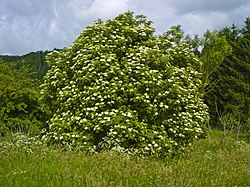
Shrub in flower
Scientific classification Edit this classification
Kingdom: Plantae
Clade: Tracheophytes
Clade: Angiosperms
Clade: Eudicots
Clade: Asterids
Order: Dipsacales
Family: Adoxaceae
Genus: Sambucus
Species:
S. nigra
Binomial name
Sambucus nigra
Distribution in Europe
Natural range of North American subspecies: S. cerulea (dark/light blue) and S. canadensis (green/red)

Sambucus nigra is a species complex of flowering plants in the family Viburnaceae native to most of Europe.[1] Common names include elder, elderberry, black elder, European elder, European elderberry, and European black elderberry.[2][3] It grows in a variety of conditions including both wet and dry fertile soils, primarily in sunny locations. The plant is widely grown as an ornamental shrub or small tree.

Both the flowers and the berries have a long tradition of culinary use, primarily for cordial and wine.[4] Although the plant is commonly used in dietary supplements and traditional medicine, there is no scientific evidence that it provides any significant health benefit.

Description

[edit]

Elderberry is a deciduous shrub or small tree growing to 6 metres (20 ft) tall and wide,[4] rarely reaching 10 m (33 ft) tall. The bark, light gray when young, changes to a coarse gray outer bark with lengthwise furrowing, lenticels prominent.[5] The leaves are arranged in opposite pairs, 10–30 centimetres (4–12 inches) long, pinnate with five to seven (rarely nine) leaflets, the leaflets 5–12 cm (2–4+34 in) long and 3–5 cm (1+14–2 in) broad, with a serrated margin. The young stems are hollow.[6]

The hermaphroditic flowers have five stamens,[7] which are borne in large, flat corymbs 10–25 cm in diameter in late spring to mid-summer. The individual flowers are ivory white, 5–6 millimetres (31614 in) in diameter, with five petals, and are pollinated by flies.

The fruit is a glossy, dark purple to black berry 3–5 mm diameter, produced in drooping clusters in late autumn.[4] The dark color of elderberry fruit occurs from its rich phenolic content, particularly from anthocyanins.[8]

Taxonomy

[edit]

Subspecies

[edit]

There are several other closely related species, native to Asia and North America, which are similar, and sometimes treated as subspecies of Sambucus nigra, including S. nigra subsp. canadensis[9] and S. nigra subsp. cerulea.[10]

Etymology

[edit]

The Latin specific epithet nigra means "black", and refers to the deeply dark colour of the berries.[11] The English term for the tree is not believed to come from the word "old", but from the Anglo Saxon æld, meaning fire, because the hollow stems of the branches were used as bellows to blow air into a fire.[12]

Distribution and habitat

[edit]

Sambucus nigra is native to Europe as far east as Turkey.[13] It is native in, and common throughout, the British Isles.[14] It has been introduced to parts of most other continents of the world.[13]

Hedges, waste-ground roadsides, and woods are the typical habitats for the species.[7] S. nigra is recorded as very common in Ireland in hedges as scrub in woods.[15][16]

Ecology

[edit]

Like other elderberries, Sambucus nigra is subject to elder whitewash fungus and jelly ear fungus. Strong-scented flowers in wild populations of S. nigra attract numerous, minute flower thrips which may contribute to the transfer of pollen between inflorescences.[17]

Wildlife value

[edit]

Elder rates as fair to good forage for animals such as mule deer, elk, sheep, and small birds. The fruit are an important food for many fruit-eating birds, notably blackcaps. Ripe elderberries are a favorite food for migrating band-tailed pigeons in northern California, which may sometimes strip an entire bush in a short time. The species provides good habitat for large and small mammals,[18] as well as nesting habitat for many birds, including hummingbirds, warblers, and vireos. It is also a larval host to the spring azure.[19]

Except for the flowers and ripe berries (but including the ripe seeds), all parts of the plant are poisonous to mammals, containing the cyanogenic glycoside sambunigrin (C14H17NO6, CAS number 99-19-4).[20] The bark contains calcium oxalate crystals.[citation needed]

Cultivation

[edit]

It is a very common feature of hedgerows and scrubland in Britain and northern Europe.

Some selections and cultivars have variegated or coloured leaves and other distinctive qualities, and are grown as ornamental plants. S. nigra f. porphyrophylla has dark maroon or black leaves, and pale pink flowers.

The following cultivars have gained the Royal Horticultural Society's Award of Garden Merit:[21]

  • S. nigra f. laciniata (cut-leaved elder)[22]
  • S. nigra f. porphyrophylla 'Eva'[23] ('Black Lace')[24]
  • S. nigra f. porphyrophylla 'Gerda'[25]
A purple, cut-leafed elder variety with pale pink flowers

Toxicity

[edit]

Components of the elderberry plant, including its fruit, contain diverse phytochemicals, such as alkaloids, lectins, and cyanogenic glycosides, which may be toxic if consumed raw.[8] The seeds and all green parts of the plant contain cyanogenic glycosides.[26] Consumption of berries, leaves, bark or stems, if not properly prepared, may cause nausea, vomiting, and severe diarrhea.[26][8][27] Elderberry plant constituents or products should not be consumed during pregnancy or by people with allergies or gastrointestinal diseases.[8][27] Elderberry products may cause adverse effects when used with prescription drugs.[8][27]

Uses

[edit]

The dark blue or purple berries are mildly poisonous in their raw state, but are edible after cooking.[26][28] They can be used to make jam, jelly,[28] chutney, and Pontack sauce. In Scandinavia and Germany, soup made from the elderberry (e.g. the German Fliederbeersuppe) is a traditional meal.[29]

Commonly, the flowerheads are used in infusions, giving a drink in Northern Europe and the Balkans. These drinks are sold commercially as elderflower cordial or elderflower pressé.[30] In Europe, the flowers are made into a syrup or cordial (in Romanian: socată, in Swedish: fläder(blom)saft, in Danish: hyldeblomstsaft / hyldedrik), which is diluted with water before drinking. The popularity of this traditional drink recently has encouraged some commercial soft drink producers to introduce elderflower-flavoured drinks (Fanta Shokata, Freaky Fläder). The flowers also may be dipped into a light batter and then fried to make elderflower fritters.[31]

The berries may be made into elderberry wine.[28] In Hungary, an elderberry brandy is made that requires 50 kilograms of fruit to produce 1 litre of brandy. In south-western Sweden, it is traditional to make a snaps liqueur flavoured with elderflower. Elderflowers are used in liqueurs such as St-Germain, and in a mildly alcoholic sparkling elderflower 'champagne', although a more alcoholic home-made version can be made. In Beerse, Belgium, a variety of jenever called beers vlierke is made from the berries.[citation needed]

Traditional medicine

[edit]

This plant is used in traditional medicine by native peoples and herbalists.[26][32] Extracts of the flowers and fruits are used for cold and flu symptoms,[26][8] although there is no high-quality clinical evidence that it is effective for treating any disease.[26][8]

References

[edit]

Further reading

[edit]
[edit]
Revisions and contributorsEdit on WikipediaRead on Wikipedia
from Grokipedia
Sambucus nigra, commonly known as black elder or European elder, is a shrub or small tree in the family, typically growing 8 to 20 feet tall and wide, with compound pinnate leaves consisting of 3 to 7 serrate ovate-elliptic leaflets that emit an unpleasant aroma when bruised. It produces large, flattened clusters of tiny, fragrant white flowers in to , followed by glossy black berries that mature in late summer and are edible only when cooked. Native to , , and southwestern Asia, it thrives in a variety of habitats including edges, hedges, and moist, base-rich soils, and has been introduced to other regions such as , , and , where it can become naturalized or invasive. The plant's flowers and fruits are rich in bioactive compounds, including polyphenols, anthocyanins, , vitamins, and minerals, contributing to its , antiviral, antibacterial, and properties. Traditionally used in folk across for treating colds, fevers, and as a , S. nigra has gained modern recognition in the food and pharmaceutical industries for products like elderberry syrups, juices, wines, jams, and dietary supplements such as Sambucol®, supported by studies on its efficacy against and other infections. Ornamentally, it is valued for its showy blooms and berries that attract birds and , though it requires to manage its suckering habit and weak wood. Despite its benefits, S. nigra contains cyanogenic glycosides like sambunigrin in its leaves, stems, and unripe berries, which can release toxic hydrogen cyanide if ingested raw, necessitating proper cooking or processing; lectins in the seeds and raw parts may also cause nausea or allergic reactions, though these risks are mitigated by heat treatment.

Taxonomy and nomenclature

Classification and history

Sambucus nigra belongs to the genus Sambucus within the family Adoxaceae and the order Dipsacales. The species was formally described by Carl Linnaeus in the first edition of Species Plantarum in 1753, where it was placed under the family Caprifoliaceae based on morphological similarities with honeysuckles. This initial classification reflected the Linnaean system's reliance on floral and fruit characteristics, establishing S. nigra as the type species for the genus. By the late 20th century, advances in prompted a reevaluation of the family's boundaries. Studies using and nuclear DNA sequences, such as rbcL and ITS regions, demonstrated that Sambucus formed a distinct separate from core members. This led to the recognition of as a monophyletic family in the early 2000s, incorporating Sambucus, Viburnum, and Adoxa, as formalized in the (APG) II system in 2003 and subsequent updates. The reclassification underscored evolutionary relationships within , resolving longstanding ambiguities in elderberry . S. nigra is part of a species complex characterized by extensive morphological and genetic variation. It is closely related to the North American Sambucus canadensis, from which it is distinguished primarily by fruit color (black vs. dark purple), inflorescence structure, and subtle leaf differences, though hybridization occurs where ranges overlap. Richard Bolli's comprehensive 1994 monograph on the genus reduced Sambucus to nine species and proposed subsuming S. canadensis as S. nigra subsp. canadensis, along with other taxa such as subsp. caerulea (blue-fruited western North American elderberry), subsp. palmensis (Canary Islands), subsp. maderensis (Madeira), and subsp. neomexicana (southwestern U.S. and Mexico). However, as of 2025, modern taxonomic treatments, including the Plants of the World Online (POWO), recognize these as distinct species (S. canadensis, S. cerulea including var. neomexicana, S. palmensis, and S. maderensis), based on further molecular evidence supporting their separation, while debates on boundaries persist for some continental taxa.

Subspecies and varieties

In strict contemporary usage, Sambucus nigra lacks formally recognized subspecies, with the nominate form confined to its native range in Europe, western Asia, and North Africa. It is characterized by dark green leaves, creamy white flowers, and clusters of black, glossy drupes that mature in late summer. This species typically grows as a deciduous shrub or small tree reaching up to 6-7 meters in height, thriving in a variety of temperate habitats including woodlands, hedgerows, and riverbanks. Formerly proposed subspecies, such as S. nigra subsp. canadensis (now S. canadensis), are native to eastern and central , featuring similar black drupes and growing in wetlands, forest edges, and disturbed sites from to . This is assessed as globally secure (G5). Similarly, the blue-fruited S. cerulea (formerly subsp. caerulea), found from to and eastward to the , occupies riparian zones and moist areas up to 3,000 meters elevation, and is also globally secure (G5). The insular endemics S. palmensis (Canary Islands) and S. maderensis (Madeira) are treated as distinct species adapted to laurel forests, with subtle floral and variations. S. cerulea var. neomexicana occurs in arid southwestern regions. In regions where S. nigra has been introduced, such as , it hybridizes with native S. canadensis, producing intermediate forms documented since the . Botanical varieties within S. nigra are not extensively recognized in the wild, with most distinctions arising from morphological variations rather than formal taxa. For instance, some populations exhibit dwarf growth forms under 2 meters in nutrient-poor soils, while occasional individuals show variegated or purplish foliage due to environmental stress or minor genetic differences, though these are not consistently classified as varieties.

Etymology

The genus name Sambucus originates from the Latin sambucus, which denotes an ancient resembling a or , crafted from the hollow stems of elder plants after removing the . This connection highlights the plant's utility in traditional instrument-making across Mediterranean cultures. The specific epithet nigra derives from the Latin word for "black" (), referring to the plant's dark purple-black berries that distinguish it from lighter-fruited relatives. This descriptor emphasizes a key morphological trait in . The common English names "elder" and "elderberry" trace back to the terms ellern or aeld, meaning "fire" or "to kindle," owing to the soft, pith-filled stems that were easily hollowed out for use as kindling, blowpipes, or in hearths. Over time, "black elder" emerged to specify S. nigra amid other elder species with paler fruits, reflecting linguistic adaptations in European herbal traditions. Regional variants illustrate further linguistic diversity; in , it is known as "bourtree," evoking the plant's sturdy, tree-like growth, while in French, it is called sureau noir, directly translating to "black elder." These names underscore the plant's widespread cultural recognition across .

Botanical description

Growth habit and morphology

Sambucus nigra is a or small that typically reaches heights of 3 to 7 meters, though it can grow up to 10 to 15 meters under optimal conditions. It exhibits a multi-stemmed, arching growth habit with relatively few branches emerging from a short trunk, forming an open, rounded canopy that spreads broadly. The plant is fast-growing and colonizing, often forming thickets, with a lifespan of up to 60 years. The leaves are opposite, pinnately compound, and measure 15 to 35 cm in length, consisting of 5 to 7 (occasionally 3 to 9) leaflets that are elliptic to ovate, 4 to 15 cm long, with sharply serrated margins. The leaflets are dark above and paler beneath, often with sparse hairs on the veins, and they emit a strong, unpleasant when bruised. In spring, emerging leaves may show red tinges before maturing to their characteristic green hue. The bark is smooth and gray-brown on young stems, becoming corky, furrowed, and fissured with age. Branches are , with young twigs featuring green surfaces dotted with beige lenticels and containing white, spongy or being hollow; by the second year, stems typically become hollow as the disintegrates. Older stems turn gray and brittle, contributing to the plant's ragged appearance.

Flowers and fruits

The inflorescences of Sambucus nigra are flat-topped cymes, typically measuring 10-20 cm in , composed of numerous small flowers arranged in a corymbose structure with five primary rays. These creamy-white flowers bloom from May to , each featuring a rotate corolla of five petals, approximately 4-6 mm in , with a small calyx and actinomorphic . The hermaphroditic flowers produce , attracting pollinators such as beetles and flies. The fruits of Sambucus nigra develop from these inflorescences as small drupes, initially green and progressing to red before maturing to a glossy black-purple in late summer. Each drupe is globose, 3-8 mm in diameter, and contains 3-5 compressed seeds, which are primarily dispersed by birds through regurgitation or defecation after ingestion. Seed germination requires dormancy-breaking stratification, typically involving 60-90 days at warm temperatures (20-30°C) followed by 90-150 days at cold temperatures (around 5°C), achieving rates of 32-55% under optimal conditions.

Distribution and ecology

Geographic range and habitat

Sambucus nigra is native to and western , ranging from and the in the west to and extending eastward to western and the region. It also occurs natively in , including the , and the . The species thrives in temperate climates and is commonly found up to an altitude of 1,500 meters, though it can reach higher elevations in certain regions, such as 2,200 meters in . In its native range, Sambucus nigra prefers woodland edges, hedgerows, riverbanks, and waste ground, often colonizing disturbed sites with moist, nutrient-rich s. It tolerates a wide range of types, including clay and those with levels from 5.5 to 7.5, and can adapt to wet conditions as well as occasional or flooding. The plant is particularly associated with semi-shaded or sunny locations in lowland and lower montane areas. The species has been introduced widely outside its native range, including , , , and parts of and , often through ornamental plantings and human-mediated dispersal. Its expansion is facilitated by human activities such as agriculture, road construction, and , which create suitable disturbed habitats. In some introduced regions, S. nigra exhibits invasive potential, particularly in hedgerows, roadsides, unmanaged grasslands, and riparian zones, where it can form dense stands due to prolific seeding and tolerance of varied conditions.

Ecological interactions

Sambucus nigra flowers are primarily pollinated by insects, including thrips (Thrips major), bees, flies, and beetles, which are attracted to the pollen-rich, nectar-producing blooms. The fragrant white flowers provide a significant source of pollen for these pollinators, with thrips playing a particularly notable role through chemically mediated attraction to floral volatiles, facilitating effective cross-pollination in temperate regions. This interaction supports pollinator populations, especially during early summer when floral resources may be limited. The fruits of S. nigra are dispersed primarily by birds, such as blackbirds (Turdus merula) and thrushes (Turdus philomelos), which consume the ripe berries and excrete or regurgitate the seeds, enhancing germination rates compared to uningested seeds. Small mammals may also contribute to dispersal by ingesting fruits, though birds are the dominant agents. These frugivory interactions promote biodiversity by providing a late-summer food source for numerous avian species, positioning S. nigra as a keystone shrub in woodland edges and hedgerows. As a host plant, S. nigra supports aphid populations, particularly Aphis sambuci, which colonize the stems and leaves in spring, in turn attracting predatory insects like (Coccinella septempunctata) and syrphid flies that feed on the . The leaves contain cyanogenic glycosides, rendering them toxic to many herbivores and limiting damage, yet they are browsed by larger mammals such as deer (Cervus elaphus), which tolerate the compounds and utilize the foliage in mixed diets. In disturbed or eutrophic soils, S. nigra acts as a , rapidly colonizing open areas and contributing to through its fibrous root system, which helps prevent erosion along banks and slopes while facilitating succession to more diverse . Although not directly nitrogen-fixing, its presence in nitrogen-rich sites indirectly aids soil improvement by enhancing accumulation and supporting associated microbial activity in early successional stages.

Cultivation and propagation

Growing conditions

Sambucus nigra thrives in temperate climates, preferring full sun to partial shade for optimal growth and fruit production, though it can tolerate light shade with reduced yields. It is hardy in USDA zones 5 to 8, demonstrating strong frost tolerance and the ability to withstand winter temperatures down to -20°F (-29°C) in colder regions. This hardiness aligns with its native European habitats, where it endures variable weather conditions. For optimal fruit production, plant at least two different cultivars for cross-pollination. The plant requires moist, fertile, well-drained loamy soils with a range of 5.5 to 7.5 for best results, but it adapts to heavier clay soils or even poorer conditions as long as drainage prevents waterlogging. Consistent moisture is essential during establishment and fruiting, supplemented by to enhance , while it shows resilience to occasional once mature. Propagation of Sambucus nigra is most effectively achieved through hardwood cuttings taken in late winter, which root readily when planted directly in moist , or softwood cuttings in under mist. Seeds can be sown in early autumn after cold stratification for 90-120 days at 34-41°F (1-5°C) to break , though this method is slower and less reliable for uniform cultivars; layering of low branches in spring also promotes rooting. Regular pruning in late winter helps maintain shape, remove dead wood, and encourage vigorous new growth from the base. Common pests include , which cluster on new shoots and can transmit viruses, managed through horticultural oils or natural predators in organic systems. The elder shoot borer, a that tunnels into stems causing , is another frequent issue, controlled by affected canes below the damage and monitoring for entry holes. These challenges are typical in organic , where emphasizes cultural practices over chemicals.

Cultivars and ornamental use

Sambucus nigra has been selectively bred for ornamental purposes since the late , with many cultivars developed in the to enhance foliage color, flower display, and compact growth habits for use. These selections prioritize over wild-type forms, resulting in varieties with striking or leaves that provide year-round interest in landscapes. One of the most popular cultivars is 'Black Lace' (also known as 'Eva'), a compact deciduous shrub reaching 2-3 meters in height with deeply dissected, purplish-black foliage that creates a lacy, fern-like appearance from spring through autumn. It produces flat umbels of lemon- or grape-scented pink flowers in early summer, followed by clusters of purple-black berries, and was developed in England and patented in 2005. This cultivar has received the Royal Horticultural Society's Award of Garden Merit for its reliability and ornamental appeal in British gardens. Another widely grown variety is 'Black Beauty' (also 'Gerda'), which features bold, deep purple leaves and lemon-scented, pinkish-purple flowers in early summer, maturing to purple-black berries on a vigorous shrub or small tree up to 4.5 meters tall. Bred in the UK, it similarly holds the Royal Horticultural Society's Award of Garden Merit, recognizing its vigorous growth and attractive seasonal displays. Ornamentally, Sambucus nigra cultivars like these are valued for their versatility in garden design, serving as hedges, privacy screens, or specimen plants in mixed borders due to their vigorous growth and ability to thrive in full sun to partial shade. The range of foliage colors—from deep purple and bronze to golden green in other selections—adds textural contrast and supports wildlife gardens by attracting pollinators to the nectar-rich flowers and providing berries for birds. Pruning tolerance allows for shaping into formal structures or herbaceous perennials, enhancing their role in sustainable landscaping.

Uses and cultural significance

Culinary applications

The flowers of Sambucus nigra, harvested in early summer when fully open, are prized for their delicate, sweet floral flavor and are commonly used in various culinary preparations. They are steeped to make teas or infusions, battered and fried into fritters or pancakes, and infused into syrups, cordials, and sparkling beverages resembling champagne. In the , elderflower —a made by infusing the flowers with , , , and —remains a traditional summer , often diluted with or used to flavor desserts, cocktails, and ice creams. The berries of Sambucus nigra, which ripen in late summer, must be cooked before consumption to eliminate potential toxins and are transformed into jams, pies, wines, and syrups. These deep purple fruits add a tart, earthy flavor to baked goods like crumbles and pies, often combined with apples or other fruits, and are fermented into robust wines popular in European traditions, such as in where elderberry has been used for centuries in preserves and beverages. Processed berries provide a nutritional boost, rich in (supplying about 57% of the daily recommended intake per cup) and low in calories at approximately 106 kcal per cup (145 g), while containing antioxidants such as that contribute to their deep color and health-supporting properties.

Medicinal and therapeutic uses

Sambucus nigra, commonly known as black elder, has been utilized in European traditional medicine for centuries, with records dating back to ancient Greek physicians such as and Dioscorides. The flowers were traditionally employed as a diaphoretic to treat feverish colds, , coughs, and upper respiratory infections, often prepared as teas or infusions to induce sweating and alleviate symptoms. Berries were used as a and , particularly in decoctions for and to promote urinary flow, reflecting its role as a versatile remedy in folk practices across since antiquity. In contemporary research, elderberry extracts from S. nigra have demonstrated antiviral properties, particularly against viruses, by inhibiting viral entry and replication . Clinical trials, including a randomized, double-blind, -controlled study involving 60 patients with influenza A and B infections, showed that oral elderberry (15 mL four times daily for five days) reduced symptom duration by an average of four days compared to , with participants reporting earlier relief from fever, , and . A 2019 meta-analysis of four randomized controlled trials with 180 participants further confirmed that elderberry supplementation substantially shortens the duration of upper respiratory symptoms, such as those associated with colds and flu, with a large , positioning it as a supportive option for immune modulation. Recent reviews up to highlight its immune-enhancing effects through bioactive compounds like anthocyanins (e.g., cyanidin-3-glucoside), which boost production and exhibit anti-inflammatory activity. Studies in 2025 have additionally shown preliminary benefits for in individuals with from elderberry juice supplementation, and improvements in metabolic , including a 24% average reduction in blood glucose levels. Elderberry supplements, often in the form of extracts or syrups, are widely available for therapeutic use, with the flowers recognized as (GRAS) by the U.S. (FDA) for flavoring purposes and approved by the German Commission E for treating colds and flu. However, while berries show promise in clinical evidence for symptom relief in respiratory infections, their medicinal applications lack formal FDA approval as drugs, and consumption is typically recommended in processed forms to ensure safety and efficacy. Meta-analyses indicate consistent benefits in reducing symptom severity for viral upper respiratory infections, though larger trials are needed to solidify dosing and long-term effects.

Other traditional and modern uses

In traditional European practices, the hollow stems of Sambucus nigra have been crafted into flutes, whistles, and pipes due to their straight, pithy structure, which facilitates easy hollowing and sound production. Berries provided a source of purple dye for coloring basketry and textiles, leveraging the plant's dark pigments in pre-industrial crafting. Culturally, S. nigra, known as the elder tree, holds a prominent place in British and broader European folklore, often linked to protection against supernatural threats. In English traditions, the tree was believed to house protective spirits that warded off witches and evil forces, leading to the custom of planting elders near homes or crafting crosses from its branches to safeguard stables, graves, and livestock from malevolent influences. This duality—revered yet feared—stemmed from medieval associations with paganism and Christianity, where the elder was sometimes tied to Judas's tree of betrayal but more commonly invoked for apotropaic purposes against sorcery. Contemporary celebrations, such as National Elderflower Day in the UK, honor the plant's blooming season in late spring, promoting its cultural heritage through community foraging events and appreciation of its symbolic renewal. In modern applications, flower extracts of S. nigra are incorporated into for their aromatic and stabilizing properties, particularly in skincare formulations like creams, tonics, and sunscreens to enhance photoprotection and product pigmentation without synthetic additives. The plant's , including stems and residues, shows potential for production via , converting invasive or waste elder stands into bioenergy sources as part of sustainable in regions like . For environmental remediation, S. nigra naturally colonizes heavy metal-contaminated sites, such as dredged sediment landfills, where it accumulates radionuclides like ²²⁶Ra from polluted soils, aiding in low-cost efforts despite moderate efficiency for metals like and . Industrially, berry extracts serve as natural colorants, supplying anthocyanin-based purple and red hues for beverages, , and textiles, offering a stable alternative to synthetic dyes. Essential oils derived from dried flowers, rich in terpenic and volatiles, are employed in the fragrance sector for their pleasant scent profiles, with supercritical extraction methods enabling efficient recovery for perfumes and aromatics. Recent innovations, including patents filed post-2020, explore bioactive extraction techniques from S. nigra residues for enhanced industrial applications in natural preservatives and formulations.

Toxicity and safety considerations

Toxic compounds

Sambucus nigra contains several toxic compounds, primarily cyanogenic glycosides, which are responsible for its potential toxicity. The most prominent of these is sambunigrin, a cyanogenic glycoside found in the leaves, stems, unripe berries, seeds, and bark. Sambunigrin and related compounds like are present throughout the plant, though their distribution varies by tissue. Upon , sambunigrin releases (HCN), a potent , through an enzyme-triggered biochemical pathway activated in damaged tissues. This process involves , which cleaves the to produce mandelonitrile, followed by the action of α-hydroxynitrile lyase to liberate HCN. The release occurs rapidly when plant cells are disrupted, such as during or crushing, serving as an ecological defense mechanism against herbivores. In addition to cyanogenic glycosides, Sambucus nigra harbors , particularly in the seeds and bark, which exhibit ribosome-inactivating properties. These include nigrin b and Sambucus nigra agglutinin I (SNA-I), type 2 ribosome-inactivating proteins (RIPs) structurally similar to but generally less toxic. Lectins in the seeds can interfere with protein synthesis, contributing to the plant's overall toxicity profile. Concentrations of these toxic compounds are notably higher in raw and green plant parts, such as leaves and unripe berries, compared to ripe fruits and flowers, where levels are significantly reduced. For instance, unripe berries contain substantial amounts of sambunigrin, while mature berries have lower cyanogenic glycoside content.

Risks and precautions

Consumption of raw or improperly prepared parts of Sambucus nigra, such as unripe berries, leaves, stems, and seeds, can lead to due to the presence of cyanogenic glycosides, resulting in symptoms including , , , , , and in severe cases, or . These effects typically occur within hours of and are more pronounced with larger quantities, as the glycosides release when hydrolyzed in the body. Skin contact with the plant may cause mild irritation or in sensitive individuals, though this is less common. Reports of from raw elderberries exist, typically involving gastrointestinal symptoms such as , , and , which are generally reversible with supportive care. Children and pregnant or individuals are particularly vulnerable to the risks associated with Sambucus nigra, as their smaller body size and developing systems increase susceptibility to toxic effects from even small amounts of raw plant material. Additionally, elderberry supplements may interact with medications such as immunosuppressants, diuretics, and drugs, potentially altering their efficacy or exacerbating side effects like low blood sugar or imbalances. Individuals with autoimmune conditions should exercise caution, as elderberry might stimulate the and worsen symptoms. To mitigate risks, cooking, boiling, or fermenting Sambucus nigra berries and flowers effectively destroys cyanogenic glycosides, rendering them safe for consumption in culinary preparations like jams, wines, or teas. For supplements, recommended dosages are typically limited to 150-300 mg of standardized elderberry extract daily for adults, with no established safe dose for children under 18, and consultation with a healthcare provider is advised to avoid overconsumption. Proper identification of the plant is crucial, as confusion with toxic look-alikes like Sambucus racemosa can lead to accidental . These cases underscore the importance of avoiding raw plant parts and highlight that most adverse effects are reversible with prompt treatment, such as or antidotes for exposure.

Conservation status

Threats and conservation

Sambucus nigra populations are primarily threatened by habitat loss resulting from agricultural intensification and , which fragment hedgerows, edges, and riparian zones essential for its growth. These activities reduce suitable moist, nutrient-rich sites, leading to localized declines in semi-natural landscapes across . Climate change exacerbates these pressures through increased drought frequency, to which the species shows moderate sensitivity, potentially limiting regeneration and growth in southern ranges. Predictive models indicate heightened vulnerability in Mediterranean regions where net primary productivity optima may be exceeded under warming scenarios. Invasive pests, such as the spotted-wing drosophila, further threaten populations by competing for resources and damaging fruits. Globally, Sambucus nigra holds a Least Concern status according to the (as assessed in 2020), reflecting its wide distribution, though regional declines persist in fragmented woodlands due to the aforementioned threats. Conservation initiatives in emphasize hedgerow restoration to bolster connectivity and , often incorporating the species in planting schemes. It receives indirect protection through nature reserves and the EU , which promotes the maintenance of linear features like hedgerows under Article 10 for ecological coherence.

Genetic diversity and research

Genetic diversity studies on Sambucus nigra have primarily utilized simple sequence repeat (SSR) and inter-simple sequence repeat (ISSR) markers to evaluate variation within and among populations. In native European populations, such as clones from Portugal's Varosa Valley, SSR markers detected 61.1% polymorphism across 18 bands, indicating substantial likely resulting from farmer selection and mutations, while ISSR markers revealed even higher polymorphism at 61.86% over 97 bands, enabling clustering by geographical origin. Similarly, analyses of wild populations in , at the northeastern edge of the species' range, showed high within-population diversity (89% of ) but low differentiation among sites (11%), attributed to admixture from historical introductions and range expansion. These findings highlight greater in core native ranges compared to peripheral or potentially invasive populations, where reduced inter-population variability may limit adaptability. Advancing genomic research, a chromosome-scale genome assembly of S. nigra was completed in 2024 using HiFi long reads, yielding a 11.81 Gb nuclear genome scaffolded into 18 pseudomolecules, alongside complete mitochondrial (0.72 Mb) and (158 kb) genomes. This resource, part of the Darwin Tree of Life project, facilitates gene annotation and comparative analyses within , supporting investigations into traits like berry pigmentation and stress responses. Partial sequencing efforts prior to this have informed phylogenetic studies, revealing conserved structures across Sambucus . Breeding programs emphasize genetic improvement for commercial traits, including disease resistance and elevated levels. At the U.S. National Clonal Repository, ex situ collections preserve genetic resources from seven species, including 50 S. nigra cultivars selected for fruit quality, yield, and pest tolerance, aiding . In , Hungarian initiatives have evaluated genotypes for higher phenolic content in fruits, with cultivated accessions showing superior profiles compared to wild ones, informing hybrid development for nutritional enhancement. techniques have been optimized to propagate elite varieties, accelerating breeding for improved vigor and reduced susceptibility to pathogens like *. Conservation efforts focus on banking to safeguard diversity amid . Ex situ strategies include storage at Kew's Millennium Seed Bank and clonal repositories managed by Denmark's Forest and Nature Agency, which maintain S. nigra accessions for long-term viability. Botanic gardens worldwide contribute through living collections, complementing protection by preserving rare alleles for restoration and breeding, with over 30% of threatened species represented in such networks.

References

Add your contribution
Related Hubs
User Avatar
No comments yet.