Hubbry Logo
Brother AliBrother AliMain
Open search
Brother Ali
Community hub
Brother Ali
logo
8 pages, 0 posts
0 subscribers
Be the first to start a discussion here.
Brother Ali
Brother Ali
from Wikipedia

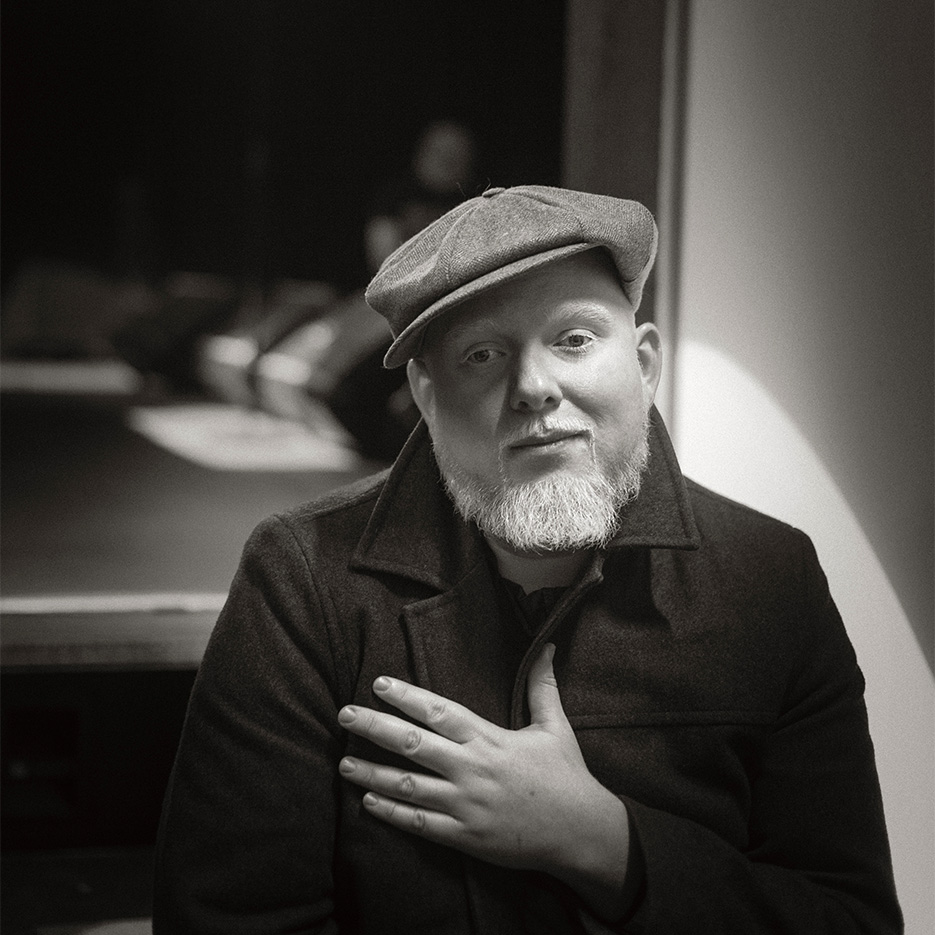
Ali Douglas Newman (born Jason Douglas Newman, July 30, 1977), better known by his stage name Brother Ali, is an American rapper, community activist, and member of the Rhymesayers Entertainment hip-hop collective.[1] He has released eleven albums, four EPs, and a number of singles and collaborations. Some of his best known works include The Undisputed Truth (2007), Us (2009), and Mourning in America and Dreaming in Color (2012), all of which charted on the US Billboard and were favorably received by critics.

Key Information

Early life

[edit]

Ali was born in Madison, Wisconsin. He has albinism, a condition characterized by the complete or partial absence of pigment in the skin, hair, and eyes. He moved with his family to Michigan for a few years and then settled in Minneapolis, Minnesota in 1992. He attended Robbinsdale Cooper High School in New Hope, Minnesota.[2]

Ali is Caucasian (white American), but he has spoken of feeling more accepted by Black classmates than white ones: "It's not like black kids didn't make fun of me, but it was different. It wasn't done in a way to exclude me. It wasn't done in a way to make me feel like not even a human being, not even a person." He could relate to them because they were also judged by their skin color.[3]

Ali began rapping at age eight. He has stated that he was influenced by hip-hop culture at a very early age. In an interview with Huck magazine, he stated "Ever since I was a little kid, I've always been into hip-hop. I started beatboxing when I was about seven years old. Eventually, that led to me falling in love with the words."[4] He has named Rakim, Chuck D, and KRS-One as early influences.

Appearances

[edit]

Television

[edit]

On August 13, 2007, Brother Ali appeared on The Late Late Show and performed his single "Uncle Sam Goddamn" from The Undisputed Truth. On October 19, 2007, Ali appeared on Late Night with Conan O'Brien and performed "Take Me Home" from The Undisputed Truth.[5] On December 16, 2009, Ali appeared on Late Night with Jimmy Fallon and was featured with late night band The Roots.

Podcasts

[edit]
Brother Ali performing in 2012

On July 24, 2013, Brother Ali appeared on the Maximum Fun podcast Judge John Hodgman as an "Expert Witness".[6]

On April 4, 2017, he appeared on The Combat Jack Show: "The Brother Ali Episode" and on October 19, 2017, on BuzzFeed's See Something Say Something podcast.

On April 5, 2018, he appeared on Max Fun's Heat Rocks podcast.

On Jan 1, 2023, he appeared on The Duncan Trussell Family Hour podcast.

Films

[edit]

Ali appeared in Sacha Jenkins' 2018 documentary Word is Bond.

Personal life

[edit]
Autograph on green room wall at Grinnell College's Harris Center

Ali has a son, Faheem, from his first marriage. He is very private about his family and loved ones. His music frequently addresses his role as a father, parent, and husband. The song "Real As Can Be" off his 2009 EP The Truth Is Here refers to the impending birth of his daughter, and on the song "Fresh Air", which is on his 2009 album Us, he goes on to say "Just got married last year/ treated so good that it ain't even fair/ already got a boy, now the baby girl's here/ Bought us a house like the Berenstain Bears."

Ali often makes fun of the media's constant urge to mention his albinism in the first lines of their reviews or newspaper articles. He is also legally blind, a condition which is caused by his albinism.[7]

In an article titled "The Art of Mourning in America", Brother Ali said his favorite food is sweet potato pie. The interview was conducted during the month of Ramadan and Ali performed a freestyle: "Lifelong starvation, every month is Ramadan / Walk in the crib and I'm surprised that the power's on."[8]

Religion

[edit]

Ali converted to Islam at age 15 and followed Imam Warith Deen Mohammed. During this time, Ali was selected to join a group of students on a Malaysian study tour, in which they explored ways that a more liberal Islamic society could peacefully coexist with different religions.[2]

Ali credits his conversion to Islam to KRS-One, whom he met during a lecture at age 13 at a local Minnesotan university. When asked about his faith, Ali stated, "KRS-ONE was actually the one who told me I should read Malcolm X. He assigned The Autobiography of Malcolm X to me; I read it, and that's what led to me becoming a Muslim."[9]

Activism

[edit]

Many of Brother Ali's themes of social justice are incorporated into his lyrics, though he also takes part in activism outside of the music. He primarily focuses on themes of racial inequality, slavery, and critiquing the United States government, though overarching themes of hope, acceptance, and rising from sorrow are also often present. Much attention was garnered through Ali's album The Undisputed Truth, as it heavily criticized much about the United States' political system. After the music video for "Uncle Sam Goddamn" was released in 2007, it quickly gained much attention, and shortly after, the United States Department of Homeland Security froze a money transfer to his record label.[10]

Ali has been a long-standing advocate for Palestinian liberation and has used his music to speak out against Israeli actions in Gaza and the West Bank.[11][12] Following the events of October 7, 2023, he became more vocal on social media, posting a Palestinian flag and writing "[Palestinians] have been kicked out of their land, and they’ve been raped, slaughtered, and massacred, with all of the biggest governments in the world backing it up,” which he believes led to a significant professional backlash.[12][13] Ali stated that his social media reach was "shadow-banned" and that a major distribution company "ghosted" him, abruptly canceling a deal to distribute his 2024 album Love & Service, which included the song "The Collapse" specifically about Gaza.[12][14] This culminated in what he described as an unprecedented, year-long industry "blackout" where he did not perform a single paid show for the first time in his career, a period he directly links to "insisting on talking about the Palestinians".[12]

In 2012, Ali was arrested along with thirty-seven others while occupying the home of a Minneapolis resident to fight the house's foreclosure. The goal of the protesters was to block the eviction of the family through their assembly and occupancy, but they were unsuccessful. Ali ended up using his celebrity as a platform to discuss these events, and bring them to the attention of his audience.[15]

Ali deals heavily with the notion of privilege. He stated in an interview with Yes! magazine that "The best definition of privilege I've heard is anything you don't have to wrestle with, that you don't have to think about." Ali feels a certain obligation to act politically, as he is unwilling to sit aside after experiencing all he has. He states, "I feel like that's my job, and I feel like within the last few years I fully woke up to that, found the courage to understand that, and stepped out like that."

While performing at a concert in 2015, Brother Ali endorsed Bernie Sanders for president of the United States, as a candidate in the upcoming 2016 presidential election.[16] He praised Sanders for saying "Black lives matter" at a presidential debate, a reference to the social movement. In November 2019, Brother Ali performed at a Bernie Sanders rally in Minneapolis, Minnesota, alongside Representative Ilhan Omar.[17]

Discography

[edit]

Studio albums

[edit]
Year Album Peak chart positions[18][19]
US US R&B US Rap US Indie
2000 Rites of Passage
2003 Shadows on the Sun
  • Released: May 2, 2003
  • Label: Rhymesayers
  • Format: CD, Digital Download, LP
2007 The Undisputed Truth
  • Released: April 10, 2007
  • Label: Rhymesayers, Warner Music Group
  • Format: CD, Digital Download, LP
69 48 6
2009 Us
  • Released: September 22, 2009
  • Label: Rhymesayers, Warner Music Group
  • Format: CD, Digital Download, LP
56 29 14 6
2012 Mourning in America and Dreaming in Color
  • Released: September 18, 2012
  • Label: Rhymesayers, Warner Music Group
  • Format: CD, Digital Download, LP
44 6 5 10
2017 All the Beauty in This Whole Life
  • Released: May 5, 2017
  • Label: Rhymesayers, Warner Music Group
  • Format: CD, Digital Download, LP
125 8
2019 Secrets & Escapes
  • Released: November 1, 2019
  • Label: Rhymesayers
  • Format: CD, Digital Download, LP
2021 Brother Minutester, Vol 1
  • Released: 2021
  • Label: Travelers Media LLC
  • Format: CD, Digital Download, LP
2024 Love & Service
  • Released: April 24, 2024
  • Label: Travelers Media LLC
  • Format: CD, Digital Download, LP
2025 Satisfied Soul
  • Released: February 14, 2025
  • Label: Mello Music Group
  • Format: CD, Digital Download, LP
"—" denotes releases that did not chart.

Mixtapes

[edit]
Year Album Peak chart positions[18][19]
US US R&B US Indie
2007 Off the Record (with BK-One)
  • Released: 2007
  • Label: Rhymesayers
  • Format: CD, Digital Download
2013 Left in the Deck
  • Released: September 5, 2013
  • Label: Rhymesayers
  • Format: CS, Digital Download
"—" denotes releases that did not chart.

EPs

[edit]
Year Album Peak chart positions[18][19]
US US R&B US Indie
2004 Champion EP
  • Released: May 11, 2004
  • Label: Rhymesayers
  • Format: CD, Digital Download, LP
2009 The Truth Is Here
  • Released: March 9, 2009
  • Label: Rhymesayers, Warner Music Group
  • Format: CD, Digital Download, LP
119 69 18
2012 The Bite Marked Heart
  • Released: February 13, 2012
  • Label: Rhymesayers
  • Format: CD, Digital Download
2021 Brother Minutester, Vol. 1
  • Released: August 27, 2021
  • Label: Travelers Media LLC
  • Format: Digital Download
2024 Satisfied Soul EP (with Ant)
  • Released: November 11, 2024
  • Label: Mello Music Group
  • Format: Digital Download
2025 Brother Minutester Vol. 2: Üsküdar Sessions
  • Released: December 1, 2025
  • Label: Travelers Media LLC
  • Format: Digital Download
"—" denotes releases that did not chart.

Guest appearances

[edit]
List of non-single guest appearances, with other performing artists, showing year released and album name
Title Year Other artist(s) Album
"Without My Existence" 2000 Unknown Prophets World Premier
"What Time Is It?" 2002 Musab Respect the Life
"Cats Van Bags" 2003 Atmosphere Seven's Travels
"The Truth" 2008 Jake One, Freeway White Van Music
"Dreamin'" 2009 Gift of Gab, Del the Funky Homosapien Escape 2 Mars
"Caged Bird, Pt. 1" Zion I The Take Over
"So Wrong" 2010 Joell Ortiz, Talib Kweli, Jean Grae Me, Myself & I (Part Two)
"Damn Right" 2011 Statik Selektah, Joell Ortiz Population Control
"Maybe It's Just Me" Classified Handshakes and Middle Fingers
"Civil War" Immortal Technique, Killer Mike, Chuck D The Martyr
"Daughter" Prof King Gampo
"Tragic" Grieves Together/Apart
"Get Up Stand Up" 2012 Public Enemy Most of My Heroes Still Don't Appear on No Stamp
"The Dangerous Three" 2013 R.A. the Rugged Man, Masta Ace Legends Never Die
"Illuminotme" Bambu, Odessa Kane Sun of a Gun
"A Reason to Breathe" Yonas The Transition
"Live and Let Go" 2014 Hilltop Hoods Walking Under Stars
"The Solution" 2015 Abstract Rule, Slug Keep the Feel: A Legacy of Hip-Hop and Soul
"Understand" Talib Kweli, 9th Wonder, Planet Asia Indie 500
"DeLorean" 2021 The Elovaters, G. Love & Special Sauce DeLorean EP

See also

[edit]

References

[edit]

Further reading

[edit]
[edit]
Revisions and contributorsEdit on WikipediaRead on Wikipedia
from Grokipedia
Brother Ali (born Newman, July 30, 1977) is an American hip-hop artist, community activist, and speaker renowned for his conscious rap that confronts personal hardships, systemic , and spiritual conviction. Afflicted with that has left him legally blind, Newman endured social ostracism in his youth, which shaped his outsider perspective and lyrical depth; he began rapping at age eight and converted to around age fifteen, adopting his in homage to the . Relocating to as a teenager, he aligned with the local underground scene and joined , releasing his debut album Rites of Passage in 2000 and accumulating eight critically acclaimed full-length projects over two decades, including standout works like Shadows on the Sun (2003) and Us (2009). Mentored by hip-hop pioneers and , Ali has performed on national television outlets such as Starring and Conan, while his —encompassing lectures at institutions like Princeton and Stanford, and —has placed him on government watch lists. His discography emphasizes raw storytelling over commercial trends, earning features in publications like and fostering a dedicated following for his uncompromised critique of societal ills.

Early Life

Childhood and Physical Challenges

Ali Douglas Newman, born Jason Douglas Newman on July 30, 1977, in Madison, Wisconsin, was diagnosed at birth with oculocutaneous albinism, a genetic condition resulting in minimal melanin production, which manifests as very pale skin, white hair, light-colored irises, extreme sun sensitivity, and severely impaired vision classified as legal blindness. This condition limited his visual acuity to the point where he relied on audio cues and memory for navigation and reading, adapting through heightened auditory perception and independence from an early age. His family relocated frequently during his early years, first to shortly after his birth, where much of his childhood unfolded in modest circumstances amid a backdrop of parental instability, including addiction issues that contributed to a fragmented home environment. Lacking a close paternal bond, Newman developed as a core trait, navigating daily challenges without emphasis on external accommodations, which sources attribute to his upbringing's demands rather than any formalized support systems. Socially, Newman's albinism and stout build made him a frequent target of peer in settings, particularly in diverse Michigan communities where his appearance stood out amid both white and black peers, leading to isolation but also an early rejection of group-based identity pressures in favor of individual fortitude. These experiences, while harsh, cultivated resilience through direct confrontation of based on physical difference, without reliance on narratives of systemic victimhood, as evidenced by his later reflections on adapting via personal agency rather than collective grievance.

Introduction to Hip-Hop and Initial Influences

Brother Ali's introduction to hip-hop occurred during the 1980s, when he was drawn to the genre's conscious artists such as and , whose lyrics emphasized social critique and intellectual depth over prevailing commercial trends. These influences resonated with him through their unfiltered examinations of power structures and systemic issues, providing a framework for engaging with societal realities on substantive terms rather than superficial entertainment. He began rapping at age eight, immersing himself in hip-hop culture as a means of self-expression amid personal isolation stemming from his albinism and frequent relocations between cities. By age 13, around 1990, a pivotal encounter with KRS-One further ignited his passion, prompting him to start recording music and participate in local Minneapolis-area rap activities to assert his voice and connect despite physical and social barriers. This early involvement prioritized lyrical skill and personal narrative over performative elements, distinguishing his approach in informal settings. Hip-hop's role extended to steering Ali away from contemporaneous gang influences prevalent among peers in his environment, as its emphasis on critical thinking and historical awareness—exemplified by references to figures like in KRS-One's work—fostered an alternative path of intellectual engagement. Rather than succumbing to street culture's immediate pressures, he channeled energies into dissecting causal underpinnings of inequality through rhyme, laying groundwork for a sustained focus on authenticity over transient trends.

Conversion to Islam

Path to Conversion

Brother Ali converted to Islam in 1993 at the age of 15, following a period of intellectual exploration prompted by spiritual references in hip-hop music. Lyrics from artists like and , which alluded to Quranic concepts and Islamic themes, ignited his curiosity about the religion and led him to independently study the . This inquiry represented a deliberate shift from a secular, unstructured toward a faith offering clear moral guidance and transcendence, as he sought answers to existential questions unaddressed by prevailing materialist or relativistic philosophies. His studies drew him into the community led by Imam Warith Deen Mohammed, who had transitioned the Nation of Islam from separatist black nationalism toward mainstream Sunni orthodoxy in the 1970s and 1980s. Ali's engagement with this group emphasized empirical alignment with Islamic texts over cultural or ethnic exclusivity, culminating in his formal adoption of Sunni Islam. Upon conversion, he took the name Brother Ali, symbolizing his commitment to the faith's absolute ethical principles, which provided a structured realism contrasting his prior agnostic leanings and hip-hop-inspired search for deeper purpose.

Integration of Faith into Identity

Brother Ali's profoundly anchored his personal discipline and communal orientation, positioning faith as a corrective to the atomized prevalent in and hip-hop's commercial ethos. He describes not as an external imposition but as a reclamation of innate human disposition toward justice and self-accountability, which informs his lyrical emphasis on collective human dignity over self-indulgent pursuits. This causal framework manifests in his rejection of hedonistic excess—such as glorification of and in mainstream rap—as antithetical to spiritual integrity, favoring instead rigorous self-examination and communal solidarity without overt evangelizing. In his artistry, integrates as an imperative for authenticity, where every creative act becomes an extension of through unvarnished , contrasting sharply with industry norms that reward performative excess. Ali has consistently woven Islamic principles into his , critiquing ego-driven fame that erodes moral boundaries, while upholding practices like abstention from intoxicants and as public markers of fidelity amid tours and collaborations rife with such temptations. This tension underscores a deliberate navigation of celebrity's pitfalls, where he prioritizes inner fortitude over acclaim, viewing unchecked ambition as a distortion akin to materialist individualism's failures. Ali conceptualizes jihad primarily as an internal moral struggle for self-mastery and ethical alignment, drawing from Sufi emphases on personal purification rather than external militancy, which he sees as a media-amplified detached from Islam's core disciplines. He acknowledges empirical shortcomings of Islamist —exemplified by groups like —as manifestations of ego inflation and communal betrayal, not authentic faith, thereby differentiating his worldview from both Western distortions and radical deviations. This nuanced stance reinforces Islam's role in fostering resilience and critique, enabling Ali to address hip-hop's cultural voids with principled realism rather than ideological conformity.

Musical Career

Formation and Early Releases

Brother Ali began pursuing hip-hop professionally in the late within Minneapolis's independent underground scene, where he self-produced recordings amid a landscape dominated by local collectives and limited distribution channels. Inspired by the era's DIY ethos, he handled writing, production, arrangement, mixing, and recording for his initial projects without major label support, reflecting a reliance on personal resourcefulness to navigate industry gatekeeping. His debut release, the 17-track cassette Rites of Passage, emerged in April 2000 as a limited-edition run of approximately 300 copies under , marking his initial association with the Minneapolis-based indie label through grassroots networking rather than formal scouting. Self-produced entirely by Ali, the project captured raw storytelling and served as a demo that circulated primarily through local channels, underscoring his early emphasis on merit-driven exposure over commercial infrastructure. Remaining largely unsigned to larger entities, Ali built a nascent fanbase through persistent live performances, including opening slots and hosting events at venues, which honed his stage presence and fostered connections in the competitive local circuit. This period of obscurity highlighted the challenges of independent hustling, such as restricted access to recording facilities and promotion, yet propelled him via word-of-mouth and battle circuit credibility, including matchups against established peers like . By 2003, these efforts culminated in a more formalized partnership with , transitioning from cassette obscurity to wider distribution with Shadows on the Sun, achieved through demonstrated talent and scene-embedded relationships rather than external endorsements.

Breakthrough Albums and Rhymesayers Affiliation

Brother Ali's affiliation with , an independent hip-hop label based in , began in the early 2000s and provided a platform for his mid-career breakthroughs, fostering consistent artistic output through close collaborations with in-house producer . This partnership emphasized raw, introspective lyricism over commercial trends, with Ant's production—characterized by soulful samples and understated beats—anchoring Ali's albums for over a decade.) Rhymesayers' model of artist retention, rooted in shared regional ties and creative autonomy rather than major-label pressures, enabled Ali to maintain loyalty amid industry shifts. The album Shadows on the Sun, released on May 27, 2003, marked Ali's breakout, establishing him as a voice in conscious hip-hop through tracks confronting personal vulnerabilities against broader deceptions. Produced primarily by , it built on Ali's underground buzz from prior singles, delivering 18 tracks that blended optimism with critique, as noted in contemporary reviews praising its feel-good yet substantive edge. Subsequent releases solidified this momentum. The Undisputed Truth, dropped on April 10, 2007, debuted at number 69 on the and number 6 on the Independent Albums chart, with initial sales exceeding 57,000 units, reflecting growing commercial traction. Critics highlighted its exploration of disillusionment and political frustration, with Ant's beats providing a consistent sonic foundation for Ali's dense, narrative-driven flows. Us, released in September 2009, further earned acclaim for its empathetic yet incisive take on human interdependence and systemic failures, including critiques of cultural dependencies, through guest features and layered storytelling. Reviews commended its emotional range—from uplifting to confrontational—positioning it as a peak in Ali's Rhymesayers era, where personal anecdotes intertwined with societal observations without diluting lyrical intensity. These works underscored Ali's evolution toward broader thematic depth while leveraging the label's infrastructure for sustained independence.

Evolution of Style and Recent Works

Brother Ali's 2017 album All the Beauty in This Whole Life, released May 5, marked a stylistic maturation, weaving in themes of family responsibilities and personal reflection amid life's hardships, produced primarily by after a five-year gap from full-length studio efforts. This shift emphasized vulnerable introspection and relational dynamics over prior albums' sharper social critiques, with tracks like "Own Disgrace" delving into accountability in partnerships and fatherhood. The following year's Secrets & Escapes (2019) extended this exploratory phase through live recordings and unreleased material, blending acoustic renditions with raw storytelling to highlight emotional depth and performance authenticity. By the 2020s, Brother Ali's lyrics increasingly incorporated geopolitical analysis, prioritizing examinations of historical causation and structural incentives over reactive polemics, as seen in Love & Service (April 26, 2024), a collaboration with producer unJUST featuring 13 tracks on imperial legacies and societal breakdowns, including "Ottomans" referencing Ottoman history and "The Collapse" probing systemic failures. Released independently via Travelers Media, the album underscores persistence amid career obstacles like industry sidelining, maintaining foundations while layering narrative complexity. His 2025 release Satisfied Soul (February 14), produced by for , comprises 17 tracks signaling further evolution toward grounded optimism and self-reckoning, with cuts like "Deep Cuts" and "Higher Learning At The Skyway" fusing personal resolve against cultural pressures with broader causal inquiries into resilience and truth-seeking. This output, arriving less than a year after Love & Service, reflects unyielding output despite external pushback, favoring substantive critique over conformity.

Discography

Studio Albums

Brother Ali has released his studio albums through independent labels, prioritizing creative autonomy over major label distribution and achieving within underground hip-hop circles rather than broad commercial chart dominance.
  • Shadows on the Sun (May 27, 2003; ): His breakthrough full-length, entirely produced by , establishing his raw, introspective style on an indie platform without major label involvement.
  • The Undisputed Truth (October 30, 2007; ): Follow-up emphasizing personal conviction and social critique, reinforcing his independent production ethos.
  • Us (September 22, 2009; ): Explores interpersonal connections and human struggles, distributed via indie channels with limited mainstream penetration.
  • Mourning in America and Dreaming in Color (September 18, 2012; ): Addresses national disillusionment alongside optimism, self-released under the label's model to evade corporate oversight.
  • All the Beauty in This Whole Life (May 5, 2017; ): Reflects spiritual growth post-hiatus, produced collaboratively with to sustain uncompromised artistic vision.
  • Secrets & Escapes (January 17, 2020; ): Recorded in informal sessions with , embodying DIY indie hip-hop free from commercial pressures.
  • Satisfied Soul (February 14, 2025; ): Latest effort, fully produced by , marking a shift to another indie imprint while upholding his resistance to mainstream co-option.

Extended Plays and Mixtapes

Brother Ali's extended plays have primarily functioned as interim releases to sustain fan interest between studio albums, often incorporating unreleased tracks, remixes, and experimental elements produced in collaboration with . These projects, typically shorter in length than full albums, emphasize lyrical and production , reflecting Ali's commitment to authentic, unpolished hip-hop amid evolving industry demands for frequent content. The Champion EP, issued on May 11, 2004, via , comprises nine tracks clocking in at approximately 39 minutes, including a of the titular single alongside originals like "Sleepwalker" and "Self Taught." Designed as a stopgap ahead of Ali's major-label push, it highlights his battle-rap roots and Ant's boom-bap beats, serving as an accessible entry point for expanding audiences. The Truth Is Here, released March 10, 2009, extends the thematic continuity from Ali's prior album , blending B-sides, outtakes, and new cuts such as "Real As Can Be" and "Philistine " over Ant's sparse . Bundled with a DVD capturing a sold-out show from the preceding tour, the EP underscores live energy and personal narrative updates, fostering deeper listener connection without the scope of a full-length effort. In the streaming era, shorter formats like Brother Minutester, Vol. 1—dropped August 27, 2021—enable rapid experimentation, featuring 11 raw freestyles over beats totaling just 12 minutes, tracks including "" and "Live From Trumpistan." This self-produced collection tests thematic motifs in unrefined form, prioritizing direct fan access via platforms like and over commercial polish. Most recently, the Satisfied Soul EP, a five-track collaboration with released November 11, 2024, on , adapts to digital economics by offering concise, -infused reflections on resilience and faith, maintaining Ali's tradition of thematic depth in bite-sized releases.
TitleRelease DateLabelTracksNotes
Champion EPMay 11, 20049Remix-heavy bridge to album cycle; Ant production.
The Truth Is HereMarch 10, 20095Includes live DVD; B-sides and life updates.
Brother Minutester, Vol. 1August 27, 2021Independent (self-released)11Raw freestyles, 12-minute runtime for experimentation.
Satisfied Soul EPNovember 11, 20245 collaboration; focuses on inspirational themes.

Notable Collaborations and Guest Features

Brother Ali's most enduring musical partnership is with producer Ant of Atmosphere, spanning multiple albums where Ant's beats underpin Ali's introspective and socially conscious lyrics. This collaboration began prominently with Shadows on the Sun in 2003 and continued through projects like Satisfied Soul, released on February 14, 2025, featuring 17 tracks emphasizing raw indie hip-hop delivery without pre-written structures. Ali's affiliations within have yielded repeated synergies with Atmosphere's , focusing on thematic depth over mainstream appeal. Notable joint tracks include "The Believers" from 2009, where their verses explore faith and resilience, and "Missing Teeth," a high-energy exchange highlighting braggadocio and clever aligned with underground hip-hop ethos. These features prioritize ideological compatibility, often addressing personal growth and systemic critique rather than commercial trends. Beyond Rhymesayers, Ali's guest appearances emphasize lyrical contributions to conscious rap narratives. He delivered a verse on Scarface's "American Nightmare," critiquing societal pressures, and collaborated with Freeway on "The Truth" produced by in 2007, blending East Coast grit with Midwestern introspection. Other spots include "Population Control" with and in 2011, and features alongside I Self Devine on "Living Under Siege," reinforcing themes through precise, evidence-based . Cross-genre efforts, such as his contribution to & Special Sauce's "DeLorean" in 2021, extend this synergy into blues-infused hip-hop while maintaining focus on authentic expression.

Activism and Public Commentary

Advocacy on Social Issues

Brother Ali has addressed U.S. through his and public speeches, emphasizing systemic barriers faced by marginalized communities while advocating for individual resilience. In his 2012 Mourning in America and Dreaming in Color, he critiques racial disparities in and , highlighting how these issues perpetuate cycles of hardship in American society. His work draws from personal experiences as an albino Muslim rapper navigating racial judgments, using hip-hop as a platform to challenge stereotypes and foster awareness. In response to events like the 2012 Trayvon Martin shooting and subsequent discussions on police interactions with minorities, Ali's commentary extended to broader critiques of racial violence, though he focused on community-driven solutions rather than institutional overhauls. During the 2020 Minneapolis uprising following George Floyd's death, he delivered talks on race in America, analyzing historical and contemporary racial dynamics from a local perspective. These efforts underscore his role as a Minneapolis-based community leader, including performances at events like the 2012 Day of Dignity gathering outside Masjid An-Nur, aimed at promoting human dignity amid urban challenges. Ali promotes personal agency in his advocacy, encouraging self-transformation and reliance on inner strength over external dependencies, as reflected in interviews where he discusses overcoming privilege and hardship through and . In educational contexts, he has called for targeted school initiatives beyond generic to build inclusive environments that empower against racial biases. His approach prioritizes empirical self-accountability, evident in lyrics that reject passive victim narratives in favor of proactive in .

Critiques of Government and Cultural Narratives

Brother Ali has articulated critiques of U.S. government overreach in tracks from his 2007 album The Undisputed Truth, emphasizing the human and economic tolls of imperial policies. In "Uncle Sam Goddamn," he portrays the nation as the "United Snakes," lambasting its foundational reliance on slavery, Native American displacement, and imported forced labor, while decrying ongoing military adventurism that prioritizes the "sacred" dollar over lives, including torture practices and resource extraction abroad. The song's release drew scrutiny from the Department of Homeland Security, which flagged Ali for its anti-imperial stance, underscoring tensions between artistic dissent and state surveillance. Complementing this, "Letter from the Government" targets domestic state interventions, depicting bureaucratic correspondence to the impoverished as a mechanism of control that fosters dependency rather than , with questioning the efficacy of welfare systems in addressing root . frames these policies as extensions of a broader pattern of paternalistic that undermines , drawing on empirical observations of and fiscal burdens—such as trillions spent on military engagements since 2001, per public budget data referenced in contemporaneous analyses. Ali extends his scrutiny to cultural narratives propagated by media and elite institutions, rejecting sanitized depictions of in favor of unvarnished causal accounts of failures. In interviews, he has highlighted how hip-hop's often dilutes its potential for authentic , with artists complicit in endorsing consumerist excess amid systemic inequities, though he attributes this less to overt than to incentives that prioritize profit over moral consistency. His approach privileges individual agency and ethical reckoning over collective excuses, as seen in broader thematic calls for personal accountability amid societal decay, avoiding divisive group-based framings in favor of universal human costs.

Stances on International Conflicts

Brother Ali has articulated anti-imperialist critiques of U.S. in his , portraying America as an aggressive power driven by economic and dominance. In the track "Uncle Sam Goddamn" from his 2007 album , he describes the as the "grand imperial guard where the dollar is sacred, and power is God," and labels it the "United Snakes, land of the thief, home of the slave," condemning interventions as exploitative and hypocritical. These themes recur in his work, framing U.S. actions abroad as extensions of domestic injustices rather than defensive necessities, consistent with his opposition to and across albums like Shadows on the Sun (2003) and Mourning in America and Dreaming in Color (2012). Regarding the Israeli-Palestinian conflict, Ali has consistently advocated for Palestinian rights, emphasizing civilian suffering in Gaza as a product of disproportionate force and occupation. In a August 1, 2014, Facebook post amid Operation Protective Edge—which resulted in over 2,100 Palestinian deaths according to UN figures—he expressed mourning for those "brutalized in Gaza" and called on to heed domestic Jewish protesters opposing the military campaign. He positioned this as opposition to "all forms of ," while acknowledging complexity but prioritizing humanitarian concerns over geopolitical justifications. Ali's support intensified after the , 2023, attacks on , which killed approximately 1,200 people and took over 250 hostages, prompting 's subsequent Gaza operations that have caused tens of thousands of Palestinian casualties per reports. In late 2023, his public endorsements of Palestinian resistance—framed as anti-imperialist solidarity—led to his album distributor dropping him and broader industry marginalization, including canceled shows and media silence. By February 2025, he released a new independent album and criticized peers' reluctance to address Gaza, stating in an that their fear of "being sidelined" was painful amid ongoing conflict. He has linked U.S. foreign aid—totaling over $130 billion to since 1948, including $3.8 billion annually in recent military assistance—to enabling what he views as biased interventions that perpetuate instability, echoing failures in and where U.S.-backed efforts yielded prolonged insurgencies and high civilian tolls. Critics of Ali's positions contend they exhibit one-sidedness by underemphasizing Hamas's responsibility for escalations, such as rocket barrages exceeding 12,000 annually pre-2023 and the assault, while downplaying Israel's security imperatives against groups designated as terrorists by the U.S. and . Responses to his 2014 statements, for instance, questioned why and allied militants faced no similar calls for remorse or disarmament, arguing that framing the conflict solely through an anti-imperialist lens overlooks mutual failures to pursue peace, including rejection of offers like the 2000 parameters. Ali maintains his advocacy targets systemic power imbalances rather than excusing violence on any side, aligning with his lyrical insistence on truth over selective narratives.

Controversies

Industry Blackballing and Cancel Culture

In late 2023, amid heightened scrutiny following the attacks on and 's subsequent military response in Gaza, Brother Ali publicly expressed support for Palestinian rights, criticizing what he described as disproportionate violence and calling for accountability on both sides while emphasizing civilian suffering. This stance triggered an industry-wide blackout, with promoters and media outlets withdrawing support, resulting in multiple tour date cancellations and a near-total halt in promotional activities despite his established acclaim from prior albums and collaborations. Ali attributed the fallout to coordinated pressure from entities sensitive to pro-Palestine , noting that venues and partners cited reputational risks amid broader cultural sensitivities around -related . Ali framed his experience as an ongoing conflict with mechanisms, stating in a June 2024 interview that he was "at war" with systems enforcing selective speech tolerances, where criticism of certain governments draws swift professional repercussions while critiques face less resistance. He highlighted empirical asymmetries, such as artists facing minimal backlash for anti-American but encountering for critiques, linking this to institutional alignments in media and entertainment that prioritize alignment with prevailing geopolitical narratives over viewpoint diversity. This dynamic, Ali argued, reflects causal incentives in an industry reliant on sponsorships and advertiser goodwill, where pro-Palestine positions risk alienating key stakeholders, evidenced by his own shift from major indie distribution to self-reliant channels post-2023. By early 2025, Ali demonstrated recovery through independent channels, releasing his ninth studio album, Satisfied Soul, on February 14 via , a smaller imprint allowing creative autonomy without mainstream gatekeeping. The project, produced primarily by longtime collaborator , garnered direct fan support via pre-orders and digital platforms, bypassing traditional promo blackouts and underscoring viability of decentralized distribution models for artists navigating industry hostilities. Ali emphasized resilience over grievance, focusing on sustained output rather than capitulation, which enabled resumed live performances, including a free hometown event in St. Paul on August 22, 2025. This pivot illustrates how , while imposing short-term costs like lost revenue estimated in the tens of thousands from axed shows, fails to suppress artists with established independent networks when causal pressures stem from transient cultural panics rather than audience disinterest.

Responses to Accusations of Cultural Appropriation

Brother Ali, as a white artist engaging with hip-hop's origins in black American struggles, has addressed implicit and explicit challenges to non-black participation in the genre, framing such critiques as misguided racial gatekeeping that undermines hip-hop's merit-based ethos. In a 2014 interview, he asserted that skilled white rappers have consistently succeeded without racial barriers, citing examples like the and as evidence of the culture's openness to talent over ethnicity: "No good white rapper has not had a chance to make it because they’re white in hip-hop. Ever. There’s never been a dope ass white rapper that hasn’t been embraced." This rebuttal prioritizes adoption of hip-hop's technical and expressive skills—flow, lyricism, and storytelling—over essentialist claims of cultural ownership, arguing that exclusivity would stifle the genre's evolution and impact. Ali roots his own legitimacy in experiential authenticity rather than performative mimicry, contrasting his immersion in black communities during childhood—where he faced rejection from white peers due to —with superficial adoptions by others. He described this distinction: "I was actually living the life that they were trying to emulate. But the difference is that they were trying to from the outside, whereas mine came from the inside out." His entry into hip-hop prioritized cultural participation before musical production, fostering genuine connections that transcend racial lines and enabling critiques of power structures without . This approach aligns with hip-hop's first-principles role as a universal medium for truth-telling and social dissent, not confined to originators, as race-based restrictions empirically hinder broader adoption and efficacy in addressing inequities. Empirically, Ali's sustained acclaim within predominantly black hip-hop circles—through collaborations, tours, and endorsements from artists across demographics—demonstrates that authenticity yields acceptance absent contrived diversity measures. He rejects narratives portraying hip-hop as inherently exclusionary, noting in discussions of racial discourse that coded blames (e.g., equating "hip-hop" with black male pathology) serve to deflect from systemic issues while ignoring the genre's diverse internal dynamics and female contributors like . By focusing on skill merit and lived insight, Ali positions participation as collaborative expansion, not appropriation, warning that gatekeeping fosters division counterproductive to hip-hop's critique of dominance.

Personal Life

Family and Relationships

Brother Ali experienced a contentious from his first wife in 2003, after which he raised their son, , as a while navigating a prolonged custody battle. He has described the separation as involving allegations of violence by his ex-wife toward both him and their son, which intensified the legal proceedings and contributed to a period of personal hardship, including temporary . Ali ultimately gained custody of , an outcome he credits with reinforcing his commitment to paternal duties amid his rising music career. He remarried in 2006, establishing a more stable family unit that expanded over time. By 2017, Ali was father to Faheem (then aged 17), a daughter (aged 9), and was expecting a third child that December, reflecting his prioritization of family growth despite the demands of touring and recording. More recent accounts indicate additional children born around 2020 and 2023, though details remain limited in public records. Ali has maintained relative privacy regarding his current marriage and relocated with his wife and children to Istanbul several years prior to 2024, citing the move as a means to foster family stability away from U.S.-based professional pressures. His experiences as a father have informed a recurring theme of responsible parenthood in his work, as seen in tracks like "Dear Black Son," where he offers guidance to on and resilience, underscoring how family obligations tempered his artistic evolution toward themes of accountability over transient fame. This focus on balancing nomadic performance schedules with domestic presence distinguishes Ali from archetypal itinerant musicians, emphasizing causal links between personal stability and creative maturity.

Health Management and Daily Challenges

Brother Ali, affected by , contends with legal blindness stemming from underdeveloped optic nerves and , which severely limits and . He navigates daily environments by relying heavily on auditory cues, , and familiarity with surroundings rather than corrective aids or canes, as evidenced by his description of connecting with others primarily through sound rather than sight. This impairment complicates routine mobility, prompting adaptive strategies centered on non-visual sensory input and practiced routines. The condition's lack of also heightens vulnerability to ultraviolet radiation, increasing risks of severe sunburn, premature aging, and —a peril Ali has underscored by observing that unprotected albinos in equatorial regions often succumb to such cancers before adulthood. Consequently, his regimen demands stringent , including avoidance of direct exposure, use of high-SPF barriers, and likely regular dermatological monitoring to mitigate oncogenic threats, though he has not detailed specific protocols publicly beyond general awareness. Ali eschews sympathy-driven interpretations of his disabilities, framing them instead as spurs for self-reliant discipline and Islamic faith, which he credits with instilling resilience against despair and fostering proactive realism over passive lamentation. Daily spiritual observances, such as structured and relational rituals, reinforce this outlook, channeling personal trials into sustained agency without reliance on external validation. These realities shape his performance style, favoring vocal-driven deliveries in live settings that prioritize raw lyrical power and auditory engagement over visual theatrics, thereby accentuating strengths amid visual constraints.

Reception and Influence

Critical and Commercial Assessment

Brother Ali's work has received consistent critical praise for its lyrical depth and authenticity, particularly in outlets like Pitchfork, which lauded his 2003 debut Shadows on the Sun as emerging from the underground with exceptional vocal delivery and storytelling that elevated him among early-2000s independent rappers. Subsequent albums, such as The Undisputed Truth (2007), were commended for powerful openings and introspective bars over Ant's production, while Us (2009) highlighted his ability to blend sympathy for personal struggles with pointed societal critique. Reviewers have emphasized his technical prowess in rhyme schemes and narrative vulnerability, as seen in Mourning in America and Dreaming in Color (2012), where his fusion of political agitation and humanism was noted for its raw execution. Commercially, Brother Ali has maintained a niche presence on the independent label , with sales reflecting limited mainstream penetration. His 2007 album sold over 60,000 units by 2009, a figure indicative of strong underground support but insufficient for major label breakthroughs. Chart performance has been modest; for instance, The Truth Is Here EP debuted at number 119 on the in 2008, while All the Beauty in This Whole Life (2017) peaked at number 125 on the same chart and number 8 on the Top Rap Albums chart. Streaming metrics post-2020 show sustained but not explosive growth, with approximately 273,000 monthly listeners as of late 2025 and key tracks like "Forest Whitiker" accumulating over 28 million streams, underscoring enduring appeal within hip-hop subcultures rather than viral pop success. This reception trajectory traces Brother Ali's progression from raw underground releases to a respected indie staple, bolstered by authenticity in addressing personal and social themes that resonate deeply with dedicated fans but constrain broader commercial viability amid hip-hop's shift toward more accessible, beat-driven formats. Critics attribute his strengths to unfiltered over polished production, yet note limitations in mass appeal due to dense, issue-oriented content that prioritizes substance over hooks.

Impact on Hip-Hop and Broader Culture

Brother Ali has exerted influence on conscious hip-hop by prioritizing lyrical substance and authenticity, serving as a model for artists seeking to prioritize message over commercial trends. His two-decade career with Rhymesayers Entertainment exemplifies indie sustainability, demonstrating viability through independent releases like Secrets & Escapes (2013), which maintained artistic freedom without major label constraints. This approach has encouraged emulation among underground rappers, as evidenced by his mentorship ties to figures like Chuck D and persistent critical recognition in conscious rap circles, where he is deemed indispensable. His fusion of with hip-hop extends the genre's historical Islamic undercurrents—from Public Enemy's era to contemporary expressions—by embedding themes of social justice and self-empowerment, as in tracks sampling on Mourning in America and Dreaming in Color (2012). This integration challenges hip-hop's prevailing secular narratives empirically, through sustained visibility as a practicing Muslim artist since his 1993 conversion, fostering discourse on faith's role in resistance to systemic issues like . Collaborations, such as with Amir Sulaiman on "Gather Round," further propagate these elements, influencing broader explorations of freedom and identity in rap. In contexts, Brother Ali's work promotes self-examination over conformity, evident in critiques like "Uncle Sam Goddamn" and "Letter to My Countrymen," which envision alternative American futures and address internal hip-hop flaws such as homophobia via personal reckonings in "Say Amen." These contributions have shifted genre dialogues toward accountability on privilege and norms, impacting live performances and audience engagements that prioritize transformative love and truth. Beyond hip-hop, his activism-through-lyrics model extends to cultural critiques of inequality, reinforcing hip-hop's utility as a tool for global teaching and resistance.

Criticisms of Artistic and Ideological Positions

Critics have occasionally described Brother Ali's lyrical style as overly preachy, particularly in his later albums where political and moral exhortations dominate. A 2012 review of Mourning in America and Dreaming in Color noted that the rapper had become "so preachy and so monotonous" compared to his earlier work, suggesting a shift toward didactic content that prioritized messaging over varied artistic expression. Similarly, a 2007 Star Tribune assessment of The Undisputed Truth observed that Ali "sounds preachy" at times, with a tone of guilt and desperation in addressing systemic issues, though it acknowledged his commitment to critiquing American policy. These observations stem from his emphasis on consciousness-raising themes, which some reviewers argue risks alienating listeners seeking less sermon-like hip-hop. Ideologically, Brother Ali's positions have drawn scrutiny for perceived inconsistencies between his Islamic faith and progressive activism, especially regarding social issues like homosexuality. In a 2009 NPR interview, Ali reflected on his earlier lyrics, admitting ignorance of anti-gay discrimination and past use of derogatory language, which he later disavowed while maintaining orthodox Muslim disapproval of same-sex acts. This evolution prompted criticism from conservative Muslim audiences, who viewed his public condemnation of homophobia in hip-hop—such as in a 2012 Huffington Post piece—as diluting Islamic teachings. Conversely, some left-leaning detractors highlighted lingering tensions, noting his 2014 dismissal of Macklemore's "Same Love" as insufficient self-critique from a church background, implying Ali's own faith-based reservations undermined broader advocacy. Orthodox Muslims have also faulted his profane language and unfiltered critiques of U.S. policy, seeing them as incompatible with religious decorum. From a right-leaning perspective, Ali's focus on systemic racism, inequality, and anti-war stances has been critiqued for underemphasizing personal agency in favor of collective blame. A 2024 analysis of his work argued that while his lyrics highlight societal moral failings, they risk excusing individual accountability by framing issues predominantly through institutional lenses rather than self-reliance or free-market dynamics. His anti-imperialist rhetoric, including opposition to the Iraq War, has elicited pushback for selective application, with observers noting a reluctance to equally condemn authoritarian regimes or Islamist extremism despite his faith's context. These critiques portray his ideology as ideologically siloed, prioritizing Western accountability over balanced global scrutiny.

References

Add your contribution
Related Hubs
User Avatar
No comments yet.