Hubbry Logo
SlugSlugMain
Open search
Slug
Community hub
Slug
logo
8 pages, 0 posts
0 subscribers
Be the first to start a discussion here.
Contribute something
Slug
Slug
from Wikipedia

Slug
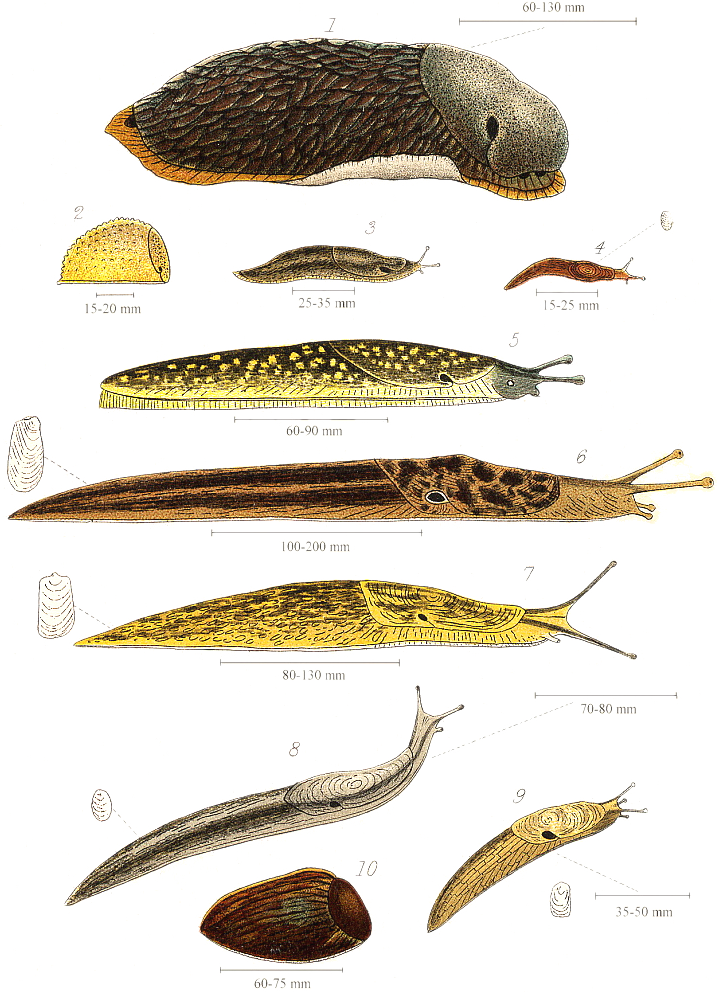
Various species of British land slugs, including (from the top) the larger drawings: Arion ater, Geomalacus maculosus, Limax maximus and Limax flavus
Arion sp., from Vancouver, BC
Scientific classificationEdit this classification
Kingdom: Animalia
Phylum: Mollusca
Class: Gastropoda
Groups included
A slug on a wall in Kanagawa, Japan.

Slug, or land slug, is a common name for any apparently shell-less terrestrial gastropod mollusc. The word slug is also often used as part of the common name of any gastropod mollusc that has no shell, a very reduced shell, or only a small internal shell, particularly sea slugs and semi-slugs (this is in contrast to the common name snail, which applies to gastropods that have a coiled shell large enough that they can fully retract their soft parts into it).

Various taxonomic families of land slugs form part of several quite different evolutionary lineages, which also include snails. Thus, the various families of slugs are not closely related, despite the superficial similarity in overall body form. The shell-less condition has arisen many times independently as an example of convergent evolution, and thus the category "slug" is polyphyletic.

Taxonomy

[edit]

Of the six orders of Pulmonata, two – the Onchidiacea and Soleolifera – solely comprise slugs. A third group, the Sigmurethra, contains various clades of snails, semi-slugs (i.e. snails whose shells are too small for them to retract fully into), and slugs.[1] The taxonomy of this group is in the process of being revised in light of DNA sequencing.[2] Research suggests that pulmonates are paraphyletic and basal to the opisthobranchs, which are a terminal branch of the tree.[3] The family Ellobiidae are also polyphyletic.

Description

[edit]
Drawing of slug with labels for the foot (bottom side), the foot fringe that surrounds it, the mantle behind the head, the pneumostome for breathing, and the optical and sensory tentacles
The external anatomy of a slug

The external anatomy of a slug includes the following:

  • Tentacles: Like other pulmonate land gastropods, the majority of land slugs have two pairs of 'feelers' or tentacles on their head. The upper pair is light-sensing and has eyespots at the ends, while the lower pair provides the sense of smell. Both pairs are retractable in stylommatophoran slugs, but contractile in veronicellid slugs.
  • Mantle: On top of the slug, behind the head, is the saddle-shaped mantle. In stylommatophoran slugs, on the right-hand side of the mantle is a respiratory opening, the pneumostome, which is easier to see when open; also on the right side at the front are the genital opening and anus. Veronicellid slugs have a mantle covering the whole dorsal part of the body, they have no respiratory opening, and the anus opens posteriorly.
  • Tail: The part of a slug behind the mantle is called the 'tail'.
  • Keel: Some species of slugs, for example Tandonia budapestensis, have a prominent ridge running over their back along the middle of the tail (sometimes along the whole tail, sometimes only the posterior part).
  • Foot: The bottom side of a slug, which is flat, is called the 'foot'. Like almost all gastropods, a slug moves by rhythmic waves of muscular contraction on the underside of its foot. It simultaneously secretes a layer of mucus that it travels on, which helps prevent damage to the foot tissues.[4] Around the edge of the foot in some slugs is a structure called the 'foot fringe'.
  • Vestigial shell: Most slugs retain a remnant of their shell, which is usually internalized. This organ generally serves as storage for calcium salts, often in conjunction with the digestive glands.[5] An internal shell is present in the Limacidae[6] and Parmacellidae.[7] Adult Philomycidae,[6] Onchidiidae[8] and Veronicellidae[9] lack shells.

Physiology

[edit]
An active Ambigolimax slug in Fremont, California

Slugs' bodies are made up mostly of water and, without a full-sized shell, their soft tissues are prone to desiccation. They must generate protective mucus to survive. Many species are most active following rainfall or during nighttime since there is increased moisture on the ground. In drier conditions, they hide in damp places such as under tree bark, fallen logs, rocks and manmade structures, such as planters, to help retain body moisture.[4] Like all other gastropods, they undergo torsion (a 180° twisting of the internal organs) during development. Internally, slug anatomy clearly shows the effects of this rotation—but externally, the bodies of slugs appear more or less symmetrical, except the pneumostome, which is on one side of the animal, normally the right-hand side.

Slugs produce two types of mucus: one is thin and watery, and the other thick and sticky. Both kinds are hygroscopic. The thin mucus spreads from the foot's centre to its edges, whereas the thick mucus spreads from front to back. Slugs also produce thick mucus that coats the whole body of the animal.[4] The mucus secreted by the foot contains fibres that help prevent the slug from slipping down vertical surfaces. The production of mucus is energetically costly, meaning that slug locomotion is particularly inefficient compared to other invertebrate locomotory modes.[10]

The "slime trail" a slug leaves behind has some secondary effects: other slugs coming across a slime trail can recognise the slime trail as produced by one of the same species, which is useful in finding a mate. Following a slime trail is also part of the hunting behaviour of some carnivorous slugs.[4] Body mucus provides some protection against predators, as it can make the slug hard to pick up and hold by a bird's beak, for example, or the mucus itself can be distasteful.[11] Some slugs can also produce very sticky mucus which can incapacitate predators and can trap them within the secretion.[12] Some species of slug, such as Limax maximus, secrete slime cords to suspend a pair during copulation.

Reproduction

[edit]
Deroceras juvenile with eggs of another (larger) slug species, most likely Arionidae
Pair of mating slugs, suspended by mucous thread and pad on wall
A pair of mating slugs

Slugs are hermaphrodites, having both female and male reproductive organs.[13] Once a slug has located a mate, they encircle each other and sperm is exchanged through their protruded genitalia.

Apophallation has been reported only in some species of banana slug (Ariolimax) and one species of Deroceras. In the banana slugs, the penis sometimes becomes trapped inside the body of the partner. Apophallation allows the slugs to separate themselves by one or both of the slugs chewing off the other's or its own penis. Once the penis has been discarded, banana slugs are still able to mate using only the female parts of the reproductive system.[13][14][15]

In a temperate climate, slugs usually live one year outdoors. In greenhouses, many adult slugs may live for more than one year.[16]

Ecology

[edit]

Slugs play an important role in the ecosystem by eating decaying plant material and fungi.[17] Most carnivorous slugs on occasion also eat dead specimens of their own kind.

Feeding habits

[edit]
Large slug near Manali, India

Most species of slugs are generalists, feeding on a broad spectrum of organic materials, including leaves from living plants, lichens, mushrooms, and even carrion.[17][18] Some slugs are predators and eat other slugs and snails, or earthworms.[17][19]

Lehmannia sp. feeding on a small fruit in Mexico City

Slugs can feed on a wide variety of vegetables and herbs,[20] including flowers such as petunias, chrysanthemums, daisies, lobelia, lilies, dahlias, narcissus, gentians, primroses, tuberous begonias, hollyhocks, marigolds, and fruits such as strawberries.[21] They also feed on carrots, peas, apples, and cabbage that are offered as a sole food source.[18]

Slugs from different families are fungivores. It is the case in the Philomycidae (e. g. Philomycus carolinianus and Phylomicus flexuolaris) and Ariolimacidae (Ariolimax californianus), which respectively feed on slime molds (myxomycetes) and mushrooms (basidiomycetes).[18] Species of mushroom producing fungi used as food source by slugs include milk-caps (Lactarius spp.), the oyster mushroom (Pleurotus ostreatus) and the penny bun (Boletus edulis). Other genera such as Agaricus, Pleurocybella and Russula are also eaten by slugs. Slime molds used as food source by slugs include Stemonitis axifera and Symphytocarpus flaccidus.[18] Some slugs are selective towards certain parts or developmental stages of the fungi they eat, though this is very variable. Depending on the species and other factors, slugs eat only fungi at specific stages of development. In other cases, whole mushrooms can be eaten, without any selection or bias towards ontogenetic stages.[18]

Predators

[edit]
Leopard slug (Limax maximus) hunting Red slug (Arion rufus).

Slugs are preyed upon by various vertebrates and invertebrates. The predation of slugs has been the subject of studies for at least a century. Because some species of slugs are considered agricultural pests, research investments have been made to discover and investigate potential predators in order to establish biological control strategies.[22]

Vertebrates

[edit]

Slugs are preyed upon by virtually every major vertebrate group. With many examples among reptiles, birds, mammals, amphibians and fish, vertebrates can occasionally feed on, or be specialised predators of, slugs.[22] Fish that feed on slugs include the brown trout (Salmo trutta), which occasionally feeds on Arion circumscriptus, an arionid slug.[22] Similarly, the shortjaw kokopu (Galaxias postvectis) includes slugs in its diet.[23] Amphibians such as frogs and toads have long been regarded as important predators of slugs. Among them are species in the genus Bufo, Rhinella and Ceratophrys.[22]

Reptiles that feed on slugs include mainly snakes and lizards.[22] Some colubrid snakes are known predators of slugs. Coastal populations of the garter snake, Thamnophis elegans, have a specialised diet consisting of slugs, such as Ariolimax, while inland populations have a generalized diet.[24] One of its congeners, the Northwestern garter snake (Thamnophis ordinoides), is not a specialized predator of slugs but occasionally feeds on them. The redbelly snake (Storeria occipitomaculata) and the brown snake (Storeria dekayi) feed mainly but not solely on slugs, while some species in the genus Dipsas (e.g. Dipsas neuwiedi) and the common slug eater snake (Duberria lutrix), are exclusively slug eaters.[22][25] Several lizards include slugs in their diet. This is the case in the slowworm (Anguis fragilis), the bobtail lizard (Tiliqua rugosa), the she-oak skink (Cyclodomorphus casuarinae), and the common lizard (Zootoca vivipara).[22][26][27]

Birds that prey upon slugs include common blackbirds (Turdus merula), starlings (Sturnus vulgaris), rooks (Corvus frugilegus), jackdaws (Corvus monedula), owls, vultures, and ducks. Studies on slug predation also cite fieldfares (feeding on Deroceras reticulatum), redwings (feeding on Limax and Arion), thrushes (on Limax and Arion ater), red grouse (on Deroceras and Arion hortensis), game birds, wrynecks (on Limax flavus), rock doves, and charadriiform birds as slug predators.[22]

Mammals that eat slugs include foxes, badgers, and hedgehogs.[28][29]

Invertebrates

[edit]

Beetles in the family Carabidae, such as Carabus violaceus and Pterostichus melanarius, are known to feed on slugs.[30][31] Ants are a common predator of slugs; some ant species are deterred by the slug's mucus coating, while others such as driver ants will roll the slug in dirt to absorb its mucus.

Parasites and parasitoids

[edit]

Slugs are parasitised by several organisms, including acari[32][33] and a wide variety of nematodes.[34][35] The slug mite, Riccardoella limacum, is known to parasitise several dozen species of molluscs, including many slugs, such as Deroceras reticulatum, Arianta arbustorum, Arion ater, Arion hortensis, Limax maximus, Tandonia budapestensis, Milax gagates, and Tandonia sowerbyi.[32][33] R. limacum can often be seen swarming about their host's body, and live in its respiratory cavity.

Several species of nematodes are known to parasitise slugs. The nematode worms Agfa flexilis and Angiostoma limacis respectively live in the salivary glands and rectum of Limax maximus.[36] Species of widely known medical importance pertaining to the genus Angiostrongylus are also parasites of slugs. Both Angiostrongylus costaricensis and Angiostrongylus cantonensis, a meningitis-causing nematode, have larval stages that can only live in molluscs, including slugs, such as Limax maximus.[34]

Insects such as dipterans are known parasitoids of molluscs. To complete their development, many dipterans use slugs as hosts during their ontogeny. Some species of blow-flies (Calliphoridae) in the genus Melinda are known parasitoids of Arionidae, Limacidae and Philomycidae. Flies in the family Phoridae, specially those in the genus Megaselia, are parasitoids of Agriolimacidae, including many species of Deroceras.[37] House flies in the family Muscidae, mainly those in the genus Sarcophaga, are facultative parasitoids of Arionidae.[38]

Behavior

[edit]
A slug retracts its head and contracts its body after being touched
A brown and yellow spotted slug curled up into a tight ball so that its head is withdrawn completely, its mantle edge and tail are nearly touching, and none of its foot surface is exposed
The alarm response posture of the Kerry slug, which is found only in this species

When attacked, slugs can contract their body, making themselves harder and more compact and more still and round. By doing this, they become firmly attached to the substrate. This, combined with the slippery mucus they produce, makes slugs more difficult for predators to grasp. The unpleasant taste of the mucus is also a deterrent.[11] Slugs can also incapacitate predators through the production of a highly sticky and elastic mucus which can trap predators in the secretion.[12]

Some species present different response behaviors when attacked, such as the Kerry slug. In contrast to the general behavioral pattern, the Kerry slug retracts its head, lets go of the substrate, rolls up completely, and stays contracted in a ball-like shape.[39] This is a unique feature among all the Arionidae,[40] and among most other slugs.[39] Some slugs can self-amputate (autotomy) a portion of their tail to help the slug escape from a predator.[41] Some slug species hibernate underground during the winter in temperate climates, but in other species, the adults die in the autumn.[21]

Intra- and inter-specific agonistic behavior is documented, but varies greatly among slug species. Slugs often resort to aggression, attacking both conspecifics and individuals from other species when competing for resources. This aggressiveness is also influenced by seasonality, because the availability of resources such as shelter and food may be compromised due to climatic conditions. Slugs are prone to attack during the summer, when the availability of resources is reduced. During winter, the aggressive responses are substituted by a gregarious behavior.[42]

Human relevance

[edit]

The great majority of slug species are harmless to humans and to their interests, but a small number of species are serious pests of agriculture and horticulture. They can destroy foliage faster than plants can grow, thus killing even fairly large plants. They also feed on fruits and vegetables prior to harvest, making holes in the crop, which can make individual items unsuitable to sell for aesthetic reasons, and can make the crop more vulnerable to rot and disease.[43] Excessive buildup of slugs within some wastewater treatment plants with inadequate screening has been found to cause process issues resulting in increased energy and chemical use.[44]

In a few rare cases, humans have developed Angiostrongylus cantonensis-induced meningitis from eating raw slugs.[45] Live slugs that are accidentally eaten with improperly cleaned vegetables (such as lettuce), or improperly cooked slugs (for use in recipes requiring larger slugs such as banana slugs), can act as a vector for a parasitic infection in humans.[35][46]

Prevention

[edit]

As control measures, baits are commonly used in both agriculture and the garden. In recent years, iron phosphate baits have emerged and are preferred over the more toxic metaldehyde, especially because domestic or wild animals may be exposed to the bait. The environmentally safer iron phosphate has been shown to be at least as effective as baits.[47] Methiocarb baits are no longer widely used. Parasitic nematodes (Phasmarhabditis hermaphrodita) are a commercially available biological control method that are effective against a wide range of common slug species. The nematodes are applied in water and actively seek out slugs in the soil and infect them, leading to the death of the slug. This control method is suitable for use in organic growing systems.

Other slug control methods are generally ineffective on a large scale, but can be somewhat useful in small gardens. These include beer traps [de],[48][49] diatomaceous earth,[50] crushed eggshells, coffee grounds, and copper.[51] Salt kills slugs by causing water to leave the body owing to osmosis[52] but this is not used for agricultural control as high soil salinity is detrimental to crops.[citation needed][53] Conservation tillage worsens slug infestations. Hammond et al. 1999 find maize/corn and soybean in the US to be more severely affected under low till because this increases organic matter, thus providing food and shelter.[54]

[edit]

See also

[edit]

References

[edit]

Further reading

[edit]
[edit]
Revisions and contributorsEdit on WikipediaRead on Wikipedia
from Grokipedia
A slug is a shell-less terrestrial gastropod mollusk belonging to the class Gastropoda within the phylum Mollusca, distinguished by its soft, elongated body and lack of an external shell, though some species possess a reduced internal shell. The category of slugs is polyphyletic, as shell loss has evolved independently in several gastropod lineages. Slugs glide across surfaces using a broad, muscular foot that secretes a mucus trail for lubrication and protection, enabling movement in moist environments. They feed primarily with a radula, a chitinous, ribbon-like structure armed with thousands of microscopic teeth that rasps or scrapes food such as plants, fungi, detritus, and occasionally other small animals. Slugs are part of the diverse group of pulmonates, which encompasses the majority of land gastropods and includes approximately 35,000 of snails and slugs combined, thriving in cool, humid habitats across temperate and tropical regions worldwide. Native to various ecosystems but often introduced to new areas via human activity, they prefer nocturnal activity to avoid , hiding under , , or during the day. Most slugs are hermaphroditic, possessing both male and female reproductive organs, and reproduce by laying clusters of translucent eggs in moist or litter, with life cycles ranging from several months to up to six years depending on and conditions. Ecologically, slugs serve as important decomposers and nutrient recyclers in forest floors and gardens, breaking down and aiding , though many species are considered agricultural pests due to their voracious herbivory on crops, seedlings, and ornamentals. Their mucus secretions, composed largely of with glycoproteins and other compounds, provide defense against predators, facilitate locomotion, and exhibit properties, contributing to ongoing biomedical research. Slugs face threats from natural predators like birds, beetles, and other mollusks, as well as environmental factors such as drought and habitat loss.

Etymology and definition

Terminology

The word "slug" originates from the late 15th century, derived from the or "slugga," meaning "to be lazy" or "sluggish," reflecting the creature's slow movement; it was first applied to the shell-less gastropod in the early 1700s. In , the term "slug" denotes a gastropod lacking a prominent external shell, where any remnant shell is typically rudimentary, internal, and enclosed within cavity. This contrasts with snails, which possess a well-developed external shell, though the distinction is informal and based on morphology rather than strict . The class , encompassing slugs and snails, originates from "gaster" (stomach) and "pous" (foot), alluding to the ventral muscular foot that facilitates locomotion via waves of contraction. Terrestrial slugs predominantly fall within the pulmonate gastropods, a group defined by the adaptation of the mantle cavity into a for aerial respiration, enabling life in moist terrestrial environments. Specialized terms include "semi-slug," applied to gastropods with a reduced but partially exposed shell, often retained for protection or calcium storage, as seen in certain tropical Ariophantidae species. "Limacoid" describes slug-like body forms within the superfamily Limacoidea, characterized by elongated, cylindrical shapes and internal shell plates in some families like Limacidae. Marine counterparts, termed "sea slugs," encompass heterobranch groups such as nudibranchs (order Nudibranchia) and , which exhibit diverse, often brightly colored, shell-less forms adapted for underwater life. These terms highlight the polyphyletic nature of "slug," as the trait evolves convergently across gastropod lineages rather than defining a monophyletic .

Distinction from snails

Slugs and snails are both members of the class within the phylum , sharing fundamental anatomical features such as a muscular foot for locomotion, a head with tentacles, and a for feeding. The primary biological distinction lies in their shell morphology: snails possess a prominent external, coiled shell composed mainly of that provides protection for their soft body and internal organs, whereas slugs lack this external shell or have a greatly reduced, internal vestigial shell embedded within . This shell difference influences their overall and vulnerability; snails can retract into their shell for defense against predators and , while slugs rely more on secretion and burrowing for protection, often resulting in a more elongated, cylindrical body form compared to the compact, spiral-shelled structure of snails. Evolutionarily, slugs are derived from shelled gastropod ancestors, with the loss or reduction of the external shell occurring independently in multiple lineages, adapting them to moist, terrestrial environments where a shell might hinder mobility or retention. In some slug , a small plate or fragment persists internally in the mantle cavity, serving as a remnant of their shelled heritage rather than providing significant . Beyond the shell, subtle anatomical and physiological differences exist, though they are less defining. For instance, slugs typically mature faster (in 3-6 months) and produce fewer eggs per (3-40 translucent eggs) than snails, which take about 2 years to mature and lay around 80 pearly white eggs per , reflecting adaptations to their more exposed . Both are hermaphroditic, capable of cross-fertilization, and exhibit similar behaviors like nocturnal activity and mucus-trail navigation, underscoring their close phylogenetic relationship despite the morphological divergence.

Taxonomy

Classification

Slugs are terrestrial gastropod mollusks classified within the phylum and class , encompassing species that have secondarily lost or greatly reduced their shells compared to their shelled relatives. The term "slug" does not denote a single taxonomic but rather a grade of gastropods characterized by shell reduction, rendering slugs polyphyletic with multiple independent evolutionary origins of this trait. This polyphyly is evident in phylogenetic analyses of land snails, where slug-like forms have arisen multiple times across distinct families within the pulmonate lineage, often converging on similar body plans for terrestrial life. In contemporary , most terrestrial slugs belong to the subclass , specifically within the Panpulmonata and the order Stylommatophora, which comprises over 20,000 species of air-breathing land gastropods including both snails and slugs. Stylommatophora represents the dominant group of terrestrial pulmonates, with slugs distributed across various superfamilies such as Limacoidea, Arionoidea, and Veronicelloidea. Key slug families include Limacidae (e.g., the keelback slugs like ), Arionidae (e.g., the Ariolimax columbianus), and Veronicellidae (e.g., tropical leatherleaf slugs like Veronicella cubensis), each exhibiting independent shell loss from shelled ancestors. Note that some classifications treat Ariolimacidae as a separate family for genera like Ariolimax, reflecting ongoing revisions in stylommatophoran based on molecular data. Phylogenetic studies using molecular data, such as 18S and 28S rRNA sequences, support the division of Stylommatophora into basal "achatinoid" and derived "non-achatinoid" clades, with slug occurring throughout the rather than in a single branch. This scattered distribution underscores that slug morphology—elongated, shell-less bodies adapted for moisture retention and burrowing—has evolved convergently, driven by selective pressures in humid terrestrial habitats. While some slug-like forms exist outside Stylommatophora (e.g., in caenogastropod land snails), the vast majority of ecologically significant terrestrial slugs are stylommatophorans.

Diversity

Slugs constitute a diverse assemblage of gastropod mollusks defined primarily by the reduction or complete absence of an external shell, a trait that has arisen independently multiple times in evolutionary history, rendering the group polyphyletic. This has occurred in various lineages within the class , particularly among terrestrial forms, leading to a wide array of morphologies and ecological adaptations. The taxonomic diversity of slugs is concentrated in the subclass , with the majority of terrestrial species falling under the order Stylommatophora in the informal group . Key families include Arionidae (roundback slugs), Limacidae (keelback slugs), Agriolimacidae (field slugs), Milacidae, Veronicellidae (leatherleaf slugs), Philomycidae (mantle slugs), and Testacellidae (shelled slugs with reduced shells). These families encompass hundreds of genera and thousands of species, reflecting adaptations to diverse habitats from forests to agricultural fields. For instance, the Arionidae family features species like Arion hortensis, a common European pest slug introduced to . Regional diversity varies significantly, with temperate regions hosting notable concentrations. In the , approximately 40 slug species are recorded, many of which are widespread in gardens and woodlands. Similarly, supports about 40 slug species, including both native forms like the banana slug (Ariolimax columbianus) in the family Arionidae and introduced species from . The Veronicellidae family exemplifies tropical diversity, with 23 genera and 78 recognized species distributed across subtropical and tropical zones, often in humid environments. Slugs form part of the broader terrestrial gastropod radiation, which includes land snails, semi-slugs, and slugs totaling around 24,000 described species worldwide, with estimates suggesting up to 40,000 in total. This diversity underscores slugs' ecological roles as decomposers, herbivores, and prey, though many species remain understudied, particularly in tropical regions where undescribed taxa are common. Human-mediated dispersal has further homogenized distributions, introducing species like (Agriolimacidae) to new continents.

Morphology and anatomy

External features

Slugs are elongated, soft-bodied terrestrial gastropods belonging to various families within the order Stylommatophora, characterized by the absence of an external shell, which distinguishes them from most snails. Their body is typically cylindrical or somewhat flattened, divided into three main regions: the head, the mantle area covering the visceral mass, and the tail. The overall length varies widely among species, ranging from a few millimeters to over 20 cm in large forms like Limax maximus. The head is well-developed and anterior, featuring two pairs of tentacles that serve sensory functions. The upper pair, known as optic or ocular tentacles, bear small eyes at their tips or bases for detecting , while the lower pair, or labial tentacles, aid in tactile and chemical sensing near the . These tentacles are retractable and can be extended to explore the environment. The , located ventrally on the head, contains a for rasping food. Dorsally, the mantle forms a prominent shield-like structure that partially or fully covers the body, housing the and other organs; its extent varies by , from covering half the body in Deroceras laeve to enveloping the entire body in some Veronicellidae like Veronicella cubensis. On the right side of the mantle lies the , a respiratory opening that regulates and air intake into the lung cavity; its position—ranging from anterior to posterior— is a key taxonomic trait, such as midpoint placement in Ariolimacidae. The genital pore, also on the right side anterior to the pneumostome, marks the external opening of the . Ventrally, the foot is a broad, muscular creeping sole that spans the length of the body, secreting to facilitate locomotion and protect against . The foot's color and texture can vary, often pale or matching the dorsal coloration, and it may feature a fringe along the edges in some . The tail, posterior to , tapers to a point and may include a —a raised dorsal ridge—in certain taxa like Limacidae, enhancing stability during movement. Coloration is diverse, from uniform grays and browns to spotted or banded patterns, often with lighter undersides, providing in leaf or . Some exhibit internal remnants of a shell as a thin plate beneath the mantle, but this is not visible externally.

Internal anatomy

The internal anatomy of slugs, as terrestrial pulmonate gastropods, is housed within a soft, elongated covered by , lacking the protective shell found in many snails. This contains the primary organ systems, which have undergone torsion during development, resulting in an asymmetrical arrangement of organs, particularly on the right side of the body. The encloses a mantle cavity that serves multiple functions, including respiration and . The digestive system begins with the mouth, located ventrally on the head, leading to a buccal mass containing the radula—a chitinous, rasping tongue-like structure armed with thousands of microscopic teeth for scraping food such as plant matter and fungi. Food passes through the esophagus and crop to the stomach, where it is processed in the digestive gland, which secretes enzymes to break down nutrients; waste then travels through a looped intestine before exiting via the anus near the posterior mantle margin. In species like the great gray slug (Limax maximus), the intestine forms two and a half loops for efficient nutrient absorption. Circulation is achieved via an open system with a single heart located in the mantle cavity, consisting of a ventricle and atrium that pump (blood-like fluid) through a network of vessels, including the branching into cephalic and visceral arteries to distribute oxygen and nutrients to tissues. The utilizes the mantle cavity as a , vascularized for ; a small opening called the on the right side allows air intake, with positioning varying by (anterior, mid-body, or posterior). Excretion occurs through a single (), a large, pale organ on the posterior wall of the mantle cavity, which filters waste from the and releases it via a into the mantle cavity before expulsion through the . The nervous system features a ring of ganglia around the , including cerebral, pedal, and visceral ganglia that coordinate sensory input, locomotion, and feeding; slugs lack a centralized but exhibit complex behaviors through this decentralized network. Reproductive organs are hermaphroditic, with an —a lobed, brownish producing both eggs and —situated posteriorly in the visceral mass, connected to a hermaphroditic duct system for transport and storage in the . Fertilization is typically cross via reciprocal , with eggs laid in gelatinous clusters. These systems collectively support the slug's adaptation to moist terrestrial environments, emphasizing efficiency in resource-limited conditions.

Physiology

Locomotion and mucus production

Slugs achieve locomotion through a series of muscular contractions in their muscular foot, forming periodic waves known as pedal waves that propagate from the posterior to the anterior end. These waves, typically advancing at speeds up to 4.54 times the overall crawling velocity, generate shear stresses that propel the animal forward while the interwave regions—areas of muscle relaxation—remain stationary relative to the substrate. The foot lifts slightly (approximately 70 μm) during wave passage to minimize drag, with crawling speeds ranging from 1.57 to 2.49 mm/s across species like the (Ariolimax columbianus). This mechanism balances thrust from interwaves against frictional resistance at the foot's edges, enabling steady progression without full detachment from the surface. Mucus plays a critical role in this adhesive crawling by providing both lubrication and adhesion, allowing slugs to traverse varied terrains without slipping or excessive energy expenditure. The pedal mucus forms a thin viscoelastic layer (10–20 μm thick) beneath the foot, exhibiting shear-thinning properties that reduce kinetic friction during wave propagation while maintaining static adhesion via its yield stress. This hysteresis in mucus rheology—where it behaves as a solid under low shear and a fluid under high shear—facilitates a "stick-and-release" cycle, essential for propulsion; without it, friction would either prevent movement or cause detachment. In species like Limax maximus, the mucus's nonlinear viscoelasticity ensures the animal adheres firmly against gravity and waves, with metabolic costs scaling linearly with speed at about 904 J/kg/m. Slug mucus is produced by specialized unicellular glands embedded in the connective tissues of the foot, triggered by neural stimuli such as ATP release from mucous granules. The secretion consists primarily of water (97–99%), with the remainder comprising glycoproteins (including with 50–90% O-linked oligosaccharides), like , peptides, , and metal ions, forming a viscoelastic upon . Proteins such as haemocyanin (78 kDa) and achacin (96 kDa) contribute to its rheological properties, with viscosities ranging from 1.58 to 36.33 Pa·s, enabling rapid into an elastic network that supports locomotion. This composition varies slightly by but consistently prioritizes hydration and for efficient movement across moist or irregular substrates.

Respiration, circulation, and excretion

Slugs, as terrestrial pulmonate gastropods, primarily respire using a highly vascularized pallial cavity that functions as a , replacing the gills of their aquatic ancestors. This lung-like structure is ventilated through a contractile opening called the , which allows air entry and regulates while minimizing water loss in dry conditions. The pallial cavity's roof features a dense capillary network where oxygen diffuses into the haemolymph, facilitated by ciliated epithelial cells and rhythmic contractions of the mantle floor. In species like those in the Stylommatophora, the pneumostome's opening duration decreases under stress, as observed in , to conserve moisture while maintaining adequate oxygenation. Some advanced slug families, such as Veronicellidae (leatherleaf slugs), have secondarily lost the lung cavity and rely instead on through their moist, vascularized , an that supports survival in humid tropical environments. The of slugs is open, consisting of a monotocardian with a single auricle and ventricle that pumps colourless haemolymph through a network of sinuses and lacunae, directly bathing the tissues rather than being confined to vessels. Haemolymph, analogous to , contains the haemocyanin for oxygen transport and amoebocytes for immune functions, with its composition including ions like , and calcium to maintain osmotic balance. The , located posteriorly in the mantle cavity, receives oxygenated haemolymph via the and distributes it anteriorly and posteriorly through branching aortae; flow is augmented by body wall contractions and head-foot retractions. Neural regulation involves excitatory and inhibitory motoneurons from the visceral and parietal ganglia—for instance, four excitatory and two inhibitory in species like —allowing adjustments to activity levels or environmental stress, such as increased with rising haemolymph osmolality. In some slugs, like Ariolimax columbianus, haemolymph can be vented through the as a defensive response to stimuli, though this reduces overall fluid volume. Excretion in slugs is handled by a single, pallial (often the left one retained), which functions as a to filter waste from the haemolymph and regulate and balance essential for terrestrial . Urine formation begins with of haemolymph in the heart's auricle into the pericardial cavity, followed by modification in the nephridium's excretory and resorptive regions, where excess and ions such as sodium and are reabsorbed, while nitrogenous wastes like or are secreted to produce liquid . Purines such as , , and are excreted separately as semi-solid deposits, minimizing loss compared to . The , elongated with lamellated walls and opening via a into the pallial cavity near the , also aids by excreting dilute during hyperhydration, as in Ariolimax columbianus. The digestive supplements excretion by processing metals and toxins through vacuolated cells and metallothioneins, expelling wastes into the intestine, while rhogocytes in the haemolymph handle . This system ensures efficient waste removal without excessive , supporting slugs' survival in variable moisture conditions.

Digestion and sensory systems

Slugs possess a complete digestive system adapted for processing a variety of , primarily , fungi, and . The process begins at the mouth, located ventrally on the head, which contains a —a chitinous, ribbon-like structure equipped with thousands of microscopic, backward-pointing teeth arranged in transverse rows. The radula functions like a rasping file, scraping or shredding food particles, which are then drawn into the buccal cavity by muscular action. Salivary glands secrete enzymes that initiate chemical breakdown, aiding in the lubrication and partial digestion of ingested . From the , food passes through a short into the , a thin-walled chamber where further enzymatic action occurs. The connects to the primary site of : the digestive , a large, branched organ that occupies much of the visceral mass and serves as both a liver and analog. Here, hepatopancreatic secretions break down carbohydrates, proteins, and , while phagocytic cells absorb nutrients. Undigested waste forms into fecal pellets in the intestine, which loops through the body before exiting via the , typically located near the mantle edge. Slugs can consume up to several times their body weight in daily, reflecting the of this system in nutrient-poor environments. The sensory systems of slugs are primarily chemosensory and mechanosensory, compensating for the absence of hearing and limited vision, and enabling , , and predator avoidance in moist, terrestrial habitats. The head bears two pairs of tentacles: the upper pair (optic tentacles) and lower pair (oral or labial tentacles), both retractable into the body for . The upper tentacles house olfactory organs at their bases and simple eyes at the tips, consisting of a , lens, and capable of detecting light intensity and direction but not forming images. These photoreceptors help regulate circadian rhythms and phototaxis, with slugs exhibiting negative phototaxis to seek dark, humid shelters. Chemoreception dominates sensory input, mediated by sensory neurons in the tentacles and anterior that detect water-soluble chemicals, pheromones, and odors via G-protein-coupled receptors. The lower tentacles primarily touch and near the , facilitating selection, while the upper tentacles extend olfaction for trail-following and mate location. Statocysts, fluid-filled sacs with otoliths in the head, provide balance and mechanoreception for detecting vibrations and orientation. Neural integration occurs in the , comprising fused ganglia that process these inputs to coordinate behaviors like feeding and escape.

Reproduction

Hermaphroditism and mating

Slugs, belonging to various families within the terrestrial pulmonate gastropods, are simultaneous hermaphrodites, meaning each individual possesses both functional reproductive organs at the same time. This condition enables a single slug to produce both s and , facilitating either self-fertilization or cross-fertilization with a partner. The hermaphroditic , or , serves as the primary site for production, with separate ducts leading to the female atrium for fertilization and the male atrium for spermatophore formation. While self-fertilization is anatomically possible and occurs in some isolated or stressed populations to ensure , it is generally rare in most due to the risks of and reduced . Cross-fertilization is thus the predominant strategy, promoting and higher fitness. Mating in slugs is a complex behavioral process that begins with mate location, primarily guided by chemical cues. Slugs secrete pheromones into their trails, which serve as attractants to draw compatible partners over distances, often at night when activity peaks. Upon encountering a potential mate, courtship rituals ensue, involving mutual antennal touching, circling, and body-to-body contact to assess receptivity and synchronize arousal. These behaviors help resolve conflicts inherent in hermaphroditism, such as the preference for the less energy-costly male role, ensuring reciprocal where both partners act as donor and recipient. In many , such as those in the genus Deroceras, copulation occurs on the ground with the slugs aligning side-by-side, everting their penises through genital pores on the right side of the head to insert into the partner's female genital opening. Sperm is transferred as spermatophores—gelatinous packets—stored in the recipient's for later use in fertilizing eggs. Certain slug species exhibit particularly elaborate mating displays to facilitate secure and mutual sperm exchange. For instance, in the leopard slug (Limax maximus), pairs climb to an elevated perch and suspend themselves head-downward on a shared mucus strand, forming an inverted "V" shape. Here, they entwine their bodies counterclockwise—a direction dictated by the asymmetric positioning of their genitals—and extend their penises, which can reach lengths of 10–20 cm, matching the body size. The penises interlock and flatten laterally, allowing direct sperm transfer at their tips before the slugs retract them and descend. This aerial ritual, lasting up to two hours, may minimize interference from rivals and ensure both partners receive equal fertilization opportunities, though its full evolutionary purpose remains unclear. Similar but less extreme behaviors occur in other Limax species, highlighting the diversity of adaptations in slug reproductive strategies.

Egg-laying and development

Slugs, being simultaneous hermaphrodites, lay eggs following mating, with each individual capable of producing both eggs and sperm during a single reproductive event. Eggs are typically small, spherical, and translucent when freshly laid, becoming opaque and white as they develop, measuring about 2-3 mm in diameter. They are deposited in clusters of 20-100 eggs, though some species like the gray garden slug (Deroceras reticulatum) can lay up to 500 eggs annually across multiple clutches. Egg-laying occurs in moist, sheltered microhabitats such as high in , under plant residue, or in , where humidity remains elevated to prevent . For the gray field slug, clutches averaging 40 eggs are buried shallowly near the surface, with peak activity triggered by fall rains after mid-October in temperate regions. Temperature plays a critical role; laying requires temperatures above 12°C, with optimal conditions at 15-20°C, allowing adults to produce eggs from spring through summer in favorable environments. In like Deroceras invadens, egg production begins in and continues under protected conditions, potentially yielding 2-3 generations per year. Hatching typically takes 1-4 weeks under moist conditions above 5-12°C, though fall-laid eggs may overwinter and hatch the following spring after 3-5 months of . Newly hatched juveniles, or neonates, weigh 1-10 mg and initially feed on microscopic , fungi, or decaying plant matter near the clutch site, remaining relatively immobile for the first few days. Development proceeds through juvenile stages (11-100 mg), where growth rates vary seasonally; for instance, in D. reticulatum, autumn-hatched slugs exhibit faster growth (up to 37.8 mg/day for "fast growers") compared to spring-hatched ones (around 4.3 mg/day), influenced by and resource availability. Juveniles aestivate during dry or hot periods, resuming feeding when moisture returns, and reach in 5-6 months, with lifespans of 6-18 months depending on environmental factors.

Ecology

Habitat and distribution

Slugs belong to the diverse group of terrestrial gastropods, with approximately 24,000 described species worldwide inhabiting regions from tropical rainforests to high-latitude tundras and arid zones. Their global presence spans all continents except , though species richness peaks in temperate and tropical areas, with notable diversity in , , and . In alone, over 2,000 species and subspecies are recorded north of , reflecting both native endemics and widespread introductions facilitated by human transport. These mollusks predominantly occupy moist microhabitats to mitigate risks due to their shell-less bodies, favoring environments such as leaf litter, under logs, crevices, and vegetation layers in forests, grasslands, and riparian zones. In forested habitats, like the (Ariolimax columbianus) thrive in damp coastal redwood areas of western , extending from sea level to elevations over 3,000 meters where humidity persists. Agricultural and urban settings, including gardens, pastures, and disturbed lands, support synanthropic such as Deroceras reticulatum, which is common in arable fields and greenhouses across temperate , , and . Distribution patterns are heavily influenced by climatic factors, with slugs exhibiting low mobility and reliance on buffered microsites for survival during dry or cold periods; many aestivate in soil or chambers to endure . Introduced species, like the black-velvet leatherleaf slug (Belocaulus angustipes) in the and , have expanded into subtropical disturbed habitats through trade, altering local assemblages in nurseries and lawns. While native slugs often remain restricted to specific ecoregions—such as woodland specialists in eastern North American deciduous forests—global warming and pose risks to high-altitude and island populations, potentially shifting ranges northward or upslope.

Feeding habits

Slugs, as terrestrial gastropods, primarily exhibit herbivorous feeding habits, consuming a wide range of materials including leaves, stems, flowers, fruits, seeds, and seedlings, though they also opportunistically feed on fungi, , lichens, carrion, earthworms, , and occasionally other slugs or snails. Their diet varies by , , and availability, with many preferring soft, nutrient-rich vegetation such as herbaceous and crops while avoiding tougher grasses or with defensive compounds like phenolics or cyanogenic glucosides. For instance, the invasive slug shows a strong preference for crops like () and (Lactuca sativa), as well as glabrous-leaved herbaceous from families including and , which constitute a significant portion of its fecal content in wild populations. Feeding occurs mainly at night or in moist conditions to minimize desiccation, with slugs consuming food in discrete meals rather than continuously grazing. The primary feeding apparatus is the radula, a chitinous ribbon-like structure armed with thousands of microscopic teeth arranged in transverse rows, which is protruded from the mouth to rasp, scrape, or tear food particles. In species like the slug Arion lusitanicus and related pulmonates, the radula employs distinct motion patterns: it protracts forward, bends into a spoon- or U-shape to grip substrates, and retracts while the teeth act as counter-bearings against the jaw to shear or pull food, enabling efficient processing of both soft vegetation and tougher items. This mechanism allows slugs to exert forces up to approximately 100 mN during rasping, sufficient for breaking down plant cell walls without requiring high-speed movement. Food selection is guided by chemosensory organs on the tentacles and , which detect phagostimulants like sugars and while avoiding deterrents such as alkaloids or high levels. Slugs can learn preferences through post-ingestive feedback, shifting to nutrient-deficient foods only when starved, and their choices are influenced by factors like volatiles—attractive scents from preferred seedlings (e.g., certain grasses) promote feeding, while defensive volatiles from others (e.g., those emitting phenolics) lead to avoidance. In field studies, about 24% of tested species are readily consumed in settings, but actual diet composition reflects local abundance, with like L. maximus exerting higher herbivory pressure on agricultural monocultures compared to native mycophagous slugs.

Predators and defenses

Slugs face predation from a diverse array of invertebrates and vertebrates in terrestrial ecosystems. Invertebrate predators include carabid beetles such as Pterostichus melanarius and Carabus nemoralis, which consume slugs and their eggs, with predation rates varying by slug size and environmental conditions. Nematodes like Phasmarhabditis hermaphrodita act as parasitic predators, infecting and killing slugs such as Deroceras reticulatum within 7–21 days, though efficacy decreases against larger species like Arion lusitanicus. Sciomyzid fly larvae, including Tetanocera elata, also parasitize and prey on slugs, targeting species like D. reticulatum. Vertebrate predators encompass birds, mammals, amphibians, and reptiles. Birds such as thrushes actively hunt slugs, often wiping them on grass to remove distasteful mucus before consumption. Mammals like hedgehogs, , and mice forage on slugs, while amphibians including toads and salamanders, as well as reptiles such as turtles, contribute to predation pressure. Slugs employ primarily chemical and behavioral defenses due to their lack of shells. The production of copious, sticky serves as a primary deterrent, making slugs slippery and difficult to grasp or swallow; this can also be unpalatable or irritating to predators like birds and beetles. Some enhance viscosity by secreting calcium, providing a mechanical barrier against natural enemies. Behaviorally, slugs contract their bodies to reduce size when threatened and exhibit avoidance responses to chemical cues from predators or parasites, such as fleeing from the Phasmarhabditis californica. These mechanisms are shared across terrestrial slug but vary in expression, with some showing attraction to less harmful parasites like P. neopapillosa.

Parasites and diseases

Slugs are host to a variety of parasites, primarily nematodes and trematodes, which can significantly impact their populations and serve as natural regulators in ecosystems. These parasites often use slugs as intermediate hosts, leading to infection, reduced mobility, and eventual death of the host. Among the most studied are nematodes from the genus Phasmarhabditis, which exhibit facultative and have been explored for biological control of slug pests in . Nematodes represent the predominant parasitic group affecting slugs, with over 100 associated with terrestrial gastropods, though only a subset are directly lethal. Phasmarhabditis hermaphrodita, a rhabditid , is the most notable, infecting slugs such as and spp. by entering through the mantle cavity or dorsal surface, where it feeds on host tissues and releases that cause septicemia. typically leads to host death within 4–21 days, liquefying internal organs and rendering the slug immobile; this affects at least 12 slug species and has been commercialized as a biocontrol agent (Nemaslug®) since the , effectively reducing slug damage in field trials across various crops. Other Phasmarhabditis species, including P. californica and P. bohemica, show similar pathogenic effects, with host specificity varying by slug life stage and environmental conditions like . Additional nematode genera, such as Alloionema appendiculatum, have been observed in invasive slugs like Arion vulgaris, causing comparable mortality rates of 20–40% in natural populations. Slugs also serve as intermediate hosts for (rat lungworm), a metastrongylid that develops to the infective larval stage within the slug's tissues, though it does not complete its life cycle there and primarily causes disease in definitive hosts like rats or humans via accidental ingestion. Trematodes (flukes) infect slugs as first intermediate hosts, where they undergo before transmission to definitive hosts. Species in the family Brachylaimidae, such as Brachylaima thompsoni and Renylaima capensis, encyst in slug tissues, particularly the lungs and mantle, leading to organ damage and reduced host fitness; prevalence can reach 10–30% in wild populations, with heavily infected slugs showing behavioral changes like increased exposure to predators. These parasites utilize two- or three-host life cycles involving birds or mammals, and while they rarely kill slugs outright, chronic infections impair and locomotion. In invasive slug species, trematode loads are often comparable to those of native nematodes, suggesting potential for natural . Insect parasites, particularly larvae of Sciomyzidae (marsh or snail-killing flies), are significant predators and parasitoids of slugs. Over 600 species in this family target terrestrial and aquatic mollusks, with larvae burrowing into the host's body to feed externally or internally, often causing death within days; examples include Tetanocera spp., which parasitize Deroceras and Arion slugs in temperate regions. These flies contribute to slug mortality rates of up to 25% in some habitats, though their impact varies with climate and host density. Information on non-parasitic diseases in slugs, such as those caused by , fungi, or viruses, remains limited compared to parasitic infections. Bacterial associations, like or in the slug gut, are documented but primarily opportunistic rather than primary pathogens. Fungal pathogens are rarely reported as lethal to slugs, with most interactions involving mycophagy or repulsion rather than infection. Viral diseases have not been well-characterized in slugs, unlike in some aquatic snails. Overall, parasitic infections dominate slug pathology, influencing and offering avenues for pest management.

Behavior

Daily rhythms and movement

Terrestrial slugs, such as those in the genera Deroceras and Arion, predominantly exhibit nocturnal activity patterns, emerging primarily after sunset to forage and move while minimizing exposure to and predation during daylight hours. This behavior is driven by endogenous circadian rhythms with periods typically ranging from 23.6 to 24.6 hours, which persist in constant darkness, confirming their internal clock mechanism. In species like , activity peaks align with dusk and dawn transitions, entrained by light-dark cycles as the primary , though temperature and humidity can mask or modulate these rhythms. For instance, in Limax pseudoflavus, both crawling and feeding show unimodal circadian patterns under 24-hour light-dark conditions, with weaker entrainment under shorter or continuous light cycles. Environmental factors significantly influence the duration and intensity of daily activity. Light intensity suppresses locomotion, with sudden increases causing immediate cessation of movement in , while optimal temperatures (around 15–20°C) and high promote extended nocturnal periods. Artificial light at night disrupts these rhythms in lusitanicus, reducing nocturnal activity by up to 50% in the early evening and shifting some movement to daytime, which in turn decreases overall feeding efficiency and herbivory rates. In field conditions, warming can extend daily activity time by 25–30% in alpine slug populations, allowing longer nocturnal movement windows that correlate with increased body size growth. Slug movement relies on adhesive , powered by rhythmic muscular contractions—known as pedal waves—that propagate posteriorly along the ventral surface of the foot, typically at frequencies of 10–20 waves per minute. A thin layer of pedal facilitates this process by providing both to the substrate (to generate traction) and (to reduce static ), enabling forward without detachment; the 's viscoelastic properties ensure a balance where kinetic remains low during wave passage. In the Ariolimax columbianus, this mechanism allows horizontal crawling speeds of approximately 0.002–0.005 m/s, with the model predicting that adhesive forces must exceed frictional drag by a factor of at least 2 for sustained movement. Metabolic costs are substantial, at about 904 J/kg/m, rising linearly with speed due to the energy-intensive production and muscle activity. In arable fields, Deroceras reticulatum individuals move at average speeds of 0.03 m/min during nocturnal dispersal, with paths showing straight-line tendencies in low-density conditions but slower, more circuitous routes in groups due to density-dependent interactions.

Environmental responses

Slugs, as terrestrial gastropods lacking a protective shell, exhibit pronounced behavioral and physiological responses to environmental stressors, primarily to mitigate and . These responses are adaptive, enabling survival in variable habitats ranging from moist forests to drier grasslands. Key stimuli include , fluctuations, and levels, with behaviors often integrating multiple cues for optimal microhabitat selection. In response to , slugs display negative phototaxis, actively avoiding illuminated areas to reduce exposure to desiccation and predation risks. This behavior promotes nocturnal activity, as direct sunlight accelerates water loss through their permeable . Studies on species like show that exposure to prompts rapid movement toward sheltered, dark refuges, confirming an innate aversion that persists even in low- conditions. Artificial light at night (ALAN) disrupts this pattern, reducing nocturnal foraging in Arion lusitanicus and altering overall activity rhythms, with captive individuals shifting to daytime movement under constant illumination. Once adapted to over about one hour, however, activity levels stabilize without further inhibition, indicating a transient initial response. Temperature cues strongly influence slug locomotion and dormancy. Falling temperatures below approximately 22°C trigger increased activity in species such as Arion ater, with the response intensity correlating to the rate of cooling; slower drops delay onset, while rapid declines prompt immediate movement for foraging or relocation. Conversely, high temperatures induce aestivation, a state of dormancy where slugs retreat into moist refuges like soil cracks or under debris, reducing metabolic rates to conserve water and energy. In the gray field slug (Deroceras reticulatum), aestivation occurs during summer heat and dryness, allowing survival without food for months until cooler, wetter conditions resume. These thermal responses are ectothermic, directly tied to ambient conditions without internal regulation. Humidity and desiccation elicit the most critical adaptations, as slugs lose water rapidly via evaporation from their skin. Low relative humidity prompts heightened mucus secretion, forming a barrier that slows cutaneous water loss by up to 7% in dehydrated individuals. Behavioral shifts include increased locomotor activity upon initial dehydration, as observed in Limax maximus, where transfer to dry environments (<30% RH) elevates crawling intensity for several days to seek moisture sources. Prolonged dryness leads to aggregation in humid microhabitats or aestivation, minimizing exposure; for instance, slugs cluster under vegetation or burrow slightly to maintain body water above 65-80% of initial levels. Rain or rising humidity reverses these responses, stimulating emergence and feeding, underscoring humidity as a primary activity modulator.

Human relevance

As pests and control measures

Slugs are significant pests in both home gardens and agricultural settings, where they cause substantial damage to a wide range of crops and ornamental . They feed primarily on succulent foliage, seedlings, and fruits, using their —a file-like mouthpart—to scrape irregular holes with smooth edges in leaves, stems, and . In vegetable gardens, slugs target crops like strawberries, tomatoes, , and , often leaving behind silvery slime trails and small, sausage-shaped as evidence of their activity. In field crops such as corn, soybeans, , and , slug feeding can result in poor seedling stands, hollowed seeds, and "windowpane" damage where only leaf veins remain, particularly under cool, wet conditions that favor their activity. Damage is most severe in no-till or reduced-tillage systems, where slugs thrive in undisturbed, moist soil, leading to economic losses through reduced yields and the need for replanting. Effective management of slugs relies on an (IPM) approach that combines cultural, physical, biological, and chemical strategies to minimize populations while reducing environmental impact. Cultural practices form the foundation, including modification to make environments less hospitable. Gardeners and farmers should reduce moisture by irrigating in the morning to allow foliage to dry, improving drainage, and avoiding excessive or shading that provides daytime refuges. Removing hiding spots such as weeds, debris, boards, stones, and leaf litter during the day disrupts slug sheltering and breeding sites. In agricultural fields, shallow (e.g., disking to 3 inches deep) exposes eggs and adults to and predators, though this must be balanced against goals in no-till systems. Selecting slug-resistant varieties, such as those with thick or hairy leaves (e.g., lavender or ), and timing planting for warmer, drier periods can also limit vulnerability. Physical and mechanical controls offer non-toxic options for targeted reduction. Handpicking slugs at or night (using a ) and dropping them into soapy water is effective for small infestations, particularly when combined with scouting under boards or in moist areas where slugs congregate. Traps enhance this by luring slugs for easy removal; beer traps, consisting of shallow containers filled with 2-3 inches of beer and buried at ground level, attract and drown slugs overnight, while trap boards (placed horizontally and checked daily) concentrate them for collection. Barriers provide passive protection around or beds: copper strips (4-6 inches wide, buried 1 inch deep) deliver a mild electric shock to slugs upon contact, and or wood ashes applied in a 3-inch-wide ring around dehydrate them through abrasion. In field settings, row cleaners during planting can disrupt slug habitats near seeds. Biological controls leverage natural enemies to suppress slug numbers sustainably. Predators such as ground beetles, birds (e.g., ducks or chickens in gardens), and toads can be encouraged by maintaining diverse habitats and minimizing broad-spectrum insecticides. and cover crops that support these predators further aid in long-term without . Chemical controls, used judiciously as a last resort in IPM, involve molluscicidal baits applied in the evening to moist areas. Iron phosphate baits (e.g., Sluggo) are safer for pets, , and beneficial , causing slugs to stop feeding and die within 7 days, and are approved for organic use. Ferric sodium EDTA baits act faster (within 3 days) and some formulations are approved for organic use. Metaldehyde-based baits (e.g., Deadline) are highly effective but toxic to non-target animals, requiring careful application in scattered piles away from edibles and water sources; they are restricted or phased out in some regions due to environmental concerns. Baits should be reapplied after , as degrades them, and monitoring ensures treatments target active infestations rather than prophylactic use.

Uses in medicine, research, and culture

Slug mucus has been investigated for its potential in developing biocompatible adhesives for wound repair and surgical applications. Researchers extracted mucus from the yellow garden slug (Limax maximus) and processed it into scaffolds that promoted 96.2% wound closure in full-thickness excisional models within 14 days, while also demonstrating rapid hemostasis (under 15 seconds) and strong tissue adhesion (lap-shear force of 1.1 N). These properties stem from the mucus's composition of mucins, glycosaminoglycans, and antimicrobial peptides, which provide lubrication, anti-inflammatory effects, and microbial protection without eliciting significant immune responses. Inspired by this natural adhesive, scientists at Harvard School of Dental Medicine developed a hydrogel mimicking slug slime to treat oral lesions in chronic inflammatory conditions, enhancing drug delivery and tissue bonding in moist environments. Terrestrial slugs, such as those in Dominican University's "Slug Lab," continue to model associative learning and olfactory processing, contributing to ongoing NIH-funded research on neural plasticity. Culturally, slugs have held varied significance across societies, often tied to their mucus's practical applications. In pre-industrial , black slugs (Arion ater) were collected and rendered into grease for lubricating wooden tools and axles, serving as a sustainable resource until the early 20th century. Ancient Romans consumed slugs believing they possessed properties, while applied their to treat burns and skin ailments, reflecting early ethnomedicinal uses. In Native American folklore of , slugs and snails symbolized themes of , transformation, and ecological balance, as explored in collections of oral traditions where they appear in stories of survival and healing. Though less prominent than snails, slugs feature in broader gastropod symbolism, representing resilience and fertility in some Mesoamerican and European folk narratives due to their regenerative abilities and nocturnal habits.

References

Add your contribution
Related Hubs
Contribute something
User Avatar
No comments yet.