Hubbry Logo
CambrilsCambrilsMain
Open search
Cambrils
Community hub
Cambrils
logo
8 pages, 0 posts
0 subscribers
Be the first to start a discussion here.
Cambrils
Cambrils
from Wikipedia

Cambrils (Catalan pronunciation: [kəmˈbɾils]) is a coastal town in the comarca of Baix Camp, province of Tarragona, Catalonia, Spain. The town is near the tourist town Salou and is frequently visited by those travelling by air using Reus Airport. It has a population of 36,849 (register office, 2024) Edit this on Wikidata.

Key Information

History

[edit]
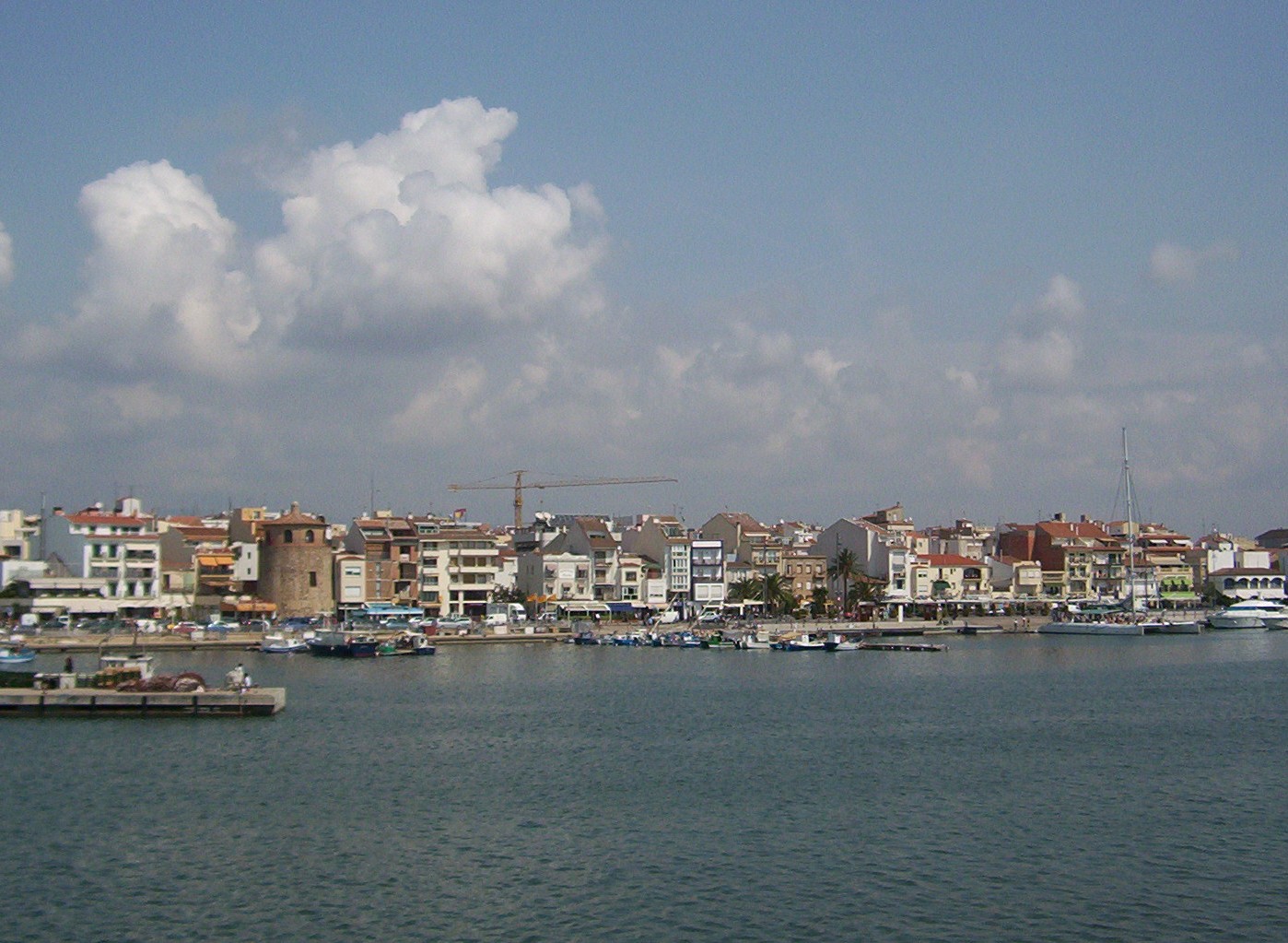
Port.
Pi Rodó pine beside a beach.

Roman Empire to Middle Ages

[edit]

The town of Cambrils can trace its origins back to prehistoric times, although it was not until the Roman Empire period that the present town of Cambrils began to grow. This is evident from the archaeological sites found throughout the municipality, such as the Roman villa of La Llosa, strategically located alongside the Via Augusta and not far from the Roman capital of Tarraco.

By the mediaeval period, there was already a permanent settlement on the right bank of the Alforja Torrent. From 1152, the kingdom of Aragon, having driven the Moors out of Catalonia, granted a series of privileges to encourage the repopulation of the place known as Cambrils. It was in the 12th century that the foundations were laid for the establishment of a stable population centre here at the southern gateway to the Camp de Tarragona, well connected to El Camino Real (the Royal Road) that linked Tortosa and Tarragona. The area also had good maritime connections; indeed, the troops of Jaume I sailed from these beaches in 1229 to re-conquer Mallorca from the Moors.

Due to this strategic position, the Crown kept title over the town by establishing a feudal lord—vassal to the king-count—and a detachment of soldiers here. In addition, they built defensive walls and towers that also served to protect other nearby villages such as Els Tegells, Les Planes and Montbrió. This royal initiative lead to the development of the present-day Old Town, with a church, hostel, hermitage, hospital, convent, market, fair, artisans, and, above all, farmers who worked the rich lands surrounding Cambrils.

However, the vitality of the community was severely disrupted in December 1640 when the town of Cambrils was the site of one of the episodes of the Reapers' War (Guerra dels Segadors) that brought Catalonia into conflict with King Philip IV of Spain. Faced with a far superior army, the population of Cambrils withstood a siege that lasted three days, before they finally capitulated. Contrary to the agreed terms of surrender, the occupying troops killed a large number of the defenders and destroyed most of the town walls. This is one of the most important events in the town's history and it is commemorated every year by a ceremony held in the Plaça del Setge (Siege Square), in front of the ruins of the walls.

From the 18th century the population began to increase, as can be seen from the establishment of workers' neighbourhoods outside the walled area. At the same time, the coastal area, now the port quarter of Cambrils, was also occupied, thanks to the construction of the Port or Moors' Tower. For centuries living on the seashore had been fraught with danger, due to constant pirate attacks. Fishermen and others who did not have time to flee to the shelter of the walled town were often killed or kidnapped. Other small mediaeval villages such as Mas d'en Bisbe, Vilagrassa and Vilafortuny, the latter of which had its own castle and church, also suffered the ravages of the pirates, which impeded the growth of their populations, a situation that did not change until they were annexed to the municipality of Cambrils in the 19th century. Over time, and with the danger largely a thing of the past, the families of fishermen and seafarers began to build their houses around the Port or Moors' Tower, thus founding the quarter that, a century later, would see the construction of the harbour, which was finished in the mid 20th century and is now the best known symbol of Cambrils.

In addition to the production of flour in the town's numerous water-driven mills, from the 19th century on small industries began to develop. These included liqueur producers, brick and building material factories, and boatyards building increasingly large vessels. The opening of the railway in 1867 gave a considerable boost to the town's commerce, agriculture and fishing, despite a series of wars, epidemics, and meteorological disasters suffered during the 19th century. The 20th century brought with it the beginning of an increase in population that would be multiplied in the 1950s with the arrival of various waves of immigration from other parts of Spain.

At the beginning of the 1960s the potential of tourism to the town was realized and began to be exploited. Large estates were built to house these new arrivals, who mainly came to enjoy the Mediterranean sun, beach and cuisine.

At dawn on August 18, 2017, an Audi A-3 with five terrorists drove into the crowd that was walking along the Cambrils seafront. Subsequently, the car overturned, the terrorists got out and began stabbing passersby. The five terrorists were killed by the Mossos d'Esquadra, leaving one woman dead in their wake and six other people injured, three of them police officers. Later it became apparent that the cell killed in Cambrils had a connection with the attack the day before in Las Ramblas in Barcelona.

Economy

[edit]

The city, along with the rest of the region around Tarragona, has enjoyed very rapid development over the last two decades. The town's fishing and agriculture background is being replaced by such emerging industries as chemical, petrochemical, services and tourism. These, in turn, have spurred large-scale development, leading to major investments in infrastructure and an increased standard of living. Today, most of the tourists to this area are Spaniards, who have their summer house at this fishing village with high quality beaches.

The Agriculture Cooperative of Cambrils was founded at 1902. Nowadays it is the agriculture and food industry reference around Camp de Tarragona. The local farmers produce fruits, vegetables, and arbequina olives, from which is made the well-known Extra Virgin Olive Oil PDO Siurana. This product has been awarded as Best Olive Oil of Spain in Fruity Category by the Agriculture Ministry of Spain and Best Olive Oil Mill of Spain (2005–2006) awarded by the Spanish Association of Municipalities of the Olive Tree (AEMO).

Tourism

[edit]

Sights

[edit]

The main sights are:

  • Molí de les Tres Eres – The main building of the Cambrils Museum of History.
  • Museu Agrícola de Cambrils – Agricultural museum of Cambrils
  • Torre de l'Ermita – Chapel Tower
  • Torre del Port – Port Tower
  • Ermita de la Mare de Déu del Camí – Chapel
  • El Parc del Pescador – Fisherman's park
  • El Parc del Pinaret – The newest and largest park.

Beaches

[edit]

The beaches are:

  • Eastern beaches:
    • Cap de St. Pere
    • Vilafortuny
    • Esquirol
    • The Cavet
    • Prat d'en Forés – Regueral
  • Western beaches:
    • La Riera
    • Horta de Sta. Maria
    • La Llosa
    • L'Ardiaca
Note: [4]

Hiking

[edit]

The GR 92 long distance footpath, which roughly follows the length of the Mediterranean coast of Spain, has a staging point at Cambrils. Stage 26 links northwards to Tarragona, a distance of 28.1 kilometres (17.5 mi), whilst stage 27 links southwards to L'Hospitalet de l'Infant, a distance of 16.3 kilometres (10.1 mi).[5]

Notable people

[edit]

See also

[edit]

References

[edit]
[edit]
Revisions and contributorsEdit on WikipediaRead on Wikipedia
from Grokipedia
Cambrils is a coastal municipality in the of Baix Camp, , , . Situated along the on the , it features 9 kilometers of beaches and a historic fishing port that anchors its maritime identity. With a population of 36,686 residents as of 2024, Cambrils occupies 35.21 square kilometers at an elevation of 24 meters, yielding a density of 1,041.9 inhabitants per square kilometer. The local economy revolves around , , and , with the town recognized as the gastronomic capital of the due to its emphasis on fresh seafood and over 200 specialized restaurants. This sector has fueled significant growth, transforming the traditionally agricultural settlement—whose origins trace to the with evidence of earlier Roman presence—into a family-oriented resort destination proximate to attractions like and PortAventura. Cambrils maintains a mild conducive to year-round sports and outdoor activities, complemented by its old quarter's and remnants, such as La Llosa. These elements, alongside events promoting local and nautical traditions, define its appeal as a balanced hub of and rather than mass overload.

Geography

Location and physical features

Cambrils is a coastal in the Baix Camp comarca of province, within the autonomous community in northeastern . It occupies a position on the along the coastline, approximately 100 kilometers southwest of and 10 kilometers east of Tarragona city center. The municipal seat is situated at coordinates 41°04′02″N 1°03′23″E. The municipality encompasses an area of 35.21 km². Elevations vary, with the town center at 24 meters above and an average across the territory of 42 meters. Physically, Cambrils features a low-lying fringed by sandy beaches and a sheltered harbor that supports and recreational . Inland, the terrain rises gradually into low hills suitable for , including vineyards and groves characteristic of the region. The shoreline extends several kilometers, with composed primarily of fine to coarse interspersed with pebbles in some coves.

Climate and environment

Cambrils experiences a hot-summer classified as Csa under the Köppen-Geiger system, characterized by mild, wet winters and hot, dry summers. Annual averages 553 mm, with the majority falling between October and March; October is the wettest month at approximately 84 mm, while July receives the least at around 13 mm. Average temperatures range from a low of 9°C to an high of 25°C, with over 300 sunny days per year supporting and . The town's coastal environment features 9 km of fine golden sand beaches along the , many awarded Blue Flags for high , environmental management, and safety standards. These beaches host seagrass meadows, which form vital underwater ecosystems supporting marine and coastal protection. Inland, green spaces include the 14-hectare Parc Samà , home to over 1,500 plant species including native Mediterranean flora like Pinus pinea, and landscaped areas emphasizing low-water native species for . Local efforts prioritize native and to mitigate urban impacts on the semi-arid surroundings.

History

Ancient and Roman periods

Archaeological evidence indicates human presence in the Cambrils area during , though findings remain sparse and primarily consist of basic tools and settlement traces. The subsequent Iberian period, spanning roughly the 6th to 1st centuries BC, is evidenced by indigenous artifacts such as ceramics and metalwork recovered from multiple sites within the municipality, pointing to occupation by local Iberian tribes engaged in and trade along the Mediterranean coast. Roman influence arrived with the conquest of following the Second Punic War in 218 BC, integrating the region into the province of centered on (modern ). Cambrils developed as part of this hinterland, with the Villa Romana de la Llosa emerging as the principal site: a rural estate constructed in the 1st century AD and inhabited until the 6th century AD, featuring residential quarters, storage facilities, and production areas typical of elite villas supporting urban centers. Excavated remains at La Llosa, discovered in 1980, include mosaics, heating systems, , and structural foundations, illustrating the villa's role in agricultural exploitation for export, particularly olives and wine, to . This site's persistence into highlights the relative continuity of Roman economic patterns in coastal amid broader imperial transitions.

Medieval and early modern eras

During the , following the fall of the in 476 AD, the area of present-day Cambrils experienced depopulation and instability akin to that in nearby , with transitions through Visigothic rule and subsequent Muslim conquests from the onward. By the , as Christian forces advanced in the , defensive structures emerged to safeguard against pirate raids and invasions, including the Castell de Vilafortuny, a fortified castle constructed around this period on a hill overlooking the coast. This castle served as a military outpost, reflecting Cambrils' strategic coastal position within the Crown of Aragon. In 1229, Cambrils' port played a key logistical role in King James I of Aragon's campaign to conquer Majorca from Muslim control, with part of the Christian fleet—comprising over 150 ships—departing from Cambrils alongside and on to initiate the invasion that secured the island by 1231. Medieval fortifications, such as remnants of town walls and watchtowers like the Torre del Puerto, further underscored the locale's defensive needs amid ongoing threats from Berber pirates and territorial conflicts. These elements positioned Cambrils as a vital enclave for maritime trade and military projection under Aragonese rule. Entering the , Cambrils remained a contested during the 17th-century (Guerra dels Segadors), a Catalan revolt against Spanish Habsburg authority under Philip IV. From December 13 to 16, 1640, royal forces under Pedro Fajardo, Marquis of Los Vélez, besieged the town after advancing from Tortosa, bombarding defenses and engaging in fierce combat that resulted in significant casualties and temporary occupation by the Crown's army. This episode highlighted Cambrils' vulnerability as a supply point in broader dynastic struggles. By the , post-war recovery spurred demographic expansion, with new settlements developing beyond the old medieval walls and increased coastal activity laying groundwork for later economic shifts.

Industrialization and 20th century

In the early 20th century, Cambrils maintained a modest economic base centered on , , and small-scale processing industries inherited from the , including flour mills, oil presses, and distilleries for liqueurs. These activities, often powered by water mills, persisted amid limited broader industrialization, with the town council and fishermen advocating for harbor to counter beach erosion that endangered coastal homes and vessels. A preliminary was built in 1927, followed by expanded refuge port development under a 1928 decree involving the of , with key works advancing in the 1930s to shelter fishing boats during storms. The (1936–1939) disrupted local life, as Cambrils, though not a frontline site, hosted troop movements, transport, and wounded soldiers while enduring aerial bombings by Nationalist forces. To mitigate civilian risks, authorities constructed a public air-raid shelter on Creus Street in 1938, the only such structure remaining intact today. Post-war recovery under Franco's autarkic policies constrained growth, sustaining reliance on fishing fleets and agricultural cooperatives, with traditional mills like the Horno del Tallero continuing operations into the 1970s. Economic liberalization via the 1959 Stabilization Plan spurred modernization, enabling the port's further adaptation for and nascent maritime activities. By the mid-20th century, urban expansion linked the historic core with peripheral settlements, while proto-industrial sites such as the Salí de Cambrils salt evaporation works faded, supplanted gradually by tourism infrastructure that built on the heritage. and economic pressures from Spain's broader developmentalist phase in the –1970s shifted focus toward service sectors, diminishing purely industrial pursuits.

Contemporary developments

In the late 20th century, Cambrils underwent a profound economic transformation, shifting from reliance on fishing and agriculture to tourism as its primary industry. This change accelerated with Spain's broader embrace of mass tourism in the 1960s and 1970s, leading to infrastructure investments such as beachfront promenades and hotel expansions that positioned the town as a family-oriented resort on the Costa Daurada. The proximity to Salou and the 1995 opening of PortAventura theme park further boosted visitor numbers, establishing Cambrils as a complementary destination emphasizing gastronomy and nautical activities. The has seen sustained growth, reflecting the town's appeal for residents and seasonal inhabitants. From around 25,000 residents in 2000, the reached 36,686 by 2024, driven by and second-home purchases amid rising real estate demand. Urban development projects, including new residential complexes and marina enhancements, have supported this expansion while prioritizing coastal preservation. Economic diversification has included growth in services and , though remains dominant, contributing to GDP through over 1 million annual visitors pre-pandemic. Recent initiatives focus on sustainable practices, such as eco-friendly port upgrades and gastronomic branding, to mitigate seasonal fluctuations and environmental pressures.

2017 Terrorist Attack

Cell formation and planning

The terrorist cell responsible for the attacks in and Cambrils originated in Ripoll, , comprising approximately 10 members, primarily second-generation Moroccan immigrants with an average age of 23, including four sets of brothers. The group coalesced around Abdelbaki Es Satty, a Moroccan who arrived in Ripoll in 2015 and assumed leadership through religious instruction and personal recruitment, leveraging family networks and private meetings, such as those at a compound in Riudecanyes. Es Satty, aged 45 and with prior associations to jihadist networks including the Group for the Call and Combat (GICM) and prison contacts in and , rapidly radicalized the members over about one year, transitioning them from nominal or non-observant to a fundamentalist ideology aligned with principles, though direct operational ties to ISIS remain unproven beyond the group's post-attack claim of responsibility. Planning began in mid-2017, focusing initially on large-scale bombings using vehicle-borne improvised explosive devices (VBIEDs) loaded with triacetone triperoxide (TATP), targeting high-casualty sites in Barcelona such as the Sagrada Família basilica and Camp Nou stadium, with potential extensions to Paris based on reconnaissance travel by member Younes Abouyaaqoub on August 11-12, 2017. Es Satty directed the acquisition of materials from August 1 to 16, 2017, including 500 liters of acetone, 340 liters of hydrogen peroxide, 120 butane gas canisters, and nails for shrapnel, stored at a rented house in Alcanar, Tarragona province, which served as the primary bomb-making facility. The cell rented Fiat Talento vans on August 16 for transport and attack execution, reflecting operational preparations for synchronized strikes. An accidental at the Alcanar site on , 2017, destroyed the facility, killed Es Satty and Youssef Aalla, and yielded an estimated 200-250 kg of TATP precursor materials, forcing an abrupt pivot from bombs to low-tech vehicle-ramming and stabbing tactics. This adaptation led to the van attack on August 17 at 4:30 PM and the Cambrils assault early on August 18, involving five cell members—Mohamed Houli Chemlal, Houmam Abouyaaqoub, Moussa Sghier Aka, Said Aallal, and Khaled Yacoubi—who drove a van into pedestrians on the promenade before exiting to attack with knives, aiming to maximize casualties despite the improvised shift. Investigations revealed no evidence of external direction from command structures, attributing the cell's coherence to Es Satty's internal influence rather than foreign handlers.

Execution of the attack

At approximately 1:30 a.m. on August 18, 2017, five members of the Islamist terrorist cell drove a stolen Fiat Tipo sedan into a group of pedestrians along the Passeig Marítim seafront promenade in Cambrils, killing one 16-year-old girl and injuring six others. The attackers exited the vehicle wearing fake suicide vests and armed with knives, attempting to stab additional victims and charging at responding police officers. A single female police officer engaged the suspects in a , fatally shooting four of them; the fifth attacker was wounded and later died from his injuries after being arrested.

Immediate response and casualties

Around 1:00 a.m. on August 18, 2017, local time, Catalan regional police () responded to reports of a pedestrians on the seaside promenade in Cambrils, a coastal resort town approximately 110 km southwest of . The attackers, who had driven an into a group of people before the overturned, emerged armed with knives and wearing fake explosive belts, prompting an immediate with responding officers. Police neutralized the threat by fatally shooting all five suspects at the scene, preventing further harm and conducting controlled detonations on the imitation belts to ensure safety. The incident resulted in one civilian death—a woman who succumbed to her injuries in hospital—and seven injuries: six civilians and one police officer wounded in the ramming and ensuing confrontation. Authorities quickly declared the situation under control, linking the Cambrils assailants to the same Islamist terrorist cell responsible for the van attack earlier that day and an in Alcanar the previous night. No additional attacks materialized in the immediate area, though heightened security measures were implemented across .

Investigations, trials, and long-term impacts

Spanish authorities swiftly linked the Cambrils attack to the concurrent van ramming and an explosion in Alcanar on August 16, 2017, which killed the cell's leader, Abdelbaki Es Satty, and destroyed a makeshift bomb factory containing materials for approximately 200-250 kg of TATP explosive. Investigations by the and National Police revealed a 10-member jihadist cell, primarily second-generation Moroccan immigrants from Ripoll, radicalized over about a year by Es Satty, who had prior convictions for drug trafficking and sympathies. The group initially planned vehicle-borne attacks targeting landmarks like the Sagrada Familia and stadium but pivoted to low-tech ramming after the Alcanar mishap; the claimed responsibility, though no direct operational ties were confirmed. Eight cell members died during the events—five shot by police in Cambrils, two in Alcanar, and Barcelona driver Younes Abouyaaqoub killed days later—leaving two key survivors for prosecution. The primary trial commenced in November 2020 at Spain's National Court, focusing on accomplices rather than perpetrators, as most were deceased. Mohamed Houli Chemlal, injured in and linked to explosives handling, received a 53-year sentence (capped at 20 years served) for membership and . Driss Oukabir, who rented the attack van under a false identity, was sentenced to 46 years (capped at 20) for similar charges. Said Ben Iazza, accused of collaborating by providing logistical support, got eight years for terrorist group membership. The court affirmed the cell's inspiration but noted operational autonomy, with convictions based on forensic evidence from vehicles, weapons, and digital traces. Long-term, the attacks underscored deficiencies in monitoring homegrown radicalization among seemingly integrated youth and inter-agency coordination on precursor chemicals, prompting enhanced of radical preachers and explosive regulations in . In Cambrils, the rapid neutralization by a single Mossos officer highlighted effective tactical response but fueled debates on arming levels for regional police. Victim compensation lagged, with only partial payouts by 2021 amid bureaucratic delays, affecting psychological recovery for the injured and families. in Cambrils and broader rebounded without significant long-term decline, as Spain's sector proved resilient to jihadist targeting of visitors, though the events amplified calls for stricter immigration vetting from .

Demographics

As of 1 January 2024, Cambrils had a resident of 36,686, marking a 1.6% annual growth rate from to 2024. This continues a pattern of expansion that accelerated in the late , with the rising approximately 40% between 2000 and 2015 amid booms and economic migration. Historical from the Instituto Nacional de Estadística (INE) indicate slower growth prior to the , when the town numbered fewer than 5,000 residents, followed by surges tied to coastal development and improved infrastructure.
YearPopulation
2000~21,300
2010~31,000
2020~34,800
202336,441
202436,686
Demographically, foreign nationals comprised 20.32% of the in 2023 (7,404 individuals), decreasing slightly to 19.99% (7,335) in 2024, with origins primarily from , , and based on regional migration patterns. Spanish nationals thus form about 80% of residents. The age structure features a median age of 38.7 years, with roughly 20% under 18, 62% aged 18-64, and 18% over 65, reflecting a working-age majority supportive of the . distribution is nearly balanced, with a slight female majority at approximately 51%.

Immigration and cultural integration

As of January 1, 2024, Cambrils had a total resident population of 36,849, with foreign nationals numbering approximately 6,800, or about 18.5% of the total. This proportion reflects a gradual increase from prior years, driven by economic opportunities in tourism, fishing, and retirement migration, with foreign residents contributing to population growth amid low native birth rates. The composition includes significant contingents from European Union countries such as the United Kingdom, Germany, and Romania, alongside non-EU origins primarily from Morocco and Latin America, though exact breakdowns by nationality vary annually per official registries. Cultural integration in Cambrils aligns with Catalonia's decentralized approach, emphasizing civic , in Catalan and Spanish, and labor incorporation programs managed by municipal services. Local initiatives, such as vocational training and orientation, have supported immigrant entry into seasonal and sectors, though the 2008-2013 economic notably hampered labor trajectories, reducing job stability for newcomers. Nationally, studies indicate persistent challenges, with only 15% of second-generation immigrants achieving upward compared to their parents, a figure double the descent rate for native youth, underscoring barriers in and access. Municipal efforts post-2017 have intensified focus on social cohesion, including community mediation and youth programs targeting at-risk immigrant subgroups, amid Catalonia's broader framework promoting mutual over assimilation. Empirical data from regional reports highlight successes in retiree integration via established networks, but reveal higher and segregation risks among North African cohorts, correlated with lower and limited . These patterns align with Spain's overall immigrant integration , which prioritizes legal regularization and anti-discrimination measures, yet faces for insufficient enforcement in monitoring parallel cultural practices that impede full societal participation.

Government and Politics

Municipal administration

The municipal government of Cambrils, known as the Ayuntamiento de Cambrils, operates under Spain's Local Regime Law (Ley de Bases de Régimen Local), with authority over local services including , public safety, tourism promotion, and environmental management. The town council comprises 21 concejales (councilors) elected by every four years, with the current term spanning 2023 to 2027. The (alcalde) is selected by absolute majority vote in the from among the councilors; in cases of deadlock, the candidate from the party with the most seats assumes the role. Following the May 28, 2023, municipal elections, the council's composition reflects a fragmented political landscape, with no single party securing a . Nou Moviment Ciutadà (NMC), a localist party emphasizing citizen participation and democratic regeneration, obtained the largest share with 6 seats (23.67% of votes). Other major groups include Esquerra Republicana de Catalunya-Acció Municipal (ERC-AM) with 4 seats, Partit dels Socialistes de Catalunya (PSC) with 3, Cambrils Millora (CM) with 3, Partido Popular (PP) with 2, and Vox with 2, alongside smaller representations totaling 21 seats.
PartySeatsVote Share (%)
NMC623.67
ERC-AM414.15
PSC312.79
CM311.81
PP28.19
Vox27.59
Oliver Klein of NMC has served as mayor since March 6, 2025, elected in an extraordinary plenary with 11 votes from NMC's 6 councilors, PSC's 3, and PP's 2, following the resignation of prior mayor Alfredo Clúa (PSC), who could not pass the 2025 municipal budget amid coalition tensions. This arrangement underscores reliance on cross-party support for governance stability in Cambrils, a pattern common in Spanish municipalities without outright majorities. The executive team, or equip de govern, typically includes deputy mayors overseeing portfolios such as economic development, social services, and infrastructure, though specific post-2025 allocations prioritize tourism recovery and fiscal prudence.

Regional context and autonomy debates

Cambrils is situated in the Baix Camp of province, the southernmost province of , an autonomous community in northeastern with devolved powers under the 1979 Statute of Autonomy, reformed in 2006 to expand competencies in taxation, education, and . This regional framework grants significant self-rule, including its own parliament and police force (), but has been contested amid fiscal grievances, with Catalan governments arguing for greater control over taxes collected by . Tarragona's economy, reliant on , , and , contrasts with Barcelona's service-oriented profile, fostering a pragmatic approach to that prioritizes over radical restructuring. The broader Catalan autonomy debates intensified after Spain's partially invalidated the 2006 statute in 2010, prompting protests and a shift toward advocacy by parties like ERC and Junts per Catalunya, culminating in the unilateral 2017 declared illegal by . In province, however, engagement was subdued, with only 21% in the October 1 vote—far below Catalonia's 43% average—reflecting widespread by unionists and skepticism toward amid economic risks like potential trade disruptions. Local sentiment in Baix Camp aligns with this, as areas like feature in "Tabarnia," a satirical unionist counter-narrative highlighting opposition to in southern counties, supported by municipal outcomes favoring federalist parties such as PSC over separatists. Cambrils' politics underscore this regional divergence, with the PSC—opposed to independence and advocating enhanced within —dominating municipal , as seen in former Alfredo Clúa's tenure until 2025 amid shifts. Pro-independence forces have struggled locally, garnering limited seats in elections, while unionist views emphasize shared Spanish identity and practical benefits of integration, corroborated by lower Catalan nationalist mobilization compared to northern provinces like . This positions Cambrils as emblematic of Catalonia's internal heterogeneity, where autonomy debates prioritize fiscal equity and infrastructure over sovereignty claims.

Economy

Traditional sectors: fishing and agriculture

Cambrils' fishing sector originated in the late 19th century with the formation of the Cambrils Fishermen's Society in 1895 for ship masters, followed by the Fishing Industry Union in 1905, which grouped fishermen and related trades. By 1931, the sector employed 418 men registered in the precursor to the modern Fishermen's Guild. The port's fishing dock features a 1,114 m² auction hall, 927 m of fishing sheds across 50 units, and an ice factory producing 55 tons per day to support fresh catch handling. Today, the guild maintains daily auctions from Monday to Friday, focusing on fish and shellfish trade, with arrivals of traditional small boats and "light" vessels targeting squid and other species at night. This activity sustains a core of local fishing families amid broader economic shifts toward tourism. Agriculture in Cambrils has centered on Mediterranean staples, with the founded in 1902 serving as a regional benchmark for fruit, wine, and production in the Camp de area. The cooperative historically processed wine during the modernist era but evolved to emphasize extra virgin from olives, alongside , , nuts, and olives, distributed through local agroshops. As province's wealthiest , it underscores profitable farming tied to high-value exports like , which garners international awards. Traditional methods, preserved in sites like the Agricultural Museum's exhibits on presses, mills, and wine fermentation vats, highlight oil and wine as enduring economic pillars despite modernization.

Tourism industry

Tourism dominates Cambrils' economy, capitalizing on its 9 kilometers of golden sandy beaches along the , which feature calm waters suitable for families and activities like and water sports. Key beaches include Platja del Prat d'en Forès and Platja de la Riera de Cabra, maintained with facilities such as promenades, showers, and accessibility aids. The sector benefits from the region's mild , with summer highs averaging 32°C, supporting peak-season visitation. The town's working fishing port anchors gastronomic tourism, supplying fresh to over 100 restaurants along the Passeig Marítim, establishing Cambrils as a culinary hub in the area. Proximity to Salou's PortAventura theme park, just 10 kilometers away, draws families, enhancing spillover effects for local accommodations and services. As part of the , which attracts 3.5 million visitors annually, Cambrils positions itself as a quieter alternative to busier neighbors, emphasizing relaxed seaside experiences. Accommodation capacity supports substantial tourist inflows, with over 7,000 beds across categories from 1- to 4-star properties, up to 17,000 places, and around 6,000 apartment units. Visitor demographics feature a plurality from (51%), followed by (29%), the (22%), and (15%), reflecting strong regional and European appeal. Despite seasonal concentration in summer, efforts like facilities and routes promote extended stays and off-peak activity.

Modern economic challenges and diversification

Cambrils faces significant economic challenges stemming from its heavy reliance on , which accounted for approximately 49% of the town's estimated GDP in 2016, generating around 250 million euros annually. This dependence exposes the local economy to , with peak activity concentrated in summer months, leading to elevated off-season and underutilized . The exacerbated these vulnerabilities, prompting the municipal government to convene a summit in April 2020 to devise a reactivation plan focused on short-term relief and long-term resilience. Additional pressures include rising sustainability concerns, such as and environmental impacts from mass , alongside debates over a proposed to fund while addressing resident affordability issues. To mitigate these risks, Cambrils has pursued diversification through the "," emphasizing maritime activities beyond traditional and beach . In September 2024, municipal leaders highlighted the strategic potential of sectors like nautical services, , and marine innovation to create year-round jobs and reduce tourism volatility. This includes European Union-funded initiatives via the GALP program, which in August 2024 allocated resources to modernize the fishing sector, promote diversification in , and integrate with . Complementary efforts involve adoption, with local projects in 2023 aiming to diversify energy sources for stable supply and reduced dependence. Further initiatives target non-maritime growth, such as enhancing congress and —evident in 2024 promotions for destinations in Scandinavian markets—to extend the tourist season and attract higher-spending visitors. developments, including a 2021 nautical services center for boat rentals at the port, support these aims by fostering ancillary services like marine maintenance and eco-. Economic data from the Catalan Statistical (Idescat) indicate ongoing monitoring of sectoral and GDP contributions through 2024, underscoring a gradual shift toward balanced growth amid persistent tourism dominance.

Culture and Heritage

Historical sites and architecture

The Torre del Port, a prominent coastal erected in the late , served as a defensive structure against frequent pirate raids along the Catalan shoreline. Positioned centrally within Cambrils' district, the circular tower features robust stone masonry typical of Iberian watchtowers from the era, with a strategic vantage for signaling threats. It underwent restoration in 1995 and now functions as a venue for temporary exhibitions while preserving its original defensive architecture. The Parish Church of Sant Pere, dedicated to Saint Peter, represents a key example of 20th-century religious architecture in Cambrils, with construction commencing in 1940 and completing after five years at a height of 33 meters. Its art deco stylistic elements, including geometric facades and simplified ornamental details, distinguish it from earlier Gothic precedents in the region, reflecting post-Spanish Civil War rebuilding efforts in the town center. The church anchors the modern urban layout while integrating with surrounding historical quarters. Cambrils' old town preserves remnants of medieval , including narrow cobblestone streets and fortified elements from the 14th to 16th centuries, originally designed for defense amid regional conflicts. Structures like the nearby Castle Vilafortuny, a medieval fortress dating to the with later Gothic modifications, exemplify transitional military architecture blending Romanesque bases with pointed arches and battlements, though its primary ruins lie on the town's periphery. These features underscore Cambrils' evolution from a fortified settlement to a preserved heritage zone amid coastal expansion. Additional sites include the Molí de les Tres Eres, a restored 18th-century mill now housing historical exhibits on local agrarian , featuring wooden mechanisms and stone grinding apparatus indicative of pre-industrial water-powered milling in Tarragona province. While lacking grand ancient monuments, Cambrils' built heritage prioritizes functional coastal and rural designs over monumental scale, with archaeological traces of Roman-era villas unearthed in surrounding fields dating to the 1st-3rd centuries AD, though not forming intact public sites.

Local traditions and festivals

Cambrils' local traditions are deeply intertwined with its fishing heritage and Catalan cultural practices, including communal dances such as sardanes and maritime rituals honoring the sea. These customs emphasize collective participation, often featuring processions, music, and , reflecting the town's historical reliance on the Mediterranean for livelihood and identity. The Festa Major de Sant Pere, held annually from June 22 to 30, celebrates the patron saint of fishermen with key events like the arrival of the Canigó flame on June 23, sea processions for boat blessings, performances of havaneres (traditional seafaring songs), llagut (Catalan skiff) races, and correfocs (fire-running spectacles). This festival opens the summer season and draws on Cambrils' pesquero past, with activities centered around the port and including ormeig (a communal fish-sharing meal). The Festa Major de la Mare de Déu del Camí, the town's primary summer festival spanning late August to mid-September (e.g., August 22 to September 14 in 2025), honors the Virgin of the Way with sardanes, music concerts, fairs, exhibitions, and the climactic Tronada display. A longstanding custom involves locals offering flowers at the Mare de Déu hermitage courtyard, underscoring devotion tied to historical pilgrimage routes. Additional observances include the Festa de la Immaculada in early December, featuring traditional processions and professions of on , blending religious rites with community gatherings. Public holidays like Sant Antoni's Day () incorporate animal blessings and bonfires, while broader Catalan elements such as correfocs recur across events, maintaining continuity with regional folk practices.

Culinary traditions

Cambrils' culinary traditions center on fresh sourced from its active , where daily auctions supply with catches like prawns, , and monkfish. This maritime heritage shapes dishes emphasizing simplicity and quality, often grilled or stewed to highlight natural flavors, complemented by preparations influenced by the region's agricultural bounty of vegetables and . A hallmark is arrossejat, a traditional dish originating in the Baix Camp area, typically prepared with , , and ñora peppers for a crispy texture and subtle smokiness, served as a starter or main course in local eateries. Another staple, suquet de peix, is a hearty combining white fish, potatoes, and , reflecting Catalan coastal cooking methods dating back centuries. Romesco sauce, a rustic emulsification of roasted peppers, tomatoes, almonds, hazelnuts, and , accompanies grilled or calcots (grilled ), tying into Tarragona's fishing neighborhoods like El Serrallo, where variations emerged from fishermen's resourcefulness. Land-sea fusions include fish stuffed with local and paired with , or xató salad featuring escarole, cod, olives, and anchovies in a , showcasing the interplay of Cambrils' fertile hinterland and sea proximity. The town's gastronomic scene upholds these practices through establishments like Can Bosch and Miramar, Michelin-recognized for seasonal seafood and rice, sourcing directly from the port to maintain authenticity amid tourism pressures. Cambrils' Escoles de Hostaleria i Turisme, operational since , trains professionals in these traditions, contributing to over 100 s that blend heritage with modern techniques.

Infrastructure and Transportation

Urban planning and development

The urban planning framework in Cambrils is governed by the Plan d'Ordenació Urbanística Municipal (POUM), which serves as the primary instrument for directing territorial and urban development in the municipality. The POUM received initial approval on 16 December 2004 and definitive approval on 1 December 2005 by the Tarragona Territorial Urban Planning Commission, succeeding the 1993 Plan General de Ordenació Urbana. Its adoption involved modifications such as redefining street layouts, incorporating a coastal promenade, and designating hotel development zones through private initiatives, while zoning classifications cover residential expansions, commercial areas, garden-city zones, and tourism-oriented sectors. The POUM's implementation encountered substantial resistance, including 3,134 public allegations—over 2,700 opposing proposed Plans de Millora Urbana (PMU) in areas like El Regueral and Horta de Santa Maria that risked demolishing existing structures and affecting approximately 1,200 homes—and protests drawing up to 2,000 participants on 6 August 2005. In response, the municipal government withdrew the contested PMUs, reflecting a balance between growth pressures from tourism-driven expansion and resident concerns over preservation. The plan has undergone periodic updates, including a material error correction in 2007 and a consolidated text (texto refundido) in 2021, with further refocusing of normative documents in 2023 to incorporate punctual modifications and enhance accessibility. Recent developments emphasize controlled residential growth and revitalization, such as the initial approval on 20 May 2025 of the urbanization project for the northern sector of Pinarets, which plans 495 new dwellings comprising 183 single-family homes and 312 multi-family units limited to 90 square meters each. In October 2025, the municipality proposed a 25 million initiative for integral urban and social renewal targeting three historic neighborhoods—Eixample Vila, Barri Antic, and La Pallissa—aiming at comprehensive transformation. is integrated into project requirements, mandating measures for environmentally sound development within the POUM's framework, particularly in and zones. Digital and tools support planning transparency and efficiency, including the launch of an urban geoportal in June 2023 enabling parcel searches, address queries, and map-based consultations of data. A transformation plan adopted in 2017 provides strategic tools to enhance resident through improved urban management, building on earlier collaborations like the 2015 Reus-Cambrils smart mobility projects.

Connectivity and accessibility

Cambrils benefits from strong regional connectivity, situated along the AP-7/E-15 motorway, which links it efficiently to major cities; the drive from takes approximately 1 hour, while is reachable in 15-20 minutes. Local roads, including the N-340 coastal route, provide alternatives for non-toll access, though the AP-7 remains the primary artery for high-volume traffic. The nearest airport is (REU), 10-15 kilometers northwest, with direct bus services via operators like BusPlana connecting to Cambrils in about 20 minutes for €2-7; flights primarily serve seasonal European routes. Barcelona-El Prat Airport (BCN), roughly 100 kilometers north, offers indirect access through coordinated bus-train transfers or direct Plana Bus shuttles, with total travel times of 1.5-2 hours. Rail services operate from Cambrils station, part of the network, with regional trains to (8-10 minutes) and (1-1.5 hours via high-speed connections at Camp de Tarragona). Interurban buses, including lines from BusPlana, supplement rail links to nearby destinations like and PortAventura, enhancing accessibility for day trips. Within Cambrils, a compact layout supports pedestrian and access, with bike rentals and a tourist mini-train available; urban buses and taxis cover key routes, and many stops feature lowered platforms for users, aligning with Spain's broader accessible standards.

Notable Residents

Francisco Vidal y Barraquer (1868–1943), a Spanish Catholic cardinal who served as Archbishop of from 1914 until his death, was born in Cambrils on October 3, 1868. Josep-Lluís Carod-Rovira (born May 17, 1952), a philologist, writer, and prominent Catalan independentist politician who led Esquerra Republicana de Catalunya (ERC) from 1996 to 2008 and served as vice president of the Catalan government from 2006 to 2010, was born in Cambrils. Iván Cervantes Montero (born May 2, 1982), a professional enduro motorcycle racer who won five FIM Enduro World Championships between 2011 and 2015, was born and raised in Cambrils.

References

Add your contribution
Related Hubs
User Avatar
No comments yet.