
.png/250px-Licor-Beirão-&-Orus_-_Orus_Clothing_(cropped).png)


.png)
Community hub
Recent from talks
Contribute something
Nothing was collected or created yet.
Liqueur
View on Wikipedia
.png)
A liqueur (UK: /lɪˈkjʊər/ ⓘ li-KURE, US: /lɪˈkɜːr/ li-KUR;[1] French: [likœʁ]) is an alcoholic drink composed of spirits (often rectified spirit) and additional flavorings such as sugar, fruits, herbs, and spices. Often served with or after dessert, they are typically heavily sweetened and un-aged, beyond a resting period during production, when necessary, for their flavors to mingle.
Liqueurs are historical descendants of herbal medicines. They were made in France as early as the 13th century, often prepared by monks (for example, Chartreuse). Today they are produced all over the world, commonly served neat, over ice, with coffee, in cocktails, and used in cooking.
Etymology
[edit]The French word liqueur is derived from the Latin liquifacere, which means "to dissolve".[2][3]
In some parts of the United States and Canada, liqueurs may be referred to as cordials, or schnapps.[4][5] This can cause confusion as in the United Kingdom a cordial would refer to a non-alcoholic concentrated fruit syrup, typically diluted to taste and consumed as a non-carbonated soft drink.[6] Schnapps, on the other hand, can refer to any distilled beverage in Germany and aquavit in Scandinavian countries.[7]
Legal definitions
[edit]In the United States, where spirits are often called "liquor", there is often confusion discerning between liqueurs and liquors, due to the many different types of flavored spirits that are available today (e.g., flavored vodka). Liqueurs generally contain a lower alcohol content (15–30% ABV) than spirits[8] and have a sweetener mixed, while some can have an ABV as high as 55%.[9]
Canada
[edit]Under the Food and Drug Regulations (C.R.C., c. 870), liqueurs are produced from mixing alcohol with plant materials.[10] These materials include juices or extracts from fruits, flowers, leaves or other plant materials.[10] The extracts are obtained by soaking, filtering or softening the plant substances. A sweetening agent should be added in an amount that is at least 2.5 percent of the finished liqueur. The alcohol percentage shall be at least 23%.[10] It may also contain natural or artificial flavoring and color.[10]
European Union
[edit]The European Union directive on spirit drinks provides guidelines applicable to all liqueurs.[11] As such, a liqueur must
- contain a minimum of 15% alcohol by volume,
- in most cases, contain sweetening equivalent to at least 100 grams of inverted sugar per liter,[12]
- be created using neutral grain alcohol and/or distillate(s) of agricultural origin,
- be flavored with natural, or nature-identical, flavorings, and
- be labeled with the alcohol content and a list of any food colorings.
United States
[edit]The Alcohol and Tobacco Tax and Trade Bureau regulates liqueurs similarly to Canada. Liqueurs (and also cordials) are defined as products created by mixing or redistilling distilled spirits with fruit, plant products, natural flavors, extracts, or sweeteners. These additives must be added in an amount not less than 2.5% by weight of the final product.[13]
Preparation
[edit]Some liqueurs are prepared by infusing certain woods, fruits, or flowers in either water or alcohol and adding sugar or other items. Others are distilled from aromatic or flavoring agents.
Anise and Rakı liqueurs have the property of turning from transparent to cloudy when added to water: the oil of anise remains in solution in the presence of a high concentration of alcohol, but coalesces when the alcohol concentration is reduced; this is known as the ouzo effect.[14]
Use
[edit]
Cocktails
[edit]Adding liqueurs to a cocktail can change the flavour and appearance of the cocktail. Whilst some liqueurs are coloured and designed to make the cocktail pop in colour, others are clear to prevent the liqueur from taking over the colour of the base spirit or garnish.[15]
Layered drinks
[edit]Layered drinks are made by floating different-colored liqueurs in separate layers. Each liqueur is poured slowly into a glass over the back of a spoon or down a glass rod, so that the liquids of different densities remain unmixed, creating a striped effect.[16]
Gallery
[edit]-
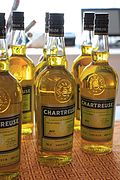 Chartreuse has been made by French Carthusian monks since the 1740s
 -
 Altvater herbal liqueur produced in Austria
 -
 Damiana-based liqueur of Mexico
 -
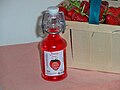 Fraise strawberry liqueur from the Ardennes, Belgium
 -

-
 Demänovka is a traditional Slovak liqueur produced since 1867
 -
 Homemade elder flower liqueur
 -
 Fish Shot is a liqueur with a Fisherman's Friend flavour
 -
 Poire William (Williams Pear) Liqueur by Massenez


Health concerns
[edit]Alcohol-based sugar-sweetened beverages, are closely linked to heavy episodic drinking in adolescents.[17]
See also
[edit]

References
[edit]- ^ "Definition of 'liqueur'". Collins English Dictionary.
- ^ Owens, B.; Dikty, A.; Maytag, F. (2011). The Art of Distilling Whiskey and Other Spirits: An Enthusiast's Guide to the Artisan Distilling of Potent Potables. Quarry Books. p. 106. ISBN 978-1-61673-555-5. Retrieved July 30, 2018.
- ^ Etkin, N.L. (2009). Foods of Association: Biocultural Perspectives on Foods and Beverages that Mediate Sociability. University of Arizona Press. p. 210. ISBN 978-0-8165-2777-9. Retrieved July 30, 2018.
- ^ Lichine, Alexis (1987). Alexis Lichine's New Encyclopedia of Wines & Spirits (5th ed.). New York: Alfred A. Knopf. p. 198. ISBN 978-0-394-56262-9.
- ^ New Oxford American Dictionary (3rd ed.). New York: Oxford University Press. 2010. p. 385. ISBN 978-0-19-539288-3. cordial: "another term for liqueur"
- ^ Dietsch, Michael. "9 Easily Confused Cocktail Terms You Should Know". Serious Eats. Archived from the original on 31 July 2018. Retrieved 31 July 2018.
- ^ Prial, Frank (27 October 1985). "Schnapps, the Cordial Spirit". The New York Times. Archived from the original on 31 July 2018. Retrieved 31 July 2018.
- ^ "How to Tell Your Liquor From Your Liqueur". The Spruce Eats. Archived from the original on 11 August 2021. Retrieved 1 August 2018.
- ^ "Liquor alcohol content". alcoholcontents.com. Archived from the original on 31 July 2018. Retrieved 1 August 2018.
- ^ a b c d Branch, Legislative Services (23 June 2021). "Consolidated federal laws of canada, Food and Drug Regulations". laws.justice.gc.ca. Archived from the original on 17 July 2017. Retrieved 15 July 2017.
- ^ "Consolidated text: Regulation (EU) 2019/787 of the European Parliament and of the Council of 17 April 2019 on the definition, description, presentation and labelling of spirit drinks, the use of the names of spirit drinks in the presentation and labelling of other foodstuffs, the protection of geographical indications for spirit drinks, the use of ethyl alcohol and distillates of agricultural origin in alcoholic beverages, and repealing Regulation (EC) No 110/2008". 25 May 2021.
- ^ The wording is: "a minimum content of sweetening products, expressed as invert sugar". The level is lowered to 70 grams per liter for cherry or sour cherry liqueurs, and 80 grams per liter for "liqueurs flavoured exclusively with gentian or a similar plant or wormwood".
- ^ "27 CFR 5.22 – The standards of identity". Archived from the original on 30 January 2017. Retrieved 6 February 2022.
- ^ Sanchez-Dominguez, M.; Rodriguez-Abreu, C. (2016). Nanocolloids: A Meeting Point for Scientists and Technologists. Elsevier Science. p. 369. ISBN 978-0-12-801758-6. Retrieved 2 August 2018.
O/W and W/O nano-emulsions can also be formed without a surfactant by self-emulsification, using the so-called Ouzo effect. The major components of Ouzo (a Greek drink) are trans-anethole, ethanol, and water. Anethole is almost insoluble ...
- ^ "What are Liqueurs? Find out from the Experts!". Spirits of France. 4 July 2022. Archived from the original on 2022-11-30. Retrieved 2022-11-30.
- ^ "Know the Density of Your Liquor To Make the Best Layered Drinks". The Spruce Eats. Archived from the original on 1 August 2018. Retrieved 1 August 2018.
- ^ Wakabayashi KT, Greeman EA, Barrett ST, Bevins RA (September 2021). "The Sugars in Alcohol Cocktails Matter". ACS Chemical Neuroscience. 12 (18): 3284–3287. doi:10.1021/acschemneuro.1c00526. PMC 8447180. PMID 34428024.
Further reading
[edit]- The Liqueur Compounder's Handbook of Recipes for the Manufacture of Liqueurs, Alcoholic Cordials and Compounded Spirits. Bush, W.J. and Co. 1910.
- Kaustinen, E.M. (1985). Production and stability of cream liqueurs made with whey protein concentrate. University of Wisconsin-Madison.
External links
[edit]


Liqueur
View on GrokipediaOverview and History
Definition and Characteristics
A liqueur is an alcoholic beverage produced by flavoring a base spirit, such as brandy or a neutral spirit, with ingredients including fruits, herbs, nuts, spices, or other natural materials, followed by the addition of sugar syrup or honey to achieve a minimum sweetness level of 2.5% by weight.[3] In the United States, the Alcohol and Tobacco Tax and Trade Bureau (TTB) classifies cordials and liqueurs under this standard, requiring them to be made by mixing or redistilling distilled spirits with such flavorings and ensuring the sugar content meets or exceeds this threshold for a distinctly sweet profile. This process results in a versatile spirit designed for both standalone consumption and cocktail enhancement. Key characteristics of liqueurs include an alcohol by volume (ABV) typically ranging from 15% to 30%, which provides a milder potency compared to many unflavored spirits, and a viscous, syrupy texture imparted by the dissolved sugars.[6] Their flavor profiles vary widely, encompassing intensely sweet notes from fruit infusions, herbal bitterness, or creamy richness, setting them apart as sweetened, aromatized spirits rather than neutral or aged liquors like vodka or whiskey.[7] In the European Union, regulations further specify a minimum 15% ABV and, for most varieties, at least 100 grams of sugar per liter, reinforcing their role as digestifs or mixers with balanced sweetness and complexity. Liqueurs differ from related beverages such as non-alcoholic cordials, which are essentially sweetened fruit syrups without spirits, and bitters, which feature minimal sugar (often under 2.5% by weight) and serve primarily as aromatic accents in drinks rather than primary sippers.[8] This emphasis on sweetness and multifaceted flavors makes liqueurs ideal for after-dinner enjoyment or as essential components in classic cocktails like the margarita or grasshopper. In the 2020s, contemporary innovations have expanded liqueur accessibility, including low-sugar options sweetened with sugar alcohols or stevia to reduce calorie content while maintaining flavor intensity, and non-dairy cream variants using oat, almond, or coconut milk bases to appeal to vegan and lactose-intolerant consumers.[9][10]Etymology
The term "liqueur" entered the English language in 1729, borrowed directly from the French "liqueur," which denoted a liquor or liquid and evolved from Old French "licor" dating to the 12th century.[11] This French form traces back to the Latin "liquorem" (nominative "liquor"), meaning "a liquid, liquor; wine; the sea," originally signifying "liquidity" or "fluidity," derived from the verb "liquere," "to be fluid or liquid."[11] The word thus fundamentally emphasizes the fluid essence of the beverage, distinguishing it as a category of sweetened and flavored spirits prepared by dissolving ingredients in alcohol. In linguistic evolution, "liqueur" shares roots with the broader term "liquor," which was adopted into English around 1200 from the same Old French "licor" and Latin source, initially referring to any substance in a liquid state before narrowing to mean fermented or distilled alcoholic drinks by about 1300.[12] While "liquor" became the general English term for alcohol, "liqueur" retained a more specific connotation for flavored, sweetened varieties, highlighting a semantic shift toward artisanal, infused products in French distilling traditions. The related term "cordial," often used synonymously with "liqueur" in modern contexts especially in the United States and Canada, originates from the Latin "cor" or "cordis," meaning "heart," and was historically applied to such drinks believed to have tonic or stimulating effects on the heart, reflecting their early medicinal associations.[13] The adoption of "liqueur" into English during the 18th century aligned with growing exposure to French culinary and distilling practices, as trade and cultural exchange popularized these sweetened spirits beyond their continental origins.[11] This period marked a shift from earlier French terms like precursors to "eau de vie" (water of life), which emphasized the vital, distilled nature of alcohols, to "liqueur" as a designation for flavored elixirs. In medieval Europe, the terminology drew from alchemical and pharmaceutical traditions, where distillation techniques developed by scholars and monks transformed herbal infusions into liquid remedies, influencing the word's association with dissolved essences.[14]Historical Development
The origins of liqueurs trace back to ancient medicinal preparations, where herbal infusions served as precursors in civilizations like Egypt and Greece. Archaeological evidence from Egyptian tombs dating to approximately 3150 B.C. reveals residues of wine infused with herbs such as savory, Artemisia seibeni, and blue tansy, along with tree resins like pine, used as analgesics, diuretics, and general remedies as described in later medical papyri around 1550 B.C.[15] Similarly, Greek scrolls from antiquity document comparable botanical mixtures steeped in alcohol for therapeutic purposes, emphasizing liqueurs' initial role as health elixirs rather than beverages.[16] During the medieval and Renaissance periods, European monasteries advanced these practices into distilled forms, particularly from the 13th century onward, when monks refined herbal concoctions as protective elixirs against plagues and ailments. A pivotal example is Chartreuse, developed by Carthusian monks; in 1605, they received a manuscript outlining a recipe for an "Elixir of Long Life" using 130 plants, with production of the liqueur beginning in 1737 at their Grande Chartreuse monastery in France.[4] The monks maintained strict secrecy around the formula—known only to a few members—to preserve its medicinal potency, a tradition that persists today and exemplifies the era's blend of spirituality and pharmacology.[4] Commercialization accelerated in the 18th and 19th centuries through French and Italian distilleries, shifting liqueurs from monastic remedies to widespread consumer products amid expanding trade and colonial influences. In France, the post-Cognac boom in the early 19th century popularized brandy as a neutral base for flavored spirits, while innovations like Curaçao liqueur emerged around the same period, pot-stilled with orange peels introduced via Dutch Caribbean trade.[17] Italy contributed significantly, with distilleries scaling up production of herbal varieties; anisette, for instance, gained popularity across Europe in the late 19th century following the phylloxera crisis, which disrupted wine production and boosted demand for anise-flavored spirits, becoming a favored digestif due to its anise flavor and perceived digestive benefits.[18][19] This era marked liqueurs' transition to luxury goods, with houses like Marie Brizard commercializing anisette since 1755.[19] In the 20th century, liqueurs adapted to global disruptions and cultural shifts, particularly during U.S. Prohibition (1920–1933), when they were permitted as medicinal tonics under physician prescriptions, often in the form of bitters or herbal extracts like Campari to circumvent bans on higher-proof alcohols.[20] Post-World War II, a cocktail culture boom in the 1950s and 1960s propelled their popularity, integrating them into tiki and exotic drinks amid economic prosperity and airline-fueled interest in international flavors.[21] Entering the 21st century, the 2020s have seen expansions toward craft and sustainable production, with distillers emphasizing organic herbal ingredients, zero-waste methods, and eco-friendly packaging to meet consumer demand for ethical alternatives.[22]Production
Ingredients
Liqueurs are fundamentally built upon a base spirit that provides the alcoholic foundation, typically a neutral grain spirit, brandy, rum, or vodka, which is distilled to a high proof ranging from 40% to 95% alcohol by volume before dilution and flavoring.[23] Neutral grain spirits, often produced from grains like corn, wheat, or barley, are favored for their clean, flavorless profile that allows the added ingredients to dominate, achieving up to 95% ABV to ensure neutrality.[24] Brandy serves as a base in fruit-forward liqueurs like orange varieties, imparting subtle fruity notes, while rum is used in tropical or spice-infused options for its caramel undertones.[25] Flavoring agents form the distinctive character of liqueurs, derived from natural sources such as fruits (e.g., cherries, oranges), herbs and spices (e.g., anise, gentian), nuts, creams, or exotic elements like coffee and chocolate, though artificial extracts can also be employed for consistency and cost efficiency.[5] Natural flavorings are extracted through processes like infusion, distillation, or maceration from plant materials, preserving authentic aromas and tastes, whereas artificial ones are synthetically produced to mimic these profiles but may lack complexity.[26] Fruits provide bright, juicy notes in varieties like cherry or citrus liqueurs, while herbs and spices add bitter, aromatic depth, and nuts or creams contribute creamy, nutty richness; coffee and chocolate infusions yield indulgent, roasted flavors.[27] Sweeteners are essential to liqueurs, balancing the intensity of flavorings and achieving regulatory minima such as at least 2.5% sugar by weight under North American regulations or equivalent to 100 grams of invert sugar per liter under EU regulations, commonly introduced as sugar syrups, honey, or glucose to enhance viscosity and mask bitterness. Sugar syrups, often derived from cane or beet, provide a straightforward sweetness that integrates seamlessly during production, while honey adds floral nuances suitable for herbal liqueurs, and glucose offers a neutral, high-intensity option for precise formulation.[7] This sweetening not only defines the liqueur's smooth mouthfeel but also distinguishes it from unsweetened spirits, with levels far exceeding the minimum in most commercial examples to emphasize dessert-like qualities. Additives and preservatives in liqueurs are used sparingly to maintain quality, including colors for visual appeal, stabilizers like glycerin for texture, and minimal preservatives to extend shelf life, though premium varieties prioritize natural ingredients to avoid synthetic alterations.[29] Natural colors from sources like caramel or fruit extracts are preferred in high-end products, while stabilizers prevent separation in cream-based liqueurs; preservatives such as citric acid are occasionally added but regulated to ensure they do not overpower the core profile.[30] Sourcing considerations for liqueur ingredients heavily influence flavor quality, as terroir—the unique environmental factors like soil, climate, and location—affects the potency and nuance of fruits and herbs, exemplified by Italian limoncello, which relies on Sorrento lemons with IGP protection grown on the volcanic slopes of the Sorrentine Peninsula for their thick, aromatic peels rich in essential oils.[31] These IGP-protected lemons impart a bright, citrus intensity unattainable elsewhere, highlighting how regional sourcing elevates premium liqueurs by capturing localized botanical characteristics.[32]Manufacturing Processes
The manufacturing of liqueurs primarily involves extracting flavors from botanicals, fruits, or other ingredients into a neutral base spirit, followed by sweetening, dilution, and optional maturation to achieve the desired profile. Traditional flavor infusion methods include maceration, percolation, and distillation of essences, each selected based on the ingredient's nature to optimize extraction efficiency and flavor quality.[33] Maceration entails soaking ingredients such as soft fruits or herbs in the base spirit for several weeks, allowing natural diffusion to draw out colors, aromas, and soluble compounds; this cold or gently heated process is ideal for delicate materials that could degrade under heat. Percolation passes the spirit through a column or bed of harder flavorings like spices or coffee beans, enabling continuous solvent action for a more intense, filtered tincture without prolonged contact time. Distillation of essences adds flavor materials to the spirit before redistilling, yielding a clear, concentrated distillate that captures volatile essences while removing impurities.[33] After infusion, the flavored spirit undergoes sweetening by incorporating sugar syrup at levels meeting regulatory minima, such as 100 grams per liter under EU regulations, with higher levels (e.g., 250 g/L for crème de fruits or 450 g/L for crème de cassis) for richer profiles in certain subcategories. Dilution with water or neutral alcohol then adjusts the mixture to the target alcohol by volume (ABV), ranging from 15% to 55%, using either cold processing to maintain freshness or hot methods for quicker homogenization and stability.[33][34] Aging and maturation represent an optional phase, where the sweetened liqueur may rest in stainless steel tanks for stability or in oak barrels for 3 to 6 months to integrate wood-derived tannins, vanillins, and subtle oxidative notes, enhancing complexity; many fresh-style liqueurs skip this to preserve vibrant fruit or herbal characters.[35] Contemporary advancements refine these processes for precision and sustainability, such as vacuum distillation at reduced temperatures (below 40°C) to retain heat-sensitive volatiles without degradation, and supercritical CO2 extraction, which uses pressurized carbon dioxide as a non-toxic solvent to isolate pure flavor compounds efficiently. These innovations support rigorous quality control measures, including filtration for clarity, centrifugation for sediment removal, and stability testing to prevent separation or oxidation over time.[36] Artisanal production emphasizes small-batch, hands-on approaches akin to historical monastery traditions, relying on natural infusions and minimal mechanization for nuanced, variable outcomes. Industrial-scale manufacturing, conversely, leverages automated percolators, large-scale distillation columns, and sometimes synthetic flavor adjuncts to produce consistent volumes efficiently, often exceeding thousands of liters per run while adhering to standardized protocols.[5]Types and Varieties
Fruit-Based Liqueurs
Fruit-based liqueurs are distilled spirits flavored predominantly with fruits, typically through infusion or maceration, resulting in vibrant, sweet profiles that highlight natural fruit essences. These liqueurs generally contain 15-40% alcohol by volume and are sweetened to at least 100 grams per liter, with crème varieties requiring a minimum of 250 grams per liter of sweetening products under EU regulations.[37] Unlike other categories, they emphasize fresh, juicy notes from berries, citrus, or stone fruits, often achieving high fruit-derived content through direct extraction methods.[1] Common examples include triple sec, a clear orange liqueur with a bright, candied citrus flavor derived from bitter orange peels; maraschino, made from Marasca cherries and offering a subtle almond-like nuttiness alongside tart cherry notes; crème de cassis, a deep red blackcurrant liqueur with rich, jammy berry sweetness balanced by acidity; and limoncello, a vivid yellow lemon liqueur featuring intense, zesty citrus aromas.[38][39] These selections represent the category's diversity, from drier styles like triple sec (around 40% ABV) to sweeter crème variants (15-20% ABV).[40] Production of fruit-based liqueurs often involves macerating fresh fruits or peels in a neutral spirit base, followed by distillation or filtration and the addition of sugar syrup to achieve the desired sweetness. For juicy fruits like blackcurrants, the process uses direct juice extraction via maceration, while citrus varieties such as limoncello and triple sec rely on steeping peels to capture essential oils, typically for 2-4 weeks to preserve vibrancy without over-extraction. Some formulations incorporate up to 20% fruit raw material by mass to ensure authentic flavor intensity.[1][41][42] Flavor profiles in fruit-based liqueurs are characterized by bright, tart-sweet notes where fruit acidity counters the added sugars, creating a refreshing balance suitable for sipping or mixing. Dry styles, like certain triple secs, emphasize crisp citrus without heavy sweetness, whereas crème versions, such as crème de cassis, deliver dense, syrupy fruit depth with lingering tartness from the berries. Variations arise from fruit ripeness and processing; for instance, maraschino's subtle bitterness stems from cherry pits included in the maceration.[43] Regional specialties underscore the category's cultural roots, with limoncello embodying Italian traditions from the Amalfi Coast and Capri, where families have handmade it since the early 20th century using Sfusato Amalfitano lemons for a homemade digestif served ice-cold. In France's Burgundy region, crème de cassis originated in 1841 as a sweetened blackcurrant infusion to enhance local wines, now protected by appellation rules requiring at least 400 grams of sugar per liter from regional berries. Other examples include sloe gin from Britain, made by infusing sloes in gin, and apple-based liqueurs from Normandy using calvados.[44][45] In the 21st century, craft distilleries have revived interest by experimenting with local fruits, such as American wild berries or British sloes, producing small-batch liqueurs that highlight terroir-specific flavors.[46][47] By 2025, market trends show rising popularity for non-alcoholic mimics of fruit-based liqueurs, driven by health-conscious consumers and growth in the zero-proof spirits sector.[48] These innovations expand accessibility while maintaining the category's emphasis on fruit-forward vibrancy.[49]Herbal, Spice, and Bitters Liqueurs
Herbal, spice, and bitters liqueurs are distilled spirits infused with botanicals such as roots, herbs, and spices, often featuring pronounced bitter or aromatic notes that distinguish them from sweeter varieties. These liqueurs typically employ a base alcohol macerated or distilled with complex blends of ingredients, resulting in profiles that evoke medicinal, earthy, or spicy sensations. They serve primarily as digestifs, consumed neat or over ice to aid post-meal digestion, a tradition rooted in their historical use as tonics.[50] Prominent examples include Chartreuse, a French herbal liqueur crafted from 130 plants including hyssop, peppermint, and saffron, known for its vibrant green hue and intense vegetal complexity. Mint-flavored herbal liqueurs such as crème de menthe feature a refreshing, cooling peppermint or spearmint taste, commonly used in cocktails like the Grasshopper and Stinger, or enjoyed chilled as shots or digestifs.[51] Absinthe, originating from Switzerland and France, highlights wormwood (Artemisia absinthium), anise, and fennel, yielding a potent, licorice-like bitterness with herbal undertones. In the Italian tradition, amari such as Averna or Fernet-Branca incorporate bitter herbs like gentian and rhubarb, delivering a bittersweet balance suited to aperitifs or digestifs. Jägermeister, a German spice-forward liqueur, blends 56 botanicals including ginger, star anise, and citrus peel, offering a warming, licorice-infused spice profile at 35% ABV.[4][52][53][54] Production involves intricate processes, often starting with maceration of 10 to 130 ingredients in neutral spirits, followed by distillation to concentrate flavors and bitterness. Bitterness is commonly derived from gentian root, which stimulates appetite and digestion, or quinine from cinchona bark, adding a sharp, tonic edge found in many bitters-style liqueurs. Aging in oak barrels, as with Jägermeister's year-long maturation, enhances depth, while secret recipes guard precise proportions to maintain potency and balance. Unlike fruit liqueurs, these emphasize distillation for herbal extraction rather than simple infusion.[55][56][54] Flavor profiles range from aromatic and medicinal—evident in Chartreuse's piney, honeyed notes—to spicy and robust in Jägermeister, with overall sweetness moderated at 100-200 grams per liter to accentuate bitterness rather than mask it. This lower relative sweetness (often 15-25% by weight in drier expressions) positions them as digestifs, where the bitter compounds like those from wormwood promote gastric activity without overwhelming palatability. Absinthe's anise dominance provides a cooling, herbaceous lift, while amari offer regional variations: northern Italian styles lean fiercely dry and bitter, southern ones incorporate citrus for subtle sweetness.[50][57][52] Historically, these liqueurs trace to monastic origins in Europe, where Carthusian monks received a secret manuscript in 1605, leading to the development of Chartreuse as an "elixir of long life" using 130 herbs starting in the 18th century. Benedictine liqueur, inspired by a legendary 16th-century recipe from Benedictine monks in Normandy but first produced in 1863 as a curative tonic from historical abbey archives. Italian amari evolved from medieval monastic and apothecary traditions in the 13th century, with pharmacists like those in Milan producing bitters like Ramazzotti by 1815 for digestive health, later commercialized in the 19th century. By the 20th century, brands like Jägermeister (1934) adapted these herbal legacies for broader appeal. Modern craft bitters, emerging in the 2010s, revive small-batch production with innovative botanicals, blending tradition with contemporary experimentation, including sustainable sourcing of ingredients like gentian to address overharvesting concerns.[4][58][59][53][60] By 2025, herbal and bitters liqueurs have seen rising integration into wellness-oriented beverages, driven by consumer interest in functional botanicals like gentian for their purported digestive benefits. Low-ABV options (15-20%) cater to health-conscious drinkers, with market growth projected at around 5% CAGR through the early 2030s, fueled by premium, botanical-focused innovations in craft distilleries.[61][60][62]Cream and Dessert Liqueurs
Cream and dessert liqueurs represent a indulgent subset of liqueurs defined by the incorporation of dairy cream or analogous substitutes, which impart a distinctive smooth, velvety texture and dessert-evoking richness. These beverages typically blend a base spirit—such as whiskey, rum, or brandy—with fresh cream, sweeteners, and flavorings to achieve a luxurious mouthfeel that distinguishes them from drier or more botanical varieties. With alcohol by volume (ABV) generally ranging from 13% to 17%, they offer a milder potency suitable for sipping or mixing, emphasizing palatability over intensity.[63][64] Prominent examples include Baileys Irish Cream, a pioneering product launched in 1974 that combines Irish whiskey with Irish dairy cream, cocoa, and vanilla for a balanced, chocolate-infused profile.[65] Another is Amarula, originating from South Africa, which features a marula fruit spirit base infused with cream to deliver tropical, caramel-like notes.[66] For mint-forward options, cream variants of crème de menthe—such as those blending mint essence with dairy for a after-dinner dessert appeal—provide a refreshing yet creamy twist, often used in layered drinks.[67] The production process centers on emulsification to stably integrate the immiscible cream and alcohol phases, typically employing high-shear mixers or homogenizers to reduce fat globules to under 0.8 micrometers in diameter, preventing separation over time. Stabilizers like sodium caseinate or gums are added during dispersion of powdered ingredients into the cream or aqueous phase, followed by flavor infusion and final blending in single- or two-stage methods to ensure consistency.[63][68] This results in flavor profiles marked by a velvety mouthfeel, enhanced by high sugar content and notes of vanilla, chocolate, or nuts, which amplify their dessert-like sweetness and appeal as standalone treats.[69] Recent innovations have introduced dairy-free alternatives using coconut milk, almond milk, or oat milk to replicate the creamy texture, catering to vegan preferences and addressing lactose sensitivities. These plant-based versions have seen market growth, with the global dairy-free cream liqueur sector projected to reach $4.2 billion by 2031, driven by a 10.8% compound annual growth rate from 2022 onward.[70][71] Due to their dairy content, traditional cream liqueurs require refrigeration after opening to maintain freshness, with a typical shelf life of 6 to 12 months under cool storage conditions to inhibit microbial growth and emulsion breakdown.[72][73]Other Specialized Types
Nut-based liqueurs, such as Frangelico, are produced by toasting and crushing Italian hazelnuts, infusing them in a neutral alcohol solution, and then distilling the mixture to extract flavors while requiring careful filtration to separate nut oils and solids for clarity and stability.[74] These liqueurs often exhibit toasted, nutty profiles with subtle vanilla and cocoa undertones, offering a higher viscosity than many fruit varieties due to the natural oils retained post-filtration.[75] Coffee liqueurs like Kahlúa are crafted by blending rum with an infusion of 100% Arabica coffee beans and sugar, resulting in a sweet, roasted coffee aroma and smooth, caramelized finish without dairy for a versatile, non-creamy texture.[76] In the 2020s, artisanal revivals have introduced barrel-aged variants, such as those matured in bourbon oak casks, which impart woody, vanilla notes to enhance the coffee's depth while maintaining a syrupy consistency.[77] Egg-based liqueurs, exemplified by the Dutch Advocaat, achieve their custard-like thickening through gentle heating of egg yolks with brandy and sugar, allowing proteins to coagulate without curdling for a rich, velvety mouthfeel and savory, vanilla-infused savoriness.[78] This non-dairy approach yields a dense, spoonable viscosity distinct from cream liqueurs. Cultural niches include Scandinavian aquavit variants, which extend the traditional caraway base with infusions of nuts, spices, or berries for earthy, aromatic profiles suited to cold-climate sipping.[79] Similarly, Mexican damiana liqueurs infuse tequila or neutral spirits with the dried leaves and stems of the damiana herb from Baja California, producing a light, herbal sweetness with floral and anise notes.[80] As of 2025, cannabis-infused liqueurs are emerging in select legalized markets but face increasing regulatory restrictions on THC dosing, typically limited to low levels like 2-5mg per serving where permitted, offering subtle earthy or fruity enhancements to traditional bases for wellness-oriented consumption.[81] Adaptogen liqueurs, incorporating herbs like ashwagandha or reishi, have also gained traction as low- or non-alcoholic options promoting relaxation and focus through balanced, botanical flavors.[82]Legal and Regulatory Framework
European Union Regulations
In the European Union, liqueurs are regulated under Regulation (EU) 2019/787, which establishes a harmonized framework for the definition, description, presentation, and labelling of spirit drinks, including liqueurs as a specific category of flavoured spirit drinks with added sweetening agents. A liqueur is defined as a spirit drink obtained by flavouring ethyl alcohol of agricultural origin or a distillate of agricultural origin, or one or more spirit drinks, with flavourings and by adding products containing sugars or honey (or both), with a minimum alcoholic strength by volume of 15 % and a minimum content of sweetening products, expressed as invert sugar, of 100 grams per litre. This regulation, which replaced the earlier Regulation (EC) No 110/2008 and fully applied from 25 May 2021, ensures consistency across member states while protecting consumer information and geographical indications.[2] The regulation categorizes liqueurs under categories 33 to 40 in Annex I, providing specific designations and composition requirements to distinguish varieties. For instance, the general category "liqueur" requires the addition of flavourings and sweetening products with the minimum sugar content as defined, allowing flexibility in production while maintaining the 15 % ABV minimum. Specialized subcategories include "crème de" (supplemented by the name of a fruit or other raw material), which must contain a minimum of 250 grams per litre of sweetening products expressed as invert sugar; "crème de cassis," limited to blackcurrant-based liqueurs with a minimum of 400 grams per litre of invert sugar; and "cream liqueur," which incorporates dairy products such as milk or cream alongside sweetening and flavourings, with specific protected geographical indications like Irish Cream requiring a minimum of 10 % milk fat on a weight/volume basis. These categories prohibit the use of alcohol of non-agricultural origin and limit non-sugar sweeteners to ensure authenticity, though specific limits on non-sugar additives like polyols are aligned with broader food additive rules under Regulation (EC) No 1333/2008. Flavourings must comply with Regulation (EC) No 1334/2008, permitting natural, nature-identical, or artificial sources only if they do not mislead consumers, and artificial colours are generally restricted in unflavoured categories but allowed in liqueurs via approved caramels for tinting.[2][83][2] Labelling requirements under Articles 10 to 12 mandate clear indication of the legal name (e.g., "liqueur" or a specific subcategory), alcoholic strength by volume (to the nearest 0.5 %), net quantity, and producer details, with sales denominations in an official EU language. Ingredients must be listed in descending order of predominance if the product contains more than 1.2 % by volume of non-spirit ingredients or if it includes allergens as defined in Regulation (EU) No 1169/2011, such as nuts or dairy in cream liqueurs; however, ethyl alcohol and water are exempt from listing. Protected geographical indications (PGIs) are safeguarded under Title III, preventing misuse of names like "Calvados liqueur" unless produced in compliance with the specific GI rules for base spirits like Calvados, ensuring regional authenticity for products such as certain fruit-based liqueurs from designated areas. Allusions to other spirit drinks (e.g., "whisky liqueur") are permitted under strict conditions in Article 11(3), where the base spirit name is half the size of the primary name and not on the same line, to avoid consumer confusion.[2][84] Production standards emphasize agricultural origins and traceability, requiring ethyl alcohol or distillates from EU-approved raw materials listed in Annex II, with no synthetic alcohol permitted. Flavourings and additives must be EU-authorised, and the final product cannot exceed limits on volatile substances or impurities as per Annex V. Amendments since 2021, including Delegated Regulation (EU) 2021/1465 on allusions and 2022/1303 on certain definitions, have refined these rules for clarity, with further harmonization in 2023 focusing on digital traceability and sustainability reporting for GIs. Enforcement is overseen by the European Commission through audits and infringement procedures under Article 34, with member states' competent authorities conducting on-site inspections, sampling, and market surveillance to verify compliance; non-conformities can result in withdrawal from the market or fines. Voluntary initiatives, such as the 2024 Memorandum of Understanding by spiritsEUROPE, encourage ingredient and nutrition labelling beyond mandatory requirements to enhance transparency.[2][85]United States Regulations
In the United States, the Alcohol and Tobacco Tax and Trade Bureau (TTB) regulates liqueurs under the standards of identity for distilled spirits outlined in 27 CFR Part 5. Cordials and liqueurs are defined as flavored distilled spirits produced by mixing or redistilling distilled spirits with or over fruits, flowers, plants, or pure juices therefrom, other natural flavoring materials, or extracts derived from such materials, or by the addition or infusion of natural aromatic bitters.[86] These products must contain at least 2.5 percent sugar solids by weight in the finished product, and they may not be designated as "straight."[86] Products with a sugar content less than 10 percent by weight may be labeled "dry," while those exceeding 10 percent sugar and containing dairy ingredients may be designated as cream liqueurs or cream cordials, though this is not mandatory.[86] The TTB distinguishes cordials and liqueurs from related categories such as flavored brandies, which are brandies with added natural flavoring materials and less than 2.5 percent added sugar by weight, or flavored spirits, a broader class for products with predominant flavors beyond the base spirit.[87] Cream liqueurs form a distinct subcategory due to their dairy components, requiring formula approval to ensure compliance with standards for non-standard products.[88] Unlike straight distilled spirits, which typically require a minimum of 40 percent alcohol by volume (ABV), cordials and liqueurs generally exceed 24 percent ABV unless specified otherwise in their class, such as certain cream varieties at around 17 percent ABV.[89] Labeling and standards for liqueurs mandate a Certificate of Label Approval (COLA) from the TTB prior to bottling or importation, covering the class and type designation, alcohol content, net contents, and producer information.[90] All containers must include a government health warning statement for products containing 0.5 percent ABV or more, with no specific restrictions on added colors but required declarations for sulfites exceeding 10 parts per million. Net contents must conform to authorized standards of fill, such as 50 mL, 100 mL, 200 mL, 375 mL, 750 mL, 1 L, or 1.75 L for most liqueurs.[91] Import and export rules require importers to hold a TTB importer's basic permit and obtain a COLA, with products complying with FDA regulations for any non-alcohol additives, such as dairy or fruit components in cream liqueurs.[92] Following the 2022 modernization of TTB regulations under 27 CFR Part 5, updates allow greater flexibility in low-ABV classifications for flavored products, including certain liqueurs below traditional thresholds, provided they meet formula requirements and do not mislead consumers.[93] Exports must adhere to TTB recordkeeping without domestic taxation, but re-importation triggers full compliance. State variations in liqueur regulations are limited, as federal TTB standards preempt most labeling and production rules, though states control licensing, distribution, and sales. In dry counties—local jurisdictions prohibiting alcohol sales—liqueurs cannot be retailed, impacting availability despite federal approval.[94]Canadian Regulations
In Canada, the Canadian Food Inspection Agency (CFIA) defines liqueurs as spirit beverages that are sweetened, flavoured, or both with natural flavouring materials, requiring a minimum sugar content of 2.5% by mass/volume in the finished product. This standard aligns with international guidelines from the Codex Alimentarius for spirituous beverages, ensuring compositional consistency for trade and consumer protection. Liqueurs must also qualify as alcoholic beverages, containing at least 1.1% alcohol by volume (ABV), though they typically range from 15% to 55% ABV as flavored spirits.[95] Under the Excise Act, 2001, liqueurs are classified as spirits and subject to federal excise duties calculated based on absolute ethyl alcohol content, with rates such as $13.00 per litre for spirits exceeding 22.9% ABV, adjusted annually for inflation. Import duties apply to non-originating products, but qualifying goods from the United States and Mexico under the United States-Mexico-Canada Agreement (USMCA) enter duty-free, facilitating cross-border trade harmonization that builds on the former North American Free Trade Agreement (NAFTA) provisions for alcohol. Labeling requirements mandate bilingual declarations in English and French for the common name, net quantity, and alcohol content on the principal display panel, ensuring accessibility across Canada's linguistic regions.[96][97] Provincial governments exert significant control over liqueur sales through Crown corporations, such as the Liquor Control Board of Ontario (LCBO), which monopolizes distribution and retail in Ontario, imposing varying restrictions on hours, locations, and private sales. Age limits are uniformly set at 18 or 19 years depending on the province—19 in Ontario and Quebec, for example—with strict prohibitions on sales to minors enforced via identity checks. Advertising regulations, governed by provincial liquor boards and the federal Competition Act, ban promotions implying health benefits or targeting youth, while limiting depictions of consumption to responsible contexts.[98][99] For specific types like cream liqueurs, CFIA standards prohibit the term "liqueur" if cream is an ingredient, as dairy products are not permitted in standard liqueur preparations; instead, they must be labeled as "cream liqueurs" to reflect the addition of milk or cream, which subjects them to dairy compositional rules under the Food and Drug Regulations to prevent adulteration with non-milk fats. In 2022, updates to allergen labeling under the Safe Food for Canadians Regulations extended mandatory declarations for priority allergens (e.g., milk, nuts), gluten sources, and sulphites over 10 ppm to all alcoholic beverages, including liqueurs, with full compliance required by December 14, 2022, for enhanced consumer safety.[100]Global Variations
In Asia, regulatory frameworks for liqueurs emphasize integration with traditional spirits and strict controls on additives to align with national food safety laws. Japan's Japanese Agricultural Standards (JAS) apply to base ingredients in shochu-based liqueurs, requiring organic certification for agricultural components under the JAS Law if claimed, while overall production falls under the Liquor Tax Law for alcohol content (typically 20-35% ABV) and labeling to distinguish from plain shochu.[101] In China, the GB 2757-2006 standard governs formulated liqueurs as integrated alcoholic beverages, mandating compliance with GB 2760 for permitted additives like sweeteners and flavors, with limits such as methanol not exceeding 0.6 g/L in cereal-based variants and cyanide (as HCN) ≤8.0 mg/L to ensure hygienic quality.[102] India's Food Safety and Standards Authority (FSSAI) regulates masala liqueurs under the Alcoholic Beverages Regulations, 2018 (as amended in 2025), classifying them as flavored spirits with 15-42% ABV, added sugars of 100-250 g/L, and restrictions on synthetic additives to prevent adulteration in spice-infused products.[103] Latin American regulations prioritize protecting indigenous spirits while allowing limited flavor enhancements in liqueurs. Mexico's NOM-006-SCFI-2012 specifies standards for tequila liqueurs, permitting up to 1% non-agave sugars, colors, and flavors in mixto categories but prohibiting additives in 100% agave tequilas beyond natural essences to maintain appellation integrity.[104] In Brazil, the National Health Surveillance Agency (ANVISA) enforces rules for cachaça-based liqueurs under RDC No. 10/2018 and MAPA guidelines, capping added sugars at 6 g/L to differentiate from plain aguardente de cana and requiring microbiological testing for safety in fruit-infused variants.[105] Beyond these regions, Australia mirrors U.S. TTB approaches through Food Standards Australia New Zealand (FSANZ) Standard 2.7.1, which requires liqueurs to declare alcohol by volume (ABV), standard drinks (10 g alcohol units), and major allergens on labels, with no upper ABV limit but mandatory health warnings for products over 1.15% ABV.[106] In Africa, baobab liqueurs—derived from the fruit in countries like South Africa and Senegal—are regulated via local excise systems, such as South Africa's Liquor Products Act 60 of 1989, which imposes duties on distilled spirits (up to 25% ABV for liqueurs) and mandates quality certification through the Liquor Products Division to curb unsafe production.[107] The World Trade Organization (WTO) shapes these variations by enforcing national treatment under GATT Article III, as demonstrated in the 1996 Japan – Alcoholic Beverages dispute, where differential taxation on imported liqueurs versus domestic shochu was ruled discriminatory, prompting harmonized trade practices globally. Developing regions face ongoing challenges from informal markets, where unregulated liqueur production—often using unverified ingredients—poses health risks like methanol contamination and evades excise taxes, accounting for up to 50% of alcohol consumption in parts of sub-Saharan Africa and Latin America.[108] By 2025, climate-impacted sourcing has prompted updates, including voluntary guidelines in emerging markets for sustainable fruit procurement in liqueurs to address supply shortages from droughts affecting tropical ingredients.[109] For global harmonization, Codex Alimentarius guidelines under the General Standard for Food Additives (GSFA, Codex STAN 192-1995) apply to liqueurs in category 14.2.7 (spirit drinks), allowing additives like acesulfame potassium (up to 350 mg/kg) and tartrazine (up to 100 mg/kg) while banning unapproved substances, aiding international trade without specific commodity standards for alcoholic beverages.[110]Culinary and Beverage Uses
Culinary Applications
Liqueurs are widely used in culinary preparations to enhance flavors in both sweet and savory dishes, often added to batters, fillings, sauces, and reductions. In baking, fruit liqueurs like Grand Marnier or cherry liqueur can infuse cakes, cookies, and pastries with concentrated fruit notes; for example, rum-based liqueurs feature prominently in traditional rum cakes, where they soak into the batter for moisture and depth.[111] Cream liqueurs such as Baileys are incorporated into cheesecakes, trifles, or chocolate desserts to add richness and a subtle boozy undertone that mellows during baking. Herbal varieties like amaro or Chartreuse appear in glazes for meats or fruit compotes, providing bittersweet complexity to balance sweetness in desserts like tiramisu or poached pears.[112] In savory cooking, nut liqueurs such as amaretto deglaze pans for sauces accompanying poultry or pork, while coffee liqueurs like Kahlúa enrich ganaches or ice creams. The alcohol typically evaporates during cooking, leaving behind intensified flavors, though raw additions in no-bake items retain the boozy character.[113]In Cocktails and Mixology
Liqueurs play a pivotal role in mixology as flavor modifiers and balancers, providing sweetness to counter acidity or bitterness while adding complexity and aroma to cocktails. They often serve as the sweet component in classic formulas, enhancing the base spirit without overpowering it, and contribute to texture through their syrupy consistency. For instance, orange liqueurs like Cointreau balance the tart lime in sours such as the Margarita, while herbal varieties like Bénédictine add depth to multi-layered drinks like the Singapore Sling.[114][115][116] In the Margarita, a staple sour, Cointreau acts as the essential sweetener and orange flavor enhancer. The International Bartenders Association (IBA) official recipe calls for 50 ml tequila, 20 ml Cointreau, and 15 ml fresh lime juice, shaken with ice and strained into a salt-rimmed glass. Similarly, the Singapore Sling relies on Bénédictine for its herbal sweetness amid fruit notes; the IBA version includes 30 ml gin, 15 ml cherry liqueur, 7.5 ml Bénédictine, 7.5 ml Cointreau, 120 ml pineapple juice, 15 ml lime juice, 10 ml grenadine, and a dash of Angostura bitters, shaken and topped with soda in a highball glass. These examples illustrate how liqueurs integrate seamlessly to create harmonious profiles in both shaken and built cocktails.[117][118] Classic cocktails further highlight liqueurs' versatility, such as the Cosmopolitan, where Cointreau provides citrus balance to the tart cranberry element—though traditional recipes use cranberry juice, variants incorporate cranberry liqueur for intensified fruit notes. The IBA recipe specifies 40 ml citron vodka, 15 ml Cointreau, 15 ml fresh lime juice, and 30 ml cranberry juice, shaken and strained into a chilled coupe glass with a lemon twist garnish. The Grasshopper, a creamy after-dinner drink, showcases crème de menthe as its minty star; per IBA guidelines, combine 20 ml white crème de cacao, 20 ml green crème de menthe, and 20 ml fresh cream in a shaker with ice, shake vigorously, and strain into a chilled cocktail glass, optionally garnished with a mint leaf. These recipes emphasize equal parts for the liqueurs in the Grasshopper to achieve a smooth, velvety texture.[119][120] By 2025, modern mixology trends have elevated liqueurs through house-made infusions, allowing bartenders to craft bespoke flavors like pandan or seasonal fruit variants for personalized craft cocktails. Low-ABV spritzes, often featuring aperitif liqueurs such as Aperol or elderflower varieties, have surged in popularity, offering refreshing, sessionable options around 8-12% ABV by combining liqueur with prosecco and soda. Layering techniques with denser liqueurs briefly enhance visual appeal in these builds, though the focus remains on balanced integration.[121][122][123] Bartenders often adhere to a 1:3 proportion of liqueur to base spirit in many recipes to maintain spirit-forward balance, as seen in the Margarita's approximate 1:2.5 ratio adjusted for intensity. For texture, shaking is preferred for liqueur-heavy drinks with citrus, dairy, or cream—like the Cosmopolitan or Grasshopper—to aerate, chill rapidly, and emulsify ingredients, resulting in a frothy mouthfeel. Stirring suits simpler liqueur integrations in spirituous cocktails to preserve clarity and silkiness without excessive dilution.[124][125][126]Layered and Shooting Drinks
Layered drinks rely on the careful stacking of liqueurs and other spirits to create visually striking, multi-tiered presentations where each component remains distinct until consumed. The primary principle governing layering is liquid density, with heavier ingredients poured first to form the base and progressively lighter ones added on top to prevent mixing.[127] For instance, coffee liqueurs like Kahlúa, which have higher densities due to their syrupy composition, serve as stable bottoms, while lighter citrus-based liqueurs float above.[128] To achieve clean separation, bartenders pour each layer slowly over the back of an inverted bar spoon or use specialized layering tools that disperse the liquid evenly across the surface, minimizing turbulence that could cause blending.[129] Liqueurs' varying densities often arise from differences in sugar content and alcohol proof, influencing how stably they stack.[130] One of the most iconic layered drinks is the B-52, featuring a base of coffee liqueur (such as Kahlúa), topped with Irish cream (like Baileys), and finished with an orange liqueur (Grand Marnier or triple sec).[131] This shot exemplifies the technique, with the dense coffee layer at the bottom, the mid-weight cream in the middle, and the lightest citrus on top, creating a tricolor effect reminiscent of a dessert in liquid form.[132] Variants of the Tequila Sunrise incorporate blue curaçao for added layering drama, where the blue liqueur floats above tequila and orange juice, sometimes with grenadine sinking to the base for a multicolored sunrise illusion.[133] Shooting drinks, or shooters, emphasize quick consumption and often highlight liqueurs without requiring layering, though many incorporate them heavily for flavor depth. The Kamikaze, a classic shooter, combines vodka, triple sec, and lime juice in equal parts, shaken and strained into a shot glass for a tart, citrus-forward punch that showcases the orange liqueur's sweetness.[134] These non-layered formats prioritize simplicity and speed, making them staples in high-energy bar settings where patrons down them rapidly. Layered and shooting drinks carry inherent safety considerations due to their high alcohol by volume (ABV), often exceeding 20-30% in concentrated forms, which can lead to rapid intoxication if overconsumed. Health authorities recommend moderation, defining binge drinking as four or more shots in a short period for women and five for men, to mitigate risks like impaired judgment and alcohol poisoning.[135] In the 2020s, social media platforms like Instagram and TikTok have popularized elaborate layered creations with glowing effects, achieved using UV-reactive elements such as tonic water or fluorescent liqueurs like blue curaçao under blacklight, fueling viral trends in visually dramatic presentations.[136] These drink styles trace their cultural roots to the 1970s disco era in U.S. bars, where flashy, colorful concoctions mirrored the era's exuberant nightlife and emphasis on spectacle. Innovations like the B-52 emerged around this time, likely in Alberta, Canada, or U.S. establishments, as bartenders experimented with imported liqueurs to captivate patrons amid the rise of vibrant club scenes.[131] The trend reflected broader shifts toward playful, photogenic beverages that enhanced social experiences in lively venues.[137]As Digestifs and Straight Consumption
Liqueurs, particularly herbal varieties such as amaro, are traditionally served as digestifs to aid post-meal digestion, with their bittersweet profiles believed to stimulate the stomach when sipped in small quantities after dinner.[138] In Italian culinary culture, amaro is poured neat into diminutive glasses following a hearty meal, often as part of a ritual that signals the end of dining and encourages leisurely conversation.[139] This practice traces back to longstanding traditions where the liqueur's complex botanicals, including roots and herbs, are savored slowly to settle the palate.[140] When consumed straight, liqueurs can be enjoyed chilled, over ice, or at room temperature, depending on their intensity and regional customs. For instance, Chartreuse, a French herbal liqueur crafted by Carthusian monks since the 18th century, is often sipped neat or chilled as a contemplative after-dinner drink, allowing its 130 botanicals to unfold in layers of spice and sweetness.[141] Yellow Chartreuse, milder at 43% ABV compared to the green variant's 55%, suits those preferring a smoother, less potent straight pour.[142][143] Limoncello, an Italian citrus liqueur typically around 25-30% ABV, is commonly served ice-cold in small shots to refresh after meals, pairing well with desserts like tiramisu.[144] Cultural practices highlight liqueurs' role in social and spiritual settings; in France, Chartreuse's monastic origins imbue its straight consumption with a sense of reverence, often enjoyed in quiet reflection akin to the monks' contemplative lifestyle.[4] Italian amaro rituals extend to pairing with dark chocolate or cheese, enhancing the liqueur's bitter notes without overwhelming the senses.[145] By the mid-2020s, modern adaptations include guided neat tastings in intimate bar settings like speakeasies, where patrons explore single-origin liqueurs through flight presentations to appreciate nuanced flavors.[146] Health-conscious options, such as lower-ABV or reduced-sugar variants of traditional digestifs, have gained popularity for straight sipping among those moderating intake.[147] Appropriate glassware enhances the experience of straight liqueur consumption, with small cordial or tulip-shaped glasses—typically 1-2 ounces in capacity—concentrating aromas and allowing slow sipping to reveal evolving tastes.[148] Etiquette dictates holding the stem to avoid warming the contents, pouring just enough for one or two sips, and consuming unhurriedly to honor the liqueur's craftsmanship.[149] This measured approach underscores liqueurs' appeal as solo indulgences, distinct from more spirited or mixed applications.Health and Safety Considerations
Nutritional Profile
Liqueurs typically provide 200 to 400 kilocalories per 100 milliliters, with the majority of energy deriving from added sugars and the alcohol content itself.[150] For instance, a standard coffee liqueur like Kahlúa contains approximately 245 kcal per 100 ml, while cream-based varieties such as Baileys Irish Cream offer around 314 kcal per 100 ml.[76][151] The caloric contribution from sugars often ranges from 20 to 40 grams per 100 ml, accounting for 80 to 160 kcal, whereas alcohol contributes 12 to 24 grams per 100 ml (equivalent to about 85 to 170 kcal, depending on the alcohol by volume of 15% to 30%).[152][151][153] In terms of nutrient composition, liqueurs are high in carbohydrates, primarily from sugars, but offer minimal vitamins or other micronutrients despite occasional fruit or herbal infusions. Fruit-based liqueurs may retain trace amounts of vitamin C or antioxidants from their base ingredients, though processing and high alcohol content significantly reduce these levels.[154][155] Herbal varieties provide negligible vitamins, focusing instead on botanical extracts with limited nutritional impact. Cream liqueurs introduce additional fats, typically 5 to 10 grams per 100 ml, mainly saturated, as seen in Baileys with 13.6 grams of total fat per 100 ml.[151][154] Variations in nutritional profile occur by type, with herbal liqueurs generally lower in sugar at 10 to 25 grams per 100 ml—such as Chartreuse at an estimated 24 grams per 100 ml—compared to fruit or cream liqueurs that reach 30 to 40 grams, like Kahlúa's 39.3 grams per 100 ml.[156][157][152] A standard serving size of 1.5 ounces (about 44 ml) thus delivers roughly 100 to 200 kcal, scaling the intake based on the full 100 ml values.[150] In the 2020s, global regulatory pressures have increased emphasis on nutritional labeling for alcoholic beverages, with the U.S. Alcohol and Tobacco Tax and Trade Bureau proposing mandatory calorie, sugar, and allergen disclosures on labels to enhance consumer awareness. As of November 2025, the proposal awaits finalization following the August 2025 comment period.[158][159] This trend supports tracking via mobile apps that log alcohol nutrition, aiding in monitoring overall intake.[160] Compared to other beverages, liqueurs are calorically denser than straight spirits (around 200 to 250 kcal per 100 ml from alcohol alone) due to added sugars, but lighter than many sweet wines, which range from 100 to 160 kcal per 100 ml with moderate sugar levels.[150][161]| Type Example | Calories per 100 ml | Sugars (g/100 ml) | Fat (g/100 ml) | ABV (%) |
|---|---|---|---|---|
| Kahlúa (Coffee) | 245 | 39.3 | 0 | 20 |
| Baileys (Cream) | 314 | 20 | 13.6 | 17 |
| Chartreuse (Herbal) | 442 | ~24 (estimated) | 0 | 55 |
Potential Health Risks
Consumption of liqueurs, which typically contain 15-30% alcohol by volume (ABV), carries the same alcohol-related health risks as other distilled spirits, including liver damage from chronic excessive intake. Long-term heavy drinking can lead to alcoholic fatty liver disease, alcoholic hepatitis, and cirrhosis, with the liver metabolizing alcohol into toxic byproducts that cause inflammation and scarring.[162][163] The risk of developing alcohol use disorder, characterized by addiction and dependence, increases with regular intake exceeding 14 grams of pure alcohol per day, equivalent to about one standard drink.[164][165] The inherent sweetness of liqueurs, often derived from added sugars or fruit infusions, can mask the harsh taste of alcohol, potentially leading consumers to underestimate intoxication levels and consume larger quantities in a shorter time, heightening risks of acute alcohol poisoning and impaired judgment.[166] High sugar content in many liqueurs contributes to specific health concerns beyond alcohol effects, such as dental erosion from the acidic and sugary nature of these beverages, which promotes enamel breakdown and increases caries risk.[167] Excessive fructose from sweetened liqueurs is linked to obesity, as it contributes to caloric surplus and metabolic disruptions like insulin resistance.[168] The World Health Organization's 2023 report on unhealthy products highlights sweetened alcoholic beverages as contributors to overweight and related diseases, recommending taxation to curb consumption.[169] Other potential risks include allergic reactions to ingredients like nuts in amaretto or almonds in certain liqueurs, which can trigger hives, swelling, or anaphylaxis in sensitive individuals, though distillation may reduce but not eliminate allergens.[170][171] Herbal components in liqueurs, such as those using chamomile or echinacea, have been associated with immediate hypersensitivity reactions like urticaria or rash.[172] Liqueurs can interact adversely with medications, including antidepressants and blood thinners, by enhancing sedation, impairing liver metabolism, or increasing bleeding risk.[173] Cream-based liqueurs pose issues for those with lactose intolerance, causing digestive symptoms like bloating and diarrhea due to undigested dairy sugars.[71] Certain groups face heightened vulnerabilities; pregnant individuals are advised to abstain entirely, as any alcohol exposure risks fetal alcohol spectrum disorders affecting brain development.[174] Youth under 21 in the United States are legally restricted from alcohol purchase and consumption to prevent addiction and brain impairment, a policy rooted in historical efforts like the 1920-1933 Prohibition era, which aimed to mitigate societal harms but ultimately failed to eliminate access.[175][176] Recent research, including a 2023 study on flavored alcohols, indicates that prior exposure to sweetened or fruit-flavored spirits correlates with increased preference and higher intake patterns, potentially elevating binge-drinking risks among young adults.[177]Moderation and Guidelines
Public health authorities recommend moderation in alcohol consumption to minimize potential harms, with guidelines tailored to gender and overall health status. According to the Centers for Disease Control and Prevention (CDC) and the National Institute on Alcohol Abuse and Alcoholism (NIAAA), adults of legal drinking age who choose to drink should limit intake to no more than one standard drink per day for women and two per day for men, based on the 2020-2025 Dietary Guidelines for Americans.[178][179] A standard drink equivalent for liqueurs, classified as distilled spirits, is generally 1.5 ounces of a 40% alcohol by volume (ABV) product, containing approximately 14 grams of pure alcohol.[180] Personal strategies for moderation include practical habits to maintain awareness and control. The CDC advises alternating alcoholic beverages with water or non-alcoholic drinks to stay hydrated and pace consumption, as well as tracking intake using mobile apps designed for this purpose, such as those recommended by NIAAA for monitoring patterns.[181] In line with 2025 beverage trends, opting for low-ABV liqueurs or diluted mixes supports these efforts, reflecting a broader shift toward lighter options in social drinking.[182] Policy measures in the United States enforce age restrictions and deter impaired behaviors to promote safer consumption. The National Minimum Drinking Age Act of 1984 sets the legal drinking age at 21 nationwide, prohibiting purchase or public possession by those under this limit.[183] Strict driving under the influence (DUI) laws, including blood alcohol concentration limits of 0.08% for adults, are upheld by the National Highway Traffic Safety Administration to reduce alcohol-related traffic fatalities. Globally, the World Health Organization's 2024 "Redefine Alcohol" initiative in Europe, part of its broader 2022-2030 Global Alcohol Action Plan, promotes public awareness campaigns to encourage reduced consumption and healthier alternatives.[184] Harm reduction emphasizes education and preventive actions, particularly in social contexts where liqueurs are often enjoyed. Health organizations like the CDC stress the importance of planning transportation alternatives to avoid driving after drinking and maintaining hydration to mitigate immediate effects.[185] In social settings, such as gatherings featuring liqueur-based drinks, these practices foster responsible enjoyment while prioritizing safety. Cultural shifts toward mindful drinking have gained momentum since 2020, influenced by the COVID-19 pandemic's emphasis on wellness. The "sober curious" movement encourages intentional choices about alcohol, including occasional abstinence or reduced intake, as seen in rising participation in initiatives like Dry January.[186]References
- http://inspection.canada.ca/en/food-labels/[labelling](/page/Labelling)/industry/alcoholic-beverages