Hubbry Logo
Chance fractureChance fractureMain
Open search
Chance fracture
Community hub
Chance fracture
logo
8 pages, 0 posts
0 subscribers
Be the first to start a discussion here.
Chance fracture
Chance fracture
from Wikipedia
Chance fracture
Other namesChance fracture of the spine,[1] flexion distraction fracture,[2] lap seat belt fracture[3]
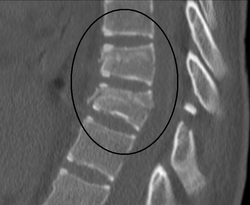
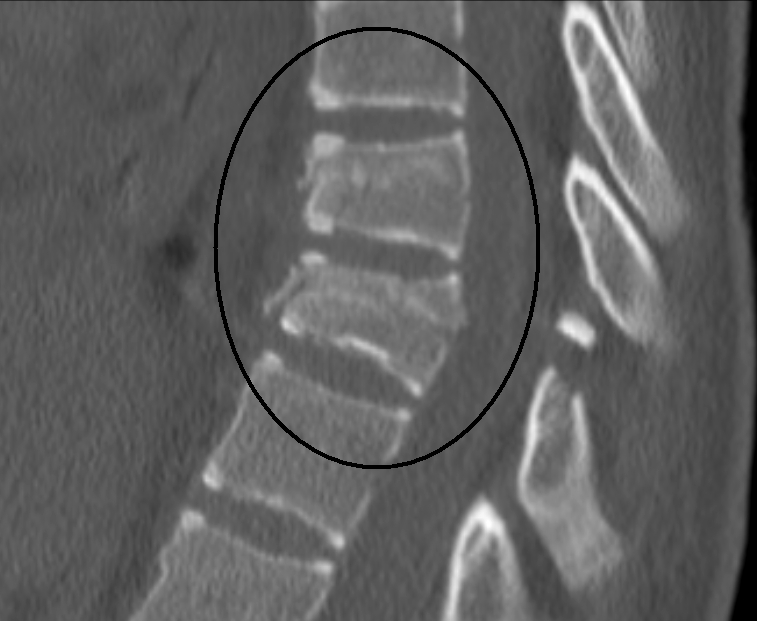
A Chance fracture of T10 and fracture of T9 due to a seatbelt during an MVC.
SpecialtyEmergency medicine Edit this on Wikidata
SymptomsAbdominal bruising, paralysis of the legs[4]
ComplicationsSplenic rupture, small bowel injury, mesenteric tear[3][5]
Risk factorsHead-on motor vehicle collision in which a person is only wearing a lap belt[2]
Diagnostic methodMedical imaging (X-ray, CT scan)[1]
Differential diagnosisCompression fracture, burst fracture[6]
TreatmentBracing, surgery[1]
FrequencyRare[7]

A Chance fracture is a type of vertebral fracture that results from excessive flexion of the spine.[8][9] Symptoms may include abdominal bruising (seat belt sign), or less commonly paralysis of the legs.[4][10] In around half of cases there is an associated abdominal injury such as a splenic rupture, small bowel injury, pancreatic injury, or mesenteric tear.[3][5] Injury to the bowel may not be apparent on the first day.[11]

The cause is classically a head-on motor vehicle collision in which the affected person is wearing only a lap belt.[2] Being hit in the abdomen with an object like a tree or a fall may also result in this fracture pattern.[12][10] It often involves disruption of all three columns of the vertebral body (anterior, middle, and posterior).[7][6] The most common area affected is the lower thoracic and upper lumbar spine.[6] A CT scan is recommended as part of the diagnostic work-up to detect any potential abdominal injuries.[5] The fracture is often unstable.[1]

Treatment may be conservative with the use of a brace or via surgery.[1] The fracture is currently rare.[7] It was first described by G. Q. Chance, a radiologist from Manchester, UK, in 1948.[3][13] The fracture was more common in the 1950s and 1960s before shoulder harnesses became common.[3][5]

Mechanism

[edit]

In some Chance fractures there is a transverse break through the bony spinous process while in others there is a tear of the supraspinous ligament, ligamentum flavum, interspinous ligament, and posterior longitudinal ligament.[10]

Diagnosis

[edit]
A flexion-distraction fracture of T10 and fracture of T9 due to a seatbelt during an MVC.

On plain X-ray, a Chance fracture may be suspected if two spinous processes are excessively far apart.[10]

A CT scan of the chest, abdomen, and pelvis is recommended as part of the diagnostic work-up to detect any potential abdominal injuries.[5][10] MRI may also be useful.[10] The fracture is often unstable.[1]

History

[edit]

It was first described by G. Q. Chance, an Irish radiologist in Manchester, UK, in 1948.[3][13] The fracture was more common in the 1950s and 1960s before shoulder harnesses became common.[3][5]

References

[edit]
[edit]
Revisions and contributorsEdit on WikipediaRead on Wikipedia
from Grokipedia
A Chance fracture, also known as a seatbelt fracture, is an unstable flexion-distraction injury of the spine that typically occurs at the thoracolumbar junction, involving a horizontal line extending from the posterior elements through the pedicles and into the vertebral body, involving all three spinal columns. First described by British radiologist George Quentin Chance in 1948, this fracture results from a hyperflexion mechanism, most commonly in high-energy trauma such as motor vehicle collisions where a lap seatbelt acts as a fulcrum, causing anterior compression and posterior of the . It is particularly prevalent in young adults and children, with approximately 100,000 thoracolumbar fractures occurring annually in the United States (including osteoporotic cases, as of 2021), about 50% at the thoracolumbar junction and a male-to-female ratio of approximately 3:1. The injury can be purely osseous, ligamentous, or a combination, but its instability arises from disruption of the posterior tension band, leading to potential kyphotic deformity if untreated. Clinically, patients often present with severe exacerbated by movement, though neurological deficits are uncommon unless the is compressed; a characteristic "seatbelt "—abdominal bruising or ecchymosis—may indicate the and signals a high risk of associated intra-abdominal injuries (pooled incidence 36.2% per 2025 meta-analysis, up to 50% in ), such as bowel , mesenteric tears, or pancreatic trauma. relies on imaging, with computed tomography (CT) as the gold standard for adults to visualize the pattern, while (MRI) assesses and ligamentous damage, and plain radiographs suffice for initial screening in children. Treatment depends on stability and neurological status: stable osseous fractures without deficits may be managed conservatively with thoracolumbar sacral orthosis (TLSO) bracing for 8-12 weeks, whereas unstable or ligamentous injuries typically require surgical intervention, such as posterior pedicle screw fixation to restore alignment and prevent complications like or . Multidisciplinary care, including evaluation for abdominal injuries, is essential due to the fracture's association with significant visceral trauma.

Definition and Characteristics

Definition

A Chance fracture is defined as a transverse vertebral that involves at least two of the three spinal columns of the spine—anterior, middle, and posterior—resulting from hyperflexion and distraction forces, and it most commonly occurs at the thoracolumbar junction, particularly at the T12-L2 levels. This injury is characterized by a horizontal line extending through the vertebral body and posterior elements, such as the pedicles and spinous process, leading to instability due to the failure of the anterior and middle columns under compression and the posterior column under tension. Often associated with seatbelt injuries in motor vehicle accidents, the disrupts the structural integrity of the spine in a flexion-distraction pattern. Distinguishing features of the Chance fracture include its purely horizontal orientation, which differentiates it from other vertebral fractures, and its potential to present in bony, ligamentous, or mixed variants depending on the extent of tissue involvement. In the bony variant, the fracture propagates through the of the vertebral body and posterior elements; the ligamentous variant involves soft-tissue disruption without bony fracture; and the mixed form combines both. In pure soft-tissue variants, the injury specifically disrupts key posterior ligaments, including the interspinous ligament, , , and , contributing to the overall spinal instability. This ligamentous involvement underscores the fracture's classification as a three-column injury, where the 's role in the middle column is particularly critical.

Types

Chance fractures are classified into three main types based on the primary tissues involved in the injury: bony, ligamentous, and osseoligamentous (mixed). This categorization reflects the flexion-distraction mechanism, where the injury propagates horizontally through the , but the extent of versus disruption determines the fracture's characteristics. The bony Chance fracture, also known as the osseous type, involves purely osseous disruption without significant . It features a horizontal line extending through the vertebral body, pedicles, and , often sparing the posterior ligaments. This type is more stable when isolated, as the intact posterior ligamentous complex provides sufficient support to maintain alignment, allowing for potential nonoperative management in neurologically intact patients. In contrast, the ligamentous Chance fracture is characterized by soft-tissue injury to the posterior ligamentous complex (PLC), including the supraspinous ligament, interspinous ligament, ligamentum flavum, and facet joint capsules, without a concomitant bony fracture. This variant results from tensile failure of the ligaments under distraction forces, leading to high instability due to the incompetence of these structures in resisting flexion and rotation. Ligamentous injuries are particularly challenging, as ligaments heal poorly compared to bone, often necessitating surgical stabilization to prevent progressive deformity or neurological compromise. The osseoligamentous, or mixed, type represents a form of , combining elements of both bony and ligamentous disruption. It typically involves a through the vertebral body and posterior elements alongside partial or complete PLC , which can propagate across intervertebral levels. Stability in this variant is variable and depends on the degree of ligamentous involvement; isolated bony components may confer relative stability, but significant soft-tissue damage increases the risk of , frequently requiring surgical and intervention. Overall stability assessment for Chance fractures hinges on the type: bony variants are often and amenable to conservative treatment if the posterior elements remain intact, whereas ligamentous and severe osseoligamentous types are inherently unstable, warranting surgical consideration to restore posterior tension band integrity and mitigate complications such as or cord injury.

Epidemiology and Risk Factors

Incidence

Chance fractures are rare spinal injuries, representing approximately 4% to 15% of thoracolumbar fractures based on multiple clinical series. , an estimated 160,000 thoracolumbar spine fractures occur annually. These estimates are derived from large-scale trauma registries. Demographically, Chance fractures predominantly affect young adults, with a mean age of 26 years (range 9–54 years) and a male-to-female ratio of approximately 3:1. The peak incidence occurs in individuals aged 20 to 40 years, reflecting the higher exposure to risk factors such as collisions (MVCs), which are implicated in over 70% of cases and often linked to improper seatbelt use. The overall incidence appears stable based on trauma data as of 2023, though underdiagnosis remains a challenge in low-resource settings due to limited access to computed tomography and other diagnostic tools.

Common Associations

The primary risk factor for Chance fracture is the use of lap-belt-only restraints during motor vehicle collisions (MVCs), particularly in the era before widespread adoption of three-point belts. This mechanism arises from hyperflexion and distraction forces applied across the thoracolumbar spine when the lap belt rides up over the abdomen during rapid deceleration. Studies report a strong association between improper seatbelt positioning, such as lap belts alone or malpositioned three-point belts, and Chance fractures in restrained occupants. Other associations include high-speed deceleration trauma beyond MVCs, such as falls from heights greater than , which can produce similar flexion-distraction forces. Chance fractures are rare in impacts or sports-related injuries, where different biomechanical patterns predominate. Comorbid intra-abdominal injuries occur frequently, with an incidence of up to 50%, most commonly involving bowel perforations and mesenteric lacerations that carry high mortality risk if undetected. Chance fracture forms a key component of , alongside abdominal wall contusions () and visceral or vascular . Preventive measures emphasize proper three-point seatbelt use, which distributes forces more evenly and has been shown to reduce spinal flexion-distraction compared to lap belts alone, significantly lowering Chance incidence. Adherence to age-appropriate child restraint systems further mitigates risk in pediatric populations.

Pathophysiology

Mechanism of Injury

A Chance results from a flexion-distraction to the spine, in which hyperflexion occurs over an anterior fulcrum, leading to of the posterior and middle spinal columns. This mechanism is most commonly associated with rapid deceleration in collisions (MVCs), where a lap belt restrains the occupant and acts as the fulcrum across the , forcing the upper body forward while the pelvis remains secured. Known as the classic "seatbelt ," this scenario was particularly prevalent in vehicles equipped with two-point lap belts before the widespread adoption of three-point shoulder harnesses. Equivalent flexion-distraction forces can also produce Chance fractures in non-MVC trauma, such as high-impact falls from height or ejections from , where the body experiences sudden forward flexion combined with axial loading. In these cases, the injury pathway mirrors the lap-belt dynamics, with the fulcrum provided by external structures like the vehicle's frame or ground impact. The force dynamics of this injury involve anterior compression of the , which contrasts with posterior distraction that exceeds the tensile strength of the bony and ligamentous elements, resulting in a transverse tension failure through the . This horizontal splitting propagates from the spinous process anteriorly, often sparing the while disrupting the posterior elements. The fracture was first described in 1948 by British radiologist G.Q. Chance as a horizontal splitting of the vertebral arch due to hyperflexion. Its specific linkage to lap seatbelts emerged in the post-WWII era, particularly during the , as automotive safety studies highlighted the injury pattern in restrained occupants of early belt-equipped vehicles.

Biomechanical Features

The Chance fracture represents a flexion-distraction injury that disrupts all three columns of the spine as defined by the Denis classification system, with the anterior column failing under compression to produce a wedge-shaped vertebral body fracture, the middle column involving the posterior vertebral wall and , and the posterior column exhibiting avulsion of the neural arch and supraspinous/interspinous ligaments. This multi-column involvement distinguishes it as inherently unstable, as the coordinated load-bearing across columns is compromised. Under hyperflexion loading, typically from mechanisms such as collisions with lap belt restraint, the anterior vertebral body experiences compressive and shear forces leading to cortical failure, while the posterior elements are subjected to tensile distraction forces that exceed the ligamentous tolerance. Biomechanical testing indicates that posterior spinal ligaments fail at tensile loads ranging from approximately 80 to 340 N, depending on the specific ligament. Disruption of the posterior tension band—comprising the interspinous ligament, , and facet capsules—impairs the spine's ability to resist flexion moments, predisposing the injury to progressive kyphotic deformity. is particularly evident when anterior vertebral height loss exceeds 50%, as this threshold correlates with significant loss of structural integrity and potential for further collapse under physiologic loads.

Clinical Presentation

Signs and Symptoms

Patients with a Chance fracture typically present with severe midline at the thoracolumbar junction, the most common site of injury, which is markedly exacerbated by movement or flexion. This pain arises from the flexion-distraction mechanism disrupting the vertebral elements and surrounding soft tissues. Neurological signs may include or, less commonly, characterized by bowel and bladder dysfunction, along with sensory or motor deficits below the level of the fracture. Such deficits occur due to potential compression of the or by fracture fragments, though neurological injury is rare in adults with isolated Chance fractures and more frequent in children (up to 46% risk of in some reports). Visceral symptoms often manifest as secondary to associated intra-abdominal injuries, which occur in approximately 36% of cases according to a 2025 . A prominent external indicator is the "seatbelt sign," presenting as ecchymosis or abrasion across the in the distribution of a lap belt, which heightens suspicion for underlying visceral trauma. In the acute setting, Chance fractures frequently occur in the context of polytrauma, particularly from collisions involving lap belt restraints, where altered mental status can mask these symptoms and delay recognition. Head trauma may also occur, reflecting the high-impact nature of these collisions.

Associated Injuries

Chance fractures, often resulting from high-energy mechanisms such as collisions (MVCs) with lap belt restraint, are frequently accompanied by multisystem trauma beyond the spine. The most common associated injuries involve the , with intra-abdominal injuries (IAIs) occurring in approximately 36% of cases according to a 2025 meta-analysis of thoracic or flexion-distraction injuries. Small bowel injuries, including , represent the predominant abdominal at about 19%, while mesenteric tears are also prevalent and contribute to significant morbidity due to potential hemorrhage and ischemia. These abdominal injuries often necessitate in hemodynamically unstable patients to address or active bleeding. Vascular complications, though less frequent, can be life-threatening and include disruptions to the or iliac vessels, which may lead to retroperitoneal hematomas. Such injuries are uncommon overall but warrant vigilance in the context of blunt from seatbelt mechanisms. Injuries to other systems are also reported, particularly in MVC scenarios where Chance fractures predominate. and genitourinary injuries, such as rupture, may coexist due to the flexion-distraction forces transmitted through the . All patients with suspected Chance fractures require prompt screening for intra-abdominal injuries using focused assessment with sonography for trauma (FAST) ultrasound or computed tomography (CT) to detect free fluid, organ lacerations, or vascular compromise. The presence of a seatbelt sign may heighten suspicion for these associated injuries.

Diagnosis

Clinical Evaluation

In the initial evaluation of suspected Chance fracture, history taking begins with a detailed inquiry into the mechanism of injury, particularly focusing on high-energy events such as collisions (MVCs) involving rapid deceleration and lap seatbelt use, which is the most common etiology. Patients should be questioned about the specifics of the MVC, including seatbelt position and any abrupt flexion-distraction forces, as these details heighten suspicion for thoracolumbar . Additionally, assess the location and radiation of pain, often midline at the thoracolumbar junction, along with any associated symptoms like or numbness. A basic neurological review is essential, evaluating for deficits in motor strength, sensation, and bowel/bladder function using the American Spinal Injury Association (ASIA) Impairment Scale, which grades completeness of injury from A (complete) to E (normal). This includes documenting any baseline sensory or motor levels to monitor for progression. The physical examination proceeds with spinal precautions in place, starting with careful palpation of the thoracolumbar spine for midline tenderness, step-offs, or deformity while maintaining inline stabilization. A log-roll maneuver, performed by a coordinated team, assesses posterior spinal stability and allows inspection for ecchymosis or abrasions. Concurrently, conduct an abdominal examination to identify the "seatbelt sign"—a transverse or abrasion across the lower indicative of lap belt restraint and associated intra-abdominal trauma in up to 50% of cases. Evaluation integrates with (ATLS) protocols, prioritizing airway, breathing, circulation, and disability assessments while applying spinal motion restriction using a backboard or vacuum splint to immobilize the entire spine during transport and initial resuscitation. Spinal precautions are maintained until clearance or definitive management, with expeditious removal of rigid immobilization to prevent complications like pressure ulcers. Red flags warranting immediate escalation include progressive neurological deficits, such as worsening weakness or , hemodynamic , or signs of spinal during log-roll, all of which necessitate urgent further assessment to prevent deterioration. The presence of the seatbelt sign or altered mental status further amplifies concern for associated injuries.

Imaging Modalities

Plain radiographs, typically obtained in anteroposterior (AP) and lateral views, serve as the initial imaging modality for suspected Chance fractures in the thoracolumbar spine. These views may demonstrate a characteristic horizontal fracture line traversing the vertebral body and posterior elements, loss of more than 50% of vertebral body height, or avulsion of the spinous process, along with signs such as widened interpedicular distance or the "empty vertebral body" appearance due to posterior distraction. The sensitivity of plain radiographs for detecting thoracolumbar fractures, including Chance types, ranges from 70% to 80%, though they often miss subtle ligamentous injuries or non-displaced components. Computed tomography (CT) scanning is considered the gold standard for evaluating bony details in Chance fractures, providing superior visualization compared to plain films. Multiplanar reconstructions on CT clearly delineate the fracture extent, including disruptions of the pedicles, facet joints, and posterior vertebral elements, as well as any retropulsion of fragments or associated burst components. CT detects approximately 95% of thoracolumbar fractures, with high specificity for assessing stability through quantitative metrics such as kyphosis angle measurement, where an angle exceeding 20° often indicates instability requiring intervention. Magnetic resonance imaging (MRI) is particularly valuable for assessing soft tissue and ligamentous injuries associated with Chance fractures, which may not be apparent on CT or radiographs. MRI can reveal or complete tears in the posterior ligamentous complex, such as the supraspinous and interspinous ligaments, and is recommended when neurological deficits are present to evaluate for or epidural hematomas. In cases where MRI is contraindicated, such as in patients with pacemakers, CT myelography serves as an alternative advanced modality to assess the and neural elements.

Management

Conservative Approaches

Conservative management is appropriate for stable , specifically isolated bony types without ligamentous involvement, featuring less than 20° , intact neurological function, and no associated injuries requiring intervention. Treatment protocols typically begin with a period of to maintain spinal alignment, followed by immobilization in a custom-molded hyperextension cast or thoracolumbosacral orthosis (TLSO) brace for 8 to 12 weeks. Reduction may be achieved on a Risser table via hyperextension prior to casting. Serial radiographic imaging is essential during this phase to assess fracture healing, kyphotic progression, and stability. Rehabilitation emphasizes pain control using nonsteroidal anti-inflammatory drugs (NSAIDs) or opioids initially, with gradual early mobilization to prevent . Following immobilization, patients undergo programs targeting core muscle strengthening, flexibility, and mobility restoration to support return to function. In bony Chance fractures, conservative approaches yield high union rates, with studies reporting successful osseous in 90-100% of appropriately selected cases and minimal progression of when monitored closely. Ongoing surveillance is critical to identify any delayed instability requiring escalation to operative care.

Surgical Interventions

Surgical intervention is indicated for Chance fractures when there is evidence of ligamentous disruption, vertebral height loss exceeding 50%, neurological deficits, or progressive deformity, as these features signify instability that conservative measures cannot adequately address. Ligamentous involvement, particularly of the posterior longitudinal ligament, is a key determinant, as it impairs the spine's ability to maintain alignment without operative stabilization. In such cases, surgery aims to restore spinal stability, prevent further neurological compromise, and correct kyphotic deformity. The primary procedure for unstable Chance fractures is posterior spinal fusion using pedicle screw instrumentation, typically spanning from one level above to one level below the fracture (e.g., T11-L3 for a injury), though long-segment fixation may be employed for greater stability. Decompression is performed if is present, via posterior or indirect reduction techniques to alleviate pressure on neural elements. Techniques vary between open reduction and , which provides direct visualization and robust correction, and minimally invasive approaches using pedicle screws, which reduce trauma and blood loss. , often autologous or allograft, is incorporated to promote across the fusion levels. Optimal timing for in acute trauma settings is within 24 to 72 hours to minimize secondary injury risk while allowing initial . Surgical outcomes for Chance fractures demonstrate high efficacy, with fusion rates exceeding 90% and correction typically achieving less than 10° residual angulation. These results are supported by studies on posterior fixation, which report reliable bony union and correction, particularly when addressing ligamentous early. Short-segment constructs have shown comparable success to longer ones, with reduced operative time and morbidity in select cases.

Complications and Prognosis

Potential Complications

Chance fractures, being flexion-distraction injuries often involving all three spinal columns, carry risks of both immediate and delayed complications, particularly in ligamentous variants where instability is greater. Neurological complications arise primarily from retropulsion of bone fragments into the , potentially causing contusion to the or . Neurological deficits are rare. , characterized by bowel and bladder dysfunction, , and lower extremity weakness, occurs in a minority of cases, with reported neuro involvement rates of 0-10% for distraction-type injuries including Chance fractures. Incomplete injuries may also result, leading to variable degrees of sensory and motor deficits. Orthopedic complications are prominent in untreated or ligamentously disrupted Chance fractures, where posterior ligamentous injury predisposes to of conservative management. is a notable risk, particularly in soft-tissue (ligamentous) types, due to the inability of disrupted ligaments to maintain alignment, with high rates reported for nonoperative approaches in such cases. Progressive can develop from ongoing or delayed recognition of ligamentous damage, resulting in chronic and potential deformity that exacerbates mechanical stress on adjacent segments. Residual and pressure sores are also possible. Systemic complications stem from the injury's management and associated immobility. Postoperative surgical site infections occur in 0.5-10% of thoracolumbar spine surgeries, with higher rates reported in trauma cases. Thromboembolism, including deep vein thrombosis and pulmonary embolism, arises from and immobilization, a common in care. syndromes may persist due to residual instability or kyphotic deformity, contributing to long-term . Intra-abdominal complications are linked to the mechanism of injury, with Chance fractures frequently associated with such as bowel injuries (detailed in Associated Injuries). Missed small bowel perforations can lead to delayed , where diagnostic delays exceeding 8 hours increase morbidity, and mortality rates of 10-23% for blunt intestinal injuries rise with further delay.

Long-term Outcomes

Bony union in Chance fractures typically occurs within 3 to 6 months following treatment, with conservative management involving 8 to 12 weeks of immobilization in a hyperextension cast or thoracolumbosacral orthosis (TLSO) to promote healing. In cases without initial neurologic involvement, is favorable, with >90% achieving good results after one year with surgical stabilization. Surgical intervention facilitates earlier mobilization, often within days post-operation, though comprehensive recovery still spans several months. Functional outcomes are generally favorable, with chronic back pain persisting in approximately 24% of cases, often linked to residual or ligamentous instability, impacting daily activities but manageable with conservative measures like . Overall aligns closely with population norms, as evidenced by Short Form-12 scores in thoracolumbar cohorts showing robust physical and components. Approximately 83% of patients return to full-time work at pre-injury levels. Key prognostic factors include the degree of initial and presence of neurologic deficits; angles less than 15° permit successful conservative outcomes, while greater deformity or cord involvement necessitates for optimal recovery. Early surgical stabilization enhances neurologic recovery rates, reducing the risk of persistent deficits. Younger age (under 40 years) and absence of comorbidities, such as or , correlate with superior functional results and lower complication rates. Recent advancements, including modern pedicle screw instrumentation and minimally invasive techniques, have improved fusion outcomes in surgically treated cases, minimizing adjacent segment degeneration. Contemporary studies report high rates of return to pre- activity levels within one year.

History

Original Description

The Chance fracture was first described by George Quentin Chance, a British radiologist, in a 1948 note published in the British Journal of Radiology. In this seminal work, titled "Note on a type of flexion fracture of the spine," Chance detailed three clinical cases observed radiologically, highlighting a distinctive pattern of spinal previously unrecognized in the . These cases involved horizontal splitting fractures extending through the posterior elements of the , without associated or significant vertebral displacement. Chance characterized the fracture as a transverse disruption originating in the spinous process, propagating through the laminae and pedicles, and terminating within the vertebral body, often at the thoracolumbar junction. He emphasized its purely osseous nature, distinguishing it from more common compression or burst fractures, and noted the absence of neurological in the observed cases. The fractures were subtle on initial radiographic examination but evident upon careful review of the images. In proposing a mechanism, Chance attributed to hyperflexion of the spine over a fulcrum, such as the anterior or a fixed point, resulting in tensile forces that cleaved the horizontally. This description predated the widespread use of lap belts but aligned with emerging patterns of trauma in the post-World War II period, amid rising accidents that would later associate the fracture with seatbelt use—coining the term "seatbelt fracture" in subsequent literature. His observations provided an early conceptual framework for understanding flexion-distraction injuries, focusing on the biomechanical role of anterior hinging in lumbar spine vulnerability.

Classification Developments

The original description of the Chance fracture by George Q. Chance in 1948 focused primarily on its osseous nature as a transverse fracture through the vertebral body and neural arch. Subsequent developments in the and expanded this to include ligamentous variants, recognizing the injury's association with flexion-distraction forces often linked to the emerging use of lap seatbelts in vehicles. In 1970, Frank W. Holdsworth proposed the two-column theory of thoracolumbar stability, classifying injuries based on anterior (vertebral body and disc) and posterior (neural arch and ligamentous structures) columns, and highlighting ligamentous disruptions in the posterior column as key indicators of instability in flexion-distraction patterns akin to Chance fractures. A major refinement came in 1983 with M. Denis's three-column model, which integrated the Chance fracture as a "seatbelt-type" flexion-distraction involving tension failure of the middle ( and posterior vertebral wall) and posterior (ligamentous complex) columns, while the anterior column ( and anterior vertebral wall) typically remains intact as a . This emphasized the 's mechanism in restrained accidents and its potential for , influencing surgical decision-making by assessing multi-column involvement. Denis's system categorized such fractures separately from compression or burst types, providing a foundational framework for evaluating thoracolumbar trauma. In 2005, the Thoracolumbar Injury Classification and Severity Score (TLICS) introduced a points-based system to guide treatment, scoring Chance fractures under flexion-distraction morphology at 4 points, with additional scores for posterior ligamentous complex (PLC) integrity (up to 3 points if disrupted) and neurological status (up to 3 points for complete deficit), where totals of 4 or higher favor surgical intervention over conservative management. This approach prioritized clinical relevance over pure morphology, improving interobserver reliability for injuries like Chance fractures. The AO Spine Thoracolumbar Injury Classification System, initially developed in 1994 and substantially revised in 2013, further refined categorization by morphology, neurology, and modifiers, designating Chance fractures as type B1 (posterior tension band injury with bony failure through the pedicles and vertebral body) or osseoligamentous variants, distinguishing them from pure ligamentous B2 disruptions to better predict stability and outcomes. In the , advancements have incorporated MRI-based grading of PLC injuries to assess subtle ligamentous damage in Chance fractures, enhancing diagnostic precision beyond plain radiographs or CT, while emerging predictive models using analyze imaging and clinical data to forecast stability and neurological risk.

References

Add your contribution
Related Hubs
User Avatar
No comments yet.