Hubbry Logo
Humerus fractureHumerus fractureMain
Open search
Humerus fracture
Community hub
Humerus fracture
logo
8 pages, 0 posts
0 subscribers
Be the first to start a discussion here.
Humerus fracture
Humerus fracture
from Wikipedia

Humerus fracture
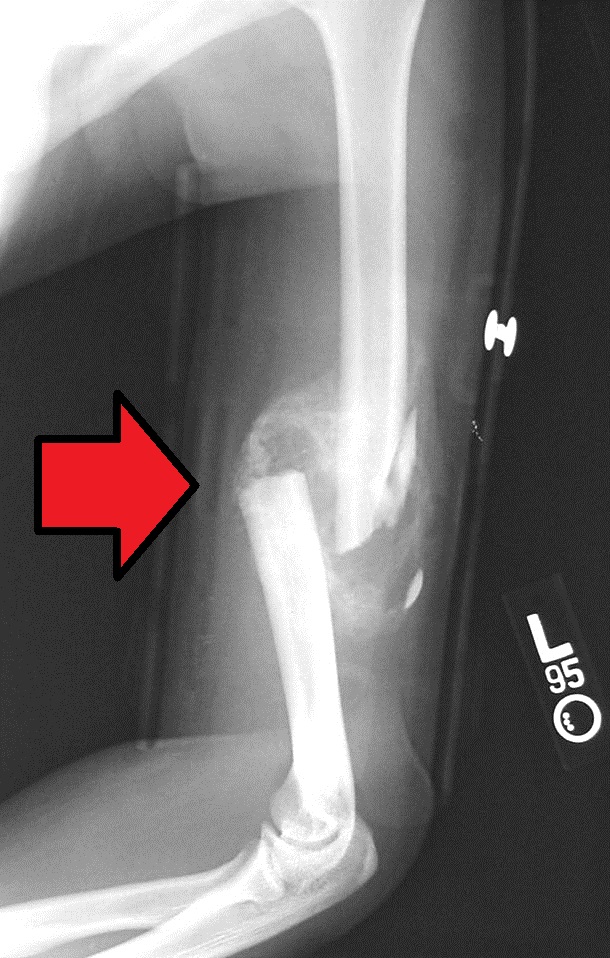
Midshaft humerus fracture with callus formation
SpecialtyOrthopedics
SymptomsPain, swelling, bruising[1]
ComplicationsInjury to an artery or nerve, compartment syndrome[2]
TypesProximal humerus, humerus shaft, distal humerus[1][2]
CausesTrauma, cancer[2]
Diagnostic methodX-rays[2]
TreatmentSling, splint, brace, surgery[1]
PrognosisGenerally good (proximal and shaft), Less good (distal)[2]
Frequency~4% of fractures[2]

A humerus fracture is a break of the humerus bone in the upper arm.[1] Symptoms may include pain, swelling, and bruising.[1] There may be a decreased ability to move the arm and the person may present holding their elbow.[2] Complications may include injury to an artery or nerve, and compartment syndrome.[2]

The cause of a humerus fracture is usually physical trauma such as a fall.[1] Other causes include conditions such as cancer in the bone.[2] Types include proximal humeral fractures, humeral shaft fractures, and distal humeral fractures.[1][2] Diagnosis is generally confirmed by X-rays.[2] A CT scan may be done in proximal fractures to gather further details.[2]

Treatment options may include a sling, splint, brace, or surgery.[1] In proximal fractures that remain well aligned, a sling is often sufficient.[2] Many humerus shaft fractures may be treated with a brace rather than surgery.[2] Surgical options may include open reduction and internal fixation, closed reduction and percutaneous pinning, and intramedullary nailing.[2] Joint replacement may be another option.[2] Proximal and shaft fractures generally have a good outcome while outcomes with distal fractures can be less good.[2] They represent about 4% of fractures.[2]

Signs and symptoms

[edit]
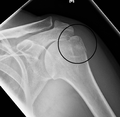
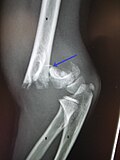
Types of major humerus fractures

After a humerus fracture, pain is immediate, enduring, and exacerbated with the slightest movements. The affected region swells, with bruising appearing a day or two after the fracture. The fracture is typically accompanied by a discoloration of the skin at the site of the fracture.[3][4] A crackling or rattling sound may also be present, caused by the fractured humerus pressing against itself.[5] In cases in which the nerves are affected, then there will be a loss of control or sensation in the arm below the fracture.[6][4] If the fracture affects the blood supply, then the patient will have a diminished pulse at the wrist.[6] Displaced fractures of the humerus shaft will often cause deformity and a shortening of the length of the upper arm.[5] Distal fractures may also cause deformity, and they typically limit the ability to flex the elbow.[7]

Causes

[edit]

Humerus fractures usually occur after physical trauma, falls, excess physical stress, or pathological conditions. Falls that produce humerus fractures among the elderly are usually accompanied by a preexisting risk factor for bone fracture, such as osteoporosis, a low bone density, or vitamin B deficiency.[8]

Proximal

[edit]

Proximal humerus fractures most often occur among elderly people with osteoporosis who fall on an outstretched arm.[9] Less frequently, proximal fractures occur from motor vehicle accidents, gunshots, and violent muscle contractions from an electric shock or seizure.[10][5] Other risk factors for proximal fractures include having a low bone mineral density, having impaired vision and balance, and tobacco smoking.[11] A stress fracture of the proximal and shaft regions can occur after an excessive amount of throwing, such as pitching in baseball.[6]

Middle

[edit]

Middle fractures are usually caused by either physical trauma or falls. Physical trauma to the humerus shaft tends to produce transverse fractures whereas falls tend to produce spiral fractures. Metastatic breast cancer may also cause fractures in the humerus shaft.[12] Long spiral fractures of the shaft that are present in children may indicate physical abuse.[5]

Distal

[edit]

Distal humerus fractures usually occur as a result of physical trauma to the elbow region. If the elbow is bent during the trauma, then the olecranon is driven upward, producing a T- or Y-shaped fracture or displacing one of the condyles.[7]

Diagnosis

[edit]

Definitive diagnosis of humerus fractures is typically made through radiographic imaging. For proximal fractures, X-rays can be taken from a scapular anteroposterior (AP) view, which takes an image of the front of the shoulder region from an angle, a scapular Y view, which takes an image of the back of the shoulder region from an angle, and an axillar lateral view, which has the patient lie on his or her back, lift the bottom half of the arm up to the side, and have an image taken of the axilla region underneath the shoulder.[9] Fractures of the humerus shaft are usually correctly identified with radiographic images taken from the AP and lateral viewpoints.[12] Damage to the radial nerve from a shaft fracture can be identified by an inability to bend the hand backwards or by decreased sensation in the back of the hand.[5] Images of the distal region are often of poor quality due to the patient being unable to extend the elbow because of pain. If a severe distal fracture is suspected, then a computed tomography (CT) scan can provide greater detail of the fracture. Nondisplaced distal fractures may not be directly visible; they may only be visible due to fat being displaced because of internal bleeding in the elbow.[7]

Classification

[edit]

Fractures of the humerus are classified based on the location of the fracture and then by the type of fracture. There are three locations that humerus fractures occur: at the proximal location, which is the top of the humerus near the shoulder, in the middle, which is at the shaft of the humerus, and the distal location, which is the bottom of the humerus near the elbow.[9] Proximal fractures are classified into one of four types of fractures based on the displacement of the greater tubercle, the lesser tubercle, the surgical neck, and the anatomical neck, which are the four parts of the proximal humerus, with fracture displacement being defined as at least one centimeter of separation or an angulation greater than 45 degrees. One-part fractures involve no displacement of any parts of the humerus, two-part fractures have one part displaced relative to the other three; three-part fractures have two displaced fragments, and four-part fractures have all fragments displaced from each other.[13][14][3] Fractures of the humerus shaft are subdivided into transverse fractures, spiral fractures, "butterfly" fractures, which are a combination of transverse and spiral fractures, and pathological fractures, which are fractures caused by medical conditions.[12] Distal fractures are split between supracondylar fractures, which are transverse fractures above the two condyles at the bottom of the humerus, and intercondylar fractures, which involve a T- or Y-shaped fracture that splits the condyles.[7]

Treatment

[edit]

The aim of treatment is to minimize pain and to restore as much normal function as possible. Most humerus fractures do not require surgical intervention.[4]

Proximal

[edit]

One-part and two-part proximal fractures can be treated with a collar and cuff sling, adequate pain medicine, and follow up therapy. Two-part proximal fractures may require open or closed reduction depending on neurovascular injury, rotator cuff injury, dislocation, likelihood of union, and function. For three- and four-part proximal fractures, standard practice is to have open reduction and internal fixation to realign the separate parts of the proximal humerus. A humeral hemiarthroplasty may be required in proximal cases in which the blood supply to the region is compromised.[15] Compared with non-surgical treatment, surgery does not result in a better outcome for the majority of people with displaced proximal humeral fractures and is likely to result in a greater need for subsequent surgery.[16]

Middle

[edit]

Fractures of the humerus shaft are most often uncomplicated, closed fractures that require nothing more than pain medicine and wearing a cast or sling. For midshaft fractures up to 12 weeks may be required for healing.[17]

In shaft and distal cases in which complications such as damage to the neurovascular bundle exist, then surgical repair is required.[18]

Prognosis

[edit]

In most cases, people are discharged from an emergency department with pain medicine and a cast or sling. These fractures are typically minor and heal over the course of a few weeks.[4] Fractures of the proximal region, especially among elderly people, may limit future shoulder activity.[19][20] Severe fractures are usually resolved with surgical intervention, followed by a period of healing using a cast or sling.[11] Severe fractures often cause long-term loss of physical ability.[21] Complications in the recovery process of severe fractures include osteonecrosis, malunion or nonunion of the fracture, stiffness, and rotator cuff dysfunction, which require additional intervention in order for the patient to fully recover.[21]

Epidemiology

[edit]

Humerus fractures are among the most common of fractures. Proximal fractures make up 5% of all fractures and 25% of humerus fractures,[9] middle fractures about 60% of humerus fractures (12% of all fractures),[12] and distal fractures the remainder. Among proximal fractures, 80% are one-part, 10% are two-part, and the remaining 10% are three- and four-part.[22] The most common location of proximal fractures is at the surgical neck of the humerus.[3] Incidence of proximal fractures increases with age, with about 75% of cases occurring among people over the age of 60.[11] In this age group, about three times as many women as men experience a proximal fracture.[23] Middle fractures are also common among the elderly, but they frequently occur among physically active young adult men who experience physical trauma to the humerus.[12] Distal fractures are rare among adults, occurring primarily in children who experience physical trauma to the elbow region.[7]

References

[edit]
[edit]
Revisions and contributorsEdit on WikipediaRead on Wikipedia
from Grokipedia
A fracture is a break in the , the of the upper arm that connects the to the , and it can occur in the proximal (upper) portion near the , the shaft (middle) section, or the distal (lower) portion near the . These fractures represent approximately 4-6% of all fractures in younger patients and 1-3% in the elderly, with higher incidence in young men due to high-energy trauma and in older women from low-energy falls. Causes of humerus fractures typically involve direct trauma, such as falls onto an outstretched hand or , sports-related impacts, accidents, or direct blows to the arm. In older adults, underlying conditions like weaken the bone, increasing susceptibility to fractures from minor falls or ground-level impacts. fractures may also arise from bone tumors or metastatic , compromising the bone's integrity without significant trauma. Symptoms commonly include severe pain at the injury site that intensifies with movement, swelling, bruising, and tenderness, often accompanied by an inability to lift the or rotate the . may be visible if the is displaced, and in distal fractures, , , or bruising around the can occur. Nerve involvement, such as in shaft fractures, may cause weakness or numbness in the hand. Diagnosis begins with a to assess pain, swelling, and neurovascular status, followed by X-rays in multiple views (anteroposterior, lateral, and axillary) to confirm the location, displacement, and type. Advanced imaging like CT scans is used for complex or intra-articular to evaluate fragmentation and plan treatment. Treatment varies by location and severity, with many cases managed nonoperatively using immobilization such as a sling for proximal or a functional brace for shaft , promoting through the bone's good and non-weight-bearing nature. Surgical intervention, including open reduction and internal fixation (ORIF) with plates and screws, is indicated for displaced, open, or unstable , particularly in distal cases where stability is crucial. In severe proximal or distal in older patients, options like hemiarthroplasty or total replacement may be employed to restore function. Complications can include nerve injuries (e.g., axillary or damage), blood vessel disruption leading to —an emergency requiring prompt —and joint stiffness from prolonged immobilization. Long-term issues may involve , , or temporary disability, though most fractures heal well with appropriate care.

Clinical Presentation

Signs and Symptoms

A humerus fracture typically presents with severe pain at the site of injury, which is often immediate and intensifies with any movement of the arm. This pain can radiate along the upper arm and significantly limits the patient's ability to use the affected limb, such as lifting or rotating the arm. Patients frequently report a grinding or crunching sensation during attempted motion, reflecting the mechanical disruption of the bone. Swelling and bruising, known as ecchymosis, commonly develop around the fracture site in the upper arm, often extending to adjacent areas like the or . The affected area becomes tender to touch, contributing to further discomfort and reluctance to manipulate the limb. These changes arise from local hemorrhage and following the break. Functional impairment is prominent, with decreased and inability to perform routine tasks like raising the overhead or supporting weight. In severe cases, visible may occur, such as shortening, angulation, or an abnormal contour of the upper due to displacement. If neurovascular structures are compromised by the fragments or associated , patients may experience numbness, tingling, or weakness in the or hand, indicating potential or vascular involvement. Symptoms can vary modestly by location along the , but the primary manifestations of , swelling, and limited function are consistent across cases.

Physical Examination

The physical examination of a suspected humerus fracture begins with a systematic assessment to identify , associated , and neurovascular compromise, while minimizing patient discomfort. Inspection reveals swelling, ecchymosis, and potential skin tenting or open wounds indicating an , with ecchymosis often extending to the chest, , or in proximal injuries due to spread. may present as , varus angulation, or rotational malalignment, particularly in shaft fractures distal to the deltoid insertion, where the appears shortened and adducted. Skin integrity is evaluated for lacerations or punctures, as these suggest and necessitate urgent intervention. Palpation is performed gently along the to localize point tenderness, elicit from bone ends rubbing together, and assess abnormal mobility by rotating the humeral shaft while palpating the proximal or distal segments for unified motion. In proximal fractures, palpation of the humeral head during gentle helps determine stability and detect , while shaft fractures often show focal tenderness and at the mid-. Distal fractures may exhibit tenderness over the with in the fossa. testing is limited by pain, with active and passive abduction, flexion, and eliciting severe discomfort, particularly in proximal injuries where motion is restricted. Neurovascular examination is critical, as up to 18% of shaft fractures involve injury, manifesting as (weakness in wrist and finger extension) and sensory loss over the dorsal hand first web space. The is most commonly affected in proximal fractures, tested by deltoid contraction and sensation over the lateral shoulder, while distal fractures risk , ulnar, or deficits, assessed via motor function (e.g., thumb opposition for ) and sensory testing in dermatomes. Vascular status includes palpation of brachial, radial, and ulnar pulses, with comparison to the contralateral side and monitoring for ; absent pulses warrant immediate or exploration.

Etiology and Risk Factors

Mechanisms of Injury

Humerus fractures result from biomechanical forces that exceed the bone's structural integrity, typically involving direct trauma, indirect forces, or a combination thereof, leading to stress concentrations that propagate cracks in transverse, oblique, spiral, or comminuted patterns depending on the loading direction and magnitude. Direct trauma applies localized perpendicular force, often causing transverse fractures through bending stress at the impact site, while indirect mechanisms like axial loading or torsion generate oblique or spiral patterns due to shear and twisting stresses along the bone's longitudinal axis. High-energy mechanisms, such as motor vehicle accidents, produce comminuted fractures with multiple fragments from explosive force distribution, whereas low-energy events like ground-level falls result in simpler patterns, particularly in osteoporotic bone. For proximal humerus fractures, the most common mechanism is a low-energy fall onto an outstretched hand (FOOSH) with the arm in abduction and external , transmitting axial compression and varus stress to the humeral head, often in elderly patients. In younger individuals, high-energy direct impacts from sports or vehicular collisions cause similar compression but with greater displacement. A specific example is avulsion of the greater tuberosity, resulting from sudden contraction of the muscles (supraspinatus and infraspinatus) during forceful abduction or external , often associated with anterior , where tensile stress pulls the tuberosity fragment away from the . Humeral shaft fractures predominantly arise from direct blows to the mid-arm, such as in assaults or falls onto the lateral , generating transverse lines perpendicular to the force vector due to localized bending in the . Indirect mechanisms include FOOSH with the extended, driving the distal proximally and creating oblique or impacted patterns from axial compression. High-energy scenarios like accidents account for about 30% of cases, leading to comminuted or segmental fractures from combined bending and torsional forces, while low-energy ground-level falls comprise 60%, typically yielding simpler transverse or spiral configurations. Distal humerus fractures often stem from high-energy direct trauma in younger adults, such as dashboard impacts in collisions compressing the posteriorly, resulting in supracondylar or intercondylar patterns with posterior displacement from varus or valgus stress. Low-energy FOOSH in the elderly transmits axial load through the , hyperextending the and fracturing the supracondylar region via tension on the anterior cortex and compression posteriorly. Indirect varus or valgus forces from falls with the twisted can isolate medial or lateral columns, producing T- or Y-shaped intra-articular fractures due to uneven stress distribution across the trochlea.

Predisposing Factors

Bone health issues, particularly and , significantly increase the susceptibility to humerus fractures, especially fragility fractures of the proximal humerus in older adults. weakens bone density, making it more prone to low-energy trauma such as falls from standing height, and is particularly prevalent among postmenopausal women due to deficiency accelerating bone loss. Similarly, represents a precursor state that heightens fracture risk without the full severity of . Age-related factors contribute distinctly across life stages, with higher incidence of proximal humerus fragility fractures in the elderly over 65 years due to cumulative loss and reduced muscle strength. In children, particularly those aged 5 to 7 years, distal humerus fractures like supracondylar or greenstick types are more common, predisposed by the flexibility of immature bones with thicker that favors incomplete fractures during falls. Comorbidities such as neurological conditions, including , elevate fracture risk through impaired balance and increased fall propensity, with stroke survivors facing 1.4 to 7 times higher odds of humerus fractures compared to the general population. Malignancy-related pathologic fractures of the humerus often stem from metastatic bone lesions weakening the cortex, commonly from primaries like , , or . Lifestyle factors impairing bone integrity include chronic and , which reduce density and healing capacity, thereby increasing humerus fracture susceptibility; for instance, alcohol consumption exceeding moderate levels disrupts calcium absorption, while inhibits activity. Participation in high-risk activities, such as contact sports, predisposes individuals to humerus shaft fractures via direct impact or torsional forces. Anatomical variations, including pre-existing deformities or prior fractures, compromise bone strength and elevate the risk of subsequent humerus fractures by creating stress risers or altering load distribution.

Types and Classification

Proximal Humerus Fractures

Proximal humerus fractures involve the upper end of the , including the humeral head, anatomic neck, surgical neck, greater tuberosity, and lesser tuberosity. These fractures are common in older adults due to and in younger patients from high-energy trauma. They are classified primarily using the Neer classification system, which divides the proximal humerus into four segments: the humeral head, shaft, greater tuberosity, and lesser tuberosity. A segment is considered displaced if separation exceeds 1 cm or angulation is greater than 45 degrees.
  • One-part fractures: Nondisplaced or minimally displaced, involving any number of segments without significant separation; these represent the majority of cases and often include impacted fractures.
  • Two-part fractures: Displacement of one segment, such as surgical , anatomic , greater tuberosity, or lesser tuberosity fractures.
  • Three-part fractures: Displacement of two segments, typically involving the surgical plus one tuberosity.
  • Four-part fractures: Displacement of all four segments, often with high risk of due to disrupted blood supply to the humeral head; includes head-split and valgus impaction variants.
The AO/OTA classification provides an alternative, grouping fractures as 11A (extra-articular unifocal), 11B (extra-articular bifocal), or 11C (articular), with subgroups based on location and complexity. In children, proximal fractures are Salter-Harris types I-V, with type II (metaphyseal with growth plate involvement) most common, allowing for significant remodeling potential.

Humeral Shaft Fractures

Humeral shaft fractures occur in the , defined as the region from the proximal surgical to approximately 5 cm proximal to the fossa in the distal humerus. These represent about 3-5% of all fractures and are often transverse, oblique, spiral, or comminuted, resulting from direct trauma or torsional forces. They are subclassified by location (proximal third, middle third, distal third) and pattern, with Holstein-Lewis fractures (distal third spiral) at higher risk for injury. The primary classification is the AO/OTA system (code 12), which categorizes based on fracture morphology:
  • Type A (simple s): Single fracture line, including spiral (A1), oblique (A2), or transverse (A3) patterns.
  • Type B ( fractures): Multifragmentary with an intact , subdivided into intact (B1), fragmented (B2), or bending (B3).
  • Type C (multifragmentary/complex fractures): Irregular, highly comminuted without a defined , including segmental (C2) or highly irregular (C3) subtypes.
Pathologic fractures in the shaft, often from metastases or tumors, follow the same morphological but require etiology-specific . In pediatric cases, shaft fractures are typically deformations or greenstick types due to the pliability of immature .

Distal Humerus Fractures

Distal humerus fractures involve the and/or articular surface of the lower humerus, from 5 cm above the fossa to the supracondylar ridges. These account for 2% of fractures in s and up to 60% in children (primarily supracondylar), often from falls or varus/valgus stresses. They are intra-articular in 50-70% of cases, complicating management due to involvement. Adult distal humerus fractures are classified using the AO/OTA system (code 13):
  • Type A (extra-articular): Supracondylar or transcondylar without involvement, including simple (A1), wedge (A2), or complex (A3) metaphyseal patterns.
  • Type B (partial articular): Involves part of the articular surface, such as lateral/medial condyle (B1), transcondylar (B2), or frontal plane (capitellar/trochlear, B3).
  • Type C (complete articular): lines separate the articular surface from the shaft and cross both columns, with simple (C1), simple articular/simple metaphyseal (C2), or complex (C3) variants.
In children, supracondylar fractures (85% of pediatric distal fractures) use the Gartland classification:
  • Type I: Nondisplaced or minimally angulated (<5 degrees).
  • Type II: Displaced with intact posterior cortex (IIa: angulated without rotation; IIb: with rotation).
  • Type III: Completely displaced, unstable in all planes.
  • Type IV: Unstable after reduction, with multidirectional instability.
Additional pediatric types include lateral condyle (Milch I/II), medial epicondyle, and T-condylar fractures. As of , the Copenhagen classification has emerged for research, emphasizing articular involvement (Type 1 extra-articular, Type 2 partial intra-articular, Type 3 complete articular).

Diagnosis

History and Clinical Assessment

The history and clinical assessment for a suspected humerus fracture begins with a detailed interview to establish the of and guide preliminary diagnostic judgment. Patients typically report acute onset following trauma, most commonly a fall onto an outstretched hand or direct blow to the upper arm, though insidious onset may suggest a due to underlying bone weakness such as or . Inquiring about prior or surgeries to the affected arm is essential, as previous trauma or hardware can predispose to refracture or complicate assessment. Associated symptoms often include severe localized pain exacerbated by movement, swelling, and limited in the or . Neurologic symptoms such as numbness or in the hand or may indicate radial involvement, particularly in humeral shaft fractures, while coolness or pallor of the extremity suggests vascular compromise. In high-energy injuries, systemic symptoms like , , or petechiae can signal , requiring urgent evaluation. Red flags during history-taking demand immediate attention, including open wounds indicating an , severe or worsening pain disproportionate to injury suggestive of , or acute neurovascular deficits such as absent distal pulses or motor weakness. Differential diagnosis considerations include soft tissue injuries like contusions or muscle strains, glenohumeral dislocation, and from cervical spine pathology, which can mimic fracture symptoms but lack the acute traumatic history. Rotator cuff tears or impingement syndromes may present similarly in older patients with lower-energy mechanisms. Although no humerus-specific clinical decision rules exist, assessment incorporates standardized elements of and bedside evaluation, such as mechanism, symptom severity, and basic neurovascular checks, akin to the Elbow Extension Test for distal injuries, to determine suspicion level before imaging. Physical examination may reveal tenderness, deformity, or , supporting clinical suspicion.

Imaging and Diagnostic Tests

Diagnosis of humerus fractures typically begins with radiographic imaging to confirm the presence of a and assess its characteristics, complementing clinical suspicion from patient history. Standard X-rays are the initial modality of choice, providing essential details on location, displacement, and alignment. For proximal fractures, orthogonal views including a true anteroposterior (AP) view of the scapula and glenohumeral joint, an axillary view, and a lateral scapular Y view are recommended to evaluate the in three planes and exclude associated glenohumeral . In humeral shaft fractures, AP and lateral views of the entire , including the and joints, are obtained to determine location (e.g., proximal, middle, or distal third) and type (e.g., transverse, oblique, or comminuted). For distal fractures, AP and lateral radiographs of the and are standard, with the flexed at approximately 40 degrees for the AP view to better visualize the joint; these views help identify intra-articular extension and associated injuries. Key radiographic signs of humerus fractures include cortical discontinuity, manifested as a lucency or breach in the bone cortex, along with angulation, impaction, and displacement of fragments. Displacement is measured by the degree of separation between fragments, often quantified as greater than 1 cm or angulation exceeding 45 degrees in proximal fractures, while in shaft fractures, acceptable alignment tolerances include up to 20 degrees of anteroposterior angulation and 3 cm of shortening. These features guide further evaluation but do not dictate classification, which is assessed separately. Advanced imaging is employed when X-rays are inconclusive or additional detail is needed. Computed (CT) scans are particularly valuable for comminuted or intra-articular fractures, offering 3D reconstructions for precise characterization and surgical planning; for example, thin-cut coronal and axial CT slices at 1 mm intervals aid in analyzing distal humerus fracture patterns. (MRI) is indicated for evaluating injuries, such as tears in proximal fractures involving the greater tuberosity or nerve involvement, providing superior visualization of tendons, ligaments, and neurovascular structures without . serves as a provisional diagnostic tool, especially in resource-limited settings or for initial assessment of integrity like the , and is particularly useful in pediatric cases to avoid . Special considerations in imaging include the use of stress views to assess instability, such as internal rotation in supracondylar fractures to evaluate fragment displacement under load, and (CTA) when vascular injury is suspected, as in high-energy shaft fractures potentially affecting the . Traction views may also be employed to better delineate fracture fragments in distal injuries. Radiation safety is paramount, particularly in pregnant patients, where the fetal dose from a single diagnostic of the is minimal and unlikely to cause , but ultrasonography or MRI is preferred as non-ionizing alternatives to minimize any . Doses below 50 mGy are considered safe for the , and procedures should be justified only when clinically necessary.

Treatment

Proximal Humerus Fractures

Treatment of proximal fractures depends on fracture displacement, patient age, comorbidities, and functional demands, with the Neer classification guiding decisions by assessing the number of displaced segments. Nonoperative management is indicated for nondisplaced or minimally displaced fractures, classified as Neer one-part, involving sling immobilization for 2-4 weeks followed by pendulum exercises to maintain . This approach achieves successful outcomes in 80-90% of elderly patients, with acceptable pain relief and function despite potential residual stiffness. For displaced fractures, operative intervention is preferred to restore alignment and shoulder mechanics. Open reduction and (ORIF) using locking plates is the standard for two-part displaced fractures, providing stable fixation that supports early mobilization and union rates exceeding 90%. In older patients with four-part fractures or head-split patterns, reverse shoulder arthroplasty is recommended over hemiarthroplasty, as 2025 guidelines highlight its superior functional outcomes, lower revision rates, and reduced dependency on tuberosity healing. Rehabilitation protocols emphasize early passive motion starting within 1-2 weeks post-treatment to prevent , progressing to active-assisted exercises by 4-6 weeks and full strengthening by 12 weeks, with total recovery spanning 6-12 weeks. Recent 2025 evidence supports nonoperative treatment for fractures with less than 5 mm tuberosity displacement, with considered for ≥5 mm or ≥3 mm in superior/posterosuperior displacements, to optimize function and avoid secondary migration. In pediatric patients, displaced proximal humerus fractures are typically managed with closed reduction and pinning to preserve the growth plate, achieving excellent remodeling potential due to the thick and high healing capacity.

Humeral Shaft Fractures

Humeral shaft fractures, involving the diaphysis of the , are typically managed with either nonoperative or operative approaches, selected based on stability, patient factors, and associated injuries. Nonoperative treatment is often first-line for closed, stable fractures without neurovascular compromise, while operative intervention is indicated for unstable patterns, open wounds, or scenarios. Recent evidence from randomized controlled trials supports surgical options for improved early functional recovery in select cases. Nonoperative primarily involves functional bracing, such as a U-plate orthosis or sling immobilization, to promote union while allowing controlled motion at the and . This approach achieves union in approximately 90% of cases within 12 weeks, with low rates of under 2% in large cohorts. Acceptable alignment includes less than 20° of angulation in the and up to 30° in the , as greater deformity may compromise function without necessitating in most adults. Operative treatment is reserved for fractures that are unstable, length-unstable, open, or associated with palsy, vascular injury, or floating . Intramedullary nailing is preferred for unstable or length-unstable fractures, particularly in or highly comminuted cases, providing reliable stabilization with minimal soft-tissue disruption. Plate fixation is indicated for open fractures to allow thorough and secure reduction, with a 2025 randomized controlled trial (the Humeral Shaft Fracture Fixation RCT) demonstrating superior 3-month Disabilities of the Arm, Shoulder, and Hand () scores with compared to nonoperative bracing (mean difference of 15 points favoring operative, p=0.01), alongside faster early functional gains despite similar 12-month outcomes. Radial nerve palsy, occurring in up to 18% of humeral shaft fractures due to its close anatomic relation in the spiral groove, warrants initial for 6-12 weeks in closed injuries, but is recommended if palsy develops or persists post-injury, especially in open fractures or after failed reduction, to assess for laceration or . Recovery rates exceed 70% with timely intervention, though delayed beyond 8 weeks reduces success to around 68%. Rehabilitation begins with immobilization for 4-6 weeks, followed by progressive loading and range-of-motion exercises under supervision to restore strength and prevent . Patients should be monitored clinically and radiographically for , which occurs in 5-10% of cases, with intervention if no bridging is evident by 3-4 months. Pathologic humeral shaft fractures, often due to metastases, require preoperative to confirm and guide , followed by surgical stabilization via intramedullary nailing or cemented plating to provide immediate load-bearing and pain relief. This combined approach yields union or stable fixation in over 90% of cases, prioritizing durability over anatomic reduction.

Distal Humerus Fractures

Treatment of distal humerus fractures prioritizes anatomic restoration of the joint due to its intra-articular nature, which demands precise alignment to preserve function and minimize complications like or arthrosis. Nonoperative is reserved for rare cases of undisplaced fractures or patients with significant comorbidities precluding , typically involving immobilization in a long-arm cast or splint for 3-6 weeks with serial radiographic monitoring to ensure stability. In children, nonoperative treatment with is standard for Gartland type I supracondylar fractures, which are nondisplaced and stable. Operative intervention is the mainstay for most distal humerus fractures, guided by AO/OTA principles emphasizing anatomic reduction of the articular surface, stable , and early rehabilitation to optimize outcomes. In adults, open reduction and (ORIF) with dual plating—typically one medial and one posterolateral plate at 90 degrees—is recommended for displaced or intra-articular fractures to achieve rigid stability and allow immediate motion. For pediatric supracondylar fractures, closed reduction and percutaneous pinning (CRPP) is the preferred method for displaced injuries (Gartland types II-IV), performed urgently to restore alignment and neurovascular status. Vascular injury, particularly disruption, complicates up to 20% of displaced pediatric supracondylar fractures and requires prompt intervention. In cases of a pulseless hand—indicating adequate despite absent radial —initial closed reduction and pinning should be attempted, with urgent surgical exploration if pulses do not return postoperatively; for pale, poorly perfused hands, immediate vascular exploration with repair or grafting is mandatory to prevent ischemia. Postoperative rehabilitation focuses on preventing elbow stiffness, a common complication, by initiating protected motion early. Patients are typically fitted with a hinged elbow brace locked in extension initially, progressing to active and passive range-of-motion exercises starting around week 2, with full strengthening by 6-12 weeks depending on healing. Recent advancements emphasize total elbow (TEA) as a viable alternative to ORIF for comminuted fractures in elderly patients over 65 years, offering reliable pain relief and function with lower reoperation rates compared to in low-demand individuals. Studies from 2024-2025 report good Mayo Elbow Performance Scores (average around 83) in primary TEA cases, with complication rates similar to secondary after failed ORIF, supporting its expanded role in this demographic.

Complications

Early Complications

Early complications of humerus fractures encompass a range of acute neurovascular, vascular, infectious, systemic, and issues that arise immediately following injury or initial treatment, typically within the first six weeks. These risks are heightened in high-energy trauma or displaced and necessitate prompt recognition to mitigate long-term morbidity. Neurovascular injuries represent one of the most immediate concerns, varying by fracture location. In humeral shaft fractures, radial nerve palsy is a prevalent neurovascular complication, occurring in approximately 8-18% of cases due to the nerve's close anatomical proximity to the bone in the spiral groove. This injury often manifests as wrist drop and sensory deficits in the dorsal hand, with higher incidence in Holstein-Lewis fractures of the distal third. Proximal humerus fractures more commonly involve axillary nerve injury, reported in up to 58% of cases when assessed via electromyography, leading to deltoid weakness and sensory loss over the lateral shoulder. Distal humerus fractures, particularly supracondylar types, carry a risk of compartment syndrome, with incidences of 0.1-0.3%, potentially causing forearm muscle ischemia if swelling elevates intracompartmental pressures. Vascular disruptions are particularly critical in pediatric supracondylar fractures, where injury occurs in 5-10% of cases, often from tethering or laceration by displaced fragments, risking limb ischemia and necessitating urgent vascular exploration. In adults, such injuries are rarer but can accompany high-energy proximal fractures. Infection rates escalate significantly in open fractures, classified by the Gustilo-Anderson system, with type III injuries showing infection risks up to 44% due to extensive contamination and devitalized . Postoperative open reduction and (ORIF) can also lead to wound complications, including superficial or deep infections, especially in contaminated settings. Systemic complications include , a rare but serious event with an incidence of 0.9-11% in fractures like the , characterized by respiratory distress, petechiae, and neurological changes from marrow fat emboli entering the circulation. Venous thromboembolism, including deep vein thrombosis and , affects up to 3% of proximal fracture cases post-surgery, driven by immobility and . High-energy fractures may precipitate from substantial blood loss into surrounding tissues, exacerbating hemodynamic instability in patients. Soft tissue issues, such as tenting over displaced fragments, can progress to pressure within hours if untreated, particularly in proximal or shaft fractures with poor overlying envelope, potentially converting closed injuries to open ones.

Late Complications

and are key late complications of humerus fractures, with rates ranging from 10% to 20% in humeral shaft fractures treated nonoperatively, and up to 15-29% in specific patterns like OTA type A or proximal third fractures. These rates increase in smokers due to nicotine-induced impairing fracture and vascular supply to the . are classified as hypertrophic, featuring abundant but unbridged from mechanical , or atrophic, marked by and poor vascularity often linked to or soft tissue stripping. , occurring in about 12% of nonoperatively managed shaft fractures, typically involves angular or rotational deformities from transverse patterns or inadequate alignment, potentially causing functional impairment such as reduced or shoulder weakness. In distal humerus fractures, rates reach 2-10%, particularly in supracondylar regions after ORIF, while can distort the articular surface leading to . Avascular necrosis (AVN) primarily affects the proximal , with rates of 20-30% in three- and four-part fractures due to disruption of the ascending branch of the anterior humeral circumflex artery supplying the humeral head. In displaced four-part fractures, the incidence rises to approximately 45%, often resulting in humeral head collapse and secondary if untreated. Surgical approaches like ORIF may exacerbate AVN risk compared to conservative management in certain cases. Stiffness and post-traumatic arthritis frequently develop as delayed issues, with shoulder stiffness arising in proximal humerus fractures from capsular and adhesions post-immobilization, affecting up to 20-30% of patients and limiting forward flexion or external rotation. In distal humerus fractures, contracture occurs in 12-49% of cases, driven by intra-articular damage or prolonged splinting, resulting in flexion-extension deficits. Post-traumatic arthritis ensues in the glenohumeral joint after proximal fractures or the ulnohumeral joint after distal ones, with radiographic changes appearing 1-2 years post-injury due to loss from initial trauma or malreduction. Heterotopic ossification (HO), the formation of ectopic bone in periarticular soft tissues, is more common after ORIF of distal humerus fractures, with incidences of 8-14% overall and up to 22% in OTA type C patterns. Risk factors include delayed surgery beyond 24-48 hours or severe trauma, leading to clinically significant HO (Brooker class 3-4) that restricts motion in 10-15% of affected patients. Chronic pain syndromes, notably (CRPS) type I, can follow fractures, especially after immobilization, with an incidence of about 0.6% in surgeries and reported rates of 1-2% post-fracture due to neurogenic . CRPS presents with disproportionate burning pain, swelling, skin changes, and vasomotor instability, often emerging 4-6 weeks post-injury and persisting if not addressed early.

Prognosis and Outcomes

Prognostic Factors

Prognostic factors for humerus fractures encompass a range of fracture-specific, patient-related, and treatment-related elements that influence healing, functional recovery, and long-term outcomes. These factors help clinicians provide personalized predictions, with outcomes generally favorable for stable fractures in healthy individuals but poorer in complex cases or those with comorbidities. Evidence from systematic reviews and cohort studies highlights the interplay between initial injury severity and host biology in determining success rates, such as union and range of motion restoration. Fracture characteristics significantly affect , particularly displacement and . Greater displacement increases the risk of or , while —especially metaphyseal involvement—predicts poorer functional outcomes in non-surgical management of proximal humerus fractures. In proximal fractures, four-part patterns with extensive and displacement are associated with worse recovery compared to less complex two- or three-part injuries, often leading to and reduced function. Patient factors play a critical role in healing timelines and complication rates. Advanced age, particularly over 70 years, correlates with poorer outcomes due to reduced quality and higher burden, increasing risks of delayed union and mortality. Comorbidities such as diabetes mellitus delay fracture union, with healing times extended up to 2-3 times in affected patients, while impairs and regeneration, elevating risks across fracture sites. Treatment adherence, especially to rehabilitation protocols, directly impacts motion restoration and overall function. Good compliance with physiotherapy predicts improved short-term outcomes up to 3 months and potentially 1 year post-injury in non-surgically managed proximal humerus fractures, whereas poor adherence leads to persistent and suboptimal recovery. Prognosis varies by fracture location. Humeral shaft fractures exhibit high union rates of approximately 94-95% with conservative management, though proximal third patterns carry elevated risks. Distal humerus s, particularly intra-articular ones, confer a higher risk of , affecting up to 80% of cases long-term despite surgical intervention. Recent 2025 evidence from a randomized indicates that early surgical fixation for humeral shaft s improves short-term function at 6 weeks and 3 months compared to bracing, but yields no long-term benefits at 6 or 12 months.

Recovery and Rehabilitation

Recovery and rehabilitation for humerus s follow phased protocols aimed at protecting the bone while progressively restoring , , and upper extremity function. These protocols are tailored to the fracture location—proximal, humeral shaft, or distal—and typically involve immobilization followed by controlled under the guidance of physical and occupational therapists. incorporates modalities such as ice, elevation, and gentle to facilitate adherence to exercises. The acute protection phase, lasting 2-4 weeks post-injury or , emphasizes immobilization with a sling or functional brace to stabilize the site and minimize pain and swelling. During this period, patients maintain mobility in non-immobilized joints through active range-of-motion (AROM) exercises for the , , and hand, along with isometric contractions for the and . For proximal fractures, a sling is used for 3 weeks with restrictions on abduction beyond 90° and external rotation to 40°, while pendulums—gentle circular motions—may begin early to prevent adhesions. In humeral shaft fractures, a Sarmiento functional brace is applied immediately, allowing limited flexion but prohibiting motion beyond pendulums. Distal fractures often involve a splint or hinged brace for 2-4 weeks, focusing on passive extension to 0° and active flexion to 90° to avoid . The intermediate phase, from 4-8 weeks, transitions to passive and active-assisted range-of-motion (PROM/AROM) exercises to regain joint mobility without compromising union. Sling or brace weaning occurs as tolerated, with progression based on pain-free motion and radiographic evidence of stability. Proximal fracture rehab prioritizes supine forward flexion and side-lying external rotation/abduction, advancing to pulleys and table slides. For shaft fractures, shoulder periscapular isometrics and four-quadrant AAROM (e.g., wall climbs, wand exercises) are introduced while maintaining the brace part-time. Distal fractures emphasize progressive elbow flexion gains of 10° weekly and full forearm supination/pronation, incorporating static progressive splinting if extension lags. Multidisciplinary input from physical therapists (PT) for lower extremity conditioning and occupational therapists (OT) for daily activity adaptations ensures holistic recovery, with modalities like electrical stimulation aiding pain control. Advanced strengthening begins at 6-12 weeks, once full passive motion is achieved and X-rays confirm formation, focusing on resisted exercises to rebuild muscle endurance and power. isometrics progress to theraband rows, external/internal , and stabilization for proximal and shaft fractures, with weight limits starting at 2-5 pounds. Distal rehab includes gentle strengthening at 8 weeks, prioritizing extension to prevent contractures, followed by grip and work. PT/OT sessions, typically 1-2 times weekly, incorporate like simulated work tasks. Return to activity varies by fracture type and patient factors, with desk-based work often resuming at 3-6 months and overhead sports or heavy labor delayed 6-12 months or longer until strength reaches 80% of the uninjured side. Serial X-rays at 4-6 week intervals monitor union, with interventions like manipulation under considered for persistent beyond 12 weeks. In children, such as a 5-year-old, humerus fractures typically heal in 4-8 weeks due to rapid bone growth; follow-up X-rays are recommended to monitor alignment, with excellent remodeling potential allowing minor misalignments to correct naturally per pediatric orthopedic guidelines. Full recovery, including strength and , may take 6-12 months.

Epidemiology

Incidence and Prevalence

Proximal humerus fractures account for 4-6% of all fractures in young adults and 1-3% in elderly patients. In the United States, the annual incidence of fractures is estimated at approximately 122 per 100,000 persons, with variations by subtype and . Proximal humerus fractures represent about 5% of all fractures and are the third most common type in elderly individuals, often resulting from low-energy falls. Humeral shaft fractures comprise 3-5% of all fractures, with an annual incidence of 13-20 per 100,000 persons. Distal humerus fractures account for roughly 2% of all fractures and one-third of humerus fractures overall. In pediatric populations, distal humerus fractures predominate, with supracondylar fractures representing nearly 60% of all elbow fractures in children. These injuries typically occur in children aged 5-7 years following falls on an outstretched hand. The incidence of humerus fractures, particularly proximal types, has shown an increasing trend in recent years, driven by population aging. In the United States, proximal humerus fracture rates rose from 104.7 per 100,000 in 2008 to 124.7 per 100,000 in 2012 among women over 50, with continued growth projected through 2025. During the initial phase of the COVID-19 pandemic in 2020, overall fracture incidence declined due to reduced mobility and lockdowns. In low- and middle-income countries, high-energy trauma such as road traffic accidents contributes to a notable proportion of humeral shaft fractures. For instance, traffic accidents account for about 27% of humeral shaft fractures in China. Humerus fractures exhibit a bimodal age distribution, with peaks in pediatric populations aged 5 to 15 years, primarily involving distal fractures such as supracondylar types from falls or , and in adults over 65 years, where proximal fractures predominate and approximately 80% are associated with osteoporosis-related fragility. In children, the incidence of proximal fractures is around 31.4 per 100,000 annually for those under 16, while distal fractures peak in ages 5 to 9. Among the elderly, proximal fractures account for up to 49.4% of cases in those over 80, with a mean age of 67 to 80 years depending on fracture type and . Gender patterns show males predominating in younger age groups due to high-energy trauma, with boys experiencing humerus fractures at a 2:1 to 4:1 ratio compared to girls in pediatric cases. In contrast, females comprise 67.7% to 81.8% of proximal humerus fractures in postmenopausal and geriatric populations, reflecting a 2:1 female-to-male ratio driven by . Geographic variations indicate higher rates of humeral shaft fractures in urban settings from assaults and incidents, while rural areas see elevated pediatric distal humerus fractures, such as supracondylar types at 22.5% versus 15.2% in urban children. Incidence also differs regionally, with western populations showing significantly higher humeral shaft fracture rates than eastern ones. Rural elderly populations experience more proximal fractures from falls, contributing to overall geographic disparities in fracture patterns. Socioeconomic disparities are evident in the management of humerus fractures, with lower (e.g., household below $75,000) and ethnic minorities (e.g., patients ~2%, Hispanic ~1%) showing reduced access to surgical treatment compared to White patients (~94%). These groups face barriers due to environmental and access-related factors, though pediatric trends remain relatively stable across strata. Emerging trends post- reveal a resurgence in elderly proximal humerus fractures following a 2020 decline, attributed to increased home falls during restrictions, with visits for fall-related fractures rising to 984,000 annually by 2020 from 574,000 in 2001. From to 2022, surgical treatment of complex proximal humerus fractures increased significantly. Pediatric humerus fracture patterns have remained stable, with no significant shifts in incidence.

References

Add your contribution
Related Hubs
User Avatar
No comments yet.