Recent from talks
All channels
Be the first to start a discussion here.
Welcome to the community hub built to collect knowledge and have discussions related to Chaparral.
Nothing was collected or created yet.
Chaparral
View on Wikipediafrom Wikipedia
Not found
Chaparral
View on Grokipediafrom Grokipedia
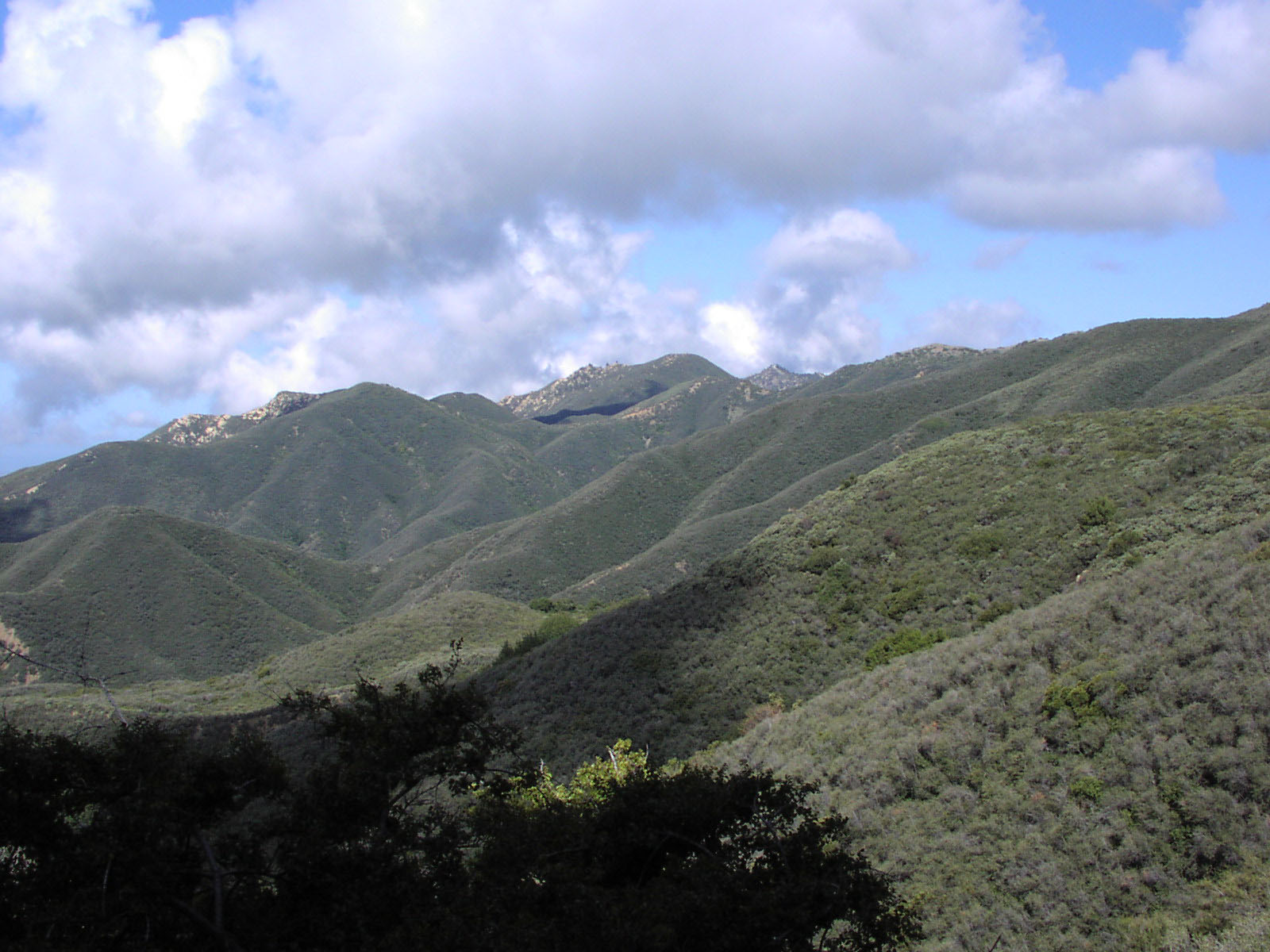
Chaparral is a sclerophyllous shrubland ecosystem dominated by drought-deciduous and evergreen woody shrubs, primarily found in California's coastal ranges, foothills, and mountains, where it forms dense, low-stature vegetation adapted to a Mediterranean climate of prolonged summer drought and mild, wet winters.[1] This biome, the state's most extensive native plant community, spans approximately 13 million acres and supports high plant endemism, with characteristic species including chamise (Adenostoma fasciculatum), manzanita (Arctostaphylos spp.), and ceanothus (Ceanothus spp.), which exhibit traits like thick, leathery leaves and deep root systems for water conservation.[2] Empirically, chaparral's persistence relies on infrequent, high-intensity fires that trigger resprouting in many species or stimulate seed germination in obligate seeders, but short-interval reburning—often exacerbated by human ignition patterns—has been shown to suppress native shrub regeneration by up to 99% in affected stands, leading to shifts toward non-native grasslands.[3][4] Beyond flora, the ecosystem harbors diverse fauna such as the wrentit (Chamaea fasciata) and endemic insects, while providing critical services like soil stabilization, watershed protection, and carbon storage, though debates persist over fire management policies that prioritize suppression, potentially altering natural disturbance regimes without fully accounting for ignition sources dominated by anthropogenic causes.[5]
Etymology
Origins and definitions
The term chaparral originates from the Spanish chaparral, a diminutive of chaparro, denoting a dwarf evergreen oak (Quercus coccifera or similar low-growing species).[6] [7] This Spanish usage traces further to the Basque txapar, a diminutive of sapar or txapar, meaning a thicket or small cluster of brush.[8] [9] Spanish explorers in the 16th and 17th centuries, encountering rugged terrains in what is now the American Southwest, extended chaparral from specific oak associations to describe dense, low-lying thickets of evergreen shrubs that impeded passage, often dominated by sclerophyllous vegetation adapted to arid conditions.[10] By the early 19th century, the term had become a descriptor for such impenetrable growth forms in colonial records of California and Baja California landscapes, distinct from sparser savannas or higher-canopy woodlands.[11] In English, chaparral first appeared around 1850 as an Americanism for thickets of dwarf evergreens and shrubs, borrowed directly from Spanish to convey the same obstructive density observed by Anglo-American settlers and naturalists.[6] John Muir, in his 1869 field notes and subsequent publications like My First Summer in the Sierra (1911), used the term to specify low, brushy undergrowth in foothill zones, contrasting it with more open, tree-scattered terrains upslope, thereby applying it descriptively to vegetation structure rather than mere topography.[12] This adoption marked its transition into scientific nomenclature for a cohesive shrubland type, grounded in empirical observations of regional flora rather than abstract classification.[13]Regional terminology variations
In California, the term "chaparral" specifically refers to dense sclerophyllous shrublands composed of evergreen, drought-adapted species forming impenetrable thickets on foothill and mountain slopes.[2] This usage emphasizes vegetation density and structure, excluding significant tree cover or herbaceous understories. In northern Baja California, Mexico, the term is applied analogously to similar shrub communities extending southward from San Diego, maintaining the focus on sclerophyll dominance.[14] Further south and inland in Mexico, "chaparral" often encompasses broader transitions with oak woodlands (encinales), incorporating semi-deciduous Quercus species amid shrubs, which reflects looser boundaries between pure shrubland and mixed-woodland formations based on regional floristic surveys.[15] In contrast, interior Mexican arid shrublands are commonly designated "matorral," a term denoting sparser, more xerophytic communities that may include succulent elements absent in Californian chaparral.[16] Globally, chaparral is distinguished from analogous Mediterranean-climate shrublands by nomenclature tied to endemic flora: "maquis" in Europe features aromatic, calcifuge shrubs like those in Corsica and Provence, while "fynbos" in South Africa highlights fine-leaved, ericoid-proteoid assemblages with higher speciation rates per comparative phytogeographic data.[17] These regional terms underscore empirical differences in plant architecture, density, and biogeographic history rather than climatic uniformity alone. Scientific refinements, such as World Wildlife Fund ecoregion mappings, standardize "chaparral" within delimited units like the California Chaparral and Woodlands (encompassing coastal, montane, and interior variants across 10.8 million hectares), prioritizing verifiable vegetation alliances over vernacular overlaps with matorral or maquis.[18]Physical and climatic characteristics
Vegetation structure and composition
Chaparral vegetation forms a dense canopy dominated by evergreen shrubs with hard, sclerophyllous leaves, typically reaching heights of 1 to 5 meters. This structure consists primarily of a single, continuous shrub layer, with taller species such as scrub oak (Quercus berberidifolia) averaging 2.4 meters and chamise (Adenostoma fasciculatum) around 1.6 meters, creating an impenetrable thicket. Minimal understory development occurs, limited to sparse herbaceous plants or sub-shrubs due to intense shading and nutrient competition within the closed canopy.[19][20] In mature stands, empirical measurements reveal high stand densities, such as 11,171 plants per hectare in mixed chaparral associations, reflecting the competitive packing of individuals. Biomass accumulates gradually post-disturbance, reaching up to 85 metric tons per hectare in productive types after several decades of growth. Crown cover varies by dominant species, with chamise stands achieving 71% coverage, contributing to the uniform, low-diversity profile of the vegetation.[21][19] Structural variations arise with edaphic and topographic factors; for instance, montane and mixed chaparral on mesic sites exhibit higher phytomass and denser growth compared to xeric chamise-dominated stands on drier slopes. Soil-derived moisture availability influences shrub height and spacing, with north-facing slopes supporting taller, more vigorous canopies. These patterns are documented through field inventories across California's diverse chaparral regions.[19]Climate requirements and adaptations
Chaparral persists in Mediterranean climates featuring cool, wet winters and warm to hot, arid summers, with annual precipitation averaging 250–750 mm, over 60% of which occurs from October to April.[22][23] This bimodal rainfall pattern—minimal summer input below 50 mm—drives evolutionary selection for water conservation, as plants must endure five to seven months of near-zero effective precipitation.[24] Mean annual temperatures hover around 15–20°C, with winter lows rarely dipping below 5°C and summer highs reaching 30–35°C, though diurnal fluctuations can exceed 20°C.[25][26] Prolonged summer aridity imposes hydraulic stress, favoring shrub species with deep taproots (often 2–10 m) that tap subsurface aquifers and sclerophyllous leaves featuring reduced surface area, thick waxy cuticles, dense pubescence, and recessed stomata to curb evapotranspiration rates by up to 90% during peak drought.[24][27] Some taxa, like Adenostoma fasciculatum, enter physiological dormancy, shedding leaves or minimizing metabolic activity to preserve stored carbohydrates.[28] Empirical tissue water potential data from co-occurring shrubs reveal predawn potentials as low as –5 to –10 MPa in summer, thresholds survivable via osmotic adjustment and embolism-resistant xylem.[27] This aridity also selects for resprouting forms over obligate seeders, as basal meristems protected belowground enable regrowth from established root systems amid recurrent water deficits, per monitoring of post-stress recovery dynamics.[29][30] While adapted to seasonal extremes, chaparral shows sensitivity to multiyear droughts surpassing historical variability, with normalized difference vegetation index declines of 20–50% linked to hydraulic failure and carbon starvation during the 2012–2016 event, affecting up to 10% of shrub cover.[29][31] Paleoclimate reconstructions from tree rings and lake sediments indicate prior megadroughts (e.g., Medieval Climate Anomaly) stressed similar shrublands, but intensified modern durations—exceeding 200% of mean—amplify dieback in less tolerant species like Ceanothus spp., underscoring limits to dehydration avoidance strategies.[32][33]Geographic distribution
North American core regions
The core regions of chaparral in North America are predominantly within California, where it occupies approximately 5.3 million hectares, representing about 5% of the state's land area.[5] This extent is mapped across ecoregions such as the California chaparral and woodlands, spanning coastal foothills and interior valleys from the Oregon border southward to the Mexican frontier, with primary concentrations in the Coast Ranges, Transverse Ranges, and Peninsular Ranges.[34] Elevational gradients define its boundaries, typically occurring between sea level and 1,500–2,000 meters, where summer drought and winter rainfall intersect with topographic exposure.[19] Chaparral extends eastward into Arizona's interior chaparral zones, covering about 1.4 million hectares in the Mogollon Rim and associated highlands at elevations of 1,000–1,700 meters, transitioning into semi-arid conditions.[35] In northern Baja California, Mexico, it continues southward along the peninsula's coastal and montane slopes, forming contiguous stands with California's southern populations before fragmenting into disjunct patches.[36] These distributions are delineated in GIS-based ecoregion frameworks, such as those from the U.S. Forest Service and EPA Level III mappings, which highlight chaparral's confinement to Mediterranean-influenced climates with mean annual precipitation of 250–1,000 mm.[37] Within California, chaparral is subdivided into cismontane and transmontane variants based on moisture gradients relative to mountain crests. Cismontane chaparral dominates coastal-facing (western) slopes with higher humidity and denser shrub cover, while transmontane chaparral occupies leeward (eastern) interiors with sparser, more drought-deciduous species adapted to aridity.[38] These distinctions align with orographic rainfall patterns, where cismontane areas receive orographic lift from Pacific storms, contrasting with rain-shadow effects in transmontane zones.[39] Historical land-use changes have reduced chaparral's extent by an estimated 20–30% since the mid-19th century, primarily through conversion to agriculture, grazing, and urban development in lowland valleys.[40] Low-elevation stands, especially in southern California, show the greatest losses, with 1930s vegetation surveys overlaid on modern data revealing persistent declines to non-native grasslands or sage scrub, exacerbated by fire suppression and fragmentation.[41] These alterations, documented in USDA and conservation analyses, have concentrated remaining core areas in protected montane and remote foothill tracts.[5]Extensions into Mexico and beyond
Chaparral extends southward from California into northern Baja California, Mexico, primarily in Baja California Norte, where it occupies dry-mesic slopes and coastal ranges from sea level to approximately 1500 meters elevation.[42] This continuation forms part of the California Floristic Province, exhibiting floristic overlap with northern populations through shared dominant shrubs like chamise (Adenostoma fasciculatum) and various manzanitas (Arctostaphylos spp.), though local endemism increases, with species such as Ceanothus verrucosus restricted to the peninsula's chaparral zones.[43] Empirical vegetation surveys document its presence in discrete patches on mesas and slopes below 1800 meters, often intermingling with pine-oak woodlands in central and southern Baja, but becoming progressively fragmented and replaced by xeric desert scrub southward toward the peninsula's arid interior.[38] The Mexican extension maintains fire-prone characteristics akin to Californian chaparral, with vegetation structured around resprouting shrubs adapted to periodic high-intensity burns, as evidenced by post-fire community surveys in Baja's Mediterranean-influenced zones.[36] Transitions to desert scrub are driven by decreasing precipitation and increasing aridity, limiting chaparral to coastal and montane refugia; packrat midden records from central Baja indicate historical contractions during drier climatic phases, underscoring its sensitivity to moisture gradients.[44] Outside North America, no direct phylogenetic extensions of chaparral occur, though analogous Mediterranean shrublands like Chile's matorral share superficial traits such as sclerophyllous vegetation and fire regimes; comparative ecological analyses reveal greater species diversity and distinct growth forms in matorral, attributable to independent evolutionary histories rather than shared ancestry, with no evidence of genetic continuity from North American lineages.[45] The strict chaparral biome, defined by its core floristics, thus remains confined to the North American Mediterranean zone, with Baja representing its southern limit and comprising a minor fraction of the overall distribution.[2]Comparisons to global shrublands
Chaparral exhibits convergent traits with other Mediterranean-climate shrublands, such as fire adaptation and sclerophyllous vegetation, driven by shared seasonal summer drought and winter rainfall patterns that select for drought-deciduous or evergreen strategies.[46] These ecosystems, including South African fynbos, Australian mallee, Chilean matorral, and southwestern Australian kwongan, independently evolved similar physiognomies despite profound phylogenetic divergence, with chaparral flora rooted in North American lineages lacking the Proteaceae dominant in fynbos or the eucalypt mallees.[47] Fossil evidence from Miocene deposits indicates that such adaptations arose separately in response to aridity intensification, underscoring causal links between climatic seasonality and structural convergence rather than shared ancestry.[48] Fire regimes provide empirical contrasts, with chaparral's mean return intervals of 30-100 years reflecting adaptation to infrequent, high-intensity crown fires in steeper terrains.[3] In comparison, fynbos experiences shorter intervals of 10-20 years, enabling serotinous seeding in proteoids but risking type conversion under altered frequencies, while mallee shrublands show variability from 40-65 years in semi-arid variants, influenced by fuel accumulation in eucalypt understories.[49][50] These differences arise from regional edaphic and topographic factors modulating drought severity, with chaparral's longer cycles tied to nutrient-poor soils and ignition scarcity absent in fynbos's more frequent lightning-driven burns.[51] Phylogenetic analyses reveal no close floristic affinities, as chaparral's diversity stems from Holarctic elements like Quercus and Arctostaphylos, contrasting fynbos's Gondwanan relicts or mallee's Myrtaceae dominance, which precludes direct biotic exchanges.[52] Climatic data further highlight nuances: chaparral's precipitation (250-750 mm annually) aligns with analogs but pairs with greater interannual variability, fostering resilience to prolonged droughts via deep-rooted resprouters, unlike fynbos's reliance on postfire recruitment in sandier substrates.[53] Such distinctions emphasize functional analogies over equivalence, with chaparral's evolution shaped by North American tectonic stability rather than the Cape's orogenic uplift.[54]Ecological components
Dominant flora and plant adaptations
Chaparral ecosystems are dominated by sclerophyllous evergreen shrubs from genera such as Adenostoma, Ceanothus, and Arctostaphylos, which collectively form dense stands covering extensive foothill and mountain slopes.[1][55] Adenostoma fasciculatum (chamise) is the most widespread, often comprising up to 80% of cover in xeric stands, while Ceanothus species contribute to mixed assemblages and Arctostaphylos (manzanitas) prevail in coarser soils.[56][57] These genera encompass over 100 shrub species exhibiting resprouting from basal burls or obligate seeding from persistent soil banks as primary regeneration modes, enabling persistence in nutrient-poor, rocky substrates.[58] Key adaptations to aridity include small, thick leaves with waxy cuticles and sunken stomata to minimize transpiration, complemented by deep taproots accessing subsurface moisture during prolonged dry seasons.[59][60] Woody perennials maintain evergreen canopies for year-round photosynthesis, with low specific leaf area reducing water loss under high evaporative demand.[32] Individual shrubs routinely exceed 100 years in age, as evidenced by growth ring analysis in unburned stands aged 56–120 years, where dominant cohorts show sustained vigor without senescence.[61][62] Allelopathic compounds, particularly phenolics from Adenostoma leaf litter, inhibit understory herb and grass germination, reinforcing shrub dominance by suppressing competitors in mature stands.[63][64] Plant species richness varies topographically, averaging 50–70 species per hectare in mesic north-facing slopes with finer soils and higher moisture retention, compared to 20–40 in xeric south-facing exposures.[43][65] This gradient reflects edaphic and microclimatic controls, with mesic sites supporting greater understory diversity among subordinate forbs and subshrubs.[66]Fauna and trophic interactions
The chaparral fauna comprises small mammals, birds, reptiles, and insects adapted to dense, fire-prone shrublands, with trophic dynamics shaped by low primary productivity and nutrient-limited forage that constrains herbivore biomass. Small mammals such as woodrats (Neotoma spp.) and deer mice (Peromyscus spp.) dominate, relying on seeds, foliage, and cover from shrubs like chamise (Adenostoma fasciculatum), while larger herbivores like mule deer (Odocoileus hemionus) exhibit low densities due to the tough, low-protein sclerophyllous leaves that limit intake and support minimal carrying capacity.[67] Birds including the wrentit (Chamaea fasciata), a near-endemic shrub-dependent species, forage on arthropods and fruits within the understory, with populations sustained by post-fire structural recovery that provides nesting sites. Insect communities feature high diversity, particularly ground-dwelling ants and beetles that act as seed predators and decomposers, alongside flower-visiting bees essential for pollinating entomophilous shrubs like manzanita (Arctostaphylos spp.), where observational studies confirm pollinator dependence for fruit set in over 50% of species. Seed predation rates by granivorous rodents and birds can exceed 70% of annual production for some taxa, as documented in exclusion experiments, reducing recruitment but facilitating dispersal via scatter-hoarding behaviors that cache uneaten seeds.[67][68][69] Trophic interactions emphasize bottom-up controls over strong cascades, with sparse apex predators like coyotes (Canis latrans) and bobcats (Lynx rufus) exerting top-down pressure on herbivores through occasional predation, yet failing to induce pronounced vegetation release due to the ecosystem's oligotrophic conditions and fire-mediated resets. Herbivores primarily target post-fire herbaceous flushes, where exclosure studies reveal mammalian grazing reduces annual plant biomass by 30-50% in early succession, but shrub dominance persists amid overall low vertebrate biomass estimated at under 1 kg/ha for large mammals. Reptiles such as western fence lizards (Sceloporus occidentalis) contribute to insect control, preying on pollinator antagonists and integrating into multi-level consumer dynamics that maintain arthropod-mediated pollination efficacy.[70][71]Soil, hydrology, and nutrient dynamics
Chaparral soils are typically shallow, rocky, and coarse-textured, with low fertility and limited organic matter content, often derived from weathered sedimentary or granitic parent materials such as sandstone or shale.[72] These edaphic conditions arise from the region's tectonic history and arid evolutionary pressures, resulting in gritty substrates composed of sand, clay, and fragmented rock that support oligotrophic conditions unfavorable to mesic vegetation.[73] Soil pH tends to be neutral to slightly acidic, with low cation exchange capacity that restricts nutrient retention.[1] Hydrological processes in chaparral ecosystems feature high infiltration rates due to the porous structure of these soils, enhanced by extensive root systems that create macropores and stable aggregates.[74] Under normal precipitation regimes, this promotes deep percolation rather than surface runoff, minimizing erosion on slopes despite the terrain's steepness and aridity.[75] Winter rains, which dominate the Mediterranean climate, are thus efficiently routed subsurface, sustaining deep-rooted shrubs while limiting overland flow to episodic events during intense storms.[76] Nutrient dynamics emphasize conservatism, with slow decomposition rates of sclerophyllous litter—characterized by tough, waxy leaves low in nitrogen and high in phenolics—reducing mineralization and leaching losses.[77] This sclerophylly enables high resorption efficiency of nutrients prior to leaf abscission, recycling internal resources and adapting to the infertile soils.[78] Symbiotic nitrogen fixation by actinorhizal shrubs such as Ceanothus species partially offsets deficiencies, with root nodules hosting Frankia bacteria that convert atmospheric N₂, contributing up to 50-100 kg N ha⁻¹ year⁻¹ in some stands and facilitating long-term fertility maintenance. Overall cycling is protracted, with phosphorus and other macros bound in recalcitrant forms, underscoring the ecosystem's reliance on internal retention over external inputs.[79]Fire ecology
Natural fire regimes and return intervals
In chaparral ecosystems, natural fire regimes prior to widespread human intervention were characterized by infrequent, high-severity stand-replacing crown fires that consumed the aboveground biomass of dense shrub stands.[51] Historical reconstructions indicate mean fire return intervals (FRIs) ranging from 30 to 90 years for chamise-redshank and mixed chaparral communities, with broader estimates extending to 30-150 years depending on local conditions.[51] [80] These intervals reflect baseline frequencies established through empirical methods such as fire scar dendrochronology on associated tree species like bigcone Douglas-fir, which preserve records of fire passage in multi-century chronologies.[81] Pre-1900 evidence from fire scar analyses and sedimentary charcoal records confirms that lightning served as the primary natural ignition source, though occurrences were infrequent—typically during summer thunderstorms—yet sufficient to initiate large-scale events under dry fuel conditions.[82] [83] These fires exhibited high severity, with crown fire behavior driven by continuous fine fuels in mature stands, leading to near-complete stand replacement across landscapes.[84] Charcoal influx data from lake sediments further corroborate episodic large crown fires occurring two to three times per century in southern California shrublands, aligning with the observed FRI variability.[83] Fire return intervals exhibited spatial variability, with shorter FRIs (closer to 30 years) in lower-elevation valleys and drier sites due to greater fuel accumulation and ignition potential, while wetter, higher-elevation sites supported longer intervals (up to 100 years or more) as evidenced by fire scar networks and topographic analyses.[51] [83] Dendrochronological reconstructions from scarred trees in chaparral-adjacent forests validate this heterogeneity, showing point-specific FRIs influenced by local climate and fuel dynamics rather than uniform regional patterns.[81] Such baseline regimes underscore the ecosystem's adaptation to infrequent but intense disturbances, distinct from more frequent surface fires in neighboring forest types.[51]Fire adaptations in species
Chaparral shrubs primarily employ two fire survival strategies: vegetative resprouting from persistent underground structures and recruitment from fire-stimulated seed germination. Approximately 80% of chaparral shrub cover consists of resprouter species, which regenerate rapidly post-fire via lignotubers or basal burls that store carbohydrates and meristematic tissues protected from lethal heat.[85] These structures enable shoots to emerge within weeks of burning, drawing on pre-fire reserves to outcompete herbaceous pioneers despite high post-fire resource demands. Obligate seeding species, comprising about 10-16% of cover, lack resprouting ability and depend on soil-stored seed banks triggered by fire cues such as dry heat, which scarifies impermeable seed coats, and smoke-derived chemicals like karrikins that break dormancy.[86] Empirical tests show smoke solutions inducing germination rates up to 100% in dormant chaparral seeds that exhibit 0% germination without treatment, with heat enhancing rates in 21 of 30 tested species.[86][87] Facultative species, such as chamise (Adenostoma fasciculatum), combine both mechanisms, resprouting while also germinating from smoke-cued seeds.[88] Resprouting demands heavy allocation to belowground storage, conferring tolerance to frequent low-severity fires but risking lignotuber exhaustion and mortality under successive high-intensity burns that deplete reserves before replenishment.[3] In contrast, obligate seeders build persistent banks over decades, vulnerable to seed predation or depletion if fires recur before reproductive maturity, yet poised for explosive recruitment in canopy gaps post-fire.[89] These physiological trade-offs reflect evolutionary pressures balancing rapid recovery against demographic risks in fire-prone environments.[90]Post-fire regeneration processes
Post-fire regeneration in chaparral ecosystems primarily occurs through two mechanisms: resprouting from lignotubers or root crowns in facultative and obligate resprouters, and seedling recruitment from fire-stimulated seed banks in obligate seeders.[3] Species such as Adenostoma fasciculatum (chamise) exhibit rapid resprouting, with shoots emerging within weeks of fire, while seeders like Ceonothus spp. rely on heat-induced germination of soil-stored seeds.[91] Chronosequence studies using remote sensing metrics, such as Normalized Difference Vegetation Index (NDVI) and leaf area index (LAI), indicate initial biomass accumulation peaks within 10-20 years post-fire, with shrub cover recovering to pre-fire levels around 10 years in many stands.[92] [93] Full structural maturity, characterized by dense canopy closure and reproductive dominance, typically requires 50 or more years.[94] Early post-fire succession features a flush of annual and perennial herbs exploiting nutrient-enriched ash layers, which provide pulses of nitrogen and phosphorus from combusted biomass.[95] These ephemerals dominate the first 1-3 years, capturing elevated soil ammonium and nitrate levels before yielding to resprouting shrubs and seedlings, which outcompete them as canopy shade increases.[96] Monitoring plots from fires like the 2007 Zaca Fire reveal this shift, with herbaceous cover declining as shrub densities rise to 5,000-10,000 stems per hectare by year 5.[97] Regeneration trajectories are vulnerable to post-fire stressors, including drought and herbivory, which can reduce seedling survival and delay biomass recovery. The 2011-2017 California drought halved green vegetation fractions in recovering chaparral stands, exacerbating mortality in water-limited resprouts.[97] [33] Mammalian herbivores, such as exotic deer on Santa Catalina Island, browse juvenile shrubs, diminishing native community resilience and favoring invasive grasses in some chronosequences. These factors underscore the sensitivity of early regeneration phases to climatic variability and biotic pressures.[98]Human influences and alterations
Historical fire suppression effects
Federal fire suppression policies in the United States, initiated by the U.S. Forest Service around 1910 and intensified through the 1935 "10 a.m. policy" aiming to control all fires by the next morning, significantly curtailed ignitions from various sources in chaparral-dominated landscapes of southern California.[99] These efforts reduced the annual area burned compared to pre-suppression eras, where historical records indicate stand-replacing fires occurred irregularly but covered substantial extents under severe weather.[100] Stand age mapping from the early 20th century onward reveals a shift toward dominance by mature chaparral patches exceeding 50 years old, with some landscapes showing over 50% unburned since 1910 record-keeping began.[101] Mean fire return intervals, estimated at 30-90 years historically for chamise and mixed chaparral, have lengthened in many areas due to this suppression, fostering continuous fuel mosaics of older vegetation.[51] Empirical evidence highlights benefits of these prolonged fire-free periods, particularly in shielding non-sprouting (obligate-seeding) species from short-interval reburns that could deplete soil seed banks and hinder regeneration.[83] Chaparral stands over a century old demonstrate resilience, with fire severity impacts comparable to younger stands, preserving biodiversity components reliant on extended maturation for seed production.[102] Suppression has thus mitigated risks of type conversion to herbaceous states from fires recurring within 10-20 years, which empirical post-fire studies link to failed shrub recovery.[94] While critics argue suppression promotes fuel accumulation leading to catastrophic fires, data from fire perimeters since 1910 show no consistent increase in annual burned area, fire size, or frequency attributable to policy alone, challenging notions of a universal "fuel buildup" crisis in intact chaparral away from human interfaces.[103] In pure stands, older fuels do not inherently alter high-severity, weather-driven fire behavior beyond historical norms, though continuous canopies may facilitate spread in wildland-urban interfaces.[82] Pre-suppression records, often imprecise, do not substantiate claims of routine megafires displaced by suppression, underscoring that fire exclusion's drawbacks are context-specific rather than ecosystem-wide.[104]Increased fire frequency from ignitions
In Southern California chaparral, more than 90% of recorded wildfires from 1919 to 2016 were ignited by human activities, with arson, power lines, debris burning, and smoking as predominant sources.[105] [106] For wind-driven fires critical to chaparral spread—such as those during Santa Ana events—100% of ignitions from 1948 to 2018 were anthropogenic, often from infrastructure failures or deliberate acts.[107] [108] Human ignition density has shortened fire return intervals in populated chaparral regions from presettlement estimates of 30–90 years to as low as 10–20 years in many stands since the mid-20th century.[3] [109] This reduction, observed via ignition databases like those from CAL FIRE and USFS, halves or more the time between burns in urban-proximate areas compared to remote ones, as higher ignition rates coincide with dry fuels and winds.[106] [110] Urban expansion directly correlates with elevated fire frequencies, with studies documenting 2–3 times higher incidence in chaparral adjacent to developed zones versus interior wildlands, driven by proximity to ignition sources like power infrastructure.[3] [111] Population growth since the 1920s has amplified this pattern, as linear features such as roads and utility corridors facilitate ignitions that escape suppression, independent of climatic variability alone. [112] These shortened intervals result in frequent reburning of immature stands, where vegetation has not reached maturity to support species-specific seed banks or resprouting vigor, though ignition data underscore human density as the primary causal driver over uniform climate effects across landscapes.[3] [94]Invasive species and ecosystem shifts
Invasive annual grasses, particularly Bromus species such as B. diandrus and B. hordeaceus, represent the primary non-native invaders in chaparral ecosystems, originating from Mediterranean regions and proliferating following disturbances like fire or land clearance since European settlement in the 18th-19th centuries.[113] These grasses establish rapidly in post-fire environments due to their prolific seed production and lack of dependence on long-lived soil seed banks, outcompeting native shrubs for light, water, and nutrients during early succession.[114] Unlike native perennial shrubs, annual Bromus senesce early, producing continuous fine fuels that dry quickly and sustain low-intensity fires capable of carrying over from herbaceous layers into shrub canopies or persisting across wet-dry seasonal transitions.[115] This grass dominance drives type conversion from evergreen chaparral shrublands to exotic annual-dominated savannas or grasslands, with documented shifts accelerating in southern California since the mid-20th century amid altered disturbance regimes.[114] Empirical field studies across burned chaparral plots reveal that invasive grass cover post-fire suppresses native woody recruitment by 50-90%, primarily through competitive exclusion and altered microsite conditions that favor further grass invasion over shrub seedling establishment.[3] [116] For obligate-seeding chaparral species like Ceanothus spp., short-interval reburns fueled by grass residues can reduce regeneration to near zero, locking ecosystems into persistent herbaceous states with diminished structural complexity and biodiversity.[3] Woody shrub invasives remain rare in chaparral due to the ecosystem's competitive dominance by fire-adapted natives and harsh edaphic conditions, though opportunistic establishment occurs at edges or in fragmented habitats.[113] Non-Bromus grasses like cheatgrass (Bromus tectorum), more typical of interior western ranges, occasionally encroach on montane chaparral transitions, where they modify fuel ladders by bridging surface-to-crown continuity and increasing flame lengths in mixed stands.[117] Such alterations exacerbate conversion risks by enabling crown fires that further degrade shrub canopies, though cheatgrass prevalence in core coastal chaparral remains limited compared to annual Bromus.[118] Overall, these invasions chronosequentially progress from initial post-disturbance colonization to self-reinforcing feedbacks, fundamentally shifting chaparral from shrub-dominated perennials to flammable annual mosaics.[119]Management strategies
Prescribed fire and fuel management
Prescribed fire, or controlled burning, emerged as a management tool for chaparral ecosystems in the mid-20th century, with experimental applications gaining traction in California during the 1960s through research advocating its use for fuel reduction and habitat maintenance.[120] Influenced by earlier forestry practices, these burns aimed to mimic natural fire regimes by reducing fuel accumulation in shrub-dominated stands, though initial efforts faced logistical hurdles including regulatory approvals and public opposition.[121] Empirical trials, such as those documented in southern California national forests, demonstrated potential for lowering wildfire intensity when executed under favorable conditions, but overall adoption remained sporadic due to inherent challenges in controlling fire spread.[122] The efficacy of prescribed burns in chaparral is constrained by the ecosystem's dry fuels and high flammability, leading to elevated escape risks even during planned operations; for instance, mature stands with continuous canopies ignite rapidly, often exceeding containment capabilities outside brief weather windows characterized by high fuel moisture and low winds.[123] Data from operational burns indicate that while some fires successfully reduce surface fuels by 50-70% post-treatment, escape incidents occur in up to 20% of attempts in drier periods, underscoring the need for precise timing in wetter seasons or early summer when relative humidity exceeds 40%.[124] These outcomes highlight causal factors like fuel continuity and microclimate, where deviations from modeled fire behavior—such as unexpected wind shifts—amplify hazards, limiting scalable implementation across rugged terrains.[82] Mechanical fuel treatments, including mastication and hand thinning, serve as non-ignitious alternatives to prescribed fire, targeting ladder fuels and canopy density to disrupt fire continuity; however, their application is hampered by chaparral's steep slopes and rocky substrates, which restrict heavy equipment access and increase operational costs by factors of 2-3 compared to flatter sites.[125] Post-treatment assessments reveal partial efficacy, with shredded biomass reducing flame lengths by 30-50% in treated zones for 3-5 years, though rapid resprouting of obligate resprouters like chamise restores fuel loads thereafter, necessitating repeated interventions.[126] Terrain limitations further confine treatments to accessible areas, covering less than 10% of expansive wildland units in some studies, with efficacy diminishing on slopes over 30% where incomplete removal heightens residual fire potential.[127] Current guidelines for these interventions prioritize site-specific assessments, incorporating fuel moisture thresholds, topographic modeling, and real-time monitoring to ensure containment; USDA Forest Service protocols, for example, mandate detailed burn plans specifying ignition patterns—like strip-head firing—to maintain low-intensity spreads under 1-2 meters per minute.[128] These frameworks require pre-burn environmental evaluations and contingency measures for wind events exceeding 10 km/h, drawing from empirical data to balance hazard reduction against unintended spread, with post-operation metrics tracking fuel consumption rates via remote sensing.[129] Integrated approaches often combine mechanical and prescribed methods in mosaics, adapting to local hydrology and stand age to optimize outcomes while minimizing ecological disruption.[124]Conservation and restoration efforts
Significant portions of chaparral ecosystems are conserved within federal protected areas, including the Cleveland National Forest, where chaparral vegetation covers over 60 percent of the approximately 460,000 acres of forest land.[5] These reserves encompass diverse chaparral subtypes and support endemic flora and fauna adapted to the region's fire-prone conditions.[130] Seed banking programs target rare endemics within chaparral habitats to preserve genetic diversity amid threats like habitat fragmentation and altered fire regimes.[131] For example, the UC Botanical Garden collects and stores seeds of species such as Phacelia stellaris (Santiago Peak phacelia), restricted to chaparral and coniferous forests in southern California mountains.[131] Similarly, the Santa Barbara Botanic Garden maintains a conservation seed bank as a genetic repository for rare chaparral-associated populations, enabling potential reintroduction.[132] These efforts leverage the persistent soil seed banks of many chaparral shrubs, like Arctostaphylos and Ceanothus, which remain viable for decades until cued by fire.[1] Restoration post-disturbance or type conversion emphasizes outplanting native shrubs from nursery stock, as direct seeding often yields low success due to poor germination in invaded or degraded sites.[133] Projects incorporate multiple planting episodes to mitigate drought-induced mortality, which can affect resprouts and transplants severely in the initial years.[30] Demographic modeling in restoration trials links vital rates to rainfall and non-native removal, guiding site selection for higher establishment where competition is minimized.[134] Conservation objectives prioritize maintaining landscape-scale age class mosaics to foster resilience, with monitoring every 5 to 10 years to ensure self-sustaining patches of varying stand ages.[135] This heterogeneity supports post-fire recovery dynamics and biodiversity by preventing uniform senescence across large areas.[136]Urban interface mitigation
Defensible space creation around structures in chaparral-adjacent wildland-urban interface (WUI) areas prioritizes reducing fuel loads within 100 feet (30 meters), structured as Zone 0 (0-5 feet: non-combustible surfacing and plant-free immediate perimeter), Zone 1 (5-30 feet: lean, clean, and green landscaping with spaced low-flammability plants), and Zone 2 (30-100 feet: thinned vegetation to interrupt fuel continuity).[137] This approach directly counters chaparral's rapid fire spread via crown fires and spot fires from embers, which dominate WUI losses. California state law, under Public Resources Code Section 4291, requires property owners in fire-prone areas to maintain these zones year-round, with local fire departments enforcing via inspections and citations for violations.[138] [139] The 2003 Cedar Fire in San Diego County, fueled by dense chaparral, destroyed 2,232 structures—primarily in untreated WUI zones—while sparing many with established defensible space, revealing how proximity fuels and ember accumulation drive ignitions over direct flame contact.[140] [141] Empirical analyses of southern California chaparral fires, including those in San Diego, show structures with adjacent defensible space (within 50-100 feet) survive at rates 4-5 times higher than untreated ones, with survival exceeding 80% in low-to-moderate intensity ember events versus under 20% without.[142] [143] These findings, derived from geospatial modeling of over 5,000 structure outcomes across multiple fires, underscore that even partial Zone 1 compliance halves ignition risk from airborne embers, a primary vector in chaparral WUI blazes.[144] Complementing defensible space, structure hardening targets ignition vulnerability through ember-resistant features: Class A fire-rated roofs, boxed eaves, metal mesh screens on vents (1/8-inch or smaller), and tempered glass or metal shutters.[137] In Cedar Fire reconstructions, unhardened homes ignited via attic vents and wooden decks from ember showers, whereas retrofitted structures resisted up to 90% of such exposures.[140] Local ordinances, such as those in Los Angeles and San Diego counties, mandate these for new WUI builds under California Building Code Chapter 7A, prioritizing homeowner implementation over state or federal overreach.[145] Compliance data from post-2003 inspections indicate treated WUI parcels experience 70-85% fewer losses in subsequent events, affirming private responsibility as the causal linchpin for resilience.[146]Controversies and debates
Fire frequency threats vs. suppression benefits
Frequent reburns in chaparral ecosystems, occurring at intervals shorter than 20 years, pose significant threats to obligate-seeding species, which rely on fire cues for germination but require extended postfire periods to rebuild soil seed banks and mature. Empirical data indicate that fire return intervals of 10 years or less inhibit recovery, leading to near-complete failure (up to 99% reduction) in postfire regeneration of obligate seeders like certain Ceanothus and Arctostaphylos species, while favoring invasive grasses and type conversion to non-serotinous shrublands or annual grasslands.[3][94] Zedler (1995) documented that these species need 10–20 years on average to replenish viable seed banks, with intervals below this threshold causing localized extinctions and biodiversity loss, as observed in southern California stands reburned multiple times since the 1990s.[147] Fire suppression policies have demonstrably mitigated these frequency threats by limiting the spread of ignitions, thereby preserving longer intervals in approximately 70% of chaparral stands where historical data show pre-settlement return times of 30–150 years, averting the depletion of seed-dependent flora and maintaining ecosystem resilience against repeated disturbance.[148] Studies confirm that suppression has not universally altered fire regimes to produce denser fuels leading to crisis levels, as area burned and fire sizes remain comparable to pre-suppression records, protecting obligate seeders from immaturity risk in fire-prone landscapes.[82] Opposing views posit that suppression induces greater fire intensity through fuel accumulation, potentially exacerbating megafire risks, yet historical analyses refute this by showing no evidence of pre-suppression megafires or elevated severity; high-intensity, stand-replacing crown fires have characterized chaparral naturally, independent of modern suppression, with impressions of unnatural buildup stemming from imprecise early accounts rather than empirical fire scars or tree-ring data.[104][149] Rare large events align with climatic drivers like Santa Ana winds, not suppression artifacts, underscoring that frequency threats from human ignitions outweigh debated intensity shifts.[150]Role of human management vs. climatic factors
In chaparral ecosystems of southern California, human activities account for approximately 95% of wildfire ignitions, far outpacing natural sources such as lightning strikes, which constitute less than 5%.[151][152] This dominance of anthropogenic ignitions—often from equipment, vehicles, power lines, or recreation—establishes them as the primary causal driver of fire events, independent of climatic variables like temperature or atmospheric CO2 concentrations, which do not initiate sparks but may influence post-ignition behavior.[153] Empirical ignition statistics from state agencies confirm that coastal chaparral regions, including areas around Los Angeles and San Diego, now experience nearly 99% human-sourced fires, a stark contrast to pre-industrial patterns where lightning provided the limited natural triggers in this low-thunderstorm Mediterranean climate.[154][155] Climatic factors, including drought and elevated temperatures linked to anthropogenic warming, amplify fire spread and intensity once ignited but do not explain the initiation or frequency of most chaparral blazes. Attribution analyses, such as those modeling fire weather indices, attribute enhanced flammability to climate change—estimating contributions to extreme conditions like those in recent events—but these frameworks often overlook ignition data, explaining less than 10% of variance in observed fire occurrence when human factors are controlled for in integrated models.[156][157] In contrast, pre-industrial fire regimes in chaparral were constrained by sparse lightning ignitions, occurring perhaps every few decades per site, whereas modern regimes feature frequent small human starts that escape containment due to management shortcomings, such as inadequate initial attack resources or fragmented response coordination.[83][4] Debates over causal primacy reveal tensions between climate-centric narratives, which emphasize modeled projections of hotter, drier fuels, and evidence-based assessments prioritizing human management lapses. For instance, while some studies link a fivefold rise in California's annual burned area since 1972 partly to warmer summers, this increase correlates more directly with the proliferation of human ignitions during non-lightning seasons and failures in rapid suppression, as lightning fires remain confined to wetter, higher-elevation zones outside core chaparral.[156] Integrated analyses underscore that effective management—through vigilant ignition monitoring and perimeter control—mitigates climatic amplification, rendering temperature or precipitation anomalies secondary to preventable human-induced starts and escape dynamics in shaping contemporary chaparral fire outcomes.[158][159]Biodiversity impacts and type conversion risks
Frequent fires with return intervals shorter than 20-30 years in California chaparral ecosystems drive type conversion from native shrublands to non-native annual grasslands, as dominant woody species fail to regenerate before subsequent burns deplete soil seed banks. This process, documented across southern California landscapes, results from unnaturally elevated fire frequencies primarily linked to human ignitions, leading to widespread degradation and loss of shrub cover.[160][161] Biodiversity impacts are severe, with short-interval fires reducing post-fire native woody regeneration; obligate-seeding shrub species, such as certain Ceanothus and Arctostaphylos, experience up to 99% declines in seedling density compared to longer-interval burns. Each additional fire since 1985 correlates with a 12% drop in native species cover proportion, alongside diminished richness and Shannon diversity metrics, favoring invasive annuals like Bromus spp. and Avena spp. that outcompete natives in disturbed states. These shifts drastically lower overall plant diversity, with converted grasslands supporting far fewer endemic taxa than intact chaparral.[3][162] Mature old-growth chaparral, with stands exceeding 50-100 years without fire, sustains higher biodiversity, including diverse understory wildflowers, ferns, lichens, and mycorrhizal networks absent in younger or converted areas. Such stands host specialized fauna and greater phylogenetic diversity, underscoring the irreplaceable ecological value lost in type conversions. Natural reversion to shrub dominance proves rare without intervention, as entrenched invasives and altered soils hinder recovery, amplifying long-term risks to chaparral endemism.[163][164] Empirical data counter narratives emphasizing suppression or climate as primary drivers, instead highlighting shortened fire intervals from excess ignitions as the causal mechanism for instability; stabilizing frequencies through ignition management preserves diversity better than unchecked burning. Peer-reviewed analyses, including those by Keeley, affirm that high-frequency regimes, not suppression per se, precipitate these compositional collapses.[160][165]References
- https://en.wiktionary.org/wiki/chaparral
