


Community hub
Recent from talks
Contribute something
Nothing was collected or created yet.
Old China Trade
View on Wikipedia

The Old China Trade (Chinese: 舊中國貿易) was the early commerce between the Qing Empire and the United States under the Canton System, spanning from shortly after the end of the American Revolutionary War in 1783 to the Treaty of Wanghia in 1844. The Old China Trade represented the beginning of relations between the United States and East Asia, including eventually U.S.–China relations. The maritime fur trade was a major aspect of the Old China Trade, as was illegal trafficking in opium. The trade era overlapped the First Opium War, which resulted from an attempt by China to enforce its prohibition on opium smuggling by Western traders and blockade-runners.
Origins
[edit]
The American Revolutionary War, which ended with the 1783 Treaty of Paris, led to the Thirteen Colonies becoming independent from Britain as the United States, which continued to consume large quantities of tea. At the time, increased global demand for tea was one of the primary reasons for a shortage of silver; this was the only currency that the Chinese, sole producers of the commodity at the time, would accept in payment. The British East India Company (EIC), monopoly suppliers of tea to the British Empire's markets, got around the problem by indirect sales of opium to the Chinese, the proceeds from which they used to pay for tea.
The Americans meanwhile, also needed silver to finance their burgeoning international trade in furs, timber and other commodities. They too looked to the Chinese market as a source of hard currency based on the US monopoly of the Ottoman opium trade.[1] The United States' first consul in China, Bostonian and former Continental Army officer Samuel Shaw[2] (1754–1794), arrived in the port of Guangzhou (then romanized as "Canton") in 1784 aboard the converted privateer Empress of China. The "Chinese Queen", as the vessel was known, under the command of Captain John Green,[3] carried a cargo of silver specie and ginseng for trade. In Guangzhou, the Americans encountered many European nations already trading under the Canton System, including the British, Dutch, French and Danish.[4]
Shaw subsequently negotiated the sale of the Empress's cargo and earned a substantial profit. As well as symbolizing a breach of the EIC's tea monopoly, the successful and lucrative voyage of the Empress inspired other American merchants to follow suit with the desire to enter a new market with great potential for profit.[5] By 1803, American vessels outnumbered all other Western nations in their trade with China.[6] While more numerous, American vessels were smaller, averaging just under 300 tons each, compared with the East Indiamen from Europe, which averaged 1,200 tons each.[7]
American business growth with the opium trade
[edit]
Two years after the voyage of the Empress, Shaw set up the firm of Shaw & Randall to advise American firms unfamiliar with trade in the Far East.[8] Boston Brahmin Thomas Handasyd Perkins of Perkins & Co., the dominant American presence in the Ottoman opium business, along with one of his partners and his 16‑year-old nephew John Perkins Cushing, subsequently opened operations in Guangzhou, where Russell & Co. had become the most important American illegal smuggler and dealer of opium. The founders of Russell & Co., Samuel Russell, and Philip Ammedon, had set up in the Chinese city in 1808, buying opium at auction from the EIC in Bombay, which they then shipped clandestinely to Guangzhou on the south coast of China. By 1827 Russell and Co. had become the largest American opium dealer in China, competing in the market alongside British firms including Jardine, Matheson & Co. and Dent & Co. Of all the American firms, only Olyphant & Co. and one other abstained from the opium trade.[9]
Trade with China, originally an enterprise of seemingly limited prospects involving significant risk instead turned out to be extremely lucrative. American traders, then with a stable foothold in Guangzhou, were eager to sell their goods to China, but the Chinese interest in foreign goods was limited. The first item that tended to sell in China was Spanish bullion: American traders would devote large sums of money to buying and amassing large quantities of the metal for export to China. The Spanish silver bullion was primarily used to complement the less profitable American goods such as cheese, grain, and rum. The use of bullion eventually became considerable with over $62 million worth of specie traded to China between 1805 and 1825. This practice, however, gradually declined after 1815, when American merchants began to participate in "chain trade" routes —the buying and selling of goods en route to Guangzhou. The second major —and by far the most lucrative— American export to China was ginseng. Hailed by the Chinese, among other cultures as shown by the genus' Latinate scientific name Panax as a panacea, the most potent and therefore most demanded type of ginseng, Panax quinquefolius, grew in Manchuria and the Appalachian Mountains. Transported from the interiors of Pennsylvania and Virginia to Philadelphia, New York, or Boston, ginseng was then shipped to China and sold for up to 250 times its weight in silver. Furs were the third-most lucrative American export to China. Searching for another type of item that could be sold to the Chinese aside from specie and ginseng, Americans soon found that the mandarins had a taste for sea otter pelts, which could be inexpensively purchased from the Indians of the northwest coast of the United States and shipped to Guangzhou. The Chinese mandarins' desire for bullion, ginseng, and furs was the primary impetus for the United States' initiation of trade with China. The return of the Empress of China, which had carried all three commodities, and her by the now rich crew to Boston in 1785 inspired other Americans to make similar voyages. However, different reasons emerged for maintaining trade with China.

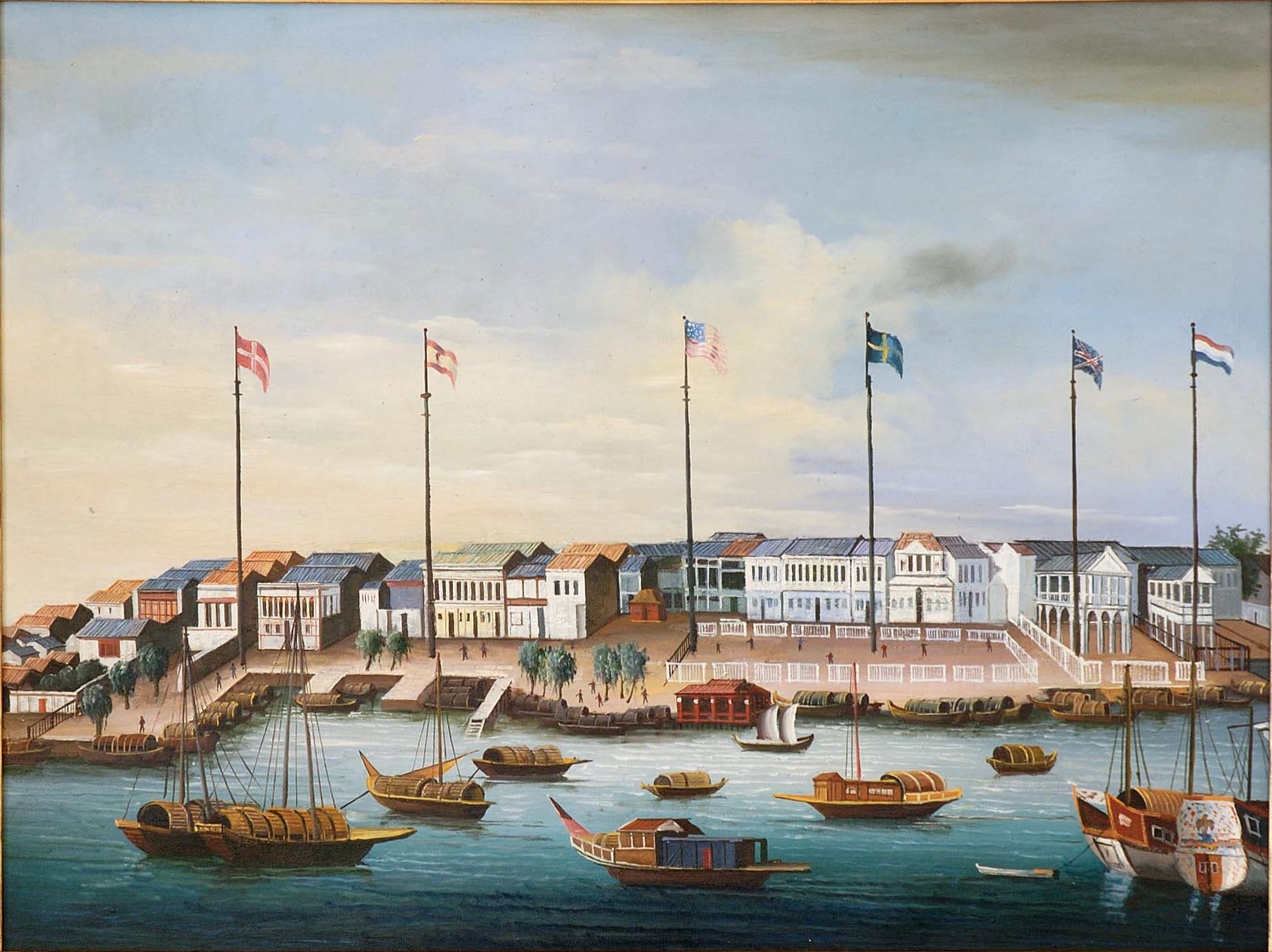
There had always been a general American desire for foreign and sometimes exotic wares, and, with the EIC no longer the dominant force in North American trade with China, the job of satisfying this demand fell to American merchants. Therefore, when the Empress returned home, she brought with her a large stock of outlandish Chinese goods, which her owners sold for a significant profit of $30,000—a 25% gain. Other American merchants did not take long to realize that, while selling American specie, ginseng, and fur to the Chinese was undoubtedly profitable, selling Chinese goods in the United States would be considerably more so. Further motivation came from the knowledge that China, as a whole, had a mercantilist-like attitude towards foreign commerce; they tended to resist the importation of foreign goods because of a mixture of Confucian doctrine, which deprecated trade, and the underlying ethnocentrism felt by the Chinese—they did not need to actively search for trade because the inferior white "barbarian" states would instinctively bring it to them as a form of tribute.[citation needed] Because of these factors, American traders began to focus their funds on acquiring Chinese goods—a practice that the Chinese were more willing to adopt—rather than on purchasing those of the United States. What resulted was the flooding of Chinese teas, cotton, silks, rhubarb, cassia, nankeens (durable, yellow cloth), floor-matting, lacquerware, fans, furniture, and porcelains, into the US, to the extent that even those of poor social classes possessed some Chinese items—perhaps a painting of Guangzhou's harbor or a pair of trousers made out of nankeen cloth.
The development of the Canton System
[edit]The Cohong monopoly and supercargoes
[edit]In 1757, the Qianlong Emperor of the Qing dynasty confined all Western trade to Guangzhou and regulated it through the use of merchants known collectively as the Cohong. This group owned a licensed monopoly on trade with foreigners and served as trading intermediaries accountable for their behavior and cargoes. Relations between the Cohong and the foreign merchants were cordial and very peaceful, as both parties valued their reputations and had vested interests in preventing the disruption of trade. The Cohong reviewed the cargo of each ship and collected tariffs that were then passed onto the Hoppo (Inspector of Customs). The Cohong was at the mercy of the government's demands for revenue, and they had to add costs to the foreign merchants, in order to extract extra money for bribes to please the officials; although Qing court officials did not actively supervise foreign trade, China's government treasury reaped the benefits of tariff revenues. Additionally, each foreign vessel had to contract a comprador responsible for supplying the ship with provisions and servicing the factories onshore.
Before the rise of four American trading houses in the 1820s that controlled seven-eighths of the China trade by 1825—Perkins and Company, Jones Oakford and Company, Archer, and T. H. Smith—the American trade was conducted through the use of supercargoes. Each American ship had a supercargo who acted as the commercial agent responsible for the purchases of Chinese goods. He had to arrive and leave on his vessel. It was not until 1800 that supercargoes began to establish themselves as resident agents in Guangzhou. These agents either served trading houses or operated off of commissions from other private merchants' transactions. Upon their emergence, large trading houses, greater capitalization, and higher volumes of trade became possible.
Finding media of exchange
[edit]One of the largest problems faced by foreign traders in Guangzhou was finding a reliable medium of exchange that would enable sustainable trade with the Chinese. The Chinese were always willing to accept bullion, in exchange for tea and other products. This was because the Chinese were fairly self-sufficient and did not have a large desire for foreign goods. Specie was very expensive and difficult to acquire considering that the supply coming from South America fluctuated and it required a lot of goods to attain through a trade. Unable to afford to sustain high-level trading in specie, British merchants turned to the lucrative opium trade, obtaining trading rights for opium from India and importing it to China. Beginning in 1767 and rapidly expanding through the early 1800s, opium was illegally traded for specie with Chinese merchants and then reinvested in tea for importation to British markets.
The Americans had less difficulty finding a variety of different products to barter for tea. The Empress of China and the following early vessels were able to use ginseng and some specie to secure tea. Yet, the market for ginseng was rather small, so the Americans began trading furs with Indian tribes in the American Northwest, which was in turn traded for specie in Guangzhou, which was then used to purchase tea. From 1790 to 1812 supplies of furs and then sealskins were depleted and new products had to be found as demand also waned. In the Pacific Islands, merchants evaded cannibals and traded with natives to get sandalwood and sea slugs that could be traded for specie. But those items soon ran their course, and by 1814 specie had risen to nearly 70% of total American exports. In the 1820s, they attempted to compete with the British opium trade that monopolized crops produced in India by trading for Ottoman opium. Massachusetts General Hospital, McLean Hospital and the Boston Athenæum, the Bunker Hill Monument, many factories, mines, the US's first railroad, university buildings, high schools, public libraries, and an orphanage were built with the proceeds of opium smuggling. The opium trade was profitable for American traders and some of these profits were reinvested to support the industrial revolution. However, the opium trade had a damaging effect on Chinese society.[10]
The innovation of the British credit system and issuance of banking bills allowed the American traders to clear their debts with Cohong merchants and gradually substitute their cargoes away from carrying specie and more towards domestically manufactured items. The Americans could then later pay off the principal and interest on their loans to the British banks. From 1830 to 1850, faster and larger tea clippers were introduced, thereby replacing the earlier, smaller privateering vessels from the American Revolution. As a result, Americans could achieve greater scale with the combination of tea clippers and British credit. Tea could be transported to American markets in less time and with greater freshness, translating into higher profits. By 1834, tea accounted for over 80% of the American trade from China.[11]
American diplomacy in China
[edit]The American trade in Guangzhou existed primarily through private traders and without the supervision and supporting authority of the United States government. Soon after 1784, an American consul was appointed in Guangzhou and functioned as a reporting agent on trade to the U.S. government. The consul was not recognized by the Chinese authorities or the hoppo, and was not allowed to fly the American flag over its factory until well after 1799. The Americans had to trade with the Chinese as subordinates instead of equals and use the Cohong for any and all demands.[12] Consequently, the Americans did not have the leverage to raise political or legal protests and had to submit themselves to the Chinese justice system that believed in a "life for a life" and holding groups accountable for the actions of individuals.[13] The chief concern of foreign traders was preventing the Chinese from closing trade, as they could threaten to do over legal disputes.[14]
Denouement
[edit]
At the end of the First Opium War in 1842, Britain and China signed the Treaty of Nanking, which effectively overthrew the original mercantilist system and opened the ports of Guangzhou, Xiamen ("Amoy"), Fuzhou ("Foochow"), Ningbo ("Ningpo"), and Shanghai to British merchants. Seeing that Britain could easily eliminate foreign competition in China with its new privileges and considerable trading prowess, the Americans found the need to reestablish their diplomatic relations and commercial equality in China. For the previous fifty-nine years, the Americans had been interacting with China merely through their business transactions, without government-to-government communication. As a result, the administration of President John Tyler sent the commissioner Caleb Cushing to negotiate a treaty in which the United States would receive the same privileges as Britain. Cushing, in the Treaty of Wanghsia in 1844, not only achieved this goal but also won the right of extraterritoriality, which meant that Americans accused of crimes in China were to be tried by American courts only. This treaty was monumental in that it laid the foundation for a more extensive and regulated American trade with China; American ships would no longer make the sporadic—and somewhat reckless—voyages to China so characteristic of the Old China trade.
Category of the trade
[edit]Fine art
[edit]Porcelain
[edit]In the late 18th century, Chinese porcelain could be purchased from two sources: the licensed Hong merchants or the porcelain specialized shopkeepers.[15]
Porcelain specialized shopkeepers
[edit]From the records, the original porcelain market was concentrated on a street several blocks north of the thirteen factory area. Until 1760, after the Cohong was created, all the small shopkeepers were moved to a new street on the quay which was later referred to as "China Street" (called Jingyuan Jie 静远街/靖远街 in Chinese). There were about 180 different names of porcelain shops from foreign trade records between 1700 and 1800. However, since many of them appear in records only once or for a few years, there were only a total of 25 to 30 shops dealing with the porcelain business. Most of the porcelain dealers in Guangzhou were small, family-run operations with sales of less than 1,000 taels of merchandise a year, while a few of them could manage to reach an annual gross sale of 10,000 taels per year. Each year, porcelain dealers generally placed their order to manufacturers at Jingdezhen from October to December. The items were completed and shipped to Guangzhou in August or September for export.[16] From the early 1780s to the 1810s, the export market started to shrink. Records show that in 1764, there were 20,116 piculs exported, while in 1784, the porcelain export declined to 13,780 piculs. Although it reached 25,890 piculs in 1798, soon the porcelain exports shrank to only 6,175 piculs in 1801. Finally, the amount of porcelain exported remains at an average level of 6,000 piculs per year around the 1820s. The reason for the drastic change in amounts of porcelain exported could result from the increase in the porcelain price due to the increasing labor cost and Chinese duties on exporting porcelain.[17]
Legacy of the Old China Trade in Salem, Massachusetts
[edit]In Salem, Massachusetts there are important examples of American colonial architecture and Federal architecture from the Old China Trade in two historic districts, Chestnut Street District, part of the Samuel McIntire Historic District containing 407 buildings and the Salem Maritime National Historic Site, consisting of 12 historic structures and about 9 acres (3.6 ha) of land along the waterfront in Salem, Massachusetts.
-

-
 The Salem Inn on Summer Street
 -
 Stephen Phillips House at 34 Chestnut Street
 -
 The Pickering House, 18 Broad Street
 -
 Peirce Nichols House, Federal Street
 -
 Hawkes House, Derby Wharf
 -

-

-
 Derby House in Salem Massachusetts. Elias Hasket Derby was among the wealthiest and most celebrated of post-Revolutionary merchants in Salem, Massachusetts, and owner of the Grand Turk, the first New England vessel to trade directly with China.
.jpg)
.jpg)


.jpg)

Noted China Trade merchants
[edit]- William Henry Aspinwall
- George Cabot
- John Perkins Cushing
- Elias Hasket Derby
- Fanning & Coles
- John Murray Forbes
- Robert Bennet Forbes
- Charles W. King
- Abiel Abbot Low
- Gideon Nye
- David Olyphant
- Joseph Peabody
- Thomas Handasyd Perkins
- Russell Sturgis
- John Renshaw Thomson
- Israel Thorndike
- William Shepard Wetmore
- John Jacob Astor
- Warren Delano Jr.
See also
[edit]References
[edit]Citations
[edit]- ^ McQuiston 2013, p. 61.
- ^ Coe 2009, p. 3.
- ^ Coe 2009, p. 1.
- ^ Dulles 1930, p. 10.
- ^ Dulles 1930, p. 26.
- ^ Richards, Rhys (1994), "United States trade with China, 1784-1814," The American Neptune, Vol 54, Special Supplement, p.6
- ^ Richards, p.6
- ^ MayFairbank 1986, p. 260.
- ^ Scott, Gregory Adam; Kamsler, Brigette C. (February 2014). "Missionary Research Library Archives: D.W.C. Olyphant Papers, 1827-1851" (PDF). Columbia University Libraries. Retrieved May 20, 2014.
- ^ Bebinger, Martha (2017-07-31). "How Profits From Opium Shaped 19th-Century Boston". WBUR. Archived from the original on 2020-08-04. Retrieved 2020-08-08.
- ^ Dulles 1930, p. 117.
- ^ Dulles 1930, p. 124.
- ^ Dulles 1930, p. 134.
- ^ Dulles 1930, p. 158.
- ^ Van Dyke, Paul A (Aug 2013). Porcelain Dealers in Eighteenth Century Canton. 广州市文德北路170号3楼: 岭南美术出版社. pp. 24–29. ISBN 978-7-5362-5268-4.
{{cite book}}: CS1 maint: location (link) - ^ Van Dyke, Paul A (Aug 2013). Porcelain Dealers in Eighteenth-Century Canton. 广州市文德北路170号3楼: 岭南美术出版社. pp. 24–29. ISBN 978-7-5362-5268-4.
{{cite book}}: CS1 maint: location (link) - ^ Van Dyke, Paul A (Aug 2013). Porcelain Dealers in Eighteenth-Century Canton. 广州市文德北路170号3楼: 岭南美术出版社. pp. 24–29. ISBN 978-7-5362-5268-4.
{{cite book}}: CS1 maint: location (link)
Further reading
[edit]- Christman, Margaret C. S. (1984). Adventurous Pursuits: Americans and the China Trade, 1784–1844. Washington, D.C.: Published for the National Portrait Gallery by the Smithsonian Institution Press.
- Coe, Andrew (2009). Chop Suey: A Cultural History of Chinese Food in the United States. Oxford University Press, USA. ISBN 9780199758517.
- Crossman, Carl L. (1991). The decorative arts of the China trade. Woodbridge, Suffolk, UK: Antique Collectors' Club. ISBN 1851490965.
- Dolin, Eric Jay (2012). When America First Met China: An Exotic History of Tea, Drugs, and Money in the Age of Sail. Liveright Publishing Corporation. ISBN 978-0-87140-433-6.
- Downs Jacques M. (1997). The Golden Ghetto: The American Commercial Community at Canton and the Shaping of American China policy, 1784–1844. Bethlehem, Penn.: Lehigh University Press. ISBN 0934223351.
- Dulles, Foster Rhea (1930). The Old China Trade. Boston: Houghton Mifflin.
- Fichter, James R. (2010). So Great a Profit: How the East India Trade Transformed American Capitalism. Harvard University Press. ISBN 978-0-674-05057-0.
- Goldstein, Jonathan (1978). Philadelphia and the China Trade, 1682–1846: Commercial, Cultural, and Attitudinal Effects. Philadelphia: Pennsylvania State University Press.
- Haddad, John R. America's First Adventure in China: Trade, Treaties, Opium, and Salvation (2013) online
- Haddad, John Rogers (2008). The romance of China: excursions to China in U.S. culture, 1776–1876. New York: Columbia University Press.
- Hunter, William C. (1911). The "Fan Kwei" at Canton before Treaty Days, 1825–1844. Reprinted: An American in Canton (1825–44) (Hong Kong: Derwent, 1994). London: Derwent.
- Johnson, Kendall (2017). The New Middle Kingdom: China and the Early American Romance of Free Trade. Johns Hopkins University Press. ISBN 9781421422510.
- Lee, Jean Gordon (1984). Philadelphians and the China Trade, 1784–1844. Philadelphia: Philadelphia Museum of Art.
- May, Ernest R.; Fairbank, John King (1986). America's China Trade in Historical Perspective: The Chinese and American Performance. Cambridge: Committee on American-East Asian Relations of the Department of History in collaboration with Council on East Asian Studies Harvard University. ISBN 0674030753.
- McQuiston, Julian R. (2013). William B. Cushing in the Far East: A Civil War Naval Hero Abroad, 1865-1869. Jefferson, North Carolina: McFarland & Company. ISBN 9780786470556.
- Morris, Richard J. "Redefining the economic elite in Salem, Massachusetts, 1759-1799: A tale of evolution, not revolution." New England Quarterly 73.4 (2000): 603–624. online
- Richards, Rhys (1994), "United States trade with China, 1784-1814" The American Neptune, a special supplement to Vol 54. ISSN 0003-0155
- Shaw, Samuel (1847). Josiah Quincy (ed.). The Journals of Major Samuel Shaw, the First American Consul at Canton. Boston: Crosby & Nichols. Various reprints.
- Smith, Philip Chadwick Foster (1984). The Empress of China. Philadelphia: Philadelphia Maritime Museum. ISBN 091334608X.
- Wright, Conrad Edick (1984). "Merchants and Mandarins: New York and the Early China Trade". In Howard, David Sanctuary (ed.). New York and the China Trade. New-York Historical Society. pp. 17–54. ISBN 9780914366225.
External links
[edit]Old China Trade
View on GrokipediaOrigins and Early European Foundations
Pre-American European Trade Networks
The Portuguese were the first Europeans to establish direct maritime access to China in the mid-16th century, navigating around the Cape of Good Hope and through the Indian Ocean to reach the Pearl River Delta. By 1557, the Ming dynasty permitted the Portuguese to settle on the peninsula of Macau, transforming it from a fishing village into a fortified trading enclave that served as a conduit for Sino-European commerce.[4] From Macau, Portuguese merchants facilitated the exchange of Chinese silk, porcelain, and spices for European silver and Indian textiles, while also acting as intermediaries in the lucrative silk-for-silver trade between China and Japan, which generated substantial profits despite occasional Ming naval restrictions on foreign shipping.[5] In the early 17th century, the Dutch East India Company (VOC), established in 1602, sought to challenge Portuguese dominance by mounting expeditions to Chinese ports, but encountered fierce resistance from both Ming authorities and Portuguese rivals. Dutch vessels, sailing via Batavia (modern Jakarta) as a regional hub, attempted direct trade in porcelain, silk, and tea, yet Qing prohibitions on unlicensed foreign ships—reinforced after the dynasty's conquest in 1644—limited their access, confining operations to intermittent smuggling or proxy trades through Taiwan until the VOC's expulsion from the island in 1662.[6] The Dutch compensated by exporting Chinese goods indirectly to Europe, amassing over 2.5 million tons of Asian commodities across nearly 4,785 voyages by the late 18th century, though China remained a peripheral focus compared to Indonesian spices.[7] The British East India Company (EIC), chartered in 1600, intensified European engagement with China from the late 17th century, dispatching ships from Indian ports like Madras and Bombay to Guangzhou (Canton) under the emerging "country trade" model, whereby European firms leveraged intra-Asian networks to barter Indian cottons and opium precursors for Chinese teas, silks, and ceramics.[8] Qing edicts, such as the 1684 lifting of coastal trade bans followed by selective port controls, allowed limited annual access but imposed tribute-like protocols and barred direct European residence, compelling traders to route silver bullion—estimated at millions of taels annually—through licensed Chinese intermediaries to balance persistent deficits in tea imports, which by 1700 constituted a growing staple of British consumption.[9] This framework, while restrictive, fostered a silver outflow from Europe exceeding 50 million taels between 1700 and 1800, underscoring China's self-perceived superiority in manufactured goods over Western offerings.[10]Initial American Ventures (1784–1800)
The Empress of China, a 360-ton ship owned by a consortium of New York and Philadelphia merchants including financier Robert Morris, departed New York Harbor on February 22, 1784, marking the inaugural direct voyage from the independent United States to China.[11] Commanded by Captain John Green, the vessel carried a primary cargo of ginseng roots harvested from American forests—valued in China for medicinal uses—along with small quantities of European goods like lead and wine, but lacked furs or other Northwest commodities that would later become staples.[12] After a six-month passage via the Cape of Good Hope, arriving at Whampoa anchorage near Canton (Guangzhou) on August 23, 1784, the ship traded under the Qing Dynasty's Canton System, negotiating with cohong merchants for tea, porcelain, silk, and nankeen cloth.[13] The Empress returned to New York on May 11, 1785, after a round-trip duration of approximately 15 months, discharging cargo that yielded a modest profit of 25 percent on the original investment of about $120,000, with teas alone fetching premium prices in American markets amid post-Revolutionary demand.[14] [15] This outcome, while not extravagant given the voyage's length and exposure to piracy, storms, and spoilage, demonstrated viability and spurred imitation, as American merchants sought alternatives to British-controlled indirect trade routes disrupted by the Revolution.[16] Qing harbor officials promptly recognized the U.S. flag upon arrival, registering the ship without prejudice akin to European vessels and granting access to the foreign factories at Canton, though Americans navigated unfamiliar protocols, language barriers, and cohong fees independently.[17] Subsequent ventures proliferated from ports like Philadelphia, New York, and Salem, with New England merchant Elias Hasket Derby dispatching the Grand Turk—the first such ship from that region—in late 1785 or early 1786, emulating the Empress's ginseng-for-tea model but incorporating furs acquired via nascent Pacific contacts.[18] By 1790, at least a dozen American ships had reached Canton annually, facing acute competition from entrenched British East India Company factors who dominated auction markets and credit networks, yet leveraging lower cohong duties and neutral status to undercut European prices on select exports.[19] Risks remained high, including insurance premiums exceeding 20 percent of cargo value due to navigational hazards and uncertain Qing enforcement, with some early returns posting losses from unsold ginseng or depreciated silks; voyage times averaged 12 to 18 months, straining merchant capital amid domestic economic instability.[16] Despite these, cumulative profits fueled reinvestment, establishing U.S. footholds by 1800 with over 60 documented sailings, though trade imbalances persisted as Americans struggled to identify consistent export commodities beyond sporadic furs and specie.[20]The Canton System Framework
Establishment of Qing Trade Restrictions (1757)
In 1757, Emperor Qianlong issued an edict confining all foreign maritime trade to the port of Guangzhou (Canton), effectively establishing the core framework of the Canton System to centralize and regulate interactions with overseas merchants.[19] This measure responded directly to unauthorized foreign ventures, such as the British East India Company's 1755 attempt to trade at Ningbo, which threatened to undermine Guangzhou's monopoly and exposed vulnerabilities in coastal oversight.[21] By prohibiting foreign ships from accessing other ports like Ningbo or Xiamen—where trade had been intermittently permitted since the Qing lifted Ming-era haijin (sea ban) restrictions in 1684—the policy funneled commerce into a single, surveilled channel, reducing opportunities for smuggling and official corruption that had arisen from dispersed activities.[19][21] The edict's rationale stemmed from Qing priorities of security and self-sufficiency, prioritizing containment of foreign elements to avert disruptions to internal order and naval defenses.[21] Officials perceived expanded foreign presence as a vector for political intrigue and cultural erosion, given China's self-conception as economically complete and foreigners as peripheral tributaries rather than equals.[19] Empirical precedents, including recurrent smuggling networks and bribe-taking at northern ports, underscored the causal risks of lax enforcement, prompting Qianlong to override local merchant interests in Guangzhou who favored the status quo for their entrenched advantages.[21] Key prohibitions included bans on foreign residence beyond Guangzhou's designated areas, restrictions on inland travel, and limitations on direct communication with Chinese authorities or populations, all enforced to insulate the empire's core from external pressures.[19] A reinforcing edict in 1758 explicitly barred northern port access, solidifying the system's architecture and ensuring trade's alignment with imperial oversight rather than ad hoc provincial dealings.[21] This approach, while preserving revenue from controlled silver inflows, reflected a calculated trade-off: short-term administrative gains against long-term isolation from global dynamics.Cohong Monopoly and Foreign Factories
The Cohong, a guild of licensed Chinese merchants designated as gonghang, exercised a monopoly over all foreign trade in Canton under the Qing dynasty's Canton System. Originating as a merchant guild in 1720, it was reorganized and formalized with exclusive trading rights following the 1757 edict confining maritime commerce to Canton.[22][23] The guild typically comprised 10 to 13 members who secured licenses by paying substantial fees to Qing authorities, subordinating all foreign interactions to their mediation.[23] Cohong merchants bore extensive responsibilities, including collecting customs duties and taxes on behalf of the Qing government, providing security guarantees for foreign traders' conduct and debts, and mediating disputes between foreigners and local officials.[24] To mitigate financial risks from imperial extortions and defaults by foreign partners, the guild established the Consoo Fund in 1775, which imposed a 3 percent levy on foreign imports to cover losses and ensure collective stability.[23] Despite these measures, Cohong members frequently encountered bankruptcy due to heavy imperial demands, such as annual contributions approaching 5 million silver taels around 1810, compounded by corruption among customs superintendents.[23] The foreign factories, a linear arrangement of warehouses, offices, and residences along the Pearl River in Canton, constituted the designated enclave for Western traders under Cohong oversight. Spanning a confined district of several acres between the city walls and the river, these structures—built with local materials augmented by imported elements like teak and glass—housed all foreign commercial activities.[25] Qing regulations, tightened from 1741, mandated seasonal stays, requiring foreigners to vacate the factories and relocate to Macau upon the trading season's close, thereby enforcing physical and temporal limits on their presence.[25] This setup reinforced the Cohong's monopoly by channeling all transactions through the guild within the bounded factories, preventing direct access to the broader city or alternative markets.[25]Supercargoes and Operational Procedures
Supercargoes served as the primary commercial representatives aboard foreign merchant vessels in the Old China Trade, distinct from ship captains who managed navigation and crew. Tasked with overseeing cargo transactions, they directly negotiated purchases and sales with the Cohong guild's designated Hong merchants in Canton, leveraging mercantile acumen to secure advantageous terms amid the system's monopolistic constraints.[26][27] This role evolved from earlier European practices, where supercargoes handled not only trade but also rudimentary diplomacy and currency exchanges, often requiring knowledge of intermediary languages like Portuguese before English dominance.[27] In the American context, supercargoes frequently hailed from established merchant families in ports like Salem or Boston, partnering with Chinese counterparts for initial voyages while building independent networks.[26][28] Operational routines adhered to the Canton system's rigid protocols, confining foreign traders to the Thirteen Factories precinct along the Pearl River, where all dealings funneled through Cohong intermediaries. Trade followed seasonal cycles tied to weather patterns, with ships typically arriving in late summer or autumn and departing by early spring to evade the southwest monsoons and typhoons that rendered the approaches hazardous from May onward.[29] Procedures included mandatory registration of vessels upon arrival, followed by assignment to a specific Hong merchant as guarantor for duties and compliance; violations risked ship seizure or expulsion.[19] To facilitate smooth operations, foreigners presented ritualistic gifts—termed cumshaw—to local officials, servants, and porters, effectively functioning as informal bribes to accelerate permits, inspections, and logistics despite official prohibitions on direct contact.[26] Language barriers were bridged primarily through compradors, Chinese employees hired by foreign houses to manage inland procurement, labor coordination, and bureaucratic navigation, often handling permits from Macau to Canton.[30][31] These intermediaries, alongside the emergent Pidgin English—a hybrid lexicon of English, Cantonese, and Portuguese terms—enabled haggling over prices, qualities, and delivery timelines in the factories' confined spaces, where visual inspections of teas, silks, and ceramics dictated final agreements.[32][33] Despite restrictions barring foreigners from venturing beyond the factories or learning Mandarin, this ad hoc system allowed supercargoes to extract value through persistent bargaining, though Cohong price-fixing and official exactions often eroded margins.[26]Core Trade Goods and Economic Dynamics
Chinese Exports: Tea, Silk, and Porcelain
Tea dominated Chinese exports during the Old China Trade, accounting for the majority of outbound cargo value from Canton under the Qing dynasty's restrictions. Primarily sourced from cultivation in interior provinces such as Fujian, Anhui, and Zhejiang, tea leaves were transported overland or by river to Canton, where the Cohong guild monopolized foreign sales and ensured quality control through processing into varieties like Bohea (black) and Hyson (green).[34] In 1782, foreign ships departing Canton carried 21,176 piculs (approximately 2.8 million pounds) of tea, reflecting annual totals that escalated sharply with European demand.[34] By 1810, the British East India Company alone imported 27 million pounds annually, underscoring tea's role as the era's premier commodity, which fueled British consumer habits and contributed to per capita consumption rising from negligible levels in the 1700s to over 1 pound per person by the early 1800s.[34] In the United States, direct imports commenced with the Empress of China's return in 1785, carrying tea alongside other goods, spurring domestic demand that prompted smuggling to bypass import duties and meet growing popularity among American households.[20] Silk, both raw and woven into fabrics, ranked as a key secondary export, prized for its luster and versatility in Western luxury apparel and furnishings. Production centered in the Yangtze River Delta regions, including Jiangsu and Zhejiang provinces, where sericulture thrived under imperial oversight, yielding fine raw silk reeled from cocoons and finished goods like damasks and satins tailored to foreign tastes.[35] Exports from Canton in 1782 totaled 1,205 piculs (about 80 tons) of raw silk, a fraction of tea volumes but vital for balancing trade ledgers.[34] Western markets valued Chinese silk for its superior quality over domestic alternatives, influencing European textile designs and driving steady demand from American merchants post-1784, who integrated it into elite fashion and upholstery.[36] Porcelain, particularly blue-and-white wares from Jingdezhen kilns in Jiangxi province, formed another cornerstone of exports, shipped in vast quantities for utilitarian and decorative purposes. Artisans there mass-produced durable stoneware using kaolin clay and cobalt oxide for underglaze decoration, creating patterns that adapted to Western preferences, such as armorial crests or exotic motifs.[37] These exports, often packed in crates for sea voyages, influenced European ceramics, inspiring imitations like Meissen and Wedgwood styles while serving as everyday tableware in affluent Western homes.[36] U.S. arrivals from 1785 onward included porcelain sets that symbolized status, with rising volumes reflecting consumer enthusiasm for their fine craftsmanship over local pottery.[20]Western Imports: Furs, Textiles, and Silver Flows
Western merchants, particularly Americans, supplied sea otter furs sourced from the Pacific Northwest indigenous populations as one of the most profitable non-monetary imports to Canton under the Qing Canton System. These pelts, acquired through maritime fur trade voyages, commanded high prices due to Chinese elite demand for their dense, waterproof fur used in luxury garments and accessories. A single prime-quality sea otter pelt could exchange for one to two chests of Bohea tea, each weighing approximately 100-150 pounds and valued at 50-100 Spanish dollars in Canton markets during the 1790s peak.[38] American traders alone exported an average of 14,000 sea otter pelts annually to Canton between 1805 and 1812, fueling profits that subsidized tea and silk purchases but contributing to rapid depletion of otter populations by the 1810s.[39] Textiles formed another category of Western imports, though with more limited uptake compared to furs. American merchants offered cotton fabrics and broadcloths, leveraging U.S. production advantages post-independence, but Qing consumers showed tepid interest due to established domestic textile industries and preferences for silk or nankeen cotton. Shipments of American cotton goods to Canton were sporadic, often bundled with other sundries like clocks, spectacles, and metals, yet failed to generate sustained demand sufficient to offset export imbalances. This reluctance stemmed from Qing self-sufficiency in basic textiles, rendering Western variants non-essential except in niche markets for novelty or durability. Silver, primarily in the form of Spanish dollars (carolus or pillar dollars) minted in the Americas, served as the dominant medium of exchange, with vast quantities flowing into China to settle trade deficits. Qing export surpluses in tea, silk, and porcelain necessitated this influx, as few Western goods matched Chinese demand; estimates indicate net silver imports to China averaged several million taels annually during the late 18th and early 19th centuries under the Canton System.[40] From 1550 to 1830, cumulative overseas silver inflow reached approximately 560 million taels, with heightened volumes post-1784 correlating to expanded American and European purchases.[40] This persistent monetary drain from Western economies—driven by China's favorable terms of trade—exacerbated silver scarcity in Europe and the Americas, incentivizing Qing restrictions to preserve foreign exchange while highlighting the causal link between export dominance and currency imbalances absent reciprocal imports.[41]Emergence of Opium as a Balancing Commodity
The persistent trade imbalance in the Canton system, characterized by high Western demand for Chinese tea, silk, and porcelain, resulted in substantial silver outflows from Europe and America to China throughout the late 18th century.[42] To counter this, British merchants increasingly turned to opium produced in Bengal under the East India Company's monopoly as a commodity with strong demand among Chinese consumers, despite Qing prohibitions on its import dating to 1729 and reinforced in 1799.[43] Smuggling operations, facilitated by private "country ships" operated by Indian and British traders departing from ports like Calcutta, began scaling up in the 1770s, with opium delivered covertly to Chinese intermediaries off the Guangzhou coast or via overland routes, bypassing official Cohong channels.[44] Annual opium imports to China grew from approximately 4,000 chests by 1790 to over 8,000 chests in the early 1820s, accelerating to 30,000–40,000 chests per year by the 1830s as cultivation expanded in Bengal and smuggling networks proliferated.[43][44] These volumes generated silver inflows to foreign traders, enabling them to fund purchases of Chinese exports through the Cohong system; by the 1820s, the value of opium trade exceeded that of legal imports, reversing the net silver flow from China outward to pay for the drug, with outflows rising from about 2 million ounces in the early 1820s to over 9 million by the late 1830s.[42] American participation in the opium trade emerged around 1800, initially limited in scale compared to British volumes but expanding through merchants sourcing Turkish opium as an alternative supply before shifting to Indian varieties.[45][46] U.S. traders, operating from ports like Boston and Salem, utilized faster sailing vessels—including early clipper designs—to transport and distribute opium within Asian waters, innovating supply chains that supplemented British efforts and contributed to the commodity's role in balancing overall trade deficits.[45] This integration of opium as a counterweight stabilized foreign exchange for Western merchants, allowing sustained acquisition of Chinese goods without depleting silver reserves.[42]American Commercial Expansion
Key U.S. Ports and Merchant Networks
New England ports, particularly Salem and Boston, dominated American participation in the Old China Trade, serving as primary departure points for vessels bound for Canton. Boston emerged as the leading home port, outfitting eleven ships for the trade, while Salem contributed five dedicated vessels, leveraging its established maritime infrastructure post-Revolution. Philadelphia held a notable early role in the immediate aftermath of independence, with merchants from this port joining New York and Baltimore in pioneering direct voyages to China amid the competitive scramble for Asian markets.[47] American merchant networks operated through tightly knit family firms and extended kinship ties, which facilitated risk-sharing, credit extension, and information flow across transatlantic and transpacific routes. Supercargoes, typically young relatives or associates of principal owners, handled onshore negotiations and cargo disposition in Canton, distinct from captains' navigational duties, enabling layered oversight and specialized commercial expertise. These rotations among family members minimized principal-agent issues and built institutional knowledge, with networks often spanning multiple ports to pool resources for high-stakes ventures.[26] Round-trip voyages from U.S. ports to Canton and back averaged 2 to 3 years, dictated by monsoon-dependent sailing windows, the 15,000-mile circuit via the Cape of Good Hope or Pacific routes, and extended haggling seasons under Qing restrictions. By the 1820s, these operations generated annual import values of 3 to 6 million dollars at Canton, bolstering U.S. merchant marine expansion through reinvested profits and stimulating shipbuilding in key ports like those in New England.[48]Prominent Firms, Voyages, and Profits
The Empress of China, departing New York on February 22, 1784, marked the inaugural direct American voyage to Canton, returning in May 1785 with a cargo of tea and porcelain that yielded investors a 25 percent profit after accounting for costs and duties.[15] [49] This modest return, while not extraordinary, demonstrated viability and spurred subsequent expeditions from ports like Salem and Philadelphia.[20] Elias Hasket Derby of Salem advanced New England participation with the Grand Turk in July 1786, the first such vessel to reach China, returning in May 1787 after trading furs and cotton for tea, silk, and nankeen cloth; the venture doubled Derby's investment, establishing him as one of America's earliest millionaires through repeated China runs.[50] [51] American merchants leveraged swifter vessels and neutrality during European conflicts, such as the Napoleonic Wars, to outpace British East India Company ships restricted by wartime blockades, securing higher volumes of premium tea cargoes.[52] Prominent Boston firm Perkins & Company, founded by Thomas Handasyd Perkins, operated from the late 1790s, dispatching ships like the Orozimbo for opium-laden returns that generated substantial wealth, including a reported $100,000 profit on pre-1812 ventures before shifting emphasis amid the War of 1812.[53] Successor Russell & Company, established in 1818 by Samuel Russell and later led by partners like Warren Delano Jr., dominated mid-century trade, amassing fortunes through opium smuggling—exceeding all American rivals in holdings—and legitimate exports, with annual Canton operations handling millions in goods value.[54] [55] These enterprises collectively funneled profits equivalent to hundreds of millions in modern terms, funding U.S. merchant fleets and early industrial capital.[56]Diplomatic Interactions
Early U.S. Attempts at Negotiation
American merchants operating under the Canton System frequently submitted informal petitions to the Cohong guild and the hoppo, the imperial customs superintendent, seeking exemptions from monopolistic practices or permissions for direct purchases from producers, but these were routinely denied to preserve Qing regulatory control.[57] Supercargoes, responsible for commercial negotiations, emphasized reciprocal benefits and non-coercive appeals in their overtures during the 1790s and 1810s, avoiding the confrontational tactics later employed by European powers.[2] Samuel Shaw, supercargo aboard the Empress of China—the first U.S. vessel to reach Canton on August 30, 1784—and subsequently appointed unofficial consul by Congress in 1786, exemplified these efforts by intervening in trade disputes and petitioning the hoppo for equitable treatment of foreign vessels. In the November 1784 "Canton War" incident involving the British ship Lady Hughes, Shaw conferred with Qing sub-prefect Fuen to advocate for uninterrupted commerce, resulting in a resolution that permitted American trade to proceed without concessions on systemic restrictions.[58] Despite such localized successes, Shaw's attempts to secure formal consular recognition or year-round residency for Americans were rebuffed, as Qing officials viewed U.S. representatives as transient traders rather than diplomatic equals.[59] Further legations in the 1790s through 1820s, often initiated by prominent merchants from ports like Salem and Philadelphia, reiterated requests for expanded access, such as navigation to northern ports or reduced Cohong fees, framing them as mutually advantageous to foster ongoing exchange.[60] These appeals, channeled through the Cohong to higher authorities, yielded no substantive reforms, reflecting the Qing court's adherence to a tributary framework that subordinated foreign commerce to imperial sovereignty and ritual hierarchy, rejecting egalitarian bargaining as incompatible with China's self-conceived civilizational primacy.[61] The absence of coercive leverage—unlike Britain's later military posture—limited U.S. influence, perpetuating reliance on the confined Canton apparatus until mid-century upheavals.[17]Treaties and Responses to Qing Policies
In response to the Qing dynasty's restrictive Canton System, which confined foreign trade to Guangzhou under the monopoly of the Cohong guild and barred direct diplomatic access to Beijing, the United States pursued negotiated agreements rather than military confrontation.[17] President John Tyler appointed Caleb Cushing as commissioner plenipotentiary in 1843, instructing him to secure commercial privileges equivalent to those recently extracted by Britain via the Treaty of Nanking (1842), emphasizing persuasion over force to avoid the costs of gunboat diplomacy.[62] Cushing arrived in Macao in February 1844 and, leveraging the Qing's weakened position post-Opium War, engaged Imperial Commissioner Qiying in talks that bypassed traditional tributary protocols.[63] The resulting Treaty of Wanghia, signed on July 3, 1844, at the Kun Iam Temple near Macao, marked the first formal bilateral agreement between the United States and China.[64] It granted American merchants most-favored-nation status, ensuring equal treatment with other powers; extraterritorial jurisdiction, whereby U.S. citizens accused of crimes would be tried by American consuls rather than Chinese courts; fixed import and export duties at 5% ad valorem; and access to the five treaty ports opened by Nanking—Guangzhou, Xiamen, Fuzhou, Ningbo, and Shanghai—plus the right to appoint consuls and travel inland with passports for trade purposes.[17] Unlike the British treaty, Wanghia included provisions for Americans to purchase land for factories, churches, and hospitals, and explicitly committed the U.S. to extradite or prosecute its nationals involved in opium smuggling, reflecting a diplomatic stance against condoning the drug trade outright.[17] These terms pragmatically addressed Qing inflexibility by codifying legal trade channels, diminishing the incentives for widespread smuggling that had undermined the Canton monopoly, though enforcement remained uneven due to limited U.S. naval presence.[65] The United States abstained from direct participation in the Opium Wars (1839–1842 and 1856–1860), rejecting alliances with Britain and France that might entangle it in European conflicts, yet opportunistically capitalized on their military victories to extract parallel concessions without bearing combat costs.[17] Cushing's instructions explicitly avoided provocative demands for tribute or ambassadorial access to the emperor, focusing instead on reciprocal trade rights to counter Qing tributary assumptions that treated Western envoys as inferiors.[62] Ratified by the U.S. Senate in 1846, Wanghia set a precedent for subsequent treaties, such as the 1858 Treaty of Tientsin, which further eroded Qing isolationism by legalizing the opium trade and expanding missionary activities, though U.S. diplomats like William B. Reed continued to prioritize negotiation amid escalating Western pressures.[17] This approach underscored a causal realism in U.S. policy: Qing refusal to reform trade barriers—rooted in imperial self-sufficiency and cultural superiority—necessitated external imposition of equality, shifting from illicit circumvention to institutionalized access that stabilized American commerce.[65]Controversies and Critiques
Trade Imbalances and Qing Isolationism
The Old China Trade featured chronic trade imbalances favoring Qing China, as Western demand for Chinese tea, silk, and porcelain vastly outstripped Chinese interest in Western exports like woolens, clocks, or furs. This asymmetry resulted in substantial silver outflows from the West to balance payments, with Britain alone shipping millions of taels annually by the early 19th century to settle deficits exceeding £3 million in imports against under £1 million in exports around 1800.[66][67] Qing policies, particularly the Canton System established in 1757 under the Qianlong Emperor, institutionalized these disparities by limiting foreign commerce to Canton, mandating transactions through the Cohong merchant guild, and enforcing seasonal and spatial restrictions on traders. The Cohong's monopoly enabled rent extraction via inflated fees and corruption, inflating costs and deterring volume trade while confining Westerners to factory enclaves, which stifled market access and reciprocal demand.[2][29] Such controls, intended to centralize oversight and minimize foreign influence, instead created arbitrage opportunities, rendering smuggling a logical response to bypass inefficiencies and realize untapped exchange values.[68] Underlying these measures was Qing ideology of self-sufficiency, rooted in Confucian agrarian priorities and the notion of China as a resource-abundant "Middle Kingdom" needing little from "barbarian" outsiders, which viewed trade as peripheral tribute rather than mutual benefit. This perspective causally suppressed incentives for importing foreign goods or technologies, perpetuating low domestic demand despite China's vast internal market.[69][70] Economically, these isolationist strictures contributed to China's relative stagnation; holding about 33% of world GDP in 1820, its per capita output remained flat amid policy-induced inertia, while Western economies surged via industrialization and expanded commerce, highlighting the causal drag of restricted openness on long-term growth.[71][41]Opium Trade: Economic Necessity vs. Social Costs
The persistent trade surplus enjoyed by China in the early 19th century, driven by European and American demand for tea, silk, and porcelain, resulted in a massive inflow of silver into the Qing economy, totaling approximately 16 million taels annually by the 1820s.[72] This imbalance strained Western merchants, particularly the British East India Company and American firms, who lacked commodities appealing to Chinese buyers beyond limited furs and textiles, prompting a shift toward opium as an exportable good from British India to rectify the deficit and sustain the flow of Chinese exports.[73] Opium shipments escalated from around 4,000 chests in 1820 to over 30,000 chests by 1838, with each chest valued at roughly 1,000-1,500 taels, surpassing the value of tea exports and reversing the silver flow, as China paid for the drug with its reserves.[72] American merchants in the Old China Trade, operating through firms like Russell & Company, similarly relied on opium to finance purchases of Chinese goods, viewing it as a pragmatic free-market solution to the Qing monopoly on foreign commerce at Canton, which restricted alternative barter options.[45] Proponents among traders argued that this commodity corrected an artificial imbalance imposed by Qing restrictions, enabling continued global access to essential goods like tea without depleting Western silver stocks indefinitely, and posited that voluntary Chinese demand—rooted in pre-existing domestic opium cultivation and recreational use—drove the market rather than coercion.[74] They contended that halting the trade would collapse legitimate exchanges, exacerbating economic isolation for the Qing, whose silver-based monetary system paradoxically benefited from curbing excessive inflows that had previously fueled inflation.[41] On the Chinese side, the social ramifications included a surge in addiction, with consumption patterns indicating millions affected by the 1830s amid rapid coastal proliferation, as opium transitioned from elite pastime to widespread habit among laborers and officials, eroding productivity and family structures.[66] However, Qing enforcement of bans dating to 1729 repeatedly faltered due to systemic corruption, where local officials and Cohong merchants profited from smuggling fees and bribes, allowing foreign clippers to offload opium unchecked despite imperial edicts.[75] Critics of later anti-opium narratives, including some economic historians, argue that addiction scales were amplified in retrospective accounts to emphasize moral failings over endogenous demand factors, such as the drug's cultural integration and the Qing's inconsistent policies that tolerated internal production while targeting imports.[76] Ultimately, while the trade inflicted direct societal harm through dependency, its economic logic stemmed from addressing a structural payments crisis that Qing isolationism had perpetuated, with corruption amplifying vulnerabilities rather than foreign imposition alone dictating outcomes.[77]Debates on Coercion, Smuggling, and Moral Responsibility
Smuggling of opium into China was widespread during the Canton System, facilitated by the complicity of the Cohong guild and local Qing officials, who often accepted bribes to overlook illicit deliveries at offshore islands rather than the restricted port itself.[43][78] Foreign merchants, including Americans, transferred opium to Chinese intermediaries for cash payments, bypassing official trade channels enforced by the Qing edict of 1799 prohibiting imports.[17] This systemic corruption undercut arguments portraying Western traders as unilateral aggressors, as Cohong members profited from the very contraband they nominally regulated.[79] Debates over coercion intensified following Imperial Commissioner Lin Zexu's campaign in March 1839, when he confiscated and destroyed approximately 20,318 chests of British-held opium at Humen, demanding surrender under threat of force against foreign residents in Canton.[66] Western responses framed this as extortionate overreach, violating extraterritorial principles and prior understandings of trade immunities, prompting British naval intervention not merely to protect opium stocks but to compel equitable commercial access amid Qing monopolistic restrictions.[80] Proponents of coercion argued it rectified imbalances where Qing authorities enforced one-sided rules, including sporadic port closures and silver export drains, while tolerating internal smuggling networks.[74] Moral responsibility for the opium trade sparked contention in British parliamentary inquiries around 1840, with critics like those in the Society for the Suppression of the Opium Trade decrying it as immoral profiteering that exacerbated Chinese addiction, akin to pandering to depraved tastes for revenue.[81][82] Defenders, including merchants like William Jardine, countered that trade was amoral commerce driven by Qing demand, not Western imposition, emphasizing that participants acted as businessmen rather than moral guardians of Chinese society.[83] This view gained traction by highlighting pre-existing Qing domestic opium cultivation and internal distribution, which dated to the early 18th century as a medicinal and recreational staple, predating significant foreign inflows and sustained by local elites despite imperial bans in 1729 and 1800.[79][73] Such agency among Qing producers and consumers challenges narratives of passive victimization, attributing escalation to mutual economic incentives and official graft rather than exogenous moral failing.[84]Decline and Systemic Collapse
Escalation to Opium Wars (1839–1860)
In March 1839, Lin Zexu, appointed as imperial commissioner to suppress the opium trade, compelled foreign merchants in Canton to surrender their stocks, resulting in the confiscation and destruction of 20,283 chests of opium at Humen between June 3 and June 23.[85] This represented over two-thirds of the annual opium imports into China at the time, primarily from British East India Company consignments but including contributions from American traders engaged in the Old China Trade.[73] The destruction, conducted by mixing the opium with lime and salt before flushing it into the sea, aimed to enforce Qing prohibitions but provoked British merchants and Parliament, who viewed it as an assault on property rights and free trade principles.[85] Britain responded by assembling a naval and military expedition under Commodore James Bremer, launching the First Opium War on September 4, 1839, with initial attacks on Chinese coastal defenses near Canton.[66] British forces exploited technological advantages, including steam frigates armed with Paixhans guns capable of firing explosive shells, against Qing wooden junks and matchlock-equipped troops, securing victories at Chusan Island and the Yangtze River forts.[85] Combat losses underscored the disparity: British records report 69 killed and 451 wounded across the campaign, while Qing forces endured far heavier attrition from disease, desertion, and direct engagements, revealing systemic deficiencies in artillery, logistics, and command cohesion.[85] The war ended in 1842 with British occupation of Nanking, forcing the Treaty of Nanking, which ceded Hong Kong and opened five treaty ports, though American opium exporters continued operations under the parallel Treaty of Wanghia.[17] Persistent grievances over treaty implementation, including restrictions on inland travel and the opium trade's legalization, ignited the Second Opium War in October 1856 following the Arrow incident, where Chinese marines boarded and arrested crew from a British-registered lorcha in Canton harbor.[86] Britain, allied with France after the 1858 Treaty of Tientsin truce broke down, advanced on Beijing in 1860, sacking the Summer Palace to compel ratification; the United States remained neutral militarily but invoked most-favored-nation status to gain equivalent concessions without direct combat involvement.[86] Allied forces, numbering around 20,000, overwhelmed Qing defenses at Palikao and Tungchow, with British-French casualties limited to hundreds amid thousands of Chinese dead or captured, further demonstrating the Qing army's inability to counter rifled muskets and modern field guns.[87] The Treaty of Tientsin expanded foreign access by opening ten additional ports, legalizing opium imports, and permitting missionary activity, marking a causal progression from trade enforcement to coerced market liberalization that undermined Qing sovereignty.[86] These wars exposed the Qing military's obsolescence, rooted in reliance on outdated tactics and equipment against industrialized warfare, accelerating fiscal strain from indemnities—21 million silver dollars after the first war alone—and eroding central authority amid concurrent rebellions.[88] For American participants in the Old China Trade, the conflicts preserved access to Chinese markets by dismantling restrictions, though U.S. firms like those in Boston had already profited from opium smuggling, shipping thousands of chests annually by the 1830s to offset silver outflows for tea and silks.[74] The lopsided outcomes stemmed not merely from numerical inferiority but from Britain's prioritization of protecting export-driven commerce, viewing Qing anti-opium measures as barriers to reversing chronic trade deficits.[85]Abolition of the Canton System
The Treaty of Nanjing, signed on August 29, 1842, between Britain and the Qing dynasty, formally ended the Canton System by opening five designated treaty ports—Guangzhou (Canton), Xiamen (Amoy), Fuzhou (Foochow), Ningbo (Ningpo), and Shanghai—to British merchants for trade and residence, thereby dismantling the exclusive confinement of foreign commerce to Guangzhou.[89] This treaty abolished the Cohong's monopoly on foreign trade, replacing guild-mediated transactions with direct dealings under fixed tariff schedules of 5% ad valorem on imports and exports, and required China to pay a 21 million silver dollar indemnity to Britain.[90] A supplementary Treaty of the Bogue, ratified on October 8, 1843, further detailed trade regulations, confirmed the end of Cohong oversight, and permitted British consular presence at the ports to enforce compliance, marking the immediate regulatory shift from the restrictive 1757–1842 framework.[90] The United States quickly emulated these arrangements through the Treaty of Wanghia, negotiated by Caleb Cushing and signed on July 3, 1844, at Kun Iam Temple near Macau, which granted American merchants most-favored-nation status, access to the same five ports, extraterritorial legal rights, and identical tariff provisions without requiring U.S. involvement in the preceding war.[17] This pact explicitly rejected the Cohong's intermediary role, allowing direct U.S. trade and residence, and included protections against arbitrary Qing duties or arrests, facilitating American ships' entry into the expanded system.[63] The transition to treaty ports rapidly expanded trade volumes, with Shanghai emerging as a primary hub by handling bulk cargoes previously funneled through Guangzhou, though localized corruption—such as informal exactions by Qing officials—persisted amid the abrupt policy reversal.[91] Qing rigidity in maintaining isolationist controls, despite mounting external pressures from industrialized powers seeking market access, rendered voluntary reform unlikely, positioning the Opium War as the decisive catalyst for systemic abolition rather than an endogenous evolution toward modernization.[92]Enduring Legacy
Economic Impacts on U.S. Commerce and Society
The Old China Trade provided a critical economic lifeline for the nascent United States following the Revolutionary War, enabling merchants to access lucrative Asian markets independently of British intermediaries. Beginning with the Empress of China's 1784 voyage, which returned profits of approximately $30,000 on an investment yielding a 25% gain through sales of ginseng and furs for tea and silk, U.S. commerce with China expanded rapidly.[55] By 1840-1841, American imports from China reached $3,985,388, while exports stood at $1,200,816, reflecting sustained growth that injected capital into the domestic economy and supported post-independence recovery. This trade volume, though modest compared to later eras, represented a vital diversification from European dependencies, fostering entrepreneurial risk-taking and maritime innovation. Ports like Salem, Massachusetts, epitomized the commerce's transformative effects, with local shipowners dispatching dozens of vessels annually to Canton and amassing fortunes that peaked during the trade's heyday. Merchants such as Elias Hasket Derby, whose Grand Turk in 1786 became the first New England ship to reach China, parlayed profits into expanded fleets and local infrastructure, elevating Salem's status as a key hub.[93] These gains contributed disproportionately to U.S. overseas trade in the early 19th century, funding opulent residences and public works that symbolized newfound prosperity. The influx of silver and goods repatriated from China stimulated regional economies, enabling reinvestment in shipping and ancillary industries like ropewalks and sailmaking. Profits from the trade directly financed advancements in U.S. transportation, including the construction of clipper ships designed for speed on China routes and investments in railroads. China traders like John Murray Forbes channeled their earnings into rail networks, such as the Michigan Central Railroad, accelerating industrialization and westward expansion.[15] Clipper ship development, spurred by competition for faster tea and silk deliveries, revolutionized global shipping and enhanced American naval capabilities through refined hull designs and rigging techniques.[94] Imports of tea, porcelain, and textiles not only balanced trade deficits via triangular voyages but also ignited consumer demand, integrating luxury goods into everyday American life and bolstering related sectors like retail and warehousing. Tea alone dominated imports, comprising the bulk of cargoes and cultivating a national habit that supported ongoing commerce.[95] This economic multiplier effect extended to shipbuilding expertise, which translated into superior vessels for domestic and international trade, underpinning U.S. maritime dominance into the mid-19th century. Overall, the trade era seeded capital accumulation that propelled broader commercial expansion, distinct from cultural exchanges.Cultural Artifacts, Collections, and Architecture
The Peabody Essex Museum in Salem, Massachusetts, maintains one of the largest collections of Asian export art in the world, including significant holdings of Chinese porcelain, paintings, silverware, and lacquerware produced for the Old China Trade market in Canton during the late 18th and early 19th centuries.[96] This collection, rooted in artifacts amassed by New England merchants, features over 200 transcultural objects such as blue-and-white Canton porcelain wares—underglaze-decorated pieces with landscape and figural motifs customized for Western buyers—and gouache trade paintings depicting the Thirteen Factories, foreign ships, and local scenes along the Pearl River.[97] [98] These items, often commissioned directly from Cantonese workshops, document the material exchanges of the era, with porcelain sets including armorial services bearing family crests for American traders.[99] Other U.S. institutions preserve complementary assemblages, such as the Reeves Center at Washington and Lee University, which holds nearly 3,000 pieces of Chinese export porcelain from the 1730s to circa 1800, emphasizing armorial and pattern-decorated ceramics shipped to American ports.[100] The Forbes House Museum in Milton, Massachusetts, displays Chinese export porcelain alongside period silver, paintings, and furniture acquired through the trade, highlighting the integration of these goods into elite American households.[101] Hundreds of surviving Canton trade paintings, primarily watercolors and gouaches executed by anonymous Chinese artists between the 1780s and 1840s, serve as primary visual records of the restricted trading enclave, with collections scattered across museums like the Hong Kong Museum of Art, which holds extensive depictions of the Pearl River Delta and coastal trade routes.[102] In architecture, profits from the Old China Trade funded the construction of Federal-style mansions in Salem's Chestnut Street District, developed between 1796 and 1805 on former farmland to accommodate the growing wealth of merchants engaged in trans-Pacific voyages.[103] Exemplars include the Phillips House at 34 Chestnut Street, built in 1821 for a family enriched by maritime commerce with China, featuring neoclassical elements like elliptical arches and pediments designed by Samuel McIntire, though direct incorporation of Chinese motifs remained limited to interior furnishings rather than structural design.[104] These residences, preserved as historic sites, embody the trade's economic legacy without overt chinoiserie influences, contrasting with European precedents where pagoda-like ornamentation appeared more prominently in garden pavilions and wallpapers.[105]Long-Term Influences on Global Trade Patterns
The restrictive Canton System (1757–1842), which funneled all foreign commerce through the Cohong guild monopoly at Guangzhou, generated chronic trade imbalances, with Western exports of silver and later opium failing to match inflows of Chinese tea, silk, and porcelain, totaling British silver outflows of approximately 16 million taels annually by the 1830s.[2] This inefficiency, rooted in Qing protectionism that limited market access and stifled competition, exemplified how state monopolies distorted resource allocation and incentivized smuggling, undermining long-term commercial growth.[2] The system's collapse via the Opium Wars validated classical economic critiques, akin to Adam Smith's condemnation of the British East India Company's parallel restrictions, bolstering free trade advocacy by demonstrating that open ports could expand volumes without equivalent coercion, as evidenced by post-1842 treaty port trade surging to over 30 million taels in Chinese exports by the 1850s.[106] The resulting unequal treaties, beginning with the Treaty of Nanking (1842), imposed fixed five percent tariffs, extraterritoriality, and cession of Hong Kong, setting a template for gunboat diplomacy that European powers replicated in Asia, such as the 1854 Treaty of Kanagawa with Japan and later encroachments in Korea and Vietnam.[107] This precedent shifted global trade patterns from negotiated reciprocity to militarily enforced access, facilitating imperial spheres of influence that integrated peripheral economies into Europe-dominated circuits, though causal analysis reveals mutual gains in technology diffusion—Western steamships and telegraphs entering China alongside exported manufactures—countering narratives emphasizing unilateral exploitation.[108] For the United States, participation in the Old China Trade from 1784 onward, yielding treaties like Wanghia (1844) that secured equivalent privileges without territorial grabs, oriented early foreign policy toward Pacific multilateralism, prefiguring advocacy for non-exclusive markets and private enterprise over monopolistic controls, thereby embedding Asia in U.S. commercial strategy amid Europe's colonial model.[109] These dynamics underscored protectionism's tendency to provoke conflict and imbalance, influencing enduring debates where empirical trade expansions post-liberalization—China's global integration rising from isolated exchanges to comprising 20 percent of world silver imports by mid-century—affirmed competitive openness as a driver of pattern stability over restrictive stasis.[106]References
- https://en.wikisource.org/wiki/The_English_Historical_Review/Volume_36/The_Supercargo_in_the_China_Trade_about_the_year_1700