Hubbry Logo
Ficus microcarpaFicus microcarpaMain
Open search
Ficus microcarpa
Community hub
Ficus microcarpa
logo
8 pages, 0 posts
0 subscribers
Be the first to start a discussion here.
Ficus microcarpa
Ficus microcarpa
from Wikipedia

Ficus microcarpa
Scientific classification Edit this classification
Kingdom: Plantae
Clade: Tracheophytes
Clade: Angiosperms
Clade: Eudicots
Clade: Rosids
Order: Rosales
Family: Moraceae
Genus: Ficus
Subgenus: F. subg. Urostigma
Species:
F. microcarpa
Binomial name
Ficus microcarpa
Varieties[2]
  • Ficus microcarpa var. hillii (F.M.Bailey) Corner
  • Ficus microcarpa var. microcarpa
  • Ficus microcarpa var. saffordii (Merr.) Corner
Synonyms[2]
  • Urostigma microcarpum (L.f.) Miq.
var. hillii[3]
var. microcarpa[4]
  • Ficus rubra Roth
  • Ficus rubra var. acuminata B.Heyne ex Roth
  • Ficus littoralis Blume
  • Ficus condaravia Buch.-Ham.
  • Urostigma amblyphyllum Miq.
  • Urostigma pisiferum Miq.
  • Urostigma littorale (Blume) Miq.
  • Urostigma accedens var. latifolia Miq.
  • Ficus dilatata Miq.
  • Ficus amblyphylla (Miq.) Miq.
  • Ficus dyctiophleba F.Muell. ex Miq.
  • Ficus retusa f. parvifolia Miq.
  • Ficus retusa var. pisifera (Miq.) Miq.
  • Ficus retusa f. pubescens Miq.
  • Ficus dictyophleba F.Muell. ex Miq.
  • Ficus naumannii Engl.
  • Ficus retusa var. nitida King
  • Ficus thynneana F.M.Bailey
  • Ficus dahlii K.Schum.
  • Ficus cairnsii Warb.
  • Ficus retusiformis H.Lév.
  • Ficus thynneana var. minor Domin
  • Ficus thynneana var. typica Domin
  • Ficus regnans Diels
  • Ficus microcarpa f. pubescens Corner
  • Ficus microcarpa var. latifolia (Miq.) Corner
  • Ficus microcarpa var. naumannii (Engl.) Corner
  • Ficus retusa var. crassifolia W.C.Shieh
  • Ficus microcarpa var. crassifolia (W.C.Shieh) J.C.Liao
  • Ficus microcarpa var. nitida F.C.Ho
  • Ficus microcarpa var. fuyuensis J.C.Liao
  • Ficus microcarpa var. oluangpiensis J.C.Liao
  • Ficus microcarpa var. pusillifolia J.C.Liao
var. saffordii[5]
  • Ficus saffordii Merr.

Ficus microcarpa, also known as Chinese banyan, Hill's weeping fig, small-fruited fig, Malayan banyan, Indian laurel, or curtain fig,[6] is a species of banyan tree in the family Moraceae. Its native range is from India to China and Japan, through Southeast Asia and the western Pacific to the state of Queensland in Australia, and it has been introduced to parts of the Americas and the Mediterranean. It was first described in 1782, and is a culturally significant plant in a number of Asian countries.

Description

[edit]

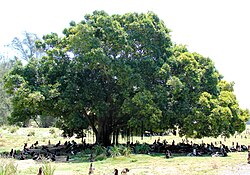
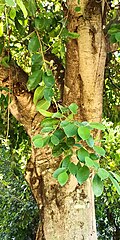
Ficus microcarpa is a large tropical tree that grows to 25 m (82 ft) tall, occasionally to 35 m (115 ft), with innumerable aerial roots descending from the branches that have the capacity to develop into accessory trunks or "prop roots". It may initially be epiphytic, lithophytic or terrestrial. The leaves are narrowly to broadly elliptic, measuring up to 12 cm (4.7 in) long by 9 cm (3.5 in) wide. They are glabrous (without hairs) and have 5–9 pairs of main lateral veins either side of the midrib, which form distinct loops within the leaf margin. [7][8][9]

Taxonomy

[edit]
Foliage and fruit

Ficus microcarpa was described in 1782 by Carl Linnaeus the Younger. The species has a considerable number of synonyms. In 1965, E. J. H. Corner described seven varieties (and two forms of Ficus microcarpa var. microcarpa)[10] which were regarded as synonyms under the name of Ficus microcarpa in the latest[which?] Flora Malesiana volume.

Hill's weeping fig was first formally described as a species, Ficus hillii, by Frederick Manson Bailey in the Botany Bulletin of the Queensland Department of Agriculture, based on a specimen collected in the "scrubs of tropical Queensland".[11] In 1960, it was reassigned by E. J. H. Corner as a variety of F. microcarpa, namely F. microcarpa var. hillii.[12]

Distribution and habitat

[edit]

Ficus microcarpa is native to tropical Asia, southern China, Taiwan, islands of the Western Pacific and Australia.[1] A tropical and subtropical species, the tree requires a warm climate and a humid atmosphere. It can nevertheless withstand temperatures close to 0 °C. The species occurs mainly at low elevations, and its natural habitats include tropical rainforests, river edges, coasts, swamps and mangroves.[citation needed]

Introduced range

[edit]

Ficus microcarpa was widely distributed as an ornamental plant and is one of the most common street trees in warm climates.[citation needed] It has been introduced to a number of countries in the Mediterranean, Central and South America, the Caribbean, and Hawaii, California and Florida in the US.[2]

In urbanized areas, trees can grow in cracks, walls, buildings and other masonry elements. It seems that the species can tolerate urban pollutants in soil moisture, including sulfur dioxide, lead and cadmium, as well as salt.

The symbiotic pollinating fig wasp, Eupristina verticillata, was introduced along with F. microcarpa. Such an introduction, however, can be delayed: in Brazil - where specimens of the tree had been used in gardening since the nineteenth century, when it was introduced by the architect Auguste François Marie Glaziou into various public parks of Rio de Janeiro - the appearance of saplings began only during the 1970s. Such saplings are considered to be very aggressive, as they can grow in the walls of buildings, bridges, highways, and other concrete structures.[13]

The tree is considered a major invasive species in Hawaii, Florida, Bermuda, Central America, and South America. F. microcarpa is widely used as a street and ornamental tree in areas of coastal California that are free of regular frost. Its strong roots can lift sidewalks and pavements, and many California cities no longer recommend planting them. In Southern California, a population of the symbiotic fig wasp is now established, which allows the ornamental trees to produce fertile fruit. Seeds are spread by fruit-eating birds, and F. microcarpa can now spread without direct human help. Naturalized populations have been found in Los Angeles, Orange, Riverside, San Diego, and Ventura counties, including on buildings, bridges, and other structures, and as an epiphyte on other trees, especially palm trees.[14] It is commonly used as an ornamental tree in most of Spain's Mediterranean coast, as in the Balearic and the Canary islands. Ficus microcarpa can also be found on the southern coast of Sicily, in Rhodes and Cyprus. It is considered an invasive plant in Israel, although it is not widespread.[14]

Ecology

[edit]

The pollinating fig wasp associated with Ficus microcarpa is Eupristina verticillata. In addition, 19 non-pollinating fig wasp species parasitize Ficus microcarpa figs.[15][unreliable source?] These fig wasps are from different families, which include those of the Eurytomidae and Pteromalidae families.[citation needed]

In some parts of its introduced range, it is very attractive to avian wildlife: in São Paulo, Brazil, ten species of birds were listed as feeding on its fruits, especially Turdus rufiventris, Pitangus sulphuratus, Turdus leucomelas, Thraupis sayaca and Celeus flavescens.[16] Its fruit and leaves are also sought after and eaten by the parrot Aratinga leucophthalmus.[17] Although invasive, its hardiness makes it an important species for the attraction of avian wildlife in urban environments.[18]

Cultivation

[edit]
Ficus microcarpa as an indoor landscape plant.

Ficus microcarpa is cultivated as an ornamental tree for planting in gardens, parks, and in containers as an indoor plant and bonsai specimen. In Southeast Asia, it is cultivated as a shade tree because of its dense foliage.[citation needed] Its ability to produce discards[vague] also makes it easy to drive[vague] in hedge or bush.[clarification needed]

As a tropical and subtropical tree, it is suitable for temperatures above 20 °C all year long, which explains why it is generally sold as a houseplant. It can, however, withstand relatively low temperatures, suffering damage only below 0 °C. High humidity (70% - 100%) is preferable and seems to favor the development of aerial roots. The species can be propagated easily by cuttings, either in water or directly in a substrate of sand or potting soil.[citation needed]

Medicine

[edit]

The plant is also used in traditional medicine in India, Malaysia, China and Japan. In Japan, the bark, the aerial roots and dried leaves are traditionally used against pain and fever, while in China the plant is traditionally used among others against the flu, the malaria, bronchitis and rheumatism. The pharmacological properties of Ficus microcarpa include antioxidant activities, antibacterial, anticarcinogen and anti diabetic agents.[19]

Folklore

[edit]

In Southeast Asia, F. microcarpa, among other species, is thought to be home to spirits, such as Pontianak (folklore). In China, large fig trees can be associated with beneficial spirits and vital energy ("Qi"). In Singapore, some trees are associated with places of worship among Buddhists and Taoists.

[edit]

References

[edit]
[edit]
Revisions and contributorsEdit on WikipediaRead on Wikipedia
from Grokipedia
Ficus microcarpa, commonly known as the Chinese banyan, Indian laurel fig, or curtain fig, is an evergreen tree species in the family, native to tropical and subtropical from to southern and , extending to parts of the western Pacific. It typically grows to 15–25 meters in height with a spreading crown supported by aerial prop roots that can develop into a distinctive buttressed trunk, featuring smooth gray bark, glossy dark green elliptic to ovate leaves measuring 2–10 cm long, and small, paired syconia (figs) that ripen to red, purple, or yellow and serve as a food source for . This species thrives in warm, humid environments within wet tropical biomes, often starting as an on other trees before becoming a that envelops and potentially kills its host through root competition and canopy dominance. It adapts to a variety of soils, including coastal and urban disturbed areas, providing and food for birds, bats, and while forming dense stands that alter local ecosystems. Native to regions such as southern (including , , and ) and , it has been widely introduced to places like , , , , and parts of and the Pacific Islands for ornamental purposes. Ficus microcarpa holds significant cultural and practical value, particularly as a popular choice for cultivation due to its , compact growth, and resilience in indoor settings, as well as for as a in subtropical climates. Traditional uses include medicinal applications in for treating ailments like wounds and digestive issues, though modern evidence is limited, and it serves environmental roles such as and urban greening. However, its aggressive growth has led to invasive status in introduced areas like and , where it displaces native vegetation, damages infrastructure with expansive roots, and requires management to prevent ecological disruption.

Taxonomy and Description

Taxonomy

Ficus microcarpa belongs to the kingdom Plantae, phylum Tracheophyta, class Magnoliopsida, order Rosales, family Moraceae, genus Ficus, subgenus Urostigma, and species F. microcarpa. This classification places it among the diverse fig trees, characterized by their unique pollination biology and ecological roles in tropical ecosystems. The subgenus Urostigma encompasses pantropical species known for strangling growth habits and aerial roots, with F. microcarpa falling within the section Conosycea. The species was first described by Carl Linnaeus the Younger in 1782 as Urostigma microcarpum in Supplementum Plantarum, based on specimens from Asia. It was subsequently reclassified into the genus Ficus as taxonomic understanding of the Moraceae family evolved, reflecting broader revisions in fig systematics during the 19th and 20th centuries. The specific epithet "microcarpa" originates from the Greek words mikros (small) and karpos (fruit), alluding to the plant's relatively small syconia compared to other figs. Common names such as Chinese banyan, Indian laurel fig, and Malayan banyan highlight its cultural and ornamental significance across Asia and beyond. Synonyms for F. microcarpa include Ficus nitida and Urostigma microcarpum, arising from historical misapplications and regional naming variations. While historical treatments listed Ficus retusa as a synonym, modern sources (e.g., Plants of the World Online) treat F. retusa as a distinct species; many cultivated variegated forms previously associated with F. retusa are now classified under F. microcarpa. The recognized varieties comprise var. hillii (a small-leaved form often used in cultivation), var. microcarpa, and var. saffordii, distinguished by subtle differences in leaf size and preferences. Taxonomic debates have historically centered on distinguishing F. microcarpa from the morphologically similar F. benjamina, with past confusions in identification due to overlapping traits like glossy leaves and , though molecular and anatomical studies confirm their separation as distinct species. The IUCN Red List assesses F. microcarpa as Least Concern, based on a 2019 evaluation indicating a stable global population with no significant threats across its wide native range, and no major status changes noted by 2025 as confirmed in assessments up to 2025.

Description

Ficus microcarpa is an that typically reaches heights of 15–30 m, featuring a broad, spreading canopy that can extend up to 40 m in width through the development of extensive aerial prop roots. These prop roots emerge from the branches and descend to the ground, often forming sturdy buttresses that provide structural support for the wide-spreading crown. The tree exhibits a hemiepiphytic growth habit, commonly beginning life as an on host trees before its roots reach the and eventually envelop or strangle the host. In tropical environments, it demonstrates rapid growth, making it a prominent feature in forested landscapes. The leaves are alternate, elliptic to ovate in shape, measuring 5–12 cm in length and 2–9 cm in width, with a glossy , glabrous surface and thickly leathery texture. They feature 5–9 pairs of secondary veins and are borne on petioles 0.5–2 cm long; the stipules are or orange, lanceolate, and 1–2 cm long, splitting open longitudinally upon expansion. The bark is initially smooth and gray but becomes rough and fissured with age, often exuding white when cut. Figs, or syconia, are small and globose, approximately 1 cm in diameter, occurring in pairs at the axils on short peduncles; they mature from to various colors including orange-, purple-black, , or and contain numerous tiny seeds. Physiologically, Ficus microcarpa prefers high humidity environments, which support its development and overall vigor, though it can tolerate lower levels due to its waxy leaf coating. It shows moderate salt tolerance, allowing establishment in coastal or saline-affected areas, but is sensitive to , suffering damage below 0°C. The species responds well to , readily producing new growth from cut surfaces, which contributes to its suitability for shaping in natural and cultivated settings.

Distribution and Habitat

Native Range

Ficus microcarpa is native to tropical and subtropical regions across Asia, the Pacific, and northern Australia. Its range spans from the eastern Himalayas and southern India, including areas such as Assam, Bangladesh, Nepal, Sri Lanka, and the Andaman and Nicobar Islands, through Southeast Asia encompassing Myanmar, Thailand, Laos, Cambodia, Vietnam, Malaysia, Indonesia (including Borneo, Java, Sulawesi, Sumatra, and the Lesser Sunda Islands), and the Philippines, to southern China (South-Central and Southeast regions, including Hainan), Taiwan, and southern Japan (such as the Nansei-shoto and Ryukyu Islands). The species also occurs naturally on Pacific islands, including the Bismarck Archipelago, Caroline Islands, Marianas, Marshall Islands, New Guinea, Solomon Islands, Vanuatu, New Caledonia, Christmas Island, and the Cocos (Keeling) Islands, as well as in northern Australia, particularly Queensland. In its native habitats, Ficus microcarpa thrives in moist lowland forests, coastal areas, riverbanks, and back mangroves, often extending to swampy floodplains inland of mangroves and mixed or mountain forests. It is commonly found on rocky coasts, cliffs, and hills, particularly formations, as well as in beach forests, floodplains, and tidal riverbanks. The species typically grows at elevations from to 1,500 m, though it can reach up to 1,800 m in some areas. The plant is closely associated with monsoon climates, favoring annual rainfall between 1,000 and 4,000 mm and temperatures ranging from 20°C to 35°C, which support its growth in wet tropical biomes. It often begins life as a , germinating on other trees, rocks, or structures before developing to become independent. Historical records from pre-colonial floras confirm its long-standing presence in these regions, as documented in early botanical surveys and checklists.

Introduced Range

Ficus microcarpa was introduced as an in the late 19th and early 20th centuries, initially in regions like where it arrived around 1900 for landscaping purposes. Today, it has spread widely beyond its native range, establishing populations across the Americas, including , , , , and such as . In , it has been introduced and naturalized in , while in the Mediterranean region, it occurs in (including the Balearic and Canary Islands), , and . In , introductions include , where it is assessed as a potential species. The species exhibits invasive tendencies in several introduced areas, particularly where its specific pollinator wasp has co-occurred, enabling reproduction and spread. In , it is classified as a Category I invasive by the Florida Exotic Pest Plant Council, forming dense thickets that displace native vegetation through its strangling . Similarly, it poses a high invasion risk in , where it invades forests and outcompetes endemic plants by creating monocultures. In the Mediterranean, it has established as an invasive in , , where urban plantings facilitate its escape into natural areas. Dispersal occurs primarily through zoochory, with seeds transported by various birds and fruit bats that consume the figs, as well as via human activities like and . Recent documentation highlights its expansion in urban tropical environments, such as along streets in , , where bird-mediated seed deposition promotes colonization of disturbed sites. Management strategies focus on prevention and eradication in sensitive habitats, including mechanical removal of seedlings and mature trees in conservation areas like Florida's natural hammocks to curb spread. In regions like and parts of , regulatory restrictions limit propagation and sale to mitigate ecological threats, with ongoing monitoring recommended. The thrives in warm, humid climates corresponding to USDA hardiness zones 10–12, favoring coastal and subtropical environments. CABI invasive species mapping identifies gaps in surveillance for emerging threats in urban tropics, emphasizing the need for targeted interventions.

Ecology

Pollination and Reproduction

Ficus microcarpa is a monoecious species, producing both male and female flowers within the same , a specialized enclosed characteristic of figs. The of its syconia is obligately dependent on the Eupristina verticillata, a species-specific mutualist in the family . Female wasps, carrying pollen from previously visited figs, enter the ostiole of a developing syconium through a narrow bract-lined tunnel, where they pollinate the female flowers and lay eggs in some of the florets. The eggs develop into larvae that certain flowers, while pollinated flowers produce seeds; upon hatching, wingless males emerge first, mate with the wingless females inside the syconium, and then chew exit tunnels before dying, allowing the pollen-laden females to escape and seek new syconia. Reproduction in F. microcarpa occurs both sexually and asexually. relies on production within pollinated syconia, with viable dispersed primarily by vertebrates such as birds (including mynas), bats, and , which consume the ripe figs and excrete away from the parent tree. happens through vegetative means, such as the rooting of or stem cuttings, enabling clonal without or pollinators. Syconia of F. microcarpa typically mature in 3 to 4 months from initiation to ripeness, depending on environmental conditions like . Individual trees often produce multiple crops per year, with asynchronous flowering patterns allowing for continuous or seasonal syconium development across populations. Recent studies from 2025 have highlighted the co-speciation and adaptive dynamics of E. verticillata with F. microcarpa in introduced ranges, revealing how the wasp's supports the tree's invasive spread through sustained despite geographic barriers.

Ecological Interactions

Ficus microcarpa engages in complex mutualistic and parasitic interactions within its ecosystems, particularly with fig wasps. It hosts up to 24 species of non-pollinating fig wasps, including gallers like Odontofroggatia sp. and parasitoids such as Philotrypesis taiwanensis and Philotrypesis emeryi, which exploit the figs for reproduction and often parasitize the pollinating wasps or compete for resources. These non-pollinating wasps contribute to the intricate web of interactions inside the syconia, though they do not benefit the plant directly through . Beyond wasps, the tree provides essential and a continuous source via its figs for a diverse array of animals, including fruit-eating birds like the yellow-vented bulbul (Pycnonotus goiavier) and red-crowned barbet (Megalaima rafflesii), fruit bats, supporting trophic dynamics in both natural and urban forests. In its native tropical and subtropical ranges across and , Ficus microcarpa functions as a , bolstering by producing figs year-round as a reliable food source. This asynchrony in fruiting sustains populations of diverse frugivorous vertebrates, including numerous and species, which in turn facilitate and maintain forest food webs. The tree's role enhances overall resilience, particularly in fragmented habitats where alternative food sources may be scarce. However, F. microcarpa also exhibits significant negative interactions, especially as an . Germinating as an , it produces extensive that envelop and strangle host trees, often leading to their death and altering structure. In introduced regions like Florida's hammocks, it invades interiors and edges, outcompeting native vegetation through rapid growth and bird-dispersed seeds, thereby displacing endemic species and disrupting local plant communities. In urban environments, such as those in , F. microcarpa offers ecological benefits by tolerating high pollution levels—including sulfur dioxide, lead, and —while contributing to air quality improvement through and benzene absorption. Its dense canopy provides shade and cooling, mitigating urban heat islands, and it attracts pollinating wasps alongside other insects, enhancing local .

Cultivation and Horticulture

Propagation and Care

Ficus microcarpa is commonly propagated through vegetative methods, as seed production in cultivation is less reliable due to its dependency on specific fig wasps for pollination. Stem cuttings, particularly semi-hardwood ones measuring 10–15 cm in length, are taken in spring or summer for the highest success rate; these are selected from healthy branches, stripped of lower leaves, dipped in rooting hormone if desired, and planted in a moist, well-draining soilless medium under bright, indirect light with high humidity until roots form in about one month. Air layering is another effective technique, performed in spring by girdling a branch, applying rooting hormone, wrapping it in moist sphagnum moss and plastic, and severing the rooted section after several weeks to months. Seeds can be sown if available, but their viability is low without natural wasp pollination, making this method uncommon for home or commercial propagation. For optimal growth, Ficus microcarpa requires well-draining that is slightly acidic to neutral in , such as a mix of , , and to prevent waterlogging. It thrives in full sun to partial shade outdoors, tolerating bright indirect light indoors, though insufficient light can lead to leggy growth or pest susceptibility. Watering should keep the consistently moist but not soggy, allowing the top inch to dry slightly between applications to avoid ; use room-temperature soft and ensure excellent drainage. Ideal temperatures range from 15–25°C (60–75°F), with levels of 50–70% maintained through daily misting, especially to promote development; the is drought-tolerant once established, aiding resilience in variable climates. Pruning is essential for maintaining shape and encouraging bushy growth, typically done by cutting back new shoots to two leaves after six to eight have emerged, with larger wounds sealed using cut paste; this also stimulates formation. Fertilize monthly during the (spring to fall) with a balanced liquid or organic formula diluted to half strength, reducing to every four weeks in winter if growth persists. Common pests include scale insects, spider mites, mealybugs, and , which thrive in low-humidity or low-light conditions and can be managed through improved care, insecticidal soaps, or applications; root rot from overwatering is a frequent issue, treatable by repotting in dry medium.

Ornamental Uses

_Ficus microcarpa has been valued as an since its introduction to various regions in the early 20th century, particularly for providing shade in urban and suburban settings. In , it was widely planted as a street tree and ornamental specimen starting in the early 1900s, appreciated for its dense canopy and adaptability to warm climates. Similarly, in tropical areas like , it serves as a roadside border plant and in parks and gardens, contributing to avenue . Its popularity stems from the tree's foliage and ability to thrive in humid, subtropical environments, making it a staple in landscaping designs across and beyond. In cultivation, Ficus microcarpa, especially the '' cultivar, is highly favored for its bulbous, thickened that mimic an aerial trunk, creating an aged appearance ideal for miniature landscapes. This variety, often propagated from seedlings with exposed caudex-like , has been a popular choice since the mid-20th century, with techniques such as wiring to shape flexible branches and defoliation to reduce leaf size and promote ramification becoming standard practices. Wiring is applied to thin to medium branches during active growth, while defoliation involves back to two leaves after six to eight have developed, enhancing the tree's compact form without harming the bark. These methods, refined over decades, make it accessible for both novice and experienced enthusiasts. For broader landscaping, Ficus microcarpa is employed as a , privacy screen, or subject due to its dense growth and malleable branches, often clipped into formal shapes in gardens and public spaces. Variegated cultivars, such as 'Hawaii' (also known as 'Flash Variegated' or 'Variegata'), feature small, oval to elliptic, shiny green leaves irregularly margined with white or creamy-white, typically 2–4 inches long. These cultivars form dense shrubs or small trees reaching 3–5 meters (up to 9 meters untrained) and are particularly suitable for hedging, screening, and ornamental landscaping in frost-free climates. Due to historical taxonomic confusion, they are sometimes marketed as Ficus retusa 'Variegata', but modern taxonomy assigns them to F. microcarpa. As an indoor , it excels in air purification, effectively removing indoor pollutants and improving air quality in controlled environments. Economically, it holds significant value in the nursery trade, with species contributing millions to wholesale foliage sales in regions like , where it represents a key export for ornamental . However, its vigorous root system poses challenges, frequently causing damage to sidewalks, planting pits, and other ; studies in urban show a 41% root-damage rate for this , exacerbated by larger trunk diameters and buttress roots. Recent trends highlight microcarpa's role in sustainable urban greening projects across , particularly in 2024-2025 initiatives aimed at enhancing and in dense cities. In , it remains a dominant street tree , integrated into sky gardens and green corridors to combat urban heat and support . Similarly, tropical urban planning efforts emphasize its use in residential greening to promote long-term environmental benefits, such as and habitat connectivity, while addressing root management through optimized planting designs.

Human Uses

Medicinal Applications

Ficus microcarpa has been employed in across various cultures, particularly in . In Ayurvedic practices in , the plant's from roots, bark, and leaves is applied topically to treat wounds and internally to alleviate and . In , are used to manage fever, , toothaches, , and of the feet, while decoctions address flu, , acute , , and . In Malaysian folk , extracts from the plant treat skin infections, flu, , and . In , particularly in Okinawa, dried leaves, , and bark are utilized to control , reduce fever, and relieve , including for symptoms. Phytochemical analyses of Ficus microcarpa reveal bioactive compounds such as (e.g., , epicatechin), , , triterpenoids, phenylpropanoids, and phenolic acids, primarily in leaves, bark, and . These contribute to its pharmacological properties, including antioxidant activity through and ABTS radical scavenging, with extracts from bark, fruits, and leaves showing potent effects (e.g., bark EC50 values of 7.9 µg/ml for ). Antibacterial effects are evident against and like , with bark extracts producing inhibition zones up to 16.0 mm against E. coli. Anti-inflammatory properties are supported by inhibition of inflammatory mediators, while the compounds also exhibit and hemostatic actions relevant to wound care. Modern research validates and expands on these traditional applications. A 2025 review highlights the plant's role in , where extracts promote tissue regeneration through and mechanisms. Antidiabetic potential is demonstrated in studies showing extracts (200 mg/kg) reducing blood glucose levels in alloxan-induced diabetic rats to 102 mg/dL, attributed to inhibition of α-amylase and α-glucosidase by compounds like plectranthoic acid. For anticancer effects, triterpenes like from F. microcarpa exhibit cytotoxic activity (: 4.7–8.8 µM) against cell lines such as HT29 and KB, with and bark extracts as promising sources. These findings link ecological adaptability to medicinal efficacy, as per recent assessments. Preparations typically involve decoctions of bark or leaves for internal use against fever and pain, or poultices and direct application of for wounds and skin issues. Dosages remain unstandardized, with using 100–400 mg/kg of or extracts orally, but human guidelines are lacking. is generally low, with no acute effects reported in reviewed studies, though caution is advised during due to potential emmenagogue effects in related species; consultation with healthcare providers is recommended.

Cultural and Folklore Significance

In , Ficus microcarpa is revered for its association with vitality and vital energy (), often incorporated into practices to promote harmony, prosperity, and positive energy in living spaces. As a popular subject for cultivation, the tree symbolizes resilience and balance, reflecting the harmony between nature and human care in traditional Chinese aesthetics. In Southeast Asian , particularly among Malay communities, F. microcarpa is believed to serve as a dwelling for powerful spirits known as datuks, which can bestow good or bad fortune on those who interact with the tree. Local legends associate the tree's dangling with pontianaks, vengeful female ghosts from Malay and Peranakan traditions, who are said to haunt individuals disturbing the tree, especially at night. These beliefs underscore the tree's role as both a site of spiritual caution and potential protection against malevolent forces in regional customs. As a type of banyan fig, Ficus microcarpa holds sacred status in , where it embodies immortality and is venerated alongside other species for its expansive growth and life-sustaining presence in temple grounds and rituals. In Buddhist traditions, the tree is considered holy by some adherents, who place small altars at its base for offerings to honor its spiritual significance. In modern contexts, such as in , F. microcarpa is commonly planted around Buddhist and Taoist temples, where it serves as a focal point for worship and community reverence, enhancing the spiritual ambiance of these sites. Recent recognitions in 2025 highlight its cultural heritage value in urban planning, particularly in Chinese cities like , where ancient specimens are protected as symbols of historical continuity and ecological integration in developed areas. The tree's symbolism often centers on , drawn from its enduring lifespan and robust that interconnect with host structures, representing resilience and the interconnectedness of life. Its spreading form further evokes themes of community and support, mirroring familial and societal bonds in various cultural narratives.

References

Add your contribution
Related Hubs
User Avatar
No comments yet.