Hubbry Logo
search
logo

Club Nintendo

logo
Community Hub0 Subscribers
Read side by side
from Wikipedia
Club Nintendo
Logo, depicting stylized artwork of Mario's cap
DeveloperNintendo
TypeLoyalty program
Magazine
Launch date
  • EU: May 3, 2002
  • JP: October 31, 2003
  • AU: April 24, 2008
  • NA: October 2, 2008
DiscontinuedJune 30, 2015 (North America)
September 30, 2015 (Europe, Australia, and Japan)
StatusDiscontinued; Replaced by My Nintendo
Websiteclub.nintendo.com (redirects to my.nintendo.com)

Club Nintendo (stylized as club. nintendo) was a customer loyalty program and magazine that was provided by Nintendo. The loyalty program was free to join and provided rewards in exchange for consumer feedback and loyalty to purchasing official Nintendo products. Members of Club Nintendo earned credits or "coins" by submitting codes found on Nintendo products and systems, which could be traded in for special edition items only available on Club Nintendo. Rewards included objects such as playing cards, tote bags, controllers, downloadable content, and warranty extensions on select Nintendo products.

On January 20, 2015, it was announced that Club Nintendo would be discontinued in North America on June 30, 2015, and in Europe and Japan on September 30, 2015, due to the launch of My Nintendo the following year. Flipnote Studio 3D later became available to all North American Club Nintendo members for free for a limited time, and users who signed up to the European version of the new loyalty program during the launch period received Flipnote Studio 3D for free.[1][2][3]

On March 17, 2015, after suddenly announcing their business partnership venture with DeNA, Nintendo stated that they were working with them on a new cross-platform membership service called My Nintendo to supersede Club Nintendo for the Wii U, Nintendo 3DS, and Nintendo Switch, alongside other devices such as tablets, smartphones and PCs. It was initially launched in Japan on March 17, 2016, alongside Nintendo's first mobile title, Miitomo.[4]

Publications

[edit]

Europe

[edit]

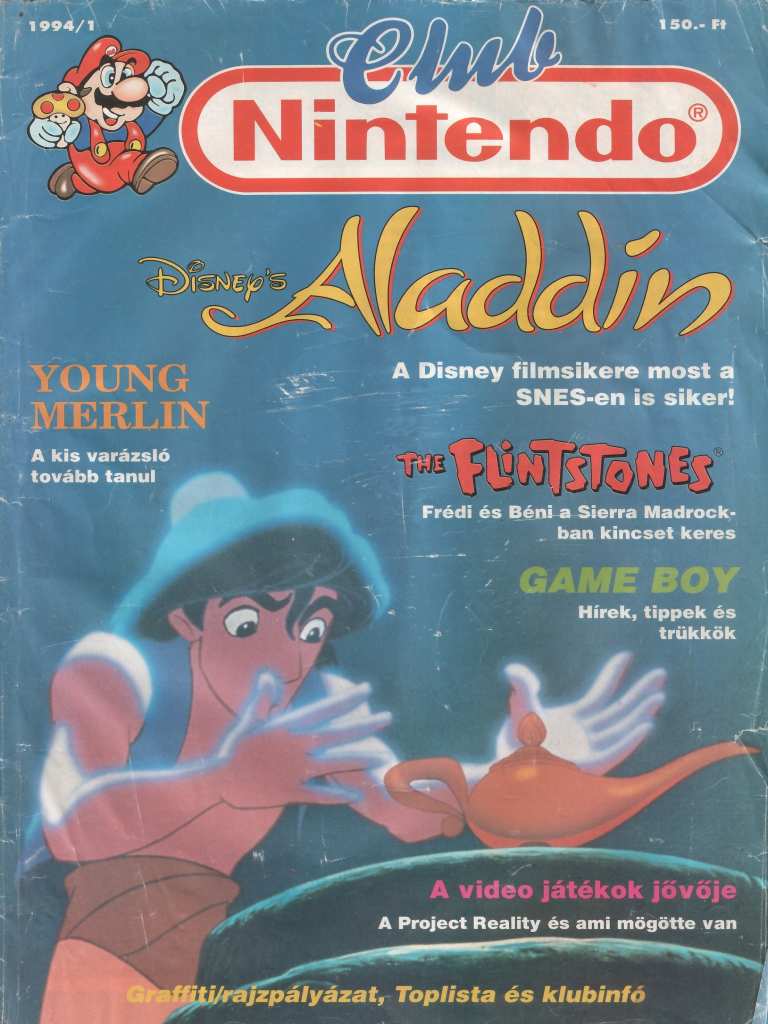
In Europe, Club Nintendo was the name of three magazines which started publishing in 1989. The European version was published in several languages, and there were separate publications for Germany, Spain, Greece, Switzerland, France, Belgium, Luxembourg, the Netherlands,[5] Portugal,[6] Sweden, Denmark, Norway, Finland, Italy, Hungary,[7] Slovenia, Czech Republic, Slovakia[8] and South Africa. All were later discontinued and eventually replaced. The last German issue was published in August 2002.[9]

Latin America

[edit]

Club Nintendo was the name of the official Nintendo magazine in Mexico, Colombia,[10] Venezuela,[11] Argentina, Bolivia, Peru and Chile.[12]

In Mexico, The magazine was founded in December 1991 by José "Pepe" Sierra and Gustavo "Gus" Rodríguez, which had previously worked on a bulletin for one of Nintendo's official stores in Mexico City. It was the first magazine in Mexico about Nintendo made by fans of video games, and quickly became the leading game magazine in Mexico.[13] In January 2015 it changed to an online-only format, with December 2019 being its last issue.

Australia

[edit]

In Australia Club Nintendo was a magazine that started in 1991 and was published by Catalyst Publishing in Melbourne. Roughly 31 pages in length, it featured very few screenshots of games. Australia eventually received their own version of Nintendo Magazine System by which time this magazine had ceased. Catalyst Publishing later took over Nintendo Magazine System in 1996 from the previous publisher.

Loyalty program

[edit]

The Club Nintendo loyalty program offers rewards to members who collect points (sometimes referred to as "Stars" or "Star Points", the program is also commonly known as the Stars Catalogue; the North American Club uses "Coins") which are gained primarily by purchasing and registering certain first-party hardware and software titles by Nintendo. Points are also awarded for the purchase of select third-party titles, and can also be obtained by participating in surveys, inviting others to become a Club Nintendo member or even simply visiting a web site.

Rewards range from digital content such as computer wallpaper, mobile phone ringtones, to a limited run of physical items such as keyrings, calendars, tote bags, exclusive pins, t-shirts, other clothing items, soundtrack albums, and game controllers. Premium rewards included Club Nintendo exclusive video games, offered as either digital content (WiiWare, DSiWare) or a physical item (Wii, DS). Many reward items were exclusive to particular Club Nintendo territories, and physical items sometimes were only available in limited quantities.

Japan

[edit]

Club Nintendo (Japanese: クラブニンテンドー) is an official Nintendo club for Japanese fans. It launched on October 31, 2003, and was the second Nintendo reward program to be set (Coming after the European Nintendo VIP 24:7 program) but was the first to be called Club Nintendo.

The Japanese Club Nintendo offers rewards such as Wii Remotes with television remote control functionality, exclusive and unreleased to market games such as Tingle's Balloon Fight DS and Exclamation Warriors Sakeburein, game soundtrack CDs (like Touch! Generations Soundtrack) and exclusive accessories such as a Super Famicom style Classic Controller for the Wii.[14]

Europe

[edit]

Club Nintendo in Europe was launched as Nintendo VIP 24:7 on May 3, 2002, to coincide with the European launch of the GameCube. It promised exclusive news, reviews, previews and forums to members. However, because released titles are often delayed in European countries (usually due to localization), the exclusive features could be often found elsewhere on the Internet.[15] To coincide with the release of the Wii, VIP 24:7 was renamed to Club Nintendo and adopted the Japanese Club Nintendo logo.

The Club Nintendo of Europe featured a Star Points system, where members could exchange stars earned by registering games and consoles for items in the Stars Catalogue, and for Wii Points to use in the Wii Shop Channel, which were available only in sets of 100, 300, 500 and 1000 Points.[16] Originally, a maximum of two Wii Points Cards per day and per account were available for purchase; this later changed to one a day.[17] Starting in September 2008, stars could also be used to buy singles and albums at the music online store, emusu.com, a website of which has shutdown.

Members enter PIN codes found on inserts included with certain games and hardware to earn stars. These can range from 100 to 1000 stars in value. Upon registering as a member on Nintendo of Europe's website, one is rewarded with 250 stars. Encouraging other people to register with Nintendo of Europe earns members 250 stars per sign-up.[18] After registering, members can choose to receive special emails from Nintendo, which can include surveys which also reward members with stars. Daily visits to the website also once earned members 5 stars per day, but this was later removed.

North America

[edit]

In 2002, a registration program titled My Nintendo (not to be confused with the loyalty program of the same name, My Nintendo) began in North America. It allowed consumers to register their games and consoles online using a printed code included with the products, with no direct physical rewards or benefits for doing so.[19] Questions began being raised over Club Nintendo's conspicuous absence in the region by 2005. In 2007, then-vice president of Marketing and Corporate Affairs for Nintendo of America Inc. (NOA) Perrin Kaplan stated that the inclusion area of the United States is much larger than all the other Club Nintendo countries, and that the program was considered prohibitively expensive to set up. Kaplan also said that the company considered the pre-order bonuses and game registration promos it offered were an alternative to Club Nintendo.[20] Nintendo of America ultimately relented due to customer demand[21] and announced a Club Nintendo program for North America in October 2008.[22]

The program was launched on December 15, 2008, retiring the My Nintendo registration program.[23] The site experienced high traffic at its initial launch, resulting in login problems and slow load times for users.[24] It was taken offline on December 24, 2008, reopening almost a week later on December 30 with noticeable infrastructure improvements. The North America catalog was developed in conjunction with Nintendo Australia[citation needed] and uses Coins instead of Stars.

Program participants who meet 300-Coin "Gold" or 600-Coin "Platinum" benchmarks within the Club Nintendo year (July 1–June 30) also receive exclusive items. Platinum Rewards are usually premium items, such as plush hats or posters. However, in 2014, there were no physical rewards for either Platinum or Gold, instead a selection of Wii/3DS games which were already released on the eShop were offered. In the past, some of the most notable Platinum Member rewards were a special standalone WiiWare version of Punch-Out!! titled Doc Louis's Punch-Out!![25] and a plastic statuette featuring the main characters from the Mario games.[26] An advertisement for this was made in Punch-Out!! on the Wii, where if the player was losing, Doc Louis would say "Join The Nintendo Fun- uh I mean Club Nintendo today, Mac". This has been made a popular internet joke.

In 2011, Nintendo of America started offering download codes for downloadable games as rewards, available for the Nintendo 3DS and the Wii U consoles as well as the Wii or the Wii U via Wii Mode, of which would typically range from 100 to 250 coins. There were eight games offered (originally two to four), which would change roughly each month. When orders for the non-game rewards were closed from April 18, 2014, until May 13, 2014, 5 different games were added, making a total of 9 games.

Oceania

[edit]

Club Nintendo in Australia was launched on April 24, 2008, to coincide with the release of Mario Kart Wii, with the website, catalogue and product registration going live on March 11, 2009, using the same system offered by Nintendo of Europe.[27] Nintendo Australia asserted that the Australian Club Nintendo reward catalogue would be unique from that of Club Nintendo Europe and Club Nintendo Japan, and was developed in conjunction with Nintendo of America. However, unlike its North American counterpart, the Australian service used Stars instead of Coins – the same as its European counterpart.

Most games either distributed or published by Nintendo Australia after Mario Kart Wii contained a card that allows buyers to register their games for Club Nintendo points.

Club Nintendo Australia was available for both Australians and New Zealanders, as Nintendo Australia manages Nintendo's operations in New Zealand as well.[28]

South Africa

[edit]

Club Nintendo launched in South Africa in June 2008.[29][30]

Other

[edit]

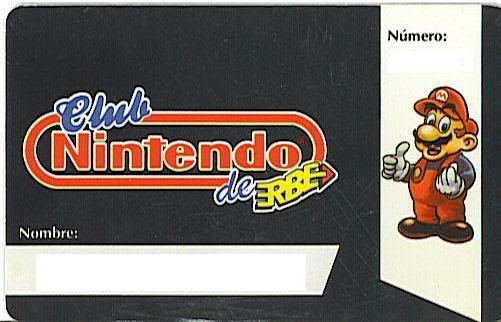
Club Nintendo was also the name given to a customer service program operating in Spain in the 1990s. Players buying a console, a video game or an accessory were able to fill a form and send it to Nintendo's headquarters in the country by mail. After doing it, the player would receive a Club Nintendo plastic card with their name, an associate number, the image of Mario and Nintendo's logo. The main purpose of this was to receive telephone support about clues and tricks on how to progress through the games and being able to receive the Club Nintendo magazine for free during a year.[9][31][32]

Criticism

[edit]

Some criticism came from the fact that the Nintendo of Europe Stars Catalogue was only available to members in the United Kingdom and Ireland, the Netherlands, Germany, Belgium, France, Spain, Italy and later Portugal and Russia. Bergsala, which was responsible for all Nintendo-related distribution in Scandinavia, closed down Club Nintendo in the region at the end of the year 2006 because it was not economically viable to keep it going.[33] In 2014, the American Club Nintendo came under fire for offering only digital games for its Platinum and Gold members, who need to spend much money to get to that position and were offered games they had already purchased. During the same timeframe, news sites repeatedly pointed out that Nintendo of America's offerings were much smaller than those of Europe and Japan.[34] Digital Downloads were only available on the European (UK) Club Nintendo from the middle of March 2015 compared to the American Club Nintendo that had them for two additional months.

Discontinuation

[edit]

On January 20, 2015, Nintendo announced that it would be discontinuing Club Nintendo in all regions during the year, and succeeding it with a new loyalty program that the company has named My Nintendo. Prior to this announcement, in September 2014 the company had major changes done to the Japanese edition of Club Nintendo, including abolishing member rank and making hardware ineligible for registration, including the then-upcoming New Nintendo 3DS.[35] This was later partially reflected on the Australian Club Nintendo, as members could not register the New Nintendo 3DS either, which was available in the region since November 2014.[36] Throughout 2014, the North American Club Nintendo was experiencing a great lack of physical rewards compared to other regions.

In North America on February 2, 2015, Nintendo released a final batch of games with 117 titles (118 with the Club Nintendo exclusive title Grill-Off with Ultra Hand!, which was previously available). Among the final batch of games was also Doc Louis's Punch-Out!!, another previous Club Nintendo exclusive title. On January 20, 2015, products released after the date were not eligible for registration with Club Nintendo. The final day to earn Coins, register products with Club Nintendo, or sign up for new Club Nintendo membership was on March 31, 2015.[37] In Europe, the final day was on October 1, 2015.

Successor

[edit]

My Nintendo (マイニンテンドー, Mai Nintendō) is a loyalty program provided by Nintendo, and the successor to Club Nintendo. The system rewards allows players to earn points from using software or purchasing games, which can then be spent on rewards such as digital games, physical items, or discounts. The program launched on March 17, 2016, in Japan and March 31, 2016, in the rest of the world, launching alongside Nintendo's first mobile app, Miitomo.

[edit]

References

[edit]
Revisions and contributorsEdit on WikipediaRead on Wikipedia
from Grokipedia
Club Nintendo was a customer loyalty program operated by Nintendo, allowing users to earn points by registering eligible products such as video games and hardware, as well as completing surveys, which could then be redeemed for exclusive rewards including merchandise, digital content, and discounts.[1][2] The program originated from earlier Nintendo initiatives launched in May 2002, including VIP 24:7 and Club Member, which were merged into the unified Club Nintendo brand in December 2007.[2] It was available in multiple regions, such as North America (where points were called Coins), Europe (where they were known as Stars), Australia, and others, supporting platforms like the Game Boy Advance, Nintendo DS, Wii, Nintendo 3DS, and Wii U.[1][2] Membership was free and open to residents in participating countries, with the program amassing approximately 6 million members in Europe and South Africa alone by 2015.[2] Club Nintendo also served as a feedback mechanism for Nintendo, helping to inform product development and business decisions based on member surveys.[2] Rewards varied by region but typically included physical items like apparel and accessories, downloadable games or soundtracks, and special editions of consoles.[1] In North America, elite status was achievable for highly active members, granting additional gifts.[1] The program was discontinued in 2015 to make way for My Nintendo, a successor rewards system integrated with Nintendo Accounts.[1][2] Key end dates included March 31, 2015, as the final day for new sign-ups and product registrations in North America; April 30, 2015, for selecting elite gifts; and June 30, 2015, for redemptions there, with Europe following on September 30, 2015.[1][2] Post-discontinuation, no new accounts could be created, and existing points expired, though some transition incentives like free digital content were offered to early My Nintendo adopters.[1][2]

History

Origins

Club Nintendo originated as a brand for engaging Nintendo fans through official publications and initiatives in Japan. The Club Nintendo magazine launched in April 1989 as a bimonthly publication aimed at Famicom users, providing game guides, news, and tips to support the growing community of Nintendo players.[3] It built on the model established by influential third-party magazines like Famicom Family Computer Magazine (Famimaga), which debuted in July 1985 and focused on Famicom hardware and software.[4] The magazine's initial purpose was to foster a sense of community among players while delivering official support for Nintendo's hardware and software, particularly in the Japanese market where the Famicom dominated home gaming. The first issue featured reviews of Super Mario Bros., The Legend of Zelda, and Top Gun, along with tips and previews such as Super Mario Bros. 2.[3] The subscription-based model included free membership enrollment, granting perks like stickers, posters, and exclusive content.

Expansion

The Club Nintendo brand expanded internationally in the late 1980s and early 1990s, initially through localized magazine editions to promote Nintendo products in new markets. Magazines debuted in Europe, including the United Kingdom and Germany, around 1989, and in Latin America with the Mexican edition starting in 1991.[5][6] These publications laid the groundwork for broader engagement strategies. The loyalty program aspect began with early initiatives in the 2000s. In Europe, it started as the Nintendo VIP 24:7 service on May 3, 2002, coinciding with the GameCube's launch.[2] In Japan, the star-based system launched on October 31, 2003, allowing product registration for rewards.[7] These programs were unified under the Club Nintendo brand in December 2007.[2] North America followed with its version on October 2, 2008, focusing on product registration and surveys.[8] The brand reached Oceania on April 24, 2008, and South Africa through magazine distributions.[9] This expansion was driven by Nintendo's global console success, including 21.74 million GameCube units and over 101 million Wii units sold worldwide.[10][11] Tailored regional programs helped build fan loyalty amid increasing competition.

Publications

European Editions

Club Nintendo magazine debuted in Europe in 1989, targeting key markets including Germany, France, and the United Kingdom, where it served as Nintendo's official publication for fans.[12][13][14] Initially released on a quarterly basis, it transitioned to a bimonthly format to meet growing demand, with early issues drawing from a shared pan-European template translated into local languages before evolving into country-specific editions by the mid-1990s.[15] The content emphasized Nintendo's ecosystem, featuring in-depth game reviews, exclusive developer interviews, and practical hardware guides to help users maximize consoles like the NES and SNES. Regional variations added unique flair, such as the German edition's original comics depicting Nintendo characters in noir detective stories or horror scenarios, while French and UK versions highlighted localized game adaptations and reader submissions. A notable special edition, Club Nintendo Classic, was issued in 1990 as a subscriber bonus across Europe, including the UK, with a focus on retro NES titles through detailed maps, tips, and walkthroughs for games like Super Mario Bros. and The Legend of Zelda.[15][16] Distribution relied on a subscription model tied to Nintendo's loyalty program, granting members free or discounted access, and was frequently bundled with new console purchases to encourage enrollment. Editions appeared in multiple languages, including German for Germany and Austria, French for France and Belgium, and Spanish for Spain, ensuring accessibility across diverse markets. This approach built a dedicated readership. Unique to European editions were regional exclusives, such as previews of localized game versions and coverage of continent-specific events, fostering a sense of community tailored to local gaming culture. As digital platforms emerged in the 2010s, print runs declined, with discontinuations varying by country: France ended in 1993 (continuing briefly in French-speaking Switzerland), the UK around 1993, Germany in 2002, and Spain transitioning to related titles by the early 2000s. By 2014-2015, remaining operations aligned with the broader Club Nintendo program's phase-out across Europe.[15]

Latin American Editions

The Latin American edition of Club Nintendo magazine was launched on December 8, 1991, in Mexico as a monthly Spanish-language publication under Editorial Televisa, founded by Gustavo "Gus" Rodríguez and José "Pepe" Sierra Monroy to promote Nintendo products in the region.[5] It originated from a 1989 newsletter titled El Mundo de Nintendo distributed at a Nintendo store in Mexico City, evolving into a full magazine to build a dedicated gaming community amid limited official distribution channels.[5] The magazine expanded beyond Mexico to countries including Argentina, Chile, Colombia, Ecuador, and Peru, with localized editions featuring varying issue counts, such as 276 issues in Mexico and 326 in Argentina.[5] Its content emphasized localization of Nintendo news, game reviews, strategy guides, and tips, including sections like S.O.S. for tricks and Curso Nintensivo for in-depth walkthroughs, tailored to address the prevalence of pirated hardware and famiclones common in Latin America by providing accessible advice for diverse setups.[5][17] Special editions highlighted regional interests, such as the 2000 Pokémon collector's issue featuring an album of the original 151 Pokémon, which introduced the franchise to many readers through the October cover story. Gus Rodríguez served as the primary editor and key adapter of content for Latin American audiences from 1991 until the magazine's closure, infusing it with cultural relevance through features on Japanese influences alongside local reader engagement like fan art in Galería CN and Q&A sections.[5][17] The publication integrated elements of local gaming culture by responding to reader queries about regional challenges, such as adapting to economic barriers, and included promotions tied to Latin American releases, offering prizes like consoles, games, and trips to events such as E3.[5] As the longest-running Nintendo magazine worldwide, spanning 27 years and nearly two months, it ceased physical print in Mexico with its December 2014 issue before transitioning to digital format and fully ending in February 2019 due to Editorial Televisa's financial difficulties.[5]

Australian Editions

The Australian editions of Club Nintendo publications originated in the early 1990s with the launch of Club Nintendo magazine in 1991, published by Catalyst Publishing as a localized adaptation of the UK version. This initial run consisted of a limited number of bimonthly issues through 1992, featuring reviews, gameplay tips, and news on Nintendo titles such as those for the Game Boy and Super Nintendo Entertainment System, with content primarily syndicated from overseas editions but adapted for local readers. Early issues occasionally incorporated elements from the US Nintendo Power magazine, including logos and promotional layouts.[18][15] Following the short-lived Club Nintendo branding, the official publication evolved into Nintendo Magazine System in April 1993, continuing monthly until its discontinuation with issue 89 in August 2000 under publishers Trielle Corporation and later Catalyst Publishing. These issues emphasized Australian-specific details, such as local pricing in Australian dollars, advertisements from retailers like EB Games, and coverage of imported titles with discussions on PAL region compatibility challenges, including import delays and hardware modifications for optimal performance. Distribution occurred mainly via subscriptions through a dedicated PO Box and newsstand availability, synchronized with Australasian Nintendo product releases like the Nintendo 64 launch. Distinct features included in-depth reporting on local gaming events, such as EB Games expositions, which provided hands-on previews and community spotlights.[18][19] In the 2000s, Club Nintendo elements were reincorporated into the relaunched Official Nintendo Magazine starting December 2008, published monthly by Future Publishing until its final issue in December 2013 after 60 editions. This version maintained a focus on Wii and Nintendo DS/3DS content, with sections dedicated to Club Nintendo rewards and promotions, while retaining local ads, pricing, and PAL-focused import guides. The print format's end in 2013 transitioned Nintendo's Australian outreach to online newsletters and digital platforms.[19][20][21]

Loyalty Program

Program Mechanics

Club Nintendo offered free membership to users through online registration on the official website, allowing participants to create a profile and access the loyalty program without any cost.[22] Members earned points, referred to as "Stars" in some regions or "Coins" in others, primarily by registering eligible Nintendo hardware and software products using unique serial numbers or product codes, followed by completing associated surveys.[1][22] These surveys gathered user feedback on the products, with completion typically yielding 10 to 30 coins depending on the item's type and timing.[23][24] The point system varied by product category, awarding 50 to 300 coins for registering hardware such as consoles or accessories and lower amounts for software titles, encouraging ongoing engagement through post-purchase or "intend to buy" surveys that provided additional 10 coins each.[23][25] Annual status levels, including Gold and Platinum, were achieved based on total coins earned or redeemed within a calendar year, granting members access to exclusive gifts and higher-tier rewards.[22] To prevent fraud, the program incorporated one-time-use product codes and serial verification during registration, with accounts later integrating with Nintendo's broader account systems for enhanced security.[1][26] Redemption occurred through an online catalog where members exchanged accumulated coins for a variety of rewards, including physical items such as plush toys, apparel, and posters featuring Nintendo characters, as well as digital downloads like game content in the program's later years.[1][27] The program had a phased global rollout beginning in 2002 until its discontinuation in 2015, with point values and redemption options showing minor variations across regions but maintaining a consistent core framework.[1][28]

Japanese Implementation

The Japanese implementation of Club Nintendo launched on October 31, 2003, as a loyalty program tied to Nintendo's product registrations, utilizing a star-based points system where members earned stars by registering hardware like the GameCube and software titles.[7] This system differed from coin-based mechanics in other regions by emphasizing tiered progression, with levels such as Gold and Platinum that unlocked access to premium reward catalogs and exclusive offerings during the program year.[29] Rewards focused on Japan-exclusive physical and digital items, including limited-edition figures like a golden Mario statue for Platinum members and downloadable Nintendo DS content such as the puzzle game Club Nintendo Picross. Higher tiers provided enhanced options, such as premium merchandise catalogs featuring collectibles not available to lower levels. The program also incorporated annual lotteries for scarce items, including customized consoles like a limited-run black Nintendo DS Lite, distributed to select members after registering multiple DS titles.[29] Integration with the longstanding Club Nintendo magazine, originally launched in 1989 for subscribers, allowed members to earn bonus stars through subscription perks, while special magazine issues highlighted upcoming rewards and program updates to drive engagement.[18] The program reached significant scale in Japan, reflecting Nintendo's home market dominance, before its discontinuation on September 30, 2015, after which stars expired with no further redemptions.[30]

European Implementation

The Club Nintendo loyalty program launched in Europe on May 3, 2002, coinciding with the regional debut of the GameCube console, initially operating under the name Nintendo VIP 24:7 before rebranding to Club Nintendo.[31] Membership was free and could be established through online registration on the official website or, in early years, via postal submission of product codes from Nintendo hardware and software packaging.[1] Participants earned Stars by registering eligible items, with the system adapted for Euro-denominated pricing on rewards to align with local markets across EU countries. Rewards in the European Stars Catalogue emphasized region-specific items, such as posters featuring localized artwork from franchises like The Legend of Zelda and Super Mario, accessories including Wii Remote wrist straps and TV controllers, and digital download codes for Virtual Console titles that served as precursors to eShop redemptions.[32] For example, members could redeem sets of Mario Kart-themed mini trophies or soundtrack albums tailored to European releases.[33] These incentives encouraged ongoing engagement, with Star values ranging from 50 to several thousand depending on the item's exclusivity and production costs. Membership perks included access to multilingual newsletters distributed in languages such as English, German, French, Spanish, and Italian, providing updates on upcoming releases, promotions, and exclusive offers. Club Nintendo also facilitated participation in member-only events, including Nintendo World store openings and promotional tours across major cities like London and Paris, where attendees could demo new hardware and receive bonus Stars. The program briefly tied into regional magazine editions for additional content and sweepstakes entries. By 2015, it had grown to encompass around six million members across European countries.[2] Annual membership status was determined by Stars earned within a calendar year, with Gold and Platinum tiers granting exclusive physical rewards like custom calendars or apparel not available in the standard catalogue. The program ceased accepting new registrations for packaged products on April 1, 2015, and digital registrations on April 20, 2015, with full operations ending on September 30, 2015, after which unredeemed Stars expired.[2][34]

North American Implementation

The Club Nintendo loyalty program launched in North America on December 16, 2008, exclusively for residents of the United States and Canada, replacing the previous My Nintendo registration system.[35] Membership was free and centered on online registration through the official website, club.nintendo.com, where users created accounts to track purchases and rewards.[36] The program adopted a coin-based rewards system similar to its global counterparts, allowing members to accumulate "Coins" redeemable for exclusive merchandise and digital content.[36] Earning Coins primarily involved registering eligible Nintendo products, with most video games awarding 50 Coins upon entry of a unique code found inside packaging, while hardware such as consoles typically granted 100 Coins.[36] Some higher-end hardware registrations could yield up to 300 Coins, depending on the product.[29] A key feature was the survey-driven model, requiring members to complete mandatory post-purchase questionnaires about their usage and satisfaction to unlock the full Coin allocation for that registration, often adding 20 to 50 extra Coins per survey.[23] This approach gathered valuable consumer feedback while incentivizing participation, though it occasionally led to delays in Coin crediting if surveys were skipped.[23] The rewards catalog featured a variety of Nintendo-themed items, including popular physical merchandise like The Legend of Zelda posters and Super Mario calendars, which often sold out quickly due to limited production runs.[37] Membership grew substantially over the years, with many dedicated users achieving Platinum Elite status by earning 600 or more Coins annually, unlocking special end-of-year rewards such as exclusive games or apparel.[38] The program emphasized digital and printable rewards alongside physical ones, fostering a sense of community among Nintendo enthusiasts. Club Nintendo in North America began winding down in early 2015, with new product registrations ceasing after March 31, 2015, and the full program shutting down on June 30, 2015, after which all unredeemed Coins were deleted.[39] This closure marked the end of nearly seven years of operation, during which the service had become a staple for rewarding loyal customers through its coin-earning and redemption mechanics.[39]

Other Regional Implementations

In Oceania, encompassing Australia and New Zealand, the Club Nintendo loyalty program launched in March 2009 as a hybrid of the European and North American models, utilizing a star-based points system earned through product registrations.[40] Members could redeem stars for a limited catalog of rewards, including digital downloads like the Game & Watch Collection and physical items such as Mario-themed towels, with an initial sign-up bonus of 250 stars.[41] The program concluded on September 30, 2015, aligning with the global discontinuation timeline.[42] South Africa's implementation, introduced in 2008 under the European umbrella, operated on a small scale and emphasized registrations for imported Nintendo hardware due to the region's reliance on European distribution channels.[43] Participants accessed a basic rewards catalog shared with Europe, focusing on digital content and select merchandise without extensive localization.[43] Like other regions, it ended on September 30, 2015, with members receiving final redemption opportunities until October 8.[43] In Latin America, no dedicated online loyalty rewards program was implemented; instead, "Club Nintendo" primarily referred to the regional print magazine, which occasionally included promotional codes or incentives tied to product purchases but lacked a standalone registration and points system. The program was fully discontinued by 2015, with no successor tailored to the area at the time.[28] Across these regions, common hurdles included currency conversion for international pricing and logistical issues with shipping physical rewards to remote or import-dependent markets, resulting in predominantly online-only access.

Additional Features

Events and Promotions

Club Nintendo organized various events and promotions to engage members and promote new hardware and software releases across regions. In Japan, the program featured exclusive giveaways for high-tier members, such as the Gold Steering Wheel accessory for Wii, offered annually to Platinum and Gold status participants as a reward for accumulating sufficient points through game registrations.[44] Promotional activities often included opportunities to obtain downloadable content and demos. For instance, in Japan, Nintendo ran a 2011 giveaway through Club Nintendo, distributing 3,000 free Nintendo 3DS systems to randomly selected members who entered via the program's website, coinciding with the console's launch to drive adoption.[45] In Europe, members could participate in raffles for limited-edition hardware, such as the 2012 contest awarding Mario, Princess Peach, and Toad-themed Nintendo 3DS consoles to entrants who registered qualifying titles.[46] Downloadable promotions were also common; by 2015, the European Stars Catalogue added codes for full Wii U and Nintendo 3DS games, allowing members to redeem points for digital titles like those from the eShop.[47] Exclusive access to software previews further enhanced member benefits. Platinum-level participants in North America received download codes for a limited-time demo of Super Smash Bros. for Nintendo 3DS in 2014, providing early hands-on experience ahead of the game's release.[48] In Japan, targeted campaigns offered free older first-party 3DS titles to Club Nintendo members starting in October 2013, encouraging continued engagement with the platform's library.[49] These initiatives, including software demos and hardware lotteries, helped foster community interaction and loyalty by tying rewards to active participation in Nintendo's ecosystem.

Exclusive Merchandise

Club Nintendo's exclusive merchandise program allowed members to redeem points for unique physical and digital items not available through standard retail channels, fostering a sense of loyalty among Nintendo fans worldwide. Physical rewards emphasized collectible quality, with limited production runs often leading to rapid sell-outs and heightened demand. For instance, in Europe, premium Mario-themed playing cards, produced in transparent and high-quality materials, were highly sought after and quickly depleted from the catalog.[50] Similarly, North American and European members could obtain apparel like t-shirts, posters featuring unreleased artwork, and accessories such as 3DS game card cases adorned with Zelda motifs, alongside jigsaw puzzles like the Fierce Deity Link design.[51][52] In Japan, the program offered a broader array of merchandise, including plush toys like the Yoshi plush and cushions such as the Dot Mario variant, as well as art books and encyclopedias focused on franchises like The Legend of Zelda. Mini-figures, exemplified by the Super Mario Family Set depicting characters in detailed dioramas, were regional exclusives that showcased intricate production by Nintendo's partners. Soundtracks also featured prominently as physical rewards, with items like the two-disc Super Mario Galaxy 2 original soundtrack and the Nintendo Sound Selection series providing curated audio collections from classic games.[53][54] Digital rewards complemented the physical offerings, including downloadable content such as virtual themes for Wii and DS systems, and in-game items like certificates for Animal Crossing titles that enhanced player customization. Examples included Wii menu customizations and DS virtual console ports like Tingle’s Balloon Fight. These digital exclusives were accessible across regions but tailored to local hardware preferences.[52] The limited nature of these rewards, often produced in small batches, contributed to their collectibility long after the program's discontinuation in 2015. Items like the 2004 Gold Mario statue for platinum members[55] and the Golden Twilight Princess statue (requiring 15,000 Stars in Europe)[29] have become highly valued among collectors, with complete catalogs now considered nearly priceless due to their scarcity and nostalgic appeal.[53]

Criticism

Reward System Issues

The reward system of Club Nintendo drew criticism for its frequent sell-outs of popular items, which often left members unable to redeem accumulated points despite timely catalog updates. High-demand rewards, such as the Super Mario Accessory Box introduced in June 2013, exhausted supplies within days of availability, rendering them "currently unavailable" and frustrating users who had planned their point earnings around them.[56] Similarly, digital rewards like codes for EarthBound temporarily sold out in late 2014, even as the program approached its closure, prompting questions about artificial scarcity in unlimited digital inventories.[57] These rapid depletions highlighted operational limitations in stock management, affecting members' ability to access desired merchandise. Quality concerns also plagued certain physical rewards, with some items criticized for subpar construction and packaging. For instance, the Handheld History Cards, a 300-coin reward released in 2011, were made from cheap cardboard rather than more durable materials like vinyl, and arrived damaged—such as with prominent creases in the booklet—due to inadequate protective packaging.[58] Reviewers noted that the content, while informative on Nintendo handhelds, omitted key details like regional variants and duplicated freely available online information, diminishing the perceived value for the points invested. These issues contributed to broader dissatisfaction with the durability and appeal of select merchandise. Additionally, members frequently encountered technical issues with product registration and survey completion, leading to uncredited points, alongside complaints about unresponsive customer support.[59] Point accumulation mechanics faced scrutiny for not adequately rewarding user effort, particularly through post-purchase surveys that offered modest returns relative to the time required. While hardware registrations scaled somewhat with purchase tiers—ranging from 50 to 240 stars—the survey rewards of 20 to 50 coins were viewed as insufficient for the detailed feedback provided, especially as values for older titles dropped to as low as 20 coins by 2012.[25] Such structures were reported across regions, though availability issues varied by market.

Regional Inequities

One of the primary criticisms of the Club Nintendo program centered on its uneven implementation and offerings across global markets, creating barriers to participation and redemption for users outside major regions. The loyalty system was officially available only in select areas, including Japan, North America, Europe, and Australia, while many countries in Latin America, Africa, and other parts of the world lacked any formal program. In Latin America, for instance, Nintendo published a popular Club Nintendo magazine that promoted products and provided gaming content, but the rewards system—allowing users to earn stars or coins for exclusive items—was not extended to the region, forcing fans to miss out on incentives entirely.[5] Even among regions with access, reward catalogs varied substantially in quality and variety, fostering perceptions of disparity. Japan's program boasted the most extensive and unique selection, particularly for physical merchandise like custom controllers and limited-edition accessories, which were rarely replicated elsewhere. A notable example is the Super Famicom Classic Controller for Wii, offered as a Club Nintendo reward in Japan and other regions like Europe and Australia for dedicated members. In comparison, North America and Europe emphasized digital downloads and basic physical items, with fewer high-value exclusives, leading to user frustration over the perceived favoritism toward the Japanese market. Australia and other parts of Oceania received periodic updates to their catalogs, such as golden Wii accessories, but these were generally more limited in scope and appeal compared to core regions.[60][61] Access issues compounded these differences, particularly for physical rewards. Shipping was typically restricted to addresses within the program's operating region, rendering items unavailable or subject to high international costs and customs duties for users elsewhere. Non-English speaking areas often faced additional hurdles with content localization, as digital rewards were predominantly in English or Japanese, limiting options in regions like Latin America where import taxes further inflated any unofficial acquisition costs. African users, lacking an official program, frequently reported difficulties accessing regional websites or participating via proxies, exacerbating exclusion. These inequities contributed to widespread views of the program as prioritizing major markets like Japan and North America, where richer selections and seamless logistics enhanced engagement for local fans.

Discontinuation

Timeline

The first indications of changes to the Club Nintendo program emerged in 2013, when Nintendo reduced the frequency and variety of reward updates compared to previous years, signaling a shift in focus for the loyalty initiative.[62] On January 20, 2015, Nintendo announced the discontinuation of Club Nintendo across all regions, with specific timelines varying by market; in North America, the program would end on June 30, 2015, while Japan and Europe were set to close on September 30, 2015.[28][2][63] The phase-out began in early 2015. In North America, no new account sign-ups or product registrations were allowed after March 31, 2015. In Europe, product registrations ended on April 1, 2015, for physical games and April 20, 2015, for digital products, while new sign-ups remained possible until September 30, 2015. In Japan, the program ended on September 30, 2015, with product registrations ceasing around April 2015. These changes prevented further accumulation of Stars or Coins in respective regions.[28][2] Redemption deadlines followed, including June 30, 2015, for Coins in North America and September 30, 2015, for Stars in Europe and Japan, after which all unused points expired.[28][64] In the lead-up to closure, Nintendo introduced final activities to encourage redemptions, including clear-out sales in February 2015 where remaining stock—such as apparel, accessories, and digital downloads—was offered at discounted point values, like a Retro Mario T-shirt for 700 Coins or greeting cards for 300 Coins, to deplete member balances.[65][66] By September 30, 2015, Club Nintendo operations had ceased globally, with the website retired and accounts inaccessible thereafter, concluding the program that had served millions of members worldwide.[28][64]

Reasons

The discontinuation of Club Nintendo was primarily driven by Nintendo's strategic decision to replace it with a more modern loyalty program, My Nintendo, which aimed to provide enhanced integration with the company's growing digital ecosystem. Official statements emphasized that the move allowed Nintendo to focus resources on developing this new initiative, designed to offer fans a unified rewards experience across games, purchases, and online services.[28] This pivot reflected broader industry trends toward digital distribution, where platforms like the Nintendo eShop had become central to consumer engagement, rendering the physical merchandise and catalog-based rewards of Club Nintendo increasingly outdated. Nintendo announced the change in January 2015, stating that the company was "working hard to create a new programme" to succeed Club Nintendo, with the transition enabling a shift to digital incentives such as eShop discounts and downloadable content.[2] The timing coincided with the Wii U's declining sales, which totaled 13.56 million units worldwide by the end of its lifecycle, further pressuring resource allocation toward future-oriented initiatives.[67][68][10] Nintendo's 2015 press releases framed the discontinuation as an "evolution of customer engagement," underscoring a commitment to more efficient, digitally native loyalty mechanisms.[2]

Successor

My Nintendo Launch

My Nintendo was announced on February 3, 2016, as Nintendo's successor loyalty program to Club Nintendo, coinciding with details on the company's first mobile app, Miitomo.[69] The program emphasized digital integration and rewards tied to purchases and activities across Nintendo platforms.[70] The initial launch occurred in Japan on March 17, 2016, followed by a worldwide rollout on March 31, 2016, where users could register via the Nintendo website or Miitomo app to begin earning points through missions and purchases.[71] Early features focused on Platinum Points earned via app interactions and limited-time missions, redeemable for digital content like free games or themes.[70] Full global expansion aligned with the Nintendo Switch console launch on March 3, 2017, integrating My Nintendo directly with the Nintendo Account system for unified user profiles, purchase tracking, and rewards redemption.[72] This setup enabled seamless point earning on eShop transactions and console activity, enhancing accessibility for Switch owners.[73] At its core, My Nintendo introduced Gold Points as the primary reward currency from 2016 to 2025, offering 5% back on qualifying digital purchases from the Nintendo eShop (and 1% on eligible physical product purchases via registration), redeemable toward discounts on games, DLC, or memberships.[70] Physical product purchases yielded 1% in Gold Points, while Platinum Points continued for mission-based earnings, allowing redemptions for exclusive digital items or physical merchandise via the My Nintendo Store.[74] However, earning Gold Points from digital and physical purchases was discontinued on March 24, 2025; existing Gold Points remain redeemable for 12 months after they were earned.[75] Platinum Points from missions continue to be available. The program integrated with the Nintendo Switch 2 upon its launch on June 5, 2025, maintaining compatibility via Nintendo Accounts.[76] The program's early adoption surged alongside the Switch's success, with the console selling 17.79 million units by March 2018, driving widespread Nintendo Account linkages and My Nintendo engagement among new users.[77]

Key Differences

My Nintendo represents a significant evolution from Club Nintendo by prioritizing digital rewards, particularly discounts on Nintendo eShop titles and in-game items, whereas Club Nintendo centered on tangible physical merchandise like posters, plush toys, and customized hardware.[78][79] From its 2016 launch until March 2025, the earning mechanism in My Nintendo relied on Gold Points accrued at a rate of 5% for digital purchases and 1% for eligible physical ones via the Nintendo eShop or official store (by registering product codes), supplemented by Platinum Points from completing time-limited missions such as playing specific games or using Nintendo services; this contrasted with Club Nintendo's star-based system, where points were gained primarily through product registrations and survey completions, without purchase-linked percentages or mission bonuses. My Nintendo eliminates the tiered membership levels of Club Nintendo, instead using missions to encourage ongoing engagement and bonus earnings.[78][80][81] Following the 2025 discontinuation of Gold Points earning, rewards now primarily consist of Platinum Points from missions, redeemable for digital content and select merchandise.[75] Accessibility is enhanced in My Nintendo through its unified global structure tied to a single Nintendo Account, seamless integration with the official mobile app for tracking progress, and instant digital redemptions that avoid the stock limitations and shipping delays common with Club Nintendo's physical rewards.[82][28] My Nintendo broadens its scope to encompass mobile titles like Super Mario Run and select third-party eShop games, offering rewards beyond the console-exclusive focus of Club Nintendo, which was limited to Nintendo hardware and software registrations.[78][83] This structural flexibility in My Nintendo has led to improved user reception, as it fosters easier interaction and broader applicability compared to the more restrictive Club Nintendo model.[28]

References

User Avatar
No comments yet.