Hubbry Logo
ParameciumParameciumMain
Open search
Paramecium
Community hub
Paramecium
logo
8 pages, 0 posts
0 subscribers
Be the first to start a discussion here.
Paramecium
Paramecium
from Wikipedia

Paramecium
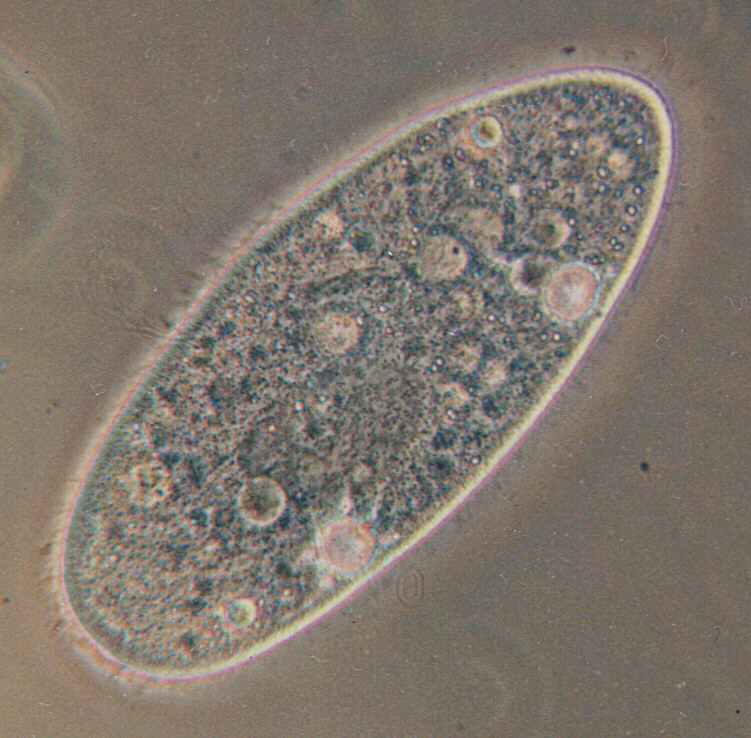
"Paramecium aurelia"
Paramecium aurelia
Scientific classification Edit this classification
Domain: Eukaryota
Clade: Sar
Clade: Alveolata
Phylum: Ciliophora
Class: Oligohymenophorea
Order: Peniculida
Family: Parameciidae
Genus: Paramecium
Müller, 1773
Species

See text

Synonyms[1]
  • Paramoecium Hermann, 1783
  • Paramœcium Hermann, 1783
  • Chloroparamecium Fokin, Przybos, Chivilev, Beier, Horn, Skotarczak, Wodecka & Fujishima, 2004
  • Viridoparamecium Kreutz, Stoeck & Foissner, 2012

Paramecium (/ˌpærəˈms(i)əm/ PARR-ə-MEE-s(ee-)əm, /-siəm/ -⁠see-əm, plural "paramecia" only when used as a vernacular name)[2] is a genus of eukaryotic, unicellular ciliates, widespread in freshwater, brackish, and marine environments. Paramecia are often abundant in stagnant basins and ponds. Because some species are readily cultivated and easily induced to conjugate and divide, they have been widely used in classrooms and laboratories to study biological processes. Paramecium species are commonly studied as model organisms of the ciliate group and have been characterized as the "white rats" of the phylum Ciliophora.[3]

Historical background

[edit]
Paramecia, illustrated by Otto Müller, 1773
Earliest known illustration of Paramecium
"Slipper animalcule," illustrated by Louis Joblot, 1718

Paramecium were among the first ciliates to be observed by microscopists, in the late 17th century. They were most likely known to the Dutch pioneer of protozoology, Antonie van Leeuwenhoek, and were clearly described by his contemporary Christiaan Huygens in a letter from 1678.[4] The earliest known illustration of a Paramecium species was published anonymously in Philosophical Transactions of the Royal Society in 1703.[5]

In 1718, the French mathematics teacher and microscopist Louis Joblot published a description and illustration of a microscopic poisson (fish), which he discovered in an infusion of oak bark in water. Joblot gave this creature the name "Chausson", or "slipper", and the phrase "slipper animalcule" remained in use as a colloquial epithet for Paramecium, throughout the 18th and 19th centuries.[6]

The name "Paramecium" – constructed from the Greek παραμήκης (paramēkēs, "oblong") – was coined in 1752 by the English microscopist John Hill, who applied the name generally to "Animalcules which have no visible limbs or tails, and are of an irregularly oblong figure."[7] In 1773, O. F. Müller, the first researcher to place the genus within the Linnaean system of taxonomy, adopted the name Paramecium but changed the spelling to Paramæcium.[8] In 1783, Johann Hermann changed the spelling once more, to Paramœcium.[9] C. G. Ehrenberg, in a major study of the infusoria published in 1838, restored Hill's original spelling for the name, and most researchers have followed his lead.[10]

Description

[edit]
A diagram of Paramecium caudatum

Species of Paramecium range in size from 0.06 mm to 0.3 mm in length. Cells are typically ovoid, elongate, or foot- or cigar-shaped.

The body of the cell is enclosed by a stiff but elastic structure called the pellicle. The pellicle consists of an outer cell membrane (plasma membrane), a layer of flattened membrane-bound sacs called alveoli, and an inner membrane called the epiplasm. The pellicle is not smooth, but textured with hexagonal or rectangular depressions. Each of these polygons is perforated by a central aperture through which a single cilium projects. Between the alveolar sacs of the pellicle, most species of Paramecium have closely spaced spindle-shaped trichocysts, explosive organelles that discharge thin, non-toxic filaments, often used for defensive purposes.[11][12]

Typically, an anal pore (cytoproct) is located on the ventral surface, in the posterior half of the cell. In all species, there is a deep oral groove running from the anterior of the cell to its midpoint. This is lined with inconspicuous cilia which beat continuously, drawing food into the cell.[13] Paramecium are primarily heterotrophic, feeding on bacteria and other small organisms. A few species are mixotrophs, deriving some nutrients from endosymbiotic algae (chlorella) carried in the cytoplasm of the cell.[14]

Osmoregulation is carried out by contractile vacuoles, which actively expel water from the cell to compensate for fluid absorbed by osmosis from its surroundings.[15] The number of contractile vacuoles varies depending on the species.[13]

Movement

[edit]

A Paramecium propels itself by whip-like movements of the cilia, which are arranged in tightly spaced rows around the outside of the body. The beat of each cilium has two phases: a fast "effective stroke," during which the cilium is relatively stiff, followed by a slow "recovery stroke," during which the cilium curls loosely to one side and sweeps forward in a counter-clockwise fashion. The densely arrayed cilia move in a coordinated fashion, with waves of activity moving across the "ciliary carpet," creating an effect sometimes likened to that of the wind blowing across a field of grain.[16]

The Paramecium spirals through the water as it progresses. When it happens to encounter an obstacle, the "effective stroke" of its cilia is reversed and the organism swims backward for a brief time, before resuming its forward progress. This is called the avoidance reaction. If it runs into the solid object again, it repeats this process, until it can get past the object.[17]

It has been calculated that a Paramecium expends more than half of its energy in propelling itself through the water.[18] This ciliary method of locomotion has been found to be less than 1% efficient. This low percentage is nevertheless close to the maximum theoretical efficiency that can be achieved by an organism equipped with cilia as short as those of the members of Paramecium.[19]

Gathering food

[edit]
Paramecium feeding on Bacteria

Paramecium feed on microorganisms such as bacteria, algae, and yeasts. To gather food, the Paramecium makes movements with cilia to sweep prey organisms, along with some water, through the oral groove (vestibulum, or vestibule), and into the cell. The food passes from the cilia-lined oral groove into a narrower structure known as the buccal cavity (gullet). From there, food particles pass through a small opening called the cytostome, or cell mouth, and move into the interior of the cell. As food enters the cell, it is gathered into food vacuoles, which are periodically closed off and released into the cytoplasm, where they begin circulating through the cell body by the streaming movement of the cell contents, a process called cyclosis or cytoplasmic streaming. As a food vacuole moves along, enzymes from the cytoplasm enter it, to digest the contents. As enzymatic digestion proceeds, the vacuole contents become more acidic. Within five minutes of a vacuole's formation, the pH of its contents drops from 7 to 3.[20] As digested nutrients pass into the cytoplasm, the vacuole shrinks. When the fully digested vacuole reaches the anal pore, it ruptures, expelling its waste contents outside the cell.[21][22][23]

Symbiosis

[edit]

Some species of Paramecium form mutualistic relationships with other organisms. Paramecium bursaria and Paramecium chlorelligerum harbour endosymbiotic green algae, from which they derive nutrients and a degree of protection from predators such as Didinium nasutum.[24][25] Numerous bacterial endosymbionts have been identified in species of Paramecium.[26] Some intracellular bacteria, known as kappa particles, give Paramecium the ability to kill other strains of Paramecium that lack kappa particles.[26]

Genome

[edit]

The genome of the species Paramecium tetraurelia has been sequenced, providing evidence for three whole-genome duplications.[27]

In some ciliates, like Stylonychia and Paramecium, only UGA is decoded as a stop codon, while UAG and UAA are reassigned as sense codons (that is, codons that code for standard amino acids), coding for the amino acid glutamic acid.[28]

Learning

[edit]

The question of whether Paramecium exhibit learning has been the object of a great deal of experimentation, yielding equivocal results. However, a study published in 2006 seems to show that Paramecium caudatum may be trained, through the application of a 6.5 volt electric current, to discriminate between brightness levels.[29] This experiment has been cited as a possible instance of cell memory, or epigenetic learning in organisms with no nervous system.[30]

Reproduction and sexual phenomena

[edit]

Reproduction

[edit]

Like all ciliates, Paramecium have a dual nuclear apparatus, consisting of a polyploid macronucleus, and one or more diploid micronuclei. The macronucleus controls non-reproductive cell functions, expressing the genes needed for daily functioning. The micronucleus is the generative, or germline nucleus, containing the genetic material that is passed along from one generation to the next.[31]

Paramecium reproduction is asexual, by binary fission, which has been characterized as "the sole mode of reproduction in ciliates" (conjugation being a sexual phenomenon, not directly resulting in increase of numbers).[3][32] During fission, the macronucleus splits by a type of amitosis, and the micronuclei undergo mitosis. The cell then divides transversally, and each new cell obtains a copy of the micronucleus and the macronucleus.[3]

Fission may occur spontaneously, in the course of the vegetative cell cycle. Under certain conditions, it may be preceded by self-fertilization (autogamy),[33] or it may immediately follow conjugation, in which Paramecium of compatible mating types fuse temporarily and exchange genetic material.

Conjugation

[edit]

In ciliates such as Paramecium, conjugation is a sexual phenomenon that results in genetic recombination and nuclear reorganization within the cell.[31][26] During conjugation, two Paramecium of a compatible mating type come together and form a bridge between their cytoplasms. Their respective micronuclei undergo meiosis, and haploid micronuclei are exchanged over the bridge. Following conjugation, the cells separate. The old macronuclei are destroyed, and both post-conjugants form new macronuclei, by amplification of DNA in their micronuclei.[31] Conjugation is followed by one or more "exconjugant divisions."[34]

Stages of conjugation
Stages of conjugation in Paramecium caudatum

In Paramecium caudatum, the stages of conjugation are as follows (see diagram at right):

  1. Compatible mating strains meet and partly fuse
  2. The micronuclei undergo meiosis, producing four haploid micronuclei per cell.
  3. Three of these micronuclei disintegrate. The fourth undergoes mitosis.
  4. The two cells exchange a micronucleus.
  5. The cells then separate.
  6. The micronuclei in each cell fuse, forming a diploid micronucleus.
  7. Mitosis occurs three times, giving rise to eight micronuclei.
  8. Four of the new micronuclei transform into macronuclei, and the old macronucleus disintegrates.
  9. Binary fission occurs twice, yielding four identical daughter cells.

Aging

[edit]

In the asexual fission phase of growth, during which cell divisions occur by mitosis rather than meiosis, clonal aging occurs leading to a gradual loss of vitality. In some species, such as the well studied Paramecium tetraurelia, the asexual line of clonally aging Paramecium loses vitality and expires after about 200 fissions if the cells fail to undergo autogamy or conjugation. The basis for clonal aging was clarified by transplantation experiments of Aufderheide in 1986.[35] When macronuclei of clonally young Paramecium were injected into Paramecium of standard clonal age, the lifespan (clonal fissions) of the recipient was prolonged. In contrast, transfer of cytoplasm from clonally young Paramecium did not prolong the lifespan of the recipient. These experiments indicated that the macronucleus, rather than the cytoplasm, is responsible for clonal aging. Other experiments by Smith-Sonneborn,[36] Holmes and Holmes,[37] and Gilley and Blackburn[38] demonstrated that, during clonal aging, DNA damage increases dramatically.[39] Thus, DNA damage in the macronucleus appears to be the cause of aging in P. tetraurelia. In this single-celled protist, aging appears to proceed as it does in multicellular eukaryotes, as described in DNA damage theory of aging.

Meiosis and rejuvenation

[edit]

When clonally aged P. tetraurelia are stimulated to undergo meiosis in association with either conjugation or automixis, the genetic descendants are rejuvenated, and are able to have many more mitotic binary fission divisions. During conjugation or automixis, the micronuclei of the cell(s) undergo meiosis, the old macronucleus disintegrates, and a new macronucleus is formed by replication of the micronuclear DNA that had recently undergone meiosis. There is apparently little, if any, DNA damage in the new macronucleus. These findings further support the idea that clonal aging is due, in large part, to a progressive accumulation of DNA damage; and that rejuvenation is due to the repair of this damage in the micronucleus during meiosis. Meiosis appears to be an adaptation for DNA repair and rejuvenation in P. tetraurelia.[40] In P. tetraurelia, CtlP protein is a key factor needed for the completion of meiosis during sexual reproduction and recovery of viable sexual progeny.[40] The CtlP and Mre11 nuclease complex are essential for accurate processing and repair of double-strand breaks during homologous recombination.[40]

The adaptive benefit of meiosis and self-fertilization in response to starvation appears to be independent of the generation of any new genetic variation in P. tetraurelia.[41] This observation suggests that the underlying molecular mechanism of meiosis provides a fitness advantage regardless of any concomitant effect of sex on genetic diversity.[41][42]

[edit]

List of species

[edit]

References

[edit]
[edit]
Revisions and contributorsEdit on WikipediaRead on Wikipedia
from Grokipedia
Paramecium is a genus of unicellular, free-living ciliate protists in the domain Eukaryota and phylum Ciliophora, distinguished by their slipper- or cigar-shaped body covered entirely with thousands of short, hair-like cilia that enable rapid locomotion and particle capture for feeding. These organisms typically measure 50 to 350 μm in length and primarily inhabit freshwater environments such as ponds, streams, and puddles, but are also found in brackish and marine habitats, where they thrive as heterotrophs consuming bacteria, algae, and organic debris. Paramecium species, of which there are approximately 15 to 20 valid morphospecies, exhibit complex behaviors including avoidance reactions to stimuli and are extensively studied as model systems for eukaryotic cell biology, genetics, and ciliogenesis due to their large size, ease of culture, and unique nuclear dimorphism. The body of a Paramecium cell features an anterior end that is bluntly rounded and a posterior end that tapers to a point, with cilia arranged in rows for coordinated beating that propels the at speeds up to 1 mm per second. A prominent oral groove runs along one side, funneling into the (mouth), where it is enclosed in food vacuoles for ; the vacuoles cycle through acidic and alkaline phases to break down engulfed particles. Internally, Paramecium possesses two types of nuclei: a large, polyploid macronucleus that controls vegetative functions like and , and one or more smaller diploid micronuclei involved in reproductive processes. These also maintain osmotic balance via a contractile system that expels excess , a critical to their hypotonic freshwater surroundings. Reproduction in Paramecium occurs primarily asexually through transverse binary fission, where the cell divides into two identical daughter cells after and reorganization of cellular structures, allowing rapid population growth under favorable conditions. Sexual reproduction involves conjugation, in which compatible exchange genetic material via micronuclear and fusion, promoting without producing new individuals; this process is triggered by environmental stresses like nutrient scarcity. The includes well-known such as P. caudatum, P. aurelia (a with multiple syngens), and P. bursaria, the latter notable for its symbiotic relationship with green algae (*) that provide photosynthetic products. As model organisms, Paramecium species have contributed significantly to scientific understanding of through cytoplasmic factors like kappa particles in P. aurelia, which confer predatory abilities, and to research on genome rearrangement, where up to 30% of the is eliminated during development to form the somatic macronucleus. Their ciliary has informed studies on ciliopathies— diseases involving defective cilia—while genomic resources, including sequenced macronuclear and micronuclear genomes for several species, support investigations into and developmental mechanisms. Ongoing research leverages Paramecium's transparency and manipulability to explore ion channels, sensory responses, and epigenetic regulation, underscoring its enduring value in multidisciplinary biology.

Classification and History

Taxonomy and Etymology

Paramecium belongs to the domain Eukaryota, Ciliophora, class Oligohymenophorea, order Peniculida, and Parameciidae. This classification places Paramecium within the diverse group of , characterized by the presence of cilia for locomotion and feeding, and reflects its position as a free-living, unicellular . The Paramecium encompasses over 15 , with several serving as key models in biological research due to their ease of cultivation and genetic tractability. Recent molecular studies have identified over 40 potential morphospecies, with 17 having sequenced genomes as of 2024, highlighting cryptic diversity within morphological . Prominent examples include , a widely distributed freshwater often used in ecological studies; the Paramecium aurelia , comprising multiple sibling valued for genetic and research; and , notable for its endosymbiotic relationship with such as . The name "Paramecium" derives from word paramēkēs, meaning "oblong" or "," which aptly describes the elongated, slipper-like of these organisms. This etymological root highlights the morphological feature that distinguishes Paramecium from other , emphasizing its asymmetric, streamlined form adapted for aquatic movement. As unicellular eukaryotes, Paramecium species trace their evolutionary origins to ancient aquatic protists, with divergence events among dating back over a billion years, underscoring their role in early eukaryotic diversification. This deep phylogenetic history positions Paramecium as a representative of the persistent success of microbial eukaryotes in freshwater and marine ecosystems.

Historical Discovery

The earliest observations of what are now recognized as paramecia date to the late , when the Dutch microscopist examined samples of pond water and reported seeing motile "animalcules" with hair-like appendages, likely including Paramecium , through his single-lens microscopes. These sightings, described in letters to the Royal Society between 1674 and 1677, marked the first documented encounters with free-living , though van Leeuwenhoek did not name or classify them specifically. The formal naming of the genus Paramecium occurred in the mid-18th century. In 1752, English microscopist and botanist John Hill introduced the term "Paramecium," derived from the Greek for "oblong," to describe elongated, slipper-shaped microorganisms observed in infusions, distinguishing four species based on morphology. This was further refined by Danish biologist Otto Friedrich Müller, who in 1773 designated Paramecium aurelia as a species and, in his 1786 work Animalcula Infusoria, provided the first comprehensive classification of within the Linnaean system, solidifying Paramecium's place in protozoan taxonomy. German naturalist Christian Gottfried Ehrenberg advanced these studies in 1838 with Die Infusionsthierchen als vollkommene Organismen, illustrating Paramecium in detail and arguing they were complex, multicomponent organisms rather than simple aggregates, contributing to early debates on cellular individuality. In the , Paramecium played a pivotal role in and . French zoologist Édouard Balbiani utilized Paramecium in the 1850s and 1860s to investigate nuclear structures, becoming the first to describe its dual nuclear system—a large macronucleus for vegetative functions and a smaller for —in 1861, which illuminated protozoan cytology and influenced understandings of . By the early , American zoologist Jennings shifted focus to behavioral studies, publishing detailed observations from 1899 onward on Paramecium's responses to stimuli such as light, chemicals, and mechanical barriers, culminating in his 1906 book The Behavior of the Lower Organisms, which demonstrated trial-and-error learning in these unicells and bridged protozoology with .

Morphology and Anatomy

External Structure

Paramecium exhibits an elongated, slipper-shaped body, typically measuring 50–300 μm in length depending on the , with the anterior end rounded and the posterior end more pointed. This morphology facilitates efficient movement through aquatic environments. The outer surface is enveloped by a flexible yet rigid pellicle, a proteinaceous membrane composed of an outer plasma membrane, a series of subpellicular alveoli, and an inner epiplasm layer, which provides structural support and gives the cell a longitudinally striated appearance due to underlying ridges forming polygonal units. The pellicle is densely covered by thousands of arranged in longitudinal rows known as kineties, with approximately 4,000–5,000 per cell in species like Paramecium tetraurelia; each measures about 10 μm in length and 0.2–0.3 μm in diameter. These emerge singly from the centers of the polygonal units of the pellicle and beat in coordinated metachronal waves to propel the . A prominent oral groove, an oblique indentation on the ventral surface, directs particles toward the , the mouth-like opening at its posterior end, where lining the groove facilitate ingestion. Embedded beneath the pellicle are trichocysts, defensive organelles consisting of elongated, spindle-shaped shafts filled with a crystalline matrix of low-molecular-mass acidic proteins organized in a . Upon stimulation by predators or mechanical stress, trichocysts undergo rapid , extruding as needle-like, proteinaceous projectiles up to 40 μm long that anchor to the attacker, allowing the Paramecium to escape; this process is calcium-dependent and occurs within milliseconds. Two contractile vacuoles are visible externally near the anterior and posterior ends of the cell, appearing as star-shaped structures that periodically expand and contract. Each vacuole is connected to a system of radial canals that collect excess water from the , and they expel fluid through permanent pores in the pellicle to maintain osmotic balance in hypotonic freshwater habitats; contraction frequency increases under hypo-osmotic conditions to prevent cell bursting.

Internal Organization

The internal organization of Paramecium features distinct nuclear and cytoplasmic components adapted for its unicellular . The cell contains two types of nuclei: a large, kidney-shaped macronucleus and one or more smaller, spherical micronuclei. The macronucleus is polyploid, typically containing around 860 copies of the in species like P. aurelia, and serves somatic functions such as regulating daily cellular activities including for and growth. In contrast, the micronucleus is diploid, housing the essential for genetic continuity during , though it remains transcriptionally inactive under normal vegetative conditions. The is differentiated into two layers: an outer ectoplasm and an inner . The ectoplasm forms a thin, gel-like layer beneath the pellicle, providing and facilitating ciliary movement through its microfilaments. The , in contrast, is a more fluid, sol-like region that occupies the bulk of the cell and contains granules, organelles, and nutrients, allowing for intracellular and metabolic processes. Food vacuoles are membrane-bound organelles that form within the for . These vacuoles engulf food particles via and circulate through the , where lysosomal enzymes from the surrounding facilitate the breakdown of proteins, fats, and carbohydrates through a cyclically varying that includes acidic and neutral phases. The gullet, or cytopharynx, is a tubular extending inward from the oral groove at the cell's surface, lined with cilia that direct water and particles toward the for initial . This structure connects to the , enabling the formation of nascent food vacuoles at its base. Paramecium also possesses standard eukaryotic organelles adapted to its protozoan , including numerous mitochondria for ATP production to support active locomotion and feeding, a tubular associated with mitochondria and food vacuoles for synthesis and calcium regulation, and a Golgi apparatus that modifies proteins and contributes to maturation.

Habitat and Ecology

Natural Environments

Paramecium species are predominantly found in freshwater habitats, including ponds, streams, ditches, lakes, and reservoirs, where they thrive in environments rich in organic content. These protozoans are particularly abundant in stagnant or slow-moving waters that support , often associating closely with decaying and , which provides essential nutrients and a stable food source through associated microorganisms. Paramecium primarily feeds on bacteria, algae, and yeasts, which are swept into the oral groove by ciliary action and processed in food vacuoles, contributing to the decomposition of organic matter and nutrient cycling in aquatic ecosystems. They exhibit tolerance to a range of environmental conditions, with optimal temperatures between 20°C and 25°C for growth and reproduction, though they can survive brief fluctuations outside this range. Similarly, Paramecium prefers neutral to slightly alkaline pH levels around 7.0 to 8.0, where metabolic processes function most efficiently. Most Paramecium species are adapted to freshwater and rely on osmoregulatory mechanisms, primarily contractile vacuoles that expel excess water in hypotonic conditions, rendering them ill-suited to marine environments where hypertonic saltwater could cause cellular dehydration and osmotic stress; however, species like Paramecium duboscqui are euryhaline and inhabit fresh, brackish, and marine waters. Population dynamics of Paramecium are significantly influenced by oxygen availability, with populations flourishing at dissolved oxygen levels of 5-8 mg/L but declining in hypoxic conditions that limit respiration and energy production. Predation by organisms such as amoebae, rotifers, zooplankton, and small fish (e.g., larval zebrafish) also plays a key role in regulating Paramecium densities, often preventing unchecked growth in nutrient-rich habitats. As heterotrophs in aquatic food webs, Paramecium serves as prey for larger organisms while aiding in nutrient cycling through its feeding and waste excretion; additionally, it acts as a bioindicator of water quality, with its abundance reflecting pollution and environmental health. In some cases, species like Paramecium bursaria form symbiotic associations with algae in illuminated freshwater environments, enhancing their nutrient acquisition.

Symbiotic Relationships

Paramecium species engage in various symbiotic relationships that influence their survival, metabolism, and interactions with other organisms. One prominent example is the mutualistic endosymbiosis between Paramecium bursaria and the green alga Chlorella variabilis. In this partnership, hundreds of algal cells reside within the ciliate's cytoplasm, enclosed in perialgal vacuoles, where they perform photosynthesis to produce maltose and oxygen, supplying up to 70% of the host's energy needs under illuminated conditions. In return, the paramecium provides the algae with protection from predators and viruses, along with essential nutrients like nitrogen and carbon dioxide, enabling the algae's growth and preventing their lysis by viral infections such as those from chloroviruses. This relationship is heritable and can be experimentally disrupted and re-established, highlighting its stability and specificity, with the algae's chloroplasts expanding up to sixfold in size during symbiosis to enhance carbon fixation. Certain Paramecium aurelia strains harbor bacterial endosymbionts known as kappa particles, which confer a "killer" phenotype through production. These rod-shaped , residing in the , synthesize and secrete paramecin, a protein released into the surrounding medium that lyses sensitive paramecia lacking kappa particles, thereby providing a to infected hosts. The killer trait requires both the presence of kappa particles and a dominant nuclear (K), ensuring cytoplasmic alongside genetic control; without sufficient particles (typically over 400 per cell), production fails. Kappa particles multiply within the host and are immune to their own , but sensitive strains die upon exposure, altering in mixed cultures. Interactions with viruses occur primarily within symbiotic contexts, such as virus-like particles associated with particles in killer P. aurelia strains. These icosahedral, DNA-containing particles (approximately 80 nm in diameter) reside inside the bacterial endosymbionts and can infect both sensitive paramecia and particles, leading to the production of new virus-laden . While their direct role in host reproduction remains unclear, the particles' propagation within symbionts may indirectly influence conjugation and genetic exchange by modulating killer trait stability across generations. Parasitic relationships are exemplified by infections from Holospora bacteria, which target specific nuclei in paramecia like Paramecium caudatum. Holospora obtusa, for instance, enters the host via food vacuoles as short, reproductive forms, then transforms into long, infectious forms that migrate to and multiply within the macronucleus, potentially disrupting host gene expression and cell division. These obligate intracellular bacteria exhibit nucleus-specificity—H. obtusa prefers the macronucleus, while H. elegans targets the micronucleus—and can be transmitted horizontally through infection or vertically during reproduction, imposing fitness costs on the host such as reduced growth rates. Resistance varies among paramecium strains, reflecting evolutionary adaptations to these endonuclear parasites.

Behavior and Physiology

Locomotion

Paramecium achieves locomotion primarily through the coordinated beating of thousands of cilia covering its surface, which generate thrust by moving in a power stroke followed by a recovery stroke. These cilia are arranged in longitudinal rows and beat in metachronal waves, where waves of synchronized activity propagate from posterior to anterior along the cell body, enabling efficient forward propulsion at speeds typically reaching about 1 mm/s in optimal conditions. This metachronal coordination arises from hydrodynamic interactions between adjacent cilia and intrinsic properties of the ciliary , optimizing fluid displacement for sustained swimming. Upon encountering stimuli such as mechanical obstacles or chemical gradients, Paramecium exhibits an avoidance reaction, rapidly reversing the direction of ciliary beating to back away and reorient. This behavioral response is triggered by an influx of calcium ions through voltage-gated channels in the ciliary , depolarizing the cell and altering the beat pattern from effective to recovery stroke dominance, often lasting several seconds before resuming forward motion. The calcium-dependent mechanism ensures quick evasion, enhancing survival in dynamic aquatic environments. Paramecium also displays oriented swimming behaviors, including rheotaxis, where it aligns and swims against water currents by adjusting ciliary beat asymmetry in response to shear forces, and negative geotaxis, directing upward movement influenced by and gravitational cues on its slightly heavier posterior structures. These help maintain position in flowing or stratified habitats. The for all ciliary movements is provided by fueling motor proteins within the , with locomotion accounting for approximately 70% of the cell's total metabolic at cruising speeds, underscoring the high energetic demand of this propulsion system.

Feeding and Digestion

Paramecium captures food primarily through , utilizing its oral groove—a ciliated depression on the ventral surface that directs , , and other small particles toward the at its base. The coordinated beating of cilia in the oral groove generates a current that sweeps particles into the cytopharynx, where they are enclosed by the to form food vacuoles. This process allows Paramecium to ingest prey ranging from single-celled organisms like (typically 0.5–5 μm in size) to small , with the vacuoles pinching off from the cytopharynx and entering the . Once formed, food vacuoles circulate through the cytoplasm in a cyclical path, undergoing a series of digestive phases characterized by distinct changes. In the initial acid phase, lasting less than 5 minutes, the vacuole condenses and its internal drops from neutral (around 7) to approximately 3, preparing the contents for enzymatic breakdown. As the vacuole moves posteriorly, the gradually rises to a neutral range (around 5–7), facilitating further , before reaching an alkaline phase where primary absorption occurs. These shifts are essential for activating different hydrolytic enzymes sourced from the , enabling the breakdown of proteins, fats, and carbohydrates within the vacuole. Digestion involves pepsin-like enzymes active in the acidic phase for initial protein hydrolysis, followed by neutral-phase enzymes such as amylase for starch degradation and lipase for fat emulsification, and concluding with trypsin-like proteases in the alkaline phase for complete polypeptide cleavage. Nutrients are absorbed across the vacuole membrane into the cytoplasm during these stages, leaving undigested residues. After digestion, typically 1–2 hours post-formation, the vacuole reaches the posterior end of the cell. Undigested waste is egested through at the cytopyge (also known as the cytoproct), a specialized anal pore located just posterior to the oral groove on the ventral surface. This temporarily opens to release fecal pellets, ensuring efficient waste removal without compromising the cell's pellicle integrity. Selective feeding in Paramecium is influenced by , with optimal ingestion occurring for particles in the 1–5 μm range, as larger items (>10 μm) are less efficiently captured by the ciliary currents.

Sensory and Learning Capabilities

Paramecium exhibits mechanoreception primarily through its cilia, which detect mechanical stimuli such as water currents and physical contact, triggering behavioral responses like reversal of ciliary beating. When swimming against a current, the opposing water flow acts as a mechanical stimulus on the cilia, eliciting an avoiding reaction that orients the cell upstream via rheotaxis. Mechanosensitive ion channels, particularly voltage-gated calcium channels located in the ciliary or basal body region, mediate these responses by allowing calcium influx that reverses the ciliary power stroke. Trichocysts, extruded organelles anchored beneath the cell surface, contribute to mechanoreception in defensive contexts; mechanical contact from predators prompts their rapid discharge, forming a physical barrier. Chemoreception in Paramecium occurs via specialized receptors and channels that detect environmental chemicals, including and organic compounds. The cell responds to ionic gradients, such as changes in or lithium concentration, through alterations in permeability that influence swimming direction in T-maze assays. Organic attractants like glutamate bind to specific receptor sites on the cell surface, inducing positive by modulating ciliary activity via second messengers such as cyclic AMP. These chemosensory mechanisms enable Paramecium to navigate toward food sources while avoiding repellents like . Early observations by Jennings in described Paramecium behaviors resembling trial-and-error learning, such as repeated avoiding reactions to obstacles that appeared adaptive over successive encounters. Subsequent experiments demonstrated , where pairing a neutral stimulus like with an unconditioned stimulus such as electric shock elicited a conditioned avoiding response, including backward swimming and axial spinning. Modern studies have confirmed to repeated mechanosensory or electrical stimuli, with response decrement occurring after 10 minutes of vibratory exposure at 0.1 Hz, followed by spontaneous recovery within 30 minutes. These findings indicate non-associative learning, where Paramecium reduces responsiveness to harmless repeated stimuli, enhancing efficiency in dynamic environments. Paramecium displays galvanotaxis, a directed movement in response to direct current , typically toward the at fields as low as 1 V/cm. This electrotaxis arises from voltage-sensitive ion channels in the that depolarize the cell, altering ciliary beat patterns without requiring specialized electroreceptors. Such responses facilitate orientation in natural electric fields, like those from biofilms, and integrate with avoidance behaviors during locomotion. The capacity for "" in Paramecium remains debated, with evidence suggesting short-term adaptations via ionic mechanisms rather than persistent neural-like storage. Habituation and conditioning effects often correlate with transient changes in calcium or conductances, reversible within minutes and attributable to modulation rather than genetic or structural remodeling. However, studies on brightness discrimination show retention of learned preferences for up to 40 minutes post-training, implying a form of behavioral plasticity beyond immediate ionic shifts. Recent electrophysiological models highlight how dynamics enable adaptive responses, supporting the view of Paramecium as a model for unicellular plasticity without true associative .

Reproduction and Life Cycle

Asexual Reproduction

Asexual reproduction in Paramecium primarily occurs through binary fission, a process that allows rapid population growth under favorable conditions by producing two genetically identical daughter cells from a single parent cell. This transverse division happens at a to the organism's longitudinal axis, enabling each daughter cell to inherit a complete set of organelles, including a replicated oral groove essential for feeding. The process begins when the Paramecium ceases feeding, and its cytoplasm contracts while the pellicle loosens; follows, preparing the cell for division that typically completes within about 2 hours under optimal laboratory conditions. During binary fission, the two nuclei behave differently to ensure proper genetic distribution. The , which serves as the , undergoes to produce two identical daughter micronuclei that migrate to opposite ends of the elongating cell. In contrast, the macronucleus, responsible for daily , divides through —a non-mitotic process involving elongation and constriction without or spindle formation—to yield two daughter macronuclei. A cleavage furrow then forms at the cell's midpoint, separating the cytoplasm into anterior (proter) and posterior (opisthe) daughters, each equipped with functional nuclei and ciliature. Binary fission is triggered by environmental factors such as nutrient abundance, particularly the availability of bacteria as food, and suitable temperatures around 20–25°C, which promote active metabolism and growth. Under these optimal conditions, species like Paramecium caudatum can undergo division every 8–12 hours, achieving 2–3 fissions per day and generating up to 600 clonal generations annually. This repeated asexual division results in clonal expansion, where populations become genetically uniform due to the absence of recombination, potentially limiting adaptability until sexual reproduction intervenes to restore diversity.

Sexual Reproduction

Sexual reproduction in Paramecium involves the temporary restoration of diploidy in the , primarily through processes that facilitate and rejuvenation of the cell line. The diploid , which remains transcriptionally inactive during asexual growth, undergoes during sexual events to generate haploid gametic nuclei. This meiotic division produces four haploid products per micronucleus, with three typically degenerating and the remaining one undergoing a mitotic division to yield two gametic nuclei. Self-fertilization, known as , is rare and typically induced under stress conditions such as prolonged , whereas is favored through conjugation between complementary . In the P. aurelia species complex, each sibling species employs a system of two complementary mating types (odd and even), enabling selective pairing for genetic exchange and promoting heterozygosity. Conjugation briefly facilitates this outcrossing by allowing the reciprocal exchange of one haploid gametic nucleus between paired cells. Following nuclear exchange and fusion, postzygotic development proceeds with the formation of a synkaryon, the diploid nucleus resulting from the union of migratory and stationary gametic nuclei. The synkaryon then undergoes two mitotic divisions, producing four diploid nuclei, two of which typically degenerate while the remaining two differentiate into a new and a macronuclear anlage, while the old macronucleus resorbs. This nuclear regeneration restores full diploidy in the micronucleus and develops a transcriptionally active macronucleus essential for cellular function. Sexual reproduction in Paramecium occurs cyclically, alternating with asexual binary fission phases to maintain clonal vigor and counteract the accumulation of genetic defects over multiple vegetative divisions. This alternation ensures periodic genetic reassortment, enhancing adaptability and longevity in natural populations.

Conjugation and Genetic Exchange

Conjugation in Paramecium represents the primary mechanism of genetic exchange during sexual reproduction, involving temporary pairing between compatible individuals of opposite mating types. The process begins when two mature paramecia, typically from different mating types such as odd (O) and even (E) in species like P. tetraurelia, align ventrally at their oral grooves and adhere firmly, often facilitated by a sticky substance secreted from their cilia. This pairing initiates a series of nuclear events in the diploid micronucleus, which remains transcriptionally inactive during asexual growth but becomes active here. The micronucleus in each conjugant undergoes meiosis, producing four haploid products; three of these degenerate, leaving one haploid nucleus that immediately divides mitotically to yield two identical gametic nuclei—one stationary and one migratory. A cytoplasmic bridge then forms between the paired cells through localized dissolution of the pellicle, enabling the migratory gametic nucleus from each paramecium to traverse to its partner. There, it fuses with the stationary gametic nucleus, forming a diploid zygotic nucleus (synkaryon) in both exconjugants. This exchange ensures reciprocal genetic contribution, with the fusion restoring the diploid state and allowing recombination. The paired state is maintained for approximately 12–24 hours, during which the old macronucleus begins to break down. Following separation of the exconjugants, the synkaryon in each undergoes two mitotic divisions, generating four diploid nuclei, two of which degenerate. The remaining two differentiate into a new and a macronuclear , which amplifies to become polyploid and transcriptionally active. The old macronucleus fully disintegrates, and the exconjugant undergoes one or two rounds of binary fission, producing progeny with restructured genomes. Genetically, conjugation promotes heterozygosity restoration in the macronucleus, which tends to lose allelic balance over successive amitotic divisions during , thereby mitigating and enhancing adaptability.

Genetics and Cellular Processes

Genome Characteristics

Paramecium possesses two distinct nuclei with differing genomic architectures: the transcriptionally active macronucleus and the germline micronucleus. The micronuclear genome of Paramecium tetraurelia, the most studied species, is diploid (2n ploidy) and estimated at approximately 100 megabases (Mb) in haploid size, containing approximately 160 chromosomes, as reported in a 2025 study. A 2025 study assembled the micronuclear genome, revealing approximately 160 tiny chromosomes ranging from 300 kb to 1.2 Mb in size, with exceptionally high recombination rates. This genome was partially characterized through the 2006 sequencing project, which assembled the derived macronuclear sequence but highlighted the micronucleus's role in harboring unrearranged germline DNA, including transposons and non-coding elements. Recent analyses in the 2020s have incorporated epigenetic modifications, such as DNA methylation patterns, to refine understanding of micronuclear stability and inheritance, though the core sequence remains based on the original assembly available via ParameciumDB. In contrast, the macronuclear genome is somatic and highly amplified, reaching a ploidy of approximately 800n to 1000n, making it roughly 400 times larger in DNA content than the diploid micronucleus. This amplification occurs during macronuclear development following sexual reproduction, where the genome undergoes extensive somatic rearrangement, including the precise excision of internal eliminated sequences (IESs) that constitute at least 25% of the micronuclear DNA. The resulting macronuclear genome, assembled to about 72 Mb in P. tetraurelia, features fragmented chromosomes (typically 100–200 kb each) and lacks much of the repetitive germline content, enabling efficient gene expression. High gene duplication, arising from at least three ancient whole-genome duplication events, expands the gene repertoire to nearly 40,000 protein-coding genes, far exceeding that of many eukaryotes and contributing to functional redundancy. The Paramecium genome serves as a model for non-Mendelian inheritance, particularly through variable surface antigen expression, such as immobilization antigens (i-antigens). These genes, numbering over 200 in multigene families, undergo epigenetic regulation and somatic rearrangements in the macronucleus, allowing serotype switching without altering the micronuclear germline. This mechanism, involving selective amplification or silencing of specific loci, exemplifies programmed genome plasticity and has been instrumental in studying antigenic variation in ciliates.

Meiosis and Rejuvenation

In Paramecium, meiosis occurs specifically in the micronucleus during sexual processes such as conjugation, where the diploid micronucleus undergoes two successive meiotic divisions (meiosis I and II) followed by a mitotic division to produce haploid gametic nuclei. These divisions involve the formation of synaptonemal complexes and genetic recombination, including crossing over facilitated by proteins like Spo11, Msh4-1, and Msh5, which ensure at least one crossover per chromosome arm to promote proper segregation and genetic diversity. The resulting haploid nuclei—one stationary and one migratory—are exchanged between paired cells during conjugation, leading to karyogamy and the formation of a diploid zygotic nucleus that develops into new micronuclei and macronuclei. Sexual processes like conjugation play a in by resetting clonal aging, which accumulates over hundreds of asexual divisions and leads to declining vitality, such as reduced fission rates and eventual . This restores micronuclear integrity through the generation of a fresh zygotic nucleus via meiotic recombination, which mitigates accumulated mutations and epigenetic errors in the somatic macronucleus, thereby extending clonal lifespan and revitalizing cellular functions. Without periodic , Paramecium clones senesce after approximately 200–350 fissions in P. tetraurelia, highlighting the essential rejuvenative function of in maintaining long-term viability. Autogamy serves as an alternative form of self-conjugation for in unpaired Paramecium cells, typically induced by , where the undergoes I and II to produce two identical haploid pronuclei that fuse within the same cell. This process mirrors conjugation in generating a new zygotic nucleus but does not involve genetic exchange, yet it similarly yields a rejuvenated macronucleus that resets the clonal aging clock and enhances vitality without requiring a partner. thus provides a solitary mechanism for periodic renewal, ensuring survival under isolated or adverse conditions. Recent studies since 2015 have elucidated mechanisms of DNA repair during meiosis in Paramecium, particularly the repair of programmed double-strand breaks (DSBs) essential for recombination and genome stability. For instance, specialized DNA polymerase X (PolX) enzymes efficiently repair these DSBs in the developing macronucleus post-meiosis, with their linker regions ensuring precise and high-fidelity ligation to prevent genomic errors. Additionally, Ku70-mediated coupling of DNA cleavage and repair during sexual reproduction safeguards against unrepaired breaks, as disruptions lead to scrambled somatic genomes and reduced progeny viability. Regarding telomere maintenance, investigations have shown that while telomeres do not shorten progressively during clonal aging, de novo telomere addition occurs post-meiotically during macronuclear development to stabilize chromosome ends, supporting rejuvenation by preserving genomic integrity across generations.

Aging and Longevity

Senescence Mechanisms

In Paramecium, clonal senescence refers to the progressive deterioration and eventual death of asexually reproducing lineages due to the accumulation of deleterious mutations in the macronucleus during repeated amitotic divisions. Unlike the micronucleus, which undergoes precise mitosis, the macronucleus—a polyploid somatic nucleus—divides through amitosis, a process lacking stringent checkpoint controls, leading to uneven distribution of genetic material and error-prone replication over generations. This results in functional impairments, such as reduced gene expression efficiency and increased genomic instability, as demonstrated by nuclear transplantation experiments where aged macronuclei transferred to young host cells failed to restore vigorous proliferation. A hallmark of this is the decline in binary fission rate after approximately 200–300 divisions in species like Paramecium tetraurelia, without intervening , culminating in reduced viability and clonal . Studies on controlled clonal lines show that early divisions maintain stable growth, but later stages exhibit slowed cell cycles, abnormal morphology, and heightened mortality, attributable to the macronuclear defects rather than cytoplasmic factors. Experimental evidence from the 1980s, including lineage tracking in P. tetraurelia, supports the mutation accumulation model, where Graham Bell's analyses highlighted how amitotic errors amplify over successive generations, contrasting with earlier assortment hypotheses. These findings underscore the macronucleus as the primary site of age-related decline, with sexual processes like conjugation offering brief rejuvenation by generating a new macronucleus from the .

Factors Influencing Lifespan

The lifespan of Paramecium , particularly in clonal cultures, is primarily measured by the number of asexual divisions (fissions) a cell line can undergo before and , typically ranging from 200 to 400 fissions depending on the strain and , such as P. tetraurelia. This clonal aging process is intrinsic and linked to progressive changes in the macronucleus, where repeated DNA amplifications and divisions lead to functional decline, reducing cell viability and reproductive capacity over successive generations. Seminal work by Sonneborn established that without , clones inevitably senesce, with the "fission age" serving as a biological clock that limits independently of chronological time. Genetic and developmental factors significantly modulate this fission-limited lifespan. For instance, the age of the cell at the time of or influences progeny ; offspring derived from older parents exhibit shorter clonal lifespans, with progressive reductions observed as parental fission age increases, suggesting accumulation of heritable damage or epigenetic changes. Artificial selection for extended fission numbers can extend maximum clonal lifespan beyond typical ranges (e.g., up to 325 fissions in selected lines of P. tetraurelia), indicating underlying that responds to selective pressures, though such extensions are rare and strain-specific. Additionally, the length of the post-autogamy immaturity period, during which cells cannot undergo further sexual processes, is controlled by fission count rather than time, further tying genetic regulation of developmental timing to overall . Environmental conditions exert profound effects on both the rate of aging and calendar lifespan (time until ). Temperature influences the pace of cell divisions: at lower temperatures (e.g., 24°C versus 28°C), the number of fissions remains similar, but the chronological lifespan extends significantly, as seen in P. aurelia cultures where cells lived 70-100% longer in days when maintained at cooler conditions for most of their cycle. Culture medium composition and bacterial food density are critical; nutrient exhaustion or high leads to "cultural aging," accelerating through or accumulation, whereas supplemented media (e.g., with specific organic extracts) prolong survival by maintaining metabolic health. , while inducing for rejuvenation, can shorten lifespan if prolonged without recovery, highlighting the balance between stress and resilience. Certain exogenous factors can extend lifespan by mitigating aging mechanisms. Supplemental , added to cultures of P. tetraurelia, increases clonal fission potential by up to 20-30%, likely through protection against oxidative damage in the macronucleus, as demonstrated in controlled nutritional intervention studies. Similarly, altered gravity environments show differential effects: hypergravity reduces the proliferation rate in P. tetraurelia, slowing the aging clock and extending chronological lifespan, while microgravity in experiments increases proliferation rates, potentially shortening it. These influences underscore how Paramecium's integrates intrinsic genetic limits with extrinsic modulators, providing a model for eukaryotic aging.

References

Add your contribution
Related Hubs
User Avatar
No comments yet.