Hubbry Logo
Lernaeocera branchialisLernaeocera branchialisMain
Open search
Lernaeocera branchialis
Community hub
Lernaeocera branchialis
logo
8 pages, 0 posts
0 subscribers
Be the first to start a discussion here.
Contribute something
Lernaeocera branchialis
from Wikipedia

Lernaeocera branchialis
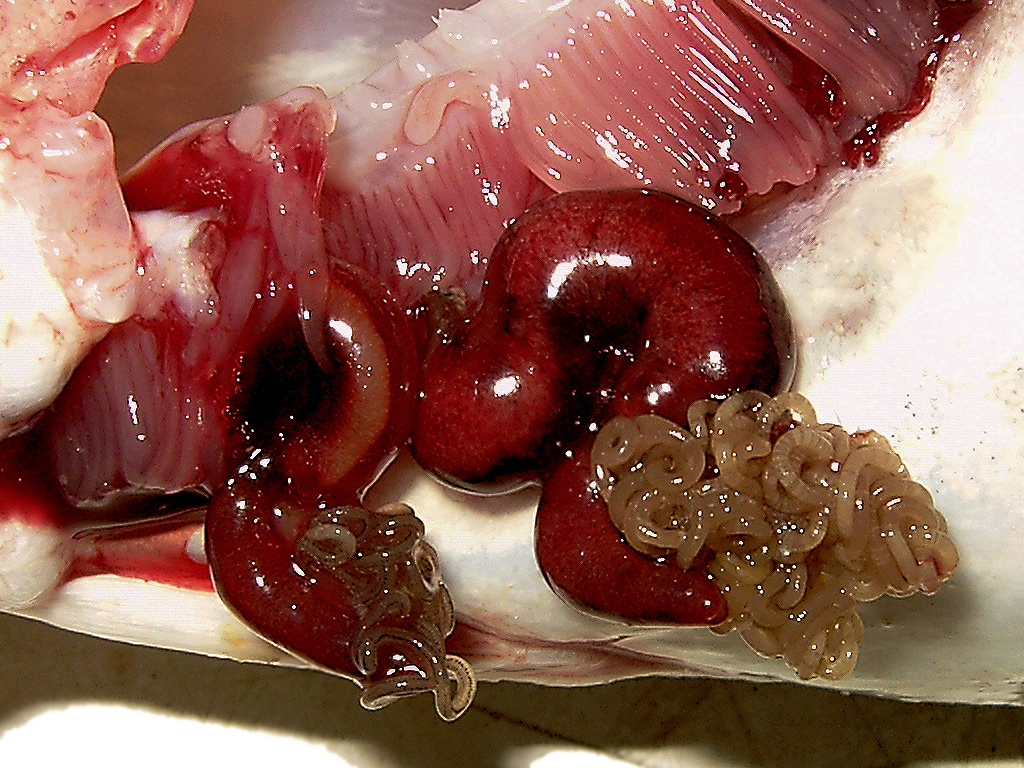
The gills of a whiting infested by two blood-sucking Lernaeocera branchialis
Scientific classification Edit this classification
Kingdom: Animalia
Phylum: Arthropoda
Class: Copepoda
Order: Siphonostomatoida
Family: Pennellidae
Genus: Lernaeocera
Species:
L. branchialis
Binomial name
Lernaeocera branchialis
Synonyms[1]

Lernaeocera branchialis, sometimes called cod worm, is a parasite of marine fish, found mainly in the North Atlantic.[2] It is a marine copepod which starts life as a small pelagic crustacean larva. It is among the largest of copepods, ranging in size from 2 to 3 millimetres (332 to 18 inch) when it matures as a copepodid larva to more than 40 mm (1+12 in) as a sessile adult.

Lernaeocera branchialis is ectoparasitic, which means it is a parasite that lives primarily on the surface of its hosts. It has many life stages, some of which are motile and some of which are sessile. It goes through two parasitic stages, one where it parasitizes as a secondary host a flounder or lumpsucker, and another stage where it parasitizes as a primary host a cod or other fishes of the cod family (gadoids). It negatively impacts the commercial fishing and mariculture of cod-like fish.

Life stages

[edit]

The life-cycle of a cod worm involves a complex progression of life stages, including two successive hosts. It comprises "two free-swimming nauplius stages, one infective copepodid stage, four chalimus stages and the adult copepod, each separated by a moult".[3]

The cycle begins with the females laying eggs which hatch into a nauplius, the usual early larval stage of crustaceans.[4] This nauplius I moults about 10 minutes after hatching to produce nauplius II, and 48 hours later, nauplius II moults to a copepodid stage. At this point the copepodid is pelagic and free-swimming with an average length of about 0.5 mm.[3]

The next stage is finding a secondary or intermediate host, a demersal fish like a flounder or lumpfish which is often stationary and therefore easy to catch. The copepodid has only a day to find such a fish and attach itself to the fish's gills.[4]

When they locate such a fish, they capture it with grasping hooks at the front of their body. They penetrate the fish with a thin filament which they use to suck its blood. The nourished cod worms then progress via four moults from the naupliar stage to the mature chalimus stage. At this point the males transfer sperm to the females. Both sexes develop swimming setae, detach from the flounder or lumpfish and again swim freely as pelagic organisms.[4][5]

The female cod worm still resembles a copepod and is 2 to 3 mm long. Females undergo another pelagic quest, searching this time for a definitive or primary host. With her fertilised eggs, she looks for a cod or a fish belonging to the same family as cod, such as a haddock or whiting.[4]

When a suitable definite host is located, females enter the gill chamber. There, while attached to a gill, the female develops a plump, sinusoidal, worm-like body, with a coiled mass of egg strings at the posterior end.[4] Females now measure about 20 mm long, but can grow up to 50 mm.[6] The oral end of the female copepod penetrates the body of the cod until it enters the rear bulb of the host's heart. There, firmly rooted in the cod's circulatory system, the front part of the parasite develops in the shape of antlers or branches on a tree, reaching into the main artery. In this way, while safely tucked beneath the cod's gill cover, the female's deeply embedded oral end can feed on blood while eggs develop and are released into the water column from the posterior end.[4][5]

Behaviour

[edit]

It is not known how L. branchialis searches for its fish hosts, but it probably uses chemoreceptors and mechanoreceptors, and follows physical clues in the water column such as those provided by haloclines and thermoclines.[3]

Effects on fisheries

[edit]

The most serious parasitic crustaceans among fish in general are sea lice.[7] However, L. branchialis is probably the most serious parasitic crustacean among cod. Infestation reduces the efficiency with which food can be utilised, delaying the development of the gonads. Up to 30% loss in weight can occur, with increases in mortality because of open lesions with loss of blood, and possibly occlusion of vessels or aorta.[7] These can have commercial impacts on wild fisheries, making cod-like fishes more expensive to market.[7][8] Gadoids, particularly cod, are emerging marine aquaculture species in some North Atlantic countries. L. branchialis present potential problems for their successful mariculture.[9]

See also

[edit]

References

[edit]

Further reading

[edit]
Revisions and contributorsEdit on WikipediaRead on Wikipedia
from Grokipedia
Lernaeocera branchialis, commonly known as the cod worm, is a species of parasitic in the Pennellidae, renowned for its role as an ectoparasite primarily affecting gadoid fishes such as the (Gadus morhua) and (Melanogrammus aeglefinus) in the . This marine begins its life as a small, free-swimming pelagic measuring 2–3 mm, but undergoes dramatic into a larger, worm-like adult form that anchors deeply into the host's tissues to feed on , often reaching lengths exceeding 40 mm in females. Named by in 1767, L. branchialis belongs to the subclass Copepoda within the phylum Arthropoda, with several historical synonyms including Lernaea branchialis and Lernaeocera lumpi. It inhabits coastal and offshore waters of the North Atlantic, from the southern to European seas, thriving in brackish to fully marine environments at depths up to 200 m. The species exhibits gonochoristic reproduction, with females producing egg strings that hatch into naupliar larvae, marking the start of a complex, host-dependent life cycle. The life cycle of L. branchialis spans approximately one year and involves multiple stages: free-living nauplii and an infective copepodid that attaches to intermediate hosts such as flatfishes (e.g., flounders) or lumpfish, where it develops through chalimus stages before migrating to definitive gadoid hosts as a pre-adult. On the final host, the parasite uses antler-like maxillae to pierce gill arches, forming a syncytial attachment organ enriched with iron crystals for anchorage and nutrient absorption, while adult males remain smaller (around 10 mm) and die shortly after mating. This adaptation allows L. branchialis to cause severe , including , respiratory distress, and up to 30% host weight loss, while also vectoring secondary infections like trypanosomes. Ecologically, L. branchialis prevalence varies seasonally and geographically, often reaching 80% in some gadoid populations, and it poses a notable threat to commercial fisheries and expanding by reducing host fecundity (e.g., 21% lower in infected ) and increasing mortality rates. Its includes chemosensory host location using gadoid-specific cues, highlighting potential host specificity that may influence control strategies in farmed settings. Overall, L. branchialis exemplifies the pathogenic potential of pennellid copepods, underscoring the need for ongoing research into its biology to mitigate impacts on marine ecosystems and economies.

Taxonomy and morphology

Taxonomy

Lernaeocera branchialis is a species of parasitic copepod belonging to the family Pennellidae. Its current taxonomic classification places it within the following hierarchy: Kingdom Animalia, Phylum Arthropoda, Subphylum Crustacea, Class Copepoda, Order Siphonostomatoida, Family Pennellidae, Genus Lernaeocera, Species L. branchialis (Linnaeus, 1767). The species was originally described by in 1767 as Lernaea branchialis. Over time, several synonyms have been recognized, including the superseded combination Lernaea branchialis Linnaeus, 1767, and junior subjective synonyms such as Lernaea branchialis sigmoidea Steenstrup & Lütken, 1861, and Lernaeocera lumpi (Scott T., 1901). Phylogenetically, Lernaeocera branchialis is positioned within the Pennellidae, a family characterized by highly modified, tissue-invading parasitic copepods that primarily infect marine and brackish-water fishes. The genus Lernaeocera, established by Blainville in 1822, includes six accepted species, all ectoparasites of fishes, reflecting adaptations for host attachment and nutrient uptake.

Morphology

Lernaeocera branchialis is a pennellid exhibiting a segmented typical of crustaceans, consisting of a , trunk (genital complex), and reduced in its adult form. The features a robust holdfast organ with one dorsal branch and two lateral branches that anchor deeply into host tissues, while the trunk is elongated and flexible, often with a thin neck region connecting to the expanded genital complex. Adult females measure approximately 20-50 mm in total length, displaying significant , whereas males are notably smaller at 5-10 mm. Across its life stages, morphology undergoes marked transformations adapted to free-swimming and parasitic phases. The nauplius stages are free-swimming larvae approximately 0.45-0.49 mm long, with an ovoid body bearing three pairs of appendages—uniramous antennules, biramous antennae, and mandibles—each armed with plumose setae for locomotion, and a prominent naupliar eye featuring black-pigmented lenses. The copepodid stage, the infective form at about 0.63 mm, possesses a comprising five-eighths of the body length, indistinctly four-segmented antennules with 13 terminal setae, chelate antennae, and two pairs of biramous swimming legs equipped with plumose setae; a bifurcated frontal filament aids initial host attachment. Chalimus stages I-IV, to the intermediate host via the frontal filament, range from 1-2 mm and show progressive with rounded rami, swollen antennae, and re-emerging segmentation, culminating in visible maxillules and a nearly closed mouth tube by stage IV. The preadult stage is migratory and elongated, developing buccal stylets and an incipient holdfast for transfer to the final host. Adults feature females with large, coiled egg sacs containing uniseriate eggs and branching buccal stylets that penetrate tissues for blood feeding, while males retain maxillipeds and barrel-shaped genital segments with sacs. Key adaptations include the chitinized holdfast for secure attachment, a short with a ringed buccal tube for hypotonic ingestion, and chemosensory setae on appendages for host detection. Sexual dimorphism is pronounced, with females lacking maxillipeds but exhibiting a massively expanded genital complex with three flexure points, contrasting males' shorter trunk and presence of maxillipeds for grasping during . Morphological variations occur, such as transparent to dark red coloration in juveniles shifting to reddish hues in adults due to ingested host , and size differences influenced by host —shorter necks on whiting and versus longer, thicker forms (f. obtusa) on —with mean adult female lengths around 22 mm on whiting.

Distribution and habitat

Geographic distribution

Lernaeocera branchialis is primarily distributed across the , from the in the east to the in the west. Its range is closely tied to the distribution of its gadoid hosts, such as (Gadus morhua), and is most prevalent in coastal waters of , , the , and , including areas like the southern Gaspé waters, , and the Laurentian Channel. The species was first described by in 1767 from specimens collected in European waters, likely along Scandinavian coasts. Historical records from the mid-20th century document its presence on the western side of the Atlantic, with early reports from Newfoundland and starting in the 1950s, including studies on cod infestations in these regions. Recent observations confirm ongoing presence in northern areas such as the , with surveys indicating continued distribution there as of the early 2000s, though no major poleward expansions have been verified. As of 2023, the distribution remains confined to the North Atlantic without verified extensions. Potential range shifts have been linked to effects on host populations and expanding of gadoid in and , but the parasite's core distribution remains confined without confirmed southern extensions beyond approximately 50°N . Abundance patterns show higher densities in cold-temperate zones with sea temperatures of 5–15°C, where intermediate and definitive hosts overlap in inshore waters. Prevalence peaks seasonally in spring and summer, correlating with host migration and increased estuarine overlap, while decreasing offshore and southward.

Habitat preferences

Lernaeocera branchialis thrives in marine environments with salinities ranging from 25 to 35 ppt, which represent optimal conditions for its survival and development, while it exhibits restricted tolerance below 16-20 ppt, leading to absence in low-salinity regions such as the . The species can endure brief exposures to lower salinities around 7-8 ppt in estuarine settings, though infection success diminishes under such conditions. Regarding temperature, it favors cool waters between 4 and 12°C for active life processes, tolerating down to 0°C but showing halted above 15°C, with prevalence notably declining in areas experiencing summer temperatures of 24-26°C or higher south of 41°N latitude. The free-living stages, including nauplii and copepodids, inhabit planktonic microhabitats near seabeds at depths of 0-50 m, where nauplius II stages often sink toward the bottom to facilitate encounters with intermediate hosts. Intermediate hosts such as flatfishes (e.g., flounders) reside in shallow coastal areas characterized by sandy or muddy substrates, typically from intertidal zones to 30 m depth, providing suitable benthic environments for chalimus development. Definitive hosts, including demersal gadoids like , occupy bottom-associated zones in coastal and shelf waters, aligning with the parasite's preference for near-bottom habitats observed in experimental arenas. Larval dispersal of L. branchialis is facilitated by stratification zones such as haloclines and thermoclines, which aid in while minimizing exposure to high , environments the generally avoids in favor of calmer inshore waters. from has indicated that environmental changes, including shifts in water , correlate with variations in parasite in cod populations in the northwestern Atlantic, potentially disrupting transmission dynamics in affected regions. These preferences underscore its adaptation to temperate, coastal North Atlantic ecosystems, with geographic hotspots concentrated in regions like the and Norwegian coastal areas supporting high host densities.

Life cycle

Developmental stages

The life cycle of Lernaeocera branchialis begins with the production of eggs by gravid adult females, which attach paired egg sacs containing a mean of approximately 1,445 eggs in total (with maxima exceeding 3,000) to their host. These eggs hatch into nauplius I larvae after about 12.7 days at 10°C, with hatching occurring over a period of up to 12 days in a pattern of exponential decline. The nauplius I stage is free-swimming and non-parasitic, measuring around 0.37–0.45 mm in length, and lasts less than 20–50 minutes before molting to nauplius II. The nauplius II stage, also free-swimming, reaches a length of about 0.49–0.54 mm and persists for 27–48 hours at 10°C before molting into the infective copepodid stage. This copepodid, measuring 0.48–0.63 mm, remains free-swimming for at least 32 hours but can survive up to 18 days without feeding, actively seeking an intermediate host such as a . Upon attachment to the host's gills via a frontal filament, the copepodid molts into chalimus I, initiating a sessile parasitic phase characterized by gradual morphological simplification and growth. The chalimus stages (I–IV) occur on the intermediate host, with each molt marking physiological adaptations for , including of appendages and retention of a frontal filament for anchorage. Chalimus I forms within 2 days post-infection, II by 7 days, III by 15 days, and IV by 19 days at 10°C, during which the parasite grows to 2–3 mm in length through nutrient absorption from the host. The chalimus IV then molts into the adult stage on the intermediate host, where males (around 10 mm) fertilize females. Fertilized females then detach as free-swimming adults and migrate to the definitive gadoid host (e.g., ), where they attach and undergo rapid elongation, reaching 20–50 mm. Adult L. branchialis have a lifespan of 2–3 months, during which females produce multiple sacs before , completing the cycle. The entire development from to reproductive adult typically takes 1–2 months at 10°C, but proceeds faster in warmer conditions, such as 11 days for chalimus to early adult at 16°C, and slows in colder waters below 10°C.

Host specificity and transmission

Lernaeocera branchialis exhibits a two-host life cycle, utilizing intermediate hosts such as the (Platichthys flesus) and lumpsucker (Cyclopterus lumpus) for the development of its chalimus stages, while definitive hosts are gadoid fishes including (Gadus morhua) and (Melanogrammus aeglefinus) where adult stages mature and reproduce. The cycle begins with free-swimming nauplius larvae hatching from egg strings attached to the adult female's abdomen on the definitive host; these develop into infective copepodids that seek out and attach to the s of intermediate hosts. Attachment occurs via a bifurcated frontal filament that embeds into the gill tissue, allowing the copepodid to molt into chalimus I and undergo four chalimus stages over approximately 25 days at 10°C. Transmission to the definitive host involves the migration of adult females from the intermediate host following insemination by males on the gills. These fertilized females detach, swim actively for 3–8 days at speeds of about 14.25 m/hour, guided by chemosensory cues, to locate a suitable gadoid host, where they penetrate the buccal cavity or branchial region to establish permanent attachment. This migration typically occurs in summer, with transmission peaks observed from May to September in regions like the southern , aligning with the availability of juvenile definitive hosts. Host size influences success, with a preference for exceeding 20 cm in length, as smaller juveniles show lower prevalence. The parasite demonstrates strict host specificity, particularly for reproduction on gadoids, with experimental infections showing low success rates on non-gadoid species such as trout or plaice, often resulting in repulsion or failure to establish. In wild populations, prevalence on cod ranges from 10% to 50%, varying by location and season, reflecting the efficiency of this host-dependent transmission strategy.

Behavior

Host location and attachment

The free-living stages of Lernaeocera branchialis, particularly the nauplii and copepodids, employ chemosensory mechanisms to detect host-derived kairomones, such as water-soluble components from and excretions, primarily through antennular aesthetascs on the first antennae. These parasites exhibit positive toward conditioned from gadoid hosts like whiting ( merlangus), increasing swimming velocity and distance traveled in response to such cues, while showing weaker attraction or repulsion to non-host species like . Mechanoreceptors likely enable detection of vibrations and host movements, supplemented by sensitivity to infrasonic oscillations, allowing the parasites to follow chemical and physical gradients toward potential hosts. Migration tactics of preadult females, which detach from intermediate hosts like to seek definitive gadoid hosts, involve limited active characterized by intermittent "stop-start" patterns with mean velocities around 4.0 mm/s and high turning rates to explore the vicinity. These females remain near the bottom substrate, aligning with the demersal habits of their hosts, and utilize along with aggregative responses to salinity gradients (haloclines) to increase encounter probabilities, though their poor ability restricts effective search ranges to proximal areas near intermediate host habitats. Active searching is oriented toward host schools, guided by the aforementioned sensory cues, with behavior observed in Y-tube and chamber assays confirming directed movement toward attractive gadoid signals. The attachment process begins with the copepodid stage, which uses chelate second antennae to grasp tips, particularly on posterior arches, establishing an initial holdfast on the gills or buccal region of the host. A frontal filament is then extruded from the rostral gland, embedding into host tissue to secure the parasite during the transition to the chalimus stage, which lasts several days and provides stable anchorage via this bifurcated structure. In the definitive host, the preadult female further secures attachment through stylet penetration toward vascular sites like the ventral , completing the process over hours as the elongates. Infection success from copepodid release varies with environmental factors and host density, supported by the extended survival of non-feeding copepodids (up to 18 days at 10°C), which allows prolonged host-searching opportunities and contributes to observed prevalences of 12–22% in natural gadoid populations. Laboratory experiments demonstrate that attractive kairomone gradients enhance encounter rates, though quantitative attachment success remains influenced by host susceptibility differences, with higher infections in dense, inshore assemblages.

Feeding and reproduction

Adult Lernaeocera branchialis females are obligate -feeders, attaching to the s of definitive gadoid hosts such as (Gadus morhua) and whiting (Merlangius merlangus). They penetrate the host's vessels, typically the ventral aorta, bulbus arteriosus, or afferent branchial artery at the base of the third arch, using a serrated buccal stylet within a buccal cone to macerate tissue and access the supply. Feeding occurs discontinuously at intervals, triggered by changes that cause the mouth to open and draw in host , which is hypotonic relative to and essential for maintaining the parasite's internal osmolarity. This intake provides the primary nutrients for somatic growth and reproduction, with the process directly linked to host and flow to the attachment site. Mating takes place primarily on the intermediate host, such as , where dwarf males—significantly smaller than females—attach to developing females in a precopulatory mate-guarding . Males prefer females nearing maturity and establish precopula by grasping the female's body with their antennae and maxillipeds, often persisting until the female's post-ecdysis stage. Copulation is brief, lasting 1-3 minutes, during which the male transfers spermatophores to the female's genital opening for ; females can receive multiple inseminations (up to five) from different males, with storage and mixing occurring in the receptaculum seminis. Post-mating, males typically detach and die, with a median survival of about five weeks on the intermediate host. Reproduction is strictly sexual, with no evidence of , and occurs after the female transfers to the definitive host and begins feeding vigorously. Inseminated females produce multiple batches of eggs, extruded as paired, uniseriate, coiled strings within external sacs attached to the genital complex; each pair contains a mean of 1,445 eggs, with potential annual exceeding 36,400 eggs across batches produced approximately every two weeks. Eggs develop and externally over about 12 days at 10°C, releasing naupliar larvae into the water column, with a hatching success rate of around 44% reaching the infective copepodid stage. A substantial portion of the female's assimilated energy from blood feeding is directed toward and egg production, supporting this high reproductive output over her lifespan of up to one year on the host.

Pathological effects

Impact on host physiology

Infection by Lernaeocera branchialis significantly impairs growth in its primary host, (Gadus morhua), particularly in juveniles and subadults, where infected individuals exhibit reduced food intake and lower compared to uninfected controls over periods of up to 32 weeks. This growth inhibition is linked to decreased feed conversion efficiency, with young cod showing consistently poorer utilization of consumed feed due to the energetic costs of . arises from the parasite's hematophagous feeding, leading to notable reductions in concentrations and levels, which further compromise nutrient absorption and overall metabolic efficiency. The parasite induces metabolic stress in hosts, evidenced by diminished fat content and liver somatic index, reflecting redirected energy allocation toward coping with rather than maintenance and growth. Immune suppression occurs alongside a localized cellular response, with moderate infiltration in affected tissues but overall weakened systemic defenses that exacerbate physiological strain. Additionally, infections delay gonad maturation, as demonstrated by reduced gonadal somatic indices in heavily parasitized . Early developmental stages, such as chalimus larvae, trigger extensive local gill hyperplasia and large intravascular formation in branchial and cardiac tissues, disrupting respiratory and circulatory functions. Adult females, upon penetrating deeper into host vasculature, impose heart strain through irregular cardiac rhythms and reduced stroke amplitude, resulting in depressed and lowered postprandial oxygen consumption that limits aerobic performance. Sublethal effects of chronic infections include a lowered condition factor (K = weight/length³), contributing to overall poor body condition, reduced body weight, and fat reserves in surviving hosts. These physiological disruptions also manifest in behavioral alterations, such as diminished swimming capacity, stemming from compromised cardiorespiratory efficiency during attachment and feeding.

Mortality and lesions

Infestations of Lernaeocera branchialis induce significant tissue damage in host fish, particularly gadoids like Atlantic cod (Gadus morhua), leading to localized lesions that compromise gill function and vascular integrity. Chalimus larvae attach to gill filaments, causing epithelial hyperplasia and erosions through mechanical abrasion and enzymatic secretions, while adult parasites penetrate the buccal cavity or heart region, resulting in perforations and extensive hemorrhaging around the holdfast. Severe necrosis is commonly observed in heavily infested young fish, with open lesions exhibiting caseous discharge and scarring that can prevent proper opercular closure. Histological examinations reveal pronounced pathological changes, including large intravascular thrombi formation adjacent to parasite stylets and occlusion of branchial arteries or the , which exacerbate loss and tissue ischemia. These lesions often trigger a moderate cellular , characterized by infiltration and in cardiac and branchial areas, though this may not fully mitigate damage in juveniles. of sections due to pressure from protruding parasites further impairs respiration, contributing to emaciation and reduced levels. Secondary infections frequently complicate L. branchialis infestations, as wounds provide entry points for opportunistic pathogens, significantly elevating host mortality. Concurrent , such as Trypanosoma murmanensis, result in mortality rates approaching 60% in juvenile , compared to negligible deaths from the copepod alone, due to synergistic effects on immune suppression and tissue invasion. Bacterial or fungal overgrowth in necrotic lesions is implied in cases of heavy infestation, amplifying damage in stressed hosts, though specific pathogens like Vibrio spp. have not been directly linked in controlled studies. Direct mortality from L. branchialis averages 30-43% in infected juvenile within four months post-infection, primarily from anemia and blood loss in small size classes (36-41 ), with multiple parasites per host accelerating fatalities. In wild populations, up to 63% mortality occurs in immature , often tied to lesion-induced complications, with substantially lower rates in adults. Stressed stocks, such as those in poor , exhibit heightened vulnerability, with parasite-linked deaths inferred at 8% higher than in uninfested conspecifics based on tagging data from the Northwest Atlantic. These patterns underscore the parasite's role as a key mortality driver in vulnerable life stages.

Economic and ecological impacts

Effects on fisheries

Lernaeocera branchialis infections contribute to reduced cod (Gadus morhua) recruitment by impairing host survival and growth, with laboratory and field studies showing 33% overall mortality over four years in experimentally exposed cod, and up to 43% in juveniles measuring 36-41 cm in length. These effects lower overall population fitness, particularly in high-prevalence areas, where the parasite's blood-feeding behavior induces anemia and chronic stress that exacerbate vulnerability to environmental pressures. In the North Atlantic, prevalence levels of 7-15% in wild cod have been documented in Norwegian waters. Infested cod often suffer significant weight loss—up to 28% after 10 months post-infection—along with , liver depletion, and visible lesions from attachment sites, resulting in downgraded catch quality and . Processing losses occur due to the parasite's impact on appearance and condition, with sores and scarring increasing handling difficulties and rejection rates in commercial fisheries. Fishery management in affected regions relies on quotas to sustain cod populations indirectly mitigating parasite-driven losses, as no targeted controls exist for L. branchialis in wild settings due to its complex life cycle involving intermediate hosts like lumpfish. This approach addresses broader stock declines but overlooks parasite-specific dynamics, potentially prolonging recovery in endemic areas. As of 2025, the cod quota has been reduced by 25% to 340,000 tonnes.

Implications for aquaculture

Lernaeocera branchialis poses significant challenges to (Gadus morhua) , particularly in net-pen systems located in coastal areas where wild intermediate hosts such as are prevalent. Transmission occurs via infective copepodids released from infected wild , potentially leading to infestations in farmed stocks due to the parasite's strong host-seeking behavior and rapid life cycle. Studies on farmed cod in have reported low , with only isolated cases (e.g., 1 out of sampled individuals infected), contrasting with 7-15% prevalence in adjacent wild populations, highlighting the risk of spillover from natural ecosystems. Control strategies for L. branchialis in remain limited but focus on preventive measures and targeted interventions. Siting net-pens away from habitats of intermediate hosts reduces exposure, while for genetically resistant strains is under investigation to enhance host tolerance. Chemical treatments, such as baths with emamectin benzoate, have been assessed for efficacy against pennellid s, though specific protocols for L. branchialis require further validation; fallowing of sites after harvest disrupts parasite life cycles by eliminating residual hosts. Biological controls, including the use of like , are primarily applied to other copepod parasites (e.g., sea lice) but show promise for broader ectoparasite management in farms. Economically, infestations by L. branchialis can result in substantial losses for cod farmers through reduced growth rates (up to 28% lower weight in infected ), increased mortality, and secondary infections. Research and development efforts since the 2010s have emphasized genetic resistance and exploration, though no commercial are available yet; these initiatives aim to mitigate ongoing costs in emerging cod aquaculture sectors in and . Ongoing research includes studies on biopesticides and enhanced monitoring protocols. Regulations in and mandate routine parasite surveillance in cod farms to prevent outbreaks, integrating L. branchialis into broader frameworks for sustainable . As of 2025, Norwegian cod aquaculture production is projected to reach 25,000 tonnes, supported by new licenses and the addition of to the Stewardship Council certification program in Q4 2025.

References

Add your contribution
Related Hubs
Contribute something
User Avatar
No comments yet.