Hubbry Logo
MoultingMoultingMain
Open search
Moulting
Community hub
Moulting
logo
8 pages, 0 posts
0 subscribers
Be the first to start a discussion here.
Moulting
Moulting
from Wikipedia

A dragonfly in its radical final moult, metamorphosing from an aquatic nymph to a winged adult.

In biology, moulting (British English), or molting (American English), also known as sloughing, shedding, or in many invertebrates, ecdysis, is a process by which an animal casts off parts of its body to serve some beneficial purpose, either at specific times of the year, or at specific points in its life cycle.

In medieval times, it was also known as "mewing" (from the French verb "muer", to moult),[1] a term that lives on in the name of Britain's Royal Mews where the King's hawks used to be kept during moulting time before becoming horse stables after Tudor times.

Moulting can involve shedding the epidermis (skin), pelage (hair, feathers, fur, wool), or other external layer. In some groups, other body parts may be shed, for example, the entire exoskeleton in arthropods, including the wings in some insects.

Examples

[edit]
Group Item shed Timing Notes
Cats Fur Usually around spring-summer time Cats moult fur around spring-summer time to get rid of their "winter coat". Cats have thicker fur during the colder winter months to keep them warm, then around spring and summer they shed some of their fur to get a thinner coat for the warmer summer months. Some cats need brushing during moulting, since dead hairs can get trapped in the cat's fur.
Dogs and other canids Fur Semi-annually, spring and fall (autumn). Moulting or shedding in canids, as in all mammals,[2] is due to fluctuations in the amount of melatonin secreted by their pineal gland in response to seasonal sunlight variations rather than temperature variations. This seasonality in moulting is most preserved in Arctic breeds of dogs which shed twice each year whereas most other breeds moult once each year.
Chickens Feathers Usually autumn (non-commercial hens). Chickens generally stop laying eggs when their moulting begins and recommence laying when their new feathers have re-grown.
Mallards Feathers Mid-summer - early fall After the end of the breeding season, most mallards moult their flight feathers. As the brightly coloured breeding plumage of the males leaves them vulnerable to predation, they lose it through moulting, replacing it with eclipse plumage that aids in camouflage until their flight feathers regrow, upon which they moult again and regain their breeding colours.[3]
Snakes Skin Regularly, when old skin is outgrown. Snakes rub against rough surfaces to assist removal of their shed skin.[citation needed]
Lizards Skin Regularly, when old skin is outgrown. Lizards, like snakes, rub against objects to help remove their shed skin and then consume the shed skin for calcium and other nutrients.
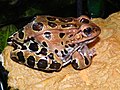
Amphibians Skin Regularly. Salamanders and frogs shed their skins regularly, then often eat it.[4]
Hermit crabs Exoskeleton Regularly, when the carapace is outgrown. Land hermit crabs bury themselves for many weeks while they moult and then consume their exoskeleton.[citation needed]
Arachnids Exoskeleton Regularly, when the exoskeleton is outgrown. Arachnids moult regularly to grow, often becoming reclusive and fasting for long periods prior to a moult.[citation needed]
Insects Exoskeleton Regularly in larvae, when the exoskeleton is outgrown. In species with a "complete" metamorphosis, the final moult transforms the body, typically from a soft-bodied larva to a reproductive, winged and sometimes colourful adult. In mayflies, a winged subimago moults one last time to a winged adult.

In birds

[edit]
Loggerhead shrike moulting. Loggerhead shrike with normal plumage.
A loggerhead shrike in mid-moult (left) and with regular plumage (right).
A juvenile king penguin moulting out its brown chick down and growing its first dark grey and white adult feathers

In birds, moulting is the periodic replacement of feathers by shedding old feathers while producing new ones. Feathers are dead structures at maturity which are gradually abraded and need to be replaced. Adult birds moult at least once a year, although many moult twice and a few three times each year.[5] It is generally a slow process: birds rarely shed all their feathers at any one time. The bird must retain sufficient feathers to regulate its body temperature and repel moisture. The number and area of feathers that are shed varies. In some moulting periods, a bird may renew only the feathers on the head and body, shedding the wing and tail feathers during a later moulting period.[5]

Some species of bird become flightless during an annual "wing moult" and must seek a protected habitat with a reliable food supply during that time. While the plumage may appear thin or uneven during the moult, the bird's general shape is maintained despite the loss of apparently many feathers; bald spots are typically signs of unrelated illnesses, such as gross injuries, parasites, feather pecking (especially in commercial poultry), or (in pet birds) feather plucking. Some birds will drop feathers, especially tail feathers, in what is called a "fright moult".[6]

The process of moulting in birds is as follows: First, the bird begins to shed some old feathers, then pin feathers grow in to replace the old feathers. As the pin feathers become full feathers, other feathers are shed. This is a cyclical process that occurs in many phases. It is usually symmetrical, with feather loss equal on each side of the body.[5] Because feathers make up 4–12% of a bird's body weight, it takes a large amount of energy to replace them.[5]

For this reason, moults often occur immediately after the breeding season, but while food is still abundant. The plumage produced during this time is called postnuptial plumage.[5] Prenuptial moulting occurs in red-collared widowbirds where the males replace their nonbreeding plumage with breeding plumage. It is thought that large birds can advance the moult of severely damaged feathers.[7]

Determining the process birds go through during moult can be useful in understanding breeding, migration and foraging strategies.[8] One non-invasive method of studying moult in birds is through using field photography.[9] The evolutionary and ecological forces driving moult can also be investigated using intrinsic markers such as stable hydrogen isotope (δ2H) analysis.[10] In some tropical birds, such as the common bulbul, breeding seasonality is weak at the population level, instead moult can show high seasonality with individuals probably under strong selection to match moult with peak environmental conditions.[11]

A 2023 paleontological analysis concluded that moulting probably evolved late in the evolutionary lineage of birds.[12]

Forced moulting

[edit]

In some countries, flocks of commercial layer hens are force-moulted to reinvigorate egg-laying. This usually involves complete withdrawal of their food and sometimes water for 7–14 days or up to 28 days under experimental conditions,[13] which presumably reflect standard farming practice in some countries. This causes a body weight loss of 25 to 35%,[14] which stimulates the hen to lose her feathers, but also reinvigorates egg-production.

Some flocks may be force-moulted several times. In 2003, more than 75% of all flocks were force-moulted in the US.[15] Other methods of inducing a moult include low-density diets (e.g. grape pomace, cotton seed meal, alfalfa meal)[16] or dietary manipulation to create an imbalance of a particular nutrient(s). The most important among these include manipulation of minerals including sodium (Na), calcium (Ca), iodine (I) and zinc (Zn), with full or partially reduced dietary intakes.[17]

In reptiles and amphibians

[edit]
A young Mediterranean House Gecko in the process of moulting.
Close up view of snake's moulted skin A black-bearded gliding lizard moulting
Close up view of snake's moulted skin (left) and a black-bearded gliding lizard moulting (right).

Squamates periodically engage in moulting, as their skin is scaly. The most familiar example of moulting in such reptiles is when snakes "shed their skin". This is usually achieved by the snake rubbing its head against a hard object, such as a rock (or between two rocks) or piece of wood, causing the already stretched skin to split.

At this point, the snake continues to rub its skin on objects, causing the end nearest the head to peel back on itself, until the snake is able to crawl out of its skin, effectively turning the moulted skin inside-out. This is similar to how one might remove a sock from one's foot by grabbing the open end and pulling it over itself. The snake's skin is often left in one piece after the moulting process, including the discarded brille (ocular scale), so that the moult is vital for maintaining the animal's quality of vision. The skins of lizards, in contrast, generally fall off in pieces.

Both frogs and salamanders moult regularly and consume the skin, with some species moulting in pieces and others in one piece.[18]

In arthropods

[edit]

In arthropods, such as insects, arachnids and crustaceans, moulting is the shedding of the exoskeleton, which is often called its shell, typically to let the organism grow. This process is called ecdysis. Most Arthropoda with soft, flexible skins also undergo ecdysis. Ecdysis permits metamorphosis, the sometimes radical difference between the morphology of successive instars.[19]

A new skin can replace structures, such as by providing new external lenses for eyes. The new exoskeleton is initially soft but hardens after the moulting of the old exoskeleton. The old exoskeleton is called an exuviae. While moulting, insects cannot breathe.[20] In the crustacean Ovalipes catharus molting must occur before they mate.

The moulting phase of a southern hawker

In dogs

[edit]

Most dogs moult twice each year, in the spring and autumn, depending on the breed, environment and temperature. Dogs shedding much more than usual are known as "blow coats" or "blowing coats".[21][22]

In guinea pigs, hamsters and rabbits

[edit]

Most guinea pigs moult constantly, whereas hamsters shed less frequently, and rabbits experience seasonal moulting in spring and autumn. The moulting process in small mammals is influenced by seasonality, hormones, and overall health. In hamsters, excessive shedding may indicate stress or disease. A balanced diet and regular grooming are essential for maintaining a healthy coat.[23]

[edit]

See also

[edit]
  • Abscission – a more general term for when an organism sheds parts of itself

References

[edit]
[edit]
Revisions and contributorsEdit on WikipediaRead on Wikipedia
from Grokipedia
Moulting, also spelled molting and termed when referring to the shedding of cuticles in certain , is the physiological process by which animals periodically discard and replace their outer integumentary layers—such as exoskeletons, , , , or scales—to enable growth, repair damage, or adapt to seasonal changes. This renewal is essential because rigid structures like exoskeletons cannot expand incrementally with the body, necessitating periodic replacement under hormonal regulation, particularly by ecdysteroids in ecdysozoan taxa including arthropods and nematodes. In vertebrates, moulting supports feather replacement in birds for flight efficiency and insulation, scale shedding in reptiles for size accommodation, and periodic in mammals linked to photoperiod cues. The process renders animals vulnerable during the interim soft phase, when new layers harden, representing an evolutionary constraint balanced against the benefits of structural adaptability.

Definition and Process

Core Biological Mechanism

Moulting, also known as , fundamentally enables discontinuous growth in animals with rigid or inflexible , such as the chitinous of arthropods, by allowing replacement of the old covering with a larger new one. The process begins in the pre-moult (or proecdysis) phase, where epidermal cells secrete a new, soft beneath the existing old one, separated by a molting fluid containing enzymes like chitinases and proteinases that digest the inner layers of the old , components such as and proteins for reuse in the new structure. This apolysis stage detaches the old cuticle from the without immediate rupture, preventing premature exposure. During ecdysis proper (post-moult or phase), behavioral movements combined with hydrostatic pressure from increased volume rupture the old at preformed weak points, such as joints or ecdysial sutures, allowing the animal to withdraw from the shed exuvia. The new then expands rapidly via fluid uptake and air swallowing (in ) or absorption, followed by sclerotization or tanning, where phenolic compounds proteins to harden and darken the structure, restoring rigidity and preventing . This sequence repeats cyclically, with frequency decreasing with age and size; for instance, insect larvae may moult multiple times per , while adults in many species moult only once or not at all post-maturity. In reptiles, a related but modified mechanism involves periodic shedding of the keratinized in sheets or tubes, driven by epidermal proliferation beneath the old layer, which lifts and separates it for sloughing, accommodating somatic growth without the full enzymatic resorption seen in arthropods. Across taxa, the core mechanism prioritizes minimizing vulnerability during the soft-bodied interval, often synchronized with environmental cues, though the integument's composition—chitinous versus keratinous—adapts the specifics.

Distinctions from Shedding

The terms "moulting" and "shedding" describe overlapping processes of discarding and replacing an animal's outer , but distinctions emerge in terminological usage, frequency, and mechanistic details across taxa. Moulting typically denotes a periodic, hormone-driven cycle involving preparation of a new layer beneath the old one prior to its removal, as seen in arthropods during or in birds replacing while minimizing functional impairment. In contrast, shedding often refers to the more immediate act of loss, which may be gradual or less coordinated, such as the seasonal in mammals driven by photoperiod and follicle cycles rather than a unified epidermal separation. In reptiles, both terms apply to the sloughing of epidermal scales every 1–6 months, depending on like snakes (complete shed in ) or (fragmented), but "shedding" emphasizes the visible ejection of keratinized layers, while moulting highlights the underlying renewal tied to growth. This process exposes a fresh, often brighter , contrasting with mammalian shedding where new emerges without full exposure in normal cases. Mechanistically, moulting in ecdysozoans and certain vertebrates involves apolysis (separation of old and new cuticles) regulated by ecdysteroids, enabling discrete size increases unavailable in continuously shedding mammals. Shedding in endotherms or cats, peaking in spring and fall, supports via asynchronous pelage turnover, lacking the vulnerability window of post-moult softness. These nuances underscore that while synonymous in broad usage, moulting connotes structured renewal for rigid structures, whereas shedding applies to flexible, incremental adaptations.

Physiological Mechanisms

Hormonal Regulation

In arthropods, molting is primarily regulated by ecdysteroids, steroid hormones such as 20-hydroxyecdysone produced by the prothoracic glands (in insects) or Y-organs (in crustaceans), which trigger the physiological processes of ecdysis including apolysis, new cuticle formation, and exoskeleton shedding. The synthesis and release of ecdysteroids are stimulated by prothoracicotropic hormone (PTTH), a neuropeptide secreted by neurosecretory cells in the brain, which integrates environmental and developmental cues to initiate the molt cycle. Juvenile hormone, produced by the corpora allata, modulates the nature of the molt—preventing metamorphosis in larval stages by maintaining epidermal competence for additional larval molts—while its decline allows pupal or imaginal development. In crustaceans, molt-inhibiting hormone (MIH) from the eyestalk sinus gland tonically suppresses Y-organ activity, and ecdysteroid pulses override this inhibition to permit molting. In reptiles, skin shedding () is controlled by , particularly thyroxine (T4), which influence epidermal proliferation and keratinization cycles, with disrupting shedding periodicity and exogenous thyroxine restoring it in species like . Hormonal orchestration involves coordination with growth factors, as evidenced by reduced shedding frequency under thyroid suppression, though other endocrine signals may contribute to timing. In birds, feather molting is promoted by (T3 and T4), where suppression prevents molt initiation and supplementation restores feather regeneration and plumage replacement patterns, as demonstrated in experiments with thyroid-manipulated species. plays an inhibitory role, with declining plasma levels correlating to molt onset under photoperiodic control, while elevated levels during breeding suppress it; gonadal steroids like testosterone and can also modulate progression but are secondary to thyroid-prolactin dynamics.

Triggers and Timing Factors

In arthropods, moulting is primarily triggered by the accumulation of sufficient growth during an , which stimulates the secretion of prothoracicotropic hormone (PTTH) from the , initiating the pulse necessary for apolysis and . Stretch receptors in the gut or , activated by nutrient intake such as large blood meals in hematophagous species, provide a key mechanical signal to release PTTH and synchronize moulting with feeding cycles. Nutritional factors, particularly protein availability, critically influence timing; for instance, in the tobacco hornworm , a consistent post-feeding interval of approximately 96 hours determines the metamorphic moult onset, with protein deficiency delaying this process. Environmental cues like photoperiod and modulate moulting timing. Longer photoperiods elevate moulting rates in species such as the spider crab Libinia emarginata, likely by enhancing metabolic rates and sensitivity during extended daylight. interacts with photoperiod to accelerate larval development and intermoult duration in crustaceans like the marron crayfish Cherax tenuimanus, where optimal ranges of 20–25°C promote frequent moults, while extremes reduce survival and synchrony. In some , colder temperatures delay winter moults, interacting with photoperiod to enforce and prevent untimely . In vertebrates, triggers often link to seasonal physiological demands, with , stress, and condition overriding basal cycles. For birds, post-breeding moulting timing is cued by declining photoperiod and nutritional status; energetic costs of regrowth necessitate adequate fat reserves and protein, delaying onset in undernourished individuals, as observed in shorebirds where food access determines winter pelage preparation. Genetic factors, including variants in structure genes like GLI2 and CSPG4, further fine-tune timing in migratory species to align with migration and avoid flight impairment. Reptiles and amphibians respond to thresholds for ectothermic moulting, with warmer conditions hastening skin renewal in and frogs, though influences shed completeness. Mammalian moulting, such as hair replacement, is triggered by corticosteroids elevated during stress or seasonal shifts, with delaying in polar species like Antarctic fur seals, where and resource scarcity postpone moults by weeks to prioritize survival. Photoperiod remains a dominant across vertebrates, entraining circannual rhythms via inputs, though exerts minimal direct effects on timing in endotherms like birds, instead amplifying nutritional constraints. Overall, these factors ensure moulting synchrony with ecological pressures, balancing growth against predation risks and energy demands.

Evolutionary Origins

In Ecdysozoans

, the process of moulting the external , represents a synapomorphy of the clade, uniting diverse phyla including Arthropoda, Nematoda, , and Tardigrada in their last common ancestor approximately 535 million years ago during the early period. This innovation enabled periodic shedding of the rigid, chitinous , circumventing growth limitations imposed by a non-expandable and facilitating increases in body size through post-moult expansion via water or air uptake. Fossil evidence, such as trace fossils and body imprints from strata, corroborates the antiquity of ecdysis, with the oldest direct records of shed cuticles dating to this era, predating the diversification of major ecdysozoan lineages. The evolutionary pathway components regulating , including neuropeptide cascades and hormonal signals like ecdysteroids, trace back to this ancestral ecdysozoan, as evidenced by conserved genetic toolkits across extant representatives. Moulting likely originated as an for enlarging cuticular structures such as spines, flanges, and appendages during , promoting the development of complex morphologies that characterize arthropods and their relatives. In nematodes and other cycloneuralians, ecdysis supports burrowing lifestyles by allowing cuticle replacement without compromising structural integrity, underscoring its versatility in enabling diverse ecological niches. Pre-Cambrian precursors may exist, with molecular clock estimates and trace fossils suggesting divergence of ecdysozoans at least 23 million years before the appearance of definitive moulting traces, implying an origin for the trait's genetic foundations. However, unambiguous fossil confirmation remains , aligning with the explosion of ecdysozoan disparity during this interval. This ancestral capacity for provided a foundational mechanism for subsequent radiations, distinguishing Ecdysozoa from other clades like , which lack obligatory moulting.

Development in Vertebrates

Periodic skin shedding, or , in vertebrates evolved independently from the moulting process in ecdysozoans, lacking shared genetic or hormonal pathways such as ecdysteroids, and instead arising as an adaptation for epidermal maintenance in terrestrial or semi-terrestrial environments. In amphibians, the earliest tetrapods exhibiting this trait, shedding involves periodic removal of the outer to eliminate accumulated dead cells and parasites, facilitated by a thin, multi-layered that remains permeable for and moisture regulation. This process, observed across anuran and urodele , occurs frequently—often weekly in adults—and lacks the rigid, complete cast-off seen in more derived forms, reflecting retention of aquatic ancestry with limited keratinization. The refinement of moulting in reptiles, particularly lepidosaurs (, snakes, and ), marked a key evolutionary development around 278 million years ago during the early Permian, coinciding with full terrestrialization and the emergence of a stratified, beta-keratin-rich . This innovation produced a distinct intraepidermal shedding layer through in the , enabling periodic, wholesale renewal of the outer epidermal generation via formation of two concurrent generations: a basal replacement layer and an outer generative layer separated by a clear separation zone. In lepidosaurs, corneous beta-proteins (CBPs) from the epidermal differentiation complex (EDC) locus coat intermediate filament keratins, yielding durable scales that minimize water loss; shedding occurs in fragments for lizards or as a single inverted tube for snakes, often pre-programmed in utero or pre-hatching via proteins like Sn-cys-1 in the Oberhäutchen layer. This system diverged further ~208 million years ago with CBP subtype specialization, absent in archelosaurians like turtles and crocodilians, which exhibit partial or scute-specific shedding. In endothermic vertebrates—birds and mammals—moulting diverged further from reptilian skin , adapting to integumentary structures like s and hair for insulation and flight. Birds, descending from sauropsid ancestors, retain scale-like in vanes but undergo sequential or simultaneous moults tied to annual cycles, replacing entire over weeks to months without epidermal shedding. Mammals evolved asynchronous, continuous cycles with regional or seasonal synchrony in some (e.g., marmots), but lack periodic whole-skin casts, relying instead on follicular regeneration influenced by photoperiod and hormones like . These variations underscore convergent epidermal renewal across vertebrates, driven by environmental pressures rather than a unified developmental module.

Occurrence in Invertebrates

Arthropods

Arthropods, including insects, crustaceans, arachnids, and myriapods, possess a rigid chitinous exoskeleton that constrains continuous growth, necessitating periodic ecdysis—commonly termed moulting—to increase body size. This discontinuous growth pattern involves shedding the old exoskeleton and expanding a newly secreted, initially soft cuticle before it sclerotizes and hardens. Ecdysis occurs across all major arthropod lineages, with the number of moults varying by species and life stage; for instance, many insects undergo 4–7 larval instars before pupation, while some crustaceans continue moulting throughout adulthood to achieve repeated size increments. The process unfolds in distinct phases: apolysis, where the detaches from the old and secretes molting fluid containing chitinolytic enzymes to digest it; ecdysis proper, involving behavioral sequences that split and shed the desiccated old ; and post-ecdysis, marked by body expansion via pressure, air or water uptake, and subsequent cuticle tanning through phenolic cross-linking. These behaviors are orchestrated by neuropeptides such as ecdysis-triggering hormone (ETH) and crustacean cardioactive peptide (CCAP), which coordinate muscle actions for cuticle rupture, often along predetermined lines like the ecdysial suture in . In and s, hormonal regulation centers on ecdysteroids—primarily (20E)—whose pulsatile release from prothoracic glands (in ) or Y-organs (in crustaceans) triggers apolysis and cascades for new cuticle formation. (JH) or its crustacean analog (methyl farnesoate) modulates 20E effects to dictate moult type, permitting larval-larval transitions in early s while enabling metamorphic shifts later. Prothoracicotropic hormone (PTTH) from the initiates ecdysteroidogenesis in response to nutritional cues and instar progression. Moulting frequency declines with maturity: juvenile insects and crustaceans moult multiple times annually or more, often synchronized with environmental factors like and photoperiod, whereas adult arachnids such as spiders typically cease growth-related moults after reaching , retaining fixed size thereafter. In crustaceans like lobsters and crabs, adult moults enable expansion and can double body volume, though success rates diminish with age due to energetic costs and injury risks. Arachnids exhibit similar vulnerabilities, with post-moult individuals displaying softened, pale cuticles prone to and predation until re-sclerotization completes within hours to days. Adaptively, facilitates not only somatic enlargement but also regenerative repair of damaged appendages and, in metamorphic species, profound morphological reconfiguration from aquatic larvae to terrestrial s, underpinning diversification. However, the process imposes high mortality—up to 20–50% in some field studies of juvenile crustaceans—stemming from failed , osmotic imbalance during soft-bodied phases, and elevated predation susceptibility.

Other Invertebrates

In non-arthropod invertebrates, particularly those within the clade such as nematodes, tardigrades, and onychophorans, moulting () facilitates growth by periodic shedding of a rigid chitinous , a conserved across these groups despite morphological differences. This contrasts with arthropods in lacking segmented appendages but shares hormonal triggers like ecdysteroids for cuticle separation (apolysis), new cuticle secretion, and shedding (). Nematodes, including free-living species like and parasitic forms such as Nippostrongylus brasiliensis, undergo exactly four moults during post-embryonic development to transition from larval to adult stages, enabling linear growth in a non-segmented, pseudocoelomate body. Each moult cycle spans approximately 8-12 hours in C. elegans at 20°C, beginning with apolysis where the hypodermis separates from the old , followed by ecdysone-like signaling to digest and expel the remnant via the while the new four-layered (annulus, cortex, median, and basal layers) hardens. Moulting defects, observed in mutants lacking holocentric chromosomes or specific signaling pathways, result in lethality or arrested development, underscoring its essential role. Tardigrades (water bears) exhibit 4-12 moults per lifespan depending on species and environmental conditions, with adults moulting to renew the and often depositing eggs within the shed exuvium for protection. In the model species Hypsibius exemplaris, hormones (Ecd) regulate the process, as RNAi knockdown of the receptor delays or arrests moulting, confirming ancestral panarthropod conservation of this pathway from a common ecdysozoan over 500 million years ago. Moulting occurs in active hydrated states, contrasting with , and supports resilience by replacing damaged cuticles amid extreme tolerances. Onychophorans (velvet worms), terrestrial lobopodians, moult their flexible, chitin-embedded every 14-30 days throughout adulthood to accommodate growth and repair, with inducing partial or patchy that maintains hydrostatic body support via hemocoel pressure. Unlike nematodes' synchronized whole-body moults, this incremental shedding—governed by epidermal hormone receptors—allows continuous locomotion and slime ejection for predation, reflecting an evolutionary intermediate between soft-bodied ancestors and exoskeletons. renewal every 1-2 weeks in species like Euperipatoides rowelli prevents ectoparasite accumulation, enhancing survival in humid forest habitats.

Occurrence in Vertebrates

Reptiles and Amphibians

Reptiles exhibit periodic , the shedding of the outer epidermal layer, to accommodate growth since their keratinized, scaly lacks elasticity and cannot expand with increasing body size. In snakes, ecdysis typically involves shedding the entire in one piece, initiated by rubbing the snout or body against rough substrates like rocks or logs to loosen the old layer, with frequency ranging from 4 to 12 times annually in adults and more often in juveniles. Lizards, in contrast, shed in irregular patches, often starting at the head, , limbs, and tail, with the process aided by scratching or biting to remove fragments. Keratophagy, the consumption of shed , occurs in at least 19 snake species and 23 lizard species across multiple families, potentially nutrients or removing evidence from predators. Amphibians undergo in a cyclic pattern every few days to several weeks, sloughing only the outermost keratinized while retaining a thinner, more permeable suited to their moist environments. Unlike the thicker, protective scales of reptiles, is glandular and absorbent, with shedding serving not only growth but also microbial regulation by reducing cultivable through slough removal and subsequent recolonization. Many amphibians, including frogs and salamanders, ingest the discarded post-shedding, a observed across anuran and urodele that may aid in nutrient recapture or defense. Disruptions in amphibian ecdysis, such as increased frequency from chytrid fungal infections, can exacerbate vulnerabilities, highlighting the process's role in innate immunity.

Birds

Birds undergo periodic feather moulting to replace worn or damaged , maintaining aerodynamic efficiency for flight, , and visual signaling for mating or . This process involves the synchronous or sequential shedding and regrowth of feathers, driven by endogenous rhythms synchronized with environmental cues like photoperiod and breeding cycles. All avian species exhibit at least one prebasic moult annually, typically post-breeding, which replaces body and to produce non-breeding ; this ancestral strategy forms the core of avian moult cycles. Moult patterns vary by species and , with most songbirds following a simple basic strategy involving a single complete annual prebasic moult, where all feathers are replaced over 1-2 months starting from innermost primaries and central tail feathers. Larger birds, such as raptors, extend moult duration due to allometric scaling, often employing stepwise or sequential replacement of to preserve flight capability, with primaries shed inwardly from the outermost and secondaries outward from the body. Some temperate and tropical species incorporate prealternate moults for breeding plumages or biannual cycles, converging independently across lineages like shorebirds and to adapt to seasonal demands. In waterbirds and penguins, moults are often catastrophic or rapid-complete, with penguins like the undergoing a 3-4 week full-body moult post-breeding, ashore as insulation fails and feathers are replaced en masse to withstand aquatic environments. Moult timing shifts with , as observed in migratory songbirds advancing fall flight- replacement by one day per year amid warming trends, potentially impacting energy budgets during migration preparation. These cycles evolved from reptilian scales, with modern strategies reflecting trade-offs between feather maintenance and survival costs like reduced efficiency.

Mammals

Mammalian moulting refers to the periodic shedding and regrowth of pelage ( or ) from dermal follicles, a process driven by hormonal signals such as , , and , often synchronized with photoperiod and seasonal changes. This contrasts with the epidermal exuviation in reptiles or arthropods, as mammalian replacement occurs gradually and asynchronously across body regions, minimizing exposure of the skin. Most mammals exhibit continuous or wave-like shedding throughout life, with rates influenced by age, , and health; for instance, juveniles often undergo ontogenetic moults to transition from neonatal to adult pelage. Seasonal moults predominate in many , typically biannual: a post-winter moult produces a sleeker summer for and mobility, while a pre-winter moult yields denser, insulating winter , sometimes with color changes for . Photoperiod acts as the primary , overriding other factors like temperature in high-latitude ; for example, Arctic foxes (Vulpes lagopus) and snowshoe hares (Lepus americanus) moult from brown-gray summer pelage to white winter coats between September and November, enhancing against snow. In temperate such as yellow-bellied marmots (Marmota flaviventris), moulting commences 1-2 months post-hibernation emergence (April-May), progressing rostrocaudally and replacing abraded with growth-phase pelage suited to demands. Pinnipeds represent an exception with rapid, synchronized "catastrophic" or anagenic moults, where new hair erupts beneath the old pelage and , causing both to slough in patches over 2-4 weeks. These annual events, occurring post-breeding (e.g., March-April for northern elephant seals, Mirounga angustirostris), coincide with hauled-out periods on beaches or ice, as entering water risks due to compromised insulation; metabolic rates elevate by 20-50% to support epidermal renewal. In phocid seals like the (Monachus monachus), moulting blends terrestrial and aquatic phases, lasting about 15 days and involving partial shedding. This strategy maintains waterproofing and buoyancy, with providing primary insulation during vulnerability.

Adaptive Functions

Growth and Renewal Benefits

Moulting enables discontinuous growth in ecdysozoans, particularly arthropods, where the rigid chitinous prevents continuous expansion; periodic shedding of the old allows the animal to swell with fluid intake, achieving up to a 50% increase in linear dimensions per before the new exoskeleton sclerotizes. This process is hormonally regulated by ecdysteroids and , ensuring synchronized apolysis (separation from old cuticle) and (shedding), which is essential for transitioning through larval stages to adulthood in and crustaceans. In isopods like sea slaters, frequent moults in non-breeding adults support iterative growth increments and regeneration of appendages or sternal tissues damaged by injury or predation. In vertebrates, moulting renews epidermal structures to accommodate somatic growth and repair wear. Reptiles shed keratinized scales via , discarding the to reveal enlarged underlying skin layers that match increased body size, while simultaneously removing ectoparasites embedded in the old layer. Amphibians similarly renew permeable skin for and growth, with species like leopard frogs consuming the shed to recycle nutrients. Birds undergo feather moults to replace abraded vanes, restoring flight capability and insulation; post-juvenile complete moults produce structurally superior s with denser barbules, enhancing durability against abrasion during or migration compared to natal . Mammalian moults, occurring in waves or seasonally, facilitate fur renewal for and , with anagen phases driving follicle regeneration and synchronized pelage replacement in like marmots to adapt to environmental shifts. Across taxa, this renewal mitigates accumulation of environmental toxins or pathogens in shed tissues, promoting long-term physiological efficiency without compromising integumental integrity.

Vulnerabilities and Costs

Moulting exposes animals to elevated predation risk due to the temporary softening of their protective coverings. In arthropods, the newly formed remains vulnerable until it tans and hardens, often necessitating that moulting occurs in concealed shelters to mitigate threats. Reptiles and other ecdysozoans face similar perils during , as the shed skin leaves the underlying soft and prone to mechanical damage, , and predator attacks, prompting behaviors like hiding to reduce exposure. Birds incur locomotion impairments from feather loss, with many , particularly waterfowl, becoming temporarily flightless during primary remige moult, which heightens vulnerability to terrestrial and avian predators. Incomplete or aberrant moults can exacerbate these risks by resulting in asymmetrical or retained old feathers, compromising flight efficiency and . Energetically, moulting demands substantial resource allocation, including proteins and minerals for new synthesis, often elevating basal metabolic rates. In Weddell seals, thermoregulatory costs during pelage moult exceed pre-moult levels by more than double, reflecting heightened heat loss from reduced insulation. Avian feather production exhibits low energetic efficiency, with conversion rates as minimal as 6.9% in some passerines, compounded by behavioral adjustments like reduced activity to conserve energy. These costs can delay or migration, as animals prioritize self-maintenance over other life-history demands. In mammals, biannual moulting evolves when the fitness penalty of retaining worn pelage outweighs regeneration expenses, though on precise metabolic burdens remain limited compared to birds.

Human Contexts and Recent Insights

Agricultural Applications

In , induced moulting is a widely practiced strategy for laying hens to extend productive lifespan and optimize output. By synchronizing the flock's natural feather renewal and reproductive rest period, typically through methods like short-term feed withdrawal or low-calcium diets lasting 10-14 days, producers can reset ovarian function, leading to renewed high-rate production—often restoring lay rates to 80-90% of peak levels for an additional 6-12 months. This approach reduces replacement costs by prolonging flock utility from 18-20 months to over 100 weeks, while also enhancing quality and flock livability, with studies reporting up to 9% improved survival in certain white- strains due to physiological and reduced susceptibility post-moult. Benefits extend to , as moulting minimizes feed and labor expenses during the rest phase—hens lose 25-30% body weight, conserving resources—and aligns supply with seasonal market demands, such as holiday peaks. However, traditional protocols have drawn scrutiny for potential stress impacts, prompting shifts toward non-fasting alternatives like photoperiod manipulation or hormone-free diets that achieve similar reproductive regression without full feed deprivation, maintaining welfare standards while preserving gains in mass and immunity. In , particularly with species like Pacific white shrimp (Litopenaeus vannamei), moulting cycles directly influence growth rates and harvest yields, occurring every 3-10 days depending on , nutrition, and stocking density. Farmers monitor and sometimes induce synchronous moults—via stressors like abrupt shifts or water level reductions—to coordinate size uniformity, enabling efficient grading and reducing risks during the vulnerable soft-shell phase when shrimp absorb water for exoskeleton expansion. Optimal management, including hormone-balanced feeds to support ecdysone-driven moulting, can accelerate cycles and boost final weights by 10-20%, though mass events heighten mortality if oxygen or calcium levels falter, underscoring the need for precise environmental controls in intensive ponds. For other livestock, such as , seasonal hair shedding traits serve as indirect agricultural markers; rapid spring shedding correlates with better heat tolerance and feed efficiency, with genetic selection for early shedders yielding 5-10% gains in average daily weight under heat stress, though delayed shedding elevates respiratory issues and yield drops in dairy herds. In sheep breeding, wool-shedding varieties reduce shearing labor costs by 20-30% annually, promoting low-input systems without compromising fiber quality.

Climate and Conservation Impacts

Climate change has induced shifts in the timing of moulting in various bird species, with warmer temperatures correlating to advanced fall feather moults. In migratory songbirds across the , the timing of post-breeding moult has advanced by approximately one day per year over the past decade, potentially reflecting increased sensitivity to environmental cues amid rising temperatures. Similarly, warmer conditions have been linked to earlier initiation of moult in species like the (Alectoris rufa), exerting selective pressure that may reduce annual population growth rates by accelerating the process during suboptimal periods. These phenological shifts carry conservation risks, particularly for species reliant on synchronized moulting with environmental conditions. In birds and mammals undergoing seasonal colour moults for , such as ptarmigan or snowshoe hares, reduced snow cover duration due to warming leads to plumage or pelage mismatches with background environments, elevating predation . For instance, earlier snow melt exposes animals retaining white winter coats against brown summer landscapes, resulting in higher mortality rates observed in mustelids like least weasels. Such mismatches, driven by photoperiod-cued moulting lagging behind rapid climate-driven habitat changes, threaten population persistence in high-latitude or montane ecosystems. Marine species face parallel challenges, with climate-induced alterations potentially redistributing post-moult foraging habitats for like Eudyptes crested species, disrupting energy recovery phases critical for breeding success. Conservation strategies must account for these dynamics, prioritizing monitoring of moult in to predict declines and inform habitat protection amid ongoing warming. In passerines, cumulative effects of advanced moulting may compound with migration shifts, straining resources during energetically demanding periods and exacerbating declines in climate-sensitive populations.

References

Add your contribution
Related Hubs
User Avatar
No comments yet.