Hubbry Logo
Cleaner fishCleaner fishMain
Open search
Cleaner fish
Community hub
Cleaner fish
logo
8 pages, 0 posts
0 subscribers
Be the first to start a discussion here.
Cleaner fish
Cleaner fish
from Wikipedia
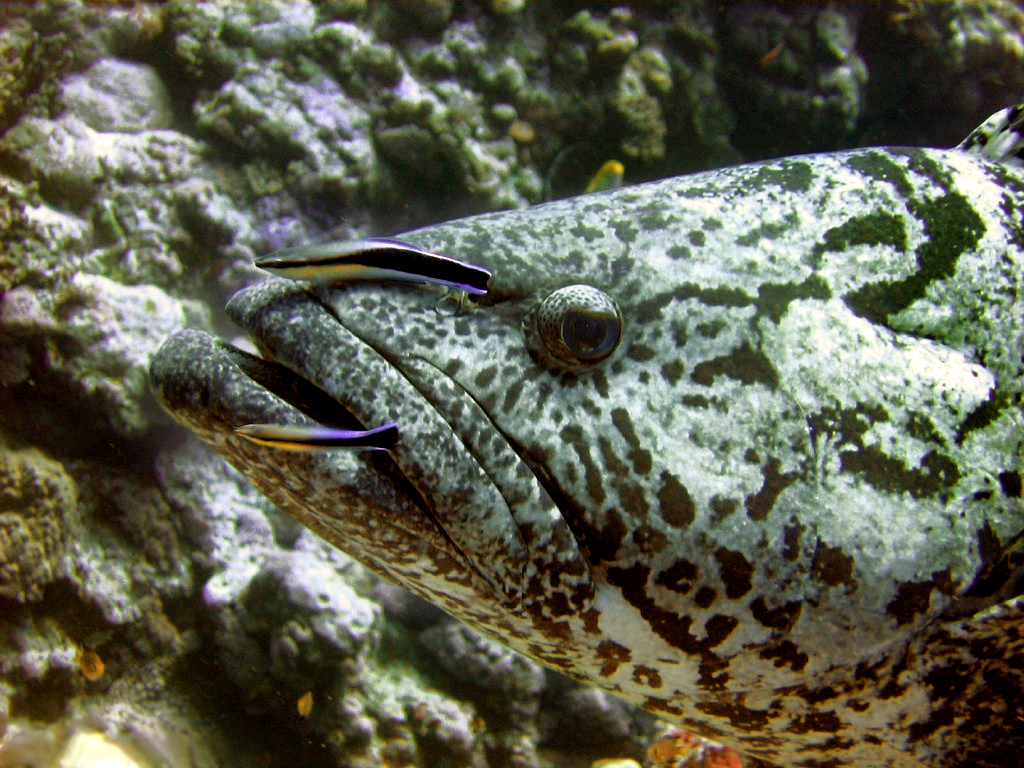
Two bluestreak cleaner wrasses removing dead skin and external parasites from a potato grouper
Video of bluestreak cleaner wrasse cleaning the gills of an elongate surgeonfish

Cleaner fish are fish that show a specialist feeding strategy[1] by providing a service to other species, referred to as clients,[2] by removing dead skin, ectoparasites, and infected tissue from the surface or gill chambers.[2] This example of cleaning symbiosis represents mutualism and cooperation behaviour,[3] an ecological interaction that benefits both parties involved. However, the cleaner fish may consume mucus or tissue, thus creating a form of parasitism[4] called cheating. The client animals are typically fish of a different species,[3] but can also be aquatic reptiles (sea turtles and marine iguana), mammals (manatees and whales), or octopuses.[5][6][7] A wide variety of fish including wrasse, cichlids, catfish, pipefish, lumpsuckers, and gobies display cleaning behaviors across the globe in fresh, brackish, and marine waters but specifically concentrated in the tropics due to high parasite density.[2] Similar behaviour is found in other groups of animals, such as cleaner shrimps.

There are two types of cleaner fish, obligate full time cleaners and facultative part time cleaners[1] where different strategies occur based on resources and local abundance of fish.[1] Cleaning behaviour takes place in pelagic waters as well as designated locations called cleaner stations.[8] Cleaner fish interaction durations and memories of reoccurring clients are influenced by the neuroendocrine system of the fish, involving hormones arginine vasotocin, Isotocin and serotonin.[3]

Conspicuous coloration is a method used by some cleaner fish, where they often display a brilliant blue stripe that spans the length of the body.[9] Other species of fish, called mimics, imitate the behavior and phenotype of cleaner fish to gain access to client fish tissue.

The specialized feeding behaviour of cleaner fish has become a valuable resource in salmon aquaculture in Atlantic Canada, Scotland, Iceland and Norway[10] for prevention of sea lice outbreaks[2] which benefits the economy and environment by minimizing the use of chemical delousers. Specifically cultured for this job are lumpfish (Cyclopterus lumpus) and ballan wrasse (Labrus bergeylta).[11] The most common parasites that cleaner fish feed on are gnathiidae and copepod species.[1]

Diversity

[edit]

Marine fish

[edit]

The following is a selection of some of the many marine cleaner species.

Commonly studied cleaner fish are the cleaner wrasse of the genus Labroides found on coral reefs in the Indian Ocean and Pacific Ocean.[8]

Neon gobies of the genera Gobiosoma and Elacatinus provide a cleaning service similar to the cleaner wrasse, though this time on reefs in the Western Atlantic, providing a good example of convergent evolution[12] of the cleaning behaviour.

Lumpfish are utilized as salmonid cleaner fish in aquaculture, but it is unknown if they serve as cleaners on salmon in the wild.[13]

Brackish water fish

[edit]

Brackish water refers to aquatic environments that have a salinity in between salt and fresh water systems. Cleaning symbiosis has also been observed in these areas between two brackish water cichlids of the genus Etroplus from South Asia. The small species Etroplus maculatus is the cleaner fish, and the much larger Etroplus suratensis is the host that receives the cleaning service.[15]

Freshwater fish

[edit]

Cleaning has been observed infrequently in fresh waters compared to marine waters. This is possibly related to fewer observers (such as divers) in freshwater compared to saltwater.[16] One of the few known examples of freshwater cleaning is juvenile striped Raphael catfish cleaning the piscivorous Hoplias cf. malabaricus. In public aquariums, Synaptolaemus headstanders have been seen cleaning larger fish.[17][18]

Mechanisms

[edit]

Facultative cleaner fish

[edit]
Bumblebee cichlids (Pseudotropheus crabro) are cleaner fish associated with the kampango (Bagrus meridionalis), but will feed on a variety of food items.[19]

A facultative cleaner fish does not rely solely on specialized cleaning behaviour for nutritious food.[2] Facultative cleaners can be further divided by stationary vs. wandering facultative cleaners.[1] Facultative cleaners may display cleaning behaviour through their whole life history or solely as juveniles for additional nutrients during rapid growth.[1][2] Examples of facultative cleaners are commonly wrasse species such as the blue headed wrasse, noronha wrasse (Thalassoma noronhanum) and goldsinny wrasse (Ctenolabrus rupestris), sharp nose sea perch in Californian waters,[2] and the lumpfish (Cyclopterus lumpus).

Using the example of the blue wrasse from Caribbean waters, their alternative feeding strategy is described as being a generalist forager, meaning they eat a wide variety of smaller aquatic organisms based on availability.[1] When displaying cleaning behaviour, it has been noted that the blue wrasse inspects potential clients and only feeds on some, implying that the wrasse is seeking out a particular type of parasite as a diet supplement. It has also been quantified that the blue wrasse foraging behaviour does not change in proportion to cleaning opportunities, again suggesting that the cleaning behaviour in this facultative fish is for diet supplementation and not out of necessity.[1]

Obligate cleaner fish

[edit]

An obligate cleaner fish relies solely on specialized cleaning behaviour for its food.[2] Therefore, obligate cleaners have a higher output of cleaning on a wider range of parasites in comparison to facultative fish. To maximize nutrient consumption, obligate cleaners utilize a higher proportion of cleaning stations.[1] Obligate cleaner fish may also be divided by stationary and wandering. These life history choice are made based on the amount of interspecific competition from other obligate cleaners in the area.[20] An example of an obligate cleaner is the shark nose goby (Elacatinus evelynae) in the Caribbean Reef, where it has been observed to perform up to 110 cleanings per day.[1]

Client Mulloidichthys flavolineatus at a cleaning station.

Cleaner stations

[edit]

Cleaning stations are a strategy used by some cleaner fish where clients congregate and perform specific movements to attract the attention of the cleaner fish. Cleaning stations are usually associated with unique topological features, such as those seen in coral reefs[1] and allow a space where cleaners have no risk of predation from larger predatory fishes, due to the mutual benefit from the cleaners' service.[8]

Interactions are begun by the client and ended by the cleaner, implying that the client is seeking out the service where the cleaner has control.[2]

Cheating

[edit]

Cheating parasitism occurs when the cleaner eats mucus or healthy tissue from the client. This can be harmful to the client as mucus is essential to prevent UV damage, and open wounds can increase the risk of infection.[2] Cleaner fish maintain a balance between eating ectoparasites and mucus or tissue because of the respective nutritional benefits, sometimes despite the risk to the client.[4] For example, the Caribbean cleaning goby (Elacatinus evelynae) will eat scales and mucus from the host during times of ectoparasite scarcity to supplement its diet. The symbiosis relationship between client and host does not break down because the abundance of these parasites varies significantly seasonally and spatially, and the overall benefit to the larger fish outweighs any cheating on by the smaller cleaner.[21]

Memory

[edit]

Cleaner fish (especially facultative cleaners) assess the value of possible clients when deciding whether to invest in a client or cheat and eat mucus or tissue.[1][3] Observations of cleaner and client interactions have found that cleaners may provide the client with tactile stimulation as a way to establish a relationship and gain the client's 'trust'. This interaction costs the cleaner as it is time not spent feeding.[3] This physical interaction demonstrates a cleaner fish's tradeoff. The cleaner minimizes feeding time to establish a memorable relationship with the client that also contributes to conflict management with a possibly predatory client.[3]

Neurobiology

[edit]
Protein structure of non-mammalian specific hormone, vasotocin, from the posterior pituitary

The cleaner fish neuroendocrine system has been studied specifically in reference to arginine vasotocin (AVT) and Isotocin. These are fish-specific hormones that are analogous to human hormones involved in sociality.[3] In laboratory experiments, during conditions of low AVT, cleaners are more engaged in interspecific interactions. High AVT conditions tend to show high client interactions but more instances of cheating. This implies that AVT expression acts as a switch for cleaner fish feeding behaviour, showing less client interactions (but more honest cleaning) or increased client interactions (with less honest cleaning).[3] It has also been observed that obligate cleaners have higher overall brain activity, and specifically in the cerebellum, likely related to the movements involved in cleaning.[3]

Serotonin has also been noted to influence cleaning behaviour. High serotonin increases motivation to interact with clients, and a lack of serotonin decreases client interaction and slows learning.[3]

Mimicry

[edit]
The bluestriped fangblenny is an aggressive mimic of the cleaner wrasse.

Mimic species have evolved body forms, patterns, and colors which imitate other species to gain a competitive advantage.[22] One of the most studied examples of mimicry on coral reefs is the relationship between the aggressive mimic Plagiotremus rhinorhynchos (the bluestriped fangblenny) and the cleaner wrasse model Labroides dimidiatus. By appearing like L. dimidiatus, P. rhinorhynchos is able to approach and then feed on the tissue and scales of client fish while posing as a cleaner.[22][23] The presence of the cleaner mimic, P. rhinorhynchos, reduces the foraging success of the cleaner model L. dimidiatus.[23] More aggressive mimics have a greater negative impact on the foraging rate and success of the cleaner fish.[23] When mimics appear in higher densities relative to cleaners, there is a significant decline in the success rate of the cleaner fish. The effects of the mimic/model ratio are susceptible to dilution, whereby an increase in client fish allows both the mimics and the models to have more access to clients, thus limiting the negative effects that mimics have on model foraging success.[24][25]

Implications

[edit]

Salmonid aquaculture

[edit]
An aquaculture facility in Chile

Aquaculture is the farming of aquatic organisms, where salmon farming is growing in the North Atlantic.[10] Cleaner fish are used to eat parasitic sea lice from salmon to reduce outbreaks which cause disease in populations. The two most commonly used cleaner fish are the lumpfish, Cyclopterus lumpus, and the ballan wrasse Labrus bergeylta.[11] Lumpfish are distributed across the Atlantic ocean, ranging from Greenland to France, Hudson's Bay to New Jersey, and in high concentrations in the Bay of Fundy and St. Pierre Coast, near Newfoundland.[26] Ballan wrasse are distributed widely across the Northeast Atlantic Ocean.[27] The switch towards lumpfish has been preferred as wrasse are less active feeders during winter months.[13]

Methods

[edit]

Cleaner fish are commercially cultured and introduced into salmonid sea cages. Salmon and lumpfish are able to coexist, where the lumpfish spend a certain amount of time foraging for supplemented food and only a portion of their time delousing salmon. With significant ratios of cleaner to client, the efforts are sufficient to minimize louse outbreaks.[13][11] Sea cages are designed with additional substrate for lumpfish to attach to during periods of inactivity to minimize stress levels in the cleaner fish and maximize delousing abilities.[13]

Challenges of using cleaner fish

[edit]
Sea lice causing morphological damage on cultured salmon in New Brunswick, Canada

North Atlantic Aquaculture facilities use facultative cleaner fish (Cyclopterus lumpus, and Labrus bergeylta) in order to control the nutrients they receive during culturing, before their use in aquaculture. One of the challenges that comes along with using facultative cleaners is that parasite removal from salmon must be maximized while also balancing additional nutrients from supplemented feed to ensure the health of the cleaner fish and the safety of the salmonid clients.[1] Another challenge that arises in management of cleaner fish behaviour is balancing the number of cleaners to the number of clients. With a low cleaner-to-client ratio, the risk of lice infestation increases. With a high cleaner-to-client ratio, competition among cleaners increases and there is a higher risk of cheating and consumption of salmonid mucus and flesh thereby increasing their risk of infection.[1][11]

Minimizing disease in commercial lumpfish stocks is critical for the continuation of their usage in aquaculture. Vaccine development for the lumpfish is a current area of research as lumpfish demand is increasing in the aquaculture industry.[13] In an effort to minimize disease in the cleaner fish, commercial lumpfish stocks are supplemented with wild individuals during the breeding season to minimize inbreeding depression. The lumpfish genome has not yet been fully sequenced so subtle details between populations are not yet appreciated.[13]

Another consideration in using cleaner fish in aquaculture is minimizing escapees from sea cages. If escaped cleaner fish spawn with natural populations in the environment it may decrease the wild fishes' natural survival abilities.[13]

Environment

[edit]

Cleaner fish have taken over lice-reduction strategies, which were based upon chemical delousers in the past. This decreases the amount of effluent waste affecting the surrounding wild habitats in outdoor aquaculture.[11] Introducing cleaner fish into salmonid aquaculture cages has also been found to be less stressful on salmonids than medical intervention for sea lice outbreaks.[13]

Cleaner fish in the wild contribute to the overall health of aquatic communities by reducing morphological and physiological injuries by parasites to other species of fish. Maintenance of these populations of fish help the complex web of interactions remain stable.[2]

Economic

[edit]

Sea lice outbreaks are detrimental to the survival of cultured salmonids and cause the majority of revenue loss in the aquaculture business. By employing the cleaner fish instead of medical intervention for sea louse management, aquaculture farmers save money.[13]

See also

[edit]

References

[edit]
[edit]
Revisions and contributorsEdit on WikipediaRead on Wikipedia
from Grokipedia
Cleaner fish are small marine species, primarily from the wrasse (Labridae) and goby (Gobiidae) families, that engage in mutualistic cleaning symbioses by removing ectoparasites, dead skin, scales, mucus, and damaged tissue from larger "client" fish and other marine animals, thereby gaining access to food in return. These interactions typically occur at fixed "cleaning stations" on coral reefs, where cleaners perform up to thousands of services daily, often signaled by distinctive behaviors such as dances or bold color patterns like blue-and-yellow stripes to attract clients. The symbiosis is characterized by cooperation, with cleaners providing health benefits to clients—such as reduced parasite loads and improved growth—while clients offer nutritional rewards, though cleaners sometimes "cheat" by preferring client mucus over parasites, leading to complex partner choice dynamics. Notable examples include the (Labroides dimidiatus), an cleaner species endemic to the that can remove over 1,200 parasites per day from clients, and the neon goby (Elacatinus oceanops) in the Atlantic, which acts as a facultative cleaner alongside partners. Cleaner fish exhibit advanced cognitive abilities, including numerical discrimination and strategic decision-making to prioritize high-value clients or evade predators, as demonstrated in lab studies where they solve foraging tasks comparable to . These behaviors are mediated by tactile stimulation, where cleaners "massage" clients to encourage repeat visits, highlighting the role of communication in sustaining the mutualism. Ecologically, cleaner fish play a pivotal role in coral reef ecosystems by enhancing client abundance, diversity, and body condition; experimental removals of cleaners have shown parasite infestations increasing by up to 4-fold and long-term declines in reef fish populations over 8–13 years. With over 200 fish species and numerous shrimp involved in cleaning across tropical and temperate waters, these symbioses influence broader marine community structure, though threats like overfishing and habitat degradation pose risks to their persistence.

Introduction and Overview

Definition and Ecological Role

Cleaner fish are small species, typically from families such as Labridae and , that engage in mutualistic by removing ectoparasites, dead tissue, mucus, and sometimes scales from the bodies, gills, and mouths of larger "client" fish or other marine organisms, providing nutritional benefits to the cleaners while enhancing client hygiene. This cleaning behavior is a form of interspecific prevalent in ecosystems, where cleaners establish designated stations to attract clients, fostering a network of interactions that supports both parties. Ecologically, cleaner fish play a crucial role in preventing ectoparasite outbreaks on reefs by consuming high volumes of parasites, such as gnathiid isopods, which can otherwise proliferate and impair client health; for instance, the bluestreak cleaner wrasse (Labroides dimidiatus) removes an average of 1,218 gnathiids per day per individual. This parasite control promotes client growth and rates—for example, long-term removal of L. dimidiatus from reefs led to a 37% decline in resident abundance and shifts toward smaller body sizes in damselfishes due to elevated parasite loads—thereby stabilizing food webs by curbing transmission and supporting larger predatory populations essential for . Reefs with active cleaners exhibit up to double the species diversity and four times the abundance of visiting compared to those without, underscoring their indirect facilitation of community structure. Beyond parasite management, cleaner fish contribute to dynamics through microbial exchanges during interactions, acting as potential vectors for beneficial that influence microbiomes; a 2025 study on cleaner gobies demonstrated that their stations alter microbial communities on and substrates, enhancing diversity and possibly aiding health by dispersing microbes that mitigate pathogens or support resilience against bleaching. Additionally, by consuming organic waste like and dead tissue, cleaners participate in , converting potential pollutants into that sustains productivity, though their precise quantitative impact on cycling remains under investigation.

Evolutionary Origins

Cleaning symbiosis in fish has evolved independently multiple times within the lineage, with phylogenetic analyses indicating 26–30 separate origins within the Labridae family alone, primarily during the approximately 10–5 million years ago. The fossil record of Labridae, which includes many cleaner species, dates back to the Early Eocene around 50 million years ago, with early wrasse-like forms such as Phyllopharyngodon longipinnis and Labrobolcus giorgioi preserved in Monte Bolca, , suggesting that the morphological foundations for diverse feeding strategies, including potential cleaning behaviors, were present in ancient reef ecosystems. is evident across unrelated families, such as Labridae () and (gobies), where cleaning has arisen at least four times independently in the latter, driven by similar selective pressures in marine environments. This pattern highlights the repeated emergence of mutualistic cleaning as an adaptive strategy in habitats. Adaptive pressures favoring stem from the abundance of ectoparasites in parasite-rich environments like coral reefs, where cleaners gain access to a reliable source—parasites and dead tissue—that is unavailable or risky for non-cleaning congeners. By forming alliances with larger client , cleaners benefit from reduced predation risk, as clients refrain from consuming them during interactions, allowing small-bodied species to exploit niches otherwise dominated by predators. This mutualism is reinforced through co-evolution with parasites, as cleaning reduces ectoparasite loads on hosts, thereby enhancing cleaner survival by maintaining a sustainable client and minimizing transmission risks. Phylogenetically, cleaner fish are distributed primarily within the orders Labriformes and Gobiiformes, with Labridae and accounting for the majority of species exhibiting this behavior. Independent origins occur in marine lineages, though some gobies bridge marine and freshwater habitats, suggesting parallel evolutionary trajectories in distinct aquatic systems. Genetic markers, particularly serotonin-related genes, are associated with the modulation of cooperative behaviors in cleaners like Labroides dimidiatus, influencing social motivation and interaction willingness during symbiosis. Recent genomic research on Labroides species reveals adaptations tailored to symbiotic cleaning, including gene losses in olfactory receptors and immune-related families, which reduce reliance on smell and enhance parasite resistance. Convergent evolutionary changes, such as substitutions in genes (TAS1R3) and bone development pathways, parallel those in other cleaners, supporting specialized feeding morphology for ectoparasite removal. Heightened expression of glutamate receptors in the further facilitates for client interactions, underscoring the molecular basis of this mutualism.

Diversity

Marine Cleaner Fish

Marine cleaner fish are predominantly found in tropical and subtropical ocean environments, where they play a vital role in maintaining reef health by removing parasites from larger fish species. Over 200 species across various families, including wrasses (Labridae) and gobies (Gobiidae), have been identified as engaging in cleaning behaviors in marine habitats. Recent estimates indicate a global total of approximately 208 cleaner fish species, the majority of which are marine. These species are adapted to high-biodiversity coral reef ecosystems, with cleaning interactions concentrated in areas of high fish density. The , Labroides dimidiatus, serves as the classic example of a marine cleaner fish, widely distributed across reefs. This species exhibits bold coloration, featuring a blue body with yellow stripes that signal its cleaning role to potential clients, enhancing recognition and attracting larger fish for mutualistic interactions. Juveniles display more pronounced stripe patterns, which fade slightly in adults, aiding in species identification during early life stages when cleaning activity is most intense. In reefs, the bluehead wrasse, Thalassoma bifasciatum, represents a prominent facultative , particularly in its juvenile phase. Juveniles establish stations on reefs, where they remove ectoparasites from client , contributing to the overall health of western Atlantic ecosystems. This forms large schools over shallow reefs, allowing juveniles to transition from cleaning to other feeding strategies as they mature. The neon goby, Gobiosoma oceanops (now classified under Elacatinus oceanops), is another key marine cleaner, often establishing cleaning stations alongside , such as Pederson's cleaner shrimp (Ancylomenes pedersoni), which together provide cleaning services to client in the western Atlantic. These stations are set up on reefs, fostering a stable mutualism with client . Marine cleaner fish exhibit specialized adaptations suited to their oceanic habitats, including vibrant blue and yellow stripes that facilitate client recognition against reef backgrounds. Their small body size, generally under 10 cm, minimizes predation risk while allowing access to hard-to-reach parasite sites on clients. In reefs, these fish achieve high densities, supporting frequent interactions in densely populated ecosystems. These species primarily inhabit coral reefs and rocky subtidal zones in tropical and subtropical marine environments, where water temperatures range from 24–30°C and structural complexity provides shelter and client access. Their presence enhances by reducing parasite loads, indirectly benefiting reef community stability. Recent studies from 2024 highlight niche partitioning between L. dimidiatus and L. bicolor, where differences in cleaning aggression levels allow coexistence by targeting distinct client preferences and reducing .

Brackish and Freshwater Cleaner Fish

Brackish and freshwater cleaner fish inhabit dynamic environments characterized by fluctuating , including estuaries where water mixes with , as well as rivers and lakes with stable low-salinity conditions. These species typically engage in facultative behaviors, removing ectoparasites, dead tissue, and from client , but unlike the highly specialized marine cleaners, their interactions are often opportunistic and supplemented by other feeding strategies such as grazing on and . This adaptability allows them to thrive in habitats with lower client densities compared to reefs, though plays a less dominant role in their ecology. Notable examples in brackish waters include gobies that occur in coastal areas, where they pick parasites from larger fish. In freshwater systems, the doctor fish (Garra rufa), a cyprinid native to rivers and streams in , , , and , exemplifies cleaning activity by nibbling on dead skin and ; it is also commercially utilized in pedicures to exfoliate by removing flakes of dead tissue. Other freshwater cleaners encompass species from diverse families, including poeciliids like guppies (Poecilia reticulata) and various cichlids that occasionally remove parasites from conspecifics in lakes and rivers. These exhibit physiological adaptations for tolerating variations between 0 and 30 parts per thousand (ppt), primarily through specialized osmoregulatory processes in the gills and kidneys that actively transport ions to maintain internal amid osmotic challenges. In environments with sparser client populations, such as Asian rivers or African lakes, they establish smaller territories and broaden their diet to include , , and alongside parasites, enhancing their resilience in nutrient-variable habitats. Research on brackish and freshwater cleaners remains limited relative to marine studies, with fewer than 20 well-documented freshwater engaging in dedicated cleaning behaviors, often as part of broader ecological roles rather than obligate symbiosis. For G. rufa, studies indicate potential effects on through its exfoliating action, aiding conditions like by promoting skin renewal, though its wild ecological contributions include controlling algal overgrowth and removing necrotic tissues that could foster infections in other .

Cleaning Symbiosis

Facultative versus Obligate Cleaners

Cleaner fish are categorized into facultative and (or dedicated) types based on their reliance on cleaning interactions for . Facultative cleaners, such as many of including the bluehead wrasse (Thalassoma bifasciatum), engage in cleaning opportunistically alongside foraging for other prey like small or , deriving only a small portion of their diet from client ectoparasites. In contrast, cleaners, exemplified by the (Labroides dimidiatus), obtain over 80% of their food from cleaning, specializing almost exclusively in removing parasites from client . Of the approximately 208 known cleaner , the majority (~93%, or about 192 ) are facultative, with only around 16 specialists, reflecting a broader ecological distribution for facultatives compared to the fewer . Lifestyle differences between these groups are pronounced, influencing their spatial and life history. cleaners typically establish and defend fixed cleaning stations on reefs, where they remain sedentary to attract passing clients, often exhibiting territorial behaviors to secure prime locations. Facultative cleaners, however, are more mobile, roaming larger areas to hunt alternative food sources while opportunistically initiating interactions, particularly during juvenile stages before transitioning to other strategies. This roaming behavior in facultatives allows for seasonal shifts in cleaning frequency, adapting to prey availability or environmental changes, whereas maintain consistent cleaning year-round due to their dietary dependence. The strategies carry distinct advantages and trade-offs shaped by ecological pressures. cleaners benefit from reliable access to nutrient-rich ectoparasites, enabling specialized morphological adaptations like precise jaw structures for parasite removal, but they face heightened risks of during periods of low client or environmental disruptions. Facultative cleaners gain flexibility, reducing vulnerability by diversifying their diet and avoiding dependence on unpredictable client visits, though this comes at the cost of increased for occasional cleaning opportunities and potentially lower proficiency in specialized cleaning tasks compared to s.

Cleaner Stations and Client Interactions

Cleaner stations are fixed territories, often centered on prominent structures such as heads or crevices, where cleaner fish like the (Labroides dimidiatus) establish and vigorously defend their operational areas against intruders. These stations typically support one to two cleaners, functioning as dedicated hubs for mutualistic interactions on reefs. To attract clients from distances up to several meters, cleaners employ visual signals, including conspicuous dances characterized by rapid, oscillating body movements that advertise their availability and location. Upon arrival, client signal their intent by adopting submissive poses, such as spreading their fins, opening their mouths, or flaring their gills to expose parasite-laden areas for . Cleaners then approach, nipping at and removing ectoparasites like gnathiid isopods from the client's body, scales, and gills, though they occasionally consume preferred client , which can elicit client objections in the form of jolts or chases. This emphasizes targeted parasite removal while providing incidental tactile , which clients may find beneficial. Interactions at these stations exhibit dynamic social structures, with popular sites often featuring queues of waiting clients, including both resident and transient visitors, leading to interspecies among multiple cleaners or for access. Cleaning sessions typically last 1 to 10 minutes, depending on client size and mobility, allowing a single station to service over 800 clients daily in high-traffic areas. Recent research highlights an additional ecological role, revealing that cleaner facilitate microbial transfer during these interactions, influencing bacterial and archaeal diversity across reef substrates and potentially enhancing overall reef health through the dispersal of beneficial microbes.

Behavioral Mechanisms

Partner Control and Cheating

In cleaning mutualisms, cleaner fish such as the (Labroides dimidiatus) often exhibit cheating behavior by preferring to bite and consume healthy client rather than focusing solely on ectoparasites, as provides higher despite the risk of client retaliation. This preference creates a , where cleaners gain short-term benefits from but jeopardize long-term access to clients who may abandon or punish them. Clients enforce partner control through immediate responses to , such as chasing the cleaner fish or abruptly terminating the cleaning session to prevent further mucus bites. Over repeated interactions, clients also demonstrate image scoring by preferentially selecting cleaners with a history of , avoiding those known for frequent to maximize service quality. The evolutionary stability of this mutualism relies on relatively low rates that prevent full while allowing cleaners some nutritional gains. Cleaners mitigate client punishment through tactile , such as gentle touches that appease clients and prolong interactions even after occasional . Experimental observations from 2020 indicate that juvenile cleaners can learn about cheating consequences through social observation. Interspecific variation highlights differences in honesty levels; for instance, cleaning gobies (Elacatinus spp.) exhibit lower cheating rates than , as they preferentially consume ectoparasites over , reducing the need for extensive partner control. A 2025 study on cleaner revealed greater behavioral flexibility in honesty among species like L. dimidiatus, with reduced cheating toward high-value clients.

Memory, Learning, and Decision-Making

Cleaner fish, particularly species in the Labroides, demonstrate memory capabilities that enable them to track interactions with clients over varying timescales. persists for months, as evidenced by Labroides dimidiatus remembering aversive events like capture in a net even after 11 months, which may influence general avoidance behaviors. Such retention helps cleaners build and maintain cooperative relationships, reducing the risk of retaliation over time. Learning in cleaner fish involves both observational and associative processes that refine their interaction strategies. Juveniles of Labroides dimidiatus engage in social learning by observing conspecifics, acquiring knowledge about the consequences of cheating—such as client punishment—without direct experience, which accelerates their adaptation to mutualistic norms. Decision-making relies on cost-benefit analyses, where cleaners weigh potential gains from scale-eating against risks; they tend to cheat smaller, less aggressive clients while providing honest ectoparasite removal to larger, predatory ones to avoid punishment. This selective strategy optimizes energy intake while preserving access to high-value partners. Experimental studies underscore these cognitive faculties. Laboratory observations reveal that Labroides dimidiatus can distinguish and prefer familiar clients, spending more time inspecting known individuals in choice tests, indicative of individual recognition capacity for over 100 clients in natural settings. Research from 2025 demonstrates that cleaner wrasse exhibit temporary cognitive deficits in visual discrimination tasks under simulated stress, with performance recovering after 14 days, highlighting the resilience yet vulnerability of cognitive processing in high-pressure ecological contexts. A key concept in cleaner fish is the image scoring model, first demonstrated in a study, where cleaners monitor and respond to clients' assessments of their based on prior interactions. Under this framework, bystanders—other potential clients—observe cleaning events and favor cleaners with a history of honest service, prompting cleaners to track client "reputations" to anticipate retaliation or partner switching. For novel clients lacking interaction history, cleaners adapt through trial-and-error, testing behaviors like tactile stimulation to gauge responses and refine future approaches. These mechanisms collectively enable cleaners to navigate complex social dynamics, prioritizing long-term mutualism over short-term exploitation.

Biological Adaptations

Neurobiology and Cognition

Cleaner fish, particularly species like the (Labroides dimidiatus), exhibit notable neuroanatomical adaptations that support their complex social interactions. The , a key component of the , is enlarged in individuals from high-population-density reefs, correlating with enhanced and in cleaning mutualisms. This enlargement, observed to be up to 14% larger in dense habitats, facilitates the processing of from client fish, enabling cleaners to adapt behaviors to local ecological conditions. Serotonin pathways play a critical role in modulating versus ; depletion of serotonin reduces motivation for client interactions and increases behaviors, while enhancement promotes cleaning and decreases intraspecific . These neural mechanisms underscore how structure influences the balance between mutualistic benefits and self-serving actions in cleaner fish. Stress responses, mediated by neural pathways, alter ; for instance, acute stress elevates , shifting cleaners from to via interactions with and serotonin systems. A 2025 study on cleaner wrasse exposed to marine heatwaves revealed temporary cognitive impairments, with reduced task success rates during exposure, alongside morphology changes including a smaller telencephalon and larger , though performance recovered post-exposure. These findings highlight how environmental stressors disrupt neural processing of social decisions in cleaners. Neurotransmitter systems further underpin cleaning behaviors, with facilitating reward from successful interactions; stimulation of D1 receptors enhances learning capacity for cooperative tasks, while disruptions increase for better rewards from clients. Oxytocin analogs, such as isotocin, promote bonding with clients and pair partners; higher isotocin levels in males correlate with stronger pair associations and improved service quality in mixed-sex cleaning pairs. vasotocin, a analog, inversely affects interspecific cooperation, with elevated levels linked to reduced client inspections and increased cheating. Recent 2024-2025 research links cognitive decline to environmental stressors like warming reefs, with heatwave exposure causing temporary impairments in visual discrimination tasks. These neural adaptations position cleaner fish as valuable models for studying cognition under climate change pressures.

Sensory and Morphological Specializations

Cleaner fish possess visual adaptations that enhance their ability to detect ectoparasites on clients and interpret signals during interactions. Many species exhibit tetrachromatic vision, including sensitivity to ultraviolet (UV) light, which allows them to perceive UV-reflective patterns or signals on client fish that may indicate parasite presence or readiness for cleaning. This UV sensitivity is particularly relevant in coral reef environments where short-wavelength light penetrates water effectively. Additionally, cleaner fish display conspicuous blue and yellow body colorations that are evolutionarily linked to their cleaning role; these colors provide high contrast against reef backgrounds, aiding client recognition from a distance. Tactile specializations in cleaner fish enable precise and non-damaging contact with clients during parasite removal. In such as Labroides dimidiatus, pelvic and pectoral fins are used to deliver gentle tactile stimulation by stroking the client's dorsal area, which reduces client stress and prolongs interactions without causing to scales or layers. Cleaning gobies in the genus Elacatinus possess pectoral fins with enhanced mechanosensory capabilities, allowing them to probe substrates and client surfaces with high sensitivity for detecting irregularities like parasites. Paired cleaning by gobies further enhances tactile efficiency, as inspections improve service quality and precision in locating ectoparasites. Morphological features of cleaner fish support agile navigation and non-threatening appearance during . Their typically small and slender body forms facilitate maneuvering into tight crevices or cavities of larger clients, minimizing disturbance while accessing hidden parasites. Bold lateral stripes and contrasting patterns, common in cleaners like bluestreak , evolve as visual cues that signal harmless intent, deterring aggression from clients and promoting approach behavior. Studies on facultative cleaners indicate that variations in morphology, such as relative length and robustness, correlate with cleaning proficiency, with more specialized fins linked to higher ectoparasite removal rates in like western Atlantic gobies.

Interspecies Interactions

Mimicry by Saboteur Species

Saboteur species, such as the false cleanerfish Aspidontus taeniatus, exploit the cleaning symbiosis by mimicking the appearance and behaviors of genuine cleaner wrasse like Labroides dimidiatus to gain close access to unsuspecting client fish. These mimics closely resemble juvenile and adult cleaner wrasse in morphology, featuring a similar black body with blue stripes, comparable body size (typically under 7 cm), and overall shape that allows them to blend seamlessly at cleaning stations. Behaviorally, A. taeniatus replicates the characteristic jiggling or dancing motions used by cleaners to signal availability, luring clients into a vulnerable pose where the mimic can then bite chunks from their fins, scales, or mucus instead of providing parasite removal. This aggressive mimicry primarily occurs in reef habitats overlapping with cleaner territories, enabling saboteurs to intercept clients drawn to established stations. The deception succeeds initially because clients, expecting mutualistic cleaning, allow close approach without defensive aggression, with A. taeniatus fooling approximately 50-60% of potential victims in observed interactions, particularly smaller or naive clients. Success rates vary by mimic size, with smaller individuals (<7 cm) achieving higher fin-biting frequencies due to their enhanced resemblance to juvenile cleaners, while larger saboteurs shift to alternative foraging like . However, repeated encounters reduce effectiveness as clients learn to distinguish mimics through subtle differences, such as the saboteur's ventral mouth position or lack of actual cleaning. This initial high deception rate provides saboteurs with nutrient-rich fin tissue when benthic resources, like tube worms or bivalves, are scarce in their habitat. Evolutionarily, this system exemplifies , where the rare saboteur gains protective benefits by masquerading as the abundant, defended model (L. dimidiatus), deterring attacks from predatory clients that avoid harming cleaners. The low density of mimics relative to models sustains the deception, as frequent exposures would erode client trust in the cleaner's signal; studies show mimic attack success increases with model abundance and client density, amplifying the dilution effect. For saboteurs, the strategy yields dual advantages: reduced predation risk and opportunistic access to prey, driving the evolution of precise morphological and behavioral fidelity, especially in juveniles reliant on mimicry before developing other predatory skills. Cleaners have evolved counters to this exploitation, including unique tactile cues during interactions that saboteurs cannot fully replicate, such as gentle fin stimulation to appease clients and reinforce mutualism. Recent research highlights how signal in cleaners, including enhanced tactile dancing behaviors, helps discriminate genuine services from , maintaining integrity amid saboteur pressure. These adaptations underscore the ongoing coevolutionary arms race between cleaners, clients, and imposters in ecosystems.

Predation Risks and Defensive Strategies

Cleaner fish face significant predation risks due to their small size and bold behavior in approaching larger reef inhabitants for cleaning interactions. Piscivorous clients, such as groupers and jacks, pose a primary threat by occasionally attempting to consume cleaners during or immediately after service, exploiting the close proximity established in the mutualism. Ambush predation by non-client predators is another hazard, as the cleaners' conspicuous coloration and active signaling can inadvertently attract opportunistic hunters rather than deter them. Their diminutive body size, typically under 15 cm for adults like Labroides dimidiatus, further amplifies vulnerability to swift strikes from a wide array of reef piscivores. To counter these threats, cleaner fish employ several defensive strategies centered on behavioral caution and physical prowess. Obligate cleaners selectively approach "safer" non-piscivorous clients when possible, using visual cues to assess risk and prioritizing interactions that minimize exposure to predators, though they cannot entirely avoid dangerous clients due to their reliance on cleaning for sustenance. In interactions with high-risk piscivores, cleaners perform tactile dancing—gentle body caresses on the client's body—to reduce and predation likelihood, effectively calming the predator and promoting prolonged, safer sessions. Juveniles enhance survival through group schooling, which dilutes individual risk by confusing predators and allowing coordinated escapes, a tactic particularly vital during settlement when predation pressure is highest. Adults and juveniles alike rely on exceptional agility for rapid evasion, maintaining fast-start escape responses comparable to non-cleaning reef despite their privileged mutualistic status. Ecologically, these risks are mitigated by the mutualism's value, resulting in exceptionally low predation rates on cleaners, with no observed predation events despite extensive field observations, as clients benefit from repeated parasite removal and thus restrain predatory impulses to preserve future services. This dynamic influences population stability, with predation pressure shaping territorial behaviors and station fidelity among obligate species; recent field observations indicate that heightened predation risk reinforces site-specific residency at protected cleaning stations, reducing dispersal and enhancing local abundance. Juveniles of Labroides dimidiatus employ , blending into algal substrates with subdued coloration to evade detection during vulnerable early stages before adopting the adult cleaning role.

Applications and Implications

Use in Aquaculture

Cleaner fish are deployed in aquaculture systems, particularly farms, to biologically control sea lice infestations through the introduction of wild-caught or hatchery-reared individuals. Common species include (Labrus bergylta) and goldsinny wrasse (Ctenolabrus rupestris), which are stocked at ratios typically ranging from 1:10 to 1:50 cleaner fish per to optimize lice removal while minimizing competition for resources. These ratios are adjusted based on farm conditions, such as water temperature and lice pressure, with hatchery-reared fish often preferred for their consistency in size (around 60-70 g) and reduced risk of introduction. Monitoring involves tagging systems to assess survival, behavior, and escape rates, ensuring effective deployment and compliance with regulations. The primary benefits of using cleaner fish in aquaculture include significant reductions in sea lice populations, often up to 90% under controlled conditions, which decreases reliance on chemical delousing agents and mitigates associated environmental risks. This biological approach also enhances overall fish welfare by reducing stress from parasitic loads and can lead to improved growth rates in salmon, as lice infestations otherwise impair feeding and health. For instance, lumpfish (Cyclopterus lumpus) and wrasse species have demonstrated efficacy in slowing lice development stages, allowing longer intervals between treatments. In Norwegian salmon farms, goldsinny wrasse (Ctenolabrus rupestris) has been a key case study, with widespread adoption since the showing effective lice control in commercial pens but highlighting challenges like survival rates as low as 20-50% due to predation, stress, and poor to captivity. These issues are being addressed through specialized training programs for farm operators on handling and deployment techniques, as well as research into genetic selection for more docile and delousing-efficient strains of , with ongoing breeding initiatives including recent farm efforts in as of 2025.

Environmental and Conservation Impacts

Human activities pose significant threats to cleaner fish populations and their ecological roles in marine ecosystems. Overharvesting for use in has depleted wild stocks of species such as , with approximately one million individuals fished annually in Scottish waters alone (as estimated in 2019), leading to concerns over long-term population declines and genetic impacts from escaped farmed fish hybridizing with wild populations. loss from degradation further exacerbates these pressures, as cleaner fish rely on complex reef structures for cleaning stations; studies show that reduced coral cover directly correlates with lower abundances of coral-dependent cleaner species. compounds these threats, with impairing cognitive functions in cleaner , such as decision-making during cleaning interactions, thereby diminishing their effectiveness in parasite removal under projected CO2 levels. A 2025 study also documented lasting neurological impairments in cleaner cognition following marine heatwaves, highlighting vulnerability to warming events. Despite these challenges, cleaner fish provide essential positive impacts to reef ecosystems by reducing parasite loads and disease prevalence among client species. Through mutualistic cleaning behaviors, they remove ectoparasites like gnathiids and corallanid isopods, alleviating physiological stress and improving overall , which in turn supports higher and abundance in resident populations. Long-term experimental removals of cleaners have demonstrated cascading effects, including smaller body sizes, reduced , and increased injury rates in client fishes due to unchecked . Their potential role in restoration is emerging, with suggestions that restocking or protecting cleaners could enhance recovery in degraded habitats by bolstering parasite control and facilitating settlement of juvenile es. Conservation efforts aim to mitigate these impacts through regulatory measures and research initiatives. In the European Union, wrasse fisheries are governed by national management plans requiring licenses for commercial fishing, though species like ballan wrasse remain non-quota stocks, prompting calls for stricter export controls to curb overexploitation. Sustainable breeding programs for cleaner fish, such as selective breeding of ballan wrasse for enhanced delousing behaviors, seek to reduce reliance on wild captures and alleviate pressure on natural populations. Amid coral bleaching events, cleaners play a role in maintaining reef microbiome health by influencing microbial dispersal at cleaning stations, potentially buffering against dysbiosis; a 2025 field study linked cleaner presence to altered reef microbial diversity, suggesting their decline could exacerbate pathogen proliferation during stress events. Some cleaner fish species, such as the broken-back cleaner-goby (Elacatinus figaro), are assessed as vulnerable on the IUCN Red List due to collection and habitat pressures, underscoring the need for targeted protections. Recent 2025 research further connects cleaner fish declines to elevated parasite loads on reefs, with microbial community shifts amplifying disease risks in client populations. In 2025, some salmon farms received welfare awards for transitioning away from cleaner fish to alternative sea lice controls, potentially alleviating pressure on wild populations.

References

Add your contribution
Related Hubs
User Avatar
No comments yet.