
CopperheadOS
View on Wikipedia| CopperheadOS | |
|---|---|
 | |
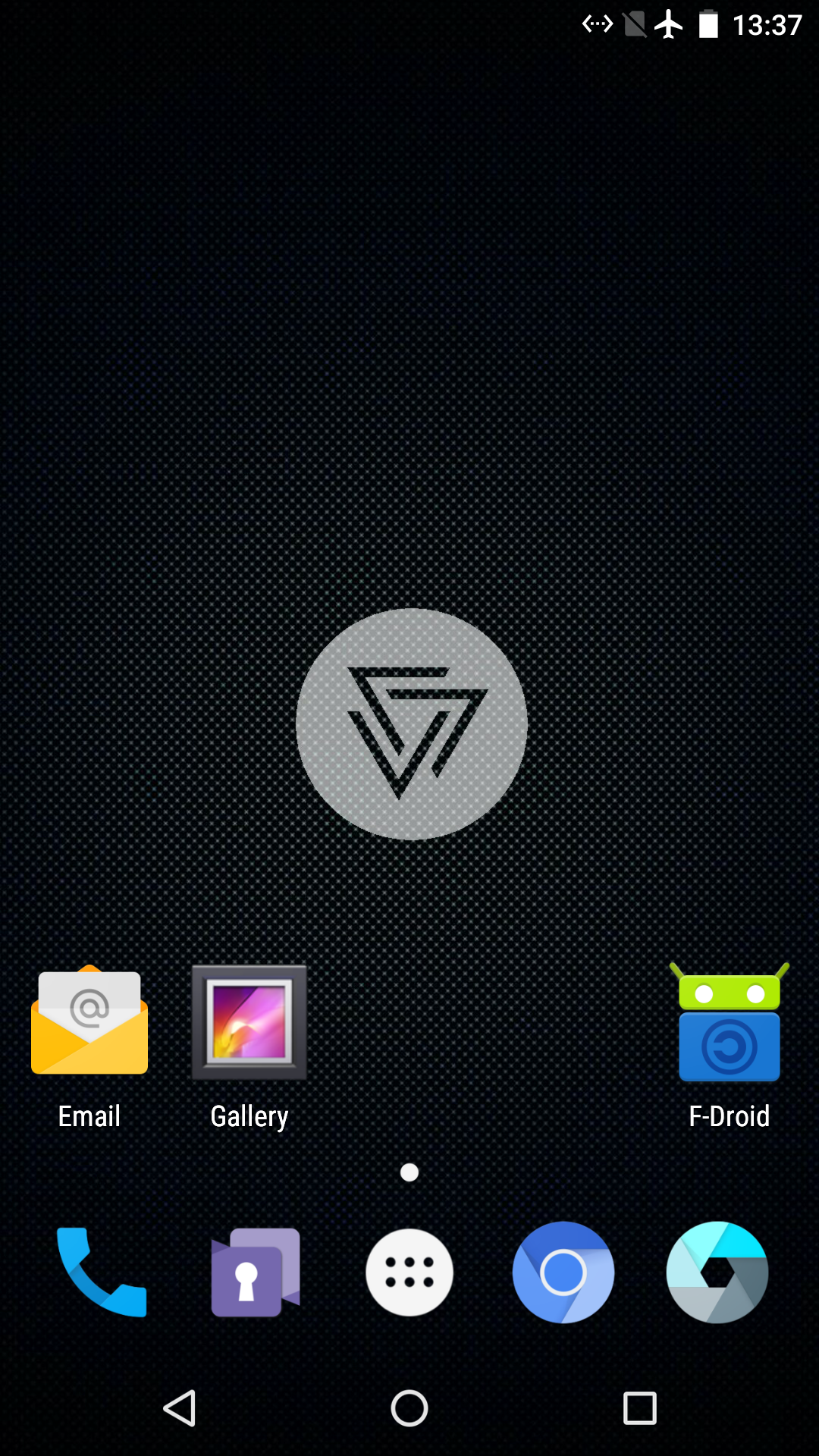
 Screenshot of CopperheadOS on a Nexus 5X | |
| Developer | Copperhead |
| OS family | Unix-like |
| Working state | Current |
| Source model | Closed source |
| Latest release | 13.09.28 / 28 September 2023 |
| Marketing target | Secure smartphones |
| Update method | Over-the-air (OTA) or sideloaded update packages |
| Package manager | APK with F-Droid bundled as a frontend |
| License | CC BY-NC-SA 4.0 |
| Official website | copperhead |

CopperheadOS is a mobile operating system for smartphones, based on the Android mobile platform. It adds privacy and security features to the official releases of the Android Open Source Project by Google. CopperheadOS is developed by Copperhead, a Canadian information security company. It is licensed under Creative Commons BY-NC-SA 4.0, although its source code is not available for public download.
CopperheadOS supports smartphones in the Google Pixel product line; other devices are not targeted in order to preserve the resources of the development team. It has several security features not found in stock Android, such as a hardened version of the Linux kernel, and the ability to use separate passwords for unlocking the device and for encryption. Rather than use the Google Play Store found on most Android devices, CopperheadOS ships with the F-Droid store in order to reduce the risk of users installing malicious apps.
Development of CopperheadOS began in 2014, and the operating system had an initial alpha release in August 2015. This was followed by a beta release in February 2016, followed by several other releases targeting the Google Nexus and Pixel phones. The project was initially released under the GNU General Public License, with the project's source code publicly available on GitHub. In October 2016 the license was changed to Creative Commons Attribution-NonCommercial-ShareAlike (BY-NC-SA), and as of June 2020 access to the source code was restricted to members of Copperhead's partner network.
History
[edit]Project inception and initial releases
[edit]The CopperheadOS project was started in 2014 by Copperhead, an information security company based in Toronto, Canada. The company was founded in the same year by James Donaldson, the CEO, and Daniel Micay, the CTO and lead developer, and initially served clients in the Canadian legal and intelligence industries. During this work, the founders noticed an absence of secure, open-source operating systems for mobile devices, and they created CopperheadOS under an open source license to try to address this need.[1][2][3]
Copperhead announced the development of CopperheadOS in April 2015. According to the announcement, the operating system was designed to be a "secure-by-default version of Android" aimed at privacy-conscious users.[4] At first, CopperheadOS was licensed under the GNU General Public License,[5] and the project's code was located on GitHub.[6] Copperhead contributed several of their bug fixes and improvements developed for CopperheadOS to the Android Open Source Project, the main project for Android development by Google.[7]
In August 2015, Copperhead released the first alpha version of CopperheadOS.[8] At this point, the project was based on CyanogenMod, and included support for the Google Nexus 5 and Samsung Galaxy S4.[9] This was followed by a beta version in February 2016, with support for the Nexus 5, Nexus 9 and Nexus 5X. The beta was based directly on the Android Open Source Project instead of using CyanogenMod, as were subsequent releases. The move away from CyanogenMod and the lack of vendor support led to dropping support for the Samsung Galaxy S4.[10] In May 2016, Copperhead launched an online store where the Nexus 5X could be purchased directly with CopperheadOS pre-loaded. The Nexus 6P was made available for purchase from the store in July of the same year.[11]
License change and departure of Daniel Micay
[edit]From October 2016, for versions of CopperheadOS based on Android 7.0 Nougat, Copperhead changed the CopperheadOS license to the Creative Commons Attribution-NonCommercial-ShareAlike (BY-NC-SA) license.[5][12] According to Donaldson, this was to prevent other companies from using the CopperheadOS code without paying Copperhead for licensing, in order to keep the project sustainable.[5]
Copperhead began selling Google Pixel phones pre-loaded with CopperheadOS in March 2017, in addition to their lineup of Nexus phones.[13] For Nexus devices, users could download and install CopperheadOS for free;[14] however, this option was not made available for Pixel phones.[15] For Pixel phones, users could either buy a phone from the Copperhead store with CopperheadOS pre-loaded, or send their own phone to Copperhead for the operating system to be installed on it. This was done to prevent violations of CopperheadOS's non-commercial license; Copperhead competitors had been selling Nexus phones with CopperheadOS installed without obtaining a commercial license, and Copperhead wanted to avoid this issue with the Pixel.[15] The issue came to a head in November the same year, when Copperhead briefly shut down the update server for Nexus devices in order to stop the continued license violations. The company restored the update server after two days.[15]
Copperhead released an alpha version of CopperheadOS for the Pixel 2 and Pixel 2 XL in January 2018. Official releases for the Pixel 2 and 2 XL were marked as "for internal use", and could not be downloaded from the Copperhead website without authentication. This maintained the status quo of only Nexus releases being available for public download.[16]
Disagreements between the two founders over business policy became increasingly heated over the first few months of 2018, and led to Donaldson firing Micay in June of that year.[17][18] Micay responded by posting his dismissal notice on Reddit, and by deleting the cryptographic keys necessary to release updates for the project.[17][19] Micay said that he considered "the company and infrastructure to be compromised", and that he would "prevent [Donaldson] from harming any users".[20] Copperhead failed to provide CopperheadOS updates for several months afterwards.[18] Micay continued the development of the open source parts of CopperheadOS as the Android Hardening project, which was later rebranded as GrapheneOS.[21] According to Donaldson, as of February 2019 he and Micay were in a legal dispute over the incident.[22]
Android Pie and beyond
[edit]The next release of CopperheadOS following Micay's departure was in March 2019; this version was based on Android Pie (9), and had support for the Pixel, Pixel XL, Pixel 2 and Pixel 2 XL. Pixel devices pre-installed with CopperheadOS could be purchased from Copperhead's website.[23] This was followed in February 2020 with a version of CopperheadOS based on Android 10, available for the Pixel 2 and Pixel 2 XL.[24] As of June 2020, CopperheadOS sources and installation files were no longer available for public download and could only be obtained from Copperhead's partner network. Copperhead cites "mass violation of Copperhead's non-Commercial licensing" as the reason for this change.[25]
Copperhead released a version of CopperheadOS based on Android 11 in November 2020.[26] This was followed with a version based on Android 12 in February 2022. This version added support for the Pixel 4a, the Pixel 4a 5G, the Pixel 5, the Pixel 5a, and the Pixel 6.[27] In February 2023, the project added support for Pixel 6a and Pixel 7 with the Android 13 update.[28]
Features and compatibility
[edit]CopperheadOS is focused on hardening the Android operating system to make it more difficult for attackers to exploit any potential security vulnerabilities. In a 2016 interview, Copperhead CEO James Donaldson said, "The point of it is to increase the amount of resources an attacker needs to expend ... to the point where hopefully they will just give up."[1] The operating system features several security improvements over stock Android related to how programs interact with memory. It implements the PaX security patches for the Linux kernel, which improves resistance against executing code that has managed to find its way into writeable memory.[10] It also features improved address space layout randomization, a version of malloc with better memory layout randomization, and more secure SELinux policies.[10][29] CopperheadOS also features verified boot, which protects against malware taking over the boot process or the recovery process of the device.[30]
There are also various changes from stock Android in user-facing features. CopperheadOS separates the password used to unlock the device from the device's encryption password; users can use a relatively simple password to unlock their devices, but if the wrong password is entered five times in a row, the device reboots and the encryption password must be entered, which would be presumably more difficult for an attacker to guess.[10] The operating system ships with the F-Droid store, from which users can install open-source applications, instead of the Google Play Store usually found on Android phones. This is intended to prevent users from unknowingly installing malicious apps on their devices.[1]
The project supports smartphones in the Google Pixel product line. This is done to preserve Copperhead's development resources, and to enable quick patching when Google releases security updates.[31] As of September 2022[update], the supported phones are the Pixel 3a, the Pixel 3a XL, the Pixel 4, the Pixel 4 XL, the Pixel 4a, the Pixel 4a 5G, the Pixel 5, the Pixel 5a, and the Pixel 6.[32]
Reception
[edit]In January 2018, Tarus Balog of opensource.com was favorably impressed by features in CopperheadOS, but he found the lack of Google applications difficult, and was confused by licensing terms and conditions. Balog said he initially used a Nexus 6P because available Pixel and Pixel XL phones from Copperhead were too expensive. At that time source code was available, but he was unable to successfully complete his own build.[31]
Influence
[edit]In 2016, The Tor Project released a prototype smartphone based on CopperheadOS named the Tor Phone, which gave users the ability to route their network connections through Tor for anonymity. CopperheadOS was chosen for its focus on security, in particular its use of verified boot and its prevention of system apps being overridden by apps from the Google Play Store. The prototype only worked on Google Nexus and Pixel hardware, and had many unfinished pieces.[30][33]
See also
[edit]References
[edit]- ^ a b c Pauli, Darren (December 13, 2016). "Pre-rolled stripped, hardened Copperhead Androids hit Oz, NZ". The Register. Archived from the original on September 25, 2020. Retrieved September 25, 2020.
- ^ Howell, Jason; Richards, Ron; Trapani, Gina; Donaldson, James (August 17, 2016). All About Android 279: Peak Phablet (Podcast). This Week in Tech. 9 minutes in. Retrieved September 25, 2020 – via YouTube.
- ^ 17-4-19 Interview with James Donaldson - Copperhead CEO (Podcast). CryptoTech.Solutions. May 11, 2017. 2 minutes in. Retrieved September 25, 2020 – via YouTube.
- ^ "Copperhead OS: Secure Android ROM". Copperhead Limited. April 22, 2015. Archived from the original on March 29, 2020. Retrieved September 23, 2020.
- ^ a b c 17-4-19 Interview with James Donaldson - Copperhead CEO (Podcast). CryptoTech.Solutions. May 11, 2017. 25 minutes in. Retrieved September 25, 2020 – via YouTube.
- ^ Schirrmacher, Dennis (September 28, 2015). "CopperheadOS: Alternatives System will Android sicherer machen" [CopperheadOS: Alternative system wants to make Android more secure] (in German). Heise. Archived from the original on October 1, 2015. Retrieved September 23, 2020.
- ^ Armasu, Lucian (November 13, 2015). "Copperhead CTO: Nexus Phones Already More Secure Than BlackBerry Priv". Tom's Hardware. Retrieved September 26, 2020.
- ^ "CopperheadOS Alpha". Copperhead Limited. August 21, 2015. Archived from the original on March 29, 2020. Retrieved September 23, 2020.
- ^ Quiroli, Lorenzo (September 8, 2015). "La prima alpha di CopperheadOS, il firmware open-source sicuro" [The first alpha of CopperheadOS, the secure open-source firmware]. www.androidworld.it (in Italian). Archived from the original on September 9, 2015.
- ^ a b c d Corbet, Jonathan (February 17, 2016). "CopperheadOS: Securing the Android". lwn.net. Retrieved October 6, 2020.
- ^ Chokkattu, Julian (July 12, 2016). "Copperhead is selling Google's Nexus devices with its pre-installed secure OS". www.digitaltrends.com. Retrieved August 11, 2020.
- ^ Zanolla, Irven (August 27, 2016). "Maru OS e Copperhead OS diventano open source" [Maru OS and Copperhead OS become open source] (in Italian). Archived from the original on August 28, 2016. Retrieved September 26, 2020.
- ^ Sohail, Omar (March 6, 2017). "Google Pixel Is Available Running a New OS – More Secure But Also Very Expensive". Wccftech. Archived from the original on March 6, 2017. Retrieved September 28, 2020.
- ^ "Google Pixel with CopperheadOS is Available for Purchase in the U.S. and Canada". xda-developers. March 6, 2017. Retrieved August 25, 2020.
- ^ a b c "CopperheadOS Disables Nexus Update Server After Licensing Violations". xda-developers. November 12, 2017. Retrieved August 19, 2020.
- ^ Wright, Arol (January 17, 2018). "CopperheadOS is Coming to the Google Pixel 2/2 XL". xda-developers. Retrieved August 25, 2020.
- ^ a b Perrone, Alessandro (June 12, 2018). "CopperheadOS potrebbe non avere un futuro" [CopperheadOS may not have a future] (in Italian). Tutto Android. Retrieved September 29, 2020.
- ^ a b De, Kingshuk (February 5, 2019). "The demise of CopperheadOS and rise of its successors". PiunikaWeb. Retrieved September 29, 2020.
- ^ Mocanu, Iulian (June 18, 2018). "CopperheadOS este mort" [CopperheadOS is dead] (in Romanian). Retrieved September 29, 2020.
- ^ Puljek, Kristijan (June 12, 2018). "Raspao se CopperheadOS" [CopperheadOS fell apart] (in Croatian). Mobil.hr. Retrieved September 29, 2020.
- ^ Tremmel, Moritz; Grüner, Sebastian. "GrapheneOS: Ein gehärtetes Android ohne Google, bitte - Golem.de" [GrapheneOS: A hardened Android without Google, please]. www.golem.de (in German). Retrieved August 11, 2020.
- ^ "Ex-CopperheadOS dev spits fire as CEO says project not dead". PiunikaWeb. February 6, 2019. Retrieved August 26, 2020.
- ^ "CopperheadOS' Android Pie update is now available for the Pixel & Pixel 2". XDA Developers. March 28, 2019. Retrieved August 19, 2020.
- ^ Naresh, Sagar (February 17, 2020). "CopperheadOS Android 10 update is now available". PiunikaWeb. Retrieved September 29, 2020.
- ^ "Installation". Copperhead. Archived from the original on October 6, 2020. Retrieved October 4, 2020. Versions archived before June 2020 specify how to obtain factory images.
- ^ "CopperheadOS Release: Android 11". Copperhead. November 3, 2020. Archived from the original on August 29, 2022. Retrieved September 25, 2022.
- ^ "CopperheadOS Pixel 5a, Pixel 5, Pixel 4a 5G available now". Copperhead. February 7, 2022. Archived from the original on August 29, 2022. Retrieved September 25, 2022.
- ^ "CopperheadOS Android 13 - Copperhead". copperhead.co. Archived from the original on 2022-05-19. Retrieved 2023-03-22.
- ^ Porup, J. M. (August 9, 2016). "Copperhead OS: The startup that wants to solve Android's woeful security". Ars Technica. Retrieved October 6, 2020.
- ^ a b Porup, J. M. (November 22, 2016). "Tor phone is antidote to Google "hostility" over Android, says developer". Ars Technica. Retrieved October 6, 2020.
- ^ a b Balog, Tarus (January 29, 2018). "CopperheadOS: Security features, installing apps, and more". Opensource.com. Retrieved August 20, 2020.
- ^ "Device comparison". Copperhead. Archived from the original on May 8, 2022. Retrieved September 25, 2022.
- ^ Verma, Adarsh (November 25, 2016). "Tor Phone Is The "Super-secure Version Of Android", Developed By Tor Project". Fossbytes. Retrieved August 28, 2020.
External links
[edit]| Software development |
| ||||||||||||||
|---|---|---|---|---|---|---|---|---|---|---|---|---|---|---|---|
| Releases | |||||||||||||||
| Derivatives | |||||||||||||||
| Devices |
| ||||||||||||||
| Custom distributions |
| ||||||||||||||
| Booting and recovery | |||||||||||||||
| APIs | |||||||||||||||
| Alternative UIs | |||||||||||||||
| Rooting | |||||||||||||||
| Lists | |||||||||||||||
| Related topics | |||||||||||||||


| Linux |
| ||||
|---|---|---|---|---|---|
| XNU | |||||
| QNX | |||||
| Microsoft Windows | |||||
| Zircon | |||||
| FreeBSD, NetBSD | |||||
| OpenHarmony, HarmonyOS NEXT |
| ||||
| FreeRTOS |
| ||||
| Nintendo system software | |||||
| Minix 3 | |||||
| Symbian | |||||
| Others | |||||
CopperheadOS
View on GrokipediaHistory
Inception and early development
CopperheadOS originated as a solo project initiated by Daniel Micay in late 2014, with the primary goal of hardening the Android operating system to bolster user privacy and security against exploits and surveillance.[1] The endeavor built upon Micay's prior open-source contributions to mobile privacy and security enhancements, positioning it as an independent fork of the Android Open Source Project (AOSP).[1] To sustain development, the Copperhead company was established in 2015 by Micay and co-founder James Donaldson, providing commercial backing for the open-source initiative.[5] Initial efforts focused on integrating advanced exploit mitigations, such as improvements to address space layout randomization (ASLR) to randomize memory layouts and hinder code injection attacks.[8] The project's alpha release arrived in August 2015, based on Android 5.1 (Lollipop) via CyanogenMod 12.1, initially supporting the Nexus 5 and Samsung Galaxy S4 to test core hardening features.[9] A beta version followed in February 2016, refining stability and expanding compatibility within the constraints of older Nexus hardware. In March 2016, CopperheadOS announced a crowdfunding partnership to secure ongoing funding, enabling broader development and the transition toward commercial sponsorship.[10] This support facilitated the first major stable release in December 2016, which introduced foundational tweaks to sandboxing for stricter app isolation and preliminary verified boot enhancements to prevent boot-time tampering.[11] By 2017, the partnership with Copperhead enabled expansion to Google Pixel devices, starting with support for Android 7.1 (Nougat), leveraging the hardware's native verified boot capabilities for more robust integrity checks across firmware and OS partitions.[12] Device compatibility remained focused on Nexus and Pixel series to prioritize security depth over breadth, as these platforms offered the necessary hardware security modules.[13] Community contributions grew modestly during this period, with volunteers aiding in testing and minor patches, though the project emphasized curated, high-impact changes to maintain its hardening focus.[11]Leadership dispute and project split
CopperheadOS had used a restrictive Creative Commons BY-NC-SA 4.0 license since October 2016, which drew community criticism over its non-fully open-source nature and commercialization efforts.[14] These tensions, along with disagreements over project control, escalated into internal conflicts, culminating in the firing of lead developer Daniel Micay by Copperhead CEO James Donaldson in June 2018 amid a hostile takeover attempt. Micay cited irreconcilable disagreements regarding the direction of commercialization, code accessibility, and project control, leading him to leave the company while vowing to continue the open-source hardening efforts independently.[1] In response to the company's attempts to seize control of infrastructure and donations, the project was temporarily rebranded as the "Android Hardening project" in June 2018 to assert independence.[3] By April 2019, Micay and supporting developers permanently renamed the initiative GrapheneOS, positioning it as the direct continuation of the original open-source CopperheadOS work, free from corporate sponsorship.[1] This split was marked by legal disputes initiated in 2019, involving claims over intellectual property ownership and alleged non-compete violations, as the company asserted control over the codebase despite its sponsorship role rather than development ownership.[1] The disputes, including harassment and misinformation campaigns, were ultimately resolved by 2021 in favor of GrapheneOS, affirming the open-source project's autonomy.[1] The leadership rift had immediate repercussions for releases, with the final build under the original CopperheadOS banner occurring in March 2019, based on Android 9 Pie and incorporating security patches up to that month for Pixel devices.[15] Subsequent development diverged, with the open-source fork advancing independently while the commercial entity pursued its proprietary path.[16]Post-split evolution of the fork
Following the 2018 split, the Copperhead company established a new iteration of CopperheadOS as a proprietary fork derived from the project's legacy codebase, resuming development independently from the original open-source effort, which was renamed GrapheneOS. Initial releases under this fork recommenced with updates to Android 9 in early 2019, followed by the Android 10 build in February 2020, introducing enhancements such as improved user interface elements and security patches.[3][17] To sustain ongoing development, CopperheadOS adopted a subscription-based licensing model, requiring an active paid license for access to over-the-air updates and new builds, marking a shift toward a commercial enterprise-focused product. Key milestones included the Android 11 release in November 2020, which added features like enhanced network controls, and the Android 12 update in February 2022, coinciding with support for newer Pixel devices such as the Pixel 6 series. Subsequent versions progressed to Android 13 in February 2023 and Android 14 in December 2023, with the latter incorporating full rebasing and stability improvements.[6][18][19] Despite these advancements, the project has faced challenges, including consistent delays in major version releases relative to upstream Android timelines—for instance, the stable Android 14 build arrived months after Google's October 2023 launch. As of November 2025, CopperheadOS remains based on Android 14, with no ports yet available for Android 15 or 16, limiting its alignment with the latest platform features. The development team has expanded modestly while forming partnerships, such as with Efani for integrated device-to-SIM security solutions, though the inclusion of proprietary components has diminished broader community contributions compared to fully open-source alternatives.[6][20][21] The current stable release, version 14.11.1 from 2025, continues to support the Pixel 7 series alongside earlier models like the Pixel 6 and 5, emphasizing enterprise integrations such as customizable device management for compliance needs. This evolution reflects Copperhead's emphasis on sustained, partner-driven hardening amid the lingering context of the 2018 project divergence.[2][6]Technical Features
Security hardening
CopperheadOS implements a hardened Linux kernel by backporting security patches from upstream sources such as the linux-hardened project and Google's Android Common Kernel, including features like HARDENED_USERCOPY to prevent kernel memory corruption exploits and strong stack-smashing protection (SSP) with zero-byte canaries to detect buffer overflows.[22] The kernel also incorporates Clang compiler flags such as -fsanitize=local-init to initialize uninitialized variables and enhanced address space layout randomization (ASLR) with 39-bit address spaces and stronger stack randomization, reducing the effectiveness of memory-based attacks.[22] Additionally, the SLUB allocator is fortified by disabling slab merging, enabling XOR encryption for free lists, and zeroing freed memory to mitigate use-after-free vulnerabilities.[22] The operating system enhances verified boot through Android Verified Boot 2.0 (AVB 2.0), which establishes a cryptographic chain of trust from the bootloader to the system partitions, displaying public key fingerprints for user verification on supported devices.[23] Rollback protection is integrated using tamper-evident storage like the Replay Protected Memory Block (RPMB), preventing attackers from downgrading to vulnerable firmware versions even if physical access is obtained.[24] App sandboxing is strengthened via stricter SELinux policies compared to stock Android, limiting execute permissions for third-party apps (e.g., restricting dalvikcache_data_file access) and closing code injection vectors such as GPU device and ashmem execute permissions.[22] Scoped storage is enforced by default, confining apps to their private directories and requiring explicit user approval for broader file access, which reduces the blast radius of compromised applications.[25] Seccomp-bpf filters are applied to media codecs, Chromium, and WebView processes, further isolating potentially vulnerable components.[22] To address zero-day exploits, CopperheadOS replaces the default allocator with a port of OpenBSD's hardened malloc, featuring out-of-line metadata, randomized quarantine zones for small allocations, and canaries for heap corruption detection, while aborting on out-of-memory conditions to avoid predictable failures.[22] In the Bionic libc, protections include extended _FORTIFY_SOURCE macros with dynamic buffer size checks via __builtin_object_size for functions like read, write, and string operations, alongside fortified implementations for fread, fwrite, and others to catch integer overflows and buffer overruns at runtime.[26] Network security is bolstered by an integrated firewall that drops packets in the INVALID state and enables reverse path filtering to prevent IP spoofing, with user-configurable permissions restricting apps' access to network details.[25] Per-app VPN routing is supported without root privileges through Android's built-in VPN service, allowing selective traffic redirection for individual applications via settings, complemented by MAC address randomization on interface activation to thwart tracking.[25]Privacy protections
CopperheadOS excludes Google Play Services by default to minimize data collection by third parties, instead providing sandboxed alternatives like the Aurora Store for accessing apps without requiring Google account credentials or proprietary libraries.[27] This design ensures compatibility with most Android applications while preventing the installation of Google Mobile Services, which could otherwise enable tracking and telemetry.[28] The operating system implements granular network permission toggles, treating the INTERNET permission as dangerous and allowing users to restrict per-app access to background data, Wi-Fi, mobile data, or VPN usage.[29] Sensor access is similarly restricted through the OTHER_SENSORS permission group, with user-facing toggles to prevent covert tracking via non-body sensors like accelerometers or gyroscopes; these are enabled by default for compatibility but can be disabled in app settings.[29] Additionally, CopperheadOS randomizes MAC addresses for Wi-Fi scanning and connections, with a toggle in network preferences to further enhance anonymity on networks.[27] Storage privacy is bolstered by file-based encryption (FBE) using AES-256-XTS with unique per-file keys protected by a Trusted Execution Environment (TEE)-based Keymaster, alongside per-app data isolation through unique user ID/group ID pairs and SELinux multi-level security (MLS) policies.[29] The Auditor app and Permissions Hub facilitate permission audits by enabling Android's hidden PERMISSIONS_REVIEW_REQUIRED feature, requiring explicit user approval for all dangerous permissions after app installation and providing insights into ongoing requests.[29] CopperheadOS includes no built-in telemetry or crash reporting by default, with the hardened Chromium browser explicitly disabling metrics, network prediction, and analytics to avoid data leakage.[28] Users can opt into anonymous usage statistics if desired, but these are limited to non-identifiable aggregates without personal information.[29]Kernel and system modifications
CopperheadOS employs a custom Linux kernel derived from the Android Open Source Project (AOSP), incorporating backported patches from upstream sources such as the linux-hardened project and Google-specific enhancements, including PAN emulation and the HARDENED_USERCOPY feature to fortify memory copy operations against overflows.[29] This kernel is compiled using Clang with the -fsanitize=local-init flag to initialize uninitialized variables to zero, reducing potential information leaks.[29] To bolster random number generation, the kernel integrates additional entropy sourced from uninitialized memory during early boot stages, enhancing the overall randomness available for cryptographic operations and address space layout randomization (ASLR).[29] Furthermore, syscall fortifications are achieved through the adoption of seccomp-bpf filters, which impose strict restrictions on system calls for processes like media codecs, Chromium, and WebView, thereby confining their capabilities and mitigating exploitation risks.[29] At the system level, CopperheadOS modifies the Android framework to minimize the attack surface by disabling unused APIs and features, such as asynchronous I/O (CONFIG_AIO) and unprivileged ptrace access via the Yama LSM with ptrace_scope set to 2, preventing unauthorized process debugging.[29] Binder IPC security is indirectly strengthened through per-app address space randomization enabled by an exec-based spawning model (fork/exec) rather than Android's default fork-only approach, ensuring unique address layouts for each application instance.[29] The system also disables the ART JIT compiler in favor of full ahead-of-time (AOT) compilation, which reduces just-in-time code generation vulnerabilities while minimizing the /data/dalvik-cache footprint.[29] Enhanced SELinux policies further restrict execute permissions, for example, denying the dalvikcache_data_file domain access to untrusted_app domains to close potential code injection vectors.[29] The bootloader and recovery partitions receive customizations for heightened security, including verified boot with rollback protection enforced by a Replay Protected Memory Block (RPMB) to prevent firmware or OS downgrades and unauthorized modifications.[30] Production recovery images omit debug options to avoid exposure, while over-the-air (OTA) updates utilize a dual A/B partition scheme with rigorous signature verification and dm-verity integrity checks to ensure tamper-free deployments.[29] These modifications contribute to performance trade-offs, such as marginally increased battery consumption from hardened memory allocations in the SLUB allocator, which disables slab merging, applies XOR encryption to slabs, zeros freed memory, and detects write-after-free attempts, prioritizing security over raw efficiency.[29] Control-flow integrity (CFI) enhancements, including read-only protections for global function pointers, build upon these kernel changes as part of ongoing hardening efforts.[29]Compatibility and Installation
Supported devices
CopperheadOS provides official support exclusively for select devices in the Google Pixel series, focusing on models that meet stringent hardware security requirements. As of November 2025, the currently supported devices include the Pixel 4a, Pixel 4a (5G), Pixel 5, Pixel 5a, Pixel 6, Pixel 6a, and Pixel 7 series (including 7, 7 Pro, and 7a).[13] These models benefit from CopperheadOS's security enhancements, with plans for future support on the Pixel 8 series and Pixel Fold.[13] Hardware prerequisites for full compatibility emphasize devices equipped with the Titan M security chip (or its successors like Titan M2 in later Pixels) to enable comprehensive verified boot and hardware-backed keystore functionalities. CopperheadOS does not support non-Pixel devices, as they typically lack the necessary custom kernel drivers and open-source hardware support required for its hardened environment.[13] The end-of-life (EOL) policy aligns with Google's OEM support timelines, providing security updates for 3 to 7 years from device release, depending on the model; for instance, the Pixel 4a received updates until August 2023, while the Pixel 7 is supported until October 2027. A Legacy Device Support Program offers limited post-EOL updates for select older devices to maintain baseline security.[13] Official builds undergo a verification process where they are cryptographically signed for specific hardware identifiers, ensuring tamper detection through verified boot mechanisms that display public key fingerprints and enforce rollback protection to prevent downgrades to vulnerable states.[13]Deployment and updates
CopperheadOS is deployed on supported Google Pixel devices, including the Pixel 4a, 4a 5G, 5, 5a, 6, 6a, and 7 series, through the installation of official factory images via fastboot flashing.[31] This process requires an unlocked bootloader, which users enable by activating OEM unlocking in the device's developer options after tapping the build number seven times in settings.[31] Essential tools include the Android platform-tools package containing ADB and fastboot, downloadable from Google's repository, to facilitate communication with the device in bootloader mode.[31] Users download factory images from the Copperhead Partner network, decompress them, boot the device into fastboot mode usingadb reboot bootloader, and execute the provided flash-all script to install the image, which performs a clean install and wipes all user data.[31] Post-installation, users are recommended to relock the bootloader with fastboot flashing lock and disable OEM unlocking for enhanced security, while verifying the installation by checking the OS fingerprint displayed on boot against official values, such as 93522A81 for Pixel 7 devices.[31]
For users migrating from stock Android or other custom ROMs, the process mirrors a fresh installation, necessitating a full data wipe to ensure compatibility and security, as factory images do not support direct data migration without risking instability.[31] This wipe is performed inherently during flashing, and users should back up data beforehand if transitioning from stock firmware, though CopperheadOS emphasizes a clean slate to avoid remnants of prior configurations.[31]
Once installed, CopperheadOS receives over-the-air (OTA) updates through the built-in Copperhead Seamless Updater app, which performs A/B seamless updates to minimize downtime by streaming and applying patches in the background on the inactive partition.[6] The updater checks for updates daily automatically, with manual checks available via Settings > System > Advanced > System update settings > Check for updates, ensuring users stay current without manual intervention.[6] Factory images remain available for subsequent clean installs or troubleshooting, allowing users to repeat the fastboot process if needed.[31]
Update cadence focuses on incorporating the latest Android security patches, typically delivered monthly to align with Google's bulletins, such as those for May and June, backported from the Android Open Source Project (AOSP) for timely protection against vulnerabilities.[6] As of November 2025, CopperheadOS runs on Android 14 (stable release 14.11.1), with support for Android 15 pending due to prioritization of stability and security hardening.[2] While security patches are applied promptly on a monthly basis, major platform updates occur less frequently, often quarterly or as upstream changes are vetted.[6]