Hubbry Logo
Cosmic eggCosmic eggMain
Open search
Cosmic egg
Community hub
Cosmic egg
logo
8 pages, 0 posts
0 subscribers
Be the first to start a discussion here.
Cosmic egg
Cosmic egg
from Wikipedia
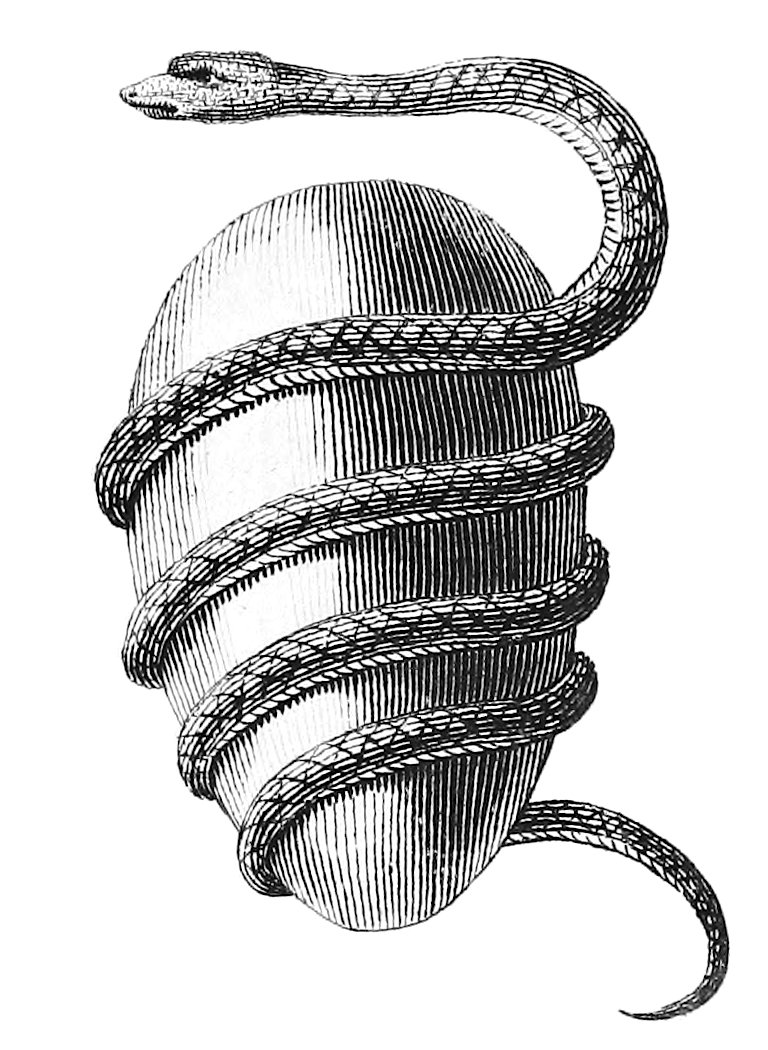
Jacob Bryant's Orphic Egg (1774)

The cosmic egg, world egg or mundane egg is a mythological motif found in the cosmogonies of many cultures and civilizations, including in Proto-Indo-European mythology.[1] Typically, there is an egg which, upon "hatching", either gives rise to the universe itself or gives rise to a primordial being who, in turn, creates the universe. The egg is sometimes lain on the primordial waters of the Earth.[2] Typically, the upper half of the egg, or its outer shell, becomes the heaven (firmament) and the lower half, or the inner yolk, becomes the Earth.[3] The motif likely stems from simple elements of an egg, including its ability to offer nourishment and give rise to new life, as is reflected by the Latin proverb omne vivum ex ovo ('all life comes from an egg').[4]

The term "cosmic egg" is also used in the modern study of cosmology in the context of emergent Universe scenarios.

Examples by Region

[edit]

Africa

[edit]

West Africa

[edit]

In Dogon mythology from Burkina Faso, the creator-god Amma takes the form of an egg. The egg is divided into four sections representing the four elements: air, fire, water, and earth. This also establishes the four cardinal directions. Failing to create the Earth on her first attempt, Amma plants a seed in herself that forms two placentas, each containing a pair of twins. One twin, Ogo, breaks out and unsuccessfully tries to create a universe. Amma however is able to create the Earth now from a part of Ogo's placenta. Ogo's twin, Nommo, is killed by Amma and parts of the body are scattered across the world to give it order. The parts were then reconstituted to revive Nommo. Nommo creates four spirits that become the ancestors of the Dogon people. These spirits are sent with Nommo into an ark to populate the world.[5][6]

The creation account proceeds as follows:[7][8]

In the beginning, Amma dogon, alone, was in the shape of an egg: the four collar bones were fused, dividing the egg into air, earth, fire, and water, establishing also the four cardinal directions. Within this cosmic egg was the material and the structure of the universe, and the 266 signs that embraced the essence of all things. The first creation of the world by Amma was, however, a failure. The second creation began when Amma planted a seed within herself, a seed that resulted in the shape of man. But in the process of its gestation, there was a flaw, meaning that the universe would now have within it the possibilities for incompleteness. Now the egg became two placentas, each containing a set of twins, male and female. After sixty years, one of the males, Ogo, broke out of the placenta and attempted to create his own universe, in opposition to that being created by Amma. But he was unable to say the words that would bring such a universe into being. He then descended, as Amma transformed into the earth the fragment of placenta that went with Ogo into the void. Ogo interfered with the creative potential of the earth by having incestuous relations with it. His counterpart, Nommo, a participant in the revolt, was then killed by Amma, the parts of his body cast in all directions, bringing a sense of order to the world. When, five days later, Amma brought the pieces of Nommo's body together, restoring him to life, Nommo became ruler of the universe. He created four spirits, the ancestors of the Dogon people; Amma sent Nommo and the spirits to earth in an ark, and so the earth was restored. Along the way, Nommo uttered the words of Amma, and the sacred words that create were made available to humans. In the meantime, Ogo was transformed by Amma into Yuguru, the Pale Fox, who would always be alone, always be incomplete, eternally in revolt, ever wandering the earth seeking his female soul.

Asia

[edit]

China

[edit]

Various versions of the cosmic egg myth are related to the creator, Pangu. Heaven and earth are said to have originally existed in a formless state, like the egg of a chicken. The egg opens and unfolds after 18,000 years: the light part rose to become heaven and the heavy part sank to become the earth. A version of this myth deriving from the Zhejiang Province holds that Pangu, experiencing discomfort in being contained in a dark and stuffy egg, shatters it into pieces, after which heaven and earth form by the same process (with the addition that parts of the shell then form the sun, moon, and stars).[9]

India

[edit]

In one Vedic myth recorded in the Jaiminīya Brāhmaṇa, the earliest phase of the cosmos involves a primordial ocean out of which an egg arose. Once the egg split, it began the process of forming heaven (out of the upper part) and earth (out of the lower part) over the course of one hundred divine years. Another text, the Śatapatha Brāhmaṇa, also has the sequence of a primordial ocean and then an egg, but this time, the god Prajapati emerges from the egg after one year. He creates the cosmos and then the gods and antigods from his speech and breath. The Rigveda speaks of a golden embryo (called the hiraṇyagarbha) which is located on a "high waters" out of which all else develops. Finally, a version of the story appears in the Chāndogya Upaniṣad.[10]

Vivasvan, Rahu, Bhūmi, Naraka, Ananta, Garbhodaksayi Vishnu
One Brahmanda
This is one of many material universes, Brahmandas, which expand from Mahavishnu when He breathes.

Japan

[edit]

In the Nihon Shoki, a chaotic state existed at the beginning that was in the shape of an egg. [11]

Tibet

[edit]

Europe

[edit]

Finland

[edit]

In the Kalevala, the national epic of Finland, there is a myth of the world being created from the fragments of an egg. The goddess of the air, Ilmatar, longed to have a son. To achieve this, she and the East Wind make love until she conceives Väinämöinen, the child of the wind. However, she was not able to give birth to her child. A pochard swooped down and impregnated her: as a result, six golden cosmic eggs were birthed or laid, as well as an iron egg. The pochard took these eggs for himself and protected them by sitting on them, but this came with sitting on Ilmatar as well. Upon the movement of the air goddess, they rolled into the sea and the shell broke: the fragments formed heaven, earth, the sun, moon, stars, and (from the iron egg) a thundercloud.[12]

The following is the translation of the part of the text describing the formation of the cosmos from the fragments of the egg, published by William Forsell Kirby in 1906:[13]

In the ooze they were not wasted,
Nor the fragments in the water,
But a wondrous change came o'er them,
And the fragments all grew lovely.
From the cracked egg's lower fragment,
Now the solid earth was fashioned,
From the cracked egg's upper fragment,
Rose the lofty arch of heaven,
From the yolk, the upper portion,
Now became the sun's bright lustre;
From the white, the upper portion,
Rose the moon that shines so brightly;
Whatso in the egg was mottled,
Now became the stars in heaven,
Whatso in the egg was blackish,
In the air as cloudlets floated.

Mediterranean

[edit]

Egypt

[edit]

The ancient Egyptians accepted multiple creation myths as valid, including those of the Hermopolitan, Heliopolitan, and Memphite theologies. The cosmic egg myth can be found from Hermopolitus. Although the site, located in Middle Egypt, currently sports a name deriving from the name of the god Hermes, the ancient Egyptians called it Khemnu, or “Eight-Town.” The number eight, in turn, refers to the Ogdoad, a group of eight gods who are the main characters in the Hermopolitan creation myth. Four of these gods are male, and have the heads of frogs, and the other four are female with the heads of serpents. These eight existed in the primordial, chaotic water that pre-existed the rest of creation. At some point these eight gods, in one way or another, bring about the formation of a cosmic egg, although variants of the myth describe the origins of the egg in different ways. In any case, the egg in turn gives rise to the deity who forms the rest of the world as well as the first land to arise out of the primordial waters, called the primeval mound. When the mound appeared, a lotus blossom bloomed to signal the birth of the sun god, after which the formation of the rest of creation could finally proceed.[14]

Greece and Italy

[edit]

Ideas similar to the cosmic egg myth are mentioned in two different sources from Greek and Roman mythology. One is in the Roman author Marcus Terentius Varro, living in the 1st century BC. According to Varro, heaven and earth can respectively be likened to an egg shell and its yolk. The air, in turn, is represented by the moisture functioning as a form of humidity between the shell and yolk.[15] The second mention is found in the Pseudo-Clementine Recognitions 10:17,[15] although from an oppositional standpoint, insofar as Clement is presented as summarizing a ridiculous cosmological belief found among pagans: according to the description given, there is a primordial chaos which, over time, solidified into an egg. As is with an egg, a creature began to grow inside, until at some point it broke open to produce a human that was both male and female (i.e. androgynous) named Phanetas. When Phanetas appeared, a light shone forth that resulted in "substance, prudence, motion, and coition," and these in turn resulted in the creation of the heavens and the earth. The Recognitions 10:30 presents, then, a second summary of the idea, this time attributed to the cosmogony of Orpheus as described by a "good pagan" named Niceta. This summary, in contrast to the first one, is presented in a serious manner.[16] This myth appears to have had occasional influence, insofar as a manuscript of it is associated with the reappearance of the idea at a library of Saint Gall in a 9th-century commentary on Boethius. Another three appearances occur again in the twelfth century.[17]

Middle East

[edit]

Iran

[edit]

In Zoroastrian cosmography, the sky was considered to be spherical with an outer boundary (called a parkān), an idea that likely goes back to Sumerians. The Earth is also spherical and exists within the spherical sky. To help convey this cosmology, a number of ancient writers, including Empedocles, came up with the analogy of an egg: the outer spherical and bounded sky is like the outer shell, whereas the Earth is represented by the inner round yolk within. This analogy, in turn, is found in a number of Zoroastrian texts, including the Selections of Zadspram.[18][19]

Oceania

[edit]

Society Islands

[edit]

Modern representations

[edit]

Literature

[edit]

In 1955 poet and writer Robert Graves published the mythography The Greek Myths, a compendium of Greek mythology normally published in two volumes. Within this work Graves' imaginatively reconstructed "Pelasgian creation myth" features a supreme creatrix, Eurynome, "The Goddess of All Things",[20] who arose naked from Chaos to part sea from sky so that she could dance upon the waves. Catching the north wind at her back and, rubbing it between her hands, she warms the pneuma and spontaneously generates the serpent Ophion, who mates with her. In the form of a dove upon the waves, she lays the Cosmic Egg and bids Ophion to incubate it by coiling seven times around until it splits in two and hatches "all things that exist... sun, moon, planets, stars, the earth with its mountains and rivers, its trees, herbs, and living creatures".[20] [21]

In Arthur C. Clarke's Rendezvous with Rama, the eponymous spacecraft Rama is referred to as a possible "cosmic egg" by humanity considering its emergence within the Solar System.[22]

Film

[edit]

The ending of Stanley Kubrick’s film 2001: A Space Odyssey depicts the rebirth of humanity as a journey from beyond infinity back to earth in the form of a cosmic human embryo (or “Star Child”).

Cosmology

[edit]

As the concept of a true singularity came under increasing criticism, alternative nonsingular "cosmic egg" (emergent Universe) scenarios started being developed.

See also

[edit]

References

[edit]

Sources

[edit]
  • Alcock, John P. (2007). "The Egg: its Symbolism and Mythology". In Hosking, Richard (ed.). Eggs in Cookery: Proceedings of the Oxford Symposium of Food and Cookery 2006. Prospect Books. pp. 20–29.
  • Bailey, Harold W. (1943). Zoroastrian Problems In The Ninth Century Books. Clarendon Press.
  • Brewer, E. Cobham (1894). "Mundane Egg". Dictionary of Phrase and Fable.
  • Dronke (1974). Fabula: Explorations into the Uses of Myth in Medieval Platonism. Brill.
  • Griaule, Marcel; Dieterlen, Germaine (1965). Le renard pale. Continuum Foundation.
  • Lynch, Patricia Ann; Roberts, Jeremy (2010). African Mythology, A to Z. Infobase Holdings.
  • Panaino, Antonio C.D. (2019). A Walk through the Iranian Heavens: Spherical and Non-Spherical Cosmographic Models in the Imagination of Ancient Iran and Its Neighbors. Brill.
  • Scheub, Harold (2000). A dictionary of African mythology: the mythmaker as storyteller. Oxford University Press. ISBN 978-0-19-512456-9.
  • The Kalevala: Epic of the Finnish people. Translated by Friberg, Eino (4th ed.). Otava Publishing Company, Ltd. 1998. p. 44. ISBN 951-1-10137-4.
  • Witzel, E.J. Michael (2012). The Origin of the World's Mythologies. Oxford University Press.
  • Yang, Lihui; An, Deming (2005). Handbook of Chinese Mythology. ABC-CLIO.
[edit]
Revisions and contributorsEdit on WikipediaRead on Wikipedia
from Grokipedia
Cosmic Egg is the second studio album by Australian band . It was released on 23 October 2009 by Modular Recordings. The album marks the first release featuring the band's reformed lineup after significant changes following their self-titled debut. Produced by , it debuted at number three on the ARIA Albums Chart and reached the top 20 on the US Billboard 200.

Background and Development

Lineup Changes

Following the success of their self-titled debut album in 2005, which achieved multi-platinum status in and gold certification in the United States, experienced significant internal challenges that led to major personnel shifts. In August 2008, original drummer Myles Heskett and bassist/keyboardist Chris Ross departed the band amid longstanding frictions and irreconcilable personal and musical differences, exacerbated by extensive touring and a subsequent break. The exits, announced effective immediately after the band's performance at 's festival, stemmed from band tensions that had built since their debut's breakthrough. Andrew Stockdale, the band's frontman, vocalist, and guitarist, emerged as the sole remaining original member and the primary creative force driving forward. He took on the responsibility of rebuilding the group, emphasizing resilience and viewing the upheaval as an opportunity for growth rather than dissolution. In early 2009, Stockdale assembled a new lineup to revitalize the band, recruiting rhythm guitarist Aidan Nemeth, bassist and keyboardist Ian Peres, and drummer Dave Atkins (formerly of acts like Resin Dogs and ). This quartet was officially confirmed in January 2009, marking a shift to a four-piece configuration that debuted live soon after. The lineup changes profoundly altered Wolfmother's dynamics, transforming the original trio's chemistry into a more collaborative yet Stockdale-led ensemble, which allowed the band to evolve beyond the debut's raw energy while navigating post-success pressures. This reconfiguration fostered a fresh creative direction, re-engaging fans through renewed live performances and setting the stage for the band's return with renewed vigor.

Songwriting and Composition

Following the departure of key original members in 2008, took sole responsibility for writing all the material on Cosmic Egg, handling vocals, guitar, and composition without input from the new band lineup during the initial creative phase. He began developing the songs through demos recorded in a home studio in his native , marking a shift from the collaborative process of the band's self-titled debut . Stockdale drew heavily from classic rock influences, particularly the riff-driven intensity of Led Zeppelin and , which shaped the album's hard-hitting structures and layered guitar work. The compositions emphasized psychedelic elements, incorporating expansive solos and atmospheric builds to evoke a sense of cosmic , with Stockdale noting that inspiration often emerged late in the process as riffs evolved into full songs. The album's title, Cosmic Egg, originated from a yoga pose Stockdale encountered during a class, symbolizing renewal and introspection amid the band's turbulent transition, though the phrase also echoes broader mythological motifs of creation and rebirth found in various global traditions. Tracks like "New Moon Rising" exemplified this approach, emerging from Stockdale's late-night drives where encounters with nocturnal wildlife sparked its epic, riff-centric framework during early demo sessions.

Recording and Production

Studio Sessions

The recording of Cosmic Egg took place primarily in , , with principal sessions at and Sunset Sound Studios, followed by overdubs at JHOC Studios in Pasadena. had occurred earlier in , , where initial song ideas were developed. After the new lineup—featuring Andrew Stockdale alongside Aidan Nemeth on guitar, Ian Peres on bass and keyboards, and Dave Atkins on drums—solidified in early 2009, the band moved swiftly into recording, completing the album in a matter of months to capitalize on their momentum. Initial tracking emphasized live band performances to establish the group's dynamic with the fresh roster, prioritizing rhythm section grooves and guitar interplay from the outset. The process presented challenges in blending the new members' contributions with Wolfmother's signature sound, as Stockdale navigated creative tensions to ensure stylistic cohesion during these foundational live takes. Overdubs wrapped up by mid-2009, enabling a timely October release across international markets.

Production Techniques

The production of Cosmic Egg was overseen by , who served as and mixer, focusing on a raw and gritty sonic palette that amplified the album's energy. Moulder's approach emphasized analog guitar tones to evoke a classic, unpolished edge, while incorporating layered keyboards to add depth and psychedelic texture to the arrangements. amplifiers and effects pedals were extensively utilized throughout the recording process to craft the album's retro timbre, channeling influences from 1970s icons like and drawing on the historic gear available at the studios where the sessions took place. Key engineering techniques included multi-tracking multiple guitar layers to achieve a dense, wall-of-sound quality in tracks like "California Queen" and "New Moon Rising," enhancing the rhythmic drive and harmonic richness without relying on heavy compression. Drums were in the studio to retain their natural punch and , prioritizing the band's collective energy over isolated overdubs. In , the album underwent minimal digital editing to safeguard its organic character, avoiding excessive or pitch correction in favor of authentic performances; the final mastering was completed in to prepare for its October release.

Musical Style and Themes

Genre Influences

Cosmic Egg represents an evolution in Wolfmother's , firmly rooted in while integrating psychedelic and progressive elements that expand upon the raw, riff-driven intensity of their self-titled debut . The album's core aesthetic draws heavily from traditions, blending thunderous guitar riffs with atmospheric textures to create a cosmic, expansive feel. This primary framework allows for dynamic shifts between aggressive anthems and more intricate compositions, distinguishing it from the band's earlier, more straightforward psychedelic approach. Key influences from seminal acts shape the album's direction, with Led Zeppelin's epic song structures evident in the sprawling, multi-sectional builds of tracks like "New Moon Rising" and "Violence of the Sun," evoking the grandeur of albums such as . Similarly, the complexity and frantic energy reminiscent of early infuse the record with progressive undertones, particularly in the interlocking rhythms and instrumental interplay. These borrowings contribute to a sound that prioritizes ambitious arrangements over , aligning Cosmic Egg with the high-impact progressive hard rock of its inspirations. The incorporation of stoner rock riffs adds a gritty, hypnotic undercurrent, channeling Black Sabbath's heavy, doom-laden grooves into songs that emphasize riff-centric propulsion. This is complemented by folk-tinged acoustic passages that provide breathing room amid the bombast, as heard in the textured layers of "In the Castle." The second lineup's configuration further enhances these elements, with bassist and Ian Peres enabling expanded roles for keyboards that introduce prog-rock depth through swirling synths and atmospheric fills, a departure from the debut's guitar-dominated palette.

Lyrical Content

The lyrics of Cosmic Egg center on recurring themes of cosmic exploration, rebirth, and mythology, with the album title drawing from a pose representing a , which linked to ideas of birth and renewal during the album's creation amid the group's lineup upheaval. This conceptual framework permeates the record, portraying the universe's origins through abstract imagery of light, eggs cracking, and cyclical transformation, as seen in the title track's evocation of an ending world giving way to new beginnings. Stockdale employs an abstract, poetic style throughout, blending fantastical and magical elements to explore existential questions without explicit narratives. In "Cosmic Egg," apocalyptic visions emerge through lines depicting a gallery of and the shattering of cosmic structures, symbolizing destruction and emergent creation. Similarly, "Phoenix" reinforces rebirth motifs with references to rising from ashes, mirroring mythological tales and the band's own resurgence after the departure of original members Myles Heskett and Chris Ross. The track "Sundial" shifts toward personal introspection, using metaphors of time and ordinary wonders to reflect on self-discovery and the passage of existence amid turmoil. Influences from and infuse the , with Stockdale incorporating subtle nods to ancient myths and yogic to convey a sense of cosmic journey and enlightenment. This approach evolves from the band's self-titled debut, where leaned toward hedonistic and straightforward rock tropes; Cosmic Egg adopts a more mature, less indulgent tone, channeling the emotional weight of internal band conflicts and Stockdale's solo navigation of the project into broader, metaphorical explorations of renewal.

Release and Promotion

Marketing Strategies

Wolfmother secured distribution deals with Modular Recordings for the Australian market and for international release ahead of Cosmic Egg's production in late 2008, enabling broader global reach following the band's lineup overhaul. To generate pre-release buzz, the band issued the non-album track "Back Round" as a free digital download single on March 30, 2009, which was performed live at events like the to tease the upcoming album's sound. Promotional materials centered on the album's cover artwork, featuring ethereal cosmic imagery of a glowing egg against a starry backdrop, designed by graphic artist Ryan Clark to evoke the record's mystical themes. Digital previews of select tracks were made available through label channels, while media interviews with frontman highlighted the refreshed "new Wolfmother" identity, focusing on the revitalized lineup's creative evolution post-2008 departures.

Singles and Tours

Cosmic Egg was released on October 23, 2009. The from Cosmic Egg, "New Moon Rising", was released in August 2009 as a digital download to herald the album's arrival and mark Wolfmother's return following internal changes. This track, with its driving and anthemic chorus, set the tone for the album's sound. It was followed by the second single, "", issued in January 2010, which highlighted the band's blend of psychedelic elements and straightforward rock energy. The music video for "New Moon Rising", directed by New Zealand-based Special Problems, incorporated vivid psychedelic visuals evoking cosmic and surreal themes, aligning with the album's title and aesthetic. The video premiered on in and received rotation on international channels, amplifying the single's exposure. Promotion extended to live performances through the New Moon Rising World Tour, which commenced in after initial dates, encompassing more than 50 shows across , the , and . The tour showcased material from Cosmic Egg alongside fan favorites, building anticipation for the full album release. To maintain momentum into the following year, appeared at major festivals, including in 2011, where they delivered high-energy sets drawing large crowds.

Commercial Performance

Chart Positions

Cosmic Egg debuted at number 3 on the Australian Albums Chart on November 8, 2009. In the United States, the album entered the at number 16 on November 14, 2009. Internationally, the album achieved a peak of number 35 on the . In , it reached number 11 on the Official German Albums Chart ( Entertainment). The album demonstrated notable longevity on the Australian ARIA Chart, remaining there for 9 weeks. Its lead single, "New Moon Rising," peaked at number 50 on the ARIA Singles . Regional variations highlighted stronger performance in genre-specific rankings, such as number 2 on the Rock & Metal , where it charted for 17 weeks.
ChartPeak PositionWeeks on Chart
Australian ARIA Albums39
US Billboard 20016-
UK Albums (OCC)352
German Albums (GfK)11-
UK Rock & Metal Albums (OCC)217
Australian ARIA Singles ("New Moon Rising")501

Sales and Certifications

Cosmic Egg achieved solid commercial performance in its home market of , where it sold 70,000 copies and was certified by the in November 2009, reflecting shipments of at least 70,000 units. While no major international certifications were awarded, the became available on digital streaming platforms starting in the early , contributing to sustained listener engagement. Long-term sales received a further boost during the from vinyl reissues, including limited-edition pressings that appealed to collectors and renewed interest in the band's catalog. In comparison to the band's self-titled debut , which sold 1.3 million copies worldwide, Cosmic Egg underperformed in overall figures but played a key role in solidifying Wolfmother's dedicated fanbase.

Critical Reception

Contemporary Reviews

Upon its release in October 2009, Cosmic Egg received generally mixed reviews from critics, with an aggregate score of 65/100 based on 16 reviews, reflecting a reception that praised its rock energy but critiqued its lack of originality. offered a mixed assessment, appreciating the album's harder, faster sound and hi-octane fun influenced by , but criticizing it as devoid of soul, intelligence, and basic craft, with tedious lyrics and unprogressive pastiche reminiscent of Led Zeppelin. Pitchfork did not publish a full of the , though some critics elsewhere noted the impact of lineup changes on cohesion, contributing to perceptions of the record as an extension rather than evolution of Wolfmother's debut style. Kerrang! highlighted the band's return to riff-centered rock mastery, stating they "have exceeded expectation, proving themselves modern masters of riff-centered rock," positioning Cosmic Egg as a strong sophomore effort despite the new lineup.

Long-Term Legacy

Cosmic Egg played a pivotal role in revitalizing interest in retro during the late 2000s and early 2010s, blending psychedelic and elements with classic influences from bands like and Led Zeppelin, which filtered into the broader garage-rock revival. This 's raw energy and riff-driven sound helped sustain the genre's momentum, influencing subsequent acts through its unapologetic nod to 1970s aesthetics, as seen in comparisons to modern revivalists. Its stylistic echoes appear in the heavy, bass-forward approach of bands like Royal Blood, whose debut drew from similar riff-heavy, high-energy rock templates popularized by Wolfmother's effort. The album's success bolstered 's longevity amid repeated lineup changes, allowing frontman to maintain the band's output and touring presence over the subsequent decade. Following the 2008 departure of original members Chris Ross and Myles Heskett, Cosmic Egg marked the introduction of a new configuration with Ian Peres, Aidan Nemeth, and Dave Atkins, yet further shifts—including Nemeth's exit in 2010 and additional rotations—did not derail the group's evolution. Stockdale has credited the album's creative process, where he composed much of it solo before band collaboration, as foundational to this resilience, noting in a 2015 its role in enabling extensive global touring with acts like and at festivals such as . By 2025, continued active, announcing a 2026 North American tour celebrating their debut while drawing on the enduring catalog established by Cosmic Egg. A deluxe edition of Cosmic Egg, released on October 26, 2009, expanded the original tracklist with bonus songs like "Cosmonaut" and "Eyes Open," enhancing its accessibility and appeal to collectors. In the 2020s, the album experienced renewed popularity through streaming platforms, with tracks accumulating millions of plays and contributing to vinyl reissues, such as a 2016 limited-edition 180-gram pressing that aligned with the format's broader resurgence. Its cultural reach extended to media placements, including a downloadable track pack featuring "Cosmic Egg," "California Queen," and "Pilgrim" in Guitar Hero 5 in 2009, as well as "Cosmic Egg" in Gran Turismo for PSP, embedding the album in gaming soundtracks. Stockdale reflected on its significance in 2015, emphasizing how the album's post-release tours solidified Wolfmother's place in the modern psych-rock landscape.

Track Listing

No.TitleLength
1." Queen"3:55
2."New Moon Rising"3:46
3.""3:04
4.""3:48
5."In the Morning"5:40
6."10,000 Feet"4:09
7."Cosmic Egg"4:04
8."Far Away"4:00
9."By the Light"5:16
10."Caroline"4:29
Total length: 46:51

Personnel

Wolfmother

Production

References

Add your contribution
Related Hubs
User Avatar
No comments yet.