Hubbry Logo
CrystallizationCrystallizationMain
Open search
Crystallization
Community hub
Crystallization
logo
8 pages, 0 posts
0 subscribers
Be the first to start a discussion here.
Crystallization
Crystallization
from Wikipedia
Not found
Revisions and contributorsEdit on WikipediaRead on Wikipedia
from Grokipedia
Crystallization is the process by which atoms, ions, or molecules organize into a highly ordered, repeating three-dimensional lattice, typically transitioning from a solution, melt, vapor, or even another phase to form a with distinct geometric and physical properties. This spontaneous ordering minimizes the system's free energy, resulting in structures that exhibit , , and unique optical, electrical, and mechanical characteristics. The crystallization process fundamentally involves two stages: and . occurs when the system reaches , creating an barrier that stable nuclei must overcome; this can happen homogeneously within the bulk phase or heterogeneously on surfaces or impurities, with the critical nucleus size determined by factors such as , concentration, and interfacial . Once nuclei form, growth proceeds through the attachment of additional units to the surfaces via diffusion-limited or reaction-limited mechanisms, influenced by kinetics and until equilibrium is approached or is depleted. Crystallization plays a pivotal role across scientific and industrial domains, serving as a key purification method in organic chemistry laboratories where impure solids are dissolved in minimal hot solvent and slowly cooled to yield pure crystals, leaving contaminants in the residual solution. In the pharmaceutical industry, it enables the selective separation and refinement of active compounds, controlling particle size, polymorphism, and purity to ensure drug stability and bioavailability, while addressing challenges like impurity incorporation and scale-up variability. Beyond chemistry, it underpins materials science for engineering semiconductors, ceramics, and nanomaterials, and natural processes like mineral formation in geology.

Overview

Definition and Basic Process

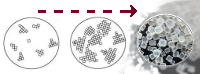
Crystallization is the physical process by which atoms, ions, or molecules arrange themselves into a highly ordered, three-dimensional lattice structure to form a solid from a solution, melt, or vapor phase. This results in the solidification of the material, where the constituent particles transition from a disordered state—such as random motion in a or gas—to a periodic, repeating pattern that defines the crystal's and properties. The process is fundamental in chemistry and , enabling the purification and controlled formation of solids with specific morphologies. The basic process of crystallization unfolds in three primary stages: first, the achievement of , where the concentration of the crystallizing substance exceeds its equilibrium , providing the driving force for solid formation; second, , the initial formation of stable crystal embryos or seeds that serve as templates; and third, growth, during which additional molecules attach to these nuclei, expanding the lattice. At a high level, this can be visualized schematically as a progression from a homogeneous or medium, where small clusters begin to aggregate into stable nuclei (often requiring an energy barrier to overcome), followed by the directional addition of units to the growing faces of the , leading to macroscopic solid particles. , while essential, is a thermodynamic prerequisite that sets the stage for the kinetic events of and growth. Crystallization produces crystalline solids, which can be single crystals exhibiting continuous lattice orientation throughout their volume, ideal for applications requiring uniformity like , or polycrystals composed of multiple intergrown crystal grains with varying orientations, common in metals and ceramics. This distinction arises from factors such as density and growth conditions that influence the development of multiple grains versus a single lattice. The modern understanding of crystallization traces back to early microscopic observations, with documenting the structured forms of salt and other in his 1665 work , marking the first detailed visual evidence of their geometric regularity and inspiring subsequent investigations into atomic arrangements.

Importance and Applications

Crystallization serves as a cornerstone in the , where it is essential for achieving drug purity and controlling particle properties that influence and stability; over 90% of active pharmaceutical ingredients are manufactured using crystallization processes. In , it enables the large-scale production of commodities like salts and sugars, facilitating purification and separation in and bulk chemical manufacturing. Within , crystallization underpins the creation of high-performance materials, including semiconductors such as crystals for and synthetic gems like rubies for optical applications. The global industrial crystallizers market, which supports these applications, was valued at approximately USD 3.91 billion in 2023, with growth driven by demand in fine chemicals and sectors for advanced purification and determination. A primary advantage of crystallization lies in its purification capabilities, where impurities are selectively excluded from the growing crystal lattice or incorporated into defects, yielding high-purity products; this is exemplified in the production of wafers, where the process achieves impurity levels below parts per billion to enable functionality. Despite these benefits, crystallization presents challenges related to polymorph control, as different crystal forms can drastically alter and ; a notable case occurred in 1998 with , an antiretroviral drug, when an unanticipated, more stable polymorph emerged during production, halting manufacturing for months and causing a supply crisis due to its lower .

Thermodynamic Principles

Supersaturation

Supersaturation refers to the condition in a solution where the concentration of the dissolved solute exceeds the equilibrium limit at a given and , resulting in a metastable state that provides the thermodynamic driving force for crystallization. In this state, the solution is unstable and prone to into solid crystals, but spontaneous crystallization does not occur immediately without a trigger, distinguishing it from the stable saturated state. The extent of is characterized by the metastable zone, which represents the region between the curve and the boundary on a , where no appreciable formation takes place despite the excess solute. This zone's width, known as the metastable zone width, is determined experimentally using curves and varies with factors such as cooling rate, impurities, and agitation; a wider zone indicates greater stability against . can be generated through high-level methods including cooling the solution to reduce , of the to concentrate the solute, or initiating a that produces the solute in excess. The degree of supersaturation, denoted as σ\sigma, is quantified by the relative supersaturation equation: σ=ccc\sigma = \frac{c - c^*}{c^*} where cc is the actual solute concentration and cc^* is the equilibrium solubility concentration at the given conditions. This parameter is measured experimentally via the polythermal method, which involves cooling a saturated solution at a controlled rate and detecting the temperature at which first appears to map the metastable zone boundary, or the isothermal method, which maintains constant temperature while incrementally adding solute until is observed, relying on induction time measurements. In the context of phase transitions, supersaturation drives the crystallization process by altering the Gibbs free energy, ΔG\Delta G, which becomes negative and favors the formation of the solid phase. For ideal dilute solutions, this change per mole of solute is given by: ΔG=RTln(1+σ)\Delta G = -RT \ln(1 + \sigma) where RR is the gas constant and TT is the absolute temperature. To derive this, start with the chemical potential equality at equilibrium: for the saturated solution, μsolution=μsolid\mu_{\text{solution}}^* = \mu_{\text{solid}}, where μsolution=μ0+RTlna\mu_{\text{solution}}^* = \mu^0 + RT \ln a^* and a=1a^* = 1 for ideal conditions (activity equals mole fraction or concentration normalized to saturation). In the supersaturated state, μsolution=μ0+RTlna\mu_{\text{solution}} = \mu^0 + RT \ln a, where a=c/c=1+σa = c / c^* = 1 + \sigma (supersaturation ratio S=1+σS = 1 + \sigma). The driving force is the difference Δμ=μsolidμsolution=RTlnS=RTln(1+σ)\Delta \mu = \mu_{\text{solid}} - \mu_{\text{solution}} = -RT \ln S = -RT \ln(1 + \sigma), so the Gibbs free energy change for transferring solute from solution to solid is ΔG=Δμ=RTln(1+σ)\Delta G = \Delta \mu = -RT \ln(1 + \sigma), indicating spontaneity when σ>0\sigma > 0. This expression assumes ideal behavior and neglects activity coefficients; for small σ\sigma, it approximates to ΔGRTσ\Delta G \approx -RT \sigma.

Phase Equilibria and Driving Forces

Phase equilibria in crystallization refer to the thermodynamic conditions under which solid, liquid, and vapor phases coexist in stable balance, dictating the boundaries between these phases in multi-component systems. These equilibria are fundamental to understanding how crystallization proceeds from a supersaturated state toward stability, without delving into the kinetics of the transition. Binary phase diagrams illustrate equilibria in two-component systems, typically plotting temperature against composition to delineate regions of - coexistence, pure phases, and phases. In such diagrams, the eutectic point marks an invariant condition where a of specific composition transforms directly into two phases upon cooling, occurring at the lowest melting temperature for any mixture of the components. Conversely, peritectic reactions involve a phase reacting with an existing to form a new phase, often represented as an invariant horizontal line in the diagram where the primary partially melts or reacts. Ternary phase diagrams extend this to three components, using triangular projections to map --vapor regions, including more complex invariant points like ternary eutectics where a solidifies into three simultaneously. The thermodynamic driving force for crystallization arises from the imbalance in chemical potentials between the parent phase (e.g., solution or melt) and the emerging crystal phase, quantified per structural unit as the difference Δμ\Delta \mu. This is expressed as Δμ=kTln(aa),\Delta \mu = kT \ln \left( \frac{a}{a^*} \right), where kk is Boltzmann's constant, TT is temperature, aa is the activity in the supersaturated phase, and aa^* is the equilibrium activity at saturation. The overall Gibbs free energy change for the crystallization process integrates this driving force over the number of units transferred, yielding ΔG=nΔμ\Delta G = - n \Delta \mu (with nn the number of molecules), where Δμ>0\Delta \mu > 0 is the positive chemical potential difference (μparentμcrystal\mu_{\text{parent}} - \mu_{\text{crystal}}), ensuring ΔG<0\Delta G < 0 for spontaneous crystallization to occur. Crystallization is an exothermic process accompanied by the release of latent heat, representing the enthalpy difference between the disordered parent phase and the ordered crystal lattice. For ice formation from water, this latent heat of crystallization (or fusion) is 334 J/g at 0°C. In melt crystallization, the primary heat effect is this latent heat of fusion, as the process involves direct solidification without solvent involvement. Solution crystallization, however, includes additional enthalpy contributions from solvation or desolvation of solute ions or molecules, often resulting in a net heat release that combines the lattice energy gain with solvent-solute interactions, typically lower in magnitude than pure fusion due to these compensatory effects. Polymorphism introduces complexity to phase equilibria, as a single substance can adopt multiple crystal structures (polymorphs) with distinct thermodynamic stabilities under varying conditions. Enantiotropy describes a reversible relationship between two polymorphs separated by a transition temperature, below which one form is stable and above which the other is, allowing interconversion without hysteresis, as seen in certain organic compounds like the α and β forms of sulfur. Monotropy, in contrast, involves an irreversible relationship where one polymorph is thermodynamically stable across all temperatures, rendering the other metastable and prone to transformation only under kinetic facilitation, exemplified by graphite (stable) and diamond (metastable) in carbon, where diamond's higher density and energy persist indefinitely at ambient conditions. These concepts influence phase diagrams by introducing multiple solid phase boundaries, potentially leading to polymorphic transformations during cooling or heating in crystallization processes.

Kinetic Mechanisms

Nucleation

Nucleation refers to the initial formation of stable crystal embryos from a supersaturated solution or melt, marking the first kinetic step in the crystallization process driven by supersaturation. This process involves the aggregation of solute molecules into ordered clusters that overcome an energy barrier to become viable nuclei capable of further growth. In classical nucleation theory (CNT), developed by Gibbs and later formalized by Becker and Döring, the formation of these embryos is governed by a balance between the bulk free energy gain from phase transformation and the surface energy penalty associated with creating a new interface. Primary nucleation occurs independently of existing crystals and is classified into homogeneous and heterogeneous types. Homogeneous primary nucleation arises spontaneously in an ideally pure supersaturated system without impurities or surfaces, requiring significant supersaturation to form clusters randomly in the bulk phase; however, it is rare in practice due to the high energy barrier involved. In contrast, heterogeneous primary nucleation, which predominates in real systems, is facilitated by impurities, container walls, or foreign particles that lower the energy barrier by providing nucleation sites. According to CNT, a critical embryo radius r=2γΔGvr^* = -\frac{2\gamma}{\Delta G_v} defines the threshold size beyond which clusters grow stably, where γ\gamma is the solid-liquid interfacial energy and ΔGv\Delta G_v is the bulk free energy difference per unit volume (negative in supersaturated conditions). Smaller clusters dissolve, while those exceeding rr^* expand, with the critical size decreasing as supersaturation increases. Secondary nucleation, in contrast, is induced by the presence of pre-existing crystals and typically requires lower supersaturation levels than primary nucleation. It arises from mechanisms such as mechanical contact between crystals and equipment surfaces, fluid shear forces, or collisions among crystals, leading to the detachment of small fragments or the activation of growth sites. Common mechanisms include chip-off (attrition), where fragments break from parent crystals due to impact, and dendritic growth, where protrusions on crystal surfaces serve as secondary sites for new nucleus formation. These processes are prevalent in industrial crystallizers, where they help control crystal number and size by generating additional nuclei without needing high supersaturation. The rate of nucleation JJ exhibits an exponential dependence on the free energy barrier for cluster formation, expressed in CNT as J=Aexp(ΔGkT)J = A \exp\left(-\frac{\Delta G^*}{kT}\right), where AA is a kinetic pre-factor, kk is Boltzmann's constant, TT is temperature, and ΔG\Delta G^* is the activation free energy. For homogeneous primary nucleation, ΔG=16πγ33(ΔGv)2\Delta G^* = \frac{16\pi \gamma^3}{3 (\Delta G_v)^2}, highlighting the strong sensitivity to interfacial energy and supersaturation. This formulation, derived from steady-state cluster kinetics, predicts rates spanning orders of magnitude based on conditions. Several factors influence nucleation rates. Temperature affects both the thermodynamic driving force ΔGv\Delta G_v, which typically decreases with cooling, and the kinetic pre-factor through molecular mobility, often leading to optimal rates at intermediate temperatures. Impurities and additives can dramatically enhance heterogeneous nucleation by reducing γ\gamma or providing catalytic sites, sometimes by factors of 10^6 or more compared to pure systems. Agitation promotes secondary nucleation by increasing collision frequencies and shear, thereby elevating rates, though excessive turbulence may fragment crystals undesirably.

Crystal Growth

Crystal growth refers to the process by which atoms or molecules attach to an existing crystal nucleus, leading to the expansion of the crystal lattice in a thermodynamically favorable manner. Following nucleation, this stage is governed by the transport of growth units to the crystal surface and their incorporation into the lattice. The overall growth rate depends on factors such as supersaturation, temperature gradients, and surface conditions, influencing the final crystal morphology and quality. Crystal growth can occur through distinct modes determined by the interactions between the substrate (or existing crystal surface) and the depositing adatoms. In the Frank-van der Merwe mode, growth proceeds layer-by-layer, where each new layer wets the underlying surface completely, resulting in smooth, epitaxial films ideal for high-quality crystals. Conversely, the Volmer-Weber mode involves island growth, where three-dimensional clusters form due to stronger adatom-adatom bonds than adatom-substrate bonds, leading to rougher surfaces common in non-wetting systems. A mixed mode, often called Stranski-Krastanov, combines initial layer-by-layer growth followed by island formation, transitioning due to strain accumulation. For non-planar growth, the screw dislocation model proposed by Burton, Cabrera, and Frank (BCF) explains spiral growth around dislocations, providing continuous steps for attachment without the need for two-dimensional nucleation, which is particularly relevant for low-supersaturation conditions in materials like silicon or metals. The kinetics of crystal growth are typically classified as diffusion-limited or surface-reaction limited. In diffusion-limited growth, the rate is controlled by the transport of solute through the boundary layer to the interface, dominating at high supersaturations or in viscous media. Surface-reaction limited growth, prevalent at lower supersaturations, is governed by the attachment kinetics at the surface, such as incorporation at kinks or steps. The linear growth rate GG is often empirically modeled as G=k(Δc)nG = k (\Delta c)^n, where Δc\Delta c is the supersaturation (difference between actual and equilibrium concentrations), kk is the rate constant, and nn is the order (typically 1 for diffusion-limited or 2 for reaction-limited processes). Morphological stability during growth is influenced by the interface kinetics parameter β=dvdΔT\beta = \frac{dv}{d\Delta T}, which quantifies the velocity response to undercooling ΔT\Delta T. High β\beta values promote stable, faceted growth with planar interfaces, as seen in many ionic crystals, while low β\beta leads to instability and dendritic growth, where perturbations amplify into branched structures to maximize heat dissipation. This transition is critical in solidification processes, affecting microstructure in alloys. Impurities significantly alter growth by adsorbing onto specific crystal faces, inhibiting attachment and modifying the growth habit. Adsorption blocks active sites like steps or kinks, reducing the growth rate on affected faces and promoting elongation in other directions. In solution growth, mass and heat transfer play key roles through diffusion layers adjacent to the crystal surface. The mass transfer coefficient is characterized by the Sherwood number (Sh), defined as Sh=kmLDSh = \frac{k_m L}{D}, where kmk_m is the mass transfer coefficient, LL is a characteristic length, and DD is the diffusion coefficient; correlations like Sh=2+0.6Re1/2Sc1/3Sh = 2 + 0.6 Re^{1/2} Sc^{1/3} (for spherical particles) predict enhanced transfer under stirring, influencing overall growth uniformity. Heat transfer similarly affects temperature gradients, but in isothermal solutions, mass diffusion dominates.

Crystal Size Distribution

Crystal size distribution (CSD) refers to the statistical description of the sizes of crystals produced in a crystallization process, typically expressed as number-, volume-, or mass-based distributions of crystal sizes. These distributions characterize the population of crystals collectively, providing insights into the overall product quality, such as uniformity and average dimensions, which are critical for downstream processing like filtration and formulation. The CSD arises from the combined effects of nucleation events and subsequent growth of individual crystals over time. A key mathematical representation of CSD involves the population density function n(L,t)n(L, t), where LL is the characteristic crystal size (e.g., volume-equivalent diameter) and tt is time, such that n(L,t)dLn(L, t) \, dL gives the number of crystals per unit volume with sizes between LL and L+dLL + dL. Statistical moments of the distribution are often used to summarize the CSD compactly; the nn-th moment is defined as μn=0n(L)LndL,\mu_n = \int_0^\infty n(L) L^n \, dL, where μ0\mu_0 represents the total number density, μ3\mu_3 is proportional to the total crystal volume, and higher moments relate to mass or surface area distributions. For instance, the zeroth moment μ0\mu_0 quantifies nucleation activity, while the third moment μ3\mu_3 links directly to the solid mass fraction in the system. The evolution of the CSD is governed by the population balance equation (PBE), a fundamental model that accounts for changes due to growth, nucleation, and other processes. In its simplified one-dimensional form for a batch system without aggregation or breakage, nt+(Gn)L=BD,\frac{\partial n}{\partial t} + \frac{\partial (G n)}{\partial L} = B - D, where GG is the growth rate, BB is the birth rate (primarily from nucleation), and DD is the death rate (e.g., due to dissolution). This equation captures how supersaturation drives both nucleation (birth) and growth, leading to broader or narrower distributions depending on process conditions. Analytical solutions exist for constant GG and BB, yielding exponential distributions, but numerical methods are typically required for variable conditions. Several factors influence the shape and width of the CSD during crystallization. The history of supersaturation—its profile over time—affects the balance between nucleation and growth rates, with prolonged high supersaturation favoring nucleation and thus narrower, smaller-sized distributions, while gradual supersaturation promotes growth of fewer crystals into larger sizes. Seeding with pre-formed crystals suppresses spontaneous nucleation, shifting the distribution toward larger mean sizes and reduced variability by providing initial nuclei for controlled growth. Residence time in the crystallizer also plays a role; longer times allow extended growth, broadening the distribution, whereas shorter times limit size development, often resulting in finer crystals. Measurement of CSD typically involves techniques that resolve particle sizes across a population. Laser diffraction analyzes the scattering pattern of a laser beam by suspended crystals to infer size distribution, effective for sizes from 0.1 to 3000 μm and providing rapid, non-destructive results. Image analysis captures micrographs of crystals (e.g., via microscopy or endoscopy) and uses software to measure individual sizes, offering detailed shape information alongside distribution but requiring more preparation. Sieving separates crystals by passing through mesh screens of varying apertures, suitable for larger particles (>50 μm) and yielding cumulative mass-based distributions, though it is labor-intensive and less precise for fines. Common metrics include the volume-weighted mean size L4,3=μ4μ3L_{4,3} = \frac{\mu_4}{\mu_3}, which emphasizes larger crystals, and the CV=σLmeanCV = \frac{\sigma}{L_{\text{mean}}}, where σ\sigma is the standard deviation, quantifying distribution width (lower CV indicates narrower PSD). Control strategies aim to tailor the CSD for optimal product properties, such as improved rates from , larger crystals. Fines removal involves selectively dissolving or separating small crystals, often by to a dissolution zone or using cyclones, which narrows the distribution by reducing the population of sub-micron particles and promoting growth of survivors. Temperature cycling alternates cooling and mild heating phases to induce , where fines dissolve and deposit onto larger crystals, achieving a more PSD without additional hardware; for example, cycles of 1–5°C can reduce CV by 20–50% in pharmaceutical crystallizations. These methods enhance process efficiency by minimizing agglomeration and ensuring consistent particle sizes for applications like drug formulation.

Crystallization Methods

Cooling Crystallization

Cooling crystallization is a widely used method in to achieve by lowering the temperature of a solution, which reduces the of the solute and drives the formation of solid crystals from the liquid phase. This process is particularly effective for solutes whose solubility decreases upon cooling (corresponding to endothermic dissolution), such as many inorganic salts including (KCl). The principle relies on the thermodynamic shift in phase equilibrium, creating a supersaturated state that promotes and growth without requiring removal. The process typically begins with preparing a saturated solution at an elevated temperature, followed by controlled cooling to maintain the system within the metastable zone, where exists but spontaneous is minimized to favor crystal growth on seeds. Seeding with small crystals is often employed to initiate controlled growth, and cooling is conducted at slow rates, typically ranging from 0.1 to 5°C per hour, to prevent excessive that could lead to fine particle sizes and broad crystal size distributions (CSD). Programmed cooling profiles, such as linear or nonlinear temperature ramps, are applied to optimize the final CSD by balancing the rates of and growth throughout the batch. This method finds extensive industrial applications in the production of fertilizers like , where cooling crystallization from aqueous solutions yields large, uniform crystals suitable for agricultural use, as well as in the purification of and other salts. Its advantages include relatively low energy consumption compared to evaporative methods, especially for systems with temperature-sensitive solubilities, and the ability to achieve high purity products through selective crystallization. Batch operations are common for high-value or small-scale production, such as in pharmaceuticals, while continuous variants enable steady-state for bulk commodities, improving throughput and consistency in CSD control. A key limitation of cooling crystallization, particularly with organic compounds, is the risk of oiling out, where the solute forms a separate liquid phase instead of solid crystals due to liquid-liquid phase separation, potentially leading to poor product quality or process failure. This phenomenon is more prevalent in systems with complex behaviors and can complicate downstream separation, necessitating careful selection and profiling to avoid it.

Evaporative Crystallization

Evaporative crystallization is a process that achieves by vaporizing the from a solution, thereby increasing the solute concentration until it exceeds the limit and initiates formation. This method relies on through solvent removal rather than changes, making it suitable when is largely independent of . The process is commonly conducted under reduced pressure to lower the of the , allowing at milder temperatures that preserve the integrity of the solute. In the process, the solution is heated to its within a vessel, where vapor is generated and removed, concentrating the remaining liquor. (BPE) must be accounted for, as the presence of dissolved solutes raises the boiling temperature relative to pure at the same ; for instance, in saline solutions, BPE can increase the boiling temperature by several degrees depending on concentration. The energy required for is primarily supplied as to overcome the of , governed by the simplified energy balance equation Q=mλQ = m \lambda, where QQ is the heat input, mm is the of evaporated, and λ\lambda is the of of the . This balance ensures efficient removal while maintaining control, often in continuous or batch modes. A key industrial application is in sugar refining, where vacuum pan crystallization evaporates water from syrup under reduced pressure to form massecuite, a of sugar crystals and mother liquor, enabling the production of refined crystals. Another prominent example is sea salt production, where is concentrated through solar in shallow ponds, leading to the sequential of salts as the reaches saturation. These applications highlight the method's versatility in large-scale operations. Evaporative crystallization offers advantages for processing heat-sensitive materials, as vacuum conditions reduce evaporation temperatures to below 100°C, minimizing degradation. Efficiency is further enhanced by multiple-effect evaporators, which reuse vapor from one stage to heat the next, reducing consumption by up to 50% or more compared to single-effect systems and lowering overall costs. Challenges include entrainment of mother liquor, where fine droplets or crystals are carried over with the vapor stream, contaminating the distillate and reducing product purity. Additionally, scaling on surfaces occurs due to supersaturated conditions promoting unwanted crystallization, which impairs efficiency and requires frequent cleaning or mitigation strategies.

Reactive Crystallization

Reactive crystallization involves the generation of through a , where reactants combine to form a sparingly soluble product, such as in the precipitation of salts represented by the general reaction A + B → C(s). This process is particularly common for producing fine particles of inorganic or organic compounds, distinguishing it from physical methods by integrating reaction kinetics directly with crystallization dynamics. The kinetics of reactive crystallization are governed by the interplay between s and crystallization mechanisms, often characterized by the Damköhler number (Da), the ratio of the reaction rate to the rate, indicating a diffusion-limited (Da >> 1) or reaction-limited (Da << 1). This coupling can lead to localized high zones, influencing and growth; for instance, in systems where reaction is faster than mixing, it promotes primary over growth. Applications of reactive crystallization are widespread in industry, including the precipitation of barium sulfate (BaSO_4) for use in drilling fluids and contrast agents, where controlled mixing of barium chloride and sodium sulfate solutions yields uniform particles. In pharmaceuticals, it is employed for active pharmaceutical ingredients (APIs) like L-glutamic acid and calcium carbonate for antacids, enabling the production of specific polymorphs or particle sizes critical for bioavailability. Key challenges include rapid rates that result in aggregates and broad distributions (PSD), exacerbated by micromixing effects and variations, which can create uneven profiles in stirred tanks. Effective control requires precise management of feed rates and agitation to mitigate these issues and achieve desired morphology. As of 2025, advances in microfluidic reactors have enabled precise control over reactive lization, particularly in , by minimizing dispersion and allowing real-time monitoring of in continuous flow systems for high-purity precipitates, with ongoing progress in process intensification for .

Industrial Equipment and Processes

Typical Crystallizer Designs

Batch crystallizers consist of jacketed vessels equipped with agitators, making them suitable for laboratory-scale operations where precise control over and mixing is essential. These designs allow for flexible process adjustments, such as variable seeding and startup conditions, which facilitate experimentation and optimization in smaller volumes. The jacket enables efficient for methods like cooling, while the agitator ensures uniform suspension to promote consistent crystal formation. Recent advancements include modular designs and smart control systems for enhanced process monitoring and flexibility. Continuous crystallizers commonly employ the mixed suspension mixed product removal (MSMPR) configuration, which assumes perfect mixing within the vessel, uniform throughout the system, and a crystal growth rate independent of . This model supports steady-state operation, where feed enters and product exits continuously, ideal for industrial-scale production requiring consistent output. Designs such as stirred tanks maintain a well-mixed to achieve predictable crystal size distributions under prolonged residence times. Key components of typical crystallizers include heat exchangers for precise thermal management, stirrers to suspend solids and prevent settling, and classifiers to separate crystals by size for product refinement. Stainless steel is widely used as the primary material due to its corrosion resistance against aggressive solvents and slurries encountered in industrial processes. These elements ensure operational reliability and product purity across various crystallization methods. Scale-up of crystallizers involves maintaining consistent power input per unit volume, typically in the range of 1-1000 W/m³ depending on agitation needs, to avoid excessive crystal breakage while ensuring adequate mixing. distribution must be controlled to achieve uniform exposure of crystals to , influencing the final size distribution and process efficiency. These considerations guide the transition from pilot to production scales, prioritizing hydrodynamic similarity. In solvent-based crystallizer operations, explosion risks arise from flammable vapors, mitigated by inert gas purging with or to displace oxygen and prevent ignition sources. This safety measure is critical in enclosed vessels handling volatile organic solvents, ensuring compliance with hazard prevention standards.

Baffle Crystallizer

The baffle (DTB) crystallizer features a central that facilitates internal circulation of the crystal slurry, equipped with a large, slow-moving at its base to gently draw upward through the tube and promote even distribution. Surrounding the are vertical baffles that create an annular zone, minimizing vortex formation and enabling the gravitational separation of fine from larger ones. Fines removal is achieved via an leg at the base, where low-velocity upward flow classifies particles, directing undersized back into the circulation or to a separate for dissolution, thus preventing excessive . In operation, the crystal slurry is circulated upward through the central draft tube by a large, slow-moving propeller, providing internal circulation, typically achieving magma densities of 25-50% settled solids volume to ensure adequate suspension without excessive agitation. The system is commonly employed in cooling or evaporative crystallization processes, where the propeller induces an upward flow in the tube, allowing crystals to grow at the boiling surface before descending in the annular space for further classification. Circulation velocities are maintained at 0.5-1 m/s to balance mixing and settling, supporting low shear environments that favor growth over secondary nucleation. Key advantages of the DTB crystallizer include its ability to produce a uniform crystal size distribution (CSD) by efficiently destroying fines, resulting in larger, more consistent particles that simplify downstream processing like filtration and drying. It operates with low energy consumption due to the internal circulation design, which minimizes head loss and requires modest power for the propeller. This equipment is widely used in the production of inorganic salts such as sodium sulfate, where precise CSD control enhances product quality and yield. Modeling of DTB crystallizers often treats them as mixed suspension, mixed product removal (MSMPR) systems, where the mean residence time τ=V/Q\tau = V / Q (with VV as crystallizer volume and QQ as volumetric flow rate) determines the balance between crystal growth and nucleation rates, promoting growth-dominant conditions for coarser products. However, drawbacks include susceptibility to scaling on the and heat transfer surfaces, particularly in evaporative modes, which can reduce efficiency and necessitate periodic cleaning. Additionally, maintenance of the seals is critical to prevent leaks and ensure reliable circulation.

Crystallization in Nature and Biology

Geological and Mineral Formation

Crystallization plays a fundamental role in formation, where cools and solidifies over extended periods, leading to the sequential of . As cools, early-forming such as crystallize first from basaltic magmas, often resulting in mafic rocks like that contain prominent crystals. This process follows , an experimental framework that outlines the order of crystallization based on temperature and composition: high-temperature like and calcium-rich form initially on the discontinuous branch, transitioning to and , while the continuous branch sees evolving from calcium-rich to sodium-rich forms, culminating in low-temperature like and . In sedimentary environments, crystallization occurs through evaporative processes and diagenetic alterations. Evaporite deposits form when seawater or lake water evaporates in arid basins, concentrating ions until minerals precipitate sequentially; for instance, gypsum (calcium sulfate dihydrate) crystallizes after calcite in sulfate-rich brines, creating layered deposits in settings like ancient salt lakes. Diagenesis, the post-depositional transformation of sediments into rock, often involves recrystallization where unstable minerals like aragonite convert to more stable calcite, enhancing grain interlocking without changing the overall composition, as seen in limestone formations. Metamorphic crystallization arises from the recrystallization of existing rocks under elevated pressure and temperature, without melting. , primarily composed of from shells, transforms into when subjected to heat and directed pressure, causing the calcite grains to recrystallize into larger, interlocked crystals that eliminate original and textures. This process exemplifies contact or regional , where realignment accommodates tectonic stresses. Geological crystallization typically unfolds over vast timescales, from thousands to millions of years, enabling the development of exceptionally large crystals, such as those in quartz veins formed by hydrothermal fluids filling fractures in the . These prolonged durations allow for slow, diffusion-controlled growth, contrasting with rapid experimental rates and contributing to the scale of features like meter-sized crystals in vein systems. Economically, crystallization in hydrothermal systems is critical for ore deposit formation, particularly porphyry copper deposits, where magmatic fluids exsolved from crystallizing granitic intrusions transport and precipitate copper sulfides in stockwork veins. These deposits, centered on stocks, result from the interaction of cooling with surrounding rocks, concentrating metals over timescales of tens to hundreds of thousands of years, and represent a major global source of .

Biological and Biomimetic Crystallization

Biological crystallization, or , refers to the biologically controlled formation of inorganic minerals within living organisms, enabling the creation of complex structures such as shells, bones, and protective tissues. In mollusks, for instance, proteins regulate the deposition of (CaCO₃) crystals, favoring the polymorph over the more stable to form durable shells. Acidic proteins, such as the 8-kDa variants isolated from nacre, specifically modify crystal morphology by adsorbing to growing faces, promoting aragonite nucleation within an organic matrix. This process integrates mineral phases with protein frameworks, yielding composites that combine hardness and toughness. In bone, produces nanocrystals that form the primary component, with typical dimensions of 50-100 nm in length and 20-30 nm in width. These nanocrystals assemble from an amorphous precursor, transitioning to plate-like structures through a dissolution-reprecipitation mechanism influenced by non-collagenous proteins. substitutions within the apatite lattice constrain crystal size and enhance , facilitating dynamic remodeling in response to mechanical stress. Another striking example occurs in freeze-tolerant organisms, where antifreeze proteins (AFPs) inhibit and growth, preventing lethal formation in subzero environments. Found in , , and , AFPs bind to ice surfaces via ice-binding sites, curving the growth front and blocking further propagation at concentrations as low as 1 mg/mL. This inhibition also suppresses recrystallization, maintaining small ice crystals during thawing. The mechanisms underlying these processes often involve template-directed growth, where organic matrices—such as proteins or —lower the interfacial energy between the substrate and phase to selectively nucleate specific polymorphs. In , macromolecular templates provide epitaxial matching, reducing the interfacial free energy and thus the nucleation barrier compared to homogeneous conditions. Organic matrices further stabilize transient amorphous precursors, directing their transformation into oriented crystals while minimizing defects. These interfacial interactions, quantified through kinetics and direct measurements, align with , where reduced interfacial tension promotes heterogeneous rates. Biomimetic approaches replicate these mechanisms to engineer advanced materials, including additively manufactured scaffolds for that mimic bone's hierarchical structure. Using techniques like extrusion-based methods, cellulose nanocrystal composites form porous lattices with controlled (up to 80%), promoting adhesion and vascularization in repair applications. Such scaffolds integrate organic templates to guide apatite-like mineralization, enhancing mechanical integrity with compressive strengths exceeding 10 MPa. -inspired composites, drawing from shells, layer "bricks" (e.g., alumina platelets) with polymeric "mortar" to achieve toughness values several hundred times that of pure ceramics, through mechanisms like crack deflection and platelet pull-out. Bacterial production of these hybrids further enables scalable synthesis, yielding materials with up to 11.5 MPa·m¹/². In , protein-crystal hybrids leverage the stability and biocompatibility of crystalline matrices to encapsulate therapeutics. or crystals, for example, form porous networks that release payloads like antibiotics over weeks via diffusion-controlled mechanisms. These hybrids protect sensitive biologics from degradation, enabling targeted delivery with minimal . As of 2024, advances have integrated to optimize biomimetic crystallization, accelerating the design of sustainable through predictions of molecular interactions in processes. As of 2025, ongoing research continues to explore AI-driven approaches for applications like carbon capture using bioinspired CaCO₃ materials.

References

Add your contribution
Related Hubs
User Avatar
No comments yet.