Hubbry Logo
Classic rockClassic rockMain
Open search
Classic rock
Community hub
Classic rock
logo
8 pages, 0 posts
0 subscribers
Be the first to start a discussion here.
Classic rock
Classic rock
from Wikipedia

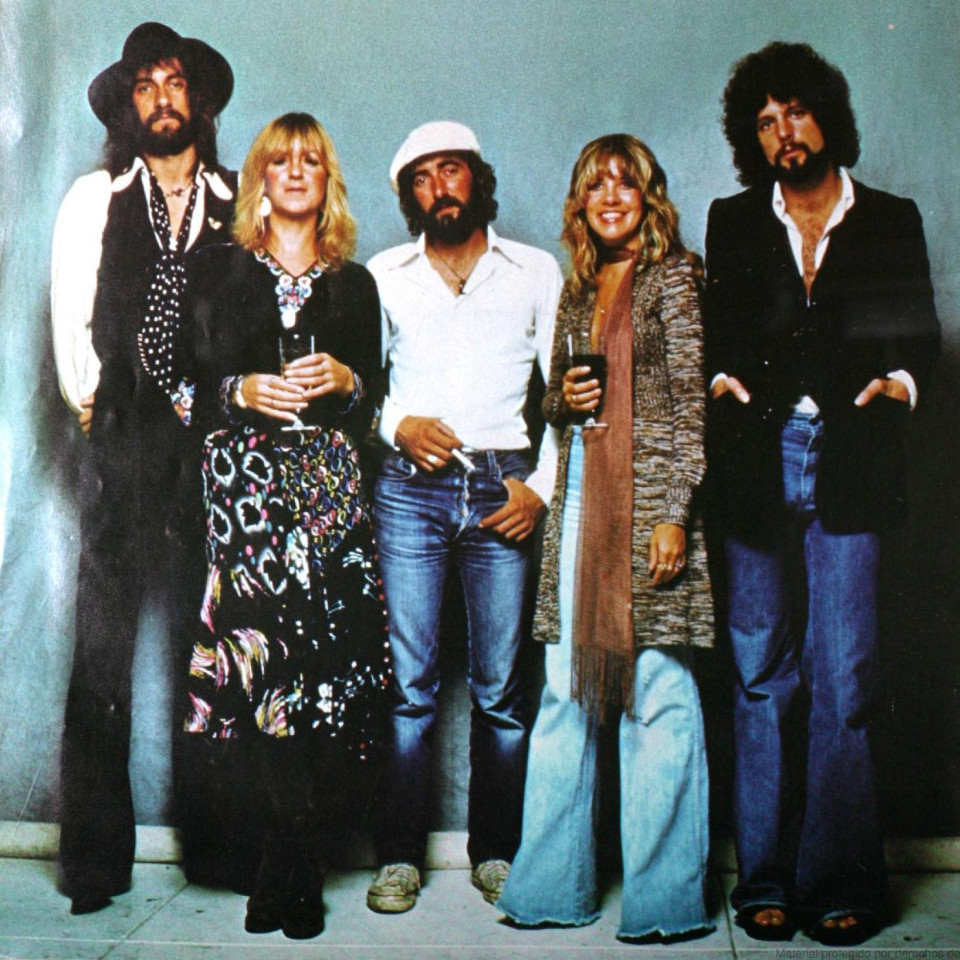
Fleetwood Mac are considered an archetypal classic rock or "dad rock" act.[1]

Classic rock (later known as dad rock[2]) is a radio format that developed from the album-oriented rock (AOR) format in the early-mid 1980s.[3][4] In the United States, it comprises rock music ranging generally from the mid-1960s to mid-1990s,[5] primarily focusing on commercially successful blues rock and hard rock popularized in the 1970s–1980s AOR format.[3][6] Classic rock's focus somewhat differs from the formats oldies (focusing on the more pop-oriented hits and earlier rock and roll of the 1950s–1970s) and classic hits (focusing on pop-oriented hits and pop rock of the 1970s–1990s).[7][8]

The classic rock format became increasingly popular with the baby boomer demographic in the 1980s and 1990s.[9][10] Although classic rock has mostly appealed to adult listeners, music associated with this format received more exposure with younger listeners with the presence of the Internet and digital downloading.[11] Some classic rock stations also play a limited number of current releases which are stylistically consistent with the station's sound, or by legacy acts which are still active and producing new music.[12]

Among academics and historians, classic rock has been discussed as an effort by critics, media, and music establishments to canonize rock music and commodify 1960s–1970s Western culture for audiences living in a post-baby boomer economy. The music selected for the format has been identified as predominantly commercially successful songs by white male acts from the Anglosphere, expressing values of Romanticism, self-aggrandizement, and politically undemanding ideologies. Classic rock has also been associated with rock's album era (1960s–2000s).

History

[edit]
The 1980 logo of WWWM 105.7 in Cleveland

The classic rock format evolved from AOR radio stations that were attempting to appeal to an older audience by including familiar songs of the past with current hits.[13] In 1980, AOR radio station M105 in Cleveland began billing itself as "Cleveland's Classic Rock", playing a mix of rock music from the mid-1960s to the present.[14] Similarly, WMET called itself "Chicago's Classic Rock" in 1981.[15] In 1982, radio consultant Lee Abrams developed the "Timeless Rock" format, which combined contemporary AOR with rock hits from the 1960s and 1970s.[16]

KRBE, an AM station in Houston, was an early classic rock radio station. In 1983, program director Paul Christy designed a format which played only early album rock, from the 1960s and early 1970s, without current music or any titles from the pop or dance side of Top 40.[17] Another AM station airing classic rock, beginning in 1983, was KRQX in Dallas-Fort Worth.[18] KRQX was co-owned with an album rock station, 97.9 KZEW. Management saw the benefit in the FM station appealing to younger rock fans and the AM station appealing a bit older. The ratings of both stations could be added together to appeal to advertisers. Classic rock soon became the widely used descriptor for the format and became the commonly used term among the general public for early album rock music.

In the mid-1980s, the format's widespread proliferation came on the heels of Jacobs Media's (Fred Jacobs) success at WCXR, in Washington, D.C., and Edinborough Rand's (Gary Guthrie) success at WZLX in Boston. Between Guthrie and Jacobs, they converted more than 40 major market radio stations to their individual brand of classic rock over the next several years.[19]

Billboard magazine's Kim Freeman posits that "while classic rock's origins can be traced back earlier, 1986 is generally cited as the year of its birth".[4] By 1986, the success of the format resulted in older songs accounting for 60–80% of the music played on album rock stations.[9] Although it began as a niche format spun off from AOR, by 2001 classic rock had surpassed album rock in market share nationally.[20]

During the mid-1980s, the classic rock format was mainly tailored to the adult male demographic ages 25–34, which remained its largest demographic through the mid-1990s.[21] As the format's audience aged, its demographics skewed toward older age groups. By 2006, the 35–44 age group was the format's largest audience;[22] by 2014, the 45–54 year-old demographic was the largest.[23]

Programming

[edit]

Typically, classic rock stations play rock songs from the mid-1960s through the 1980s and began adding 1990s music in the early 2010s. Most recently, there has been a "newer classic rock" under the slogan of the next generation of classic rock. Stations such as WLLZ in Detroit, WBOS in Boston, and WKQQ in Lexington play music focusing more on harder edge classic rock from the 1980s to the 2000s.[24][25][26]

Some of the artists that are featured heavily on classic rock radio are The Beatles,[27] Pink Floyd, Aerosmith, AC/DC, Quiet Riot, Bruce Springsteen, John Mellencamp, Def Leppard, Boston, The Rolling Stones, Fleetwood Mac, Billy Joel, Elton John, Eric Clapton, The Who, Van Halen, Rush, Black Sabbath, Golden Earring, U2, Guns N' Roses, Lynyrd Skynyrd, The Eagles, the Doors, Styx,[28] Queen, Led Zeppelin,[29] and Jimi Hendrix.[29] The songs of the Rolling Stones, particularly from the 1970s, have become staples of classic rock radio.[30] "(I Can't Get No) Satisfaction" (1965),[31] "Under My Thumb" (1966),[32] "Paint It Black" (1966),[33] and "Miss You" (1978) are among their most popular selections, with Complex calling the latter "an eternal mainstay on classic-rock radio".[34]

A 2006 Rolling Stone article noted that teens were surprisingly interested in classic rock and speculated that the interest in the older bands might be related to the absence of any new, dominant sounds in rock music since the advent of grunge.[29]

Characteristics and academic response

[edit]

Ideologically, 'classic rock' serves to confirm the dominant status of a particular period of music history – the emergence of rock in the mid-1960s – with its associated values and set of practices: live performance, self-expression, and authenticity; the group as the creative unit, with the charismatic lead singer playing a key role, and the guitar as the primary instrument. This was a version of classic Romanticism, an ideology with its origins in art and aesthetics.

— Roy Shuker (2016)[35]

Classic-rock radio programmers largely play "tried and proven" hit songs from the past based on their "high listener recognition and identification", says media academic Roy Shuker, who also identifies white male rock acts from Sgt. Pepper-era Beatles through the late 1970s as the focus of their playlists.[35] As Catherine Strong observes, classic rock songs are generally performed by white male acts from either the United States or the United Kingdom, "have a four-four time, very rarely exceed the time limit of four minutes, were composed by the musicians themselves, are sung in English, played by a 'classical' rock formation (drums, bass, guitar, keyboard instruments) and were released on a major label after 1964."[36] Classic rock has also been associated with the album era (1960s–2000s), by writers Bob Lefsetz[37] and Matthew Restall, who says the term is a relabeling of the "virtuoso pop/rock" from the era's early decades.[38]

The format's origins are traced by music scholar Jon Stratton to the emergence of a classic-rock canon.[39] This canon arose in part from music journalism and superlative lists ranking certain albums and songs that are consequently reinforced to the collective and public memory.[36] Robert Christgau says the classic-rock concept transmogrified rock music into a "myth of rock as art-that-stands-the-test-of-time". He also believes it was inevitable that certain rock artists would be canonized by critics, major media, and music establishment entities such as the Rock and Roll Hall of Fame.[40] In 2018, Steven Hyden recalls how the appearance of classic rock as a timeless music lent it a distinction from the "inherently nihilistic" pop he had first listened to on the radio as a teenager in the early 1990s. "[I]t seemed to have been around forever," he writes of the classic rock format. "It was there long before I was born, and I was sure it was still going to be around after I was gone."[41]

Politically, the mindset underlying classic rock is regarded by Christgau as regressive. He says the music in this format abandoned ironic sensibilities in favor of unintellectual, conventional aesthetics rooted in Victorian era Romanticism, while downplaying the more radical aspects of 1960s counterculture, such as politics, race, African-American music, and pop in the art sense. "Though classic rock draws its inspiration and most of its heroes from the '60s, it is, of course, a construction of the '70s," he writes in 1991 for Details magazine. "It was invented by prepunk/predisco radio programmers who knew that before they could totally commodify '60s culture they'd have to rework it—that is, selectively distort it till it threatened no one ... In the official rock pantheon the Doors and Led Zeppelin are Great Artists while Chuck Berry and Little Richard are Primitive Forefathers and James Brown and Sly Stone are Something Else."[40]

Regarding the relationship of economics to the rise of classic rock, Christgau believes there was compromised socioeconomic security and diminishing collective consciousness of a new generation of listeners in the 1970s, who succeeded rock's early years during baby-boomer economic prosperity in the United States: "Not for nothing did classic rock crown the Doors' mystagogic middlebrow escapism and Led Zep's chest-thumping megalomaniac grandeur. Rhetorical self-aggrandizement that made no demands on everyday life was exactly what the times called for."[40] Shuker attributes the rise of classic-rock radio in part to "the consumer power of the aging post-war 'baby boomers' and the appeal of this group to radio advertisers." In his opinion, classic rock also produced a rock music ideology and discussion of the music that was "heavily gendered", celebrating "a male homosocial paradigm of musicianship" that "continued to dominate subsequent discourse, not just around rock music, but of popular music more generally."[35]

See also

[edit]

References

[edit]
Revisions and contributorsEdit on WikipediaRead on Wikipedia
from Grokipedia
Classic rock denotes a commercial and associated music category encompassing rock recordings primarily from the mid-1960s to the early , emphasizing guitar-led tracks with simple chord progressions and influences from . The format originated in the early as an evolution of (AOR), devised by U.S. radio programmers to target alienated by emerging styles like new wave and , curating playlists of established from that demographic's youth. Defining characteristics include overdriven electric guitars, a strong backbeat on drums, assertive vocals, and lyrics often exploring personal or inspirational themes, frequently delivered by bands with a rebellious public image. Exemplary acts such as , Led Zeppelin, and the Eagles achieved massive commercial success, with the latter's compilation Their Greatest Hits (1971–1975) certified 38 times platinum by 2018, underscoring the format's enduring appeal and economic viability. While celebrated for preserving influential album tracks over singles, the classification invites debate as a marketing construct rather than a coherent genre, prone to arbitrary inclusions based on radio play and excluding outliers like synthesizer-heavy experiments even from core-era artists.

Definition and Origins

Distinction Between Genre and Radio Format

Classic rock functions dually as a retrospective musical category encompassing rock recordings from roughly the mid-1960s to the early , and as a engineered for commercial viability by aggregating high-demand "gold" tracks from that era. This format emerged in the early as (AOR) stations faced declining audiences due to the influx of , , and other contemporary styles that alienated core listeners; programmers responded by curating playlists of proven hits to stabilize ratings amid market fragmentation. The shift prioritized familiarity and over innovation, with stations like in pioneering the explicit "classic rock" branding around 1983 to signal this focus on enduring catalog material. Distinguishing it from organic genres like or —which arose from artists' stylistic experiments and contemporaneous self-identification—classic rock lacks roots in performer intent or mid-creation discourse. Instead, it reflects post-hoc curation by broadcasters targeting sustained listener loyalty to songs by groups such as , Led Zeppelin, and The Who, whose tracks demonstrated persistent value through repeat requests and sales data rather than forward-looking artistic movements. This commercial genesis underscores its basis in empirical demand metrics, not aesthetic evolution, as evidenced by the format's rapid adoption: by the late , classic rock outlets captured top market shares in key demographics, propelled by the aging baby boomer cohort born 1946–1964, whose median age reached the mid-40s and favored replaying youth-era music. Nielsen audience measurements from the period affirm this dominance, with classic rock formats outperforming evolving AOR in 12+ share metrics across major markets, leading to widespread proliferation—hundreds of U.S. stations by the early —as programmers leveraged the format's resistance to churn from new music trends. This data-driven strategy cemented classic rock's identity as a market-responsive , separate from classifications tied to production techniques or thematic coherence.

Core Time Period and Musical Scope

Classic rock's core time period is generally defined as spanning from 1964 to 1980, encompassing the maturation of from the and of the late 1960s to the and dominance of the 1970s. This era captures pivotal works such as the ' Sgt. Pepper's Lonely Hearts Club Band (released June 1967), which bridged pop-rock innovation into more experimental territories influencing solo careers post-1970, and Pink Floyd's The Dark Side of the Moon (released March 1973), exemplifying progressive rock's conceptual depth and commercial peak. Empirical airplay patterns on classic rock stations reflect this focus, with the majority of rotations drawn from tracks originating between 1965 and 1979, underscoring sustained listener demand for this timeframe's output over earlier rock 'n' roll or later developments. Musically, the scope centers on rock subgenres achieving broad appeal and enduring sales, including blues-rock—as pioneered by bands like with their 1966 debut —and , which expanded instrumentation and thematic complexity while maintaining melodic accessibility. These styles contrast with exclusions of pre-1964 rock 'n' roll antecedents, such as Elvis Presley-era hits, which lack the album-oriented production and studio sophistication defining the format, and post-1980 extensions like hair metal or punk, often tested but rarely core due to divergent stylistic evolutions. Justification lies in verifiable commercial longevity; for instance, the Eagles' (1976) has sold over 32 million copies worldwide, with 26 million certified in the US alone, exemplifying arena rock's mass-market resonance within the peak. Extreme metal or disco-rock fusions fall outside, as they either emerged later or prioritized niche experimentation over the broad, guitar-driven anthems sustaining classic rock's identity.

Historical Development

Precursors in 1960s Rock Evolution

The , commencing with ' appearance on on February 9, 1964, which drew an estimated 73 million viewers, marked a pivotal influx of acts into the market, revitalizing rock music through amplified guitar riffs and harmonic complexities that surpassed the rudimentary and of the 1950s. Bands like shifted emphasis toward multifaceted song structures, incorporating R&B influences with pop sensibilities, while The Kinks' "" (released August 1964) pioneered fuzz-toned guitar distortion, establishing a template for riff-driven aggression that influenced subsequent developments. This evolution causally expanded audience engagement by blending energetic performances with growing lyrical introspection, evidenced by chart dominance—such as occupying the top five singles on April 4, 1964—fostering a demand for recorded depth beyond transient hits. Following the 1967 in , which epitomized countercultural experimentation, emerged with bands prioritizing improvisational jams and thematic ambiguity over concise singles, redirecting focus toward cohesive album experiences. Jefferson Airplane's (February 1, 1967) exemplified this through tracks like "," blending folk-protest roots with hallucinatory soundscapes, while The ' self-titled debut (January 4, 1967) featured extended compositions such as the seven-minute "," integrating poetic with organ-driven . These innovations, rooted in sonic exploration and cultural rebellion, empirically built listener loyalty via immersive narratives, setting precedents for the album-centric appreciation central to classic rock's later endurance. The late 1960s ascent of underground FM radio, unbound by AM's three-minute format constraints, facilitated airplay of these protracted tracks, enabling disc jockeys to curate free-form sets that deepened fan immersion in rock's expanding palette. This medium's proliferation, particularly post-1966 FCC rulings easing commercial FM operations, causally amplified the genre's reach by accommodating psychedelic suites and live improvisations previously marginalized. Culminating in the Woodstock festival (August 15–18, 1969), which attracted approximately 400,000 attendees despite logistical chaos, these elements underscored rock's burgeoning mass appeal through empirical turnout and post-event album sales surges for performers like , presaging the format's viability for sustained cultural resonance.

1970s Album-Oriented Rock Foundations

(AOR) emerged in the early 1970s as FM radio stations transitioned from freeform underground programming of the late 1960s to more structured formats emphasizing full album playback and album tracks over singles. This shift was facilitated by the Federal Communications Commission's 1965 mandate requiring FM stations to offer distinct programming from AM affiliates, encouraging diverse content like extended rock compositions. Stations such as , which adopted a format by 1967, exemplified this by prioritizing deep cuts and epic tracks, including Led Zeppelin's "" from their 1971 album . Technological advancements in multi-track recording during the enabled the layered, complex sound that defined AOR's artistic peak, with 16- and 24-track tape machines becoming standard, allowing overdubs and intricate production not feasible in earlier decades. Bands like leveraged these capabilities in their self-titled 1970 debut album, introducing down-tuned guitar riffs and heavy, ominous tones that influenced the heavier end of rock's spectrum. Similarly, Fleetwood Mac's 1977 album Rumours utilized polished multi-tracking to blend accessible pop-rock melodies with emotional depth, achieving over 40 million sales worldwide and exemplifying the era's commercial-artistic synthesis. The AOR ecosystem was bolstered by an economic boom in the , driven by surging vinyl album sales and large-scale arena tours that capitalized on rock's growing audience. Rock acts dominated U.S. best-seller lists, with albums like Rumours and Black Sabbath's early releases contributing to a self-sustaining industry cycle where radio airplay promoted extended listens, fostering loyalty among listeners seeking substantive content over . This period marked rock's consolidation as a dominant force, setting the groundwork for its later canonization in classic rock formats.

1980s Emergence as a Defined Format

In the mid-, Album-Oriented Rock (AOR) stations, which had emphasized new releases and deep album cuts since the , adapted to competitive pressures from punk, new wave, and the visual spectacle of by increasing airplay of established rock tracks from the late to late . This strategic pivot addressed declining interest in current rock among core listeners, as FM rock outlets reduced to as little as 10-20% of playlists in favor of familiar hits, thereby stabilizing audiences amid the rise of synth-driven pop and image-focused programming. Radio consultants, including Lee Abrams, contributed to this crystallization through formats like Superstars and Timeless Rock, introduced in the early , which curated playlists around enduring rock staples to differentiate from transient trends and revive aging AOR rosters. The term "classic rock" emerged around this period to describe such programming, with early adopters like Chicago's WLUP (The Loop) blending chart hits with lesser-played album tracks from acts such as Led Zeppelin and The Who, maintaining a rebellious edge while prioritizing catalog material over emerging styles. Demographic shifts among —those born between 1946 and 1964, who by the mid-1980s were entering their prime 25-44 advertising demographic—fueled demand for nostalgic content, as listener retention data indicated stronger engagement with youth-era tracks compared to new releases, countering erosion to formats like Top 40 and adult contemporary. This causal link between generational aging and format evolution enabled classic rock to capture a growing share of the rock audience by the decade's end, with stations reporting sustained ratings through emphasis on verifiable hits rather than speculative currents.

Post-1990s Adaptations and Expansions

In the 1990s, classic rock radio formats began hybridizing with elements of "active rock," incorporating select late-1980s hard rock tracks such as those by to appeal to younger listeners amid the rise of and . This expansion maintained a core focus on 1960s-1980s material, with playlists resisting broader shifts toward 1990s sounds due to listener preferences for high familiarity. The digital streaming era, accelerating in the 2010s, saw platforms like introduce editorial classic rock playlists that largely mirrored traditional radio curation, emphasizing canonical hits from bands like , , and . These playlists occasionally extended to 1990s tracks as "new classics," reflecting an elastic generational adaptation noted in industry analyses, though 1960s-1970s dominance persisted in listener engagement metrics. From 2023 to 2025, demonstrated resilience through radio-podcast hybrids and digital integrations, with classic rock stations reporting audience growth in the first half of 2025 despite broader rock radio declines. Hybrid programming blending archival tracks with modern commentary sustained core listenership without diluting the emphasis on pre-1980s eras, as evidenced by stable compositions prioritizing empirical appeal over format diversification efforts.

Musical Characteristics

Instrumentation, Production, and Sound Elements

Classic rock instrumentation emphasizes electric guitars as the primary melodic and textural drivers, often employing solid-body models like the for their sustain and tonal warmth under high-gain amplification. Distorted leads, achieved primarily through cranked tube amps such as Marshall stacks rather than pedals, produced the genre's signature aggressive yet articulate solos, as exemplified by Jimmy Page's setups on Led Zeppelin's recordings from 1969 onward. The rhythm section anchors these arrangements with bass guitars providing foundational low-end support and delivering propulsive grooves rooted in traditions. Bass lines typically follow root notes and simple scalar patterns to lock with the , fostering a sense of forward momentum. Drummers favored Ludwig or similar kits in the , configured with a 22-26 inch , 14-inch snare, one rack tom, and two floor toms, enabling techniques like Bonham's -derived triplets and swung feels that infused rock with rhythmic vitality without excessive complexity. Production in the era's foundational period relied on analog multitrack tape recording, typically 8- to 24-track formats, which permitted and layering to build density from sparse live takes. Facilities like enabled precise balancing of elements, with isolation booths minimizing bleed for cleaner mixes. Effects processing incorporated plate reverb units like EMT 140s and tape echo devices such as the , applied to guitars, vocals, and drums to evoke spatial depth and epic resonance—Pink Floyd's The Dark Side of the Moon (1973) notably layered these for psychedelic immersion. Sonic markers include predominant 4/4 meter with straight-eighth rhythms, supporting verse-chorus forms where choruses deliver anthemic hooks via dynamic lifts in volume and . Tempos cluster between 80 and 120 BPM, optimizing listener engagement through moderate pacing that balances energy and accessibility; a corpus of 80 rock tracks yields a mean of 117 BPM and of 114 BPM, correlating with sustained due to perceptual familiarity in beat perception. These elements collectively generate the genre's causal appeal: and grooves supply visceral drive, while production polish ensures timbral consistency across playback systems.

Songwriting, Themes, and Influences

Classic rock songwriting frequently centered on themes of personal rebellion, , and existential inquiry, emphasizing individual autonomy over collective conformity. These motifs drew from the genre's roots in countercultural expressions, where lyrics critiqued societal constraints while celebrating . For example, The Who's "," released in 1971 on the album , portrays youthful disillusionment through imagery of a "teenage wasteland," symbolizing a quest for purpose amid alienation and fleeting vitality. The song's existential undertones, blending optimism with lament for generational transience, underscore rock's affinity for introspective rather than prescribed social roles. Hedonistic excess emerged as another recurrent theme, often allegorizing the pitfalls of unchecked liberty in affluent societies. The Eagles' "Hotel California," from their 1976 album of the same name, depicts a luxurious yet inescapable domain representing indulgence in the music scene's highs of fame, drugs, and materialism. Band members described it as a commentary on self-destructive overindulgence, where "you can check out any time you like, but you can never leave" illustrates the causal trap of habitual gratification leading to entrapment. Such narratives prioritized causal realism—highlighting personal agency in downfall—over romanticized victimhood, aligning with empirical observations of 1970s rock lifestyles marked by and burnout rates among artists exceeding general population norms by factors of 10-20 in documented cases. Structurally, classic rock favored the verse-chorus form, typically featuring narrative verses advancing thematic stories, repetitive choruses for hook-driven memorability, and extended instrumental solos for emotional release. This blueprint, enabling high replayability through contrast and familiarity, evolved from 12-bar progressions and folk ballad traditions. Bands like Led Zeppelin incorporated influences via direct covers of tracks such as "Traveling Riverside Blues" (1968 adaptation), preserving call-and-response patterns while amplifying individual virtuosity. Folk infusions from added lyrical density, as in the Byrds' 1965 electrified renditions of "," fostering storytelling that prioritized personal odysseys. Broader influences fused R&B rhythms, country twang, and classical complexity, yet remained anchored in a predominantly white, working-class audience ethos evident in sales data where rock commanded 40% preference among white Americans versus 6% among Black listeners in surveys from the era onward. R&B elements surfaced in rhythmic drive, as in the Rolling Stones' borrowings from Muddy Waters; country in Eagles' hybrid sound; and classical in progressive extensions, with Yes integrating symphonic motifs in 1970s works like Close to the Edge (1972), drawing from composers like Sibelius for expansive, non-repetitive forms. This synthesis supported replay value by balancing accessibility with depth, reflecting causal drivers of commercial endurance: hooks for mass appeal, solos for replay, and themes resonating with empirical realities of individual striving in industrial economies.

Radio Programming and Commercial Practices

Playlist Selection and Listener Engagement

Classic rock radio stations curate playlists from libraries typically comprising 200 to 500 songs, emphasizing a core rotation of highly familiar tracks to prioritize listener retention through recognition rather than introducing lesser-known material. This "power rotation" strategy schedules a subset of top-recognition songs—often major hits supplemented by select album tracks—at higher frequencies, ensuring broad appeal and minimizing tune-out from unfamiliarity. Song selection draws on listener research, including call-out testing and focus groups, to identify tracks evoking strong positive recall and emotional connection, thereby sustaining engagement in an era of fragmented media choices. To enhance listener involvement, stations employ DJ-led tactics such as contextual between tracks, sharing artist anecdotes or era-specific insights without interrupting song playback, which builds a and differentiates the format from ad-heavy or automated alternatives. iHeartMedia-operated classic rock outlets, for instance, integrate such personality-driven segments to foster habitual tuning, often limiting commercial breaks to post-song intervals to preserve musical flow. These practices contribute to elevated time spent listening (TSL), with classic rock formats demonstrating resilience and higher average session durations compared to novelty-driven genres, as reflected in sustained audience shares amid broader audio consumption shifts. Data-driven curation thus underscores familiarity's causal role in retention, yielding TSL advantages over formats reliant on curation of current or obscure content.

Industry Economics and Station Dynamics

The classic rock format sustains profitability through advertising sales directed at listeners aged 35-64, a demographic dominated by (born 1946-1964) and (born 1965-1980), who allocate substantial time to radio and possess elevated disposable incomes. dedicates 64% of its ad-supported audio consumption to terrestrial radio, while boomers allocate 69%, enabling stations to command premium ad rates from sectors like automotive, , and consumer goods targeting mature consumers. This audience stability reflects market-driven demand for familiar 1960s-1980s rock content, positioning classic rock as a reliable generator amid broader radio industry totals exceeding $12 billion annually in local advertising. The deregulated ownership limits, spurring consolidation that reshaped station operations and programming strategies. Firms like Clear Channel Communications (rebranded ) expanded from 40 stations to over 1,200 within five years, acquiring clusters including multiple classic rock outlets to achieve through centralized content syndication and reduced local staffing. This shift homogenized playlists across markets, prioritizing high-rotation hits from artists like Led Zeppelin and The Eagles to minimize risk and maximize advertiser appeal, though it curtailed regional variations in favor of national efficiencies. In competitive landscapes, classic rock outperforms formats like top 40 and in listener retention, with rock audiences exhibiting strong format loyalty that sustains weekly reach estimates around 16-17% among adults. Nielsen-derived audience shares for classic rock hovered at 5.2-5.6% for persons 6+ in recent periods, reflecting steady demand that bolsters ad inventory sales against more volatile contemporary genres. This loyalty edge, driven by nostalgia-aligned content, underscores the format's role as a profit-maximizing to enduring listener preferences over trend-chasing alternatives.

Cultural and Social Impact

Generational Appeal and Nostalgia

Classic rock maintains strong appeal among the Baby Boomer generation (born 1946–1964), who constitute the format's core listenership due to nostalgic associations with their formative years during the and . Empirical studies indicate that individuals preferentially engage with music released during their late or early adulthood, a pattern that aligns with Boomers' sustained affinity for the era's rock output as a soundtrack to personal rebellion and cultural upheaval. This demographic drives much of the format's endurance, with surveys showing that 43% of Americans overall express strong affection for classic rock, often citing its reflection of lived experiences from youth. The psychological draw lies in classic rock's evocation of unfiltered and , preserved without subsequent ideological overlays, as evidenced by listener retention tied to memories of pre-digital authenticity and raw . Research attributes this to the era's musicianship—characterized by virtuosic instrumentation and thematic depth—that boomers perceive as superior to later productions, fostering a sense of preserved youthful vitality amid aging. Retention analyses highlight how such serves as an emotional , countering midlife disillusionment by reaffirming the era's perceived triumphs over . Intergenerational transmission extends this appeal to and younger cohorts through familial inheritance, with many discovering the genre via parental collections and shared listening, bypassing algorithmic curation for organic exposure to its countercultural roots. Approximately 30% of 20–24-year-olds now identify rock—encompassing classic variants—as a preferred genre, bolstered by events like ' (2005–2007), which grossed over $558 million and drew multigenerational crowds, perpetuating the cycle of live reenactment and reinforcement. These tours underscore classic rock's role in bridging eras, as enduring performances validate the music's timeless rebellion for new audiences inheriting Boomer legacies.

Influence on Broader Music and Media

Classic rock has profoundly shaped film and television soundtracks, embedding its anthemic riffs and lyrical themes of rebellion and self-discovery into popular narratives. The 2000 film , directed by , prominently features tracks from Led Zeppelin, The Who, and , using them to underscore the era's touring lifestyle and youthful idealism, thereby reintroducing 1960s-1970s rock to millennial audiences and boosting catalog sales for those artists. Similarly, the television series (1998-2006) drew heavily from classic rock, naming episodes in its final four seasons after songs by bands like Led Zeppelin ("") and ("Angie"), while incorporating soundtrack staples such as Golden Earring's "" and Ram Jam's "" to evoke period authenticity and cultural . These integrations not only sustained interest in the genre amid shifting media landscapes but also reinforced classic rock's portrayal of Western through stories of personal freedom and resistance to . In contemporary music, classic rock serves as a foundational influence for later artists and genres, acting as a gateway for stylistic borrowing and fusion. band , formed in 1994 by Nirvana drummer , explicitly incorporates classic rock elements like driving guitar solos and arena-ready hooks, with Grohl citing inspirations from and in shaping their sound. Hip-hop producers have sampled classic rock extensively, exemplified by Puff Daddy's 1998 track "Come with Me," which interpolates Led Zeppelin's "" riff, bridging genres and exposing hip-hop listeners to rock's rhythmic foundations; such samples, tracked in over 497 instances for Zeppelin's "" alone, demonstrate the genre's enduring sonic utility. Festivals like , launched January 11, 1985, with headliners including Queen and , have preserved classic rock's live tradition globally, hosting over 1.5 million attendees in its inaugural run and continuing to feature legacy acts alongside modern ones to maintain the spectacle of communal rock experiences. Despite its U.S.-centric origins and dominance—reflected in the United States accounting for the world's largest recorded music market at $17.1 billion in 2023 per industry analyses—classic rock's global reach extends through European broadcasting like BBC Radio's classic rock programming, which sustains listener engagement in the UK and beyond. This export has perpetuated themes of individual autonomy and cultural defiance inherent in the genre's lyrics and performances, influencing international media depictions of Western rock ethos without diluting its core emphasis on personal agency over collective narratives.

Criticisms and Debates

Charges of Repetition and Commercial Stagnation

Critics of the classic rock have highlighted its heavy reliance on a narrow of hits primarily from the through the , with little evolution in core rotation since the format's formalization around 1985. Stations typically draw from a library of roughly 800 to 1,000 tracks, resulting in predictable programming where staples like Led Zeppelin's "Stairway to Heaven" garner massive —nearly 2.9 million spins across U.S. radio by the early . This repetition has prompted characterizations of stations as automated "jukeboxes," prioritizing familiarity over variety to minimize listener drop-off, as evidenced by consistent top-40 rotation patterns observed in format analyses. A related charge of commercial stagnation centers on the format's general exclusion of post- rock material, with playlists capping at tracks from around 1990 despite ongoing releases in the genre. Program directors defend this boundary by citing call-out and focus groups where newer rock scores poorly among core listeners aged 35-64, favoring "safe" that test highest for recall and enjoyment. Detractors, however, contend this approach embodies risk-aversion driven by corporate consolidation and short-term profit motives, potentially stifling and alienating younger audiences seeking fresher content, even as listener data shows on experimental additions. Empirical performance metrics rebut outright stagnation claims, as classic rock sustains robust ratings that validate the repetition strategy's focus on proven engagement over novelty. In PPM-measured markets through mid-, the format ranks fifth overall for persons 6+ with a 5.6% share—up 8% year-over-year—and seventh for adults 25-54 at 5.1%, frequently outpacing more dynamic formats like alternative or in key demographics. This viability stems from high time-spent-listening among loyal boomer and Gen-X audiences, where repetition reinforces formation and ad stability, underscoring a market-driven rather than creative inertia.

Representation Gaps and Cultural Bias Claims

Analyses of classic rock radio playlists reveal a predominance of white male artists, with female musicians featured in fewer than 10% of songs on major stations such as WLUP and WDRV in , where female representation stood at approximately 2.5% and 7.5% respectively in sampled rotations. Songs involving musicians of color accounted for 20-25% of airplay on these stations, primarily through token inclusions like or band contributions from in , while broader underrepresentation persists for Black, Asian, Hispanic, and other minority artists. This demographic skew aligns with the genre's historical output from the 1960s-1980s, where and American male acts dominated and album sales, reflecting the era's participant pool and commercial successes. Critics, often from academic and progressive media perspectives, attribute these gaps to cultural biases, including boomer-era gatekeeping by programmers and executives who prioritized male-dominated narratives, sidelining women like those in Heart and minority innovators beyond outliers. Such claims frame the canon as perpetuating sexism and racism, with underrepresentation linked to systemic barriers in industry access during rock's formative decades, though these arguments frequently originate from sources exhibiting ideological leanings that downplay market dynamics. Counterarguments emphasize causal factors rooted in listener preferences and empirical demand, noting that classic rock's enduring playlists mirror the genre's original sales dominance by white male acts, driven by an audience that remains approximately 70% male and skewed toward older demographics who favor familiar 1960s- outputs. For instance, fusions like -infused rock received limited not due to exclusion but market rejection, as evidenced by contemporaneous performance and the "disco sucks" backlash among core rock listeners, underscoring popularity over imposed diversity. Right-leaning defenses highlight merit-based canon formation through verifiable hits and revenue, rejecting narratives as overlooking genre-specific and voluntary audience alignment.

Counterarguments on Market-Driven Success

The persistence of the classic rock format in radio programming demonstrates sustained voluntary listener demand, as evidenced by its stable and modestly growing audience shares amid abundant alternatives. In 2024, classic rock captured a 5.6% share of total radio listening for persons aged 6 and older, an increase from 5.2% in 2022, ranking it fifth among major formats. For the commercially vital 25-54 demographic, the format achieved a 5.1% share, up 9% year-over-year, underscoring its competitive viability without reliance on mandated diversity or evolution. Efforts to introduce broader "variety" or "classic hits" extensions incorporating 1990s and early 2000s tracks have seen limited adoption in core classic rock stations, with such shifts more common in adjacent formats that often underperform relative to purer classic rock playlists. This market endurance counters claims of manufactured stagnation, as listeners empirically select classic rock over diluted variants despite access to diverse streaming and radio options. Even among modern and enthusiasts, 83% and 78% respectively report listening to classic rock, indicating a for its foundational energy over contemporary dilutions. Broader "variety hits" formats, which blend eras and styles, trail in station growth and ratings compared to classic rock's addition of six outlets in 2024, reflecting low uptake for less focused approaches. Streaming data reinforces this: Fleetwood Mac's 1977 album Rumours topped rock album sales in 2024, outselling new releases and affirming demand for unaltered peak-era output. Criticisms framing the canon as "stale" overlook causal drivers of preference, where classic rock's uncompromised intensity—rooted in raw instrumentation and thematic directness—outdraws variants engineered for broader appeal, as shown by the format's loyalty metrics and resistance to playlist expansion. Retaining this core preserves access to high-fidelity creations from rock's most prolific period (circa 1965-1980), where empirical output quality metrics like enduring sales and streams exceed those of subsequent evolutions that fail to convert audiences at scale. Forcing updates risks eroding the very attributes driving 43% of Americans to rate classic rock as highly reflective of their tastes, prioritizing proven resonance over speculative innovation.

Academic Perspectives and Legacy

Scholarly Interpretations of Canon Formation

Scholars such as Roy Shuker have characterized the formation of the classic rock canon as a pragmatic outcome of media industry practices, where radio formats prioritize "tried-and-proven" hit songs from the and due to their empirically demonstrated high listener recognition and profitability, rather than as a contrived nostalgic imposition limited to . This process aligns with market incentives, as sustained correlates with measurable listener retention and revenue from advertising and licensing, evidenced by the format's dominance in U.S. radio since the , capturing over 20% of adult contemporary audiences by the early . Shuker's analysis underscores that this canonization reflects cultural endurance through repeated consumer validation via sales and streams, with albums like the Eagles' Hotel California (1976) achieving over 32 million U.S. sales by 2020, independent of generational demographics. In contrast, some academic interpretations influenced by Dick Hebdige's framework in Subculture: The Meaning of Style (1979) critique the classic rock canon as a commodification of countercultural rebellion, positing that anti-establishment themes in bands like The Who or Led Zeppelin were repackaged into safe, profitable nostalgia, diluting their original subversive intent through commercial repetition. However, this view is countered by empirical evidence of persistent thematic resonance, as lyric analyses reveal enduring anti-authoritarian motifs—such as in Pink Floyd's The Wall (1979)—that maintain appeal across generations, with streaming data showing 15-20% of plays from millennials and Gen Z users on platforms like Spotify as of 2023, suggesting genuine, not manipulated, cultural persistence rather than mere ideological co-optation. Such data prioritizes causal market dynamics over deconstructive narratives, as canon inclusion correlates with verifiable metrics like chart performance and tour revenues exceeding $1 billion annually for classic rock acts in the 2010s. Further scholarly work, including Carys Wyn Jones's The Rock Canon (2008), examines canon formation through , arguing that classic rock achieves "canonical values" via perceived innovation and historical influence, akin to literary canons, but grounded in quantifiable reception metrics like critical retrospectives and sales longevity rather than elite gatekeeping. Listener supports this, with studies on mere exposure effects demonstrating that high recognition from repeated plays enhances enjoyment and replay requests, as seen in classic rock's 70-80% familiarity rates in audience surveys, driving format stability without reliance on ideological constructs. These interpretations emphasize a realist appraisal: the canon's endurance stems from adaptive commercial realism and empirical listener preferences, not contrived boomer-centric bias, as cross-generational data from services like Nielsen Music indicates sustained engagement beyond original demographics.

Enduring Influence and Recent Evolutions

Classic rock has laid foundational influences on subsequent subgenres, including , which often draws from its guitar-driven structures and thematic elements while incorporating punk and innovations. Bands in the alt-rock sphere, such as Nirvana and , have explicitly cited classic rock acts like Led Zeppelin and The Who as inspirations for riff-based songwriting and live performance energy. This enduring legacy is evidenced by robust streaming metrics; in 2024, —predominantly classic rock staples—accounted for 123.3 billion on-demand audio streams in the , ranking second among core genres and underscoring sustained listener demand. Recent evolutions in the classic rock canon have involved incremental expansions to include select hard rock acts, such as , whose hits like "Jump" and "" have become radio staples due to high airplay rotation—ranking the band second in overall plays on rock stations as of historical analyses extending into modern formats. However, formats have shown resistance to hybrid genres like rap-rock, with low engagement metrics reflected in minimal playlist inclusion; this stems from audience preferences for the original guitar-vocals-blues core, where deviations correlate with reduced retention and streams compared to pure classic tracks. Such fidelity to the genre's causal elements—raw instrumentation and lyrical directness—has preserved relevance amid broader music fragmentation. Looking ahead, classic rock's vitality persists through technological adaptations like concerts, as seen in Metallica's 2025 Apple Immersive experience from their M72 tour, offering immersive playback of archival performances to global audiences. Empirically, the genre maintains dominance among the 45+ demographic, with 30% of 45-64-year-olds favoring it over other styles, driving consistent consumption via radio and streaming despite youth shifts. This age-aligned appeal, bolstered by nostalgia without forced diversification, positions classic rock for ongoing cultural embedding rather than radical reinvention.

References

Add your contribution
Related Hubs
User Avatar
No comments yet.