Hubbry Logo
search
logo
1985623

Dimethyl sulfide

logo
Community Hub0 Subscribers
Read side by side
from Wikipedia

Dimethyl sulfide
Skeletal formula of dimethyl sulfide with all implicit hydrogens shown
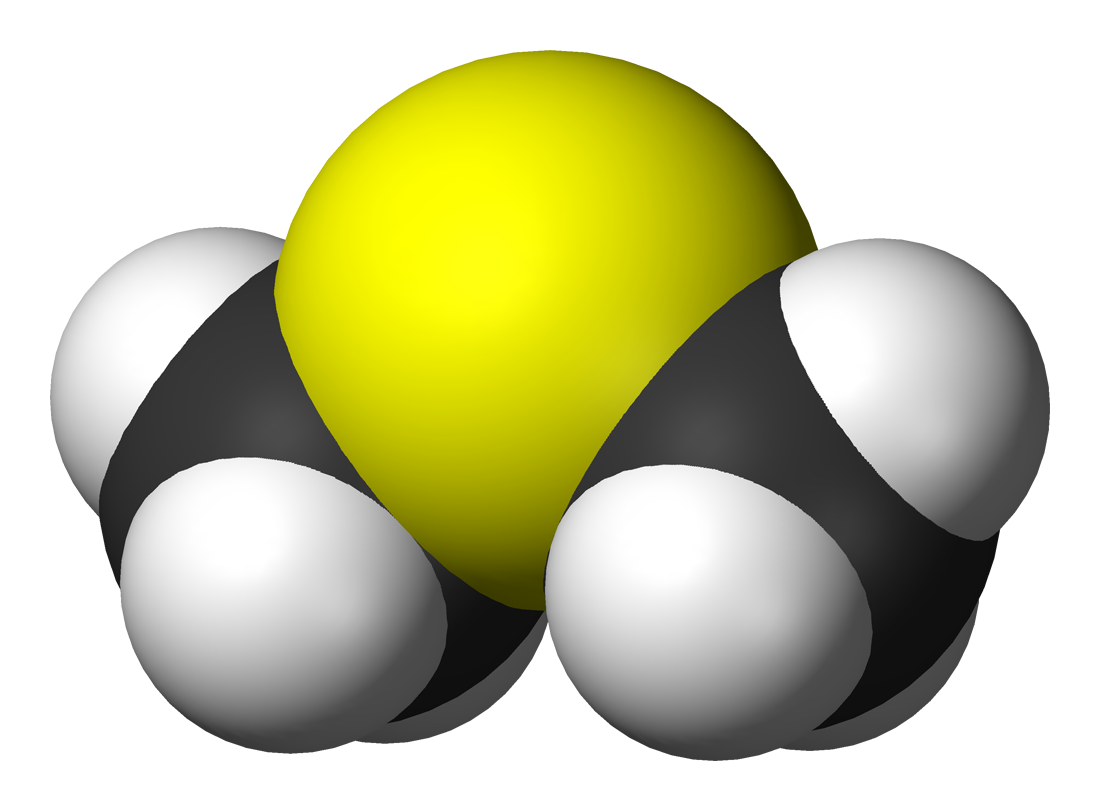
Spacefill model of dimethyl sulfide
Names
Preferred IUPAC name
(Methylsulfanyl)methane[3]
Other names
  • (Methylthio)methane[3]
  • Dimethyl sulfide[3]
  • Dimethyl thioether[4]
Identifiers
3D model (JSmol)
1696847
ChEBI
ChEMBL
ChemSpider
ECHA InfoCard 100.000.770 Edit this at Wikidata
EC Number
  • 200-846-2
KEGG
MeSH dimethyl+sulfide
RTECS number
  • PV5075000
UNII
UN number 1164
  • InChI=1S/C2H6S/c1-3-2/h1-2H3 checkY
    Key: QMMFVYPAHWMCMS-UHFFFAOYSA-N checkY
  • Key: QMMFVYPAHWMCMS-UHFFFAOYAH
  • CSC
Properties
(CH3)2S
Molar mass 62.13 g·mol−1
Appearance Colourless liquid
Odor Stench: cabbage, sulfurous, unpleasant
Density 0.846 g·cm−3
Melting point −98 °C; −145 °F; 175 K
Boiling point 35 to 41 °C; 95 to 106 °F; 308 to 314 K
log P 0.977
Vapor pressure 53.7 kPa (at 20 °C)
−44.9×10⁻⁶ cm3/mol
1.435
Thermochemistry
−63.9 to −66.9 kJ⋅mol−1
−2.1812 to −2.1818 MJ⋅mol−1
Hazards
GHS labelling:
GHS02: Flammable GHS05: Corrosive GHS07: Exclamation mark
Danger
H225, H315, H318, H335
P210, P261, P280, P305+P351+P338
Flash point −36 °C (−33 °F; 237 K)
206 °C (403 °F; 479 K)
Explosive limits 19.7%[clarification needed]
Safety data sheet (SDS) osha.gov
Related compounds
Related compounds
Except where otherwise noted, data are given for materials in their standard state (at 25 °C [77 °F], 100 kPa).
checkY verify (what is checkY☒N ?)

Dimethyl sulfide (DMS) or methylthiomethane is an organosulfur compound with the formula (CH3)2S. It is the simplest thioether and has a characteristic disagreeable odor. It is a flammable liquid that boils at 37 °C (99 °F). It is a component of the smell produced from cooking of certain vegetables (notably maize, cabbage, and beetroot) and seafoods. It is also an indication of bacterial contamination in malt production and brewing. It is a breakdown product of dimethylsulfoniopropionate (DMSP), and is also produced by the bacterial metabolism of methanethiol.

Occurrence and production

[edit]

DMS originates primarily from DMSP, a major secondary metabolite in some marine algae.[5] DMS is the most abundant biological sulfur compound emitted to the atmosphere.[6][7] Emission occurs over the oceans by phytoplankton. DMS is also produced naturally by bacterial transformation of dimethyl sulfoxide (DMSO) waste that is disposed of into sewers, where it can cause environmental odor problems.[8]

DMS is oxidized in the marine atmosphere to various sulfur-containing compounds, such as sulfur dioxide, dimethyl sulfoxide (DMSO), dimethyl sulfone, methanesulfonic acid and sulfuric acid.[9] Among these compounds, sulfuric acid has the potential to create new aerosols which act as cloud condensation nuclei. It usually results in the formation of sulfate particles in the troposphere. Through this interaction with cloud formation, the massive production of atmospheric DMS over the oceans may have a significant impact on the Earth's climate.[10][11] The CLAW hypothesis suggests that in this manner DMS may play a role in planetary homeostasis.[12]

Marine phytoplankton also produce dimethyl sulfide,[13] and DMS is also produced by bacterial cleavage of extracellular DMSP.[14] Biologists W. D. Hamilton and Tim Lenton have proposed that this may be an adaptive trait, as the algae can use the resulting clouds to disperse themselves around the world.[15] DMS has been characterized as the "smell of the sea",[16] though it would be more accurate to say that DMS is a component of the smell of the sea, others being chemical derivatives of DMS, such as oxides, and yet others being algal pheromones such as dictyopterenes.[17]

Dimethyl sulfide, dimethyl disulfide, and dimethyl trisulfide have been found among the volatiles given off by the fly-attracting plant known as dead-horse arum (Helicodiceros muscivorus). Those compounds are components of an odor like rotting meat, which attracts various pollinators that feed on carrion, such as many species of flies.[18]

Physiology of dimethyl sulfide

[edit]

Dimethyl sulfide is normally present at very low levels in healthy people, namely less than 7 nM in blood, less than 3 nM in urine and 0.13 to 0.65 nM on expired breath.[19][20]

At pathologically dangerous concentrations, this is known as dimethylsulfidemia. This condition is associated with blood borne halitosis and dimethylsulfiduria.[21][22][23]

Astronomical detection

[edit]

Dimethyl sulfide has been detected in comets, which indicates non-living sources are available.[24] It has also been synthesized abiotically in the laboratory.[25] For comet 67P/Churyumov-Gerasimenko, the European Space Agency sampled the cloud of dust and gas shed from the comet.[24][26] Dimethyl sulfide has also been made abiotically in laboratories using prebiotic conditions.[27] These comet-based discoveries contradict the suggestion that dimethyl sulfide is an indicator of life on other planets.[28][25][29][30]

The James Webb Space Telescope has possibly detected evidence of DMS in the atmosphere of the exoplanet K2-18b.[31][32][33][34]

Industrial production

[edit]

In industry dimethyl sulfide is produced by treating hydrogen sulfide with excess methanol over an aluminium oxide catalyst:[35]

2 CH3OH + H2S → (CH3)2S + 2 H2O

Dimethyl sulfide is emitted by kraft pulping mills as a side product from delignification.

Odor

[edit]

Dimethyl sulfide has a characteristic odor commonly described as cabbage-like. It becomes highly disagreeable at even quite low concentrations. Some reports claim that DMS has a low olfactory threshold that varies from 0.02 to 0.1 ppm[clarification needed] between persons, but it has been suggested that the odor attributed to dimethyl sulfide may in fact be due to disulfides, polysulfides and thiol impurities, since the odor of dimethyl sulfide is much less disagreeable after it is freshly washed with saturated aqueous mercuric chloride.[36] Dimethyl sulfide is also available as a food additive to impart a savory flavor; in such use, its concentration is low. Beetroot,[37] asparagus,[38] cabbage, maize and seafoods produce dimethyl sulfide when cooked.

Dimethyl sulfide is also produced by marine planktonic microorganisms such as the coccolithophores. It contributes to the characteristic odor of sea air. In the Victorian era, before DMS was discovered, the origin of sea air's 'bracing' aroma was misattributed to ozone.[39]

Dimethyl sulfide is the main volatile product various of truffles. It is the compound that animals trained to uncover the fungus (such as pigs and detection dogs) sniff out when searching for them.[40]

Chemical reactions

[edit]

It is used is for the production of borane dimethyl sulfide from diborane:[35]

B2H6 + 2 (CH3)2S → 2 BH3·S(CH3)2

Oxidation of dimethyl sulfide gives the solvent dimethyl sulfoxide. Further oxidation affords dimethyl sulfone.

As illustrated above by the formation of its adduct with borane, dimethyl sulfide is a Lewis base. It is classified as a soft ligand (see also ECW model). It forms complexes with many transition metals but such adducts are often labile. For example, it serves a displaceable ligand in chloro(dimethyl sulfide)gold(I).[41]

Dimethyl sulfide is used in the workup of the ozonolysis of alkenes. It reduces the intermediate trioxolane. The Swern oxidation produces dimethyl sulfide by reduction of dimethylsulfoxide.[41]

With chlorinating agents such as sulfuryl chloride, dimethyl sulfide converts to chloromethyl methyl sulfide:

SO2Cl2 + (CH3)2S → SO2 + HCl + ClCH2SCH3

Like other methylthio compounds, DMS is deprotonated by butyl lithium:[42]

CH3CH2CH2CH2Li + (CH3)2S → CH3CH2CH2CH3 + LiCH2SCH3

Safety

[edit]

Dimethyl sulfide is highly flammable;[43] its flash point is −38 °C (−36 °F)[44] or −49 °C (−56 °F).[45] Its self-ignition temperature is 205 °C (401 °F).[45] It is an eye and skin irritant and is harmful if swallowed. It has an unpleasant odor at even extremely low concentrations.[46]

See also

[edit]

References

[edit]
[edit]
Revisions and contributorsEdit on WikipediaRead on Wikipedia
from Grokipedia
Dimethyl sulfide (DMS), chemically known as (CH₃)₂S, is a volatile organosulfur compound that exists as a colorless to straw-yellow liquid at room temperature, characterized by a strong, unpleasant odor resembling cabbage, garlic, or boiled vegetables. With a molecular weight of 62.13 g/mol, a boiling point of 37 °C, a melting point of -98 °C, and a density of 0.846 g/cm³, DMS is flammable and less dense than water, readily volatilizing into the air.[1] The primary natural source of DMS is marine ecosystems, where it is produced through the enzymatic breakdown of dimethylsulfoniopropionate (DMSP), an osmolyte synthesized by phytoplankton, bacteria, and certain macroalgae; this process releases DMS into the ocean surface and subsequently into the atmosphere, accounting for the majority of global biogenic sulfur emissions estimated at 15–33 teragrams of sulfur per year. Industrially, DMS is generated as a byproduct during the kraft pulping process in paper production, where it forms from reactions involving lignin and reduced sulfur compounds in wood digesters and evaporators, with emissions typically ranging from 0.6 to 1.5 kg per metric ton of product before controls. It is also synthesized via the reaction of methanol and hydrogen sulfide over catalysts for use as a chemical intermediate.[2][3] In the atmosphere, DMS plays a pivotal role as the dominant natural precursor to sulfate aerosols, undergoing oxidation primarily by hydroxyl radicals to form sulfur dioxide (SO₂) and sulfuric acid (H₂SO₄), which contribute to cloud condensation nuclei formation and influence marine cloud albedo, thereby exerting a cooling effect on climate as part of the proposed CLAW feedback mechanism linking ocean biology to global temperatures. Additionally, DMS contributes to the characteristic scent of the sea and is involved in food chemistry, such as imparting flavors in cooked vegetables and beer, while its biodegradation in soils and waters occurs rapidly under aerobic conditions.[2][4]

Chemical and Physical Properties

Molecular Structure and Formula

Dimethyl sulfide, with the chemical formula $ \ce{(CH3)2S} $ or $ \ce{C2H6S} $, has a molecular weight of 62.13 g/mol.[1] This compound features a symmetric structure centered on a sulfur atom covalently bonded to two methyl ($ \ce{CH3} $) groups. The sulfur atom retains a lone pair of electrons, which, according to valence shell electron pair repulsion (VSEPR) theory, imparts a bent geometry to the molecule, akin to other AX₂E₂ systems. The C-S-C bond angle measures approximately 99°, specifically 98.9° as determined experimentally, reflecting the repulsion between the bonding pairs and the lone pair on sulfur.[5] Structurally, dimethyl sulfide bears analogy to dimethyl ether ($ \ce{(CH3)2O} $), where oxygen replaces sulfur as the central atom, also resulting in a bent configuration due to a lone pair. However, the lower electronegativity of sulfur (2.58) compared to oxygen (3.44) renders the C-S bonds less polar than the corresponding C-O bonds, contributing to the overall reduced polarity of dimethyl sulfide, with a dipole moment of 1.50 D versus 1.30 D for dimethyl ether.[6][7] The nomenclature "dimethyl sulfide" stems from early 19th-century organic chemistry conventions, where thioethers—compounds containing a carbon-sulfur-carbon linkage—were systematically named as dialkyl sulfides to denote the alkyl groups attached to the divalent sulfur. This naming practice, established during the foundational period of systematic organic nomenclature, highlights the compound's identity as the simplest symmetric thioether.[8]

Physical Characteristics

Dimethyl sulfide is a colorless liquid at room temperature, occasionally appearing pale yellow or straw-colored due to impurities. It has a density of 0.845–0.846 g/cm³ at 20–25°C, making it less dense than water.[1][9] The compound exhibits a low boiling point of 37–38°C and a melting point of −98°C, reflecting weak intermolecular forces primarily due to the non-polar sulfur atom in its structure. Its vapor pressure is approximately 53 kPa at 20°C, contributing to its volatility.[10][11][9] Dimethyl sulfide is miscible with organic solvents such as ethanol, ether, and hydrocarbons. It shows limited solubility in water, approximately 2 g/100 mL at 25°C, with solubility decreasing at higher temperatures.[1] Under normal conditions, dimethyl sulfide is chemically stable but highly flammable, with a flash point of −36°C and the ability to form explosive vapor-air mixtures (2.2–19.7% by volume). It remains thermally stable up to around 200°C but can react explosively with strong oxidants or oxygen at higher temperatures above 210°C.[11][1][12]

Spectroscopic Properties

Dimethyl sulfide (DMS) exhibits characteristic signals in nuclear magnetic resonance (NMR) spectroscopy that aid in its structural identification. In ¹H NMR, the six equivalent methyl protons resonate as a singlet at approximately 2.1 ppm, reflecting the symmetric environment around the sulfur atom and the absence of coupling due to free rotation.[13] This chemical shift is typical for methyl groups attached to sulfur in thioethers, appearing downfield from alkane methyl protons but upfield from those in sulfoxides. For ¹³C NMR, the methyl carbon signal occurs at around 15 ppm, consistent with the electron-donating effect of sulfur deshielding the carbon nucleus to a moderate extent compared to hydrocarbons.[14] Infrared (IR) spectroscopy of DMS reveals key vibrational modes associated with its functional groups. The C-H stretching vibrations of the methyl groups produce strong absorptions around 2900 cm⁻¹, specifically asymmetric and symmetric stretches near 2990 cm⁻¹ and 2915 cm⁻¹, respectively, indicative of sp³-hybridized hydrogens.[15] The characteristic S-C stretching modes appear in the 700–750 cm⁻¹ region, with symmetric and asymmetric stretches often observed at approximately 702 cm⁻¹ and 741 cm⁻¹, providing a fingerprint for the C-S-C linkage in dialkyl sulfides. These low-frequency bands are diagnostic for thioethers, distinguishing them from higher-energy stretches in oxygen analogs like ethers. Ultraviolet-visible (UV-Vis) spectroscopy of DMS shows weak absorption in the near-UV region due to an n→σ* transition involving the non-bonding electrons on sulfur. The maximum absorption occurs around 220 nm with a molar absorptivity (log ε ≈ 3.0), reflecting the forbidden nature of the transition and the compound's lack of extended conjugation.[16] This band is broader and less intense than π→π* transitions in aromatic systems, but it is useful for detecting DMS in environmental samples where concentrations are low.[17] Mass spectrometry of DMS, typically via electron ionization, displays a molecular ion peak at m/z 62 corresponding to [C₂H₆S]⁺•. The base peak at m/z 47 arises from the facile loss of a methyl radical (•CH₃), yielding the stable [CH₃S]⁺ fragment, which is characteristic of α-cleavage in thioethers.[18] Other notable fragments include m/z 61 ([C₂H₅S]⁺) and m/z 45 (possibly from further decomposition), but the m/z 47 ion dominates due to the stability of the methylthio cation.[19] This fragmentation pattern facilitates sensitive detection in gas chromatography-mass spectrometry applications for trace analysis.

Natural Occurrence

Biological Sources on Earth

Dimethyl sulfide (DMS) is primarily produced in Earth's biosphere by marine phytoplankton through the enzymatic cleavage of dimethylsulfoniopropionate (DMSP), an abundant osmoprotectant that helps cells maintain turgor under varying salinity conditions.[20] Species such as Emiliania huxleyi, a cosmopolitan coccolithophore, are key producers, synthesizing DMSP intracellularly and releasing DMS via the action of DMSP lyase enzymes during cell lysis or active demethylation pathways.[21] This process is widespread among haptophytes, dinoflagellates, and other algal groups, contributing significantly to the ocean's sulfur budget.[22] The global flux of DMS from oceanic biological sources is substantial, accounting for approximately 90% of natural sulfur emissions to the atmosphere and estimated at 15–33 Tg S per year.[23] In marine algae, DMSP breakdown to DMS often occurs as a byproduct of stress responses, including grazing by zooplankton, ultraviolet radiation exposure, and oxidative damage, where DMS and related compounds like acrylate serve as antioxidants by scavenging reactive oxygen species.[24] Additionally, DMS may function as an infochemical, signaling algal stress to predators or facilitating microbial interactions in the marine environment.[25] Terrestrial biological sources of DMS are minor compared to oceanic emissions but include production by soil bacteria, wetland microorganisms, and certain plants. In soils and wetlands, anaerobic bacteria generate DMS through the methylation of sulfide or reduction of methionine derivatives under low-oxygen conditions.[26] Plants such as those in the Brassica genus (e.g., cabbage and broccoli) produce DMS via the degradation of S-methylmethionine, a sulfur-containing compound involved in ethylene biosynthesis, particularly during senescence or mechanical damage.[27] Seaweeds, though primarily marine, also contribute modestly to coastal terrestrial fluxes through tidal exposure and decomposition.[27]

Detection in Astronomy

Dimethyl sulfide (DMS) was first identified in extraterrestrial environments through signatures detected in the coma of comet 67P/Churyumov-Gerasimenko during the Rosetta mission in 2014–2016, with high-resolution mass spectrometry confirming its presence at an abundance of (0.13 ± 0.04)% relative to methanol and providing evidence for abiotic formation pathways in cometary matter.[28] This marked the initial observational evidence of DMS beyond Earth, highlighting its role as an organosulfur molecule in primitive solar system bodies. Subsequent detection in the interstellar medium occurred in 2025 within the Galactic Center molecular cloud G+0.693−0.027, a star-forming region, using ultradeep molecular line surveys with the Yebes 40m and IRAM 30m telescopes.[29] The identification relied on observations of low-energy rotational transitions in the ground vibrational state, yielding a column density of (2.6 ± 0.3) × 10^{13} cm^{-2} and a fractional abundance relative to H_2 of approximately 1.9 × 10^{-10}.[29] DMS abundances in this cloud are about 1.6 times lower than those of its structural isomer ethanethiol (CH_3CH_2SH) and 30 times lower than its oxygen analog dimethyl ether (CH_3OCH_3), underscoring its minor but significant contribution as a sulfur carrier in astrochemistry.[29] In planetary atmospheres, the James Webb Space Telescope (JWST) provided the first tentative evidence of DMS in the habitable-zone exoplanet K2-18 b in 2023, based on near-infrared transmission spectroscopy showing a weak signal alongside methane and carbon dioxide.[30] Follow-up mid-infrared observations in 2025 initially reported a ~3-sigma confidence level for DMS or its related species dimethyl disulfide (DMDS) (Madhusudhan et al., 2025), suggesting potential biosignature implications despite emerging evidence of abiotic production routes in interstellar and cometary settings.[31] However, subsequent independent analyses of JWST data in July and August 2025 found insufficient evidence to confirm the detection, emphasizing the need for further observations to resolve the ongoing debate on its validity as a biosignature.[32][33] These findings position DMS as a key molecule for probing sulfur chemistry and habitability in diverse astrophysical environments.

Production

Biosynthesis in Organisms

Dimethyl sulfide (DMS) is primarily produced in organisms through the catabolism of dimethylsulfoniopropionate (DMSP), a compatible solute synthesized via enzymatic pathways starting from the amino acid methionine. In marine phytoplankton, such as diatoms and dinoflagellates, DMSP biosynthesis commonly follows the SAM-dependent methylation pathway, where methionine is first converted to S-methylmethionine by the enzyme S-adenosylmethionine (SAM)-dependent methyltransferase, such as DsyB or homologs.[34] Subsequent steps involve the transamination of S-methylmethionine to dimethylsulfonioacetate, followed by reduction and methylation to yield DMSP, enabling these organisms to accumulate the compound as an osmoprotectant and antioxidant.[35] The release of DMS from DMSP occurs via cleavage by DMSP lyase enzymes, which are widespread in phytoplankton and associated bacteria. In phytoplankton, the enzyme Alma1 catalyzes this reaction, producing DMS and acrylate as byproducts:
(CH3)2S+(CH2)2COO(CH3)2S+CH2=CHCOO \text{(CH}_3\text{)}_2\text{S}^+\text{(CH}_2\text{)}_2\text{COO}^- \rightarrow \text{(CH}_3\text{)}_2\text{S} + \text{CH}_2=\text{CHCOO}^-
This process is particularly prominent in bloom-forming species like Emiliania huxleyi, where it contributes to the global flux of DMS into the atmosphere.[36] In bacteria, such as those in the Roseobacter clade (e.g., Sulfitobacter spp.), DMSP serves as a carbon and sulfur source, with lyases like DddP or DddW cleaving DMSP to DMS and acrylate, while alternative demethylation pathways via DmdA enzymes generate methylmercaptopropionate, which can indirectly yield DMS under certain conditions.[37] The biosynthesis and cleavage of DMSP are regulated by environmental stresses, notably oxidative stress, which induces a metabolic switch favoring DMS production over demethylation in phytoplankton and bacteria to mitigate reactive oxygen species damage. Genetic studies from the 2010s, including genome sequencing of algal species like E. huxleyi and Phaeodactylum tricornutum, have revealed multiple isoforms of DMSP lyase genes (e.g., dddP, dddW, and alma1), highlighting evolutionary adaptations for DMS production across diverse marine organisms.[38] These pathways are most active in marine ecosystems, where phytoplankton dominate DMSP synthesis.[39]

Industrial Synthesis

Dimethyl sulfide is primarily produced industrially as a byproduct of the kraft pulping process, where it forms during the alkaline cooking of wood chips with white liquor containing sodium hydroxide and sodium sulfide. The demethylation of lignin methoxy groups generates methyl mercaptan, which subsequently reacts to form DMS in the black liquor. The DMS is recovered from the concentrated black liquor vapors through distillation during the evaporation stage.[40][41] A key synthetic route for dimethyl sulfide involves the vapor-phase reaction of methanol with hydrogen sulfide over an alumina or zeolite catalyst at approximately 400°C. The balanced equation for this process is:
2 CHX3OH+HX2S(CHX3)X2S+2 HX2O 2 \ \ce{CH3OH} + \ce{H2S} \rightarrow \ce{(CH3)2S} + 2 \ \ce{H2O}
This method is widely used for controlled production and achieves high selectivity toward DMS when excess methanol is employed.[42][43] Alternative industrial routes include the catalytic reduction of dimethyl disulfide using hydrogen or methanol over metal oxide catalysts at elevated temperatures around 350°C, providing a means to recycle or convert related sulfur compounds into DMS. Another approach involves the methylation of ethylene sulfide, though this is less common in large-scale operations.[44] Industrial-grade dimethyl sulfide is typically purified to 99% or greater via fractional distillation to meet specifications for various applications.[1]

Sensory and Olfactory Properties

Odor Profile

Dimethyl sulfide exhibits a strong, unpleasant odor commonly described as reminiscent of rotting cabbage, cooked cauliflower, garlic, or decomposed vegetables. It is also characterized by notes of creamed corn, seaweed, or organic sulfur, evoking a sharp, green, and pervasive quality that renders it highly diffusive even in trace amounts.[1][45][46][47] The distinctive pungency of dimethyl sulfide's odor stems from its structure as a low-molecular-weight organic sulfur compound, which promotes high volatility and rapid vaporization at ambient temperatures. This volatility, coupled with the sulfur atom's chemical properties, allows the molecule to interact readily with olfactory receptors, producing its characteristic sulfurous profile.[1][48] Perception of the odor varies with concentration: at low levels in the parts-per-billion range, it can impart subtle fruity or ethereal notes, whereas at higher concentrations exceeding 1 ppm, the scent shifts to a more repulsive, foul character. In natural settings, dimethyl sulfide contributes to the iconic "ocean smell" along coastal areas, released primarily by marine phytoplankton and algae into the atmosphere. Additionally, it serves as a flavoring agent in certain foods, enhancing savory profiles in items such as beer, cheese, seafood, and baked goods, where controlled low doses evoke desirable corn-like or umami qualities.[46][49][50][51][52]

Sensory Detection and Thresholds

Dimethyl sulfide (DMS) exhibits one of the lowest olfactory detection thresholds among volatile sulfur compounds, with reported values ranging from 0.12 to 0.4 ppb in air, enabling human perception at extremely low concentrations.[53] This sensitivity positions DMS as a potent odorant, often detectable well below levels that pose health risks, as evidenced by sensory panel studies using gas chromatography-olfactometry (GC-O) techniques that isolate and quantify its aroma contribution in complex matrices like food and environmental samples.[54] Individual variation in detection is significant, influenced by genetic factors; for instance, polymorphisms near the olfactory receptor gene OR2M7 on chromosome 1 are associated with specific anosmia to sulfurous odors, including those linked to DMS, affecting approximately 40-60% of the population based on genome-wide association studies of asparagus-derived odor perception, where DMS is a key component.[55] At higher concentrations, DMS triggers trigeminal nerve responses leading to sensory irritation. The American Conference of Governmental Industrial Hygienists (ACGIH) recommends a threshold limit value (TLV) of 10 ppm as an 8-hour time-weighted average, primarily to prevent upper respiratory tract irritation observed in animal studies and extrapolated human data, with no specific OSHA permissible exposure limit established but similar considerations applied.[56] Short-term exposures above this level can elicit noticeable trigeminal irritation, including stinging in the eyes and nasal passages, though direct human studies are limited and often rely on analogous sulfur compounds.[46] Physiologically, DMS interacts with olfactory receptors like OR2M7, which is tuned to sulfur-containing volatiles, initiating signal transduction in the olfactory epithelium to produce the characteristic perception without crossing into overt toxicity at threshold levels.[57] Analytical methods such as GC-O continue to refine these thresholds by combining instrumental separation with human sensory evaluation, accounting for inter-individual differences and confirming DMS's role in low-level odor detection across diverse applications.[58]

Chemical Reactivity

Oxidation Reactions

Dimethyl sulfide (DMS) undergoes primary oxidation in the atmosphere through reaction with the hydroxyl radical (OH). The addition channel forms an adduct that reacts with O₂ to produce dimethyl sulfoxide (DMSO) and HO₂ (net: (CH₃)₂S + OH + O₂ → (CH₃)₂SO + HO₂). The abstraction channel produces H₂O + CH₃SCH₂•. The rate constant for the overall reaction is k = 2.0 × 10⁻¹¹ cm³ molecule⁻¹ s⁻¹ at 298 K, reflecting the combined contributions of abstraction and addition pathways under atmospheric conditions.[59][60] Further oxidation of DMSO in the gas phase proceeds to dimethyl sulfone (DMSO₂) primarily via reaction with OH radicals, though contributions from NO₂ and O₃ can also drive this transformation under varying NOx levels.[4] In aqueous environments, such as sea-salt aerosols or cloud droplets, oxidation of DMS or its derivatives by hydrogen peroxide (H₂O₂) yields methanesulfonic acid (MSA) as a key product.[61] These oxidative steps contribute to the tropospheric half-life of DMS, estimated at approximately 1 day, during which the process influences the formation of sulfate aerosols critical for cloud condensation nuclei.[59] In biological systems, particularly in marine bacteria like Hyphomicrobium sulfonivorans, DMS is oxidized by DMS monooxygenase to formaldehyde and methanethiol.[62] This enzymatic pathway represents a significant microbial sink for DMS in oceanic environments, facilitating sulfur assimilation and recycling.

Other Reactions and Derivatives

Dimethyl sulfide exhibits nucleophilic behavior as a soft nucleophile owing to the polarizable lone pairs on sulfur, facilitating S_N2 reactions with primary alkyl halides to form sulfonium salts. The general reaction is (CH₃)₂S + R–X → [R–S(CH₃)₂]⁺ X⁻, where R is an alkyl group and X is a halide; for instance, reaction with iodomethane produces trimethylsulfonium iodide in high yield under mild conditions.[63][64] Dimethyl sulfide serves as a core reagent in the Corey-Kim oxidation, a mild method for converting primary alcohols to aldehydes and secondary alcohols to ketones. In this process, dimethyl sulfide reacts with N-chlorosuccinimide to generate a chlorodimethylsulfonium chloride intermediate, which coordinates to the alcohol oxygen, forming an alkoxysulfonium ion that undergoes base-promoted elimination to the carbonyl product. This variant avoids over-oxidation and is particularly useful at low temperatures (-25°C). The original procedure demonstrates quantitative yields for various alcohols using triethylamine as the base.[65] The Swern oxidation employs an analogous activation strategy but uses dimethyl sulfoxide with oxalyl chloride to form a similar sulfonium species for alcohol oxidation, highlighting the reactivity parallel in sulfide-based systems. Dimethyl sulfide forms coordination complexes with transition metals such as Pd(II), acting as a neutral two-electron donor ligand through sulfur. For example, trans-[PdCl₂{(CH₃)₂S}₂] is a stable complex used in studies of ligand exchange and catalytic processes, including hydrogenation reactions where the sulfide ligand modulates Pd reactivity. These complexes exhibit square-planar geometry and can be prepared by displacing labile ligands from PdCl₂ precursors in nonpolar solvents.[66] Thermal decomposition of dimethyl sulfide occurs above 500°C in the gas phase, yielding ethylene, hydrogen sulfide, and methane as major products via radical pathways involving C-S bond cleavage. Key derivatives of dimethyl sulfide include methanethiol, obtained via catalytic hydrogenolysis or thiolation reactions. In the presence of phosphorus-promoted alumina catalysts, dimethyl sulfide reacts with hydrogen sulfide to produce methanethiol with high selectivity (up to 95%) at 300–400°C, proceeding through surface-activated intermediates. This process is industrially relevant for thiol production and demonstrates the compound's utility in sulfur chemistry transformations.[67]

Applications and Uses

Industrial Applications

Dimethyl sulfide (DMS) serves as an extractive solvent in the petrochemical industry, particularly for separating aromatic hydrocarbons from aliphatic ones, owing to its favorable solvency for aromatics, low boiling point, and reduced risk of peroxide formation compared to other ethers.[68] This application leverages DMS's ability to selectively dissolve aromatics in liquid-liquid extraction processes, contributing to the purification of feedstocks for gasoline and chemical production. Global production and consumption of DMS for industrial uses, including petrochemical extraction, is estimated in the range of 10,000 to 50,000 tons annually, reflecting its role in large-scale refining operations.[1] In agrochemical manufacturing, DMS acts as a key intermediate for the production of pesticides.[69] Within the pulp and paper sector, DMS emerges as a significant byproduct of the kraft pulping process, generated during the alkaline digestion of wood chips where lignin degradation releases reduced sulfur compounds. Recovery of DMS from spent pulping liquors and non-condensable gases improves process efficiency by recycling sulfur and reducing emissions, with dedicated processes converting black liquor residues into usable DMS.[40] DMS is also used as a sulfidation agent in petrochemical processes, such as for hydrocracking catalysts and to prevent coke formation in ethylene production units.[70] Additionally, it serves as an intermediate in the production of flavors and fragrances.[71] In recent developments during the 2020s, DMS has been incorporated as an electrolyte additive in high-voltage lithium-ion batteries to enhance electrochemical stability, forming a robust cathode-electrolyte interphase and reducing side reactions for improved cycle life.[72][73]

Laboratory and Research Uses

Dimethyl sulfide (DMS) plays a critical role in organic synthesis, particularly as the reduced byproduct in mild oxidation methods like the Swern and Parikh-Doering oxidations, which convert primary and secondary alcohols to aldehydes and ketones with high efficiency for sensitive substrates, often achieving yields exceeding 90%.[74] In the Swern oxidation, DMS is formed during the activation of dimethyl sulfoxide (DMSO) with oxalyl chloride, facilitating selective oxidation under low-temperature conditions to prevent over-oxidation.[75] Similarly, the Parikh-Doering oxidation employs DMSO activated by sulfur trioxide-pyridine complex, generating DMS while enabling clean transformations suitable for complex natural product syntheses.[76] In analytical chemistry, DMS serves as an internal standard in gas chromatography-mass spectrometry (GC-MS) for quantifying sulfur volatiles in environmental and food samples, providing reliable calibration due to its structural similarity and volatility.[77] It is also employed in sulfur isotope studies to trace biogeochemical cycles, with methods developed for precise δ³⁴S analysis of DMS in seawater, helping quantify marine contributions to atmospheric sulfur aerosols.[78] Biochemical research utilizes DMS as a direct probe for dimethylsulfoniopropionate (DMSP) lyase activity in algal cultures, where enzymatic cleavage of DMSP produces DMS, allowing quantification of lyase rates via headspace GC-MS to assess algal stress responses and sulfur metabolism.[79] Recent 2020s studies have advanced understanding of microbial DMS cycling, revealing key bacterial pathways for DMS production and consumption in marine sediments and the water column, with metagenomic analyses identifying dominant DMSP lyase genes in polar and deep-sea environments.[80][81]

Safety and Environmental Impact

Health and Toxicity

Dimethyl sulfide (DMS) exposure can cause acute irritation to the eyes, skin, and respiratory tract, particularly at concentrations above 10 ppm, with symptoms including nasal and ocular discomfort reported in animal studies at higher levels. Inhalation of high concentrations leads to central nervous system depression, with an LC50 of 40,250 ppm (102,300 mg/m³) for 4 hours in rats, resulting in respiratory failure and death.[56][82] Chronic exposure to DMS shows low toxicity potential, with subchronic oral studies in rats revealing no significant effects up to 250 mg/kg-day over 14 weeks. The International Agency for Research on Cancer (IARC) has not classified DMS regarding carcinogenicity due to inadequate data, and no evidence of mutagenicity or clastogenicity exists as of 2025. The American Conference of Governmental Industrial Hygienists (ACGIH) recommends a threshold limit value-time-weighted average (TLV-TWA) of 10 ppm (25 mg/m³) to prevent irritation and systemic effects, with no specific OSHA permissible exposure limit established.[56][83] In the liver, DMS is rapidly metabolized via cytochrome P450 (CYP) enzymes to dimethyl sulfoxide (DMSO), which is further oxidized to dimethyl sulfone (DMSO₂), with excretion occurring primarily through urine and breath. Occupational case studies from pulp and paper mills in the 1980s report headaches and concentration difficulties among workers exposed to low levels of DMS alongside other sulfur compounds, often below 10 ppm, highlighting its role in mixed-exposure scenarios. Its pungent odor, detectable at concentrations as low as 0.1 ppm, often provides an early warning of exposure before significant health effects manifest.[56][46]

Role in the Environment

Dimethyl sulfide (DMS) serves as the primary biogenic source of sulfur in the global sulfur cycle, accounting for the majority of natural sulfur emissions to the atmosphere from marine environments, where it is produced mainly through the microbial breakdown of dimethylsulfoniopropionate (DMSP) by phytoplankton.[84] Once emitted, DMS undergoes rapid atmospheric oxidation primarily by hydroxyl (OH) and nitrate (NO3) radicals, yielding key products such as sulfur dioxide (SO2), methane sulfonic acid (MSA), and sulfate aerosols.[85] These oxidation products act as cloud condensation nuclei (CCN), promoting the formation of marine stratocumulus clouds that reflect incoming solar radiation and enhance Earth's albedo, thereby exerting a net cooling influence on the climate.[86] The interconnected role of DMS in sulfur cycling and climate regulation is encapsulated in the CLAW hypothesis, first articulated by Charlson et al. in 1987, which describes a negative feedback mechanism: warmer sea surface temperatures boost phytoplankton DMSP synthesis and DMS release, increasing aerosol and cloud formation to counteract warming and potentially stabilize global temperatures.[87] Updates to the hypothesis in the 2020s, informed by advanced modeling and observations, affirm DMS's climatic relevance, with estimates indicating it accounts for 11–18% of the global sulfate burden and over 48% of atmospheric sulfur, while contributing substantially—on the order of 10–20% in pristine regions—to marine CCN concentrations that drive cloud reflectivity.[88][89] Although beneficial for cooling, DMS indirectly contributes to environmental pollution by oxidizing to sulfuric acid, a precursor to acid rain that can acidify soils and water bodies in downwind regions.[90] Its short atmospheric lifetime of approximately 1 day ensures rapid removal via oxidation and deposition, minimizing long-term persistence and bioaccumulation risks in marine or terrestrial ecosystems.[91] Ongoing climate research from 2023 to 2025 highlights vulnerabilities in DMS-mediated feedbacks, with studies showing that ocean acidification reduces DMSP production in phytoplankton communities, leading to declining DMS emissions and a weakened CLAW mechanism that could amplify warming.[92] For example, experimental and modeling work demonstrates that lowered pH shifts phytoplankton assemblages away from DMSP-rich species, curtailing sulfur flux to the atmosphere and altering aerosol formation in acidifying oceans.[93]

References

User Avatar
No comments yet.