Hubbry Logo
Dornier SeastarDornier SeastarMain
Open search
Dornier Seastar
Community hub
Dornier Seastar
logo
8 pages, 0 posts
0 subscribers
Be the first to start a discussion here.
Dornier Seastar
Dornier Seastar
from Wikipedia

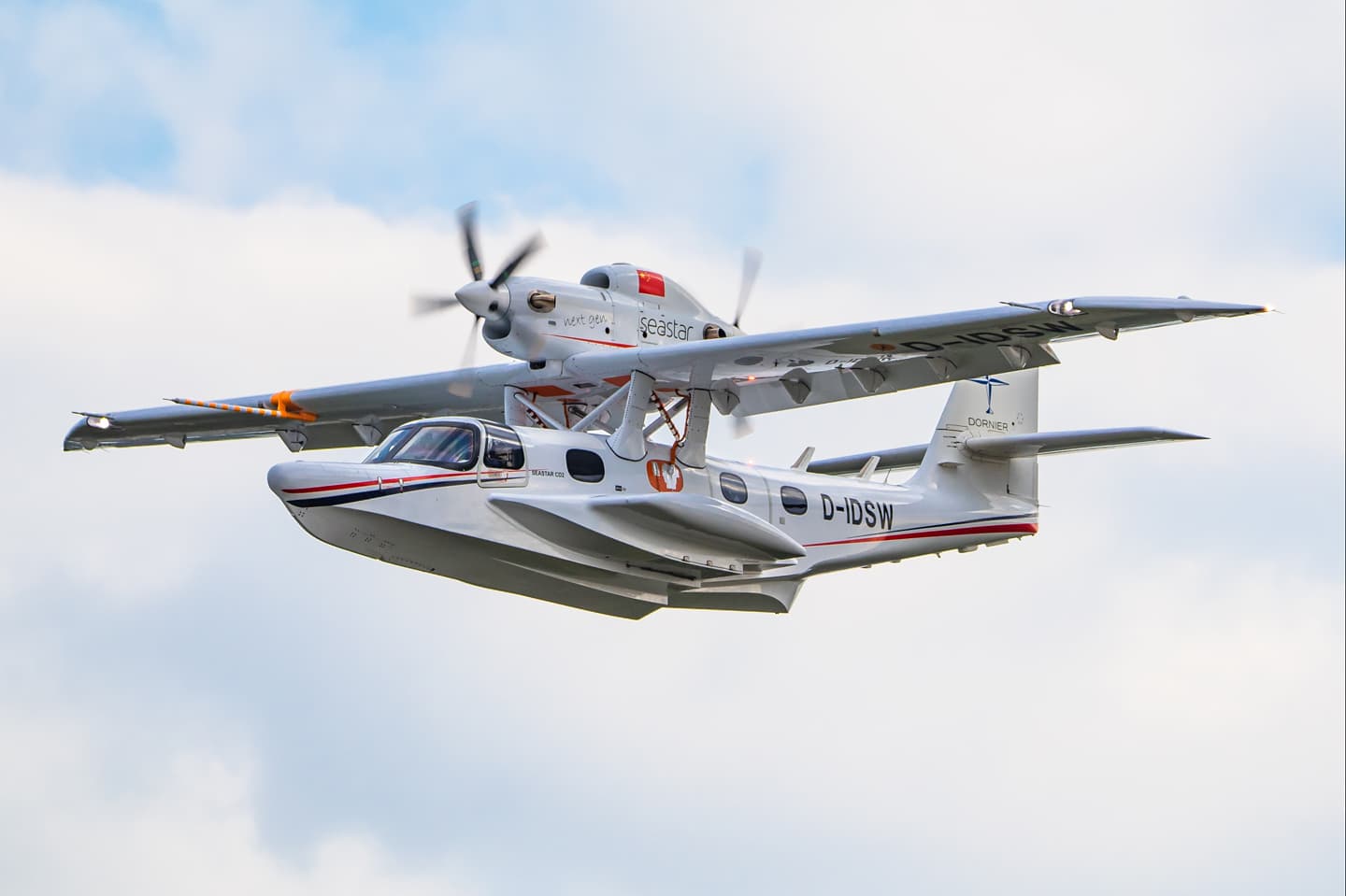
The Dornier Seastar is a turboprop-powered amphibious aircraft built largely of composite materials. Developed by Claudius Dornier Jr [de] of Germany, it first flew in 1984. The design is owned by Claudius Jr's son, Conrado, who founded Dornier Seawings AG (now Dornier Seawings) to continue work on the project after two previous firms, Claudius Dornier Aircraft and Dornier Composite Aircraft, both went into bankruptcy. Development of the aircraft was put on hold without any production Seastars being completed in 1991.

Key Information

Multiple attempts to put the Seastar into production, often as a joint venture with other aerospace companies, were made throughout the 1990s and early 2000s. However securing the necessary financing to proceed to the manufacturing phase proved challenging. After several false starts, in October 2009, Dornier Seawings announced that it was formally launching manufacturing of the type, although no aircraft were actually built. In November 2018 the company received US$170 million in funding from its Chinese backers to construct a manufacturing facility and one prototype for flight, with production to follow in 2021.[1]

Development

[edit]

Origins

[edit]

The first prototype, a proof-of-concept aircraft, using the metal wings from a Dornier Do 28 and with large struts bracing the wing to the sponsons, conducted its maiden flight from Hamburg on 17 August 1984.[2] A second prototype, which was more representative of the definitive design, featured several alterations; these included the adoption of a new composite wing, which connected with a set of cabane struts to the fuselage only, and was a larger aircraft overall. On 24 April 1987, the second prototype made its first flight from Oberpfaffenhofen. Development work on the project came to a close in 1991.[3] A total of three aircraft had been produced at this point.[4] In 1990, a European certificate of airworthiness was received for the type; in 1991, American airworthiness was also granted to the Seastar.[5][6]

During the 1990s, the programme encountered severe organisational issues, including a lack of funding and backers who subsequently withdrew their participation.[7][3][8] In November 1989, the company behind the Seastar, Claudius Dornier Aircraft, filed for bankruptcy, amid claims that the German government had failed to support the project. Prior to this, more than 50 options and letters of intent had been received for the type.[3] In 1990, Dornier Composite Aircraft acquired the Seastar program, but this firm was also bankrupt within two years. As a result, a new company, Dornier Seastar, was formed to complete the aircraft's development and to produce the type, and began to seek partnerships with Asian companies to achieve this.[3][8]

In 1993, Dornier Seastar and a consortium of Malaysian investors signed a joint venture agreement, under which assembly of the Seastar was envisioned to take place at a factory in Malaysia within the following year. However, in July 1995, a company spokesperson stated that Dornier Seastar's Malaysian subsidiary would be shelved until further notice, due a lack of capital investment; it has been allegedly that investors were concerned about the technical and financial viability of the project, such as the acquisition of internationally recognised production certification in Malaysia.[7][9] By the time of the withdrawal, all of the manufacturing tools, moulds and jigs to produce that aircraft had already been transferred to Penang, Malaysia, along with a prototype aircraft for sales demonstration purposes at Subang Airport, Selangor.[7]

Seeking partners

[edit]

Following the collapse of the Malaysian joint venture, Dornier Seastar promptly set about attracting new investors to finance the program into the manufacturing phase. While the company focused its search on the Asian market, representatives stated that they were considering relocating production of the type to another country; Dornier Seastar also dismissed claims that a further $100 million were required to complete development of the aircraft's design.[10] In early 1998, Dornier Seastar proposed the formation of a partnership with Hindustan Aeronautics (HAL), with the goal of producing the type as a joint venture.[3][8] HAL confirmed that it was examining the viability for the Seastar in the Indian market.[11]

By 2003, one of the two Seastar prototypes had been restored and received public transport certification in December of that year.[8] In February 2004, the company stated that, in addition to seeking investment, it had been evaluating potential manufacturing sites in Europe and Asia prior to initiating a planned development phase later that year.[8] It was said that feasibility studies and market analysis indicated that there was a global demand for around 250 such aircraft over the next ten years; furthermore, that it was proposing three different versions of the aircraft, each one for a different market segment: A surveillance variant for government agencies, a 12-seat regional airliner configuration aimed at charter operators, and a six-seat layout that was suited to VIP customers.[8] In August 2006, there were claims made that the project was close to being relaunched with backing from firms in Singapore and Abu Dhabi, the latter being contingent upon the Seastar being manufactured in Abu Dhabi.[12]

In October 2008, the company announced its intentions to produce the Seastar in the US, in part due to favourable currency exchange rates.[4] Fabrication was to be outsourced to other companies, and was intended to use mainly American suppliers. The firm viewed the aircraft as having a niche role among private owners, airlines, and search and rescue operators.[4] Dornier Seawings stated that it was seeking an additional $150 million to bring the type into mass production; it was also said that, in the event of 25 or more sales being secured, the Seastar could be in production as early as March 2009.[13] In March 2009, the firm stated that it was pushing back its planned launch to the third quarter of that year, attributing this to the effects of the Great Recession, but remained optimistic about market demand for the type; it was also said that Dornier required only an additional $65 million, rather than the $150 million figure given in an earlier business plan, to establish full production status and to begin manufacturing work.[5]

Production

[edit]

In October 2009, Dornier Seaplane announced that it would launch production of the Seastar.[14] According to Dornier Seaplane chief executive Joe Walker, the aircraft had been well received by a variety of public and private operators, and had received more than 25 letters of intent to procure the Seastar; he also stated that 2010 would be dedicated to selecting a final assembly site and major suppliers for the aircraft's manufacturing, and the first aircraft was then scheduled to be rolled out by the end of 2011.[6]

In May 2010, Dornier Seaplane announced that it would build the Seastar in Saint-Jean-sur-Richelieu, about half an hour away from Montreal, Quebec, Canada.[15] The site was picked due to the strength of the local supply chain and presence of skilled aerospace workers, as well as its proximity to Lake Champlain for flight operations. At this point, the company aimed to deliver their first production aircraft in 2012; production was projected to rise from a single aircraft in 2012, to six in 2013 and to 12 in 2014; dependent on demand, as many as 50 Seastars per year could eventually be built.[16][17]

Wuxi acquisition

[edit]

In 2013, the Seastar was acquired by Chinese companies Wuxi Communications Industry and Wuxi Industrial Development with the Dornier family retaining a minority stake.[18] The company became a joint venture with these two state-owned companies, and plans to produce the aircraft in two locations, with one site in Oberpfaffenhofen, Germany and another in Wuxi, China.[19]

In January 2016, Dornier Seaplane announced that Seastar airframes would be built by Diamond Aircraft Industries.[20] In February 2016, Dornier launched the improved CD2.[21] The first new-generation Seastar rolled out on 18 August 2017 in Oberpfaffenhoffen and is prepared for its first flight in the first half of 2019, for a 2020 type certification. It includes a redesigned and upgraded interior, Honeywell Primus avionics, a stern thruster, new Sumitomo corrosion-resistant landing gear, hydraulic electrically steerable nose gear, five-blade composite propellers and Pratt & Whitney Canada engine.[18] By November 2018, the Chinese shareholders invested €150 million to develop and produce the CD2, to construct a new facility in Wuxi and to expand its Oberpfaffenhofen base.[21]

It first flew on 28 March 2020.[22]

Design

[edit]
Seastar, 2010

The Dornier Seastar is a parasol wing flying boat, powered by a pair of Pratt & Whitney Canada PT6A-112 engines, mounted in a single nacelle over the wings in a push-pull configuration. In general layout, it strongly resembles both the innovative Dornier Do J Wal all-metal monoplane flying boat of the 1920s, of which over 250 examples were built, and its direct successor, the larger Dornier Do 18 of the 1930s. Locating both of the engines in the center of the wing enables the weight of the engines to be more effective in reducing any induced rolling motions; it also protects the engines from water spray, reducing corrosion, and eliminates asymmetric thrust when operating.[23]

The Seastar's fuselage is composed of a fiberglass composite material, which is corrosion-proof as well as being less prone to leaks in comparison to rivetted metal hull counterparts.[4][23] Unlike typical floatplanes, which are often conversions of land-based aircraft, the Seastar has a low vertical center of gravity, achieved in part by carrying all of its fuel within its sponsons instead of the wings.[23] The sponsons, which provide stability while submerged on the water, are shaped to break surface tension and to generate considerable lift during the acceleration performed during takeoff; they also accommodate the main landing gear. Other flying boats often retract the landing gear into the hull instead.[23] The landing gear can be optionally removed and reinstalled when needed; a special 'water mode' for the landing gear is also present which prevents their deployment during a water-based landing.[23]

The hull of the Seastar features complex angling and shaping, as the result of extensive water tank testing.[23] Pilots exit and enter the Seastar through a single door on the left-hand side of the aircraft from the sponson, and passengers board via a separate hatch located aft of the wing, also stepping from the sponson.[23] This approach enables the aircraft to close to a relatively short distance from docks or boats for boarding purposes. The cabin can house up to 12 passengers, in addition to the crew in high-density seating, or can alternatively accommodate six-nine passengers in more spacious configurations; an aft baggage compartment is also present.[23]

A series of improvements have been projected for the aircraft, such as the integration of an autopilot to enable single-pilot operations.[4] Other prospective improvements include the adoption of a glass cockpit, deicing equipment, and air conditioning systems.[13] Early production aircraft are intended to be compatible with the retrofitting of these improvements later on.[6] According to Dornier Seawings, for surveillance missions the Seastar's flight endurance can be extended to around 11 flight hours by cruising on only a single engine.[8] It is also claimed that the Seastar is one of the fastest flying boats on the market.[4]

Variants

[edit]
Seastar CD-2
Orca
Proposed 2019 maritime patrol variant for government customers in the security, search and rescue, and environmental monitoring roles.[24]

Specifications (Seastar CD-2)

[edit]
The Dornier Seastar on the Wolfgangsee in Austria
Rear view of a Seastar

Data from EASA TCDS[25] Dornier Seawings[26]

General characteristics

  • Crew: one
  • Capacity: 12
  • Length: 12.70 m (41 ft 8 in)
  • Wingspan: 17.74 m (58 ft 2 in)
  • Height: 4.83 m (15 ft 10 in)
  • Wing area: 30.6 m2 (329 sq ft)
  • Empty weight: 2,900 kg (6,393 lb)
  • Max takeoff weight: 4,600 kg (10,141 lb)
  • Fuel capacity: 1387 kg (3056 lb)
  • Powerplant: 2 × Pratt & Whitney Canada PT6A-112/A135A turboprop, 478 kW (650 shp) each
  • Propellers: 4-bladed McCauley 4HFR34C760/95DA (Five-blade MT-Propellers on new Gen), 2.4 m (7 ft 10 in) diameter front, 2.35m aft

Performance

  • Cruise speed: 330 km/h (210 mph, 180 kn)
  • Stall speed: 120 km/h (75 mph, 65 kn) flaps 40°
  • Never exceed speed: 417 km/h (259 mph, 225 kn)
  • Service ceiling: 4,500 m (14,800 ft)
  • Wing loading: 2,900 kg/m2 (590 lb/sq ft)

Avionics
(New Version only) Full Honeywell Primus Epic 2.0 glass cockpit (all-digital displays, autopilot, modern navigation).

See also

[edit]

Aircraft of comparable role, configuration, and era

Related lists

References

[edit]
[edit]
Revisions and contributorsEdit on WikipediaRead on Wikipedia
from Grokipedia
The Dornier Seastar is a twin-engine designed for versatile operations on both land runways and water surfaces, featuring an all-composite for corrosion resistance and lightweight performance. Developed by —a founded on the legacy of the historic Dornier firm—it employs a push-pull tandem with two PT6A-135A turboprops, each rated at 650 shaft horsepower, mounted over the wing to optimize visibility and balance. The aircraft's flying boat hull incorporates a V-shaped for stability in up to 2-foot (0.6 m) sea states, retractable wide-track , and sponsons housing fuel and gear for enhanced buoyancy and rough-water capability. Following a revival of the program, the updated Seastar CD-2 prototype achieved its first flight in March 2024, with certification targeted for 2025. With dimensions of 41.67 feet (12.7 m) in , 58.2 feet (17.74 m) in , and 15.52 feet (4.73 m) in height, the Seastar has a of 11,240 pounds (5,100 kg) and can seat two pilots plus up to 12 passengers in various configurations, including VIP, commercial, or multi-role setups for surveillance, , or (with 348 cubic feet of cargo volume). Its performance includes a maximum cruise speed of 180 knots (333 km/h), a range of up to 900 nautical miles (1,667 km) with reserves, and a service ceiling of 15,000 feet (4,572 m), supported by a climb rate of 1,079 feet per minute at . Takeoff distances are 2,244 feet (685 m) over land and 3,445 feet (1,050 m) over water at maximum weight, with a stall speed of 66 knots (120 km/h) in landing configuration. The aircraft is equipped with advanced Primus Epic 2.0 , including four 10-inch LCD displays, synthetic vision, and single-pilot capability, enhancing safety and . Dornier Seawings, a involving the Dornier family and Chinese industrial partners such as Industrial Development Group, initiated production in 2016 with a focus on high-quality composite and a 30,000-hour life. The Seastar is designed to meet EASA CS-23 and FAA Part 23 standards, with efforts ongoing as of 2025; it emphasizes low direct operating costs, reduced due to its composite hull, and multi-mission adaptability, positioning it as a modern successor to classic Dornier seaplanes for global markets in tourism, emergency services, and executive transport.

History and Development

Early Development and Prototypes

The Dornier Seastar project originated in the early under the leadership of Dornier Jr., son of the renowned aviation pioneer , who envisioned it as a modern in the tradition of the company's historical flying boats, such as the World War II-era Do 24 search-and-rescue . The design aimed to revive Dornier's legacy in amphibious aviation by incorporating contemporary materials and propulsion while retaining the versatility for operations on water and land. Development began at facilities near Oberpfaffenhofen, , focusing on a high-wing configuration suitable for rough-water takeoffs and landings. The first prototype, designated Seastar CD-1 and registered D-ICDS, served as a proof-of-concept aircraft and utilized unmodified metal wings from the short takeoff and landing () utility plane, along with large struts to brace the wing to the hull sponsons for structural support. Powered by two PT6A-112 engines in a push-pull mounted above the wing, this configuration was selected during early design phases to minimize asymmetric thrust issues and enhance propeller efficiency. The prototype conducted its on 17 August 1984 from Hamburg-Fuhlsbüttel Airport, piloted by Alfred Lauf, marking the initial validation of the aircraft's aerodynamic stability and amphibious capabilities. Subsequent water trials confirmed the hull's planing performance. The first prototype was destroyed in a accident on 24 July 1985 on when the was not retracted. A second prototype, representing a more refined iteration, was developed to address limitations in the initial design, notably by replacing the metal wings with an all-composite parasol wing to reduce weight and improve corrosion resistance in marine environments. This unbraced wing design, finalized during prototyping to optimize lift and reduce drag, connected directly to the without struts, enhancing the aircraft's clean . The second prototype, registered D-ICDS, first flew in this configuration on 24 April 1987 from Oberpfaffenhofen Airport, demonstrating improved handling and efficiency over the original setup. By 1991, a total of three prototypes had been completed, incorporating iterative refinements to the push-pull engine setup and parasol wing layout, which were key technical decisions validated through the program. These aircraft underwent static structural testing to assess load-bearing integrity and initial flight trials to evaluate performance metrics such as takeoff distances and cruise speeds. The trials focused on proving the Seastar's suitability for roles including passenger transport and , with data from the prototypes informing the baseline for future .

Financial and Partnership Challenges

The development of the Dornier Seastar faced significant financial hurdles beginning in the late 1980s, culminating in the of Claudius Dornier Aircraft in November 1989 due to insufficient funding and lack of government support. This collapse halted progress on the program shortly after the first prototype's initial flights, leaving the project in limbo as assets were liquidated. In response, Dornier Composite Aircraft acquired the Seastar program in 1990, aiming to leverage composite expertise, but the company also declared in 1992 amid ongoing economic pressures and failure to secure production contracts. Efforts to revive the initiative through international partnerships proved equally challenging. In late , Dornier Seastar signed a agreement with a of Malaysian investors led by United Industrial Corporation, envisioning assembly facilities in and an initial investment of approximately 280 million ringgit, but the deal was shelved in 1995 following the Asian financial crisis, which exacerbated funding shortages and deterred further commitments. Similarly, in early 1998, Dornier Seastar approached (HAL) for a potential collaboration to produce the aircraft in , including and local , but negotiations failed to materialize into a formal agreement due to unresolved financial and technical alignment issues. These repeated setbacks severely limited the program's advancement, resulting in only three prototypes being constructed between 1984 and 1991, with no transition to full production. In , amid persistent funding difficulties, Dornier Seawings GmbH was formed as a new entity to consolidate the Dornier family's efforts and seek fresh investment for the Seastar revival, though initial operations focused on planning rather than immediate .

Chinese Acquisition and Revival

In 2009, Dornier Seawings announced the revival of the long-dormant Seastar program, driven by renewed interest in amphibious aircraft amid a buoyant seaplane market, with plans to begin production in Canada at the Saint-Jean-sur-Richelieu facility starting in 2010. The company projected initial production rates of one aircraft in 2012, scaling to six in 2013 and twelve in 2014, aiming to capitalize on over 25 letters of intent from potential customers. However, these targets were largely unmet due to ongoing development delays and financial challenges. The program's trajectory shifted significantly in 2013 when it was acquired by Chinese firms Wuxi Industrial Development Group and Wuxi Communications Industry Group, establishing a under Dornier Seawings where the Dornier family maintained a minority stake to provide technical continuity. This partnership injected fresh capital and strategic focus, leveraging China's growing demand for versatile aircraft in coastal and island operations, while retaining German engineering oversight. By 2017, progress accelerated with the rollout of the Seastar CD-2 prototype on 18 August at Oberpfaffenhofen, , marking a key milestone in the updated design featuring enhanced composites and . This event underscored the joint venture's commitment, attended by shareholders and suppliers who pledged ongoing support. In 2018, the Chinese partners committed €150 million in funding to expedite certification and manufacturing, enabling dual production sites: an expanded final in Oberpfaffenhofen, , for R&D and testing, and a new facility in , , to serve Asian markets and achieve . This investment aimed to position the Seastar for entry into service by supporting global supply chains and regulatory compliance.

Recent Testing and Certification Efforts

The first prototype of the New Generation Seastar CD-2, designated MSN 1003, completed its on 28 March 2020 at Oberpfaffenhofen Airport near , , lasting 31 minutes and confirming the aircraft's basic handling and systems performance. This test flight marked a key milestone in reviving the program after earlier delays, with the aircraft having received prior EASA approvals for the flight. Development progressed with the second prototype, MSN 1004, achieving its first flight on 26 March 2024, also at Oberpfaffenhofen, in a 32-minute that validated the production configuration's handling qualities and systems integration. This aircraft represents the final certification standard, incorporating updates from the initial 's testing. In early autumn 2024, Dornier Seawings conducted successful water operations tests in , , using the MSN 1004 prototype to evaluate amphibious performance, including takeoffs, landings, and taxiing on water surfaces. These tests formed a critical phase of the EASA CS-23 certification process, demonstrating the Seastar's hull design and propulsion efficiency in real-world conditions. As of early , Dornier Seawings expressed confidence in obtaining EASA type certification for the Seastar CD-2 later that year, following resolution of prior funding challenges and pandemic-related interruptions that had delayed progress since the 2020 flight. Subsequent FAA validation is planned to enable U.S. market entry, building on the program's historical Part 23 compliance. Testing remains focused on certification requirements, with no entry into commercial service as of November 2025; however, prototype flights have included demonstrations highlighting potential maritime and regional connectivity roles. Serial production preparations continue at facilities in Oberpfaffenhofen and planned sites in , , pending full .

Design and Features

Overall Configuration

The Dornier Seastar is configured as a twin-engine, high-wing amphibious flying boat designed for versatile operations on both and land runways. It features a parasol wing arrangement, where the wing is mounted high above the on a central pylon, providing enhanced clearance and during landings. The employs a retractable tricycle landing gear system, consisting of a steerable nose wheel and two main gear units, which retract into the and wing roots to minimize drag in flight while enabling seamless transitions between aquatic and terrestrial environments. Additionally, stabilizing sponsons extend from the lower , serving dual purposes as hydrodynamic lifting surfaces for operations and auxiliary platforms for mission-specific equipment or docking. A hydro thruster provides 360-degree maneuverability on . The propulsion layout adopts a distinctive push-pull configuration, with one mounted forward above the cabin and one positioned aft over the , both driving five-bladed propellers. This arrangement optimizes the center of gravity, reduces asymmetric thrust risks, and allows for a streamlined without engine nacelles disrupting the . The Seastar accommodates a single pilot in the forward , with a spacious cabin capable of seating up to 12 passengers in high-density configurations or fewer in more luxurious setups, facilitating a range of interior layouts for different missions. Overall, the measures 12.70 meters in , with a of 17.74 meters and a of 4.73 meters (15.52 feet), proportions that contribute to its compact yet capable profile for amphibious duties. This overall configuration endows the Seastar with inherent versatility for multirole applications, including passenger transport, aerial surveillance, and utility tasks in remote or coastal regions where access to conventional runways is limited. The integrated hull design, combined with the elevated wing and sponsons, ensures stable water handling in moderate sea states, while the retractable gear supports operations on unprepared surfaces, making it well-suited for governmental, commercial, and needs.

Construction and Materials

The Dornier Seastar features a predominantly fiberglass-reinforced composite (GFRP) construction for its fuselage and wings, which significantly reduces overall while providing excellent resistance to in harsh marine environments. This material choice, including a seamless hull design, minimizes the risk of leaks compared to traditional riveted metal structures and enhances durability against saltwater exposure. The incorporates five types of fibers and three types of , layered with precise thickness and orientation to optimize strength and lightness. Integrated sponsons play a crucial role in the Seastar's design, providing inherent buoyancy and during water operations, while also serving as auxiliary storage to maintain a low center of gravity. These sponsons house the main and contribute to the aircraft's total usable capacity of 1,375 liters, enabling extended range without compromising balance. By positioning low in the structure, the sponsons further enhance stability both on water and in flight. The wings, with an area of 30.60 , employ high-lift devices such as drooped outboard leading edges to facilitate short performance on either water or unprepared land surfaces. Constructed as a three-spar structure using GFRP with a core and carbon fiber reinforcements, the wings offer robust load-bearing capabilities tailored for amphibious missions. This configuration supports slow approach speeds while maintaining efficiency. Early prototypes of the Seastar, such as the CD-1, utilized metal wings sourced from the to expedite proof-of-concept testing, but production models transitioned to full for improved weight savings, resistance, and seamless integration. This evolution addressed the limitations of metallic components in marine settings, aligning with modern standards. The Seastar's composite-heavy build incorporates a with high damage tolerance, allowing for straightforward hull repairs in remote or austere locations without extensive disassembly. This approach, combined with the material's inherent , lowers long-term costs and , making it suitable for operations in isolated island or coastal environments.

Propulsion and Systems

The Dornier Seastar is powered by two PT6A-135A engines mounted in a , with the forward tractor engine and aft pusher engine each delivering 650 shaft horsepower (shp), flat-rated to a total of 1,300 hp to maintain performance in conditions. This setup eliminates asymmetric thrust issues during single-engine operations, enhancing safety for amphibious missions. The fuel system consists of integral tanks located entirely within the sponsons on either side of the fuselage, rather than in the wings, which contributes to a low center of gravity for improved water handling and stability. Usable fuel capacity is 1,375 liters (363 gallons), supporting a maximum range of approximately 900 nautical miles at long-range cruise. The cockpit features the Primus Epic 2.0 integrated suite, a system with four 10-inch LCD displays that includes synthetic vision technology to aid low-visibility operations over water. This suite supports advanced communication, navigation, surveillance, and functions, enabling single-pilot certification. Each engine drives a five-bladed composite manufactured by MT-Propeller, with the forward unit at 2.4 meters in diameter and the aft at 2.35 meters, optimized for efficiency and reduced noise in the push-pull arrangement. Safety systems include electric de-icing boots on the forward blades and leading edges, an integrated within the Primus Epic suite for workload reduction, and inherent emergency flotation provided by sealed compartments in the composite hull and sponsons, eliminating the need for wingtip floats in amphibious operations.

Variants

Seastar CD-1

The Seastar CD-1 designation applied to the three prototypes of the amphibious aircraft constructed between 1984 and 1991, which demonstrated the feasibility of a for water and land operations. The first prototype, registered D-ICDS, utilized metal wings derived from the along with a glassfiber and conducted its initial flight in August 1984. The second and third prototypes incorporated composite wings to enhance structural efficiency and reduce weight, with the second (D-ICDS, rebuilt from the first after damage) flying in April 1987 and the third (D-ICKS) joining testing in October 1988. Designed as a 10- to 12-passenger commuter for short-haul island routes and feeder transport, the CD-1 emphasized versatility for regional operations including or roles. There were no major variants within the CD-1 series, as the prototypes primarily served as proof-of-concept vehicles to validate the tandem-engine layout without significant design divergences. Powered exclusively by two PT6A-112 engines, the featured older such as the Collins Pro Line II system and an unpressurized cabin configured for up to 12 seats or cargo. The prototypes achieved for in 1990 from German authorities (LBA) and in June 1991 from the FAA, confirming compliance with airworthiness standards despite operating in up to 1-meter waves. However, production plans for up to 250 units, backed by more than 50 customer options, were abandoned due to funding shortages that halted further development shortly after certification. In contrast to the subsequent Seastar CD-2, the CD-1 retained the less powerful PT6A-112 engines without upgrades, relied on legacy , and maintained an unpressurized cabin without enhancements for higher-altitude performance.

Seastar CD-2

The Seastar CD-2 represents the upgraded production model of the Dornier Seastar , introduced in 2017 as the "new generation" variant to enhance commercial viability and certification prospects. Developed by Dornier Seawings , it builds on the foundational of earlier prototypes while incorporating modern enhancements for reliability and in diverse environments, including saltwater operations. Key upgrades include two PT6A-135A engines in a tandem , delivering 650 shaft horsepower each for improved performance and redundancy, and a Primus Epic 2.0 suite featuring four 10-inch LCD displays for single-pilot IFR operations. The all-composite provides exceptional resistance, enabling extended service life in marine conditions without the maintenance burdens typical of metal structures. Additionally, the design achieves docile handling with a stall speed of 66 KCAS in landing configuration, contributing to safer short-field and water operations. Dornier Seawings has constructed four airframes to support development and certification: two prototypes and two dedicated to testing, with the first prototype (SN1003) completing its maiden flight on March 28, 2020, at Oberpfaffenhofen Airport in , lasting 31 minutes and validating basic flight characteristics. The second prototype (MSN 1004) followed with its first flight on March 22, 2024, representing the production configuration and advancing the test envelope. These efforts underscore the program's progression toward full-scale manufacturing. The CD-2's interior is modular, allowing reconfiguration for VIP layouts with 6-7 premium seats and optional lavatory, medevac setups with integrated equipment, or hauling up to 348 cubic feet, catering to private operators and regional airlines seeking versatile amphibious transport. Production ambitions include an initial in and a facility in , , to meet demand post-certification, with first deliveries targeted for 2026. Testing has accelerated in 2024-2025, including intensified flight campaigns starting in 2024 and successful water trials with three prototypes in in early autumn 2024, confirming hull performance in up to 2-foot waves. As of November 2025, EASA certification remains pending, despite confidence expressed in February 2025 for achievement that year.

Orca S-100

The represents a militarized variant of the Seastar CD-2 , proposed by Dornier Seawings in May 2019 specifically for government and utility missions including , (SAR), border control, , and disaster management. Unlike the civilian-oriented CD-2 baseline, the incorporates a hardened, all-composite designed for corrosion resistance in saline environments and low-level operations over water, enabling seamless integration of seaborne and airborne tasks. Key modifications to the include dedicated sensor bays in the mission-configurable cabin for integrating , electro-optical/infrared (EO/IR) cameras, and searchlights to support surveillance and SAR operations, along with provisions for stretchers in scenarios and self-protection systems. The design emphasizes extended endurance for maritime missions, with a maximum range of 720 nautical miles (1,330 km) on a single engine and up to 5.6 hours of loiter time, allowing for 4 hours over a 100 nm target or 2.5 hours over a 200 nm target in typical patrol profiles. These enhancements position the as a cost-effective alternative to helicopters for utility roles, powered by twin PT6A-135A turboprops and featuring five-blade propellers for reduced noise and improved efficiency. Dornier Seawings, a German-Chinese joint venture backed by investors from , , has targeted potential operators such as coast guards and security forces in the region for exports, leveraging the company's production facilities in and historical interest from Chinese military entities in Seastar platforms. As of November 2025, the remains in the conceptual and preliminary design phase, with no constructed; its development is contingent on the ongoing and of the baseline Seastar CD-2, whose second prototype completed initial evaluations in 2024 but has yet to achieve full type .

Specifications

General Characteristics (Seastar CD-2)

The Dornier Seastar CD-2 amphibious aircraft accommodates a crew of one or two pilots, with a standard configuration supporting up to 12 passengers or an equivalent cargo load in its cabin. The aircraft's basic empty weight is 3,800 kg (8,375 lb), while its maximum takeoff weight is 5,100 kg (11,240 lb), applicable to operations from both land and water surfaces. Key dimensions include an overall length of 12.70 m (41.67 ft), a of 17.74 m (58.2 ft), a height of 4.73 m (15.52 ft), and a wing area of 30.60 m² (329.38 ft²), contributing to its high-wing parasol design optimized for versatile amphibious use. Propulsion is provided by two PT6A-135A engines mounted in a tandem push-pull arrangement, each rated at 650 shaft horsepower (478 kW) for reliable performance in diverse environments. Fuel is stored in integrated tanks within the sponsons and wings, offering a total usable capacity of 1,375 liters (363 gal) to support extended missions. The baseline CD-2 variant is unarmed, focusing on transport roles without provisions for weaponry.

Performance (Seastar CD-2)

The Seastar CD-2 demonstrates versatile flight performance optimized for amphibious missions. Its maximum cruise speed is 180 knots (333 km/h) at 10,000 ft. These velocities derive from the aircraft's push-pull configuration, which minimizes asymmetric thrust issues and enhances overall stability. Stall characteristics support safe operations in diverse environments, with a speed of 66 knots calibrated airspeed (122 km/h) in landing configuration, allowing for controlled approaches over water or land. The aircraft achieves a range of 900 nautical miles (1,667 km) with reserves under optimal payload conditions, as illustrated in performance diagrams for long-duration patrols or transport flights. Complementing this, the service ceiling stands at 15,000 ft (4,573 m), enabling operations above most weather layers, while the initial rate of climb is 5.5 m/s (1,079 ft/min) at sea level. Short-field performance is a hallmark of the design, with takeoff distances over a 35 ft (10.7 m) obstacle of 684 m (2,244 ft) on land and 1,050 m (3,445 ft) on at maximum weight, and landing distances over a 50 ft (15.2 m) obstacle of 799 m (2,621 ft) on land and 852 m (2,795 ft) on , facilitated by the reversible propellers and hull geometry. Typical mission endurance is supported by the capacity and cruise performance. These metrics, validated through testing, underscore the CD-2's adaptability for global amphibious use (specifications preliminary as of 2019 brochure; updates pending 2025 certification).

References

Add your contribution
Related Hubs
User Avatar
No comments yet.