


Community hub
Recent from talks
Contribute something
Nothing was collected or created yet.
Deicing
View on Wikipedia

De-icing is the process of removing snow, ice or frost from a surface. Anti-icing is the application of chemicals that not only de-ice but also remain on a surface and continue to delay the reformation of ice for a certain period of time, or prevent adhesion of ice to make mechanical removal easier.
De-icing can be accomplished by mechanical methods (scraping, pushing); through the application of heat; by use of dry or liquid chemicals designed to lower the freezing point of water (various salts or brines, alcohols, glycols); or by a combination of these different techniques.
Application areas
[edit]Roadways
[edit]In 2013, an estimated 14 million tons of salt were used for de-icing roads in North America.[1]
De-icing of roads has traditionally been done with salt, spread by snowplows or dump trucks designed to spread it, often mixed with sand and gravel, on slick roads. Sodium chloride (rock salt) is normally used, as it is inexpensive and readily available in large quantities. However, since salt water still freezes at −18 °C (0 °F), it is of no help when the temperature falls below this point. It also has a tendency to cause corrosion, rusting the steel used in most vehicles and the rebar in concrete bridges. Depending on the concentration, it can be toxic to some plants and animals,[2] and some urban areas have moved away from it as a result. More recent snowmelters use other salts, such as calcium chloride and magnesium chloride, which not only depress the freezing point of water to a much lower temperature, but also produce an exothermic reaction. They are somewhat safer for sidewalks, but excess should still be removed.
More recently, organic compounds have been developed that reduce the environmental issues connected with salts and have longer residual effects when spread on roadways, usually in conjunction with salt brines or solids. These compounds are often generated as byproducts of agricultural operations such as sugar beet refining or the distillation process that produces ethanol.[3][4] Other organic compounds are wood ash and a de-icing salt called calcium magnesium acetate made from roadside grass or even kitchen waste.[5] Additionally, mixing common rock salt with some of the organic compounds and magnesium chloride results in spreadable materials that are both effective to much colder temperatures (−34 °C (−29 °F)) as well as at lower overall rates of spreading per unit area.[6]
Several of these new compounds release very small amounts of gases into the air, which are known to be able to cause irritation of the throat and the respiratory tract in humans and animals. The majority of the human population do not experience problems although long-term effects have not been studied. People with sensitive airways, especially infants, may experience serious respiratory problems. Broader scientific studies of the respiratory health problems specifically for people with sensitive airways are lacking (in general, scientific studies have focused on non-respiratory health issues and environmental issues).
Solar road systems have been used to maintain the surface of roads above the freezing point of water. An array of pipes embedded in the road surface is used to collect solar energy in summer, transfer the heat to thermal banks and return the heat to the road in winter to maintain the surface above 0 °C (32 °F).[7] This automated form of renewable energy collection, storage and delivery avoids the environmental issues of using chemical contaminants.
It was suggested in 2012 that superhydrophobic surfaces capable of repelling water can also be used to prevent ice accumulation leading to icephobicity. However, not every superhydrophobic surface is icephobic[8] and the method is still under development.[9]
Trains and rail switches
[edit]
Trains and rail switches in Arctic regions can have significant problems with snow and ice build up. They need a constant heat source on cold days to ensure functionality. On trains it is primarily the brakes, suspension, and couplers that require heaters for de-icing. On the rails it is primarily track switches that are sensitive to ice. High-powered electrical heaters prevent ice formation and rapidly melt any ice that forms.
The heaters are preferably made of PTC material, for example PTC rubber, to avoid overheating and potentially destroying the heaters. These heaters are self-limiting and require no regulating electronics; they cannot overheat and require no overheat protection.[10]
Aviation
[edit]
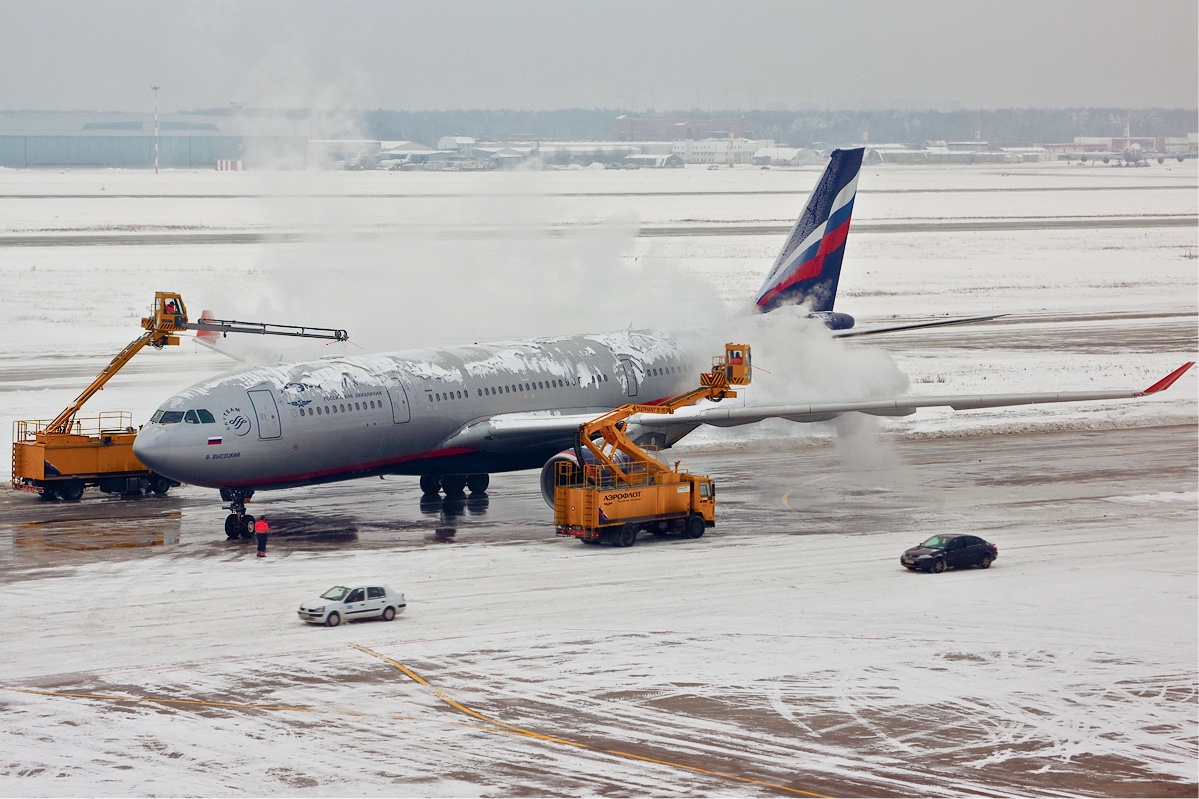
Ground de-icing of aircraft
[edit]On the ground, when there are freezing conditions and precipitation, de-icing an aircraft is commonly practiced. Frozen contaminants interfere with the aerodynamic properties of the vehicle. Furthermore, dislodged ice can damage the engines.
Ground de-icing methods include:
- Spraying on various aircraft deicing fluids to melt ice and prevent reformation
- Using unheated forced air to blow off loose snow and ice
- Using infrared heating to melt snow, ice, and frost without using chemicals
- Mechanical deicing using tools such as brooms, scrapers, and ropes
- Placing an aircraft in a warm hangar
In-flight de-icing
[edit]Ice can build up on aircraft in flight due to atmospheric conditions, causing potential degradation of flight performance. Large commercial aircraft almost always have in-flight ice protections systems to shed ice buildup and prevent reformation. Ice protection systems are becoming increasingly common in smaller general aviation aircraft as well.
Ice protection systems typically use one or more of the following approaches:
- pneumatic rubber "boots" on leading edges of wings and control surfaces, which expand to break off accumulated ice
- electrically heated strips on critical surfaces to prevent ice formation and melt accumulated ice
- bleed air systems which take heated air from the engines and duct them to locations where ice can accumulate
- fluid systems which "weep" de-icing fluid over wings and control surfaces via tiny holes
Airport pavement
[edit]De-icing operations for airport pavement (runways, taxiways, aprons, taxiway bridges) may involve several types of liquid and solid chemical products, including propylene glycol, ethylene glycol and other organic compounds. Chloride-based compounds (e.g. salt) are not used at airports, due to their corrosive effect on aircraft and other equipment.[11]: 34–35
Urea mixtures have also been used for pavement de-icing, due to their low cost. However, urea is a significant pollutant in waterways and wildlife, as it degrades to ammonia after application, and it has largely been phased out at U.S. airports. In 2012 the U.S. Environmental Protection Agency (EPA) prohibited use of urea-based de-icers at most commercial airports.[12]
Water agitator de-icer
[edit]Water agitators are electric motors put under water that propel up warmer water and agitate the surface with it to de-ice aquatic structures on rivers and lakes in freezing temperatures. There are also agitator bubblers that use compressed air, run through a hose, and released to agitate the water.[13]
De-icing chemicals
[edit]All de-icers share a common working mechanism: they prevent water molecules from binding above a certain temperature. The effect depends on the concentration. This temperature is below 0 °C, the freezing point of pure water (freezing point depression). Sometimes, there is an exothermic dissolution reaction that allows for an even stronger melting power. The following lists contains the most-commonly used de-icing chemicals and their typical chemical formula.[citation needed]
Salts
[edit]- Sodium chloride (NaCl or table salt; the most common de-icing chemical)
- Magnesium chloride (MgCl
2, often added to salt to lower its working temperature) - Calcium chloride (CaCl
2, often added to salt to lower its working temperature, attacks concrete) - Potassium chloride (KCl)
- Calcium magnesium acetate (CaMg
2(CH
3COO)
6) - Potassium acetate (CH
3COOK) - Potassium formate (CHO
2K) - Sodium formate (HCOONa)
- Calcium formate (Ca(HCOO)
2)
Organics
[edit]- Urea (CO(NH
2)
2), a common fertilizer - Agricultural by-products, generally used as additives to sodium chloride
- Methanol (CH
4O), scarcely used on roads - Ethylene glycol (C
2H
6O
2), scarcely used on roads - Propylene glycol (C
3H
8O
2), scarcely used on roads - Glycerol (C
3H
8O
3), scarcely used on roads
Environmental impact and mitigation
[edit]De-icing agents pose significant environmental threat at airports. The benzotriazole- and tolyltriazole-based deicers are of particular interest.[14] Even routine salts such as sodium chloride or calcium chloride leach into natural waters, affecting their salinity.[1]
Ethylene glycol and propylene glycol exert high levels of biochemical oxygen demand (BOD) during degradation in surface waters. This process can adversely affect aquatic life by consuming oxygen needed by aquatic organisms for survival. Large quantities of dissolved oxygen (DO) in the water column are consumed when microbial populations decompose propylene glycol.[15]: 2–23
Recycling
[edit]Some airports recycle used de-icing fluid, separating water and solid contaminants, enabling reuse of the fluid in other applications. Other airports have an on-site wastewater treatment facility, and/or send collected fluid to a municipal sewage treatment plant or a commercial wastewater treatment facility.[11]: 68–80 [16]
See also
[edit]References
[edit]- ^ a b Cañedo-Argüelles, Miguel; Kefford, Ben J.; Piscart, Christophe; Prat, Narcís; Schäfer, Ralf B.; Schulz, Claus-Jürgen (2013). "Salinisation of Rivers: An Urgent Ecological Issue". Environmental Pollution. 173: 157–67. Bibcode:2013EPoll.173..157C. doi:10.1016/j.envpol.2012.10.011. PMID 23202646.
- ^ Fischel, Marion (2001). Evaluation of selected de-icers based on a review of the literature. Colorado Dept. of Transportation. OCLC 173668609.
- ^ Amanda Rabinowitz (February 25, 2008). "Beets Part of New Recipe to Treat Icy Roads". National Public Radio.
- ^ Richard J. Brennan (January 21, 2012). "Beet juice melts ice from winter roads". Toronto Star.
- ^ Post, Rachael (March 3, 2014). "The alternatives to salt for battling ice: cheese, beets and ash". The Guardian.
- ^ "About Magic Salt". 2007. Archived from the original on 2009-06-05.
- ^ "Thermal Energy Storage in ThermalBanks for under runway heating". ICAX Ltd, London. Retrieved 2011-11-24.
- ^ Nosonovsky, M.; Hejazi, V. (2012). "Why superhydrophobic surfaces are not always icephobic". ACS Nano. 6 (10): 8488–8913. doi:10.1021/nn302138r. PMID 23009385.
- ^ Hejazi, V.; Sobolev, K.; Nosonovsky, M. I. (2013). "From superhydrophobicity to icephobicity: forces and interaction analysis". Scientific Reports. 3: 2194. Bibcode:2013NatSR...3.2194H. doi:10.1038/srep02194. PMC 3709168. PMID 23846773.
- ^ 2012 Autumn & Winter season (Report). Drivers' briefing. London, UK: First Capital Connect. September 2012.
- ^ a b Technical Development Document for the Final Effluent Limitations Guidelines and New Source Performance Standards for the Airport Deicing Category (Report). Washington, D.C.: U.S. Environmental Protection Agency (EPA). April 2012. EPA-821-R-12-005.
- ^ "Airport Deicing Effluent Guidelines". EPA. 2021-02-10.
- ^ "What to Look for when Buying a Dock De-Icer".
- ^ Castro, Sigifredo; Davis, Lawrence C.; Erickson, Larry E. (2005). "Natural, cost-effective, and sustainable alternatives for treatment of aircraft deicing fluid waste". Environmental Progress. 24 (1): 26–33. Bibcode:2005EnvPr..24...26C. doi:10.1002/ep.10059.
- ^ Environmental impact and benefit assessment for the final effluent limitation guidelines and standards for the airport deicing category (Report). EPA. April 2012. EPA-821-R-12-003.
- ^ Gibson, Tom (September 2002). "Let the bugs do the work". Progressive Engineer. Archived from the original on 8 February 2011. Retrieved 21 February 2011.
External links
[edit] Media related to De-icing of aircraft at Wikimedia Commons

Deicing
View on GrokipediaHistorical Development
Early Practices and Pre-Industrial Methods
Early deicing efforts predating industrial-scale chemical applications relied predominantly on mechanical removal and traction enhancement rather than melting agents. In ancient and medieval societies, individuals and communities manually cleared snow and ice from footpaths, roads, and structures using rudimentary tools such as wooden shovels, bone scrapers (e.g., deer shoulder blades in Neolithic Europe), and later metal picks or axes to chip away frozen layers.[11] These methods were labor-intensive, often involving organized groups of workers in urban areas to pile snow aside or break ice into manageable pieces for removal, as seen in pre-19th-century European cities where streets were cleared to facilitate foot and cart traffic.[12] Without mechanized aids, effectiveness depended on human and animal power, limiting clearance to essential routes and leaving many surfaces uncleared during prolonged freezes. To address persistent ice without full removal, pre-industrial practices emphasized abrasives for traction rather than dissolution. Materials like sand, gravel, wood ashes from hearths, or cinders were spread over icy surfaces to create friction for wheels, hooves, and feet, preventing slips without altering the ice's structure.[13] This approach, documented in 18th- and early 19th-century accounts from North America and Europe, prioritized safety on packed snow roads—often intentionally rolled smooth for sleigh travel—over bare pavement ideals. Horse- or ox-drawn wooden plows emerged by the late medieval period for displacing snow, but ice-bonded accumulations required supplemental breaking or thawing via natural sunlight and foot traffic.[14] Chemical deicers like salt (sodium chloride) were not systematically employed pre-industrially, despite salt's availability in some regions and its latent cryoscopic effect of depressing water's freezing point. Historical records indicate salt's scarcity and economic value—primarily for food preservation—precluded its extravagant use on roads, with no verified large-scale applications before the 20th century.[15] Instead, reliance on mechanical and abrasive techniques reflected causal constraints: limited resources and technology favored preventing adhesion through preemptive snow displacement over post-formation melting, aligning with empirical observations of ice persistence in subzero conditions.[16]20th Century Advancements
Pneumatic deicing systems for aircraft wings were pioneered in the late 1920s by Dr. William Geer of B.F. Goodrich, who developed inflatable rubber "boots" or overshoes fitted over leading edges; these were cyclically inflated with air pressure to crack and shed accumulated ice, addressing the limitations of manual removal methods prevalent in early aviation.[17] This innovation, patented around 1929–1930 in Akron, Ohio, marked a shift from passive avoidance of icing conditions to active in-flight removal, enabling safer operations in adverse weather.[18] Thermal deicing technologies advanced significantly during the 1930s and 1940s through National Advisory Committee for Aeronautics (NACA) research, with Lewis A. Rodert leading efforts to duct engine exhaust gases into wing and tail leading edges for heat transfer, tested successfully on a modified Lockheed 12A aircraft by 1941 and later on a Curtiss C-46.[19] These systems exploited the causal mechanism of raising surface temperatures above freezing to melt or evaporate ice, reducing aerodynamic penalties; by the mid-1940s, electro-thermal variants using embedded resistive heating elements were prototyped, providing more precise control independent of engine performance.[20] Ground-based deicing with heated glycol-alcohol fluids emerged post-World War II, evolving from rudimentary sprays to standardized propylene or ethylene glycol mixtures by the 1950s, which lowered freezing points and offered temporary anti-icing holdover times.[5] In ground transportation, the 20th century saw the mechanization of deicing for roadways, with motorized salt spreaders developing alongside truck-based plows from the 1910s onward to distribute abrasives like sand or cinders more efficiently amid rising vehicle traffic.[12] A pivotal advancement was the widespread adoption of rock salt (sodium chloride) as a primary chemical deicer starting in the 1940s, first implemented systematically in Detroit in 1940 due to local mine access, which depressed the freezing point of brine via colligative properties and accelerated ice melt compared to mechanical clearing alone.[21] U.S. deicing salt usage surged from negligible amounts pre-1940 to millions of tons annually by mid-century, correlating with expanded highway networks and post-war automobile growth, though environmental corrosion concerns prompted early experiments with calcium chloride additives.[22] Railway deicing progressed modestly, with early 20th-century reliance on manual sanding or steam heating giving way to basic electro-pneumatic systems for switch points by the 1930s, but lacked transformative scaling until later fluid applications; icing on third rails and overhead wires remained managed reactively to prevent electrical faults.[23] Overall, these developments prioritized empirical testing of thermodynamic and chemical efficacy, enabling reliable winter operations across transport modes despite trade-offs in material wear and resource demands.Post-2000 Innovations and Market Trends
Since 2000, aircraft deicing has seen advancements in electrothermal systems, which apply resistive heating elements to wings and surfaces to evaporate or shed ice, reducing reliance on chemical fluids and improving energy efficiency in modern composite structures. These systems have evolved with carbon nanotube-based heaters and hybrid electro-impulse methods, enabling precise, low-power ice removal tailored to flight conditions. In 2023, De-Ice developed a chemical-free electro-thermal technology using high-frequency currents to rapidly melt ice without glycol sprays, minimizing environmental runoff and operational delays at airports. Sustainability efforts include glycol recycling processes, where companies like Aeromag recover and repurpose up to 80% of used deicing fluids into certified products, complying with stricter EPA regulations on airport effluents introduced in the early 2000s. For roadways and ground infrastructure, innovations post-2000 emphasize eco-friendly alternatives to traditional sodium chloride, driven by evidence of chloride's long-term soil and water contamination. Pre-wetted salts with additives like magnesium chloride reduce application volumes by 20-30% while enhancing melt efficiency, a practice standardized in many U.S. states by the 2010s. Recent machine learning-optimized deicers, combining salts with organic solvents like urea or acetates derived from agricultural waste, achieve faster melting at lower concentrations with reduced biochemical oxygen demand, as demonstrated in 2024 laboratory tests showing 50% less environmental toxicity than pure rock salt. Calcium magnesium acetate (CMA), commercialized more widely after 2000, serves as a non-corrosive option for bridges, though its higher cost limits adoption to sensitive areas. Market trends reflect rising demand amid climate variability and regulatory pressures, with the global de-icing agent sector projected to grow at a 5.9% compound annual growth rate from 2025 to 2031, fueled by expanded use in emerging markets and automated spreading equipment. Deicing vehicle sales reached USD 1.1 billion in 2024, with a forecasted 5.7% CAGR through 2034, incorporating GPS-guided precision applicators to cut material waste by up to 15%. Aviation deicing fluids, dominated by propylene glycol variants, are expected to expand from USD 5.25 billion in 2025 to USD 8.56 billion by 2035, though shifts toward biodegradable formulations face challenges from higher production costs and variable performance in extreme cold. Overall, the emphasis on lifecycle assessments has prioritized innovations balancing efficacy with minimized ecological harm, as traditional chloride-based methods continue to dominate due to proven reliability despite documented groundwater salinization risks.Scientific Principles
Thermodynamics of Ice Formation and Removal
Ice formation represents a first-order phase transition from liquid water to the solid hexagonal crystal structure (ice Ih), occurring at the equilibrium freezing point of 0°C (273.15 K) under standard atmospheric pressure of 1 atm, where the chemical potentials of the two phases are equal. Below this temperature, the Gibbs free energy change ΔG for the liquid-to-solid transition becomes negative, rendering ice the thermodynamically stable phase, as dictated by ΔG = ΔH - TΔS, with ΔH (enthalpy of fusion) positive for melting and ΔS (entropy change) also positive due to increased disorder in the liquid. The transition releases the latent heat of fusion, approximately 333.55 kJ/kg at 0°C, which must be dissipated to the surroundings to sustain freezing.[24][25] Despite thermodynamic favorability below 0°C, ice formation is kinetically hindered by the nucleation barrier, often leading to supercooling where pure water remains liquid down to -40°C or lower without heterogeneous nuclei such as impurities or surfaces. Classical nucleation theory describes the free energy barrier for homogeneous nucleation as ΔG* ∝ 1/(ΔT)^2, where ΔT is the supercooling degree (T_freeze - T_actual), making deep supercooling exponentially improbable without catalysts; in atmospheric or deicing contexts, ice-nucleating particles lower this barrier, promoting rapid crystallization upon perturbation.[26][27] Ice removal via thermodynamic melting reverses this process, requiring the absorption of the latent heat of fusion to transition from solid to liquid at 0°C without initial temperature rise, followed by sensible heat if superheating the meltwater is needed. For ice at an initial temperature T_i < 0°C, the total heat input per unit mass is Q/m = c_p,ice × (0 - T_i) + L_f, where c_p,ice ≈ 2.05 kJ/kg·K near 0°C accounts for raising the ice to the melting point before phase change. This energy balance governs thermal deicing efficacy, as insufficient heat leads to incomplete melting or refreezing; in practical applications, heat sources must overcome not only bulk phase change but also interfacial energies at ice-substrate boundaries, typically 20-100 mJ/m² for water-ice interfaces.[28][29]Chemical Mechanisms of Deicers
Deicers operate primarily through freezing point depression, a colligative property arising from the addition of solute particles to water, which lowers the temperature at which the solution freezes by interfering with the formation of ice crystals via disruption of hydrogen bonding networks.[30] This mechanism relies on the solute reducing the solvent's vapor pressure, requiring a lower temperature to achieve equilibrium between liquid and solid phases, as described by the equation , where is the freezing point change, is the cryoscopic constant for water (1.86 °C/kg/mol), is molality, and is the van't Hoff factor accounting for dissociation.[31] For effective deicing, concentrations must reach the eutectic point, the lowest temperature at which a saturated solution remains liquid; for instance, sodium chloride (NaCl) achieves a eutectic of approximately -21.1 °C at 23% concentration by weight.[32] Inorganic chloride salts, such as NaCl, calcium chloride (CaCl₂), and magnesium chloride (MgCl₂), dissociate into ions upon dissolution—yielding two ions for NaCl, three for CaCl₂ and MgCl₂—increasing the effective particle count and enhancing depression relative to non-dissociating solutes.[33] The hydrated ions competitively bind water molecules, preventing their alignment into the hexagonal ice lattice, while some salts like CaCl₂ exhibit exothermic dissolution (releasing up to 18.4 kcal/mol), providing localized heat to initiate melting.[31] At the ice-solution interface, these salts create a brine layer that undercuts and dissolves ice bonds, with effectiveness diminishing below eutectic temperatures where insufficient liquid water exists for dissolution.[30] Organic deicers, including acetates (e.g., calcium magnesium acetate, CMA) and formates (e.g., potassium formate, KF), function similarly through molecular solvation and hydrogen bonding with water, depressing freezing points to eutectics around -15 °C for CMA and -50 °C for KF, but with fewer ions and thus milder colligative effects compared to chlorides.[31] These compounds disrupt ice lattices via direct intermolecular interactions, where carboxylate groups form hydrogen bonds that compete with water-water bonds, and their higher viscosity can prolong holdover times in anti-icing applications.[31] Urea-based deicers act through urea-water complex formation, lowering freezing points to about -13 °C, though slower dissolution limits rapid deicing efficacy.[32] Glycol-based fluids, prevalent in aviation deicing (e.g., propylene or ethylene glycol), lower freezing points through non-ionic solvation, with Type I fluids achieving depression to -50 °C or lower in heated mixtures, primarily by forming hydrogen-bonded networks that inhibit crystallization.[32] The hydroxyl groups in glycols mimic water's bonding, embedding within the liquid phase and reducing the chemical potential needed for ice nucleation, though residual films from Type II/IV fluids add shear-thinning polymers for extended anti-icing via physical barriers alongside chemical depression.[34] Across deicer classes, secondary mechanisms include ice lattice disruption via solute adsorption at crystal edges and osmotic extraction of water from ice pores, amplifying melting under dynamic conditions like traffic-induced shear.[31]Deicing Methods
Mechanical Techniques
Mechanical deicing techniques employ physical disruption to fracture, dislodge, or remove ice without relying on chemical agents or applied heat, distinguishing them from other deicing categories. These methods leverage manual labor, machinery, or automated systems to apply shear forces, compression, or vibration, effectively breaking the bond between ice and surfaces like pavement, aircraft components, or rail tracks. While labor-intensive and less efficient for thick accumulations, they minimize environmental impacts from residues and are often used in combination with complementary approaches for optimal results.[35][36] Manual mechanical removal forms the basis of many ground-based applications, utilizing hand tools such as scrapers, shovels, brooms, brushes, squeegees, or mallets to physically push, scrape, or chip away frost, slush, or thin ice layers. This technique suits smaller-scale operations, including general aviation aircraft preparation or localized rail switch clearing, where crews apply direct force to avoid damaging underlying structures—preferring non-metallic tools to prevent scratches on sensitive surfaces like aircraft skins. For instance, Federal Aviation Administration guidelines endorse brooms and squeegees for removing dry snow or frost from small aircraft, emphasizing their simplicity and effectiveness prior to flight. Limitations include inefficiency for bonded or extensive ice, often necessitating follow-up methods, and risks of incomplete removal leading to aerodynamic hazards.[37][38][39] In roadway maintenance, plowing and specialized ice-breaking equipment represent scaled-up mechanical strategies, with plow blades mounted on trucks or graders pushing accumulations to the roadside or underbody. Reversible or extendable plows, adjustable from 9 to 12 feet in width, adapt to varying road geometries, while icebreakers—featuring rotating drums with carbide inserts, chains, or spikes—scarify bonded ice up to several inches thick by penetrating and fracturing it into removable fragments. These tools, employed by departments of transportation, enhance traction by reducing pavement slickness without additives, though effectiveness diminishes below freezing when ice adheres strongly to asphalt. Studies indicate mechanical breakers can cut salt usage by promoting cleaner removal, yielding environmental benefits like lower chloride runoff.[40][41][42] Aviation-specific mechanical systems include pneumatic de-icing boots, installed on leading edges of wings, stabilizers, and propellers, which inflate intermittently with engine-bleed or auxiliary air to expand rubber panels and crack overlying ice sheets typically 0.25 to 0.5 inches thick. The fractured ice sheds via aerodynamic forces, with cycles timed to accumulate sufficient buildup for reliable breakage—avoiding premature activation that risks "bridging" where ice spans boot ridges without detaching. Originating as one of the earliest practical ice protections in the 1920s and refined through mid-20th-century adoption on transport aircraft, these systems remain prevalent on turboprops and regional jets for their low weight and reliability in moderate icing. NASA analyses confirm their efficacy depends on timely cycling and boot material integrity, with rubber degradation over time potentially reducing expansion to 20-30% of original capability.[43][20][18] Rail applications favor attached mechanical scrapers, hammers, or vibrating breakers on hi-rail vehicles or locomotives to dislodge ice from frogs, guards, and switch points, targeting accumulations that impede movement. These reactive tools, often manually assisted, apply percussive or shearing action but prove slow and disruptive to schedules, prompting integration with automated patrols in high-latitude networks. Research highlights their persistence in remote or budget-constrained operations despite drawbacks, with ongoing innovations like chain flails improving penetration into dense formations.[44][39][45]Chemical Applications
Chemical deicing methods rely on applying freezing-point depressants to disrupt ice adhesion and melt existing ice through colligative properties, primarily via lowered vapor pressure and osmotic effects that prevent refreezing.[46] These applications are distinguished by delivery techniques tailored to surfaces like roadways, aircraft, and runways, balancing efficacy against corrosion and environmental impacts. Granular and liquid forms predominate, with equipment such as spreaders and sprayers ensuring even distribution.[40] On roadways and ground infrastructure, granular salts like sodium chloride are deployed using mechanical spreaders mounted on trucks, which broadcast material at rates typically 100-300 pounds per lane-mile depending on storm intensity and temperature.[47] Pre-wetting enhances performance by spraying brine solutions (e.g., 23% NaCl) onto salt granules before or during spreading, reducing bounce and drift while promoting immediate activation; studies indicate up to 20-30% material savings.[48] [49] Direct liquid application via sprayers or atomizers applies brines like magnesium or calcium chloride for anti-icing, targeting bare pavement before bond formation at application rates of 20-50 gallons per lane-mile, effective down to -15°F for certain formulations.[50] U.S. Department of Transportation guidelines emphasize calibrated equipment and weather-specific timing to minimize overuse, as excess application correlates with elevated chloride runoff.[51] In aviation, chemical deicing entails high-pressure spraying of heated Type I fluids (propylene or ethylene glycol-based, 50/50 water mix) at 130-180°F onto aircraft surfaces to shear off frost, ice, or snow, followed by Type II, III, or IV anti-icing fluids for residual protection via shear-thinning rheology that endures holdover times up to 80 minutes in severe weather.[52] [53] Procedures adhere to FAA Advisory Circulars, requiring pre-application inspections and post-treatment contamination checks, with fluids prohibited on engines or sensors due to ingestion risks; application volumes range 1-3 gallons per 1000 square feet of wing area.[54] Unlike road salts, aircraft fluids avoid chlorides to prevent aluminum corrosion, prioritizing Type IV for larger jets in freezing precipitation.[55] For runways and taxiways, chemical applications mirror road techniques but use acetate- or formate-based liquids sprayed via dedicated rigs to break pavement-ice bonds without aircraft incompatibility issues, often at 20-40 gallons per 1000 square yards.[56] Hybrid methods combine liquids with abrasives for traction, guided by airport-specific manuals to mitigate glycol's biological oxygen demand in stormwater.[32] Overall, chemical methods achieve rapid ice removal but demand precise dosing—e.g., over-application of road salts exceeds 100 mg/L chloride thresholds in receiving waters—to curb ecological harm like salinization.[57]Thermal and Electro-Thermal Systems
Thermal deicing systems apply heat to surfaces to exceed the freezing point of water, either preventing ice adhesion or melting existing accumulations through conduction, convection, or radiation. These methods rely on thermodynamic principles where supplied energy Q = m * L_f (mass times latent heat of fusion, approximately 334 J/g for ice) plus sensible heat to raise temperatures, often targeting 5-10°C above 0°C for efficacy. Common implementations include pneumatic systems using hot fluids and electro-thermal systems leveraging electrical resistance, distinguished from mechanical or chemical approaches by direct energy input without mass addition or shear forces.[58][59] In aviation, pneumatic thermal systems predominate for larger aircraft, extracting bleed air from compressor stages at 150-300°C and ducting it via perforated tubes (piccolos) to heat wing and empennage leading edges. Established by NACA tests in the 1930s demonstrating thermal viability over mechanical boots, these provide continuous anti-icing by evaporating impinging droplets or cyclic de-icing via timed bursts that shed ice sheets. Engine efficiency penalties arise from reduced core airflow, quantified at 1-2% thrust loss per stage bleed, though reliability in severe icing exceeds 99% in certified operations. Electro-thermal variants embed resistive elements like foil grids or carbon nanotube composites in skins, generating heat via I²R losses with densities of 5-20 W/dm²; pulsed modes (e.g., 10-30 second cycles) fracture interfacial ice for shedding under aerodynamic loads, conserving 40-60% energy over steady heating by minimizing runback refreezing. Adopted since the 1990s for composite structures intolerant to hot air, they enable precise zoning via sensors but require aircraft generators sized for peaks up to 50 kW, with certification per FAA Part 25 demanding redundancy against failures.[19][58][60] For ground infrastructure, thermal systems embed heating elements in pavements or structures. Roadway and bridge applications use electric cables (e.g., self-regulating polymers at 30-60 W/m) or hydronic loops circulating glycol-heated water, often geothermal-sourced to cut operational costs by 50-70% via constant subsurface temperatures of 10-15°C. The U.S. 287 bridge in Texas, operational since 2013, employs ground-source pumps to maintain decks ice-free without salts, reducing corrosion and achieving payback in 10-15 years per FHWA analyses. Rail systems target switches and catenary, applying resistive wires or induction coils; a 2019 study on turnout de-icing used 250 kHz-200 W electromagnetic heating to clear 1-2 cm ice/hour, outperforming salts by avoiding track contamination while drawing under 1 kWh per event. Electro-thermal rail heating prevents point failures, with urban lines like those in IEEE-tested catenary systems showing <5% power supply disruption during online operation.[61][62][63] Advantages of thermal and electro-thermal systems include environmental gains over chlorides—no runoff pollution—and structural preservation, but high capital costs ($50-200/m² for pavements) and energy demands (e.g., 100-300 W/m² peaks) limit scalability without renewables. Electro-thermal offers superior control via feedback loops but risks uneven heating if elements degrade, as noted in composite aircraft reviews. Deployment prioritizes safety-critical sites, with ongoing innovations like hybrid pulse electro-thermal reducing aviation power by 75% through optimized waveforms.[64][65][59]Applications
Roadways and Ground Vehicles
Deicing of roadways primarily involves mechanical removal of snow and ice packs using plows, supplemented by chemical agents to enhance efficiency and prevent refreezing. Plowing constitutes the safest and most efficient initial method for snow removal, as it physically displaces accumulations before bonding occurs, reducing the need for subsequent chemical applications.[66] Innovations in plow design, such as ice-breaking blades with a 15-degree rake angle and high downforce (up to 23,000 pounds), improve scraping effectiveness on compacted ice, minimizing residual layers that hinder traction.[36] Rubber-edged or squeegee blades and brooms are employed for lighter glazes or to avoid pavement damage on sensitive surfaces.[41] Chemical deicing on roadways relies predominantly on sodium chloride (rock salt), applied via spreaders at rates tailored to storm intensity, which lowers the freezing point of water and disrupts ice adhesion to pavement. In the United States, annual road salt usage ranges from 10 to 20 million tons, while Canada applies approximately 5 million tonnes each winter to maintain mobility on affected highways.[67][68] Sodium chloride demonstrates effective melting down to -9 to -12°C (-2 to 10°F), though its solubility diminishes below -9°C (15°F), necessitating alternatives like calcium or magnesium chloride for colder conditions.[69][57] Pre-wetting salt with brine or anti-icing pretreatments prevents snow compaction, facilitating more complete mechanical removal and reducing overall material needs by up to 20-30% in controlled applications.[70] For ground vehicles such as cars and trucks, deicing focuses on clearing windshields, mirrors, and wipers to ensure visibility, typically through mechanical scraping or heated defrosters rather than broad chemical application. Chemical deicers, including alcohol-based sprays or diluted salt solutions, are used sparingly on glass surfaces to melt thin ice films without residue, though excessive application risks streaking or reduced visibility.[41] Roadway deicers like sodium chloride, while essential for safe travel, accelerate underbody corrosion on vehicles, prompting recommendations for regular undercoating and washes in salt-heavy regions.[71] Combined roadway and vehicle strategies emphasize timely plowing and selective salting to balance traction restoration with corrosion mitigation, as empirical studies link salt exposure to measurable increases in vehicle maintenance costs.[72]Rail Systems
Ice accumulation on railway infrastructure and rolling stock disrupts operations by freezing switches, impairing catenary contact, reducing brake efficacy, and causing electrical faults in third rails. In severe winter conditions, such icing leads to delays, with manual de-icing methods for tracks, switches, and wires being time-consuming, inefficient, and hazardous to personnel.[39] Thermal systems dominate de-icing for rail switches, utilizing electric resistive heaters or gas-fired units to melt snow and ice on points and frogs. These heaters distribute heat effectively across components, preventing freeze-ups that could halt train movements, as demonstrated in simulations showing uniform temperature profiles under operational loads. Propane-based direct-flame heaters confine heat application to targeted areas, minimizing energy waste regardless of ambient humidity.[73][74][75] Chemical anti-icing liquids applied to switches and third rails prevent ice adhesion more efficiently than post-formation de-icing, outperforming heaters in melt efficiency by factors up to 10 during active snowfall. For third rails, combinations of electric or gas heaters with de-icing fluids address persistent icing, drawing from tested approaches that avoid manual intervention.[76][77] Overhead catenaries employ online thermal de-icing, passing current through wires to generate heat and shed ice with minimal disruption to traction power, achieving effective removal in urban rail transit systems. Conductive heating mats integrated into turnouts provide targeted ice mitigation, reducing reliance on broad-area heating.[65][78] Rolling stock de-icing targets undercarriages, brakes, and pantographs using sprayed hot glycol solutions delivered via nozzles, which melt ice without excessive fluid volume. Brake icing, as observed in frozen components, compromises stopping distances, necessitating pre-departure thermal or chemical treatments to restore functionality.[79]Aviation Operations
Deicing in aviation operations primarily involves ground-based removal of frost, ice, snow, or slush from aircraft surfaces to ensure safe takeoff, as even thin layers of contamination on wings or control surfaces can reduce lift by up to 30% and increase drag, potentially leading to stall at lower angles of attack than clean conditions.[80] Federal regulations under 14 CFR § 121.629 prohibit takeoff if frost, ice, or snow adheres to wings, control surfaces, propellers, engine inlets, or other critical surfaces, reflecting the causal link between surface contamination and aerodynamic degradation.[81] Between 1982 and 2000, aircraft icing contributed to 583 civil aviation accidents and over 800 fatalities in the U.S., underscoring the operational necessity of deicing despite its logistical demands.[82] The process distinguishes deicing, which shears off existing contaminants using heated, unthickened Type I fluids (typically orange-dyed propylene or ethylene glycol mixtures), from anti-icing, which applies thickened Type II, III, or IV fluids to delay new ice formation via a protective viscoelastic layer that lowers freezing point and inhibits adhesion.[83] Type I fluids, heated to around 150°F (65°C) and applied under pressure, achieve rapid contaminant removal but offer minimal holdover protection, often lasting under 20 minutes in active precipitation; in contrast, Type IV fluids provide holdover times up to 160 minutes in light snow at temperatures near freezing, per FAA guidelines.[84] Operators follow FAA Advisory Circular AC 120-60B for ground deicing programs, which mandate pre-application inspections, fluid application in specific sequences (e.g., wings before tail), and post-treatment visual checks to confirm clean surfaces.[85] Standard procedures begin with a thorough external inspection for contaminants, followed by a two-step application: deicing with Type I fluid to clear surfaces, then anti-icing with Type IV if holdover is needed, ensuring coverage of critical areas like leading edges and engine nacelles while avoiding over-application to minimize residue drag.[2] One-step methods combine both using a single fluid for smaller aircraft or light conditions, but two-step dominates for commercial jets to optimize protection duration against variables like precipitation intensity and temperature.[86] Holdover times, critical for scheduling departures, are estimated from FAA tables updated annually—for instance, in freezing drizzle with Type IV fluid at -5°C to -10°C, protection may last 20-40 minutes—requiring pilots to depart or reapply before expiration to avoid unprotected exposure.[87] These operations demand specialized rigs with booms for precise spraying, often conducted at dedicated pads to contain runoff, with fluids recycled where feasible to reduce costs averaging 50,000 per large jet treatment depending on size and conditions.[53]Other Uses (Marine, Infrastructure)
In marine applications, deicing is essential for vessels and offshore structures operating in subfreezing conditions, where supercooled sea spray and atmospheric icing can accumulate rapidly, adding significant weight and compromising stability. For ships, common methods include mechanical removal using manual tools or high-pressure heated water jets to dislodge ice, as demonstrated in Arctic operations where ice buildup exceeding 100 kg/m² has led to vessel capsizing without intervention.[88] Thermal systems, such as electric heating mats or impulse deicers, apply localized heat to prevent adhesion, with electric pulse deicing generating shock waves to shatter ice layers up to 5 cm thick in seconds.[89] Offshore platforms and wind turbines employ electro-thermal anti-icing, where resistive heating elements maintain surface temperatures above 0°C, reducing ice accretion by over 90% during spray events, though energy demands can exceed 10 kW/m² in severe conditions.[90] Propeller-driven deicers circulate warmer subsurface water to melt ice around hulls and intakes, effective for smaller craft in marinas but limited by flow rates below 1 m/s in heavy icing.[91] For infrastructure, deicing targets bridges, power lines, and utility supports to prevent structural overload and service disruptions from ice loads reaching 20-50 kg/m². Bridge decks utilize embedded hydronic or electric heating systems, such as carbon-fiber mats delivering 300-500 W/m² to melt ice within 20-30 minutes of activation, outperforming salt applications in corrosion-prone areas but requiring upfront costs of 100,000 per lane-km.[92] [93] Automatic anti-icing sprays deploy glycol-based fluids from pavement nozzles, delaying bond formation by lowering freezing points to -10°C, as implemented on over 100 U.S. bridges since the 1990s with crash reduction rates of 20-85%.[94] [95] Power transmission lines employ DC de-icing currents (up to 1 kA) to heat conductors and shed ice sheaths averaging 10-30 mm, restoring 80-95% capacity post-event, though short-circuit risks necessitate precise control.[96] Mechanical interventions like pulley scrapers or drones remove ice without power interruption, suitable for lines with spans under 500 m, but labor-intensive in remote areas.[97] Emerging coatings, including epoxy-silica nanocomposites, reduce ice adhesion strength by 70-90% via hydrophobic surfaces, extending to utility poles and guy wires.[98] Geothermal ground-source systems for select infrastructure, like airport ramps, extract heat at 5-10°C to circulate through pipes, achieving deicing with coefficients of performance above 3.0, minimizing chemical use.[99]Deicing Agents
Inorganic Salts and Traditional Agents
Inorganic salts, primarily chloride-based compounds such as sodium chloride (NaCl), calcium chloride (CaCl₂), and magnesium chloride (MgCl₂), function as the cornerstone of traditional deicing practices for roadways, sidewalks, and parking areas. These agents operate through freezing point depression, a colligative property where the dissociation of salt into ions increases the number of particles in solution, thereby lowering the temperature at which water freezes below 0°C.[30] This mechanism disrupts ice formation by creating a brine layer that undermines ice adhesion to surfaces, facilitating melting even in sub-zero conditions.[100] Sodium chloride, often distributed as rock salt, dominates usage due to its abundance, low cost (typically under $50 per ton), and straightforward application via spreaders. It remains effective down to approximately -9°C (15°F), beyond which its performance diminishes as the brine formation requires sufficient moisture. In the United States, road deicing consumes about 20 million tons of salt annually, with NaCl comprising the majority, applied at rates of 100-300 grams per square meter depending on storm severity.[101] [102] Studies attribute up to an 88% reduction in accidents and 85% in injuries to salt application during winter conditions.[103] Calcium chloride excels in colder environments, maintaining efficacy to -29°C (-20°F) owing to its higher solubility and exothermic dissolution, which generates heat upon mixing with ice. It is hygroscopic, drawing ambient moisture to initiate melting on dry snow, but its higher cost (often 5-10 times that of NaCl) and increased corrosivity limit it to high-priority areas like bridges. Magnesium chloride provides an intermediate option, effective to -23°C (-10°F), with lower corrosivity relative to CaCl₂ due to reduced chloride ion release, making it gentler on vegetation and concrete while having a lower environmental impact, though it remains more expensive than NaCl and less potent than CaCl₂ in extreme cold below -10°F.[104] [105]| Deicing Salt | Effective Minimum Temperature (°F) | Relative Corrosivity | Relative Cost |
|---|---|---|---|
| NaCl | 15 | High | Low |
| CaCl₂ | -20 | Very High | High |
| MgCl₂ | -10 | Medium | Medium |
Organic and Low-Corrosion Alternatives
Organic deicing agents, primarily acetates and formates, emerged in the 1980s as chloride-free alternatives to traditional inorganic salts, offering reduced corrosion to metals and concrete while maintaining ice-melting efficacy through lower eutectic temperatures. Calcium magnesium acetate (CMA), produced by reacting dolomitic lime with acetic acid, exhibits corrosivity comparable to tap water on steel and aluminum, with laboratory tests showing corrosion rates on mild steel at 0.1-0.5 mpy versus 10-20 mpy for NaCl solutions of equivalent deicing strength.[108][109] Field applications since the 1990s confirm CMA's non-damaging effects on vegetation and aquatic systems at typical usage rates of 20-40 lbs per 1000 sq ft, though its slower initial melt time—requiring up to 30 minutes longer than chlorides—necessitates higher application rates for equivalent performance.[110][111] Potassium formate, a formate-based organic salt with a eutectic point around -50°C in brines, demonstrates corrosion rates on carbon steel 70-90% lower than magnesium chloride in standardized ASTM tests, attributed to its non-oxidizing anion that forms protective films on metal surfaces.[112][113] Aquifer-scale studies in Finland from 2005 reported no detectable formate persistence in groundwater after road applications, reducing chloride contamination risks, though elevated biochemical oxygen demand (BOD) up to 100,000 mg/L in concentrated solutions can exacerbate anoxic conditions in receiving waters if overdosed.[114] Unlike acetates, formates may accelerate alkali-silica reaction (ASR) in concrete by 20-50% relative to NaCl in exposure tests, prompting caution in pavements with reactive aggregates.[115] Agricultural by-product additives, such as desugared beet juice blended at 20-30% with salt brine, extend deicing efficacy at temperatures below -10°C by depressing the freezing point an additional 5-10°C compared to brine alone, while corrosion tests on mild steel and galvanized surfaces show rates reduced by 50-80% versus pure NaCl brines due to natural inhibitors like betaine.[116][117] Adopted by departments of transportation in states including Minnesota and North Dakota since 2007, these mixtures cut salt usage by 20-40%, but empirical field data indicate potential for increased microbial growth and organic fouling in storm drains, with BOD levels 10-20 times higher than chloride brines.[118][119] Overall, these alternatives prioritize corrosion mitigation—evidenced by multi-year infrastructure monitoring showing 60-90% less metal degradation—but trade off with higher material costs (2-5 times that of NaCl) and variable performance in heavy precipitation, where dilution reduces effectiveness.[120][121]Agent Properties and Selection Criteria
Deicing agents are characterized by properties that enable them to depress the freezing point of water via colligative effects, with efficacy tied to the eutectic temperature—the lowest achievable freezing point at optimal concentration—and practical melting performance, which diminishes below certain thresholds due to reduced dissolution and brine formation rates.[103][122] Inorganic chlorides like sodium chloride exhibit a eutectic of -21.1°C at 23.3% concentration, while calcium chloride reaches -51°C at around 30%, and magnesium chloride -33°C at 21-22%, allowing deeper cold effectiveness but with higher corrosivity from chloride ions.[122][123] Organic alternatives such as calcium-magnesium acetate (CMA) have a eutectic of -28°C at 32.5% but practical limits around -7°C due to slower melting and higher material needs, alongside lower corrosivity and greater biodegradability.[124] Additional properties include hygroscopicity for moisture attraction in solids, viscosity for liquid application flow, and pH levels influencing material degradation—chlorides often yield acidic brines accelerating rebar corrosion in concrete.[125]| Agent | Eutectic Temperature (°C) | Effective Practical Temp (°F) | Corrosivity (Relative to NaCl) | Biodegradability | Relative Cost |
|---|---|---|---|---|---|
| NaCl | -21.1 | 15 | Baseline (high) | Low | Low |
| CaCl2 | -51 | -20 | Higher | Low | Medium-High |
| MgCl2 | -33 | -10 | Medium | Low | Medium |
| CMA | -28 | 20 | Low | High | High |
| Potassium Acetate | ~ -60 (varies) | -15 | Low | High | High |