


Community hub
Recent from talks
Contribute something
Nothing was collected or created yet.
University of Dundee
View on Wikipedia
The University of Dundee[a] is a public research university based in Dundee, Scotland. It was founded as a university college in 1881 with a donation from the prominent Baxter family of textile manufacturers. The institution was, for most of its early existence, a constituent college of the University of St Andrews alongside United College and St Mary's College located in the town of St Andrews itself. Following significant expansion, the University of Dundee gained independent university status by royal charter in 1967 while retaining elements of its ancient heritage and governance structure.
Key Information


The main campus of the university is located in Dundee's West End, which contains many of the university's teaching and research facilities; the Duncan of Jordanstone College of Art and Design, Dundee Law School and the Dundee Dental Hospital and School. The university has additional facilities at Ninewells Hospital, containing its School of Medicine; Perth Royal Infirmary, which houses a clinical research centre; and in Kirkcaldy, Fife, containing part of its School of Health Sciences. The annual income of the institution for 2022–23 was £325.7 million of which £78.9 million was from research grants and contracts, with an expenditure of £330.2 million.[2]
History
[edit]Foundation
[edit]
The University of Dundee has its roots in the earlier university college based in Dundee and the University of St Andrews. During the 19th century, the growing population of Dundee significantly increased demand for the establishment of an institution of higher education in the city and several organisations were established to promote this end, including a University Club in the city. There was a significant movement with the intention of moving the entire university to Dundee (which the royal commission[which?] observed was now a "large and increasing town") or the establishment of a college along very similar lines to the present United College. Finally, agreement was reached that what was needed was expansion of the sciences and professions, rather than the arts at St Andrews.[6]
A donation of £120,000 for the creation of an institution of higher education in Dundee was made by Miss Mary Ann Baxter of Balgavies, a notable lady of the city and heir to the fortune of William Baxter of Balgavies. In this endeavour, she was assisted by her relative, John Boyd Baxter, an alumnus of St Andrews and Procurator Fiscal of Forfarshire who also contributed nearly £20,000. In order to craft the institution and its principles, it was to be established first as an independent university college, with a view from its very inception towards incorporation into the University of St Andrews.[6]
In 1881, the ideals of the proposed new college were laid down, suggesting the establishment of an institute for "promoting the education of persons of both sexes and the study of Science, Literature and the Fine Arts". The university currently identifies 1881 as the year of its foundation, as University College's endowment was dated 31 December 1881, but the year 1880, when the announcement of Mary Ann Baxter's funding was made, as well as the years 1882 and 1883 have also been cited as their foundation year by the institution in the past.[7]
No religious oaths were to be required of members. Later that year, "University College, Dundee" was established as an academic institution and the first principal, Sir William Peterson, was elected in late 1882. When opened in 1883, it comprised five faculties: Maths and Natural Philosophy, Chemistry, Engineering and Drawing, English Language and Literature and Modern History, and Philosophy. The University College had no power to award degrees and for some years some students were prepared for external examinations of the University of London.[8] By 1894, the faculties offered at the college remained essentially scientific in outlook, with three academics - including the principal, William Peterson - giving instruction in classics, philosophy, English and history at both the Dundee and St Andrews sites.[9]
The policy of no discrimination between the sexes, which was insisted upon by Mary Ann Baxter, meant that the new college recruited several able female students. Their number included the social reformer Mary Lily Walker and, later, Margaret Fairlie who in 1940 became Scotland's first female professor.[10][11] Another early female graduate, Ruth Wilson, later Young, became professor of surgery at Lady Hardinge Medical College in Delhi and later became its principal.[12]
Incorporation into the University of St Andrews
[edit]
Following discussions around various forms of incorporation and association, students were able to matriculate through the University of St Andrews from 1885.[13] The full incorporation was completed in 1897 when University College became part of the University of St Andrews. This move was of notable benefit to both, enabling the University of St Andrews (which was in a small town) to support a medical school. Medical students could choose to undertake preclinical studies either in Dundee or St Andrews (at the Bute Medical School) after which all students would undertake their clinical studies at Dundee. Eventually, law, dentistry and other professional subjects were taught at University College. By 1904 University College had a roll of 208, making up 40 per cent of the roll of the university generally. By session 1909–1910, 234 students were studying at University College, 101 of whom were female. Among the notable students at this time were Robert Watson-Watt, the radar pioneer; William Alexander Young the epidemiologist who later died in Accra while studying yellow fever; and David Rutherford Dow who would go on to be a senior member of staff at the college.[14]
In 1895, unlike the students at St Andrews, there were reportedly very few "bona-fide" matriculated students at Dundee who were "aiming to graduate".[15] During the academic years of 1892–4, those students at Dundee who had matriculated at St Andrews were considered St Andrews University students and were subsequently awarded degrees by St. Andrews. Although the union between the two institutions was then threatened by a lawsuit, by 1898 the union with St. Andrews was restored on the original basis.[16][17]
University College's development in the early twentieth century has been described as "slow and fitful" and the interwar period saw virtually no new building projects, leaving large parts of the college housed in buildings which were not fit for purpose.[18] Kenneth Baxter has claimed that World War I had a major impact on University College and stated that the conflict presented it with "a storm of challenges unlike anything it had faced" up to that point.[19] Baxter contends that the War impacted the college greatly, with key consequences being declining student numbers which in turn led to a loss of income, as well as staff departures and the decaying of fabric.[20] In 2018 it was revealed that research shows that while the college's war memorial records the names of 37 staff and former students who died at least a further 39 alumni of the college were not recorded on it.[20][21] In 1920 the college received a war trophy in the form of a "40 ton, 15 cm field gun", which was thought to have been captured from Bulgarian forces and was sited in front of the students Union.[22]
Attempts were made to raise income. In 1923 Rudyard Kipling, then the rector of the University of St Andrews, visited University College and asked the merchant princes and leading citizens of Dundee to give the college their money and support. Kipling implored those who had lost their sons in the Great War to consider giving a donation so that their names would live on.[23] Staff of a high calibre continued to be employed by the university including Alexander Peacock and Margaret Fairlie, who in 1940 was appointed as professor of obstetrics and gynaecology and thus became the first woman to hold a professorial chair at a university in Scotland.[18][24]
In 1947, the principal of University College, Douglas Wimberley released the "Wimberley Memo" (resulting in the Cooper and Tedder reports of 1952), advocating independence for the college. In 1954, after a royal commission, University College was renamed "Queen's College" and the Dundee-based elements of the university gained a greater degree of independence and flexibility. It was also at this time that Queen's College absorbed the former Dundee School of Economics as well as the jointly administered medical school and dental school.[13]
Creation of the University of Dundee
[edit]
The publication of the Robbins Report on Higher Education in 1963, which considered the question of university education expansion throughout the country, provided impetus to the movement to attain independent university status for Dundee. At this time, a number of new institutions were being elevated to this status, such as the University of Stirling, and second universities were created in Edinburgh and Glasgow (Heriot-Watt University and the University of Strathclyde) despite their having fewer than 2,000 students.[6]
Queen's College's size and location, alongside a willingness to expand, led to an eventual decision to separate from the wider University of which it remained an integral part. In 1966, St Andrews University Court and the Council of Queen's College submitted a joint petition to the Privy Council seeking the grant of a royal charter to establish the University of Dundee. This petition was approved and the Charter was granted which saw Queen's College become the University of Dundee, on 1 August 1967. The university continued a number of the traditions of its originator college and university and continues to be organised under the ancient university governance structure.[25]
Modern developments
[edit]
In 1974, the university began to validate some degrees from Dundee's Duncan of Jordanstone College of Art and Design, and by 1988 all degrees from that institution were being validated in this fashion. In 1994 the two institutions merged, with the college becoming a constituent faculty of the university.[26] In 1996, the Tayside College of Nursing and the Fife College of Health studies became part of the university, as a school of Nursing and Midwifery.[27] For several years, Dundee College of Education prepared students for degree examinations at the University of Dundee, and in December 2001 the university merged with the Dundee campus of Northern College to create a Faculty of Education and Social Work.[28]
In October 2005, the university became home to the first UNESCO centre in the United Kingdom. The IHP-HELP Centre for Water Law, Policy and Science is involved in research regarding the management of the world's water resources on behalf of the United Nations.[29] A school of accounting and finance was introduced in 2007. These disciplines are now part of the School of Business.
Due to the COVID-19 pandemic, the university suspended most face to face teaching from 16 March 2020. However, a "blended learning" approach was offered to many students with weekly tutorials available in person for small groups using COVID-19 protocols of social distancing and regular cleaning.[30]
Campus
[edit]City Campus
[edit]
The main campus is within the West End of the City of Dundee.[31] It has expanded greatly since the university gained independence, from just four converted buildings when the University College was founded in 1881 the university has grown to consist of over fifty at present. However, many buildings survive from Dundee's period as a university college and as a constituent college of St Andrews University. The earliest purpose-built facility on campus was the Carnelley Building which opened in 1883 as part of the new University College.[32] A £10,000 donation from Mary Ann Baxter provided for a chemistry laboratory situated in the building which was named for the university's first professor of chemistry, Thomas Carnelley.[33]
Geddes Quadrangle
[edit]The buildings at the heart of the university form the Geddes Quadrangle. These include the Carnegie, Harris and Peters Buildings which were constructed in 1909 as part of the new college of the University of St Andrews.[34] The Geddes Quadrangle was named for Patrick Geddes, a pioneering thinker in the fields of sociology and urban planning and former professor of botany at Dundee, as a botanist Geddes had originally proposed a garden in the center of the quadrangle to be used for teaching purposes.[35] The designer was Victorian architect Robert Rowand Anderson, the architect of buildings such as the Scottish National Portrait Gallery and Mount Stuart House.[36]
Post-war buildings
[edit]Amid the expansion of education in post-war Britain, the University College, Dundee commissioned the construction of several new buildings to cope with the increasing numbers of students and academics arriving. The first of these was the Ewing Building which had started planning in 1950 and was officially opened in 1954. Named after Sir James Alfred Ewing, the university's first professor of engineering.[37][38] The Fulton Building gave the civil and mechanical engineering department a dedicated building, it was opened in 1964 and took its name from Angus Robertson Fulton, former principal of University College, Dundee (1939–1946).[39]
The 1960s saw the further development of the Queen's College campus with some of the earliest multi-story towers in Scotland being built for both teaching and student accommodation. The Tower Building, opened in 1961 by Queen Elizabeth The Queen Mother, exemplified early Scottish modernist architecture and was designed by Robert Matthew; it stands 140 ft tall with ten storeys home to both academic, executive and administrative departments of the university.[40][41][42] The Tower was built on the site of two of the original four Georgian houses which had housed University College, Dundee (originally known as Whiteleys). Its construction was notable as it was the tallest structure built in Dundee since the Old Steeple in the medieval period. The building was extended in the later 1960s was resulted in the demolition of the remaining two original buildings.[42]
Belmont Halls of Residence took inspiration from Danish design and aimed to provide modern, spacious quarters for students while keeping costs cheap; it was completed in 1963 on the site of Belmont Works, a former jute mill.[43]
Recent developments
[edit]
The 2000s brought extensive renovation to the university's central campus, with a number of new and upgraded buildings introduced around 2007 to celebrate the 40th anniversary of the university's independence. Large extensions have been placed on the Main Library and sports centre, and a number of new halls of residence (Heathfield, Belmont, West Park and Seabraes) have been gradually phased into operation.[44][45] The Dalhousie building was erected during this period as dedicated teaching accommodation for the university, in part replacing space previously at the Gardyne Road campus of Northern College, which has now been taken up by Dundee College. Significant improvement works have taken place in old buildings such as the Old Technical Institute, Medical Sciences Institute and Old Medical School buildings.[46]
Kirkcaldy Campus
[edit]The School of Nursing and Health Sciences has a campus on Forth Avenue, Kirkcaldy, Fife.[47][48] This offers degrees in nursing, midwifery and other health-related subjects. Placements are available often in conjunction with NHS Fife.
Governance and organisation
[edit]Governance
[edit]
The University of Dundee is organised under the provisions of its royal charter, which granted the university its independence in 1967.[25] Dundee, uniquely outside of the four ancient universities of Scotland has a governance framework which shares a number of similarities with the ancient governance structure which was developed in the 19th and 20th centuries through the various Universities (Scotland) Acts.
Chancellor
[edit]The chancellor is the head of the university and president of the Graduates' Council, with a role of presiding over academic ceremonies such as graduations.[49] The six chancellors of the university to have held office since its independence are:
- Queen Elizabeth The Queen Mother (1967–1977)
- Simon Ramsay, 16th Earl of Dalhousie (1977–1992)
- Sir James W. Black (1992–2006)
- Narendra Patel, Baron Patel (2006–2017)
- Dame Jocelyn Bell Burnell (2018–2023)[50]
- Baron George Robertson (2023-)[51]
Rector
[edit]
The rector of the university is an official elected by the matriculated students of the university for a three-year term.[52] In common with other university rectors in Scotland, the position is largely ceremonial, although it does involve the representation of students on the University Court. The rector at Dundee, unlike that of the ancient universities, does not chair the University Court, that duty instead falling to a lay member.[53] The rector may appoint an assessor who can carry out the rector's functions on their behalf when they are absent. The university gained national attention in 2001 when it seemed that actor David Hasselhoff may stand as rector.[54]
As part of the process of installation, the students traditionally take the new rector on the 'rectorial drag' which involves them being 'dragged' from Dundee City Chambers to the university in the university's own carriage visiting on the way some of the many pubs in the city as part of the informal welcome to the university.[55]
The present holder of the position is Maggie Chapman MSP, who was elected and took up the post in 2025.[56] She replaced artist manager, Keith Harris, who in turn replaced sports broadcaster Jim Spence, who was installed in 2019 but did not serve a full term partly due to changes in personal circumstances as a result of COVID-19.[57] Prior to Spence, the rector was Mark Beaumont, the record-breaking endurance cyclist.[58]
Previous Rectors since the university's independence have included Sir Peter Ustinov, Sir Clement Freud, and Stephen Fry, who each served two terms, and Craig Murray, Tony Slattery, Lorraine Kelly and Fred MacAulay, who each served one.[59][60]
.jpg)
Principal and Vice-Chancellor
[edit]The Principal and Vice-Chancellor is the chief academic and administrative officer of the university, presiding over the Senatus Academicus.[62] As a result of their title as Vice-Chancellor, the Principal can fulfill the duties of the Chancellor in their absence. Prior to the university's independence, when it was part of the University of St Andrews, a similar function was carried out by the Master of Queen's College. This position replaced the earlier post of principal of University College, Dundee, which was first filled in 1882.
Following the announced resignation of Principal and Vice-Chancellor Sir Pete Downes in February 2018, the university appointed Professor Andrew Atherton to the post, to begin in January 2019.[63] Atherton resigned following a dispute with the university in November 2019.[64]
Holders of this position and its predecessors are:
Principals of University College, Dundee
[edit]
- William Peterson (1882–1895)
- John Yule Mackay (1895–1930)
- Sir James Irvine (1930–1939) – 'Interim' appointment[65][66]
- Angus Robertson Fulton (1939–1946) – 'Interim' appointment[65][66]
- Douglas Wimberley (1946–1954)
Masters of Queen's College, Dundee
[edit]- David Rutherford Dow (1954–1958)
- Arthur Alexander Matheson (1958–1966)
- James Drever (1966–1967)
Principals of the University of Dundee
[edit]- James Drever (1967–1978)
- Adam Neville (1978–1987)[65]
- Michael Hamlin (1987–1994)[65]
- Ian James Graham-Bryce (1994–2000)
- Sir Alan Langlands (2000–2009)[65][67]
- Sir Pete Downes (2009–2018)[68][69]
- Andrew Atherton (2019)[69][64]
- David Maguire (2020) Interim Principal[70]
- Iain Gillespie (2021-24) [71][72]
- Shane O'Neill (2024-2025) interim principal[73]
- Nigel Seaton (2025- ) interim principal[3]
Structure
[edit]As of 1 August 2022, the University of Dundee is organised into eight schools containing multiple disciplines.[74] Each individual school is formally headed by a dean. The following is a full list of the academic divisions of the university:
|
School of Art and Design School of Business
School of Dentistry
|
School of Life Sciences School of Medicine School of Health Sciences
School of Science and Engineering
|
|
-
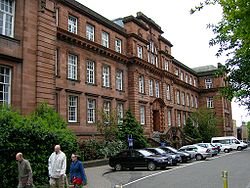 The Scrymgeour Building, which houses Law, Psychology and Politics
 -
 The Duncan of Jordanstone College of Art & Design
 -
 The Ewing Building, home to research forensics and Estates and Campus Services.


Reputation and rankings
[edit]| National rankings | |
|---|---|
| Complete (2026)[75] | 39 |
| Guardian (2026)[76] | 26 |
| Times / Sunday Times (2026)[77] | 23= |
| Global rankings | |
| ARWU (2025)[78] | 301–400 |
| QS (2026)[79] | 428= |
| THE (2026)[80] | 301–350 |

University rankings
[edit]As of 2025[update], Dundee is ranked within the top 500 universities in the world according to the major global rankings (Times, QS, and ARWU); placing 301-350th in the Times World University rankings, joint 428th in the QS World University Rankings and 301-400th in the Academic Ranking of World Universities. The university was The Times Good University Guide's "Scottish University of the Year" consecutively in 2015/16 and 2016/17.[81]
Subject rankings
[edit]In both the 2021 and 2014 Research Excellence Framework which assesses research output between 2008-2020, the quality of research for Biological Sciences at Dundee is ranked 2nd in the United Kingdom by GPA, behind only the specialist Institute of Cancer Research.[82] According to the 2024 Times Higher Education World University Rankings by Subject, Dundee's strongest subjects are Life Sciences, ranked in the top 125 in the world[83] and Law, ranked in the top 150 in the world.[84] The 2023 QS World University Rankings by Subject ranks the university in the top 200 in the world for Pharmacy & Pharmacology, Biological Sciences, Art & Design, Nursing, and Medicine.[85]
In the 2024 Guardian university rankings in the UK, Dundee's subject offerings in Dentistry (3rd in UK, 1st in Scotland), and Computer science and information systems (9th in UK, 3rd in Scotland) rank within the top ten nationally.[86] In 2023/2024 Anatomy & Physiology, Art and Design, Biological Sciences, Social Work and Medicine rank within the top ten nationally in at least one of the rankings.[87]
Student life
[edit] |
|
| Domicile[91] and Ethnicity[92] | Total | ||
|---|---|---|---|
| British White[b] | 65% | ||
| British Ethnic Minorities[c] | 13% | ||
| International EU | 3% | ||
| International Non-EU | 19% | ||
| Undergraduate Widening Participation Indicators[91][93] | |||
| Female | 66% | ||
| Independent School | 9% | ||
| Low Participation Areas[d] | 16% | ||
Students at Dundee are represented by the university's students' representative council and the Rector in common with other universities in Scotland sharing the ancient organisational structure.
Students' Association
[edit]
The Dundee University Students' Association (DUSA), unlike many other students' unions in the United Kingdom, is not affiliated to the National Union of Students, mainly due to cost concerns and political objections.
Membership of the Students' Association is automatic for all students of the university, although it is possible under statutes to renounce this membership at any time. The Association, as with the other ancient universities in Scotland, co-exists with the University's students' representative council.
The DUSA building is located in Airlie Place, in the centre of the University's Main Campus and caters as a private members' club offering bar, nightclub and refectory services for students.[94] DUSA also provides a number of other typical students' union services such as advocacy on behalf of its membership and assistance to individual students. In addition the DUSA facilitates the creation of student societies, as of 2023 there are 240 student-led societies on campus.
Sports facilities
[edit]As of 2016, there are 43 clubs affiliated with the Sports' Union. There is an annual award ceremony for the sports clubs, and a Blues & Colours Ball (see Blue (university sport)) to provide social interaction between the clubs.
Sport and Active Health (SpAH), unlike the Sports Union, is directly controlled by the university, but works closely with the students' organisations. Its chief building is located on Old Hawkhill in the main campus, which contains the main indoor sporting facilities and the university's gym.
Outdoor facilities are mainly based in the Riverside Sporting Ground, within a reasonable walking distance and bordering the Tay, although there are others – such as tennis courts – spread throughout the main campus. SpAH's 25m swimming pool is located within the Students' Association building on Airlie Place.
Notable sporting achievements of the university include winning the British University Gaelic football Championship in 1994 and being the first team in Scottish rugby history to win the league and SUS Cup double in the 2007/08 season.[citation needed]
Chaplaincy
[edit]The University Chaplaincy Centre was constructed in 1974 and extended in 1987 and houses both the University Chapel and a number of other related social facilities.
The university has a full-time chaplain, Fiona Douglas (since 1997), who is a minister of the Church of Scotland. There are also several part-time associate and honorary chaplains representing other faiths and denominations.
Traditions
[edit]Dundee students participate in a number of traditional events during the academic calendar. Towards the start of the year, a standard British Freshers' Week is organised, with a secondary one held when the university reconvenes after the Christmas vacation.
Traditions remaining from Dundee's days as a college of the University of St Andrews include the Gaudie Night (taking its name from the first line of the students' anthem, De Brevitate Vitae) – held early in the first semester and organised both as a Students' Union night and an event organised by the individual schools (for example by the Life Sciences, Medical, Law and Dentistry Societies) where students are assigned academic "parents" from the senior years. Some weeks later, a Raisin (alternatively spelled "Raisen") weekend is held to all new students to repay their academic parents' hospitality. Generally the school society-run events are more traditional in nature than the Students' Union event.
For 21 years (2004-2024), the University organised Discovery Days, a series of public talks from newly-appointed or promoted professors. The last Discovery Days event took place in January 2024. Inaugural lectures for new professors will be organised by the University’s academic schools.[95]
Student residences
[edit]
The university has a number of student residences spaced around the city. Over the last decade there has been an attempt to move some of these halls of residence closer to the main campus. With the closure and re-building of West Park Hall in 2005, all of the halls are now self catered en-suite.
At present, there are the following university residences:
- Belmont Tower (including Belmont Upper/Lower) – Based on the main campus and consisting of two main sections: Belmont Tower, opened in 1966, located on Mount Pleasant next to Belmont Quadrangle; and Belmont Upper and Lower, a long and low building connected to the tower, raised up on stilts to accommodate for car parking underneath for residences staff.
- Belmont Flats – Opened in 2006, these halls are of identical style to those of Heathfield and the new Seabraes halls. It is located on Old Hawkhill, across from the ISE and centred around Belmont Quadrangle.
- Heathfield – Built at the same time as Belmont Flats. It is located on Old Hawkhill, immediately across from Belmont Tower.
- Seabraes – A number of buildings containing flats, with a new hall identical in style to the new Heathfield and Belmont Halls being built at the foot of the complex. Located near to the south side of the main campus on Roseangle.
- West Park – Located some distance to the west of the main campus, these halls were traditionally popular with medicine students due to their proximity to Ninewells Hospital. Consists of a relatively new complex known as West Park Villas, which are essentially student flats. The old hall (separate from the Villas) was largely torn-down in 2005 (leaving behind only the listed parts of the building) and the new complex (generally known as 'West Park Flats' by the university) were made available from the start of the 2007/08 term.
Some older halls, despite remaining open in the interim until building works were finished, are now out of use – the last students moved out in early 2007. These are:
- Airlie Place & Springfield – A number of flats located in old terrace housing on the main campus, consisting of two streets mainly owned by the university. Both are architecturally noteworthy and have mostly been converted to offices.
- Peterson Hall – An almost brutalist style building to be found further down Roseangle from Seabraes. This hall was traditionally a non-smoking hall of residence, and is now ear-marked for private development.
- Wimberley Houses – The furthest university residences from the main campus, Wimberley – also the closest to Ninewells Hospital in the far west of the city. The residences themselves were a complex of buildings, each comprising a "house" which served as an independent flat for a number of students. They were named for Principal Douglas Wimberley.
Historic collections
[edit]The university's cultural and historic collections are looked after by Museum Services and Archive Services.
Museum Services
[edit]
Dundee has significant museum collections acquired over the 140 years of its history. These include fine art, design furniture, textiles, scientific instruments, medical equipment and natural history specimens. The collections are accredited as a public museum and are cared for by Museum Services.[96] In 2012 it was announced that Museum Services had been awarded a grant of £100,000 by the Art Fund to develop an art collection inspired by D'Arcy Thompson.[97][98] This body promotes the various departments of the university involved in cultural activity and runs an annual culture day of short public lectures.[99][100] In January 2014 it was announced that Museum Services had been awarded funding of £32,407 to acquire a new object database to aid the management of its various collections of nearly 30,000 items.[101]
Archive Services
[edit]The university's Archive Services was established in 1976[102] and maintains the University of Dundee's manuscripts and records collections. The archives hold a wide range of material relating to the university and its predecessor institutions and to individuals associated with the university. Archive Services also holds a number of records relating to individuals, businesses and organizations based in the Tayside area.[103] The records held include a substantial number of business archives relating to the jute and linen industry in Dundee and West Bengal, records of other businesses including the archives of the Alliance Trust and the department store G. L. Wilson, the records of the Brechin Diocese of the Scottish Episcopal Church, the Michael Peto photographic collection and the NHS Tayside Archive.[104][105] Archive Services' other collections include the archives of Dundee Repertory Theatre[106] and the papers of the Great War poet Joseph Johnston Lee.[107] In addition to material relating to the local area, the archives have a number of documents relating to other countries, especially India.[108] The Archives also hold the records of the Glasite Church.[109][110][111]
The archives also house some special book collections. These include rare books relating to local history and the Joan Auld Memorial Collection, an important collection of labour history books donated to the university in 1996 in memory of Joan Auld, the first university archivist, who had died in a climbing accident the previous year.[112][113][114]
Archive Services also runs an ongoing oral history project to record the memories of individuals who have lived and worked in Dundee and hold public events to promote the project.[115]
Notable alumni and staff
[edit]-

-

-
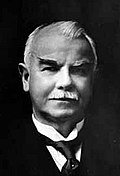 Sir James Alfred Ewing, physicist noted for his discovery of hysteresis
 -
 Margaret Fairlie, gynaecologist and Scotland's first female professor
 -
 B.C. Forbes, financial journalist and founder of Forbes magazine
 -
 Sir Patrick Geddes, pioneering town planner and sociologist
 -

-
 Sir Robert Watson-Watt, engineer known for his work in radar technology
.jpg)


.jpg)
.jpg)

This list includes certain persons who are graduates of the University of St Andrews, having studied at the University College or Queen's College in Dundee, as well as graduates of the University of Dundee. This is a result of the incorporation of this institution in the other from 1897 to 1967. Indeed, in a great many respects, the medical school at the University of Dundee is the direct inheritor of the medical traditions of the University of St Andrews. It also includes notable former members of staff of these institutions.[116][117]
Former chancellor Sir James Black, who had studied medicine at the then University College Dundee, won the Nobel Prize for Medicine for his work on the discovery of propranolol – a beta-blocker for the treatment of hypertension. Ronald Coase served as a founding lecturer from 1932 to 1934 of the Dundee School of Economics and Commerce. Coase received the Nobel Prize in Economic Sciences in 1991 for his work on the significance of transaction costs and property rights for the institutional structure and functioning of the economy.
Business and economics
[edit]- Ahmed Adamu, Nigerian economist and first global chairperson of the Commonwealth Youth Council
- Sir Robert Horton, former chairman of BP and Railtrack
- Sir George Mathewson, Chairman of the Royal Bank of Scotland Group (2001–2006); Convenor of the Scottish Council of Economic Advisers (2007–2011)
- Sanusi Ohiare, Nigerian economist and former executive director of Nigeria's Rural Electrification Fund (2017-2023)
Law
[edit]Media and the arts
[edit]- Johanna Basford, illustrator[118]
- Naetochukwu Chikwe (Naeto-C), musician
- B. C. Forbes, founder of Forbes magazine
- Holly Hamilton, BBC journalist and presenter[119]
- David Jackson, musician, best known for his involvement in Van der Graaf Generator
- Alan Johnston, BBC correspondent based in Gaza, famously kidnapped in 2007
- Gary Lightbody, lead singer of Snow Patrol
- Fred MacAulay, comedian and former rector of the university
- James McIntosh, food writer
- Graham Phillips, pro-Kremlin journalist covering the Russian invasion of Ukraine
- Karine Polwart, folk musician
- Carla Romano, GMTV reporter
- John Suchet, Channel Five news anchor, formerly of ITN
Artists
[edit]- Calum Colvin
- Luke Fowler, 2012 Turner Prize Nominee
- David Mach, 1988 Turner Prize Nominee
- Lucy McKenzie
- Lewis Deeney[120]
- Susan Philipsz, 2010 Turner Prize
- Thomson & Craighead
- Louise Wilson (of Jane and Louise Wilson) 1999 Turner Prize Nominees
Politics
[edit]- John Peter Amewu, Member of Parliament, Parliament of Ghana; and Minister for Railways Development, Ghana
- Malcolm Bruce, former Liberal Democrat Member of Parliament, Rector of the university (1986–89)
- Christopher Chope, Member of Parliament, former Minister of State and barrister
- Lynda Clark, Baroness Clark of Calton, former member of parliament and Advocate General for Scotland, now Senator of the College of Justice
- Chris Clarkson, Conservative member of parliament
- William Cullen, Baron Cullen of Whitekirk, advocate, judge, Lord Justice General and Lord President of the Court of Session as well as life peer
- Kurt Deketelaere, secretary-general of the League of European Research Universities
- Frank Doran, former Labour member of parliament
- Kevin Dunion, Scottish Information Commissioner between 2003 and 2012, as well as former Lord Rector of the University of St Andrews
- Maurice Golden, Conservative member of the Scottish Parliament
- Boaz Kipchumba Kaino, former MP and assistant minister of lands and settlement. Republic of Kenya
- Geoffrey Aori Mabea, first executive secretary of the Energy Regulators Association of East Africa
- Finlay Macdonald, retired minister and principal clerk to the General Assembly of the Church of Scotland
- Jenny Marra, member of Scottish Parliament, attended Dundee to read the Diploma in Professional Legal Practice
- Paul Masterton, former Conservative MP and solicitor
- Bruce Millan, Labour MP, Secretary of State for Scotland and European Commissioner for Regional Policy
- Lewis Moonie, Baron Moonie – Labour politician, former minister of state
- Claude Moraes, former Commissioner for Racial Equality, former member of the European Parliament
- Craig Murray, former British ambassador to Uzbekistan, former president of DUSA, former rector of the university
- Elijah Ngurare, Prime Minister of Namibia and the secretary general of the SWAPO Party Youth League
- Nhial Deng Nhial, Minister of Foreign Affairs for the Republic of South Sudan
- Alex Neil, Scottish National Party MSP, Cabinet Secretary for Health and Wellbeing
- George Robertson, Baron Robertson of Port Ellen, former Secretary-General of NATO, Labour MP and UK Secretary of State for Defence
- John Stevenson, Conservative MP and solicitor
- Brian Wilson, former Labour MP and Minister of State
Science, medicine and engineering
[edit]- Sir James W. Black, pharmacologist and Nobel laureate
- Sue Black, anatomist and forensic anthropologist
- William Thomas Calman, zoologist
- Richard A. Collins, scientist and author
- Jane Eddleston, medical doctor, professor and critical care expert
- Sir James Alfred Ewing, engineer and physicist
- Margaret Fairlie, gynaecologist and first female professor in Scotland[24][121]
- Thomas Claxton Fidler, civil engineer
- Angus A. Fulton, civil engineer
- Sir Patrick Geddes, biologist, botanist and urban planning theorist
- Johannes Kuenen, physicist
- Peter LeComber, physicist
- Doris Mackinnon, zoologist
- Narendra Patel, obstetrician, former chancellor of the university
- Alexander David Peacock, zoologist
- William Peddie, mathematician and physicist
- Harold Plenderleith, art conservator and archaeologist
- George Dawson Preston, physicist
- Dorothy MacBride Radwanski, occupational health nurse
- Edward Waymouth Reid, physiologist
- William G. Smith, botanist and ecologist
- Walter Eric Spear, physicist
- John Steggall, mathematician
- Sir William Stewart, government chief scientific advisor
- D'Arcy Wentworth Thompson, biologist, mathematician, and classical scholar
- A. D. Walsh, chemist
- Sir Robert Alexander Watson-Watt, pioneer of radar
- William Alexander Young, doctor, surgeon and epidemiologist
- Isham Jaafar, Minister of Health in Brunei Darussalam[122]
Miscellaneous
[edit]- Colin Norris, serial killer nurse who is believed to have been inspired by lectures at the university in 2001 to kill his patients[123][124]
- David Shayler, Security Service officer who revealed state secrets to the public, editor of Annasach magazine while at the university
- Cardinal Cornelius Sim, Roman Catholic Bishop of the Apostolic Vicariate of Brunei Darussalam
See also
[edit]
- Armorial of UK universities
- University of Dundee Botanic Garden – University gardens in the West End of the city.
- List of universities in the United Kingdom
Notes
[edit]- ^ Scottish Gaelic: Oilthigh Dhùn Dè; [ˈɔlhɪj ɣun ˈtʲeː]. Abbreviated as Dund. for post-nominals.
- ^ Not be confused solely with White British
- ^ Includes those who indicate that they identify as Asian, Black, Mixed Heritage, Arab or any other ethnicity except White.
- ^ Calculated from the Polar4 measure, using Quintile1, in England and Wales. Calculated from the Scottish Index of Multiple Deprivation (SIMD) measure, using SIMD20, in Scotland.
References
[edit]- ^ The motto is taken from the first line of the Magnificat, a prayer offered by Mary, mother of Jesus, the Patron Saint of the City of Dundee.
- ^ a b c "Financial Statements July 2023". University of Dundee. Retrieved 15 January 2024.
- ^ a b "Appointment of Professor Nigel Seaton as Interim Principal and Vice-Chancellor". University of Dundee. 20 June 2025. Retrieved 21 June 2025.
- ^ a b "Who's working in HE?". Higher Education Statistics Agency. Staff numbers by HE provider: HE staff by HE provider and activity standard occupational classification. Retrieved 28 January 2025.
- ^ a b c d "Where do HE students study?". Higher Education Statistics Agency. Students by HE provider: HE student enrolments by HE provider. Retrieved 3 April 2025.
- ^ a b c "History of the University". Archived from the original on 1 August 2021. Retrieved 9 August 2017.
- ^ Kenneth Baxter (2018). "University College, Dundee and the Great War". In Kenefick, William; Patrick, Derek (eds.). Tayside at War. Dundee: Abertay Historical Society. p. 83 (footnote 1). ISBN 978-0-900019-65-4.
- ^ "Student lists". Archived from the original on 14 September 2010. Retrieved 4 April 2013.
- ^ University of St Andrews Calendar 1894. 1894. p. 28. Retrieved 14 January 2021.
- ^ Baxter, Kenneth (8 March 2013). "International Women's Day". Archives, Records and Artefacts at the University of Dundee. University of Dundee. Retrieved 25 February 2015.
- ^ Baxter, Kenneth (2010). ""Matriarchal" or "Patriarchal"? Dundee, Women and Municipal Party Politics in Scotland c.1918-c.1939". International Review of Scottish Studies. 35: 99. doi:10.21083/irss.v35i0.1243. Retrieved 28 December 2015.
- ^ "MS 31 Dr Ruth Young". Archive Services Online Catalogue. University of Dundee. Retrieved 8 October 2018.
- ^ a b "University College, Dundee and Queen's College". Archived from the original on 11 September 2016. Retrieved 9 August 2017.
- ^ "100 years ago..." Archives, Records and Artefacts at the University of Dundee. 5 January 2010. Retrieved 31 December 2015.
- ^ "St. Andrews University And Dundee College". The British Medical Journal. 1 (1797): 1274–1276. 1895. ISSN 0007-1447. JSTOR 20216435. PMC 2510094. PMID 20755582.
- ^ Deed of Endowment
- ^ "Scotland in the 19th century: Section 5.9: Universities [ebook chapter] / J A Haythornthwaite, 1993". Gdl.cdlr.strath.ac.uk. Retrieved 28 January 2012.
- ^ a b Baxter, Kenneth, Rolf, Mervyn, and Swinfen, David (2007). A Dundee Celebration. Dundee: University of Dundee. p. 10.
{{cite book}}: CS1 maint: multiple names: authors list (link) - ^ Kenneth Baxter (2018). "University College, Dundee and the Great War". In Kenefick, William; Patrick, Derek (eds.). Tayside at War. Dundee: Abertay Historical Society. p. 75. ISBN 978-0-900019-65-4.
- ^ a b Kenneth Baxter (2018). "University College, Dundee and the Great War". In Kenefick, William; Patrick, Derek (eds.). Tayside at War. Dundee: Abertay Historical Society. pp. 75–83. ISBN 978-0-900019-65-4.
- ^ "Number of fallen WW1 soldiers from Dundee University may be double what previously thought". Evening Telegraph. DC Thomson & Company Ltd. 3 December 2018. Retrieved 15 December 2018.
- ^ Michael Taylor (2018). "'Bristling with guns'- German First World War Artillery in Tayside and Fife, 1919-1940". In Kenefick, William; Patrick, Derek (eds.). Tayside at War. Dundee: Abertay Historical Society. p. 101. ISBN 978-0-900019-65-4.
- ^ "J M Barrie and Rudyard Kipling". Archives, Records and Artefacts at the University of Dundee. University of Dundee. 29 March 2011. Retrieved 10 May 2016.
- ^ a b "Notable University Figures (3): Professor Margaret Fairlie". Archives, records and Artefacts at the University of Dundee. 19 August 2011. Retrieved 10 May 2016.
- ^ a b "University of Dundee Charter" (PDF). University of Dundee. Archived from the original (PDF) on 7 July 2022. Retrieved 9 August 2017.
- ^ "Duncan of Jordanstone College of Art & Design". Retrieved 9 August 2017.
- ^ "A brief history of the School of Nursing & Midwifery". Retrieved 9 August 2017.
- ^ "A History of Dundee College of Education". Retrieved 9 August 2017.
- ^ "Centre for Water Law, Policy and Science". University of Dundee. Retrieved 17 October 2016.
- ^ "Announcements. Coronavirus (COVID-19) update for students – suspension of face-to-face teaching". University of Dundee. Retrieved 18 March 2020.
- ^ "University of Dundee Campus map". University of Dundee. Archived from the original on 5 February 2017. Retrieved 17 October 2016.
- ^ Stuff, Good. "Park Place, Carnelley Building, University of Dundee, Including Boundary Walls, Dundee, Dundee". britishlistedbuildings.co.uk. Retrieved 30 September 2018.
- ^ "Carnelley Building, University of Dundee". Retrieved 30 October 2016.
- ^ "The Carnegie Building, University of Dundee". Scran. Retrieved 17 October 2016.
- ^ "Geddes Quadrangle, University of Dundee". Scran. Retrieved 17 October 2016.
- ^ "Architecture, University of Dundee". Scran. Retrieved 17 October 2016.
- ^ "Ewing Building, University of Dundee". Scran. Retrieved 17 October 2016.
- ^ "Notable Figures". University of Dundee Archives. 29 June 2011. Retrieved 17 October 2016.
- ^ "Fulton Building, University of Dundee". Scran. Retrieved 17 October 2016.
- ^ "Tower Building, University of Dundee". Retrieved 30 October 2016.
- ^ "The Tower Building Outlook City". Archived from the original on 31 October 2016. Retrieved 30 October 2016.
- ^ a b McKean, Charles; Whatley, Patricia; with Baxter, Kenneth (2013). Lost Dundee. Dundee's Lost Architectural Heritage (2nd ed.). Edinburgh: Birlinn. pp. 191–193.
- ^ "Belmont Halls, University of Dundee". Retrieved 30 October 2016.
- ^ Dundee, University of. "Current Project Status, University of Dundee". www.dundee.ac.uk. Retrieved 30 September 2018.
- ^ "Campus map - University of Dundee". www.dundee.ac.uk. Retrieved 30 September 2018.
- ^ "Old Medical School & Carnelley Building". Retrieved 9 August 2017.
- ^ "University of Dundee - Archives Hub". archiveshub.jisc.ac.uk. Retrieved 4 April 2019.
- ^ "A brief history of the School of Nursing : Museum : University of Dundee". www.dundee.ac.uk. Retrieved 4 April 2019.
- ^ Royal Charter, s.4.1
- ^ Dundee, University of. "Dame Jocelyn Bell Burnell Appointed Chancellor of the University of Dundee : News". University of Dundee. Archived from the original on 19 August 2018. Retrieved 20 February 2018.
- ^ "George Robertson Appointed Chancellor of the University of Dundee". Retrieved 15 September 2023.
- ^ Royal Charter s.5
- ^ "Archived copy" (PDF). Archived from the original (PDF) on 11 October 2008. Retrieved 17 May 2009.
{{cite web}}: CS1 maint: archived copy as title (link) - ^ "Baywatch star sinks student hopes". BBC News. 1 February 2001.
- ^ "Adventurer Mark Beaumont installed as new Dundee University rector". BBC News. 25 April 2016. Retrieved 30 October 2016.
- ^ "Maggie Chapman University Rector". University of Dundee. 22 October 2025. Retrieved 22 October 2025.
- ^ Keith, Jake (23 March 2021). "Broadcaster Jim Spence announces he will step down as Dundee University rector". The Courier. Retrieved 10 June 2023.
- ^ "Jim Spence installed as Dundee University rector". 9 September 2019. Retrieved 23 September 2019.
- ^ Baxter, Kenneth; et al. (2007). A Dundee Celebration. Dundee: University of Dundee. p. 61.
- ^ "Rectorial Elections". Archives, Records and Artefacts at the University of Dundee. 15 February 2010. Retrieved 27 February 2015.
- ^ "Stephen Fry | One Dundee". blog.dundee.ac.uk. Retrieved 6 February 2022.
- ^ Royal Charter, s.6.1(a)
- ^ "Dundee University appoints new principal". BBC News. 2 July 2018. Retrieved 4 July 2018.
- ^ a b "Rent row Dundee University principal Andrew Atherton quits". BBC News. 8 November 2019. Retrieved 8 November 2019.
- ^ a b c d e Baxter, Kenneth; et al. (2007). A Dundee Celebration. Dundee: University of Dundee. p. 60.
- ^ a b Shafe, Michael (1982). University Education in Dundee: A Pictorial History. Dundee: University of Dundee. p. 201.
- ^ "New Principal welcomes freshers". Press Release Archive. University of Dundee. 29 September 2000. Archived from the original on 13 May 2013. Retrieved 1 March 2012.
- ^ "Professor Pete Downes – Principals Office – The University of Dundee". Dundee.ac.uk. Retrieved 28 January 2012.
- ^ a b Isles, Roddy (2 July 2018). "Professor Andrew Atherton appointed Principal & Vice-Chancellor". University News. University of Dundee. Retrieved 1 January 2019.
- ^ "Professor David Maguire appointed Interim Principal and Vice-Chancellor of the University of Dundee". University of Dundee press releases. University of Dundee. 23 January 2020. Retrieved 23 January 2020.
- ^ Richards, Xander (25 August 2020). "Dundee University appoints new principal after last boss quit in rent row". The National. Newsquest. Retrieved 5 January 2021.
- ^ "Under-fire Dundee University principal resigns". BBC News. BBC. 6 December 2024. Retrieved 7 December 2024.
- ^ "University bosses quit after damning report into financial collapse". BBC News. BBC. 20 June 2025. Retrieved 21 June 2025.
- ^ "University of Dundee list of Academic Schools". University of Dundee. Retrieved 9 September 2023.
- ^ "Complete University Guide 2026". The Complete University Guide. 10 June 2025.
- ^ "Guardian University Guide 2026". The Guardian. 13 September 2025.
- ^ "Good University Guide 2026". The Times. 19 September 2025.
- ^ "Academic Ranking of World Universities 2025". Shanghai Ranking Consultancy. 15 August 2025.
- ^ "QS World University Rankings 2026". Quacquarelli Symonds Ltd. 19 June 2025.
- ^ "THE World University Rankings 2026". Times Higher Education. 9 October 2025.
- ^ "Dundee is Scottish University of the Year – again!". Retrieved 29 September 2016.
- ^ "REF 2021: Biological sciences". Times Higher Education. 12 May 2022.
- ^ "World University Rakings 2023 by subject: life sciences". Times Higher Education. 28 October 2023. Retrieved 25 January 2024.
- ^ "World University Rakings 2024 by subject: law". Times Higher Education. 28 October 2023. Retrieved 25 January 2024.
- ^ "Subject rankings 2023 - Top Universities". Top Universities. Retrieved 26 November 2023.
- ^ "Guardian Subject Rankings 2024 – University of Dundee". Retrieved 9 September 2023.
- ^ HitCreative. "The Times and The Sunday Times | Education - UniversityGuide". st.hitcreative.com. Archived from the original on 1 January 2019. Retrieved 4 April 2018.
- ^ a b "UCAS Undergraduate Sector-Level End of Cycle Data Resources 2024". ucas.com. UCAS. December 2024. Show me... Domicile by Provider. Retrieved 7 February 2025.
- ^ "2024 entry UCAS Undergraduate reports by sex, area background, and ethnic group". UCAS. 7 February 2025. Retrieved 7 February 2025.
- ^ "University League Tables entry standards 2026". The Complete University Guide.
- ^ a b "HE student enrolments by HE provider, permanent address, level of study, mode of study, entrant marker, sex and academic year". HESA. Retrieved 3 April 2025.
- ^ "Who's studying in HE?: Personal characteristics". HESA. 3 April 2025. Retrieved 3 April 2025.
- ^ "Good University Guide: Social Inclusion Ranking". The Times. 24 September 2024.
- ^ "DUSA The Union (The Union, Dundee University, Airlie Place, Dundee) | The List". www.list.co.uk. Retrieved 30 September 2018.
- ^ "Discovery Days | University of Dundee, UK". www.dundee.ac.uk. Retrieved 9 December 2024.
- ^ "Museum : Museum : University of Dundee". www.dundee.ac.uk. Retrieved 4 January 2019.
- ^ "Museum Services wins £100,000 Art Fund Grant". E-ARMMS Newsletter 11. January 2012. University of Dundee. Retrieved 15 March 2012.
- ^ "D'Arcy Thompson Zoology Museum RENEW Project". University of Dundee. Retrieved 15 March 2012.
- ^ "Culture Day is on its way". Archives Records and Artefacts at the University of Dundee. University of Dundee. 2 October 2012. Retrieved 26 February 2016.
- ^ "Culture & Arts Forum". Museum Services. University of Dundee. Retrieved 15 October 2012.
- ^ "News from ARMMS". University of Dundee.
- ^ "Archives : University of Dundee". www.dundee.ac.uk. Retrieved 4 January 2019.
- ^ "University of Dundee Archives Services". University of Dundee. Retrieved 2 June 2011.
- ^ "University of Dundee Archives Services the Collections". University of Dundee. Archived from the original on 23 October 2013. Retrieved 2 June 2011.
- ^ "Business Archives". Archives, Records and Artefacts at the University of Dundee. 27 January 2011. Retrieved 29 February 2016.
- ^ "MS 316 Dundee Repertory Theatre". Archive Services Online Catalogue. University of Dundee. Retrieved 8 January 2018.
- ^ "Collection MS 88 - Joseph Johnston Lee". Archive Services Catalogue. University of Dundee. Retrieved 4 April 2025.
- ^ "International Source List". University of Dundee. Archived from the original on 3 October 2013. Retrieved 10 June 2014.
- ^ "MS 9 The Glasite Church". Archive Services Online Catalogue. University of Dundee. Retrieved 8 January 2018.
- ^ "A New Glasite Accession". Archives, Records and Artefacts at the University of Dundee. University of Dundee. 17 February 2011. Retrieved 29 March 2016.
- ^ "International Archives Day". Archives, Records and Artefacts at the University of Dundee. University of Dundee. 10 June 2010. Retrieved 29 March 2016.
- ^ "Archive Services Online Catalogue". University of Dundee. Retrieved 10 May 2016.
- ^ "Auld, Joan – Archivist. 1938 – 1995". Dundee Women's Trail. Retrieved 10 May 2016.
- ^ "Special Collections". Archive Services Culture & Information. University of Dundee. Archived from the original on 20 August 2018. Retrieved 10 May 2016.
- ^ "Oral History Project". Archive Services. University of Dundee. Retrieved 24 January 2017.
- ^ "Notable Scientists at Dundee University : Museum : University of Dundee". www.dundee.ac.uk. Archived from the original on 30 August 2016. Retrieved 26 March 2019.
- ^ "Natures accounts : Museum : University of Dundee". www.dundee.ac.uk. Retrieved 26 March 2019.
- ^ Rosanes, Kerby (8 May 2013). "Featured Artist: The Inky World of Johanna Basford". UCreative.com. UCreative Network. Retrieved 6 November 2014.
- ^ "Holly Hamilton". dontpanicspeakerbureau.com. Retrieved 4 January 2019.
- ^ Clarke, Fraser (19 June 2024). "Dumbarton artist Lewis Deeney's work becomes highest displayed painting in UK". Daily Record. Retrieved 9 February 2025.
- ^ Baxter, Kenneth (2010). ""Matriarchal" or "Patriarchal"? Dundee, Women and Municipal Party Politics in Scotland c.1918-c.1939". International Review of Scottish Studies. 35: 99. doi:10.21083/irss.v35i0.1243.
- ^ "Minister of Health replaced". Rano360 Brunei.
- ^ Stokes, Paul (2 March 2008). "Colin Norris: From student to deadly abuser". The Daily Telegraph. London. Retrieved 10 August 2022.
- ^ "Failings allowed Leeds nurse Colin Norris to kill". BBC News. 26 January 2010. Retrieved 10 August 2022.
- Bibliography
- Baxter, K., Rolfe, M. & Swinfen, D. A Dundee Celebration (Dundee: University of Dundee), 2007. The most recent history of the University of Dundee which was produced to mark the fortieth anniversary of the university's founding.
- Shafe, M. University Education in Dundee 1881–1981: A Pictorial History (Dundee: University of Dundee), 1982.
- Southgate, D., University Education in Dundee: A Centenary History (Edinburgh: Edinburgh University Press), 1982.
- White, R. M. "Dundee Law 1865-1967: The Development of a Law School in a Time of Change" (Dundee: Abertay Historical Society), 2019.
- Kenneth Baxter, "University College, Dundee and the Great War". In Kenefick, William; Patrick, Derek. Tayside at War.
External links
[edit]
| Governance |
| |
|---|---|---|
| History | ||
| Academic | ||
| Facilities | ||
| Student life | ||
| People |
| |
| Related topics | ||


University of Dundee
View on GrokipediaThe University of Dundee is a public research university in Dundee, Scotland, United Kingdom, which gained independence through a royal charter on 1 August 1967, following its establishment as University College Dundee in 1881 and prior incorporation into the University of St Andrews in 1897.[1][2][3] Founded by philanthropists Mary Ann Baxter and John Boyd Baxter with the aim of providing education to both sexes of all classes, the institution has evolved into a comprehensive university emphasizing research excellence, particularly in biological sciences, medicine, dentistry, and creative arts through its Duncan of Jordanstone College of Art & Design.[4][5] In recent assessments, it ranks as the top UK university for biological sciences research under the Research Excellence Framework and has been named Scottish University of the Year in the 2025 Daily Mail University Guide, reflecting strong performance in student satisfaction and employability.[6][5] The university has produced or hosted Nobel laureates such as pharmacologist Sir James Black and economist Ronald Coase, underscoring its contributions to scientific and economic advancements.[7]
History
Origins as Dundee College (1881–1897)
University College, Dundee was established by a deed of endowment signed on 3 December 1881 by Miss Mary Ann Baxter and her cousin Dr. John Boyd Baxter, members of a prominent local family of jute textile manufacturers, who provided an initial donation of £140,000 to fund the institution.[3][8] The deed specified the college's purpose as promoting the education of persons of both sexes in the faculties of arts, science, and literature, explicitly excluding divinity, and insisted on equal admission for women at a time when many universities barred them from degrees.[2] This reflected the Baxters' intent to create a non-sectarian, accessible center of higher learning in Dundee, a city then dominated by industrial interests in jute, linen, and maritime trade, but lacking advanced educational facilities beyond apprenticeships and mechanics' institutes.[1] Administrative preparations began in 1882 under the leadership of William Peterson, appointed principal at age 26, with the college housed in four properties on Nethergate purchased for £35,000 (now the site of the modern Business School).[2] It formally opened to students on 5 October 1883, enrolling 373 in its inaugural year, primarily in day classes focused on applied sciences, literature, and fine arts.[1][9] Early infrastructure included a dedicated chemistry laboratory and the Carnelley Building for engineering, both opened in 1883, alongside integration with the local Mechanics' Institution for technical instruction.[10] Key appointments bolstered the faculty: D'Arcy Thompson in natural history (biology), James Alfred Ewing in engineering, Thomas Carnelley in chemistry, and Patrick Geddes in botany, emphasizing practical and scientific training suited to Dundee's industrial economy.[1][2] From 1885, students could matriculate through the University of St Andrews, approximately 60 miles away, allowing them to pursue degrees in arts or science under its aegis, though the college operated independently with its own governance and funding appeals.[9] Growth continued with the opening of the Old Technical Institute in 1888, expanding capacity for laboratory-based work, but financial constraints persisted, relying on subscriptions, fees, and further Baxter endowments amid competition from established Scottish universities.[10] By the mid-1890s, enrollment had stabilized around several hundred, with emerging tensions over medical education and degree-granting autonomy foreshadowing formal affiliation under the Universities (Scotland) Act 1889, culminating in 1897 ordinances integrating the college as a constituent part of St Andrews while establishing a dedicated Faculty of Medicine.[2][1]Incorporation into the University of St Andrews (1897–1967)
In 1897, University College, Dundee, was formally incorporated into the University of St Andrews through ordinances that established it as a constituent institution, enabling the creation of a Faculty of Medicine and allowing Dundee students to graduate with St Andrews degrees.[3] This partial incorporation, effective from 1 October 1897, followed years of affiliation since 1885, when students first matriculated via St Andrews, and addressed demands for enhanced medical education in Dundee amid regional industrial growth.[10] The arrangement positioned the college as the University of St Andrews in Dundee, with governance shared between local principals and the St Andrews senate, fostering developments in applied sciences and medicine while leveraging St Andrews' ancient charter privileges.[11] During the early 20th century, the institution expanded its infrastructure and academic scope, including purpose-built facilities like laboratories supporting chemistry and medical research, which contributed to advancements in fields such as pharmacology and engineering.[12] By the mid-century, enrollment grew significantly, reflecting post-war demand for higher education; however, administrative tensions arose over autonomy, as Dundee's distinct regional needs—tied to jute manufacturing, shipbuilding, and emerging life sciences—clashed with St Andrews' oversight.[2] The University of St Andrews Act 1953, prompted by a royal commission, granted greater operational independence, leading to the renaming as Queen's College, Dundee, in 1954 and the absorption of the Dundee School of Economics.[13] [1] Under Queen's College status, the institution prioritized medical and scientific faculties, achieving recognition for innovations in clinical training and interdisciplinary studies, though degrees remained conferred by St Andrews until independence.[14] Principal Arthur Donald Peacock advocated for full separation by 1964, citing rapid expansion—student numbers exceeding 1,500—and the need for localized decision-making to sustain growth in a burgeoning welfare state economy.[2] This period marked a transition from dependent college to proto-university, culminating in the 1967 royal charter that dissolved the incorporation, driven by empirical evidence of Dundee's self-sufficiency rather than ideological shifts.[3]Path to independence and charter (1967)
By the mid-20th century, relations between Queen's College, Dundee (formerly University College) and the University of St Andrews had deteriorated due to ongoing disputes over control of medical school appointments, financial allocations, and divergent academic priorities, with Dundee emphasizing applied sciences and medicine while St Andrews focused more on traditional disciplines like theology.[2] These tensions prompted the appointment of the Royal Commission on Scottish Universities in 1952 under Lord Tedder, which investigated the structure of Scottish higher education and recommended maintaining a unified university but with greater autonomy for Dundee as Queen's College, established by the Universities (Scotland) Act 1953.[2] [15] The Commission's 1954 report, presented to Parliament that July, renamed the institution Queen's College and reorganized governance to vest property and endowments in a new University Court, granting partial independence while degrees remained awarded by St Andrews.[2] [13] The push for full separation accelerated in the 1960s amid expanding higher education demands. The 1963 Robbins Report on higher education in the UK highlighted the need for more places in social sciences and other fields, aligning with Dundee's strengths and underscoring the logistical challenges of the St Andrews-Dundee link, such as divided administrative burdens.[2] [16] In 1964, St Andrews Principal Sir Malcolm Knox formally proposed Dundee's independence, leading to negotiations that culminated in the Universities (Scotland) Act 1966, which facilitated the separation.[2] On 1 August 1967, Queen Elizabeth II granted a Royal Charter establishing the University of Dundee as an independent institution, with the Queen Mother appointed as its first Chancellor; at that time, it had 2,324 students and retained elements of its ancient university heritage while focusing on modern expansion.[2] [17] [18] The charter defined the university's objects as advancing knowledge through teaching, research, and scholarship, marking the end of degree awards from St Andrews and enabling autonomous governance.[19] [13] A ceremonial procession of students in red academic gowns up Dundee's High Street that day symbolized the new status.[17]Post-independence expansion and key milestones (1967–2000)
Upon receiving its royal charter on 1 August 1967, the University of Dundee transitioned to full independence, severing formal ties with the University of St Andrews while retaining certain heritage elements. The institution immediately focused on infrastructural and academic growth, with student enrollment at 2,324 in 1967. Projections anticipated expansion to around 6,000 students to meet rising demand for higher education in Scotland.[1][18][1] The 1970s marked significant physical expansion, including construction of the Students' Association building, Chaplaincy Centre, and Medical Sciences Institute to accommodate growing numbers and diverse programs in social sciences, law, and medicine. The opening of Ninewells Hospital in 1974 facilitated the medical school's relocation to a modern facility, enabling enhanced clinical training and research capabilities integral to the university's life sciences focus. New academic buildings such as the Dalhousie Building and Life Sciences Building supported departmental developments in computing and biological sciences.[18][1] By the 1990s, the university pursued strategic mergers to broaden its disciplinary scope. In 1994, it integrated Duncan of Jordanstone College of Art and Design, Scotland's largest such institution at the time, incorporating programs in architecture, design, and fine arts. This expansion diversified offerings and reinforced Dundee's role in creative industries alongside its established strengths in sciences and medicine.[20]21st-century developments and mergers
In the early 2000s, the University of Dundee undertook significant campus renovations and expansions, including the construction of the Dalhousie Building, which enhanced facilities for teaching and research in life sciences and related fields. These developments supported growing enrollment and research output, with the university emphasizing strengths in health sciences, dentistry, and engineering amid Scotland's broader higher education expansions. By the mid-2000s, discussions emerged about potential mergers with nearby institutions, such as a 2000 proposal to combine with the University of St Andrews to form a larger entity rivaling Oxford or Cambridge, though this did not materialize due to logistical and governance challenges.[21] The 2010s and early 2020s saw continued infrastructure investments, including initiatives for energy decarbonization through the Energy Infrastructure Strategy, aiming to shift from gas dependency to low-carbon sources. However, by 2024, the university faced a severe financial crisis, revealed in October with a reported deficit exceeding £30 million, primarily attributed to a sharp decline in international student recruitment—down significantly from prior years—and inadequate financial oversight.[22] This prompted threats of up to 632 redundancies, three weeks of staff strikes by the University and College Union (UCU) in early 2025, and the resignation of senior leadership following the June 2025 Gillies Report, which highlighted failures in governance, budgeting, and agility in responding to enrollment drops.[23][24] The Scottish Government intervened via a Strategic Advisory Taskforce, providing emergency funding and mandating a recovery plan focused on cost controls and revenue stabilization. Amid these pressures, internal mergers emerged as a restructuring tool. In late 2024, the university proposed merging its School of Dentistry—established over a century ago—with the School of Health Sciences (encompassing nursing), framing it as an enhancement of interdisciplinary health education rather than a direct cost measure, though the plan was paused amid staff opposition.[25][26] Separate proposals advanced for consolidating the Schools of Humanities, Social Sciences, and Business to achieve savings, reflecting broader sector trends toward efficiency in response to funding constraints and demographic shifts in student markets.[27] These moves, while aimed at sustainability, underscored vulnerabilities in reliance on volatile international fees and highlighted governance lapses in forecasting risks.[28] ![The Dalhousie Building at the University of Dundee][float-right]Campus and Facilities
Main City Campus in Dundee
The Main City Campus of the University of Dundee is situated in the West End of Dundee, Scotland, placing it in the heart of the city centre.[29] This compact urban layout facilitates easy access to shops, bars, restaurants, and public transport, with the campus just a few minutes' walk from Dundee's train and bus stations.[29] Most undergraduate and postgraduate programs, excluding medicine, are based here, fostering an integrated academic community across disciplines.[30] Key academic and support facilities include the Main Library at Smalls Wynd, which provides extensive resources, study spaces, printing, and IT access.[31] The Dundee University Students' Association (DUSA) building offers student representation, societies, media outlets, a bar called The Liar, club nights, and areas with views of the River Tay.[29] Additional amenities encompass a campus shop, cafe, gym, lecture theatres, and social areas such as the Geddes Quadrangle and Campus Green.[29] Prominent buildings on the campus include the Tower Building, the primary entrance opened in 1961; the Ewing Building, home to Estates and Campus Services and the Leverhulme Research Centre for Forensic Science; the Peters Building on Peter's Lane, housing the School of Social Sciences; and the Scrymgeour Building, accommodating departments of Law, Psychology, and Politics.[32] The Old Technical Institute, accessible via the Tower Building, represents early infrastructure from the institution's origins.[32] Accommodation options like Heathfield Flats are located on-campus near sports facilities, providing en-suite rooms for undergraduates.[33] Sports and active health facilities feature indoor sports halls, squash courts, a swimming pool, tennis courts, exercise studios, and the Riverside Playing Fields for outdoor activities.[34] These resources support a range of clubs and classes, contributing to student well-being in an urban setting adjacent to the River Tay and green spaces.[29]Historical and architectural features
The University of Dundee's campus architecture embodies its evolution from University College, founded in 1881 through endowments totaling £140,000 from Mary Ann Baxter and John Boyd Baxter, which funded initial facilities on Nethergate including four linked houses (now part of the Business School), a Mechanics’ Institution, and a chemistry laboratory.[1] These early adaptations of existing Victorian structures prioritized functional educational spaces over ornate design, reflecting the institution's origins as an affiliate of the University of St Andrews from 1897.[1] By the early 20th century, purpose-built facilities emerged, such as the Old Medical School opened in 1904 on the site of a former Free Church, featuring robust construction suited for anatomical and clinical training; the building, category B-listed, underwent refurbishment in recent decades to preserve its historical integrity while adapting to modern uses.[10] [35] The Geddes Quadrangle, completed in 1907, introduced a monumental late Victorian and Edwardian style with its enclosed courtyard, symbolizing the college's growing academic stature and serving as a focal point for administrative and teaching functions.[36] Mid-20th-century independence in 1967 spurred modernist expansions, including the landmark Tower Building erected in 1957, which provided vertical expansion amid rising student numbers, and the Fulton Building in 1964, exemplifying purpose-designed monumental architecture for engineering and sciences.[36] [1] Brutalist influences appeared in the Matthew Building (1960s), a long, narrow structure of raw concrete on a sloping Perth Road site, originally for the Dundee Institute of Art and Technology, emphasizing material honesty and functional massing in line with post-war educational trends.[37] Other significant structures include the Scrymgeour Building, a red sandstone Beaux-Arts edifice repurposed from Dundee Training College for law, psychology, and politics departments, highlighting the campus's integration of pre-existing institutional architecture.[38] The Duncan of Jordanstone College of Art and Design originated in 1937 with expansions in 1974, blending art deco elements with later modernist additions.[36] Designated a conservation area in 1984 (with extensions), the precinct preserves a heterogeneous ensemble of category A, B, and C listed buildings alongside landscaped paths and lanes, balancing historical street patterns with 20th-century innovations amid ongoing preservation efforts.[36]Recent infrastructure investments and challenges
The University of Dundee has pursued several major infrastructure investments in the 2020s, often leveraging regional funding mechanisms like the Tay Cities Region Deal. The £40 million Life Sciences Innovation Hub, supported by £8 million from Scottish Enterprise and £20 million from the Tay Cities Deal, broke ground to create lab space for high-growth spin-outs and drug discovery, with completion slated for early 2025 at the Dundee Technopole site.[39][40] The JustTECH initiative, allocated £15 million via the Tay Cities Deal as part of a £62.3 million total program, establishes a dedicated facility for forensic science innovation, with construction advancing toward operational status by late 2025.[41][42] Complementing these, the £25 million Tay Cities Biomedical Cluster project expands innovation infrastructure to generate jobs and medical technologies, building on university expertise in life sciences.[43] The university's estates strategy outlines additional core projects addressing operational needs, including the Energy Infrastructure Project to replace the district heating network with renewables en route to Net Zero emissions, refurbishment of the listed 1-3 Perth Road building for the School of Business, and interventions in the Crawford Building to mitigate longstanding maintenance deficits for Duncan of Jordanstone College of Art and Design students.[44] Smaller-scale developments from 2022–2023 encompass Main Library floor renovations, accessible facilities at the Institute of Sport and Exercise, and fabric upgrades to curb energy loss and carbon emissions across campus.[44] The Centre for Targeted Protein Degradation, opened in November 2022 at Ninewells Campus, further bolsters research infrastructure for protein-based therapeutics.[44] These expansions have unfolded against acute financial headwinds, culminating in a 2025 crisis that necessitated £22 million in emergency Scottish Government funding to avert insolvency. Contributing factors included elevated capital outlays on projects like those above, compounded by recruitment shortfalls in international students—down amid visa policy shifts—and unchecked inflation eroding operational buffers.[45][46] A government-commissioned Strategic Advisory Taskforce report, published in August 2025, identified "clear failings" in governance and forecasting, criticizing unchecked spending despite early warning signs and recommending structural reforms.[47] Persistent physical challenges exacerbate vulnerabilities, with the estates strategy acknowledging "endemic" repair backlogs in the Crawford Building, prompting targeted remediation to sustain art and design pedagogy.[44] In August 2024, reinforced autoclaved aerated concrete (RAAC) risks prompted temporary closures of roof-affected sections in the Crawford, Fulton, and students' union buildings, highlighting deferred maintenance liabilities across aging stock.[48] Union critiques, including from Dundee University and College Union, spotlight opacity in capital prioritization, arguing that aggressive project pipelines strained liquidity without commensurate revenue safeguards.[49] Recovery efforts now emphasize fiscal restraint alongside protected investments in high-impact areas, though prospective job reductions signal ongoing trade-offs.[24]Satellite or former campuses (e.g., Kirkcaldy)
The Kirkcaldy Campus serves as a satellite facility of the University of Dundee, primarily supporting the School of Nursing and Health Sciences. Located on Forth Avenue in central Kirkcaldy, Fife—approximately 30 miles north of Dundee and opposite the town's railway station—the campus caters to students pursuing health-related degrees with a focus on practical training.[50][51] It emphasizes a community-oriented environment, facilitating access to local amenities including shops and cafes within a 10-minute walk.[50] Facilities at the campus include a dedicated library open to University of Dundee students, staff, NHS members, and SCONUL affiliates; clinical skills laboratories for hands-on nursing simulations; lecture theatres; teaching rooms; a cafe; and social and study spaces. On-site student accommodation and a support hub operating from 9 a.m. to 5 p.m. weekdays further enhance accessibility for learners based in the area.[52][53][54] Programs offered include the BSc in Adult Nursing, tailored for Kirkcaldy-based delivery, which integrates theoretical instruction with clinical placements in Fife's healthcare settings. This campus structure allows for region-specific training, reducing travel demands for students from eastern Scotland while maintaining alignment with the university's main City Campus curriculum. No former campuses are documented in recent university records, with Kirkcaldy representing the primary off-site extension for specialized health education.[51][30]Governance and Administration
Leadership structure
The University of Dundee's leadership is anchored by the University Court, the primary governing body responsible for strategic oversight, including staff employment, financial administration, property management, and ensuring the institution's overall viability.[55][56] The Court convenes five times annually, delegating operational details to standing committees, sub-committees, and ad hoc working groups while maintaining accountability for major decisions.[56] Complementing the Court is the Senate, which holds authority over academic matters such as admissions policies, teaching standards, examinations, and degree conferral, thereby separating scholarly governance from administrative functions.[55] Day-to-day executive leadership falls to the University Executive Group, chaired by the Principal and Vice-Chancellor—who serves as both chief executive officer and chief academic officer—and remains directly accountable to the Court for budgetary performance, risk management, and reputational integrity.[57][58] Ceremonial and representational roles are filled by the Chancellor, the nominal head who presides over graduations and nominates independent lay members to the Court, and the Rector, a student-elected lay figure focused on advocating undergraduate and postgraduate interests within university deliberations.[58] This bifurcated model aligns with Scottish higher education norms, emphasizing institutional autonomy under royal charter while balancing fiscal prudence with academic freedom.[55]Principal and Vice-Chancellor roles
The Principal and Vice-Chancellor of the University of Dundee serves as the chief academic and administrative officer of the institution.[59] This combined role encompasses leadership over both scholarly affairs and operational management, with the Principal also acting as Vice-Chancellor to fulfill the Chancellor's functions, such as conferring degrees, during any absence or vacancy in that ceremonial position.[59] Appointment to the position is made by the University Court, which establishes the terms and conditions of service and maintains oversight through performance monitoring mechanisms involving consultation among Court members.[60] The Court further delegates executive authority and powers to the Principal and Vice-Chancellor, subject to regular review, enabling them to direct day-to-day governance while remaining accountable to the governing body.[60] In cases of vacancy or incapacity, the Court appoints a substitute to discharge these duties.[59] The Principal presides over meetings of the Senatus Academicus—the primary academic body responsible for teaching, examinations, and scholarly standards—unless statutes provide otherwise, thereby ensuring alignment between administrative decisions and academic priorities.[59] Detailed powers and additional responsibilities, such as chairing related councils like the Staff Council, are outlined in the University's statutes, reflecting the role's integration into broader governance structures established under the royal charter granted in 1967.[59]University court and senate
The University Court serves as the governing body of the University of Dundee, with primary responsibilities including approving and overseeing the institution's mission, vision, and strategy; ensuring educational quality and student welfare in consultation with the Senate; managing revenue, property, and general affairs; safeguarding the university's reputation; and promoting financial sustainability through budgets, key performance indicators, and estates plans.[60] It also handles governance matters such as compliance with laws and university rules, appointment of the Principal and Vice-Chancellor, oversight of audits and risk management, and acting as trustee for endowments.[60] The Court ensures balanced membership with appropriate skills, conducts annual effectiveness reviews, and undergoes external reviews every five years.[60] Membership of the Court is chaired by a lay member elected from among the lay members for a three-year term, renewable once, and includes the Principal as an ex-officio member, along with a Rector's Assessor, an assessor for the Lord Provost of Dundee, three assessors elected by the Senate, two members elected by the Staff Council, two students nominated by the Dundee University Students' Association, one academic staff member and one support staff member nominated by trade unions, and nine co-opted lay members appointed by the Court.[61] Senior officers attend meetings but are not voting members.[61] The Senate, also known as Senatus Academicus, is the supreme academic authority, tasked with regulating and superintending all academic work, including admissions, teaching, research, graduation, and maintenance of academic standards as detailed in Statute 10.[62] [63] It oversees student discipline and ensures the effective management of teaching and scholarly activities.[62] The Senate is chaired by the Principal and comprises ex-officio members such as Vice-Principals, Deans of Schools, the President and sabbatical officers of the Students’ Association, Students’ Assessors, the Director of Learning and Teaching, and the University Librarian; elected members including two from the Staff Council and at least 27 academic staff (with at least one-third professors and one-third from readers, senior lecturers, or lecturers); and additional members as determined by the Court upon Senate recommendation.[64] Elected academic and staff members serve terms such as 2025–2029, following procedures in the Ordinances.[64] The Court and Senate operate with distinct but complementary roles under the University's Charter, Statutes, and Ordinances, with the Court holding ultimate responsibility for administration and finances while delegating academic oversight to the Senate; decisions on major matters require consultation between the bodies to align strategic and academic priorities.[63]Academic Organization
Faculties and schools
The University of Dundee structures its academic activities primarily through specialized schools rather than traditional faculties, with these units serving as the core for teaching, research, and administration across disciplines. This school-based model facilitates focused expertise while enabling cross-school collaborations, particularly in interdisciplinary areas such as health sciences and engineering. The structure evolved from earlier faculty groupings, including mergers like the 2001 integration of Northern College's Dundee campus to form education-focused provisions.[65] Key academic schools include the Duncan of Jordanstone College of Art & Design, which specializes in creative disciplines including fine art, design, and digital media; the School of Business, emphasizing management, economics, and international business programs; and the School of Dentistry, delivering clinical dental training integrated with research in oral health.[65][66] Additional schools encompass the School of Education and Social Work, focusing on teacher training and social care; the School of Health Sciences, covering nursing, physiotherapy, and public health; the School of Humanities, with programs in history, philosophy, and literature; the School of Life Sciences, advancing biological and molecular research; the School of Medicine, based at Ninewells Hospital for clinical medical education; and the School of Science and Engineering, spanning engineering, physics, mathematics, and computing. Some sources indicate up to 16 schools when including specialized divisions, but the primary operational units are these nine.[66][67][68] These schools collectively support over 14,000 students in undergraduate and postgraduate programs as of 2023/24, with emphasis on practical, research-informed teaching aligned to industry needs in Scotland and beyond.Degree programs and enrollment trends
The University of Dundee provides undergraduate degrees in fields such as accountancy (BAcc and BSc combinations with finance or mathematics), computer science (BSc Hons), adult nursing (BSc), and medicine (MBChB), alongside architecture, law, engineering, life sciences, and arts programs, with over 200 combinations incorporating options for study abroad and professional accreditations.[69][70] Postgraduate taught offerings include MSc programs in accounting and finance, advanced computer science, management (with specializations in finance, healthcare leadership, or international relations), public health (MPH), and nursing, in addition to research degrees across similar disciplines.[71][72] Enrollment data indicate a student body comprising 64% undergraduates and 36% postgraduates, with 82% pursuing full-time study and 22% from international origins, alongside a 65% female majority.[73][74] International students are required to pay a minimum tuition fee deposit of £5,000 to secure their place and obtain a Confirmation of Acceptance for Studies (CAS) for visa purposes, with higher amounts for some specialist courses; this deposit is deducted from the full tuition fees.[75] Tuition fees vary by program and level of study; for example, many undergraduate programs charge £23,150 per year for international students in the 2026/27 academic year. Detailed fees are available on individual course pages under "Fees and Funding."[76] Full-time student numbers expanded by 25% between 2014/15 (10,435) and subsequent years (reaching 12,995), reflecting growth in both domestic and international cohorts prior to recent pressures.[77] However, from 2023 onward, total enrollment has faced contraction, particularly in international postgraduate taught programs, aligning with UK-wide declines of 7-10% in non-EU entrants amid visa policy changes and economic factors, contributing to institutional financial strains.[78][79] In 2021/22, full-time equivalent students totaled 14,547, with most at the main Dundee campus.[80]Teaching methodologies and innovations
The University of Dundee employs a range of teaching methodologies emphasizing active learning, integration of theory and practice, and digital enhancement across disciplines. In health sciences, particularly medicine, the curriculum integrates lectures, small group teaching, case-based discussions, interactive quizzes, and hands-on practical sessions to foster clinical skills from early stages.[81] This approach, introduced in the late 1990s, features a spiral structure with a body-systems focus, core knowledge delivery, and elements of problem-based learning (PBL) to promote self-directed inquiry while avoiding a purely PBL model.[82] Problem-based and task-based learning are prominent in medical and nursing education, where students tackle real-world scenarios in groups to develop problem-solving and collaborative skills. For instance, the Advanced Mental Health Assessment module combines PBL with flipped classroom techniques, requiring pre-session preparation via the MyDundee virtual learning environment before in-class group work and discussions.[83] Task-based learning addresses integration challenges by allocating dedicated time for PBL alongside clinical duties, enhancing applicability in hospital settings.[84] Empirical studies at Dundee indicate PBL improves perceptions of the educational environment, as measured by the Dundee Ready Education Environment Measure (DREEM), with scores reflecting gains in student empowerment and atmosphere.[85] Digital and blended learning innovations are supported by the Educational Development unit, which collaborates with academics to refine online practices using platforms like MyDundee for module delivery, assessments, and communication.[86] The Learning X programme guides module redesign with digital pedagogy, incorporating blended formats that mix online resources with face-to-face interaction; university-led research validates blended approaches for maintaining learning outcomes, particularly in school contexts adaptable to higher education.[87][88] In dentistry, the innovative 4D Curriculum, implemented around 2023, embeds early clinical exposure with research-integrated teaching, enabling students to apply concepts in practice from year one.[89] These methodologies are evaluated through student feedback and awards, such as the Innovative Teaching Award granted in 2017 for exemplary practices.[90] Broader enhancements draw from quality assurance frameworks aligned with Scottish higher education themes, prioritizing evidence-based refinements over unverified trends.[91]Research and Innovation
Key research institutes and centers
The University of Dundee maintains several prominent research institutes and centers, particularly in life sciences, medicine, and forensic science, leveraging interdisciplinary approaches to address health, disease mechanisms, and evidence-based practices. The MRC Protein Phosphorylation and Ubiquitylation Unit (MRC PPU), established as a flagship facility, investigates the roles of protein phosphorylation and ubiquitylation in eukaryotic cell biology and their disruptions in human diseases, employing advanced biochemical and technological methods to advance therapeutic targets.[92][93] Directed by Professor Dario Alessi since 2012, the unit has pioneered selectivity analysis for protein kinase inhibitors and emphasizes translation of findings for clinical benefit, supported by core funding from the UK Medical Research Council.[94] In anti-infectives and drug discovery, the Wellcome Centre for Anti-Infectives Research (WCAIR) integrates discovery science through to pre-clinical candidate selection, targeting antimicrobial resistance with a focus on novel compounds against bacterial and parasitic pathogens. Complementing this, the Centre for Targeted Protein Degradation (CeTPD) develops degradation-based strategies to eliminate disease-causing proteins, enhancing drug discovery for challenging targets in oncology and neurodegeneration.[95] The Drug Discovery Unit translates basic research into lead compounds, bridging molecular biology with pharmaceutical applications across infectious and chronic diseases. The Leverhulme Research Centre for Forensic Science (LRCFS), funded by a £10 million grant from the Leverhulme Trust in 2015 for a decade-long program, represents the UK's largest interdisciplinary forensic team, aiming to enhance the scientific rigor and reliability of forensic evidence through trace evidence analysis, probabilistic modeling, and ecosystem-wide improvements.[96] Housed primarily in the Ewing Building, it has influenced policy and inspired media like the BBC series Traces, but faced closure threats in February 2025 amid the university's £30 million budget deficit, risking 24 positions despite its contributions to standards in crime scene interpretation and court admissibility.[97][98] In medicine, the School of Medicine operates specialized divisions including Population Health and Genomics (PHG), which applies genomic data to population-level health improvements; Cardiovascular Research, spanning basic mechanisms to clinical trials; and Cancer Research, emphasizing personalized therapies.[99] The £26 million Discovery Centre, opened in 2014 at Ninewells Hospital, facilitates translational medical research in these areas, integrating clinical and laboratory workflows.[100] The Institute for Social Sciences Research (ISSR) fosters transdisciplinary work across psychology, politics, and economics, addressing societal challenges like equity and policy impacts.[101] These entities collectively position Dundee as a hub for high-impact research, with life sciences outputs ranking among Europe's top concentrations of molecular biologists.[102]Notable research outputs and funding
The University of Dundee's research has been evaluated in the Research Excellence Framework (REF) 2021, with 84% rated as world-leading (4*) or internationally excellent (3*). This assessment covered submissions across multiple units of assessment, emphasizing impacts in areas such as clinical medicine, biological sciences, and allied health professions.[103] In life sciences, the MRC Protein Phosphorylation and Ubiquitylation Unit (MRC PPU) stands out for its contributions to understanding protein regulation in diseases including cancer, neurodegeneration, and inflammation. The unit has generated over 106,000 citations across its outputs, focusing on mechanisms like kinase signaling and ubiquitin pathways to identify therapeutic targets. In September 2024, the UK Research and Innovation's Medical Research Council awarded the MRC PPU £27.4 million over five years to advance studies on cell signaling and disorders such as Parkinson's disease.[104][105][106] The university has also pioneered innovations in minimal access surgery, known as keyhole surgery, through developments like the Endocone device for safe port-site closure, reducing complications in laparoscopic procedures. This work, originating from surgical research collaborations, contributed to the widespread adoption of minimally invasive techniques that minimize patient recovery times and incision risks. Ongoing projects include AI-enhanced training systems for laparoscopic skills and non-dye blood flow monitoring technologies to improve intraoperative visualization.[107][108] Recent funding supports targeted outputs, such as £300,000 in November 2024 from Cancer Research UK and partners for investigating cholangiocarcinoma, a rare "forgotten" cancer, in collaboration with Queen's University Belfast. Additionally, in May 2024, the Wellcome Trust provided £1 million over 24 months to enhance research culture across disciplines. However, amid a projected £35 million deficit for 2024-25, the university announced in March 2025 plans to minimize institutionally funded research and cut 632 jobs, potentially constraining non-grant-dependent outputs.[109][110][111] Several researchers have achieved high global influence, with Professors Blair H. Smith and Albena Dinkova-Kostova ranked in the top 0.1% worldwide for citations in 2024, driven by work on chronic pain mechanisms and oxidative stress pathways, respectively.[112]Collaborations and industry partnerships
The University of Dundee maintains extensive research collaborations with industry partners to facilitate knowledge exchange, commercialisation, and innovation, often structured through contracts that grant industry first rights to exploit resulting intellectual property.[113] These partnerships span pharmaceuticals, engineering, and technology sectors, with the university's Research and Innovation Services providing support for contract negotiation, funding bids, and IP management.[113] Notable examples include ongoing work with major pharmaceutical firms such as Boehringer Ingelheim on protein degradation technologies led by Professor Alessio Ciulli, which exemplifies team-based scientific collaboration yielding potential therapeutic advancements.[114] Similarly, a multi-year partnership with Almirall, initiated in 2020, focuses on developing targeted protein degraders (PROTACs) for dermatological conditions and broader applications in immunology and oncology, leveraging the company's expertise alongside Dundee's research in chemical biology.[115] Additional collaborations extend to engineering and infrastructure, such as with Rautomead for materials processing innovations and SSEN for energy network advancements, alongside global entities like CERN for particle physics applications and GlaxoSmithKline for drug discovery initiatives that have elevated Dundee's profile in translational research.[114][113] The Division of Signal Transduction Therapy (DSTT), a flagship consortium renewed with the Medical Research Council Protein Phosphorylation and Ubiquitylation Unit, integrates academic and industry efforts in signalling pathway research, attracting partners like Pfizer and contributing to over 84% of the university's research being rated world-leading or internationally excellent in the 2021 Research Excellence Framework.[113][114] In commercialisation, the university excels in spin-out formation, ranking as the UK's top institution for developing such ventures according to the Gateways to Growth Entrepreneurial Impact Report 2023, which assesses metrics like survival rates and economic contributions.[116] This success, particularly in life sciences, has fostered a regional cluster of companies translating university IP into market-ready products, supported by initiatives like the Spinout Academy for researcher training and a dedicated fund in partnership with Frontier IP.[117][113] These efforts have generated jobs and economic growth, with spin-outs addressing challenges in healthcare and beyond through licensing and equity stakes retained by the university.[118]Reputation and Rankings
Overall university rankings
In global rankings, the University of Dundee consistently places within the top 500 institutions. The QS World University Rankings 2026 positioned it at =428th worldwide, reflecting metrics such as academic reputation, employer reputation, and citations per faculty.[119] The Times Higher Education World University Rankings 2026 placed it in the 301–350 band, based on teaching, research environment, research quality, international outlook, and industry engagement.[120] Similarly, the US News Best Global Universities ranking assigned it 399th, emphasizing bibliometric indicators like publications and normalized citation impact.[121] UK national rankings show variability due to differing emphases, such as student satisfaction versus research intensity. The following table summarizes recent overall positions:| Ranking Body | Year | UK Position |
|---|---|---|
| Guardian University Guide | 2026 | 26th (rise of 26 places)[122] |
| Complete University Guide | 2026 | 39th (overall score 663/1000)[73] |
| Times and Sunday Times Guide | 2026 | Joint 23rd (rise of 13 places)[123] |
| Daily Mail Guide | 2026 | 12th[124] |
Subject-specific strengths
The University of Dundee excels in clinical and health-related disciplines, particularly dentistry, where it holds the top position in the United Kingdom per the Complete University Guide 2026 rankings, driven by superior graduate prospects, research quality, and student satisfaction scores.[125] In medicine, the university ranks 151-200 globally in the QS World University Rankings by Subject 2024, reflecting strong performance in academic reputation and employer surveys within clinical, pre-clinical, and health fields.[119] The Times Higher Education World University Rankings 2024 similarly places its clinical and health programs in the 126-150 global band, bolstered by citations of research impact in areas like pharmacology and biomedical sciences.[120] Life sciences represent another core strength, with the university designated a global center of excellence by QS assessments, particularly in anatomy and physiology, which secured a top-ten UK position in the Guardian University Guide 2026.[123] This is evidenced by high research output, including contributions to cell biology (ranked 238th globally by U.S. News & World Report 2024-2025) and biology and biochemistry (200th globally), supported by dedicated institutes focused on molecular and cellular mechanisms.[121] In arts and design, the Duncan of Jordanstone College achieves notable recognition, ranking in the UK top ten for art and design in the Guardian University Guide 2026, attributed to industry-aligned curricula and creative outputs in graphic design and fine arts.[123] Complementary strengths appear in social work and nursing, both top-ten in the same guide, with the National Student Survey 2025 ranking Dundee first in Scotland for overall satisfaction in 12 subjects, including these fields, based on teaching quality and learning resources.[126] Civil engineering and physics also feature in national top tens, underscoring applied sciences capabilities amid broader engineering rankings of 501-600 globally by Times Higher Education 2024.[120] These subject performances contrast with more modest global standings in law (201-250 by Times Higher Education 2024), highlighting a focus on health, life sciences, and creative disciplines over broader social sciences.[120] Such rankings are derived from metrics including peer assessments, bibliometric data, and employability outcomes, though university self-reported summaries may emphasize positive shifts, as seen in Dundee's 26-place rise to 26th overall in the Guardian 2026 table.[122] Independent verification through primary ranking methodologies confirms dentistry and health sciences as empirically standout areas, with sustained funding and alumni contributions—such as Nobel laureate Sir James Black in pharmacology—reinforcing causal links to research excellence.[125]Factors influencing rankings (e.g., student outcomes, research impact)
The University of Dundee's position in global and national rankings is significantly shaped by its graduate employability metrics, with 90% of respondents from the latest Graduate Outcomes survey reporting employment or further study within 15 months of graduation.[127] This figure reflects an embedded employability strategy that integrates career preparation across curricula, contributing to strong employer reputation scores in QS metrics, where the university scored 72.2/100 for graduate employment rate in 2022 assessments.[128] Additionally, 87.4% of graduates enter high-skilled professional roles, placing Dundee top in Scotland and 14th in the UK for this indicator as of 2020 data.[129] Student satisfaction also bolsters ranking performance, with consistent national surveys ranking Dundee's student experience among the UK's highest, influencing teaching and satisfaction components in frameworks like the Complete University Guide, where it scores 3.14/4.[73] These outcomes are driven by factors such as high entry standards (185/215 in the Complete University Guide) and targeted support for progression, though rankings methodologies emphasize longitudinal employment data over short-term placements.[73] Research impact forms another core driver, with 84% of submissions rated as world-leading or internationally excellent in the 2021 Research Excellence Framework (REF), enhancing citation-based metrics in QS and Times Higher Education (THE) evaluations.[103] This REF performance correlates with tangible outputs, including clinical trial advancements and drug discovery impacts that have informed healthcare policy and generated economic benefits, as evidenced by REF impact case studies.[130] Citation rates and research income per staff member further amplify these effects, though Dundee's metrics lag global leaders due to its focus on applied, interdisciplinary work in areas like life sciences and engineering rather than volume-driven publication strategies.[131] Overall, these factors—underpinned by empirical REF assessments and DLHE/Graduate Outcomes data—have propelled recent gains, such as a 26-place rise to 26th in the Guardian University Guide 2026, prioritizing graduate prospects and research quality over broader reputational surveys potentially skewed by institutional biases.[122]Finances and Sustainability
Funding model and revenue sources
The University of Dundee operates under the standard funding model for Scottish higher education institutions, characterized by public grants from the Scottish Funding Council (SFC) for teaching and research, supplemented by differentiated tuition fees, research contracts, and ancillary income streams. SFC grants, which support core teaching activities and quality-related research funding, provided £86.7 million in the financial year ended 31 July 2023 (FY23), representing approximately 27% of total income.[23] This funding is allocated based on student numbers, research quality metrics, and institutional priorities, but covers only a portion of costs due to the Scottish Government's policy of free undergraduate tuition for Scottish-domiciled students, shifting reliance onto other sources.[132][133] Tuition fees and education contracts constitute the largest revenue category, totaling £117.6 million in FY23 (36% of income), primarily from international students and postgraduate taught programs, as well as fees from rest-of-UK undergraduates.[23] International fees, uncapped and higher than domestic equivalents, have driven growth in this stream, with a £21.7 million increase from FY22, though vulnerability to global recruitment trends—such as visa policy changes and geopolitical factors—has led to volatility, as evidenced by subsequent declines.[23] Research grants and contracts, sourced from UK Research and Innovation, charities, and industry partners, added £78.9 million in FY23 (24% of income), reflecting investments in areas like life sciences and engineering.[23][132] Other operating income, including student residences, endowments, and services, contributed £37.3 million in FY23, alongside minor investment returns and donations.[23] The following table summarizes the revenue breakdown for FY23:| Category | Amount (£ million) | Percentage of Total Income |
|---|---|---|
| SFC Grants | 86.7 | 27% |
| Tuition Fees & Education Contracts | 117.6 | 36% |
| Research Grants & Contracts | 78.9 | 24% |
| Other Income | 37.3 | 11% |
| Investment Income & Donations | 5.2 | 2% |
| Total | 325.7 | 100% |
Historical financial performance
In the early 2010s, the University of Dundee targeted a sustainable operating surplus equivalent to 3% of total income by 2012, reflecting efforts to build financial resilience amid growing expenditures on infrastructure and research.[134] By the 2013/14 financial year, results showed a decline in surplus before restructuring costs, aligning with expectations but prompting a budgeted operating deficit of £2.7 million for 2014/15 to accommodate strategic investments.[135] Financial performance improved in subsequent years, with total annual income exceeding £200 million by the mid-2010s, driven by tuition fees, research grants, and Scottish Funding Council allocations.[132] An operating surplus of £4.3 million was recorded for the year ending July 2021, supported by pandemic-related funding and enrollment stability.[136] However, this reversed to an operating deficit of £2.2 million in 2022, before property gains, amid rising costs and moderating income growth.[136] Cash reserves peaked at £105 million in 2020/21, indicating prior liquidity strength, prior to subsequent declines linked to operational pressures.[137]Recent deficit and restructuring (2024–2025)
In late 2024, the University of Dundee disclosed a deteriorating financial position, including an operating deficit that escalated to a forecasted £35 million loss for the 2024–25 academic year, amid declining international student recruitment, rising costs from inflation and National Insurance contributions, chronic underfunding of Scottish higher education, and internal issues such as poor financial discipline and weak capital planning.[138][23] This structural imbalance, characterized by a £63 million recurrent baseline deficit, stemmed partly from over-reliance on volatile international fees and mismatched research-teaching funding models, exacerbating cashflow pressures that risked insolvency by mid-2025 without intervention.[138][139] On 11 March 2025, the university announced comprehensive restructuring proposals to achieve sustainability, including the elimination of 632 full-time equivalent positions—representing about 20% of its workforce—comprising 197 academic roles, 119 school-based professional services posts, and 316 directorate positions, primarily through voluntary severance schemes and consultations on compulsory redundancies.[138][140] Academic reorganization consolidated eight schools into three faculties, with a 20% reduction in module delivery to enhance teaching efficiency, while research activities were refocused into targeted institutes with minimized institution-funded projects; professional services faced streamlining, and asset disposals (properties, intellectual property, and shares) were pursued alongside immediate cost controls like recruitment freezes, yielding £17 million in initial savings.[138][141] The Scottish Funding Council (SFC) provided emergency support, approving £22 million in loans and grants by 20 March 2025, followed by a £10 million grant, £12 million loan in October 2025, and up to £40 million over two years contingent on due diligence, though commercial borrowing remained inaccessible due to the university's weakened position.[141][142] A subsequent recovery plan proposing an additional 390–400 job cuts, including 170 compulsory redundancies by May 2026, was rejected by the SFC in August 2025, as it was deemed premature under interim leadership without a fully consulted strategic framework, prompting warnings of further potential losses and a 12-month recovery roadmap emphasizing income generation via new courses.[142][24] The Gillies Report, published on 19 June 2025 following an external review, lambasted senior leadership for governance failures and inaccurate financial reporting—such as understating the 2023–24 deficit and concealing covenant breaches—leading to the resignations of interim principal Professor Shane O’Neill and two governors, and underscoring systemic accountability lapses that deepened the crisis.[23][24] By October 2025, despite these measures, the university's ongoing £35 million deficit raised concerns among MSPs about additional redundancies, with SFC officials stressing the need for targeted restructuring aligned with a viable long-term strategy to avert broader collapse.[24][141]Controversies and Criticisms
Financial management and job cuts
In November 2024, the University of Dundee announced a financial crisis, projecting a £30 million operating deficit for the 2024–2025 academic year, which subsequently increased to £35 million.[141][24] The university attributed the shortfall to a combination of external pressures, including a sharp decline in international student recruitment, structural underfunding from government sources, rising operational costs, and inflationary effects such as increased National Insurance contributions, alongside internal factors like an imbalance between research ambitions and teaching revenue, inadequate financial discipline, poor investment decisions, and insufficient oversight of strategic initiatives.[141] A subsequent independent investigation, the Gillies Report published on 19 June 2025, described the crisis as stemming primarily from a "self-inflicted" systemic failure in governance and oversight, including poor financial judgment, weak monitoring of key performance indicators, and inadequate management reporting, rather than cultural issues among faculty.[22][143] The report's findings prompted the resignation of senior leaders, including the principal, and highlighted risks of further instability without rigorous reforms.[22][144] In response, the university implemented immediate measures such as a recruitment freeze, stringent expense controls, and plans to divest non-core assets like property and intellectual property, while seeking £62 million in emergency funding from the Scottish Government, including £22 million approved by the Scottish Funding Council in March 2025.[141][145] To address the deficit, the university initiated a voluntary redundancy scheme targeting up to 300 positions in early 2025, but escalated to proposals for 632 full-time equivalent staff reductions by March 2025, alongside a 20% cut in module delivery and a restructured academic model consolidating schools and professional services.[140][138] These plans drew staff backlash, culminating in strike actions led by unions in March 2025 over the scale of redundancies and perceived mismanagement.[146] A proposed recovery plan including an additional 400 compulsory redundancies was rejected by the Scottish Funding Council in August 2025 for lacking sufficient detail on sustainability, prompting warnings of potential further job losses.[142] As of October 2025, the university's recovery efforts remained unresolved, with the Scottish Funding Council indicating that more cuts might be necessary to achieve financial stability, amid ongoing scrutiny of leadership accountability and the effectiveness of cost-control measures.[24][147] The episode underscored vulnerabilities in financial oversight at Scottish universities, where reliance on volatile revenue streams exacerbated by internal decision-making lapses led to acute restructuring pressures.[143][148]Dependence on international students
The University of Dundee's financial model has become heavily dependent on tuition fees from international students, which grew significantly over the decade prior to 2023. In 2014, international fees totaled £16 million from 582 students, primarily from China.[149] By 2020, these fees had risen to £37 million, accounting for more than half of the university's overall fee income.[149] This upward trend continued, with international student fee revenue increasing from £18 million in 2015/16 to £40 million by the early 2020s, driven by recruitment of overseas postgraduate taught (OPGT) students from markets including Nigeria, China, and India.[77] In the financial year ended 31 July 2023 (FY23), total university revenue grew by £33.7 million (11.5%), largely attributable to expanded international student enrollments.[23] This reliance exposed the institution to acute vulnerabilities when international recruitment collapsed starting in 2023. Dundee experienced a 27% drop in international student numbers in 2024, from 4,570 the prior year, amid broader declines across Scottish universities.[150] OPGT recruitment fell sharply, with Semester 2 FY24 intakes at 393 compared to 1,230 previously, and a forecasted 48.7% year-on-year decline for FY25 overall.[23] The resulting tuition fee shortfall reached £25 million in FY24, contributing to a projected £40 million operating deficit in FY25 and necessitating emergency cost reductions.[23] Tuition fee forecasts dropped from £110.1 million in FY24 to £86.3 million in FY25, a 20.1% reduction primarily from lost international income.[23] The crisis stemmed from external factors including UK visa policy changes in May 2023 restricting dependant visas, the devaluation of Nigeria's naira in June 2023, and a decline in the university's global rankings.[23] University leadership, including former principal Professor Andrew O'Neill, attributed the near-insolvency directly to over-reliance on these uncapped, high-margin fees, which had subsidized operations but masked underlying cost inefficiencies.[149][23] An independent review highlighted that international fees had steadily increased as a proportion of total fee income from 2014/15 to 2022/23, amplifying the impact of market volatility without corresponding diversification of revenue sources.[45] This model, common in UK higher education, underscores the risks of tying institutional sustainability to geopolitically sensitive recruitment pipelines rather than stable domestic or grant funding.[23]Governance and policy disputes
In June 2025, the Gillies Report, commissioned by the Scottish Funding Council and led by Professor Pamela Gillies with support from BDO, identified systemic governance failures at the University of Dundee as a primary cause of its escalating financial deficit, which reached £25–30 million by November 2024. The report highlighted weak oversight by the University Court, the institution's governing body, which routinely accepted incomplete financial data without rigorous scrutiny, such as in June 2024 meetings where major estates decisions were approved amid obscured risks. It also criticized the Court's failure to enforce financial accountability, including undisclosed breaches of bank covenants that resulted in the loss of a £50 million credit line and the misuse of £40 million in proceeds from the 2021 Exscientia share sale, with only £1.5 million demonstrably allocated to strategic purposes rather than operational spending.[143][151] Leadership under Principal Iain Gillespie, who resigned in December 2023, was faulted for a top-down style that stifled dissent and lacked agility in addressing declining international student numbers and an £8 million recruitment shortfall by early 2024. The report noted an absence of effective whistleblowing mechanisms, fragmented financial reporting that delayed 2023–24 statements, and a culture where challenges to optimistic projections—presented as positive in summer 2023—were marginalized, exemplified by the exclusion of a vice-principal who raised concerns. These lapses were described as "self-inflicted," stemming from overconfidence and inadequate monitoring of key performance indicators, rather than solely external factors like reduced enrollment.[151][152] The report's publication on June 19, 2025, prompted immediate resignations, including those of interim Principal Shane O'Neill and two senior Court members, alongside public scrutiny in Scottish Parliament sessions where Gillespie defended his tenure but acknowledged ultimate responsibility. In response, the Office of the Scottish Charity Regulator launched a formal investigation into the University's governance on June 24, 2025, citing persistent concerns over transparency and accountability, compounded by the institution's delay in submitting 2024–25 financial accounts. The University admitted "clear failings" in governance and financial management, committing to an action plan for enhanced monitoring and reporting, though critics, including sector analysts, emphasized broader lessons for Scottish higher education on avoiding similar oversight voids.[143][152][153]Student Life
Students' Association and representation
The Dundee University Students' Association (DUSA) was established in 1969 through the merger of the pre-existing Students' Union, which managed facilities such as bars and restaurants, and the Students' Representative Council (SRC), responsible for welfare and negotiations with university authorities; both entities originated during the institution's period as a college of the University of St Andrews.[154] As a not-for-profit registered charity independent of the University of Dundee, DUSA serves as the legal representative and students' union for all matriculated students, who are automatic members entitled to representation, services, and participation in democratic processes.[155] DUSA's governance is overseen by a Board of Trustees comprising seven elected student Executives and seven additional trustees with expertise in areas such as charities and education, meeting every six weeks to ensure alignment with charitable objectives defined in its constitution and bye-laws; day-to-day operations are managed by a Chief Executive Officer.[155] The Executive includes positions such as President and Vice Presidents, including the Vice President of Representation, who supports engagement of under-represented students in structures like the Executive and SRC.[156] Student representation occurs through a multi-tiered democratic system outlined in the Student Voice and Representation Agreement (SVRA), which mandates minimum standards for feedback capture and partnership with university staff.[157] Class representatives, elected within the first three weeks of each semester, gather module-level feedback and contribute to quality assurance processes; they feed into Vice Presidents, elected by week five, who chair staff-student liaison committees and link to School Presidents, elected annually by DUSA to represent school-wide interests to senior management.[157] The SRC, DUSA's primary democratic forum and the oldest student voice body, convenes monthly to debate policy, approve governance changes, and channel student views on teaching, welfare, and experience to university leadership, comprising the Executive, School Presidents, five elected councillors, and other designated roles.[158][159] DUSA provides training for all representatives to facilitate effective advocacy and continuous enhancement.[157]Accommodation and welfare services
The University of Dundee provides self-catering student accommodation consisting of single bedrooms with en-suite shower and toilet facilities, primarily in the form of purpose-built flats located on or near the campus.[160] Options include Seabraes Flats (divided into blocks 1-32 and 33-64, with 6-7 bedrooms per flat), West Park Flats and Villas, Heathfield Flats, and Belmont Flats and Tower, all featuring shared kitchens and common areas conducive to communal living.[161] These residences include utilities, superfast Wi-Fi, contents insurance, and access to free events, trips, and activities organized through the ResLife programme, which supports community building and personal development for residents.[161] The university guarantees accommodation for first-year undergraduates who list Dundee as their firm choice and apply by the specified deadline, typically in June for the following September intake.[162] While many continuing students opt for private rentals, university-managed options remain available, with fees for the 2025/26 session varying by flat type and ranging from approximately £5,000 to £7,000 for a 40-51 week contract.[163][164] Welfare services are coordinated through the Student Services division, which addresses academic, personal, and practical challenges via the Student Support Team and specialized units.[165] The Counselling Service offers confidential appointments for students experiencing stress, anxiety, or emotional difficulties, with options for self-referral or third-party referrals, and referrals to external Dundee-based agencies if needed.[166][167] The Stay on Course online form facilitates welfare interventions for issues impacting studies or daily life, including accommodation disputes, financial pressures, and personal crises, with 24-hour emergency support available via campus security.[168] Additional provisions cover disability support (including Disabled Students' Allowance assessments), health and wellbeing advice, childcare guidance, international student visas, and equality-related needs such as gender-based violence response.[169][170] Peer mentoring and academic skills centres complement these, aiming to promote retention and holistic student success without assuming institutional narratives of universal efficacy.[171]Sports, societies, and traditions
The University of Dundee's sports provision is managed by the Sports Union, a representative body supporting over 40 student-led clubs that span competitive and recreational activities.[172] Clubs include archery, athletics, badminton, men's and women's basketball, boating, boxing, canoeing, cheerleading, cricket, cycling, dance, equestrian, football, gymnastics, hockey, judo, karate, lacrosse, netball, rugby union (men and women), sailing, snowsports, squash, swimming, table tennis, taekwondo, tennis, trampoline, ultimate frisbee, volleyball, and water polo, among others.[173] These clubs participate in inter-university competitions, such as the annual Varsity series against rivals including the University of St Andrews, with Dundee securing overall victory in the 2022 edition following strong performances in multiple disciplines.[174] Student societies, numbering over 240 and affiliated with the Dundee University Students' Association (DUSA), foster community through shared interests and are student-run to promote academic, cultural, recreational, and advocacy pursuits.[175] Examples encompass academic groups like the Anatomy & Human Identification Society, international societies such as the Indian and African Caribbean societies, religious organizations including the Christian Union, and hobby-based ones like theatre and medical education societies.[176][177] Societies recruit primarily at the annual Freshers' Fair, enabling new students to form lasting connections aligned with their backgrounds or passions.[178] Traditions at the university revolve around annual student life milestones, including Welcome Week events that introduce freshmen to clubs and societies, and matriculation ceremonies where students formally join sports clubs.[172][179] The Varsity tournament serves as a key competitive tradition, culminating in awards ceremonies at DUSA venues to celebrate athletic achievements and inter-club camaraderie.[174] These elements contribute to a vibrant campus culture emphasizing participation and peer support, though specific historical rituals unique to Dundee are not prominently documented in official records.Notable Alumni and Staff
Science, medicine, and engineering
Sir James Alfred Ewing (1855–1935), a Scottish physicist and engineer, served as the first Professor of Engineering at University College, Dundee from 1883 to 1890, where he contributed to early engineering education and researched magnetic properties of metals, discovering and naming hysteresis in 1885.[180][181] Margaret Fairlie (1891–1963), a pioneering gynaecologist, graduated from University College, Dundee in 1915 and later became Scotland's first female professor of obstetrics and gynaecology in 1940 at the institution, advancing radium treatment for cervical cancer and training generations of medical students at Dundee Royal Infirmary.[182][183] Sir James Whyte Black (1924–2010), pharmacologist and Nobel laureate in 1988 for developing beta-blockers like propranolol and H2 receptor antagonists like cimetidine, studied medicine at Queen's College, Dundee (part of the University of St Andrews until 1967, predecessor to the University of Dundee) and later served as its chancellor from 1992 to 2006, with the Sir James Black Centre named in his honor for drug discovery research.[184][185][186] Professor Dario Alessi, a biochemist in the School of Life Sciences, has been recognized among the world's most influential scientific minds for his work on protein kinases and signaling pathways, including discoveries related to LRRK2 mutations in Parkinson's disease.[187]Politics and public service
 from 1888, pioneered concepts in urban planning and regional surveying, influencing public policy on city development and environmentalism. His work emphasized holistic approaches to sociology and town planning, impacting international public service practices.Business, media, and arts
B. C. Forbes, founder of Forbes magazine in 1917, attended night classes at the University College, Dundee (predecessor to the University of Dundee) while working as a reporter for the local Dundee Courier.[194] Born in 1880 in Aberdeenshire, Forbes advanced to senior reporter and subeditor within a year, later emigrating to the United States in 1904 to build a career in financial journalism before establishing his influential business publication.[195] In media, alumni include John Suchet, an English journalist and broadcaster who graduated with a degree in dentistry before transitioning to news presenting and classical music hosting on Classic FM, where he has presented since 1996.[196] Fred MacAulay, a Scottish comedian and radio presenter, studied at the university in the 1970s and has hosted shows on BBC Radio Scotland and performed stand-up for over four decades.[196] The arts sector features prominent figures such as Gary Lightbody, lead singer and songwriter of the rock band Snow Patrol, which has released nine studio albums since 1998 and achieved multi-platinum sales.[196] David Mackenzie, a film director known for works including Hell or High Water (2016), which earned four Academy Award nominations, graduated from the university's Duncan of Jordanstone College of Art and Design.[196] Susan Philipsz, a sound installation artist and 2010 Turner Prize winner, also studied at Duncan of Jordanstone, with her site-specific audio works exhibited internationally, including at Tate Britain.[197]Nobel laureates and other honors
 for in-depth inquiries.[215] Collections encompass university administrative records from 1881, detailing the institution's origins as a college within the University of St Andrews, its independence in 1967, and subsequent growth in staff, students, and facilities.[216] Local history holdings feature business records from Dundee's jute and linen industries, ecclesiastical documents, family papers, and materials on organizations, individuals, and churches in Tayside.[216] As the designated repository for NHS Tayside, it preserves administrative files from hospitals, asylums, and predecessor health bodies, aiding medical and social history research.[214] Special and rare book collections cover diverse subjects including social and economic history, geography, religion, folklore, sciences, and arts, with formats such as manuscripts, diaries, correspondence, maps, plans, books, audio-visual items, and digital files.[214] Photographic archives hold items of local, national, and international significance, while broader manuscript collections extend to regional businesses, societies, and personal estates.[214] These resources underpin public engagement efforts, such as exhibitions and educational programs, and integrate with the university's Centre for Archive and Information Studies, which delivers postgraduate courses in archives, records management, and digital preservation.[217]Role in public engagement
The University of Dundee's public engagement efforts, particularly through its historic collections and heritage services, emphasize sharing knowledge from university archives, museums, and related artifacts to foster community connections and historical awareness. These activities align with the institution's strategy to transform lives via the creation, sharing, and application of knowledge, including two-way interactions with diverse publics such as local communities, schools, and cultural organizations.[218][219] The approach draws on Dundee's historical context of innovation and radicalism, embedding engagement across research, teaching, and collections management.[219] Museum Services play a central role by providing public access to over 30,000 historical artifacts, artworks, and specimens spanning more than 140 years, including Egyptian items and university heritage objects, with full accreditation as a public museum service.[201] Exhibitions and events are organized to showcase these collections, supported by proceeds from an online shop and publications that directly fund conservation and programming.[201] A free digital guide via the Bloomberg Connects app enables remote exploration of campus venues and exhibits, enhancing accessibility for wider audiences.[201] These initiatives contribute to research impact by facilitating public exhibitions and outreach, promoting understanding of Dundee's scientific, artistic, and industrial history.[220] Archive Services support engagement through free public access to collections documenting university history since 1881, NHS Tayside records, local ecclesiastical papers, and jute industry materials, available by appointment in the searchroom from Monday to Wednesday and Fridays.[215] Visitors conduct self-directed research at no initial charge, with an online catalogue aiding preparation, while short online videos highlight archival content and Dundee's past.[215] This open policy extends to external researchers and community members, enabling exploration of 15th-century documents to modern records, though sensitive items remain restricted.[213][215] Overarching structures include the Public Engagement Forum, launched in May 2018 for bimonthly leadership discussions, and the Public Engagement Network, established in September 2019 to advise on activities involving heritage resources.[218] The university holds NCCPE watermarks for excellence in engagement support and practice, reflecting sustained commitment evidenced by initiatives like community partnerships and digital collections access.[218][221]References
- https://commons.wikimedia.org/wiki/File:Hawkhill_House_-_offices_for_the_Dundee_University_Museum_Services_-_geograph.org.uk_-_1309956.jpg