Hubbry Logo
Extended playExtended playMain
Open search
Extended play
Community hub
Extended play
logo
8 pages, 0 posts
0 subscribers
Be the first to start a discussion here.
Contribute something
Extended play
Extended play
from Wikipedia
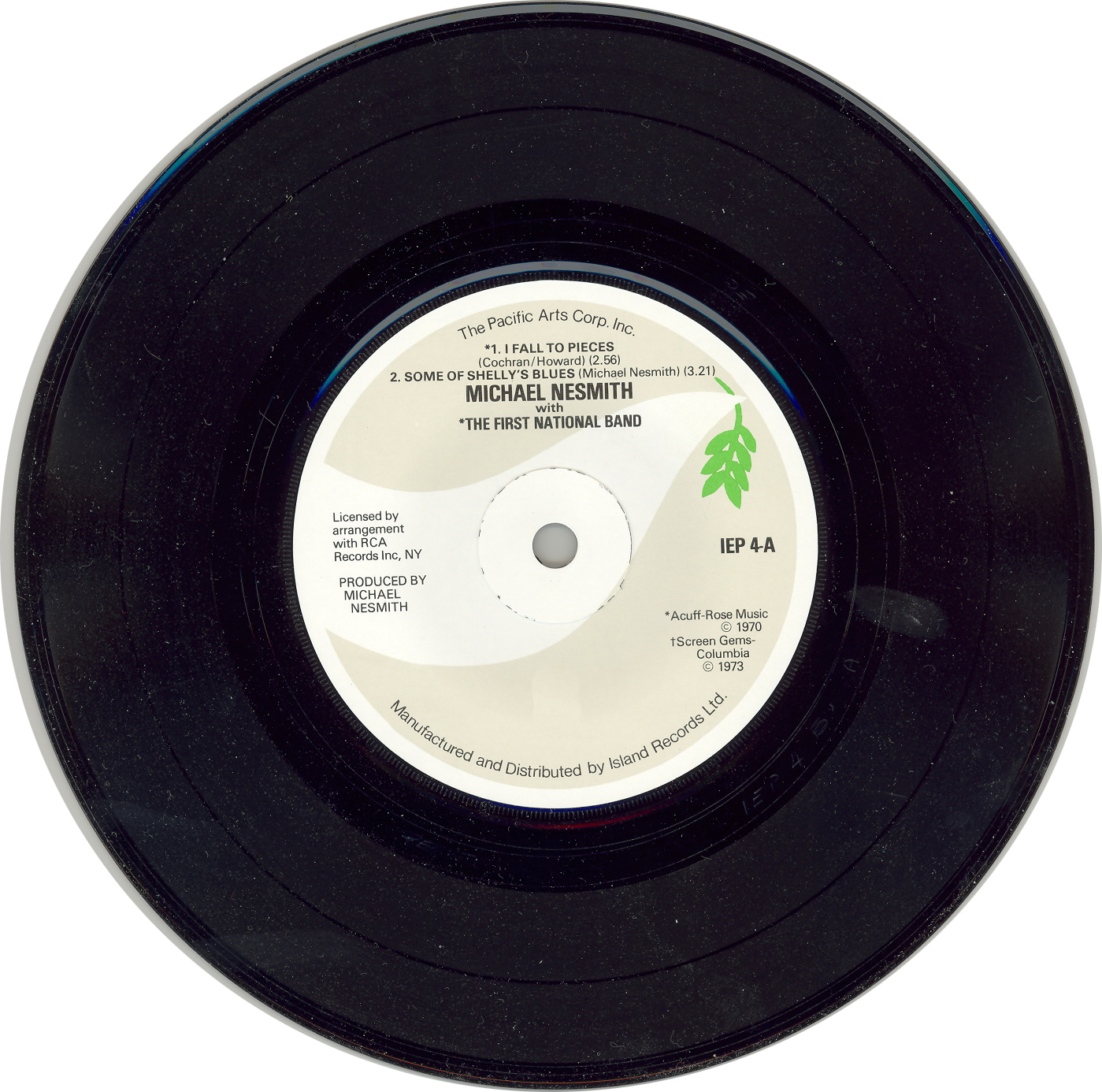
Extended-play vinyl record of Michael Nesmith's "I Fall to Pieces" with four tracks

An extended play (EP) is a musical recording that contains more tracks than a single but fewer than an album.[1] Contemporary EPs generally contain up to eight tracks and have a playing time of 15 to 30 minutes.[7] An EP is usually less cohesive than an album and more "non-committal".[8]

An extended play (EP) originally referred to a specific type of 45 rpm phonograph record other than 78 rpm standard play (SP) and 33 rpm long play (LP),[9] but as of 2025, also applies to mid-length CDs and downloads.[10] EPs are considered "less expensive and less time-consuming" for an artist to produce than an album, and have long been popular with punk and indie bands.[1][11] In K-pop and J-pop, they are usually referred to as mini-albums.[1]

Background

[edit]

History

[edit]

In the 1940s, when the 45 rpm single and 3313 rpm LP were competing formats, 7-inch 45 rpm singles had a maximum playing time of only about four minutes per side. Partly as an attempt to compete with the LP introduced in 1948 by rival Columbia, RCA Victor introduced "Extended Play" 45s during 1952. Their narrower grooves, achieved by lowering the cutting levels and sound compression optionally, enabled them to hold up to 7.5 minutes per side—but still be played by a standard 45 rpm phonograph. In the early era, record companies released the entire content of LPs as 45 rpm EPs.[12] These were usually 10-inch (25-cm) LPs (released until the mid-1950s) split onto two 7-inch EPs or 12-inch (30-cm) LPs split onto three 7-inch EPs, either sold separately or together in gatefold covers. This practice became much less common with the advent of triple-speed-available phonographs.[citation needed]

EP Pat Boone Sings the Hits, compiling four songs by Pat Boone

Introduced by RCA in the US in 1952, EMI issued the first EPs in Britain in April 1954.[12] EPs were typically compilations of singles or album samplers and were played at 45 rpm on 7-inch (18-cm) discs, with two songs on each side.[13][14] The manufacturing price of an EP was a little more than that of a single.[15] Thus, they were a bargain for those who did not own the LPs from which the tracks were taken.[16]

RCA had success in the format with Elvis Presley, issuing 28 EPs between 1956 and 1967, many of which topped the separate Billboard EP chart during its brief existence.[citation needed] Other than those published by RCA, EPs were relatively uncommon in the United States and Canada, but they were widely sold in the United Kingdom, and in some other European countries, during the 1950s and 1960s. In Sweden, the EP was a popular record format, with as much as 85% of the market in the late 1950s consisting of EPs.[17]

Billboard introduced a weekly EP chart in October 1957, noting that "the teen-age market apparently dominates the EP business, with seven out of the top 10 best-selling EPs featuring artists with powerful teen-age appeal — four sets by Elvis Presley, two by Pat Boone and one by Little Richard".[18] Other publications such as Record Retailer, New Musical Express (NME), Melody Maker, Disc and Music Echo and the Record Mirror also printed EP charts.[citation needed]

The popularity of EPs in the US had declined in the early 1960s in favor of LPs. In the UK, Cliff Richard and the Shadows, both individually and collectively, and the Beatles were the most prolific artists issuing EPs in the 1960s, many of them highly successful releases. The Beatles' Twist and Shout outsold most singles for some weeks in 1963. The success of the EP in Britain lasted until around 1967, but it later had a strong revival with punk rock in the late 1970s and the adaptation of the format for 12-inch and CD singles.[19] The British band Cocteau Twins made prolific use of the EP format, releasing ten EPs between 1982 and 1995.[20] Typically used for the CD single, some bands like The Locust made use of the 8cm/3" CD format to release EPs, including their 1997 self-titled EP.

EPs of original material regained popularity in the punk rock era, when they were commonly used for the release of new material, e.g. Buzzcocks' Spiral Scratch EP.[13]

Ricardo Baca of The Denver Post said in 2010, "EPs—originally extended-play 'single' releases that are shorter than traditional albums—have long been popular with punk and indie bands."[11]

In the Philippines, seven-inch EPs marketed as "mini-LPs" (but distinctly different from the mini-LPs of the 1980s) were introduced in 1970, with tracks selected from an album and packaging resembling the album they were taken from.[21] This mini-LP format also became popular in America in the early 1970s for promotional releases, and also for use in jukeboxes.[22]

In 2010, Warner Bros. Records revived the format with their "Six-Pak" offering of six songs on a compact disc.[23]

EPs in the digital and streaming era

[edit]

Due to the increased popularity of music downloads and music streaming beginning in the late 2000s, EPs have become a common marketing strategy for pop musicians wishing to remain relevant and deliver music in more consistent timeframes leading to or following full studio albums. In the late 2000s to early 2010s, reissues of studio albums with expanded track listings were common, with the new music often being released as stand-alone EPs. In October 2010, a Vanity Fair article regarding the trend noted post-album EPs as "the next step in extending albums' shelf lives, following the "deluxe" editions that populated stores during the past few holiday seasons—add a few tracks to the back end of an album and release one of them to radio, slap on a new coat of paint, and—voila!—a stocking stuffer is born."[24] Examples of such releases include Lady Gaga's The Fame Monster (2009) following her debut album The Fame (2008), and Kesha's Cannibal (2010) following her debut album Animal (2010).

A 2019 article in Forbes discussing Miley Cyrus' plan to release her then-upcoming seventh studio album as a trilogy of EPs, beginning with She Is Coming, stated: "By delivering a trio of EPs throughout a period of several months, Miley is giving her fans more of what they want, only in smaller doses. When an artist drops an album, they run the risk of it being forgotten in a few weeks, at which point they need to start work on the follow-up, while still promoting and touring their recent effort. Miley is doing her best to game the system by recording an album and delivering it to fans in pieces."[25] However, this release strategy was later scrapped in favor of the conventional album release of Plastic Hearts.[26] Major-label pop musicians who had previously employed such release strategies include Colbie Caillat with her fifth album Gypsy Heart (2014) being released following an EP of the album's first five tracks known as Gypsy Heart: Side A three months prior to the full album, and Jessie J's fourth studio album R.O.S.E. (2018) which was released as four EPs in as many days entitled R (Realisations), O (Obsessions), S (Sex) and E (Empowerment).

Definition

[edit]

The first EPs were seven-inch vinyl records with more tracks than a normal single (typically four of them). Although they shared size and speed with singles, they were a recognizably different format than the seven-inch single. Although they could be named after a lead track, they were generally given a different title.[13] Examples include the Beatles' The Beatles' Hits EP from 1963, and the Troggs' Troggs Tops EP from 1966, both of which collected previously released tracks.[13] The playing time was generally between 10 and 15 minutes.[13] In the UK they came in cardboard picture sleeves at a time when singles were usually issued in paper company sleeves. EPs tended to be album samplers or collections of singles. EPs of all original material began to appear in the 1950s. Examples are Elvis Presley's Love Me Tender from 1956 and "Just for You", "Peace in the Valley" and "Jailhouse Rock" from 1957, and the Kinks' Kinksize Session from 1964.

Twelve-inch EPs were similar, but generally had between three and five tracks and a length of over 12 minutes.[13] Like seven-inch EPs, these were given titles.[13] EP releases were also issued in cassette and 10-inch vinyl formats.[13] With the advent of the compact disc (CD), more music was often included on "single" releases, with four or five tracks being common, and playing times of up to 25 minutes.[13] These extended-length singles became known as maxi singles and while commensurate in length to an EP were distinguished by being designed to feature a single song, with the remaining songs considered B-sides, whereas an EP was designed not to feature a single song, instead resembling a mini album.

Following the introduction of CDs, music downloads, and music streaming to the market definitive distinctions between singles, EPs, and LPs have become elusive.[27]

In the United States, the Recording Industry Association of America defines an EP as a release under 30 minutes containing three to five songs for the purposes of certification.[28] Conversely, The Recording Academy's rules for the Grammy Awards state that any release with five or more different songs and a running time of over 15 minutes is considered an album, with no mention of EPs.[29]

In the United Kingdom, an EP can appear either on the album or the single chart. The Official Chart Company classifies any record with more than four tracks (not counting alternative versions of featured songs, if present) or with a playing time of more than 25 minutes as an album for sales-chart purposes. If priced as a single, they will not qualify for the main album chart but can appear in the separate Budget Albums chart.[30][31]

An intermediate format between EPs and full-length LPs is the mini-LP, which was a common album format in the 1980s. These generally contained 20–30 minutes of music and about seven tracks.[13]

Double EPs

[edit]

A double extended play is a name typically given to vinyl records or compact discs released as a set of two discs, each of which would normally qualify as an EP. The name is thus analogous to double album. As vinyl records, the most common format for the double EP, they consist of a pair of 7-inch discs recorded at 45 or 3313 rpm, or two 12-inch discs recorded at 45 rpm. The format is useful when an album's worth of material is being pressed by a small plant geared for the production of singles rather than albums and may have novelty value which can be turned to advantage for publicity purposes. Double EPs are rare, since the amount of material record-able on a double EP could usually be more economically and sensibly recorded on a single vinyl LP.

In the 1950s, Capitol Records had released a number of double EPs by its more popular artists, including Les Paul. The pair of double EPs (EBF 1–577, sides 1 to 8) were described on the original covers as "parts ... of a four-part album".[citation needed] In 1960, Joe Meek released four tracks from his planned I Hear a New World LP on an EP that was marked "Part 1". A second EP was planned, but never appeared; only the sleeve was printed.[32] The first double EP released in Britain was the Beatles' Magical Mystery Tour film soundtrack.[33][34] Released in December 1967 on EMI's Parlophone label, it contained six songs spread over two 7-inch discs and was packaged with a lavish color booklet.[34] In the United States and some other countries, the songs were augmented by the band's single A- and B-sides from 1967 to create a full LP –a practice that was common in the US but considered exploitative in the UK.[34] The Style Council album The Cost of Loving was originally issued as two 12-inch EPs.

It is more common for artists to release two 12-inch 45s rather than a single 12-inch LP.[citation needed] Though there are 11 songs that total about 40 minutes, enough for one LP, the songs are spread across two 12" 45 rpm discs. Also, the vinyl pressing of Hail to the Thief by Radiohead uses this practice but is considered to be a full-length album. In 1982 Cabaret Voltaire released their studio album "2x45" on the UK-based label Rough Trade, featuring extended tracks over four sides of two 12-inch 45 rpm discs, with graphics by artist Neville Brody. The band subsequently released a further album in this format, 1985's "Drinking Gasoline", on the Virgin Records label.

Double EPs can also contain the work of multiple artists split across different sides, akin to split albums. An example of this is the Dunedin Double EP, which contains tracks by four different bands. Using a double EP in this instance allowed each band to have its tracks occupying a different side. In addition, the groove on the physical record could be wider and thus allow for a louder album.[citation needed]

Jukebox EP

[edit]
Blue and white Jukebox. Sign at the top of the machine reads "EP ALBUM RECORDS" with "SHOW TUNES JAZZ MOOD MUSIC" written to the left and "OLD FAVORITES CLASSICS DANCE MUSIC" written to the right. "Select-O-Matic Two-Hundred" is printed on the glass. A line of horizontal 45 records can be seen, as well as a rectangular Seeburg logo on the right side of the machine. Above and below the line of 45s a white catalogue can be seen. Between columns of the catalogue are four blue, black, and white illustrations. Clockwise starting with the top left illustration these depict: two men in suits playing horns, a woman sitting on a couch clutching her knees, a man in a vest dancing with a woman in a long dress, and a singer at a microphone with two floating 45s next to her head, accompanied by two men playing horns. Placards below the bottom row of the catalogue are visible, reading "HIT TUNES", "Rhythm and Blues", and "Country and Western". Buttons for selecting the 45s below the catalogue from left to right are lettered A through K, then numbered 1 through 9, then 0, then lettered L through V. The lettered buttons are red, and the numbered letters are green. A coin slot is on the right side of the buttons, reading "COINS NICKELS DIMES QUARTERS UP TO ONE DOLLAR TOTAL OR A HALF DOLLAR".
A Seeburg Select-O-Matic 200 Jukebox advertising "EP Album Records" in Buenos Aires

In 1962 Seeburg began releasing seven-inch, 3313 rpm truncated versions of long-play (LP) albums for use in jukeboxes, inspired by unsuccessful earlier attempts by Mercury and Cadence to market the format to the public as "little LPs".[35] Some songs were omitted for time purposes, and the most popular tracks were left on. Unlike most EPs before them, and most seven-inch vinyl in general (pre-1970s), these were issued in stereo.[35]

See also

[edit]

References

[edit]
Revisions and contributorsEdit on WikipediaRead on Wikipedia
from Grokipedia
An extended play (EP), short for extended play, is a musical recording format that contains more tracks than a single but fewer than those on a full-length , typically featuring 3 to 6 songs and lasting 15 to 30 minutes in total. In the streaming era, definitions vary by platform. For instance, Spotify classifies singles as releases with 1–3 tracks under 30 minutes total, EPs as 4–6 tracks under 30 minutes, and albums as 7 or more tracks or over 30 minutes. Apple Music classifies singles as 1–3 tracks each under 10 minutes and total under 30 minutes, EPs as either 1–3 tracks with at least one ≥10 minutes and total ≤30 minutes or 4–6 tracks under 30 minutes, and albums as 7 or more tracks or over 30 minutes if fewer tracks. Originating in the early amid the rise of vinyl records, the EP was introduced by RCA Victor in 1952 as a seven-inch, 45 rpm disc that doubled the playing time of standard singles while remaining shorter and more affordable than 12-inch long-playing (LP) albums. This innovation addressed consumer demand for mid-length releases, often used for compilations of hits, album samplers, or thematic collections, and quickly gained popularity in genres like rock 'n' roll and pop during the and . In the modern digital music landscape, EPs have surged in relevance as a strategic tool for emerging and established artists alike, allowing for quicker production cycles, targeted promotion, and audience testing of new sounds without the commitment of a full album. EPs often chart on platforms like the , and as of 2025, numerous EPs—including over 20 that have reached number one, such as recent K-pop releases by groups like , , and —underscore their commercial viability across genres such as hip-hop, , and . Unlike singles, which prioritize radio play and are often 1-2 tracks, or LPs with 8-15 tracks emphasizing narrative depth, EPs balance artistic experimentation with market accessibility, making them a staple in releases.

Definition and Characteristics

Core Definition

An extended play (EP) is a musical recording format positioned intermediate between a single and a full-length , typically comprising 3 to 6 tracks or lasting 10 to 25 minutes in total playing time. The term "extended play" derives from its original vinyl context, denoting a duration longer than that of a standard single—often limited to one or two songs—but shorter than a long-playing (LP) record, which could accommodate up to 20-25 minutes per side. This nomenclature emphasized the format's capacity for expanded content relative to the brief runtime of early 78 rpm singles or initial 45 rpm releases. The EP originated as a 7-inch, 45 rpm vinyl disc, introduced by RCA Victor in as a competitive response to ' 33⅓ rpm LP format, allowing for approximately four tracks—two per side—within a compact, affordable package. Its primary purpose has been to serve as a versatile medium for artists and labels to distribute supplementary material, such as B-sides from singles, , or thematically cohesive song sets, without the production and commercial commitment required for a complete . This approach enabled quicker releases and targeted marketing, often compiling highlights from existing LPs or standalone tracks to appeal to budget-conscious consumers or specific fan interests. In the 1950s, RCA Victor formalized early EP definitions through promotional materials, branding them as "extended play 45s" or "45 rpm single-record albums" to highlight their and extended content over standard singles. For instance, a 1952 RCA Victor holiday catalog featured EPs like the Three Suns' Music to Play on Day, presenting seasonal tracks in this intermediate format, while Elvis Presley's 1956 release Elvis – Volume 1 exemplified the EP's role in launching artists with curated selections of hits and fillers. These early implementations underscored the EP's foundational role in bridging short-form and long-form recordings during the vinyl era's format wars.

Distinctions from Other Formats

Extended plays (EPs) are distinguished from other music formats primarily by their intermediate length and purpose, typically containing 3 to 6 tracks with a total runtime under 30 minutes, positioning them between singles and full-length albums. Singles generally feature 1 to 3 tracks, often under 10 minutes total, and serve a promotional role to highlight a lead song from a larger project or stand alone for radio and play. In contrast, albums encompass 7 or more tracks, frequently exceeding 30 minutes, and represent a comprehensive artistic statement with a cohesive or thematic depth. Commercially and artistically, EPs function as versatile releases that bridge gaps between full , allowing artists to maintain fan engagement without the investment of a complete record. They often act as "stopgaps" to sustain momentum during album production cycles, providing fresh content to support tours or build anticipation. Artistically, EPs serve as testing grounds for experimental material, enabling artists to explore new sounds or styles on a smaller scale before committing to an 's broader scope, or as standalone mini-albums that capture a specific creative phase. Legal and industry standards for EP classification rely on content volume and sales metrics rather than rigid rules, with organizations like the RIAA treating EPs under album certification guidelines based on equivalent units from sales and streams—500,000 for and 1,000,000 for —without separate track-based thresholds. The IFPI similarly incorporates EPs into broader release metadata frameworks for global tracking, emphasizing bundling of resources over strict format distinctions, though distribution platforms enforce practical limits like 4-6 tracks under 30 minutes to categorize them distinctly from albums. In modern contexts, these distinctions have evolved with digital streaming, where EPs frequently bundle remixes, live recordings, or acoustic versions that do not align with the single's promotional focus or the album's exhaustive structure, allowing for flexible and compatibility. This adaptability has made EPs particularly valuable for independent artists navigating fragmented consumption patterns.

Typical Length and Content

Extended plays (EPs) typically consist of 3 to 6 tracks, with a total runtime ranging from 10 to 30 minutes, providing a format longer than a single but shorter than a full . In physical vinyl releases, EPs are commonly pressed as 7-inch records playing at 45 (rpm), with multiple tracks per side. This structure balances accessibility and depth, enabling artists to deliver substantial content without the commitment of a longer project. The content of an EP often includes a mix of original compositions, cover versions, , or instrumental tracks, curated to emphasize thematic cohesion or experimental elements rather than a broad arc. For instance, artists may use the format to showcase unreleased material alongside B-sides or alternate versions, fostering a sense of variety within a unified artistic statement. In physical formats such as vinyl, track sequencing generally prioritizes the most prominent or lead songs on Side A to capture immediate listener attention, reserving Side B for supplementary tracks that extend or complement the primary material. The constrained length of an EP inherently promotes concise songwriting, compelling creators to refine ideas and eliminate excess, which contrasts with the expansive storytelling possible in albums. This brevity encourages focused experimentation, allowing musicians to test new styles or themes efficiently while building anticipation for future releases.

Historical Development

Origins in the Early 20th Century

The origins of the extended play (EP) format trace back to the early , when record labels began bundling multiple 78 rpm shellac discs into cohesive sets known as "albums." These precursors emerged as early as the late 1910s, with issuing the first such collections around 1917–1918, compiling 4 to 12 discs to present extended musical programs beyond individual singles, such as dance medleys or classical selections. By the and , this practice became standard for labels like Columbia and RCA Victor, allowing consumers to acquire themed groupings of tracks in bound books or slipcases, which foreshadowed the EP's role in delivering more content per purchase. The explicit EP format materialized in the post-World War II era, with RCA Victor launching the first commercial 7-inch 45 rpm vinyl EPs in 1952, each typically featuring four tracks for a total playtime of about 7–8 minutes per side—effectively doubling the capacity of standard 45 rpm singles. This innovation built directly on the 45 rpm single introduced by RCA in 1949, adapting the smaller disc size for longer playback through finer microgrooves. The development of the EP was driven by practical and economic factors in the immediate postwar period, including lingering shortages from that had spiked material costs and prompted a full transition to durable, cheaper vinyl production. RCA aimed to create a cost-effective alternative for operators and radio stations, where the compact 45 rpm format already dominated due to its suitability for automated playback, while meeting consumer demand for more music value without the expense of full-length albums. As a strategic counter to Columbia's 1948 introduction of 33 1/3 rpm long-playing (LP) records, the EP provided an affordable midpoint, priced lower than LPs but offering greater variety than singles. A pivotal adoption occurred in the mid-1950s, as the EP gained traction among emerging rock and roll artists for debut releases; notably, Elvis Presley's self-titled EP (EPA-1254), issued by RCA Victor on March 23, 1956, compiled four Sun Records tracks including "Blue Moon of Kentucky" and "I Love You Because," helping propel his career while exemplifying the format's versatility for new talent.

Evolution During the Vinyl Era

The introduction of the 7-inch extended play (EP) format by RCA Victor in 1952 marked a significant standardization in the vinyl era, initially at 45 rpm to allow for 4-6 tracks on a single disc, bridging the gap between short singles and full long-playing (LP) records. This format gained traction in the mid-1950s, particularly with the adoption of 33⅓ rpm speeds for certain applications by around 1954, enabling longer playtimes and finer grooves on vinyl material, which facilitated its widespread use in rock 'n' roll and pop music. By the late 1950s, EPs had become a staple for artists like Elvis Presley, whose releases such as the 1956 "Love Me Tender" EP showcased how the format could bundle hit singles with additional tracks to appeal to growing teen audiences. During the 1960s and 1970s, EPs reached their commercial peak, playing a pivotal role in the emergence of punk, new wave, and indie scenes by offering an affordable medium for raw, experimental recordings. The Beatles' 1963 "Twist and Shout" EP, their first release on , exemplified this by compiling four tracks from their debut album and achieving strong sales amid the . In the punk movement, bands like the utilized EPs for quick, independent releases; their 1977 "" EP, self-released on their own label, sold over 20,000 copies and influenced the DIY ethos of the scene. Similarly, The Damned's early output in 1977, including EP-style singles, helped solidify punk's rapid dissemination in the underground. Record labels increasingly employed EPs as promotional tools during tours or to extend the lifecycle of hit singles, often repackaging B-sides or live cuts to boost artist visibility without the commitment of a full LP. In some markets, such as , EPs were a dominant format during the ; for instance, 45-rpm EPs accounted for 11.2 million units sold in , surpassing LP sales and reflecting their prominence in pop and consumption before the LP's rise. This strategy proved effective in building fan loyalty, as seen with acts like , whose 1964 EPs promoted international tours by offering exclusive content. The viability of vinyl EPs began to decline in the late 1970s due to the rising popularity of compact cassettes and the entrenched dominance of LPs, which offered greater capacity and durability for home listening. Cassettes, introduced widely in the early 1970s, provided portability and lower production costs, leading to their sales surpassing vinyl LPs in the by 1984 and eroding the market for shorter formats like EPs. By the end of the decade, overall recorded music sales stagnated as consumers shifted to tape for convenience, particularly in and personal players, rendering EPs less economically sustainable for labels.

Transition to Digital and Streaming

The transition to digital formats began in the late with the widespread adoption of the (CD), which allowed EPs to be released on the standard 5-inch format, often incorporating bonus tracks, remixes, or live recordings to extend value beyond vinyl limitations. This era marked a shift from analog to digital production and distribution, enabling higher fidelity and easier replication of shorter releases. A notable example is Nirvana's EP, issued on CD in 1992 by to support their Pacific Rim tour, featuring covers of tracks by , , and alongside originals like "." By the 2010s, streaming platforms like revolutionized EP consumption, categorizing releases with 2–6 tracks and under 30 minutes total runtime as EPs, distinct from full albums (7+ tracks or over 30 minutes). These platforms treat EPs as standalone projects or components, facilitating algorithmic recommendations and viral sharing, while industry metrics evolved from physical units sold to on-demand streams and subscription plays. Streaming accounted for 84% of U.S. recorded revenues by , underscoring the format's dominance and EPs' adaptability to data-driven consumption patterns. In modern trends, EPs have surged in hip-hop and electronic genres as tools for rapid releases, allowing artists to test material, build hype, and align with short attention spans amplified by platform algorithms that prioritize concise content for playlists. Billie Eilish's debut EP , released in August 2017 via and , exemplifies this with its whispery, electronic-infused tracks like "Ocean Eyes" and "idontwannabeyouanymore," which amassed millions of streams and propelled her to global stardom. Similarly, in hip-hop, releases like Joey Bada$$'s 1999 (2012) served as quick mixtape-adjacent EPs to cultivate fanbases pre-album. Challenges in the streaming age include the blurring boundaries between EPs and mixtapes, especially in hip-hop, where both formats now often involve free or low-cost digital drops of 4–8 tracks to bypass traditional gatekeeping and engage audiences directly. This convergence has complicated revenue models, as platforms' emphasis on streams over sales diminishes distinctions, though EPs retain value for targeted promotion. Industry data reflects this evolution, with streaming's overall growth—rising from 7% of U.S. in 2010 to 80% by 2019—fueling a broader increase in short-form releases like EPs.

Formats and Variations

Double EPs

A double EP is a musical release that combines two extended plays into one package, typically featuring between 6 and 12 tracks or 20 to 50 minutes of total runtime, and commonly distributed on a single 12-inch vinyl record or as a bundled digital download. This structure emerged as a way to extend the EP's brevity while avoiding the commitment of a full-length , allowing for economical production and packaging that fits between standard singles and LPs in terms of scope and cost. One of the earliest prominent examples of a double EP is ' Magical Mystery Tour (1967), released in the as a double EP containing six new songs from the accompanying film , including "" and "." This release totaled approximately 23 minutes and was marketed to capitalize on the film's buzz, offering fans a compact yet immersive set of psychedelic tracks on two 7-inch discs played at 33 RPM. In the 1980s, artists adopted the format for value-driven packaging, as seen with ' Tiny Dynamine / Echoes in a Shallow Bay (1985), a double EP compiling eight ethereal songs across two companion EPs, reissued together on 12-inch vinyl to provide deeper exploration of the band's evolving sound without a full album commitment. Double EPs serve various purposes, including archival compilations of rarities and outtakes to preserve an artist's early or lesser-known material. They also enable themed pairings, such as contrasting acoustic and electric interpretations of songs to highlight artistic versatility, or budget-oriented doubles tailored for international markets to deliver more tracks at an accessible , enhancing perceived value during the vinyl era. In contemporary usage, digital double EPs facilitate expanded content drops to boost streaming metrics, exemplified by Greta Van Fleet's (2017), which paired four new rock tracks with their debut EP's songs on a single digital and vinyl package, aiding the band's rapid rise by offering a comprehensive introductory collection.

Jukebox EPs

Jukebox EPs, also known as Little LPs or Compact 33s, were 7-inch vinyl records designed exclusively for playback in coin-operated es, typically featuring 2 to 3 songs per side at 33 1/3 rpm for a total of 4 to 6 tracks. This format allowed es to offer longer selections than standard 45 rpm singles while fitting the machines' physical constraints, with records often including printed jukebox strips—cardboard title cards inserted into the machine for song identification. Introduced in late 1961 by Cadence Records, the format gained traction when adopted by for their models, such as the Select-A-Disc series, enabling up to 100 selections in adult-oriented venues like bars and diners. The format peaked in popularity during the early to mid-1960s, coinciding with the height of culture in American diners, arcades, and taverns, where machines from Seeburg and competitors like provided on-demand . Record labels produced these EPs to promote hit singles and artists, often compiling recent releases for quick jukebox stocking; , for instance, issued over 140 titles starting in 1962, including promotional samplers like SXA-1602 featuring Duke Ellington's hits and SU-2431 with ' "." These EPs targeted operators seeking cost-effective ways to refresh selections, emphasizing popular genres such as pop, rock, and to capitalize on the era's booming coin-op industry. Technically, EPs were engineered for durability and public playback, with reinforced edges to withstand frequent handling in jukebox mechanisms and mastering optimized for the machines' built-in amplifiers to ensure clear sound over ambient noise in venues. Available in both mono (e.g., Capitol's MA series) and stereo (SXA/SU series) variants, they offered higher fidelity than 45 rpm singles while maintaining a compact size compatible with Seeburg's rack systems. The format declined sharply in the as jukeboxes waned due to the rise of cassette tapes, eight-tracks, and home stereos, with production ceasing by 1975 and Seeburg exiting the market amid broader industry obsolescence. In rare modern revivals, collectors and enthusiasts have reissued select EPs on vinyl for nostalgic events or restored vintage machines, though the format remains niche and primarily fuels interest rather than widespread commercial use.

Other Specialized Formats

Picture and colored vinyl EPs emerged as aesthetic variants in the , offering visual appeal through translucent, marbled, or pigmented materials that enhanced collectibility without altering playback standards. These formats gained traction in punk and rock scenes, where limited pressings on non-black vinyl added exclusivity. By the , picture discs—thin vinyl layers embedding images between clear surfaces—became popular for EPs, providing a tactile and visual experience, though could vary due to the embedded artwork. Limited-edition formats expanded EP accessibility and appeal through bundled extras, such as s containing multiple discs alongside s, booklets, or memorabilia, often produced in small runs for direct fan sales. A notable example is TV Girl's (2021), which compiles three EPs on splatter-colored vinyl with an included , emphasizing artistic for indie audiences. In the digital realm, platforms like have facilitated exclusive EPs with remix stems—isolated audio tracks for fan remixing—allowing artists to engage communities interactively; The Freakazoids' "Jam Hot EP" (2019) includes such stems, enabling users to download and alter components for creative reuse. Genre-specific adaptations highlight EPs' versatility in underground scenes, particularly cassettes in the mixtape culture, where DIY punk and indie acts distributed short-run tapes blending original tracks with live recordings or demos. Washington, D.C., hardcore bands like , , and released early EPs on cassettes through labels like , capitalizing on the format's low cost and portability to share raw, unpolished sounds amid the era's home-taping boom. Similarly, flexi-discs—flexible, paper-thin records—integrated into punk fanzines as affordable inserts, fostering subcultural exchange; the British zine Sniffin' Glue's final 1977 issue featured a flexi-disc EP of Alternative TV's "Love Lies Limp," exemplifying how these ephemeral media democratized music distribution in pre-digital DIY networks. Collectibility drives significant value for these specialized EPs, with rarity from limited pressings or unique media elevating prices in secondary markets, particularly for punk releases on unconventional formats. For example, underground punk EPs like Down Syndrome's self-titled 7-inch (limited to 1,000 copies on colored vinyl) command premiums due to and historical ties to regional scenes, often fetching hundreds of dollars among collectors seeking artifacts of the era's DIY ethos. This , amplified by one-off variants like flexi-disc inserts or cassette demos, underscores how physical novelties preserve punk's anti-commercial spirit while appealing to archival enthusiasts.

References

Add your contribution
Related Hubs
Contribute something
User Avatar
No comments yet.