Hubbry Logo
Tsuga canadensisTsuga canadensisMain
Open search
Tsuga canadensis
Community hub
Tsuga canadensis
logo
8 pages, 0 posts
0 subscribers
Be the first to start a discussion here.
Tsuga canadensis
Tsuga canadensis
from Wikipedia

Tsuga canadensis
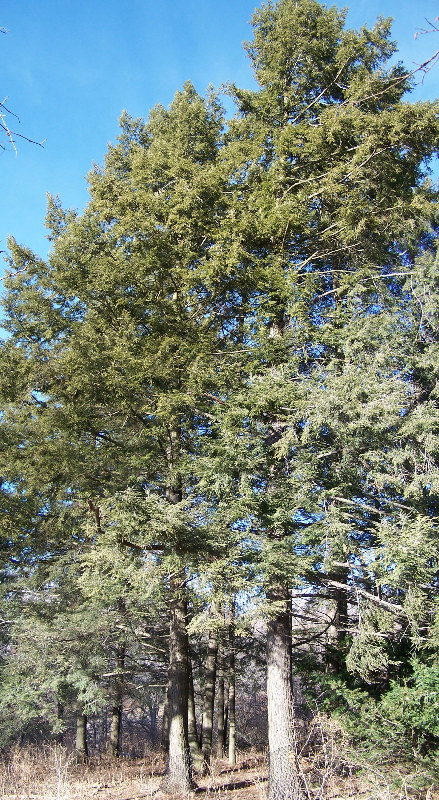
Large specimens at Morton Arboretum
Apparently Secure
Apparently Secure  (NatureServe)[2]
Scientific classification Edit this classification
Kingdom: Plantae
Clade: Tracheophytes
Clade: Gymnospermae
Division: Pinophyta
Class: Pinopsida
Order: Pinales
Family: Pinaceae
Genus: Tsuga
Species:
T. canadensis
Binomial name
Tsuga canadensis
Natural range
Closeup view of range
An eastern hemlock branch at the Kortright Centre for Conservation.

Tsuga canadensis, also known as eastern hemlock,[3] eastern hemlock-spruce,[4] or Canadian hemlock, and in the French-speaking regions of Canada as pruche du Canada, is a coniferous tree native to eastern North America. It is the state tree of Pennsylvania.[5] Eastern hemlocks are widespread throughout much of the Great Lakes region, the Appalachian Mountains, the Northeastern United States, and The Maritimes. They have been introduced in the United Kingdom and mainland Europe, where they are used as ornamental trees.

Eastern hemlock populations in North America are threatened in much of their range by the spread of the invasive Hemlock woolly adelgid, which infests and eventually kills trees. Declines in population from hemlock wooly adelgid infestation have led to Tsuga canadensis being listed as Near Threatened on the IUCN Red List.

Eastern hemlocks are long lived trees, with many examples living for more than 500 years. They can grow to heights of more than 30 metres (100 ft), and are tolerant of shade, moist soil, and slopes. Hemlock wood is used in construction, and for railroad ties. Historically its bark was an important source of tannin for the leather tanning industry.[6] Eastern hemlocks are popular as ornamental trees, thanks to their tolerance of a wide variety of soil and light conditions, as well as their characteristic drooping branches of the mutated tree known as 'weeping hemlock'.

Description

[edit]
A line drawing of the leaves and cones from Britton and Brown's 1913 Illustrated flora of the northern states and Canada

The eastern hemlock grows well in shade and is very long lived, with the oldest recorded specimen, found in Tionesta, Pennsylvania, being at least 554 years old.[7] The tree generally reaches heights of about 31 m (102 ft),[5] but exceptional trees have been recorded up to 53 m (174 ft).[8] The diameter of the trunk at breast height is often 1.5 m (4 ft 11 in), but again, outstanding trees have been recorded up to 1.75 m (5 ft 9 in).[9] The trunk is usually straight and monopodial, but very rarely is forked.[10] The crown is broadly conic, while the brownish bark is scaly and deeply fissured, especially with age.[5] The twigs are a yellow-brown in color with darker red-brown pulvini, and are densely pubescent. The buds are ovoid in shape and are very small, measuring only 1.5 to 2.5 mm (0 to 18 in) in length. These are usually not resinous, but may be slightly so.[5][10]

The leaves are typically 15 to 20 mm (0.59 to 0.79 in) in length, but may be as short as 5 mm (0.20 in) or as long as 25 mm (1 in).The leaves are arranged on little stalks, a characteristic that does not appear in the other evergreen trees.[11] They are flattened and are typically distichous, or two-ranked. The bottom of the leaf is glaucous with two broad and clearly visible stomatal bands, while the top is a shiny green to yellow-green in color. The leaf margins are very slightly toothed, especially near the apex. The seed cones are ovoid in shape and typically measure 1.5 to 2.5 cm (58 to 1 in) in length and 1.0 to 1.5 cm (38 to 58 in) in width. The scales are ovate to cuneate in shape and measure 8 to 12 mm (38 to 12 in) in length by 7.0 to 10 mm (14 to 38 in) in width. The apex is more or less rounded and is often projected outward. Twenty-four diploid chromosomes are present within the trees' DNA.[5][10]

Wood

[edit]

The wood is soft, coarse-grained, and light buff in color. Air-dried, a cubic foot (0.028 m3) weighs 28 pounds (13 kg). The lumber is used for general construction and crates. Because of its unusual power of holding spikes, it is also used for railroad ties. Untreated, the wood is not durable if exposed to the elements. As a fuel, it is low in value. The wood is also a source of pulp for paper manufacturing.[12]

Distribution and habitat

[edit]
Stand of eastern hemlock and eastern white pine in Tiadaghton State Forest, Pennsylvania; note the hemlocks' deeply fissured bark

T. canadensis occurs at sea level in the north of its distribution,[10] but is found primarily at elevations of 600–1,800 m (2,000–5,900 ft). It ranges from northeastern Minnesota eastward through southern Quebec and into Nova Scotia, and south in the Appalachian Mountains to northern Georgia and Alabama.[5][13] Disjunct populations occur in the Piedmont region, northern Alabama, western Ohio and into Indiana, as well as western Wisconsin and eastern Minnesota.[10][14] In Canada, it is present in Ontario and all provinces to the east except Newfoundland and Labrador.[5] Its range completely overlaps that of the closely related Tsuga caroliniana.[15]

It is found primarily on rocky ridges, ravines, and hillsides with relatively high levels of moisture.[5]

Climate

[edit]

Eastern hemlock is generally confined to areas with highland climates, with cool and humid conditions. Precipitation in the areas where it grows is typically 740 mm (29 in) to more than 1,270 mm (50 in) per year. The lower number is more typical of northern forests that receive heavy snowfall; the higher number is common in southerly areas with high summer rainfall. Near the Atlantic coast and in the southern Appalachians where the trees often reach their greatest heights, annual rainfall often exceeds 1,520 mm (60 in). In the north of its range, the temperatures in January average −12 °C (10 °F), while in July they average only 16 °C (61 °F). In these areas, the frost-free season can last fewer than 80 days. In contrast, the southern end of the range experiences up to 200 days without frost and January temperatures as high as 6 °C (43 °F).[15]

Hemlock boughs in the autumn, shedding older foliage
Old hemlocks, Fairfax County, VA

Hemlock woolly adelgid

[edit]
Shoot infested with hemlock woolly adelgid

The species is currently threatened by the hemlock woolly adelgid (Adelges tsugae), a sap-sucking bug introduced from East Asia to the United States in 1924, and first found in the native range of eastern hemlock in the late 1960s.[16] The adelgid has spread very rapidly in southern parts of the range once becoming established, while its expansion northward is much slower.[17] Virtually all the hemlocks in the southern Appalachian Mountains have seen infestations of the insect within the last five to seven years, with thousands of hectares of stands dying within the last two to three years.[18] Attempts to save representative examples on both public and private lands are on-going. A project named "Tsuga Search", funded by the Great Smoky Mountains National Park, is being conducted to save the largest and tallest remaining eastern hemlocks in the Park. Through Tsuga Search, hemlocks have been found with trunk volumes up to 44.8 m3 within the park,[19] making it the largest eastern evergreen conifer, eclipsing in volume both eastern white pine (Pinus strobus) and loblolly pine (Pinus taeda). The tree is currently listed as a near threatened species in the IUCN Red List, but this is based largely on its wide distribution and because the adelgid populations have not reached the northern areas of its range.[1] In 2018, Kejimkujik National Park, in Nova Scotia, became the first National Park of Canada to detect hemlock woolly adelgid within its boundaries.[20] Since then, park staff have been implementing active management options to preserve several hemlock stands within the park.[21]

A study in 2009 conducted by scientists with the U.S. Forest Service Southern Research Station suggests the hemlock woolly adelgid is killing hemlock trees faster than expected in the southern Appalachians, and rapidly altering the carbon cycle of these forests. According to Science Daily, the pest could kill most of the region's hemlock trees within the next decade.[needs update] According to the study, researchers found "hemlock woolly adelgid infestation is rapidly impacting the carbon cycle in [hemlock] tree stands," and "adelgid-infested hemlock trees in the South are declining much faster than the reported 9-year decline of some infested hemlock trees in the Northeast."[22]

Closeup of bark

In a 2009 case study, entomologists from the U.S. Forest Service, Cornell University, and the University of Massachusetts-Amherst released 900 Laricobius nigrinus beetles into a stand of adelgid-infested hemlocks near Lansing, New York. L. nigrinus, which is native to the Pacific Northwest, naturally preys on the hemlock wooly adelgid. The particular site near Lansing was chosen because its hemlocks are only lightly infested with the woolly adelgid, and enough trees are found to sustain a long-term study. The site will be left untreated with pesticides for 10 years to study how well the L. nigrinus beetles become established; if the experiment proves successful, researchers expect the population will take two to three years to build to levels where they can be readily detected.[23]

Ecology

[edit]

The tree can be found living in association with many forest mushrooms, such as Ramaria flavosaponaria[24] and Ganoderma tsugae (which has the common name hemlock varnish shelf.)[25]

Paleoecology

[edit]

The mid-Holocene decline of hemlock populations is a much-studied phenomenon.[26] From its foundation in the early Holocene (around 16,000 BP) in what is now the southeastern US, T. canadensis expanded rapidly and successfully into its potential range.[27] However, palynological analyses show the hemlock population experienced a pronounced decline approximately 5,500 BP that lasted for about 1,000 years. Continued research points to other, though less dramatic, dips in Holocene hemlock populations.[26][28] Pathogens, insects, and climatic change, and a combination of these, have all been proposed to explain these anomalies. The eastern hemlock increased again after the major decline, but did not recover its former place as a dominant species.

Exceptional trees

[edit]

Due to it being a long-lived tree, several very large or otherwise impressive trees exist along the east coast of North America. One organization, the Eastern Native Tree Society (ENTS), has been particularly active in discovering and measuring these trees. In the southern Appalachians, many individuals reach 45 metres (148 ft) tall, and one tree has been measured in the Great Smoky Mountains National Park to 52.8 m (173 ft 3 in) tall, though this tree is now dead from hemlock woolly adelgids; the tallest now surviving, the "Noland Mountain tree", is 51.8 m (169 ft 11 in) tall.[19] Altogether, ENTS has confirmed four trees to heights of 51 m (167 ft) or more by climb and tape drop. In the Northeast, the tallest accurately measured tree is 44 m (144 ft). This tree, named the Seneca hemlock, grows in Cook Forest State Park, PA. Above 43°N latitude, the maximum height of the species is less, under 39 m (128 ft). In New England, ENTS has measured hemlocks to 42 m (138 ft), although trees above 39 m (128 ft) are extremely rare in New England. By 44°N, the maximum height is probably not more than 35 m (115 ft). Diameters of mature hemlocks range from 0.75–1.8 m (2 ft 6 in – 5 ft 11 in), with trees over 1.6 m (5 ft 3 in) in diameter being very rare. In New England, the maximum diameter is 1.4 m (4 ft 7 in).

Trunk volume is the third dimension to receive attention by ENTS. Many eastern hemlocks have been modeled to over 30 m3 (1,100 cu ft) trunk volume, and the largest has been calculated to be 44.8 m3 (1,580 cu ft),[19] making it the largest natural evergreen conifer in the eastern United States. The center of maximum size development for the species is the southern Appalachians, especially the Great Smoky Mountains.

Cultivation

[edit]

Tsuga canadensis has long been a popular tree in cultivation. The tree's preference for partial shade and tolerance of full shade allows it to be planted in areas where other conifers would not easily grow. In addition, its very fine-textured foliage that droops to the ground, its pyramidal growth habit, and its ability to withstand hard pruning make it a desirable ornamental tree. In cultivation, it prefers sites that are slightly acidic to neutral with nutrient-rich and moist but well-drained soil. It is most often used as a specimen, for a screen, or in small group plantings, though it can also be trained as a dense formal hedge. It should not be used on roadsides where salt is used in winter, as its foliage is sensitive to salt spray. It is also poorly adapted as a windbreak tree, as wind exposure causes dieback in winter. It has several drawbacks, such as a fairly low tolerance of urban stress, intolerance for very wet or very dry soils, and susceptibility to attack by the hemlock woolly adelgid, though this is treatable.[29] Its tendency to shed needles rapidly after being cut down renders it unsuitable as a Christmas tree.

It was introduced to British gardens in 1736.[30] In the UK, it is encountered frequently in gardens both large and small, as well as some parks, and is most common in the eastern areas of the country. It is sometimes employed as a hedge, but is considered inferior for this usage compared to Tsuga heterophylla (western hemlock); it is not well adapted to the UK climate and as a consequence often has a poorly developed, forked and sinuous trunk there.[30][31] In Germany, it is the most frequently seen hemlock in cultivation, and is also used in forestry.[32]

Cultivars

[edit]
The weeping shrub form T. canadensis 'Sargentii'

Over 300 cultivars have been selected for use, many of them being dwarf forms and shrubs. A partial list of popular cultivars includes:[29][33]

  • 'Beehive' – a very small dwarf shrub typically growing to 1 m (3 ft 3 in) high and 1.5 m wide, resembling a spreading beehive in form
  • 'Bennett' – a dwarf shrub reaching 1 m (3 ft 3 in) high and 1.5 m (4 ft 11 in) wide, with upper branchlets that first ascend and then arch upper, this selection prefers partial shade.
  • 'Cole's Prostrate' – a groundcover form that can also be used in bonsai as an alternative to the prostrate junipers, it slowly grows to only 30 cm (12 in) tall with a 1.3-metre (4.3 ft) spread, with the central stems eventually becoming visible. It also prefers partial shade.
  • 'Gentsch White' – a dwarf shrub growing to 1.3 m (4 ft 3 in) tall with an equal spread and new spring growth that turns creamy-white in autumn through winter, creating a dramatic contrast with the dark green old growth, it is easily scorched by the sun and requires partial shade. It is recommend to feather shear annually to keep it compact and create more tip growth.
  • 'Jeddeloh' – a dwarf shrub reaching to 1 m (3 ft 3 in) high and 1.5 m (4 ft 11 in) wide, showing a small concavity in the centre, it is an alternative to the bird's-nest spruce (Picea abies 'Nidiformis'). This cultivar has gained the Royal Horticultural Society's Award of Garden Merit.[34]
  • 'Pendula' – an upright weeping form whose height is dependent on how long it is staked, but is typically seen 0.6–1.5 m (2 ft 0 in – 4 ft 11 in) tall with a 1.5-metre (4.9 ft) spread. It has also won the AGM.[35]
  • 'Sargentii' – a popular large weeping shrub that grows to 3 m (9.8 ft) tall with a wide spread up to 6 m (20 ft), it features numerous pendulous branches and is most effectively employed near water, in rock gardens, or on embankments.

Uses

[edit]

American pioneers made tea from the tree's leafy twigs and used its branches as brooms.[36] Tea can be made from the needles. The inner bark, which is best in winter and coming into spring, can be eaten raw or boiled; it can also be used to make flour.[37]

[edit]
  • Numerous place names in North America are named Hemlock. For a list, see Hemlock.
  • Hemlocks are a recurring image in the novel Ethan Frome. Author Edith Wharton described "hemlock boughs bent inward to their trunks by the weight of the snow," "intensely blue shadows of hemlocks on sunlit snow," and darkness "dropping down like a black veil from the heavy hemlock boughs."[38]

References

[edit]
[edit]
Revisions and contributorsEdit on WikipediaRead on Wikipedia
from Grokipedia
Tsuga canadensis, commonly known as eastern hemlock or Canada hemlock, is a large, slow-growing in the pine family () native to eastern . This tree typically reaches heights of 20 to 30 meters with a broadly conical crown, drooping branches, and fine-textured, short needles that are flat, 5 to 25 mm long, and arranged in two ranks along the twigs. It produces small, ovoid seed cones measuring 1.5 to 2.5 cm and is distinguished by its yellow-brown, pubescent twigs and tolerance for shade, making it a foundational species in many forest ecosystems. Native to a range spanning from and in southward to northern Georgia and in the United States, and westward to , T. canadensis thrives in cool, moist habitats from sea level to 1,500 meters . It commonly occurs on north-facing slopes, ravines, coves, and along streams in mixed stands with species such as eastern white pine, sugar maple, yellow birch, and oaks, preferring well-drained, acidic soils in regions with high humidity and moderate temperatures. Ecologically, eastern hemlock plays a critical role as a , providing dense canopy cover that moderates microclimates, retains soil moisture, and supports diverse flora and fauna, including shelter for wildlife like , , and . Historically and commercially, the tree has been valued for its bark, rich in used in the leather tanning industry until the mid-20th century, while its lightweight, straight-grained wood serves for , pulp, and crates. and early settlers utilized it for medicinal teas high in , edible , and cordage, and today it remains popular in as an ornamental tree for its graceful form and , with numerous cultivars available. However, T. canadensis faces significant threats, particularly from the invasive (Adelges tsugae), an aphid-like insect introduced from that feeds on , causing dieback and often tree mortality within a few years of . This pest has devastated populations across much of its range since the 1980s, killing millions of and altering forest dynamics in the eastern U.S. As of 2025, HWA continues to spread to new areas, such as the western shore of . Additional pressures include climate change-induced droughts, warming temperatures, fungal pathogens like root rots, and susceptibility to and , exacerbating declines in this long-lived species that can exceed 500 years in age. Conservation efforts focus on biological controls, such as predatory beetles and silver flies, improved detection methods, and habitat management to protect remaining stands.

Taxonomy

Etymology

The genus name Tsuga derives from the Japanese term tsuga (栂), which denotes the hemlock trees native to , particularly Tsuga sieboldii. This nomenclature was adopted in Western botany to reflect similarities with Asian conifers, with the genus first established as a section within Pinus by Stephan Endlicher in before being elevated to generic rank. The specific canadensis is for "of ," alluding to the tree's prominent occurrence in the Canadian portions of its range across eastern , where it was noted by early European botanists documenting . Historically, Tsuga canadensis was first formally described by Carl Linnaeus in 1763 as Pinus canadensis in the second edition of his seminal work Species Plantarum, placing it among the pines based on limited specimens and descriptions from colonial collections. It was subsequently reclassified into the newly recognized genus Tsuga by Élie-Abel Carrière in 1855, aligning it with other hemlock species distinguished by their foliage, cones, and growth habits within the Pinaceae family.

Classification

Tsuga canadensis belongs to the kingdom Plantae, phylum Tracheophyta, class Pinopsida, order , family , genus , and T. canadensis (L.) Carrière. Phylotranscriptomic analyses using hundreds of nuclear, , and mitochondrial genes place T. canadensis within the monophyletic genus , where it forms part of a n clade alongside Tsuga caroliniana (Carolina hemlock), (mountain hemlock), and (western hemlock), sister to an Asian that includes species such as Tsuga sieboldii (southern Japanese hemlock). Earlier studies based on chloroplast DNA and nuclear ribosomal (ITS) sequences supported a similar broad pattern but with lower resolution. Molecular divergence time estimates from the 2021 analysis indicate that the genus originated in during the late , with dispersal to East via the Bering Land Bridge occurring in the middle (approximately 15–10 million years ago). No subspecies are recognized for T. canadensis, though studies from the late 20th and early 21st centuries have documented low but detectable across its range, with polymorphic loci typically below 10% and expected heterozygosity around 0.07 in southeastern populations. For instance, allozyme research using 19 markers across 20 southeastern U.S. populations revealed higher diversity in Appalachian interior sites compared to peripheral ones, with 98.9% genetic similarity overall (Nei's index) and no evidence for distinct subspecific divisions. Earlier surveys of 10 loci in 17 populations confirmed minimal polymorphism, primarily at a single oxidase locus, underscoring the species' overall low relative to other .

Description

Morphology

Tsuga canadensis is an characterized by a slow growth rate and exceptional longevity, often reaching ages of up to 800 years or more. Mature trees typically attain heights of 20 to 40 meters, with trunk diameters of 1 to 1.5 meters, though exceptional individuals can exceed 50 meters in height and 2 meters in diameter. The foliage features linear , 8 to 20 mm long, with blunt tips and finely toothed margins; these are arranged spirally around the twigs but appear feathery due to their flattened, two-ranked orientation on short petiole-like bases. Upper needle surfaces are dark green and glossy, while the lower surfaces are silvery-white with two prominent stomatal bands. Reproductive structures include small, yellowish male microstrobili, measuring 3 to 8 mm in length and borne in axillary clusters on one-year-old twigs, and pendulous female seed cones that are ovoid, 1.5 to 2.5 cm long, maturing from green to brown in a single season and releasing small winged seeds. On mature trees, the bark is thick, reddish-brown, and deeply furrowed into scaly ridges, providing protection against environmental stresses. The is shallow and wide-spreading, often extending laterally beyond the crown and contributing to the tree's stability challenges in windy conditions.

Reproduction

Tsuga canadensis is monoecious, with strobili produced on the same tree, exhibiting no pronounced . The species employs an breeding system with evidence of widespread in natural populations. Reproduction occurs primarily through wind , with small male pollen cones producing yellow from April to early June across its range. Female strobili, which develop into cones, are receptive during this period, with fertilization completing in approximately six weeks. Unlike some , T. canadensis lacks serotinous cones that remain closed until or other disturbances; instead, cones mature in late summer to early fall, typically August to September, and open by mid-October to release . Seeds are dispersed primarily by , with aiding short-distance spread, and exhibit low natural viability, often remaining viable for up to four years under controlled storage conditions but declining rapidly in the field. rates are low without cold stratification, requiring a moist period of 60 to 90 days at near-freezing temperatures (around 1–5°C) to break and achieve optimal emergence. Regeneration is predominantly by , favoring shaded conditions with damp mineral soil or decaying wood as seedbeds, where partial shade and consistent moisture support establishment over several years. Vegetative or layering is rare and not a significant reproductive strategy.

Distribution and habitat

Geographic range

Tsuga canadensis, commonly known as eastern hemlock, is native to eastern , with its range spanning from the Maritime Provinces of Canada, including and , westward to , , and northeastern . In the United States, it occurs throughout , New York, , and the middle Atlantic states, extending westward to central , and southward along the to northern Georgia and , with discontinuous distributions in the Appalachians and outliers in southern , western , and east of the Appalachians. The ' current distribution reflects post-glacial migration following the last Ice Age, originating from refugia in the southern Appalachians approximately 10,000 to 8,000 years , as evidenced by records indicating its northward and eastward expansion into deglaciated regions. Paleoecological studies show that hemlock first appears in northern sites around 8,000 years BP, replacing earlier dominance by , , and , with the achieving abundance in by this period. The northern limit of the range reaches approximately 48°N latitude, while the southern extent is around 34°N; elevations vary from sea level to 730 m in the northeastern and northern portions, 300–910 m on the , and 610–1,520 m in the southern Appalachians, often on north- or east-facing slopes, coves, or moist valleys. Outside its native range, T. canadensis has been introduced to since 1736, with plantings and cultivars in regions such as the and , though has been limited due to climatic differences.

Environmental requirements

_Tsuga canadensis thrives in cool temperate climates characterized by high and moderate temperatures. It prefers regions with annual ranging from 750 to 1,500 mm, distributed relatively evenly throughout the year, with approximately half occurring as summer rain to maintain consistent . The species tolerates winter temperatures as low as -40°C and summer highs up to 35°C, though it performs best with growing season averages of 15–20°C and is sensitive to prolonged heat above 35°C, which can cause scorching. The tree requires well-drained, acidic for optimal growth, with a preferred range of 4.5–6.0, though it can tolerate slightly higher levels up to 6.8 in some cases. Ideal soil types include loamy or rocky substrates such as sandy loams, loams, and shallow loams over bedrock like or , which support its shallow . It is intolerant of , flooding, or alkaline conditions with high , as these lead to poor establishment and increased vulnerability to stress. As a highly shade-tolerant species, T. canadensis excels in the forest , surviving and regenerating under 5–20% of full while competing effectively with hardwoods in low-light environments. Full sun exposure is generally unsuitable except in cooler northern climates, where it may cause needle burn. Site conditions significantly influence its success, with preferences for north- or east-facing slopes, ravines, and moist coves that provide protection from wind and excessive . The species shows sensitivity to , including sulfur fumes and salt spray, as well as urban stresses like , making it poorly suited to developed areas.

Ecology

Forest ecosystem role

Tsuga canadensis frequently achieves canopy dominance in climax stands of old-growth forests across its range, particularly in cool, moist environments such as ravines and north-facing slopes. As a late-successional species, it forms dense, evergreen overstories that persist for centuries, shaping the structural dynamics of these ecosystems. This dominance stabilizes forest composition by suppressing competing vegetation through intense shading and resource competition. The species' multilayered canopy generates distinctive microclimates characterized by reduced penetration, lower temperatures, and elevated retention, which collectively diminish rates and maintain levels higher than in adjacent mixed stands. These conditions, supported by a deep organic layer, create shaded, damp understories that buffer against seasonal fluctuations and promote the persistence of -dependent and processes. Such microclimates enhance overall stability by moderating environmental extremes. In terms of nutrient cycling, T. canadensis contributes substantially through prolific litterfall from its fine needles, which decompose slowly due to high content and acidity, fostering associations with ectomycorrhizal fungi such as those in the genera Lactarius and Boletus. These fungal symbionts facilitate nutrient uptake, particularly and , while the acidic litter lowers and enriches the forest floor with , thereby bolstering long-term carbon storage in soils and . This slow cycling conserves site nutrients, distinguishing hemlock-dominated forests from faster-decomposing hardwood systems. As a highly shade-tolerant , T. canadensis plays a pivotal role in succession by inhibiting the establishment of early-successional invaders through its persistent canopy shade, allowing gradual recruitment of conspecifics in the . Regeneration often occurs via gap-phase dynamics, where localized disturbances create openings for suppressed saplings to ascend, thereby maintaining hemlock's position in mature stands over extended periods. This process underscores its influence on successional trajectories toward stable, conifer-led communities. Hemlock forests harbor specialized understory biodiversity, supporting shade-adapted species such as ferns (e.g., Dennstaedtia punctilobula) and mosses that thrive in the consistently humid, dimly lit conditions. These stands exhibit distinct plant communities with lower overall cover but higher specialization compared to mixed forests, where the enhanced humidity—often sustaining moist substrates—facilitates the persistence of hygrophilous taxa and contributes to regional floral diversity.

Wildlife interactions

Tsuga canadensis serves as a vital food source for various species, particularly through its and foliage. The small produced in its cones are consumed by birds such as chickadees and finches, providing essential nutrition during winter months when other resources are scarce. Small mammals also feed on these , contributing to their role in the forest . The foliage exhibits moderate palatability and is browsed by and porcupines, especially in winter, though it is not their preferred forage. This species provides critical for numerous animals, supporting breeding and shelter needs. It is essential for breeding birds, including the , which relies on hemlock canopies for nesting in mature forests. Small mammals utilize hemlock stands for foraging and cover, drawn by the seed availability and dense . Hemlock forests provide habitat for salamanders, such as green salamanders, which inhabit moist microhabitats. The dense, drooping foliage structure further aids in concealment for ground-dwelling species, enhancing overall habitat quality. Pollination of Tsuga canadensis is primarily anemophilous, with wind serving as the main vector for transfer from male to female cones. is also predominantly wind-mediated, with lightweight seeds released from maturing cones to travel short distances. Rodents play a key role in secondary dispersal through seed caching behavior, which can transport seeds farther and promote in suitable microsites. Antagonistic interactions include susceptibility to native fungal pathogens, such as species causing , which infects roots and can lead to tree decline under stress. In contrast, mutualistic relationships with ectomycorrhizal fungi are prominent, forming associations that enhance nutrient uptake, particularly and , in nutrient-poor soils. These symbioses improve establishment and overall tree vigor in forest ecosystems.

Threats and conservation

Invasive pests

The (Adelges tsugae), an invasive insect native to , poses the greatest threat to Tsuga canadensis in . First detected in the near , in 1951 after accidental introduction from , it feeds on the sap at the base of hemlock needles, injecting toxins that disrupt nutrient transport and cause needle yellowing, loss, and eventual branch dieback. Heavily infested trees typically decline and die within 4 to 10 years without intervention, as the adelgid lacks effective natural predators in its introduced range. By the 2020s, the pest had infested a substantial portion of the eastern hemlock's range across more than 20 states from to Georgia, leading to widespread forest alterations. Another significant Asian invasive, the elongate hemlock scale (Fiorinia externa), was introduced to the United States around 1908 in New York and targets the undersides of hemlock needles, where it feeds on sap and induces yellowing, premature needle drop, and defoliation. This armored scale weakens trees over time, exacerbating stress from other pests and contributing to overall decline, though it is less lethal alone than the woolly adelgid. Like the adelgid, it initially spread without natural enemies in , allowing populations to build rapidly on vulnerable hemlock foliage. These invasives have caused severe mortality, with rates exceeding 95% in heavily infested stands, transforming hemlock-dominated forests into open woodlands and reducing . Economically, the pests result in tens of millions of dollars in annual losses from diminished timber value and residential property aesthetics in affected regions. Spread occurs primarily through passive dispersal of eggs and crawlers via , birds, deer, and human activities such as transporting infested nursery or logs, enabling rapid regional expansion. The delicate, flattened of T. canadensis provide limited physical barriers against such sap-feeding invaders.

Climate change impacts

Eastern hemlock (Tsuga canadensis) faces substantial threats from rising temperatures driven by , which exceed the ' preferences for cool, moist conditions. Projections from models indicate a mean center of suitable shifting northeastward by over 100 km under high-emission scenarios (RCP 8.5), with overall habitat suitability declining to a future-to-current ratio of 0.765, representing approximately a 24% reduction by 2100. In the Mid-Atlantic region, where hemlock is a foundational , vulnerability assessments rate it as highly sensitive to temperature increases of up to 7.6°F by late century under severe emissions (GFDL A1FI), leading to reduced growth potential and potential extirpation in southern subregions. Warmer winters, with minimum temperatures rising by 2.1°F historically, further disrupt cold hardiness by altering freeze-thaw cycles and reducing protective snow cover for seedlings. Precipitation changes, including reduced growing-season totals (potentially dropping to 457 mm under high-emission models) and increased frequency, impose severe stress on hemlock's shallow , limiting access to . Historical summer , such as those 5,700–5,100 years ago when annual fell from 830 mm to 700 mm, triggered widespread declines, with records showing cover dropping from 30% to less than 5% across northeastern North America. Contemporary projections amplify this vulnerability, forecasting heightened and deficits that could result in up to 95% loss by 2100 in Mid-Atlantic forests under high-emission scenarios. These patterns particularly affect the southern range, where monitoring indicates ongoing contraction of suitable habitats due to compounded moisture stress. Climate-induced shifts interact synergistically with biotic pressures, as milder winters enhance invasive pest survival and spread, accelerating hemlock decline beyond direct abiotic effects. Genetic analyses across the range reveal low heterozygosity and elevated (e.g., fixation indices up to 0.463 in disjunct populations), underscoring the ' limited capacity to adapt to rapid warming and variability. Recent vulnerability syntheses from the , drawing on and data, confirm 46% reductions in trees per acre and up to 69% drops in basal area in key Mid-Atlantic subregions by , signaling acute risks to population persistence.

Management strategies

Management of Tsuga canadensis populations primarily focuses on mitigating the impacts of the hemlock woolly adelgid (Adelges tsugae), an invasive pest that threatens the species across its range. Integrated pest management (IPM) approaches combine chemical, biological, and silvicultural techniques to protect and restore hemlock stands, with ongoing research emphasizing sustainable, long-term conservation. As of 2025, funding continues through programs like PPA 7721, supporting biocontrol research such as the predatory beetle Scymnus camptodromus. Chemical controls are a cornerstone of short-term protection for high-value trees and stands. Insecticidal soaps provide contact control for early infestations, targeting adelgid populations on foliage through direct application. Systemic insecticides like are widely used for broader efficacy; soil injections or drenches at labeled rates (e.g., 0.2–0.4 g per inch of tree ) protect trees for 2–5 years by uptake through roots, suppressing adelgid reproduction and mortality. These treatments are most effective when applied in spring or fall, prior to peak adelgid activity, and are recommended for trees under 24 inches in diameter to minimize environmental risks. Biological controls leverage natural predators to achieve more persistent suppression. The predatory beetle Laricobius nigrinus, native to western , has been released in eastern hemlock stands since the early as part of USDA-led programs. These releases target the adelgid's overwintering stage, with field trials showing establishment success rates of 30–50% at release sites, leading to reduced adelgid densities and improved hemlock vigor in subsequent years. Complementary predators, such as Sasajiscymnus tsugae, are also deployed, enhancing overall biocontrol efficacy when combined with . Silvicultural practices aim to enhance stand resilience without relying solely on pesticides. Thinning infested or high-density stands reduces , increases penetration, and promotes hemlock growth, making trees less susceptible to pest stress; studies in the southern Appalachians demonstrate that preemptive can improve health and new shoot production by 20–30% in adelgid-impacted areas. Prescribed burns are generally avoided due to T. canadensis's high sensitivity and thin bark, which increases mortality risk from even low-intensity fires. Breeding programs for resistant genotypes are underway, screening natural variants and hybrids (e.g., with western hemlock species) to develop stock tolerant to adelgid , with initial selections showing 10–20% higher survival in trials. Policy frameworks support these efforts through federal and state initiatives. The USDA Forest Service coordinates the Initiative, funding research, biocontrol releases, and restoration across affected regions since 2002, with ongoing federal funding. Over 20 eastern states, including , , and , have implemented protections such as quarantines on hemlock transport, funding for IPM treatments, and conservation easements to safeguard remaining stands.

Cultivation

Propagation methods

Tsuga canadensis can be propagated through several artificial methods suitable for nursery or garden production, with seed propagation being the most common approach for large-scale cultivation. Seeds are typically collected from mature cones in the fall, as the species exhibits partial dormancy at maturity requiring cold stratification to break. Stratification involves storing seeds in a moist medium at 0.5–5°C for 1–4 months to enhance germination rates, which can reach 20–40% under optimal conditions after sowing in acidic, well-drained media. Sowing occurs in spring, such as March, at a density of 40–50 seeds per square foot in fumigated beds under partial shade, with germination typically occurring within 2–4 weeks in full sun but protected by shade cloth; seedlings are then grown for 1–2 years before transplanting. Vegetative propagation via cuttings is also employed, particularly for ornamental purposes, though it is more labor-intensive. or semi-hardwood cuttings, taken in summer or mid-winter, root best when treated with auxins such as (IBA) at concentrations of 4,500–8,000 ppm or combinations with naphthaleneacetic acid (NAA), often applied after wounding the base. Rooting success ranges from 35–70% under controlled conditions, including bottom heat at 21°C, intermittent misting, and a perlite-peat moss medium; winter cuttings generally outperform summer ones due to higher reserves. Grafting is utilized primarily for propagating specific ornamental forms onto , with techniques such as performed in late summer to ensure compatibility and vigor. This method combines desirable scions with robust root systems but is limited to specialized production due to technical demands. challenges include slow rooting in cuttings, which can take several months, and sensitivity to fungal pathogens like in overly moist conditions, necessitating well-drained sites and sterilization. Commercial production to a saleable size of 6 feet typically requires 5–10 years, reflecting the species' inherently slow growth rate.

Selected cultivars

Numerous cultivars of Tsuga canadensis have been developed since the mid-19th century, primarily for ornamental landscapes, with over 270 variations selected for distinctive growth habits, sizes, and foliage traits. These selections originated largely from European and North American nurseries during the 19th and 20th centuries, focusing on compact forms suitable for gardens, screens, and rockeries. One of the most iconic is T. canadensis 'Pendula', a weeping introduced in the that forms a graceful, pyramidal to broadly conical with densely pendulous branches creating a lacy, dark green canopy. It typically reaches 3 to 5 meters in height and spread when mature, though heights can extend to 4.5 meters if unpruned, making it popular for use as a specimen or privacy screen in moist, shaded sites. The origins trace to European selections, possibly from seedlings raised in nurseries, with early records appearing in the Kew Hand-list of 1902. Another notable dwarf form is T. canadensis 'Sargentii' (also known as Sargent's Weeping Hemlock), selected in the late 1860s from wild seedlings in New York's Fishkill Mountains and distributed by horticulturist H.W. Sargent. This develops a broad, dome- or beehive-shaped habit with wide-spreading, pendulous branches, growing slowly to about 1.5 to 2 meters tall and up to 7 meters across in maturity, ideal for rock gardens or as a low-spreading accent. Its fine-textured, deep green foliage and stable weeping form have made it a classic choice among dwarf since its introduction. 'T. canadensis* 'Jeddeloh', discovered around 1950 in a German cemetery by J.D. zu Jeddeloh, is a prostrate, mounded with spiraling branches forming a depressed, bird's-nest-like center. It remains low-growing at 0.5 to 1 meter high but spreads to 1.5 meters or more wide, featuring short, dark green needles with silvery undersides, suited for groundcover in shaded borders or containers. This slow-growing variety propagates well vegetatively via cuttings to preserve its unique habit. In response to the threat from hemlock woolly adelgid (Adelges tsugae), recent cultivation efforts as of 2023 have introduced the first interspecific hybrid cultivars resistant to the pest: Tsuga 'Traveler' and Tsuga 'Crossroad'. These hybrids, developed by crossing eastern hemlock with Asian species like T. sieboldii and T. diversifolia, exhibit improved resistance while maintaining ornamental qualities such as dense, dark green foliage and compact growth. 'Traveler' forms a narrow, upright pyramid reaching 10–15 feet (3–4.5 m) tall, suitable for screens, while 'Crossroad' is more spreading, up to 8–12 feet (2.4–3.7 m) wide. Propagation focuses on grafting and cuttings to preserve resistance traits, with availability increasing in nurseries by 2025. Ongoing breeding programs, including those at the Holden Forests & Gardens, continue to select and propagate naturally resistant eastern hemlock clones for landscape use.

Uses

Wood and industrial applications

The wood of Tsuga canadensis, known as eastern hemlock, is characterized by its straight , coarse and uneven texture, and tendency to during . The sapwood is , while the heartwood is pale brown with a reddish hue, and the two are not distinctly separated. It has a specific gravity of 0.40 at 12% moisture content, corresponding to an air-dry of approximately 450 kg/m³, and a Janka side of 500 lbf (2,220 N). The wood exhibits notable shrinkage, with radial values around 3.8%, tangential 6.8%, and volumetric 9.7%, but it machines well with hand and power tools and bonds effectively with adhesives. Commercially, eastern hemlock wood is primarily harvested for , which accounts for about 83% of its harvested volume in regions like , supporting paper production. It is also used for light framing lumber, roofing, boxes, crates, pallets, and particleboard, though its brittleness limits broader structural applications. Historically, the bark was a major source of for the tanning industry, but extraction declined sharply by the early due to synthetic alternatives and overharvesting. Sustainability concerns have restricted harvesting, as commercial stands have diminished from historical exploitation and ongoing threats like pests, leading to conservative management. Mature trees yield roughly 1–2 m³ of merchantable wood volume, reflecting their slow growth. Compared to other softwoods, eastern hemlock is softer than Douglas-fir (Janka hardness 660 lbf) but similar to species (around 500 lbf), making it suitable for low-stress applications.

Ornamental and medicinal uses

Tsuga canadensis is widely appreciated in ornamental for its dense, feathery foliage and graceful pyramidal form, making it an excellent choice for privacy screens and windbreaks in temperate gardens. Its and elegant branching structure also render it suitable for Japanese-style gardens, where cultivars like 'Pendula' provide a weeping accent. Additionally, fresh branches with their aromatic needles and small cones are harvested for crafting holiday wreaths and other seasonal decorations. In traditional Native American medicine, infusions of the needles were brewed into tea, serving as a vital source of to prevent and treat , as documented in historical accounts of practices. The inner bark was commonly applied as poultices to soothe wounds and address ailments like colds, coughs, and . In contemporary herbalism, distilled from the needles—yielding about 0.1%—is employed as a respiratory tonic for conditions such as coughs and congestion, owing to its expectorant properties. Beyond medicine, the inner bark of Tsuga canadensis has been utilized by Native American communities for basket-weaving, contributing to traditional crafts. The needle-derived also finds application in for its earthy, coniferous scent that promotes relaxation.

Historical and cultural aspects

Paleoecology

The fossil record of the genus dates back to the Eocene epoch, approximately 50 million years ago, with early megafossils including leaves, seeds, and cones documented in deposits from western and . These findings indicate that ancestral Tsuga species thrived in temperate, forested environments during a period of global warming following the Paleocene-Eocene Thermal Maximum. attributable to T. canadensis or its close precursors appears in sedimentary records from the epoch, around 20 million years ago, primarily in eastern North American strata, suggesting the species' divergence and initial radiation in cooler, mesic habitats as the climate cooled toward the . During the Quaternary period, T. canadensis demonstrated resilience to glacial-interglacial cycles, surviving the Last Glacial Maximum (approximately 26,500–19,000 years ago) in southern refugia along the and possibly the , where macrofossils and genetic evidence point to isolated populations enduring colder, drier conditions. Post-glacial warming facilitated northward and eastward migration, with cores from the revealing a marked increase in T. canadensis abundance starting around 7,000 years ago, reaching peak levels by around 5,500 years ago during the early to mid-Holocene, when it comprised up to 20% of regional in some sites. This expansion coincided with a cooler, wetter climate phase reconstructed from assemblages, which favored the species' and preference for moist, acidic soils. Prior to European colonization and associated in the 18th–19th centuries, T. canadensis exhibited a broader distribution across eastern , dominating mixed conifer-hardwood forests in areas now fragmented or converted to , as evidenced by historical surveys and remnant stands. reconstructions from pollen records further indicate that optimal conditions for T. canadensis involved cooler temperatures and higher than present-day averages, supporting its role in maintaining stable, humid microclimates in upland and riparian zones. Evolutionarily, T. canadensis adapted to Pleistocene ice ages through repeated latitudinal and altitudinal migrations, preserving via southern refugia, in contrast to several western North American Tsuga lineages that faced extirpation due to and during the same period.

Significance in culture

Indigenous peoples of the Algonquian and Iroquoian language groups have long incorporated Tsuga canadensis, the eastern hemlock, into their cultural practices, valuing it for both practical applications and symbolic meanings. Algonquian groups such as the Abenaki and Wabanaki utilized the tree's bark to produce brown dyes for textiles and crafts, while Iroquoian peoples, including the Seneca, employed its branches and roots in traditional constructions like lashing for canoes and shelters. Spiritually, the hemlock embodies longevity—owing to its potential lifespan exceeding 500 years—and resilience against winter hardships, as its evergreen foliage persists through harsh northeastern climates, symbolizing endurance and protection in Wabanaki traditions. In 19th-century and , the eastern hemlock featured prominently as a motif of wilderness and natural grandeur. evocatively described dense hemlock stands in The Maine Woods (1864), portraying them as dominant evergreens comprising up to three-fourths of 's forests and evoking the sublime of the northern woods. Artists of the , such as , integrated hemlock groves into their landscapes, as seen in plantings at Church's Olana estate and depictions of Catskill hemlock-filled valleys, symbolizing America's untamed beauty and the passage of seasons. In modern culture, Tsuga canadensis holds symbolic roles tied to regional identity and seasonal traditions. Designated Pennsylvania's state tree in 1931 by legislative act, it represents the state's forested heritage and ecological diversity. As an , the hemlock contributes to holiday symbolism in Christmas tree customs, evoking eternal life and renewal through its persistent foliage, though less commonly harvested due to needle drop. Amid 21st-century environmental challenges, the eastern hemlock has emerged as a poignant symbol of loss in conservation campaigns. Affected by the invasive and climate stressors, it represents the fragility of ancient ecosystems—some stands over 400 years old—in initiatives by organizations like the and EPA, underscoring decline and the urgency of restoration efforts in the 2020s.

References

Add your contribution
Related Hubs
User Avatar
No comments yet.