Hubbry Logo
FloodlightFloodlightMain
Open search
Floodlight
Community hub
Floodlight
logo
8 pages, 0 posts
0 subscribers
Be the first to start a discussion here.
Contribute something
Floodlight
Floodlight
from Wikipedia

Floodlights
Association football field at a sports center illuminated with floodlights.

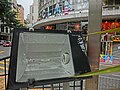
A floodlight is a broad-beamed, high-intensity artificial light. It can provide functional area lighting[1] for travel-ways, parking, entrances, work areas, and sporting venues to enable visibility adequate for safe task performance, ornamental lighting for advertising, façades, monuments, or support perimeter security.[2] Floodlights are often used to illuminate outdoor playing fields while an outdoor sports event is being held during low-light conditions. More focused kinds are often used as a stage lighting instrument in live performances such as concerts and plays.

Floodlights may also be used to add effects to buildings at night, called architectural illumination.[3]

Floodlights at Adelaide Airport.

Types

[edit]

The most common type of floodlight was the metal-halide lamp, which emits a bright white light (typically 75–100 lumens/Watt). Sodium-vapor lamps are also commonly used for sporting events, as they have a very high lumen to watt ratio (typically 80–140 lumens/Watt), making them a cost-effective choice when certain lux levels must be provided.[4] These have been replaced by LED floodlights.

LED floodlights are bright enough to be used for illumination purposes on large sport fields. The main advantages of LEDs in this application are their lower power consumption, longer life, and instant start-up (the lack of a "warm-up" period reduces game delays after power outages). They have replaced many metal halide floodlights. Halogen and electrodeless induction floodlights also exist.

The first LED lit sports field in the United Kingdom was switched on at Taunton Vale Sports Club on 6 September 2014. [5]

Sports played under floodlights

[edit]

In the top tiers of many professional sports, it is a requirement for stadiums to have floodlights to allow games to be scheduled outside daylight hours. Evening or night matches may suit spectators who have work or other commitments earlier in the day, and enable television broadcasts during lucrative primetime hours. Some sports grounds which do not have permanent floodlights installed may make use of portable temporary ones instead. Many larger floodlights (see bottom picture) will have gantries for bulb changing and maintenance. These will usually be able to accommodate one or two maintenance workers.

Polo

[edit]

The first sport to play under floodlights was polo, on 18 July 1878. Ranelagh Club hosted a match in Fulham, London, England against the Hurlingham Club.[6]

Australian rules football

[edit]
Australian rules football match under electric lights at the Melbourne Cricket Ground, 1879

In August 1879, two matches of Australian rules football were staged at the Melbourne Cricket Ground under electric lights. The first was between two "scratch" teams composed of military personnel. The following week, two of the city's leading football clubs, rivals Carlton and Melbourne, played another night match. On both occasions, the lights failed to illuminate the whole ground, and the spectators struggled to make sense of the action in the murky conditions.

Cricket

[edit]
A floodlight at Trent Bridge cricket ground in Nottingham

Cricket was first played under floodlights on 11 August 1952,[7] during an exhibition game at Highbury stadium in England. International day/night cricket, played under floodlights, began in 1979. Since then, many cricket stadiums have installed floodlights and use them for both domestic and international matches. Traditional cricket floodlights are mounted at the top of a tall pole, to elevate them out of the fielder's eyeline when the ball is hit high into the air. However, some cricket stadiums have lower-mounted floodlights, particularly if the stadium is shared with other sports.

Gaelic games

[edit]

Noel Walsh's advocacy was pivotal in the spread of floodlights in Gaelic games.[8] When chairman of the Munster Council, Walsh had a pilot project for floodlights at Austin Stack Park in Tralee which "became a template for every county and club ground in the country".[9]

Association football

[edit]
A floodlight used on a football field
Floodlights on a Rugby league field at the Headingley Stadium in Leeds, UK. This is a common style of floodlights at older football and rugby grounds in England and Scotland. (Note the two gantries near the light for servicing)

Bramall Lane was the first stadium to host floodlit association football matches, dating as far back as 1878, when there were experimental matches at the Sheffield stadium during the dark winter afternoons. With no national grid, lights were powered by batteries and dynamoes, and were unreliable. Blackburn and Darwen also hosted floodlit matches in 1878, and in October of the same year 3rd Lanark RV played an exhibition match against Scottish Cup holders Vale of Leven at the first Cathkin Park, with press reports suggesting the lighting from a Gramme machine was not successful in illuminating the whole field.[10] Subsequent tests over the next month using three Siemens dynamos at the first Hampden Park,[11] Rugby Park in Kilmarnock[12] and at Powderhall Stadium in Edinburgh[13] produced mixed results, in part due to technical issues and weather conditions.

Nottingham Forest played a floodlit match against Notts Rangers at the Gregory Ground, Lenton, Nottingham on 25 March 1889. This match was illuminated by 14 Wells Lights which was a portable illumation system powered by paraffin [14] Each light had 4,000 candlepower. These lights were placed around the ground and 'illuminated the playing arena well enough for the spectators to follow most, if not all, the points of play' according to the Nottingham Evening Post on 26 March 1889.[14] However the same article also reported on 26 March 1889 that 'a strong wind was blowing from the Radford goal, and this caused the lights on the town side to shed a considerable portion of their radiance on the adjoining fields, so that dark shadows were often thrown upon the playing ground and it was almost impossible to see a case of handling unless the officials were close to'.[14] The match was played at 7:45pm and Forest lost 2-0 watched by 5000 spectators.[14]

Thames Ironworks (who would later be re-formed as West Ham United) played a number of friendly matches under artificial light at their Hermit Road ground during their inaugural season of 1895–96. These experiments, which included high-profile fixtures against Arsenal and West Bromwich Albion, were set up using engineers and equipment from the Thames Ironworks and Shipbuilding Company.[15][16]

A women's football match in 1921 used floodlights, when Preston North End's ground was covered in thick fog and the spectators couldn't see the game.[17]

In 1929 the Providence Clamdiggers football club hosted the Bethlehem Steel "under the rays of powerful flood lights, an innovation in soccer" at their Providence, Rhode Island stadium.[18] On 10 May 1933, Sunderland A.F.C. played a friendly match in Paris against RC Paris under floodlights. The floodlights were fixed to overhead wires strung above and across the pitch.[19] A fresh white coloured ball was introduced after about every 20 minutes and the goalposts were painted yellow.[20]

In the 1930s, Herbert Chapman installed lights into the new West Stand at Highbury but the Football League refused to sanction their use. This situation lasted until the 1950s, when the popularity of floodlit friendlies became such that the League relented. In September 1949, South Liverpool's Holly Park ground hosted the first game in England under "permanent" floodlights: a friendly against a Nigerian XI.[21] In 1950, Southampton's stadium, The Dell, became the first ground in England to have permanent floodlighting installed. The first game played under the lights there was on 31 October 1950, in a friendly against Bournemouth & Boscombe Athletic, followed a year later by the first "official" match under floodlights, a Football Combination (reserve team) match against Tottenham Hotspur on 1 October 1951. Swindon Town became the first League side to install floodlights at The County Ground. Their first match being a friendly against Bristol City on Monday 2 April 1951. Arsenal followed five months later with the first match under the Highbury lights taking place on Wednesday 19 September 1951. The first international game under floodlights of an England game at Wembley was 30 November 1955 against Spain, England winning 4–1. The first floodlit Football League match took place at Fratton Park, Portsmouth on 22 February 1956 between Portsmouth and Newcastle United.[22]

Many clubs have taken their floodlights down and replaced them with new ones along the roof line of the stands. This previously had not been possible as many grounds comprised open terraces and roof lines on covered stands were too low. Elland Road, Old Trafford and Anfield were the first major grounds to do this in the early 1990s. Deepdale, The Galpharm Stadium and the JJB Stadium have since been built with traditional floodlights on pylons.

Rugby league

[edit]

The first rugby league match to be played under floodlights was on 14 December 1932 when Wigan met Leeds in an exhibition match played at White City Stadium in London (8pm kick off).[23] Leeds won 18–9 in front of a crowd of over 10,000 spectators. The venture was such a success that the owners of the White City Ground took over the "Wigan Highfield" club and moved them to play Rugby League games at the ground under floodlights the following season, with most of their matches kicking off on Wednesday Nights at 8pm. That venture only lasted one season before the club moved back up north.

The first floodlit match for rugby league played in the heartlands was on 31 October 1951 at Odsal Stadium, Bradford when Bradford Northern played New Zealand in front of 29,072.[24]

For a club to play in the Super League they must have a ground with floodlights adequate for playing a professional game.

Winter sports

[edit]
A floodlit piste in Schattberg, Austria

Winter sports, such as skiing and snowboarding, can be held under a floodlit piste.

Motorsports

[edit]

A number of permanent motor racing circuits are floodlit to allow night races to be held. These include Yas Marina Circuit, Losail International Circuit, and Bahrain International Circuit.

See also

[edit]

References

[edit]
Revisions and contributorsEdit on WikipediaRead on Wikipedia
from Grokipedia
A floodlight is a high-intensity artificial device designed to project a broad, diffused beam of over a wide area, effectively illuminating large outdoor or indoor spaces with . Unlike spotlights that focus on specific points, floodlights prioritize expansive coverage to eliminate shadows and enhance visibility, making them essential for applications requiring reliable, all-encompassing illumination. The term "floodlight" originates from the concept of inundating or "flooding" an area with light, a design principle that has evolved since the early with the invention of the . Early floodlights, powered by , were first employed to extend playing hours for , with the inaugural use in a 1878 polo match in and later adoption for and football in the 1930s at early 20th-century stadiums. Over time, advancements in technology shifted from energy-intensive to more efficient incandescent bulbs and beyond, dramatically improving their practicality and adoption in , industrial, and architectural settings. Floodlights serve diverse purposes, including enhancing safety through perimeter lighting for buildings and lots, facilitating nighttime events on fields and arenas, and highlighting architectural features of structures. Common types include floodlights, which provide warm, immediate but consume more energy; metal variants, known for high lumen output suitable for large venues; and modern LED floodlights, prized for their energy efficiency, long lifespan exceeding 50,000 hours, and reduced heat emission. High-pressure sodium floodlights, once popular for their yellow-toned illumination in industrial areas, have largely been supplanted by LEDs due to better color rendering and lower costs. Innovations like motion-activated and solar-powered models further expand their utility, promoting while minimizing operational expenses.

History

Early inventions and adoption

The invention of the is credited to British chemist , who in 1807 demonstrated the first practical by creating an intense arc between two carbon electrodes powered by a large battery of voltaic cells. This breakthrough produced a brilliant white light far surpassing contemporary sources like oil lamps or gaslights, though its initial applications were limited to laboratory demonstrations due to the need for cumbersome power sources. By the 1870s, advancements in dynamo technology enabled the commercialization of arc lamps for outdoor and large-scale illumination, marking the transition to practical floodlighting systems. These high-intensity carbon arc devices, capable of flooding wide areas with light, were first deployed in public spaces such as town squares and streets, symbolizing industrial progress. One of the earliest notable installations occurred at the 1878 Exposition Universelle in Paris, where Jablochkoff candles—a type of arc lamp—illuminated the Avenue de l'Opéra and surrounding areas, showcasing electric lighting to millions of visitors. In the 1880s, arc lamps extended to industrial settings, including railway yards, where their brightness facilitated nighttime operations; for instance, London's Royal Docks installed arc lights to cover expansive shipyard areas by the late decade. Key innovations in carbon arc technology during the 1880s were driven by inventors like Charles F. Brush, who founded the Brush Electric Company in 1880 after patenting improvements to arc lamp design, including self-regulating mechanisms and durable carbon rods. Brush's systems, which used open carbon arcs for broad illumination, were patented in the U.S. (e.g., Patent No. 203,411 in 1878 for arc lamps with automatic control of the spark gap) and widely adopted for floodlighting applications. By the 1890s, these lamps gained traction in theaters for stage flooding, despite fire risks from sparks, and in shipyards for extended work hours, enhancing productivity in dimly lit environments. Early floodlighting experiments also extended to sports venues, with arc lamps used to illuminate baseball games in the late 19th century, paving the way for nighttime play. A landmark example was the 1893 World's Columbian Exposition in Chicago, where the German firm Schuckert & Co. installed a large carbon arc searchlight atop the Electricity Building to illuminate the fairgrounds at night.

20th-century developments and standardization

During the 1920s and 1930s, floodlight technology transitioned from carbon arc lamps, which had been the dominant source since the late , to more reliable incandescent bulbs that offered easier maintenance and reduced flicker for outdoor applications such as sports venues and industrial sites. This shift was driven by advancements in filament technology, allowing incandescent floodlights to provide consistent illumination over wider areas without the need for constant arc adjustment. By the 1930s, high-intensity discharge (HID) lamps emerged as a superior alternative, with introducing commercial mercury vapor models around 1934, which produced brighter, more efficient light suitable for large-scale floodlighting in street and highway settings. These lamps operated by vaporizing mercury in an , achieving higher lumens per watt than incandescents while maintaining a compact design for floodlight housings. Standardization efforts accelerated in the mid-20th century to ensure uniform performance and safety in floodlight deployments. The Illuminating Engineering Society (IES), established in , issued guidelines in the mid-20th century, building on earlier work such as the 1946 Recommended Practice of Street and Highway Lighting, addressing key parameters for outdoor lighting, including recommended beam angles ranging from 10 to over 100 degrees and levels () tailored to applications like roadways and parking areas to optimize visibility without excessive glare. These recommendations, building on prior IES work in illumination metrics, facilitated consistent design practices across manufacturers and municipalities, promoting energy efficiency and reducing in growing urban environments. Following , a surge in infrastructure development propelled floodlight installations, particularly for airports and the emerging in the United States. The postwar aviation boom necessitated expanded runway and apron lighting to accommodate larger aircraft, with floodlights providing broad-area illumination for night operations at facilities like , where early systems evolved from wartime beacons to permanent HID setups. Similarly, the 1956 Federal-Aid Highway Act spurred highway lighting projects, using mercury vapor floodlights to enhance safety on high-speed routes amid rapid suburban expansion. A pivotal advancement came in 1962, when commercialized the first reliable metal halide lamps, offering improved color rendering and efficiency over mercury vapor, which quickly became standard for these installations. Widespread in the early , coupled with accelerating urban growth, dramatically increased floodlight adoption rates globally, transforming night-time visibility in cities and suburbs. By the , electric grids enabled the replacement of gas and oil lamps with electric floodlights in public spaces, supporting industrial and commercial expansion as populations urbanized. This infrastructure, combined with postwar economic prosperity, led to a proliferation of outdoor systems, with urban areas seeing adoption rates rise as electrification reached over 90% of U.S. households by the , facilitating 24-hour operations in ports, factories, and transportation hubs.

Design and Technology

Core components and functionality

Floodlights consist of several key structural components designed to ensure durability, efficient light distribution, and reliable operation in various environments. The , typically constructed from die-cast aluminum or other robust metals, serves as the primary that protects internal elements from environmental factors such as weather, dust, and impacts. This weatherproof casing often features a powder-coated finish to resist and facilitate heat dissipation through its conductivity properties. Mounting brackets, usually adjustable arms or yokes made from similar durable materials, allow for versatile installation on walls, poles, or structures, enabling precise aiming to cover targeted areas. Reflectors and lenses play crucial roles in controlling and diffusing the light output. Reflectors, commonly parabolic or specular aluminum designs, direct and intensify the light from the source to achieve controlled beam patterns, enhancing overall efficiency by minimizing light loss. Lenses, made from for shatter resistance and clarity or for impact durability and UV protection, further shape the beam by diffusing or focusing the illumination to prevent hotspots and ensure even coverage. These components work in tandem to produce beam spreads ranging from 10 to 120 degrees, allowing floodlights to illuminate broad areas effectively depending on the application. In terms of functionality, floodlights operate by converting into through an integrated lamp or , such as LEDs, with the and reflectors optimizing output. Heat generated during operation is managed via passive dissipation through the aluminum or with vents and fans in high-power models, preventing overheating and extending component lifespan. Wiring typically connects to standard AC power sources, with commercial models supporting voltages from 120 to 277V for compatibility with building electrical systems. Outdoor durability is ensured by IP ratings, such as IP65, which provide protection against dust ingress and low-pressure water jets, making them suitable for wet locations.

Light sources and illumination principles

Floodlights have employed a progression of light sources, beginning with incandescent bulbs in the late 19th century, which offered simple filament-based illumination but suffered from low efficiency and rapid degradation under high-power outdoor conditions. High-intensity discharge (HID) lamps emerged in the early 20th century, starting with mercury vapor lamps invented by Peter Cooper Hewitt in 1901, which used an electric arc through mercury vapor to generate brighter, more efficient light suitable for large-area illumination. By the 1960s, advancements included metal halide lamps developed by General Electric, providing improved color rendering through added metal salts, and high-pressure sodium lamps, commercially introduced by General Electric in 1965, which achieved higher efficacy via sodium vapor under high pressure. Post-2000, light-emitting diodes (LEDs) revolutionized floodlight sources, leveraging semiconductor chips coated with phosphors to convert blue light into broad-spectrum white light, enabling compact, durable designs with rapid adoption in outdoor applications. As of 2025, high-end LED floodlights achieve efficacies up to 200 lm/W or higher. Key illumination principles in floodlights revolve around , , and (CRI). , measured in lumens per watt (lm/W), quantifies visible light output relative to power consumption; LEDs typically range from 100-200 lm/W (as of 2025), outperforming HID variants such as high-pressure sodium (80-150 lm/W), metal halide (70-115 lm/W), and mercury vapor (35-60 lm/W). , expressed on the (K) scale, determines light appearance, with floodlights spanning 3000K (warm white, yellowish) to 6000K (cool white, bluish), often favoring 4000-5000K for versatile visibility in sports and security settings. CRI assesses a source's ability to reveal true colors compared to , with values above 80 considered good; LEDs achieve 70-95 for accurate reproduction, metal halide 65-85, while high-pressure sodium scores low at 20-30, distorting hues. The physics of floodlight illumination follows the for falloff from approximate point sources, where II decreases with distance dd according to I=P4πd2I = \frac{P}{4\pi d^2} with PP as the luminous power in lumens; this quadratic decay necessitates powerful sources and to maintain coverage over distances. Reflector designs enhance beam uniformity by shaping and distributing , using materials like high-purity aluminum or segmented facets to minimize hot spots and ensure even across target areas such as fields or facades. Spectral output varies significantly by source, influencing visual quality; high-pressure sodium lamps emit a narrow dominated by yellow-orange wavelengths (around 589 nm), producing a monochromatic tint that limits detail despite high . In contrast, LEDs deliver a broader, full- profile through conversion, closely mimicking daylight for superior contrast and color fidelity in diverse applications.

Types

Mounting and installation types

Floodlights are available in various fixed mounting configurations to suit permanent installations, where stability and durability are paramount. Pole-mounted floodlights are commonly installed on ground-based or rooftop poles, typically at heights ranging from 20 to 30 meters for standard sports fields, with professional stadiums employing poles up to 40 meters to achieve uniform illumination over large areas. Wall-mounted variants attach directly to building facades using brackets, providing targeted lighting for architectural features or perimeter security without requiring additional support structures. Truss-mounted floodlights, often used for temporary events, are suspended from aluminum truss systems via clamps or yokes, allowing flexible positioning in venues like concert stages or exhibition halls. Portable floodlights offer mobility for dynamic work environments, featuring tripod or stand-based designs that enable quick setup and repositioning. These units, frequently employed at construction sites, weigh between 20 and 100 kilograms depending on power output and include battery or solar power options for off-grid operation. Stability is ensured through features like non-skid feet and telescopic legs adjustable from 1 to 3 meters in height, preventing tipping on uneven terrain. Installation of floodlights requires attention to adjustability, cabling, and to ensure safety and performance. Angle adjustability is achieved via or mechanisms, such as U-brackets or trunnions, which allow tilting up to 180 degrees for precise beam direction. Outdoor cabling must use armored or weatherproof conductors compliant with local electrical codes (e.g., UF-B cable or THWN wire in conduit under in the ), to protect against moisture and mechanical damage, often buried or run in conduit. All installations comply with standards such as Article 410, which mandates secure mounting to prevent live part exposure, suitability for wet locations, and adequate wiring space for connections. Representative examples illustrate these types' versatility: in stadiums, floodlights are often arrayed along elevated catwalks at 10 to 50 meters for even field coverage, contrasting with mobile tower lights on wheeled bases that deploy rapidly for response, extending masts up to 9 meters for incident illumination. Portable variants may incorporate solar panels for sustained operation in remote scenarios.

Power source and technology variants

Floodlights traditionally rely on wired connections to the AC electrical grid, powering high-intensity discharge (HID) lamps such as metal halide or high-pressure sodium, or incandescent bulbs. HID variants require ballasts to regulate current flow and deliver the high-voltage pulse needed for lamp ignition and stable operation. Magnetic ballasts, prevalent in earlier designs, function at low frequencies (around 50-60 Hz), which can result in audible humming and visible flickering during operation. In contrast, electronic ballasts operate at higher frequencies (20-50 kHz), minimizing these issues while providing more precise current control and compatibility with dimming systems. Incandescent floodlights, lacking the need for ballasts, connect directly to AC mains for straightforward grid-powered illumination. Modern floodlights increasingly employ LED technology with direct-drive configurations, operating on low-voltage direct current (DC) supplies ranging from 12V to 48V, often sourced from batteries or solar setups. These systems leverage LEDs' inherent DC compatibility, using simple driver circuits like switching regulators to achieve efficiencies up to 95% without AC-DC conversion losses. Solar-powered floodlights integrate photovoltaic panels to capture sunlight and charge integrated lithium batteries, typically with capacities of 200-500 Wh, enabling 8-12 hours of runtime on a full charge under typical conditions. These off-grid variants support dusk-to-dawn operation via built-in charge controllers that optimize energy storage and discharge. Advanced smart technologies enhance floodlight functionality through dimmable LED drivers, motion sensors, and IoT connectivity, such as protocols for wireless remote control and network integration. Photocell sensors enable automatic dusk-to-dawn activation by detecting ambient light levels, while passive (PIR) motion detectors trigger full illumination upon detecting movement within a specified range. Hybrid systems combine diesel generators with battery storage for remote applications, providing extended runtime—such as up to 853 hours at 1000W total output (four 250W lights) on a full 100-gallon combined with battery—offering backup power when primary sources like solar are insufficient. These setups ensure reliable illumination in off-grid environments, such as construction sites, with generators providing on-demand recharging.

Applications

Sports venues and events

Floodlights play a crucial role in enabling evening and night-time sports activities by providing uniform illumination across playing fields and arenas, ensuring visibility for players, officials, and spectators. Venue requirements emphasize consistent levels to meet international standards, such as those set by for , which mandate a minimum average horizontal of 2,000 for international televised matches, with vertical reaching up to 2,400 to support high-definition broadcasting. These standards prioritize uniformity ratios, typically 0.7 or higher, to avoid shadows, while glare control is achieved through asymmetric and low glare ratings (GRmax <50), directing light downward and minimizing interference for athletes and cameras. The evolution of floodlights in sports venues began in the late 19th century with carbon arc lamps, first used for night games in the 1880s, which provided intense but flickering light from high-mast towers. By the early , incandescent and bulbs improved reliability, paving the way for widespread adoption in the 1930s, including the first floodlit match at Arsenal's stadium in 1930. Mid-20th-century advancements shifted to metal halide lamps in the 1950s–1980s, offering brighter, more stable illumination for sports like , where floodlights enabled extended play during matches starting in the 1950s at venues such as Highbury Stadium, with implementing floodlights in 2007 for modern fixtures. Modern transitions to LED technology in the 2010s, exemplified by Wembley's retrofit to energy-efficient LED floodlights, have reduced power consumption by approximately 40% while maintaining high levels. Adaptations for specific sports highlight tailored floodlight designs to accommodate field shapes and play dynamics. In cricket, high-mast arrays ensure even coverage over large oval pitches, a practice refined since the 1950s for international matches. Association football venues incorporated floodlights for night matches from the 1930s, with early examples like the 1931 Highbury installation supporting league games under 1,200 lux initially. Australian rules football (AFL) adopted floodlights in the 1980s for night fixtures at grounds like the Melbourne Cricket Ground, using pole-mounted units for rectangular fields, with the first night match there in 1985. Rugby league stadiums, such as Headingley in the 1960s, utilized similar setups to illuminate elongated pitches, enabling evening competitions. Gaelic games at Croke Park received major floodlight upgrades in the 2000s. Polo fields, both indoor and outdoor, have employed floodlights since the 1920s for twilight play, with low-glare fixtures preserving horse and rider visibility. Motorsports like NASCAR introduced night races at Daytona in the 1940s using arc and incandescent floodlights along tracks for speeds exceeding 200 mph. Winter sports, including ice hockey rinks, typically require 800–1,200 lux horizontal illuminance from ceiling or perimeter-mounted floodlights to highlight puck movement and prevent glare on ice surfaces. For major events, temporary floodlight setups are deployed in arrays of over 100 fixtures, each rated 500–2,000 watts equivalent in LED form, to illuminate Olympic venues or concerts without permanent . These portable systems, often on mobile towers, achieve rapid installation and compliance with broadcast standards, as seen in lighting configurations providing 1,500–2,000 across multi-sport arenas. Recent innovations include smart IoT-integrated LED floodlights for dynamic intensity control, improving energy efficiency in line with updated IES standards as of 2025.

Industrial, security, and architectural uses

Floodlights are integral to industrial applications, where they provide robust illumination for hazardous and remote work environments to enhance and operational efficiency. In sites, portable light towers mounted with floodlights support 24/7 operations by delivering mobile, high-output lighting; for instance, configurations often include four 400W LED floodlights on a telescoping mast powered by diesel engines, allowing deployment in rugged terrains without reliance on grid power. In warehouses, floodlights target docking bays to achieve illuminance levels of 300 to 500 , ensuring clear visibility for loading and unloading activities and minimizing accident risks during . For , ATEX-rated explosion-proof floodlights are mandated in potentially flammable atmospheres, featuring sealed LED housings that withstand corrosive marine conditions while providing intense, directed beams for deck and platform tasks. operations similarly employ high-mast floodlights, such as 1000W high-pressure sodium variants, to cover expansive open-pit areas with uniform light, supporting continuous excavation and haulage under low-light conditions. In security contexts, bolster perimeter defense and by creating well-lit boundaries that discourage unauthorized access. Motion-activated integrated with systems deliver a minimum of 20 to 50 along fences and gates, enabling high-resolution and rapid threat detection in medium- to high-risk areas. For parking lots, uniform arrays provide consistent coverage to deter crime, with standards recommending at least 5 horizontal ; these guidelines emerged in the post-1970s era through (CPTED) frameworks, which emphasize as a passive measure to improve visibility and perceived risk for potential offenders. Modern smart with IoT integration allow real-time adjustments for enhanced efficiency as of 2025. Architectural uses of floodlights extend beyond utility to emphasize structural beauty and landscape features, often employing advanced optics for precise effects. Facade washing with RGB LED floodlights highlights iconic structures, as seen on the since 1985, when 336 sodium-vapor floodlights were installed for a golden glow, later upgraded to dynamic LED systems for color-changing displays that enhance nighttime aesthetics. In landscape accenting, low-voltage floodlights function as path illuminators, typically operating at 12V to safely outline walkways and gardens with focused beams that highlight foliage or architectural elements without overwhelming ambient light. Airport runways incorporate floodlights for oblique approach lighting per FAA standards, ensuring pilots receive clear visual cues to support safe navigation during low-visibility landings.

Environmental and Safety Aspects

Energy efficiency and sustainability

Floodlights have seen significant advancements in energy efficiency, transitioning from early incandescent models with luminous efficacies of approximately 10-20 lumens per watt (lm/W) to modern LED-based designs exceeding 120 lm/W, with some commercial models reaching 150-200 lm/W as of 2025. This shift is driven by LED technology's superior conversion of to light, reducing and operational costs. For instance, retrofitting stadiums with LED floodlights typically achieves 50-70% energy savings compared to traditional metal halide systems, lowering annual consumption while maintaining illumination levels. Sustainability in floodlight design emphasizes recyclable materials and reduced environmental impact, with many contemporary models featuring aluminum housings that are highly recyclable and durable for extended lifespans. LED floodlights serve as low-mercury alternatives to high-intensity discharge (HID) lamps, eliminating hazardous substances and simplifying end-of-life disposal. Integration of solar power in off-grid floodlights allows for 100% reduction in grid dependency, harnessing renewable energy to power illumination without fossil fuel inputs. Regulatory frameworks promote these efficiencies, such as the EU Ecodesign Directive, which mandates minimum efficacies of at least 85 lm/W for light sources and at least 120 lm/W for directional LEDs used in floodlights since the 2010s. In the United States, certifications for outdoor floodlights ensure products meet stringent efficiency and performance standards, verifying reduced energy use and longevity. Global adoption of efficient floodlighting contributes to substantial carbon reductions; according to the , widespread LED implementation could avoid over 550 million metric tons of CO2 emissions annually by 2030 through lower electricity demand in lighting applications. Case studies, such as LED retrofits in major sports venues, demonstrate practical impacts, with facilities reporting up to 87% energy reductions that translate to millions in savings and decreased outputs.

Health, safety, and light pollution concerns

Floodlights pose several health and safety risks to humans, primarily through exposure to blue light emissions from certain LED sources. High-color-temperature LEDs exceeding 3000K emit significant blue light, which can suppress production and disrupt circadian rhythms, leading to sleep disturbances and potential long-term health effects such as increased risk of metabolic disorders. The has linked chronic circadian disruption from night-time light exposure to adverse health outcomes, including classified night as probably carcinogenic due to similar mechanisms. Additionally, electrical hazards arise from improper installation, such as inadequate grounding, which can result in shocks or ; the (OSHA) mandates permanent and continuous grounding paths for all electrical equipment, including outdoor floodlights, to mitigate these risks. Glare from unshielded floodlights can impair vision and contribute to accidents, particularly in vehicular or pedestrian areas where intense light reduces contrast and causes temporary blindness. Full-cutoff fixture designs, which direct light downward without upward spill, have been shown to significantly reduce glare and associated safety incidents by containing illumination within the intended area. Beyond human safety, floodlights contribute to , manifesting as sky glow that scatters artificial light into the atmosphere and disrupts ecosystems. IUCN issues briefs highlight how artificial light interferes with , attracting and disorienting nocturnal migrants, leading to energy depletion and higher collision rates with structures. Compliance with dark sky standards, such as maintaining ratings of Class 3 or better (indicating rural/suburban transition skies with visible ), helps preserve natural darkness for wildlife. Mitigation strategies for these concerns include the use of shielding on fixtures to prevent upward light escape, motion-sensor timers to limit operational hours, and warm-color LEDs at 2700K to minimize blue light output while maintaining . These approaches align with emerging regulations, such as proposals under the U.S. Department of Defense Dark Sky Stewardship Act (introduced in 2024), which aim to reduce from federal installations through shielded, low-intensity lighting. Notable incidents underscore these risks; for instance, in the , U.S. airports reported a surge in bird strikes—reaching a record 14,496 in 2017 alone—with over-illumination from perimeter floodlights cited as a factor in attracting birds to runways, exacerbating hazards.

References

Add your contribution
Related Hubs
Contribute something
User Avatar
No comments yet.