



Community hub
Forward head posture
View on Wikipedia | This article may need to be rewritten to comply with Wikipedia's quality standards. (October 2022) |
 | This article needs more reliable medical references for verification or relies too heavily on primary sources. (August 2021) |
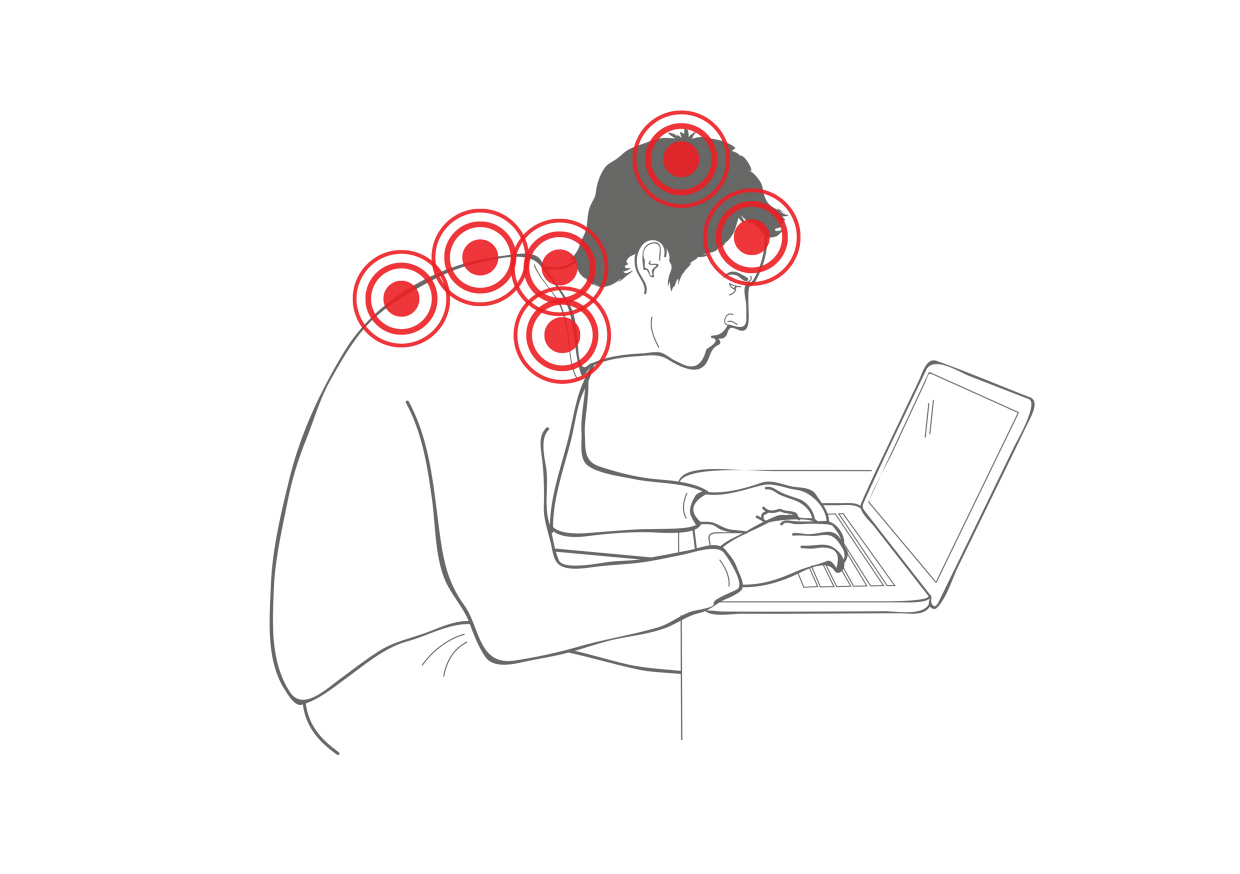
Forward head posture (FHP)[1] is an excessively kyphotic (hunched) thoracic spine. It is clinically recognized as a form of repetitive strain injury.[citation needed] The posture can occur in dentists,[2] surgeons,[3] and hairdressers,[4] or people who spend time on electronic devices.[5] It is one of the most common postural issues. There is a correlation between forward head posture and neck pain in adults, but not adolescents.[6]
Having both forward head posture and rounded shoulders is known as upper crossed syndrome.[7]

Overview
[edit]Indications are that the prevalence of upper back and neck pain has increased dramatically in the decade leading up to 2016.[8][9] This increase has been attributed to the corresponding widespread adoption of laptop computers, tablets, smartphones and other small portable digital devices.
Because their screens do not separate from their keyboards these small devices cannot be set up ergonomically correctly (unless an extra screen or extra keyboard is added). They are unlike personal desk top computers (PCs) in this respect. Most commonly, the user hunches to operate them, often for many hours a day.[10]
Hunching increases the effective load on the neck up to several times more than does erect posture, due to increasing moment arm.[11] Local pain, cervicogenic headache and referred pain extending down the arms can arise from the sustained muscle strain, cervical facet joint (or apophyseal, or zygapophyseal joint) compression and diminution of the cervical foraminal nerve exits.
Treatment may include regular breaks while using mobile devices, strengthening and stretching of the neck and upper back muscles, massage, spinal manipulation and mobilisation, posture awareness, and the use of ergonomic tools.[12] Biomechanical analysis suggests a combination of approaches is best and gives more lasting results.
Signs and symptoms
[edit]In a neck with perfect posture (as seen for instance in young children) the head is balanced above the shoulders. In this position the load on each vertebra of the cervical spine is spread evenly between the two facet (apophyseal) joints at the back and the intervertebral disc and vertebral body at the front.
The condition is characterised by a posture with vagi at the head sitting somewhat forward of the shoulders (i.e., the ear lobe is anterior to a vertical line through the point of the shoulder (acromion process)). This can be very marked, with the back of the skull positioned anterior to the breastbone (sternum). The chin is poked forward.
When the patient is asked to look up at the ceiling, the hunched-forward upper thoracic curve does not change as viewed from the side. Rather, the lower cervical spine 'hinges' backward at C5/6/7, a movement pattern known as 'swan-necking'.[citation needed]
This indicates that the upper back vertebrae have frozen in their habitual flexed positions, with the surrounding collagen of the ligaments, joint capsules and fascia shortening to reinforce this hypomobility. (This is the dowager's hump of the elderly of earlier generations, now observable in modern (2016) late teenagers.[13])
Symptoms include overuse muscle pain and fatigue along the back of the neck and reaching down to the mid-back, often starting with the upper trapezius muscle bellies between the shoulders and neck. Cervicogenic headache from the joints and muscle attachments at the top of the neck is common.[14][15]
The compressive load on the cervical facet joints predisposes to acute joint locking episodes, with pain and movement loss.[16] In older patients with already diminished cervical foramina spaces and/or osteophytes, nerve root irritation and impingement can trigger referred pain down the arm(s).[17]
Causes
[edit]The human spine is well suited to erect upright posture, with the increased heart rate from movement shunting a good blood supply to the muscles. This is clearly not the case for vast numbers of sedentary humans spending many hours daily bent over laptops, tablets, smartphones and similar. A biomechanical assessment of thoracic hunching shows the abnormal spinal loading and other effects which plausibly account for the recent steep rise in thoracic and cervical pain in step with the ubiquitous adoption of the small IT devices.
The gravity of stress on the spine dramatically increases with thoracic hunching, roughly 10 pounds of weight are added to the cervical spine in weight for every inch of forward head posture by looking down at a small IT device.[18] As a consequence there is growing medical concern specifically with children as their head size is larger in relation to their body and thus pose an increased risk group for being affected by musculoskeletal and neurological issues in the neck caused by thoracic hunching.[19][20]
Hunching has always caused problems, for instance in occupational groups like dentists,[2] surgeons,[3] hairdressers,[4] nurses,[21] chefs,[22] teachers,[23] computer workers and students.[24] Some rheumatoid conditions like ankylosing spondylitis, neurodegenerative conditions like Parkinson's disease, and connective tissue disorders like Ehlers-Danlos Syndrome cause characteristic excessive thoracic kyphosis. What has changed is the amount of hunching in society generally, and especially with the technologically adept young.
Epidemiology
[edit]The first laptop was produced in 1981 but it took more than a decade of development for the designs to approach current (2016) levels of portability and capacity, and hence uptake. Apple popularized smartphones with the iPhone in 2007 and tablets with the iPad in 2010. In 2015 there were 4.43 billion mobile phone (cellphone) users in the world, of which 2.6 billion had smartphones.[citation needed] In the US, 45% owned a tablet computer in 2014 and 92% owned a mobile phone; for younger adults aged 18–29, only 2% didn't own a mobile phone and 50% had tablets.[25]
A large Finnish cross-sectional study on school-age adolescents published in 2012 concluded that more than two hours a day spent on computers was associated with a moderate/severe increase in musculoskeletal pain.[26] In the following year, the average UK 18–24 year-old spent 8.83 hours a day in front of a PC, laptop or tablet.[10] Neck pain per se has been a large problem for a long time, and surveyed repeatedly.[8] A composite review of studies with good methodology by Fejer et al. published in 2006 found that point prevalence (in pain right now) of neck pain in the adult (15–75 years) population ranged from 5.9% to 22.2%, with one study of the elderly (65+ years) finding 38.7% were in pain when surveyed.[27] Generally, more urban populations had more neck pain, e.g. 22.2% of a large 1998 Canadian study had neck pain when surveyed.[28]
Based on these surveys of neck pain prevalence, and adding to them the prevalence of thoracic pain and cervicogenic headache, it is reasonable to estimate that around one adult in six (15%) probably has pain in any, some or all of those areas right now.[29] However the published epidemiological papers draw on raw data from surveys done at least 10 years ago, and there are indications that the numbers have been rising dramatically since then – as rapidly as the adoption of laptops, tablets and smartphones. This is reflected in the recent rise in the number of popular articles, news items and media discussions about the problem.[30][31][32]
Pathogenesis
[edit]The condition is a multi-factorial problem.[citation needed]
- Thoracic hunching requires flexing of the thoracic facet joints. After sufficient time and load, they can freeze and lock in this position. The collagen of the surrounding ligaments, fascia and joint capsules will shorten down around the immobile joints, reinforcing the hunched hypomobile section of spine.
- The middle back support muscles (erector spinae, rhomboids, middle and lower trapezius fibres, etc.) become stretched out and weak.
- The cantilevered (poked forward) head position loads the spine up to several times more than erect posture, because of the increased moment arm.[33] So the posterior neck muscles (especially the upper fibres of trapezius) holding the head in its forward position, often sustained for many hours, can strain, producing individual myofibril and cell damage. Repair of this microtrauma involves the laying down of adhesive fibrosis, as a normal part of the inflammatory response. Adhesive fibrosis is relatively non-elastic, so after sufficient repeated microtrauma from muscle strain, the posterior neck muscles become strained, shortened and less elastic.
- In this same cantilevered head position, the longus colli muscles and other deep neck flexors around the front of the neck are hardly being used, so they become weak, allowing the chin to poke out.
- The combined effect of all the above in the cantilevered head position, with the chin poked out, is to compress every facet joint in the cervical spine. This predisposes to acute locking episodes. At the top of the cervical spine, this often manifests as cervicogenic headache, with pain referring over the head from the C0/1, C1/2, and/or C2/3 joints, and from the insertion of the upper trapezius fibres onto the nuchal line of the occiput.[34] In older patients, especially with osteophytes and/or where the intervertebral foramina are already diminished, this compression and further reduction of the foraminal spaces can result in irritation and impingement of the nerve roots, referring pain some distance down the arm(s).
Treatment
[edit] | This section possibly contains original synthesis. Source material should verifiably mention and relate to the main topic. (April 2025) |
 | This section possibly contains original research. (April 2025) |
Neck pain generally has been treated with a profusion of approaches and modalities, including nonsteroidal anti-inflammatory drugs (NSAIDs) such as ibuprofen; pain relief medications (analgesics) such as acetaminophen; low dose tricyclic antidepressants such as amitriptyline for chronic problems; physical therapy (a.k.a. physiotherapy in British-derived cultures) which utilises a wide range of techniques and modalities; spinal manipulation from osteopaths, manipulating physiotherapists and spinal adjustments from chiropractors;[35][36] massage; muscle strengthening programmes including gyms and Pilates; postural approaches such as the Alexander Technique; stretching approaches such as yoga; ergonomic approaches including setting up desktop computers correctly and frequent breaks; and surgery for severe structural problems such as osteophytic impingement on the cervical nerve roots and cervical disc herniation.
A biomechanical analysis of the pathology indicates its standard, logical development from much flexed activity and its multi-factorial character. (See Pathogenesis above.)
A composite approach which covers each component of the problem is therefore likely to be most successful and lasting. Most of the general treatment approaches to neck pain cover only one aspect. A logical response should include as a minimum:[improper synthesis?]
- Strengthening, especially of (1) the middle and lower back support muscles and scapula retractors, and (2) the longus colli and the deep neck flexor muscles.[37][needs independent confirmation]
- Stretching muscles that cause neck protrusion, especially of the upper fibres of the trapezius muscle.[38][needs independent confirmation]
- Lower cervical flexors: sternocleidomastoid, anterior and middle scalene muscles.
- Upper cervical (capital) extensors: semispinalis capitis, longissimus capitis, splenius capitis, suboccipital muscles
- Strengthening muscles that cause neck retraction:[39][40]
- Lower cervical extensors: splenius cervicis, semispinalis cervicis, longissimus cervicis
- Upper cervical (capital) flexors: longus capitis, Rectus capitis anterior, Suprahyoid muscles
- Massage, to loosen adhesive fibrotic tethering of the posterior neck and upper trapezius muscles.[37][needs independent confirmation]
- Unlocking of the hypomobile (frozen) facet joints of the thoracic spine and stretching of the shortened collagen reinforcing the excessive kyphosis (hunch). A sufficiently tight patch of thoracic spine cannot be freed up solely by patient exercises, stretches or movements. This is due to leverage – with any general exercise, the segments of the spine that are moving well will tend to move more, reducing the leverage on the hypomobile segments. A sufficiently localised external force is then necessary, such as specific hands-on spinal mobilisation or manipulation. A randomized clinical trial by Cleland et al. showed manipulation of the thoracic spine reduced neck pain immediately.[41]
- However unless the surrounding shortened collagen also receives sufficient stretching, collagen rebound will tend to freeze up the facet joint again rapidly. Collagen is stronger by weight than steel wire and is best stretched by a sufficiently long, strong, localised, passive stretch.[42] In practical terms this may be achieved by the hunched patient lying back on a spinal fulcrum device, which uses the upper body weight to provide the external force, localised over the fulcrum.[original research]
References
[edit]- ^ Fernandez-De-Las-Penas, Cesar; Alonso-Blanco, Cristina; Cuadrado, Maria Luz; Gerwin, Robert D.; Pareja, Juan A. (2006). "Trigger Points in the Suboccipital Muscles and Forward Head Posture in Tension-Type Headache". Headache: The Journal of Head and Face Pain. 46 (3): 454–460. doi:10.1111/j.1526-4610.2006.00288.x. PMID 16618263. S2CID 12973647.
- ^ a b "Trapezius myalgia: making dentistry a pain in the neck — or head, "Dental Economics, vol 98, issue 8; 2008
- ^ a b Soueid, A.; Oudit, D.; Thiagarajah, S.; Laitung, G. (2010). "The pain of surgery: Pain experienced by surgeons while operating". International Journal of Surgery (London, England). 8 (2): 118–20. doi:10.1016/j.ijsu.2009.11.008. PMID 19944192.
- ^ a b Mussi, G.; Gouveia, N. (2008). "Prevalence of work-related musculoskeletal disorders in Brazilian hairdressers". Occupational Medicine (Oxford, England). 58 (5): 367–9. doi:10.1093/occmed/kqn047. PMID 18467336.
- ^ David, Daniela; Giannini, Cosimo; Chiarelli, Francesco; Mohn, Angelika (2021-02-07). "Text Neck Syndrome in Children and Adolescents". International Journal of Environmental Research and Public Health. 18 (4): 1565. doi:10.3390/ijerph18041565. ISSN 1660-4601. PMC 7914771. PMID 33562204.
- ^ Mahmoud, Nesreen Fawzy; Hassan, Karima A.; Abdelmajeed, Salwa F.; Moustafa, Ibraheem M.; Silva, Anabela G. (2019). "The Relationship Between Forward Head Posture and Neck Pain: a Systematic Review and Meta-Analysis". Current Reviews in Musculoskeletal Medicine. 12 (4): 562–577. doi:10.1007/s12178-019-09594-y. PMC 6942109. PMID 31773477.
- ^ Mujawar, Junaid Chandsaheb; Sagar, Javid Hussain (2019). "Prevalence of Upper Cross Syndrome in Laundry Workers". Indian Journal of Occupational and Environmental Medicine. 23 (1): 54–56. doi:10.4103/ijoem.IJOEM_169_18. ISSN 0973-2284. PMC 6477943. PMID 31040591.
- ^ a b Hoy, D. G.; Protani, M.; De, R.; Buchbinder, R. (2010). "The epidemiology of neck pain". Best Practice & Research. Clinical Rheumatology. 24 (6): 783–92. doi:10.1016/j.berh.2011.01.019. PMID 21665126.
- ^ Amy Cuddy, Presence: Bringing Your Boldest Self to Your Biggest Challenges, Little, Brown and Company, December 2015: 226–8. ISBN 9780316256575
- ^ a b iPosture generation facing a lifetime of back pain., HRreview, 2013-10-22, Retrieved 2025-08-03.
- ^ Hansraj, K. K. (2014). "Assessment of stresses in the cervical spine caused by posture and position of the head". Surgical Technology International. 25: 277–9. PMID 25393825.
- ^ "Tech Neck: Symptoms, Causes, and How to Fix It". Bejoyland. 2025-03-24. Retrieved 2025-08-03.
- ^ "Definition of Dowager's hump"[permanent dead link], Medterms Medical Dictionary, Retrieved 24 January 2017
- ^ Bogduk, N.; Govind, J. (2009). "Cervicogenic headache: An assessment of the evidence on clinical diagnosis, invasive tests, and treatment". The Lancet. Neurology. 8 (10): 959–68. doi:10.1016/S1474-4422(09)70209-1. PMID 19747657. S2CID 206158919.
- ^ Page, P. (2011). "Cervicogenic Headaches: An Evidence-Led Approach to Clinical Management". International Journal of Sports Physical Therapy. 6 (3): 254–266. PMC 3201065. PMID 22034615.
- ^ Jonas Vangindertael ed. "Facet Joint Syndrome", Physiopedia, June 2012
- ^ Jackson, R. (2010). "The Classic: The Cervical Syndrome". Clinical Orthopaedics and Related Research. 468 (7): 1739–1745. doi:10.1007/s11999-010-1278-8. PMC 2881998. PMID 20177837.
- ^ Hansraj, Kenneth (2014). "Assessment of Stresses in the Cervical Spine Caused by Posture and Position of the Head" (PDF). Neuro and Spine Surgery - Surgical Technology International. 25: 277–9. PMID 25393825.
- ^ E, Gustafsson; S, Thomée; A, Grimby-Ekman; M, Hagberg (2017). "Texting on Mobile Phones and Musculoskeletal Disorders in Young Adults: A Five-Year Cohort Study". Applied Ergonomics. 58: 208–214. doi:10.1016/j.apergo.2016.06.012. PMID 27633215.
- ^ Fares, Jawad; Fares, Mohamad Y.; Fares, Youssef (2017-05-10). "Musculoskeletal neck pain in children and adolescents: Risk factors and complications". Surgical Neurology International. 8: 72. doi:10.4103/sni.sni_445_16. ISSN 2229-5097. PMC 5445652. PMID 28584675.
- ^ Smedley, J.; Inskip, H.; Trevelyan, F.; Buckle, P.; Cooper, C.; Coggon, D. (1 November 2003). "Risk factors for incident neck and shoulder pain in hospital nurses". Occupational and Environmental Medicine. 60 (11): 864–869. doi:10.1136/oem.60.11.864. ISSN 1351-0711. PMC 1740408. PMID 14573717.
- ^ Haukka, Eija; Leino-Arjas, Päivi; Solovieva, Svetlana; Ranta, Riikka; Viikari-Juntura, Eira; Riihimäki, Hilkka (2006). "Co-occurrence of musculoskeletal pain among female kitchen workers". International Archives of Occupational and Environmental Health. 80 (2): 141–148. Bibcode:2006IAOEH..80..141H. doi:10.1007/s00420-006-0113-8. PMID 16688464. S2CID 25071246.
- ^ Erick, Patience N.; Smith, Derek R. (2011). "A systematic review of musculoskeletal disorders among school teachers". BMC Musculoskeletal Disorders. 12 260. doi:10.1186/1471-2474-12-260. PMC 3250950. PMID 22087739.
- ^ Niemi, S. M.; Levoska, S.; Rekola, K. E.; Keinänen-Kiukaanniemi, S. M. (1997). "Neck and shoulder symptoms of high school students and associated psychosocial factors". The Journal of Adolescent Health. 20 (3): 238–42. doi:10.1016/S1054-139X(96)00219-4. PMID 9069025.
- ^ Monica Anderson "Technology Device Ownership: 2015", Pew Research Centre: Internet, Science and Tech., 29 October 2015
- ^ Hakala, Paula T.; Saarni, Lea A.; Punamäki, Raija-Leena; Wallenius, Marjut A.; Nygård, Clas-Håkan; Rimpelä, Arja H. (2012). "Musculoskeletal symptoms and computer use among Finnish adolescents – pain intensity and inconvenience to everyday life: A cross-sectional study". BMC Musculoskeletal Disorders. 13 41. doi:10.1186/1471-2474-13-41. PMC 3348031. PMID 22439805.
- ^ Fejer, R.; Kyvik, K. O.; Hartvigsen, J. (2006). "The prevalence of neck pain in the world population: A systematic critical review of the literature". European Spine Journal. 15 (6): 834–48. doi:10.1007/s00586-004-0864-4. PMC 3489448. PMID 15999284.
- ^ Côté, P.; Cassidy, J. D.; Carroll, L. (1998). "The Saskatchewan Health and Back Pain Survey. The prevalence of neck pain and related disability in Saskatchewan adults". Spine. 23 (15): 1689–98. doi:10.1097/00007632-199808010-00015. PMID 9704377. S2CID 20305739.
- ^ “Evidence-Based Practice in the Treatment of Neck Pain” Archived 2017-03-16 at the Wayback Machine, Healing Arts Continuing Education, 2010
- ^ "Smartphone addiction creating generation of teenage hunchbacks”, New Zealand Herald, Sunday Oct 18, 2015
- ^ Alyssa Navarro "Blame Your iPhone For Ruining Your Posture And Your Mood”, TECHTIMES, 15 December 2015
- ^ Stephen August "Steve August: the iHunch”, Saturday Morning: Radio New Zealand, 16 November 2013
- ^ Hansraj, K. K. (2014). "Assessment of stresses in the cervical spine caused by posture and position of the head". Surgical Technology International. 25: 277–9. PMID 25393825.
- ^ Bogduk, N.; Govind, J. (2009). "Cervicogenic headache: An assessment of the evidence on clinical diagnosis, invasive tests, and treatment". The Lancet. Neurology. 8 (10): 959–68. doi:10.1016/S1474-4422(09)70209-1. PMID 19747657. S2CID 206158919.
- ^ Chu, Chun-Pu Eric (18 January 2022). "Preventing the progression of text neck in a young man: A case report". Radiology Case Reports. 17 (3): 978–982. doi:10.1016/j.radcr.2021.12.053. PMC 8784282. PMID 35106108. S2CID 246441560.
- ^ Chu, ECP (2021). "Alleviating cervical radiculopathy by manipulative correction of reversed cervical lordosis". Journal of Family Medicine and Primary Care. 10 (11): 4303–4306. doi:10.4103/jfmpc.jfmpc_648_21. PMC 8797131. PMID 35136807. S2CID 246649676.
- ^ a b "Evidence-Based Practice in the Treatment of Neck Pain" Archived 2017-05-27 at the Wayback Machine, Healing Arts Continuing Education, 2010
- ^ "Evidence-Based Practice in the Treatment of Neck Pain', Healing Arts Continuing Education, 2010
- ^ Edmondston, SJ; Wallumrød, ME; Macléid, F; Kvamme, LS; Joebges, S; Brabham, GC (June 2008). "Reliability of isometric muscle endurance tests in subjects with postural neck pain" (PDF). Journal of Manipulative and Physiological Therapeutics. 31 (5): 348–54. doi:10.1016/j.jmpt.2008.04.010. PMID 18558277.
- ^ Leddy, Alyssa; Polishchuk, Kimberly. "Deep Neck Flexor Stabilisation Protocol". Physiopedia.
- ^ Cleland, J. A.; Childs, J. D.; McRae, M.; Palmer, J. A.; Stowell, T. (2005). "Immediate effects of thoracic manipulation in patients with neck pain: A randomized clinical trial". Manual Therapy. 10 (2): 127–35. doi:10.1016/j.math.2004.08.005. PMID 15922233. S2CID 31728219.
- ^ Matthew A Fisher "Chemistry Explained Collagen”, Chemistry Encyclopedia, Retrieved 24 January 2017
External links
[edit]Forward head posture
View on GrokipediaDefinition and Characteristics
Definition
Forward head posture (FHP) is a common postural misalignment characterized by the anterior positioning of the head relative to the shoulders and trunk in the sagittal plane.[3] This deviation is typically quantified using the craniovertebral angle (CVA), which is the angle formed between a horizontal line extending from the spinous process of the seventh cervical vertebra (C7) and a line connecting the tragus of the ear to C7; angles less than 50° are indicative of FHP, with values between 30° and 50° denoting mild severity and below 30° signifying severe cases.[4] FHP has been recognized in chiropractic and physical therapy literature since the mid-20th century, particularly through foundational works on postural assessment and muscle function.[5] In modern terminology, it is frequently called "tech neck" due to its prevalence from extended digital device usage.[6] Biomechanical models demonstrate that FHP substantially amplifies stress on the cervical spine, with an additional approximately 10 pounds of forward load for every inch of head displacement from neutral alignment.[7]Anatomical Features
Forward head posture primarily involves the cervical spine, comprising the seven vertebrae designated C1 through C7, which support the skull and facilitate head movement while protecting the spinal cord.[8] These vertebrae exhibit a natural lordotic curve in neutral alignment, allowing efficient load distribution from the head to the thoracic spine.[9] In forward head posture, this alignment is disrupted through anterior translation of the head relative to the trunk, often accompanied by hyperextension at the upper cervical levels (C0-C2) and increased flexion at the lower levels (C5-C7).[1] In neutral posture, the external auditory meatus (ear) aligns vertically over the acromion process of the shoulder and the midpoint of the thoracic spine, positioning the head's center of gravity directly above the cervical lordosis to minimize muscular effort.[10] Conversely, forward head posture shifts this alignment anteriorly, with the head protruding beyond the shoulder line, typically measured by a reduced craniovertebral angle of less than 50 degrees relative to the C7 spinous process.[1] This translation alters the center of gravity, increasing the moment arm and thus the effective load on the cervical structures by up to 10 pounds per inch of forward displacement.[10] The primary muscles affected include the suboccipital group (rectus capitis posterior major and minor, obliquus capitis superior and inferior), which shorten and become overactive to stabilize the occipitoatlantal joint; the sternocleidomastoid, which tightens bilaterally to support the forward head; the upper trapezius, exhibiting shortening of its upper fibers; and the levator scapulae, which also shortens and contributes to scapular elevation.[1][10] These changes reflect adaptive imbalances where extensors and elevators predominate, contrasting with weakened deep flexors like the longus colli and capitis.[8] Forward head posture frequently integrates with related postural deviations, including exaggerated thoracic kyphosis—an increased anterior curvature of the thoracic spine—and rounded shoulders (protracted scapulae), as components of upper crossed syndrome.[11] In this syndrome, the pattern arises from reciprocal tightness in the upper trapezius, levator scapulae, sternocleidomastoid, and pectoralis minor, coupled with relative weakness in the deep cervical flexors, middle/lower trapezius, and serratus anterior, creating a characteristic "crossed" imbalance across the cervicothoracic junction.[11]Causes and Risk Factors
Primary Causes
Forward head posture often develops from prolonged postural habits, such as slouching during desk work or reading, which promote adaptive shortening of the anterior neck muscles like the sternocleidomastoid and scalenes. These habits cause the head to shift anteriorly relative to the shoulders, leading to muscle imbalances where the anterior structures tighten while posterior extensors weaken over time.[12][13][14] Technological influences significantly contribute to forward head posture through the phenomenon known as "text neck," resulting from excessive smartphone and computer use. Frequent downward gazing at screens encourages a flexed cervical spine, increasing compressive forces on the neck; for example, a forward tilt of 60 degrees can exert up to 60 pounds (27 kg) of force on the cervical spine, with approximately 10-12 pounds added per inch of forward displacement.[15] Studies indicate that adults using smartphones for more than four hours daily exhibit greater craniovertebral angle reductions, a key indicator of forward head posture severity. Daily smartphone use of 5 hours or more is associated with forward head posture (text neck), where the head tilts forward, increasing strain on neck muscles and the cervical spine. This can lead to neck pain, reduced neck muscle endurance, stiffness, and related symptoms like headaches or shoulder pain. Usage exceeding 4-5 hours daily correlates with greater forward head posture (lower craniovertebral angle), higher neck pain severity, and poorer muscle endurance compared to shorter durations.[6][16][17][18] Developmental factors, such as early-life habits involving prolonged sedentary behaviors, can contribute to muscle imbalances that affect postural alignment during growth phases. Environmental influences, including limited physical activity in childhood, further exacerbate these issues by reinforcing muscle weaknesses before full neuromuscular maturation.[19][20]Risk Factors
Forward head posture is associated with several modifiable and non-modifiable risk factors that heighten susceptibility, particularly in populations engaging in prolonged static positions. Occupational risks play a significant role, with high prevalence observed among office workers due to sustained desk-based activities that promote anterior head translation. Recent ergonomic studies indicate that up to 61% of office workers exhibit forward head posture, attributed to repetitive computer use and inadequate workstation setups that encourage cervical flexion.[21] Lifestyle elements further contribute to the development of forward head posture by undermining musculoskeletal support. Sedentary behavior, characterized by extended periods of sitting, weakens the deep cervical flexors and scapular stabilizers, leading to compensatory forward positioning of the head to maintain balance.[22] Lack of physical activity exacerbates this by reducing overall core strength, which is essential for upright posture, while obesity adds anterior gravitational load on the cervical spine, straining neck muscles and promoting postural deviation through fat accumulation and diminished proprioceptive feedback.[23] These factors collectively impair the body's ability to sustain neutral alignment, increasing the likelihood of forward head posture over time. Recent research as of 2025 highlights heightened risks in children from excessive screen use in educational settings and in individuals with sedentary lifestyles associated with mental health conditions.[24][22] Non-modifiable factors include age-related changes and genetic predispositions that inherently alter spinal stability. As individuals age, degenerative changes in cervical discs, such as reduced elasticity and increased stiffness in neck muscles like the sternocleidomastoid and upper trapezius, contribute to a progressive forward shift in head position, with studies showing a linear correlation between advancing age and diminished craniovertebral angle.[25] Genetic conditions predisposing to joint hypermobility, such as Ehlers-Danlos syndrome, elevate risk by causing ligamentous laxity in the cervical spine, prompting compensatory forward head posture to stabilize the craniocervical junction amid inherent instability.[26]Device-Specific Contributions: Tablets and "iPad Neck"
A specific variant known as "iPad neck" refers to persistent neck and upper shoulder pain caused by slouching or extreme forward bending while using tablet computers like the iPad. A 2018 study from the University of Nevada, Las Vegas (UNLV), published in The Journal of Physical Therapy Science, identified gender and posture—not total screen time—as the primary risk factors. Women were approximately twice as likely (2.059 times) to experience musculoskeletal symptoms during tablet use compared to men. Young adults were also more affected, and individuals with prior neck/shoulder pain reported exacerbation.[27][28] The study emphasized that poor posture, such as holding the tablet low in the lap or flat on a table, causes greater neck flexion than using desktops or laptops. Harvard research from 2012 similarly found that lap or flat placement significantly increases neck bending compared to elevated positions.[29] Biomechanically, low tablet positions increase forward head tilt, amplifying cervical load—for example, the effective weight on the neck can reach 40-60 lbs at 45-60° flexion angles, consistent with broader forward head posture mechanics. A study reported that 68% of tablet users experienced neck ache, often linked to unsupported sitting, lap use, or side-lying positions. Prevention strategies specific to tablet use include elevating the device to eye level using stands or cases, taking frequent breaks (such as the 20-20-20 rule: every 20 minutes, look 20 feet away for 20 seconds), maintaining neutral neck posture, and alternating positions to reduce sustained strain.[29]Prevalence and Epidemiology
Global Prevalence
Forward head posture (FHP) is estimated to affect 66% to 80% of individuals in various populations, based on systematic reviews and cross-sectional studies published between 2020 and 2024. These figures derive from assessments in diverse populations, including young adults and patients with musculoskeletal complaints, where FHP is identified as one of the most prevalent postural deviations in the sagittal plane. For instance, a 2023 clinical trial reported a conservative prevalence of 66% among individuals seeking treatment for posture-related issues, while other analyses indicate rates up to 80% in high-risk groups exposed to prolonged static positions.[30][31][32] Prevalence estimates vary widely across studies and populations, with no comprehensive global surveys available. The rise in FHP prevalence over time is closely linked to the digital era, with longitudinal and cross-sectional studies showing an increase driven by screen time. Before the proliferation of smartphones and computers, FHP was largely associated with age-related degenerative changes rather than habitual behaviors, but modern lifestyle factors have accelerated its onset in younger demographics. Research attributes this trend to extended periods of forward gazing at devices, which impose biomechanical stress on the cervical spine, as evidenced by studies tracking posture changes over years in office workers and students.[33][34][16] Challenges in measuring FHP contribute to variability in reported prevalence, stemming from discrepancies between self-reported surveys and objective clinical evaluations. Self-reported methods often underestimate severity due to lack of awareness or subjective bias, while clinical assessments—using tools like craniovertebral angle measurements or photogrammetry—reveal higher rates but suffer from inter-rater inconsistencies and methodological differences across studies. A 2020 systematic review highlighted that such variability, including age-related measurement errors accounting for up to 19% of differences, complicates global comparisons and underscores the need for standardized protocols. Demographic variations, such as age and occupation, further influence these estimates, as explored in related analyses.[3][35][36]Demographic Patterns
Forward head posture demonstrates varying prevalence across age groups, with elevated rates observed in adolescents and older adults. Among adolescents, particularly those aged 12-16 years, prevalence reaches approximately 63%, driven by extensive use of smartphones and other devices that encourage prolonged forward gazing.[37] In young adults, rates remain high at around 62% in university students, reflecting continued exposure to screen-based activities.[38] Prevalence tends to increase further in adults over 40, where age-related degenerative changes in the cervical spine contribute to postural shifts, with systematic reviews confirming age as a significant risk factor.[3] Gender differences reveal a slightly higher incidence among females, consistent with findings from multiple studies. For instance, in one study of college students, females comprised 62% of FHP cases compared to 38% males, based on photogrammetric assessments. Systematic reviews also identify female gender as a key risk factor, potentially influenced by occupational and habitual patterns such as prolonged sitting or asymmetric loading.[39][3][40] Geographic and socioeconomic patterns indicate higher prevalence in regions with sedentary, technology-dependent lifestyles, common in developed countries. In contrast, lower rates are suggested in agrarian or physically active communities in developing regions, though comprehensive comparative data remains limited; socioeconomic factors like educational attainment and access to technology further modulate risk, with higher education correlating to increased exposure to exacerbating habits. Overall prevalence hovers around 50-66% in studied populations, underscoring demographic influences.[41]Pathophysiology
Biomechanical Mechanisms
Forward head posture (FHP) alters the biomechanical equilibrium of the cervical spine by shifting the head's center of mass anteriorly, thereby increasing the moment arm relative to the spinal pivot points. This displacement generates greater torque on the neck, calculated as τ = m × g × d, where m is the mass of the head, g is gravitational acceleration, and d is the horizontal distance of the head's center of mass from the neutral alignment line (typically at C7). In neutral posture, the head weighs approximately 4.5–5.4 kg (10–12 lbs or 44–53 N), producing minimal torque; however, studies model forces rising to 120 N (27 lbs) at a 15° tilt, 178 N (40 lbs) at 30°, and up to 267 N (60 lbs) at 60°.[15] These loads impose substantial shear and compressive stresses, particularly during prolonged static positions like screen viewing.[15] The augmented torque in FHP primarily compresses the lower cervical vertebrae, with peak stresses concentrated at C5–C7 levels due to their role in supporting the increased anterior lever arm. This compression elevates intradiscal pressure in the C5–C6 and C6–C7 segments, accelerating degenerative changes such as disc desiccation and herniation, as the facet joints endure abnormal shear forces that disrupt normal load-sharing mechanics.[15] Biomechanical models indicate that sustained FHP can increase facet joint contact pressures compared to neutral alignment, contributing to early osteoarthritis and reduced segmental mobility over time.[1] Furthermore, the altered kinematics promote uneven vertebral loading, where the posterior elements of C5–C7 experience heightened tension, fostering a cycle of microstructural damage and progressive spinal instability.[42] Muscle adaptations in FHP exacerbate the biomechanical strain through length-tension imbalances in the cervical musculature. The anterior neck flexors, including the deep longus colli and superficial sternocleidomastoid, undergo lengthening and subsequent weakening, reducing their ability to stabilize the head against gravity.[43] Conversely, the posterior cervical extensors, such as the semispinalis cervicis and splenius, experience adaptive shortening and overactivation to counteract the forward torque, leading to fatigue and reduced endurance.[43] This imbalance creates a vicious cycle: weakened flexors fail to retract the head, while shortened extensors pull it further forward, perpetuating increased spinal loading and inhibiting corrective proprioceptive feedback.[44] Over time, these changes contribute to reduced cervical extensor endurance in affected individuals, reinforcing the postural deviation.[45]Physiological Impacts
Forward head posture (FHP) induces neuromuscular effects primarily through sustained mechanical stress on cervical and upper thoracic musculature, leading to chronic activation of nociceptors in neck tissues. This prolonged strain sensitizes peripheral nociceptors in muscles such as the upper trapezius and sternocleidomastoid, perpetuating pain signaling via central and peripheral pathways.[46] In particular, chronic tension in the sternocleidomastoid muscle (SCM) associated with FHP can mechanically pressure or narrow the throat area, contributing to throat discomfort, tightness, difficulty swallowing (dysphagia), or pain when swallowing (odynophagia). Furthermore, myofascial trigger points in the SCM can refer pain to the throat, resulting in sore throat-like sensations or odynophagia. These effects are commonly documented in chiropractic, osteopathic, and myofascial trigger point literature, though patients experiencing such symptoms should undergo medical evaluation to exclude serious underlying etiologies such as infections, inflammatory conditions, or other pathologies.[47] Consequently, FHP is strongly associated with the development of active myofascial trigger points (TrPs) in these regions, where localized hypersensitive spots within taut muscle bands elicit referred pain and contribute to episodic tension-type headaches and chronic neck discomfort.[46] These TrPs, more prevalent in individuals with FHP compared to those with neutral posture, impair normal muscle function and exacerbate overall neuromuscular imbalance.[48] Systemically, FHP disrupts optimal diaphragmatic breathing mechanics by altering thoracic configuration and the position of the hyoid bone. Studies demonstrate that assuming FHP significantly diminishes forced vital capacity (FVC), forced expiratory volume in 1 second (FEV1), and peak expiratory flow, as the forward shift compresses the lower thorax and limits diaphragmatic excursion.[49] This inefficiency promotes compensatory overuse of accessory respiratory muscles like the sternocleidomastoid and upper trapezius, fostering forward shoulder positioning as part of upper crossed syndrome and potentially leading to shallow breathing patterns that heighten fatigue and respiratory strain over time.[50] In chronic neck pain cohorts with pronounced FHP, respiratory muscle strength, including maximal inspiratory and expiratory pressures, is notably reduced, underscoring the broader impact on ventilatory function.[51] Over extended periods, FHP drives adaptive changes at the tissue level, including bone remodeling in the cervical vertebrae and progressive ligament laxity due to repetitive overload. These alterations arise from Wolff's law, where sustained anterior shear forces prompt uneven osteoclastic and osteoblastic activity, favoring degenerative remodeling in the lower cervical segments.[52] Such chronic stress correlates with heightened severity of cervical spine degeneration, particularly at the C2-C3 level, elevating the susceptibility to osteoarthritis through facet joint erosion and disc height loss.[52] In elderly populations with FHP, these adaptations interact with myofascial pain, amplifying the risk of structural instability and long-term spinal morbidity.[52]Clinical Presentation and Diagnosis
Symptoms and Signs
Forward head posture (FHP) is characterized by a range of subjective symptoms that primarily affect the cervical region and surrounding areas. Neck pain is one of the most prevalent symptoms, with studies showing a significant association between FHP and increased pain intensity in adults (r = -0.55; 95% CI = -0.69, -0.36). This pain often correlates with disability (r = -0.42; 95% CI = -0.54, -0.28) and is exacerbated by sustained static postures. Neck stiffness, manifested as reduced cervical range of motion, commonly accompanies FHP due to shortening of posterior neck extensor muscles. Cervicogenic headaches, which originate from cervical structures, exhibit a moderate positive correlation with FHP (r = 0.54, p < 0.05). Poor posture, such as forward head position resulting from desk work, prolonged phone use, or driving, strains neck muscles including the suboccipital, trapezius, and sternocleidomastoid (SCM), leading to referred pain in the back of the head via trigeminocervical convergence, often manifesting as cervicogenic or tension-type headaches. In addition, chronic tension or myofascial trigger points in the SCM can refer pain to the throat, resulting in throat discomfort, tightness, sore throat-like symptoms, difficulty swallowing (dysphagia), or pain on swallowing (odynophagia). These associations are documented in clinical case studies and myofascial trigger point literature, particularly in contexts of SCM syndrome linked to forward head posture, though serious causes (e.g., infections, tendinitis, or other pathologies) must be ruled out through medical evaluation.[53][54][55][56] Shoulder discomfort and radiating pain to the upper back frequently occur, linked to altered scapular kinematics and muscle imbalances associated with FHP. Observable physical signs of FHP are evident upon clinical examination. A visible forward tilt of the head, where the external auditory meatus shifts anteriorly relative to the body's center of gravity, is a hallmark sign. Lateral radiographic views often reveal reduced cervical lordosis, contributing to a flattened or reversed curvature of the cervical spine. Palpable muscle tightness is detectable in affected individuals, including increased tone in the levator scapulae (p = 0.014 right, p = 0.001 left) and stiffness in the sternocleidomastoid (p = 0.002 right). The presentation of FHP can vary between acute and chronic forms. In acute cases, early manifestations include muscle fatigue during prolonged sitting, stemming from decreased endurance of deep neck flexors and extensors. Chronic presentations involve persistent symptoms, such as ongoing neck pain and stiffness, which may worsen with age and prolonged postural stress.Diagnostic Methods
Diagnosis of forward head posture (FHP) typically begins with a comprehensive physical examination to evaluate head alignment and associated impairments. Clinicians perform palpation to assess muscle tightness in the cervical region, particularly the suboccipital and upper trapezius muscles, which often exhibit hypertonicity in FHP. Range-of-motion tests, including active and passive cervical flexion, extension, and rotation, are conducted to identify restrictions or pain provocation, as reduced cervical mobility is common in this condition. These assessments are recommended by the American Physical Therapy Association (APTA) guidelines for neck pain evaluation, emphasizing their role in classifying movement coordination impairments.[57] Postural alignment is objectively measured using non-radiographic techniques, such as the plumb line assessment and craniovertebral angle (CVA) measurement, which offer reliable clinical alternatives to imaging. In the plumb line method, a vertical line is dropped from the tragus of the ear or C7 spinous process while the patient stands or sits in a neutral position; anterior deviation of approximately 2 cm or more may indicate FHP, though thresholds vary.[58] The CVA, formed by the angle between a horizontal line through the C7 spinous process and a line to the tragus, is commonly assessed via photogrammetry or inclinometry, with values below 50° signifying FHP; this method demonstrates high intra- and inter-rater reliability (ICC > 0.80). These approaches are validated against radiographic standards and are practical for routine clinical use.[59][58][60] Imaging modalities are employed when physical exams suggest structural involvement or to confirm severity, particularly in persistent cases. Lateral cervical X-rays measure the CVA or C2-C7 sagittal vertical axis (SVA), where an SVA ≥ 15 mm correlates with FHP and reduced cervical lordosis; these provide quantitative data on bony alignment. Magnetic resonance imaging (MRI) is indicated for evaluating soft tissue abnormalities, such as disc degeneration or muscle atrophy, associated with chronic FHP, though it is not routine due to cost and lack of direct postural metrics. APTA guidelines advise imaging only for non-resolving symptoms with neurologic signs, prioritizing it over routine use.[57][58][61] Screening tools like the Neck Disability Index (NDI) questionnaire quantify functional impacts of FHP-related neck pain, scoring disability from 0-50 based on daily activities and symptoms; scores above 15 indicate moderate impairment and correlate with FHP severity. This patient-reported outcome is endorsed by APTA for baseline assessment and monitoring, aiding in distinguishing FHP from other cervical disorders.[57][62]Management and Treatment
Non-Invasive Treatments
Non-invasive treatments for forward head posture (FHP) emphasize conservative, accessible strategies to realign the cervical spine, reduce associated pain, and enhance functional mobility without surgical intervention. These approaches typically serve as first-line options, targeting muscular imbalances through targeted exercises, supportive devices, and therapeutic modalities, with evidence from systematic reviews indicating improvements in craniovertebral angle (CVA) by 3–5° after 8–12 weeks of consistent application.[63] Correction typically requires 4-12 weeks of consistent daily exercises (e.g., 10-15 minutes), depending on severity, age, and adherence, with noticeable changes in posture awareness often starting in 1-4 weeks and more automatic correction by 6-12 weeks.[64] Individuals with pain or a history of cervical issues should consult a doctor or physical therapist before starting, especially for severe cases or associated thoracic kyphosis.[65][66] A self-test for FHP involves standing with the back against a wall, ensuring heels, buttocks, shoulder blades, and the back of the head touch the wall; inability to touch the back of the head to the wall indicates forward head tilt.[66] Key habits include raising screens to eye level, resting every 20-30 minutes with neck movements or gazing into the distance, and aligning ears with shoulders when sitting or standing.[65][66] For cases refractory to these methods, more advanced interventions may be considered. Corrective training for forward head posture follows evidence-based principles derived from randomized controlled trials (RCTs) and meta-analyses from 2022-2024. These principles include specificity, targeting weakened muscles such as deep neck flexors and scapular retractors for strengthening and tight muscles such as sternocleidomastoid and pectoralis for stretching; progression, beginning with isometric exercises and gradually increasing load and repetitions; comprehensiveness, integrating strengthening, stretching, self-myofascial release such as foam rolling, and postural education; and individualization, tailored based on craniovertebral angle, with >50° considered normal. Comprehensive programs show large effects on improving CVA and medium effects on reducing neck pain compared to single interventions.[63][67][1] Physical therapy forms the cornerstone of non-invasive management, focusing on stretching exercises for tightened anterior muscles—such as the sternocleidomastoid, scalenes, and pectoralis major—and strengthening protocols for the posterior chain, including deep cervical flexors, rhomboids, and lower trapezius. These interventions address the forward tilt by elongating shortened tissues and bolstering weak stabilizers, with meta-analysis of 22 studies involving 903 participants demonstrating significant FHP correction (pooled weighted mean difference in craniovertebral angle: 3.90° [95% CI: 2.16° to 5.64°], P < 0.001).[63] In addition to improving posture and reducing pain, correcting forward head posture through these exercises may potentially enhance jawline aesthetics. By reducing forward tilt, alleviating strain on the temporomandibular joint (TMJ), and promoting a better mandibular resting position, these corrections can make the jaw and chin appear more projected, improving ramus projection appearance. However, such benefits are primarily postural and related to soft tissue changes, and do not alter adult bone structure, including mandibular ramus length or angle. These exercises should be combined with ergonomic adjustments (e.g., eye-level screens) for optimal results, and individuals should consult a professional for personalized guidance. Typical protocols involve 3–5 sessions per week for 8–12 weeks, lasting 20–30 minutes each, incorporating exercises like chin tucks and scapular retractions; randomized trials have reported significant improvements in CVA and reductions in pain scores. Specific exercises include the chin tuck, performed by sitting or standing straight with eyes forward, retracting the chin backward to create a "double chin" without tilting the head, holding for 5-10 seconds, and repeating 10-15 times for 3 sets daily. Variations include wall-assisted chin tucks (using wall support for proper alignment) and lying down (supine) chin tucks to strengthen deep neck flexors and retract the head more effectively for correcting forward head posture. The wall stand involves positioning the back against a wall with heels, buttocks, and shoulder blades touching, then retracting the chin to touch the back of the head to the wall, holding for 1-2 minutes multiple times daily. For chest stretching, stand with one arm extended straight at shoulder height against a wall or doorframe, turn the body in the opposite direction, and hold for 20-30 seconds, repeating 3 times per side; an advanced variation includes clasping hands behind the back and pulling them apart. The shoulder blade squeeze is done by sitting or standing straight with arms down, squeezing the shoulder blades back as if pinching a pencil between them, holding for 5-10 seconds, and repeating 10-15 times to strengthen upper back muscles, promote thoracic extension, and help address associated thoracic kyphosis.[65][66] [68] Additional gentle, equipment-free exercises commonly recommended by experts target strengthening the upper back, core, and posterior muscles while stretching the chest and front body. These include: chin tucks, performed by sitting or standing tall, gently pulling the chin straight back (like making a double chin) without tilting the head, holding 5-10 seconds, and repeating 10 times to correct forward head posture; shoulder blade squeezes, involving squeezing the shoulder blades together and down, holding 5-10 seconds, and repeating 10-15 times to strengthen the upper back; arm raises such as W-raises and Y-raises (raising arms to form W or Y shapes while lying prone or standing to activate rhomboids, lower trapezius, and scapular retractors, aiding in correction of rounded shoulders often accompanying forward head posture), and resistance band stretches (such as band pull-aparts, pulling a resistance band apart at chest level) to further strengthen scapular stabilizers and promote thoracic extension; wall angels, performed by standing with the back against a wall (head, shoulders, hips touching), sliding the arms up and down like making snow angels while maintaining wall contact to improve shoulder mobility and posture alignment; planks (high or forearm), holding the body in a straight line from head to heels while engaging the core, starting with 20-30 seconds and building up to strengthen the core for spinal support; cat-cow pose, performed on all fours alternating between arching the back up (cat) and dipping it down (cow) in coordination with breathing to promote spinal mobility and relieve tension; and chest openers/doorway stretch, placing the arms in a doorway at 90 degrees and stepping forward to stretch the chest, holding 20-30 seconds to counter rounded shoulders; superman extensions (prone neck lift), lying face down with arms extended or at sides, lifting the head, chest, and arms off the ground while performing a chin tuck, holding for 5-10 seconds, lowering slowly, and repeating 10-15 times. These exercises should be performed consistently, such as 3-5 times daily with holds of 5-10 seconds, combined with awareness of posture during daily activities. They enhance spinal alignment and can indirectly aid spinal decompression by reducing forward slouching and associated compression on the spine. Consult a doctor or physical therapist for personalized advice or if experiencing pain, particularly in severe cases.[69][70][71] [72][73] Other exercises include neck side bend/tilt, where one tilts the head gently toward the shoulder, holding for 20-30 seconds per side; neck rotation, involving slow turns of the head side to side, holding each for 15-20 seconds; isometric forward press, pressing the forehead against the palm without moving the head, holding for 5-10 seconds; isometric side press, pressing the side of the head against the hand similarly; isometric back press, pressing the back of the head against the hand; shoulder shrugs/rolls, lifting and rolling the shoulders in circles 10 times each direction; yes/no head movements, nodding and shaking the head slowly 10 times each; neck extension, slowly looking up while seated or standing, holding for 5-10 seconds; controlled flexion, starting from a mild extension position, slowly lower the head forward focusing on eccentric control of the neck extensors to address muscle imbalance, repeat 5-10 times for 2-3 sets daily, starting gradually with expected improvements in 1-2 weeks of consistent practice; and prone neck lift (Superman variation), lying face down with arms at sides, gently lifting the head and chest slightly off the ground while performing a chin tuck, holding for 5-10 seconds, lowering slowly, and repeating 10-15 times for 3 sets. These exercises are supported by clinical evidence showing improvements in posture and reduced neck pain.[74][1][75][76] Comprehensive programs combining stretching and strengthening yield superior outcomes compared to isolated modalities, enhancing posture and reducing disability without adverse effects. Additional recommended stretches include:- Side Neck Tilt (Upper Trapezius Stretch): Sit or stand straight. Tilt head to one side, bringing ear toward shoulder without shrugging. Hold 20-30 seconds per side, optionally add gentle hand pressure or drop opposite arm behind back for deeper stretch. Targets tight upper trapezius muscles common in FHP.
- Thoracic Extension: Sit in chair with hands clasped behind head, gently arch upper back over chair back while looking up, or use foam roller under upper back while lying supine, extending over it. Hold 20-30 seconds. Improves thoracic mobility and counters kyphosis associated with FHP.
- Child's Pose (Balasana): Kneel, sit hips back toward heels, extend arms forward, forehead to floor. Hold 30-60 seconds. Stretches upper back, shoulders, and neck while promoting relaxation.
Advanced Interventions
For persistent forward head posture (FHP) unresponsive to conservative measures, advanced interventions target severe myofascial pain, structural instability, or associated cervical pathology. Trigger point injections (TPI) are employed to alleviate pain from taut bands in neck muscles such as the upper trapezius and sternocleidomastoid, which are commonly implicated in FHP-related myofascial involvement. These injections typically involve a local anesthetic like lidocaine, with corticosteroids added for their anti-inflammatory effects to reduce swelling and facilitate muscle relaxation in severe cases. A 2024 systematic review of randomized controlled trials found that TPI provides short-term pain relief for chronic myofascial neck pain, with visual analog scale (VAS) reductions of up to 20-22% compared to placebo, though long-term benefits vary by injectate type and no single formulation proved superior.[80] Corticosteroid-enhanced TPIs are particularly useful when inflammation exacerbates trigger point irritability, as the steroid helps break the pain-spasm cycle, leading to improved neck mobility in patients with pronounced FHP.[81] Surgical options, such as anterior cervical discectomy and fusion (ACDF), are reserved for rare cases where FHP stems from underlying cervical instability or disc herniation causing radiculopathy or myelopathy. In these scenarios, fusion stabilizes the affected segments, potentially correcting postural deviations by addressing compressive forces on neural structures. Success rates for ACDF in treating cervical disc herniation range from 66% to 98%, with approximately 88% of patients reporting significant neck pain relief and 90% improvement in radicular symptoms at follow-up.[82] However, surgery is not primarily indicated for isolated FHP without structural compromise, as it carries risks like pseudarthrosis (up to 10% in multi-level cases) and does not directly target postural habits.[83] Emerging therapies like dry needling and high-intensity laser therapy (HILT) offer minimally invasive alternatives supported by recent clinical evidence for FHP correction. Dry needling involves inserting a thin filiform needle into myofascial trigger points to elicit a local twitch response, reducing muscle hypertonicity and improving posture. A 2024 quasi-experimental study of 18 women with FHP demonstrated that a single session of dry needling targeting the upper trapezius, combined with stretching, significantly increased the craniovertebral angle (CVA)—a key measure of head alignment—from 38.01° to 41.20° (mean improvement of 3.17°; P < 0.05), alongside enhanced range of motion and pain pressure thresholds.[84] Similarly, HILT uses near-infrared light (typically 808-1064 nm) to penetrate deep tissues, promoting analgesia, anti-inflammation, and biomechanical realignment. In a 2024 randomized controlled trial of 60 adults with FHP (baseline CVA < 49°), 12 weeks of HILT plus traditional exercises raised the CVA from 45.30° to 50.90° (mean improvement of 5.60°; P = 0.001), outperforming traditional exercises in pain reduction and disability scores while showing moderate ventilatory benefits.[85] These therapies, often integrated after initial non-invasive approaches, highlight a shift toward targeted neuromodulation for refractory FHP.Prevention Strategies
Lifestyle Modifications
Incorporating regular posture awareness into daily routines is essential for mitigating forward head posture. Correction of forward head posture typically requires persistence over 4-12 weeks, combining daily habit adjustments, stretching, and strengthening exercises for 10-15 minutes daily, with noticeable changes in posture awareness potentially starting in 1-4 weeks and more automatic correction often achieved by 6-12 weeks, depending on severity, age, and adherence; individuals with pain or a history of cervical issues should consult a doctor or physical therapist.[65][66][86] Individuals are advised to perform self-checks every 30 minutes during prolonged sitting or screen use to ensure the head remains aligned over the shoulders, which helps counteract the forward drift caused by habitual slouching. A specific self-test involves standing with the back against a wall, ensuring heels, buttocks, shoulder blades, and the back of the head touch the wall; inability to touch the back of the head to the wall indicates forward head tilt.[65][66] Aligning the ears with the shoulders when sitting or standing serves as a key habit for maintaining neutral posture.[65][66] Resting every 20-30 minutes with neck movements or far gazing during these intervals can release tension in the cervical muscles and reinforce neutral alignment without requiring equipment.[65][66] These behavioral habits, when combined with brief workspace adjustments like elevating screens to eye level, foster sustained postural health. To prevent the progression of forward head posture and associated thoracic kyphosis, incorporating a daily exercise routine is recommended as a key preventive measure. A simple 5-10 minute daily routine, performed consistently over 4-12 weeks (ideally in the morning or after prolonged sitting), can strengthen the back and core, open the chest, and improve spinal alignment. The routine may include wall angels and W and Y raises to improve scapular retraction, upper back strength, and shoulder mobility, thereby addressing rounded shoulders that often accompany forward head posture, as well as:- Chin tucks: Sit or stand tall, gently tuck your chin toward your neck to align the head over the spine (hold 5-10 seconds, repeat 10 times).
- Shoulder blade squeezes: Sit or stand, squeeze shoulder blades together and down (hold 5 seconds, repeat 10-15 times).
- Wall angels: Stand with your back against a wall, feet 6-8 inches away, press your head, upper back, and buttocks against the wall. Raise arms overhead in a "V" position if possible, then bend elbows and slide hands down to a "W" position while maintaining wall contact; hold briefly and return (repeat 5-10 times).[69]
- W and Y raises: Lie prone with arms extended; for Y raises, position arms in a "Y" shape (thumbs up), lift arms off the ground by squeezing shoulder blades, hold, and lower; for W raises, bend elbows to form a "W" and lift similarly (repeat 10-15 times).[87]
- Chest openers: Clasp hands behind back, lift arms slightly while opening chest (hold 20-30 seconds, repeat 3-5 times).
- Glute bridges: Lie on back, knees bent, lift hips by squeezing glutes (hold 5-10 seconds, repeat 10-15 times).
- High plank: Hold plank position on forearms or hands, keeping body straight (hold 20-60 seconds).
- Cat-Cow pose: On all fours, alternate arching and rounding back (10-15 cycles).