Hubbry Logo
Franciscan ComplexFranciscan ComplexMain
Open search
Franciscan Complex
Community hub
Franciscan Complex
logo
8 pages, 0 posts
0 subscribers
Be the first to start a discussion here.
Franciscan Complex
Franciscan Complex
from Wikipedia

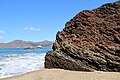
The Franciscan Complex or Franciscan Assemblage is a geologic term for a late Mesozoic terrane of heterogeneous rocks found throughout the California Coast Ranges, and particularly on the San Francisco Peninsula. It was named by geologist Andrew Lawson, who also named the San Andreas Fault that defines the western extent of the assemblage.[1]

Key Information

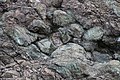
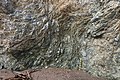
The Franciscan Complex is dominated by greywacke sandstones, shales and conglomerates which have experienced low-grade metamorphism.  Other important lithologies include chert, basalt, limestone, serpentinite, and high-pressure, low-temperature metabasites (blueschists and eclogites) and meta-limestones. Fossils like radiolaria are found in chert beds of the Franciscan Complex. These fossils have been used to provide age constraints on the different terranes that constitute the Franciscan. The mining opportunities within the Franciscan are restricted to deposits of cinnabar and limestone.

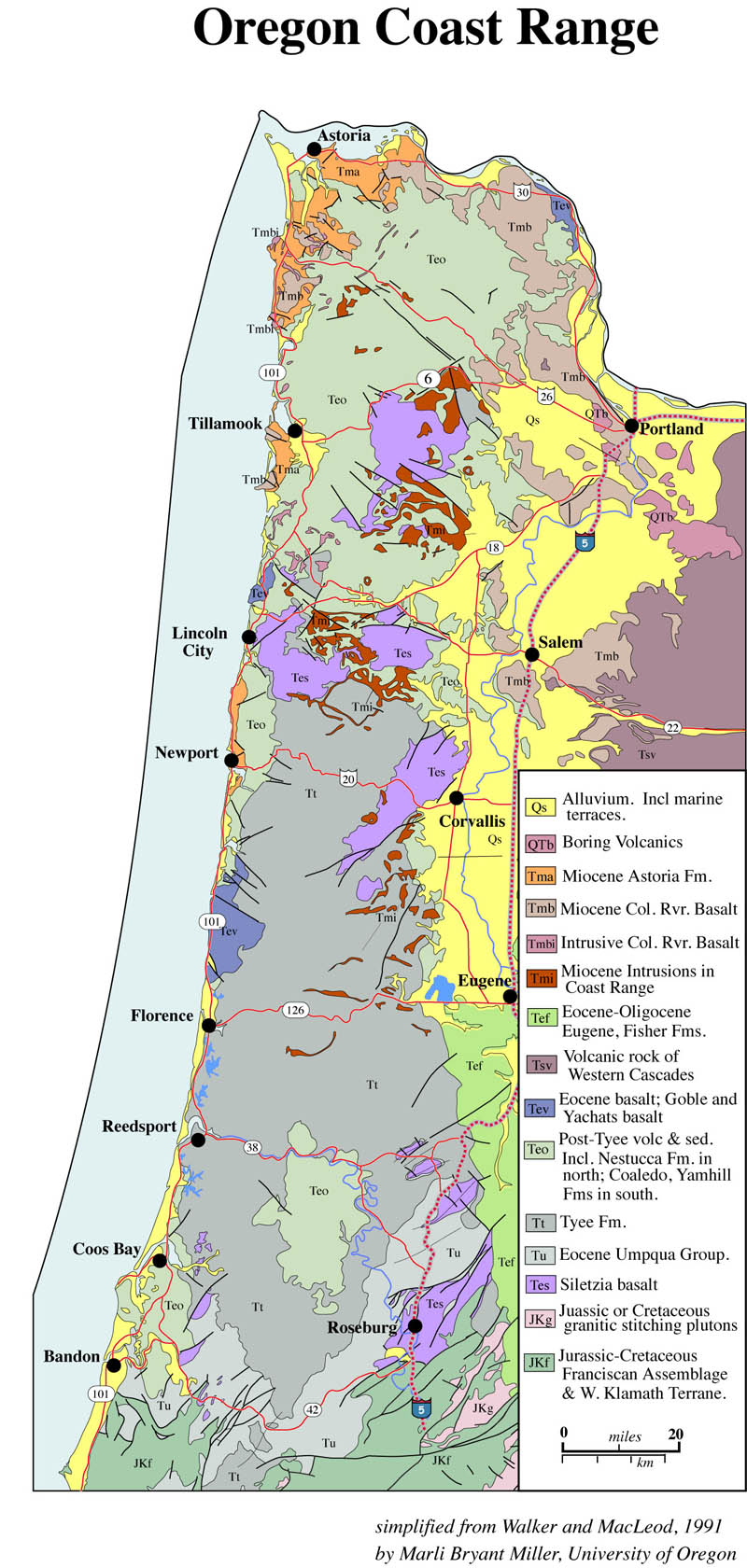
The outcrops of the formation have a very large range, extending from Douglas County, Oregon to Santa Barbara County, California.[2] Franciscan-like formations may be as far south as Santa Catalina Island. The formation lends its name to the term describing high-pressure regional metamorphic facies, the Franciscan facies series.[3]

Geologic history

[edit]
Map modified from Irwin (1990) [4] showing distribution of Great Valley Sequence and Franciscan Complex (in blue).
Diagram (modified from Fig 3.11 in Irwin, 1990) showing the depositional setting of the Franciscan Assemblage and the contemporaneous Great Valley Sequence.[5]

The Franciscan Complex is an assemblage of metamorphosed and deformed rocks, associated with east-dipping subduction zone at the western coast of North America.[6] Although most of the Franciscan is Early/Late Jurassic through Cretaceous in age (150-66 Ma),[7] some Franciscan rocks are as old as early Jurassic (180-190 Ma) age and as young as Miocene (15 Ma).[8] The different age distribution represents the temporal and spatial variation of mechanisms that operated within the subduction zone.[9] Franciscan rocks are thought to have formed prior to the creation of the San Andreas Fault when an ancient deep-sea trench existed along the California continental margin. This trench, the remnants of which are still active in the Cascadia and Cocos subduction zone, resulted from subduction of oceanic crust of the Farallon tectonic plate beneath continental crust of the North American Plate. As oceanic crust descended beneath the continent, ocean floor basalt and sediments were subducted and then tectonically underplated to the upper plate.[10] This resulted in widespread deformation with the generation of thrust faults and folding, and caused high pressure-low temperature regional metamorphism.[10] In the Miocene, the Farallon-Pacific spreading center reached the Franciscan trench and the relative motion between Pacific-North America caused the initiation of the San Andreas Fault. Transform motion along the San Andreas Fault obscured and displaced the subduction related structures, resulting in overprinting of two generations of structures.[11]

Description

[edit]
Shale matrix mélange with clasts of sandstone and greenstone on Marshall's Beach, San Francisco

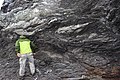
The units of the Franciscan complex are aligned parallel to the active margin between the North American and Pacific plates.[12] The Franciscan Complex is in contact with the Great Valley Sequence, which was deposited on the Coast Range Ophiolite, along its eastern side.[13][14] The type area of Franciscan rocks in San Francisco consists of metagraywackes, gray claystone and shale, thin bedded ribbon chert with abundant radiolarians, altered submarine pillow basalts (greenstone) and blueschists.[15] Broadly, the Franciscan can be divided into two groups of rocks. Coherent terranes are internally consistent in metamorphic grade and include folded and faulted clastic sediments, cherts and basalts, ranging from sub-metamorphic to prehnite-pumpellyite or low-temperature blueschist (jadeite-bearing) grades of metamorphism. Mélange terranes are much smaller, found between or within the larger coherent terranes and sometimes contain large blocks of metabasic rocks of higher metamorphic grade (amphibolite, eclogite, and garnet-blueschist).[10] The mélange zones in the Franciscan usually have a block in matrix appearance with higher grade metamorphic blocks (blueschist, amphibolite, greenschist, eclogite) embedded within the mélange matrix.[16] The matrix material of the mélanges are mudstone or serpentinite. Geologists have argued for either a tectonic or olistostormal origin.[17] In the northern Coast Ranges, the Franciscan has been divided into the Eastern, Central and Coastal Belts based on metamorphic age and grade, with the rocks younging and the metamorphic grade decreasing to the west.[18][19][10] The Franciscan varies along strike, because individual accreted elements (packets of trench sediment, seamounts, etc.) did not extend the full length of the trench. Different depths of underplating, distribution of post-metamorphic faulting, and level of erosion produced the present-day surface distribution of high P/T metamorphism.[9][10]

[edit]

Fossils

[edit]

Franciscan sediments contain a sparse, but diverse assemblage of fossils. The most abundant fossils by far are microfossils, particularly in the cherts, which contain single-celled organisms called radiolarians that have exoskeletons of silica. There are also in some of the shales microfossils of planktonic foraminifera that have exoskeletons of carbonate. These microfossils, by and large, indicate deposition in an open-water setting where deep-water conditions exist.[20] Vertebrate fossils in the Franciscan are extremely rare, but include three Mesozoic marine reptiles that are shown in the table below.[21] Again, these indicate an open-water, and therefore deep-marine setting. Although rare, a few shallow-marine fossils have been found as well, and include extinct oysters (Inoceramus) and clams (Buchia).[20] Microfossils in the Calera Limestone member of the Franciscan exposed at the Permanente and Pacifica cement quarries also indicate a shallow-marine setting, with deposition on top of a seamount in the tropical Pacific Ocean and subsequent transport and accretion by the Pacific Plate onto the California continental margin.[22] Thus, even though most of the Franciscan appears to have been deposited in a deep-water setting, it is a complex and diverse assemblage of rocks, and shallow-water settings, though not the norm, existed as well.

Mesozoic Vertebrate Fossils of the Franciscan Complex
Genus Species Notes
Ichthyosaurus californicus[23] Name means "fish-lizard of California." Found in 1935 in Stanislaus County in a piece of Franciscan chert from the Coast Ranges washed into the Great Valley.
franciscanus[23] Name means "fish-lizard of the Franciscan." Found in 1940 in San Joaquin County in a piece of Franciscan chert from the Coast Ranges washed into the Great Valley.
Plesiosaurus hesternus[23] Name means "one who is near to being a lizard of the West coast." Found in 1949 in San Luis Obispo County in a limestone concretion in Franciscan-Knoxville shales.

Economic importance

[edit]

Although no significant accumulations of oil or gas have been found in the Franciscan, other opportunities have been exploited over the years. During the 19th century when gold mining was one of the main industries in California, cinnabar associated with serpentine in the Franciscan and Great Valley Group was mined for quicksilver (mercury) needed to process gold ore and gold-bearing gravels. Some of the more important mines were those at New Idria and New Almaden, the Sulphur Bank Mine at Clearlake Oaks, and the Knoxville Mine (cf. McLaughlin Mine) and others at Knoxville. The Franciscan also contains large bodies of limestone pure enough for making cement, and the Permanente Quarry near Cupertino, California is a giant open-pit mine in a body of Franciscan limestone that supplied most of the cement for building the Shasta Dam across the Sacramento River.[24] The Rockaway Quarry in Pacifica is another example of a major limestone quarry in the Franciscan.

See also

[edit]

Notes

[edit]

References

[edit]
[edit]
Revisions and contributorsEdit on WikipediaRead on Wikipedia
from Grokipedia
The Franciscan Complex is a Late accretionary wedge consisting of deformed and metamorphosed sedimentary, volcanic, and minor igneous rocks that formed along the subduction zone at the western margin of the North American plate. Ranging in age from approximately 200 to 80 million years old, it encompasses fossils and radiometric dates spanning the Late to Late epochs. This complex underlies much of the , extending discontinuously from the Mendocino Triple Junction in the north to near the in the south, with exposures particularly prominent around the , where it was first described. It forms the basement rock unit beneath younger sedimentary sequences like the Great Valley Group and is structurally overlain by ophiolitic rocks of the Coast Range ophiolite in many areas. The Franciscan is divided into three main belts—eastern, central, and coastal—each characterized by distinct metamorphic grades, structural styles, and accretionary histories, reflecting progressive underplating and scraping off of during . Dominant rock types include siliciclastic sediments such as graywacke sandstones and argillites, which comprise over 90% of the assemblage, alongside volcanic rocks like pillow basalts (now greenstones) and radiolarian cherts. Mélanges—chaotic mixtures of sheared matrix with blocks of , , , and exotic high-pressure metamorphic rocks—are widespread, particularly in the , indicating tectonic disruption during accretion. Metamorphism varies by belt: the eastern belt features high-pressure/low-temperature assemblages from to depths of 20-30 km, while the coastal belt shows lower-grade, younger deposits with less deformation. Tectonically, the Franciscan Complex records the convergence between the Farallon oceanic plate and , with terranes accreted eastward in an active margin setting prior to the development of the San Andreas system around 30 million years ago. Subsequent deformation, including faulting and uplift, has further complicated its structure, making it a key natural laboratory for studying dynamics, formation, and the evolution of California's .

Overview

Definition and Characteristics

The Franciscan Complex is a late accretionary wedge composed of multiple terranes of heterogeneous, fault-bounded blocks of sedimentary, igneous, and metamorphic rocks that formed in a zone along the western margin of . This assemblage represents materials scraped off the subducting oceanic plate and accreted to the overriding , preserving a record of processes. Primary rock types within the Franciscan Complex include sandstones, rhythmically bedded cherts, argillites, greenstones derived from metamorphosed basalts, and high-pressure/low-temperature metamorphic rocks such as blueschists and eclogites. dominate the sedimentary component, often interbedded with shales, while cherts preserve radiolarian fossils indicative of deep-marine deposition; igneous and metamorphic elements reflect altered and subduction-related metamorphism. Distinguishing characteristics of the Franciscan Complex include its chaotic structures, where blocks of diverse lithologies are embedded in a sheared matrix, signaling intense tectonic disruption during accretion. These , along with evidence of rapid burial to depths of 20-30 km followed by exhumation, are manifested in the high-pressure/low-temperature mineral assemblages of blueschists and eclogites. Additionally, the complex is associated with fragments, including serpentinites and basalts, that indicate involvement of subducted . The term "Franciscan Formation" was coined by Andrew C. Lawson in 1895 for exposures of these rocks near on the Franciscan Peninsula; it is now referred to as the "Franciscan Complex" to better reflect its tectonic and lithologic heterogeneity.

Geographic Extent

The Franciscan Complex is primarily exposed in the , extending from Santa Barbara County in the south to Mendocino County in the north, with additional exposures in the and northward into southwestern as far as Douglas County. Its total north-south areal extent spans approximately 1,000 km, though outcrops are discontinuous due to overlying sediments and faulting, with subsurface continuation inferred beneath the Great Valley sequence. Regional variations include greater thickness and disruption in the northern segment, particularly near , where structural thicknesses of and higher-grade metamorphic rocks are more pronounced, compared to thinner and less metamorphosed sections in the south near . It is divided into three main belts—eastern (high-grade blueschist-facies), central (mélange-dominated), and coastal (low-grade)—each with distinct metamorphic grades and structural styles. Prominent exposure sites include the , , and , where the complex's heterogeneous lithologies are well displayed.

Geological History

Tectonic Setting and Formation

The Franciscan Complex formed in the tectonic setting of a convergent margin where the Farallon oceanic plate eastward beneath the continental plate during the era. This generated a deep-sea trench off the western margin of , along which oceanic sediments and crust were accreted to form an accretionary prism. The process involved the progressive incorporation of materials scraped from the descending plate, building a complex wedge of deformed rocks adjacent to the overlying . Formation of the Franciscan Complex occurred primarily through offscraping and underplating mechanisms at the . Offscraping involved the detachment and imbricate thrusting of oceanic sediments and fragments of the onto the overriding plate, while underplating entailed the deeper attachment of subducted materials beneath the prism. These processes led to intense tectonic disruption, including folding and the development of mélanges—chaotic mixtures of blocks within a sheared matrix—resulting from shear along the plate interface. The resulting architecture reflects episodic accretion and deformation over extended periods of plate convergence. Key events in the formation began with subduction initiation around 165 Ma in the , marking the onset of accretion. Accretion peaked during the (approximately 100–80 Ma), when rapid convergence rates facilitated substantial addition of material to the prism. Major accretionary activity slowed by about 66 Ma at the end of the , linked to a deceleration in subduction dynamics, though subordinate processes continued into the . Evidence for this tectonic history includes ophiolitic fragments within the complex, representing slivers of accreted oceanic lithosphere that were incorporated during . Additionally, widespread high-pressure , particularly and eclogite facies, records burial depths of 20–40 km along the subduction pathway before exhumation. These features underscore the deep environment and subsequent tectonic return of materials to shallower crustal levels.

Age and Stratigraphy

The Franciscan Complex primarily records subduction-related accretion from the to the , spanning approximately 180 to 66 million years ago (Ma), with some basement rocks dating back to the and later additions in the Coastal Belt extending as young as 15 Ma. This temporal framework reflects episodic accretion along the North American margin during a prolonged period of east-dipping . A combination of radiometric, biostratigraphic, and detrital geochronologic methods has established this age range. , particularly 40Ar/39Ar analyses on metamorphic minerals such as white mica and whole-rock samples, yields ages for peak metamorphism between 150 and 70 Ma, with specific examples including 121 Ma for the South Fork Mountain Schist in the Eastern Belt and 100-80 Ma for high-pressure and eclogite blocks. relies on radiolarian assemblages in chert beds, which constrain depositional ages from to , often aligning with radiolarian zones that indicate sediment accumulation prior to . U-Pb dating of detrital zircons in metagraywackes provides maximum depositional ages, such as 108-110 Ma for units and 97 Ma for lower-grade assemblages, while age spectra match sources from the North American , including cratonic basement and accreted terranes to the east. The complex lacks intact stratigraphic sequences due to intense tectonic disruption, including mélanges and thrust faulting, resulting in a pseudo-stratigraphy defined by spatial variations in metamorphic grade rather than depositional order. This progression increases eastward, from low-grade pumpellyite-prehnite and lawsonite-albite in the west to high-grade and eclogite in the east, reflecting deeper and earlier accretion of eastern units. Age variations across the three main belts underscore this: the Eastern Belt contains the oldest components, with accretion and metamorphism initiating in the around 180-140 Ma; the Central Belt records mid-Cretaceous events around 123-110 Ma; and the Coastal Belt is the youngest, with primary accretion during the Campanian-Maastrichtian (83-66 Ma) and some units up to 15 Ma.

Lithology

Sedimentary Components

The Franciscan Complex is dominated by siliciclastic sedimentary rocks, which constitute approximately 90% of its lithologic assemblage, primarily consisting of turbiditic sandstones, shales, and argillites, alongside significant volumes of rhythmically bedded cherts. sandstones, often exhibiting and Bouma sequences, represent submarine fan deposits derived from the erosion of continental margins, including volcanic arcs like the Sierran-Klamath province. These sandstones are interbedded with shales and argillites, the latter formed from compacted fine-grained muds that accumulated in quieter, distal settings. Cherts, a hallmark pelagic component, originate from comprising biogenic silica from , deposited far from land in deep-ocean environments. Minor components include blocks, representing pelagic deposits, which occur as exotic blocks in mélanges. Depositional environments for these sediments reflect a progression from open-ocean pelagic and hemipelagic settings in the proto-Pacific to trench-fill systems during . Pelagic cherts and associated shales formed in equatorial zones over 1,000 km offshore, where high biogenic silica productivity led to slow accumulation below the . Clastic sands and muds, transported via turbidity currents, indicate submarine channel and systems on the continental slope, with evidence from channelized and olistostromes in coherent sections. Argillites and finer shales filled inter-channel areas, capturing hemipelagic fallout diluted by episodic incursions. Sedimentary components are most abundant in coherent terranes, such as the and Permanente terrane, where they form thick, stratigraphically intact sequences, contrasting with disrupted mélanges elsewhere. Chert units typically range from 50 to 300 m in thickness, with depositional sections around 80 m spanning to time, their rhythmic bedding (rhythmite couplets of 2–10 cm) arising from seasonal variations in silica flux driven by and radiolarian blooms. Greywacke-shale couplets dominate in fan-lobe deposits, often exceeding hundreds of meters in coherent blocks. Diagenetic alteration in these sediments includes progressive silica replacement in cherts, where initial opal-A phases transform to microcrystalline through dissolution and recrystallization, preserving primary laminations. In greywacke sandstones, compaction promotes veining along fractures and bedding planes, sourced from pressure solution of framework grains and silica mobilization from adjacent shales. Argillites exhibit compaction into phyllosilicates, with minor silica cementation enhancing induration. These features reflect early in unlithified sediments prior to tectonic disruption.

Igneous and Metamorphic Components

The igneous components of the Franciscan Complex primarily consist of metabasaltic rocks altered to greenstones, which represent approximately 20% of the blocks within the Franciscan mélanges and originate from or basalts. These greenstones exhibit low-grade with assemblages including sodic , , lawsonite, and occasionally , reflecting their protolithic oceanic affinity. Rare gabbroic intrusions occur as isolated blocks, indicating limited plutonic activity associated with the oceanic lithosphere. , derived from the hydration of mantle , forms a significant ultramafic component and serves as a matrix in many mélanges, comprising fragments of ophiolitic and accreted during . Metamorphic assemblages in the Franciscan Complex are dominated by blueschist-facies rocks, characterized by lawsonite-albite and glaucophane-bearing schists, which developed under high-pressure, low-temperature conditions of 200–400 °C and 5–15 kbar. These conditions arose from cold processes that preserved high-pressure/low-temperature mineralogies in subducted oceanic materials. Eclogite pods, containing omphacite and , occur sporadically within the Eastern Belt, representing peak metamorphic pressures exceeding 10 kbar in localized high-grade blocks. During exhumation, these rocks underwent retrograde , forming pumpellyite-actinolite assemblages that overprint the primary fabrics. The distribution of these metamorphic components is uneven, with blueschist-facies rocks and eclogites concentrated in the Eastern and Central Belts, where coherent slabs and tectonic blocks preserve the highest grades. Serpentinites, often altered under similar low-temperature conditions, are widespread as matrices throughout these belts, facilitating the incorporation of igneous and metamorphic blocks during accretion.

Structural Geology

Belt Divisions and Terranes

The Franciscan Complex is subdivided into three primary belts—Eastern, Central, and Coastal—based on differences in metamorphic grade, age, and structural position, primarily recognized in the northern Coast Ranges of . The Eastern Belt represents the structurally deepest and oldest portion, consisting of high-pressure/low-temperature (HP/LT) metamorphic rocks such as blueschists and eclogites, with protoliths dated to through time (detrital zircons ~180–85 Ma). These rocks experienced burial to depths of approximately 25–30 km, forming in the root zone of an ancient subduction system. In contrast, the Central Belt is characterized by mud-matrix mélanges and coherent slices of low-grade metasediments, including pumpellyite- and lawsonite-bearing assemblages, with ages centered in the mid- (~145–140 Ma in some sections) and burial depths of 15–18 km. The Coastal Belt comprises the structurally highest and youngest units, featuring unmetamorphosed to feebly recrystallized sediments, such as those in the Yager and King Range terranes, deposited from to time and reaching only shallow burial depths (<5–8 km). These belts correspond to distinct assemblages within the Franciscan Complex, reflecting varied and accretion histories. The Eastern Belt terranes, including the Yolla Bolly and Pickett Peak units, embody the deep root, with intense deformation in west-vergent sheets. The terranes form an accretionary zone, where tectonic mixing dominated during mid-Cretaceous underplating. The Coastal Belt terranes, such as the Coastal and False Cape units, represent forearc basin fills that were stranded along the margin without deep , preserving relatively coherent . The belts are separated by major faults, notably the Coast Range , which juxtaposes the Franciscan against overlying Great Valley Group sediments, and intra-belt s that stack the units eastward. Mapping has identified approximately 15 distinct terranes across the complex, with lateral variations marking the northern and southern segments. The northern segment exhibits more coherent and clearer belt distinctions, particularly in the Cape Mendocino to Garberville region, while the southern segment, south of the northern Coast Ranges, shows increased shearing, disrupted belt boundaries, and less consistent three-belt architecture due to later strike-slip faulting. Recent studies have refined these divisions, particularly for the , by deconstructing the so-called Mélange through detailed mapping in the northwestern . These efforts reveal that less than 30% of the terrane consists of true , with the majority comprising weakly metamorphosed sandstone-mudrock units and submarine fan deposits, highlighting a polyphase assembly involving both subduction and strike-slip processes. This re-evaluation underscores along-strike variations and challenges oversimplified -dominated models for the Central terrane.

Mélanges and Deformation Features

Mélanges in the Franciscan Complex are defined as chaotic rock bodies consisting of meter- to kilometer-scale blocks of diverse exotic and native lithologies, such as , chert, metabasite, , , and eclogite, embedded within a sheared or matrix. These structures exhibit a block-in-matrix fabric mappable at scales of 1:24,000, with blocks ranging from less than 1 m to over 1 km in size and often showing rounded to elongate shapes. Mélanges comprise approximately 30% of the complex, particularly prominent in the where they form extensive bodies like the Central Belt Mélange, though they are subordinate to coherent sandstone-mudrock units in the overall tectonostratigraphy. Shale-matrix varieties typically contain blocks of , , chert, and , while serpentinite-matrix types incorporate higher-grade metamorphic blocks such as eclogite and . Deformation within Franciscan mélanges encompasses a range of styles, including imbricate thrusting that stacks fault-bounded blocks, ductile shearing evident in S-C fabrics and scaly microfabrics, and affecting both brittle and ductile components. These features reflect multiple episodes of subduction-related deformation, with evidence of block rotation preserved in the of high-grade knockers within the matrix. High-strain zones, such as nappe-bounding mélanges, show narrow brittle fault zones accommodating tens of kilometers of displacement, while intranappe mélanges exhibit lower strain with smaller offsets. Post-accretionary transport has further modified these structures through strike-slip faulting, overprinting earlier fabrics. The origins of Franciscan mélanges have been traditionally attributed to tectonic processes, such as fault-generated shearing along subduction-zone megathrusts, but recent supports hybrid sedimentary-tectonic models involving initial sedimentary accumulation followed by deformational overprint. In the , for instance, olistostromes formed via submarine sliding and mass-flow deposition are evident in units like the Laytonville and King Ridge Road mélanges, where depositional contacts, fossils, and rounded clasts indicate sedimentary genesis prior to tectonic disruption. Tectonic features, such as sheared contacts and foliated matrices, often obscure these sedimentary precursors, leading to polygenetic interpretations for many bodies. Key diagnostic features of these mélanges include jigsaw-fit blocks that suggest minimal post-depositional transport, preserving original spatial relationships among components. Strain gradients are prominent, transitioning from ductile cores with intense and isoclinal folding to brittle margins marked by fracturing and brecciation, reflecting evolving conditions during and exhumation. High-grade blocks, often exceeding the matrix metamorphic grade, are localized along boundaries, indicating early exhumation and redeposition in sedimentary settings before resubduction.

Paleontology

Fossil Types and Assemblages

The Franciscan Complex hosts a sparse but diverse fossil record dominated by microfossils, reflecting its predominantly deep-marine depositional environments. Microfossils, particularly and , are the most abundant, preserved in chert beds and turbidites that indicate pelagic settings at depths exceeding 2,000 meters. These assemblages span from the to the Eocene, with peak diversity in the , providing insights into ancient oceanic ecosystems characterized by low productivity and oxygen minimum zones. Radiolaria form the primary microfossil component, occurring in vast numbers within bedded cherts of the Eastern and Central Belts. Assemblages include diverse Spumellariina and Nassellariina forms, such as Pantanellium riedeli and Thanarla veneta in Tithonian to Valanginian zones, and Kozurium zingulai and Orbiculiforma multangula in Albian assemblages. These index species define biostratigraphic zones from the Late Jurassic (Kimmeridgian-Tithonian) through the Early Cretaceous (Berriasian-Albian), highlighting a progression from warm, equatorial waters to cooler, higher-latitude conditions. Foraminifera complement these, with planktonic and benthic taxa like Bathysiphon spp. in Cretaceous turbidites, including giant tubular forms up to several centimeters long co-occurring with trace fossils in fine-grained deposits. Such microfossil clusters suggest episodic blooms in nutrient-rich, deep-sea waters, though overall diversity remains low due to the anoxic or dysoxic seafloor conditions. Macrofossils are exceedingly rare, limited by the deep-water bias of the complex, but notable occurrences include marine reptiles and bivalves in isolated blocks. Ichthyosaur remains, such as rostra of Ichthyosaurus californicus, have been documented in Central Belt cherts and shales, representing allochthonous elements from Upper Jurassic to Lower Cretaceous outer shelf or slope habitats. Bivalves like Buchia pacifica (Valanginian) and Inoceramus spp. (Albian-Cenomanian) appear in sandstone blocks, often as molds or casts indicating brief shallow-water (neritic) incursions via submarine landslides into the basin. Trace fossils, primarily in turbidite sequences, include graphoglyptids (Cosmorhaphe, Paleodictyon, Nereites) and back-filled burrows (Chondrites, Thalassinoides), forming a rich, low-diversity assemblage of deposit-feeding infauna adapted to unstable, deep-sea floors. Overall, fossil assemblages in the Franciscan Complex exhibit low diversity attributable to the persistent deep-sea settings, with key index taxa like enabling stage-level resolution from to . Some blocks preserve neritic assemblages, such as bivalve-rich limestones, contrasting the dominant pelagic signal and underscoring tectonic mixing in mélanges. Preservation varies by : and undergo silicification in cherts, yielding exquisite three-dimensional skeletons, while macrofossils suffer compression in argillites and deformation from -related shearing. Taphonomic biases arise from tectonic disruption, including block incorporation and diagenetic crushing, which fragment and redistribute s, favoring robust-shelled forms over delicate ones. These features collectively reveal an of sparse, specialized biotas in a dynamic regime.

Biostratigraphic Applications

Biostratigraphic analysis of fossils within the Franciscan Complex plays a crucial role in assigning ages to its disrupted rock units, particularly through radiolarian assemblages preserved in chert beds. These biozones constrain the depositional ages of cherts to a range of approximately 160 to 90 Ma, spanning the to , reflecting prolonged oceanic prior to accretion. Seminal research by Pessagno (1977) established a detailed zonation for Lower Cretaceous radiolarians, including the Parvicingula-Thanarla conica Zone (Hauterivian-Barremian) and the Kozurium zingulai Zone (), which are recurrent in Franciscan cherts and provide precise temporal markers for subduction-related deposition. Integration with calcareous nannofossils enhances resolution; for instance, nannofossil biozonations in associated sediments correlate with radiolarian zones to delineate substage-level chronologies, as demonstrated in studies of the nearby Great Valley Sequence where assemblages like those of Watznaueria spp. align with radiolarian events. The highly disrupted of the Franciscan Complex, dominated by mélanges and tectonic blocks, poses significant challenges for , requiring meticulous block-by-block biostratigraphic evaluation to reconstruct original sequences. This method accounts for the tectonic fragmentation that mixes units of disparate ages, allowing through overlapping ranges within individual blocks. Cross- with the Great Valley Sequence further aids studies, as shared bivalve and ammonite assemblages, such as Buchia spp., link Franciscan sources to basin deposits, illuminating sediment pathways during . Fossils in the Franciscan Complex offer key insights into paleoenvironments, with radiolarian cherts indicating deposition in equatorial to mid-latitude zones characterized by high siliceous . Paleomagnetic analyses of red cherts reveal deposition at low paleolatitudes (0°–2° N/S), consistent with equatorial belts, while broader faunal distributions align with Pacific paleobiogeographic provinces, suggesting mid-latitude influences during the . Radiolarian further supports connections to widespread Pacific assemblages, reinforcing interpretations of oceanic settings influenced by nutrient-rich currents. Post-2020 investigations employing integrated have refined age assignments for the Coastal Belt, incorporating and nannofossil data to extend its depositional record into the Eocene, thereby prolonging the documented history. These studies highlight younger accretion phases, with Eocene assemblages in arkosic units providing evidence for late-stage evolution.

Tectonic Significance

Accretion Processes

The accretion of the Franciscan Complex occurred primarily through a combination of frontal and basal processes during subduction of the Farallon Plate beneath . Frontal accretion, involving the scraping off of trench-fill sediments and at the zone, dominated the formation of coherent terranes in the Eastern and Central Belts, where relatively intact sequences of , chert, and were imbricated and onto the continental margin. In contrast, basal underaccretion, or underplating, supplied material to deeper levels, particularly for the formation of mélanges in the , where subducted slabs were tectonically disrupted and incorporated beneath the growing prism through duplexing of oceanic and continental-derived units. These processes were episodic, with pulses of enhanced accretion linked to variations in dynamics, including slab that facilitated trenchward migration of the magmatic arc and increased sediment supply to the zone. Material accreted to the Franciscan Complex originated from diverse sources on the subducting Farallon Plate, including pelagic and hemipelagic oceanic sediments, volcanic fragments from seamounts, and segments of oceanic ridges represented by ophiolitic blocks. Detrital components within the sedimentary assemblages, such as sandstones, include zircons sourced from the eroding to the east, indicating proximity to the continental margin during deposition and transport via submarine channels. These sources contributed to a heterogeneous mix, with oceanic plate —basalt overlain by chert and then clastics—preserved in both coherent and disrupted forms throughout the complex. The evolutionary stages of accretion spanned the , beginning with early underplating of high-grade units during the , around 165–150 Ma, when initial incorporated deeper and mantle. Mid-Cretaceous (ca. 130–100 Ma) phases involved widespread formation through basal underaccretion and tectonic mixing under blueschist-facies conditions, building the bulk of the . Later, shallow accretion in the Coastal Belt occurred from the to Eocene (ca. 80–40 Ma), adding less deformed, low-grade sediments via frontal processes. Exhumation of deeper units was driven by the buoyancy of serpentinized peridotites, which facilitated return flow and uplift within the channel. Overall, these stages constructed an accretionary prism approximately 100 km wide, with estimated rates during active pulses ranging from 5–10 km/Myr, reflecting variable efficiency over the complex's 150-million-year history.

Relation to Regional Structures

The Franciscan Complex forms a critical structural element in the tectonic framework of , where it is overridden by the Coast Range ophiolite and overlying Great Valley sequence along the Coast Range Thrust Fault, a major structure that accommodated significant eastward-directed compression during . This thrust places and mantle of the ophiolite directly atop the of the Franciscan, marking the boundary between forearc basin deposits and the complex. Since approximately 30 million years ago, the system has dissected the Franciscan Complex into offset segments, with total dextral displacement reaching up to 500 km along its length, fragmenting the complex into crustal blocks such as Salinia and promoting along-strike variability in its belts. This Late strike-slip tectonics has not only truncated the originally continuous accretionary prism but also incorporated Franciscan rocks into the transform boundary, influencing the distribution of its eastern, central, and coastal belts across the Coast Ranges. Structural inheritance from the Franciscan plays a prominent role in modern deformation, as ancient thrusts within the complex have been reactivated as reverse or reverse-oblique faults under ongoing , particularly along the margins of the Ranges. These reactivations contribute to the broadening of fault zones and vertical components of slip in the San Andreas system, enhancing seismic potential in the region. Additionally, the Franciscan influences dynamics at the Mendocino Triple Junction, where northward migration of the junction since the has led to tectonic thickening of the complex and modulation of slab geometry, transitioning from subducted to a slabless . Recent research, including 2024 analyses of the , reinterprets its mélanges as incorporating both subduction features and precursors to the San Andreas proto-transform system, with tectonic mélanges aligned along early strike-slip faults that prefigure modern dissection. GPS measurements across the Coast Ranges reveal ongoing horizontal compression at rates of 5-10 mm/year, reflecting continued shortening superimposed on the dominant dextral shear and linked to Franciscan structural weaknesses. As the primary basement unit of the , the Franciscan Complex exerts control over regional topography through its resistant lithologies and fault-controlled uplift, producing the characteristic rugged terrain and elevated ridges that define the landscape. This basement architecture also governs patterns, with inherited faults serving as loci for nucleation and propagation, thereby elevating hazards in a zone of distributed deformation adjacent to the San Andreas.

Applications and Impacts

Economic Resources

The Franciscan Complex hosts several extractable resources, primarily non-metallic minerals derived from its distinctive lithologies, with historical significance in and industrial applications. deposits, particularly from the cherty Calera Limestone member within the Permanente , have been a key resource, quarried extensively for production. The , located near , exemplifies this activity; operations began in the early 20th century and supplied over 6 million barrels of cement for the of during the 1940s, supporting major infrastructure projects under the U.S. Bureau of Reclamation. Serpentinite, abundant in the complex as California's state rock, has been utilized for construction aggregate and, historically, for asbestos extraction due to its chrysotile content. These ultramafic rocks provided materials for road base and building purposes, with mining focused on low-asbestos-grade deposits to meet early 20th-century demands. However, asbestos use from serpentinite has been severely restricted since the late 20th century under federal and state regulations, including the EPA's 1989 partial ban and California's Air Resources Board standards limiting serpentine aggregate with over 0.25% asbestos for surfacing. Metallic ore extraction in the Franciscan Complex centers on () deposits hosted in siliceous rocks of the . The mine, operational from the 1840s to the 1970s, was the most productive site, yielding over 1 million flasks of mercury (each approximately 76 pounds) and contributing significantly to California's Gold Rush economy by aiding gold amalgamation processes. This output, totaling around 38 million kilograms, represented a substantial portion of U.S. mercury production during its peak. Hydrocarbon potential within the Franciscan Complex remains minimal, attributed to intense deformation that destroys integrity in its sedimentary sequences. No major oil or gas fields have been developed, though minor seeps occur in the Coastal Belt, associated with carbonate deposits that indicate localized ancient seepage but lack commercial viability. Contemporary extraction focuses on quarrying for dimension stone and from Franciscan rocks in select areas, subject to strict environmental oversight. The Permanente Quarry ceased operations in 2023 and, as of 2025, is undergoing reclamation and restoration efforts, including cleanup of Permanente Creek, under the Surface Mining and Reclamation Act (SMARA) and the (CEQA). Post-2000 environmental regulations, including enhanced monitoring for naturally occurring and watershed protection under the Clean Water Act, have curtailed new permits and emphasized reclamation, limiting expansion in sensitive Franciscan terrains.

Geological Hazards

The Franciscan Complex poses significant seismic hazards due to its weakly consolidated and sheared rocks, which can amplify ground shaking during earthquakes. These rocks, including mélanges and fractured sandstones, exhibit low and high in places, leading to increased seismic wave propagation and potential for surface rupture. The complex's proximity to the exacerbates these risks, as the fault traces through or adjacent to Franciscan exposures in the , facilitating rupture propagation. For instance, the (magnitude 7.9) originated along the on Franciscan basement rocks west of the city, causing widespread damage amplified by the underlying geology. Landslide and erosion risks are prominent in the Franciscan Complex, driven by the instability of its mélanges and the steep topography of the Coast Ranges. The sheared, block-in-matrix structure of mélanges promotes slope failure, particularly during heavy rainfall, as seen in the 1997–1998 El Niño events that triggered numerous shallow landslides across Franciscan terranes. Serpentinites within the complex are especially susceptible to weathering and slow creep deformation, forming expansive clays that reduce slope stability and contribute to ongoing erosion. These processes result in frequent debris flows and rotational slides, threatening infrastructure and communities in areas like the northern Coast Ranges. Additional hazards include asbestos exposure from serpentine-rich rocks and coastal cliff collapses in prominent exposures. Serpentinites in the Franciscan host asbestos, posing respiratory health risks during mining, construction, or natural disturbance, with regulated sites requiring mitigation in . In coastal settings like the , wave undercutting and seismic shaking cause recurrent cliff failures in Franciscan , leading to rapid bluff retreat and hazards to nearby roads and habitats. Mitigation efforts include post-2020 USGS geologic mapping and hazard assessments to delineate seismic and zones. These maps integrate Franciscan with fault data to inform zoning under California's Seismic Hazards Mapping Act, guiding . Engineering challenges persist in infrastructure like the , where foundations were designed to navigate variable Franciscan , including debated stability, requiring deep pilings and ongoing monitoring.

References

Add your contribution
Related Hubs
User Avatar
No comments yet.