


Community hub
Recent from talks
Contribute something
Nothing was collected or created yet.
Green bean
View on Wikipedia

Green beans are young, unripe fruits of various cultivars of the common bean (Phaseolus vulgaris).[1][2] Green beans are known by many common names, including French beans,[3] string beans (although most modern varieties are "stringless"),[3] and snap beans[3] or simply "snaps".[4][5] In the Philippines, they are also known as "Baguio beans" or "habichuelas" to distinguish them from yardlong beans.[6]
Immature or young pods of the runner bean (P. coccineus), yardlong bean (Vigna unguiculata subsp. sesquipedalis), and hyacinth bean (Lablab purpureus) are used in a similar way.[7] Green beans are distinguished from the many other bean varieties in that they are harvested and consumed with their enclosing pods before the bean seeds inside have fully matured. An analogous practice is the harvest and consumption of unripened pea pods, as is done with snow peas or sugar snap peas.
Uses
[edit]As common food in many countries, green beans are sold fresh, canned, and frozen. They can be eaten raw or steamed, boiled, stir-fried, or baked. They are commonly cooked in other dishes, such as soups, stews, and casseroles. Green beans can be pickled, similarly to cucumbers.
A dish with green beans common throughout the northern US, particularly at Thanksgiving, is green bean casserole, a dish of green beans, cream of mushroom soup, and French-fried onions.[8]
Nutrition
[edit]| Nutritional value per 100 g (3.5 oz) | |||||||||||||||||||||||||||||||||||||||||||||
|---|---|---|---|---|---|---|---|---|---|---|---|---|---|---|---|---|---|---|---|---|---|---|---|---|---|---|---|---|---|---|---|---|---|---|---|---|---|---|---|---|---|---|---|---|---|
| Energy | 131 kJ (31 kcal) | ||||||||||||||||||||||||||||||||||||||||||||
6.97 g | |||||||||||||||||||||||||||||||||||||||||||||
| Dietary fiber | 2.7 g | ||||||||||||||||||||||||||||||||||||||||||||
0.22 g | |||||||||||||||||||||||||||||||||||||||||||||
1.83 g | |||||||||||||||||||||||||||||||||||||||||||||
| |||||||||||||||||||||||||||||||||||||||||||||
| Other constituents | Quantity | ||||||||||||||||||||||||||||||||||||||||||||
| Water | 90 g | ||||||||||||||||||||||||||||||||||||||||||||
| †Percentages estimated using US recommendations for adults,[9] except for potassium, which is estimated based on expert recommendation from the National Academies.[10] | |||||||||||||||||||||||||||||||||||||||||||||
Raw green beans are 90% water, 7% carbohydrates, 2% protein, and contain negligible fat. In a 100-gram (3+1⁄2-ounce) reference amount, raw green beans supply 131 kilojoules (31 kilocalories) of food energy and are a moderate source (range 10–19% of the Daily Value) of vitamin C and vitamin K, with no other micronutrients in significant content.
Domestication
[edit]The green bean (Phaseolus vulgaris) originated in Central and South America, where there is evidence that it has been cultivated in Mexico and Peru for thousands of years.[11]
Characteristics
[edit]The first "stringless" bean was bred in 1894 by Calvin Keeney, called the "father of the stringless bean," while working in Le Roy, New York.[12] Most modern green bean varieties do not have strings.[7]
Plant
[edit]Green beans are classified by growth habit into two major groups, "bush" (or "dwarf") beans and "pole" (or "climbing") beans.[13][14][15]
Bush beans are short plants, growing to not more than 2 feet (61 cm) in height, often without requiring supports. They generally reach maturity and produce all of their fruit in a relatively short period, then cease to produce. Owing to this concentrated production and ease of mechanized harvesting, bush-type beans are those most often grown on commercial farms. Bush green beans are usually cultivars of the common bean (Phaseolus vulgaris).
Pole beans have a climbing habit and produce a twisting vine, which must be supported by "poles," trellises, or other means. Pole beans may be common beans (Phaseolus vulgaris), runner beans (Phaseolus coccineus) or yardlong beans (Vigna unguiculata subsp. sesquipedalis).[16][17]
Half-runner beans have both bush and pole characteristics, and are sometimes classified separately from bush and pole varieties.[18][19][20][21] Their runners can be about one to three metres (3–10 feet) long.[22][irrelevant citation]
Varieties
[edit]
Over 130 varieties (cultivars) of edible pod beans are known.[23] Varieties specialized for use as green beans, selected for the succulence and flavor of their green pods, are the ones usually grown in the home vegetable garden, and many varieties exist. Beans with various pod colors (green, purple, red, or streaked.[24]) are collectively known as snap beans, while green beans are exclusively green. Pod shapes range from thin and circular ("fillet" types) to wide and flat ("romano" types) and more common types in between.
The three most commonly known types of green beans belonging to the species Phaseolus vulgaris are string or snap beans, which may be round or have a flat pod; stringless or French beans, which lack a tough, fibrous string running along the length of the pod; and runner beans, which belong to a separate species, Phaseolus coccineus. Green beans may have a purple rather than green pod, which changes to green when cooked.[25][page needed] Yellow-podded green beans are also known as wax beans.[7] Wax bean cultivars are commonly of the bush or dwarf form.[26][page needed]
All of the following varieties have green pods and are Phaseolus vulgaris unless otherwise specified:
Bush (dwarf) types
[edit]- Blue Lake 274[2]
- Contender[27]
- Derby (1990 AAS winner)[2]
- Golden Wax Improved (yellow/wax), 60 days
- Greencrop, 53 days
- Heavyweight II, 53 days
- Improved Tendergreen[28]
- Provider[27]
- Rocquencourt (yellow/wax), 50 days, heirloom[29]
- Royal Burgundy (purple pod), 55 days
- Stringless Green Pod, heirloom[30]
- Triomphe de Farcy, 48 days, heirloom
Pole (climbing) types
[edit]- Algarve[15]
- Blue Lake[2]
- Golden Gate (yellow/wax)[15]
- Gold Marie, 75 days, Common Mosaic virus (BCMV) resistant
- Kentucky Blue (AAS Winner)[2]
- Kentucky Wonder[2], 65 days, heirloom
- Rattlesnake bean, 65 days, heirloom
- Scarlet Runner (Phaseolus coccineus)[31]
- Trionfo Violetto (purple pod), 60 days
Production
[edit]| Production of green beans – 2020 (millions of tonnes) | |
|---|---|
 China China |
18.0 |
 Indonesia Indonesia |
0.9 |
 India India |
0.6 |
 Turkey Turkey |
0.5 |
 Thailand Thailand |
0.3 |
| World | 23.3 |
| Source: FAOSTAT of the United Nations[32] | |
In 2020, world production of green beans was 23 million tonnes, with China accounting for 77% of the total.
Gallery
[edit]-
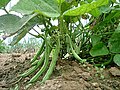 Green common beans on the plant
 -
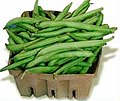 Whole raw green beans packed in a punnet for sale
 -
 Green beans with bean slicer
 -
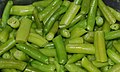 Cut and cooked green beans
 -
 Four varieties of the common green bean
 -
 Green beans on a bush plant
 -
 Mature green beans, freshly picked in France
 -
 Dried green beans (known as leather britches or shucky beans)
 -
 Green beans cream stew
 -
 Pickled beans


.jpg)


.JPG)
.jpg)
See also
[edit]References
[edit]- ^ "Green Beans". The World's Healthiest Foods. Archived from the original on August 2, 2016. Retrieved March 2, 2017.
- ^ a b c d e f "Beans – Vegetable Directory – Watch Your Garden Grow – University of Illinois Extension". May 20, 2024.
- ^ a b c Green, Aliza (2004). Field Guide to Produce. Quirk Books. p. 126. ISBN 978-1-931686-80-8.
- ^ Singh BK and Singh B. 2015. Breeding perspectives of snap bean (Phaseolus vulgaris L.). Vegetable Science 42(1): 1-17.
- ^ Hatch, Peter J. (April 24, 2012). "A Rich Spot of Earth": Thomas Jefferson's Revolutionary Garden at Monticello. Yale University Press. pp. 159–161. ISBN 978-0-300-17114-3.
- ^ "Baguio Beans". Maribehlla. January 25, 2011. Retrieved October 20, 2019.
- ^ a b c "Growing beans in Minnesota home gardens". University of Minnesota Agricultural Extension. Retrieved December 23, 2018.
- ^ Cook's Illustrated (2004). The New Best Recipe. America's Test Kitchen.
- ^ United States Food and Drug Administration (2024). "Daily Value on the Nutrition and Supplement Facts Labels". FDA. Archived from the original on March 27, 2024. Retrieved March 28, 2024.
- ^ "TABLE 4-7 Comparison of Potassium Adequate Intakes Established in This Report to Potassium Adequate Intakes Established in the 2005 DRI Report". p. 120. In: Stallings, Virginia A.; Harrison, Meghan; Oria, Maria, eds. (2019). "Potassium: Dietary Reference Intakes for Adequacy". Dietary Reference Intakes for Sodium and Potassium. pp. 101–124. doi:10.17226/25353. ISBN 978-0-309-48834-1. PMID 30844154. NCBI NBK545428.
- ^ "Archived copy" (PDF). Archived from the original (PDF) on January 12, 2020. Retrieved November 30, 2019.
{{cite web}}: CS1 maint: archived copy as title (link) - ^ Taylor's guide to heirloom vegetables. Boston: Houghton Mifflin. 1996. ISBN 0-395-70818-4.
- ^ McGee, Rose Marie Nichols; Stuckey, Maggie (2002). The Bountiful Container. Workman Publishing.
- ^ Garrelts, C.; Garrelts, Megan; Lee, Bonjwing (2011). Bluestem: The Cookbook. Andrews McMeel Publishing. p. 71. ISBN 978-1-4494-0061-3.
- ^ a b c How to Grow French Beans – Royal Horticultural Society, RHS Gardening
- ^ Capomolla, F. (2017). Growing Food the Italian Way. Pan Macmillan Australia. p. 143. ISBN 978-1-76055-490-3. Retrieved February 26, 2018.
- ^ Watson, B. (1996). Taylor's Guide to Heirloom Vegetables. TAYLOR'S WEEKEND GARDENING GUIDES. Houghton Mifflin. p. 238. ISBN 978-0-395-70818-7. Retrieved February 26, 2018.
- ^ "Planting Directions for White Half-Runner Beans". sfgate.com. September 30, 2012. Retrieved May 24, 2018.
- ^ Torpey, Jodi (January 9, 2016). Blue Ribbon Vegetable Gardening: The Secrets to Growing the Biggest and Best Prizewinning Produce. Storey Publishing. ISBN 978-1-61212-395-0. Retrieved May 24, 2018 – via Google Books.
- ^ Wonning, Paul R. Gardeners' Guide to Growing Green Beans in the Vegetable Garden: The Green Bean Book – Growing Bush, Pole Beans For Beginning Gardeners. Mossy Feet Books. ISBN 978-1-311-55978-4. Retrieved May 24, 2018 – via Google Books.
- ^ Gutierrez, Sandra A. (October 15, 2015). Beans and Field Peas: a Savor the South® cookbook. UNC Press Books. ISBN 978-1-4696-2396-2. Retrieved May 24, 2018 – via Google Books.
- ^ Séguret, Susi Gott (January 24, 2017). Appalachian Appetite: Recipes from the Heart of America. Hatherleigh Press. ISBN 978-1-57826-705-7. Retrieved May 24, 2018 – via Google Books.
- ^ Facciola, Stephen (1998). Cornucopia II : a source book of edible plants. Kampong Publications. ISBN 0-9628087-2-5.
- ^ Singh B K, Pathak K A, Ramakrishna Y, Verma V K and Deka B C. 2011. "Purple-podded French bean with high antioxidant content." ICAR News: A Science and Technology Newsletter 17 (3): 9.
- ^ Press, L. (2002). The Bean Book: Over Seventy Incredible Recipes. Guilford, Conn.: Globe Pequot Press. ISBN 978-1-58574-473-2.
- ^ Phillips, R.; Rix, M. (1993). Vegetables. New York: Random House. ISBN 978-0-679-75024-6.
- ^ a b "Bean Varieties: Best Bets and Easy-to-Grow". May 10, 2009. Retrieved December 23, 2018.
- ^ "Improved Tendergreen Bush Green Bean". Retrieved December 23, 2018.
- ^ "Three Heirloom Beans". April 2006. Retrieved May 17, 2020.
- ^ "Seedsmen Hall of Fame". Retrieved December 23, 2018.
- ^ Runner beans are edible – Oregon State University Agricultural Extension
- ^ "Production of green beans in 2020, Crops/Regions/World list/Production Quantity (pick lists)". UN Food and Agriculture Organization, Corporate Statistical Database (FAOSTAT). 2022. Retrieved May 6, 2022.
External links
[edit]
 Media related to Green beans at Wikimedia Commons
- Green beans at United States Department of Agriculture

| National | |
|---|---|
| Other | |

Green bean
View on GrokipediaBotanical Characteristics
Plant Morphology
The green bean, scientifically known as Phaseolus vulgaris L., is an annual herbaceous plant belonging to the Fabaceae family, commonly referred to as legumes.[9] It exhibits a variable growth habit, typically reaching heights of 20 cm to 3 m (6.5 ft), influenced by cultivar type, with bush varieties remaining compact and self-supporting at 20-60 cm while pole varieties exhibit a climbing habit that requires support for upward growth up to 3 m or more.[10] The plant features a taproot system that anchors it in the soil and facilitates nutrient uptake, including through symbiotic nitrogen fixation.[11] The stem is herbaceous, green, cylindrical, and solid, with prominent branching that supports vegetative and reproductive structures.[12] It consists of distinct nodes and internodes, where nodes serve as attachment points for leaves, branches, and inflorescences, and internodes vary in length to accommodate growth phases.[13] The stem surface often displays pubescence, including fine hairs and occasionally hooked hairs, particularly between nodes, which may aid in protection against herbivores or environmental stress.[10] In climbing varieties, the stem twines around supports in a spiral manner to achieve vertical growth, lacking true tendrils.[14] Leaves are arranged alternately along the stem and are compound with a trifoliolate structure, consisting of three ovate to rhombic leaflets measuring 5 to 15 cm in length and 5 to 10 cm in width.[9] Each leaflet has entire margins, an acuminate tip, and a cordate or rounded base, with the overall leaf borne on a distinct petiole; small stipules occur at the leaf base, and stipels are present at the leaflet bases.[10] The leaves exhibit moderate pubescence on both surfaces, contributing to their fuzzy texture, and are adapted for photosynthesis in full sun conditions.[9] Flowers are papilionaceous, characteristic of the Fabaceae family, with a bilateral symmetry formed by five petals: one standard (banner), two wings, two keel petals enclosing the stamens and pistil, and a calyx of five sepals.[15] They are borne in axillary or terminal racemes, typically containing 10 to 20 flowers per raceme, and display colors ranging from white to pink or violet depending on the cultivar.[9] The flowers are primarily self-pollinating due to synchronous anther dehiscence and stigma receptivity occurring just before or at bud opening, minimizing cross-pollination despite the presence of 10 stamens and a single pistil; this mechanism ensures high rates of autogamy, with flowers opening at sunrise and fading by sunset.[9] The root system includes a primary taproot that can extend up to 1-1.5 m deep under favorable conditions, accompanied by lateral roots that branch extensively for soil exploration.[11] As a legume, P. vulgaris forms symbiotic root nodules in association with rhizobial bacteria, such as Rhizobium phaseoli, enabling biological nitrogen fixation that converts atmospheric nitrogen into plant-usable forms, thereby enhancing soil fertility.[16] These nodules are typically spherical and develop along the roots, peaking in activity during vegetative growth.[17]Pod and Bean Development
The pods of the green bean (Phaseolus vulgaris) develop following successful pollination of the plant's flowers, which are typically self-pollinating but can benefit from insect assistance under optimal conditions.[2] Pod formation begins shortly after fertilization, with the ovary elongating into a cylindrical legume that matures over several weeks.[18] This process is influenced by environmental factors, including photoperiod sensitivity, where many cultivars exhibit a short-day response that promotes flowering and subsequent pod set under day lengths of 12-14 hours or less.[19] Temperature also plays a key role, with optimal pod initiation occurring between 20-30°C, while extremes can delay or reduce development.[20] Green bean pods are elongated and cylindrical, typically measuring 8-20 cm in length, and contain 4-10 oval to kidney-shaped seeds arranged in a single row.[21] In older varieties, these pods often feature fibrous strings along the sutures, which are tough vascular tissues that must be removed before consumption, contributing to the traditional name "string beans."[22] Breeding efforts since 1894 have produced stringless cultivars, such as Burpee's Stringless Green Pod, which eliminate these fibers through selective genetics for improved tenderness and ease of preparation.[23] Pod colors vary genetically, ranging from the common green to yellow (wax types) or purple, with pigmentation influenced by anthocyanins that fade upon cooking in purple varieties.[2] Seed development within the pod progresses from fertilization through embryo growth and filling stages, typically spanning 20-30 days post-pollination.[24] Immature seeds remain small and underdeveloped during the early pod-filling phase, preserving pod tenderness for snap bean harvest; as maturation advances, seeds enlarge to 8-10 mm in length, adopting a kidney shape with an oval hilum serving as the attachment point to the pod wall.[25] For optimal snap bean quality, pods are harvested before full seed development, when the internal seeds are still flat and the pod walls are crisp, usually 50-70 days after planting depending on cultivar and conditions.[26] This timing ensures high market value, as overmature pods become fibrous and less palatable.[27]Varieties
Bush (Dwarf) Varieties
Bush (dwarf) varieties of green beans, also known as snap beans, exhibit a compact growth habit, typically reaching heights of 30–60 cm without requiring trellising or support structures.[2][28] These plants mature relatively quickly, often in 50–60 days from planting, allowing for shorter-season production compared to vining types.[29][30] A primary advantage of bush varieties is their suitability for small gardens and raised beds, where space is limited, as they form self-supporting clumps that do not sprawl or require vertical structures.[30][31] They enable multiple harvests over a 4–6 week period, providing a concentrated yield that facilitates efficient picking and processing, such as for canning or freezing.[2] Additionally, their rapid maturity supports higher initial yields per unit area, making them ideal for successive plantings to extend the harvest season.[29] Notable cultivars include 'Blue Lake', an open-pollinated bush type prized for its high yield and tender, flavorful pods with excellent color retention.[32] 'Provider' is a disease-resistant, early-maturing variety (around 55 days) with a strong upright habit, offering reliable performance in home settings.[32][33] 'Contender', another 55-day option, produces stringless pods and demonstrates heat tolerance, contributing to consistent yields in warmer conditions.[32][34] Globally, there are around 150 recognized cultivars of green beans, primarily featuring green pods but also including yellow, purple, and other colors, with bush types typically having pods 10–15 cm in length for fresh market appeal.[35][32] These traits, including straight, medium-dark green pods, enhance their suitability for home cultivation and direct consumption.[36]Pole (Climbing) Varieties
Pole (climbing) varieties of green beans exhibit a vining growth habit, reaching heights of 2 to 3 meters, and require sturdy supports such as trellises, poles, or fences to climb and thrive.[37] These plants begin producing pods later than bush varieties but continue yielding over an extended period of 8 to 12 weeks, allowing for multiple harvests every 3 to 5 days.[38] In contrast to compact bush types, pole varieties optimize vertical space in gardens or fields, making them ideal for small-scale or intensive cultivation.[33] Several notable cultivars highlight the diversity within pole varieties. Kentucky Wonder, an old heirloom variety, is prized for its rust resistance and produces straight, deep green pods averaging 15 cm in length that are tender and stringless when harvested young.[37] Rattlesnake, another heirloom, bears distinctive dark green pods streaked with purple—resembling snake markings—that fade upon cooking, along with speckled seeds; it shows good drought tolerance and rust resistance.[37] Pods in these varieties are generally longer than those of bush beans, often measuring 12 to 20 cm, contributing to their appeal.[38] The advantages of pole varieties include higher total yields per plant—up to twice that of bush beans in comparable space—due to their prolonged productivity and efficient use of vertical growing area.[37] A 3-meter row of pole beans can yield approximately 3.6 kg of pods, compared to 2 kg for bush types, supporting continuous harvesting throughout the season.[37] These traits make pole varieties particularly suitable for fresh markets, where their superior flavor and tenderness command premium prices.[38]Cultivation Practices
Soil and Climate Requirements
Green beans thrive in well-drained, fertile loam soils that are rich in organic matter to support root development and nutrient availability.[2] Ideal soil pH ranges from 6.0 to 7.0, allowing optimal nutrient uptake while avoiding acidity that could hinder growth.[39] As nitrogen-fixing legumes, green beans benefit from inoculation with Rhizobium bacteria, particularly in soils lacking native populations, to enhance symbiotic nitrogen fixation and reduce fertilizer needs.[40] This warm-season crop requires full sun exposure for at least eight hours daily and is highly sensitive to frost, necessitating planting after the last frost when soil temperatures reach at least 60°F (16°C).[41] Optimal air temperatures for growth fall between 18°C and 29°C (65°F to 85°F), promoting vigorous vegetative development and pod formation without heat stress.[30] Consistent moisture is essential, with plants needing 1 to 2 inches of water per week to maintain even soil moisture, especially during flowering and pod set, while avoiding waterlogging that could lead to root issues.[29] Seeds should be directly sown 2 to 5 cm (1 to 2 inches) deep in prepared beds, with bush varieties spaced 5 to 10 cm (2 to 4 inches) apart in rows or double rows about 15 cm (6 inches) apart, and pole varieties spaced 10 to 15 cm (4 to 6 inches) apart in rows 1.2 to 1.5 m (4 to 5 feet) apart to accommodate trellising.[29] Succession planting every two weeks extends the harvest period by staggering maturity. Most varieties reach maturity in 45 to 75 days, depending on type and conditions, with bush beans typically faster than pole types.[42] To maintain soil health and prevent buildup of soil-borne pathogens, rotate green beans with non-legume crops such as cereals or corn every 3 to 5 years. Incorporating cover crops like small grains as green manures between plantings boosts organic matter, improves soil structure, and enhances fertility for subsequent seasons.[38] Certain heat-tolerant varieties can extend adaptability in warmer climates.[38]Pests, Diseases, and Management
Green beans (Phaseolus vulgaris) are susceptible to several common pests that can reduce yield through direct feeding or by transmitting diseases. Aphids, such as the black bean aphid (Aphis fabae), are sap-sucking insects that cluster on new growth, causing leaf curling, stunted development, and yellowing while serving as vectors for viruses like bean common mosaic virus (BCMV).[43] These pests are managed through applications of neem oil or insecticidal soaps, which disrupt feeding and reproduction, as well as the introduction of beneficial insects like lady beetles (Coccinellidae) and lacewings (Chrysopidae) that prey on aphid populations.[44] Row covers can also prevent aphid infestation during early plant stages by excluding flying adults.[45] Mexican bean beetles (Epilachna varivestis) are another key pest, with adults and larvae defoliating leaves by skeletonizing tissue, leading to reduced photosynthesis and pod quality.[43] Adults are coppery-red with black spots, and larvae are spiny and orange; control involves hand-picking eggs and larvae, using row covers, and releasing parasitic wasps like Pediobius foveolatus, which target larvae effectively in integrated pest management (IPM) programs.[44] Spider mites, particularly the two-spotted spider mite (Tetranychus urticae), cause stippling and webbing on leaf undersides, resulting in bronzed foliage and premature leaf drop in hot, dry conditions.[43] Management includes forceful water sprays to dislodge mites, neem oil applications, and encouraging predatory mites (Phytoseiidae) as biological controls.[46] Major diseases affecting green beans include fungal and viral pathogens that spread through seeds, soil, or contaminated tools. Rust, caused by the fungus Uromyces appendiculatus, produces yellow spots on leaves that develop into orange pustules releasing spores, leading to defoliation and reduced yields; it spreads via wind and splashing water.[47] Symptoms appear in cool, moist weather, and management relies on planting rust-resistant varieties like Kentucky Wonder, crop rotation with non-hosts such as cereals for at least two years, and foliar fungicides like sulfur if needed.[5] Anthracnose, incited by Colletotrichum lindemuthianum, manifests as dark, sunken lesions on pods, stems, and leaves, often with pink spore masses in humid conditions; it spreads primarily through infected seeds and crop debris.[43] Prevention involves using certified disease-free seeds, destroying infected plant material, and rotating crops for three years, with resistant varieties providing additional protection.[48] Viral diseases, such as bean common mosaic virus (BCMV), cause mottled leaves, stunted growth, and pod distortion, with transmission occurring via infected seeds or aphid vectors.[47] Control emphasizes planting virus-free certified seeds and selecting resistant cultivars, alongside vector management to limit spread.[43] Damping-off and root rots, particularly from Fusarium solani f. sp. phaseoli in wet, compacted soils, result in seedling collapse, reddish-brown stem lesions, and shriveled roots, appearing 2-3 weeks after planting.[49] This soilborne fungus persists in residues and is exacerbated by cool, wet conditions; management includes long crop rotations exceeding three years with non-legume hosts like corn or wheat, planting in warm (above 55°F), well-drained soils, and using fungicide-treated seeds.[49] Bacterial blight, caused by Xanthomonas axonopodis pv. phaseoli, produces water-soaked spots on leaves and pods that turn necrotic; copper-based fungicides applied at the first sign of symptoms effectively suppress spread when combined with sanitation practices.[50] Integrated pest management (IPM) principles form the cornerstone of green bean protection, emphasizing monitoring, cultural practices, and minimal chemical use. Crop rotation disrupts pathogen and pest life cycles, while resistant varieties—such as those tolerant to rust, anthracnose, and BCMV—reduce disease incidence without relying on inputs.[43] Fungicides like copper are reserved for bacterial diseases, applied preventively in high-risk areas, while overall IPM integrates beneficial insects, reflective mulches, and proper spacing to enhance plant vigor and resilience.[51]Commercial Production
Global Production Statistics
Global production of green beans reached 25 million tonnes in 2024, up from 23 million tonnes in 2020. The Asia-Pacific region accounts for 84% of this total output.[52] Production trends indicate steady annual growth of 2-3%, fueled by rising demand for fresh and frozen varieties; FAO data records an increase from 19 million tonnes in 2015 to higher levels in subsequent years.[53] The global market is valued at $15-20 billion annually, with the fresh market representing 60% of the share and processed products 40%; average yields stand at 20-30 tonnes per hectare.[54] FAO statistics for 2023 show a total harvested area of approximately 1 million hectares, following a post-2020 recovery from COVID-19-related supply disruptions.[53]Major Producing Countries and Environmental Impact
China is the world's leading producer of green beans, accounting for approximately 18 million tonnes in 2023, which represents about 72% of global production.[7] Indonesia follows with around 1.5 million tonnes, while India produces about 1 million tonnes annually.[7] The United States contributes roughly 0.5 million tonnes, with a focus on export-oriented cultivation in states like Wisconsin and California.[55] Asia dominates green bean production due to its favorable subtropical climates and extensive arable land suitable for both bush and pole varieties. In Europe, countries such as Spain and France lead the market for premium fresh green beans, leveraging Mediterranean climates for year-round output through protected cultivation systems.[56] Green bean farming exhibits a relatively low carbon footprint of about 1.2 kg CO₂eq per kg on a dry equivalent basis, largely attributable to the crop's nitrogen-fixing capabilities, which reduce reliance on synthetic fertilizers and associated emissions.[57] Typical water requirements range from 200-300 mm per growing season, supporting efficient irrigation in rain-fed or drip systems prevalent in major producing regions.[58] However, environmental challenges include pesticide runoff from intensive greenhouse operations, which can contaminate waterways, contrasted with soil erosion risks in open-field monocultures.[59] Post-2020 research highlights that incorporating green beans in crop rotations enhances soil carbon sequestration by 0.5-1%, improving long-term soil health and fertility in legume-inclusive systems.[60] Screenhouse cultivation, increasingly adopted in arid areas like parts of Indonesia and Spain, reduces water use by up to 30% through shaded microclimates but may elevate energy demands for ventilation and cooling.[61]Culinary Applications
Preparation and Storage Methods
Fresh green beans should be washed under cool running water and have their stem ends trimmed before preparation, allowing them to be used raw in salads or cooked by steaming, boiling for 5-7 minutes, or sautéing on the stovetop over medium to medium-high heat for 5-10 minutes until crisp-tender or to desired doneness to maintain their crisp texture.[62][63] A popular variation is the steam-sauté method: heat oil in a pan, add the beans, optionally add a splash of water, cover briefly (e.g., 2-5 minutes) to steam, then uncover and stir until tender with a slight bite or lightly blistered.[64][65] The tenderness of the pods influences the exact cooking time, with younger, more tender beans requiring less time to achieve desired doneness.[66] For short-term storage, unwashed green beans should be refrigerated in perforated plastic bags or the crisper drawer at 4-7°C, where they can remain fresh for 7-10 days.[67] To prevent yellowing and loss of green pigment, store them away from ethylene-producing fruits such as apples.[68][69] Preservation techniques extend the shelf life of green beans beyond refrigeration. For freezing, beans should be blanched in boiling water for 3 minutes, then rapidly cooled in ice water before packaging and storing at -18°C, where they maintain quality for up to 12 months.[70][71] Canning requires pressure processing: raw or hot-packed pints for 20 minutes and quarts for 25 minutes at 10 psi (for altitudes below 1,000 feet) to ensure safety.[72] Pickling involves packing trimmed beans into jars with a hot vinegar brine (typically 5% acidity vinegar, water, and salt), then processing in a boiling water bath for 5-10 minutes depending on pack style.[73][74] Dehydrating produces a shelf-stable product by blanching trimmed beans, then drying them at 60°C (140°F) for 8-10 hours until brittle.[75] Post-2020, there has been a notable trend toward fermenting vegetables, including green beans as in dilly beans, to cultivate probiotics that support gut health, driven by increased consumer interest during the COVID-19 pandemic.[76][77]Traditional and Modern Uses
Green beans have been integral to traditional cuisines across the globe, often prepared in simple yet flavorful ways that highlight their fresh, crisp texture. In French cuisine, haricots verts—slender, tender green beans—are commonly featured in light salads, such as salade niçoise, where they are blanched and tossed with tomatoes, olives, tuna, and a vinaigrette dressing to provide a vibrant, earthy contrast. In the United States, the iconic green bean casserole, invented in 1955 by Dorcas Reilly at Campbell's Test Kitchen, remains a beloved side dish made with green beans, cream of mushroom soup, and crispy fried onions, originally developed to promote canned soup ingredients.[78] Indian cooking frequently incorporates green beans into spice-infused stir-fries, such as Gujarati-style masaledar sem, where the beans are sautéed with mustard seeds, ginger, green chilies, and turmeric for a bold, aromatic vegetable sabzi served alongside rice or flatbreads.[79] Culturally, green beans hold significant roles in various societies, reflecting their accessibility and nutritional value. In pre-Columbian Mesoamerica, common beans, including immature pods, were a dietary staple alongside maize and squash, providing essential protein and symbolizing sustenance in Aztec mythology as a gift from the god Quetzalcoatl.[80] In the United States, green bean casserole has become a Thanksgiving icon, appearing on millions of tables annually as a comforting, nostalgic element of holiday feasts.[81] Across Asian markets, particularly in China and Japan, fresh green bean pods are prized for their crunch and versatility, often sold in bulk for quick stir-fries or as snacks, emphasizing their role in everyday fresh produce consumption.[82] In modern culinary applications, green beans have evolved into versatile ingredients for health-conscious and innovative dishes. As a vegan protein source, they are blended into nutrient-dense smoothies with fruits like pineapple and bananas to mask their flavor while boosting fiber and vitamins, appealing to plant-based diets.[83] Fusion recipes, such as tempura-fried green beans inspired by Japanese techniques but adapted with Western dips like sriracha aioli, offer crispy appetizers that blend textures and flavors for contemporary menus.[84] Processed forms dominate convenience foods; in the U.S., approximately 75% of snap beans are marketed as frozen or canned for year-round use in ready-meals, though fresh varieties are preferred for peak-season vibrancy when proper storage like refrigeration maintains their snap.[28]Nutritional Content
Macronutrients and Micronutrients
Green beans (Phaseolus vulgaris), commonly consumed as snap beans, have a nutrient-dense profile characterized by high water content and low caloric density. According to data from the United States Department of Agriculture (USDA), 100 grams of raw green beans contain approximately 31 kilocalories, with 90.3 grams of water, making them a hydrating vegetable option. The macronutrients consist of 1.83 grams of protein, 0.22 grams of total fat (primarily polyunsaturated), and 6.97 grams of carbohydrates, including 2.7 grams of dietary fiber and 3.26 grams of sugars. These values position green beans as a low-fat, moderate-carbohydrate food suitable for various dietary needs. Nutritional content can vary slightly by cultivar and environmental factors.[85] Key micronutrients in raw green beans per 100 grams include vitamin C at 12.2 milligrams (providing 15% of the Daily Value, or DV), vitamin K at 42.9 micrograms (36% DV), folate at 33 micrograms (8% DV), potassium at 211 milligrams (4% DV), and manganese at 0.216 milligrams (9% DV). Other notable contributors are vitamin A (690 international units, 14% DV) and smaller amounts of iron (1.03 milligrams, 6% DV) and magnesium (25 milligrams, 6% DV). These micronutrients support essential physiological functions, with vitamin C acting as an antioxidant and vitamin K aiding blood clotting.[85]| Nutrient Category | Nutrient | Amount per 100g (Raw) | % Daily Value |
|---|---|---|---|
| Macronutrients | Calories | 31 kcal | - |
| Water | 90.3 g | - | |
| Protein | 1.83 g | 4% | |
| Total Fat | 0.22 g | 0% | |
| Carbohydrates | 6.97 g | 3% | |
| Dietary Fiber | 2.7 g | 10% | |
| Sugars | 3.26 g | - | |
| Micronutrients | Vitamin C | 12.2 mg | 15% |
| Vitamin K | 42.9 µg | 36% | |
| Folate | 33 µg | 8% | |
| Potassium | 211 mg | 4% | |
| Manganese | 0.216 mg | 9% |