Hubbry Logo
Geoff DyerGeoff DyerMain
Open search
Geoff Dyer
Community hub
Geoff Dyer
logo
8 pages, 0 posts
0 subscribers
Be the first to start a discussion here.
Geoff Dyer
Geoff Dyer
from Wikipedia

Geoff Dyer (born 1958)[1] is an English author. He has written a number of novels and non-fiction books, some of which have won literary awards. Dyer was made a Fellow of the Royal Society of Literature in 2005.[2]

Key Information

Early life and education

[edit]

Dyer was born and raised in Cheltenham, England, as the only child of a sheet metal worker father and a school dinner lady mother.[3] He was educated at the local grammar school and won a scholarship to study English at Corpus Christi College, Oxford. After graduating from Oxford, he claimed unemployment benefits, and moved into a property in Brixton with other former Oxford students. He credits this period with teaching him the craft of writing.[4]

Writing career

[edit]

Dyer's debut novel, The Colour of Memory, is set in Brixton in the 1980s, the decade that he lived there. The novel has been described as a "fictionalization of Dyer's 20s".[5]

Dyer is the author of the following novels: The Colour of Memory (1989), The Search (1993), Paris Trance (1998) and Jeff in Venice, Death in Varanasi (2009). He wrote a critical study of John BergerWays of Telling – and two collections of essays: Anglo-English Attitudes and Working the Room. A selection of essays from these collections entitled Otherwise Known as the Human Condition was published in the U.S. in April 2011 and won the National Book Critics Circle Award for Criticism.[citation needed]

Dyer has written the following non-fiction titles: But Beautiful (on jazz); The Missing of the Somme (on the memorialisation of the First World War); Out of Sheer Rage: Wrestling with D. H. Lawrence; Yoga For People Who Can't Be Bothered To Do It; The Ongoing Moment (on photography); Zona (about Andrei Tarkovsky's 1979 film Stalker); and Broadsword Calling Danny Boy (about Brian G. Hutton's 1968 film Where Eagles Dare). In 2019, Out of Sheer Rage was listed by Slate as one of the 50 greatest nonfiction works of the past 25 years.[6] He is the editor of John Berger: Selected Essays and co-editor, with Margaret Sartor, of What Was True: The Photographs and Notebooks of William Gedney.[citation needed]

Dyer's 2014 book Another Great Day at Sea chronicles his experiences on the USS George H.W. Bush, where he was writer-in-residence for two weeks.[citation needed]

Academic career

[edit]

In 2013, he was the Bedell Distinguished Visiting Professor[7] at the University of Iowa's Nonfiction Writing Program. He now teaches in the PhD program at the University of Southern California.[citation needed]

Personal life

[edit]
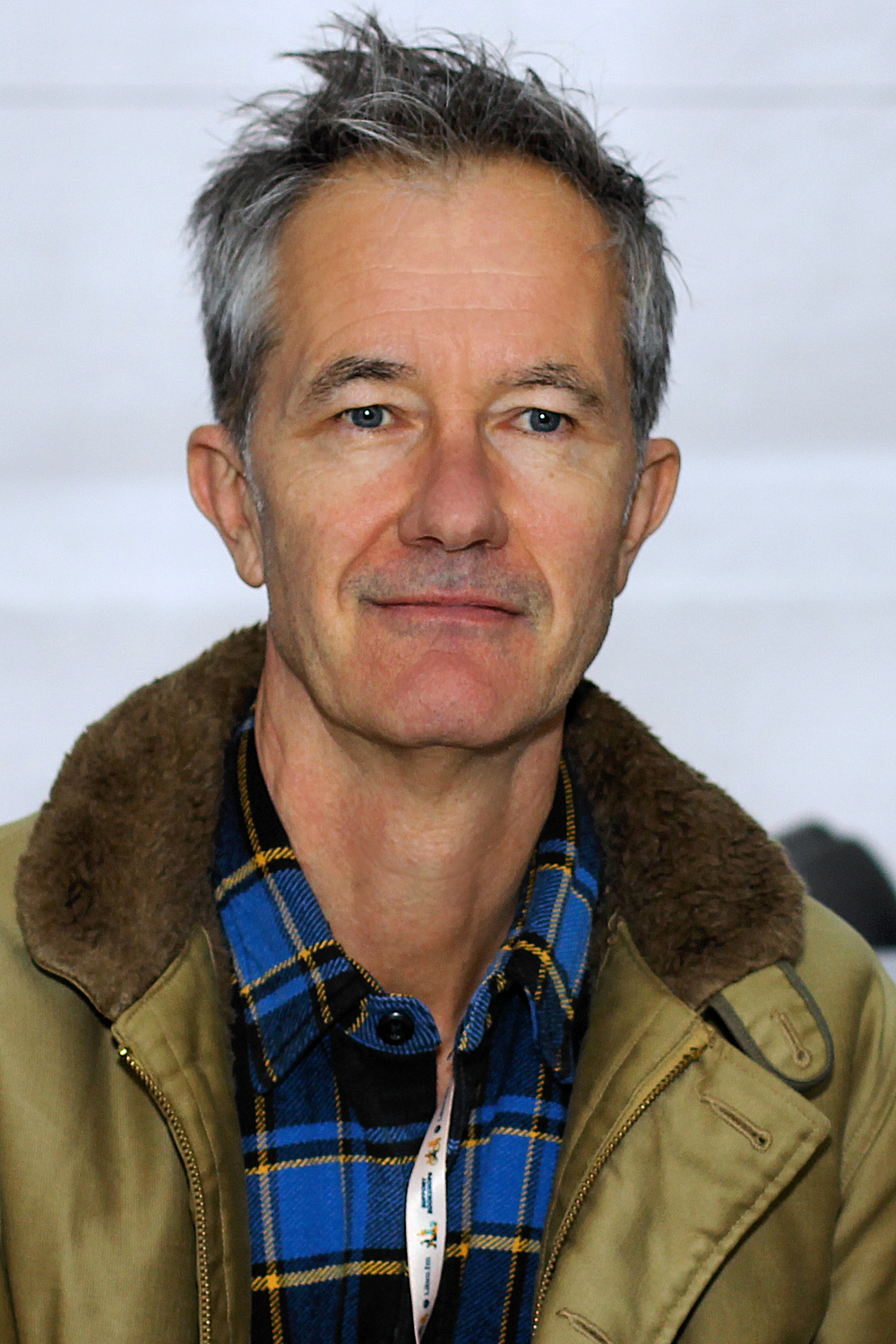
Dyer in 2015.

Dyer is married to Rebecca Wilson, chief curator at Saatchi Art, Los Angeles. He lives in Venice, California.[8] In March 2014, Dyer said he had had a minor stroke earlier in the year, shortly after moving to live in Venice.[9]

Awards and honours

[edit]

Publications

[edit]

Books

[edit]
  • Dyer, Geoff (1986). Ways of Telling: the work of John Berger. London: Pluto Press.
  • — (1989). The Colour of Memory. London: Jonathan Cape.
  • — (1991). But Beautiful: A Book About Jazz. London: Jonathan Cape.
  • — (1993). The Search. London: Hamish Hamilton.
  • — (1994). The Missing of the Somme. London: Hamish Hamilton.
  • — (1997). Out of Sheer Rage: In the Shadow of D. H. Lawrence. London: Little, Brown.
    • U.S. edition: Out of Sheer Rage: Wrestling with D. H. Lawrence. U.S. edition. New York: North Point Press. 1998.
  • — (1998). Paris Trance. London: Abacus.
  • — (1999). Anglo-English Attitudes: essays, reviews, misadventures 1984–99. London: Abacus.
  • Sartor, Margaret; Dyer, Geoff, eds. (2000). What Was True: the photographs and notebooks of William Gedney. New York: Center for Documentary Studies.
  • Berger, John (2001). Dyer, Geoff (ed.). Selected essays. London: Bloomsbury.
  • Dyer, Geoff (2003). Yoga for people who can't be bothered to do it. London: Time Warner.
  • — (2005). The Ongoing Moment. London: Little, Brown.
  • — (2009). Jeff in Venice, Death in Varanasi. Edinburgh: Canongate.
  • — (2010). Working the Room : essays and reviews, 1999–2010. Edinburgh: Canongate.
  • — (2011). Otherwise Known as the Human Condition: selected essays and reviews, 1989–2010. Minneapolis, MN: Graywolf Press.
  • — (2012). The Colour of Memory. Rev. and updated ed. Edinburgh: Canongate.
  • — (2012). Zona: A Book About a Film About a Journey to a Room. Edinburgh: Canongate.[20]
    • — (2012). Zona: a book about a film about a journey to a room. U.S. edition. New York: Pantheon.
  • — (2014). Another great day at sea : life aboard the USS George H.W. Bush. Photographs by Chris Steele-Perkins. New York: Pantheon.
  • — (2016). White Sands: Experiences from the Outside World. New York: Pantheon.
  • — (2018). Broadsword Calling Danny Boy. London: Penguin.
  • — (2018). The Street Philosophy of Garry Winogrand. Austin: University of Texas Press. ISBN 978-1477310335.[21]
  • — (2021). See/Saw: Looking at Photographs. Edinburgh: Canongate.
  • — (2022). The Last Days of Roger Federer: And Other Endings. New York: Farrar, Straus and Giroux.[22]
  • — (2025). Homework: A Memoir. New York: Farrar, Straus and Giroux. ISBN 978-0374616229.[23][24][25]

Critical studies and reviews of Dyer's work

[edit]

References

[edit]
[edit]
Revisions and contributorsEdit on WikipediaRead on Wikipedia
from Grokipedia
Geoff Dyer (born 1958) is a British author renowned for his innovative, genre-defying works that blend , , , and travel writing, often exploring themes of , culture, and personal experience across subjects like , , , and modern life. Born in , , Dyer grew up as the only child of a dinner lady and a sheet-metal worker in a working-class family shaped by the aftermath of the and . He attended local after passing the 11-plus exam and later studied at , where he earned a degree and was later named an Honorary Fellow. Dyer's literary career spans over four decades, beginning with his 1986 critical study Ways of Telling: The Work of , and has produced four novels—including The Colour of Memory (1989), Paris Trance (1998), The Search (1993), and Jeff in Venice, Death in (2009)—alongside acclaimed non-fiction such as But Beautiful: A About Jazz (1991), which won the Somerset Maugham Award, and Out of Sheer Rage: Wrestling with (1993), a hybrid memoir-criticism that was shortlisted for the Whitbread Prize. His works have been translated into 24 languages and include explorations of photography in The Ongoing Moment (2005), film in Zona: A About a Film About a Journey to a Room (2012) on Andrei Tarkovsky's , and broader cultural essays in collections like Otherwise Known as the Human Condition (2011), which earned the for Criticism. In recent years, Dyer has continued to innovate with books such as White Sands: Experiences from the Outside World (2016), The Street Philosophy of (2018), Broadsword Calling Danny Boy (2018) on the making of , and The Last Days of : Tennis and Exile (2021), which reflects on aging and art through figures like Nietzsche and Beethoven. His first full memoir, (2025), recounts his 1960s and 1970s childhood in postwar , blending humor and insight into class, education, and cultural shifts. Dyer served as Writer in Residence at the University of Southern California's Dornsife College of Letters, Arts and Sciences, and has served as a visiting professor at institutions including the , , and the . Among his honors are fellowships in the Royal Society of Literature, election to the American Academy of Arts and Sciences (2015), and the Windham-Campbell Prize for Nonfiction (2015).

Early life and education

Childhood and family

Geoff Dyer was born on June 5, 1958, in , , , as the only child of , a sheet-metal worker, and , a school dinner lady who later worked as a cleaner. His parents' modest working-class backgrounds were profoundly influenced by the and ; his father had served in during the war, returning to a life of frugality shaped by wartime austerity and that lingered into the 1950s. His mother, born on a farm in , aspired to become a seamstress but instead took on domestic service roles, reflecting the limited opportunities available to women of her generation. The family lived in a modest in a working-class neighborhood, where Dyer's parents emphasized education as a pathway to amid the era's economic constraints. Dyer's childhood in the and unfolded in this environment of recovery and gradual societal shifts, including the expansion of access through the 11-plus exam, which he passed and credits as a turning point. Local influences in included playground games like conker fights and toy soldier battles, as well as the era's cultural markers such as fizzy drinks and model kits, all set against the backdrop of Britain's transition from deprivation to modest prosperity. His parents' experiences instilled a sense of resilience and realism, with his father's war service and mother's rural origins fostering a household value on hard work and limited horizons, though they supported Dyer's academic pursuits as a means of escape. Early interests in and reading emerged during this period, initially through influences and encouragement, though they soon created a subtle divide between Dyer and his parents' practical world. As an avid collector of books alongside cards and records, Dyer found in reading a gateway to broader intellectual horizons, laying the groundwork for his later literary career while highlighting the class tensions of his upbringing.

Schooling and university

Dyer attended Cheltenham Grammar School from 1969 to 1976, where the institution's rigorous academic environment provided significant opportunities for during the and . As one of the era's prestigious grammar schools, it emphasized high standards, with approximately 95 percent of students continuing to s and 90 percent of those progressing to , reflecting the to higher education under the British system. Dyer excelled particularly in English under the guidance of teacher Bob Beale starting around age 14, achieving three A grades in English, , and at A-level, which marked him as the first in his family to pursue such qualifications. In 1976, Dyer enrolled at Corpus Christi College, Oxford, on a full grant and exhibition scholarship to study English, earning his BA in 1980. The curriculum spanned English literature from Beowulf to Samuel Beckett, though Dyer later critiqued its heavy emphasis on literary criticism over primary texts, which nonetheless sparked his interest in analytical writing. This period exposed him to a broader intellectual world, including influences like D.H. Lawrence and Raymond Williams, whose works resonated with his emerging critical perspective. Dyer has reflected on his Oxford years as embodying class displacement, positioning him as the archetypal working-class beneficiary of Britain's democratized in the late . Coming from a bookless home in , his admission represented a "solitary and freakish achievement," widening the gulf with his parents' deferential, fatalistic worldview shaped by , while also isolating him among middle-class peers. Despite these tensions, the experience solidified his path toward , though he graduated with a second-class degree.

Writing career

Early publications and criticism

Geoff Dyer's entry into literary criticism began in the mid-1980s with an he conducted with the writer and critic for Marxism Today in December 1984, titled "Ways of Witnessing." At age 26, Dyer explored Berger's perspectives on art, politics, and leftist thought, drawing from his own recent education in English literature, where he had encountered Marxist theory and . This piece marked Dyer's initial foray into professional , reflecting his analytical approach to cultural figures and themes of social critique. Building on this interview, Dyer expanded his engagement with Berger into his debut book, Ways of Telling: The Work of John Berger, published in 1986 by Pluto Press. The 186-page study provided the first book-length examination of Berger's oeuvre, analyzing his fiction, art criticism, and Marxist commitments across works like Ways of Seeing and his novels. Dyer incorporated insights from personal meetings with Berger, offering a comprehensive overview that connected the author's aesthetic and political visions. In the late 1980s, Dyer continued contributing essays and reviews to periodicals, honing an essayistic style that intertwined personal reflection with rigorous critique—a departure from the academic formalism he encountered at . Influenced by his studies under , Dyer's writing emphasized lived experience and cultural analysis, as seen in his early pieces on and . This approach established him as a versatile commentator on modern thought. The book and Dyer's initial writings received positive attention for their clarity and insight, positioning him as a promising young in British literary circles. Reviews praised Ways of Telling as a "useful survey" of Berger's career and a "studiously researched" introduction to his interdisciplinary work, though Dyer later reflected on it as somewhat conventional. By the end of the decade, these efforts had laid the groundwork for his reputation as an innovative voice in criticism.

Novels and genre-blending works

Geoff Dyer's debut novel, The Colour of Memory, published in 1989, is a semi-autobiographical account of a group of young friends navigating bohemian life in 1980s , , amid economic hardship and cultural vibrancy. The narrative captures their nomadic existence in rundown housing, reliance on welfare, and moments of fleeting joy through music, parties, and , blending personal reflection with vivid depictions of a changing neighborhood. Critics have noted its lyrical passages amid a loose structure, reflecting the aimless yet communal spirit of the era. His second novel, The Search (1993), unfolds as a quest where the , Walker, embarks on a cross-country pursuit across America to locate a , Malory, at the behest of Malory's wife, . Infused with philosophical undertones and existential adventure, the story evolves from a seemingly straightforward tale into a surreal, Kafkaesque journey through vast landscapes, exploring themes of pursuit, identity, and the absurdity of human endeavors. Dyer draws on influences like to emphasize a realist's confrontation with the world's unyielding details. Paris Trance (1998) presents a loosely autobiographical exploration of expatriate life in , following two British men, Luke and Alex, who form intertwined relationships with women named Nicole and Sahra while drifting through the city's eleventh . The novel chronicles their immersion in nightlife, intellectual pursuits, and romantic entanglements, culminating in a trance-like haze of and disconnection that critiques the expatriate mythos akin to Hemingway and Fitzgerald. Through its social comedy, it highlights the seductive yet ultimately hollow freedoms of youth abroad, shadowed by impending loss. In Jeff in Venice, Death in Varanasi (2009), Dyer employs a dual narrative structure to blend intrigue and introspection: the first part follows journalist Jeff Atman navigating the 2003 , where art-world excess leads to a passionate affair, while the second shifts to an unnamed traveler's spiritual unraveling amid the rituals and chaos of , . This hybrid form juxtaposes hedonistic comedy with themes of mortality and transcendence, drawing from Dyer's own experiences without overt autobiography. The novel won the for comic fiction, praised for its profane wit and formal innovation. Dyer's novels exemplify his genre-blending approach, incorporating essayistic digressions, real-life inspirations, and autobiographical fragments into fictional frameworks, often defying traditional plotlines in favor of meditative, experiential prose. This technique, evident from The Colour of Memory's memoir-like vignettes to Jeff in Venice's seamless shift between locales, allows him to merge travelogue elements with philosophical inquiry, creating works that resist categorization while prioritizing personal and cultural observation.

Non-fiction and essays

Geoff Dyer's non-fiction oeuvre spans , war remembrance, , , and , often blending personal reflection with cultural analysis to explore themes of absence and digression. His works in this genre eschew traditional structures, favoring essayistic wanderings that connect disparate ideas across disciplines. In But Beautiful: A Book About Jazz (1991), Dyer offers a tribute to Black American music through fictionalized vignettes of musicians such as and , drawing on photographs, anecdotes, and imaginative prose to evoke the improvisational essence of . The book won the Somerset Maugham Award and has been praised for its luminescent blend of biography and narrative invention. The Missing of the Somme (1994) meditates on the cultural memory of , weaving together myth, poetry, photographs, films, and visits to memorials like the Arch to examine how absence shapes remembrance. Described as part travelogue and part philosophical inquiry, it critiques the romanticization of war while highlighting its enduring voids. Out of Sheer Rage: In the Shadow of (1997) chronicles Dyer's protracted failure to write a scholarly book on the , evolving into a digressional memoir-criticism hybrid that traverses global locations and personal frustrations. Shortlisted for the Whitbread Prize, it exemplifies Dyer's resistance to conventional form, using rage and evasion to illuminate Lawrence's life and legacy. Dyer's travel essays in Yoga for People Who Can't Be Bothered to Do It (2003) subvert expectations of the genre by prioritizing internal detours over destinations, from Amsterdam's to the burning ghats of , in mordantly funny reflections on displacement and self. The collection's genre-defying wit positions travel as a for existential avoidance. The Ongoing Moment: A Book About Photographs (2005) forgoes chronological history in favor of thematic affinities among canonical images by photographers like and , revealing how motifs such as hats or benches recur across eras to alter perception. This idiosyncratic approach underscores photography's power to frame reality inventively. The essay collection Otherwise Known as the Human Condition (2011) assembles twenty-five years of writings on , , sports, and music, showcasing Dyer's interdisciplinary range and earning the for . Pieces like those on or war reporting highlight his knack for connecting personal insight with broader cultural critique. White Sands: Experiences from the Outside World (2016) extends Dyer's travel meditations to sites like New Mexico's and French Polynesia's Gauguin trail, probing the motivations behind journeys that often lead to tangential revelations rather than resolution. Shortlisted for the Stanford Dolman Travel Book of the Year, it reinforces themes of digression and the elusive nature of experience. In The Street Philosophy of Garry Winogrand (2018), Dyer examines the work of the influential American street photographer , blending biographical elements with reflections on Winogrand's candid, chaotic images of 1960s and 1970s New York, exploring how his impulsive style captured the energy and alienation of urban life. That same year, Broadsword Calling Danny Boy: The Story of the Making of * (2018) delves into the production history of the 1967 war film, drawing on interviews, archival material, and Dyer's personal fandom to recount the chaotic filming process, on-set tensions, and the movie's enduring appeal as a gritty anti-hero ensemble piece. Dyer's The Last Days of Roger Federer: Tennis and Exile (2021) collects essays on tennis matches and players, using the sport as a lens to meditate on aging, mortality, and artistic decline, with references to figures like Federer, Nadal, and Djokovic, alongside broader reflections on Nietzsche, Beethoven, and the passage of time. Across these works, Dyer employs absence as a central motif—whether the silenced voices in jazz improvisations, the lost soldiers of the Somme, or the unwritten book on Lawrence—while forging interdisciplinary links between art forms to challenge linear narratives. His essays prioritize associative thinking, turning personal detours into profound explorations of cultural memory and human limitation.

Recent memoir

In 2025, Geoff Dyer published his first dedicated memoir, Homework: A Memoir, which recounts his working-class upbringing in Cheltenham, England, during the 1960s and 1970s. The book was released in the United Kingdom by Canongate Books on May 29, 2025, and in the United States by Farrar, Straus and Giroux on June 10, 2025. Structured chronologically, it traces Dyer's life from his birth in 1958 as the only child of a dinner lady mother and a postwar sheet-metal worker father, through his success in the 11-plus exam and grammar school experiences, to his early university years at Oxford. The delves into the textures of working-class life in a modest home, capturing everyday rituals like conker fights, Saturday jobs, and teenage rampages amid a of optimism tempered by enduring class barriers. It explores parental influences with affectionate detail, including the subtle tensions of familial fatalism against Dyer's personal ambition, and societal shifts such as newfound freedoms in a changing . Through vivid recollections of boredom, minor rebellions, and the "comic confusions" of youth, Dyer evokes a lost era of privations and possibilities without romanticizing hardship. Initial reception highlighted the book's humor and playfulness in confronting pain, with James Wood in praising its "involvingly funny" style and ability to wring levity from emotional incommunicability. Reviewers noted its moving portrayal of working-class specifics and exceptional recall of 1970s details, though some observed that the parents remain somewhat distant figures. John Jeremiah Sullivan in Bookforum called it "extremely good" for its emotional depth and quiet introspection, while commended its honest balance of humor and seriousness in charting Dyer's path from obscurity to academic escape. Unlike Dyer's earlier , which often blended genres and indulged in digressions, Homework mines directly in a linear, earnest , ending around age 21 with a recent reflective trip home and forgoing his signature comedic riffs or formal experiments. This focused structure allows for sustained personal reflection on class as a subtle "happening," marking new territory in his oeuvre.

Academic career

Early teaching roles

Dyer's early academic career in the 1990s was marked by lectureships at various UK institutions, where he taught literature and creative writing courses. These roles allowed him to engage with students on topics ranging from modernist fiction to essayistic forms, often incorporating his emerging body of work to illustrate critical concepts. In the 2010s, Dyer transitioned to the US, taking up visiting positions that bridged his British roots and American academic environments. Key examples include his role as Visiting Professor at the University of Iowa's Writers' Workshop in fall 2012, where he contributed to nonfiction and creative writing workshops, drawing on personal experiences from his publications like Out of Sheer Rage to explore the intersections of autobiography and criticism. He also served as Visiting Professor at Columbia University in fall 2013 and at the University of Texas at Austin in spring 2014. Throughout this period, Dyer maintained a delicate balance between teaching and writing, using academic appointments to fund his literary projects while avoiding the full-time demands of academia. His lectureships provided financial stability during the publication of key works such as But Beautiful (1991) and Out of Sheer Rage (1993), enabling him to prioritize creative output over extended scholarly commitments.

Current positions and contributions

Geoff Dyer served as Writer in Residence in the Department of English at the University of Southern California's Dornsife College of Letters, Arts and Sciences from fall 2015 until spring 2025, concluding a decade-long tenure that emphasized . In this capacity, he taught undergraduate and graduate-level courses, including ENGL 302 (Writing Narrative) and ENGL 305 (Introduction to Fiction and Nonfiction), as well as specialized workshops in both genres that encouraged students to explore boundaries between forms. His instruction often incorporated interdisciplinary elements drawn from his own scholarship, such as the interplay of literature with , , and personal reflection, fostering an environment where students experimented with essayistic and genre-blending techniques. Through his mentorship at USC, Dyer guided numerous students in developing hybrid and memoiristic approaches, emphasizing conceptual depth over conventional structures and drawing on representative examples from his works like The Ongoing Moment () and But Beautiful (). A former Ph.D. student highlighted his impact in a 2025 reflection, noting how Dyer's classes from 2020 onward inspired innovative writing practices amid the challenges of the . This mentorship contributed to a vibrant cohort of emerging writers at USC, many of whom pursued interdisciplinary projects blending criticism, , and . Beyond USC, Dyer extended his influence through guest lectures that promoted interdisciplinary writing. In 2016, he delivered the Rouse Visiting Artist Lecture at , exploring how authors can blur lines between fiction, nonfiction, and travel narrative to capture subjective experiences. He has also appeared multiple times at the Literary Seminar, including as the 2020 John Hersey Memorial Address speaker, where he discussed creative processes in hybrid forms and their relevance to . These engagements underscored his role in shaping American education by advocating for fluid, cross-genre methodologies. Dyer's USC tenure amplified his broader impact on the American literary scene, where he helped cultivate a generation of writers adept in hybrid , bridging academic rigor with artistic innovation. Building briefly on his earlier transient roles in the UK and elsewhere, his stable position at USC from 2015 allowed for sustained contributions to pedagogical experimentation in and forms.

Personal life

Relationships and marriage

Geoff Dyer met , an art curator, in the late while living in , . After a brief initial encounter, he invited her to spend a weekend at his flat, marking the start of their relationship; soon after, the couple embarked on a month-long trip to the together. The pair married in a low-key ceremony at Register Office in around 2000, with only two friends serving as witnesses and no family present, reflecting their preference for simplicity in personal matters. Wilson, who later became chief curator at in , has provided a stable domestic foundation for Dyer's peripatetic writing life, enabling his focus on creative pursuits without notable public controversies or scandals. Dyer frequently alludes to their partnership in his work, incorporating elements of shared travels and domesticity. In the essay collection Yoga for People Who Can't Be Bothered to Do It (2003), he describes trips with his then-girlfriend—presumably Wilson—such as moments in and where interpersonal dynamics interrupt or enhance his wanderings. Similarly, his 2009 novel Jeff in , Death in draws inspiration from a real trip they took to the , blending fictional narrative with echoes of their joint experiences abroad.

Residences and lifestyle

During the 1980s, Dyer resided in , immersing himself in the alternative, left-leaning scene in , a period of nomadic living among friends that shaped his semi-autobiographical novel The Colour of Memory. In the early 1990s, he relocated to , where he lived for several years, drawing on the city's bohemian atmosphere for his novel Paris Trance, which chronicles the drifting lives of English expatriates. In mid-January 2014, Dyer moved to with his wife, the art , establishing a stable base that coincided with his appointment as Writer in Residence at the starting in fall 2015. This relocation provided academic stability amid his peripatetic career, though he continued traveling extensively—having not boarded a plane until age 22, he later became a frequent globetrotter inspired by destinations explored in works like White Sands. In May 2025, Dyer and Wilson returned permanently to , settling in a in after a decade in . Dyer's lifestyle reflects a blend of intellectual pursuits and physical activity; he is an avid reader whose criticism spans , , and , and a dedicated sports enthusiast, particularly , which he plays twice weekly and which informed his 2021 book The Last Days of : Tennis and Exile. Earlier in life, during the late and , he engaged in episodes of risky behavior, including at in 1977–78, in the in 1997, and unwittingly smuggling through airport in 1999—incidents he later described as his "secret life of crime," all of which resolved without injury or legal repercussions.

Style, themes, and reception

Literary style and influences

Geoff Dyer's literary style is marked by essayistic digressions and a purposeful rejection of linear narratives, favoring instead a fluid blending of , , and that defies conventional boundaries. In this approach, he crafts what he describes as "non-books," where personal ambivalence and tangential explorations take precedence over structured argumentation or plot progression, as exemplified in Out of Sheer Rage: Wrestling with (1997), which veers into self-reflexive procrastination rather than a direct engagement with its ostensible subject. This digressive method extends to fragmented forms, such as the 180 vignette-like pieces in The Last Days of : And Other Endings (2022), which eschew a traditional beginning-middle-end arc to mimic the contingency of . His often lacks chapter divisions, allowing subjects to dictate unique, improvisational structures that prioritize the writer's consciousness and unexpected reader encounters. Key influences on Dyer include John Berger's interdisciplinary method, which fuses art criticism with narrative storytelling and provided a foundational model for Dyer's genre-blending works, particularly in the early phase of his career. Berger's encouragement of a non-hierarchical, personal lens on cultural topics is echoed in Dyer's dedication of But Beautiful: A Book About Jazz (1991) to him, where jazz improvisation shapes the text's non-linear, interpretive riffs on musicians' lives. D.H. Lawrence's vital, roaming energy informs Dyer's thematic vitality and global perambulations, inspiring a critique of academic rigidity in favor of embodied, wandering inquiry. Photographers such as Henri Cartier-Bresson further influence his sensitivity to decisive moments and visual ephemerality, evident in The Ongoing Moment (2005), where photographic contingency parallels his own stylistic emphasis on the provisional. Recurring themes in Dyer's writing revolve around absence, failure, and contingency, tempered by a humor rooted in discomfort and self-mockery, which humanizes the discomfort of unresolvable pursuits. These motifs appear across genres, as in Jeff in Venice, Death in Varanasi (2009), where protagonists grapple with purposeless drift and unrealized potential in a tone that balances levity with existential . Dyer's style evolved from the constrained, academic of his first , Ways of Telling: The Work of (1986), toward more liberated hybrids after the 1990s, with Out of Sheer Rage marking a pivotal shift to improvisational freedom and tonal integration of humor and analysis.

Critical reception and legacy

Geoff Dyer's work has garnered significant critical acclaim for its innovative blending of genres and personal introspection, particularly evident in Out of Sheer Rage: Wrestling with D.H. Lawrence (1997), which was a finalist for the in Criticism in 1998. Reviewers have praised his ability to transform procrastination and digression into a compelling narrative form that challenges traditional structures, with James Wood in noting Dyer's talent for weaving personal anecdote with cultural critique in a way that feels both playful and profound. However, some critics have pointed to the self-indulgent nature of his extended digressions, as seen in reviews of Working the Room (2010), where described his style as "elegantly meandering" yet occasionally "self-absorbed," potentially alienating readers seeking more linear argumentation. Similarly, a assessment of Zona (2012) acknowledged the esoteric charm of his film meditations but labeled them "bordering on self-indulgent." Dyer's legacy endures as a pivotal figure in creative nonfiction, inspiring contemporary essayists such as Leslie Jamison, who has cited Out of Sheer Rage as a "bible" that granted her permission to embrace uncertainty in her writing process during a 2016 Association of Writers & Writing Programs panel. His books have achieved cult status among readers and writers for their genre-defying approach, often described as a "virus" that infects and expands the boundaries of literary form, as noted in promotional materials for White Sands (2016). Translated into 24 languages, Dyer's oeuvre has reached a global audience, solidifying his influence on the evolution of the personal essay. Recent works continue to affirm Dyer's relevance, with his 2025 memoir Homework receiving praise for reviving narratives of working-class British life amid contemporary social shifts; The Los Angeles Times highlighted its "burst of working-class pride" and elegy for the welfare state, while The Guardian commended its vivid evocation of 1970s England. Beyond his books, Dyer's cultural contributions include influential essays on film, such as his extended meditation on Andrei Tarkovsky's Stalker in Zona, and on sports, where pieces like "The Most Beautiful Game" (2011) explore tennis's aesthetic and philosophical depths, extending his impact into broader discussions of art and experience.

Awards and honors

Major literary prizes

Geoff Dyer has garnered several major literary prizes that highlight his versatility across fiction and non-fiction, often serving as pivotal moments in his career by amplifying his reputation for genre-blending innovation. These awards, tied to specific works or his broader oeuvre, have provided both critical validation and financial support, particularly in his early and mid-career phases. In 1992, Dyer received the Somerset Maugham Prize for But Beautiful, his acclaimed exploration of musicians' lives, which earned recognition for its lyrical and imaginative reconstruction of historical figures. The award, given to British writers under 35 to foster international experience and creative growth, marked a crucial early boost, establishing Dyer as a distinctive voice in literary shortly after his debut publications. In 2004, Dyer received the WH Smith Best Travel Book Award for Yoga For People Who Can't Be Bothered To Do It. The Award followed in 2006, presented by the American Academy of Arts and Letters to honor a British writer's substantial body of work and affinity with . This $15,000 prize affirmed Dyer's transatlantic influence and experimental style, with Dyer himself noting it as an unexpected honor offering profound recognition amid his evolving career. In 2009, Dyer won the for Comic Fiction with Jeff in Venice, Death in Varanasi, a blending travelogue and that showcased his witty, digressive narrative flair. Accompanied by a £5,000 and a donation of first-edition books to a of the winner's choice, the prize celebrated Dyer's humor as a standout in contemporary British fiction. In 2011, Dyer won the for Criticism for his essay collection Otherwise Known as the Human Condition. Dyer's non-fiction achievements culminated in the 2015 Windham-Campbell Prize from , awarded for his innovative contributions to the genre and providing $150,000 in unrestricted support to enable continued writing. One of the world's most generous literary honors, it recognized Dyer's boundary-pushing essays and memoirs, further solidifying his status as a major figure in modern letters.

Fellowships and academic recognitions

In 2003, Dyer received the Lannan Literary Fellowship for Fiction, which provided financial support to enable his ongoing writing projects. He was elected a in 2005, recognizing his contributions to contemporary . In 2006, Dyer was awarded the Infinity Award for Writing by the for his book The Ongoing Moment, honoring his innovative criticism on photographic themes. Dyer's election to the American Academy of Arts and Sciences in 2015 further affirmed his interdisciplinary scholarly impact. These fellowships and elections bolstered Dyer's academic profile, enhancing his role as Writer in Residence at the by underscoring his expertise in literature, criticism, and .

Publications

Novels

Geoff Dyer's , The Colour of Memory, was first published in the by in 1989. This semi-autobiographical work evokes the rhythms of life among young, marginal urban dwellers in 1980s , blending personal reflection with cultural allusions to figures like and . A revised edition appeared in the UK from in 2012, followed by a US edition from in 2013. His second novel, The Search, was published in the UK by Hamish Hamilton in 1993. Characterized by its surreal and hypnotic prose, the book employs a spare, road-movie structure to explore themes of pursuit and transience across middle America. A US edition was released by Graywolf Press in 2014. , Dyer's third novel, first appeared in the UK from in 1998, with a subsequent edition from in 1999. Described as a romance, it delves into experiences in through lyrical and erotic vignettes of friendship and self-discovery. Current paperback editions include in the UK and in the US. Dyer's fourth novel, Jeff in Venice, Death in Varanasi, was published simultaneously in the UK by Canongate and in the US by Pantheon in 2009. Recognized as a blending travelogue elements with introspective narrative, it earned the 2009 and was named a New York Times Notable Book. Paperback editions followed from Canongate in the UK and in the US. Dyer's novels have been translated into multiple languages as part of his broader oeuvre, which has appeared in 24 languages worldwide.

Non-fiction books

Dyer's debut non-fiction work, Ways of Telling: The Work of , published in 1986 by Pluto Press in the UK, offers a critical examination of the and 's oeuvre, covering his essays, fiction, and visual analyses. In 1991, Dyer released But Beautiful: A Book About Jazz, first published by in the UK and later by in the US in 1996; the book presents imaginative vignettes of legendary jazz figures such as and , blending biography with musical appreciation. It has been translated into languages including French, German, and Spanish. The Missing of the Somme, published in 1994 by in the UK and reissued by in the US in 2011, meditates on the cultural memory and memorials of , incorporating travel to battle sites and reflections on literature and art related to the conflict. Dyer's 1997 book Out of Sheer Rage: Wrestling with , issued by Little, Brown in the UK and North Point Press in the US in 1998, chronicles the author's protracted struggle to write a scholarly study of , evolving into a of , to Lawrence-related locations, and personal introspection. , first published in 2003 by (an imprint of Little, Brown) in the UK and Pantheon in the US, consists of essays depicting the author's journeys to places like , , and the , capturing moments of displacement and epiphany. In 2005, The Ongoing Moment appeared from Little, Brown in the UK and Pantheon in the US; this exploration of photography examines iconic images by artists such as and , focusing on recurring motifs like hats, hands, and benches without a strict historical timeline. It received the ICP Infinity Award for Writing on Photography. Zona: A Book About a Film About a Journey to a Room, published in 2012 by Canongate in the UK and Pantheon in the US, is a book-length on Andrei Tarkovsky's film , interweaving scene-by-scene analysis with memoir and philosophical reflections. Another Great Day at Sea: Life Aboard the USS George H. W. Bush, published in 2014 by Pantheon in the and in the UK, recounts Dyer's two-week embedding on the , detailing daily operations, crew interactions, and the machinery of modern . Dyer's 2016 volume White Sands: Experiences from the Outside World, released by Pantheon in the and in the UK, weaves essays on visits to global sites including the White Sands desert and the , probing themes of displacement and cultural encounter. It has been translated into Italian, Dutch, and , among others. The Street Philosophy of Garry Winogrand, published in 2018 by University of Texas Press, pairs 100 photographs by the street photographer with Dyer's accompanying essays, exploring the impulsive energy and visual philosophy of Winogrand's work. 'Broadsword Calling Danny Boy': Watching, Listening to and Remembering , published in 2018 by Penguin in the UK and Knopf in the US in 2019, is a humorous, digressive tribute to the 1968 Where Eagles Dare, blending , personal anecdote, and cultural observation. Homework: A Memoir, published in 2025 by in the UK on May 29 and in the on June 10, recounts Dyer's childhood in and , blending humor and insight into class, , and postwar cultural shifts.

Essays and collections

Dyer's early essay collection, Anglo-English Attitudes: Essays, Reviews, Misadventures 1984-2000, published in 1999 by Vision, compiles a range of his journalistic and critical writings from the preceding decade and a half, spanning cultural commentary, personal reflections, and literary reviews. In 2011, Graywolf Press released Otherwise Known as the Human Condition, a selection of essays drawn primarily from Anglo-English Attitudes and Dyer's subsequent writings, covering topics such as , , , and travel over twenty-five years of his career. This volume earned the for Criticism, highlighting its impact on contemporary essayistic nonfiction. Dyer continued his essayistic output with The Last Days of : And Other Endings, first published in 2021 by in the UK and in the US in 2022, which gathers meditations on aging, endings, and cultural figures including writers, artists, and athletes, structured around personal encounters with late-style works. The book exemplifies Dyer's blend of and , focusing on themes of decline and summation in creative lives. Beyond these anthologies, Dyer has contributed numerous essays to periodicals, including ongoing pieces for in 2025 on topics such as reading habits, literary influences, and personal reflections on authors like . He has also written introductions and forewords for books on photography, such as those accompanying works by and other visual artists, compiling his insights into image-making and cultural observation.

References

Add your contribution
Related Hubs
User Avatar
No comments yet.