


Community hub
Recent from talks
Contribute something
Nothing was collected or created yet.
George Tryon
View on Wikipedia
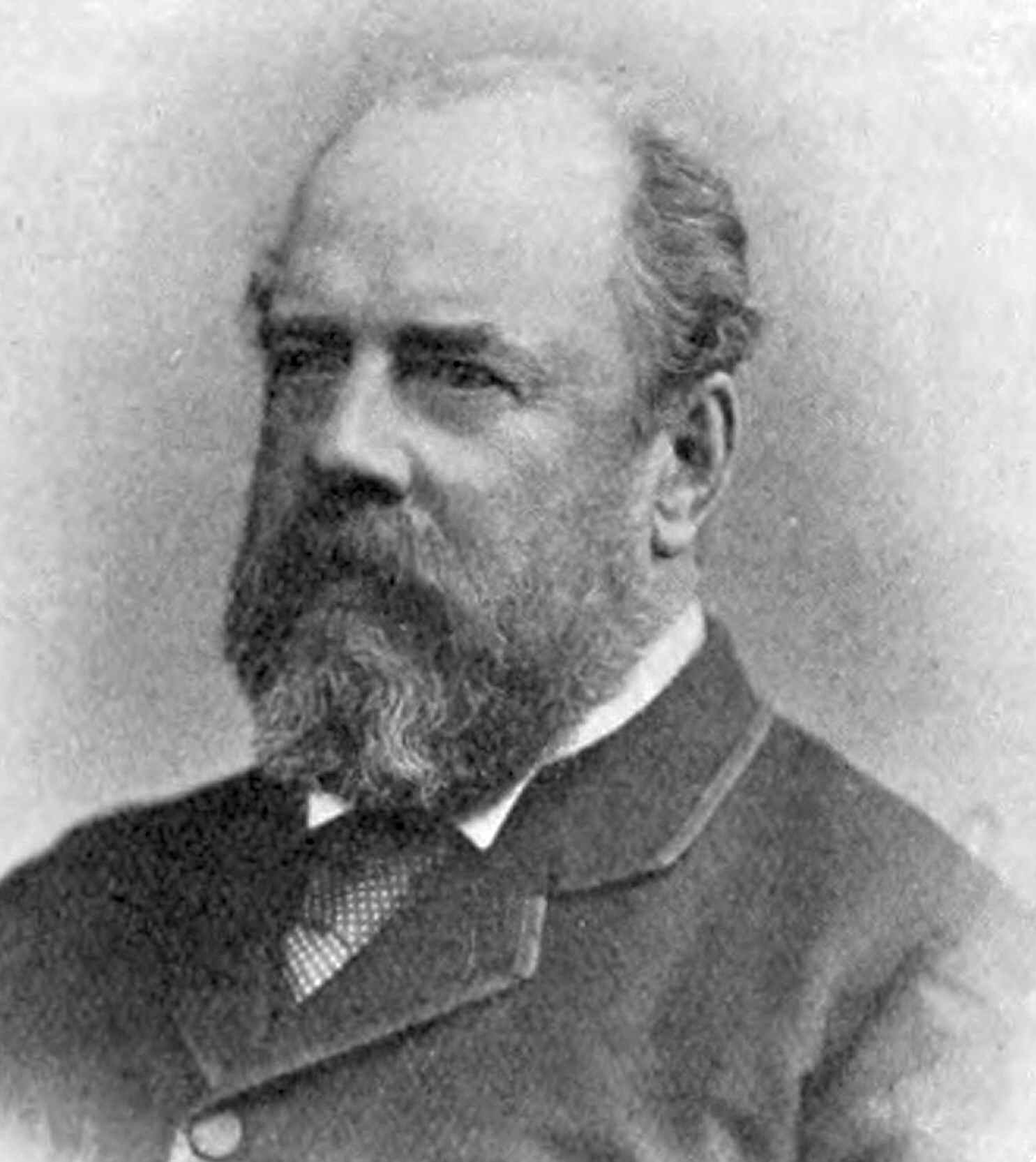
Vice-Admiral Sir George Tryon, KCB (4 January 1832 – 22 June 1893)[1] was a Royal Navy officer who died when his flagship HMS Victoria collided with HMS Camperdown during manoeuvres off Tripoli, Lebanon.
Key Information


Early life
[edit]Tryon was born at Bulwick Park, Northamptonshire, England, the third son of Thomas Tryon and his wife Anne Trollope. He had three brothers: the eldest, Thomas, joined the 7th Royal Fusiliers, fought at Alma and Inkerman and served through the Indian Mutiny. The second, Henry, passed through Sandhurst before joining the Rifle Brigade, fighting at Alma, Inkerman and Balaclava before being killed in an attack on Russian positions in 1854. George was the third son: the fourth, Richard, also served in the Rifle Brigade. George attended a preparatory school and then Eton College before becoming a naval cadet in 1848, two years older than usual, aged sixteen. The choice of a naval career was made by George himself, rather than his family. Other students reported him to be a quick learner with a wide breadth of knowledge, whether because of his natural ability or his longer period of education before joining the Navy.[2] George was described as 'a tall lanky lad nearly six feet high, full of spirits and fond of a lark'.[3]

Naval training at this time took place on board ship, and having obtained a nomination and passing the modest exams, he was posted to HMS Wellesley in spring 1848. Wellesley (Captain George Goldsmith under Admiral the Earl of Dundonald) was then at Plymouth preparing to leave as flagship of the North American Station. She was a two-decker sailing ship, since steam power was only then being introduced into the navy. At that time, the principal important art to be taught to new recruits was how to handle a sailing ship, though within ten years almost all first class naval ships would be steam powered. He was required to pay his own schoolmaster at the rate of £5 per year. In particular, his mathematics at the start of his training was considered very poor, but at examinations eighteen months later, he came top of the class. Wellesley sailed on 24 March, arriving at Bermuda on 3 May. In correspondence home, he observed that he was seasick, and that the gales caused considerable broken crockery aboard ship. Yet while the gunroom (where the midshipman lived) suffered badly from its broken cups of a different pattern to those used elsewhere on the ship, their hens, much alike with others on board, never became ill or died.[4]
As a midshipman, Tryon was not an official member of the crew, but a supernumerary, available as spare crew for posting to other ships. He narrowly avoided a posting to Imaum, a hulk lying in Port Royal harbour which needed crew, which would have been a very unpromising start to his career. Although officially posted to that ship, he prevailed upon Lieutenant Cochran (son of Lord Dundonald) to arrange that he would remain on loan to Wellesley. Tryon started to make sketches of the places he visited, which while not very good at the start, improved steadily. In November the ship reached Halifax, where George noted, 'the other day another of our men was murdered here'.[5] Although Wellesley was a sailing ship, it was accompanied by a paddle-wheel steamer: when the wind failed the steamer would tow the sail ship, when the wind blew well the steamer would be towed to save coal.[6]
In the summer of 1849, Tryon had the chance of joining a tour of the United States, but declined in favour of study, and to allow him command of a cutter, which was unusual for a junior cadet. In the summer of 1850, he took the tour, visiting Boston, New York, Washington, where they visited the House of Representatives, were introduced to senior politicians and witnessed a debate over California's requested admission to the Union as a free rather than slave state. He commented on the great welcome given to them once it became known that they were English. He also commented on the absence of beggars in the streets.[7]
Mediterranean fleet
[edit]Wellesley returned to Chatham in June 1851. After leave, Tryon was posted to HMS Vengeance, captained by Lord Edward Russell. Vengeance sailed for the Mediterranean in August 1851. The ship was second fastest of the battleships and frigates (after Phaeton), lending considerable prestige to her crew at a time when sailing ability and speed were still considered all important. Admiral William Robert Mends later said of Tryon, 'He served with me, when I was commander of the Vengeance, for two years as a midshipman, and a better young officer never existed; ever full of energy and zeal. As a boat midshipman and signal midshipman he was unrivalled.'[8] The ship stopped at Alexandria, and Tryon was given ten days leave to visit Cairo, where the party were received as guests of the Pasha. The party were obliged to stay on as guests, missing the sailing of their ship. The consul advised Captain Russell who then joined the party, which had now transformed into a diplomatic mission promoting British plans for a railway from Alexandria to Cairo. Tryon wrote home, explaining the British desire to create a land route to India, and the continuous vying for power in the region between Britain and France. On a trip to Gibraltar, Tryon and others from the ship joined the local foxhunt in a group of around forty (some in red), riding across the rugged and precipitous terrain on local ponies. Vengeance returned to England in 1852, reaching Spithead on Christmas Day.[9]

On 10 April 1853 she sailed again for the Mediterranean, arriving at Malta early June to join the Mediterranean fleet under vice-admiral James Dundas. The ship had a new commander, George Le Geyt Bowyear, who reported that Tryon was now signal officer. Considerable competition existed between Vengeance and the fleet flagship in manoeuvres, where Vengeance frequently performed best. Part of Tryon's duties included keeping watch on the flagship before exercises, including going out in a boat at night to see what preparations were being made for the following day.[10] The fleet took station in Bashika Bay outside the Dardanelles between June and October, because of the increasing tension with Russia before the Crimean War. In October the fleet moved through the Dardanelles to the Bosphorus and moored at Beikos Bay.[11] On 30 November, the Russian fleet destroyed a squadron of Turkish ships at Sinop, just after Turkey declared war. Britain was not yet at war with Russia, but Vengeance visited Sinop January 1854 and saw the remains of the ships, which had been caught at anchor by the Russians. The British fleet moved into the Black Sea to land troops at Varna and took part in the bombardment of Odessa on 22 April. Cholera broke out through the fleet in August and eighteen died on board Vengeance. The effect varied from ship to ship, with few officers affected: 140 out of 950 died on board the flagship HMS Britannia[12] The ship assisted with the transportation of the army across the Black Sea to the Crimea before attending at the Battle of Alma on 20 September. Tryon as signal midshipman was stationed at the main top and so had a good view of the battle in which two of his brothers were taking part.[13]
Vengeance was once again offshore anchored in Kasatch Bay with Tryon as signals officer watching events during the Battle of Inkerman. After the battle he joined the Naval Brigade in the trenches and was wounded. Captain Stephen Lushington, commanding the Naval Brigade, described him as 'a very promising officer.' Tryon arranged the construction of a hut for himself and two other officers from Vengeance, which uniquely boasted glass windows scrounged from the navy.
Tryon passed his seamanship examination on 17 March 1854, at which time he was already acting mate. Having started late, he was anxious to obtain promotion as speedily as possible. Promotion above the rank of captain was on the basis of seniority, so it was important to obtain rapid promotion in the lower ranks. He spent only eight months as mate, then six years as Lieutenant and five and a half years as commander, which was one of the fastest rates of promotion at the time.[14] On 21 October Lieutenant Greathead of Britannia was killed, and in November Tryon was promoted to his position, thereby transferring to Britannia. However, he remained ashore as part of the Naval Brigade.[15]
In January 1855 Britannia's shore party, together with those from other ships which had been serving together ashore, were all embarked on Vengeance to return to England. Britannia had already departed for England with Admiral Dundas, who had now been replaced as Commander in Chief of the Black Sea fleet by Admiral Sir Edmund Lyons. Tryon took and passed examinations at the Royal naval college Portsmouth and HMS Excellent before returning to a ship. Commander Mends from the Vengeance had now become flag-captain to Admiral Lyons and requested Tryon be appointed to his ship. HMS Royal Albert was a three-decker, steam-powered and brand new. Tryon returned to the Black Sea in June. Tryon now acted as aide-de-camp to the admiral, travelling ashore to report progress in the siege of Sebastopol and later describing the plundering of the town by the victorious armies. He was present at the fall of Kinburn on 17 October 1855, where he was placed in charge of fire-fighting parties. On account of being on duty, he regretfully was unable to liberate any souvenirs for himself. In his letters home he commented on repeated failures by the British and their allies to follow up successes, instead allowing the Russians time to withdraw and regroup.[16]

In December 1855 Lyons went to Marseille to attend the peace conference for the Crimea, leaving his ship to sail to Malta. While in the Aegean Sea the gland surrounding the propeller shaft failed, allowing water to flood into the ship. The bilge pumps could not cope with the flow, but the ship was kept afloat by connecting the cooling water pumps used to condense steam in the engine to the bilge instead of open sea. After use the water was pumped overboard and provided the engine remained running the ship could be kept clear of water. The ship was near the island of Zea, so Captain Mends circled the island through the night until with daylight he was able to beach the ship on a sandy bay. The engines then had to be kept working for four days while a dam was built around the ship to keep out the water and allow repairs to be made. Mends chose Tryon to go to Piraeus to summon help rather than a more senior officer because of his 'marked intelligence'.[17]
The remainder of Tryon's time on Royal Albert was largely uneventful. In November 1857 he had an attack of rheumatic fever, requiring him to spend time in hospital in Malta, before being granted leave in Italy to recover. He visited Naples, Rome, Florence and Pompeii, where the volcano was unusually active. When the ship went to Gibraltar he visited Cadiz and Seville. His considerations turned to his career, which risked faltering because he was older than other officers and lacked a patron. However, his good reports meant that his name was submitted to Queen Victoria for consideration for appointment to the royal yacht HMY Victoria and Albert. This carried with it automatic promotion to commander after two years' service. Royal Albert returned to England, where in July 1858 she acted as part of the escort for Queen Victoria's visit to Cherbourg to meet the Emperor and Empress of France. The queen's yacht entered and departed the harbour between lines of British warships stationed at the approach. Ashore, Tryon came within ten yards of the royal party: the event was celebrated with much firing of guns in salute, fireworks and the lighting up of the ships by lights spread through the rigging and shown at all portholes. Tryon commented that some of the noisiest and most eccentrically dressed attendees were those on the steamer bringing members of the House of Commons.[18]
Royal Albert paid off on 24 August 1858 and on 4 November he joined Victoria and Albert. Each year one of the two lieutenants on board would be promoted and replaced. For nine months of the year the yacht had little to do and her officers lived on board the Royal George hulk in Portsmouth harbour. At the end of his two years he duly received promotion, leaving with a commendation from Captain Joseph Denman, 'as an officer of great zeal and promise. His ready resource, active intelligence, sound judgement and good temper, especially qualify him for success in his profession; and I consider it my duty to recommend him strongly to their Lordships as an officer likely to perform any service required of him with ability.'[19]
Commander (1860–1866)
[edit]Tryon was placed on half pay after promotion to commander in October 1860. In June 1861 he was selected to become second in command of HMS Warrior, the world's first ocean-going iron-hulled armoured battleship. Warrior was still under construction, so temporarily he was appointed to Fisguard. Warrior's sister ship Black Prince was a year later in entering service, but in November 1862 the two ships carried out speed trials, where Warrior was deemed to be the faster. Although the ships' armour was considered impregnable at the time they were constructed, they immediately instigated an arms race between armour and gun designers which continued up to World War II, where each successive ship had to have more of each to remain ahead. This meant that despite her initial claim to invulnerability, she rapidly became obsolete.[20]
In March 1863 Warrior acted as escort for Princess Alexandra of Denmark, who came to Britain to marry the Prince of Wales (the future Edward VII). Alexandra was much impressed by the station-keeping of the much larger warship, so much so that her signal to the ship, 'Princess is much pleased,' was inscribed into the ship's wheel. In the autumn the Channel fleet toured ports around the coast of Britain where Warrior was much admired.[21]
In July 1864 Tryon was appointed to command HMS Surprise, a 680-ton screw- and sail-propelled gunboat in the Mediterranean. Tryon was given the task of rescuing the British barque Energy, which had run aground on the coast of Sicily seven miles from Pozzallo, and had been abandoned. In two days the ship was refloated and taken back to Malta. Admiral Sir Robert Smart, Commander in Chief of the Mediterranean, recommended Tryon and his crew should receive salvage for the ship, and the sum of £595 was granted to be divided between them. Once again Tryon received a commendation in the Admiral's report. During this time he wrote a report on punishments within the navy, which was forwarded by his commander to the Admiralty. He recommended that fines to sailors absent from duty or incapable should be limited to forfeiting pay for the time they failed to carry out their duties, and this was adopted.[22]
In February 1866 Surprise was visiting the Greek island of Santorini, which is part of the rim of a volcano. The ship witnessed clouds of steam and explosions as a new island 100 yards long and 50 wide had just begun to appear from the seabed a few days earlier. The eruption completely filled a channel through Santorini and then began to encroach on houses on the land. Surprise visited a number of ports around the Mediterranean, reporting on their facilities for the Admiralty.
An issue arose as to whether the Admiralty should retain control of warehouses at Gibraltar, which were then underused. Tryon reported that in the event of war, stores immediately available at Gibraltar might be vitally important to the fleet, and that at such a time it would be virtually impossible to get back storage space relinquished in peace time. He was one of the few at that time to recognise the port's strategic significance for the fleet.
Surprise returned to England to pay off at Plymouth Sound in April 1866. On arrival, Tryon found waiting his promotion to post-captain on 11 April 1866, which he had achieved by the comparatively early age of 34.[23]
Captain (1866–1884)
[edit]Tryon now spent eighteen months away from ships. Aside from time on half pay on leave, he attended the Royal Naval College at Portsmouth to study steam technology. In August 1867 while touring Norway on a fishing expedition, he received a recall and appointment as 'additional captain' to HMS Octavia. Octavia was the flagship of the East India Station commanded by Commodore Leopold Heath. Tryon was attached to Octavia, but his duties were to act as transport officer at Annesley Bay, which was to be used as a staging post for troops and supplies for Sir Robert Napier's expedition to Magdala in Abyssinia. Tryon arrived in Bombay on 10 October 1867 where preparations were already underway. 291 transport ships were chartered, mainly from Bombay but some coming from England via the Cape of Good Hope. The advance party went to Zoulla in Annesley Bay in November, described as one of the hottest places on earth. The expedition delivered a fighting force of 4,000 men to Magdala out of total 13,000 soldiers and 60,000 people involved all together. 36,000 animals, mainly for transport, had to be taken to Zoulla. There was no drinking water, so 30,000 tons had to be distilled by the ships' steam engines using 8,000 tons of coal in the process, with ships held at anchor with their engines running. Tryon's duties involved early morning meetings ashore with military authorities, days spent unloading and organising ships, and evenings spent in preparation for the next. Tryon was commended for his organisational skills and tact in dealing with all the disparate parties and complaining ships' captains. Approximately half his staff was invalided out because of the heat during the six months' stay, with the rest all suffering. When he left he was presented with a scroll recording the appreciation of his efforts by the captains of the transport fleet, and later in England was presented with a specially commissioned dinner service decorated with scenes commemorating the campaign.[24] He was awarded the CB for his services in Abyssinia.[25]
Although he continued working as hard as ever throughout the campaign, Tryon's health suffered. He injured his leg while fighting a fire on board one of the ships, and on returning to England, at first could not walk a modest distance without resting. In April 1869 he married Clementina Heathcote, and had time away from the navy for the next two years. Clementina was the daughter of Gilbert Heathcote (later Baron Aveland) who was a neighbour of the Tryon's and had been a friend since childhood. Their honeymoon was spent at Bulby Hall, home of Clementina's brother, the Earl of Ancaster. They then travelled in Europe for three months before renting Tickhill Castle near Doncaster.[26]
In April 1871, Tryon was appointed private secretary to the First Lord of the Admiralty, George Goschen. The appointment normally went to an experienced captain with ten years' service, whereas Tryon had yet to serve at sea in that rank. The post carried considerable influence, equivalent in practice to that of other Lords of the Admiralty, in advising upon naval appointments. Goschen said of Tryon, "I had an immensely high opinion not only of his naval knowledge, but of his general savoir faire, rapidity of judgement, decision, extraordinary shrewdness, and great knowledge of men. He was somewhat cynical in his views of human nature but his cynicism was of a good humoured and harmless cast."[27] A story was related of the Admiralty board travelling to Dover to meet the Shah of Persia in 1872. At the railway station it was found they would have to walk some distance through a large crowd. Tryon commented to a friend that he would get one of the admirals to carry his bag for him, which he duly did by asking the admiral to hold his bag while he opened a way through the crowd. Tryon then avoided reclaiming his luggage until they reached their destination.[28]
HMS Raleigh
[edit]_and_Serapis(1866).jpg)
Tryon left the Admiralty to take up command of HMS Raleigh, a new ship under construction. He was attached to the depot ship HMS Pembroke about a month before, until Raleigh was commissioned on 13 January 1874. Tryon took the opportunity to suggest improvements to her final fitting out. After a cruise of Ireland she was attached to the 'Flying Squadron' commanded by Rear Admiral Sir George Granville Randolph. Raleigh proved to be the fastest of the six ships under steam, but still also the second fastest under sail alone, after Immortalite. The squadron set out on a tour to Gibraltar, then South America where, at the Falkland Islands, officers from the ships hired a schooner to tour around and organised hunting parties across the island. Next they went to South Africa, arriving at the Cape of Good Hope on 6 March 1875. There Raleigh took on board Sir Garnet Wolesley and his staff to transport them to Natal. The remainder of the squadron returned to the Mediterranean, where Raleigh joined them later. At Gibraltar, Randolph was replaced by Rear Admiral Rowley Lambert, and the whole squadron was ordered to go to Bombay, to attend the Prince of Wales who would shortly be making a tour of India.[29]
Tryon showed concern for the wellbeing of his men and the better ordering of the Navy. Before Raleigh had left England, thirty men had deserted from the ship, and more took the opportunity to escape from ships of the squadron at Montevideo. Tryon wrote a memo to the Admiralty recommending that the penalties for desertion should be reduced, suggesting that a number of those deserting were of little use to the navy and should be let go, while others who were good seamen, but who had some urgent personal reason for absconding, were afraid to return later because of the severe penalties. He also instituted a programme of weighing his men and ensuring they got enough food, noting that if, as frequently happened on board ship, the men weighed less by the end of a tour than at the start, then likely their strength and fitness was reduced too. He instituted a 'dry canteen' on board to try to improve their diet.[30]
Travelling to the cape, a man fell overboard in high seas. Tryon had to make the difficult decision whether to try to rescue him, because any small boat risked sinking, taking her crew down also. However, the man was seen to be swimming strongly, so the ship was halted and a boat launched to rescue him. The boat got away well, though was sucked back under the stern of the ship before breaking free. The ship then had to manoeuvre under sail, tacking as best she could to follow the boat while keeping it on the safe side for recovery. All went well, and Tryon received congratulations from the other captains for his skill in carrying out the rescue.[31]
The squadron arrived in Bombay shortly before the Prince, who was travelling on HMS Serapis and HMY Osborne, and a number of grand events took place. On one evening a dinner was arranged for the Prince in the Caves of Elephanta, on an island near Bombay. The ships were arranged around the approach with illuminations and fireworks brought from England. As the Prince's ship approached, rockets were set off, one or two hundred at a time. One of Raleigh's sails caught fire, but preparations had been made in anticipation that something would catch fire in the rigging, and it was soon put out. As Raleigh was the only ship fast enough to keep up with Serapis and Osborne, Tryon then accompanied the royal progress to Goa, Bepore, and Colombo, where the party disembarked for a tour of Ceylon. Raleigh was required to accommodate all the newspaper correspondents who wished to accompany the Prince. The royal party rejoined at Madras to travel to Calcutta, where Raleigh had to leave the party, being too big to navigate the Hooghly. Raleigh rejoined once more at Bombay for the return trip to England via the Suez canal, setting out on 13 March 1876. Now she was required to accommodate gifts given to the Prince, including two tigers, a leopard, a number of birds and smaller animals, which occupied the space previously taken by the journalists. The remainder of the Flying Squadron left for China. The royal party arrived at Portsmouth on 11 May and were met at The Needles by the Princess of Wales. The whole party proceeded through the Solent with an elephant standing on each of the paddleboxes on Osborne.[32]
Raleigh was refitted and sent to join the Mediterranean squadron, where tension was once again rising with Turkey and Russia. In autumn 1876 Tryon was at Bashika Bay, where he had been twenty-two years before. He noted the improved health of the sailors this time, which he ascribed to the fact that fresh water was now produced on board ship rather than having to be brought aboard. The political tension came to nothing, and the tour was highlighted by escort duty to the Duchess of Edinburgh aboard the Russian Imperial yacht, hunting trips and visits to places of interest. In June 1877 Tryon was replaced by Captain Jago as commander of Raleigh after a tour of three and a half years and returned home.[33]
Committee to revise the Signal Book
[edit]From June 1877 to October 1878, Tryon remained in England. In January 1878 he was appointed to a committee set up to revise the general signal book. President of the committee was Rear Admiral Hope, other members were Captain Philip Colomb, Captain Walter Kerr, Commanders Bruce and Romilly. Colomb and Tryon represented divergent views on signalling, but all members of the committee were experts in the field while Kerr and Hope held the balance.[34]
HMS Monarch 1878
[edit]On 1 October 1878, Tryon was appointed to HMS Monarch of the Mediterranean fleet under Admiral Geoffrey Hornby, joining her at Artaki in the Sea of Marmora on 18 November. The British were concerned to protect the Bulair peninsula from Russian advances and had stationed ships at Gallipoli and in the Gulf of Xeros so as to have artillery commanding possible approaches. The main part of the British fleet stayed in the eastern part of the Sea of Marmora during the crisis.[35]
Tryon was required to sit on the court of enquiry into the explosion of a 12-inch (305 mm) gun on board HMS Thunderer. On 2 January 1879 while carrying out target practice in the Gulf of Ismid, one of the guns burst, killing seven men and injuring thirty-six. This was of considerable concern since similar guns were used by many ships. It was eventually concluded that the muzzle-loading gun had been double loaded, which produced exactly the same result when tested on another gun.
In the summer of 1879 Monarch cruised the Levant, visiting various places where Tryon would land, both for pleasure but also seeking useful information. Britain had just acquired Cyprus, which it was intended to develop into a base for 10,000 troops and a resort, but of which Tryon was skeptical because of its poor climate and lack of a good harbour. In his travels he discovered deposits of coal at Ayas in the Gulf of Scanderoon, and was responsible for organising the transport of marble statues from Aleppo for the British Museum. In March 1880 Hornby was replaced as commander of the fleet by Admiral Sir Beauchamp Seymour, who in the summer sent Monarch and Thunderer to attend the launching of the battleship Italia by the King of Italy at Naples. Tryon was commended by the king for his handling of the British ships.[36]
In May 1881 Tryon was sent as senior officer with a group of ships to patrol the coast of Tunisia. Although there was no war, France was concerned about events in Tunisia, and the French gunboat Leopold searched two British schooners looking for gunpowder. This was a breach of international law and might have escalated into a serious incident, but Tryon handled the matter with tact. He suggested to the senior French officer, Captain Rieunnier, that perhaps a mistake had been made. The French apologised and explained that the commander of Leopold had misunderstood his instructions.[37]
A more serious incident took place when the region of Sfax in Tunisia rose in revolt against French intervention. The revolt was started by a local artillery commander, who was called upon to produce his troops in support of the French, but in fact despite receiving pay for the men, had none. To divert attention, he organised a local demonstration against the French. This led to other foreign nationals fleeing the region, although it was only the French who were affected. Local Bedawin then took up the revolt which grew out of control, although order and respect for foreign property in the town was maintained by a local leader, Camoum. The French sent ships and then a fleet to bombard the town, and eventually troops which landed to occupy it on 16 July. After order was restored, the French set up a commission of enquiry to investigate claims for damages and invited the British and Italians each to appoint a representative. Tryon was chosen to represent the British on the commission which first met 29 August. The Commission sat for six weeks, by which time the evidence submitted already indicated strongly that damage to property and looting had been carried out by the French troops, at which point the commission was suddenly dissolved. The British official position was one of neutrality, and in effect allowing the French to do what they wanted. This placed Tryon in a delicate position that while he confirmed the views of locals that the French had caused much of the problems and intended to take control of the region, Britain would do nothing to intervene. He was instructed to send reports directly to the Admiralty and foreign office, rather than to his commander, Admiral Seymour. Monarch spent much of a six-month period at anchor off Tunisia in temperatures of 80–90 degrees Fahrenheit, without any leave being permitted, which made the task an uncomfortable one for all concerned. Although the warship was not required, the Foreign office specifically requested that Tryon should remain for as long as possible.[38] Tryon was commended for his handling of the affair by Earl Granville from the foreign office, the Lords of the Admiralty, and by the French Government.[39]
Monarch was paid off at Malta in January 1882, and the crew returned to England on board Tamar.[40]
Permanent Secretary to the Admiralty (1882)
[edit]Tryon had four months leave before being appointed Permanent Secretary to the Admiralty. This post, in charge of a civilian staff, was sometimes given to serving officers and sometimes civilians. Tryon demonstrated great powers of persuasion and an ability to get his way in an argument without offending. His appointment was initially temporary, following the sudden death of the previous appointee, but he proved a great success. One of his most significant contributions was in advancing proposals for the creation of a naval intelligence committee, whose duties would be to collect together all available intelligence both from naval officers and from the army intelligence department. Those first appointed to the committee were Mr Hoste from the civilian establishment and Commander William Hall.[41] The role of Permanent Secretary included many invitations to social engagements, receptions banquets and dinners. Tryon's guiding rule in choosing which invitations to accept was to seek out people who might have useful information. He stated that he learnt something from everybody.[42]
Rear Admiral Australian Station (1884)
[edit]In 1884 Tryon was promoted to rear admiral and placed in command of the Australian Station. He left England on 4 December 1884 on board the P&O steamer Indus, arriving on board his new flagship HMS Nelson in Sydney 22 January 1885. The growing importance of the Australian colonies (at that time separate colonies under the crown rather than united under one Australian government) meant that the squadron was becoming more important also, so now an admiral was appointed to replace the previous commander, Commodore James Erskine. Tryon's political and social skills were considered important for the role, which involved negotiations with the Australian colonies for financing a fast cruiser squadron in the region.[43]
Conflicting interests also existed within Australia, particularly in the northern colony of Queensland, where plantation owners sought to expand their holdings on the northern coastlands using imported cheap native labour. Local 'white' labourers objected to this as it undercut their wages and prospects, and the government also had some objections, preferring to establish a pattern of smaller farms operated by resident owners, rather than absentee landlords creating vast estates. Part of the squadron's duties included patrolling the waters between Queensland and the islands of New Guinea to prevent kidnapping and human trafficking of native labourers to supply new plantations. The South East corner of New Guinea around Port Moresby had only been annexed as a British protectorate the previous year (1884) by Commodore Erskine on behalf of Queen Victoria. The Germans had similarly claimed an area in the north-east corner of the island, and France was using New Caledonia as a penal colony. The convicts would from time to time escape to Australia, where they would cause difficulties.[44]
In spring 1885 tension had been growing between Britain and Russia because of the Penjdeh incident in Afghanistan. This raised considerable concern in Australia of possible Russian raids on shipping, which could not be prevented by the small Australian squadron. The effect was to concentrate minds on the formation of a larger squadron financed by the colonies. Following orders from the Admiralty, Tryon argued the case that defence might best be achieved by a single strong squadron free to move around the whole area, rather than smaller squadrons paid for and attached to individual colonies. That local land forces could be provided to defend individual ports against raids, but that the best way of providing trained and up to date crews and ships for a naval force was to give the task to the Royal Navy rather than forming local ones. Colonies differed in their views on what was best, in particular New Zealand was concerned that part of the force ought permanently to be based at Auckland because of its distance from most of the others. Tryon proposed that a system of indemnity should be introduced, so that anyone whose property was destroyed resisting an attack would be compensated by the colonies as a whole, accepting that local resistance wherever it might occur was to the benefit of all. After the Russian scare had subsided, Tryon continued to assist with the development of land fortifications for major towns, emphasising the importance of preparedness in advance of any military situation arising, and of giving the impression of a united defence even if this had not in reality been entirely achieved.[45]
An initial proposal was made by Tryon for a squadron of six Archer-class ships of 1,800 tons armed with 6-in guns capable of 16 knots costing around £105,000 each, accompanied by eight 150-ton torpedo boats priced around £53,000. However, at this time the French commenced a construction programme for 19-knot cruisers, so the plans were revised. Eventually five 2,500-ton cruisers capable of 19 knots designed by Sir William Henry White were constructed in England and sent to the Australian squadron. A conference of colonial delegates was held in London in 1887 to discuss Australian defence, to which Tryon was not invited despite the large part he had played thus far in negotiations on behalf of the Admiralty and British government. His exclusion from the conference prompted him to request to be relieved from the Australian command after two years rather than the normal term of three.[46]
Tryon as admiral was provided with a house by the New South Wales government on the north shore of Sydney Harbour, near the navy anchorages. This was undergoing refurbishment at the time he took command but, once installed, his time as admiral was well remembered for the programme of social engagements and hospitality given to Sydney society as part of his duties. He took an interest in furthering development of the supply depot and repair dock in Sydney Harbour, and the construction of a new sailors' home to replace an existing one which had become overtaken by demand. Partly because of the unfinished accommodation, and the war scare, his wife did not accompany him to Australia.[47]
Much of Tryon's time was spent in Sydney, but he visited Victoria, Queensland and twice visited New Zealand in the summers (southern hemisphere) of 1885–86 and 1886–87. On the first visit he attempted to reassure ministers that their defence was better served by one combined squadron rather than dispersed ships, even if some were posted there. He also visited the beautiful hot lakes and terraces of the volcanic region, shortly before it was wiped back to blackened ash by an earthquake and eruption.[48]
In April 1887 he handed command of the squadron to Rear Admiral Henry Fairfax before travelling to Melbourne and thence by P&O steamer Ballarat to England. He was commended and thanked by the lords of the Admiralty for his efforts in encouraging adoption of a combined defensive position by the Australian colonies, and contributed in some part to encouraging the states to work increasingly closer together and move towards unification. Shortly after returning home he was awarded the KCB for his services in Australia in the Jubilee honours list.[49]
Parliamentary candidate 1887
[edit]Tryon stood for parliament in a by-election held on 1 July 1887 in the Spalding division of Lincolnshire. He was hampered in the campaign by having only reached England on 5 June and the constituency on the 14th, and by an injured leg acquired during the voyage requiring him to walk with a stick. He stood on a platform of maintaining the union of Britain with Ireland, which mirrored his own views from his Australian experience that the colonies there should unite. It was his intention also to speak on colonial issues in the House once elected. He was aided by unionists from northern Ireland who came to plead their cause, but opposed by a local candidate who had had two years to become known and had his own supporting Parnellites from Ireland to tell their own stories. At the time there was a considerable depression in agriculture, and this was the deciding issue in this rural constituency. Farmers sided with Tryon and the unionist government, while their workers who had suffered pay cuts and lost jobs, causing many to emigrate or move away splitting up families, sided with his Liberal opponent, Halley Stewart.[50][51] Halley Stewart received 5110 votes against Tryon's 4363. At the previous election in 1886 Stewart had lost by 288 votes. It was considered that Tryon's lack of agricultural background had counted against him.[52]
From June 1887 to April 1888 Tryon remained on half pay enjoying time with his family. He suffered a broken arm in a fall from a stable attic while visiting his mother in law, Lady Willoughby de Eresby at Grimsthorpe Castle in Lincolnshire. Tryon showed considerable regard for his mother in law, who died not long afterwards in November 1888.[53]
Admiral Superintendent of Reserves 1888
[edit]In April 1888 Tryon was appointed Admiral Superintendent of Reserves, which included the coastguard service, and became chairman of a committee on coastguard buildings.[54] He was promoted to vice-admiral on 15 August 1889.[1]
In 1891 Tryon chaired a committee on naval reserves, where he expressed his views on the importance of cooperation between merchant shipping and the navy in times of war.[54] The committee consisted of Allen Young, C. Rivers Wilson, Thomas Ismay, and two or three naval officers. The committee noted that although traditionally the merchant navy was looked upon as a pool of trained sailors which could be called upon in wartime, the proportion of non-British sailors in British ships was steadily increasing. Moreover, that modern warships were becoming increasingly different from merchant ships, so it was felt a man could not simply be called from a merchantman and placed into a naval ship. A system of reserves was required where men received training and a retainer fee to be ready for war service when needed. Tryon felt it important that men from the reserve should wear the same uniform as regular sailors, so that no sense of inferiority might attach to them. Tryon had been impressed by the quality of merchant sailors serving in the Naval Brigade in Crimea.[55]
Tryon was consulted on the best design for new battleships following the naval defence act of 1889, which had authorised seventy new ships including ten battleships. Tryon favoured a high freeboard to allow ships to perform well in rough seas, guns at least twenty-three feet above the waterline, and a minimum length of 380 feet. He opposed the very large 100-ton guns which had become available at that time, preferring smaller guns of around 45 tons. This proved a correct choice, as the 100-ton guns which did enter service proved unsuccessful. Their introduction had been experimental and in part in reaction to other navies trying such guns.[56]
1888 naval manoeuvres, 'Achill admiral'
[edit]In 1885 a programme of annual naval manoeuvres had begun, where the British navy would divide into opposing fleets and conduct war exercises as near as possible to real conditions which might be experienced. By 1888 this had become a source of great interest to the public and the navy alike. The navy encouraged attention, allowing reporters on board during manoeuvres, believing that the publicity furthered their campaigns for greater funding.[57] That year, the intention was to test the practicality of blockading an enemy fleet in its home ports when the ships concerned were modern iron and steam vessels rather than traditional sailing ships. The idea was that a superior fleet, taking the role of the British, would surprise an inferior enemy force before it could sail from two home ports.
Tryon commanded the 'Achill' fleet based in Berehaven in Bantry Bay on the south-west coast of Ireland and Lough Swilly on the north coast. Tryon chose the nickname 'Achill admiral' for himself, from the name of an island midway between the two bases. All Irish territory was considered friendly to 'Achill', and hostile to their opponents. The 'Achill' fleet consisted of 19 major warships and 12 first class torpedo boats. The major warships were as follows:[58]
- Ironclads: Hercules, Ajax, Hero, Rupert, Warspite, Rodney, Devastation, Invincible, and Black Prince.[58]
- Unarmoured ships: Severn, Volage, Iris, Cossack, Sandfly, Amphion, Calypso, Serpent, Curlew, and Spider.[58]
Opposing was Vice Admiral John K.E. Baird, whose force of 26 major warships and 12 first class torpedo boats represented the British fleet. England, Scotland and Wales were considered friendly to the 'British' fleet and hostile to 'Achill'.[58] Baird's major warships consisted of:
- Ironclads: Northumberland, Benbow, Collingwood, Monarch, Conqueror, Hotspur, Northampton, Agincourt, Inflexible, Neptune, Iron Duke, Belleisle and Shannon.[58]
- Unarmoured ships: Mersey, Arethusa, Rover, Active, Racoon, Rattlesnake, Thames, Inconstant, Mercury, Mohawk, Tartar, and Grasshopper.[58]
Hostilities commenced on 24 July. Tryon was of the view at the outset that there was little he could do directly against the superior force, so he set about attempting to wear down his enemy, using feints and false alarms to reduce their attentiveness. They had to continuously maintain station outside his ports, while he and his men enjoyed the Irish countryside. They suffered the difficulties of communicating while at sea whereas Tryon could simply use the telegraph. Albert Markham commanded the blockader's squadron of cruisers, whose job was to stay close to Berehaven, watch for ship movements and attack anyone who emerged, while the ironclads stayed further away.[59]
On the first day Tryon feinted, pretending to send out two torpedo boats and a battleship, causing Markham to scurry to intercept. For the next two days he did nothing, except fire occasional shots at Markham's ships from shore batteries if they came too close. On the fourth evening he sent out two torpedo boats showing no lights with the intention of starting more false alarms. The boats did well, returning with four enemy torpedo boats which they had surprised and captured. By 3 August the enemy had been at sea for nine days and aside from the tedium of their wait would now be low on coal. Tryon ordered all ships to be ready to sail at 9.30 pm on 3 August and for all the upper parts of the ships to be painted black. The fastest ships, Warspite, Iris, Severn, Volage, Cossack and three torpedo boats left via the western entrance, staying as close to the shore as they dared, heading for the Atlantic. Meanwhile, Tryon took the remaining larger ships through the eastern entrance, giving the appearance of an attempt to break through the blockading ships. Within an hour the Hercules was spotted and great excitement broke out amongst the blockaders. Tryon immediately turned around and headed back to port. Just as they returned to anchor, flares at sea showed that, too late, one blockader had spotted Tryon's escaping ships.[60]

Admiral Fitzroy at Lough Swilley with Rodney and two other ships also broke the blockade on 4 August, joining Tryon's ships which had escaped.
Baird, on discovering the breakout, had no choice but to break off the failed blockade. He sent his deputy Admiral Rowley to guard Liverpool, while himself proceeding to coal at Portland, ready to defend the Thames and London. Fitzroy took his ships north around Scotland, 'destroying' Aberdeen, Grimsby, Newcastle and the ships berthed there, before returning to Lough Swilley. Meanwhile, Tryon, no longer blockaded at Berehaven, took his slower ships to Lough Swilley, where they joined the similar slow ships from Fitzroy's command, before proceeding to attack Liverpool. He claimed Belleisle, which had been guarding the port, as captured, and 'destroyed' the shipping there. Baird regrouped his forces to defend London, leaving Tryon in command of the English Channel and most of the rest of the British coast.[58][61]

Tryon was criticised by officers from the enemy fleet that he had not given due warning to merchant vessels before attacking, nor allowed their crews time to escape as required under international law. He had bombarded defenceless cities and 'killed' civilians, and it was claimed he used false flags and captured signalling equipment. He was praised by the Admiralty for his handling of the fleet, but his opponents in turn felt criticised for their failings. The public felt comforted that such an officer was really on the British side.[62]
The conclusion drawn from the exercise was the serious danger posed by even a small force of fast ships, and the need for considerably greater forces than those available in the exercise to successfully impose a blockade. The official report of events was prepared by Admirals Sir William Dowell, Sir Vesey Hamilton and Sir Frederick Richards. They stressed the importance to Britain of an effective navy to protect its waters and the much greater importance of this to the country as a whole than the army. If control of the seas around Britain could be maintained, then no army was needed to defend it. Whereas, if control was lost then no army however great would suffice to defend it, because it must starve deprived of shipping. This contributed to the adoption of the principle that the British navy must equal the combined force of the other two greatest world navies.[63]
Shortly after the manoeuvres, Tryon wrote a fictional history of the 'Achill' campaign, describing the opening events of the war against a foreign naval power which had just been played out in the exercise, then going on with an account of what happened next. This incorporated and publicised many of his own views about how national defence should be conducted, without mentioning any real countries which might take offence.[64]
1889 naval manoeuvres
[edit]The manoeuvres of 1889 were similar to the previous year, with an enemy fleet based at Queenstown and Berehaven, but this time Baird commanded the 'enemy' fleet and Tryon the 'British'. Baird's task was to launch raids against Britain, and while Tryon would not attempt to blockade his enemy in port, it was his task to prevent the raiding. Both admirals had slow flagships, while their seconds-in-command, Tracey for Tryon's fleet and D'Arcy Irvine for Baird, had fast ships. Tryon's headquarters was at Milford Haven but he moved to Falmouth during the exercise.[65]
Baird attempted to send his fast battleships by different routes to regroup off Dover and then attack the Thames. Tryon succeeded in intercepting him, and was deemed to capture Camperdown, Immortalite and Hero. Tryon also managed to seal up Baird's slower ships in Queenstown. After the abortive attack on London, D'Arcy-Irvine with Anson and Collingwood was sent to raid the north of Scotland where he ransomed Aberdeen and Edinburgh. He was now joined by the slower but powerful Inflexible and proceeded down the east coast of Britain, bombarding Newcastle and Sunderland. On the day before the exercise was to end they moved on to Scarborough, but were surprised in hazy weather by Tracey with Rodney, Howe, Ajax and three cruisers. D'Arcy Irvine was obliged to retreat, but the slow Inflexible was surrounded and captured. Collingwood was caught next, but D'Arcy-Irvine managed to escape with Anson.[66]
The four umpires (Admirals Bowden-Smith and Morant accompanying Baird, Lord Charles Scott and Sir R. Molyneux with Tryon) found that Tryon had succeeded in his objective as well as might be done with the inadequate ships at his disposal, but that had the exercise continued his capture of enemy ships would have given him an advantage. Baird's raid on the Thames had failed, but with six fast cruisers he had managed to capture ninety-five merchant ships around the British coast. The cruisers had been chased by Tryon's ships several times, but were able to run and continue elsewhere.[67]
1890 naval manoeuvres
[edit]Tryon and Tracey commanded a 'British' fleet a little larger than their enemy commanded by Sir Michael Seymour and Admiral Robinson. Seymour's task was to remain at sea interfering with British trade but avoiding action, while Tryon was to attempt to chase him down. Seymour was given 24 hours start from Berehaven before Tryon was allowed to sail from English ports, although Tryon was allowed to use cruisers to scout his movements. Obtaining supplies of coal for the ships was the limiting factor, and Seymour overcame this difficulty by arranging colliers to meet his fleet at sea. Thus he picked a spot off the trade routes he wished to attack, and stayed there. Tryon succeeded in defending the Channel, but could not prevent Seymour intercepting merchant ships 300 miles away at sea.[68] Tryon commented that although this year's exercises were on the face of it the least exciting, they had still been the most useful of the three.
The exercises were not without critics as to whether they accurately represented real war situations. A number of captains were criticised for not taking the rules sufficiently seriously, continuing to fight their ships after they should have considered themselves sunk or captured. Vice-Admiral Batsch of the German navy published a critique of the '88 and '89 exercises, arguing that the objectives of the admirals had become reversed from those of a real war, where coastal raids would follow opportunistically to main fleet engagements, rather than being main aims in themselves. In the '89 exercise the enemy fleet started at a 25% disadvantage, but steady attrition during raiding reduced it to 43% the size of the British fleet, so that any chance of a decisive victory steadily diminished. The result of dividing forces had been that they were picked off one by one. Nevertheless, the exercises served to improve morale for the sailors concerned, and to raise considerable interest amongst the general public in naval affairs.[69]
Wartime Marine Insurance
[edit]Tryon became a strong supporter of the idea that in time of war there should be a national insurance scheme for merchant vessels. He was concerned that in the event of war insurance rates for vessels against loss by enemy action would immediately become impossibly high, so that merchant ships would simply stop trading with Britain, even if the numbers being lost were relatively small. This would be disastrous for the country, so it would be far better for the government to implement its own scheme to reimburse owners for lost cargoes and ships.[70]
Tryon claimed that he had first heard of the idea from Admiral Hopkins. Having become convinced of its importance he wrote an article explaining the idea in the 'United Service Magazine' of May 1890 as well as having pamphlets printed which he distributed to those likely to be interested. The idea gave rise to an immense amount of discussion nationally. The Times came out against the idea of government intervention in commerce, arguing the important issue was not who paid for sunk ships, but having a navy capable of preventing them being sunk. It argued that the scheme was a diversion from this main objective and would simply provide a false sense of security.[71] Many smaller papers took the same line, as did a number of naval officers including Lord Charles Beresford. Their concern was chiefly that a government might see the scheme as an alternative to a larger navy.[72]
Tryon responded in a letter to The Times on 19 September arguing the need for the scheme whatever the size of the navy. The Chairman of P&O, Sir Thomas Sutherland, wrote arguing that a scheme ought to be considered and prepared in peace time, but no legislation should be passed or anything else done unless an actual war situation arose. When it did, it might turn out that insurance would be available privately or that shipowners might benefit from higher wartime profits. He questioned whether any amount of compensation would convince owners to send ships if they expected them to be lost. Sir Arthur Forwood (shipowner and later parliamentary secretary to the Admiralty) wrote observing that during the American war of Independence shipowners had responded to the initial insurance rate of 20% by building better ships and choosing their routes carefully, with the results that the best blockade runners could then obtain lower premiums. He added that they bought cotton at 2d, and sold it at 2s, a 1000% profit if they succeeded. Retired admiral Alfred Chatfield, then a city businessman, observed that the scheme would disproportionately favour smaller and slower ships at the greatest risk of enemy capture, perhaps even making them more profitable and thus discouraging the construction of safer but more expensive replacements. Others, such as Thomas Ismay of the White Star line were in favour of the plan, arguing it would prevent many ships simply being laid up in safety for the duration of hostilities, and suggesting that many who were relying on flying under a neutral flag which theoretically guaranteed safety, were liable for a nasty surprise. Tryon himself argued that the scheme might only be needed at the onset of hostility until shippers had become accustomed to the safest ways of maintaining trade.[73]
C-in-C Mediterranean Fleet 1891
[edit]
.jpg)
In August 1891 Tryon was appointed to command the Mediterranean station, the most powerful force within the Royal Navy at that time. The Mediterranean was recognised as the sea area then of greatest importance to Britain. Tryon left England on 11 September on board HMS Nile meeting the first division of the fleet under its previous commander, vice admiral Sir Anthony Hoskins, on board the flagship HMS Victoria at Gibraltar. Tryon assumed command on 21 September. The division toured Port Mahon, Madelena, Naples, Malta, Nauplia and Milo, where they were joined by the second division under Rear Admiral Lord Walter Kerr. The fleet then exercised until November, when they again divided: the first division wintering at Malta while the second remained in the Levant.[74]
Each year the fleet held a regatta where officers and men from different ships competed against each other, training for months in advance. It was customary for the admiral to provide a cup to be presented to the winner of a sailing race between bona fide service boats of all types. In November 1891 the regatta took place at Suda Bay and the winner of 'the admiral's cup' from 60 boats was Lieutenant Evan-Thomas. The race was initially instituted by admiral Phipps Hornby in 1872 with the intention of encouraging skill in sailing, which was becoming a sideline in a steam powered navy.[75]
One of Tryon's first actions as commander was to write a memorandum to all commanders requesting that they draw to his attention anything which might concern the fleet or British interests which they might discover but which in the ordinary way they would not pass on.[76] After the grounding of HMS Howe in 1892 he circulated a memorandum to the fleet concerning safe manoeuvring of ships, particularly in difficult circumstances. Of particular relevance to later events, the memorandum warned commanders that their first duty was always to safeguard their ship (at least, during times of peace) and that should they ever be faced with an order which for some reason might be dangerous, then they should attempt to carry out the intention of the order, but only if it could be done without risk to their ship or others.[77]
As at other stations, the commander of the fleet was provided with a residence and expected to entertain society. The admiral's house in the Strada Mezzodi was one of the smaller auberges, originally palaces for the Knights of St. John. The small size was a disadvantage for the lavish parties which Tryon and his wife were expected to host, but the parties held in the winters of 1891–92 and 1892–93 were very popular. The admiral was the second most important person on the island, after the Governor. The admiral's other duties, aside from running the fleet, included corresponding with the director of Naval Intelligence, Captain Cyprian Bridge, passing on and receiving intelligence reports. This required replying personally to information received from his officers: he was described as a fast writer but with difficult handwriting. The correspondence covered everything from problems the Italian were having with their carrier pigeons to details of international law.[78]
TA, manoeuvres without signals
[edit]Admiral Tryon was concerned that the normal system of signalling between ships would become unworkable in real war conditions. To send a signal required hoisting a flag sequence, waiting for all ships to raise flags to confirm they had seen and understood, and then lowering the initial flags to signal everyone to carry it out. The signals book had grown to hundreds of pages describing the many possible flag combinations and virtually no one knew them all. In a real battle this process might take too much time, or might be entirely impossible if enemy fire had destroyed the masts from which the flags must fly, or smoke made them impossible to read. Instead, Tryon proposed a simple signal, using the letter-flags T and A, which simply instructed captains to follow their leader. Other flag signals might be used additionally as circumstances allowed, but once the initial order was given, the ships simply had to follow the movements of their leaders. A few, basic, single flag signals were designated for particular movements, which would simply be flown without needing acknowledgement.[79] This was a radical departure from contemporary practice, in which all movements were precisely signalled from the flagship and acknowledged by their recipients. Opinion was fiercely divided about it; for instance, The Times considered it "unsound in theory and perilous in practice",[citation needed] whilst Rear-Admiral William Kennedy on the East Indies station declared following experiments with it that "the officers commanding thoroughly appreciated the idea which would be invaluable in time of war".[citation needed]
Grounding of HMS Victoria
[edit]HMS Victoria, flagship of the Mediterranean fleet, was in retrospect an unlucky ship. In January 1892 she was at Platea in Greece carrying out exercises firing torpedoes, when she ran aground on Snipe Point. Tryon was not on board, as the fleet ships went individually for torpedo practice. This involved firing torpedoes while travelling at speed, but was made more difficult by the need to conduct the practices in shallow waters so the torpedoes could be recovered. Captain Bourke had sent men to mark the point where the waters shallowed to ten fathoms, but they had misjudged the buoy's proper position. Victoria ran aground at nine knots, leaving the fore end of the ship seven feet higher out of the water than normal, while the stern still had 66 feet of water beneath it. The ship was secured with anchors and unsuccessful attempts were made by the nearby torpedo-depot ship to tow her free. Tryon arrived from Malta on board the Surprise, having given orders for the dockyard tug Sampson, Phaeton, Edinburgh, Dreadnought, Scout and Humber to come to assist. Victoria was refloated six days after grounding, towed by Dreadnought and Edinburgh, with the tug lashed to her side and her own engines running astern. 1200 tons had been removed from the ship to lighten her. Victoria returned to Malta for repairs to torn plates along her bottom.[80]
Victoria was repaired in time for the fleet summer cruise in May. The first division sailed from Malta on 31 May for Nauplia, where they were joined by the second division commanded by Rear Admiral Markham. The entire fleet then exercised in the Aegean Sea. In June Tryon visited the Sultan of Turkey in Constantinople. Warships were not permitted in the Dardanelles, so the party went on the admiral's steam yacht, Surprise. Captains Bourke from Victoria, Noel from Nile and Wilson from Sans Pareil accompanied Tryon, who received the Medjidie of the first class from the Sultan. They rejoined the fleet at Vourlah Bay on 25 June. In July the fleet divided, with the second division going to the Levant while Tryon and the first division went to Sicily, where the volcano Mount Etna was erupting. The tour continued around Italian and Spanish ports with a fortnight at Gibraltar, before returning to Malta on 29 September. On 10 October once again they set out to Nauplia to meet the second division.[81]
The annual regatta pulling races were held at Salonica, and the sailing races at Lemnos. An additional prize was presented by the Vali of Salonica to the winners of the all-comers race. Tryon directed that the junior midshipman should accept the prize for the winners, on the grounds that he would most likely live longest to remember the event. The sailing events took place at Moudros Bay, a large expanse of water largely surrounded by low-lying land providing good sailing conditions, and plenty of opportunity for officers to go ashore and hunt local game. On this occasion the admiral's cup was won by Commander Tate of the Colossus. The two divisions now separated again, the first with Tryon returning to Malta for the winter.[82]
Sinking of HMS Victoria and drowning of Vice-Admiral Tryon
[edit]
On 22 June 1893, the fleet was on exercises when Tryon's flagship, HMS Victoria, sank[83] following a bizarre order from him which brought it in collision with the flagship of his second-in-command, Rear Admiral Sir Albert Markham. Tryon went down with his ship, his last reported words being "It is all my fault". Tryon was considered by many of his contemporaries to be a supremely competent yet radical officer,[84][self-published source] but with a strong and sometimes overbearing personality. This manner was felt to be a contributory cause to the accident. For instance, an article in Society Journal Talk in July 1893 (following the accident) said, "Much has been said about George Tryon's charm of manner, and the rest of it, but in truth he was, at any rate when officially engaged, a very brusque and dictatorial man. Unfortunately he was a 'viewy' man too, a man of theories ..."[85]
Personal life
[edit]Tryon's son was the Conservative politician, George Tryon, 1st Baron Tryon.
See also
[edit]References
[edit]- ^ a b Laughton, John Knox (1885–1900). . Dictionary of National Biography. London: Smith, Elder & Co.
- ^ Fitzgerald p. 1113
- ^ Fitzgerald p. 21
- ^ Fitzgerald pp. 13–16
- ^ Fitzgerald pp. 17–20, quote p. 21
- ^ Fitzgerald p. 29
- ^ Fitzgerald pp. 24–27
- ^ Fitzgerald p. 33
- ^ Fitzgerald pp. 30–38
- ^ Fitzgerald p. 40
- ^ Fitzgerald p. 41
- ^ Fitzgerald p. 46
- ^ Fitzgerald pp. 38–48
- ^ Fitzgerald pp. 49–50
- ^ Fitzgerald p. 58
- ^ Fitzgerald pp. 61–65
- ^ Fitzgerald pp. 67–70
- ^ Fitzgerald pp. 71–75
- ^ Fitzgerald pp. 76–78
- ^ Fitzgerald pp. 79–85
- ^ Fitzgerald pp. 88–
- ^ Fitzgerald pp. 91–92
- ^ Fitzgerald pp. 93–98
- ^ Fitzgerald pp. 99–117
- ^ Fitzgerald p. 244
- ^ Fitzgerald pp. 117–120
- ^ Fitzgerald pp. 121–122
- ^ Fitzgerald pp. 125–126
- ^ Fitzgerald pp. 128–138
- ^ Fitzgerald pp. 133–134, 137–138
- ^ Fitzgerald pp. 139–141
- ^ Fitzgerald pp. 142–146
- ^ Fitzgerald pp. 146–151
- ^ Fitzgerald pp. 154–156
- ^ Fitzgerald pp. 156–157
- ^ Fitzgerald pp. 157–164
- ^ Fitzgerald pp. 164–165
- ^ Fitzgerald pp. 165–179
- ^ Fitzgerald pp. 179–185
- ^ Fitzgerald p. 183
- ^ Fitzgerald pp. 186–193
- ^ Fitzgerald pp. 195–220
- ^ Fitzgerald pp. 196–198
- ^ Fitzgerald pp. 199–206
- ^ Fitzgerald pp. 206–227
- ^ Fitzgerald pp. 228–231
- ^ Fitzgerald pp. 231–234
- ^ Penrose pp. 235–238
- ^ Fitzgerald pp. 239–243
- ^ Fitzgerald pp. 244–249
- ^ The Times, 18 June 1887, issue 32102, p. 12
- ^ The Times, 4 July 1887, issue 32115 p. 6
- ^ Fitzgerald pp. 251–252
- ^ a b Fitzgerald pp. 252–254
- ^ Fitzgerald pp. 274–281
- ^ Fitzgerald pp. 281–283
- ^ Hough pp. 15–16
- ^ a b c d e f g The New York Times, 2 July 1893, Tryon's brilliant tactics; dazing his opponents in the manoeuvres of 1888
- ^ Hough p. 12
- ^ Hough pp. 17–18
- ^ Fitzgerald pp. 259–260
- ^ Hough pp. 20–22
- ^ Fitzgerald pp. 260–262
- ^ Fitzgerald pp. 283–294
- ^ Fitzgerald pp. 263–264
- ^ Fitzgerald pp. 264–266
- ^ Fitzgerald pp. 266–267
- ^ Fitzgerald pp. 267–269
- ^ Fitzgerald pp. 269–273
- ^ Fitzgerald pp. 295–301
- ^ The Times, 5 September 1890
- ^ Fitzgerald pp. 296–302
- ^ Fitzgerald pp. 303–312
- ^ Fitzgerald pp. 313–314
- ^ Fitzgerald pp. 326–328
- ^ Fitzgerald p. 320
- ^ Fitzgerald pp. 323–325
- ^ Fitzgerald pp. 328–333
- ^ Fitzgerald pp. 350–354
- ^ Fitzgerald pp. 333–338
- ^ Fitzgerald pp. 338–340
- ^ Fitzgerald pp. 340–342
- ^ "Terrible Naval Disaster". The Argus. Trove. 24 June 1893.
- ^ Cashmore, Andrew. "Vice Admiral Sir George Tryon". Warships On The Web. Archived from the original on 22 February 2009. Retrieved 8 October 2010.
- ^ Gordon p. 194.
Bibliography
[edit]- Andrew Gordon, The Rules of the Game: Jutland and British Naval Command, John Murray, London, 1996. ISBN 0-7195-5076-9
- Richard Hough, Admirals in Collision, Hamish Hamilton Ltd, London, 1959.
- Rear-Admiral C. C. Penrose Fitzgerald, Life of Vice-Admiral Sir George Tryon K. C. B., William Blackwood and sons, Edinburgh and London, 1897
External links
[edit]
- . Encyclopædia Britannica (11th ed.). 1911.
- . Dictionary of National Biography. 1885–1900.
- Primrose, B. N. "Tryon, Sir George (1832–1893)". Australian Dictionary of Biography. National Centre of Biography, Australian National University. ISBN 978-0-522-84459-7. ISSN 1833-7538. OCLC 70677943. Retrieved 9 October 2013.

George Tryon
View on GrokipediaEarly Life and Education
Family Background and Childhood
George Tryon was born on 4 January 1832 at Bulwick Park, Northamptonshire, England, the ancestral seat of the Tryon family.[3][4] He was the third son of Thomas Tryon (1802–1872), a landed gentleman who resided at the estate, and Anne Trollope (d. 1877), daughter of Sir John Trollope, 6th Baronet of Casewick, Lincolnshire.[4][5] The Tryon family held position among the Northamptonshire gentry, with Bulwick Park serving as their primary residence through multiple generations.[6] Tryon had at least two brothers: an elder sibling who succeeded to the family estates and Henry, the second son, who entered the British Army as a lieutenant in the Rifle Brigade.[7] Details of his childhood are scant, but he spent his early years at the rural Bulwick Park estate, typical for sons of the English gentry prior to formal schooling or career entry.[5]Entry into the Royal Navy
Tryon, born on 4 January 1832 as the second son of Thomas Tryon of Bulwick Park, Northamptonshire, received his early education at Eton College before joining the Royal Navy in the spring of 1848 at the age of 16.[8][3] He entered as a naval cadet aboard HMS Wellesley, the flagship of Vice Admiral Thomas Cochrane, 10th Earl of Dundonald, on the North America and West Indies Station.[4][8] During his initial service, Tryon served under Dundonald, a renowned and unconventional commander known for his aggressive tactics and prior exploits in the Napoleonic Wars, which provided Tryon with early exposure to operational naval command on a distant station.[4] He subsequently transferred to HMS Vengeance under Lord Edward Russell in the Mediterranean, continuing his cadet training amid routine patrols and fleet exercises.[4] Tryon passed his examination for confirmation as midshipman at the age of 18, demonstrating proficiency in seamanship and navigation that earned him commendations from superiors for his diligence and aptitude.[8] This early progression aligned with standard Royal Navy practices for promising entrants from privileged backgrounds, who often benefited from family naval connections—Tryon's uncle was Admiral Robert Tryon—facilitating access to influential postings.[2]Early Naval Career
Initial Appointments and Mediterranean Service
Tryon entered the Royal Navy as a cadet aboard HMS Wellesley in 1848, following education at Eton College.[1] He passed his examination for midshipman at age 18, earning commendation for his intellectual ability and aptitude for service.[9] His initial seagoing appointment as mate came on 17 March 1854 aboard HMS Vengeance in the Mediterranean.[3] Promoted to lieutenant on 21 October 1854, he transferred immediately to HMS Britannia, serving in the Mediterranean and Black Sea during the Russian War until 23 April 1855.[3] He continued in the Black Sea theater aboard HMS Royal Albert from 30 June 1855 to 24 August 1858, participating in operations against Russian forces.[3] These postings exposed him to active combat conditions, contributing to his rapid advancement.[9] After a brief stint as lieutenant on the royal yacht HMS Victoria and Albert from November 1858 to October 1860 at Portsmouth, Tryon was promoted to commander on 25 October 1860.[3] His early command experience included a short additional role in HMS Fisgard leading to service as second-in-command on HMS Warrior, the Royal Navy's first seagoing ironclad, in the Channel Squadron from August 1861 to August 1864.[3][9] Returning to the Mediterranean as commander of the gunvessel HMS Surprise from 11 August 1864 to 24 April 1866, Tryon honed tactical skills in fleet maneuvers and gunnery drills.[3] Promoted to captain on 11 April 1866, this Mediterranean tenure marked a transition from junior officer roles to independent command responsibilities.[3] His service there emphasized practical seamanship amid regional tensions, foreshadowing later innovations in naval signaling and formation tactics.[9] These early appointments in the Mediterranean and Black Sea theaters built Tryon's reputation for diligence and technical proficiency, as noted in contemporary naval assessments.[1] By the mid-1860s, he had transitioned from wartime operations to peacetime command, preparing for higher administrative and operational roles.[3]Promotions to Commander and Key Commands
Tryon was promoted to the rank of commander on 25 October 1860 while serving on the royal yacht Victoria and Albert.[3] Shortly thereafter, in 1861, he was appointed executive officer of HMS Warrior, the Royal Navy's first seagoing ironclad warship, under Captain Arthur A. Cochrane in the Channel Squadron.[10] [8] In this role, Tryon contributed to the operational trials and squadron maneuvers of the innovative armored frigate, which displaced over 9,000 tons and was armed with 40 guns, marking a significant advancement in naval warfare technology.[10] In August 1864, Tryon received his first independent command of HMS Surprise, a paddle sloop of approximately 1,200 tons serving on the Mediterranean station.[10] During his tenure until 1866, Surprise conducted routine patrols and supported British interests in the region, reflecting Tryon's growing experience in vessel handling and command responsibilities amid the post-Crimean naval expansion.[10] These postings as commander honed his tactical acumen, particularly in adapting to steam-powered and iron-hulled ships, before his elevation to captain on 11 April 1866.[3]Mid-Career Commands and Innovations
Captaincy of HMS Raleigh and Signal Book Reforms
George Tryon commissioned HMS Raleigh, an experimental central-battery ironclad frigate with low freeboard designed for enhanced speed but prone to shipping heavy seas, on 13 January 1874 at Chatham Dockyard.[3] [11] The vessel joined the Flying Squadron under Rear-Admiral George Randolph for a circumnavigating cruise to evaluate ironclad performance, departing in May 1874 and visiting ports including the Cape of Good Hope, Montevideo, and the Falkland Islands, where the crew enjoyed a sporting holiday.[11] During trials, Raleigh ranked as the second-best sailer among squadron frigates and the top steamer, though a steam trial resulted in one propeller blade breaking and another cracking.[11] Tryon implemented practical reforms aboard to enhance crew welfare and discipline, notably establishing dry canteens that prohibited alcohol sales to improve diets, reduce intemperance, and boost efficiency, a measure he maintained throughout the commission.[11] Desertion posed a challenge, with 30 men absconding before departure from England; Tryon recaptured several in Montevideo with assistance from HMS Inconstant's captain and advocated measured leniency for peacetime offenders to address root causes like poor pay and conditions.[11] The ship also conducted rescues, including a crewman overboard en route to the Cape and a barque off Sydney, while Tryon managed onboard logistics such as a menagerie for provisions and detailed sailing records.[11] Raleigh paid off on 7 June 1877 after over three years of service, during which Tryon earned praise for tactical acumen and ship handling.[3] [1] Following the Raleigh command, Tryon served on a 1877–1878 Admiralty committee revising the Royal Navy's signal book and manual of fleet evolutions, driven by critiques of the existing system's excessive complexity that hindered rapid execution in battle.[2] [11] He advocated simplifying signals to foster greater captain discretion and initiative, reducing reliance on verbose flag hoists that slowed maneuvers, a stance informed by his operational experience and shared by reformers like Vice-Admiral Philip Colomb.[2] These revisions aimed to streamline communications for fleet cohesion without stifling tactical flexibility, though entrenched conservatism limited deeper changes until later in Tryon's career.[2]Service on HMS Monarch and Other Vessels
Tryon assumed command of HMS Monarch, a pioneering ironclad turret ship and the first British vessel equipped with twin-gun turrets, on 17 October 1878 while serving in the Mediterranean Fleet.[3] The appointment followed a period without a seagoing command after his release from HMS Raleigh in June 1877, during which he contributed to tactical committees leveraging his expertise in naval maneuvers.[9] Under Tryon's captaincy, Monarch conducted operations in the Sea of Marmara amid regional tensions in the Ottoman Empire's aftermath of the Russo-Turkish War.[3] In 1880, Monarch took part in a British naval demonstration in the Adriatic Sea, intended to assert influence during Balkan instabilities involving Austria-Hungary and emerging Slavic nationalisms.[3] The following year, on 13 April 1881, the ship was positioned off the Tunisian coast as French forces bombarded and occupied key sites in the Regency of Tunis, an event that escalated European colonial rivalries in North Africa; Tryon's squadron observed without direct engagement, reflecting Britain's policy of monitored neutrality.[10] These deployments underscored Monarch's role in power projection, with Tryon emphasizing efficient crew discipline and gunnery drills to maintain operational readiness.[1] Tryon relinquished command of Monarch on 28 January 1882, transitioning to administrative duties at the Admiralty later that year.[3] His Mediterranean service on Monarch built on prior experience with experimental vessels like HMS Raleigh, honing his focus on streamlined signaling and fleet coordination that later influenced broader reforms.[9] No other seagoing captaincies are recorded in the interim period, though Tryon's tactical acumen during these years earned recognition from fleet commanders such as Sir Geoffrey Phipps Hornby.[1]Permanent Secretary to the Admiralty
Tryon assumed the role of Permanent Secretary to the Admiralty on 13 June 1882, after a four-month leave following the paying off of HMS Monarch at Malta in January of that year.[3] He held the position until 1 April 1884, when promotion to rear-admiral prompted his departure for sea command.[3] In this capacity, Tryon directed the Admiralty Secretariat, which encompassed oversight of administrative functions including personnel management, financial accounting, and correspondence for the Board of Admiralty. As the final active naval officer appointed to the post—a role traditionally held by captains or higher—he infused administrative processes with practical seamanship insights, streamlining operations amid expanding imperial naval commitments.[1] The position's shift to civilian leadership thereafter underscored evolving bureaucratic professionalization in late Victorian Britain. A principal accomplishment was the establishment of the Department of Naval Intelligence in autumn 1882, which centralized collection and analysis of foreign naval data to inform policy and procurement. [1] This initiative addressed gaps in strategic foresight, enabling better assessment of threats from powers like France and Russia, and aligned with Tryon's advocacy for a "blue-water" policy prioritizing versatile fleets over coastal fortifications.[1]Command of the Australian Station
Appointment and Administrative Duties
Tryon was promoted to rear admiral on 1 April 1884 and appointed the first Commander-in-Chief of the Australian Station—recently upgraded to a rear admiral's command—on 12 November 1884.[12] His selection reflected his recent tenure as Permanent Secretary to the Admiralty (1882–1884), where he had demonstrated strong administrative and negotiatory capabilities, including the establishment of a naval intelligence department.[13] He departed England in December 1884 aboard HMS Nelson, his flagship, an armored frigate serving as the station's primary vessel, and arrived in Sydney Harbor in January 1885 to assume command.[14] Tryon's tenure ended on 1 February 1887, when he was relieved by Rear Admiral Henry Fairfax.[12] In his administrative role, Tryon oversaw a squadron comprising HMS Nelson, cruisers such as HMS Miranda and HMS Lizard, and smaller vessels including gunboats and survey ships, totaling around seven to ten ships depending on deployments.[15] His duties included managing personnel assignments for approximately 1,000–1,500 sailors and officers, ensuring vessel maintenance and provisioning at bases in Sydney and secondary ports like Thursday Island, and coordinating coaling and repair facilities amid limited colonial infrastructure.[16] He formalized the station's headquarters in Sydney, occupying Admiralty House—later known as Kirribilli House—as the official residence, which facilitated administrative operations and colonial liaison.[17] Tryon emphasized routine patrols to safeguard trade routes from potential threats like French expansionism in the Pacific, while submitting detailed reports to the Admiralty on logistical needs, such as his 27 March 1885 memorandum advocating for five fast cruisers and two torpedo gunboats to bolster the station's strength.[15] He also handled disciplinary matters, training exercises, and intelligence gathering, drawing on his prior reforms to streamline signaling and fleet organization for efficient command over the vast 7,000-nautical-mile jurisdiction encompassing Australian colonies and Pacific islands.[8] These efforts maintained operational readiness without major incidents, though constrained by the squadron's aging ships and dependence on imperial funding.[2]Diplomatic Engagements and Regional Policies
Tryon's diplomatic efforts during his tenure as commander-in-chief of the Australian Station, from January 1885 to April 1887, centered on persuading the Australian colonies to increase their contributions to imperial naval defense amid growing regional threats from powers like Russia and France. He opposed the colonial practice of paying annual subsidies to Britain for protection, instead advocating for the establishment of an auxiliary squadron under Royal Navy control but funded and partially manned by colonial resources, which would enhance local commitment and efficiency. These negotiations, conducted through correspondence with colonial premiers and Admiralty officials, culminated in proposals at the 1887 Imperial Conference in London, where Tryon emphasized the need for unified action; however, inter-colonial rivalries led to rejection of a collective funding model, with only partial agreements on individual contributions.[8][9] In regional policies, Tryon prioritized suppressing the exploitative native labour trade—often termed blackbirding—between Queensland and Pacific islands such as the New Hebrides and Solomon Islands, where islanders were forcibly recruited for sugar plantations. He conducted inquiries into these practices, reporting on abuses including deception, violence, and high mortality rates during return voyages, which informed British policy debates on regulating or prohibiting the traffic under the 1875 Pacific Islanders Protection Act. His assessments linked labour trade instability to broader security concerns, influencing advocacy for annexing eastern New Guinea in 1883–1884 to secure British influence against German and French expansionism in Melanesia.[8][16] Tryon's station policies extended patrols across a vast area from the Arafura Sea to New Zealand waters, focusing on protecting British commerce, suppressing piracy, and asserting naval presence in disputed island groups to deter foreign encroachments. He rationalized colonial naval forces by inspecting and integrating units in Victoria, New South Wales, and Queensland, though efforts to create a coherent federation-wide defense structure faltered due to local autonomy preferences. Social diplomacy complemented these initiatives, with Tryon and Lady Tryon hosting receptions at Admiralty House in Sydney to cultivate ties with governors, premiers, and elites, fostering goodwill despite underlying tensions over funding. His eventual request for relief in 1887 stemmed from frustrations with Admiralty constraints on his policy innovations.[8][18]Superintendent of Naval Reserves
Organization of Reserves and Training
Tryon served as Admiral Superintendent of the Naval Reserves from 17 April 1888 to 30 August 1891, overseeing the administration, drilling, and readiness of approximately 20,000 reservists drawn from merchant seamen and fishermen to supplement the active Royal Navy in wartime.[3] In this capacity, he emphasized rigorous discipline combined with practical incentives, such as improved uniforms and pay, to enhance recruitment and retention, while conducting annual inspections of reserve divisions and training vessels to ensure standards of gunnery, seamanship, and signaling.[2] A key initiative under his superintendence was the 1891 committee he chaired to review Royal Naval Reserve (RNR) efficiency, which strongly advocated mandatory periods of training aboard active ships rather than shore-based drills, arguing that sea experience was essential for integrating reservists into fleet operations without disrupting merchant shipping schedules.[19] The Admiralty Board acknowledged the recommendations' merit but deferred full implementation pending logistical assessments, reflecting Tryon's push for causal linkages between realistic training and combat preparedness over theoretical exercises. His report also critiqued auxiliary forces like the Royal Naval Artillery Volunteers (RNAV), leading to their disbandment in April 1892 and absorption of personnel into the streamlined RNR structure to eliminate redundancies. These efforts aimed to foster a more cohesive reserve force capable of rapid mobilization, prioritizing empirical seamanship over volunteer enthusiasm. Tryon personally inspected training establishments, including the Training Ship Clio in 1890 or 1891, where he evaluated 272 boys undergoing preliminary naval instruction and commended their cleanliness, order, and progress in basic drills, underscoring his commitment to foundational training for future reservists.[20] His approach balanced strict oversight—rooted in his reputation as a disciplinarian—with fairness, such as advocating for reservists' welfare to sustain morale, though critics noted potential overemphasis on efficiency at the expense of broader volunteer incentives.[2]Participation in Naval Maneuvers
As Superintendent of Naval Reserves from 1885 to 1891, Vice-Admiral Sir George Tryon commanded reserve squadrons in Britain's annual naval maneuvers, utilizing these exercises to refine tactical doctrines emphasizing rapid maneuvers and minimal signaling.[3] His flagship during these operations included HMS Hercules.[3] In the 1888 summer maneuvers, which evaluated the viability of steam warship blockades, Tryon directed the "enemy" fleet initially blockaded in Lough Swilly, Ireland.[21] He orchestrated a breakout under cover of night, evading pursuing forces and advancing to simulate the capture of Liverpool by engaging coastal defenses at the Mersey entrance with ships including HMS Invincible and HMS Hercules.[22] [23] Contemporary accounts praised his tactics for disorienting opponents through bold execution and elusion of detection.[22] Tryon repeated this role in the 1889 and 1890 autumn maneuvers, commanding opposing fleets and injecting vigor into the operations, particularly in 1889, to address strategic problems in fleet coordination and coastal defense.[2] [4] These exercises highlighted his preference for aggressive, initiative-driven command over rigid formations, influencing reserve training protocols.[2]Commander-in-Chief, Mediterranean Fleet
Appointment and Fleet Reorganization
Vice Admiral Sir George Tryon assumed command of the Mediterranean Fleet on 20 August 1891, hoisting his flag aboard the battleship HMS Victoria.[24][2] The appointment placed him at the head of Britain's premier naval force, tasked with maintaining supremacy in a strategically vital theater amid growing European tensions, particularly with France and Russia.[8] The fleet at the time included approximately 11 ironclad battleships supported by cruisers and smaller vessels, reflecting the Royal Navy's emphasis on capital ship strength in the region.[25] Tryon promptly reorganized the fleet's structure to prioritize tactical flexibility and rapid maneuverability, dividing the battleships into two primary divisions: the first under his direct command and the second led by Rear Admiral Albert Hastings Markham aboard HMS Camperdown.[26] This division-based formation, typically arranged in columns spaced at six cables (about 1,100 yards), facilitated close-order steaming and simplified command during evolutions, aligning with Tryon's long-held views on minimizing signalling delays.[27] Administrative reforms complemented these changes, including intensified training regimens for night operations, torpedo defense, and fleet cohesion, which were implemented across the squadron to counter perceived inefficiencies in prior doctrines.[8] The reorganization emphasized empirical testing of formations during cruises from bases like Malta's Grand Harbour, fostering a culture of precise execution over verbose orders.[28] By integrating lessons from his earlier signal book revisions and reserve superintendency, Tryon elevated the fleet's operational tempo, enabling it to conduct complex maneuvers with reduced risk of miscommunication, though this approach later drew scrutiny for its inherent demands on subordinate initiative.[2]Tactical Experiments and Reduced Signalling
Upon taking command of the Mediterranean Fleet in March 1891, Vice Admiral Sir George Tryon initiated a series of tactical experiments to streamline fleet maneuvers by emphasizing close-order formations and drastically curtailing signalling dependencies. Conventional Royal Navy procedures mandated elaborate flag-hoist sequences—hoisting flags to convey orders, awaiting visual acknowledgment from all ships via identical hoists, and then lowering—which consumed precious minutes, especially amid the obscuring smoke of gunfire in anticipated combat scenarios.[2] Tryon viewed such protocols as impediments to agility, famously deriding signal books as "barrack-yard, goose-step, parade-drill books" that prioritized rote precision over adaptive seamanship, potentially handicapping British forces against more fluid adversaries.[29] To counter this, Tryon cultivated a doctrine of intuitive command, wherein squadron commanders and captains, drilled through repetitive exercises, anticipated and executed evolutions based on implicit understanding of his intent rather than explicit signals.[2] Drills focused on "maneuvering without signals," with fleets advancing in parallel columns as narrow as six cables (roughly 1,200 yards or 690 meters) apart, performing synchronized helm orders—such as 16-point turns to reverse direction—using only brief preparatory flags or voice-pipe relays to the nearest ships, which then propagated intuitively.[2] These experiments prioritized training officers' eyes to gauge relative speeds, bearings, and distances empirically, eschewing reliance on sextants or chronometers during high-tempo operations, to simulate the exigencies of battle where instruments might fail or signals prove indistinct.[2] Tryon's methodology eschewed pre-maneuver briefings to preserve operational surprise, mirroring wartime unpredictability; instead, he debriefed participants afterward in his flagship cabin, elucidating the rationale to reinforce trust in his judgment without eroding discipline.[2] This built a cohesive force capable of rapid reconfiguration, such as inverting column orders or wheeling into line abreast, with minimal halts for communication—innovations tested in exercises off Tripoli and Beirut in early 1893, where squadrons executed column reversals under feigned adversarial pressure.[2] By reducing signal traffic, Tryon aimed to elevate fleet velocity and responsiveness, drawing on his prior experience revising signal manuals in 1877–1878 to advocate for evolutions predicated on captaincy initiative over micromanagement.[2] While these reforms enhanced efficiency in peacetime drills, they hinged on unerring spatial awareness and unquestioning adherence, exposing latent risks in execution under ambiguous conditions.[21]The Collision of HMS Victoria and HMS Camperdown
On 22 June 1893, during peacetime maneuvers of the British Mediterranean Fleet off the coast of Tripoli, Lebanon, Vice-Admiral Sir George Tryon, aboard his flagship HMS Victoria, ordered a complex turning maneuver involving two parallel columns of battleships.[2] The fleet consisted of six ironclad battleships divided into two divisions: the first column led by Victoria and the second by HMS Camperdown, maintaining a separation of six cables (approximately 1,100 yards or 1,000 meters).[21] Tryon's signal directed both columns to execute a simultaneous 180-degree turn inwards toward each other to reform into a single line approaching the shore, a tactic intended to demonstrate efficient maneuvering under his reduced-signaling philosophy.[30] The order specified a turning radius consistent with six cables' distance, but this proved insufficient given the ships' speeds of about 10 knots and their limited rudder effectiveness, resulting in overlapping circular paths with a closure rate exceeding 20 knots.[31] Captain John Jellicoe of Victoria, recognizing the risk, queried the flagship via signal, but Tryon confirmed the instruction without alteration.[32] As the ships converged, Camperdown's captain, Edmond J. S. Lambart, ordered full astern engines upon realizing the impending collision, but the battleship's momentum carried its ram forward, striking Victoria's starboard side amidships at approximately 3:38 p.m., tearing a 100-foot gash below the waterline and flooding forward compartments rapidly.[33] Tryon immediately directed collision mats and damage control but did not signal a countermand or reversal to the fleet, reportedly stating to his staff that the maneuver would succeed.[2] HMS Victoria, displacing 7,400 tons with a low freeboard, listed to starboard and settled by the bow within minutes, her propellers still turning as water ingress overwhelmed pumps and bulkheads.[31] By 3:45 p.m., the ship had heeled over and capsized, sinking stern-up in about 13 minutes total, with 358 of her 715 crew perishing, including Tryon, who remained on the bridge until the end.[21] Rescue efforts by accompanying vessels such as HMS Nile and HMS Immortalité saved the majority, though chaos ensued amid oil-slicked waters and suction from the sinking.[30] The disaster marked the worst peacetime loss in Royal Navy history up to that point, attributed primarily to Tryon's miscalculation of the geometric requirements for the turn without adequate safety margin.[34]Court of Inquiry and Official Findings
A court-martial was convened aboard HMS Hibernia at Malta to inquire into the collision, commencing on 27 July 1893 under the presidency of Admiral Sir Michael Culme-Seymour, the newly appointed Commander-in-Chief of the Mediterranean Fleet.[30] The proceedings, which lasted ten days, examined testimony from surviving officers and crew, posing 1,886 questions and utilizing scale models of the ships to reconstruct the maneuver.[30] The inquiry focused on the signal issued by Vice-Admiral Tryon ordering the two columns—separated by six cables (about 1,100 meters)—to reverse course via an inward 16-point (180-degree) turn, a distance deemed insufficient for safe execution given the vessels' speeds of approximately 8.8 knots and their tactical turning diameters of 600 yards for Victoria and 800 yards for Camperdown.[31] [35] The official report, published on 15 September 1893, concluded that the collision resulted from this miscalculation in the required separation, which should have been at least eight cables to account for the differing turning circles and momentum.[35] Victoria reversed engines prior to impact, reducing speed to 5-6 knots, while Camperdown reversed only its starboard engine at three-quarters power, maintaining about 6 knots at contact; the ram struck at an 80-degree angle, penetrating 5.5-6 feet and creating a breach of 100-110 square feet below the waterline.[35] [31] Responsibility for the erroneous order lay with Tryon, who reportedly declared "it was all my fault" as Victoria sank; the court noted insufficient time—about one minute—to fully close watertight doors, contributing to rapid flooding, but found no fault with their condition or the ship's bulkhead design.[31] [35] All surviving officers from Victoria, including Captain Maurice Bourke, were acquitted of blame for the collision or subsequent loss of the ship.[30] Captain Henry Markham of Camperdown was severely reprimanded for delaying engine reversal and insufficiently challenging the order despite signaling doubts about the distance, effectively ending his prospects for further seagoing command.[31] The findings emphasized unquestioning obedience to superior orders as a mitigating factor for subordinates, while attributing the disaster's initiation to the commander's tactical error.[30]Tactical Philosophy, Reforms, and Controversies
Core Principles of Command and Maneuver Efficiency
Tryon's tactical philosophy prioritized decentralized command to enhance fleet responsiveness, rejecting overly prescriptive signaling in favor of principles that empowered captains to exercise initiative based on mutual understanding of intent. He argued that intricate signal books fostered dependency and slowed maneuvers, as signals were often obscured by smoke, fog, or distance even in peacetime exercises, rendering centralized control inefficient for battle.[36] To address this, Tryon devised "action principles" that liberated squadrons from choreographed evolutions, allowing independent steaming and adaptation to circumstances without constant flag hoists.[36] Central to his reforms was the simplification of communications, achieved through his service on the 1877–78 committee revising the Royal Navy's signal book and manual of fleet evolutions. Tryon advocated shorter, unambiguous signals—such as the "TA" hoist, interpreted as an order to execute a maneuver independently—to minimize delays and errors in transmission.[2] This system presumed captains' competence in anticipating superior intent, trained via repeated drills emphasizing visual judgment of distances (e.g., cable lengths) and speeds over precise instruments like sextants, which he deemed impractical under stress.[2] Maneuver efficiency was pursued by standardizing column spacings at 6–8 cables (approximately 1,200–1,600 yards) to balance formation cohesion with collision avoidance, always qualified by orders to act "with due regard to the safety of Her Majesty's ships."[2] This caveat underscored a pragmatic realism: absolute obedience yielded to causal necessities like tactical diameters in turns, fostering a culture where subordinates could deviate if hazards loomed, though reliant on shared tactical literacy. Tryon's approach contrasted with prevailing orthodoxy, aiming for fluid, entrepreneurial operations akin to smaller-unit autonomy scaled to fleets.[36]Contributions to Naval Intelligence and Administration
In 1882, Captain George Tryon was appointed Naval Secretary to the First Lord of the Admiralty, becoming the last serving naval officer to hold this administrative position, which he retained until April 1884.[1] During this tenure, Tryon was instrumental in the establishment of the Naval Intelligence Department in December 1882, an initiative aimed at centralizing the collection, analysis, and dissemination of foreign naval intelligence to enhance strategic planning and operational readiness.[4] [37] This department represented a foundational reform, addressing prior fragmented intelligence efforts scattered across Admiralty branches, and laid the groundwork for its expansion into the more formalized Naval Intelligence Division by 1887, which included dedicated staff for monitoring global naval developments.[37] Tryon's administrative contributions extended to reorganizing the Royal Naval Reserve, implementing measures to improve recruitment, training efficiency, and integration of reservists into active fleet operations, thereby bolstering the Navy's manpower reserves amid expanding imperial commitments.[1] He advocated for decentralization within Admiralty structures to counteract bureaucratic inertia, arguing that excessive centralization hindered timely decision-making and operational flexibility—a principle he applied in streamlining reserve mobilization protocols.[38] In 1891, as a rear-admiral, Tryon chaired a committee on naval reserves, recommending enhanced cooperation between the Royal Navy and merchant marine services to facilitate rapid wartime mobilization, including standardized signaling and auxiliary vessel utilization. These efforts reflected his emphasis on practical efficiency over rigid hierarchy, influencing subsequent administrative policies despite resistance from entrenched Admiralty traditions.[38]Criticisms of Risk-Taking and Causal Analysis of the Disaster
Tryon's tactical philosophy, which emphasized rapid maneuvers with reduced signalling to foster initiative among subordinates, drew criticism for engendering undue risk and discouraging necessary challenges to erroneous orders. During the June 22, 1893, exercises off Tripoli, his decision to execute a 16-point (180-degree) inward turn for two parallel columns separated by only 6 cables (1,200 yards)—despite each battleship requiring a tactical diameter of approximately 800 yards—reflected overconfidence in precise execution under constrained conditions.[2] Critics, including naval analysts, argued this approach prioritized maneuver efficiency over margin for error, as the geometry of simultaneous turns toward each other necessitated at least 9-10 cables (1,800-2,000 yards) separation to avoid convergence, a calculation Tryon overlooked or misjudged.[21][2] The causal chain began with the fleet steaming at 8 knots in two divisions, the second under Rear-Admiral Markham in HMS Camperdown trailing Victoria by 1,200 yards in column. Tryon's initial signal assumed 8 cables separation but was adjusted to 6 cables, insufficient for the ordered concurrent reversal, leading to an effective closing distance shortfall. As the ships turned—Victoria hard to starboard (35 degrees helm) and Camperdown to port (28 degrees)—they closed to 400-600 yards end-on before collision at approximately 3:34 p.m., with Camperdown's ram striking Victoria amidships at an 80-degree angle, inflicting a gash that admitted water at 3,000 tons per minute.[35][2] Late engine reversals (full astern ordered about one minute prior) proved ineffective due to momentum, and incomplete watertight door closures exacerbated flooding, causing Victoria to capsize and sink in 10-15 minutes, resulting in 358 fatalities including Tryon.[35][2] The court of inquiry attributed primary responsibility to Tryon for issuing the unfeasible order, noting subordinates' hesitation—such as Markham's delay in questioning—but acquitting officers like Captain Bourke, as Tryon's minimal signalling and authoritative style inhibited timely dissent.[35] This event underscored how Tryon's risk-tolerant innovations, intended to streamline command, inadvertently fostered a culture of compliance that amplified a single miscalculation into catastrophe, with some contemporaries speculating illness impaired his judgment.[2] Empirical reconstruction confirms the disaster's root in geometric impossibility rather than equipment failure or crew error, highlighting the perils of unverified assumptions in high-stakes naval operations.[21]Modern Assessments and Legacy
Historians of naval warfare regard Vice Admiral Sir George Tryon's tenure as Commander-in-Chief of the Mediterranean Fleet (1891–1893) as a pivotal case study in the tension between innovative command practices and the perils of hierarchical rigidity. Tryon's emphasis on rapid, signal-minimal maneuvers—intended to simulate battle conditions more realistically—represented a forward-thinking departure from the Royal Navy's signal-heavy protocols, which he viewed as inefficient and conducive to enemy exploitation. This approach, tested extensively during fleet exercises, sought to foster intuitive decision-making among subordinates, but culminated in the fatal collision between HMS Victoria and HMS Camperdown on 22 June 1893, resulting in 358 deaths, including Tryon's own. Contemporary analyses attribute the disaster not solely to Tryon's navigational miscalculation—ordering an inward turn at six cables' (approximately 1,100 yards) separation despite insufficient turning circles—but to a cultural norm of unquestioning obedience that deterred Rear-Admiral Henry Markham from voicing evident risks.[2][27] Post-disaster inquiries and subsequent scholarship underscore broader systemic vulnerabilities in the late-Victorian Royal Navy, where unchallenged dominance since Trafalgar bred complacency toward tactical risks and ship vulnerabilities, such as the Victoria's watertight compartments failing under ramming impact. Modern evaluations, including those in U.S. Naval Institute proceedings, draw parallels to contemporary naval accidents, critiquing Tryon's "gruff and impatient" reformer ethos for prioritizing speed over verification while praising his push against bureaucratic signaling that could delay responses in combat. Critics argue his overreliance on personal judgment exemplified hubris, yet defenders note that his pre-disaster successes in maneuvers demonstrated the viability of decentralized execution when calibrated correctly.[39][40] Tryon's legacy endures as a caution against unbridled initiative without institutional safeguards, influencing doctrinal shifts toward balanced command autonomy in subsequent naval reforms, though his death effectively shelved his specific tactical code. His advocacy for administrative streamlining and intelligence integration—evident in earlier Australian Station postings—anticipated 20th-century emphases on adaptability, with recent defense analyses citing the Victoria incident to warn against inertial bureaucracies stifling innovation. Despite the overshadowing tragedy, Tryon is remembered in naval historiography as a capable administrator and Crimean War veteran whose experiments highlighted the need for empirical validation in high-stakes maneuvers, rather than blind deference to rank.[38][2]Personal Life
Marriage and Family
Tryon married the Honourable Clementina Charlotte Heathcote, daughter of Gilbert John Heathcote, 1st Baron Aveland, on 5 April 1869 in London.[1][3] His wife, born in 1833, survived him and died in 1922.[3] The couple had one son, George Clement Tryon, born in 1871, who pursued a military career as a major in the 3rd Battalion Grenadier Guards and later entered politics as a Conservative Member of Parliament for Brighton from 1931 to 1935 and 1935 to 1940, before being created 1st Baron Tryon in 1940.[1]Character, Interests, and Political Ambitions
Tryon was described by contemporaries as possessing a robust, cheery personality marked by high energy, zeal, and a merry disposition, often exhibiting a humorous and fun-loving side that endeared him to peers, including a fondness for jokes and lively arguments.[11] His traits included kindness, generosity, and fairness, as he avoided harshness toward subordinates in difficulty and acted as a just leader who emphasized guiding rather than merely commanding others.[11] A strict disciplinarian with self-command and tactical acumen, he balanced courtesy and sociability with a practical, straightforward mindset, remaining calm under pressure and loyal to friends and national interests.[8][11] His personal interests encompassed outdoor sports such as shooting, hunting, and fishing—once shooting 409 wild geese in Labrador—and riding, alongside sketching and an appreciation for art during travels to sites like Pompeii and Florence.[11] Tryon enjoyed social hosting, fleet regattas, and boat-sailing, supporting local institutions in places like Malta, and maintained a hobby of elaborate fireworks displays featuring "bouquets of rockets."[11] These pursuits reflected his sociable, open-hearted nature, though his primary focus remained professional duty over leisure. Politically ambitious, Tryon contested the July 1887 by-election for the Spalding division of Lincolnshire as a Conservative and Unionist candidate, advocating for colonial policy influences and national defense, but was defeated amid underestimated opposition.[41][11] This venture aligned with his broader organizational talents and patriotism, though he judiciously avoided partisan entanglements during naval postings, such as in Australia, prioritizing service to the empire over sustained political pursuit.[11]References
- https://en.wikisource.org/wiki/Dictionary_of_National_Biography%2C_1885-1900/Tryon%2C_George