Hubbry Logo
HadejiaHadejiaMain
Open search
Hadejia
Community hub
Hadejia
logo
7 pages, 0 posts
0 subscribers
Be the first to start a discussion here.
Hadejia
Hadejia
from Wikipedia

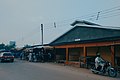
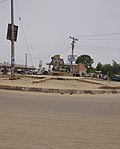
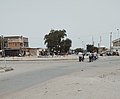
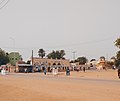
Haɗejiya (also Haɗeja, previously Biram) is a Hausa town in eastern Jigawa State, northern Nigeria. [1] Hadejia lies between latitude 12.4506N and longitude 10.0404E.[2] It shares boundary with Kiri Kasama Local Government to the east, Mallam Maɗori Local Government from to the north, and Auyo Local Government to the west. The Hadejia Local Government consist of eleven (11) political wards, namely: Atafi, Dubantu, Gagulmari, Kasuwar Ƙofa, Kasuwar Kuda, Matsaro, Majema, Rumfa, Sabon Garu, Ƴankoli and Yayari. Inhabitants are dominantly Hausa, Fulani and Kanuri with some other groups such as Tiv, Yoruba, Igbo, Igala etc. The dominant occupation of the inhabitants is crop-farming and animal rearing which a considerable percentage, engaged in trading, fishing and services including civil service.[3] The people of Haɗeja are largely Muslims, although some follow indigenous belief systems. The town lies to the north of the Hadejia River, and is upstream from the Hadejia-Nguru wetlands. Hadejia is an internationally important ecological and sensitive zone.[4]

Key Information

Hadejia was once known as Biram, and is referred to as one of the "seven true Hausa states" (Hausa Bakwai),[5] because it was ruled by the descendants of the Hausa mythological figure Bayajidda and his second wife, Daurama.[6] By 1810, during the Fulani War, the Hausa rulers of the Hausa Bakwai had all been overcome by the Fulani.[7] Haɗeja had been transformed into an emirate two years earlier, in 1808. In 1906 Haɗeja resisted British occupation, under the then Emir (Muhammadu Mai-Shahada). Haɗejiya was absorbed into Jigawa State in 1991 from Kano State.

The Haɗeja is home to majorly 4 tertiary institutions, which are: Binyaminu Usman Polytechnic Hadejia,[8] School of Nursing Hadejia,[9] National Teachers Institutes Hadejia Study Centre.[10]

Agricultural products

[edit]

Hadejia town, a market center for cotton, millet, sorghum, fish, and rice, is an export crop for peanuts. Locals maintain cattle, goats, guinea fowl, sheep, and donkeys. It is connected to the main highway and railway.[11][12][13]

Climate

[edit]

The climate has a blistering, cloudy dry season with temperatures ranging from 59°F to 105°F, as well as a hot, oppressive rainy season with predominantly cloudy skies.[14]

Air pollution

[edit]

Hadejia's air undergoes significant changes due to the presence of dust and particulate matter, which pose significant health risks due to their small size and potential inhalation into the lungs.[15][16][17]

[edit]
Commerce and administration
GLAM and educational institutes
Culture

References

[edit]
[edit]
Revisions and contributorsEdit on WikipediaRead on Wikipedia
from Grokipedia

Hadejia is a town and traditional in eastern , northern , situated on the northern bank of the Hadejia River. The emirate was officially founded in 1808 by Emir Sambo, who moved the headquarters to the town after his brother Umaru's leadership in the Fulani against local kingdoms, consolidating seven pre-existing territories including Auyo and Gatarwa into a unified structure under influence. With a projected population of around 179,000 in its as of 2022, Hadejia functions as a primary market center for agricultural commodities such as , millet, , , and , supporting the regional economy through farming, herding, trading, and wetland resources in the adjacent Hadejia-Nguru Wetlands, a -recognized biosphere reserve vital for and livelihoods. The town remains the seat of the of Hadejia, preserving Hausa-Fulani amid ongoing and potential from the river system.

Geography

Location and Boundaries

Hadejia is a town in eastern , northern , situated at approximately 12°27′N latitude and 10°02′E longitude. The town lies on the northern bank of the Hadejia River, a key waterway in the region that supports local and . The Hadejia Local Government Area (LGA), headquartered in the town, encompasses the primary administrative boundaries for the area. It shares its western border with Auyo LGA, northern border with Mallam Madori LGA, eastern border with Kiri Kasamma LGA, and southern border with Birniwa LGA. These boundaries define the LGA's territory within , which itself forms part of Nigeria's northern frontier adjacent to the Republic of Niger. The LGA covers diverse landscapes including floodplains and farmlands influenced by the Hadejia-Nguru wetlands to the northeast.

Topography and Hydrology

Hadejia is situated on relatively flat terrain characteristic of northern Nigeria's Sudan savanna zone, with elevations ranging from a minimum of 336 meters to a maximum of 402 meters above sea level. The average elevation in the area is approximately 359 meters, reflecting gentle slopes and low-lying plains that facilitate agricultural activities but contribute to vulnerability in flood-prone seasons. Morphometric analysis of the surrounding sub-basin indicates an elongated watershed shape with very gentle topography, influencing surface runoff patterns and sediment transport. Hydrologically, Hadejia lies along the Hadejia River, a primary within the larger Hadejia-Jama'are River Basin, which spans 30,569 km² across northwestern Nigeria's semi-arid eco-climatic zone. The basin's drainage system relies on seasonal inflows from the Hadejia and Jama'are rivers, which converge to feed the Hadejia-Nguru wetlands downstream, supporting intermittent flooding that historically inundated over 2,000 km² in the 1960s but has declined to under 1,000 km² in recent decades due to upstream damming and climatic variability. Surface water availability shows spatial disparities, with greater abundance upstream near Hadejia compared to downstream areas, driven by rainfall dynamics and temperature influences rather than equitable basin-wide distribution. Runoff in the Hadejia catchment exhibits irregularities and downward trends over the period from 1980 to 2015, reflecting broader hydrological flux variability in tropical semi-arid regions.

Climate

Seasonal Patterns and Variability

Hadejia exhibits a semi-arid with a short spanning May to and a dominant from to April, influenced by the seasonal migration of the (ITCZ). The delivers nearly all annual , totaling approximately 630 mm, with peak monthly rainfall in averaging 150 mm and up to 22 wet days. Rainfall intensity diminishes toward the season's edges, with May and recording lower amounts around 50-75 mm. Temperatures are consistently high, with average daily maximums exceeding 40°C during the pre-wet hot period from to May and remaining above 32°C even in the cooler dry months of December to January. Minimum temperatures during the subperiod (December to February) frequently fall to 15°C at night, driven by dry, dusty northeasterly winds from the that reduce to below 10% and create hazy conditions with reduced visibility. surges during the , reaching muggy levels (over 70%) from late to mid-October, exacerbating heat discomfort. Seasonal variability is pronounced, particularly in rainfall timing and volume, which can shift the onset by 2-3 weeks and alter its duration, directly impacting flood-dependent and fisheries in the Hadejia-Nguru wetlands. fluctuations show less seasonal irregularity but exhibit spatial differences across the basin, with hotter southern areas contrasting cooler northern stations. Long-term records from 1980-2015 indicate mixed monthly rainfall trends—some increasing, others decreasing—with significant temporal and spatial variability, though annual aggregates display insignificant upward shifts; largest rainfall recoveries occur in the August-October window. Such patterns underscore vulnerability to erratic monsoons, with deficits in some years leading to stress and excesses causing localized flooding. Over the period analyzed in hydrological studies of the Hadejia-Nguru wetlands catchment, mean annual temperatures at the Hadejia meteorological station exhibited a statistically significant increasing trend, consistent with observed warming across northern Nigeria's semi-arid zones. This rise in temperatures has been linked to heightened , which amplifies water loss from soils and surface bodies, exacerbating aridity in the region despite the absence of long-term trends in totals at Hadejia and nearby stations like Nguru. Annual rainfall in , where Hadejia is located, averages around 600-800 mm, concentrated in a single from to , but interannual variability has increased, with more frequent dry spells reported in recent decades. These climatic shifts have directly impacted the Hadejia-Nguru wetlands' , where warming contributes to reduced in the Hadejia , independent of upstream damming effects like those from the Tiga Dam. Decreased flooding frequency has degraded extent and , leading to lower yields, crop failures in dependent flood-recession , and heightened vulnerability to encroaching from the north. In the broader context of anthropogenic , northern has experienced more frequent extreme heat events and warm nights, with data from 1961-2015 showing significant increases in temperature extremes that align with global greenhouse gas-driven warming patterns. Attribution studies confirm that these trends, particularly the increases, are substantially influenced by global rather than solely local variability, though interactions with land-use changes and upstream complicate isolation of causal factors. Projections based on regional models indicate potential further rises of 2-4°C by 2100 under high-emissions scenarios, with possible declines in wet-season rainfall intensity, underscoring risks to Hadejia's agrarian and necessitating resilient water management.

History

Pre-Colonial Origins

The origins of Hadejia trace to a Kanuri hunter named Hade from Machina in present-day , , and his wife Jiya, who settled in the region during a hunting expedition, drawn by its abundant rivers and natural resources. The settlement's name evolved from a combination of their names, initially "Hadejeya" or "Hade + Jiya," reflecting Kanuri foundational influence, with many local inhabitants retaining Kanuri tribal marks as evidence of early ethnic composition. In the pre-Fulani period, the Hadejia area consisted of seven independent polities—Garun Gabas, Auyo, Dawa, Fagi, Kazura, Gatarwa, and Hadejia itself—loosely aligned under the Bornu Empire's oversight via a provincial administrator (Galadima) stationed at Nguru. Kingdoms like Auyo and Garun Gabas were established around 1400 CE by immigrants from Baghirmi, while Hadejia proper emerged later amid pastoral migrations of Kanuri and Fulani groups seeking lands by the late . These entities engaged in inter-kingdom relations, including tribute payments to Bornu and occasional conflicts, fostering a decentralized political landscape centered on , , and along the Hadejia River. Traditional accounts, preserved in oral histories, identify Hadejia (formerly Biram) as one of the Hausa Bakwai—the seven legitimate Hausa states—governed by rulers descended from the mythical , a prince said to have migrated from and married into local royalty. Local chronicles record 32 kings reigning over the core Hadejia polity prior to the Fulani of the early , during which partial unification under Habe (non-Fulani Hausa) leaders like Muhammad Sambo laid groundwork for later centralization by integrating four of the seven kingdoms. These narratives, while embedding legendary elements, align with archaeological and migratory patterns indicating Hausa over Kanuri and Bedde substrates in the region from the onward.

Emirate Establishment and Expansion

The Hadejia Emirate was formally established in 1808 amid the Fulani , which transformed the pre-existing Hausa principalities of the region into a Fulani-led entity under the . Prior to the jihad, the Hadejia area comprised seven semi-independent that paid tribute to the Bornu Empire. Umaru bin Abdure, a Fulani leader appointed Sarkin Fulanin Hadejia in 1788, aligned with Usman dan Fodio's jihadist movement around 1805 and captured the territory from local Hausa rulers by 1805. Umaru's brother, Sambo, succeeded him and officially founded the in 1808, relocating the Fulani headquarters from peripheral sites to Hadejia town itself. Sambo, reigning until 1845, established a central market to bolster economic control and initiated administrative consolidation, marking the shift from fragmented Hausa governance to a unified structure loyal to Sokoto. This foundational phase emphasized military subjugation of residual Hausa resistance and integration of Fulani pastoralists into the political hierarchy. Expansion accelerated under subsequent emirs, particularly Bukhari (r. 1848–1850 and 1851–1863), who conducted raids against neighboring s including Kano, Katagum, Gumel, Bedde, and Jama'are, thereby extending territorial influence. In 1851, Bukhari briefly renounced allegiance to Sokoto, enabling further enlargement of the to approximately 2,720 square miles (7,045 square kilometers) through these campaigns, though conflicts such as ongoing wars with Gumel persisted until 1872. These efforts solidified Hadejia's position as a within the Sokoto network, incorporating additional villages and trade routes while relying on cavalry-based warfare and tribute extraction for sustenance.

Colonial Era to Independence

In 1906, Hadejia Emirate resisted British colonial expansion under Emir Muhammadu Mai-Shahada, leading to a military confrontation on April 25 when British forces invaded the town as part of their conquest of northern Nigeria's Sokoto Caliphate territories. Captain H.C.B. Phillips commanded the invading troops, attempting to capture the emir, but the operation resulted in significant local resistance and casualties, marking one of the last holdouts against British control in the region. Following the defeat, the British deposed Muhammadu and installed Haruna as the new emir, incorporating Hadejia into Kano Province under the Northern Nigeria Protectorate. British administration in Hadejia relied on indirect rule, preserving the emirate's traditional hierarchy while subordinating it to colonial oversight, with emirs collecting taxes and maintaining order on behalf of the protectorate. This system introduced limited infrastructure, such as roads and administrative offices, but prioritized fiscal extraction through taxation on agriculture and trade, with minimal investment in education or industry; for instance, Emir Usman, who ruled from 1925 to 1950, acknowledged the slow adoption of Western secular education due to cultural resistance and colonial caution. Resistance to colonial policies persisted sporadically, including disputes over taxation and judicial reforms, yet the emirate structure adapted, integrating British legal codes alongside Islamic law under supervision. As approached independence in 1960, Hadejia's governance transitioned with minimal disruption, retaining its framework within the under the federal structure, where traditional rulers continued influential roles in local administration and customary affairs. The period saw gradual socio-economic shifts, including expanded production for , but colonial legacies like uneven development and reliance on subsistence farming endured into the post-independence era.

Administration and Governance

Traditional Emirate Structure

The traditional governance of the Hadejia Emirate is characterized by a centralized hierarchical system rooted in the Fulani Jihad of the early , where the serves as the paramount ruler combining spiritual, judicial, and executive authority. Established around 1808 following the unification of seven pre-existing principalities—Garun Gabas, Auyo, Dawa, Fagi, Kazura, Gatarwa, and Hadejia—under Fulani leadership aligned with the , the structure emphasized loyalty to the Sultan of Sokoto while allowing local autonomy in administration. At the apex is the , selected from eligible royal descendants through consultation with senior titled chiefs, though specific processes for Hadejia remain documented primarily in oral traditions rather than codified texts. The presides over the Council, comprising advisory roles filled by appointed nobles who deliberate on succession, disputes, and policy, maintaining continuity from pre-colonial practices where s balanced the 's decisions to prevent . This council historically included positions evolved from warrior and administrative titles, such as those held by servile-origin officers in the , reflecting a merit-based elevation amid expansionist conflicts. Administratively, the emirate divides into districts governed by Hakimi (district heads) appointed directly by the Emir to oversee revenue collection, , and local justice, reporting upward while delegating to village heads who manage smaller units and ward heads handling grassroots affairs like taxation and community mobilization. This tiered system, preserved in essence through British after 1906, ensured efficient control over territory spanning approximately 4,097 square kilometers, with district heads empowered to appoint subordinates subject to Emir approval. Pre-colonial emirs like Abubakar Buhari (r. 1848–1903) utilized this hierarchy for military mobilization and territorial incorporation, such as absorbing the Marma Kingdom in the 1860s, demonstrating its role in .

Modern Local Government

Hadejia Area (LGA), one of 27 LGAs in , operates under Nigeria's 1999 Constitution (as amended), which assigns it responsibilities for , basic healthcare, rural roads, markets, and . The LGA is governed by an elected executive chairman, supported by a vice chairman and an executive committee, alongside a of elected councilors representing its 11 political wards. These wards include Atafi, Dubantu, Gagulmari, Kasuwar Kofa, Kasuwar Kuda, Matsaro, Majema, and Rumfa, with the remaining three handling peripheral rural areas. As of early 2025, Hon. Ahmad Abba Ari serves as executive chairman, focusing on local revenue enhancement and infrastructure amid state oversight from Jigawa's Ministry of Local Government and Chieftaincy Affairs. The LGA's population stood at 105,628 according to the 2006 National Population Census, with projections estimating growth to approximately 179,300 by based on a 3.5% annual rate consistent with Jigawa State's demographics. Administrative functions emphasize grassroots development, including and agricultural support, though implementation often contends with fiscal dependence on federal and state allocations via the Joint Account Allocation Committee. In northern Nigeria's context, Hadejia LGA integrates Sharia-influenced enforcement through the state Hisbah Board, which collaborates on moral and public order issues without supplanting secular council authority. Traditional structures, such as the Hadejia Emirate under Dr. Adamu Abubakar Maje, provide advisory input on community matters but hold no formal veto over LGA decisions, reflecting post-colonial separation of statutory and customary governance. Recent initiatives under state Governor Umar Namadi's administration have pushed for LGA autonomy, including digitized revenue collection and partnerships for , though challenges like funding shortfalls persist.

Economy

Primary Sectors: Agriculture and Fishing

forms the backbone of Hadejia's economy, employing the majority of the local population in small-scale, subsistence-oriented farming. The region benefits from the fertile floodplains of the Hadejia-Nguru , enabling both rain-fed cultivation during the and irrigated in the , primarily drawing from the Hadejia River and associated river basins. Key crops include cereals such as , grown under in Hadejia , where production efficiencies have been analyzed to address yield constraints like input usage and . cultivation is also prominent, supported by state initiatives targeting expanded dry-season production across , including Hadejia, with ambitions for millions of metric tonnes annually through mechanization and expansion. , including onions and , thrives year-round due to wetland proximity, contributing to local markets and broader food supply chains. Fishing serves as a complementary primary sector, particularly artisanal operations within the Hadejia-Nguru wetlands, which sustain livelihoods for communities alternating between farming and capture fisheries. The wetlands' floodplain ecosystem supports substantial fish stocks, with fishing peaking in the dry season as species migrate to perennial watercourses, yielding catches vital for protein and revenue. Surveys indicate extensive fishing efforts in the area, with frame and catch assessments revealing dependencies on wild resources amid ecological variability. These activities underpin economic resilience for over 1.5 million wetland-dependent residents, though small-scale fishers face profit inefficiencies from shocks and limited inputs.

Resource Utilization and Trade

The Hadejia-Nguru Wetlands serve as a critical resource base for local utilization, supporting , dry-season farming, and collection of wild foods such as fruits, , and , which contribute significantly to household livelihoods in the region. These wetlands enable flood-recession agriculture, where rice and other crops are cultivated on fertile alluvial soils during the dry season, enhancing and income diversification for communities dependent on seasonal water flows from the Hadejia-Jama'are river system. rearing, including for and production, utilizes communal lands and wetland fringes, with pastoralists integrating into systems to produce and protein resources. Trade in these resources centers on vibrant local markets, where , agricultural , and products are exchanged, forming a key component of the regional economy in . The is a primary hub for trading, with increased activities leading to supply surges; for instance, in 2018, prices fell by at least 20% due to heightened catches from the wetlands. Small-scale fishers in the Hadejia-Jama'are-Komadugu-Yobe Basin achieve varying profit efficiencies, with sales directed toward local and regional markets in northeast , though processors face constraints like inadequate smoking facilities and market access. and from are traded in specialized sections of Hadejia's markets, supporting intra-state and supplementing wetland-derived products like and rice in a diversified provisioning . Wild resources, including thatch and , are also commercialized locally, underscoring the wetlands' role in non-timber resource trade despite challenges from overexploitation and environmental variability.

Recent Development Initiatives

In July 2025, the Executive Council approved the expansion of schemes under the SPIN Model, including the Hadejia Barrage (Ayama/Koya Project), aimed at enhancing in the Hadejia area through improved water management and flood control. This initiative builds on a partnership between and the Hadejia-Jama'are-Komadugu-Yobe Basin Authority, announced in August 2025, which proposes expanding coverage by 6,500 hectares, reviving 10 abandoned dams, and extending schemes to upland communities to mitigate flooding and support dry-season farming. These efforts target the Hadejia Valley Scheme, a longstanding federal rehabilitated to boost and other production amid semi-arid challenges. The state government allocated N19.6 billion for constructing 560 housing units in , focusing on affordable residential development to address urban housing shortages and improve living standards. In health infrastructure, renovations were approved for the College of Health Sciences in Hadejia, alongside the establishment of a and equipped with drugs and medical supplies to enhance healthcare training and service delivery. Educational and initiatives include programs improving school health services accessibility in Almajiri institutions within the Hadejia , as assessed in a 2025 study highlighting gaps in utilization despite available facilities. Plans also extend projects to Hadejia to enhance and economic opportunities, part of broader state efforts approved in September 2025 totaling over N3.3 billion for .

Demographics and Culture

Population and Ethnic Composition

The Hadejia (LGA) in , , had a population of 104,286 according to the 2006 national census. Projections based on national growth rates estimate the LGA's population at 179,300 as of 2022. These figures encompass both urban and rural areas within the LGA, with the town of Hadejia serving as the administrative center; earlier state-level projections from 2007 placed the LGA population at 105,628. The ethnic composition of Hadejia reflects broader patterns in , where Hausa and Fulani groups predominate, comprising the majority of residents engaged in , , and . Kanuri-related subgroups, including speakers of Mangawa, Badawa, and Ngizimawa dialects, form notable minorities, particularly in the northeastern parts of the Hadejia . Smaller migrant communities from other Nigerian ethnic groups, such as Yoruba, Igbo, and Tiv, are present due to commercial activities along trade routes. Demographic data indicate a slight majority in the LGA, with historical ratios around 51.8% and 48.2% , though recent granular breakdowns are limited by the absence of a post-2006 . The remains predominantly rural, with high rates contributing to steady growth amid limited .

Social Structure and Traditions

Hadejia's social structure is predominantly patrilineal, with traced through the male line among both Hausa and Fulani (Fulɓe) communities, forming the basis of units known as "ngel" or compounds where multiple generations reside together. These structures emphasize clan affiliations ("pulaaku" among Fulɓe) that regulate inheritance, land use, and through elder . Urbanization in Hadejia has prompted shifts toward nuclear families and more flexible networks, though traditional extended kin obligations persist, particularly in rural outskirts. Gender roles remain rigidly defined, with men serving as primary providers, leaders, and actors, while women focus on management, child-rearing, and limited economic activities like trading from . Married women in Hadejia often observe , restricting their mobility and participation in life, a practice reinforced by Islamic norms and Hausa customs that segregate sexes to maintain social order. The patriarchal family head, or "mai gida," holds authority over decisions, supported by the senior wife in domestic matters, with common under allowances. Marriage customs follow Hausa-Fulani traditions, typically arranged by family elders to forge alliances, involving , dowry negotiation ("kamu"), and Islamic rites led by an , including prayers and payment. Modern influences have increased , but post-marriage and early unions remain prevalent. Traditions are interwoven with , manifesting in festivals like the Durbar (Hawan ), featuring equestrian parades, music, and dances during Eid celebrations, alongside harvest-end events such as kokawa wrestling and boxing. Cultural preservation includes and folktales, which transmit moral values despite challenges from modernization.

Environmental Challenges

Pollution and Contamination Risks

Water contamination in Hadejia primarily arises from untreated discharge, agricultural chemical runoff, and improper solid waste disposal into the Hadejia River and local domestic sources, exacerbating risks to human health and aquatic ecosystems. These pollutants contribute to and chemical degradation, with domestic water sources showing elevated levels of contaminants linked to bacterial and chemical from urban waste. Heavy metal pollution poses significant risks, particularly in flooded rice farmlands where assessments in Hadejia revealed high concentrations of metals such as lead, , and , amplified by climate-induced flooding that mobilizes sediments into waters. indices from these sites indicate elevated ecological and hazards, with potential for in crops and subsequent human exposure through consumption. In the Hadejia River catchment, metal contaminants including iron, , and lead exceed safe thresholds in some analyses, originating from upstream industrial scrap activities and runoff, threatening water usability for fishing and agriculture. Fish from the river exhibit of like , cadmium, iron, and lead, with tissue concentrations in species such as and indicating moderate to high risks for consumers via dietary intake, though some sediment-water studies suggest variable safety depending on site-specific factors. Improper medical waste disposal in Hadejia metropolis further heightens contamination risks, with hospital effluents leaching pathogens and chemicals into and surface waters, correlating with concerns like infections and chronic exposure. Overall, these risks underscore vulnerabilities in resource-dependent sectors, with land-use changes intensifying chemical loading in the river system.

Flooding, Droughts, and Water Management

The Hadejia River basin, encompassing the town of Hadejia in , experiences recurrent flooding due to seasonal overflows from the Hadejia and Jama'are rivers, exacerbated by heavy rainfall in upstream areas of . These floods have historically destroyed homes, farmlands, and infrastructure while claiming lives; for instance, in October 2020, the River Hadejia overflowed its banks, resulting in 40 deaths and widespread displacement across communities including Hadejia. In 2023, flooding in Hadejia forced residents into displacement camps at government schools, highlighting ongoing vulnerability in low-lying floodplains. A notable historical event occurred in 1988, when one of the largest floods in decades inundated the Hadejia-Nguru wetlands, affecting agricultural productivity and waterfowl habitats. Droughts in the region, part of the broader Sahelian climate variability, have intensified since the 1970s, reducing river runoff and wetland inundation critical for local ecosystems and livelihoods. The post-1972 drought cycles, compounded by upstream water abstraction, led to diminished flows in the Hadejia River, causing water scarcity that impacts fishing, dry-season farming, and groundwater recharge in Hadejia and surrounding areas. Sustained dry periods from 1992 to 1994 further degraded the Hadejia-Nguru wetlands, reducing flooded areas by altering hydrological regimes and exacerbating biodiversity loss through habitat desiccation. Recent analyses indicate that climate-driven droughts threaten the basin's water balance, with decreased rainfall proportions contributing to prolonged dry spells that heighten food insecurity for Hadejia's agrarian population. Water management in the Hadejia basin relies heavily on upstream infrastructure, including the Tiga and Challawa Gorge dams, which regulate approximately 80% of inflows to the Hadejia-Nguru wetlands but often prioritize over downstream mitigation and dry-season releases. These dams, constructed for the Kano River Project, have reduced peaks while inadvertently worsening impacts by trapping sediments and limiting natural recharge. Conservation initiatives, such as the Hadejia-Nguru Wetlands Conservation Project, advocate for integrated strategies including environmental flows to balance demands with wetland , though faces challenges from uncoordinated upstream abstractions. Proposed techniques like riverbank and recharge aim to address excesses, deficits, and simultaneously, offering potential for enhanced resilience in Hadejia's water-dependent economy.

Biodiversity Impacts and Conservation Efforts

The Hadejia-Nguru Wetlands, encompassing floodplains along the Hadejia River near Hadejia town, sustain high biodiversity including migratory , species, and aquatic , but upstream dams such as Tiga and Challawa have reduced seasonal flooding by up to 50-70%, curtailing wetland recharge, , and spawning grounds, thereby diminishing yields from over 40,000 tonnes annually in the to less than 10,000 tonnes by the 1990s. Invasive australis grass has invaded over 30% of open water areas since the 1980s, outcompeting native vegetation, blocking waterways, and reducing habitat for waterfowl and amphibians through habitat homogenization and decreased aquatic productivity. Agricultural intensification and deforestation across 60% of the basin have accelerated , wetland contraction by approximately 20% over decades, and , including declines in endemic and populations reliant on mosaics. Water quality degradation from untreated urban effluents and runoff in the Hadejia River basin has elevated nutrient loads and , disrupting aquatic invertebrate assemblages and bioaccumulating in chains, with studies recording shifts in macroinvertebrate diversity indices dropping below 2.0 in polluted segments compared to 3.5 in upstream references. variability exacerbates these pressures, with erratic rainfall patterns linked to prolonged dry phases reducing extent and amplifying dominance, contributing to overall imbalance and potential local extinctions of flood-dependent species. Conservation initiatives date to 1985 with the Hadejia-Nguru Wetlands Conservation Project, a collaboration between the Nigerian Conservation Foundation, , and local stakeholders, emphasizing community-based resource management, annual burning regimes to control , and advocacy for equitable water releases from dams to restore flooding cycles. The wetlands' designation as a in 2008 and has facilitated monitoring, with recent surveys in 2025 documenting over 300 bird species, including vulnerable migrants like the black-crowned crane, underscoring its role as a 297 km² refuge amid Sahelian loss. Restoration efforts since 2023 include in degraded catchments and advocacy through the National Institute for Wetland Research and Management Centre, targeting invasive clearance and sustainable irrigation to mitigate declines while balancing local livelihoods. These measures have stabilized some fish stocks and bird abundances in monitored zones, though ongoing dam operations and population pressures necessitate expanded transboundary cooperation for long-term efficacy.

References

Add your contribution
Related Hubs
User Avatar
No comments yet.