Hubbry Logo
Hebbian theoryHebbian theoryMain
Open search
Hebbian theory
Community hub
Hebbian theory
logo
7 pages, 0 posts
0 subscribers
Be the first to start a discussion here.
Hebbian theory
Hebbian theory
from Wikipedia

Hebbian theory is a neuropsychological theory claiming that an increase in synaptic efficacy arises from a presynaptic cell's repeated and persistent stimulation of a postsynaptic cell. It is an attempt to explain synaptic plasticity, the adaptation of neurons during the learning process. Hebbian theory was introduced by Donald Hebb in his 1949 book The Organization of Behavior.[1] The theory is also called Hebb's rule, Hebb's postulate, and cell assembly theory. Hebb states it as follows:

Let us assume that the persistence or repetition of a reverberatory activity (or "trace") tends to induce lasting cellular changes that add to its stability. ... When an axon of cell A is near enough to excite a cell B and repeatedly or persistently takes part in firing it, some growth process or metabolic change takes place in one or both cells such that A’s efficiency, as one of the cells firing B, is increased.[1]: 62 

The theory is often summarized as "Neurons that fire together, wire together."[2] However, Hebb emphasized that cell A needs to "take part in firing" cell B, and such causality can occur only if cell A fires just before, not at the same time as, cell B. This aspect of causation in Hebb's work foreshadowed what is now known about spike-timing-dependent plasticity, which requires temporal precedence.[3]

Hebbian theory attempts to explain associative or Hebbian learning, in which simultaneous activation of cells leads to pronounced increases in synaptic strength between those cells. It also provides a biological basis for errorless learning methods for education and memory rehabilitation. In the study of neural networks in cognitive function, it is often regarded as the neuronal basis of unsupervised learning.[4]

Engrams, cell assembly theory, and learning

[edit]

Hebbian theory provides an explanation for how neurons might connect to become engrams, which may be stored in overlapping cell assemblies, or groups of neurons that encode specific information.[5] Initially created as a way to explain recurrent activity in specific groups of cortical neurons, Hebb's theories on the form and function of cell assemblies can be understood from the following:[1]: 70 

The general idea is an old one, that any two cells or systems of cells that are repeatedly active at the same time will tend to become 'associated' so that activity in one facilitates activity in the other.

Hebb also wrote:[1]

When one cell repeatedly assists in firing another, the axon of the first cell develops synaptic knobs (or enlarges them if they already exist) in contact with the soma of the second cell.

D. Alan Allport posits additional ideas regarding cell assembly theory and its role in forming engrams using the concept of auto-association, or the brain's ability to retrieve information based on a partial cue, described as follows:

If the inputs to a system cause the same pattern of activity to occur repeatedly, the set of active elements constituting that pattern will become increasingly strongly inter-associated. That is, each element will tend to turn on every other element and (with negative weights) to turn off the elements that do not form part of the pattern. To put it another way, the pattern as a whole will become 'auto-associated'. We may call a learned (auto-associated) pattern an engram.[6]

Research conducted in the laboratory of Nobel laureate Eric Kandel has provided evidence supporting the role of Hebbian learning mechanisms at synapses in the marine gastropod Aplysia californica.[7] Because synapses in the peripheral nervous system of marine invertebrates are much easier to control in experiments, Kandel's research found that Hebbian long-term potentiation along with activity-dependent presynaptic facilitation are both necessary for synaptic plasticity and classical conditioning in Aplysia californica.[8]

While research on invertebrates has established fundamental mechanisms of learning and memory, much of the work on long-lasting synaptic changes between vertebrate neurons involves the use of non-physiological experimental stimulation of brain cells. However, some of the physiologically relevant synapse modification mechanisms that have been studied in vertebrate brains do seem to be examples of Hebbian processes. One such review indicates that long-lasting changes in synaptic strengths can be induced by physiologically relevant synaptic activity using both Hebbian and non-Hebbian mechanisms.[9]

Principles

[edit]

In artificial neurons and artificial neural networks, Hebb's principle can be described as a method of determining how to alter the weights between model neurons. The weight between two neurons increases if the two neurons activate simultaneously, and reduces if they activate separately. Nodes that tend to be either both positive or both negative at the same time have strong positive weights, while those that tend to be opposite have strong negative weights.

The following is a formulaic description of Hebbian learning (many other descriptions are possible):

where is the weight of the connection from neuron to neuron , and is the input for neuron . This is an example of pattern learning, where weights are updated after every training example. In a Hopfield network, connections are set to zero if (no reflexive connections allowed). With binary neurons (activations either 0 or 1), connections would be set to 1 if the connected neurons have the same activation for a pattern.[citation needed]

When several training patterns are used, the expression becomes an average of the individuals:

where is the weight of the connection from neuron to neuron , is the number of training patterns and the -th input for neuron . This is learning by epoch, with weights updated after all the training examples are presented and is last term applicable to both discrete and continuous training sets. Again, in a Hopfield network, connections are set to zero if (no reflexive connections).

A variation of Hebbian learning that takes into account phenomena such as blocking and other neural learning phenomena is the mathematical model of Harry Klopf. Klopf's model assumes that parts of a system with simple adaptive mechanisms can underlie more complex systems with more advanced adaptive behavior, such as neural networks.[10]

Relationship to unsupervised learning, stability, and generalization

[edit]

Because of the simple nature of Hebbian learning, based only on the coincidence of pre- and post-synaptic activity, it may not be intuitively clear why this form of plasticity leads to meaningful learning. However, it can be shown that Hebbian plasticity does pick up the statistical properties of the input in a way that can be categorized as unsupervised learning.

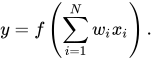
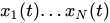
This can be mathematically shown in a simplified example. Let us work under the simplifying assumption of a single rate-based neuron of rate , whose inputs have rates . The response of the neuron is usually described as a linear combination of its input, , followed by a response function :

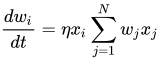
As defined in the previous sections, Hebbian plasticity describes the evolution in time of the synaptic weight :

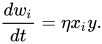
Assuming, for simplicity, an identity response function , we can write

or in matrix form:
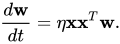
As in the previous chapter, if training by epoch is done an average over discrete or continuous (time) training set of can be done:where is the correlation matrix of the input under the additional assumption that (i.e. the average of the inputs is zero). This is a system of coupled linear differential equations. Since is symmetric, it is also diagonalizable, and the solution can be found, by working in its eigenvectors basis, to be of the form

where are arbitrary constants, are the eigenvectors of and their corresponding eigen values. Since a correlation matrix is always a positive-definite matrix, the eigenvalues are all positive, and one can easily see how the above solution is always exponentially divergent in time. This is an intrinsic problem due to this version of Hebb's rule being unstable, as in any network with a dominant signal the synaptic weights will increase or decrease exponentially. Intuitively, this is because whenever the presynaptic neuron excites the postsynaptic neuron, the weight between them is reinforced, causing an even stronger excitation in the future, and so forth, in a self-reinforcing way. One may think a solution is to limit the firing rate of the postsynaptic neuron by adding a non-linear, saturating response function , but in fact, it can be shown that for any neuron model, Hebb's rule is unstable.[11] Therefore, network models of neurons usually employ other learning theories such as BCM theory, Oja's rule,[12] or the generalized Hebbian algorithm.

Regardless, even for the unstable solution above, one can see that, when sufficient time has passed, one of the terms dominates over the others, and
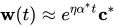
where is the largest eigenvalue of . At this time, the postsynaptic neuron performs the following operation:

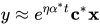
Because, again, is the eigenvector corresponding to the largest eigenvalue of the correlation matrix between the s, this corresponds exactly to computing the first principal component of the input.

This mechanism can be extended to performing a full PCA (principal component analysis) of the input by adding further postsynaptic neurons, provided the postsynaptic neurons are prevented from all picking up the same principal component, for example by adding lateral inhibition in the postsynaptic layer. We have thus connected Hebbian learning to PCA, which is an elementary form of unsupervised learning, in the sense that the network can pick up useful statistical aspects of the input, and "describe" them in a distilled way in its output.[13]

Hebbian learning and mirror neurons

[edit]

Hebbian learning and spike-timing-dependent plasticity have been used in an influential theory of how mirror neurons emerge.[14][15] Mirror neurons are neurons that fire both when an individual performs an action and when the individual sees or hears another perform a similar action.[16][17] The discovery of these neurons has been very influential in explaining how individuals make sense of the actions of others, since when a person perceives the actions of others, motor programs in the person's brain which they would use to perform similar actions are activated, which add information to the perception and help to predict what the person will do next based on the perceiver's own motor program. One limitation of this idea of mirror neuron functions is explaining how individuals develop neurons that respond both while performing an action and while hearing or seeing another perform similar actions.

Neuroscientist Christian Keysers and psychologist David Perrett suggested that observing or hearing an individual perform an action activates brain regions as if performing the action oneself.[15][18] These re-afferent sensory signals trigger activity in neurons responding to the sight, sound, and feel of the action. Because the activity of these sensory neurons will consistently overlap in time with those of the motor neurons that caused the action, Hebbian learning predicts that the synapses connecting neurons responding to the sight, sound, and feel of an action and those of the neurons triggering the action should be potentiated. The same is true while people look at themselves in the mirror, hear themselves babble, or are imitated by others. After repeated occurrences of this re-afference, the synapses connecting the sensory and motor representations of an action are so strong that the motor neurons start firing to the sound or the vision of the action, and a mirror neuron is created.[19]

Numerous experiments provide evidence for the idea that Hebbian learning is crucial to the formation of mirror neurons. Evidence reveals that motor programs can be triggered by novel auditory or visual stimuli after repeated pairing of the stimulus with the execution of the motor program.[20] For instance, people who have never played the piano do not activate brain regions involved in playing the piano when listening to piano music. Five hours of piano lessons, in which the participant is exposed to the sound of the piano each time they press a key is proven sufficient to trigger activity in motor regions of the brain upon listening to piano music when heard at a later time.[20] Consistent with the fact that spike-timing-dependent plasticity occurs only if the presynaptic neuron's firing predicts the post-synaptic neuron's firing,[21] the link between sensory stimuli and motor programs also only seem to be potentiated if the stimulus is contingent on the motor program.

Hebbian theory and cognitive neuroscience

[edit]

Hebbian learning is linked to cognitive processes like decision-making and social learning. The field of cognitive neuroscience has started to explore the intersection of Hebbian theory with brain regions responsible for reward processing and social cognition, such as the striatum and prefrontal cortex.[22][23] In particular, striatal projections exposed to Hebbian models exhibit long-term potentiation and long-term depression in vivo.[24] Additionally, models of the prefrontal cortex to stimuli ("mixed selectivity") are not entirely explained by random connectivity, but when a Hebbian paradigm is incorporated, the levels of mixed selectivity in the model are reached.[25] It is hypothesized (e.g., by Peter Putnam and Robert W. Fuller) that Hebbian plasticity in these areas may underlie behaviors like habit formation, reinforcement learning, and even the development of social bonds.[26][27]

Limitations

[edit]

Despite the common use of Hebbian models for long-term potentiation, Hebbian theory does not cover all forms of long-term synaptic plasticity. Hebb did not propose any rules for inhibitory synapses or predictions for anti-causal spike sequences (where the presynaptic neuron fires after the postsynaptic neuron). Synaptic modification may not simply occur only between activated neurons A and B, but at neighboring synapses as well.[28] Therefore, all forms of heterosynaptic plasticity and homeostatic plasticity are considered non-Hebbian. One example is retrograde signaling to presynaptic terminals.[29] The compound most frequently recognized as a retrograde transmitter is nitric oxide, which, due to its high solubility and diffusivity, often exerts effects on nearby neurons.[30] This type of diffuse synaptic modification, known as volume learning, is not included in the traditional Hebbian model.[31]

Contemporary developments, artificial intelligence, and computational advancements

[edit]

Modern research has expanded upon Hebb's original ideas. Spike-timing-dependent plasticity (STDP), for example, refines Hebbian principles by incorporating the precise timing of neuronal spikes to Hebbian theory. Experimental advancements have also linked Hebbian learning to complex behaviors, such as decision-making and emotional regulation.[13] Current studies in artificial intelligence (AI) and quantum computing continue to leverage Hebbian concepts for developing adaptive algorithms and improving machine learning models.[32]

In AI, Hebbian learning has seen applications beyond traditional neural networks. One significant advancement is in reinforcement learning algorithms, where Hebbian-like learning is used to update the weights based on the timing and strength of stimuli during training phases. Some researchers have adapted Hebbian principles to develop more biologically plausible models for learning in artificial systems, which may improve model efficiency and convergence in AI applications. [33] [34]

A growing area of interest is the application of Hebbian learning in quantum computing. While classical neural networks are the primary area of application for Hebbian theory, recent studies have begun exploring the potential for quantum-inspired algorithms. These algorithms leverage the principles of quantum superposition and entanglement to enhance learning processes in quantum systems.[35]Current research is exploring how Hebbian principles could inform the development of more efficient quantum machine learning models.[3]

New computational models have emerged that refine or extend Hebbian learning. For example, some models now account for the precise timing of neural spikes (as in spike-timing-dependent plasticity), while others have integrated aspects of neuromodulation to account for how neurotransmitters like dopamine affect the strength of synaptic connections. These advanced models provide a more nuanced understanding of how Hebbian learning operates in the brain and are contributing to the development of more realistic computational models. [36] [37]

Recent research on Hebbian learning has focused on the role of inhibitory neurons, which are often overlooked in traditional Hebbian models. While classic Hebbian theory primarily focuses on excitatory neurons, more comprehensive models of neural learning now consider the balanced interaction between excitatory and inhibitory synapses. Studies suggest that inhibitory neurons can provide critical regulation for maintaining stability in neural circuits and might prevent runaway positive feedback in Hebbian learning.[38][39]

In 2017, Jeff Magee and colleagues identified behavioral timescale synaptic plasticity (BTSP), a form of learning in hippocampal CA1 neurons in which synaptic inputs active several seconds before or after a dendritic plateau potential are strengthened, even without coincident postsynaptic spiking.[40] This mechanism operates on a much longer timescale than traditional Hebbian or spike-timing-dependent plasticity and provides a means for linking events separated in time during behavior.[40] BTSP has been proposed as a modern framework for understanding how Hebbian-like associative processes can occur over behavioral timescales, suggesting that the timing window for synaptic modification may extend far beyond the millisecond range described in classical Hebbian learning.[41]

See also

[edit]

References

[edit]

Further reading

[edit]
[edit]
Revisions and contributorsEdit on WikipediaRead on Wikipedia
from Grokipedia
Hebbian theory, also known as Hebb's rule or the Hebbian learning rule, is a foundational principle in that describes how the strength of synaptic connections between neurons increases when those neurons are activated simultaneously, a often paraphrased as "neurons that fire together wire together." This theory posits that learning and arise from activity-dependent modifications in synaptic efficacy, where repeated presynaptic activation that successfully drives postsynaptic firing leads to a growth process or metabolic change enhancing the connection's efficiency. Introduced by Canadian psychologist and neurophysiologist Donald Olding Hebb in his seminal 1949 book The Organization of Behavior, the theory aimed to bridge and by explaining how neural networks form stable patterns of activity through associative processes. Hebb's postulate, stated as: "When an of cell A is near enough to excite a cell B and repeatedly or persistently takes part in firing it, some growth process or metabolic change takes place in one or both cells such that A's efficiency, as one of the cells firing B, is increased," provided the first explicit neural mechanism for learning without relying solely on behavioral observations. This work built on earlier ideas from Pavlovian conditioning and anatomical studies but shifted focus to as the cellular basis of . Central to Hebbian theory are the concepts of cell assemblies—distributed groups of neurons that become linked through strengthened synapses to represent stable ideas or percepts—and phase sequences, temporal chains of these assemblies that enable sequential thought and action. These structures form the neural substrate for memory engrams, where co-activated neurons wire into functional circuits that can be reactivated to recall experiences. The theory's principles, including input specificity (changes only at active synapses), (requiring multiple inputs), and associativity (pairing weak and strong stimuli), have been empirically supported by discoveries in , such as (LTP) and long-term depression (LTD), which involve activation and . In contemporary , Hebbian mechanisms extend to spike-timing-dependent plasticity (STDP), a refined version where the precise timing of pre- and postsynaptic spikes determines synaptic strengthening or weakening, influencing everything from to computational models in artificial neural networks. Despite challenges like to prevent runaway excitation, Hebbian theory remains a cornerstone for understanding adaptive formation, with applications in studying disorders such as and where plasticity is dysregulated.

Historical Foundations

Origins in Hebb's Work

Donald Olding Hebb (1904–1985) was a pioneering Canadian and neurophysiologist whose research sought to elucidate the neural underpinnings of and . After earning his bachelor's degree from in 1925 and briefly pursuing careers in writing and education, Hebb began studying as a part-time graduate student at in 1928 while working as a school headmaster, earning his in in 1932. He then transitioned further into the field. In 1934, he joined , a leading neuropsychologist, at the , and followed him to , where Hebb completed his PhD in 1936. His dissertation examined the effects of early visual deprivation on spatial orientation and perception in rats, contributing early insights into brain plasticity and behavioral adaptation. Hebb's most influential contribution emerged in 1949 with the publication of The Organization of Behavior: A Neuropsychological by John Wiley & Sons in New York. This work represented a deliberate effort to integrate psychological theories of with emerging neurophysiological knowledge at a time when understanding of mechanisms remained limited in the mid-20th century. Motivated by the inadequacies of , which emphasized observable actions without addressing neural processes, Hebb argued that "the problem of understanding is the problem of understanding the total action of the , and vice versa." In the book, Hebb initially formulated the theory that learning and memory arise from transient patterns of neural activity across assemblies of neurons, independent of precise anatomical mappings. allowed for explanations of behavioral organization without requiring detailed knowledge of synaptic or cellular structures. He briefly referenced engrams as hypothetical traces encoding these activity patterns to represent persistent memories.

Early Influences and Engrams

The concept of the engram as a physical trace of originated with Richard Semon in the early . In his 1904 Die Mneme, Semon coined the term "engram" to describe an enduring, though latent, modification in the "irritable substance" of the induced by a stimulus, serving as the substrate for storing and reactivating experiences. He proposed that engrams were not localized but distributed across neural tissue, with retrieval occurring through a process he called "ecphory," where a partial cue could reconstruct the full pattern. This idea laid a foundational emphasis on as a biophysical change rather than a purely psychological . Building on Semon's framework, conducted extensive research on engrams from the 1920s through the 1940s, focusing on their elusive nature in the . Through studies in rats trained on tasks, Lashley sought to localize the engram but consistently failed to identify a specific site, observing instead that deficits correlated with the extent of cortical damage rather than its precise —a principle he termed "mass action." In his seminal 1950 paper "In Search of the Engram," Lashley concluded that memories are distributed across broad areas of the , challenging localizationist views and reinforcing Semon's distributed storage concept while highlighting the engram's resistance to pinpointing. His work, spanning over three decades, shifted the field toward understanding as an emergent property of widespread neural networks. Donald Hebb, a student of Lashley, adapted these engram ideas in his 1949 book The Organization of Behavior, integrating them into what became known as Hebbian theory by proposing that engrams arise from correlated neural activity leading to persistent structural changes. Hebb redefined the engram as a stable pattern of interconnected neurons—termed cell assemblies—that form when cells are repeatedly co-activated, thereby representing learned associations through strengthened synaptic connections. In Hebb's framework, these engrams function as self-sustaining activity loops that encode and retrieve memories, bridging Semon's biophysical traces and Lashley's distributed storage with a mechanism rooted in synaptic plasticity. This adaptation provided a dynamic, activity-dependent model for how engrams enable the persistence of learned behaviors.

Core Principles

Hebb's Postulate

Hebb's postulate forms the cornerstone of Hebbian theory, proposing a mechanism by which neural connections are modified based on patterns of activity. In his seminal work, stated: "When an axon of cell A is near enough to excite a cell B and repeatedly or persistently takes part in firing it, some growth process or metabolic change takes place in one or both cells such that A's efficiency, as one of the cells firing B, is increased." This principle emphasizes that coincident activity between presynaptic and postsynaptic neurons leads to enhanced synaptic efficacy, laying the foundation for activity-dependent plasticity in the . The postulate is often paraphrased in modern neuroscience as "cells that fire together wire together," capturing the essence of correlated firing strengthening connections. Hebb envisioned this strengthening as potentially involving either anatomical growth, such as the formation or enlargement of synaptic structures, or functional changes, like alterations in the metabolic sensitivity of existing synapses, thereby distinguishing between the physical wiring of the brain and the effective, activity-modulated pathways that emerge through learning. This dual possibility allows the theory to accommodate both structural and physiological adaptations without specifying a single mechanism. The implications of Hebb's postulate extend to associative learning, where simultaneous activation of connected neurons fosters persistent bonds that enable the storage and retrieval of experiences. Such bonds underpin the formation of neural representations, including engrams, which represent the physical traces of memory resulting from repeated co-activation patterns. By prioritizing temporal in neural firing, the postulate provides a qualitative framework for how the achieves adaptive connectivity through experience-driven processes.

Mathematical and Formal Models

The basic Hebbian learning rule provides a simple mathematical formulation for synaptic weight changes based on correlated pre- and postsynaptic activities. It is expressed as Δwij=ηxiyj,\Delta w_{ij} = \eta x_i y_j, where Δwij\Delta w_{ij} denotes the change in the synaptic weight from presynaptic ii to postsynaptic jj, η\eta is the , xix_i is the activity of the presynaptic , and yjy_j is the activity of the postsynaptic . This rule captures the essence of strengthening connections when both neurons are active simultaneously, as formalized in computational models of . A key derivation of the simple Hebbian rule arises from the between presynaptic and postsynaptic activities, providing a statistical justification for the weight update. Assuming postsynaptic activity yjy_j is a of , yj=kwkjxky_j = \sum_k w_{kj} x_k, and zero-mean activities, the expected weight change Δwij\langle \Delta w_{ij} \rangle over many presentations equals η\eta times the cov(xi,yj)\text{cov}(x_i, y_j). This follows from expanding the product: xiyj=xikwkjxk=kwkjxixk\langle x_i y_j \rangle = \langle x_i \sum_k w_{kj} x_k \rangle = \sum_k w_{kj} \langle x_i x_k \rangle, which equals the covariance term since means are zero, aligning weight adjustments with correlations in activity patterns. Such derivations highlight how Hebbian updates can emerge from optimizing information storage in nonlinear models. To address instability issues like unbounded weight growth in the basic rule, extensions incorporate normalization. Oja's rule, a prominent variant, modifies the update to Δw=ηy(xyw),\Delta \mathbf{w} = \eta y (\mathbf{x} - y \mathbf{w}), where w\mathbf{w} is the weight vector, x\mathbf{x} the input vector, and y=wTxy = \mathbf{w}^T \mathbf{x} the postsynaptic output; this subtractive term ensures weights remain bounded (typically normalized to unit length) while extracting the principal component of input correlations. Oja's formulation stabilizes learning by preventing explosion and promoting efficient dimensionality reduction in neural representations. In contexts, adaptations of Hebbian rules integrate signals for goal-directed modifications, diverging from pure correlation-based updates. The Barto-Sutton formulation, for instance, uses Δw=ηδx\Delta w = \eta \delta x, where δ\delta is the temporal difference signaling mismatches, and xx is presynaptic activity; this modulates Hebbian-like changes with reward predictions, credit assignment over time though it incorporates non-local elements beyond classical Hebbian mechanisms.

Biological Basis

Synaptic Plasticity Mechanisms

Hebbian theory posits that synaptic strength changes based on correlated activity between neurons, a principle experimentally manifested at the cellular level through (LTP), first discovered by Bliss and Lømo in 1973 in the of anesthetized rabbits following high-frequency stimulation of the perforant path, resulting in enduring enhancement of synaptic transmission. This phenomenon provided empirical support for activity-dependent synaptic modifications, with subsequent studies confirming LTP as a key neurobiological correlate of Hebbian learning across various brain regions, including the hippocampus. The induction of LTP relies on the activation of N-methyl-D-aspartate (NMDA) receptors, which function as coincidence detectors for presynaptic glutamate release and postsynaptic , permitting calcium influx that triggers intracellular signaling cascades for synaptic strengthening. This calcium-dependent aligns with Hebbian principles by requiring temporal between pre- and postsynaptic activity to relieve the magnesium block on NMDA channels, thereby enabling the necessary calcium entry for LTP expression. In parallel, α-amino-3-hydroxy-5-methyl-4-isoxazolepropionic acid () receptors mediate the fast excitatory transmission and undergo trafficking to the postsynaptic membrane during LTP, increasing synaptic efficacy without altering numbers, thus supporting the sustained potentiation observed in Hebbian-compatible plasticity. A more precise experimental demonstration of Hebbian timing emerges in spike-timing-dependent plasticity (STDP), where synaptic weights adjust based on the relative timing of pre- and postsynaptic , as shown in cultured hippocampal neurons where potentiation occurs when the presynaptic spike precedes the postsynaptic one by 10-20 ms, while the reverse timing induces depression. This bidirectional rule can be mathematically modeled for the potentiation phase as: Δw=A+exp(Δtτ+)\Delta w = A_{+} \exp\left(-\frac{\Delta t}{\tau_{+}}\right) where Δw\Delta w is the change in synaptic weight, A+A_{+} is the amplitude of potentiation, Δt\Delta t is the time difference (positive for presynaptic preceding postsynaptic), and τ+\tau_{+} is the time constant (typically around 20 ms), capturing the exponential decay of plasticity with timing precision. Supporting evidence for these mechanisms comes from ex vivo hippocampal slice preparations, where paired pre- and postsynaptic stimulation mimicking correlated firing—such as theta-burst patterns—reliably induces NMDA-dependent LTP, with synaptic enhancements persisting for hours and correlating with increased AMPA receptor-mediated currents, directly illustrating the Hebbian rule at individual synapses.

Cell Assemblies and Phase Sequences

In Hebbian theory, a cell assembly refers to a distributed group of neurons that develop strong reciprocal connections through repeated simultaneous activation, thereby representing a specific , stimulus, or perceptual feature. These assemblies form when neurons exhibit correlated firing in response to environmental inputs, leading to synaptic strengthening as per Hebb's postulate, which posits that "cells that fire together wire together." Once established, the assembly functions as a self-sustaining unit, capable of maintaining representational activity independently of ongoing external stimuli. The stability of cell assemblies arises from reverberatory activity, where excitatory connections create closed loops that propagate neural firing in a cyclical manner, allowing the assembly to persist for brief periods after the initial trigger. This enables the assembly to encode stable traces, such as engrams for learned perceptions, without requiring continuous input. Hebb hypothesized that this distributed confers resilience, such that partial damage to an assembly—through or loss—results in graceful degradation, where the overall representation weakens but does not entirely collapse, due to the redundant and interconnected nature of the neural group. Building on cell assemblies, phase sequences represent temporally ordered chains of these units, activated in succession to encode dynamic behavioral or cognitive processes, such as sequences of actions or streams of thought. These sequences emerge from associative learning, where the termination of one assembly's activity reliably triggers the next through strengthened inter-assembly connections forged by prior correlated experiences. In this way, phase sequences facilitate the integration of perceptions into coherent narratives, underpinning adaptive behaviors like problem-solving or , while maintaining the foundational Hebbian principle of activity-dependent plasticity.

Learning and Computational Aspects

Unsupervised Learning Connections

Hebbian learning serves as a foundational paradigm for in , where synaptic weights are updated based on the correlations observed in input patterns without the need for external supervisory signals or . This process mirrors biological by strengthening connections between neurons that exhibit simultaneous or temporally correlated activity, enabling the network to discover inherent structures in the data autonomously. As a result, Hebbian mechanisms facilitate the emergence of representations that capture the principal variations in the input distribution, aligning closely with the goals of unsupervised algorithms that aim to learn latent features from unlabeled datasets. A prominent example of this connection is the application of Hebbian learning to (PCA), achieved through Sanger's rule, which enables the sequential extraction of principal components from input data. In this method, the weight update for the k-th output is given by: Δwik=ηyk(xij=1kyjwji)\Delta w_{ik} = \eta y_k \left( x_i - \sum_{j=1}^{k} y_j w_{ji} \right) where η\eta is the , yky_k is the output of the k-th , xix_i is the i-th input component, and the summation subtracts projections onto previously extracted components to ensure . This rule extends the basic Hebbian postulate by incorporating a subtractive term, allowing networks to learn ordered principal components progressively, which has been demonstrated to converge to the eigenvectors of the input under certain conditions. These Hebbian-inspired techniques find practical applications in feature extraction and within neural networks, where they help preprocess high-dimensional data by identifying low-dimensional subspaces that preserve the most variance. For instance, in models, such methods reduce noise and highlight salient patterns, improving subsequent computational efficiency without requiring labeled examples. Historically, this lineage traces back to Christoph von der Malsburg's 1973 work on self-organizing feature maps, which used local Hebbian interactions to form topographic representations of input correlations, laying the groundwork for competitive learning algorithms. More recently, modern autoencoders have incorporated Hebbian rules to train bottleneck architectures that learn compressed, disentangled representations, enhancing tasks like data visualization and .

Stability, Plasticity, and Generalization

In Hebbian learning systems, the stability-plasticity arises from the tension between maintaining previously learned representations to prevent catastrophic and allowing synaptic weights to adapt to new inputs for ongoing learning. Pure Hebbian plasticity, which strengthens synapses based solely on correlated pre- and postsynaptic activity, often leads to unstable dynamics where weights grow unbounded, causing previously stored patterns to be overwritten by new ones. This manifests as runaway excitation in neural networks, where continued application of the rule amplifies activity without convergence, undermining retention. The Bienenstock-Cooper-Munro (BCM) theory addresses this dilemma by introducing a sliding modification threshold that depends on the recent history of postsynaptic activity, enabling both long-term potentiation (LTP) and long-term depression (LTD) to maintain homeostatic balance. In BCM, synaptic changes are governed by a nonlinear function φ of presynaptic activity and a dynamic threshold θ^M, which rises with increased average postsynaptic firing to favor depression over potentiation, thus preventing saturation and promoting selectivity. Mathematically, the change in synaptic efficacy m_j for input j is approximated as dmj(t)dt=ϕ(c(t),θ(t))dj(t)ϵmj(t),\frac{dm_j(t)}{dt} = \phi(c(t), \theta(t)) d_j(t) - \epsilon m_j(t), where c(t) is postsynaptic activity, d_j(t) is presynaptic activity, θ(t) is the time-averaged postsynaptic activity raised to a power p, and ε is a decay term; φ switches from negative (LTD) to positive (LTP) as c(t) crosses θ(t), ensuring weights remain bounded and stable. This mechanism achieves homeostasis by stabilizing network activity levels while allowing adaptation to novel stimuli without erasing prior knowledge. Generalization in Hebbian networks emerges through cell assemblies, where interconnected groups of neurons represent learned patterns and enable the of responses to but similar inputs, such as variations in sensory stimuli. These assemblies, formed via repeated Hebbian strengthening, activate partially for related stimuli, allowing the network to across an of patterns without requiring exact matches. Cell assemblies thus serve as the neural substrate for perceptual , bridging discrete learned representations to continuous input variations. Mathematical analyses of linear Hebbian models reveal that weight convergence and stability depend on the eigenvalues of the input , with unmodified rules leading to unless normalized. In Oja's normalized Hebbian rule, weights update as Δw = η y (x - y y^T w), where y = w^T x is the output, x is input, and η is the ; this constrains weights to unit norm and drives convergence to the principal eigenvector corresponding to the largest eigenvalue λ_1 of the C = E[x x^T]. Stability is ensured when λ_1 > other eigenvalues, as the learning dynamics align with the eigenspace of maximum variance, preventing oscillations or explosion in lower-dimensional projections. For multiple components, sequential application extracts eigenvectors in descending eigenvalue order, balancing plasticity with stable extraction of input structure.

Applications in Neuroscience

Mirror Neurons and Social Learning

Mirror neurons were first discovered in the early 1990s by Giacomo Rizzolatti and his team during electrophysiological studies of macaque monkeys. In area F5 of the , these neurons were observed to fire both when the monkey executed a specific action, such as grasping an object, and when it observed the same action performed by another individual. This dual responsiveness suggested a neural basis for linking perception and action, potentially facilitating the recognition of motor intentions. Hebbian learning provides a mechanistic explanation for the emergence of mirror neurons, positing that correlated activity between sensory inputs from observed actions and motor outputs during execution strengthens synaptic connections in shared neural circuits. Specifically, repeated pairings of visual signals from the (STS) with premotor activations in F5 lead to Hebbian plasticity, forming mirror-like representations that encode actions in a goal-directed manner. This process relies on mechanisms, where coincident pre- and postsynaptic firing enhances connectivity without requiring explicit teaching signals. In social learning, mirror neurons enabled by Hebbian wiring support rapid by allowing observers to internally simulate and replicate observed behaviors, bypassing the need for trial-and-error . For instance, during interactions, the automatic activation of motor representations upon action observation facilitates empathetic understanding and behavioral matching, as seen in infant-caregiver exchanges where strengthens social bonds. This Hebbian-driven process underpins cultural transmission of skills, such as tool use or gestures, by promoting vicarious learning through correlated sensory-motor experiences. Human evidence supports Hebbian-like correlations in mirror systems, with functional MRI (fMRI) studies revealing overlapping activations in the during action execution and observation tasks. A of 125 fMRI experiments confirmed consistent activity in this region, indicative of strengthened connections from repeated akin to Hebbian principles. These findings extend macaque data, showing how correlated activity fosters social mirroring in humans, such as in empathy-related tasks involving observed emotional expressions.

Integration with Cognitive Neuroscience

Hebbian theory provides a foundational framework for understanding through the formation of cell assemblies in the hippocampus, where co-activated neurons strengthen their synaptic connections to encode and replay experienced events. These assemblies, groups of neurons that fire synchronously, underpin the replay of spatial and temporal sequences observed during sharp-wave ripples, facilitating after a single experience. For instance, pre-existing sequential cell assemblies in the CA1 region are strengthened post-experience via enhanced millisecond-timescale coordination, increasing firing rates and recruiting experience-tuned neurons, which supports the rapid encoding of episodic memories. Biologically realistic spiking network models of CA3 demonstrate that symmetric spike-timing-dependent plasticity (STDP), a Hebbian mechanism, forms assemblies of 50–600 pyramidal cells over 40–65 theta-gamma cycles, enabling robust pattern completion and retrieval even with degraded cues up to 70%, thus linking cell assemblies directly to hippocampal replay in episodic memory models. In perceptual binding, Hebbian theory explains how disparate features of an object, such as shape and color represented in distributed cortical areas, are integrated into coherent percepts via the of cell assemblies. According to Hebb's , simultaneous strengthens synapses, allowing dynamic assemblies to form recurrent connections that bind features through joint rate increases or precise temporal synchrony. The binding-by-synchrony hypothesis extends this by proposing that neurons encoding features of the same object synchronize their firing patterns, distinguishing them from unrelated features via temporal offsets, thereby resolving the superposition problem in . This mechanism aligns with Hebbian plasticity, as recurrent connections endowed with correlation-sensitive rules enable flexible feature association without fixed wiring. Neuroimaging evidence from EEG supports Hebbian-correlated activity in tasks, where oscillations reflect the transient strengthening of assemblies. Fast Hebbian plasticity, such as short-term potentiation, sustains multimodal representations in , with models predicting alpha/beta oscillations (8–30 Hz) during maintenance phases absent attractor dynamics and gamma oscillations (30–100 Hz) during active retrieval when assemblies are engaged. High-frequency oscillations (ripples >100 Hz) in EEG capture coordinated bursts of neuronal assembly firing, correlating with performance and providing a substrate for tracking Hebbian-driven synaptic changes during delay periods. These patterns align with sustained delay activity observed in EEG/, where (4–8 Hz) and alpha rhythms modulate the persistence of Hebbian traces in short-term storage. Hebbian theory integrates with (GWT) by positing that synaptic strengthening within workspace neurons enables the selective amplification and broadcast of conscious content across brain networks. In GWT models, reward-modulated Hebbian rules—such as Δw_post,pre = ε R S_pre (2 S_post - 1), where R signals reward—stabilize excitatory connections in workspace hubs during effortful tasks, sustaining patterns that suppress irrelevant inputs and disseminate relevant information globally. This Hebbian mechanism supports GWT's core idea of a dynamic hub for integration, where strengthened assemblies facilitate the transition from unconscious processing to conscious awareness, as seen in tasks requiring attentional routing like the .

Limitations and Critiques

Stability-Plasticity Dilemma

The stability-plasticity dilemma in Hebbian learning arises from the tension between maintaining stable synaptic weights to preserve existing memories and allowing sufficient plasticity to incorporate new , as pure Hebbian updates can lead to overwriting of prior knowledge. In Hebbian theory, coincident pre- and postsynaptic activity strengthens synapses, forming cell assemblies that encode memories, but sequential learning of new patterns risks , where new updates destabilize and erase old representations without protective mechanisms. This interference manifests as rapid loss of previously stored , limiting the capacity for in biological systems. Homeostatic metaplasticity addresses this dilemma by regulating overall network excitability through mechanisms like synaptic scaling, which multiplicatively adjusts synaptic strengths across neurons to counteract Hebbian-driven imbalances. Synaptic scaling, observed in response to chronic changes in activity, increases or decreases receptor-mediated currents globally to maintain firing rates near set points, thus preventing runaway excitation or silencing that could amplify interference. By modulating the threshold for Hebbian plasticity, such as in the Bienenstock-Cooper-Munro (BCM) rule, homeostatic processes ensure that local Hebbian changes remain bounded, promoting stability without fully inhibiting new learning. Experimental evidence from studies highlights interference in hippocampal-dependent tasks, where new spatial learning can impair of prior memories unless mitigated. In mice, selective disruption of sharp-wave ripples during specific non-REM substates leads to impaired of memories, demonstrating the hippocampus's to interference in Hebbian-like circuits. These findings show how failures in consolidation processes can result in , as assemblies require protective replay to maintain stability against subsequent experiences. One proposed neuroscience solution involves sleep replay, where hippocampal sharp-wave ripples reactivate established cell assemblies offline, consolidating them into cortical networks without inducing further plasticity that could cause interference. During non-REM sleep, forward replay of experience sequences strengthens existing Hebbian connections through repeated activation, while low cholinergic tone suppresses new synaptic modifications, allowing stabilization of memories. This process effectively rehearses old assemblies alongside new ones in segregated substates, preserving long-term retention in the face of ongoing learning demands.

Empirical and Theoretical Challenges

One major empirical challenge to Hebbian theory has been the difficulty in directly visualizing or manipulating the proposed cell assemblies or engrams that underlie storage. For decades following Hebb's proposal, the existence of such stable neuronal ensembles remained hypothetical, as traditional electrophysiological and studies could not isolate specific memory traces without confounding effects on surrounding neural tissue. This lack of challenged the core assumption that co-active neurons form persistent, retrievable assemblies, leading to about whether Hebbian mechanisms could account for durable representations. It was not until the advent of optogenetic techniques in the that researchers could label, activate, and observe engram cells ; for instance, Josselyn et al. (2015) reviewed how these methods finally provided physiological and behavioral confirmation of engram ensembles in fear circuits, highlighting the prior empirical void that hindered validation of Hebb's ideas. Theoretically, Hebbian rules emphasize synaptic potentiation through correlated pre- and postsynaptic activity but fail to adequately address the necessity of for synaptic weakening, which is essential for refining neural circuits, preventing saturation, and enabling forgetting or competition among synapses. Hebb's original postulate—"cells that fire together wire together"—predicts strengthening but offers no mechanism for decreasing synaptic efficacy when activity patterns decorrelate or when excess connections must be pruned, leading to theoretical instability in models of learning. This omission became evident with the discovery of LTD in the 1980s and 1990s, which experiments showed is critical for bidirectional plasticity and , as pure Hebbian potentiation would result in runaway excitation without counterbalancing depression. For example, in hippocampal slices, LTD induction requires reversed timing of activity relative to , underscoring that Hebbian theory alone cannot explain the full spectrum of synaptic changes observed . Critiques from the connectionist tradition in further highlight Hebbian theory's oversimplification of learning in complex brains, particularly its reliance on purely local, rules that ignore non-local signals like error feedback or reward modulation prevalent in biological systems. While connectionist models incorporate Hebbian updates for weight adjustments in artificial neural networks, they argue that such local correlations alone cannot capture supervised or , where distant teaching signals (e.g., dopamine-mediated errors) propagate across layers to guide adaptation. This limitation manifests in simulations where pure Hebbian learning fails to resolve assignment problems in multilayer networks, leading to inefficient or erroneous representations of hierarchical . As articulated in analyses of three-factor learning rules, Hebbian plasticity must be augmented by global modulators to mimic the brain's ability to integrate contextual errors, revealing the theory's inadequacy for non-local dynamics in realistic neural architectures. Additionally, Hebbian theory exhibits gaps in predicting individual differences in learning outcomes, particularly in neurodevelopmental disorders where variations in contribute to diverse cognitive profiles. The theory's uniform assumption of activity-dependent strengthening does not account for how genetic or environmental factors alter Hebbian processes, such as timing switches from silent to evoked responses during development, leading to heterogeneous network formations. In conditions like autism or ADHD, disruptions in this developmental trajectory—such as delayed maturation of excitatory-inhibitory balance—can impair cell assembly stability, resulting in atypical generalization or social learning deficits that standard Hebbian models overlook. Computational studies suggest that such individual variability arises from plasticity parameters, emphasizing the need for personalized extensions to bridge theory with disorder-specific phenotypes.

Contemporary Extensions

Advances in Artificial Intelligence

Hebbian theory has significantly influenced the development of (SNNs) in , particularly through spike-timing-dependent plasticity (STDP) rules that enable local, based on temporal correlations between neuronal . STDP, a biologically plausible extension of Hebbian learning, adjusts synaptic weights depending on the precise timing of pre- and postsynaptic , strengthening connections when presynaptic precede postsynaptic ones and weakening them otherwise. This mechanism has been implemented in neuromorphic hardware such as Intel's Loihi chip, released in 2018, which supports on-chip STDP learning with programmable rules, including pairwise and triplet variants, using spike traces to track activity correlations. Loihi's architecture achieves sub-10 pJ per synaptic operation, orders of magnitude more efficient than conventional processors for neuromorphic tasks, facilitating energy-efficient, real-time adaptation in edge AI applications like and sensor processing. In continual learning for deep neural networks, Hebbian-inspired approaches draw from synaptic consolidation mechanisms to prevent catastrophic forgetting, where new tasks overwrite prior knowledge. Elastic weight consolidation (EWC), proposed in 2017, regularizes weight updates by penalizing changes to parameters critical for previous tasks, motivated by neuroscientific evidence of persistent dendritic spine enlargement following skill acquisition, akin to Hebbian synaptic strengthening. By approximating the matrix to identify important weights, EWC enables sequential learning on benchmarks like permuted MNIST (up to 20 tasks) and (10 sequences), maintaining performance close to individually trained models while reducing forgetting by factors of 10-100 compared to standard fine-tuning. This method has been widely adopted in AI systems requiring , such as autonomous agents adapting to evolving environments. Hebbian principles also enhance (RL) through eligibility traces in actor-critic architectures, addressing temporal credit assignment by marking synapses eligible for updates based on correlated activity. In continuous-time models using spiking neurons, the actor-critic framework employs a Hebbian TD-LTP rule, where weight changes are proportional to the temporal difference (TD) error multiplied by filtered spike coincidences, effectively propagating reward signals backward via eligibility traces with kernels. This integration allows biologically plausible policy optimization, as demonstrated in maze navigation tasks where the model learns value functions and action selections with dopamine-like modulation, achieving convergence in fewer episodes than non-spiking baselines. Such approaches bridge Hebbian plasticity with RL, enabling efficient learning in sparse-reward scenarios for and game AI. Recent advancements in the have incorporated Hebbian plasticity into for few-shot in transformer-based models, foundational to large language models (LLMs). By augmenting transformers with fast-weight modules updated via neuromodulated Hebbian rules—adjusting connections based on input-output correlations during inference—these systems exhibit in-context learning, adapting to new tasks from few examples without gradient updates to core parameters. For instance, Hebbian updates enable improved few-shot classification on datasets like Omniglot and CIFAR-FS compared to static baselines in structured tasks by gating plasticity around salient prompts. Similarly, short-term Hebbian potentiation can implement transformer-like mechanisms, supporting puzzle-solving and in sequence tasks, thus enhancing LLMs' efficiency for dynamic, low-data regimes in . Additionally, scaled neuromorphic systems like Intel's Hala Point, announced in , extend STDP capabilities for larger SNNs, achieving up to 100x scaling in efficiency for brain-inspired AI.

Recent Computational and Experimental Developments

Recent advances in have provided empirical support for Hebbian principles through engram tagging experiments in mice. In a 2024 study, researchers used Cal-Light optogenetic tagging in the hippocampal during contextual to track engram cell dynamics over time. These experiments revealed that engrams evolve from unselective to selective ensembles during , with decreased overlap between training-activated and recall-activated cells over hours (e.g., from 1 hour to 24 hours post-training), indicating pattern separation. Optogenetic reactivation of these tagged engram cells confirmed their role in retrieval, as selective ensembles reactivated in the training context but not in neutral ones, directly demonstrating Hebbian assembly reactivation where co-active neurons form stable memory traces. Computational models have integrated Hebbian dynamics into graph neural networks (GNNs) to simulate connectivity and plasticity. A 2025 framework, HebCGNN, incorporates Hebbian learning with dynamic in GNNs for supervised classification of graph-structured data, mimicking synaptic strengthening to prioritize causal relationships and improve accuracy on datasets like NCI1 and Cora. Computational models inspired by simulation projects, such as the Blue Brain initiative, incorporate biologically plausible plasticity rules, including Hebbian mechanisms, for synaptic adaptation in cortical networks. These models simulate engram-like assemblies, showing how Hebbian rules promote modular connectivity and invariant representations in spiking networks. Hybrid approaches in brain-machine interfaces (BMIs) leverage Hebbian adaptation for prosthetic control, enhancing sensorimotor integration. A 2024 review highlights how BCIs employ Hebbian learning alongside neurofeedback to stimulate neural plasticity, re-establishing disrupted loops for prosthetic limb operation in neurological disorders. In studies from 2022 to 2025, Hebbian-based algorithms adapt decoding models to user-specific neural patterns, improving control accuracy for upper-limb prosthetics by 20-30% through reward-modulated synaptic updates. This adaptation allows real-time recalibration, reducing latency in tasks like grasping, as demonstrated in invasive BMI trials with amputees. Emerging quantum-inspired Hebbian models explore non-local correlations to enhance in simulations. A 2025 study integrates quantum principles like superposition and entanglement with Hebbian rules in neural networks, using 1,000-neuron simulations to process 100 patterns. These models exhibit superior on distorted inputs, achieving 87.2% accuracy compared to 26.0% for classical Hebbian approaches, attributed to entanglement-like non-local dependencies that capture broader pattern correlations. Initial simulations suggest such frameworks could model quantum effects in neural processing, improving robustness in brain-inspired .

References

Add your contribution
Related Hubs
User Avatar
No comments yet.