IXPE
IXPE
Main page
198593

IXPE

logo
Community Hub0 subscribers
Read side by side
from Wikipedia

Imaging X-ray Polarimetry Explorer
IXPE satellite, on the top are its three identical X-ray optics elements, the sensors are on the bottom.
NamesExplorer 97
IXPE
SMEX-14
Mission typeX-ray polarimetry
OperatorNASA, ASI
COSPAR ID2021-121A Edit this at Wikidata
SATCAT no.49954
Websiteixpe.msfc.nasa.gov
asi.it/ixpe
Mission duration5 years (planned)
3 years, 10 months and 15 days (in progress)
Spacecraft properties
SpacecraftExplorer XCVII
Spacecraft typeImaging X-ray Polarimetry Explorer
BusBCP-100
ManufacturerBall Aerospace & Technologies
OHB Italia
Launch mass330 kg (730 lb)[1]
Payload mass170 kg (370 lb)
Dimensions1.1 m (3 ft 7 in) in diameter and 5.2 m (17 ft) tall, fully extended
Solar array: 2.7 m (8 ft 10 in) fully deployed
Start of mission
Launch date9 December 2021, 06:00 UTC[3]
RocketFalcon 9 B1061-5
Launch siteKennedy Space Center, LC-39A
ContractorSpaceX
Entered service10 January 2022[2]
Orbital parameters
Reference systemGeocentric orbit
RegimeLow Earth orbit
Perigee altitude540 km (340 mi)
Apogee altitude540 km (340 mi)
Inclination0.20°
Period90.00 minutes
Main telescope
TypeThree-mirror
Focal length4 m[4]
WavelengthsX-ray
Transponders
BandS-band[5]

IXPE mission logo
← ICON (Explorer 96)
PUNCH
SPHEREx →

Imaging X-ray Polarimetry Explorer, commonly known as IXPE or SMEX-14, is a space observatory with three identical telescopes designed to measure the polarization of cosmic X-rays of black holes, neutron stars, and pulsars.[6] The observatory, which was launched on 9 December 2021, is an international collaboration between NASA and the Italian Space Agency (ASI). It is part of NASA's Explorers program, which designs low-cost spacecraft to study heliophysics and astrophysics.

The mission will study exotic astronomical objects and permit mapping of the magnetic fields of black holes, neutron stars, pulsars, supernova remnants, magnetars, quasars, and active galactic nuclei. The high-energy X-ray radiation from these objects' surrounding environment can be polarized – oscillating in a particular direction. Studying the polarization of X-rays reveals the physics of these objects and can provide insights into the high-temperature environments where they are created.[7]

Overview

[edit]
Illustration of IXPE

The IXPE mission was announced on 3 January 2017[6] and was launched on 9 December 2021.[3] The international collaboration was signed in June 2017,[1] when the Italian Space Agency (ASI) committed to provide the X-ray polarization detectors.[7] The estimated cost of the mission and its two-year operation is US$188 million (the launch cost is US$50.3 million).[8][7] The goal of the IXPE mission is to expand understanding of high-energy astrophysical processes and sources, in support of NASA's first science objective in astrophysics: "Discover how the universe works".[1] By obtaining X-ray polarimetry and polarimetric imaging of cosmic sources, IXPE addresses two specific science objectives: to determine the radiation processes and detailed properties of specific cosmic X-ray sources or categories of sources; and to explore general relativistic and quantum effects in extreme environments.[1][6]

During IXPE's two-year mission, it will study targets such as active galactic nuclei, quasars, pulsars, pulsar wind nebulae, magnetars, accreting X-ray binaries, supernova remnants, and the Galactic Center.[4]

The spacecraft was built by Ball Aerospace & Technologies.[1] The principal investigator is Martin C. Weisskopf of NASA Marshall Space Flight Center; he is the chief scientist for X-ray astronomy at NASA's Marshall Space Flight Center and project scientist for the Chandra X-ray Observatory spacecraft.[7] NASA's Marshall Space Flight Center also designed, manufactured, and tested the X-ray mirrors for the telescope.[9]

Other partners include the McGill University, Massachusetts Institute of Technology (MIT), Roma Tre University, Stanford University,[5] OHB Italia[10] and the University of Colorado Boulder.[11]

Objectives

[edit]

The technical and science objectives include:[3]

  • Improve polarization sensitivity by two orders of magnitude over the X-ray polarimeter aboard the Orbiting Solar Observatory 8
  • Provide simultaneous spectral, spatial, and temporal measurements
  • Determine the geometry and the emission mechanism of active galactic nuclei and microquasars
  • Find the magnetic field configuration in magnetars and determine the magnitude of the field
  • Find the mechanism for X-ray production in pulsars (both isolated and accreting) and the geometry
  • Determine how particles are accelerated in pulsar wind nebula

Telescopes

[edit]

The space observatory features three identical telescopes designed to measure the polarization of cosmic X-rays.[6] The polarization-sensitive detector was invented and developed by Italian scientists of the Istituto Nazionale di AstroFisica (INAF) and the Istituto Nazionale di Fisica Nucleare (INFN) and was refined over several years.[4][12][13]

Telescope (×3) Basic parameters
Wavelength X-ray
Energy range 2–8 keV
Field of view (FoV) >11′
Angular resolution ≤30″

Principle

[edit]

IXPE's payload is a set of three identical imaging X-ray polarimetry systems mounted on a common optical bench and co-aligned with the pointing axis of the spacecraft.[1] Each system operates independently for redundancy and comprises a mirror module assembly that focuses X-rays onto a polarization-sensitive imaging detector developed in Italy.[1] The 4 m (13 ft) focal length is achieved using a deployable boom.

The Gas Pixel Detectors (GPD),[14] a type of Micropattern gaseous detector, rely on the anisotropy of the emission direction of photoelectrons produced by polarized photons to gauge with high sensitivity the polarization state of X-rays interacting in a gaseous medium.[4] Position-dependent and energy-dependent polarization maps of such synchrotron-emitting sources will reveal the magnetic-field structure of the X-ray emitting regions. X-ray polarimetric imaging better indicates the magnetic structure in regions of strong electron acceleration. The system is capable to resolve point sources from surrounding nebular emission or from adjacent point sources.[4]

Launch profile

[edit]
IXPE launch

IXPE was launched on 9 December 2021 on a SpaceX Falcon 9 (B1061.5) from LC-39A at NASA's Kennedy Space Center in Florida. The relatively small size and mass of the observatory falls well short of the normal capacity of SpaceX's Falcon 9 launch vehicle. However, Falcon 9 had to work to get IXPE into the correct orbit because IXPE is designed to operate in an almost exactly equatorial orbit with a 0° inclination. Launching from Cape Canaveral, which is located 28.5° above the equator, it was physically impossible to launch directly into a 0.2° equatorial orbit. Instead, the rocket needed to launch due east into a parking orbit and then perform a plane, or inclination, change once in space, as the spacecraft crossed the equator. For Falcon 9, this meant that even the tiny 330 kg (730 lb) IXPE likely still represented about 20–30% of its maximum theoretical performance (1,500–2,000 kg (3,300–4,400 lb)) for such a mission profile, while the same launch vehicle is otherwise able to launch about 15,000 kg (33,000 lb) to the same 540 km (340 mi) orbit IXPE was targeting when no plane change is needed, while recovering the first stage booster.[15]

IXPE is the first satellite dedicated to measuring the polarization of X-rays from a variety of cosmic sources, such as black holes and neutron stars. The orbit hugging the equator will minimize the X-ray instrument's exposure to radiation in the South Atlantic Anomaly, the region where the inner Van Allen radiation belt comes closest to Earth's surface.

Operations

[edit]

IXPE is built to last for two years.[8] After that it may be retired and deorbited or given an extended mission.

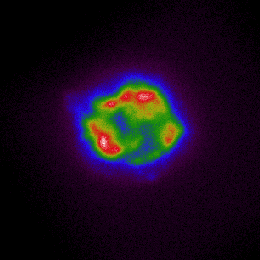
After launch and deployment of the IXPE spacecraft, NASA pointed the spacecraft at 1ES 1959+650, a black hole, and SMC X-1, a pulsar, for calibration. After that the spacecraft observed its first science target, Cassiopeia A. A first-light image of Cassiopeia A was released on 11 January 2022.[16] 30 targets are planned to be observed during IXPE's first year.[16]

IXPE communicates with Earth via a ground station in Malindi, Kenya. The ground station is owned and operated by the Italian Space Agency.[16]

At present mission operations for IXPE are controlled by the Laboratory for Atmospheric and Space Physics (LASP).[17]

Results

[edit]

In May 2022 the first study of IXPE hinted the possibility of vacuum birefringence on 4U 0142+61[18][19] and in August another study looked at Centaurus A measuring low polarization degree, suggesting that the X-ray emission is coming from a scattering process rather than arising directly from the accelerated particles of the jet.[20][21] In October 2022 it observed the gamma ray burst GRB 221009A, also known as the "Brightest of all time" (BOAT).[22][23]

[edit]

See also

[edit]

References

[edit]
Revisions and contributorsEdit on WikipediaRead on Wikipedia
from Grokipedia
The Imaging X-ray Polarimetry Explorer (IXPE) is NASA's first dedicated space observatory for measuring the polarization of X-rays emitted by cosmic sources, allowing scientists to map magnetic fields and geometric structures in extreme astrophysical objects such as black holes, neutron stars, pulsars, and supernova remnants.[1] Launched on December 9, 2021, aboard a SpaceX Falcon 9 rocket from Kennedy Space Center in Florida, the mission operates in low Earth orbit as a collaboration between NASA and the Italian Space Agency (ASI).[1] IXPE features three co-aligned grazing-incidence X-ray telescopes, each with multilayer-coated mirrors focusing X-rays onto gas pixel detectors that simultaneously capture spectral, spatial, temporal, and polarization data in the 2–8 keV energy range.[1] The mission's primary scientific goals include investigating X-ray emission mechanisms, particle acceleration processes, and magnetic field configurations in high-energy environments, building on limited prior observations from the 1970s OSO-8 satellite by improving polarization sensitivity by two orders of magnitude.[2] Key targets encompass accreting black holes to study spin and jet formation, pulsar wind nebulae like the Crab to probe particle acceleration, and active galactic nuclei to explore supermassive black hole environs.[2] With a planned two-year baseline mission, IXPE observes about 40 sources annually, prioritizing those with strong polarization signals to advance understanding of relativistic plasmas and extreme physics.[1] Since activation, IXPE has produced notable results, including polarization imaging of the pulsar wind nebula MSH 15-52 (known as the "Cosmic Hand"), which revealed complex magnetic field patterns when combined with Chandra X-ray Observatory data.[2] Led by NASA's Marshall Space Flight Center, the mission continues to yield peer-reviewed discoveries on magnetars, microquasars, and other objects, contributing to over 100 publications by late 2025.[2]

Mission Background

Development History

NASA selected the Imaging X-ray Polarimetry Explorer (IXPE) mission as the 14th Small Explorer (SMEX-14) on January 3, 2017, as part of its Astrophysics Explorer program to advance understanding of high-energy cosmic phenomena through X-ray polarimetry.[3][4] The principal investigator for IXPE is Martin C. Weisskopf at NASA's Marshall Space Flight Center, with the mission involving an international collaboration where the Italian Space Agency (ASI) provided the polarization-sensitive detector units developed by Leonardo S.p.A..[5][6] Following selection, the project entered preliminary design (Phase B) in early 2017, with concept refinement and initial development activities spanning 2017–2018; Ball Aerospace & Technologies Corp. was contracted to build the spacecraft bus, while NASA's Marshall Space Flight Center handled the X-ray mirror assemblies.[7][8] The total mission cost was approximately $188 million, covering development, launch, and initial operations, funded primarily through NASA's Explorers Program with contributions from ASI.[3][6] Key milestones included the successful completion of the Preliminary Design Review in June 2018 and the Mission Critical Design Review in June 2019, confirming the readiness to proceed to full construction and integration.[9][10] During 2020–2021, the observatory underwent integration at Ball Aerospace facilities, followed by rigorous environmental testing, including vibration, shock, acoustic, and thermal vacuum tests to verify performance under space conditions.[11][8]

Scientific Objectives

The primary scientific objective of the Imaging X-ray Polarimetry Explorer (IXPE) is to measure the degree and angle of polarization in X-rays within the 2–8 keV energy band from a variety of cosmic sources, enabling probes into magnetic field structures, particle acceleration processes, and the geometry of emission regions in extreme astrophysical environments.[2] By analyzing X-ray polarization, IXPE addresses fundamental questions about how high-energy radiation is produced and scattered in regions dominated by strong gravity, intense magnetic fields, and relativistic particles, such as those near compact objects. This capability builds on earlier non-imaging efforts like the Orbiting Solar Observatory 8 (OSO-8) in the 1970s, but IXPE introduces dedicated imaging polarimetry with arcminute resolution to map polarization across extended sources.[7] Key targets for IXPE observations include stellar-mass black holes to study accretion disk geometries and jet formation, neutron stars such as magnetars to examine their ultrastrong magnetic fields (up to 10^15 Gauss), pulsar wind nebulae to trace particle acceleration in supernova remnants, and active galactic nuclei to investigate supermassive black hole environments and relativistic outflows.[12] These observations aim to distinguish between competing models of X-ray emission, for instance, determining whether synchrotron radiation dominates in pulsar winds or if Compton scattering alters polarization signatures in accreting systems.[2] Technically, IXPE is designed to achieve a minimum detectable polarization (MDP) of less than 10% at 99% confidence for a source with 1 mCrab flux over a 100 ks exposure, while providing simultaneous high-resolution imaging, spectroscopy, and timing data to contextualize polarimetric measurements.[13] This sensitivity represents an improvement of over two orders of magnitude compared to OSO-8, allowing detection of polarization degrees as low as a few percent in moderate-exposure observations.[14] Broader impacts of IXPE's objectives include advancing understanding of universal high-energy particle acceleration mechanisms, such as those powering cosmic rays, and revealing the three-dimensional structure of emission regions that traditional X-ray techniques cannot resolve. For example, polarization data from black hole jets could confirm the presence of ordered magnetic fields aligned with outflows, informing models of relativistic plasma behavior.[7]

Instrument Design

Spacecraft Configuration

The IXPE observatory utilizes the Ball Configurable Platform (BCP)-100 small satellite bus developed by Ball Aerospace, which provides a modular architecture with flight-proven subsystems for mechanical, structural, thermal, power, telecommunications, command and data handling, and attitude determination and control functions.[6] The total launch mass of the observatory is 330 kg, with the payload accounting for approximately 170 kg and the spacecraft bus the remainder. In its deployed configuration, the spacecraft measures 1.1 m in diameter and 5.2 m in height, with solar panels spanning 2.7 m to support the co-aligned X-ray telescopes.[6] This compact design enables precise pointing and stable operations in low Earth orbit while accommodating the science payload's requirements for polarization measurements. The power subsystem features deployable solar arrays that generate an orbit-average power of 306 W at end-of-life, distributed via a 30 V ± 4 V direct energy transfer bus, supplemented by lithium-ion batteries to handle eclipse periods and peak loads.[15] These arrays maintain positive margins across all mission modes, including science observations, ensuring reliable support for the telescope and polarimeter operations without active power management beyond standard battery charging. The absence of a dedicated propulsion system simplifies the architecture, as the low-inclination orbit requires no major maneuvers, relying instead on natural atmospheric drag for deorbit over the mission lifetime.[16][15] Attitude determination and control are achieved through a three-axis stabilized system incorporating star trackers for precise navigation, inertial measurement units (including gyroscopes) for rate sensing, reaction wheels for primary pointing, and magnetic torque rods for momentum unloading.[17] This configuration delivers a pointing accuracy of 40 arcseconds (3σ) in the cross-boresight directions during operations, sufficient to align the telescopes with celestial targets and minimize polarization systematics from spacecraft motion.[15] Communications occur via an S-band transponder, supporting uplink commands at 2 kbps and downlink of science data at up to 2 Mbps to ground stations in Malindi, Kenya (primary), and Singapore (backup), with 6 GB of onboard solid-state storage buffering observations between passes.[18] Thermal management employs a combination of passive elements, such as multi-layer insulation and radiators, along with active heaters to stabilize key interfaces; the detector units are maintained at 20°C ± 4°C, while the top deck operates at 20°C ± 5°C, protecting the polarimeters from orbital temperature swings and ensuring consistent performance during extended pointings.[7] This subsystem integrates seamlessly with the attitude control to support uninterrupted telescope observations by preventing thermal distortions in the payload structure.

X-ray Telescopes and Polarimeters

The Imaging X-ray Polarimetry Explorer (IXPE) employs three identical co-aligned grazing-incidence X-ray telescopes, each optimized for simultaneous imaging and polarization measurements in the 2–8 keV energy band. These telescopes consist of mirror module assemblies (MMAs) paired with gas pixel detectors (GPDs), enabling the mission to probe the polarization properties of cosmic X-ray sources such as black holes and neutron stars. The design facilitates spatially resolved polarimetry by focusing X-rays onto the detectors, where the polarization signal is extracted from photoelectron tracks.[19][20] Each MMA features 24 nested Wolter-I type mirrors fabricated from electroformed nickel-cobalt alloy substrates, which provide high reflectivity in the soft X-ray regime without additional optical coatings due to the material's inherent properties. The mirrors achieve a focal length of 4 meters and an effective area of approximately 170–200 cm² at 2.3–4.5 keV, supporting a field of view of roughly 11 arcminutes in diameter. Pre-launch ground tests at NASA's Marshall Space Flight Center measured the point spread function (PSF) with a half-power diameter (HPD) of 19–28 arcseconds on-axis, varying by module and energy, confirming the optical performance for resolving extended sources.[21][20][22] The polarization measurement relies on GPDs, which detect X-rays through the photoelectric effect in a 10 mm thick gas volume filled with pure dimethyl ether (DME) at an initial pressure of about 800 mbar, which stabilizes to approximately 650 mbar in orbit due to outgassing. Incident polarized X-rays produce photoelectrons with an anisotropic emission direction, which then undergo multiple Thomson scatterings in the gas; the azimuthal distribution of these scattering angles reveals the polarization via a sinusoidal modulation in the photoelectron track orientations. The polarization degree is derived from this modulation using the formula $ \Pi = \frac{N_{\max} - N_{\min}}{N_{\max} + N_{\min}} / \mu(E) $, where $ \mu(E) $ is the energy-dependent modulation factor calibrated for the detector. In-flight calibrations as of 2025 have shown slight improvements in modulation factors through advanced data analysis techniques, enhancing polarization sensitivity by up to 6% at higher energies.[23][24][25][19] Detector specifications include a custom application-specific integrated circuit (ASIC) with a 300 × 352 array of 50 μm hexagonal pixels covering a 15 mm × 15 mm active area, providing a time resolution of approximately 1 μs for high-rate observations. The GPDs operate effectively from 2–8 keV, with modulation factors ranging from ~30% at 2.7 keV to ~56% at 6.4 keV, enabling sensitivity to polarization degrees as low as a few percent for bright sources. Post-launch, a deployable boom extends the detectors to 4 meters from the mirrors, maintaining the focal plane alignment.[25][20] Extensive pre-launch calibration involved illuminating the full telescope assemblies with polarized and unpolarized X-ray beams from synchrotron sources and radioactive isotopes, verifying the end-to-end polarization response and PSF across the energy band. These tests, conducted in vacuum chambers simulating flight conditions, also quantified any instrumental spurious modulation and ensured alignment between mirrors and detectors to within arcseconds. This instrument configuration directly supports IXPE's objectives by providing the precision needed for mapping magnetic fields and geometries in X-ray emitting astrophysical phenomena.[20]

Launch and Deployment

Launch Sequence

The Imaging X-ray Polarimetry Explorer (IXPE) mission launched on December 9, 2021, at 1:00 a.m. EST (06:00 UTC) from Launch Complex 39A at NASA's Kennedy Space Center in Florida, USA.[26] The launch utilized a SpaceX Falcon 9 Block 5 rocket in a dedicated configuration to deliver the spacecraft to its target orbit.[27] Pre-launch preparations included the arrival of the IXPE spacecraft at Cape Canaveral on November 5, 2021, for final integration with the launch vehicle, followed by encapsulation within the Falcon 9's payload fairing on December 2, 2021, at SpaceX's Payload Processing Facility.[28][29][30] The ascent sequence proceeded nominally, with liftoff marking the initiation of the Falcon 9's powered flight. At T+2:33 (153 seconds), the first stage reached main engine cutoff (MECO), followed immediately by stage separation at T+2:36 (156 seconds) and ignition of the second stage engine at T+2:44 (164 seconds).[26] The payload fairing halves were deployed at T+3:40 (220 seconds), exposing the IXPE observatory. The second stage then performed its first engine cutoff (SECO-1) at T+8:06 (486 seconds), entering a coast phase in an initial parking orbit of approximately 600 km altitude and 28.5° inclination.[27][26] To achieve the mission's near-equatorial orbit, the second stage reignited at T+28:42 for a plane-change maneuver, followed by SECO-2 at T+29:48. IXPE separated from the second stage at T+33:18 and was successfully inserted into a preliminary circular orbit at approximately 600 km altitude with a near-zero inclination of about 0.2°.[31][15] The launch experienced no anomalies during ascent, with the booster landing successfully on a droneship offshore.[6] The second stage deorbit burn occurred at T+1:06:42 to ensure safe disposal.[31]

Commissioning Phase

The commissioning phase of the IXPE mission commenced immediately following its launch on December 9, 2021, aboard a SpaceX Falcon 9 rocket from NASA's Kennedy Space Center. Shortly after spacecraft separation, the solar arrays deployed autonomously to provide power, enabling initial subsystem checkouts and stabilization maneuvers.[6] The primary operations center at NASA's Marshall Space Flight Center coordinated these activities, with support from the Italian Space Agency (ASI) team responsible for the gas pixel detectors. Over the subsequent days, the spacecraft underwent detumbling and attitude control verification to ensure stable orientation in its low-Earth orbit.[2] Key activities during this approximately one-month period included powering up the three X-ray telescopes, verifying the alignment between the mirror assemblies and focal plane detectors, and conducting initial pointing tests toward bright X-ray sources. The extendable boom, which separates the detectors from the mirrors by 4 meters to achieve the required focal length, was successfully deployed on December 15, 2021, following preparatory checks. No significant anomalies were reported, though routine software updates were applied to optimize detector performance. By early January 2022, all subsystems demonstrated full operational capability, confirming 100% functionality of the instruments.[6][32][33] The phase culminated in the transition to science operations on January 11, 2022, with the first targeted observation of the Cassiopeia A supernova remnant serving as the primary calibration target to refine polarimetric response and pointing accuracy. This marked the end of commissioning and the start of IXPE's baseline two-year mission to measure X-ray polarization from astrophysical sources. Ground teams at Marshall continued monitoring via the Malindi Space Center in Italy and backup stations, ensuring seamless data downlink for analysis.[6][33]

Mission Operations

Orbital Parameters

The Imaging X-ray Polarimetry Explorer (IXPE) operates in a nearly circular low Earth orbit at an altitude of approximately 600 km with an inclination of about 0°, providing a stable platform for X-ray polarimetry observations. The orbital period is 96.6 minutes, resulting in roughly 15 orbits per day and enabling repeated visibility of targets for approximately 57 minutes per pass before Earth occultation interrupts observations. This equatorial orbit was specifically selected to minimize exposure to high-radiation regions, enhancing instrument longevity and data quality.[34][11][6] Pointing operations are constrained to avoid Earth occultation and excessive radiation, with science data acquisition pausing during passages through the South Atlantic Anomaly (SAA), a region of intensified charged particles trapped in Earth's magnetic field. The near-equatorial inclination significantly reduces SAA encounters compared to higher-inclination orbits, limiting radiation dose to the detectors and supporting the mission's 2-year baseline lifetime. Additionally, spacecraft orientation must keep the Sun within 25°–30° of the nominal solar panel direction to maintain power, restricting continuous observation windows to about 50 days twice per year. Roll angles are optimized during observations to align the detector modules' polarization sensitivity axes with the expected source polarization direction, enabling accurate measurement of polarization position angles through differential phasing across the three detector units.[34][7][6][35] Lifetime considerations include the low-radiation environment from the equatorial orbit, which reduces cumulative damage to the gas pixel detectors, and thermal control systems that maintain stability at 20°C ±5°C on the spacecraft deck to preserve mirror module alignment. The absence of life-limiting consumables, such as extensive propellant needs, supports operations beyond the baseline 2 years, with extensions possible through NASA's General Observer program. As of November 2025, the mission has been extended through at least 2026 with Cycle 3 of the Guest Observer program.[34][7][6][36][37] The end-of-life plan follows NASA guidelines for low Earth orbit missions, involving passivation of systems and relying on natural deorbit due to atmospheric drag, which at 600 km altitude is expected to occur within 25 years after mission end to mitigate space debris risks.[38]

Observation and Data Management

The Imaging X-ray Polarimetry Explorer (IXPE) facilitates scientific observations through its Guest Observer (GO) program, which commenced in 2023 following the completion of the prime mission phase. Under this program, researchers from the global community submit proposals via NASA's Research Opportunities in Space and Earth Sciences (ROSES) solicitation process, with targets selected based on peer-reviewed assessments of scientific merit, feasibility, and alignment with mission capabilities. This open-call approach ensures a diverse portfolio of observations focused on high-priority astrophysical sources, such as black holes, neutron stars, and active galactic nuclei, while optimizing the use of the observatory's limited lifetime.[39][37] Once approved, observations are executed with typical exposures of approximately 100 ks per target to attain the necessary signal-to-noise ratio for detecting X-ray polarization signals at the 2–8 keV energy band. To achieve uniform sensitivity across the detector plane and average out pixel-to-pixel variations, IXPE employs a nominal small-amplitude circular dither pattern during pointings, allowing the spacecraft to scan the field while maintaining the target at the boresight. Many observations are coordinated with simultaneous coverage from complementary missions, such as Chandra or NuSTAR, enabling joint multi-wavelength analyses that enhance the interpretation of polarization data without altering the core IXPE workflow.[40][34][41] Raw telemetry from the detectors undergoes onboard processing, including background suppression and dynamic range compression, to reduce data volume before downlink via S-band to the primary ground station in Malindi, Kenya, operated by the Italian Space Agency. The received data are then transferred to NASA's Marshall Space Flight Center (MSFC), where automated pipelines calibrate the event lists, reconstruct images, and perform polarization fitting to derive key parameters such as modulation factors and Stokes vectors; these steps leverage the ixpeobssim software framework for simulation-validated analysis. Processed products, including filtered event files and polarization maps with associated uncertainties, are generated in standard FITS format to support user-friendly scientific exploitation.[42][6][43] The finalized datasets are archived at the High Energy Astrophysics Science Archive Research Center (HEASARC), NASA's primary repository for high-energy mission data, where they become publicly accessible after an exclusive-use proprietary period of up to 6 months for GO principal investigators. This timeframe allows proposers initial priority for publication while ensuring timely open access for the broader community; auxiliary files, such as exposure maps and response matrices, are also provided to facilitate reproducible analyses. Mission commanding, scheduling, and health monitoring are overseen from the IXPE Mission Operations Center at the Laboratory for Atmospheric and Space Physics (LASP) at the University of Colorado Boulder, which interfaces with the spacecraft via the Malindi station for uplink commands and real-time telemetry verification.[44][43][45]

Scientific Results

Early Discoveries

The Imaging X-ray Polarimetry Explorer (IXPE) achieved its first major scientific observation of the Crab Nebula in February 2022, marking a pivotal validation of the instrument's capabilities in X-ray polarimetry. This observation detected a linear polarization degree of approximately 20% across the 2–8 keV energy band for the nebula, consistent with prior suborbital measurements and confirming the presence of ordered magnetic fields in the pulsar wind nebula at high significance (>99% confidence level). The spatially resolved polarization map revealed variations up to 45–50% in certain regions, highlighting the instrument's sensitivity to synchrotron emission processes and establishing a benchmark for future studies of relativistic outflows. In early 2022, IXPE targeted the magnetar 4U 0142+61, yielding the first detection of polarized X-rays from such an ultra-magnetized neutron star. Observations from January to February 2022 measured a linear polarization degree of 15.0 ± 1.0% at low energies (∼2–4 keV), decreasing toward higher energies with a 90° swing in polarization angle, indicative of twisted magnetic fields anchored in the neutron star's solid crust.[46] This result provided direct evidence for magnetospheric structure in magnetars, linking surface field configurations to the observed emission geometry.[46] IXPE's August 2022 observation of the active galactic nucleus in Centaurus A focused on its prominent jet, setting tight upper limits on X-ray polarization at 6.5% (99% confidence level) in the 2–8 keV band, which constrains models of particle acceleration and suggests predominantly ordered magnetic fields aligned with the outflow direction.[47] Similarly, the October 2022 detection of the bright gamma-ray burst GRB 221009A allowed IXPE to place upper limits of 13.8% (99% confidence level) on prompt and afterglow polarization, offering insights into the jet's collimation and emission mechanisms during the early relativistic phase.[48] These initial results from the prime mission phase spurred approximately 20 peer-reviewed publications in 2022, including seminal works in Nature Astronomy and Science, which established foundational benchmarks for X-ray polarimetry and demonstrated IXPE's role in probing extreme astrophysical environments.[49]

Recent Findings and Publications

The IXPE mission completed its two-year prime phase in December 2023 and was extended by NASA for an additional 20 months through a General Observer program running from February 2024 to September 2025, enabling broader community access to the observatory for diverse astrophysical targets.[50] As of August 2025, there have been 234 refereed publications based on IXPE data, with over 100 stemming from guest observer proposals that expanded the mission's scientific scope beyond initial science team targets.[51] In 2024, IXPE observations of the Cassiopeia A supernova remnant revealed linear polarization degrees of approximately 10% in the 3–6 keV band near the shell, providing spatially resolved maps that trace magnetic field structures and constrain models of shock acceleration for cosmic rays.[52] Similarly, spectropolarimetric studies of the black hole binary Cygnus X-1 during its state transitions showed X-ray polarization varying between 4% and 8% across hard and soft spectral states, offering new constraints on the geometry and extent of the accretion disk.[53] Broader results from the general observer phase have integrated IXPE data with multi-wavelength campaigns involving Chandra and NuSTAR, enhancing polarization measurements of accreting systems and revealing correlated variability in X-ray emission from black hole coronas.[54] Insights into pulsar wind nebulae, such as Vela X, from 2025 analyses indicate ordered magnetic fields in the jet structure with polarization position angles aligned orthogonally to the nebula's axis, supporting refined models of particle acceleration and synchrotron emission.[55] These findings have refined theoretical models of particle acceleration in high-energy environments, demonstrating IXPE's role in resolving turbulence levels and magnetic field configurations that were previously inaccessible.[56] The mission encountered two minor operational anomalies in 2024 related to the power subsystem, both of which were successfully mitigated to resume full science operations by early April.[57] Additionally, in April 2025, Detector Unit 2 (DU2) entered an anomalous but stable and functional state, changing the detector response; data from DU2 now require special processing, but science operations continue.[58] In the 2025 NASA Senior Review, the mission was extended for three additional years through September 2028, positioning IXPE's cumulative dataset as a lasting legacy for studies in black hole physics and extreme magnetism.[59]

References

User Avatar
No comments yet.