Hubbry Logo
IngotIngotMain
Open search
Ingot
Community hub
Ingot
logo
8 pages, 0 posts
0 subscribers
Be the first to start a discussion here.
Ingot
Ingot
from Wikipedia
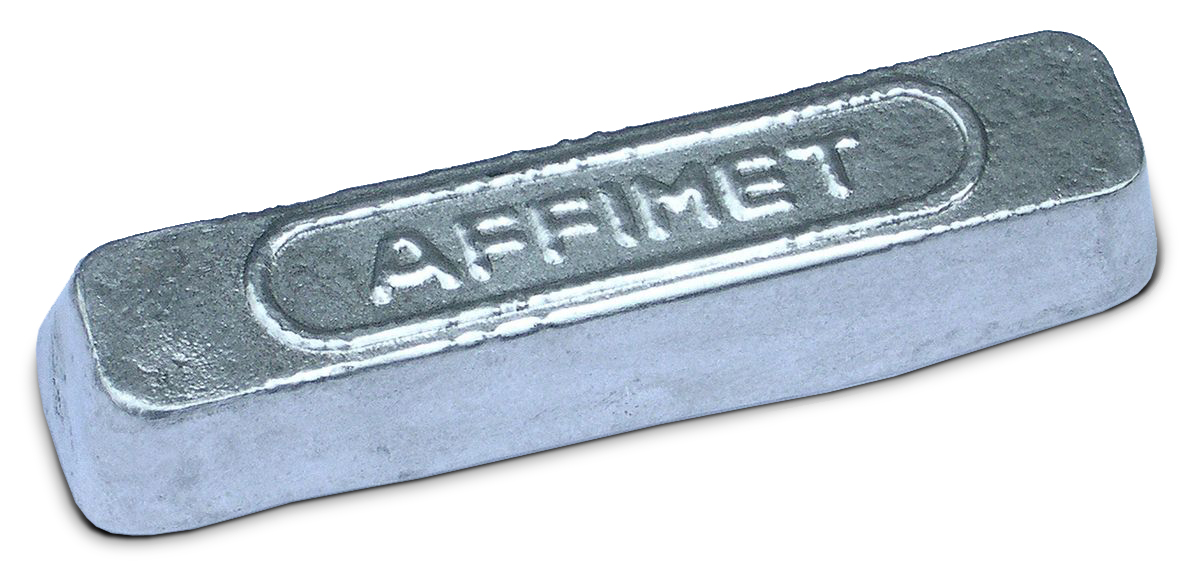
Aluminium ingot after ejection from mold
Gold ingots
Pouring molten gold into a mold at the La Luz Gold Mine in Siuna, Nicaragua, about 1959.

An ingot is a piece of relatively pure material, usually metal, that is cast into a shape suitable for further processing.[1] In steelmaking, it is the first step among semi-finished casting products. Ingots usually require a second procedure of shaping, such as cold/hot working, cutting, or milling to produce a useful final product. Non-metallic and semiconductor materials prepared in bulk form may also be referred to as ingots, particularly when cast by mold based methods.[2] Precious metal ingots can be used as currency (with or without being processed into other shapes), or as a currency reserve, as with gold bars.

Types

[edit]

Ingots are generally made of metal, either pure or alloy, heated past its melting point and cast into a bar or block using a mold chill method.

A special case are polycrystalline or single crystal ingots made by pulling from a molten melt.

Single crystal

[edit]

Single crystal ingots (called boules) of materials are grown (crystal growth) using methods such as the Czochralski process or Bridgman technique.

The boules may be either semiconductor (e.g. electronic chip wafers, photovoltaic cells) or non-conducting inorganic compounds for industrial and jewelry use (e.g., synthetic ruby, sapphire).

Single crystal ingots of metal are produced in similar fashion to that used to produce high purity semiconductor ingots,[3] i.e. by vacuum induction refining. Single crystal ingots of engineering metals are of interest due to their very high strength due to lack of grain boundaries. The method of production is via single crystal dendrite and not via simple casting. Possible uses include turbine blades.

Copper alloys

[edit]

In the United States, the brass and bronze ingot making industry started in the early 19th century. The US brass industry grew to be the number one producer by the 1850s.[4] During colonial times the brass and bronze industries were almost non-existent because the British demanded all copper ore be sent to Britain for processing.[5] Copper based alloy ingots weighed approximately 20 pounds (9.1 kg).[6][7]

Manufacture

[edit]
Crystalline structure of mold cast ingot.

Ingots are manufactured by the cooling of a molten liquid (known as the melt) in a mold. The manufacture of ingots has several aims.

Firstly, the mold is designed to completely solidify and form an appropriate grain structure required for later processing, as the structure formed by the cooling of the melt controls the physical properties of the material.

Secondly, the shape and size of the mold is designed to allow for ease of ingot handling and downstream processing. Finally, the mold is designed to minimize melt wastage and aid ejection of the ingot, as losing either melt or ingot increases manufacturing costs of finished products.

A variety of designs exist for the mold, which may be selected to suit the physical properties of the liquid melt and the solidification process. Molds may exist in the top, horizontal or bottom-up pouring and may be fluted or flat walled. The fluted design increases heat transfer owing to a larger contact area. Molds may be either solid "massive" design, sand cast (e.g. for pig iron), or water-cooled shells, depending upon heat transfer requirements. Ingot molds are tapered to prevent the formation of cracks due to uneven cooling. A crack or void formation occurs as the liquid to solid transition has an associated volume change for a constant mass of material. The formation of these ingot defects may render the cast ingot useless and may need to be re-melted, recycled, or discarded.

Pouring ingots at a steel mill
Re-melted tin affected with tin pest is poured into ingot molds at Rock Island Arsenal Joint Manufacturing and Technology Center, Rock Island, Illinois.

The physical structure of a crystalline material is largely determined by the method of cooling and precipitation of the molten metal. During the pouring process, metal in contact with the ingot walls rapidly cools and forms either a columnar structure or possibly a "chill zone" of equiaxed dendrites, depending upon the liquid being cooled and the cooling rate of the mold.[8]

For a top-poured ingot, as the liquid cools within the mold, differential volume effects cause the top of the liquid to recede leaving a curved surface at the mold top which may eventually be required to be machined from the ingot. The mold cooling effect creates an advancing solidification front, which has several associated zones, closer to the wall there is a solid zone that draws heat from the solidifying melt, for alloys there may exist a "mushy" zone, which is the result of solid-liquid equilibrium regions in the alloy's phase diagram, and a liquid region. The rate of front advancement controls the time that dendrites or nuclei have to form in the solidification region. The width of the mushy zone in an alloy may be controlled by tuning the heat transfer properties of the mold or adjusting the liquid melt alloy compositions.

Continuous casting methods for ingot processing also exist, whereby a stationary front of solidification is formed by the continual take-off of cooled solid material, and the addition of a molten liquid to the casting process.[9]

Approximately 70 percent of aluminium ingots in the U.S. are cast using the direct chill casting process, which reduces cracking. A total of 5 percent of ingots must be scrapped because of stress induced cracks and butt deformation.[10]

Historical ingots

[edit]

Plano-convex ingots are widely distributed archaeological artifacts which are studied to provide information on the history of metallurgy.

See also

[edit]

References

[edit]

Further reading

[edit]
[edit]
Revisions and contributorsEdit on WikipediaRead on Wikipedia
from Grokipedia
An ingot is a cast mass of metal, either pure or alloyed, formed into a standardized such as a rectangular bar, cylindrical block, or plate to enable efficient storage, transportation, and further processing into semifinished or finished products. This form arises from pouring molten metal into a mold, where it solidifies, preserving the material's and microstructure for subsequent industrial applications. Ingots have played a pivotal role in since antiquity, with archaeological evidence tracing their origins to the around 3000 BCE. Oxhide-shaped ingots from circa 1600 BCE facilitated extensive trade networks across the Mediterranean and . These early ingots, often marked with origins from specific mines, standardized metal exchange and supported the development of tools, weapons, and artifacts that transformed ancient societies. By the medieval period, ingots of lead, iron, and other metals were integral to European and Asian economies, enabling the bulk movement of refined materials for construction and minting. In contemporary metal production, ingots serve as a foundational intermediate product, particularly in , where they consolidate molten metal into uniform shapes that maintain quality and reduce waste during hot rolling or into sheets, , or structural components. Common types include those made from precious metals like and silver for bullion storage and , aluminum for alloys in and , and metals like for infrastructure and automotive uses, with shapes varying from simple bars to specialized forms depending on the metal's properties and end-use requirements. The ingot remains economically vital, offering scalability and consistency that underpin global supply chains for metals essential to modern industry.

Definition and Properties

Definition

An ingot is a of relatively pure material, typically a metal or , formed into a simple shape such as a rectangular block, bar, or cylinder, designed for efficient storage, transportation, and remelting or into semi-finished or finished products. This form arises from pouring molten material into a mold, where it solidifies into a compact suitable for intermediate handling in metallurgical processes. Unlike final cast products or more advanced semi-finished shapes, ingots are primary semi-finished intermediates that necessitate further mechanical working, such as rolling or , to achieve desired dimensions and properties; for instance, they are distinct from billets or slabs, which may be produced by subsequent deformation of ingots in traditional processes or directly via . In traditional ingot during , the ingot captures the solidified molten steel from the furnace for downstream refinement and shaping, though this method now represents only a small percentage of global production. The concept extends beyond traditional metals to include non-metallic materials like high-purity , where ingots are grown as single-crystal structures essential for production. During solidification, the material develops an initial grain structure that sets the stage for material properties, though detailed characteristics are addressed elsewhere.

Physical Characteristics

Ingots are typically cast into standardized shapes such as rectangular blocks, trapezoidal bars, or forms to facilitate efficient stacking, storage, and transportation during processing. These configurations minimize wasted space and enable easy handling in industrial settings. The dimensions and weights of ingots vary significantly based on the metal type and intended application; for instance, non- ingots like those made from aluminum often range from 20 to 50 kg, while ingots can weigh several tons and measure up to several meters in length. The internal grain structure of ingots develops during the solidification process, resulting in a polycrystalline arrangement that influences the material's mechanical properties, including strength, , and workability. Solidification begins with rapid cooling at the mold walls, forming a thin chill zone of fine, equiaxed grains near the surface. This is followed by columnar grains that grow perpendicularly inward from the surface due to directional heat extraction, and finally, a central region of coarser equiaxed grains where occurs more randomly in the remaining liquid. Dendritic growth patterns emerge at the solid-liquid interface, contributing to the overall texture and potential segregation of solutes. Surface features of ingots are largely determined by the mold interaction and cooling dynamics, often resulting in a rough texture from direct contact with the mold material. Oxidation layers may form on the exterior if the metal reacts with atmospheric oxygen during cooling, particularly for reactive metals like aluminum or . The internal homogeneity is enhanced by controlled cooling rates, which minimize variations in microstructure across the ingot. Commercial metal ingots exhibit high material purity, typically exceeding 99% for most alloys, with levels such as 99.7% or higher for primary aluminum and up to 99.995% for specialty grades, ensuring minimal inclusions and impurities that could affect . Density closely approximates the theoretical value of the pure metal, for example, 2.70 g/cm³ for aluminum and 7.85 g/cm³ for , reflecting the compact crystalline structure achieved post-solidification.

Types of Ingots

Ferrous Metal Ingots

Ferrous metal ingots are cast forms of iron-based alloys, primarily and , produced for further processing in the metallurgical industry. ingots, derived directly from output, serve as an intermediate material for and production, while ingots are refined forms used in rolling and operations. These ingots are essential in due to their high strength and versatility in applications ranging from construction to machinery. The composition of metal ingots centers on iron with varying carbon levels and alloying elements. typically contains 3.5% to 4.5% carbon, along with (up to 4%), (0.4% to 1.25%), and trace impurities like and . ingots, in contrast, have a lower carbon content of 0.02% to 2.1%, often alloyed with elements such as or to enhance properties like and resistance. These compositions determine the ingots' suitability for specific downstream processes, with 's higher carbon making it brittle yet ideal for remelting. Shapes of ferrous ingots are designed for efficient handling and processing. Pig iron is traditionally cast into rounded, branching "pig" forms weighing 3 to 50 kg, facilitating transport to foundries where it is remelted for castings. Steel ingots are commonly rectangular or square blocks, with weights ranging from 5 to 35 tons in basic oxygen steelmaking, optimized for feeding into rolling mills to produce sheets, bars, or structural sections. Production of ferrous ingots occurs on a large industrial scale, predominantly via blast furnaces for pig iron and subsequent refining in basic oxygen furnaces for steel. In basic oxygen steelmaking, molten pig iron and scrap are converted into steel, which is then cast into ingots weighing 10 to 30 tons, supporting high-volume output for global steel demand. Steel ingots exhibit a high melting point of approximately 1425°C to 1540°C, reflecting their thermal stability during handling. A key characteristic of ingots is their susceptibility to segregation during cooling, where heavier elements like carbon concentrate in the lower regions, potentially leading to defects such as that affect uniformity. This underscores the need for controlled solidification in ingot production.

Non-Ferrous Metal Ingots

Non-ferrous metal ingots are cast forms of metals and alloys excluding iron, valued for their diverse applications in industries requiring materials, high conductivity, and enhanced . These ingots typically serve as intermediate products for further into sheets, rods, or components, with production emphasizing purity and uniformity to meet needs. Unlike ferrous counterparts, non-ferrous ingots often exhibit superior resistance to environmental degradation, enabling use in corrosive or exposed environments. Aluminum ingots represent a prominent example, prized for their low of approximately 2.7 g/cm³, which is about one-third that of , making them ideal for weight-sensitive applications such as structures. Common aluminum alloys like 6061, containing magnesium and , offer a balance of high strength, good , and resistance, supporting uses in frames and marine components. Copper ingots, another key non-ferrous type, are essential for electrical applications due to copper's exceptional thermal and electrical conductivity, with pure copper achieving up to 100% International Annealed Copper Standard (IACS) rating. Copper alloys such as brass (copper-zinc) and bronze (copper-tin) are cast into ingots weighing typically 9-20 kg, providing enhanced machinability and strength for plumbing, electrical fittings, and marine hardware while retaining good conductivity levels around 28% for brass and 15% for bronze relative to pure copper. Titanium ingots, valued for their high strength-to-weight ratio and resistance, are primarily used in , medical implants, and chemical processing. With a of about 4.5 g/cm³, like are produced via (VAR) or electron beam melting, resulting in ingots weighing 100-1000 kg to ensure low interstitial impurities for critical applications. Nickel ingots serve as base materials for superalloys and stainless steels, offering excellent high-temperature strength and oxidation resistance. Pure nickel ingots have a density of 8.9 g/cm³ and are cast using electroslag remelting for purity levels above 99.5%, with weights typically 50-500 kg, supporting uses in turbine components and corrosion-resistant equipment. Magnesium ingots, the lightest structural metal at 1.74 g/cm³ density, are utilized in automotive and electronics for weight reduction. Alloys like AZ91D (magnesium-aluminum-zinc) are cast into ingots of 5-25 kg via die casting or thixomolding processes, providing good castability and damping properties despite flammability concerns during production. Zinc and lead ingots find critical roles in protective coatings, particularly for galvanizing structures to prevent through hot-dip processes where 's sacrificial properties shield iron substrates. Lead, often alloyed in small amounts with zinc baths to improve fluidity and drainage, contributes to uniform coatings but is used cautiously due to concerns. Overall, non-ferrous ingots benefit from lower densities—ranging from 2.7 g/cm³ for aluminum to about 8.9 g/cm³ for —compared to ferrous metals' 7.8 g/cm³ or higher, facilitating lighter end products, alongside inherently better resistance that reduces maintenance in harsh conditions. Direct chill casting is a prevalent method for producing these ingots, ensuring fine grain structure in aluminum and alloys. Historically, copper alloy ingots gained prominence in 19th-century U.S. production, particularly in Connecticut's Naugatuck Valley, which became a manufacturing hub, though domestic output was limited before the 1850s due to reliance on imported raw materials and early tariff restrictions that favored foreign ores until the 1869 Copper Tariff Act spurred local .

Precious Metal Ingots

Precious metal ingots primarily consist of gold, silver, and platinum group metals (PGMs) such as platinum and palladium, serving as standardized forms for bullion storage, trade, and investment. These ingots are produced to high purity levels to ensure authenticity and value retention, with gold and silver ingots forming the backbone of global bullion markets. Platinum group metal ingots, while less common in retail investment, play key roles in industrial applications and high-value trading. Their uniform specifications facilitate efficient handling, assaying, and transfer in financial systems. Gold ingots, often referred to as bars in contexts, adhere to strict standards set by organizations like the London Bullion Market Association (LBMA). LBMA gold bars must have a minimum of 995 parts per thousand (99.5% pure ), with a fine content ranging from 350 to 430 ounces, typically around 400 ounces (approximately 12.4 kg). Silver ingots follow similar protocols, requiring a minimum of 999 parts per thousand (99.9% pure silver) and a weight between 750 and 1,100 ounces, commonly 1,000 ounces (about 31.1 kg). For PGMs, the London Platinum and Palladium Market (LPPM) establishes standards, mandating a minimum of 999.5 parts per thousand (99.95% pure) for and ingots or plates, with standard weights between 1 and 6 kilograms (32 to 193 ounces). These purity thresholds exceed 99.5% across all precious metals, ensuring minimal impurities for reliable valuation. Shapes of these ingots are designed for practical stacking and mold release during production. Gold and silver ingots are typically trapezoidal or rectangular prisms, with dimensions for LBMA gold bars including a top length of 210–290 mm, top width of 55–85 mm, and height of 25–45 mm, allowing the bottom to be slightly wider for easier extraction from casts. PGM ingots or plates are rectangular, optimized for dense packing in vaults. Authenticity is verified through hallmarks stamped on each ingot, including the refiner's mark, serial number, purity fineness, and year of manufacture for gold and silver; for PGMs, markings include the producer's mark, "PT" or "PLATINUM" (or "PD" for palladium), purity, and an individual serial number. These features enable quick identification and prevent counterfeiting in trade. Precious metal ingots are produced by refined molten metal into molds, often following electrolytic to achieve the required purity. The resulting ingots are cooled, inspected, and marked before distribution. They serve diverse purposes: as investment bullion for wealth preservation, raw material for jewelry fabrication, and high-purity components in , such as and silver contacts or catalysts. Economically, these ingots underpin global commodities markets, with and silver traded on exchanges like the Commodity Exchange (COMEX), part of , where deliverable contracts specify similar standards—such as 100-troy-ounce bars at 99.5% purity or 1,000-troy-ounce silver bars at 99.9% purity. COMEX-accepted ingots often align with LBMA specifications for interoperability. Historically, the troy ounce has been the standard unit for weighing precious metals since the in , formalized for trade to distinguish it from weights used for other goods. This system persists today, enabling precise pricing and settlement in international transactions.

Single Crystal Ingots

Single crystal ingots are specialized forms of material produced through controlled processes to form a continuous lattice structure without boundaries, enabling exceptional electrical, optical, and mechanical properties for high-performance applications. Unlike polycrystalline ingots, the absence of boundaries in single crystals eliminates sites that can degrade performance, providing superior strength and purity essential for advanced technologies. These ingots are primarily made from or for applications, with (aluminum oxide) used for optical components and certain nickel-based s for high-temperature structural parts like turbine blades. and single crystals serve as foundational materials in due to their semiconducting properties, while offers transparency and hardness for substrates and windows. single crystals, such as those based on with and additions, are engineered for extreme environments in . The primary growth methods include the Czochralski process, which involves dipping a seed crystal into a molten material and slowly pulling it upward to form a cylindrical ingot, and the Bridgman technique, which achieves directional solidification by moving the melt through a temperature gradient in a crucible. The Czochralski method is widely used for silicon, germanium, and sapphire, producing large, uniform crystals under inert atmospheres to prevent contamination. The Bridgman process is particularly suited for superalloys in turbine blades, allowing precise control over solidification to maintain the single-crystal structure and enhance creep resistance at high temperatures. These techniques result in ingots free of grain boundaries, which contribute to superior mechanical strength compared to polycrystalline forms. Silicon single crystal ingots can reach diameters up to 300 mm and lengths exceeding 1 meter, while purity levels often exceed 99.9999% to minimize defects that could affect device performance. Sapphire ingots similarly achieve large sizes, up to 33 cm in , with high . Such ultra-high purity is critical for reducing impurities to , ensuring optimal electrical conductivity in semiconductors. These ingots find essential use in photovoltaic cells and integrated circuits from and , where the single-crystal structure enables efficient mobility and low defect densities. Sapphire crystals support substrates and optical windows, while superalloy single crystals are cast into blades for gas engines, enduring temperatures over 1,000°C with reduced creep. The high cost of production stems from the need for controlled atmospheres, such as or environments, and specialized equipment to maintain purity during growth.

Manufacturing Processes

Mold-Based Casting

Mold-based is a traditional batch process for producing metal ingots by pouring molten metal into stationary molds, where it solidifies through natural cooling. This method, also known as static or discrete , forms individual ingots per mold and predates modern continuous techniques, remaining relevant for specialized or small-scale operations. The process starts with the metal in a furnace to achieve a molten state suitable for pouring. The is then transferred via ladle and poured into prepared static molds, often using bottom-pouring systems to minimize and oxidation. Common mold materials include for pig iron production and or for and precious metals, with molds typically arranged in rows on flat surfaces or railroad cars for efficient handling. After filling, the metal cools and solidifies progressively from the mold walls inward, forming a solid ingot; once fully set, the molds are stripped away to release the ingots for further processing. Ingot mold design incorporates features to counteract solidification challenges like thermal contraction. Tapered molds, narrower at the top, allow the shrinking metal to detach from the walls without inducing cracks. Fluted or crenelated sidewalls increase the mold's surface area, promoting faster and more even cooling to minimize internal stresses. Hot-topping adds an insulating layer to the mold's upper section, reducing premature surface solidification and confining shrinkage voids (pipes) to the insulated head, preserving the ingot's main body. This approach suits small-batch or artisanal production, such as forming ingots in branching sand molds from output or gold bars in molds for standards. It enables precise control over individual pieces, ideal for precious metals where purity and form matter. While simple and low-cost in setup—requiring minimal specialized equipment beyond basic furnaces and molds—mold-based is time-intensive due to sequential pouring and cooling cycles. It often yields higher scrap rates, typically 15-20% from cropping defective heads or discarding cracked ingots caused by uneven cooling. Such cooling variations can briefly contribute to segregation, where solute elements unevenly distribute during solidification.

Continuous Casting Methods

Continuous casting is a metallurgical process that solidifies molten metal into semi-finished shapes, such as billets, blooms, or slabs, on a continuous basis by pouring the into a water-cooled mold where it begins to solidify while being withdrawn at a controlled rate. The process typically starts with an oscillating starter bar or dummy bar inserted into the mold to initiate solidification, allowing the emerging strand to be pulled out as it solidifies further through secondary cooling zones, preventing sticking to the mold walls via and . This method contrasts with batch by enabling high-throughput production directly from the furnace, producing uniform cross-sections suitable for further rolling or . Key variants include direct chill (DC) casting, widely used for aluminum alloys, where molten metal is poured into a short, water-cooled mold, and the partially solidified ingot is directly impinged with water sprays as it exits to control cooling and produce cylindrical or rectangular ingots. In the United States, DC casting accounts for approximately 70% of aluminum ingot production, offering precise control over billet quality for downstream applications like extrusion. Another variant involves electromagnetic stirring (EMS), which applies rotating or linear magnetic fields to induce fluid flow in the molten metal within the mold or secondary cooling zone, promoting equiaxed grain structures and reducing segregation for improved uniformity. EMS is commonly integrated in steel continuous casting to enhance cast quality without mechanical contact. The process delivers significant benefits, including energy savings of 25-50% compared to traditional ingot casting due to the elimination of reheating steps and more efficient heat extraction. It also minimizes scrap generation to under 5% by producing near-net-shape products with consistent properties, reducing material waste and downstream processing needs. Additionally, supports grain refinement through controlled cooling rates, leading to finer microstructures that enhance mechanical properties. On an industrial scale, is applied to production at rates exceeding 100 tons per hour per strand in modern slab casters, enabling annual outputs of millions of tons for flat-rolled products. For aluminum, DC casting facilities process thousands of tons annually, utilizing water-cooled molds and direct sprays to produce ingots up to several meters in length for efficient .

Quality and Defects

Common Defects in Ingots

During the solidification process of metal ingots, several defects can arise due to the physical and chemical changes in the molten as it transitions to a solid state. These flaws compromise the structural integrity and uniformity of the ingot, often originating from volume changes, solute redistribution, or external contaminants. Understanding their causes is essential for metallurgical processes, as they primarily stem from gradients, melt composition, and mold interactions. Shrinkage defects occur as the molten metal contracts upon cooling and solidifying, leading to internal voids or fractures. A prominent example is the pipe defect, a V-shaped void that forms at the top of the ingot due to the last solidifying in the center while the surrounding material has already contracted. This is exacerbated by contraction during solidification, which can reach up to 7% in alloys. Additionally, shrinkage can induce cracks if the contraction stresses exceed the material's , particularly in larger ingots where feeding of molten metal to the final solidification zones is inadequate. Segregation defects result from the uneven distribution of alloying elements or impurities during solidification, creating regions with varying compositions that affect mechanical properties. In many metals, solute-rich areas form because solutes have lower in the phase than in the liquid, causing them to concentrate in the remaining melt as solidification progresses from the mold walls inward; for instance, carbon segregation in leads to enriched zones due to this partitioning effect under uneven cooling conditions. Inverse segregation, observed in aluminum ingots, occurs when enriched liquid is drawn to the surface by shrinkage-induced flow, resulting in solute depletion in the core and enrichment at the periphery. These patterns are driven by and differences in the mushy zone during cooling. Inclusions are non-metallic particles trapped within the ingot, originating from impure melts that introduce oxides, sulfides, or other materials. These defects form when contaminants such as oxides enter the molten metal from furnace linings, , or deoxidation processes, remaining suspended and solidifying as discrete particles that weaken the material by acting as stress concentrators. Common examples include alumina or silica inclusions in and aluminum alloys, which persist if the melt is not adequately refined before pouring. Surface defects like hot tears arise from interactions between the solidifying ingot and the mold, particularly that induces tensile stresses. Hot tears manifest as irregular cracks on the surface or subsurface when the semi-solid metal (at 85-95% solid fraction) is strained beyond its , often due to mold constraints during contraction; laps, a related issue, occur when surface metal folds over due to similar frictional forces. strategies, such as optimized mold to reduce restraint, can help minimize these occurrences.

Quality Control Techniques

Quality control techniques for ingots encompass a range of non-destructive and analytical methods to detect defects, verify composition, and ensure compliance with industry standards, thereby minimizing scrap and enhancing material integrity. serves as an initial step, often combined with non-destructive testing (NDT) to identify surface and internal anomalies without compromising the ingot. For instance, dye penetrant testing reveals surface cracks by applying a that seeps into discontinuities and becomes visible under developer, while employs high-frequency sound waves to detect internal voids or inclusions by measuring echo reflections from defects. Chemical analysis is critical for confirming elemental composition and purity levels, particularly in high-value applications. Optical emission spectroscopy (OES) and atomic emission spectroscopy (ICP-AES) are widely used to quantify trace elements and verify alloy specifications, such as achieving 99.9999% purity in solar-grade ingots through precise impurity detection. These methods ensure that ingots meet required thresholds for contaminants, supporting without introducing variability. Adherence to established standards governs dimensions, purity, and overall quality, with organizations like providing specifications for various metals. For aluminum alloys, ASTM B179 outlines requirements for ingot forms, , and sampling procedures to control defects like , while ISO standards such as ISO 9001 frameworks integrate for production consistency. Scrap rates are monitored as a key metric; in aluminum ingot production, typical rates hover around 5%, with reductions targeted through rigorous testing to optimize yield. Advanced techniques address specialized concerns, such as crystal uniformity in single-crystal ingots. topography, a form of , non-destructively images lattice defects and dislocations in materials like () ingots, ensuring high structural perfection for applications. Electromagnetic testing, including methods, detects macrosegregation—uneven solute distribution—by inducing currents that reveal conductivity variations due to compositional gradients in ferrous and non-ferrous ingots.

Historical Development

Ancient and Pre-Industrial Ingots

The earliest known ingots date to the , with plano-convex ingots emerging as key elements in Mediterranean trade networks. These ingots, often shaped like an oxhide with a flat base and convex top, originated primarily from around 1600 BCE and were transported to regions such as and the for production. Archaeological evidence from shipwrecks and coastal sites illustrates their role in bulk exchange, facilitating the widespread adoption of across the . In , gold artifacts appeared by approximately 3000 BCE, with early bars cast from mined ores and riverbed nuggets serving as raw material for jewelry, ritual objects, and burial goods found in First Dynasty tombs. These early gold forms symbolized divine power and were integral to funerary practices, reflecting advanced techniques. Meanwhile, the in developed iron blooms—spongy, pre-ingot masses produced via —around 1400 BCE, marking a transitional phase in before refined iron ingots. These blooms, extracted from reduction furnaces, were hammered into tools and weapons, contributing to the Hittite military advantage during the . During the Roman era, lead ingots were cast into large pigs, often weighing up to 80 kg, and widely used for purposes including roofing sheets and on public buildings. Inscribed with imperial marks, these ingots were mined in provinces like Britain and shipped across the empire to support architectural projects. Transitioning to the medieval period, Viking traders utilized silver ingots and bars, frequently hacked into pieces for weighed payments, in extensive commerce networks spanning to the Islamic world by the 9th–10th centuries CE. These silver forms, derived from coins and jewelry, underscored the economy that drove Viking expeditions and market exchanges. Ancient and pre-industrial ingots served as critical archaeological indicators of metallurgy's dissemination, with their standardized forms and weights enabling efficient long-distance trade. For instance, Bronze Age copper oxhide ingots typically weighed 25–30 kg, allowing for consistent valuation and transport by pack animals or ships, which helped propagate metalworking technologies from the to . Such uniformity not only facilitated but also highlighted cultural exchanges in early civilizations.

Modern Industrial Ingots

The development of modern industrial ingots began in the with breakthroughs in production, notably the introduced in the 1850s by , which enabled the of ingots from molten by blowing air through the metal to remove impurities, drastically lowering costs and facilitating large-scale manufacturing. This innovation marked a shift from labor-intensive to affordable ingots suitable for railroads, bridges, and machinery, with U.S. adoption accelerating after 1870 when Bessemer steel comprised 38% of domestic production, rising to 88% by 1875. Concurrently, the U.S. experienced a alloy ingot boom following independence from British colonial restrictions on manufacturing, as domestic mining expanded in the late , particularly in , with large-scale operations starting around in Michigan's Upper Peninsula and supported by tariffs on imported ingots from 1846 onward to foster local production. In the , ingot production advanced through process innovations and material standardization. The invention of in the 1950s, pioneered by companies like CONCAST, allowed molten metal to be solidified into semi-finished shapes directly, bypassing traditional ingot molds and reducing waste, with commercialization beginning in Europe and rapidly adopted for and other alloys. For aluminum, standardization of ingot alloys like 7075-T6 emerged in the 1940s, introduced by in 1943 and formalized for aviation by 1945, enabling lightweight, high-strength components essential for fuselages and wings during and the postwar . This period also saw the rise of ingot growth techniques, such as the refined in the early 1950s for and extended to by the late 1950s, producing defect-free crystals vital for and manufacturing. The 21st century has emphasized sustainability in ingot production, with becoming central to aluminum , where approximately 30% of global aluminum supply derives from recycled melted into ingots as of 2023, conserving equivalent to 95% of and reducing . In precious metal refining, sustainable practices have gained prominence, including hydrometallurgical recovery from e-waste and advanced to minimize environmental impact, with innovations like and closed-loop systems enabling high recovery rates for and silver ingots while cutting and use. By 2025, AI-optimized processes have further enhanced efficiency in ingot production. A pivotal key event was the widespread shift from batch to continuous methods starting in the , which streamlined operations, increased yield by 10-15%, and reduced overall production costs by approximately 50% through lower labor and losses. These advancements have transformed ingots from discrete artifacts into efficient, eco-conscious intermediates in global supply chains.

Applications

Metallurgical Processing

In metallurgical processing, ingots serve as a foundational that undergoes remelting and subsequent forming operations to produce semi-finished and finished metal products. These processes typically begin with reheating the ingots in furnaces to a semi-plastic state, allowing for deformation without cracking. For , ingots are commonly soaked at temperatures around 1,200–1,300°C before being fed into rolling mills, where they are transformed through hot rolling into intermediate forms such as blooms, slabs, or billets. These semi-finished products are then further processed into sheets, bars, or structural shapes like I-beams, enabling the production of construction materials and machinery components. Alloying is another critical application of ingots, where they are introduced into melting furnaces to adjust the of molten metal for desired such as strength or resistance. In aluminum , for instance, high-purity ingots are remelted and alloyed with elements like magnesium or before being cast into billets suitable for . These billets, heated to 450–500°C, are then loaded into extrusion presses, where a ram applies immense (up to 15,000 tons) to force the metal through a die, forming profiles such as tubes, rods, or window frames. This method allows precise control over content, ensuring uniformity in the final extruded products used in automotive and industries. Forging represents an alternative forming technique for ingots, particularly for high-strength applications, where the reheated material is hammered or pressed under compressive forces to shape it into components like turbine blades or crankshafts. This yields billets or bars with refined grain structures and improved mechanical compared to as-cast ingots. On a global scale, while traditional ingot casting accounts for only about 2.5% of crude production due to the dominance of (97.5%), ingots and their semi-finished equivalents remain essential inputs for downstream hot rolling and , supporting the transformation of over 1.8 billion tonnes of annually into usable forms. The direct utilization of standardized ingots in these processes facilitates energy efficiency by minimizing intermediate handling and reducing remelting losses in integrated mills.

Specialized Industrial Uses

In the , ingots serve as the foundational material for producing high-purity wafers used in integrated circuits and microchips. These ingots, typically grown using the Czochralski process, are sliced into thin wafers that form the substrate for electronic components, enabling the fabrication of transistors and other devices essential to modern computing and consumer electronics. In solar energy applications, ingots are processed into wafers that account for a significant portion of photovoltaic panel production, with n-type monocrystalline silicon comprising 63% of global PV shipments in 2023 due to its superior efficiency in converting sunlight to electricity. Precious metal ingots, particularly those of and silver, find specialized uses beyond traditional . ingots are cast into standardized forms for , valued for their purity and as a store of , while silver ingots serve dual roles in and as raw material for electrical contacts in , leveraging silver's high conductivity. Titanium ingots produced via (VAR) are critical in manufacturing, where the process refines the metal to achieve high homogeneity and reduced inclusions, enabling the production of lightweight, high-strength components for aircraft engines and airframes. As a non-metallic , ingot-like forms appear in ; large blocks, historically harvested and stored in insulated icehouses, were placed in wooden iceboxes to chill perishable foods like dairy and meat, extending before mechanical became widespread in the early 20th century. Similarly, compressed salt blocks have been used for curing meats and , drawing on salt's properties to inhibit in processing. In emerging applications, rare earth ingots—such as those of —undergo alloying with iron and , followed by casting into ingots that are pulverized and sintered to form powerful permanent magnets essential for (EV) motors, where they provide efficient and . Additionally, recycled metal ingots play a growing role in battery production; for instance, scrap lithium is reprocessed into high-purity ingots suitable for fabrication in lithium-ion batteries, supporting sustainable EV manufacturing by recovering up to 95% of critical materials.

References

Add your contribution
Related Hubs
User Avatar
No comments yet.