Hubbry Logo
Irawati KarveIrawati KarveMain
Open search
Irawati Karve
Community hub
Irawati Karve
logo
8 pages, 0 posts
0 subscribers
Be the first to start a discussion here.
Irawati Karve
Irawati Karve
from Wikipedia

Key Information

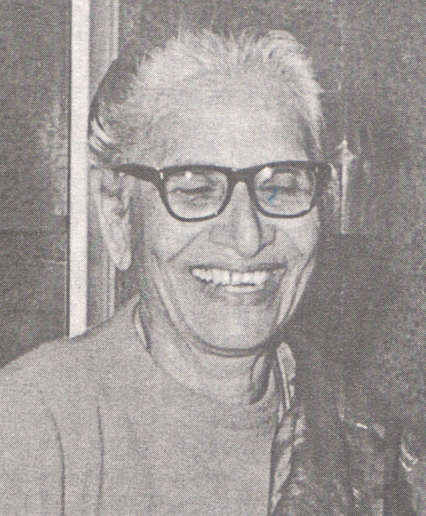
Irawati Karve (15 December 1905[1] – 11 August 1970) was an Indian sociologist, anthropologist, educationist and writer from Maharashtra, India. She was one of the students of G.S. Ghurye, the founder of sociology in India. She has been regarded as the first female Indian sociologist.[2]

Early life and education

[edit]

Irawati Karve was born on 15 December 1905 to a wealthy Chitpavan Brahmin[3] family and was named after the Irrawaddy River in Burma where her father, Ganesh Hari Karmarkar, was working for the Burma Cotton Company. She attended the girls boarding school Huzurpaga in Pune from the age of seven and then studied philosophy at Fergusson College, from which she graduated in 1926. She then obtained a Dakshina Fellowship to study sociology under G. S. Ghurye at Bombay University, obtaining a master's degree in 1928 with a thesis on the subject of her own caste titled The Chitpavan Brahmans — An Ethnic Study.[4]

Karve married Dinkar Dhondo Karve, who taught chemistry in a school, while studying with Ghurye. [a]Although her husband was from a socially distinguished Brahmin family, the match did not meet with approval from her father, who had hoped that she would marry into the ruling family of a princely state. Dinkar was a son of Dhondo Keshav Karve, a Bharat Ratna and a pioneer of women's education. Somewhat contradictorily, Dhondo Karve, opposed Dinkar's decision to send her to Germany for further studies.[6][7]

The time in Germany, which commenced in November 1928, was financed by a loan from Jivraj Mehta, a member of the Indian National Congress, and was inspired by Dinkar's own educational experiences in that country, where he had obtained his PhD in organic chemistry a decade or so earlier. She studied at the Kaiser Wilhelm Institute of Anthropology, Human Heredity, and Eugenics, was awarded a doctorate two years later[b] and then returned to her husband in India, where the couple lived a rather unconventional life less bound by the social strictures that were common at that time.[9][c] Her husband was an atheist and she explained her own visits to the Hindu shrine to Vithoba at Pandharpur as out of deference for "tradition" rather than belief. Despite all this, theirs was essentially a middle-class Hindu family in outlook and deed.[10]

Career

[edit]
Iravati Karve (1st row leftmost) with C. V. Raman and D. K. Karve (3rd and 2nd from right respectively in 1st row), in SNDT Women's University Convocation, 1935

Karve worked as an administrator at SNDT Women's University in Bombay from 1931 to 1936 and did some postgraduate teaching in the city. She moved to Pune's Deccan College as a Reader in sociology in 1939 and remained there for the rest of her career.[11]

According to Nandini Sundar, Karve was the first Indian female anthropologist, a discipline that in India during her lifetime was generally synonymous with sociology. She had wide-ranging academic interests, including anthropology, anthropometry, serology, Indology and palaeontology as well as collecting folk songs and translating feminist poetry.[12] She was essentially a diffusionist, inspired by several intellectual schools of thought and in some respects emulating the techniques used by W. H. R. Rivers. These influences included classical Indology, ethnology as practised by bureaucrats of the British Raj and also German eugenics-based physical anthropology. In addition, she had an innate interest in fieldwork.[13] Sundar notes that "as late as 1968 she retained a belief in the importance of mapping social groups like subcastes on the basis of anthropometric and what was then called 'genetic' data (blood group, colour vision, hand-clasping, and hypertrichosis)".[8]

She founded the department of anthropology at what was then Poona University (now the University of Pune).[12]

Karve served for many years as the head of the Department of Sociology and Anthropology at Deccan College, Pune (University of Pune).[14] She presided over the Anthropology Division of the National Science Congress held in New Delhi in 1947.[12] She wrote in both Marathi and English.

Legacy

[edit]
Statue of Irawati Karve, Birla Industrial & Technological Museum, Kolkata, West Bengal, India.

Sundar says that

although Karve was very well known in her time, especially in her native Maharashtra, and gets an honourable mention in standard histories of sociology/anthropology, she does not seem to have had a lasting effect on the disciplines in the way of some of her contemporaries.

She provides various possible reasons why Karve's effect has been less than that of people such as Ghurye and Louis Dumont. These include her location at an academic centre that carried less prestige than, say, those in Delhi and Bombay and because she concentrated on the classical anthropological concern relating to origins at a time when her fellow academics were moving from that to more specialised matters underpinned by functionalism. In addition, her lasting impact may have been affected due to none of her Ph.D. students being able to carry her work forward: unlike, say, Ghurye's students, they failed to establish themselves in academia. There was also the issue of her use of a niche publisher — her employers, Deccan College — for her early works rather than a mainstream academic house such as Oxford University Press, although this may have been imposed upon her.[12]

After Karve's death, Durga Bhagwat, a contemporary Marathi intellectual who had also studied under Ghurye but left the course, wrote a scathing critique of Karve. Sundar summarises this as containing "charges of plagiarism, careerism, manipulation of persons, suppressing the work of others, etc. Whatever the truth of these charges, the essay does Bhagwat little credit."[15]

Although Karve's work on kinship was based on anthropometric and linguistic surveys that are now considered unacceptable, there has been a revival of academic interest in that and some other aspects of her work, such as ecology and Maharashtrian culture.[12]

Her range of reading was wide, encompassing Sanskrit epics such as the Ramayana to the Bhakti poets, Oliver Goldsmith, Jane Austen, Albert Camus and Alistair MacLean, and her library of books related to academic subjects now forms a part of the collection of Deccan College.[16]

Works

[edit]

Among Karve's publications are:

  • Kinship Organization in India (Deccan College, 1953), a study of various social institutions in India.
  • Hindu Society — an interpretation (Deccan College, 1961), a study of Hindu society based on data which Karve had collected in her field trips, and her study of pertinent texts in Hindi, Marathi, Sanskrit, Pali and Prakrit. In the book, she discussed the caste system and traced its development to its present form.
  • Maharashtra — Land and People (1968) – describes various social institutions and rituals in Maharashtra.
  • Yuganta: The End of an Epoch, a study of the main characters of the Mahabharata treats them as historical figures and uses their attitudes and behavior to gain an understanding of the times in which they lived. Karve wrote the book first in Marathi, and later translated it into English. The book won the 1967 Sahitya Academy Award for best book in Marathi.[16]
  • Paripurti (in Marathi)
  • Bhovara (in Marathi) भोवरा
  • Amachi Samskruti (in Marathi)
  • Samskruti (in Marathi)
  • Gangajal (in Marathi)
  • The New Brahmans: Five Maharashtrian Families -biography of her father-in-law in a chapter called Grandfather[7]

Notes

[edit]

References

[edit]

Bibliography

[edit]
Revisions and contributorsEdit on WikipediaRead on Wikipedia
from Grokipedia

Irawati Karve (15 December 1905 – 11 August 1970) was an Indian and academic who pioneered the integration of Indological texts with ethnographic fieldwork to study , , and ancient societal structures. Born in Myingyan, , to a Chitpavan engineer father, she pursued doctoral studies in at the of starting in 1927, earning her degree under at the Kaiser Wilhelm Institute. There, she conducted craniometric research on 149 to refute hypotheses of racial superiority based on nasal index and , challenging scientific premises later exploited by . Returning to , Karve became the first woman appointed to a professorship in , establishing and leading the Department of and at Deccan College, , for nearly 40 years. Her seminal publications, including Organization in (1953) and Yuganta: The End of an Epoch (1967), employed secular, lenses to dissect Hindu social systems and reframe protagonists as products of historical dynamics rather than mythic ideals.

Early life and family background

Birth and upbringing

Irawati Karve was born on 15 December 1905 in Myingyan, Burma (now Myanmar), into a Chitpavan Brahmin family. Her father, Ganesh Hari Karmarkar, an engineer working for the Burma railways, named her after the nearby Irrawaddy River, reflecting the family's ties to the region. As the only daughter among six siblings, she received particular attention and affection from her parents, which fostered a supportive early environment within the constraints of traditional Brahmin norms. Her initial years in colonial Burma provided exposure to a multicultural setting, blending Indian expatriate communities with local Burmese influences, before her father arranged for her relocation to India for further family stability amid his professional commitments. This transition highlighted the family's adaptability, with Karmarkar's decisions prioritizing opportunities for his children despite the era's patriarchal customs that often limited women's roles in Chitpavan Brahmin society. Such experiences in varied cultural milieus laid an empirical foundation for her later curiosity about human societies, though her father's engineering background emphasized practical and progressive outlooks over rigid orthodoxy.

Marriage and personal influences

In 1926, Irawati Karmarkar married Dinkar Dhondo Karve, the son of the social reformer Maharshi Dhondo Keshav Karve, in an arranged union consistent with Chitpavan Brahmin family traditions. The marriage linked her to a family renowned for advocating women's education and widow remarriage, yet it occurred at a time when prevailing norms often curtailed women's higher pursuits after wedlock; Irawati nonetheless proceeded to complete her master's degree in sociology in 1928 and her doctoral research abroad, demonstrating the couple's alignment on enabling her intellectual ambitions despite societal expectations for primary domestic roles. The couple had three children: daughters Gauri Deshpande (born 1942) and Jai Nimbkar, and son Anand Karve. Balancing motherhood and household responsibilities with her fieldwork and academic commitments posed practical difficulties typical for educated women in pre-independence , where domestic labor fell predominantly on wives amid limited infrastructural support and cultural pressures; Irawati managed this through assistance, including from her husband's progressive lineage, without relinquishing her professional drive. Dinkar's supportive role in her endeavors fostered a grounded in mutual and shared reformist inherited from Maharshi Karve's legacy, subtly shaping Irawati's appreciation for adaptive structures amid —evident in her later personal choices, such as forgoing the mangalsutra and becoming the first woman in to ride a scooter, which reflected a pragmatic defiance of orthodox symbols without broader ideological rebellion. This domestic environment reinforced her grounded perspective on dynamics, prioritizing empirical realities over abstract ideals.

Education and formative experiences

Studies in India

Irawati Karve earned her Bachelor of Arts degree in philosophy from Fergusson College in Pune in 1926. This early training introduced her to philosophical inquiry, laying groundwork for later interdisciplinary pursuits in social sciences. Following her undergraduate studies, Karve pursued a Master of Arts in sociology at Bombay University, completing it in 1928 under the supervision of G. S. Ghurye, the department head who advocated rigorous empirical analysis of Indian social institutions such as caste, kinship, and family structures. Her thesis examined the Parashurama myth, providing initial exposure to Indological texts and their interpretation in sociological contexts. Ghurye's influence directed her toward data-driven examinations of societal patterns, prioritizing observable customs and historical continuities over abstract ideological frameworks. In the 1920s, academic fields like remained predominantly male domains in , with women facing substantial barriers to higher education and research roles despite emerging institutions like Bombay University. Karve's admission and success under Ghurye exemplified entry via intellectual merit amid these constraints, marking her as a trailblazer in accessing advanced study opportunities typically reserved for men.

Doctoral research in Germany and confrontation with racial theories

In 1928, Irawati Karve traveled to Berlin to pursue doctoral studies in anthropology at the Kaiser Wilhelm Institute for Anthropology, Human Heredity, and Eugenics, under the supervision of Eugen Fischer, a prominent German anthropologist known for his work on racial mixing and eugenics. Her research focused on testing hypotheses of racial hierarchy through craniometric analysis, specifically examining skull asymmetry as a purported indicator of intellectual or evolutionary superiority, with the expectation that "superior" groups like white Europeans would exhibit greater symmetry. Karve measured 149 human , including those from white European collections in and non-white specimens from German colonial territories in , to assess variations in . Her empirical data revealed no significant between racial group and skull asymmetry, contradicting 's underlying assumption that such traits aligned with a hierarchical model of racial superiority, including notions of dominance. Instead, she proposed non-racial explanations, such as spinal column irregularities, for observed asymmetries, thereby challenging the pseudoscientific foundations of theories prevalent in German at the time. This empirical refutation risked her academic standing, as it directly opposed her supervisor's framework; awarded her a marginal "sufficient" grade, reportedly citing her foreign status and limited German proficiency as factors, though her data-driven dissent was the core issue. Karve completed her PhD around 1930, with her dissertation, titled Normale Asymmetrie des Menschlichen Schädels (Normal Asymmetry of the Human Skull), published in 1931. She returned to India shortly thereafter, as political tensions in Europe escalated with the deepening economic crisis and the rise of extremist ideologies that would later amplify racial pseudoscience under Nazi rule, though her work predated Hitler's 1933 ascension. Her findings underscored the admixed nature of human populations, undermining claims of discrete, superior racial strains like those invoked in Aryan invasion theories applied to India.

Academic and professional career

Initial positions and departmental founding

In 1939, Irawati Karve joined the Deccan College Post-Graduate and Research Institute in as a Reader in , marking her entry into a male-dominated academic field where women rarely held faculty positions. Despite prevailing gender barriers in Indian higher education, she was appointed as India's first woman lecturer in and , leveraging her doctoral training in physical from to advocate for empirical data collection over theoretical speculation. Karve quickly assumed leadership of the newly established Department of Sociology and Anthropology, which she is credited with founding at Deccan College that same year, transforming it into a hub for interdisciplinary research combining sociological analysis with anthropometric studies. Under her direction, the department prioritized systematic surveys of physical and social traits in Maharashtra's villages, initiating anthropometric measurements to document regional variations in human morphology. These efforts involved setting up facilities for precise data gathering, reflecting her commitment to verifiable empirical evidence amid skepticism toward women's institutional roles. Early collaborations with bodies such as the Anthropological Society of facilitated resource sharing and standardized methodologies for trait documentation, underscoring Karve's focus on building foundational infrastructure rather than immediate interpretive outputs. Her tenure as the department's head, spanning nearly four decades, began with overcoming resistance to female leadership, establishing precedents for women in Indian anthropology.

Fieldwork and institutional roles

In the 1940s and 1950s, Karve undertook extensive empirical fieldwork in rural Maharashtra, conducting village surveys to document kinship networks, economic activities, and social structures among communities such as the Bhils in West Khandesh. These surveys emphasized direct observation and data collection on family relations and local economies, forming the basis for her later publications on Indian social organization. Her approach prioritized quantitative and qualitative field data over speculative theory, navigating logistical difficulties as one of the few women engaged in such remote anthropological work at the time. Institutionally, Karve served in key administrative and teaching roles that bridged academia and applied social analysis. At SNDT Women's University, she acted as registrar from 1931 to 1936, contributing to postgraduate instruction amid the institution's early development, and later held the position of vice-chancellor. From 1939 onward, she advanced anthropology at Deccan College in Pune, where she taught and led efforts to establish systematic study of cultural and social phenomena, including village-based research programs. Her work extended to policy-relevant applications, such as surveys on communities displaced by dam projects, informing Maharashtra's post-independence social planning without prescriptive ideological frameworks. Post-independence, Karve encountered typical academic hurdles in India, including limited funding for field expeditions and equipment, which constrained the scale of anthropometric and sociological surveys. She managed these by integrating student involvement in data collection and prioritizing cost-effective regional studies, while juggling departmental administration with personal research amid expanding teaching demands at Deccan College. This period highlighted the nascent state of Indian anthropology, reliant on individual initiative rather than robust institutional support.

Anthropological and sociological contributions

Anthropometric and empirical studies

Irawati Karve conducted pioneering anthropometric surveys in India, applying quantitative measurements of physical traits such as stature, head shape, nasal index, and eye color to assess biological variation among castes and tribes. Trained in physical anthropology at the University of Berlin under Eugen Fischer in 1930, she adapted craniometric and somatometric techniques to Indian populations, publishing early work like Anthropometric Measurements of the Marathas in the 1930s, which documented metrics from Maratha communities to identify regional physical affinities rather than overarching racial purity. These studies emphasized endogamous marriage practices as key drivers of localized trait clustering, attributing variations more to environmental adaptation and historical migration than to immutable racial essences. In the 1950s, Karve extended her empirical approach to blood group distributions, surveying ABO and Rh factors across endogamous groups in Maharashtra, including Chitpavan Brahmins and other castes, with funding from the Emslie Horniman Anthropological Scholarship in 1953. Her data revealed patterns of genetic continuity, such as overlapping allele frequencies between upper and lower castes, challenging colonial-era classifications that posited discrete Aryan-Dravidian divides or hierarchical racial ladders linking physical type to social superiority. For instance, skull asymmetry and cephalic index measurements showed no consistent correlation with purported intelligence or civilizational achievement, underscoring that observed differences stemmed from socio-cultural isolation via endogamy rather than innate racial inferiority. Karve's integration of these methods laid groundwork for population genetics in India, influencing later forensic anthropology by establishing baseline biometric data for diverse groups and highlighting gene flow despite caste barriers. Through the 1960s, her surveys across tribes and castes demonstrated that India's biological diversity reflected layered historical admixtures shaped by geography and marriage rules, not the rigid racial typologies promoted by British administrators or contemporaneous eugenicists. This empirical focus refuted deterministic links between morphology and hierarchy, prioritizing observable data over ideological constructs.

Analyses of kinship, caste, and Hindu society

In Kinship Organization in India (1953), Karve systematically mapped kinship structures across linguistic regions, delineating a north-south divide characterized by differing marriage preferences—cross-cousin unions prevalent in the Dravidian south versus sagotal exogamy in the Indo-Aryan north—along with variations in gotra (clan) prohibitions, inheritance patrilineality, and residence rules. Drawing on field surveys from over 20 regions, she demonstrated these patterns as adaptive responses to ecological diversity, historical migrations, and subsistence economies, rather than uniform pan-Indian norms. Karve conceptualized castes as endogamous jatis—localized subgroups within varnas—that preserved occupational specializations, purity gradients, and terminologies, forming a lattice that regulated and social intercourse more effectively than abstract egalitarian models. Empirical from village studies revealed how jati minimized conflict by confining alliances to compatible behavioral clusters, countering reformist dismissals of as dysfunctional by evidencing its role in stabilizing diverse populations amid limited state enforcement. In Hindu Society: An Interpretation (1961), Karve extended this framework to trace caste consolidation through observable customs like commensality taboos and hypergamous alliances, integrating linguistic distributions and field-recorded marriage networks to illustrate how endogamy solidified amid Indo-Aryan expansions, rejecting utopian reform narratives that ignored these causal layers of adaptation and continuity. She emphasized jatis' resilience in partitioning labor and descent, supported by cross-regional surveys showing persistent hierarchies despite colonial disruptions.

Interpretations of ancient texts

In Yuganta: The End of an Epoch (1969), Irawati Karve applied anthropological principles to dissect the Mahabharata, interpreting its characters as products of concrete kinship dynamics and social constraints rather than archetypal moral symbols or divine avatars. Drawing on textual details from the epic, she analyzed figures like the and Kauravas through the lens of familial alliances, disputes, and polygynous structures, revealing how these elements drove conflicts such as Draupadi's polyandrous and the resulting fraternal tensions. Karve prioritized the narrative's internal —such as descriptions of marital customs and lineage obligations—over later devotional overlays, arguing that the epic documented real ethical quandaries arising from human limitations in a patriarchal, kin-based society. Karve's readings emphasized causal links between the Mahabharata's events and persistent Hindu social patterns, including endogamy rules and co-wife rivalries, which she traced without anachronistic moral judgments or romantic idealization. For example, she portrayed Gandhari's voluntary blinding as a pragmatic response rooted in , resentment toward her husband's favoritism, and adherence to wifely duty amid , rather than an abstract emblem of loyalty, thereby highlighting the text's depiction of adaptive realism in gender roles. This method avoided allegorical impositions, instead using the epic to illustrate transitions in ancient Indian norms, such as shifting from tribal fluidity to more rigid hierarchies, as evidenced by the narrative's portrayal of royal lineages and ritual obligations. By framing the Mahabharata as a secular historical artifact of societal evolution—"the end of an epoch" marking the close of Vedic-era flexibility—Karve's interpretations underscored empirical textual fidelity to uncover causal mechanisms in myth formation, influencing later anthropological engagements with Indian literature by modeling non-ideological, evidence-based analysis of ancient customs.

Intellectual views and debates

Perspectives on caste and social structure

Irawati Karve defined castes primarily as endogamous kinship groups, or jatis, which function as semi-independent social units with distinct behavioral patterns shaped by marriage rules and territorial dispersion within linguistic regions. She argued empirically that strict endogamy, combined with occupational specializations and alliance preferences, generates regional variations in social structure, as evidenced by her division of India into kinship zones—such as the northern Indo-Aryan zone with gotra exogamy prohibiting close-kin marriages, versus the southern Dravidian zone permitting cross-cousin unions. This approach countered universalist interpretations of Indian society by drawing on anthropometric data and marriage surveys, revealing sub-castes like Chitpavan Brahmins as discrete units preserving genetic and cultural distinctiveness through endogamous practices. Karve viewed the caste system's endogamy as a mechanism fostering group cohesion and historical resilience, enabling Hindu society to endure invasions and migrations without total assimilation, as each jati maintained autonomous traditions amid broader cultural fluxes. From a causal standpoint, this structure prioritized internal stability over egalitarian integration, with castes functioning like insulated quilts—loose aggregates of diverse patches that absorbed external shocks through limited intermixture rather than uniform dissolution. Her analysis in works like Kinship Organization in India (1953) highlighted how such endogamous units, tied to specific locales and vocations, perpetuated social order by enforcing consanguineous ties and prohibiting wide-ranging exogamy, thereby countering narratives of caste as merely hierarchical oppression with evidence of adaptive functionality. In her early publications, Karve adopted a predominantly descriptive realism, documenting dynamics through terminologies and empirical fieldwork without prescriptive calls for or emphasis on active , focusing instead on the observable mechanics of . This restraint aligned with her commitment to undiluted observation, as in her portrayal of Hindu society as an "elastic" mosaic tolerant of regional diversity, where delimited interactions but sustained overall equilibrium.

Engagement with feminism and gender roles

Karve's pursuit of higher education, including a doctoral degree from Berlin in 1928, and her subsequent academic career represented a practical defiance of prevailing gender norms in early 20th-century India, where women's public roles were limited. Her independence extended to everyday mobility; in the 1950s, she became one of the first women in Pune to ride a scooter, navigating the city in a sari amid social scrutiny. These choices, however, stemmed from opportunities enabled by her Chitpavan Brahmin family's relative progressiveness and her husband's encouragement, rather than an overt challenge to traditional family dependencies. In works like Kinship Organization in India (1953), Karve empirically mapped practices within regional kinship systems, noting northern 's stricter seclusion of women under and prohibitions on widow remarriage among Brahmins and higher castes, which contrasted with more permissive southern patterns allowing remarriage for childless widows. She viewed these as embedded in endogamous structures sustaining social stability, documenting variations—such as cross-cousin marriages easing women's transitions—without advocating abolition or framing them as primary injustices requiring reform. This reflected an acceptance of kinship-defined roles, where women's positions, though constrained, adapted to familial imperatives over individual autonomy. Karve's interpretations eschewed centering gender as a standalone issue, prioritizing holistic analyses of social organization; for instance, her studies emphasized caste-kinship interplay, with gender dynamics appearing as secondary observations rather than focal critiques. A woman's perspective infused her work, evident in sensitivities to female experiences, yet she never formally engaged feminist movements or elevated women's issues above empirical kinship mappings. In Yuganta (Marathi edition 1967; English 1969), Karve dissected gender in the Mahabharata through character studies, portraying women like Kunti and Draupadi as resilient agents navigating patriarchal decrees—their joys and sufferings "decreed by men to whom they belonged"—while highlighting adaptive inequalities, such as polyandry's pragmatic origins amid resource scarcity, without imposing contemporary egalitarian lenses. These portrayals humanized epic females as flawed equals to males in moral complexity, underscoring historical contingencies over timeless oppression.

Criticisms and methodological controversies

Karve's integration of Indological sources, particularly texts, in analyses of and has drawn for prioritizing textual interpretation over empirical fieldwork or structural analysis, rendering her approach outdated in the eyes of structuralist-influenced scholars like , who dismissed such methods as non-scientific and overly "Hindu"-centric. Dumont argued that this reliance deviated from rigorous anthropological standards, positioning Karve more as an ethnologist than a systematic sociologist or . Her application of anthropometric techniques, derived from German training under figures like , to classify Indian castes and tribes has been faulted for perpetuating racialized frameworks, even after her dissertation challenged specific racist hypotheses on cranial asymmetry. Critics, including reviewers in Current Anthropology (1968), questioned the validity of these measurements for inferring genetic or sociocultural distances, noting their obsolescence amid advances in and potential misalignment with sociological inquiry. This persistence in using such tools post-World War II fueled accusations of methodological inconsistency, blending biological metrics with social categorization in ways that echoed colonial . Karve's analyses have also faced for apparent silence on caste-based and religious hierarchies, particularly in her early publications from the 1930s to 1950s, where detailed examinations of and structures omitted explicit critique of discriminatory practices. Some interpreters attribute this to her background and a focus on descriptive , viewing it as tacit endorsement of the status quo rather than neutral scholarship. Debates persist over Karve's blending of and , with Dumont and critiquing the approach for insufficient Western theoretical rigor and excessive proximity to the studied subject, which they claimed undermined objectivity in works like Kinship Organization in India (1953). This interdisciplinary method, incorporating literary and cultural elements, has been seen as diluting disciplinary boundaries, contrasting with calls for context-specific adaptations in Indian .

Legacy and recognition

Academic influence in India

Karve's establishment of anthropology teaching at Deccan College, Pune, in the 1930s marked an early institutional foundation for empirical social research in , where she emphasized fieldwork and anthropometric methods amid nascent university disciplines. Her leadership there fostered a of data-driven inquiry, influencing sociology departments to prioritize verifiable observations over speculative theorizing, particularly in studying and dynamics. Through supervision of PhD theses and collaborative projects, Karve mentored emerging scholars, integrating student fieldwork into publications that advanced regional ethnographies and set precedents for interdisciplinary sociology-anthropology approaches in Indian academia. This mentorship extended empirical rigor to analyses of , training a cohort that applied her zonal classifications to subsequent village and urban studies. Her 1953 monograph Kinship Organization in India supplied classificatory frameworks—dividing the subcontinent into four kinship zones based on marriage rules and terminology—that remain cited in scholarly examinations of familial structures and their intersections with caste, informing frameworks for demographic inquiries into marriage patterns and household composition. These contributions underscored causal linkages between kinship norms and social stability, countering overly generalized colonial-era views with localized empirical evidence. The Padma Bhushan award conferred on Karve in 1958 acknowledged her pioneering role in elevating women's participation and empirical standards within a male-dominated scholarly landscape, solidifying her as a benchmark for methodological precision in Indian social sciences.

Recent biographical reassessments

The 2024 biography Iru: The Remarkable Life of Irawati Karve by Urmilla Deshpande and Thiago Pinto Barbosa offers an archival-based reexamination of Karve's career, utilizing letters, interviews, and unpublished notes to portray her as a rigorous empiricist rather than an unblemished icon. Central to this reassessment is her 1927–1931 doctoral work in Berlin at the Kaiser Wilhelm Institute, where she measured 149 skulls under eugenicist Eugen Fischer, empirically disproving claims of skull shape correlating with racial intelligence hierarchies by showing greater intra-group variation than inter-group differences. This data-driven refutation of Aryan superiority theories predated Nazi applications of such pseudoscience, highlighting Karve's commitment to verifiable measurement over ideological presuppositions. Posthumous debates on her legacy balance acclaim for this anti-racist —which advanced indigenous-led scrutiny of colonial racial paradigms—with critiques of her methodological continuity, as she applied physical metrics to Indian castes and tribes into the 1960s, potentially embedding outdated racial categories in analyses of . Her formulations positing caste divergences from regional migrations, rather than singular invasions, persist in contention among geneticists and sociologists, who question their alignment with modern genomic evidence. Reassessors note tensions in her persona: vocal on women's and , yet reticent on caste hierarchies until the 1960s, with early writings exhibiting Brahmin-centric assumptions and 1947 Partition-era remarks evincing anti-Muslim bias, underscoring traditionalist undercurrents amid reformist affiliations. Karve's empirical emphasis has fueled renewed interest in fortifying Indian anthropology against Eurocentric legacies, as her field-derived datasets on tribes and castes exemplify locally grounded causal analyses of social evolution, prioritizing observable patterns over imported abstractions like those critiqued in Louis Dumont's . This resurgence positions her as a to dependency on Western theorists, advocating data from primary Indian contexts to dissect and without preconceived ideological filters.

Major works

Key publications and their impacts

Kinship Organization in India (1953) established a systematic classification of kinship terminologies and structures across India's linguistic regions, becoming a reference for anthropologists studying familial and marital patterns. Hindu Society: An Interpretation (1961) synthesized field data on caste hierarchies and regional variations, contributing to foundational debates on the historical development of social institutions in India. Yuganta: The End of an Epoch (English edition, 1969), first published in Marathi in 1967, achieved national prominence through literary awards and multiple translations, extending Karve's anthropological lens to epic narratives and broadening public engagement with historical reinterpretations.

References

Add your contribution
Related Hubs
User Avatar
No comments yet.