Hubbry Logo
IsostasyIsostasyMain
Open search
Isostasy
Community hub
Isostasy
logo
7 pages, 0 posts
0 subscribers
Be the first to start a discussion here.
Isostasy
Isostasy
from Wikipedia

Isostasy (from Greek ísos 'equal' and stásis 'standstill') or isostatic equilibrium is the state of gravitational equilibrium between Earth's crust (or lithosphere) and mantle such that the crust "floats" at an elevation that depends on its thickness and density. This concept is invoked to explain how different topographic heights can exist at Earth's surface. Although originally defined in terms of continental crust and mantle,[1] it has subsequently been interpreted in terms of lithosphere and asthenosphere, particularly with respect to oceanic island volcanoes,[2] such as the Hawaiian Islands.

Although Earth is a dynamic system that responds to loads in many different ways,[3] isostasy describes the important limiting case in which crust and mantle are in static equilibrium. Certain areas (such as the Himalayas and other convergent margins) are not in isostatic equilibrium and are not well described by isostatic models.

The general term isostasy was coined in 1882 by the American geologist Clarence Dutton.[4][5][6]

History of the concept

[edit]

In the 17th and 18th centuries, French geodesists (for example, Jean Picard) attempted to determine the shape of the Earth (the geoid) by measuring the length of a degree of latitude at different latitudes (arc measurement). A party working in Ecuador was aware that its plumb lines, used to determine the vertical direction, would be deflected by the gravitational attraction of the nearby Andes Mountains. However, the deflection was less than expected, which was attributed to the mountains having low-density roots that compensated for the mass of the mountains. In other words, the low-density mountain roots provided the buoyancy to support the weight of the mountains above the surrounding terrain. Similar observations in the 19th century by British surveyors in India showed that this was a widespread phenomenon in mountainous areas. It was later found that the difference between the measured local gravitational field and what was expected for the altitude and local terrain (the Bouguer anomaly) is positive over ocean basins and negative over high continental areas. This shows that the low elevation of ocean basins and high elevation of continents is also compensated at depth.[7]

The American geologist Clarence Dutton use the word 'isostasy' in 1889 to describe this general phenomenon.[4][5][6] However, two hypotheses to explain the phenomenon had by then already been proposed, in 1855, one by George Airy and the other by John Henry Pratt.[8] The Airy hypothesis was later refined by the Finnish geodesist Veikko Aleksanteri Heiskanen and the Pratt hypothesis by the American geodesist John Fillmore Hayford.[3]

Both the Airy-Heiskanen and Pratt-Hayford hypotheses assume that isostacy reflects a local hydrostatic balance. A third hypothesis, lithospheric flexure, takes into account the rigidity of the Earth's outer shell, the lithosphere.[9] Lithospheric flexure was first invoked in the late 19th century to explain the shorelines uplifted in Scandinavia following the melting of continental glaciers at the end of the last glaciation. It was likewise used by American geologist G. K. Gilbert to explain the uplifted shorelines of Lake Bonneville.[10] The concept was further developed in the 1950s by the Dutch geodesist Vening Meinesz.[3]

Models

[edit]

Three principal models of isostasy are used:[3][11]

  1. The Airy–Heiskanen model – where different topographic heights are accommodated by changes in crustal thickness, in which the crust has a constant density
  2. The Pratt–Hayford model – where different topographic heights are accommodated by lateral changes in rock density.
  3. The Vening Meinesz, or flexural isostasy model – where the lithosphere acts as an elastic plate and its inherent rigidity distributes local topographic loads over a broad region by bending.

Airy and Pratt isostasy are statements of buoyancy, but flexural isostasy is a statement of buoyancy when deflecting a sheet of finite elastic strength. In other words, the Airy and Pratt models are purely hydrostatic, taking no account of material strength, while flexural isostacy takes into account elastic forces from the deformation of the rigid crust. These elastic forces can transmit buoyant forces across a large region of deformation to a more concentrated load.

Perfect isostatic equilibrium is possible only if mantle material is in rest. However, thermal convection is present in the mantle. This introduces viscous forces that are not accounted for the static theory of isostacy. The isostatic anomaly or IA is defined as the Bouger anomaly minus the gravity anomaly due to the subsurface compensation, and is a measure of the local departure from isostatic equilibrium. At the center of a level plateau, it is approximately equal to the free air anomaly.[12] Models such as deep dynamic isostasy (DDI) include such viscous forces and are applicable to a dynamic mantle and lithosphere.[13] Measurements of the rate of isostatic rebound (the return to isostatic equilibrium following a change in crust loading) provide information on the viscosity of the upper mantle.[14]

Airy

[edit]
Airy isostasy, in which a constant-density crust floats on a higher-density mantle, and topography is determined by the thickness of the crust.
Airy isostasy applied to a real-case basin scenario, where the total load on the mantle is composed by a crustal basement, lower-density sediments and overlying marine water

The basis of the model is Pascal's law, and particularly its consequence that, within a fluid in static equilibrium, the hydrostatic pressure is the same on every point at the same elevation (surface of hydrostatic compensation):[3][8]

h1⋅ρ1 = h2⋅ρ2 = h3⋅ρ3 = ... hn⋅ρn

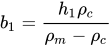
For the simplified picture shown, the depth of the mountain belt roots (b1) is calculated as follows:


where is the density of the mantle (ca. 3,300 kg m−3) and is the density of the crust (ca. 2,750 kg m−3). Thus, generally:

b1 ≅ 5⋅h1

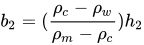
In the case of negative topography (a marine basin), the balancing of lithospheric columns gives:

where is the density of the mantle (ca. 3,300 kg m−3), is the density of the crust (ca. 2,750 kg m−3) and is the density of the water (ca. 1,000 kg m−3). Thus, generally:

b2 ≅ 3.2⋅h2

Pratt

[edit]

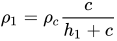
For the simplified model shown the new density is given by: , where is the height of the mountain and c the thickness of the crust.[3][15]
Vening Meinesz / flexural

[edit]
Cartoon showing the isostatic vertical motions of the lithosphere (grey) in response to a vertical load (in green)

This hypothesis was suggested to explain how large topographic loads such as seamounts (e.g. Hawaiian Islands) could be compensated by regional rather than local displacement of the lithosphere. This is the more general solution for lithospheric flexure, as it approaches the locally compensated models above as the load becomes much larger than a flexural wavelength or the flexural rigidity of the lithosphere approaches zero.[3][9]

For example, the vertical displacement z of a region of ocean crust would be described by the differential equation
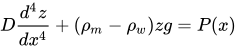
where and are the densities of the aesthenosphere and ocean water, g is the acceleration due to gravity, and is the load on the ocean crust. The parameter D is the flexural rigidity, defined as


where E is Young's modulus, is Poisson's ratio, and is the thickness of the lithosphere. Solutions to this equation have a characteristic wave number

As the rigid layer becomes weaker, approaches infinity, and the behavior approaches the pure hydrostatic balance of the Airy-Heiskanen hypothesis.[14]

Depth of compensation

[edit]

The depth of compensation (also known as the compensation level, compensation depth, or level of compensation) is the depth below which the pressure is identical across any horizontal surface. In stable regions, it lies in the deep crust, but in active regions, it may lie below the base of the lithosphere.[16] In the Pratt model, it is the depth below which all rock has the same density; above this depth, density is lower where topographic elevation is greater.[17]

Implications

[edit]

Deposition and erosion

[edit]

When large amounts of sediment are deposited on a particular region, the immense weight of the new sediment may cause the crust below to sink. Similarly, when large amounts of material are eroded away from a region, the land may rise to compensate. Therefore, as a mountain range is eroded, the (reduced) range rebounds upwards (to a certain extent) to be eroded further. Some of the rock strata now visible at the ground surface may have spent much of their history at great depths below the surface buried under other strata, to be eventually exposed as those other strata eroded away and the lower layers rebounded upwards.[18]

An analogy may be made with an iceberg, which always floats with a certain proportion of its mass below the surface of the water. If snow falls to the top of the iceberg, the iceberg will sink lower in the water. If a layer of ice melts off the top of the iceberg, the remaining iceberg will rise. Similarly, Earth's lithosphere "floats" in the asthenosphere.[8][19]

Continental collisions

[edit]

When continents collide, the continental crust may thicken at their edges in the collision. It is also very common for one of the plates to be underthrust beneath the other plate. The result is that the crust in the collision zone becomes as much as 80 kilometers (50 mi) thick,[20] versus 40 kilometers (25 mi) for average continental crust.[21] As noted above, the Airy hypothesis predicts that the resulting mountain roots will be about five times deeper than the height of the mountains, or 32 km versus 8 km. In other words, most of the thickened crust moves downwards rather than up, just as most of an iceberg is below the surface of the water.

However, convergent plate margins are tectonically highly active, and their surface features are partially supported by dynamic horizontal stresses, so that they are not in complete isostatic equilibrium. These regions show the highest isostatic anomalies on the Earth's surface.[22]

Mid-ocean ridges

[edit]

Mid-ocean ridges are explained by the Pratt hypothesis as overlying regions of unusually low density in the upper mantle.[22] This reflects thermal expansion from the higher temperatures present under the ridges.[23]

Basin and Range

[edit]

In the Basin and Range Province of western North America, the isostatic anomaly is small except near the Pacific coast, indicating that the region is generally near isostatic equilibrium. However, the depth to the base of the crust does not strongly correlate with the height of the terrain. This provides evidence (via the Pratt hypothesis) that the upper mantle in this region is inhomogeneous, with significant lateral variations in density.[22]

Ice sheets

[edit]

The formation of ice sheets can cause Earth's surface to sink. Conversely, isostatic post-glacial rebound is observed in areas once covered by ice sheets that have now melted, such as around the Baltic Sea[24] and Hudson Bay.[25] As the ice retreats, the load on the lithosphere and asthenosphere is reduced and they rebound back towards their equilibrium levels. In this way, it is possible to find former sea cliffs and associated wave-cut platforms hundreds of metres above present-day sea level. The rebound movements are so slow that the uplift caused by the ending of the last glacial period is still continuing.[18]

In addition to the vertical movement of the land and sea, isostatic adjustment of the Earth also involves horizontal movements.[26] It can cause changes in Earth's gravitational field[27] and rotation rate, polar wander,[28] and earthquakes.[29]

Lithosphere-asthenosphere boundary

[edit]

The hypothesis of isostasy is often used to determine the position of the lithosphere-asthenosphere boundary (LAB).[30]

See also

[edit]

References

[edit]

Further reading

[edit]
[edit]
Revisions and contributorsEdit on WikipediaRead on Wikipedia
from Grokipedia
Isostasy is the geophysical principle describing the state of gravitational equilibrium in which segments of Earth's rise or subside until they "float" at an elevation determined by the thickness and of the underlying crust relative to the denser mantle beneath. The term derives from the Greek words iso (equal) and stasis (standing), reflecting a condition of balanced "equal standing" where the crust behaves like less dense material floating on a denser, viscous fluid—the —allowing slow adjustments to changes in surface load. This equilibrium explains variations in , such as why averages 30–50 km thick under mountains while is thinner at about 7 km, with the entire system compensating through buoyancy akin to . The concept of isostasy emerged from observations of unexpected gravity anomalies near mountains, first noted by in the during Andean surveys, suggesting subsurface compensation for surface elevations. In 1855, George B. Airy proposed a model where crustal thickness varies to maintain balance, with thicker "roots" extending into the mantle beneath elevated regions like the . Four years later, John H. Pratt offered an alternative, attributing compensation to lateral variations in crustal density rather than thickness, with lower-density material under highlands and denser under basins. The term "isostasy" was coined in 1889 by Clarence E. Dutton to encapsulate this equilibrium process, building on earlier ideas from figures like and Osborne Fisher who invoked fluid-like mantle flow. In practice, isostasy manifests in phenomena like glacial isostatic adjustment, where the removal of ice sheets—such as those from the last Ice Age—causes crustal rebound at rates of about 1 cm per year in regions like , Canada. Modern refinements incorporate , where the rigid outer layer bends elastically to support loads over scales of 100–200 km, as seen in foreland basins adjacent to mountain belts. While Airy and Pratt models provide idealized frameworks, real-world isostasy often combines thickness and density variations, validated through gravity surveys, seismic profiling, and satellite altimetry, influencing everything from sea-level changes to tectonic evolution.

Fundamentals

Definition and Principles

Isostasy is the state in which the Earth's achieves gravitational equilibrium by floating buoyantly on the denser underlying , with vertical movements occurring in response to changes in surface or subsurface mass loads, analogous to the of objects in a . This equilibrium ensures that there are no lateral gradients at a certain depth, preventing horizontal flow in the underlying material. The process relies on the contrast between the lighter lithosphere (primarily the crust) and the denser asthenosphere, allowing the lithosphere to rise or subside until balance is restored. The core physical principle is within , where the downward gravitational force is balanced by the upward at every depth. This is expressed by the hydrostatic equation dPdz=ρg\frac{dP}{dz} = \rho g, with PP as , zz as depth (positive downward), ρ\rho as , and gg as ; integrating this yields the at any depth as the weight of the overlying material per unit area. In isostasy, this equilibrium extends laterally, such that at the depth of compensation—typically around 100–200 km—the lithostatic is uniform across the surface, eliminating shear stresses in the fluid-like . The , a zone of high temperature and low viscosity beneath the rigid , facilitates slow adjustments (over thousands to millions of years) by allowing ductile flow, enabling the to respond to loads like deposition or removal. Applying to lithospheric blocks provides the foundation for isostatic balance: the weight of a block equals the weight of the asthenospheric material it displaces. Consider a block of crustal ρc\rho_c with thickness hch_c protruding above the reference equilibrium level and a downward-extending root of thickness rr. The block's weight per unit area is ρc(hc+r)\rho_c (h_c + r), while the buoyant force equals the displaced mantle weight ρmr\rho_m r, where ρm\rho_m is mantle . Setting these equal gives the balance equation: ρc(hc+r)=ρmr\rho_c (h_c + r) = \rho_m r Rearranging yields the root thickness: r=ρchcρmρcr = \frac{\rho_c h_c}{\rho_m - \rho_c} This demonstrates how the density contrast ρmρc\rho_m - \rho_c determines the root needed for support. Typical values are continental crustal density ρc2.7\rho_c \approx 2.7 g/cm³ (due to felsic to intermediate composition) and upper mantle density ρm3.3\rho_m \approx 3.3 g/cm³ (mafic to ultramafic). For continental crust averaging ~35 km thick, the corresponding root is ~30 km below the oceanic reference level, ensuring near-zero average elevation at sea level through buoyant compensation.

Analogies and Basic Mechanisms

Isostasy can be intuitively understood through the analogy of an floating in . , with a of about 917 kg/m³, is less dense than at approximately 1025 kg/m³, so roughly 90% of the 's remains submerged to achieve buoyant equilibrium, with only a small portion protruding above the surface. This mirrors the behavior of the Earth's , which has a lower (around 2.7 g/cm³) than the underlying mantle (about 3.3 g/cm³), allowing it to "float" and form thickened roots beneath elevated terrains like mountain ranges to maintain gravitational balance. Another familiar analogy involves boats in a harbor responding to changes in load. An empty floats higher in the water, but adding causes it to sink deeper until the displaced water provides sufficient to support the increased weight; unloading the then allows the to rise again. In the geological context, this illustrates how positive loads—such as accumulating glacial ice or sediment deposits—induce crustal , while the removal of mass through processes like ice melt or triggers subsequent and uplift to reestablish equilibrium. The underlying mechanisms of isostatic adjustment rely on the viscoelastic properties of the Earth's interior, particularly flow in the , a ductile layer beneath the rigid that behaves like a viscous fluid over long timescales. This flow facilitates gradual vertical movements of the crust, typically spanning thousands of years, in response to imbalances. The lithosphere initially responds elastically to loads with immediate deformation, but longer-term adjustments occur through viscous relaxation in the asthenosphere and deeper mantle. Adjustment timescales depend on the scale and nature of the load: small, localized changes may equilibrate rapidly within decades primarily through elastic rebound, whereas large-scale perturbations, such as those from extensive ice sheets, require viscous flow and can persist for over 10,000 years. Positive loads increase mass and cause , while negative loads, like that removes crustal material, reduce mass and promote uplift as the crust adjusts upward.

Historical Development

Early Observations

One of the earliest empirical observations suggesting crustal compensation occurred during the French Geodesic Mission to in the 1730s and 1740s, led by and Charles Marie de La Condamine. While measuring the shape of the near the equator, Bouguer conducted pendulum experiments at various altitudes in the , including at 2,860 meters and the summit of Pichincha at 4,784 meters. These measurements revealed that the decrease in with altitude was smaller than predicted solely by effects, implying that the additional mass of the surrounding mountains did not increase gravity as much as expected; instead, the pendulums indicated lighter effective gravity over the highlands than anticipated from topographic mass alone. Bouguer documented these findings in his 1749 publication La Figure de la Terre, attributing the anomaly to a higher mean of the compared to surface rocks, though his estimates overestimated this by a factor of at least two; modern modeling confirms the data's accuracy and highlights early evidence of isostatic compensation through a low-density crustal root beneath the . In the mid-19th century, similar gravitational anomalies were noted during the Great Trigonometrical Survey of India, directed by Sir George Everest from the 1830s to the 1840s. Everest's team measured a meridional arc from southern India to the Himalayan foothills, observing deflections in the plumb line caused by the gravitational pull of the mountain range; these deflections were smaller than theoretical predictions based on the visible mass of the Himalayas, suggesting underlying compensation mechanisms such as lower-density material at depth. Collaborating with John Henry Pratt in the early 1850s, Everest analyzed data from stations like Kaliana and Kalianpur, which indicated that the Himalayas exerted less attraction than expected, challenging assumptions of uniform crustal density and paving the way for hypotheses of equilibrium adjustment. Early gravimetric data from these pendulum-based surveys consistently showed lighter gravity over major mountain ranges compared to what their surface mass alone would produce, further evidencing the need for compensatory structures. Building on these observations, 19th-century hypotheses began to formalize ideas of crustal balance. In 1839, British mathematician explored the equilibrium of the under varying loads in his paper "Researches in Physical Geology," published in the Philosophical Transactions of the Royal Society. Assuming a interior beneath a thin solid shell, modeled how compressive forces and elevation changes could maintain stability, proposing that the crust adjusts to loads through deformation and flow, influencing later dynamical concepts. These ideas gained traction amid growing , including reports of post-glacial uplift in during the 1850s, where geologists documented ongoing land emergence—such as tilting of ancient shorelines in the —indicating slow crustal rebound after Pleistocene ice removal and contradicting models of static, uniform-density crust. The culmination of these early insights came in 1882, when American geologist Clarence E. Dutton coined the term "isostasy" in a in the American Journal of Science. Discussing Osmond Fisher's Physics of the Earth's Crust, Dutton used the term—derived from Greek roots meaning "equal standing"—to describe the hypothetical state of balance in the crust, particularly referencing the recent uplift of the Sierra Nevada as evidence of gravitational equilibrium tending to restore level surfaces. Dutton emphasized that such adjustments occur through flotation-like mechanisms, integrating prior gravitational anomalies and uplift observations into a cohesive empirical framework that set the stage for theoretical advancements.

Key Theoretical Formulations

The foundational theoretical formulation of isostasy emerged in the mid-19th century through efforts to reconcile observed gravitational deflections with topographic variations during geodetic surveys. In 1855, , the , proposed that compensation for elevated terrain occurs via deeper roots of lighter crustal material extending into a denser substratum, drawing an from atmospheric pressure distributions but applying it to the . This model emphasized variations in crustal thickness to achieve . Shortly thereafter, John Henry Pratt, a chaplain and mathematician involved in the Great Trigonometrical Survey of , offered a contrasting view in 1855, suggesting that topographic highs are supported by columns of material with laterally varying densities, all extending to a uniform compensation level. Refinements in the late built on these ideas by linking isostasy to specific geological processes. Thomas Francis Jamieson, a Scottish , applied isostatic principles to explain in 1865, attributing the uplift of recently deglaciated regions in to the viscous response of the Earth's interior following the removal of ice loads. In 1882, American geologist Clarence Edward Dutton formalized the concept by coining the term "isostasy" to describe the state of gravitational balance in the crust, highlighting its role in maintaining equilibrium amid erosional and depositional changes. Advancements in the shifted toward more dynamic models informed by geophysical data. Dutch geophysicist Felix Andries Vening Meinesz introduced a flexural interpretation in 1931, based on submarine gravity measurements that revealed regional rather than purely local compensation, accounting for the elastic strength of the . The 1924 General Assembly of the International Union of Geodesy and Geophysics in featured a dedicated on isostasy, fostering international collaboration and debate on these emerging theories. During the , systematic mapping, including Vening Meinesz's oceanic surveys and continental efforts by figures like William Bowie, provided empirical confirmation of isostatic compensation by showing reduced anomalies over varied terrains. By the 1960s, isostasy was integrated into the nascent theory of , with works such as those by Bryan L. Isacks, Jack E. Oliver, and Lynn R. Sykes explaining zones and seafloor features through combined isostatic and tectonic adjustments.

Isostatic Models

Airy Model

The Airy model of isostasy posits that the achieves gravitational equilibrium through variations in its thickness while maintaining a uniform , analogous to blocks of wood of the same but different heights floating in . Under elevated regions such as mountain ranges, the crust develops deeper "" that extend into the denser underlying mantle, displacing a volume of mantle material equivalent to the excess of the topographic high. This compensation ensures that the at a common depth below the surface is equalized across the . A common visual representation of the Airy model extends the iceberg analogy: just as an iceberg protrudes above the ocean surface with a submerged portion balancing its weight, continental crust under mountains features a visible topographic supported by an invisible root protruding into . The root's depth compensates for the lighter crustal material above, preventing gravitational instability. This conceptualization highlights the model's emphasis on buoyancy-driven equilibrium without requiring lateral density contrasts. Mathematically, the model derives from the condition of at the compensation level. For a topographic hh above a reference crustal thickness, the root depth rr satisfies the equation where the weight of the displaced mantle equals the excess crustal : h=ρmρcρmrh = \frac{\rho_m - \rho_c}{\rho_m} r Here, ρc\rho_c is the constant crustal (typically ~2.7 g/cm³) and ρm\rho_m is the mantle (~3.3 g/cm³), yielding a compensation of approximately 1:5.5, meaning a 1 km requires about 5.5 km of root. This formulation arises from equating the volume of excess crust to the displaced mantle volume at equilibrium depth, assuming hydrostatic balance. The Airy model's strengths lie in its simplicity and ability to explain observed crustal thickening beneath major orogens, as confirmed by seismological studies. For instance, seismic refraction and receiver function analyses reveal crustal thicknesses of ~70 km beneath the , implying roots ~35 km deep relative to average , consistent with the model's predictions for supporting elevations exceeding 5 km. However, the model has limitations, as it assumes purely local, viscous compensation without accounting for the lithosphere's lateral rigidity, leading to inaccuracies for small-wavelength features like isolated volcanoes or oceanic plateaus where flexural support dominates. It also inadequately describes regions with thin oceanic crust, where thickness variations alone cannot fully explain bathymetric anomalies.

Pratt Model

The Pratt model of isostasy, proposed by John Henry Pratt in 1855, assumes that the Earth's crust maintains a constant thickness while exhibiting lateral variations in density to achieve gravitational equilibrium. Under this hypothesis, regions of elevated topography, such as mountain ranges, are underlain by crustal material that is less dense—often due to higher temperatures or compositional differences—allowing these "lighter" columns to float higher on the denser underlying mantle, similar to blocks of varying densities floating in a fluid with their bases aligned at a uniform compensation depth. This model can be mathematically formulated through the condition of equal per unit area across vertical columns to the level of compensation. With constant crustal thickness TT, the average ρavg\rho_{\text{avg}} satisfies ρavgT=constant\rho_{\text{avg}} \cdot T = \text{constant}, ensuring hydrostatic balance. The resulting topographic hh above a reference level is proportional to the density deficit Δρ\Delta \rho relative to the mantle ρm\rho_m, given by hΔρρmT,h \approx \frac{\Delta \rho}{\rho_m} T, where Δρ=ρmρc\Delta \rho = \rho_m - \rho_c and ρc\rho_c is the crustal . The Pratt model effectively accounts for thermal buoyancy effects in young orogenic belts, where elevated temperatures reduce crustal density and support high topography without requiring thickened crust. It also aligns with certain gravity observations, such as reduced Bouguer anomalies over continental plateaus, indicating underlying low-density material. However, seismic refraction and reflection data reveal significant lateral variations in crustal thickness beneath most continental regions, providing limited support for the constant-thickness assumption and rendering the model outdated for broad applications beyond specific thermal or volcanic settings.

Flexural Model

The flexural model of isostasy treats the as a thin elastic plate that bends under applied loads, allowing for regional compensation rather than purely local adjustments. This approach bridges the rigid block assumptions of earlier models by incorporating the 's finite strength, where loads are supported partly by elastic stresses and partly by forces from displaced mantle material. The core assumption is that the behaves as an elastic beam or plate with flexural rigidity DD, defined as D=ETe312(1ν2)D = \frac{E T_e^3}{12(1 - \nu^2)}, where EE is (typically around 70-100 GPa for crustal rocks), TeT_e is the effective elastic thickness, and ν\nu is (approximately 0.25). This rigidity quantifies the lithosphere's resistance to bending, with TeT_e representing the depth to which the remains elastic under long-term loads. The mathematical foundation is the fourth-order governing plate deflection ww: D4w+Δρgw=q(x)D \nabla^4 w + \Delta \rho g w = q(\mathbf{x}) Here, q(x)q(\mathbf{x}) is the applied load (e.g., topographic or sedimentary), Δρ\Delta \rho is the density contrast between the infill material and the underlying mantle (often 300-500 kg/m³), gg is (9.81 m/s²), and 4\nabla^4 is the biharmonic operator. Analytical solutions to this equation, typically using Fourier transforms or Green's functions, yield a characteristic flexural of approximately 100-200 km, depending on DD and Δρ\Delta \rho, over which the deforms smoothly rather than abruptly. The model originated from Felix Andries Vening Meinesz's analysis of submarine anomalies in 1931, which revealed broader compensation patterns inconsistent with local isostasy, prompting the incorporation of elastic flexure to explain regional lows and highs. Subsequent developments, such as those by Gunn in 1943, refined the analytical solutions, while modern extensions integrate viscoelastic to account for time-dependent relaxation under sustained loads, transitioning from elastic to viscous behavior over geological timescales. Key strengths of the flexural model include its ability to explain the formation of regional features such as foreland basins and peripheral bulges, where loads propagate uplift or over hundreds of kilometers, and its applicability to both oceanic (thinner, hotter TeT_e) and continental (thicker, cooler TeT_e) . It provides a unified framework for interpreting , , and seismic data in load-bearing scenarios. Limitations arise from the need to specify TeT_e, which varies spatially and temporally between 10 and 50 km based on thermal state and composition, requiring independent constraints from or modeling; additionally, the model deviates from pure isostasy for short-wavelength loads (<50 km), where elastic support dominates without significant compensation.

Compensation Depth

Defining the Depth

The depth of compensation, denoted as DD, in isostasy refers to the subsurface level at which the hydrostatic exerted by the overlying rock columns becomes equal across different regions, ensuring a state of gravitational equilibrium where lateral variations in mass above this depth are balanced. This depth marks the boundary below which density anomalies do not contribute to surface gravitational differences, as the total mass (or ) of vertical columns from the surface to DD is uniform, preventing lateral flow or instability in . For regional isostasy, which applies to broader scales like continental features, DD is typically estimated at 100-200 km, reflecting the over which lithospheric equilibrium is maintained. In local isostatic models such as Airy and Pratt, the compensation depth is shallower, often around 30-50 km, corresponding to the base of the crustal root or a fixed level within the where adjustments occur without significant rigidity. In contrast, the flexural model incorporates lithospheric rigidity, leading to a deeper effective DD because elastic stresses distribute loads over wider areas, delaying full compensation until greater depths. The depth of compensation is commonly measured using gravity data, where Bouguer gravity anomalies—corrected for effects—approach zero at DD if perfect isostasy holds, indicating balanced mass columns. The isostatic anomaly is then calculated as the difference between the observed and the theoretical anomaly predicted by an isostatic model, with values near zero confirming the chosen DD. This residual helps refine DD by iteratively adjusting models until gravitational signals from and its compensation cancel out. Mathematically, isostatic balance at depth DD requires that the of density variations across the column equates to zero or deficit: 0DΔρ(z)dz=0\int_0^D \Delta \rho(z) \, dz = 0 where Δρ(z)\Delta \rho(z) is the lateral difference as a function of depth zz, ensuring equal at DD. Early 20th-century estimates of the compensation depth, such as the Hayford-Bowie concept around 1910, used a depth of 113 km based on global data from mountain regions, including analyses of Himalayan surveys, where deficits relative to suggested subsurface mass adjustments, as refined by later analyses of these data. Modern determinations leverage altimetry and , such as from GOCE and GRACE missions, to map global fields and infer DD by correlating topographic heights with undulations, achieving resolutions that validate depths varying by tectonic province.

Influencing Factors

The depth of isostatic compensation is significantly influenced by rheological properties of , particularly the viscosity of the , which governs the rate of isostatic adjustment following loading or unloading events. studies indicate that asthenospheric viscosity typically ranges from 101810^{18} to 102110^{21} Pa·s, with lower values facilitating faster equilibration and potentially shallower effective compensation depths in regions of recent tectonic activity. Additionally, the elastic thickness (TeT_e) of the , a measure of its , varies regionally: oceanic lithosphere often exhibits TeT_e values around 10 km due to thinner, hotter plates, while continental cratons support TeT_e up to 70 km, reflecting greater mechanical strength and deeper compensation. Thermal effects play a crucial role in modulating compensation depth by altering lithospheric rigidity and . Higher temperatures reduce the rigidity of , allowing for a more ductile response and effectively deepening the compensation level as the thins and low-density material extends further downward. In continental settings, the typically controls this process, with average gradients leading to compensation depths of approximately 100 km where temperature increases promote and adjustments. Compositional variations in introduce heterogeneities that can modify the effective compensation depth. For instance, the presence of denser phases like eclogite in the , often derived from subducted , increases local density and can shallow the effective compensation level to maintain overall . Such heterogeneities, including variations in composition, disrupt uniform density profiles and lead to localized deviations in isostatic equilibrium. Observational constraints on compensation depth often rely on geophysical proxies, with seismic discontinuities providing key insights. The lithosphere-asthenosphere boundary (LAB), marked by sharp changes in seismic velocity, typically occurs at depths of 100-200 km beneath continents and serves as a proxy for the compensation level where mechanical decoupling allows isostatic adjustment. Furthermore, geodetic from GPS and tide gauges capture dynamic responses to loading, enabling inferences about time-variable compensation depths through measurements of vertical land motion and relative sea-level changes. Advances since 2000, particularly from InSAR and GRACE satellite missions, have refined estimates of compensation depth with accuracies approaching ±10 km by integrating surface deformation and gravity anomalies into isostatic models. These datasets enhance resolution of viscoelastic responses, allowing for more precise mapping of regional variations in compensation geometry.

Geological Applications

Glacial and

During the approximately 20,000 years ago, massive ice sheets in the , with thicknesses reaching up to 3 kilometers, exerted immense pressure on the , causing significant in regions such as and . As these ice sheets melted and retreated, the removal of this load initiated , a viscoelastic response where the crust slowly uplifts at rates typically ranging from 1 to 10 mm per year, continuing to the present day. This process, known as glacial isostatic adjustment (GIA), not only elevates formerly glaciated areas but also leads to in peripheral forebulge regions due to the collapse of deformed mantle material. Prominent examples of ongoing rebound include the Fennoscandian region in and , where maximum uplift rates reach about 10 mm per year near the , and the area around in , exhibiting reversal from prior at rates of approximately 11 mm per year as of 2024. These rates reflect the differential response to the former loads of the Laurentide and Fennoscandian ice sheets, with uplift diminishing with distance from the centers of maximum ice thickness. To model this rebound, scientists employ the viscoelastic Maxwell model, which describes the as a material that combines elastic and viscous behaviors, allowing for time-dependent relaxation after loading changes. In a simplified one-dimensional form for post-load uplift, the vertical displacement u(t)u(t) follows an exponential approach to equilibrium, u(t)=u0(1et/τ)u(t) = u_0 (1 - e^{-t/\tau}), where u0u_0 is the long-term displacement determined by the load and (e.g., u0σ/(ρg)u_0 \approx \sigma / (\rho g), with ρ\rho and gg ), tt is time since unloading, and τ=η/μ\tau = \eta / \mu is the relaxation time with η\eta and μ\mu. This formulation predicts in uplift rates over thousands of years, aiding in forecasting long-term crustal movements based on inferred profiles. Evidence for GIA includes historical observations of lake level changes in the , documented since the 1860s, which reveal ongoing tilting due to differential rebound—northern shores rising relative to southern ones. Modern GPS measurements further confirm asymmetric uplift patterns, with higher rates near former ice centers and subsidence in forebulge areas, aligning closely with model predictions. The implications of extend to sea-level rise assessments, where corrections are essential to distinguish crustal motion from eustatic changes in records, particularly in glaciated margins. Additionally, the associated stress changes can trigger ; for instance, rebound-induced stresses have been linked to earthquakes in during the 20th century, highlighting ongoing tectonic hazards in these regions.

Erosion and Sedimentary Basin Formation

Erosion removes mass from the , reducing the gravitational load and triggering isostatic adjustment through buoyant uplift of the . This process is governed by the contrast between the crust (typically ~2.7 g/cm³) and the underlying mantle (~3.3 g/cm³), with the gross rebound approximately u=ρchρmρc4.5hu = \frac{\rho_c h}{\rho_m - \rho_c} \approx 4.5 h for eroded thickness hh, though net surface change depends on local versus regional compensation and flexural effects. In orogenic settings with differential , such as valley incision, peaks may experience relative uplift on the order of 20-30% of local . In ancient orogens such as the , this mechanism sustains a long-term denudation-uplift cycle, where contemporary rates of ~30 mm/kyr are counterbalanced by isostatic rebound, preserving topographic relief despite over 180 million years of post-orogenic decay. Similarly, in settings like the basin, the accumulation of up to 10 km of sediments imparts a substantial load, driving flexural isostatic that accommodates the depositional over tens of millions of years. To quantify the isostatic component of subsidence in sedimentary basins, the backstripping method reconstructs paleobathymetry by sequentially removing layers, correcting for compaction and loading effects. The isostatic ss attributable to a sediment layer is given by s=ρsedhsedρmρf,s = \frac{\rho_\text{sed} \cdot h_\text{sed}}{\rho_m - \rho_f}, where ρsed\rho_\text{sed} is the , hsedh_\text{sed} is the decompacted thickness, ρm\rho_m is , and ρf\rho_f represents the infilling fluid (e.g., ). This approach isolates load-induced , revealing underlying tectonic signals in basins like the . Isostatic responses to also shape , where fluvial incision rates are dynamically balanced by uplift, fostering steady-state characterized by concave-upward profiles and uniform . In the Himalaya, post-2010 surveys have illuminated this equilibrium, documenting spatially variable but temporally consistent incision rates (~1-5 mm/yr) that match rock uplift, maintaining dynamic topographic steadiness amid ongoing .

Tectonic Collisions and Extension

In tectonic collisions, the continental crust undergoes significant thickening due to compressional forces, often reaching depths of 70 km or more, as observed in the where southern regions exhibit crustal thicknesses of 73–77 km. This thickening initially leads to as the added mass depresses the into the denser mantle, but subsequent removes overburden, triggering isostatic rebound and surface uplift through the Airy model, which dominates compensation in such settings by varying crustal thickness to achieve buoyancy equilibrium. The Airy mechanism effectively supports the high elevations of collisional orogens, such as Tibet's average 5 km above , by positing low-density crustal roots that displace mantle material. During continental extension, such as in zones, the crust thins dramatically, typically to 30–40 km in the , where depths average around 30 km beneath the rift axis compared to 35–45 km in surrounding cratons. This thinning induces as the buoyant crustal layer is reduced, facilitating the formation of basins, while associated asthenospheric promotes through decompression melting. The flexural model often governs basin development here, accounting for the lithosphere's elastic response to loading and unloading, though it integrates with local isostatic adjustments. A prominent example is the India-Asia collision initiating around 50 Ma, which thickened the crust to approximately 50–55 km across much of the , driving isostatic uplift that raised average elevations to 2.5–3 km initially, with total Himalayan uplift exceeding 5 km in some sectors due to ongoing shortening and compensation. Similarly, extension in the involved up to 50% crustal thinning from an original ~40 km depth, resulting in widespread and the characteristic horst-and-graben supported by isostatic re-equilibration. Post-collisional settings reveal implications through anomalies, where deviations from perfect isostasy manifest as positive or negative Bouguer anomalies, often exceeding 50 mGal in regions like the Himalaya, indicating incomplete compensation or lateral density variations that influence ongoing tectonics. These anomalies arise from imbalances in gravitational potential energy (GPE), which can drive extension; the lateral force per unit length promoting deformation is given by f=ΔGPEL,f = \frac{\Delta \text{GPE}}{L}, where ΔGPE\Delta \text{GPE} is the difference in integrated GPE (typically ρgzdz\int \rho g z \, dz over the lithospheric column) between adjacent regions, and LL is the distance across the gradient, often on the order of 10^{12–13} , \text{N/m} in collisional plateaus. Recent thermochronological studies from the 2020s, using low-temperature methods like apatite (U-Th)/He dating, highlight delayed isostatic responses in the Andes, where exhumation lags tectonic thickening by millions of years due to viscous mantle adjustments and climatic influences on erosion rates in the Central Andes (18–36°S).

Mid-Ocean Ridges and Lithospheric Boundaries

Mid-ocean ridges represent sites of active where hot mantle material upwells, leading to and reduced in the underlying and nascent . This thermal buoyancy elevates the ridge axis by approximately 2–3 km relative to older , as observed in bathymetric profiles across major ridge systems. The resulting topographic high is maintained in isostatic equilibrium through the Pratt model, which attributes support to lateral density contrasts rather than crustal thickening. As the oceanic lithosphere cools and thickens symmetrically away from the ridge axis over time, conductive heat loss causes contraction and isostatic of the flanks at rates of roughly 300–350 m per square root of million years, consistent with plate cooling models. The - boundary (LAB) marks the transition where isostatic support shifts from the rigid, elastic above to dynamic processes in the underlying , typically at depths of 50–100 km beneath oceanic plates. This boundary is characterized by a sharp decrease in seismic velocity and , enabling ductile flow that facilitates long-term isostatic adjustment and plate motion. Beneath mid-ocean ridges, the LAB is particularly shallow, often around 50 km, due to elevated temperatures and , which enhance and contribute to the ridge's elevated profile. The low of the (on the order of 10^{19}–10^{20} Pa·s) allows for viscous relaxation of stresses, distinguishing it from the brittle and enabling the flow necessary for isostatic compensation. A prominent example is the , where a broad gravity low of –20 to –40 mGal aligns with the ridge's topographic high, reflecting incomplete isostatic compensation from ongoing thermal effects and thinner . In contrast, the Pacific plate's LAB shallows to approximately 60 km in areas of rapid spreading (e.g., ), where fast plate motion sustains thinner and stronger convective coupling with the . For volcanic features like seamounts near ridge axes, flexural isostasy models account for the lithosphere's elastic response, with effective thicknesses of 5–10 km supporting loads through bending rather than pure local compensation. These models highlight how thermal weakening near ridges reduces flexural rigidity compared to older . Post-2015 has illuminated undulations in LAB depth along mid-ocean ridges, with variations of 10–20 km linked to along-axis heterogeneity and melt distribution. These imaging techniques reveal sharper boundaries than thermal models predict, suggesting rheological influences like sliding. Complementing this, Gravity Recovery and Climate Experiment ( data from 2002–2025 have quantified subtle mass anomalies at ridges, with deficits of 10–50 kg/m² attributable to isostatic uplift from buoyancy, providing empirical validation of dynamic models.

References

Add your contribution
Related Hubs
User Avatar
No comments yet.