Hubbry Logo
SAE J1772SAE J1772Main
Open search
SAE J1772
Community hub
SAE J1772
logo
8 pages, 0 posts
0 subscribers
Be the first to start a discussion here.
SAE J1772
SAE J1772
from Wikipedia
SAE J1772
SAE J1772-2009 electric vehicle connector
Type Automotive power connector
Production history
Produced 2009
General specifications
Length 33.5 millimetres (1.32 in)
Diameter 43.8 millimetres (1.72 in)
Pins 5
Electrical
Signal single-phase AC
Data
Data signal SAE J1772: Resistive / Pulse-width modulation
Pinout
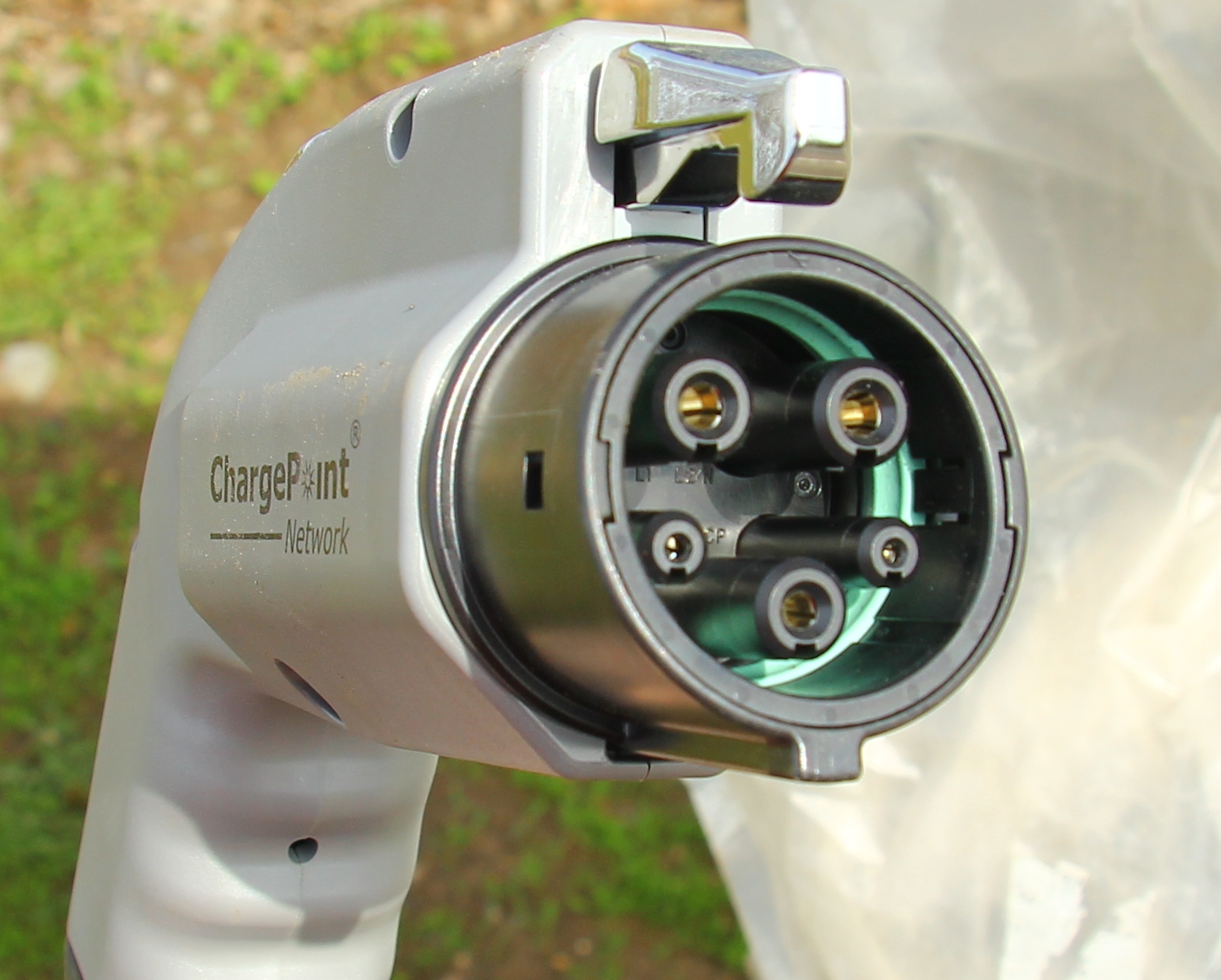
Pinouts for SAE J1772, looking at end of plug (attached to EVSE cord)
L1 Line 1 single-phase AC
L2/N Line 2 / Neutral single-phase AC
CP Control pilot post-insertion signalling
PP Proximity pilot pre-insertion signalling
PE Protective earth full-current protective earthing system
CCS Combo 1 extension adds two extra high-current DC pins underneath, and the two Alternating Current (AC) pins for Neutral and Line 1 are not populated.

SAE J1772, also known as a J plug or Type 1 connector after its international standard, IEC 62196 Type 1, is a North American standard for electrical connectors for electric vehicles. It is maintained by SAE International under the formal title "SAE Surface Vehicle Recommended Practice J1772, SAE Electric Vehicle Conductive Charge Coupler".[1]

The SAE maintains the general physical, electrical, communication protocol, and performance requirements for the electric vehicle conductive charge system and coupler. The intent is to define a common electric vehicle conductive charging system architecture including operational requirements and the functional and dimensional requirements for the vehicle inlet and mating connector.

The J1772 5-pin standard supports a wide range of single-phase (1φ) alternating current (AC) charging rates. They range from portable devices that can connect to a household NEMA 5-15 outlet that can deliver 1.44 kW (12 A @ 120 V) to hardwired equipment that can deliver up to 19.2 kW (80 A @ 240 V).[2] These connectors are sometimes informally referred to as chargers, but they are "electric vehicle supply equipment" (EVSE), since they only supply AC power to the vehicle's on-board charger, which then converts it to the direct current (DC) needed to recharge the battery.

The Combined Charging System (CCS) Combo 1 connector builds on the standard, adding two additional pins for DC fast charging up to 350 kW.

History

[edit]
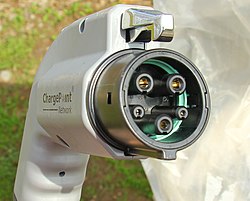
The older Avcon connector, featured here on a Ford Ranger EV

The main stimulus for the development of SAE J1772 came from the California Air Resources Board (CARB). Early electric vehicles like the General Motors EV1 and Toyota RAV4 EV used Magne Charge (SAE J1773), an inductive system. CARB rejected the inductive technology in favor of conductive coupling to supply electricity for recharging. In June 2001, CARB adopted the SAE J1772-2001 standard as the charging interface for electric vehicles in California.[3][4] This early version of the connector was made by Avcon and featured a rectangular connector capable of delivering up to 6.6 kW of electrical power.[5][6] The California regulations mandated the usage of SAE J1772-2001 beginning with the 2006 model year.

CARB later asked for higher current delivery than the 6.6 kW that the 2001 J1772 (Avcon) standard supported. This process led to the proposal of a new round connector design by Yazaki which allowed for an increased power delivery of up to 19.2 kW delivered via single phase 120–240 V AC at up to 80 amps. In 2008, CARB published a new standard that mandated the usage of the new connector beginning with the 2010 model year;[7] this was approved in 2012.[8]

The Yazaki plug that was built to the new SAE J1772 plug standard successfully completed certification at UL. The standard specification was subsequently voted upon by the SAE committee in July 2009.[9] On January 14, 2010, the SAE J1772 REV 2009 was adopted by the SAE Motor Vehicle Council.[10] The companies participating in or supporting the revised 2009 standard include smart, Chrysler, GM, Ford, Toyota, Honda, Nissan, Rivian, and Tesla.

The SAE J1772-2009 connector specification was subsequently added to the international IEC 62196-2 standard (“Part 2: Dimensional compatibility and interchangeability requirements for a.c. pin and contact-tube accessories”) with voting on the final specification slated to close in May 2011.[11][needs update] The SAE J1772 connector is considered a “Type 1” implementation providing a single phase coupler.[12]

Vehicle equipment

[edit]

The SAE J1772-2009 was adopted by electric vehicle manufacturers in the Chevrolet Volt and the Nissan Leaf. The connector became standard equipment in the U.S. market due to the availability of charging stations supporting it in the nation's electric vehicle network (helped by funding such as the ChargePoint America program drawing grants from the American Recovery and Reinvestment Act).[13][14]

The European versions were equipped with a SAE J1772-2009 inlet as well until the automotive industry settled on the IEC Type 2 “Mennekes” connector as the standard inlet – since all IEC connectors use the same SAE J1772 signaling protocol the car manufacturers are selling cars with either a SAE J1772-2009 inlet or an IEC Type 2 inlet depending on the regional market. There are also (passive) adapters available that can convert J1772-2009 to IEC Type 2 and vice versa. The only difference is that many European versions have an on-board charger that can take advantage of three-phase electric power with higher voltage and current limits even for the same basic electric vehicle model (such as the Chevrolet Volt/Opel Ampera).[citation needed]

Combined Charging System (CCS)

[edit]
CCS Combo 1 vehicle inlet showing the J1772 and the two DC fast-charging pins

In 2011, SAE developed a J1772/CCS Combo Coupler variant of the J1772-2009 connector. This was to support the Combined Charging System standard for direct current (DC) fast charging, which includes the standard 5-pin J1772 connector along with an additional two larger pins to support fast DC charging. Combo 1 accommodates charging at 200–920 volts DC and up to 350 kW.[1][needs update] The combination coupler also uses power-line communication technology to communicate between the vehicle, off-board charger, and smart grid.[15] Seven car makers (Audi, BMW, Daimler, Ford, General Motors, Hyundai, Porsche, Volvo, and Volkswagen) agreed in late 2011 to introduce the Combined Charging System in mid-2012.[16] The first vehicles using the SAE Combo plug were the BMW i3 released in late 2013, and the Chevrolet Spark EV released in 2014.[17]

In Europe, the combo coupler is based on the Type 2 (VDE) AC charging connector (Combo 2) maintaining full compatibility with the SAE specification for DC charging and the HomePlug Green PHY PLC protocol.[18] In 2019 Tesla introduced the Model 3 with a CCS Combo 2 plug in Europe, but has not introduced models with CCS in the US. With the introduction of the Model 3 in Europe, Tesla added CCS charging cables to V2 Superchargers (supporting both CCS Combo 2 and Tesla DC Type 2). European V3 and V4 Tesla Superchargers include only a CCS charging cable.[19]

Properties

[edit]

Connector

[edit]

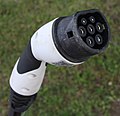
The J1772-2009 connector is designed for single phase alternating current electrical systems with 120 V or 240 V such as those used in North America and Japan. The round 43-millimetre (1.7 in) diameter connector is keyed and has five pins (viewed from outside of the plug):[20]

SAE J1772 / IEC 62196-2-1 Type 1
Row Position Function Notes
Top[a] 1 L1 "AC Line 1"
2 N "AC Neutral" for 120 V Level 1 charging or "AC Line 2" for 208–240 V Level 2 charging
Bottom[b] 3 PE "Protective Earth" aka Ground
Middle[c] 4 PP "Proximity Pilot" aka "plug present", which provides a signal to the vehicle's control system so it can prevent movement while connected to the electric vehicle supply equipment (EVSE; i.e., the charging station), and signals the latch release button to the vehicle.[citation needed]
5 CP "Control Pilot" is a communication line used to negotiate charging level between the car and the EVSE, and it can be manipulated by the vehicle to initiate charging and can carry other information.[21] The signal is a 1 kHz square wave at ±12 volts generated by the EVSE to detect the presence of the vehicle, communicate the maximum allowable charging current, and control charging begin/end.[22]
  1. ^ Top row is spaced 6.8 mm (0.27 in) above the centerline of the connector and the pins are spaced 15.7 mm (0.62 in) apart about the centerline.
  2. ^ Bottom row is spaced 10.6 mm (0.42 in) below the centerline of the connector.
  3. ^ Middle row is spaced 5.6 mm (0.22 in) below the centerline of the connector and the pins are spaced 21.3 mm (0.84 in) apart about the centerline.

The connector is designed to withstand 10,000 mating cycles (a connection and a disconnection) and exposure to the elements. With 1 mating cycle per day, the connector's lifespan should exceed 27 years.[23]

Release mechanism

[edit]

The SAE J1772 or Type 1 plug is locked into the car with a hook that is manually operated, mostly by pressing a button with the thumb, which interrupts power. This allows anybody to stop charging and even theft of the cable. To prevent this, the European IEC 62196 Type 2 connector has openings on the side for automatic locking and release, operated by the car owner via remote control. If the car locks or releases its plug, the charger follows suit according to the PP signal.

In addition, the charge port on many modern cars with a J1772 connector have an extendable pin that blocks the J1772 latch from being raised. By extending this pin, it becomes impossible to raise the release latch. In this way, the vehicle can prevent a plugged-in J1772 connector from being removed. This is essential for the CCS implementation where the connector is not designed to break the heavy DC charging current.

Charging

[edit]

The SAE J1772-2017 standard defines four levels of charging: AC Level 1, AC Level 2, DC Level 1, and DC Level 2.[24] Earlier released revisions of J1772 also listed a never-implemented AC Level 3, which was considered but never implemented.

Charge method Voltage (V) Phase Max. current,
continuous (A)
Branch circuit
breaker rating (A)[a]
Max. power (kW)
AC Level 1 120 1 12 15 1.44
16 20 1.92
AC Level 2 208 or 240 1 24–80 30–100 5.0–19.2
AC Level 3[b] 208–600 3 63–160 80-200 22.7–166
Charge method Voltage (V) Phase Max. current (A) Max. power (kW)
DC Level 1 50–1000 80 80
DC Level 2 50–1000 400 400
  1. ^ Per NEC article 625.41, branch circuit rating must be at least 125% of EVSE maximum continuous current
  2. ^ As noted in Appendix M of the SAE J1772 standard document, a third AC charge method was considered but never implemented for light vehicles. For heavy and industrial vehicles, this was left to the SAE J3068 Medium and Heavy Duty Vehicle Conductive Charging Task Force Committee which permits the J1772 protocol at 400 VAC or less and requires a newer LIN protocol above 400 VAC (LIN is recommended at all voltages). J3068 uses the Type 2 (Mennekes connector) possibly supplying up to 166 kW.[25] The J1772 AC Level 3 mode using single phase power would have provided up to 96 kW at a nominal voltage of 240 V AC and a maximum current of 400 A. This power level is closer to what J3068 implemented a decade later at up to 600 VAC, although J3068 version 1 only supports up to 250 amps.

For example, the 2020 Chevrolet Bolt has a 66-kWh lithium-ion battery and a 7.2-kW onboard charging module; with an EPA range of 259 miles (417 km) and energy efficiency of 118 mpg‑e (29 kW⋅h/100 mi; 17.7 kW⋅h/100 km),[26] it can use its portable charge cord to charge at AC Level 1 (120 V, 12 A) to get up to 4 mi (6.4 km) of range per hour or go off an AC Level 2 charging unit (240 V, 32 A) to get up to 25 mi (40 km) of range per hour. Using an optional DC fast charging (DCFC) port, this model can also charge at up to 55 kW to get up to 180 mi (290 km) of range per hour.

Other EVs use an 800 V battery architecture (such as those on Hyundai's E-GMP platform) to charge much faster. According to Hyundai, "With a 350 kW DC charger, IONIQ 5 can charge from 10 percent to 80 percent in just 18 minutes. According to WLTP cycle, IONIQ 5 users only need to charge the vehicle for five minutes to get 100 km of range."[27] These vehicles are capable of accepting up to 230kW until about 50% State of charge, allowing these vehicles to recharge much quicker than similar EVs with lower voltage batteries.

Some EVs extend J1772 to allow AC Level 1 (120 V) charging at greater than 16 amps. This is useful, for example, at RV parks where TT-30 ("Travel Trailer" - 120 V, 30 A) receptacles are common. These allow charging at up to 24 amps. However, this level of 120 V charging has not been codified into J1772.

Another extension, supported by the North American Charging System, is Level 2 charging at 277 V. Like 208 V, 277 V is commonly found in North American commercial three-phase circuits.

Safety

[edit]

The J1772 standard includes several levels of shock protection, ensuring the safety of charging even in wet conditions. Physically, the connection pins are isolated on the interior of the connector when mated, ensuring no physical access to those pins. When not mated, J1772 connectors have no power at the pins;[28] they are not energized until commanded by the vehicle.[29]

The proximity detection pin is connected to a switch in the connector release button. Pressing the release button causes the vehicle to stop drawing current. As the connector is removed, the shorter control pilot pin disconnects first, causing the EVSE to drop power to the plug. This also ensures that the power pins do not disconnect under load, causing arcs and shortening their life. The ground pin is longer than the other pins, so it connects first and breaks last.

Signaling

[edit]
J1772 signaling circuit

The signaling protocol has been designed for the following charging sequence.[29]

  • Supply equipment signals presence of AC input power
  • Vehicle detects plug via proximity circuit (thus the vehicle can prevent driving away while connected) and can detect when latch is pressed in preparation for plug removal.
  • Control Pilot (CP) functions begin
    • Supply equipment detects plug-in electric vehicle (PEV)
    • Supply equipment indicates to PEV readiness to supply current
    • PEV ventilation requirements are determined
    • Supply equipment current capacity provided to PEV
  • PEV commands energy flow
  • PEV and supply equipment continuously monitor continuity of safety ground
  • Charge continues as determined by PEV
  • Charge may be interrupted by disconnecting the plug from the vehicle

The technical specification was described first in the 2001 version of SAE J1772 and subsequently the IEC 61851-1 and IEC TS 62763:2013. The charging station puts 12 V on the Control Pilot (CP) and the Proximity Pilot (AKA Plug Present: PP) measuring the voltage differences. This protocol does not require integrated circuits like other charging protocols, making the SAE J1772 robust and operable through a temperature range of −40 °C to +85 °C.

Control Pilot

[edit]

Control Pilot (Mode): The charging station sends a 1 kHz square wave on the control pilot that is connected back to the protective earth on the vehicle side by means of a resistor and a diode (voltage range ±12.0±0.4 V). The live wires of public charging stations are always dead if the CP–PE (Protective Earth) circuit is open, although the standard allows a charging current as in Mode 1 (maximum 16 A). If the circuit is closed, the charging station can also verify that the protective earth is functional. The vehicle can request a certain charging function by setting the resistance between the CP and PE pins; 2.7 kΩ announces a Mode 3 compatible vehicle (vehicle detected) which does not require charging. 880 Ω says the vehicle is ready to charge, and 240 Ω requests with ventilation charging, in which case the charging stations supplies charging power only if the area is ventilated (i.e., outdoors).

The Control Pilot line circuitry examples in SAE J1772:2001 show that the current loop CP–PE is connected permanently on the vehicle side via a 2.74 kΩ resistor, making for a voltage drop from +12 V to +9 V when a cable is hooked up to the charging station, which activates the wave generator. The charging is activated by the vehicle by adding parallel 1.3 kΩ resistor resulting in a voltage drop to +6 V or by adding a parallel 270 Ω resistor for a required ventilation resulting in a voltage drop to +3 V. Hence the charging station can react by only checking the voltage range present on the CP–PE loop.[30] Note that the diode only makes for a voltage drop in the positive range. Any negative voltage on the CP–PE loop is blocked by D1 in the vehicle, any significant current that does flow in the CP–PE loop during the negative period shuts off the current as being considered a fatal error (like touching the pins).

For IEC62196-2 male plugs the Control Pilot pin is shorter to prevent untethered cables being used as extension leads, This prevents connecting downstream cables that may have a lower current capability a cable of a higher current rating.

Base status Charging status Resistance, CP–PE Resistance, R2 Voltage, CP–PE
Status A Standby Open, or ∞ Ω +12 V
Status B Vehicle detected 2740 Ω +9±1 V
Status C Ready (charging) 882 Ω 1300 Ω +6±1 V
Status D With ventilation 246 Ω 270 Ω +3±1 V
Status E No power (shut off) 0 V
Status F Error -12 V

Control Pilot (Current limit): The charging station can use the wave signal to describe the maximum current that is available via the charging station with the help of pulse-width modulation. A 16% PWM is a 10 A maximum, a 25% PWM is a 16 A maximum, a 50% PWM is a 32 A maximum and a 90% PWM flags a fast charge option.[31]

The PWM duty cycle of the 1 kHz CP signal indicates the maximum allowed mains current. According to the SAE it includes socket outlet, cable and vehicle inlet. In the US, the definition of the ampacity (ampere capacity, or current capacity) is split for continuous and short term operation.[31] The SAE defines the ampacity value derived by a formula based on the 1 ms full cycle (of the 1 kHz signal) with the maximum continuous ampere rating being 0.6 A per 10 μs up to 850 μs (with the lowest (100 μs/10 μs) × 0.6 A = 6 A). Above 850 μs, the formula requires subtraction of 640 μs and multiplying the difference by 2.5. For example ((960 μs − 640 μs)/10 μs) × 2.5 A = 80 A.[30]

PWM duty cycle indicating ampere capacity[31]
PWM SAE continuous SAE short term
50% 30 A 36 A peak
40% 24 A 30 A peak
30% 18 A 22 A peak
25% 15 A 20 A peak
16% 9.6 A
10% 6 A

Proximity Pilot

[edit]

The proximity pin, PP (also known as plug present), as shown in the SAE J1772 example pinout, describes the switch, S3, as being mechanically linked to the connector latch release actuator. During charging, the EVSE side connects the PP–PE loop via S3 and a 150 Ω R6; when opening the release actuator a 330 Ω R7 is added in the PP–PE loop on the EVSE side which gives a voltage shift on the line to allow the electric vehicle to initiate a controlled shut off prior to actual disconnection of the charge power pins. However, many low-power adapter cables do not offer that locking actuator state detection on the PP pin.

Under IEC 62196 the Proximity Pin is also used to indicate the cable capacity – this is relevant for non-tethered EVSEs.

The resistor is coded to the maximum current capability of the cable assembly. The EV interrupts the current supply if the current capability of the cable is exceeded as detected by the measurement of the Rc (shown as R6 in the J1772 signaling circuit above), as defined by the values for the recommended interpretation range.

Rc is placed between the PP and PE, within the detachable cable assembly.

Current capability of the cable assembly Rc (±3%) Recommended interpretation range by the EVSE
13 A 1.5 kΩ / 0.5 W 1–2.7 
20 A 680 Ω / 0.5 W 330 Ω – 1 kΩ
32 A 220 Ω / 1 W 150–330 Ω
70 A single-phase / 63 A three-phase 100 Ω / 1 W 50–150 Ω

[32]

P1901 powerline communication

[edit]

In an updated standard due in 2012, SAE proposes to use power line communication, specifically IEEE 1901, between the vehicle, off-board charging station, and the smart grid, without requiring an additional pin; SAE and the IEEE Standards Association are sharing their draft standards related to the smart grid and vehicle electrification.[33]

P1901 communication is compatible with other 802.x standards via the IEEE 1905 standard, allowing arbitrary IP-based communications with the vehicle, meter or distributor, and the building where chargers are located. P1905 includes wireless communications. In at least one implementation, communication between the off-board DC EVSE and PEV occurs on the pilot wire of the SAE J1772 connector via HomePlug Green PHY power line communication (PLC).[34][35][36]

Competing standards

[edit]

A competing proposal known as the Mennekes connector initiated by RWE and Daimler was standardized in 2011's IEC 62196 as its Type 2 connector. It has been widely adopted as the European Union's standard single- and three-phase coupler.[12][37] The connector adopted the same protocols for the pilot pin as J1772's J-Plug. The IEC specification allows for up to 63 A and 43.6 kW. In 2018, the SAE J3068 committee released an enhancement to the EU connector tailored for the North American industrial market allowing up to 160 A / 166 kW on 3φ power.

The same IEC 62196-2 standard also specified a pair of Type 3 connector from Scame Global providing a single- and three-phase coupler with shutters.[12] After a 2016 approval by the IEC for a small modification to the Mennekes connector optionally allowing shutters, Type 3 has been deprecated.

Tokyo Electric Power Company has developed a specification solely for automotive high-voltage DC fast charging using the JARI DC connector and formed the CHAdeMO (charge de move, equivalent to "charge for moving") association with Japanese automakers Mitsubishi, Nissan and Subaru to promote it.[38]

See also

[edit]

References

[edit]
[edit]
Revisions and contributorsEdit on WikipediaRead on Wikipedia
from Grokipedia
SAE J1772 is a North American standard developed by that defines the conductive charging coupler for (AC) charging of (EVs) and electric vehicles (PHEVs). It specifies the physical design, electrical characteristics, communication protocols, and performance requirements for the charging system to ensure safety, interoperability, and efficiency between vehicles and electric vehicle supply equipment (EVSE). The standard primarily supports Level 1 charging at 120 V AC with up to 12 A (approximately 1.4 kW) and Level 2 charging at 208–240 V AC with currents ranging from 16 A to 80 A (up to 19.2 kW), using a five-pin Type 1 connector that includes two power pins (L1 and L2/Neutral), a ground pin, a control pilot for vehicle-EVSE communication, and a proximity pilot for detecting connector insertion. The connector features a round housing approximately 43 mm in diameter, designed for single-phase electrical systems common in . Development of SAE J1772 originated in 1996 as an SAE Recommended Practice to establish requirements for EV conductive charging systems, driven by collaborations including and . The standard gained traction in 2001 when it was adopted by the (CARB) as the required interface for zero-emission vehicle charging in , promoting widespread industry acceptance. A major revision occurred in 2009, leading to formal adoption by the SAE Motor Vehicle Council on January 14, 2010, which incorporated input from automakers like GM, Ford, , , and . Subsequent updates in 2012, 2017, and the latest in January 2024 have refined dimensions, corrected errors, updated references, and enhanced compatibility while maintaining . SAE J1772 remains a for AC charging in , used by nearly all non-Tesla EVs produced before 2025 and much of the public charging infrastructure, enabling seamless interoperability across manufacturers. However, as of 2025, it is being supplemented by the SAE J3400 standard (based on Tesla's NACS), adopted by several manufacturers for new electric vehicles. It forms the foundation for the (CCS1), an extension that adds two DC pins below the J1772 connector for fast charging up to 350 kW, further solidifying its role in the EV ecosystem. The standard's emphasis on safety features, such as verification to prevent faults and automatic , has supported the growth of EV adoption by ensuring reliable and secure charging.

History and Development

Origins and Initial Standardization

The development of SAE J1772 originated in 1996 as an SAE Recommended Practice to establish requirements for EV conductive charging systems. A major revision effort began with the formation of the SAE Hybrid J1772 in 2007 under , bringing together key automakers including , Ford, and to address the growing need for standardized electric vehicle infrastructure. This collaborative effort shifted focus from earlier approaches, which had been explored in the but deemed less efficient, toward conductive methods that enabled reliable Level 1 (120 V) and Level 2 (240 V) AC charging for plug-in electric vehicles (PEVs). The aimed to create a unified architecture encompassing physical connectors, electrical interfaces, and safety protocols to support widespread EV adoption amid rising environmental regulations and automaker commitments to . Key milestones in the standardization process included concept finalization in early , followed by extensive prototype testing throughout and 2009 to validate performance, interoperability, and safety under real-world conditions. These phases involved iterative evaluations of connector designs and signaling mechanisms, with input from utilities and equipment suppliers to ensure compatibility with existing electrical grids. Additionally, collaborations such as those with the informed broader communication frameworks for PEV-smart grid interactions, laying groundwork for future capabilities beyond basic charging control. The culmination of this work resulted in the first publication of SAE Recommended Practice J1772 in January 2010, which defined a single-phase AC system supporting up to 19.2 kW of power delivery for AC Level 2 charging while incorporating proximity detection and control pilot signaling for safe operation. Upon release, SAE J1772 rapidly emerged as the for North American PEVs, with early adopters including the and , both launched in late 2010 and equipped with the J1772 inlet for Level 1 and Level 2 charging. This swift integration by major manufacturers facilitated the rollout of compatible charging stations and accelerated consumer confidence in EV infrastructure, setting the stage for subsequent revisions while establishing conductive charging as the dominant method in the region.

Key Revisions

Earlier versions include the initial 1996 Recommended Practice and its 2001 adoption by the (CARB), which promoted early industry acceptance. The SAE J1772 standard underwent its foundational revision in January 2010 (J1772 JAN2010), establishing the baseline for conductive AC charging systems in . This update specified support for 120 V Level 1 charging at up to 16 A and 240 V Level 2 charging, with pilot signaling via a control pilot circuit using to communicate vehicle state, available current, and ventilation requirements between the electric vehicle supply equipment (EVSE) and the vehicle. The revision emphasized in-cable control and devices to ensure safe operation, drawing from earlier drafts to create a unified architecture for plug-in s and hybrids. A major update arrived with the October 2017 revision (J1772_201710), which refined the standard, introduced formal definitions for DC charging levels (DC Level 1 and DC Level 2), enhanced fault detection protocols such as improved ground fault circuit interrupter (GFCI) integration and proximity pilot signaling for better error handling. Key technical improvements included stricter insulation requirements to prevent breakdown, refined ground fault monitoring to reduce shock hazards, and closer alignment with UL 2594 for EVSE safety testing and certification. These changes were motivated by industry feedback on the limitations of earlier versions in supporting faster charging and broader vehicle types. The revision process for SAE J1772 is managed by the SAE Hybrid and EV Standards Committee, which conducts reviews at least every five years—or more frequently as needed—incorporating input from automakers, charger manufacturers, and regulatory bodies to ensure relevance amid . The 2017 update specifically responded to the surge in EV deployments, where higher power demands necessitated scalable charging without compromising or safety. As of November 2025, no major revisions have superseded the edition, though minor errata and clarifications have been issued periodically; for instance, a 2020 update addressed cable flexibility specifications to improve durability in real-world use, and the 2024 revision (J1772_202401) refined terminology, corrected typographical errors, and better defined connector dimensions without altering core electrical parameters. These incremental changes maintain while supporting ongoing refinements.

Evolution to CCS and Beyond

The (CCS) emerged in 2012 through the efforts of the Charging Interface Initiative (CharIN), a consortium founded by major automakers including , , Daimler, Ford, , , and to standardize EV charging. This system extended the existing SAE J1772 AC connector by incorporating two additional DC pins at the bottom, enabling high-power DC fast charging capabilities up to 350 kW while maintaining for AC charging. The design unified AC Level 1 and Level 2 charging with DC fast charging in a single port, addressing the need for versatile infrastructure as EV adoption grew. In 2013, formally adopted CCS1 as the North American variant, officially designating it as an extension of the J1772 standard under SAE J1772 Combo specifications. This integration supported for communication and smart charging protocols, allowing for automated authentication, billing, and during sessions. The adoption solidified CCS1's role in enabling seamless DC fast charging across North American EVs, with power delivery up to 400 A and 1000 V, while preserving the J1772's AC functionality for residential and workplace use. The 2020s marked a pivotal shift with the rise of the North American Charging Standard (NACS), originally developed by Tesla. In June 2023, SAE announced its intent to standardize NACS as J3400, culminating in the publication of the J3400 technical information report by December 2023 and the full recommended practice by September 2024. This led to widespread production of adapters enabling J1772 and CCS-equipped vehicles to access NACS chargers, with major automakers like Ford, General Motors, Rivian, and Hyundai committing to native NACS ports on most new EV models starting in 2025. By mid-2025, NACS had become the dominant port for new EVs from these manufacturers, representing over 70% of incoming models, though J1772 persisted as the de facto AC charging standard for legacy and transitional systems. Key catalysts included the 2022 Biden administration initiative to establish unified national EV charging standards under the Bipartisan Infrastructure Law, aiming for a reliable 500,000-station network by 2030. In 2024, the National Electric Vehicle Infrastructure (NEVI) program reinforced CCS1 compatibility for federally funded projects through 2025, while issuing guidance for gradual NACS integration to support emerging vehicle fleets. Challenges persist in ensuring backward compatibility, as adapters bridge NACS and CCS systems but face supply chain constraints, with manufacturers like Ford reporting delays in adapter production due to surging demand and material shortages. These shifts prioritize NACS for its compact design and higher power handling, yet require ongoing investments in dual-standard infrastructure to avoid stranding existing J1772/CCS vehicles.

Connector and Physical Design

Type 1 Connector Specifications

The SAE J1772 Type 1 connector is a five-pin, round design standardized for conductive AC charging of electric vehicles in , featuring pins for L1 (line 1), L2/N (line 2 or neutral), ground (PE), control pilot (CP), and proximity pilot (PP). The connector body has a diameter of 43 mm, with the handle assembly measuring approximately 22 cm in length to facilitate ergonomic handling during connection. This compact form ensures compatibility with vehicle inlets while maintaining structural integrity under typical charging conditions. The housing is constructed from thermoplastic material rated UL 94 V-0 for flame retardancy, providing durability and resistance to environmental stressors such as heat and impact. Contacts are made of copper alloy with silver plating to enhance conductivity and prevent corrosion over repeated mating cycles. The pin configuration follows a specific layout: Pin 1 (top row, left) for L1 AC power (up to 240 V), Pin 2 (top row, right) for L2/N AC power, Pin 3 (bottom row, center) for ground, Pin 4 (bottom row, left) for PP detection, and Pin 5 (bottom row, right) for CP signaling. These assignments ensure safe power delivery and communication without cross-interference. Dimensional tolerances are tightly controlled per SAE specifications, with mating interfaces held to ±0.1 mm to guarantee reliable electrical contact and prevent misalignment during insertion. The assembly achieves an IP67 rating for ingress protection when mated, safeguarding against dust and water immersion up to 1 meter for 30 minutes. The vehicle inlet differs from the cable plug in its recessed mounting, which incorporates weatherproof seals and covers to protect against environmental exposure when not in use, enhancing longevity in outdoor installations.

Release and Locking Mechanisms

The SAE J1772 connector employs a solenoid-actuated in the inlet that engages upon full insertion of the connector, ensuring a secure attachment during charging. This locking mechanism is controlled by the 's (ECU), which monitors the control pilot (CP) signal to initiate engagement once charging conditions are met. Normal release of the connector is achieved by pressing a manual button on the handle, which interrupts the proximity pilot circuit and signals the ECU to halt charging before disengaging the . In cases of power faults or emergencies, vehicles may provide additional release options, such as activation via the controls or key fob, allowing safe disconnection without physical force. To prevent partial insertion and potential damage, the connector design incorporates spring-loaded alignment pins that guide proper mating and require full engagement for the to activate. A torque limit of 5 Nm is specified during insertion to protect the connector components from excessive force. A interlock integrated into the system prohibits release of the while charging current is flowing; the ECU enforces this by maintaining the lock until current drops to zero. The locking and release mechanisms are engineered for high reliability, with the connector rated for 10,000 mate/unmate cycles under SAE testing conditions, ensuring long-term durability in typical use scenarios.

Compatibility with Other Systems

The SAE J1772 connector supports through various adapters that enable physical connection to outlets and enhanced charging systems. Adapters converting J1772 plugs to NEMA 5-15 or 6-50 configurations allow users to connect to standard 120V or 240V outlets for Level 1 charging, facilitating portable and emergency use without dedicated EVSE infrastructure. Similarly, CCS1 combo adapters integrate the J1772 AC pins with additional DC pins, permitting DC fast charging upgrades on vehicles equipped with a standard J1772 inlet without requiring inlet replacement. Mechanically, the J1772 design ensures reliable fit through a standardized mounting established in the 2010 revision of the SAE standard, which defines precise dimensions for charge port inlets on vehicles and EVSE handles to guarantee consistent alignment and insertion. This , typically measuring around 4-5 inches in key mounting points, allows for universal installation on North American EVs and charging stations. Weather-resistant seals, often integrated into the connector housing using elastomers, protect against and in outdoor environments, maintaining IP44 or higher ingress protection ratings for prolonged exposure. In North American , J1772 remains predominant, equipping the vast majority of Level 2 charging stations as of early 2025, reflecting its role as the for AC charging across major networks. Portable EVSE cables featuring J1772 plugs further enhance flexibility, allowing users to carry compact units that connect to standard outlets while providing a standardized interface. Despite its widespread adoption, J1772 exhibits limitations in global interoperability; it lacks direct physical compatibility with the European Type 2 () connector, necessitating adapters that bridge differing pin configurations and handle shapes for international travel or exports. For integration with the emerging (NACS), adapters typically add 2-5 cm to the overall connector length due to the inline conversion mechanism, potentially affecting in tight spaces. The Tesla SAE J1772 Charging Adapter, for instance, features a female J1772 receptacle to accept the male J1772 plug from a charging station and a male NACS connector on the opposite side to plug into the Tesla vehicle's charge port, with the recommended usage of connecting the adapter to the vehicle first before attaching the J1772 cable. The SAE J1772 standard mandates rigorous testing for mechanical reliability, requiring certified components to achieve 100% successful mating cycles over insertions and extractions under normal conditions, ensuring consistent physical engagement without deformation or failure. This includes durability assessments for alignment tolerances and seal integrity, verified through accredited labs to confirm across compliant hardware.

Electrical and Charging Properties

Supported Charging Levels

The SAE J1772 standard enables (AC) charging for (EVs) and electric vehicles (PHEVs) through two distinct levels: Level 1 and Level 2, each tailored to different power supply capabilities and use cases. These levels utilize the five-pin J1772 connector to facilitate safe and standardized energy transfer from the electric vehicle supply equipment (EVSE) to the vehicle's onboard charger. Level 1 is suited for basic, opportunistic charging, while Level 2 supports faster, more practical recharging for daily needs. Level 1 charging operates on a 120 V single-phase AC supply with a maximum continuous current of 12 A, delivering up to 1.4 kW of power; it commonly employs a standard household NEMA 5-15 outlet via a portable included with most vehicles. This level is ideal for overnight charging at home or topping up during short stops, though it results in slower delivery compared to higher levels. Typical charging rates under Level 1 add approximately 3-5 miles of range per hour for a standard sedan, depending on the vehicle's efficiency and battery state. Level 2 charging, in contrast, uses a 208-240 V single-phase AC supply capable of up to 80 A, providing a maximum power output of 19.2 kW through dedicated EVSE installations such as wall-mounted units or stations. This level requires electrical upgrades for residential or commercial setups but enables significantly quicker charging sessions. For a typical sedan, Level 2 charging can add 20-25 miles of range per hour, making it the preferred option for home garages or workplace facilities. The J1772 standard exclusively supports AC charging modes and does not natively accommodate (DC) fast charging, which necessitates the (CCS) extension with additional DC pins. Actual charging performance at either level is ultimately constrained by the vehicle's onboard charger capacity, which converts AC to DC for the battery; many models, such as the or , are limited to 6.6 kW or 7.2 kW, respectively, preventing full utilization of higher-power Level 2 EVSE.

Power Ratings and Currents

The SAE J1772 standard specifies a maximum continuous current rating of 80 A at 240 V AC, delivering up to 19.2 kW of power for Level 2 charging applications. This rating ensures compatibility with single-phase AC systems commonly used in residential and commercial settings, allowing for efficient energy transfer while maintaining safety margins. The standard requires temperature monitoring in the connector and cable, with automatic current derating to prevent overheating. Current levels are communicated via (PWM) on the control pilot circuit, enabling discrete steps such as 6 A, 16 A, 32 A, 48 A, and 80 A to match the EVSE's capacity and the vehicle's onboard charger limits. These profiles allow dynamic adjustment during charging sessions, optimizing power delivery without exceeding capabilities. The PWM duty cycle scales linearly with current in the AC Level 2 mode (up to 48 A), with higher levels using an extended scale for applications up to 80 A. Typical is ≥0.95, reflecting efficiency in EV charging setups. To minimize and ensure efficient power transfer, the standard limits cable length to a maximum of 7.6 m (25 ft) for 80 A operation, keeping the drop below 3% under nominal conditions. Power calculation follows the formula for single-phase AC systems: P=V×I×PFP = V \times I \times \text{PF} where PP is power in kW, VV is voltage in volts, II is current in amperes, and PF () is approximately 0.98, reflecting typical efficiency in EV charging setups. Overcurrent protection is mandated through circuit breakers sized at 125% of the rated continuous current, providing a safety buffer against transient loads while complying with requirements integrated into the J1772 specifications. This ensures reliable operation across varying environmental conditions without risking equipment damage. The January 2024 revision enhanced safety features for thermal management at higher currents.

Voltage and Frequency

The SAE J1772 standard defines the AC voltage parameters for conductive charging systems to ensure compatibility with North American electrical grids. For AC Level 1 charging, the nominal voltage is 120 RMS with a tolerance of ±10%. For AC Level 2 charging, the nominal voltage range spans 208 to 240 RMS, supporting both wye and delta power configurations commonly found in residential and commercial installations, also with a ±10% tolerance. The operating is specified as 60 Hz with a tolerance of ±2% (ranging from 58.8 Hz to 61.2 Hz), aligning with the standard utility grid in . SAE J1772 is limited to single-phase delivery, eliminating the need for phase rotation synchronization requirements that apply to three-phase systems. To maintain reliable operation, the EV supply equipment (EVSE) must monitor and adapt to voltage fluctuations up to ±10% without interrupting the charging process, preventing unnecessary shutdowns due to minor grid variations. Insulation between the connector pins is rated at 1000 V RMS to provide robust electrical isolation and under normal operating conditions.

Safety and Protection Features

Ground Fault Detection

Ground fault detection in SAE J1772 systems is a critical mechanism integrated into the Electric Vehicle Supply Equipment (EVSE) to prevent electrical shock hazards by identifying leakage currents to ground during AC charging. This protection relies on a Ground Fault Circuit Interrupter (GFCI) system that continuously monitors the electrical circuit for imbalances indicative of faults. The GFCI incorporates a 6 mA trip threshold specifically designed for personnel protection in EV charging applications, with monitoring integrated into the Control Pilot (CP) circuit to provide real-time oversight of charging states and fault conditions. Detection occurs through current transformers that measure the difference between currents flowing in the L1 and L2 conductors (and neutral where applicable), triggering an alert if an imbalance exceeds the threshold, signaling a potential ground leakage path. In response to a detected fault, the EVSE interrupts power delivery within 40 ms to minimize risk, while the CP circuit transitions from State A (ready) to State B (interrupted), informing the to cease charging and safely disconnect. These requirements ensure compliance with key standards, including Article 625, which mandates GFCI protection for EVSE receptacles and systems, and UL 2231, which outlines personnel protection testing and performance for EV charging circuits. For public charging stations, regular verification of the ground fault detection system is recommended as part of maintenance, following manufacturer guidelines and local codes, to confirm operational integrity, involving tests of the GFCI trip function and overall circuit protection.

Temperature Monitoring

Temperature monitoring in SAE J1772 systems ensures safe operation by detecting and mitigating heat buildup in connectors, cables, and associated components during charging. This feature is critical for preventing damage, risks, and reduced component lifespan, particularly at higher power levels. Many SAE J1772-compatible systems incorporate dedicated sensors to provide , allowing dynamic adjustments to charging parameters. Sensors are integrated into the plug and handle, utilizing negative temperature coefficient (NTC) thermistors. These devices measure local temperatures at key points, such as contact interfaces and the cable entry, with resistance decreasing as temperature rises to enable precise detection. The thermistors connect to the Proximity Pilot (PP) circuit, which facilitates communication between the electric vehicle supply equipment (EVSE) and the vehicle. Operational limits are defined to maintain margins. Current derating begins if contact temperatures exceed a 50°C rise above ambient, reducing the charging rate to limit heat generation while sustaining power delivery. Shutdown occurs at 90°C to halt charging entirely and protect against insulation failure or melting. Monitoring occurs continuously via the PP circuit, where the vehicle (ECU) interprets sensor data and modulates the charge current in response, ensuring compliance with thermal thresholds. Cable design supports thermal management with insulation rated for 90°C continuous operation, providing durability under load while resisting degradation from exposure. The handle incorporates ventilation holes to promote and dissipate from internal components, enhancing overall cooling . A 2015 recall of certain EVSE units, including those compatible with SAE J1772, addressed overheating issues in charging cords, prompting industry-wide scrutiny of thermal protections. This event contributed to enhancements in the 2017 revision of the standard, which refined thermal monitoring requirements for both AC and newly added DC charging modes to improve reliability at elevated power levels. The January 2024 revision further refined safety-related dimensions and updated references.

Interlocks and Fault Handling

The SAE J1772 standard employs hardware interlocks to enhance during connector mating and charging initiation. A mechanical switch integrated into the connector housing detects full insertion by completing a circuit only when the pins are fully engaged, thereby preventing the energization of power contacts in a partially connected state. This interlock de-energizes the connector and cable immediately upon any disconnection, mitigating risks of electrical shock or arcing. Fault conditions in SAE J1772 are communicated primarily through the control pilot (CP) circuit using voltage levels and (PWM) duty cycles to indicate 8 distinct states (A through H) for normal operation and errors. For instance, State H indicates a ventilation requirement via a +3 V level, while interruptions or abnormal signals (e.g., 0 V for State E or -12 V for State F) denote EVSE faults like or internal errors. These states allow the electric vehicle supply equipment (EVSE) and vehicle to synchronize responses, ensuring charging halts promptly upon detection. Fault handling protocols in SAE J1772 distinguish between transient and permanent errors to maintain reliability. Transient faults, such as temporary communication glitches, trigger automated retry sequences where the EVSE attempts to re-establish the CP signal and up to 20 times with 15-minute delays before requiring manual intervention. Permanent faults, including hardware failures or persistent ground issues, require manual reset of the EVSE, often via a power cycle or diagnostic interface, to clear latched protections. Diagnostics are facilitated by LED indicators on the EVSE, which provide visual cues for specific fault types to aid . A solid red LED typically signifies a ground fault or no-ground condition, while flashing patterns (e.g., three blinks) may indicate over-temperature or connector issues, enabling users or technicians to isolate problems without specialized tools. Overall, these features ensure 's aligns with ISO 17409 requirements for conductive charging safety, incorporating redundant detection and response mechanisms to handle single-point failures without compromising user safety.

Communication Protocols

Control Pilot Circuit

The Control Pilot Circuit serves as the core signaling pathway in for coordinating charge initiation, monitoring status, and ensuring safe operation between the electric vehicle supply equipment (EVSE) and the (EV). It employs a 1 kHz pulse-width modulated (PWM) signal generated by the EVSE and delivered to the EV through the dedicated control pilot pin in the connector. This signal operates on a base of ±12 V DC, oscillating between +12 V (positive state) and -12 V (negative state), with the PWM —defined as the percentage of time the signal is in the positive state—directly encoding the EVSE's maximum available charging current. The circuit delineates six distinct operational states (A through F) based on the average DC voltage level measured by the EVSE on the control pilot line, which facilitates a structured for charging. State A (standby) occurs when the EVSE is powered but no is detected, maintaining a +12 V DC level with no load. State B (vehicle connected) follows connector insertion, where the EV applies a load resulting in a +9 V to +6 V average voltage. State C (charging ready) indicates the EV is prepared for power transfer, dropping to +6 V to +3 V. State D (ventilation required) signals charging with mandatory ventilation, yielding +3 V to 0 V. State E (no power) reflects EVSE shutdown or power loss at -12 V DC, while State F (error) denotes a fault condition, also at -12 V DC but with specific PWM cessation. These states ensure sequential progression, preventing premature power application. Within the EV, the control pilot interface consists of a resistor-capacitor (RC) network connected between the pilot line and protective earth (PE) ground, enabling the vehicle to draw a controlled current of 2–16 mA to modulate the line's average voltage and signal its state back to the EVSE. This network typically includes fixed resistors switched in by the EV's controller; for instance, a 2740 Ω resistor for State B draws approximately 2.2 mA average current under the PWM signal, while an 882 Ω resistor for State C increases draw to about 6.8 mA. The RC filtering smooths the PWM for stable DC detection without introducing significant phase shift. A representative duty cycle of 50% on the EVSE's PWM signal corresponds to a maximum deliverable current of around 30 A, balancing typical Level 2 charging needs. The EV derives the EVSE's current capability from the measured PWM duty cycle, using a piecewise formula to compute the maximum allowable charging current II in amperes: I={duty cycle (%)×0.610%<duty cycle<85%(duty cycle (%)64)×2.585%duty cycle96%I = \begin{cases} \text{duty cycle (\%)} \times 0.6 & 10\% < \text{duty cycle} < 85\% \\ (\text{duty cycle (\%)} - 64) \times 2.5 & 85\% \leq \text{duty cycle} \leq 96\% \end{cases} This scaling supports currents from 6 A (10% duty cycle) up to 80 A (96% duty cycle), allowing the EV to limit its demand accordingly and prevent overload. For example, a 50% duty cycle yields I=50×0.6=30I = 50 \times 0.6 = 30 A. The charging relies on the EV dynamically switching in the control pilot circuit to transition states. Upon connector attachment, the EV initially engages a 1000 Ω to 2740 Ω (nominal 2740 Ω) to enter State B, confirming connection without enabling power. Once the EV verifies internal readiness (e.g., battery conditions met), it switches to a lower 882 Ω , pulling the average voltage into State C range and prompting the EVSE to close its main for delivery. If issues arise, the EV can revert to higher resistance or open the circuit to signal error (State F), halting charging. This -based protocol provides a robust, low-cost analog integral to J1772's safety architecture.

Proximity Pilot Detection

The Proximity Pilot Detection serves as a dedicated analog circuit in the SAE J1772 standard to verify connector insertion and identify the maximum current rating of the charging cable, ensuring compatibility and before initiating power transfer. It functions via a DC voltage loop supplied by the , typically starting at 5 V and dropping to near 0 V when connected, achieved through a in the (often around 2.7 kΩ) connected to the Proximity Pilot (PP) pin. The cable assembly includes specific resistors between the PP pin and protective earth (PE) to encode the rating: 220 Ω for 32 A cables, 680 Ω for 20 A cables, and 1.5 kΩ for 13 A cables. These resistors form a , enabling the vehicle's charging controller to measure the resulting —approximately 0.4 V for 32 A, 1.0 V for 20 A, and 1.8 V for 13 A—and thereby confirm proper connection while automatically limiting the charging current to the cable's capacity. This detection mechanism enhances safety by prohibiting charging if the circuit loop is open, which occurs when the connector is unplugged or improperly seated, as the high voltage (near 5 V) signals an incomplete connection and halts power flow to prevent electrical hazards like arcing. The system integrates seamlessly with the vehicle's lock solenoid, activating it upon sensing the expected voltage range of 0.2–2.0 V to secure the connector mechanically during charging, as outlined in the SAE J1772 specification. For instance, pressing the cable's release button temporarily alters the circuit (often by paralleling an additional 330 Ω resistor), dropping the voltage further to prompt the vehicle to cease current draw before disconnection. A notable limitation of Proximity Pilot Detection is its reliance on fixed resistor values for current ratings, which does not allow for real-time or dynamic adjustments to charging parameters based on changing conditions. This static approach prioritizes simplicity and reliability but requires cable-specific hardware for different ampacities, distinguishing it from more advanced digital communication methods.

Powerline Communication (PLC)

Powerline communication (PLC) in SAE J1772 enables bidirectional digital data exchange between the (EV) and the electric vehicle supply equipment (EVSE) by superimposing high-frequency signals onto the control pilot (CP) circuit, facilitating advanced charging features beyond basic analog signaling. This layer supports protocols like , which allow for automated processes such as plug-and-charge authentication, where the EV and EVSE exchange digital certificates to verify identity and authorize billing without manual intervention; , including dynamic adjustment of charging rates based on grid conditions; and session setup, encompassing of power limits and fault diagnostics. These functions enhance and support (V2G) interactions, enabling EVs to respond to utility signals for load balancing. The technical foundation for J1772 PLC is outlined in SAE J2931/4, which specifies the physical and data-link layers using PLC over the CP circuit, aligned with the standard for over power line networks. Implementation involves (OFDM) modulation to transmit data on the low-voltage CP line, typically at a 12 V DC offset, achieving data rates sufficient for up to approximately 500 kbps in practical EV applications. To mitigate interference with the AC power lines, inline filters are employed at both the EV and EVSE ends, ensuring the high-frequency PLC signals (in the 1.3–16 MHz band) do not couple into the mains and disrupt power delivery. Error correction is provided by low-density parity-check (LDPC) codes, which enhance reliability in noisy environments typical of automotive wiring. Adoption of PLC in J1772 has been mandatory for (CCS) DC fast charging since 2013, where it is integral to the protocol stack for secure and efficient high-power sessions. For AC Level 1 and Level 2 charging under J1772, PLC remains optional but is increasingly integrated into smart charging infrastructure as of 2025, driven by the expansion of ISO 15118-compliant EVs and grid-responsive systems that enable features like scheduled charging and optimization. This growth aligns with broader initiatives, where PLC facilitates seamless communication without additional wiring, promoting scalability in residential and public deployments.

Standards Landscape

Relationship to CCS

The Combined Charging System 1 (CCS1) serves as a direct technical extension of the SAE J1772 standard, enabling fast charging while maintaining compatibility with AC Level 1 and Level 2 charging. This integration is achieved by appending two additional pins for positive and negative power below the existing five-pin J1772 AC configuration, resulting in a total of seven pins designed to handle up to 1000 V and 500 A for delivery. Backward compatibility is a core feature, where AC charging operates using the J1772 pin subset without requiring vehicle modifications, allowing CCS1-equipped vehicles to interface seamlessly with standard J1772 AC chargers. In contrast, DC charging bypasses the vehicle's onboard AC-DC converter, supplying high-voltage DC directly to the battery pack, which necessitates the vehicle's internal DC-DC converter for any required voltage stepping if the charger's output does not match the battery's nominal voltage. CCS1 specifications support DC power delivery up to 350 kW under the 2025 standard revisions, facilitating significantly faster charging rates compared to AC-only systems. For high-current operations exceeding 200 A, liquid-cooled cables are standard, incorporating internal coolant channels to manage loads and enable reliable performance at elevated power levels. System certification encompasses SAE J1772 compliance for the AC components alongside protocols for DC handshake and communication, utilizing over the control pilot circuit to negotiate charging parameters securely. Key physical differences include the CCS1 inlet's larger dimensions, with a width of approximately 13 cm and height of 16 cm to accommodate the extended pin layout, in contrast to the more compact J1772 inlet. Furthermore, CCS1 employs no standalone DC cables; all implementations use combo cables that integrate both AC and DC functionalities within a single connector housing.

Competing Standards

The primary competitor to SAE J1772 and its CCS extension in is the (NACS), originally developed by Tesla and formalized as SAE J3400 in 2023. This 5-contact connector supports both AC and DC charging in a single design, enabling power delivery up to 1 MW for high-speed applications. Adapters facilitate compatibility, allowing J1772-equipped vehicles to access NACS infrastructure and vice versa, though seamless integration depends on vehicle and station capabilities. By July 2025, NACS commands over 54% of U.S. DC fast-charging ports, largely via Tesla's network of more than 31,000 ports. As of November 2025, total public DC fast ports exceed 65,000, with industry forecasts indicating a rise to around 70% NACS share by year-end amid broad automaker adoption for 2025 models. On the global stage, , a Japanese-originated DC fast-charging protocol, offers an alternative with capabilities up to 900 kW under its 3.0 iteration (), though most deployed units max out at 150 kW or below. Its adoption has waned significantly, representing less than 5% of worldwide DC fast chargers by 2025 as CCS and NACS proliferate. China's GB/T standard provides a combined solution with dedicated connectors for each mode, supporting up to 1200 kW for DC, but it remains incompatible with J1772/CCS without specialized adapters or converters due to distinct pinouts and protocols. GB/T holds dominant sway in , capturing over 60% of the global connector market in 2025, yet its international footprint is minimal outside . In the U.S., J1772/CCS retains about 45% of DC fast ports as of mid-2025, reflecting a contraction from prior years amid NACS momentum and declining to around 40% by late 2025. The National (NEVI) program, administering federal funds, now mandates dual CCS and NACS support at new stations to promote interoperability. SAE J1772 excels in simplicity for AC charging scenarios, leveraging its straightforward 5-pin layout for reliable Level 2 deployments at homes and offices without the added complexity of DC pins. NACS, however, advantages DC-focused use with its compact, lightweight form factor that enhances portability and supports denser high-power installations.

International Adoption and Equivalents

SAE J1772 has achieved dominant adoption in , where it powers approximately 93% of public AC charging stations as of 2025, primarily for Level 1 and Level 2 charging. This prevalence stems from its establishment as the for non-Tesla electric vehicles since the early 2010s, enabling widespread compatibility across major networks like . For DC fast charging, the CCS1 variant— which incorporates J1772 pins for AC alongside additional DC pins— accounts for about 40% of public stations, reflecting its role in supporting faster charging for compatible vehicles while coexisting with emerging alternatives like NACS. Internationally, J1772 is equivalent to the Type 1 connector, which shares its five-pin design and single-phase AC capabilities, and has seen adoption in regions like for residential and public AC charging. In , Type 1 connectors align directly with J1772 specifications, supporting up to 7.7 kW charging and integrating seamlessly with the country's 100V/200V grid systems. Limited use of Type 1 equivalents appears in , often via imported North American vehicles, though local infrastructure favors other standards. In contrast, predominantly employs the IEC 62196 Type 2 () connector for AC charging, which extends J1772's principles to three-phase power delivery up to 22 kW, but differs in pin configuration to accommodate 230V/400V systems. Adoption of J1772 outside remains limited in the , where CCS2—building on Type 2 for both AC and DC— is the preferred standard, comprising over 90% of public AC and fast-charging infrastructure due to regulatory mandates under the Alternative Fuels Infrastructure Regulation (AFIR). In , J1772-compatible charging is growing through adapters that bridge Type 1 inlets on imported vehicles to local CCS1 or GB/T stations, facilitating AC charging at up to 7 kW amid the country's rapid EV expansion. These adapters address compatibility gaps, enabling North American-spec vehicles to access the network without full infrastructure overhaul. As of 2025, the standard has unified communication protocols for interactions and Plug & Charge functionality across global chargers, promoting regardless of physical connector. However, physical standards continue to diverge regionally, with J1772 and Type 1 accounting for roughly 10% of global AC charging capacity, concentrated in and select Asian markets. This fragmentation persists despite ISO efforts, as local grids and vehicle designs prioritize region-specific plugs. Key challenges to broader J1772 international use include voltage and phase mismatches; for instance, Europe's 230V single-phase or 400V three-phase grids often require step-down transformers or adapters for North American vehicles rated at 120V/240V, potentially reducing charging efficiency and adding complexity to cross-border travel. Such adaptations can limit power output to 3-7 kW, compared to native Type 2's higher rates, and raise safety concerns if not properly rated.

References

Add your contribution
Related Hubs
User Avatar
No comments yet.