Hubbry Logo
John BurroughsJohn BurroughsMain
Open search
John Burroughs
Community hub
John Burroughs
logo
8 pages, 0 posts
0 subscribers
Be the first to start a discussion here.
John Burroughs
John Burroughs
from Wikipedia

Key Information

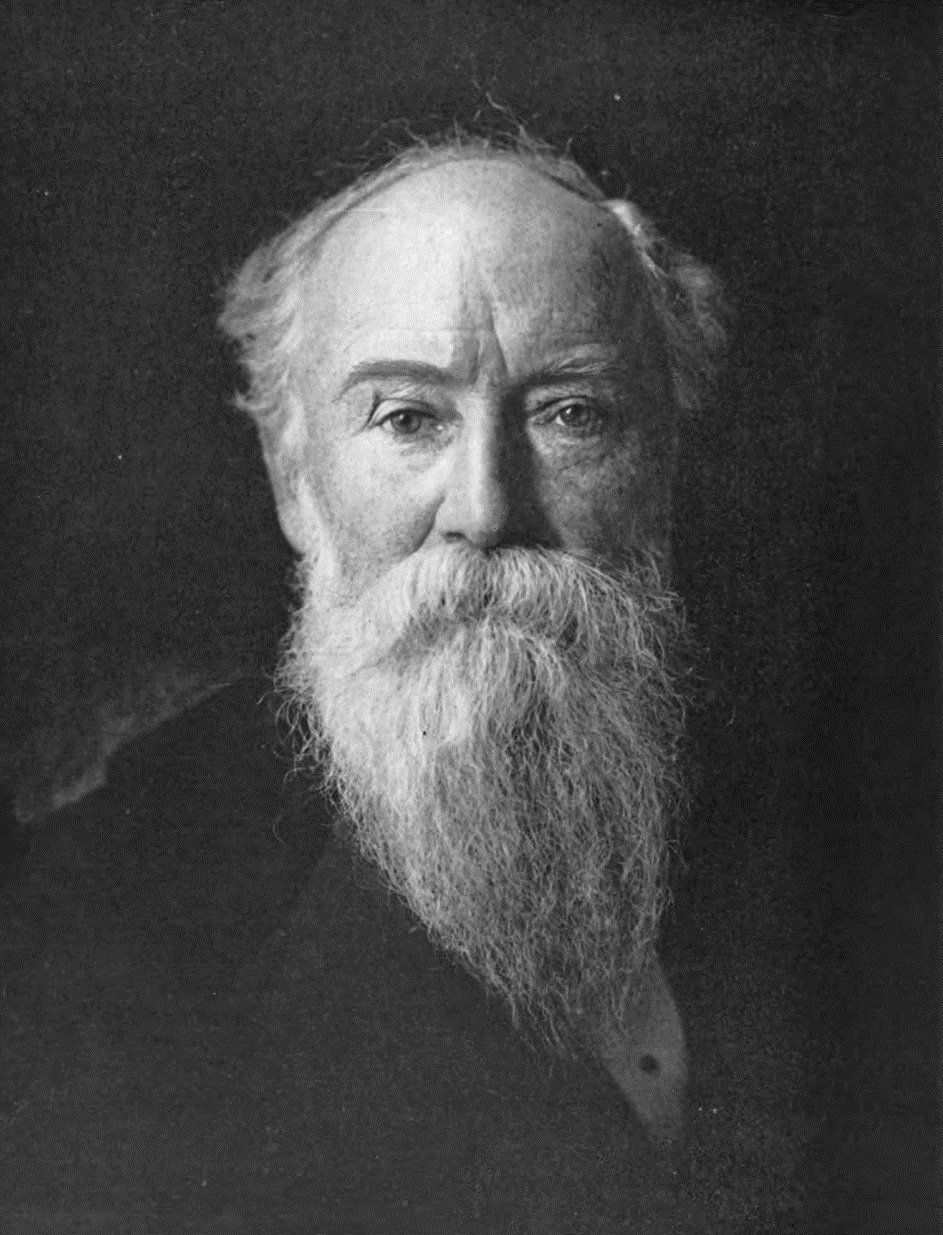
John Burroughs (April 3, 1837 – March 29, 1921) was an American naturalist and nature essayist, active in the conservation movement in the United States.[1] The first of his essay collections was Wake-Robin in 1871.

In the words of his biographer Edward Renehan, Burroughs' special identity was less that of a scientific naturalist than that of "a literary naturalist with a duty to record his own unique perceptions of the natural world." The result was a body of work whose resonance with the tone of its cultural moment explains both its popularity at that time, and its relative obscurity since.[2]

Early life and marriage

[edit]

Burroughs was the seventh of Chauncy and Amy Kelly Burroughs' ten children. He was born on the family farm in the Catskill Mountains, near Roxbury in Delaware County, New York. As a child he spent many hours on the slopes of Old Clump Mountain, looking off to the east and the higher peaks of the Catskills, especially Slide Mountain, which he would later write about. As he labored on the family farm he was captivated by the return of the birds each spring and other wildlife around the family farm including frogs and bumblebees. In his later years he credited his life as a farm boy for his subsequent love of nature and feeling of kinship with all rural things.[3]

During his teen years Burroughs showed a keen interest in learning.[4] Among Burroughs's classmates was future financier Jay Gould.[5] Burroughs' father believed the basic education provided by the local school was enough and refused to support the young Burroughs when he asked for money to pay for the books or the higher education he wanted. At the age of 17 Burroughs left home to earn funds needed for college by teaching at a school in Olive, New York.

From 1854 to 1856 Burroughs alternated periods of teaching with periods of study at higher education institutions including Cooperstown Seminary. He left the Seminary and completed his studies in 1856. He continued teaching until 1863. In 1857 Burroughs left a teaching position in the village of Buffalo Grove in Illinois to seek employment closer to home, drawn back by "the girl I left behind me."[3] On September 12, 1857, Burroughs married Ursula North (1836–1917). Burroughs later became an atheist with an inclination towards pantheism.[6]

Career

[edit]
Burroughs poses with Thomas Edison and Henry Ford at Edison's home in Ft. Myers, Florida, 1914.

Burroughs had his first break as a writer in the summer of 1860 when the Atlantic Monthly, then a fairly new publication, accepted his essay Expression. Editor James Russell Lowell found the essay so similar to Emerson's work that he initially thought Burroughs had plagiarized his longtime acquaintance. Poole's Index and Hill's Rhetoric, both periodical indexes, even credited Emerson as the author of the essay.[7]

In 1864, Burroughs accepted a position as a clerk at the Treasury; he would eventually become a federal bank examiner, continuing in that profession into the 1880s. All the while, he continued to publish essays, and grew interested in the poetry of Walt Whitman. Burroughs met Whitman in Washington, D.C., in November 1863, and the two became close friends.[8]

Whitman encouraged Burroughs to develop his nature writing as well as his philosophical and literary essays. In 1867, Burroughs published Notes on Walt Whitman as Poet and Person, the first biography and critical work on the poet, which was extensively (and anonymously) revised and edited by Whitman himself before publication.[9] Four years later, the Boston house of Hurd & Houghton published Burroughs's first collection of nature essays, Wake-Robin.

A 2005 photograph of Slabsides, Burroughs's cabin in West Park, NY; the cabin was designated a National Historic Landmark in 1968.[10]

In January 1873, Burroughs left Washington for New York. The next year he bought a 9-acre (3.6 ha) farm in West Park, NY (now part of the Town of Esopus) where he built his Riverby estate. There he grew various crops before eventually focusing on table grapes. He continued to write, and continued as a federal bank examiner for several more years. In 1895 Burroughs bought additional land near Riverby where he and son Julian constructed an Adirondack-style cabin that he called "Slabsides". He wrote, grew celery, and entertained visitors there, including students from local Vassar College.[citation needed] After the turn of the 20th century, Burroughs renovated an old farmhouse near his birthplace and called it "Woodchuck Lodge." This became his summer residence until his death.

Burroughs accompanied many personalities of the time in his later years, including Theodore Roosevelt, John Muir, Henry Ford (who gave him an automobile, one of the first in the Hudson Valley), Harvey Firestone, and Thomas Edison. In 1899, he participated in E. H. Harriman's expedition to Alaska.

According to Ford, "John Burroughs, Edison, and I with Harvey S. Firestone made several vagabond trips together. We went in motor caravans and slept under canvas. Once, we gypsied through the Adirondacks and again through the Alleghenies, heading southward."[11]

In 1901, Burroughs met an admirer, Clara Barrus (1864–1931). She was a physician with the state psychiatric hospital in Middletown, New York. Clara was 37 and nearly half his age. She was the great love of his life[12] and ultimately his literary executrix. She moved into his house after Ursula died in 1917. She published Whitman and Burroughs: Comrades in 1931, relying on firsthand accounts and letters to documents Burroughs' friendship with poet Walt Whitman.

Nature fakers controversy

[edit]

In 1903, after publishing an article entitled "Real and Sham Natural History" in the Atlantic Monthly, Burroughs began a widely publicized literary debate known as the nature fakers controversy. Attacking popular writers of the day such as Ernest Thompson Seton, Charles G. D. Roberts and William J. Long for their fantastical representations of wildlife, he also denounced the booming genre of "naturalistic" animal stories as "yellow journalism of the woods". The controversy lasted for four years and involved American environmental and political figures of the day, including President Theodore Roosevelt, who was friends with Burroughs.[13]

Writing

[edit]

Many of Burroughs' essays first appeared in popular magazines. He is best known for his observations on birds, flowers and rural scenes, but his essay topics also range to religion, philosophy, and literature. Burroughs was a staunch defender of Walt Whitman and Ralph Waldo Emerson, but somewhat critical of Henry David Thoreau, even while praising many of Thoreau's qualities.[citation needed] His achievements as a writer were confirmed by his election as a member of the American Academy of Arts and Letters.[14]

Plaque quoting Burroughs near the summit of Slide Mountain

Some of Burroughs' essays came out of trips back to his native Catskills. In the late 1880s, in the essay "The Heart of the Southern Catskills," he chronicled an ascent of Slide Mountain, the highest peak of the Catskills range. Speaking of the view from the summit, he wrote: "The works of man dwindle, and the original features of the huge globe come out. Every single object or point is dwarfed; the valley of the Hudson is only a wrinkle in the earth's surface. You discover with a feeling of surprise that the great thing is the earth itself, which stretches away on every hand so far beyond your ken." The first sentence of this quote is now on a plaque commemorating Burroughs at the mountain's summit, on a rock outcrop known as Burroughs Ledge. Slide and neighboring Cornell and Wittenberg mountains, which he also climbed, have been collectively named the Burroughs Range.

1906 photograph of Burroughs, from Camping & Tramping with Roosevelt

Other Catskill essays told of fly fishing for trout, of hikes over Peekamoose Mountain and Mill Brook Ridge, and of rafting down the East Branch of the Delaware River. It is for these that he is still celebrated in the region today, and chiefly known, although he traveled extensively and wrote about other regions and countries, as well as commenting on natural-science controversies of the day such as the theory of natural selection.[15] He entertained philosophical and literary questions, and wrote another book about Whitman in 1896, four years after the poet's death.

Fishing

[edit]

From his youth, Burroughs was an avid fly fisherman and known among Catskill anglers.[16] Although he never wrote any purely fishing books, he did contribute some notable fishing essays to angling literature. Most notable of these was Speckled Trout, which appeared in the Atlantic Monthly in October 1870 and was later published in In The Catskills. In Speckled Trout, Burroughs highlights his experiences as an angler and celebrates the trout, streams and lakes of the Catskills.[17]

Death

[edit]
Burroughs gravesite today, Boyhood Rock with plaque on left

Burroughs enjoyed good physical and mental health during his later years until only a few months before his death when he began to experience lapses in memory and show general signs of advanced age including declining heart function. In February 1921, Burroughs underwent an operation to remove an abscess from his chest. After this operation, his health steadily declined. Burroughs died on March 29, 1921, on a train near Kingsville, Ohio.[1] He was buried in Roxbury, New York, on what would have been his 84th birthday, at the foot of a rock he had played on as a child and affectionately referred to as "Boyhood Rock". A line of his is etched on the rock: "I stand amid the eternal ways".[18]

Legacy

[edit]

Woodchuck Lodge was designated a National Historic Landmark in 1962. Riverby and Slabsides were similarly designated in 1968. All three are listed on the National Register of Historic Places.

Thirteen U.S. schools have been named for Burroughs, including public elementary schools in Washington, D.C.; Tulsa, Oklahoma; and Minneapolis, Minnesota; public middle schools in Milwaukee, Wisconsin; and Los Angeles; a public high school in Burbank, California, and a private secondary school, John Burroughs School, in St. Louis, Missouri. Burroughs Mountain in Mount Rainier National Park is named in his honor, as is Burroughs Creek in St. Louis County, Missouri.[19]

The John Burroughs Association was founded after his death to commemorate his life and works. It maintains the John Burroughs Sanctuary in West Park, New York, a 170-acre plot of land surrounding Slabsides, and awards a medal each year to "the author of a distinguished book of natural history".[20][21]

Another award bearing Burroughs name is available to Boy Scouts who attend Seven Ranges Scout Reservation in Kensington, Ohio. The requirements to achieve this award require ample knowledge in the field of plants, rocks and minerals, astronomy, and animals. The award has three levels: bronze, gold, and silver being the highest. Each level requires more knowledge in the given fields.[citation needed]

Famous quotes

[edit]
  • "The Kingdom of heaven is not a place, but a state of mind."
  • "Leap, and the net will appear."[citation needed]
  • "A man can fail many times, but he isn't a failure until he begins to blame somebody else."

Works

[edit]

The Complete Writings of John Burroughs totals 23 volumes. The first volume, Wake-Robin, was published in 1871 and subsequent volumes were published regularly until the final volume, The Last Harvest, was published in 1922. The final two volumes, Under the Maples and The Last Harvest, were published posthumously by Clara Barrus. Burroughs also published a biography of John James Audubon, a memoir of his camping trip to Yellowstone with President Theodore Roosevelt, and a volume of poetry titled Bird and Bough.

  • Notes on Walt Whitman as Poet and Person (1867)
  • Wake Robin (1871)
  • Winter Sunshine (1875)
  • Birds and Poets (1877)
  • Locusts and Wild Honey (1879)
  • Pepacton (1881)
  • Fresh Fields (1884)
  • Signs and Seasons (1886)
  • Birds and bees and other studies in nature (1896)
  • Indoor Studies (1889)
  • Riverby (1894)
  • Whitman: A Study (1896)
  • The Light of Day (1900)
  • Squirrels and Other Fur-Bearers (1900)
  • Songs of Nature (Editor) (1901)
  • John James Audubon (1902)
  • Literary Values and other Papers (1902)
  • Far and Near (1904)
  • Ways of Nature (1905)
  • Camping and Tramping with Roosevelt (1906)
  • Bird and Bough (1906)
  • Afoot and Afloat (1907)
  • Leaf and Tendril (1908)
  • Time and Change (1912)
  • The Summit of the Years (1913)
  • The Breath of Life (1915)
  • Under the Apple Trees (1916)
  • Field and Study (1919)
  • Accepting the Universe (1920)
  • Under the Maples (1921)
  • The Last Harvest (1922)
  • My Boyhood, with a Conclusion by His Son Julian Burroughs (1922)

References

[edit]

Further reading

[edit]
[edit]
Revisions and contributorsEdit on WikipediaRead on Wikipedia
from Grokipedia

John Burroughs (April 3, 1837 – March 29, 1921) was an American naturalist, essayist, and early advocate for conservation whose writings emphasized intimate observation of the natural world. Born on a farm in , to farming parents Chauncey Burroughs and Amy Kelly, he drew from his rural upbringing to craft essays that celebrated the Catskills' landscapes, birds, and seasonal changes, beginning with his debut collection Wake-Robin in 1871. Over his career, Burroughs published more than 23 volumes of prose, prioritizing experiential insights into over taxonomic detail, which helped foster public appreciation for wilderness preservation amid rapid industrialization. Regarded as one of America's foremost naturalists alongside figures like and , his work influenced policy leaders, including President , with whom he shared camping trips that reinforced commitments to national parks and wildlife protection. Burroughs' legacy endures in his role bridging literary nature writing and practical environmentalism, authoring pieces that urged readers to engage directly with untamed habitats rather than mediated scientific reports.

Early Life and Education

Birth and Family Background

John Burroughs was born on April 3, 1837, on his family's dairy farm in the town of Roxbury, , situated in the . The farm, located in a rural Appalachian region, provided the setting for his early immersion in natural surroundings, where he engaged in typical agrarian chores amid the local landscape of woods, streams, and hills. He was the seventh of ten children born to Chauncey A. Burroughs (1804–1883), a farmer of modest means who managed the dairy operation, and Amy Kelly Burroughs (1808–1890), both of whom traced their roots to early American settler stock in and New York. The Burroughs family exemplified the self-reliant, labor-intensive existence of 19th-century Catskill farmers, with limited formal resources but abundant exposure to the rhythms of seasonal and that later informed Burroughs's writings. This environment, marked by economic simplicity and physical demands, shaped his foundational observations of the natural world without the influence of urban or elite institutions.

Formative Experiences and Early Influences

John Burroughs was born on April 3, 1837, as the seventh of ten children to Chauncey A. Burroughs and Amy Kelly on a 350-acre dairy farm in , situated on the slopes of Old Clump Mountain in the Catskill foothills. The family maintained around 30 Durham cows, and young Burroughs engaged in rigorous farm chores such as milking, haying, and tapping approximately 250 trees for sugar-making each spring, experiences that instilled a profound connection to the rhythms of rural life and the land. These daily labors, combined with the self-sufficient household economy—marked by homemade goods like cakes and —fostered his early resilience and appreciation for the practicalities of , though he later reflected on the primitive simplicity of such existence amid emerging modernization. Burroughs' formative interactions with the natural world began in childhood through exploration and observation around the farm and nearby brook. By age ten, he fished for alongside his grandfather Edmund Kelly, who shared stories of witches and hobgoblins that tinged his early perceptions of the wild with a mix of wonder and apprehension. He collected bumblebee honey, noted bird species like warblers and veeries, hunted small such as chipmunks and foxes, and even constructed ponds in a local brook to teach himself , activities that honed his observational skills and deepened his affinity for despite his family's more utilitarian "landlubber" approach to the outdoors. A trip to Catskill around age eleven broadened his horizons beyond the isolated farm, while a severe at twelve or thirteen challenged his inherited religious views of a vengeful , prompting an intellectual shift toward independent inquiry. His mother's contemplative Celtic heritage likely contributed to his innate love of nature, contrasting with his father's more temperamental and religiously fervent disposition, who read hymns aloud but opposed formal education due to fears of Methodism. Largely self-taught after basic district schooling—learning the alphabet by age five and devouring texts like a "Life of Washington" and phrenology books—Burroughs purchased a grammar book at thirteen or fourteen using proceeds from selling maple sugar cakes, marking his budding literary ambitions. In 1856, at age nineteen, he briefly attended Cooperstown Seminary, where he encountered the works of William Wordsworth and, most impactfully, Ralph Waldo Emerson, whose transcendental philosophy "got in my blood" and profoundly colored his early writing for years thereafter. This exposure, alongside his divergent intellectual pursuits from the family's practical mindset, solidified his path toward nature essayism, emphasizing empirical observation over abstract idealism.

Personal Life

Marriage and Family

John Burroughs married Ursula North on September 12, 1857, in . Ursula, born April 26, 1836, came from a relatively affluent farming family; her father served as a school trustee where Burroughs taught. The marriage endured financial difficulties in its early years, as Burroughs transitioned from teaching to clerking in , and later pursued writing. Personal tensions arose, with Ursula viewing her husband's sexual expectations as excessive and consulting ministers in her Catskills hometown for guidance after about five years of . Despite these strains and Burroughs' later infidelities, the union persisted until Ursula's death on January 17, 1917. Burroughs and Ursula had no biological children together. In June 1878, when Julian was two months old, they adopted him, initially presenting the infant as an ; Ursula later discovered that Julian was Burroughs' biological son with their housekeeper, Melvina Henion (1850–1925), but chose to raise him within the . Julian Burroughs (April 14, 1878 – December 22, 1954) shared his father's affinity for the outdoors, joining him on numerous hikes, travels—including a 1902 trip to —and natural observations from childhood. As an adult, Julian worked as a landscape painter, , , and , managing properties like Riverby and serving as superintendent of the Payne estate in . He married and had descendants, including a named Ursula who inherited Riverby after his death.

Residences and Everyday Pursuits

John Burroughs purchased a nine-acre farm in West Park, Ulster County, New York, in 1873 and developed it as his primary residence, naming it Riverby after the nearby river. Overlooking the Hudson River, the estate included a main house, a separate writing study known as the Bark Study, and outbuildings where Burroughs cultivated grapes and celery as part of his agricultural pursuits. He resided there with his wife Ursula and son Julian, integrating farming with his literary endeavors until later years. In 1895, Burroughs constructed Slabsides, a one-story rustic cabin about one mile west of Riverby on a rocky ledge within what became a 173-acre . Built with local carpenter assistance using bark-covered log slabs for siding, exposed beams, and a stone chimney, the cabin functioned as a seasonal retreat for nature observation, writing essays such as those in Whitman: A Study (1896), Far and Near (1904), and The Ways of Nature (1905), and hosting guests starting in 1896. Its simple layout—a single ground-floor room serving multiple purposes and an attic dormitory—reflected Burroughs' preference for unadorned rural simplicity, though usage declined after 1908 as he favored other sites. From approximately 1908 until his death in 1921, Burroughs increasingly spent summers at Woodchuck Lodge, a farmhouse built by his brother in 1862 on the family farm in , near his birthplace. This Catskills retreat allowed contemplation from its porch and writing from a hay doorway, maintaining ties to his rural origins amid declining health. Burroughs' everyday pursuits centered on harmonious integration of physical labor, intellectual work, and sensory engagement with the environment, including tending orchards at Riverby, conducting regular walks through woods and fields for and reflection, and composing nature essays for periodicals like Harper’s and Scribner’s. He advocated a disciplined yet joyful routine of open-air activity, viewing such immersion as essential to vitality, as expressed in his writings and personal correspondences emphasizing simplicity over urban comforts.

Early Career

Teaching and Administrative Roles

Burroughs commenced his teaching career at age seventeen in 1854, instructing pupils in one-room rural schoolhouses in the Roxbury area of , where he had received his own rudimentary education during winter terms. He conducted several such terms in Roxbury and adjacent towns, earning modest wages that supplemented farm labor and enabled brief further studies, including a period in 1856 at a in before resuming teaching duties. In 1857, Burroughs taught at the school in High Falls, Ulster County, New York, a position that aligned with his growing interest in local natural history amid the Catskill landscape. That same year, he briefly relocated to Buffalo Grove, Illinois, for another teaching post but returned eastward shortly thereafter to marry Ursula North in September, prioritizing proximity to family and continuing instruction in New York and New Jersey locales. By February 7, 1860, he held a formal teaching certificate issued in Orange Township, New Jersey, reflecting his qualifications for grammar-level education in district schools. Burroughs persisted in teaching through the early 1860s, often alternating with seasonal farming and nascent writing efforts, until securing a clerkship in the U.S. Treasury Department in Washington, D.C., around 1864. His roles remained centered on classroom instruction rather than formal administration, lacking documented positions such as principal or school commissioner; the era's rural systems emphasized individual teachers managing entire district schools with minimal oversight. This phase honed his observational skills and , informing later nature essays, though financial instability prompted his pivot to federal service.

Initial Writings and Associations

Burroughs commenced his literary career amid his employment as a clerk in the U.S. Department of the Treasury in , starting in 1864. His debut publication, Notes on Walt Whitman as Poet and Person (1867), represented the inaugural book-length biography and critical analysis of the poet , a figure Burroughs encountered on the streets of the capital that year. This slim volume, issued by the American News Company in a limited edition, ardently championed Whitman's unconventional style and democratic themes amid widespread censure, incorporating unacknowledged revisions from Whitman himself. Though focused on literary advocacy rather than , the work honed Burroughs's essayistic and signaled his affinity for bold, observational authenticity in writing. This early advocacy fostered a enduring personal and intellectual bond with Whitman, who offered and correspondence that bolstered Burroughs's resolve during nascent endeavors. Whitman praised the book privately and publicly supported Burroughs's emerging voice, viewing him as a defender against establishment critics; their exchanges, spanning decades, influenced Burroughs's emphasis on direct experience over abstract theorizing. Transitioning toward nature themes, Burroughs contributed essays on birds and rural phenomena to outlets like The Galaxy in the late 1860s, drawing from Catskill rambles during leaves from his post. These pieces coalesced into Wake-Robin (1871), his inaugural nature collection, published by Hurd and Houghton with illustrations by Harrison Weir. The book chronicled seasonal avian migrations and countryside insights through 12 essays, earning commendation for its precise, unadorned depictions that prioritized empirical encounter over romantic embellishment, thereby cementing Burroughs's pivot to naturalist authorship.

Literary Contributions

Major Works and Publications

Burroughs's literary output consisted primarily of essay collections drawn from his observations of the natural world, with over two dozen volumes published from 1871 until shortly before his death. These works emphasized precise, firsthand accounts of and seasonal changes, often serialized initially in periodicals such as The Atlantic Monthly and Century Magazine before compilation. His prose avoided sensationalism, prioritizing empirical detail over , which distinguished him from contemporaries like William Hamilton Gibson. His inaugural book, Wake-Robin (1871), compiled essays on springtime flora and fauna, particularly birds, establishing his reputation as a keen observer of Eastern American woodlands. Subsequent early volumes built on this foundation: Winter Sunshine (1875) explored subtle winter phenomena; Birds and Poets (1877) intertwined with literary reflections, including tributes to and ; and Locusts and Wild Honey (1879) delved into and behavior through rural vignettes. These were followed by Pepacton (1881), evoking the Delaware River valley's landscapes, and Signs and Seasons (1886), a systematic guide to phenological indicators across the year. In the 1890s and early 1900s, Burroughs expanded into travel-inspired essays, such as (1884), recounting British countryside rambles, and Riverby (1894), personal sketches from his farm. Later works addressed philosophical dimensions of nature: Ways of Nature (1905) critiqued deterministic views of animal behavior; Time and Change (1912) examined geological and evolutionary processes; and The Breath of Life (1915), his final original volume, pondered versus mechanism in . Compilations like Camping and Tramping with President Roosevelt (1906) documented outdoor excursions, reinforcing his influence on conservation-minded readers. Posthumous editions, including Under the Maples (1921), gathered unpublished pieces, but his core canon remains these essay collections, totaling around 1,500 pages of reflective .

Observational Style and Core Philosophy

Burroughs's observational style centered on meticulous, firsthand scrutiny of the natural world, honed through decades of solitary hikes, , and stream fishing in the Catskills and beyond. He advocated for a "sharp lookout," insisting that true insight demanded patient persistence amid nature's inherent evasiveness, where "the art of nature is all in the direction of concealment" and wildlife actively evades detection. Unlike contemporaries who romanticized or anthropomorphized animals, Burroughs delivered bluff, unsentimental accounts rooted in verifiable encounters, blending precise anatomical and behavioral details with subtle lyrical to convey authenticity over idealization. This approach, evident in essays like those in Wake-Robin (1871), prioritized empirical fidelity, drawing from his rejection of speculative narratives that distorted observable facts. At its core, Burroughs's philosophy embodied scientific naturalism, positing that humanity's deepest understanding emerges from direct communion with 's unvarnished processes rather than philosophical abstraction or theological overlay. Influenced by Darwinian evolution yet wary of its mechanistic excesses, he championed a balanced realism: as a dynamic, amoral yielding through humble participation, not dominion or sentiment. In Accepting the Universe (1920), he articulated this as an affirmative embrace of cosmic impersonality, where personal vitality aligns with evolutionary continuity, eschewing dualism for a monistic view grounded in sensory evidence. This outlook informed his critique of "nature fakers," underscoring that credible observation must hew to causal mechanisms observable in the field, free from human projection. Burroughs integrated this philosophy with a humanistic ethic, arguing that immersion in local environs—rather than exotic quests—fosters genuine insight and mental renewal, as "the place to observe is where you are." His writings thus served didactic ends, urging readers toward disciplined seeing that reveals 's "simple and austere" truths, countering urban alienation with restorative realism. This framework, devoid of moralistic , positioned as a perpetual of and interdependence, validated by Burroughs's own lifelong practice.

Field and Scientific Activities

Ornithological Observations

Burroughs engaged in ornithological observations primarily through prolonged field excursions in the , Adirondacks, and other eastern woodlands, prioritizing the study of live birds in over specimen collection or laboratory analysis. Early in his pursuits, around 1865, he actively collected and mounted birds to aid identification and study during hikes, reflecting the era's common practices among naturalists. By the 1870s, however, his method shifted toward ethical, non-invasive watching, emphasizing patience, seasonal timing, and auditory cues like songs to discern species and behaviors without disturbance. His seminal work Wake-Robin (1871) encapsulated these observations, chronicling the spring migration and nesting of approximately two dozen species in the Catskills, including the field sparrow's "sweet, tinkling melody," the ovenbird's foraging habits, and the hermit thrush's ethereal song. Burroughs described the black-and-white creeper's spiral ascent on tree trunks and the yellow-bellied sapsucker's tapping, linking avian activities to ecological rhythms such as the trillium's bloom signaling avian returns. These accounts, drawn from direct encounters rather than secondary reports, avoided speculative anatomy in favor of behavioral realism, as in his portrayal of the cuckoo's tame, unemotional demeanor amid dense forests. Subsequent essays in volumes like Locusts and Wild Honey (1879) and Birds and Bees (1884) extended this focus, detailing summer breeders such as the wood pewee and , with notes on their textures and preferences derived from repeated seasonal vigils. Burroughs critiqued over-reliance on or guides, advocating "eye and ear alone" for authentic insight, which fostered public interest in as a democratic pursuit accessible beyond elite collectors. His records, while not advancing formal —lacking novel descriptions—illuminated local distributions and , such as the bluebird's early arrivals amid variable winters, influencing amateur ornithology's emphasis on holistic, narrative documentation over quantifiable metrics. Compilations like Bird Stories from Burroughs () later excerpted these sketches, underscoring their role in promoting observational acuity without endorsing anthropomorphic interpretations.

Angling and Practical Nature Engagement

John Burroughs developed a deep affinity for angling from his childhood in the Catskill Mountains, where he accompanied his grandfather, Edmund Kelly, an expert trout fisherman, using rudimentary beech poles and horsehair lines to "snake" trout from streams. This hands-on pursuit continued into adulthood, with Burroughs favoring brook trout in local waters like the Pepacton River and Neversink, where he progressed from edge pools to deeper woodland brooks amid buttercups and bobolinks. By age 11 or 12, he participated in winter ice fishing for suckers, agitating water with a pole to claim shares of the catch, demonstrating early practical resourcefulness in nature. In his essay "Speckled Trout," published in The Atlantic in October 1870, Burroughs recounted intensive trout fishing expeditions in streams such as the headwaters of the , Big Ingin Hollow in Shandaken, Beaverkill, Lake, and Mill Brook, employing fly-, worm bait, and improvised lures like trout fins or bullheads. He described catching nearly 300 trout in a single day, noting their silver or golden varieties, typically 8-10 inches long, thriving in clear, cold waters, and emphasized the sport's demands—wet conditions, toil, and gnats—juxtaposed against its rewards of seclusion and immersion in wildness. During a thunderstorm at Lake, using a dug-out , he and companions netted around 100 trout, highlighting angling's blend of skill, patience, and opportunistic adaptation to nature's rhythms. Burroughs maintained this practice into advanced age, eagerly trout fishing every June, including at age 83 along the Neversink, and during camping trips to Beaverkill and Lake where he canoed and fished with family, such as son Julian on the Shattega. His approach eschewed excess , valuing the empirical chase over mere observation, as seen in youthful grabs of by the gills under stream banks or later voyages like the 50-mile Pepacton paddle with tackle in tow. Beyond , Burroughs' practical engagement encompassed agrarian labors that grounded his writings in direct causation and seasonal cycles. On his in youth, he performed chores like driving cows, plowing fields at age 15, milking, and gathering fruits such as apples and cherries, while observing amid tasks. In adulthood, at Riverby (built 1873-1874), he cultivated berries, peaches, pears, and grapes; at Slabsides (1895), he drained swamps for and ; and in , managed a small plot with potatoes, pumpkins, chickens, and a cow named . He also pursued , authoring essays in Birds and Bees (1887) that detailed hive management and behavior, reflecting a hands-on study of and hive dynamics informed by farmstead observation. These activities underscored his of as a tangible, labor-intensive domain, where empirical toil yielded insights into ecological interdependence without speculative overlay.

Controversies and Intellectual Debates

Nature Fakers Confrontation

In March 1903, John Burroughs published "Real and Sham " in The Atlantic Monthly, launching a critique of popular nature writers whom he accused of fabricating animal behaviors under the guise of factual accounts. Targeting authors like and William J. Long, Burroughs argued that their works blended verifiable observation with implausible inventions, misleading readers about actual wildlife conduct and undermining the credibility of genuine . He contrasted such "sham" narratives with authentic reporting based on direct fieldwork, insisting that true demanded empirical fidelity rather than romantic embellishment. Burroughs cited specific instances of alleged distortion, such as Seton's portrayal in Wild Animals I Have Known of a riding atop a sheep to escape pursuing hounds and of exhibiting advanced , including the ability to count up to thirty under akin to . He dismissed these as "true as romance" but "not true as ," lacking any basis in observed reality. Similarly, Long's accounts drew rebuke for depicting porcupines rolling downhill concealed in leaves for , and bears displaying unnatural tameness toward s, and an eagle methodically descending to earth upon mortal wounding—behaviors Burroughs deemed physiologically impossible or unobserved. He rejected Long's notion of formal "animal schools" imparting knowledge across generations, declaring "there is not a shadow of truth in it." The article ignited the broader "nature fakers" controversy, prompting defenses from the criticized writers and public exchanges in periodicals. Seton and Long maintained that their anthropomorphic elements served educational or moral purposes, while countered in The Atlantic that fictional liberties enhanced nature's appeal without claiming strict literalism. Burroughs, however, upheld that works presented as true histories must adhere to verifiable evidence, prioritizing causal mechanisms derived from prolonged field study over speculative sentiment. President , a longtime associate of Burroughs and avid naturalist, aligned with the critique, coining the term "nature fakers" in a 1907 Everybody's Magazine interview to denote those peddling ungrounded tales. Roosevelt praised Burroughs' emphasis on accuracy, thanking him privately for rebutting attacks on his own observational writings, and warned against distortions that romanticized animals beyond their instinct-driven realities. Though Long challenged Roosevelt's expertise as a mere hunter focused on killing rather than nuanced , the president declined direct confrontation, reinforcing instead the value of firsthand, unsentimental evidence in distinguishing fact from fiction. The exchange elevated demands for rigor in nature literature, embedding "nature fakers" into American as a caution against unsubstantiated claims.

Views on Evolution and Speculative Science

John Burroughs embraced the core tenets of , accepting that humans and all life forms descended from simpler ancestral organisms through natural processes over geological timescales spanning millions of years. He viewed as a continuous creative journey, akin to a "long road" from unicellular life to complex forms, driven by inherent variation and refinement rather than sudden divine intervention. While affirming Charles Darwin's factual observations on descent with modification, Burroughs distinguished these from theoretical interpretations, cautioning that "it is never safe to question Darwin's facts, but it is always safe to question any man's ." Burroughs regarded primarily as a conservative mechanism—a "weeding-out" process that preserved adaptive traits—rather than a generative force capable of originating novel complexity, such as the or . In his 1902 essay collection The Breath of Life, he argued that selection alone could not account for the "arrival of the fittest," positing instead an immanent "biotic energy" or vital principle latent in matter, which propelled development from onward. This vital force, distinct from mere physico-chemical reactions, manifested as a "manward impulse" guiding progressive variation, echoing Lamarckian ideas of inherent striving over pure chance. He rejected strictly materialistic reductions of life to atomic s, deeming them inadequate for minds attuned to : "Any system of that sees in the organic world only a fortuitous of chemical atoms, repels me." On speculative science, Burroughs advocated empirical observation rooted in natural history, warning against theoretical overreach that ventured beyond verifiable evidence into metaphysical conjecture. In Time and Change (1912), he emphasized balancing scientific inquiry with direct field experience, critiquing tendencies to impose anthropomorphic or cataclysmic narratives on vast processes like or , which unfolded via uniform, gradual forces over eons. He acknowledged 's power to expand human perspective—" has fairly turned us out of our comfortable little anthropomorphic notion of things into the great out-of-doors of the "—yet highlighted its limits in penetrating life's ultimate mysteries, such as vitality's origin, which eluded laboratory replication. Burroughs thus prioritized causal realism grounded in observable patterns, dismissing overly abstract models that prioritized hypothesis over data, as seen in his reservations toward mechanistic experiments by figures like Jacques Loeb. This stance reflected his broader philosophy: evolution's truths emerged from prolonged, patient scrutiny of nature, not detached speculation.

Conservation Engagement

Partnership with Theodore Roosevelt

John Burroughs and developed a close friendship grounded in shared enthusiasm for and outdoor pursuits, beginning in when Roosevelt, then a in New York, expressed his admiration for Burroughs' essays to the naturalist directly. This rapport evolved into a substantive partnership during Roosevelt's presidency (1901–1909), marked by extensive correspondence on , ethical , and land , with Roosevelt often seeking Burroughs' insights as a trusted naturalist. Their collaboration reinforced Roosevelt's commitment to "wise use" conservation principles, emphasizing empirical over romanticized narratives, which aligned with Burroughs' for practical engagement with rather than absolute preservation. A pivotal event in their partnership occurred in April 1903, when President Roosevelt invited Burroughs to join his 14-day camping expedition in as part of a broader western tour to assess federal lands and public resources. Arriving by train on April 8, the pair traversed park trails on horseback, fished streams, and camped under minimal escort to observe herds, bears, and avian species firsthand, with Roosevelt demonstrating proficiency in tracking and Burroughs providing interpretive commentary on ecological patterns. Burroughs later chronicled the journey in Camping & Tramping with Roosevelt (1906), portraying Roosevelt as a rigorous field naturalist whose policies could safeguard habitats without stifling human utility. This trip underscored their mutual view that conservation required verifiable data from direct experience, influencing Roosevelt's subsequent executive actions, such as expanding forest reserves by over 100 million acres during his tenure. Roosevelt reciprocated Burroughs' influence by dedicating his 1905 volume Outdoor Pastimes of an American Hunter to "Oom John" Burroughs, praising him as a preeminent interpreter of American wilderness who combined scientific acuity with literary precision. Their exchanges extended to consultations and visits to Burroughs' Slabsides cabin in New York, where Roosevelt engaged in and discussions on balancing resource extraction with habitat protection. This ongoing dialogue contributed to Roosevelt's administration creating 150 national forests, 51 federal bird reserves, and 4 national game preserves, with Burroughs' grounded philosophy helping temper purely utilitarian approaches toward . The partnership endured until Roosevelt's death in 1919, exemplifying how intellectual camaraderie between writer and statesman advanced early 20th-century .

Advocacy for Balanced Environmentalism

Burroughs championed a pragmatic that integrated human with nature's processes, advocating sustainable over rigid preservation that severed people from the land. He viewed humans as active participants in ecosystems, promoting practices like responsible farming, , and as essential for cultivating respect and preventing waste, rather than passive admiration of untouched wilderness. This stance aligned with his realistic portrayal of nature's indifference, as articulated in essays like Ways of Nature (published 1901), where he rejected sentimental in favor of empirical to inform conservation decisions. In contrast to more absolutist figures like , who prioritized wilderness sanctuaries, Burroughs emphasized conserving the "nature we live in" through everyday engagement, warning that designating remote parks as pedestals of beauty could allow surrounding landscapes to deteriorate unchecked. He supported policies enabling multiple resource uses, such as selective forestry, to sustain economies while preserving ecological balance, influencing early 20th-century efforts in the Catskills where he observed habitat pressures firsthand. This balanced philosophy, rooted in his Catskill upbringing and lifelong rural pursuits, predated organized movements by decades, with Burroughs voicing concerns over as early as the 1850s. His advocacy extended to critiquing urban detachment from , arguing that true required bridging cultural and natural realms to avoid exploiting resources without renewal. By framing conservation as a cultural imperative informed by direct experience, Burroughs helped shift public discourse toward utilitarian protection that accommodated human needs without excusing destruction.

Later Years

Extensive Travels and Expeditions

In 1899, at the age of 62, Burroughs joined the Harriman Alaska Expedition, organized by railroad magnate Edward Harriman, marking his first major journey west of the . Despite describing himself as a "home body," he traveled aboard the steamship Elder from to , documenting the region's glaciers, wildlife, and landscapes alongside figures like and William H. Dall. The expedition, which lasted from May to August, covered over 6,000 miles and included stops at sites such as Glacier Bay and Yakutat Bay, where Burroughs observed seabirds, bears, and indigenous communities; he later reflected on the trip's lack of dramatic adventures but emphasized its revelatory glimpses of untamed in essays compiled in (1904). In April 1903, Burroughs accompanied President on a two-week tour of , arriving by train at , on April 8. The pair camped amid the park's and geothermal features, with Burroughs noting Roosevelt's vigor in pursuits like fly-fishing for and observing herds; their itinerary included visits to the geyser basins and Lamar Valley, covering roughly 100 miles on horseback and by . This expedition, part of Roosevelt's broader western tour, reinforced Burroughs' advocacy for wild spaces, as detailed in his 1906 book Camping and Tramping with Roosevelt, where he praised the president's instinctive conservation ethos without romantic exaggeration. Burroughs extended his explorations to the American Southwest in 1909, visiting the Grand Canyon with in early spring, where they contemplated the chasm's vast scale from the South Rim. Later that May, at age 72, he rejoined Muir for a tour, as announced in contemporary reports, hiking trails and studying sequoias and waterfalls despite physical strain from altitude. These trips, spanning rugged terrains from 's deserts to California's Sierra Nevada, yielded reflective writings like Burroughs' The Grand Canyon of Arizona essays, emphasizing geological realism over Muir's more poetic interpretations and critiquing overly anthropomorphic views of nature.

Companionships with Edison and Ford

Henry Ford, drawn to John Burroughs' essays on nature and , initiated their friendship in 1913 through shared admiration for . In 1914, Ford invited Burroughs to accompany him and on an expedition into the Florida Everglades, marking the first joint outing among the trio. This trip, centered at Edison's Fort Myers estate, involved boating and observing wildlife, fostering bonds over exploration and intellectual exchange. The companionship evolved into the "Vagabonds" group, which included tire magnate Harvey Firestone, conducting annual motor camping trips from 1916 to 1924, with Burroughs participating until his death in 1921. The inaugural Vagabonds outing in 1916 traversed New England's Adirondacks and , where the group camped, hiked, and discussed topics ranging from to . Burroughs, as the resident naturalist, offered observations on and , contrasting the industrial perspectives of Edison and Ford, while the expeditions featured a convoy of vehicles, portable kitchens, and staff for semi-luxurious accommodations. Subsequent trips included a 1918 caravan through the Midwest and Appalachians, emphasizing rugged terrain and roadside encampments. In 1920, the group visited Burroughs' retreat, incorporating his family home into the itinerary for reflection on rural life. These journeys, documented in photographs and letters, underscored Burroughs' role in bridging naturalist philosophy with the era's technological optimism, though he occasionally critiqued the mechanized excesses of his companions' pursuits. The expeditions totaled over 2,000 miles in some years, blending adventure with discourse on progress and preservation.

Death

Final Days and Health Decline

In February 1921, while wintering in , John Burroughs underwent surgical treatment for an on his chest at a Pasadena , with initial reports indicating improvement following two minor operations. Despite this, his condition deteriorated steadily over the ensuing weeks, marked by prolonged weakness from the infection and procedures. Weakened but determined to return home to New York, Burroughs boarded a New York Central passenger train eastward in late March. On March 29, 1921, at approximately 2 a.m., he near Kingsville, , just days before his 84th birthday on 3. His final words, uttered to his , were reported as inquiring, "How far are we from home?" The abscess and its complications, rather than any acute new event, were understood as the underlying contributors to his decline and passing at age 83.

Legacy

Impact on Nature Writing and Conservation

Burroughs pioneered the nature essay as a uniquely American genre, blending acute personal observation with accessible prose that emphasized the aesthetic and restorative qualities of everyday natural surroundings, rather than remote wilderness or exhaustive scientific cataloging. His approach democratized nature writing, making it resonate with urban and rural readers alike by advocating direct, unmediated encounters with local flora, fauna, and landscapes to cultivate wonder and self-reliance. Through works such as Wake-Robin (1871) and Locusts and Wild Honey (1879), he sold over two million copies across 27 volumes, establishing a template for subsequent writers like Aldo Leopold and Rachel Carson who built on his model of reflective, experiential narrative. In conservation, Burroughs exerted influence by framing nature's preservation as a practical necessity intertwined with human well-being, urging protection of resources like forests and birds decades before institutionalized efforts. As early as the , he warned against unchecked exploitation, promoting rooted in informed appreciation rather than abstract idealism or regulatory overreach. His essays amplified public sentiment for safeguarding habitats, contributing to early momentum for policies like bird protection laws and national forest reserves, while his friendship with helped translate literary advocacy into federal action without endorsing preservationist extremes that alienated practical land users. This grounded perspective—prioritizing observable ecological balance over sentimentalism—fostered a sustainable conservation ethic that endured beyond his lifetime.

Contemporary Assessments and Critiques

In contemporary scholarship, John Burroughs is recognized as a pioneer of the modern nature essay, valued for his empirical, unsentimental depictions of wildlife and emphasis on direct observation over romantic fabrication, which distinguished his work from sentimental "nature fakers" of his era. His interdisciplinary blend of natural history, philosophy, and cultural commentary continues to influence environmental literature, with scholars equating his impact to that of John Muir and Theodore Roosevelt in promoting accessible, scientifically grounded appreciations of nature's place in human life. This enduring estimation is evidenced by the John Burroughs Association's annual awards, including the 2023 Nature Essay Award for Christina Rivera's "The 17th Day" and the 2017 John Burroughs Medal to Brian Doyle for The Trouble with Nature, which honor works echoing Burroughs' vivid, firsthand naturalism. Critiques, however, highlight Burroughs' relative obscurity in broader modern discourse, overshadowed by more activist-oriented figures like Thoreau, with his oeuvre receiving limited attention in key ecocritical studies such as Lawrence Buell's The Environmental Imagination (1995). Scholars note his preference for personal, apolitical observation—eschewing strife and overt advocacy—as a limitation, particularly given his associations with industrialists and , which some interpret as conciliatory toward the era's technological encroachments on . This balanced , while realist in acknowledging nature's indifference and human utility, is occasionally viewed as inadequately prophetic of industrial-scale ecological degradation, prioritizing biophilic harmony over confrontational reform.

References

Add your contribution
Related Hubs
User Avatar
No comments yet.