Hubbry Logo
KankeKankeMain
Open search
Kanke
Community hub
Kanke
logo
8 pages, 0 posts
0 subscribers
Be the first to start a discussion here.
Kanke
Kanke
from Wikipedia

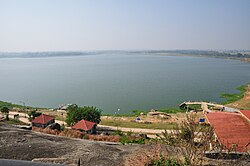
Kanke is a census town in the Kanke CD block in the Ranchi Sadar subdivision of Ranchi district in the Indian state of Jharkhand. Kanke has a large water reservoir called Kanke Dam, which is used to supply water to Ranchi city.

Key Information

Demographics

[edit]

According to the 2011 Census of India, Kanke had a total population of 17,560, of which 9,166 (52%) were males and 8,394 (48%) were females. Population in the age range 0–6 years was 1,862. The total number of literate persons in Kanke was 13,837 (88.14% of the population over 6 years).[1]

As of 2001 India census,[2] Kanke had a population of 16,396. Males constitute 53% of the population and females 47%. Kanke has an average literacy rate of 75%, higher than the national average of 59.5%: male literacy is 80%, and female literacy is 70%. In Kanke, 11% of the population is under 6 years of age.

Geography

[edit]
Map
About OpenStreetMaps
Maps: terms of use
17km
10.6miles
W
E
S
T
B
E
N
G
A
L
H
Khukhragarh
H Khukhragarh (H)
H Khukhragarh (H)
R
Sikidiri
R Sikidiri (R)
R Sikidiri (R)
R
Pithuriya
R Pithuriya (R)
R Pithuriya (R)
R
Narkopi
R Narkopi (R)
R Narkopi (R)
0
CCL North
Karanpura Area
0 North Karanpura Area
m
Koel
River
l
Damodar
River
k
Bhairavi
River
j
Karkari
River
i
Kanchi
River
h
Raru
River
g
Subarnarekha
River
D
Getalsud
Dam
D Getalsud Dam
D Getalsud Dam
T
Dassam Falls
T Dassam Falls (T)
T Dassam Falls (T)
T
Jonha Falls
T Jonha Falls (T)
T Jonha Falls (T)
T
Hundru
Falls
T Hundru Falls (T)
T Hundru Falls (T)
CT
Tundul
CT Tundul (CT)
CT Tundul (CT)
CT
Tati
CT Tati, Ranchi (CT)
CT
Ray
CT Ray, Jharkhand (CT)
CT
Ratu
CT Ratu, Ranchi (CT)
N
Namkum
N Namkum, Ranchi (N)
CT
Muri
CT Muri, Ranchi (CT)
CT
Khelari
CT Khelari (CT)
CT Khelari (CT)
CT
Kanke
CT
Irba
CT Irba (CT)
CT Irba (CT)
CT
Churi
CT Churi (CT)
CT Churi (CT)
CT
Bishrampur
CT Bishrampur, Jharkhand (CT)
CT
Bargarwa
CT Bargarwa (CT)
CT Bargarwa (CT)
CT
Arsande
CT Arsande (CT)
CT Arsande (CT)
CT
Ara
CT Ara, Ranchi (CT)
CT Ara, Ranchi (CT)
M
Bundu
M Bundu, India (M)
M Bundu, India (M)
M
Ranchi
M Ranchi (M)
M Ranchi (M)
R
Hatia
R Hatia (R)
R Hatia (R)
R
Tamar
R Tamar, India (R)
R Tamar, India (R)
R
Sonahatu
R Sonahatu (R)
R Sonahatu (R)
R
Silli
R Silli (R)
R Silli (R)
R
Rahe
R Rahe, Jharkhand (R)
R
Ormanjhi
R Ormanjhi (R)
R Ormanjhi (R)
R
Nagri
R Nagri, Jharkhand (R)
R
Mesra
R Mesra, Ranchi (R)
R Mesra, Ranchi (R)
R
Mandar
R Mandar, Ranchi (R)
R
Lapung
R Lapung (R)
R Lapung (R)
R
Itki
R Itki, India (R)
R Itki, India (R)
R
Dakra
R Dakra, Ranchi (R)
R Dakra, Ranchi (R)
R
Chutupalu
R Chutupalu (R)
R Chutupalu (R)
R
Chanho
R Chanho (R)
R Chanho (R)
R
Burmu
R Burmu (R)
R Burmu (R)
R
Bero
R Bero, India (R)
R Bero, India (R)
R
Balsokra
R Balsokra (R)
R Balsokra (R)
R
Angara
R Angara, Jharkhand (R)
Cities, towns and locations in Ranchi district in South Chotanagpur Division
M: municipality, CT: census town, R: rural/ urban centre, N: neighbourhood, T: tourist centre, D: dam, H: historical/ religious centre
Owing to space constraints in the small map, the actual locations in a larger map may vary slightly

Location

[edit]

Kanke is located at 23°26′N 85°19′E / 23.43°N 85.32°E / 23.43; 85.32.[3] It has an average elevation of 611 metres (2004 feet).

Area overview

[edit]

The map alongside shows a part of the Ranchi plateau, most of it at an average elevation of 2,140 feet above sea level. Only a small part in the north-eastern part of the district is the lower Ranchi plateau, spread over Silli, Rahe, Sonahatu and Tamar CD blocks, at an elevation of 500 to 1,000 feet above sea level. There is a 16 km long ridge south-west of Ranchi. There are isolated hills in the central plateau. The principal river of the district, the Subarnarekha, originates near Ratu, flows in an easterly direction and descends from the plateau, with a drop of about 300 feet at Hundru Falls. Subarnarekha and other important rivers are marked on the map. The forested area is shaded in the map.[4] A major part of the North Karanpura Area and some fringe areas of the Piparwar Area of the Central Coalfields Limited, both located in the North Karanpura Coalfield, are in Ranchi district.[5][6] There has been extensive industrial activity in Ranchi district, since independence.[7] Ranchi district is the first in the state in terms of population. 8.83% of the total population of the state lives in this district - 56.9% is rural population and 43.1% is urban population.[8] The Kanke LGA has an average temperature of 29 degrees Celsius and a total area of 926 square kilometers. In the LGA, the average humidity is 59%. The region has two different seasons: the dry season and the rainy season.[9][10]

Note: The map alongside presents some of the notable locations in the district. All places marked in the map are linked in the larger full screen map.

Education

[edit]

One of the most prestigious Law Schools in the Country, National University of Study and Research in Law is located in Kanke. Additionally, Birsa Agricultural University, Institute for Coal Management, and few other institutions are located in Kanke.

Healthcare

[edit]

The Kanke Mental Asylum (one of the largest in India) and Central Institute of Psychiatry (formerly known as European Mental Hospital) was started by the British who thought that the cooler climate of Ranchi would be salubrious to mental health.

Infrastructure

[edit]

According to the District Census Handbook 2011, Ranchi, Kanke covered an area of 4.9 km2. Among the civic amenities, it had 23 km roads with open drains, the protected water supply involved hand pump, tap water from treated source. It had 2,631 domestic electric connections, 12 road lighting points. Among the medical facilities, it had 3 hospitals, 2 dispensaries, 2 health centres, 1 family welfare centre, 10 maternity and child welfare centres, 10 maternity homes, 1 nursing home, 7 medicine shops. Among the educational facilities it had 12 primary schools, 11 middle schools, 7 secondary schools, 2 senior secondary schools, 1 general degree college. It had 1 non-formal educational centre (Sarva Siksha Abhiyan). Among the social, recreational and cultural facilities, it had 1 auditorium/ community hall. Three important commodities it produced were bakery items, furniture, leaf plates. It had the branch offices of 4 nationalised banks, 1 cooperative bank.[11]

References

[edit]
Revisions and contributorsEdit on WikipediaRead on Wikipedia
from Grokipedia
Kanke is a and the administrative headquarters of the Kanke in the Ranchi Sadar subdivision of , , . Located on the at coordinates 23.43°N 85.32°E and an elevation of 611 meters (2,004 feet), it serves as a key residential and educational hub approximately 8 kilometers northwest of city center. As per the 2011 , Kanke had a of 17,, with 9,166 males and 8,394 females, reflecting a rate of 88.14% and a of 916 females per 1,000 males. The town is renowned for the Kanke Dam, a significant constructed at the base of the Gonda Hills to supply and support irrigation for and surrounding areas, while also functioning as a popular picnic spot and site that once attracted migratory Siberian cranes. Kanke hosts prestigious institutions, including the Central Institute of Psychiatry (CIP), established in 1918 as one of India's premier facilities under the Ministry of Health and Family Welfare, offering advanced psychiatric care, research, and training programs. Additionally, the Birsa Agricultural University (BAU), founded in 1981, focuses on agricultural education, research, and extension services tailored to Jharkhand's tribal and plateau regions, promoting crops like and pulses. Geographically, Kanke experiences a with hot summers reaching up to 44°C, mild winters dipping to 9.6°C, and a season from to September, supporting its agrarian economy dominated by tribal communities such as Munda, Oraon, and Santhal who practice bamboo crafts and celebrate festivals like . The area's history reflects influences from indigenous tribes, Mughal rule, and British colonial administration, evolving into a modern with excellent connectivity via Kanke , Ratu , and , alongside amenities like schools, hospitals, and markets that contribute to its appeal as a premium residential locality.

History and Administration

Historical Background

The region encompassing Kanke, part of the Ranchi plateau in the Chotanagpur area, has been inhabited since ancient times primarily by indigenous tribal communities such as the Munda and Oraon. According to historical legends, the Mundas migrated from through around the 6th century BCE, guided by a rooster to the fertile "Sona Leka Dishom" (land of gold), where they initially settled at Omedanda and later at Murma-Mandar near present-day Kanke, led by Risa Munda with 21,000 followers. The Oraons, originating from the region and migrating northward via the Narmada and Rohtas, encountered the Mundas at Murma, resulting in a symbolic contest that allowed the Oraons to establish permanent settlements in northwest , including areas around Kanke, while the Mundas shifted to nearby . These early settlements were characterized by self-sufficient agrarian and forest-based livelihoods, with festivals like Murma Jatra commemorating inter-tribal interactions in the region. During British colonial rule in the 19th century, Kanke and the broader Chotanagpur region faced significant disruptions from land revenue systems that alienated tribal communities from their ancestral lands. The introduction of the Permanent Settlement in 1793 and subsequent zamindari systems in Chotanagpur imposed heavy taxes and empowered non-tribal intermediaries, leading to widespread dispossession of Munda and Oraon cultivators who became tenants or laborers. This exploitation fueled resistance, including influences from the 1857 Sepoy Mutiny, which reached Ranchi by July 1857 and made the area a center of unrest in Chotanagpur, with local sepoys and tribes joining revolts against British authority before suppression by colonial forces. The era also saw the establishment of institutions like the Ranchi mental asylum in 1918, capitalizing on the plateau's climate, further integrating the region into colonial administration. Tribal discontent culminated in the late 19th-century Birsa Munda uprising, a millenarian movement that directly impacted Kanke and surrounding Ranchi areas. Led by from 1895 to 1900, the ulgulan (great tumult) mobilized Mundas and Oraons against land alienation, Christian missionary influences, and colonial forest laws, declaring an independent Munda Raj and attacking symbols of British power in Chotanagpur. Birsa's arrest in in 1895 and the 1899-1900 armed phase, which spread to villages, highlighted Kanke's role in the regional fervor before its violent suppression and Birsa's death in jail. This revolt prompted protective legislation like the Chota Nagpur Tenancy Act of 1908, safeguarding tribal land rights. Post-independence, Kanke was formalized as a in the 1950s under state, aligning with the national Community Development Programme launched in 1952 to promote rural upliftment through integrated planning in tribal areas. As part of , it benefited from these initiatives until Jharkhand's creation on November 15, 2000, when the region was carved out of southern , transferring administrative control and enabling focused tribal development policies.

Administrative Structure

Kanke functions as a within the Ranchi Sadar subdivision of , , , with its administrative headquarters located in the town of Kanke. The block is divided into 32 gram panchayats that govern 135 villages, facilitating local self-governance and rural development initiatives under the system. Notable gram panchayats include Kanke, Hundur, and Mesra, which oversee community affairs, resource allocation, and basic services in their respective areas. Administrative operations are led by the Block Development Officer (BDO), who coordinates with the district administration to implement government schemes, infrastructure projects, and welfare programs tailored to the block's needs. Politically, Kanke block constitutes the Kanke Vidhan Sabha constituency, numbered 65 in the . In the 2024 Jharkhand assembly elections, (INC) candidate Suresh Kumar Baitha secured victory with 133,499 votes, defeating (BJP) candidate Dr. Jitu Charan Ram. The constituency has seen representation from major parties such as BJP and (JMM) in recent electoral cycles, reflecting the block's role in state-level politics.

Geography

Location and Boundaries

Kanke Community Development (CD) block is situated on the Ranchi Plateau in the Ranchi Sadar subdivision of , , , at geographical coordinates of 23°26′N 85°19′E. The block lies at an average elevation of 2,140 feet (652 meters) above , characteristic of the plateau's undulating terrain. The total geographical area of Kanke CD block spans 347.11 km², encompassing a mix of rural and urban landscapes as per the 2011 Census. Of this, the rural area covers 337.57 km², while the urban area accounts for 9.54 km², including the Kanke at 4.90 km², reflecting the block's partial integration with nearby urban expansions. Kanke CD block is bordered on the north by Bero CD block, on the east by the Ranchi urban area, on the south by Tamar and Bundu CD blocks, and on the west by Rahe and Silli CD blocks. This positioning places Kanke approximately 8 km north of city, with the influencing its southern periphery through associated hydrological features.

Topography and Climate

Kanke block, situated on the plateau within the Chotanagpur region, features undulating terrain characterized by low hills and plateaus rising to elevations between 600 and 900 meters above . This rugged landscape, typical of the broader , includes gently sloping valleys interspersed with rocky outcrops, contributing to a varied that influences local drainage patterns. The predominant soil type in Kanke is red , formed under the region's high rainfall and temperature conditions, which are typically acidic, gravelly, and low in fertility, supporting limited without amendments. Forested areas, including reserved forests, cover approximately 18-20% of the block's land, comprising sal-dominated woodlands and scrub vegetation that harbor diverse and adapted to the plateau . Kanke experiences a , with a pronounced season from to delivering the bulk of annual , averaging 1,200-1,400 mm. Temperatures range from a minimum of 0–10°C in winter (December-February) to maxima up to 44°C during the hot pre-monsoon period (April-May), with mild transitional months supporting vegetation growth. Natural features include small reservoirs such as the Kanke Dam, which serves as a vital water body sustaining local aquatic , including , , and fish species. The reserved forests in the area support notable , with species like the sal tree () and various understory plants contributing to , though the undulating heightens vulnerability to during heavy rains. Environmental challenges in Kanke encompass ongoing , with recording a loss of 41 hectares of tree cover between 2001 and 2024, driven by urban expansion and agricultural conversion. Additionally, activities in adjacent districts exacerbate regional issues like dust and , indirectly affecting Kanke's forested zones and increasing erosion risks.

Demographics

Population Composition

According to the , Kanke had a total population of 17,560, with 9,166 males and 8,394 females, reflecting a of 916 females per 1,000 males. The literacy rate was 88.14%, higher than the state average. Children under the age of 6 years accounted for 10.6% of the population (approximately 1,862 individuals). Kanke serves as the headquarters of the Kanke , which had a total population of 244,072 as of the 2011 census, with 124,509 males and 119,563 females, marking a decadal growth rate of 23.5% from 197,727 in 2001. The block's was 703 persons per square kilometer across approximately 347 square kilometers. Of the block's population, 88.9% (216,930 individuals) lived in rural areas, while 11.1% (27,142) resided in urban settings. The overall for the block was 960 females per 1,000 males. Children under 6 years formed 13.5% of the block's population (32,950 individuals). Socially, Scheduled Tribes formed 22.49% of Kanke town's population (3,950 individuals), primarily Oraon and Munda communities, while Scheduled Castes comprised 3.96% (696 individuals). In the broader block, Scheduled Tribes were 33.3% (81,280 individuals) and Scheduled Castes 3.84% (9,364 individuals).

Languages and Religion

Kanke town and the surrounding block exhibit linguistic and religious diversity reflective of Jharkhand's tribal and urban influences. Specific block-level data from the 2011 census is not detailed in primary sources, but the town shows a pluralistic composition with significant Muslim (45.31%) and Christian (22.66%) populations alongside (27.84%) and other groups including Sarna practitioners (11.38%). Common languages include , , , and tribal dialects like Mundari, aligning with regional patterns in .

Economy

Livelihood Patterns

The livelihood patterns in Kanke are characterized by a mix of agricultural and non-agricultural employment, reflecting its proximity to the urban of . According to the 2011 Census, the workforce in Kanke CD block comprised 76,743 total workers, with cultivators at 25%, agricultural labourers at 23%, industry workers at 4%, and other workers at 48% engaged in non-agricultural activities such as services, , and . This distribution indicates a transition from traditional to diversified occupations, driven by and limited . Poverty levels in Kanke have shown notable improvement over the years, largely attributed to government interventions like the National Rural Employment Guarantee Act (MGNREGA). In 2004-05, an estimated 60-70% of the population in lived below the poverty line, indicative of widespread rural deprivation in the region. By 2011-12, Jharkhand's rate had declined to 37%, with further reductions noted; as of 2023, the state's multidimensional rate stood at 23.34%. MGNREGA has provided seasonal wage employment to many households, helping to stabilize incomes and reduce vulnerability. Seasonal labor migration is a prominent feature of Kanke's livelihood strategies, particularly among landless or marginal farmer families. Many residents migrate temporarily to and nearby urban centers for work in and service sectors during agricultural off-seasons, contributing to remittances that supplement local earnings. This pattern highlights the interplay between rural agrarian constraints and urban job opportunities. Recent studies indicate continued reliance on such remittances to bolster rural economies. Gender disparities are evident in employment distribution, with men showing higher participation in non-farm jobs like and services, while women are predominantly engaged in as cultivators or laborers. This division aligns with broader socio-cultural norms in the , limiting women's access to diverse sources.

Agriculture and Resources

Agriculture in Kanke primarily relies on rainfed farming, with approximately 90% of the cultivated area dependent on rains due to limited infrastructure. The main crops include as the dominant , followed by and a variety of vegetables such as , , , and brinjal, which are grown on the block's plateau lands. These crops support local food security and contribute to the district's vegetable output, with Kanke serving as a key production area for horticultural produce. Natural resources in Kanke encompass minor minerals extracted from local quarries, primarily stone and used in , as regulated under the Jharkhand Minor Mineral Concession Rules. Forest cover in the region yields both timber products like and sal wood, and non-timber items including and lac, which are collected by tribal communities and procured through government initiatives to bolster rural economies. Key challenges in Kanke's agriculture include low levels, which hinder timely operations and productivity, and degradation from on sloping terrains, exacerbating vulnerability in rainfed systems. To address irrigation deficits, the Pradhan Mantri Krishi Sinchayee Yojana (PMKSY) has implemented strategic action plans in Kanke, focusing on and watershed development to enhance water use efficiency. Kanke's agricultural activities form a vital part of district's economy, accounting for a substantial share of and grain production that supports approximately 30% of the district's workforce engaged in .

Infrastructure and

Utilities and Basic Services

In Kanke block, efforts have focused on extending grid connectivity to rural areas, with 84 out of 103 villages receiving power supply as per the 2011 village directory data. Subsequent national schemes like the Deen Dayal Upadhyaya Gram Jyoti Yojana (DDUGJY) and Saubhagya have aimed to achieve universal coverage, resulting in 100% village by 2020 as per surveys, with full household coverage and ongoing solar expansions in remote areas by 2025. Water supply in the block primarily depends on hand pumps and wells, serving as the main sources in over 90 villages according to 2011 amenities data. Approximately 88% of the rural population had access to improved facilities as per the 2011 Census, supplemented by community wells and limited piped systems. The Subarnarekha multipurpose project, through reservoirs like Kanke Dam, influences regional water availability by providing treated surface water to nearby urban-rural interfaces, though rural distribution remains uneven due to terrain challenges. Under the Jal Jeevan Mission, progress toward 55% functional household tap connections has been achieved at the state level as of 2025, with ongoing efforts in Kanke to enhance coverage. Sanitation coverage has improved significantly under the (Gramin), reaching about 85% toilet coverage by 2024 through individual household latrine construction and community awareness drives, with Phase 2 focusing on sustainability and usage. is more developed in semi-urban pockets near city, featuring basic collection and disposal systems, while rural areas emphasize open defecation-free village declarations. Housing conditions reflect a mix of traditional and improved structures. Government schemes like (PMAY) have supported transitions to durable pucca constructions, providing subsidies since 2015, prioritizing economically weaker sections in blocks like Kanke.

Connectivity and Roads

Kanke, a suburban block in , , benefits from a network of national and state highways that facilitate connectivity to the state capital, , and beyond. National Highway 43 (NH-43), which links to and other eastern regions, indirectly supports access through interchanges and ring roads surrounding the urban periphery, while 2 (SH-2) directly traverses Kanke, extending from through the block to Itki and Kuru over a length of approximately 56 km. This highway integration enhances vehicular movement for local residents and commuters. Additionally, under the (PMGSY), numerous rural roads have been constructed and upgraded in Kanke block, with sanctioned projects including over 20 km of all-weather roads connecting habitations like Balwapiri to Rarha, contributing to improved intra-block accessibility. Railway infrastructure in Kanke is served by the Koderma–Hazaribagh–Barkakana–Ranchi line, a key route operationalized in phases, with full connectivity achieved by late 2021. Stations within the block include Mesra, a major halt serving nearby educational institutions, and smaller stops at Hundur and Jhajhitoli, enabling passenger services to and northern districts. Public transport options primarily consist of frequent bus services plying between Kanke and , operated through local routes and state transport undertakings, alongside auto-rickshaws that provide last-mile connectivity in rural villages and semi-urban areas. The proximity to , approximately 20 km from central Kanke locations such as , further bolsters air travel access via taxis and buses. Despite these developments, challenges persist, particularly during the season when heavy rainfall leads to flooding and waterlogging on rural roads in Kanke, disrupting connectivity and causing localized disruptions as seen in areas along Kanke Road. To address growing urban demands, expansion plans for metro connectivity in include proposals that could extend to peripheral blocks like Kanke, as part of the state's broader mobility initiatives outlined in the Ranchi Master Plan 2037 and recent urban transport approvals, remaining in planning as of 2025.

Education

Institutions and Facilities

Kanke's educational landscape at the primary and secondary levels features a mix of government and private institutions serving its rural and semi-urban population. According to the 2011 Census of India, the Kanke Community Development (CD) block encompasses 89 villages with primary schools, 45 villages with middle schools, and 20 villages with secondary (high) schools, reflecting a government-led network supplemented by private providers to ensure broader access. These facilities primarily focus on foundational literacy and basic skills, with government schools often integrated into village clusters for efficiency. Higher education in Kanke is anchored by prominent institutions within the block. The Birla Institute of Technology (BIT), Mesra, established in 1955, serves as a leading engineering-focused university, offering undergraduate and postgraduate programs in fields like , , and , and contributing significantly to technical research and innovation in . Birsa Agricultural University (BAU), founded in 1981, specializes in , research, and extension services for Jharkhand's tribal and plateau regions. Additionally, , Ranchi, located in the Mesra area of Kanke block, provides residential education from classes VI to XII for talented rural students, emphasizing holistic development and national integration since its inception in 1986. Vocational training opportunities in Kanke emphasize practical skills aligned with local industries, particularly through Industrial Training Institutes (ITIs). Institutions such as ITI JVS in Pithoria offer certificate courses in trades like fitter, , and agriculture-related mechanics, as well as support skills, preparing youth for employment in Jharkhand's resource-based economy. Enrollment trends in have shown steady improvement, with the Gross Enrollment Ratio (GER) exceeding 100% as of 2011 under the Act and , which expanded infrastructure and reduced dropout rates in rural blocks like Kanke. This progress supports higher overall literacy rates in the region, though challenges in retention persist at upper levels, where upper primary GER reached approximately 90% following post-2011 initiatives.

Literacy and Access

According to the , the overall rate in Kanke block is 84.92%, with at 90.12% and at 79.3%, reflecting a of 10.82 percentage points that is more pronounced in rural areas, where access to educational resources remains limited compared to urban centers, contributing to a rural-urban differential of about 3%. These figures underscore broader challenges in the region, including socioeconomic barriers that disproportionately affect and rural populations. Dropout rates in Kanke at the secondary level have declined significantly, with state-level data for showing a reduction to 3.5% in 2024–25, though higher rates among girls due to factors such as long distances to schools and responsibilities persist in rural areas. This issue exacerbates inequities, as girls from low-income and tribal families often prioritize domestic duties over continued , leading to reduced overall female participation beyond primary schooling. To address these barriers, government initiatives like the Mid-Day Meal scheme provide nutritional support to over 95% of eligible students in Kanke's schools, enhancing enrollment and retention by addressing hunger-related absenteeism. Complementing this, adult literacy programs under the Saakshar Bharat mission, launched in 2009, target non-literate adults aged 15 and above, with a focus on women and marginalized groups to bridge literacy gaps in low-literacy districts like . Special emphasis on tribal communities, who constitute a significant portion of Kanke's population, includes the provision of dedicated hostels for Scheduled Tribe (ST) students, which have contributed to improvements in female literacy rates among STs since 2001. These hostels facilitate access to for ST girls in remote areas, reducing dropout risks and promoting equitable educational outcomes.

Healthcare

Medical Facilities

Kanke block's healthcare infrastructure primarily consists of government-run facilities aimed at providing basic and preventive medical services to its rural and semi-urban population. According to the , the block features 5 Primary Health Centres (PHCs) serving as the foundational level of care for outpatient services, minor ailments, and referrals. Complementing these are 34 health sub-centres, which focus on community-level interventions such as antenatal care, , and basic ; this figure reflects the most recent data from the administration. Additionally, 1 Community Health Centre (CHC) operates in the block, offering secondary-level care including inpatient services, emergency treatment, and specialist consultations for conditions requiring more advanced attention than PHCs. Residents also have access to the nearby Sadar Hospital in , approximately 10-15 km away, which serves as the district-level referral facility for complex cases. Staffing across these facilities includes 14 medical practitioners holding MBBS degrees, supported by additional paramedical personnel such as those with other qualifications or no formal (totaling around 51 in the latter categories combined), based on Census data that provides the most detailed block-level breakdown available. To address accessibility in remote villages, mobile health clinics are deployed periodically, extending services like check-ups and vaccinations to underserved areas within the block. Key government programs enhance service delivery, notably the Janani Suraksha Yojana (JSY), a national initiative under the that provides financial incentives for institutional deliveries to promote maternal and child health; in , 28.3% of women receiving facility-based births benefited from JSY assistance during 2019-21 (NFHS-5). efforts have achieved a full coverage rate of 82.6% among children aged 12-23 months in , aligning with broader Universal Immunization Programme goals to protect against vaccine-preventable diseases. Private healthcare options supplement public facilities, particularly in urbanizing pockets like Mesra and Kanke town. Notable among these is Kanke General Hospital, a 100-bed multispecialty facility offering advanced care in areas such as general medicine, , and . Specialized clinics, including eye care centers like Samarpan Eye & Dental Hospital and various dental practices, provide targeted services in Mesra, catering to the growing demand from the local community and students at nearby institutions.

Health Indicators

According to the (NFHS-5, 2019-21), key health indicators in Kanke, part of in , reflect ongoing challenges in maternal and child health. The rate (IMR) for stands at 38 deaths per 1,000 live births, while the (MMR) is 50 deaths per 100,000 live births (2020-2022). affects 58.9% of women aged 15-49 years in , contributing to broader nutritional vulnerabilities in the region. Common health issues in Kanke include high rates of , particularly in tribal areas where approximately 28.3% of children under five exhibit stunting due to chronic undernutrition (NFHS-5, ). Vector-borne diseases such as remain prevalent, exacerbated by the area's forested terrain and seasonal waterlogging, leading to periodic outbreaks that strain local health resources. These patterns underscore the intersection of environmental factors and socioeconomic conditions in perpetuating disease burdens among vulnerable populations. Improvements in health outcomes have been notable since 2011, with coverage reaching up to 92.5% for basic immunizations like BCG among children aged 12-23 months in (NFHS-5), driven by expanded outreach efforts. The IMR has declined by about 14% in (from 44 to 38 per NFHS-4 to NFHS-5), largely attributed to the role of Accredited Social Health Activists () workers in promoting antenatal care and timely interventions. These gains highlight the effectiveness of community-based health initiatives in addressing preventable mortality. The impacted Kanke's health landscape, prompting a robust drive that achieved over 90% coverage of the eligible as of 2025 through targeted campaigns in rural and tribal pockets. Temporary isolation and testing facilities were established at centers to manage surges, aiding in while integrating with routine services. Despite disruptions to routine care, these measures helped mitigate severe outcomes in the block. Note: Specific health indicators for Kanke block are not available; the above uses and state data as proxies. Facility data for sub-centres is current as per administration; other figures from 2011 may have updated.

Culture and Notable Aspects

Traditions and Festivals

The tribal communities of Kanke, predominantly Oraon, actively participate in , a spring festival celebrated in March-April to mark the onset of the agricultural season and the blooming of sal trees. This festival, meaning "worship of sal," involves rituals honoring village deities and nature, with community dances and offerings to ensure prosperity and fertility of the land. In December, Sohrai serves as a post-harvest celebration, where Oraon and other tribes express gratitude through cattle worship, feasting, and artistic expressions, reinforcing communal harmony and agricultural abundance. Among the Christian segment of Kanke's population, many of whom are tribal converts, is observed with fervor through midnight masses, carol singing, and shared meals that blend festive joy with family traditions. Oraon traditions in Kanke emphasize vibrant dance forms like Jadur, performed by men and women during seasonal gatherings to the rhythm of such as the mandar, symbolizing and . Community feasts accompany these events, strengthening social ties through shared meals of rice-based dishes and locally brewed beverages. Wedding customs reflect a fusion of indigenous tribal rites and Hindu elements, adhering to strict where marriages occur outside one's totem-linked , often culminating in rituals at communal spaces with symbolic exchanges and dances. Arts and crafts play a central role in Kanke's festivals, with women creating intricate wall paintings during Sohrai that depict harvest motifs, animals, and geometric patterns using natural pigments to invoke blessings. weaving is a staple , producing baskets, mats, and decorative items integral to daily and festival preparations, showcasing sustainable resource use. The Akhra, or village dancing ground, functions as a vital cultural hub where dances, discussions, and rituals unfold, preserving communal identity. Kanke's is rooted in the Oraon clan's patrilineal , with totems like animals or plants guiding exogamous marriages and roles to maintain harmony and avoid intra-clan unions. Missionary-introduced since the has subtly shaped customs, integrating Christian elements into traditional practices while fostering literacy that aids preservation of oral histories and rituals.

Notable People and Attractions

Kanke, situated in the of , is home to several notable individuals who have made significant contributions in various fields. In politics, Jitu Charan Ram, a member of the Scheduled Tribes community, represented Kanke as a MLA from 2014 to 2019 and contested the 2024 assembly election, advocating for local development including tribal welfare initiatives. The area's attractions draw visitors seeking natural beauty and recreational spots, with Kanke Dam serving as a primary highlight. Spanning 8 square kilometers and located 8 kilometers from railway station, the dam offers facilities from 9 a.m. to 5 p.m. and is a popular picnic site surrounded by hills, providing a serene escape with its clear waters and scenic views, especially during sunset. Eco-tourism opportunities in Kanke emphasize its reserved forests and . The Kanke Forest provides trails for nature walks and , where visitors can observe local avian species amid the area's mineral-rich and waterfalls. Complementing these are annual cultural fairs, such as the Palash Patang Mahotsav held at Kanke Dam on January 14–15 to celebrate , featuring kite-flying competitions, traditional , and displays of local handicrafts that briefly reference broader traditions like those involving floral motifs.

References

Add your contribution
Related Hubs
User Avatar
No comments yet.