
.JPG/250px-Kleine_Wasserlinse_(Entengrütze).JPG)


.JPG/2000px-Kleine_Wasserlinse_(Entengrütze).JPG)
Community hub
Recent from talks
Contribute something
Nothing was collected or created yet.
Lemna
View on Wikipedia
| Lemna | |
|---|---|
.JPG)
| |
| Common duckweed (Lemna minor) | |
Scientific classification 
| |
| Kingdom: | Plantae |
| Clade: | Tracheophytes |
| Clade: | Angiosperms |
| Clade: | Monocots |
| Order: | Alismatales |
| Family: | Araceae |
| Subfamily: | Lemnoideae |
| Genus: | Lemna L. |
| Synonyms[1][2] | |
| |
Lemna is a genus of free-floating aquatic plants referred to by the common name "duckweed". They are morphologically divergent members of the arum family Araceae. These rapidly growing plants have found uses as a model system for studies in community ecology, basic plant biology, ecotoxicology, and production of biopharmaceuticals, and as a source of animal feeds for agriculture and aquaculture. Currently, 14 species of Lemna are recognised.[3]
Taxonomy
[edit]These duckweeds were previously placed in a separate flowering plant family, the Lemnaceae, but they are now considered to be members of the Araceae.[4]
Description
[edit]Lemna species grow as simple free-floating thalli on or just beneath the water surface. Most are small, not exceeding 5 mm in length, except Lemna trisulca, which is elongated and has a branched structure. Lemna thalli have a single root, which distinguishes this genus from the related genera Wolffia (lacks roots), Spirodela and Landoltia (have multiple roots).
The plants grow mainly by vegetative reproduction: two daughter plants bud off from the adult plant. This form of growth allows very rapid colonisation of new water. Duckweeds are flowering plants, and nearly all of them are known to reproduce sexually, flowering and producing seed under appropriate conditions. Certain duckweeds (such as L. gibba) are long-day plants, while others (such as L. minor) are short-day plants.
When Lemna invades a waterway, it can be removed mechanically, by the addition of herbivorous fish (e.g. grass carp), or, inadvisedly, treated with a herbicide.
The rapid growth of duckweeds finds application in bioremediation of polluted waters, in municipal wastewater treatment [5] and as test organisms for environmental studies.[6] It is also being used as an expression system for economical production of complex biopharmaceuticals.
Duckweed meal (dried duckweed) is a good cattle feed. It contains 25–45% protein (depending on the growth conditions), 4.4% fat, and 8–10% fibre, measured by dry weight.
As a bioassay
[edit]Organisation for Economic Co-operation and Development[7] and U.S. Environmental Protection Agency (US EPA)[8] guidelines describe toxicity testing using L. gibba or L. minor as test organisms. Both of these species have been studied extensively for use in phytotoxicity tests. Genetic variability in responses to toxicants can occur in Lemna, and data are insufficient to recommend a specific clone for testing. The US EPA test uses aseptic technique. The OECD test is not conducted axenically, but steps are taken at stages during the test procedure to keep contamination by other organisms to a minimum. Depending on the objectives of the test and the regulatory requirements, testing may be performed with renewal (semistatic and flow-through) or without renewal (static) of the test solution. Renewal is useful for substances that are rapidly lost from solution as a result of volatilisation, photodegradation, precipitation, or biodegradation.
Production of biopharmaceuticals
[edit]Lemna has been transformed by molecular biologists to express proteins of pharmaceutical interest. Expression constructs were engineered to cause Lemna to secrete the transformed proteins into the growth medium at high yield. Since the Lemna is grown on a simple medium, this substantially reduces the burden of protein purification in preparing such proteins for medical use, promising substantial reductions in manufacturing costs.[9][10] In addition, the host Lemna can be engineered to cause secretion of proteins with human patterns of glycosylation, an improvement over conventional plant gene-expression systems.[11] Several such products are being developed, including monoclonal antibodies.
Duckweed farming
[edit]High yields of duckweed with a high protein content for use in human nutrition, animal and fish feed can be achieved by careful control of growth conditions. Although duckweed can tolerate temperatures ranging from 6 °C (43 °F) to 33 °C (91 °F), the optimal growth range is 20 °C (68 °F) to 28 °C (82 °F). The acceptable pH range is 5 to 9, but better growth is obtained in the pH range of 6.5 to 7.5. A minimum water depth of 1 foot (30 cm) is desirable to prevent excessive temperature swings. High nitrogen levels, for example 20 mM urea, have provided a protein content in the range of 45% by dry weight. The water may typically contain 60 mg/L of soluble nitrogen and 1 mg/L of phosphorus. Fertiliser is required on a daily basis for optimal growth.

Duckweed can be farmed organically, with nutrients being supplied from a variety of sources, for example human urine,[12] cattle manure, pig waste, biogas plant slurry, or other organic matter in slurry form. Because of the rapid growth of duckweed, daily harvesting is necessary to achieve optimal yields. Harvesting is done such that less than 1 kg/m2 of duckweed remains. Under optimal conditions, a duckweed farm can produce 10 to 30 tons of dried duckweed per hectare per year.[13]
Species
[edit]Infrageneric classification following Les et al. 2002.[14]
- Section Alatae
- Lemna aequinoctialis Welw. – lesser duckweed – tropical and subtropical
- Lemna perpusilla Torr. – minute duckweed – eastern United States, Quebec
- Section Biformes
- Lemna tenera Kurz – Indochina, Sumatra, Northern Territory of Australia
- Section Lemna
- Lemna disperma Hegelm.
- Lemna ecuadoriensis Landolt
- Lemna gibba L. – gibbous duckweed – widespread
- Lemna japonica Landolt – Japan, China, Korea, Russian Far East
- Lemna minor L. – common duckweed – cosmopolitan
- Lemna obscura (Austin) Daubs – United States, Mexico, Bahamas, Colombia, Ecuador
- Lemna trisulca L. – ivy duckweed – cosmopolitan
- Lemna turionifera Landolt – temperate Europe, Asia, North America
- Section Uninerves
- Lemna minuta Kunth – least duckweed – North + South America
- Lemna valdiviana Phil. – Valdivia duckweed – North and South America
- Lemna yungensis Landolt – Bolivia
- Formerly placed here
- Landoltia punctata (G.Mey.) Les & D.J.Crawford (as L. oligorrhiza Kurz and L. punctata G.Mey.)
- Spirodela polyrhiza (L.) Schleid. (as L. polyrhiza L.)
- Wolffia arrhiza (L.) Horkel ex Wimm. (as L. arrhiza L.)
- Wolffia globosa (Roxb.) Hartog & Plas (as L. globosa Roxb.)[15]
References
[edit]- ^ Kew World Checklist of Selected Plant Families
- ^ "Genus: Lemna L." Germplasm Resources Information Network. United States Department of Agriculture. 2006-11-03. Archived from the original on 2015-09-24. Retrieved 2013-04-13.
- ^ "Search results — the Plant List".
- ^ Bremer, B.; Bremer, K.; Chase, M.W.; Reveal, J.L.; Soltis, D.E.; Soltis, P.S.; Stevens, P.F. (2003). "An update of the Angiosperm Phylogeny Group classification for the orders and families of flowering plants: APG II". Botanical Journal of the Linnean Society. 141 (4): 399–436. doi:10.1046/j.1095-8339.2003.t01-1-00158.x.
- ^ Iatrou, Evangelia I.; Kora, Elianta; Stasinakis, Athanasios S. (2019). "Investigation of biomass production, crude protein and starch content in laboratory wastewater treatment systems planted with Lemna minor and Lemna gibba". Environmental Technology. 40 (20): 2649–2656. Bibcode:2019EnvTe..40.2649I. doi:10.1080/09593330.2018.1448002. PMID 29502496. S2CID 3805774.
- ^ Gatidou et al., 2015. Assessing single and joint toxicity of three phenylurea herbicides using Lemna minor and Vibrio fischeri bioassays. Chemosphere vol. 119, January 2015, p. 569-574. Gatidou et al., 2015
- ^ SourceOECD: issues[permanent dead link]
- ^ "Archived copy" (PDF). Archived from the original (PDF) on 2008-12-17. Retrieved 2007-03-09.
{{cite web}}: CS1 maint: archived copy as title (link) - ^ "Biolex Corporate Website".
- ^ Gasdaska, JR; Spencer D; Dickey L (Mar–Apr 2003). "Advantages of Therapeutic Protein Production in the Aquatic Plant Lemna". BioProcessing Journal. 2 (2): 49–56. doi:10.12665/J22.Gasdaska.
- ^ Cox, KM; Sterling JD; Regan JT; Gasdaska JR; Frantz KK; Peele CG; Black A; Passmore D; Moldovan-Loomis C; Srinivasan M; Cuison S; Cardarelli PM; Dickey LF (December 2006). "Glycan Optimization of a Human Monoclonal Antibody in the Aquatic Plant Lemna Minor". Nature Biotechnology. 24 (12): 1591–1597. doi:10.1038/nbt1260. PMID 17128273. S2CID 1840557.
- ^ "From urine to protein".
- ^ Leng, R A; J H Stambolie; R Bell (October 1995). "Duckweed – a potential high-protein feed resource for domestic animals and fish". Livestock Research for Rural Development. 7 (1). Archived from the original on March 24, 2005.Scholar search
- ^ Les, Donald H.; Crawford, Daniel J.; Landolt, Elias; Gabel, John D.; Kimball, Rebecca T. (2002). "Phylogeny and Systematics of Lemnaceae, the Duckweed Family" (PDF). Systematic Botany. 27 (2): 221–240. Retrieved 2020-04-17.
- ^ "GRIN Species Records of Lemna". Germplasm Resources Information Network. United States Department of Agriculture. Retrieved 2020-04-17.
General readings
[edit]- Cross, J.W. (2006). The Charms of Duckweed.
- Landolt, E. (1986) Biosystematic investigations in the family of duckweeds (Lemnaceae). Vol. 2. The family of Lemnaceae – A monographic study. Part 1 of the monograph: Morphology; karyology; ecology; geographic distribution; systematic position; nomenclature; descriptions. Veröff. Geobot. Inst., Stiftung Rübel, ETH, Zurich.
-
 Ivy Duckweed (Lemna trisulca)
 -
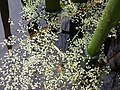
 Gibbous Duckweed (Lemna gibba)
 -
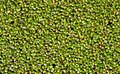
 Common Duckweed (Lemna minor)


.jpg)
External links
[edit]

- Lemna Ecotox testing Duckweed growth inhibition tests and standardisation
- OECD Guideline for Lemna Test Archived 2016-01-07 at the Wayback Machine
- USDA Plants Profile: North American Species
- Jepson Manual Treatment: Lemna
| National | |
|---|---|
| Other | |

Lemna
View on GrokipediaDescription and Morphology
Physical Characteristics
Lemna species are small, free-floating aquatic macrophytes characterized by simple, leaf-like structures known as fronds or thalli, which are typically oval or elliptical in shape and measure 1-5 mm in length.[5] These fronds lack true leaves, stems, or differentiation into distinct organs, instead functioning as a flattened, photosynthetic body with a single, unbranched root emerging from the base for nutrient absorption.[6] Exceptionally, Lemna trisulca deviates with elongated, narrowly ovate fronds that form branched chains up to 4 cm long, often submerged and connected by stalks.[7] Vegetative propagation occurs through budding at the frond margins, where new fronds develop and detach to form dense colonies on water surfaces.[1] The fronds contain internal air-filled spaces, or aerenchyma, which provide buoyancy and facilitate gas exchange, enabling the plants to float freely without roots penetrating the substrate.[8] Vascular tissues are present but minimally differentiated, consisting of simple bundles that support nutrient transport without the complexity seen in terrestrial plants.[9] Reproductive structures are rarely observed due to the predominance of vegetative growth, but when present, they consist of minute flowers borne in protective pouches on the frond surface.[10] Each inflorescence consists of one female flower with a single pistil and one or two male flowers, each with a single stamen, enclosed within a spathe-like sac.[11] These structures lead to a small utricle fruit that typically contains 1 seed (or up to 2-6 in some species).[12] These seeds are ellipsoid and ribbed, contributing to dispersal, though sexual reproduction is infrequent in natural populations.[13] Lemna exhibits notable adaptations for rapid proliferation, with a population doubling time of 1-2 days under optimal environmental conditions such as adequate nutrients and moderate temperatures.[14] Additionally, the fronds boast a high nutritional profile, with protein content ranging from 25-45% of dry weight, underscoring their potential as biomass producers.[15]Reproduction
Lemna species predominantly reproduce asexually through vegetative budding, in which daughter fronds emerge from a meristematic pocket on the mother frond and detach upon maturation, enabling rapid clonal propagation without meiosis and resulting in exponential colony expansion.[16] This process allows populations to double in as little as 1.5 to 2 days under optimal conditions, with reproduction rates influenced by environmental factors such as temperatures of 20–30°C, adequate light intensity, and nutrient availability in the growth medium.[17][18] Sexual reproduction in Lemna is rare and occurs via monoecious inflorescences, each typically consisting of one female flower and one or two male flowers enclosed within a spathe-like sac on the same frond.[19] Pollination is facilitated by wind or water currents, leading to the formation of small, single-seeded fruits.[11] The resulting seeds remain viable for several years, with germination rates of up to 70% observed after two years of storage in water at room temperature, though successful germination often requires specific environmental cues such as suitable light regimes, nutrient conditions, or temperature fluctuations.[11] In certain species, such as Lemna minor, reproduction also involves the formation of turions—specialized dormant buds rich in starch that develop under stress conditions like shortening days or nutrient limitation, sink to the sediment bottom, and overwinter before resuming growth in spring.[20][21]Ecology and Distribution
Habitat
Lemna species, commonly known as duckweeds, primarily inhabit still or slow-moving freshwater bodies such as ponds, ditches, lakes, and wetlands, where they form floating colonies on the water surface.[20] These environments are typically eutrophic, characterized by elevated levels of nutrients like nitrogen and phosphorus, which support their rapid vegetative reproduction and biomass accumulation. While most species are restricted to freshwater, some, such as Lemna minor, exhibit limited tolerance to slightly brackish conditions with conductivity up to approximately 1000 μS/cm, though they do not survive in fully marine or fast-flowing waters exceeding 0.3 m/s.[22] Lemna thrives across a broad range of physicochemical parameters, demonstrating remarkable adaptability. Optimal growth occurs at pH levels of 6.5-8.0, though the plants tolerate extremes from 3.5 to 10.4, with some species like Lemna minor performing well between 5 and 9.[20] Temperatures between 20-30°C promote maximal proliferation, but survival is possible from 6-33°C, with lower limits around 8-16°C and upper thresholds exceeding 34°C in tolerant clones.[20] Light requirements vary from full sun to partial shade, with growth rates consistent across intensities of 50-1000 µmol photons m⁻² s⁻¹, enabling colonization in both open and shaded aquatic niches.[23][20] Ecologically, Lemna plays a pivotal role in aquatic systems by forming dense surface mats that influence community dynamics and biogeochemical processes. These mats shade underlying waters, limiting light penetration and thereby suppressing growth of submerged macrophytes while altering oxygen levels through daytime photosynthesis and nighttime respiration.[24] As primary producers, they contribute to food webs by serving as a basal resource for herbivores like waterfowl and insects, and they facilitate nutrient cycling by rapidly assimilating dissolved nitrogen and phosphorus, which reduces eutrophication and supports microbial symbionts such as nitrogen-fixing bacteria.[23][20] In response to environmental stresses, Lemna exhibits bioaccumulation of heavy metals like copper, zinc, nickel, and lead, enabling phytoremediation in contaminated waters while conferring partial tolerance up to concentrations of 3-15 mg/L for certain metals.[25] However, the plants are highly sensitive to herbicides such as glyphosate and metolachlor, which inhibit growth and photosynthetic efficiency even at low exposure levels, highlighting their vulnerability to agricultural runoff.[26][27]Global Distribution and Invasiveness
Lemna species exhibit a cosmopolitan distribution, being native to all continents except Antarctica, where they thrive in freshwater habitats worldwide. This widespread occurrence is primarily driven by natural dispersal mechanisms, including attachment to waterfowl for long-distance transport, passive movement via ocean and river currents, and unintentional human-mediated spread through activities like the aquarium and water garden trade. Recent studies (as of 2024) indicate that management practices may drive evolutionary increases in L. minor invasiveness, while a new hybrid, Lemna × mediterranea, has been documented in Southern Italy.[28][29][30][31] Among the genus, Lemna minor is particularly prevalent in temperate zones across North America, Europe, and Asia, while Lemna gibba favors warmer climates with seasonal dryness and mild winters, occurring in regions from the Mediterranean to parts of Africa and Australia. Several species have been introduced to new areas outside their native ranges, such as L. minor in Australia and New Zealand, where it has established populations through contaminated water sources or ornamental plant imports.[32][33][34] Certain Lemna species demonstrate invasiveness by rapidly proliferating to form dense monocultures on water surfaces, which can impede water flow, reduce oxygen levels, and displace native aquatic vegetation, thereby altering local hydrology and reducing biodiversity. For instance, Lemna minuta is classified as invasive in various European Union water bodies, where it outcompetes native flora, and L. minor is considered problematic or invasive in select U.S. states and national parks, such as Hawaii's Haleakala National Park. Control efforts typically involve mechanical harvesting to physically remove biomass or targeted chemical treatments with herbicides like fluridone or diquat, though these methods require careful application to minimize environmental impacts.[35][36][37] Climate change is projected to exacerbate Lemna's spread, as rising temperatures and altered precipitation patterns favor their growth, potentially leading to expanded distributions in coming decades. Models indicate that warmer conditions could increase duckweed biomass in temperate and subtropical waters by up to 87% by the 2070s, intensifying ecological pressures unless offset by reduced nutrient inputs.[38][39]Taxonomy and Classification
Etymology and History
The genus name Lemna derives from the Ancient Greek word lémna (λέμνα), referring to a type of aquatic plant, which highlights the floating nature of these species on water surfaces.[40] The common name "duckweed" originates from the plant's frequent consumption as forage by ducks and other waterfowl, emphasizing its role in aquatic ecosystems as a readily available food source.[41] References to duckweeds appear in ancient texts, such as Pliny the Elder's Natural History (circa 77 CE), where they are described as "pond scum" or similar floating aquatic growths in Roman observations of natural phenomena.[42] The genus was formally established in modern botany by Carl Linnaeus in his seminal work Species Plantarum (1753), where he described Lemna as the primary genus for these minute floating plants, initially including several species now recognized as distinct.[43] Early taxonomic efforts faced confusion, as Lemna was sometimes conflated with other genera in the Lemnaceae family, such as Wolffia and Spirodela, due to their similar reduced morphologies and vegetative reproduction.[43] In the 19th century, Carl Friedrich Hegelmaier advanced the understanding of Lemna through detailed morphological studies, culminating in his monographic work Die Lemnaceen (1868), which provided the first comprehensive classification of the family, dividing Lemna into subgenera based on frond structure and venation patterns.[44] The 20th century saw initial morphological-based affiliations of Lemnaceae with Araceae, but post-1990s molecular evidence, including rbcL gene surveys, confirmed their close phylogenetic ties, supporting Lemna as part of a monophyletic clade within Araceae sensu lato.[43] Key revisions in the early 2000s, such as those by Les et al. (2002), clarified synonymy within Lemna, reducing the number of accepted species through phylogenetic analysis and resolving longstanding taxonomic ambiguities, with minor updates in subsequent decades refining sectional boundaries.[43]Phylogenetic Position
Lemna belongs to the subfamily Lemnoideae within the family Araceae, a group collectively known as duckweeds, where it occupies a position sister to genera such as Wolffia and Spirodela.[43] Historically, duckweeds were classified in the separate family Lemnaceae, but morphological similarities and early molecular data in the 1990s prompted their integration into Araceae as a specialized subfamily adapted to floating aquatic habitats.[45] Molecular phylogenetic analyses, including studies of ribosomal DNA (rDNA) and chloroplast genes such as rbcL, matK, and introns in trnK and rpl16, have robustly confirmed the monophyly of Lemna with high bootstrap support.[43] The genus comprises 13 species organized into four monophyletic sections—Alatae, Biformes, Lemna, and Uninerves—reflecting evolutionary divergences within the clade.[43][3] Evolutionary adaptations in Lemna include marked reductions in floral structures, often to minute, rarely produced unisexual flowers, and simplified vascular tissues, which minimize resource allocation and enhance buoyancy in aquatic environments.[46] These traits correlate with compact genome sizes, such as approximately 481 Mbp in Lemna minor, supporting the genus's characteristic rapid vegetative reproduction and growth rates.[47] Genomic sequencing efforts in the 2020s have illuminated the prevalence of interspecific hybridization in Lemna, frequently resulting in triploid hybrids via unreduced gametes, potentially facilitated by mutations in meiotic genes; however, these findings have not prompted major reclassifications within the genus as of 2025.[48]Recognized Species
The genus Lemna comprises 13 recognized species, classified into four infrageneric sections based on morphological and molecular characteristics: Alatae (2 species, characterized by winged or alate fronds and turions), Biformes (3 species, with variable frond shapes and often globose forms), Lemna (6 species, typical floating forms with multiple roots), and Uninerves (2 species, featuring a single nerve per frond).[3]Section Alatae
This section includes two tropical and subtropical species distinguished by small fronds (1–2 mm long) and the presence of winged turions for overwintering. Lemna aequinoctialis Welw. features delicate, oval fronds with 3–5 roots per frond and is adapted to warm climates, often forming dense mats in nutrient-rich waters.[49] Lemna perpusilla Torr. (synonym L. minima Phil.) has even smaller fronds (<1 mm) and a single root, thriving in similar tropical environments with high growth rates.[50]Section Biformes
Comprising three species with variable frond morphology, often including inflated or globose forms, this section is identified by frond size ranging from 2–8 mm and 1–7 roots, with some producing starch-filled turions. Lemna gibba L. exhibits distinctive globose, swollen fronds (up to 8 mm long) that aid buoyancy in stagnant waters and is widespread globally. Lemna disperma Hegelm. shows biform fronds (flat and globose variants) measuring 2–5 mm, with 2–4 roots, and is noted for its occurrence in temperate to subtropical regions. Lemna obscura (Austin) Daubs has small, ovoid fronds (1.5–3 mm) with 1–3 roots and subtle vein patterns, primarily found in eastern North America.Section Lemna
This largest section contains six species with typical elliptic to ovate fronds (1–5 mm long), usually 2–5 roots per frond, and occasional turions; identification often relies on frond thickness and vein count. Lemna minor L. (including synonym L. paucicostata Hegelm.) is the common temperate species with small, flat fronds (1–3 mm) and rapid vegetative reproduction, widely distributed in freshwater bodies.[51] Lemna japonica Landolt is an interspecific hybrid that forms swarms with L. minor, featuring slightly larger fronds (2–4 mm) and 3–5 roots, restricted to East Asia. Lemna turionifera Landolt produces prominent starch-body turions and fronds up to 4 mm with 4–6 roots, occurring in northern temperate zones.[52] Lemna trisulca L. (ivy-leaved duckweed) differs with elongated, submerged fronds (5–10 mm) and branching habits, widespread in temperate regions.[53] Lemna landoltii Halder & Venu exhibits variable frond sizes (1–4 mm) and multiple roots, known from Southeast Asia. Lemna bistrosa Charit. is distinguished by rough-textured fronds (2–5 mm) and 3–5 roots, recently described from Central Asia.Section Uninerves
These two species are characterized by a single prominent nerve per frond, small size (1–3 mm), and typically one root, with some submerged habits. Lemna minuta Kunth (synonyms L. minima Chev., L. minuscula Herter) has minute, elliptic fronds and is cosmopolitan in warm waters.[54] Lemna valdiviana Phil. (synonym L. yungensis Landolt) features slightly larger fronds (2–3 mm) and is native to South America, often in cooler streams.[55] Most Lemna species are assessed as Least Concern globally due to their widespread distribution and adaptability, with no species listed as Endangered on the IUCN Red List as of 2025.[3]Uses and Applications
Bioassays
Lemna species, particularly Lemna minor and L. gibba, serve as primary test organisms in standardized bioassays for evaluating the toxicity of chemicals to aquatic plants, as outlined in the OECD Guideline 221 and the US EPA OCSPP 850.4400 (formerly OPPTS 850.4400). These protocols assess substance-related effects on vegetative growth over a 7-day exposure period, quantifying inhibition through key metrics such as frond number, total frond area, fresh or dry biomass, and relative growth rate.[56] Test setups typically employ small-scale formats like 24-well plates for high-throughput applications or larger vessels such as 100 mL glass beakers to accommodate replicates, with each containing 3–3.5 fronds initially in 20–50 mL of nutrient-enriched test medium. Endpoints focus on concentration-response relationships, including EC50 values (the concentration causing 50% growth inhibition) for herbicides, pesticides, and other pollutants; test designs incorporate static (no renewal), semi-static (renewal every 2–3 days), or flow-through systems to account for substance volatility, stability, and bioavailability.[57][58][59] These bioassays highlight the sensitivity of Lemna to environmental contaminants, exemplified by a 72-hour EC50 of approximately 0.025 mg/L for atrazine-induced growth inhibition in L. minor, reflecting disruptions to photosynthesis and biomass accumulation. As a result, they offer a cost-effective, rapid, and animal-free alternative to vertebrate models, facilitating regulatory assessments of agrochemicals and industrial effluents while minimizing ethical concerns.[60] The methodologies were first standardized in the 1980s based on extensive validation studies demonstrating reproducibility across laboratories, and they have since been refined in the 2020s to better evaluate emerging threats like nanomaterials (e.g., nano-ZnO aggregation effects on root growth) and climate stressors (e.g., elevated temperatures altering toxicity thresholds). These updates enhance predictive accuracy for complex environmental scenarios without altering core protocols.[61][60][62]Biopharmaceutical Production
Lemna species, particularly Lemna minor, have emerged as a promising platform for biopharmaceutical production through genetic engineering, leveraging their rapid growth and eukaryotic post-translational modification capabilities to express therapeutic proteins and vaccines. The system's advantages include glycosylation patterns that can be engineered to closely mimic human N-glycans, reducing immunogenicity risks associated with plant-specific modifications like core α-1,3-fucose and β-1,2-xylose residues.[63] High biomass productivity, reaching up to 30 tons of dry matter per hectare per year under optimized conditions, supports scalable production.[64] Additionally, cultivation in contained photobioreactors minimizes environmental contamination and pathogen risks compared to open-field systems or animal cell cultures.[65] Key examples of therapeutic proteins produced in engineered Lemna include monoclonal antibodies (mAbs) and cytokines. For instance, a human anti-CD30 mAb was expressed in transgenic L. minor via nuclear transformation, achieving yields suitable for clinical development with glyco-optimized forms exhibiting enhanced antibody-dependent cellular cytotoxicity comparable to CHO cell-derived versions.[63] The anti-HIV broadly neutralizing mAb 2G12 has also been produced in L. minor, representing approximately 0.2% of total soluble protein, with extraction processes addressing phenolic interferences to improve purity.[66] Vaccines such as cyanovirin-N, an HIV-inactivating lectin, and interferons have been targeted using similar nuclear transformation methods involving Agrobacterium-mediated gene delivery or particle bombardment, enabling secretion into culture media for easier recovery.[67] Insulin production has been demonstrated in the Biolex LEX system, highlighting Lemna's versatility for hormones and growth factors.[67] The production process typically involves stable nuclear or transplastomic lines for high-level expression, with transplastomic approaches in Lemna chloroplasts providing maternal inheritance and reduced gene silencing. Yields for human granulocyte-macrophage colony-stimulating factor (hGM-CSF) have reached up to 4.1 mg/L in culture media, demonstrating bioactivity equivalent to commercial standards. Purification employs affinity chromatography, such as Protein A resin, often preceded by pretreatment steps like phenolic removal using ion-exchange or adsorption resins to achieve >95% purity at estimated costs of approximately $0.10 per gram of protein, significantly lower than mammalian systems.[68] Regulatory progress includes FDA approval of GMP facilities for the LEX system developed by Biolex Therapeutics, which was acquired by Synthon in 2012 to advance clinical candidates. As of 2025, ongoing trials explore Lemna-produced oral vaccines, such as those targeting avian infectious bronchitis virus, showing complete protection in preclinical models and potential for human applications due to the edible biomass format.[69][70]Farming and Cultivation
Lemna species, commonly known as duckweed, are cultivated under controlled conditions to maximize biomass production for various applications. Optimal growth occurs in nutrient-rich media such as Hoagland solution, which provides balanced macronutrients including nitrogen, phosphorus, and potassium in ratios that support rapid frond proliferation, typically with a pH range of 6.5 to 7.5.[71][72][73] Temperatures between 20°C and 28°C promote vigorous growth, while a photoperiod of 12 to 16 hours simulates natural daylight cycles conducive to photosynthesis.[74][75] Harvesting is typically achieved by sieving the floating fronds from the water surface, allowing for efficient collection without damaging the biomass.[76][77] Cultivation systems for Lemna include open ponds, raceway channels, and enclosed photobioreactors, each designed to maintain water flow and prevent stagnation. Ponds offer low-cost scalability for large-scale operations, while raceways enhance circulation to optimize nutrient distribution and oxygen levels.[78][79] Photobioreactors provide controlled environments for higher purity, particularly in indoor setups. Inoculation densities typically range from 100 to 500 fronds per liter to achieve rapid coverage without overcrowding, leading to biomass yields of 10 to 30 tons of dry matter per hectare per year under favorable conditions.[80][81][82] For sustainable nutrient sourcing, Lemna cultivation often utilizes wastewater or diluted manure effluents, which supply essential nitrogen and phosphorus while reducing environmental discharge from agricultural or industrial sources. This approach enhances resource efficiency by recycling nutrients that would otherwise require synthetic fertilizers.[83][14][82] Key challenges in Lemna farming include managing contamination from algae or pathogens, which can be mitigated through sterile inoculation and regular monitoring, and addressing seasonal dormancy where fronds form starch-filled turions that sink and halt growth during low temperatures or nutrient stress.[84][20][64] Economically, Lemna cultivation features low input costs, estimated at around $200 per hectare for basic pond systems due to minimal land and labor requirements, making it viable for commercial scaling. In the 2020s, operations in Israel, such as those by GreenOnyx, have demonstrated successful large-scale production for animal feed using automated modular farms. In September 2025, GreenOnyx was named "Vertical Farming Company of the Year."[85][86][87][88]Nutritional and Environmental Uses
Lemna species exhibit high nutritional value, with dry biomass containing 25–45% protein, positioning them as a sustainable protein source for animal feed and emerging human applications.[89] They are particularly rich in essential amino acids and polyunsaturated fatty acids, including omega-3s such as alpha-linolenic acid, with omega-3 to omega-6 ratios ranging from 4:1 to 5:3, which supports cardiovascular health and addresses dietary imbalances in modern diets.[64] In aquaculture, Lemna serves as an effective aquafeed, notably for Nile tilapia (Oreochromis niloticus), where inclusion levels up to 50% in diets promote comparable growth rates to conventional feeds while enhancing feed efficiency and reducing production costs.[90] For human consumption, processed forms of Lemna, marketed as "water lentils," have gained regulatory approval following safety assessments; 2023-2024 studies and the European Food Safety Authority's evaluations confirmed their suitability after heat processing to mitigate antinutritional factors. In February 2025, water lentils received official EU approval for use in foods like pasta and snacks, with no adverse effects observed in toxicity trials.[91][92][93] In biofuel production, Lemna's composition supports both ethanol and biodiesel pathways due to its elevated carbohydrate and lipid levels. Starch content can reach up to 75% of dry weight under nutrient-limited conditions, enabling fermentation to ethanol with yields of approximately 6,420 L per hectare annually—about 50% higher than maize-based systems—through processes like enzymatic hydrolysis followed by yeast fermentation.[94] Lipid content typically ranges from 5–10% of dry biomass, suitable for transesterification into biodiesel, though yields are lower than starch-derived fuels and often integrated with residual biomass for co-production.[95] These attributes make Lemna a viable third-generation biofuel feedstock, leveraging its rapid growth and wastewater tolerance for integrated cultivation. Environmentally, Lemna excels in phytoremediation, hyperaccumulating heavy metals from contaminated waters; for instance, Lemna minor can absorb up to 1.5 mg of cadmium per gram of dry weight in batch systems, achieving removal efficiencies exceeding 70% for metals like cadmium, lead, and zinc over 7–14 days.[96] In wastewater treatment, dense Lemna mats remove up to 80% of total nitrogen and phosphorus through uptake and sedimentation, outperforming conventional systems in tropical and temperate climates while simultaneously reducing biochemical oxygen demand by 60–90%.[25] Additionally, Lemna contributes to carbon sequestration by fixing atmospheric CO₂ at rates of 10–20 tons per hectare annually in floating mats, converting it into biomass that can be harvested for long-term storage, thus mitigating greenhouse gas emissions in constructed wetlands.[97] Beyond industrial applications, Lemna finds use as an ornamental plant in aquaria, where it forms a natural surface cover that shades fry, absorbs excess nutrients to control algae, and enhances biodiversity without requiring substrate.[98] Studies have shown Lemna's potential for oxygen production in closed-loop systems for space agriculture, leveraging its high photosynthetic efficiency to generate up to 1.5 times more O₂ per unit biomass than many terrestrial crops (as of 2022). In 2025, NASA research explored Lemna for biofilm mitigation in space environments.[99][100]References
- https://en.wiktionary.org/wiki/Lemna