


Community hub
Recent from talks
Contribute something
Nothing was collected or created yet.
Ústí nad Labem
View on Wikipedia
Ústí nad Labem (Czech pronunciation: [ˈuːsciː nad ˈlabɛm] ⓘ; German: Aussig) is a city in the Czech Republic. It has about 91,000 inhabitants and is the capital of the Ústí nad Labem Region. It is a major industrial centre and, besides being an active river port, is an important railway junction.
Key Information


Administrative division
[edit]Ústí nad Labem is divided into four self-governing boroughs.[2] In addition, Ústí nad Labem consists of 22 municipal parts (in brackets population according to the 2021 census):[3]
- Ústí nad Labem-město (35,015)
- Božtěšice (496)
- Bukov (5,988)
- Habrovice (395)
- Hostovice (249)
- Klíše (6,944)
- Předlice (1,544)
- Skorotice (1,379)
- Strážky (234)
- Vaňov (755)
- Všebořice (2,870)
- Ústí nad Labem-centrum (14,161)
- Ústí nad Labem-Neštěmice (22,148)
- Krásné Březno (12,417)
- Mojžíř (4,222)
- Neštěmice (5,509)
- Ústí nad Labem-Severní Terasa (18,965)
- Severní Terasa (18,965)
- Ústí nad Labem-Střekov (13,585)
Etymology
[edit]The name Ústí means 'river mouth' in Czech and refers to the mouth of the Bílina, which lies immediately south of the city centre. The suffix nad Labem means 'on the Elbe', and serves to distinguish the city from the other places called Ústí in the Czech Republic. The German name Aussig (earlier Ausk or Usk) derives from Úsť, an abbreviated form of the Czech name.[4] Before Czechoslovak independence, it was the usual name for the city in English.[5][6]
Geography
[edit]Ústí nad Labem is located about 65 kilometres (40 mi) north of Prague and 45 km (28 mi) south of Dresden in Germany. It lies mostly in a hilly landscape of the Central Bohemian Uplands, but it also extends into the Most Basin in the northwest. The highest point is the hill Široký vrch at 659 m (2,162 ft) above sea level. The city is situated at the confluence of the Elbe and Bílina rivers. Half of Lake Milada lies in the municipal territory. The southern part of the territory lies in the České středohoří Protected Landscape Area.
Climate
[edit]| Climate data for Ústí nad Labem, 1991–2020 normals, extremes 1975–present | |||||||||||||
|---|---|---|---|---|---|---|---|---|---|---|---|---|---|
| Month | Jan | Feb | Mar | Apr | May | Jun | Jul | Aug | Sep | Oct | Nov | Dec | Year |
| Record high °C (°F) | 15.9 (60.6) |
16.3 (61.3) |
23.1 (73.6) |
27.5 (81.5) |
29.8 (85.6) |
36.7 (98.1) |
36.0 (96.8) |
36.6 (97.9) |
31.1 (88.0) |
25.4 (77.7) |
17.0 (62.6) |
15.4 (59.7) |
36.6 (97.9) |
| Mean daily maximum °C (°F) | 1.3 (34.3) |
3.1 (37.6) |
7.6 (45.7) |
14.1 (57.4) |
18.5 (65.3) |
21.7 (71.1) |
23.9 (75.0) |
23.9 (75.0) |
18.6 (65.5) |
12.2 (54.0) |
6.0 (42.8) |
2.1 (35.8) |
12.7 (54.9) |
| Daily mean °C (°F) | −1.2 (29.8) |
0.1 (32.2) |
3.7 (38.7) |
9.1 (48.4) |
13.3 (55.9) |
16.4 (61.5) |
18.4 (65.1) |
18.1 (64.6) |
13.5 (56.3) |
8.4 (47.1) |
3.4 (38.1) |
−0.2 (31.6) |
8.6 (47.5) |
| Mean daily minimum °C (°F) | −3.2 (26.2) |
−2.4 (27.7) |
0.6 (33.1) |
5.0 (41.0) |
8.8 (47.8) |
11.9 (53.4) |
13.9 (57.0) |
13.7 (56.7) |
9.9 (49.8) |
5.7 (42.3) |
1.5 (34.7) |
−2.1 (28.2) |
5.3 (41.5) |
| Record low °C (°F) | −22.1 (−7.8) |
−19.5 (−3.1) |
−14.0 (6.8) |
−7.1 (19.2) |
−3.2 (26.2) |
2.4 (36.3) |
6.4 (43.5) |
5.2 (41.4) |
1.2 (34.2) |
−4.8 (23.4) |
−12.0 (10.4) |
−18.5 (−1.3) |
−22.1 (−7.8) |
| Average precipitation mm (inches) | 42.4 (1.67) |
33.3 (1.31) |
33.7 (1.33) |
31.9 (1.26) |
59.2 (2.33) |
72.4 (2.85) |
81.2 (3.20) |
77.5 (3.05) |
49.1 (1.93) |
45.5 (1.79) |
42.5 (1.67) |
44.8 (1.76) |
613.5 (24.15) |
| Average snowfall cm (inches) | 20.1 (7.9) |
16.9 (6.7) |
9.2 (3.6) |
1.7 (0.7) |
0.0 (0.0) |
0.0 (0.0) |
0.0 (0.0) |
0.0 (0.0) |
0.0 (0.0) |
0.5 (0.2) |
6.9 (2.7) |
17.4 (6.9) |
72.6 (28.6) |
| Average precipitation days (≥ 1.0 mm) | 11.1 | 8.3 | 8.1 | 6.8 | 9.3 | 9.9 | 10.6 | 9.2 | 8.2 | 8.9 | 9.3 | 10.6 | 110.2 |
| Average relative humidity (%) | 84.0 | 78.2 | 72.1 | 63.6 | 65.3 | 66.3 | 65.5 | 66.4 | 73.1 | 80.2 | 86.0 | 86.1 | 73.9 |
| Mean monthly sunshine hours | 36.4 | 65.7 | 110.3 | 174.5 | 212.3 | 213.6 | 224.2 | 215.9 | 146.8 | 88.1 | 38.8 | 30.1 | 1,556.6 |
| Source 1: NOAA[7] | |||||||||||||
| Source 2: Czech Hydrometeorological Institute[8][9][10] | |||||||||||||
History
[edit]10th–15th centuries
[edit]The first verified written mention is in the charter of the chapter at the Church of St. Stephen in Litoměřice, dated to 1056 or 1057. In 1249, it was first mentioned with the title of royal town.[11] The charter of the Prague Benedictine monastery from 993 was considered to be the first written mention of Ústí nad Labem, but its legitimacy has been called into question.[12]
In the second half of the 13th century, King Ottokar II invited German settlers into the country and granted them a German form of municipal incorporation, thereby founding the city proper. In 1423, as King of Bohemia, Sigismund pledged the town to Elector Frederick I of Meissen, who occupied it with a Saxon garrison. On 16 June 1426, after the city was besieged by the 25,000 Hussites, the besiegers defeat a German army of 70,000 troops was sent to its relief but the Hussites defeated the Germans amid great slaughter. The next day, the Hussites stormed and razed the town. It was left derelict for three years before rebuilding began in 1429.[6]
16th–19th centuries
[edit]Ústí nad Labem was again burned down in 1583 and was sacked by the Swedes in 1639 amid the Thirty Years' War.[5] It also suffered grievously during the Seven Years' War and was near the 1813 Battle of Kulm between France and the alliance of Austria, Prussia, and Russia during the Napoleonic Wars. As late as 1830, its population was only 1,400.[6]
As part of the Kingdom of Bohemia, it was eventually incorporated into the Habsburg monarchy and heavily industrialized over the 19th century. After the Compromise of 1867, it headed the Aussig District, one of Austrian Bohemia's 94 district commissions (Bezirkshauptmannschaften).[13] In the 1870s, with only 11,000 people, it was a major producer of woolen goods, linen, paper, ships, and chemicals and carried on a large trade in grain, fruit, mineral water, lumber, and coal.[5] By 1900, large-scale immigration had boosted the population to nearly 40,000, mostly German, and added glassworking and stone to its trades.[6] The local river port became the busiest in the entire Austria-Hungary, surpassing even the seaport in Trieste.[14]
20th century
[edit]
The factories of Aussig—as it was then known—were an early centre of the Nazi movement. The German Workers' Party in Austria (Deutsche Arbeiterpartei in Österreich) was founded on 15 November 1903 and later gave rise to the Sudeten German Party and Austrian National Socialism. Their books continued to be printed in Ústí nad Labem even after the formation of Czechoslovakia in 1918.
During the 1930 census, Ústí nad Labem was home to 43,793 residents: 32,878 considered German, 8,735 Czech or Slovak, 222 Jews, 16 Russians, and 11 Hungarians.[15]
Ústí nad Labem was ceded to Nazi Germany in October 1938 under the terms of the Munich Agreement and administered as part of the Reichsgau Sudetenland. In April 1945, the city was severely bombed by the United States Air Force. The bombing killed about 600 people and destroyed the historic centre of the city. Along with Plzeň, Ústí nad Labem became the most damaged Czech city during World War II.[16] After World War II, the city was restored to Czechoslovakia and the German-speaking population was expelled.
Ústí massacre
[edit]
Shortly after the war ended, on 31 July 1945, an explosion of the local ammunition depot triggered a pogrom of the German population, known as the Ústí massacre, mostly at the hands of out-of-town paramilitary groups. Whilst the official government investigation attributed the explosion to Nazi Werwolves (German saboteurs), contemporary historians have questioned the attribution as several other equally probable possibilities have been proposed. The pogrom was used as part of the justification of the Potsdam Conference to deport German citizens from Czechoslovakia, as continued cohabitation was argued to be impossible. It is estimated that between 80 and a 100 people died in the explosion and subsequent murders, nearly double the 43 confirmed victims.[17][18]
After World War II
[edit]In May 1948, the Communist government passed a new constitution declaring a people's republic.
Beginning in the 1960s dissidence and general unhappiness with communist rule gave way to new artistic pursuits tackling the country's issues, Ústí nad Labem was primarily representative of this with Kladivadlo, a theatre which moved to Ústí nad Labem after it ran into issues with support from organizers, and Dialog a monthly political magazine.[19]
The city gained notoriety in 1999, when the Matiční Street Wall was built to separate Matiční Street with mainly Romani population from other residents, which turned into an international scandal. The wall was torn down after six weeks of its existence.[20]
Demographics
[edit]
|
|
| ||||||||||||||||||||||||||||||||||||||||||||||||||||||
| Source: Censuses[21][22] | ||||||||||||||||||||||||||||||||||||||||||||||||||||||||
Economy
[edit]Ústí nad Labem is the economic centre of the Ústí nad Labem Region and the seat of many industrial companies. The largest industrial employers with its headquarters in Ústí nad Labem and at least 500 employees are Spolek pro chemickou a hutní výrobu (chemical industry) and Strabag Rail (construction industry). Other large industrial companies in the city include Kone Industrial (manufacture of elevators), Severotisk (printing industry) and Pierburg (manufacture of car parts).[23]
Transport
[edit]
Road transport
[edit]The D8 motorway (part of the European route E55) from Prague to Dresden intersects the western border of Ústí nad Labem. The European route E442 from Liberec to Karlovy Vary, formed by first class road, also passes through the city.
Mariánský Bridge is a road bridge over the Elbe which was built over a period of five years and opened in 1998. It is one of the main landmarks of the city. International Association for Bridge and Structural Engineering ranked Mariánský Bridge among the 10 best structures of the world in the decade.[24]
City mass transport
[edit]The city has a network of mass transport that includes bus and trolley bus lines. The city has its own transport company, Dopravní podnik města Ústí nad Labem.[25]
Railway transport
[edit]
Ústí nad Labem is an important railway node with four railway stations. The largest of these is Ústí nad Labem main railway station which is served by international EuroCity trains. Ústí nad Labem lies on the line from Prague to Děčín, which is part of several international lines, and thus the city has direct connections with Berlin, Budapest, Graz and Zürich. Lines of national importance are Prague–Cheb and Ústí nad Labem – Kolín.[26]
River transport
[edit]The Elbe River Line is a junction with the West-European river lines opening access to Germany, Benelux countries, northern France and to important sea ports. Freight transportation and pleasure cruises are run on the water line section Pardubice – Chvaletice – Ústí nad Labem – Hřensko – Hamburg.
Air transport
[edit]An airport for small sports planes (ICAO code LKUL) is located northwest of the city. The nearest public international airports are Václav Havel Airport Prague (64 km) and Dresden Airport in Germany (56 km).
Education
[edit]The city is home of the Jan Evangelista Purkyně University in Ústí nad Labem. This public university has about 8,500 students and with about 900 employees, it is one of the most important employers in the region.[27]
Sport
[edit]The local ice hockey club HC Slovan Ústečtí Lvi. The football club is FK Viagem Ústí nad Labem, which plays at the Městský stadion.
The city hosts the Ústí nad Labem Half Marathon, one of the World Athletics Label Road Races.
During the 1950s and 1960s, the motorcycle speedway team AMK Ústí nad Labem raced in the city. It raced initially at a stadium in the Bukov area until it was converted into an athletics facility in 1960. Then the team raced at a track in the Klíše area from 1967 to 1968 and finally in Polepy.[28] The team raced in the inaugural 1956 Czechoslovak Championship and won two silver medals and three bronze medals from 1961 to 1971.[29]
Sights
[edit]
The Střekov Castle is one of the main sights of Ústí nad Labem, and one of the most visited tourist destinations in the whole region. It is located in a southern suburb of the city. The castle was built in 1316–1319. With a break in 1945–1992, it has been owned by the Lobkowicz family since 1563.[30]

The Church of the Assumption of the Virgin Mary was built in 1318 and is located in the city centre. It is well known for its leaning tower. The tower is 65 metres (213 ft) high and its deviation, caused by bombing at the end of World War II, is 201 centimetres (6.59 ft). It is the most leaning tower north of the Alps.[31]
A significant landmark is the hill Větruše with an observation tower and the Větruše Castle, which was built in 1847 as a hotel and restaurant serving cultural and social purposes.[32]
In Krásné Březno part is located the Ústí nad Labem Zoo, founded in 1908. A notable building is the Krásné Březno Castle. It is formed by the Old Castle, built before 1568, and by the New Castle, built in the early 17th century and modified in the Baroque style in the first half of the 18th century. The castle is surrounded by an English park. Nowadays the castle serves as the seat of the branch of National Heritage Institute of the Czech Republic.[33]
Notable people
[edit]- Anton Raphael Mengs (1728–1779), German painter
- Mimi Wagensonner (1897–1970), Austrian composer
- Felix Weinberg (1928–2012), Czech-British physicist
- Günther Herbig (born 1931), German conductor
- Alfred Lipka (1931–2010), German violist
- Vladimír Páral (born 1932), writer
- Heinz Edelmann (1934–2009), Czech-German illustrator and designer
- Milan Hejduk (born 1976), ice hockey player
- Jiří Jarošík (born 1977), footballer
- Petra Gelbart (born 1978), musicologist, musician, music therapist and human rights defender
- Jan Mertl (born 1982), tennis coach and player
- Tomáš Černý (born 1985), footballer
- Michal Neuvirth (born 1988), ice hockey player
Twin towns – sister cities
[edit]

Gallery
[edit]-
 Větruše Castle
 -
 Krásné Březno Castle
 -
 Municipal trolleybus
 -
 Panorama from a nearby observation tower
 -
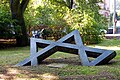 Holocaust memorial built in 2005
.jpg)


.jpg)

References
[edit]- ^ "Population of Municipalities – 1 January 2025". Czech Statistical Office. 16 May 2025.
- ^ "Úřady městských obvodů" (in Czech). City of Ústí nad Labem. Retrieved 14 November 2023.
- ^ "Public Census 2021 – basic data". Public Database (in Czech). Czech Statistical Office. 2022.
- ^ Niemeyer, Manfred, ed. (2012). Deutsches Ortsnamenbuch. Berlin: De Gruyter. p. 44. ISBN 978-3-11-025802-8.
- ^ a b c Baynes, T. S., ed. (1878), , Encyclopædia Britannica, vol. 3 (9th ed.), New York: Charles Scribner's Sons, p. 101
- ^ a b c d Chisholm, Hugh, ed. (1911), , Encyclopædia Britannica, vol. 2 (11th ed.), Cambridge University Press, p. 936
- ^ "World Meteorological Organization Climate Normals for 1991-2020 — Ústí nad Labem". National Oceanic and Atmospheric Administration. Archived from the original on 8 August 2024. Retrieved 12 January 2024.
- ^ "Teplota vzduchu v jednotlivé kalendářní dny" (in Czech). Czech Hydrometeorological Institute. Archived from the original on 9 September 2024. Retrieved 9 September 2024.
- ^ "Množství nového sněhu v jednotlivé měsíce v jednotlivé roky" (in Czech). Czech Hydrometeorological Institute. Archived from the original on 9 September 2024. Retrieved 9 September 2024.
- ^ "Průměrná relativní vlhkost vzduchu v jednotlivé měsíce v jednotlivé roky" (in Czech). Czech Hydrometeorological Institute. Archived from the original on 9 September 2024. Retrieved 9 September 2024.
- ^ "Historie města" (in Czech). City of Ústí nad Labem. Retrieved 7 June 2025.
- ^ "První zmínka z roku 993 a silný zápach. Omyly o Ústí". E15 (in Czech). 27 August 2010. Retrieved 7 June 2025.
- ^ Klein, Wilhelm (1967), Die postalischen Abstempelungen auf den österreichischen Postwertzeichen-Ausgaben 1867, 1883 und 1890 (in German)
- ^ "NEJ Ústeckého kraje: nejvýkonnější přístavy v celém Rakousko-Uhersku" (in Czech). Czech Radio. 3 April 2020. Retrieved 8 November 2023.
- ^ Fidler, Jiří; Sluka, Václav (2006). Encyklopedie branné moci Republiky československé 1920–1938 (in Czech). Libri.
- ^ Krsek, Martin (30 April 2010). "Nešla do krytu, ale domů. Nálet na Ústí v dubnu 1945 díky tomu přežila". iDNES.cz (in Czech). Retrieved 4 October 2025.
- ^ "Výbuch muničního skladiště v Krásném Březně a masakr německého obyvatelstva 31. července 1945". City of Ústí nad Labem. Retrieved 7 June 2025.
- ^ "Masakr na mostě v Ústí nad Labem. Rekonstrukce nepotrestaného poválečného zločinu na Němcích" (in Czech). Czech Radio. 31 July 2020. Retrieved 29 April 2025.
- ^ "Pokus o reformu socialismu a sovětská okupace 1968" (in Czech). City of Ústí nad Labem. Retrieved 7 June 2025.
- ^ Zeman, Jiří (23 November 2024). "O zeď v ústecké Matiční ulici se zajímal celý svět. Padla před 25 lety" (in Czech). Czech Radio. Retrieved 25 February 2025.
- ^ "Historický lexikon obcí České republiky 1869–2011" (in Czech). Czech Statistical Office. 21 December 2015.
- ^ "Population Census 2021: Population by sex". Public Database. Czech Statistical Office. 27 March 2021.
- ^ "Registr ekonomických subjektů". Business Register (in Czech). Czech Statistical Office. Retrieved 17 September 2024.
- ^ "Most v Ústí patří mezi nejlepší stavby minulého desetiletí" (in Czech). Ekolist.cz. 23 September 2001. Archived from the original on 8 November 2023. Retrieved 8 November 2023.
- ^ "Profil společnosti" (in Czech). Dopravní podnik města Ústí nad Labem a.s. Archived from the original on 24 July 2023. Retrieved 8 November 2023.
- ^ "Detail stanice Ústí n.L.hl.n." (in Czech). České dráhy. Archived from the original on 24 July 2023. Retrieved 8 November 2023.
- ^ "Kampus" (in Czech). Jan Evangelista Purkyně University in Ústí nad Labem. Archived from the original on 28 February 2021. Retrieved 8 November 2023.
- ^ "Karel Průša nevydýchal velkou sportovní křivdu". SpeedwayA-Z.cz (in Czech). 11 March 2018. Retrieved 27 January 2025.
- ^ "Czechoslovakian Team Championship". historyspeedway.nstrefa.pl. Retrieved 27 January 2025.
- ^ "Hrad Střekov, zřícenina" (in Czech). National Heritage Institute. Retrieved 27 January 2025.
- ^ "Kostel Nanebevzetí Panny Marie v Ústí nad Labem" (in Czech). CzechTourism. Retrieved 27 January 2025.
- ^ "Výletní zámeček Větruše" (in Czech). City of Ústí nad Labem. Retrieved 27 January 2025.
- ^ "Zámek" (in Czech). National Heritage Institute. Retrieved 27 January 2025.
- ^ a b "Partnerská města" (in Czech). City of Ústí nad Labem. Retrieved 6 October 2024.
External links
[edit]


Administrative seats of Czech regions  | ||
|---|---|---|
 | ||
| International | |
|---|---|
| National | |
| Geographic | |
| Other | |

Ústí nad Labem
View on GrokipediaGeography
Location and topography
Ústí nad Labem is situated in the northwestern Czech Republic, in the northern part of Bohemia, serving as the capital of the Ústí nad Labem Region.[3] The city lies at approximately 50°39′40″N 14°3′7″E, about 65 kilometers north of Prague and roughly 80 kilometers southeast of Dresden, Germany.[4][5] The urban area occupies a position at the confluence of the Elbe River (known locally as Labe) and the Bílina River, primarily on the left (west) bank of the Elbe.[6] This riverine setting places the city within a broad valley basin, with an average elevation of 150 meters above sea level.[7] The surrounding topography features undulating hills and elevated plateaus, characteristic of the transitional zone between the Bohemian Massif's volcanic highlands and adjacent mountain ranges. To the south and east, the landscape rises into the Central Bohemian Uplands (České středohoří), a region of basalt hills and volcanic formations, while northward, the terrain ascends toward the Ore Mountains (Krušné hory), marked by steeper granite ridges.[6] [8] The immediate environs include steep valley slopes and rocky outcrops, which frame the city and influence local microclimates and urban development patterns, with notable elevations reaching several hundred meters in proximity, such as the site of Střekov Castle overlooking the Elbe.[8] This varied relief contributes to the area's scenic vistas and has historically shaped settlement and transportation corridors along the river.Climate
Ústí nad Labem has a cold, humid continental climate with warm summers (Köppen Dfb), marked by distinct seasons, significant snowfall in winter, and moderate precipitation year-round. Winters are very cold and snowy, with frequent windy conditions, while summers are comfortable and relatively dry compared to other seasons. The climate is influenced by its location in the Elbe River valley in northern Bohemia, which moderates extremes slightly but exposes the area to continental air masses from the east.[9] Average annual temperatures hover around 8°C, with the coldest month of January recording daily highs of 2°C and lows of -3°C. The warmest month, July, sees average highs of 24°C and lows of 14°C. Precipitation averages approximately 590 mm annually, distributed fairly evenly but with a wetter period from June to October exceeding 43 mm per month on average; the driest months fall between November and May, typically under 38 mm. Snow cover is common from December to March, contributing to the region's winter chill.[9][10]| Month | Average High (°C) | Average Low (°C) | Average Precipitation (mm) | Snowy Days |
|---|---|---|---|---|
| January | 2 | -3 | 23 | 4 |
| February | 4 | -2 | 24 | 3 |
| March | 9 | 0 | 32 | 2 |
| April | 14 | 4 | 37 | 0 |
| May | 19 | 8 | 52 | 0 |
| June | 22 | 11 | 58 | 0 |
| July | 24 | 14 | 67 | 0 |
| August | 24 | 14 | 57 | 0 |
| September | 19 | 9 | 42 | 0 |
| October | 13 | 5 | 35 | 0 |
| November | 7 | 1 | 34 | 3 |
| December | 3 | -2 | 27 | 4 |
Etymology
Historical names and origins
The name Ústí nad Labem originates from the Czech language, where Ústí derives from ústa ("mouths"), denoting the mouth or confluence of a river, specifically referencing the junction of the Bílina River with the Elbe (Czech: Labe) immediately south of the city center; the suffix nad Labem translates to "upon the Elbe," emphasizing its position along the river.[11] This toponymic structure reflects the Slavic settlement patterns in Bohemia, where geographic features like river confluences often informed place names for navigational and economic significance in early trade routes.[12] The earliest documented reference to the settlement appears in a 993 charter concerning toll rights, recorded in Latin as Ústí super Albiam ("at the mouth upon the Elbe"), attesting to its role as a trading post along the Elbe waterway.[12][13] Subsequent medieval records, such as those from 1057, further employ variants like in via per aquam Úsií, reinforcing the name's association with riverine access and commerce.[12] With the influx of German settlers under King Ottokar II in the 13th century, the locale adopted the German exonym Aussig an der Elbe, a phonetic adaptation of the Slavic root, which persisted through the Habsburg era and into the 20th century amid Sudeten German dominance in the region.[14] Post-1945 population transfers reinstated the Czech form exclusively in official usage.[15]History
Origins and medieval development (pre-10th to 15th centuries)
Archaeological investigations indicate that an early medieval settlement existed at the site of Ústí nad Labem, functioning as a central place in northwestern Bohemia during the period before the 10th century's end, though specific pre-10th-century artifacts directly tied to the urban core remain limited. The settlement's location along the Elbe River likely facilitated early trade and control over river traffic, contributing to its strategic importance.[16] The first written mention of Ústí nad Labem appears in the founding charter of the Church of St. Stephen in Litoměřice, dated to 1056 or 1057, referring to it as a settlement on the Elbe.[15] By the 13th century, the town had developed sufficiently to be recognized as a royal possession, with records from the reign of King Wenceslas I (r. 1230–1253) noting its status, and explicit designation as a royal town by 1249.[15] This period saw the establishment of fortifications and administrative structures, though no high medieval castles have been archaeologically confirmed within the core settlement area.[16] Through the 14th and 15th centuries, Ústí nad Labem grew as a trade hub due to its position on major riverine routes connecting Bohemia to Saxony and beyond, with the construction of Střekov Castle overlooking the Elbe providing defensive oversight.[17] The town's medieval layout centered on the riverbanks, supporting commerce in goods like salt and metals, though detailed records of urban expansion remain sparse amid broader regional conflicts such as the Hussite Wars in the early 15th century.[16] Archaeological evidence from this era points to continuous habitation and economic activity, but lacks comprehensive excavation to delineate precise growth patterns.Early modern period and industrialization (16th–19th centuries)
During the 16th century, Ústí nad Labem experienced a shift in its population composition, with German speakers becoming predominant amid broader emigration trends in Bohemia.[18] The town reached a developmental peak in the late 16th and early 17th centuries, benefiting from its position on the Elbe River for regional trade.[19] However, the Thirty Years' War (1618–1648) severely disrupted this progress, with the city suffering multiple lootings and occupations as Bohemia's Protestant regions faced Habsburg Catholic forces, contributing to widespread depopulation and economic stagnation across the area.[19] Recovery in the 18th century was gradual, with the town remaining a modest agricultural and trade outpost along the Elbe, its population hovering below 2,000 inhabitants.[19] Under Habsburg rule, Counter-Reformation efforts, led by Jesuits in Bohemia following the Battle of White Mountain in 1620, enforced recatholicization, suppressing Protestant institutions and reshaping local religious life, though specific enforcement in Ústí focused on reestablishing Catholic dominance amid a German-speaking majority. The Elbe's role as a trade artery supported modest commerce in grains and timber, but limited navigation hindered larger-scale activity until engineering improvements. Industrialization accelerated around 1830, transforming the provincial settlement into a manufacturing hub within the Austro-Hungarian Empire.[19] City walls were demolished to accommodate expansion, railways connected the area by mid-century, and brown coal mining commenced, fueling factories. Two river ports were established on the Elbe, handling increasing volumes of goods and positioning Ústí as the monarchy's largest inland port by tonnage transported.[19] In 1856, the Society for Chemical and Metallurgical Production (Spolek pro chemickou a hutní výrobu) founded a major chemical plant nearby, producing soda ash essential for the booming glass and textile sectors, marking the onset of heavy industry.[20] This facility grew rapidly, partnering with international firms like Solvay to form production monopolies. By the second half of the 19th century, Ústí had emerged as one of Bohemia's premier industrial and commercial centers, with rapid population growth from under 2,000 to over 40,000 by 1900, driven by immigrant labor predominantly German-speaking. The chemical works expanded to dominate regional output, supporting ancillary industries, though unchecked emissions began degrading air and water quality.[20] Ethnic tensions between Czechs and Germans escalated amid economic booms, while architectural heritage suffered from hasty factory construction.[19] The city's ascent as an Austro-Hungarian industrial metropolis solidified its reliance on Elbe navigation, coal, and chemicals, laying foundations for 20th-century dominance in these sectors.[15]Interwar period and World War II
Following the creation of Czechoslovakia in late 1918, Ústí nad Labem—known to its majority German-speaking inhabitants as Aussig—experienced growing ethnic friction within the new state's multi-ethnic framework. The city's population, which had expanded to over 40,000 by the interwar era due to industrialization centered on chemicals and manufacturing, was approximately 90% German, fostering resentment over perceived Czech dominance in administration and economy. The Sudeten German Party (SdP), established in 1933 under Konrad Henlein, rapidly gained traction in Aussig and surrounding areas, polling over 90% of the German vote in the 1935 elections and pushing demands for cultural autonomy that increasingly aligned with Nazi ideology by the late 1930s.[21] The Sudeten crisis culminated in the Munich Agreement of September 30, 1938, which ceded the Sudetenland to Germany; German forces occupied Aussig between October 1 and 10, met with enthusiastic reception from local Germans.[22] The SdP held its final congress in the city on October 16, 1938, before dissolving into the Nazi Party, and Aussig was integrated into the newly formed Reichsgau Sudetenland as an administrative hub. This annexation resolved immediate German irredentist claims but subjected remaining Czech and Jewish minorities—numbering around 1,000 Jews pre-annexation—to persecution, with most fleeing or facing expulsion by November 1938.[23] Under Nazi administration during World War II, Aussig's factories produced chemicals and synthetic materials vital to the German war machine, drawing Allied attention as part of broader efforts to disrupt German infrastructure near the war's end. On April 17, 1945, approximately 500 U.S. Eighth Air Force bombers struck the city's marshalling yards, followed by another raid on April 19 involving B-17 formations that encountered Me 262 jet fighters, marking among the last Luftwaffe victories in Europe.[24] These attacks caused heavy infrastructure damage and civilian deaths. The Red Army liberated Aussig in early May 1945, advancing from the east amid the collapsing German front.Post-war violence and the Ústí massacre (1945)
Following the Soviet liberation of Ústí nad Labem on May 9, 1945, ethnic Germans, who formed the majority of the city's population prior to World War II, faced immediate restrictions including disarmament, internment of suspected collaborators, and requirements to wear white armbands for identification. Sporadic acts of violence occurred against Germans in the ensuing weeks, driven by resentment over Sudeten German support for the Nazi annexation in 1938 and wartime collaboration, amid chaotic post-occupation conditions with limited central authority. [25] [26] The violence escalated dramatically on July 31, 1945, when a series of explosions destroyed an ammunition depot in the Střekov district, killing 27 people—primarily Czech civilians—and injuring dozens more. Czech authorities and locals promptly attributed the blast to deliberate sabotage by ethnic Germans, possibly remnants of Nazi "Werewolf" resistance groups, though the exact cause remains undetermined, with alternative explanations including accidental detonation from mishandled wartime munitions stored by Soviet forces. This incident ignited a widespread pogrom targeting German civilians, with mobs—augmented by members of the Czech Revolutionary Guards paramilitary, Soviet soldiers, and regular Czech troops—attacking Germans in the city center, near the main railway station, and along the Elbe River. Victims were beaten, shot, or forcibly drowned by being thrown from bridges and riverbanks, with reports of systematic roundups and executions continuing into the evening. [27] Death toll estimates for the Ústí massacre vary significantly due to incomplete records, political sensitivities, and differing national narratives; Czech historical accounts, including local investigations, place the number of German fatalities at approximately 80, while survivor testimonies from German expellees and contemporaneous reports claim figures up to 800, encompassing direct killings, drownings, and subsequent deaths from injuries or exposure. Some Czech officials and military personnel attempted to intervene to halt the violence, but efforts were largely ineffective amid the mob frenzy and involvement of armed groups. The event accelerated demands for the mass expulsion of remaining Germans from Czechoslovakia, framing it as a security measure against potential saboteurs, though it exemplified the broader pattern of unorganized "wild" retribution preceding the state's formalized population transfers later in 1945. [27] [28] [29]German expulsions and population transfers (1945–1947)
The expulsion of Germans from Ústí nad Labem, a city with a pre-war population of approximately 60,000 ethnic Germans out of 67,053 total residents in 1939, formed part of the broader policy to remove the Sudeten German minority from Czechoslovakia following World War II.[25] This process, authorized by President Edvard Beneš's decrees and later aligned with the Potsdam Conference's endorsement of population transfers in August 1945, aimed to achieve ethnic homogeneity amid widespread Czech resentment over the prior Nazi occupation and Sudeten German collaboration.[30] In Ústí, where Germans constituted about 81% of inhabitants before the war, roughly 28,000 were expelled by November 1945 through initial irregular actions, with the remainder—primarily those deemed essential for labor or verified as non-collaborators—removed by 1947, reducing the German share to 3.8%.[25] Irregular "wild" expulsions in Ústí began in earnest on June 11, 1945, orchestrated by the 1st Czechoslovak Army, Revolutionary Guards, and local National Committees, often involving forced marches, truck transports, and open coal trains to the German border.[25] Expellees typically received 15 minutes' notice, permitted only 30 kg of luggage, and faced plunder of property under Beneš Decree No. 33 of August 10, 1945, which retroactively legalized confiscations without compensation for those deemed unreliable.[30] These actions preceded formal Potsdam implementation, resulting in significant hardship; approximately 300 Germans in Ústí committed suicide in May 1945 amid threats and despair, while 527 internees perished in local camps like Všebořice and Skřivánčí Pole by 1947 due to epidemics, malnutrition, and abuse.[25] Organized transfers, intended under Potsdam to be "orderly and humane," commenced in Ústí on January 25, 1946, and extended through October 1946, using sealed trains to Allied zones in Germany—primarily the American sector for northwestern Bohemia expellees.[25] Despite oversight by mixed Czech-Allied commissions, conditions remained dire, with overcrowding, inadequate food, and exposure contributing to deaths estimated at 15,000–30,000 across Czechoslovakia's 3 million expellees, though precise Ústí figures beyond camp losses are unavailable due to incomplete records.[30] Around 2,000 Germans died in nearby Ruana camps over winter 1945–1946 from typhus and starvation, reflecting systemic failures in internment prior to final deportations.[25] By late 1947, Ústí's German community was effectively eradicated, supplanted by Czech settlers, with confiscated assets redistributed to support post-war reconstruction.[25]Communist era and economic planning (1948–1989)
Following the communist coup in February 1948, Czechoslovakia's government implemented rapid nationalization of industry, including the chemical plants and related facilities in Ústí nad Labem, which had been a pre-war hub for nitrogen production and dyes.[31] Central planning under the first five-year plan (1949–1953) prioritized heavy industry, directing investments toward expanding chemical output in northern Bohemia, with Ústí nad Labem's facilities serving as key nodes in synthetic materials and fertilizers production to support agricultural collectivization and exports to Soviet bloc allies.[32] Subsequent plans through the 1950s and 1960s intensified industrialization, with the city's chemical complex—managed by ideologically aligned leadership, including Soviet-trained personnel—scaling up operations amid forced labor mobilization and worker relocation from inland regions.[31] Lignite mining and Elbe River transport infrastructure were augmented to fuel this growth, positioning Ústí nad Labem as a model for socialist heavy industry in the region, though output quotas often emphasized volume over efficiency, contributing to resource strain and early pollution from untreated effluents.[17] [32] By the 1970s, under normalized post-Prague Spring policies, economic stagnation manifested in Ústí nad Labem through overreliance on state-subsidized chemicals and engineering, with construction enterprises specializing in industrial builds supporting broader Comecon integration.[33] Population inflows of skilled laborers and resettled workers drove urban expansion, including mass production of prefabricated housing blocks to accommodate the workforce, yet chronic underinvestment in maintenance and environmental controls exacerbated air and water degradation from industrial emissions.[34] The system's rigid directives, as critiqued in declassified assessments, prioritized ideological conformity and bloc self-sufficiency over technological innovation, limiting adaptability amid global shifts.[32]Post-communist transition and modern era (1989–present)
The Velvet Revolution of 1989 marked the end of communist rule in Czechoslovakia, with local participation in Ústí nad Labem including worker strikes on the national Day of Action in November.[35] However, in the broader Ústí nad Labem region, responses were mixed; miners in nearby Most resisted the general strike, prioritizing job security amid fears of economic disruption, while protests in Teplice focused on environmental issues like air pollution from mining rather than broader democratic demands.[36] The transition to democracy involved establishing local elections and privatizing state assets, aligning with national reforms that dismantled central planning. By the early 1990s, the city shifted from heavy state-controlled industries to a market-oriented economy, though the region faced acute challenges as one of Czechia's poorest areas, with GDP per capita significantly below the national average.[36] Economic restructuring post-1989 emphasized privatization and foreign direct investment (FDI), with over 85% of the city's 14,300 business entities becoming privately owned. Key industries like chemicals (e.g., Spolchemie) and food processing (e.g., Setuza, the largest fat producer in Czechia) persisted, but the decline of lignite mining and heavy industry led to high unemployment, peaking regionally at 15.4% in 2005 and remaining the highest nationally.[37] [2] FDI initiatives created 22,000 jobs through 130 projects by 2006, investing CZK 93 billion, focusing on engineering, automotive, and chemicals, exemplified by developments like the Triangle Industrial Zone launched in 2002.[37] Infrastructure improvements, such as the Mariánský Bridge completed in July 1998 after three years of construction at a cost of 750 million CZK, enhanced connectivity and symbolized urban renewal with its award-winning asymmetrical design.[38] Czechia's EU accession in 2004 facilitated structural funds for diversification into services, including retail, hospitality, and tourism leveraging the Elbe River and landmarks like Střekov Castle.[2] The region continues addressing post-coal transformation, with initiatives like the Transformation Center supporting innovation and brownfield regeneration. Recent efforts include a €43 million European Investment Bank loan in 2025 for green infrastructure and social improvements, amid ongoing high unemployment rates exceeding national averages.[39] [40] Despite progress, the area's industrial legacy contributes to persistent socioeconomic disparities, with employment in traditional sectors still comprising over a quarter of the active population.[37]Demographics
Historical population trends
The population of Ústí nad Labem expanded markedly from the mid-19th century onward, driven by chemical and textile industrialization along the Elbe, transforming it from a modest river town into a regional hub. Official Czechoslovak census data from 1930 recorded 43,793 residents, with Germans comprising the ethnic majority at around 75%.[41] Growth continued into the late 1930s amid annexation to the Reich, though precise 1939 figures for the city remain sparse in accessible records; the surrounding district approached 120,000.[42] World War II and subsequent events triggered a profound demographic rupture. Between 1945 and 1948, approximately 53,000 ethnic Germans—most of the pre-war inhabitants—were expelled under postwar population transfer decrees, reducing the local population to minimal levels before systematic resettlement by Czechs, Slovaks, and others from inland regions and abroad.[43] The 1950 census, the first postwar enumeration, tallied 64,179 residents, reflecting partial recovery through state-directed migration to fill industrial labor needs.[44][45] Under communist administration from 1948 to 1989, population growth accelerated via planned urbanization and factory expansions, crossing 80,000 for the first time in 1979 amid ongoing influxes from rural Czech areas.[46] Post-1989 transition brought economic challenges, including out-migration, stabilizing the figure near 92,000 by 2021, with modest fluctuations tied to regional deindustrialization and commuter patterns.[47]| Year | Population | Key Factor |
|---|---|---|
| 1930 | 43,793 | Pre-war industrial base[41] |
| 1950 | 64,179 | Post-expulsion resettlement[44] |
| 1979 | >80,000 | Communist-era expansion[46] |
| 2021 | 91,982 | Modern stabilization |
Ethnic composition and post-war shifts
Prior to World War II, Ústí nad Labem (known as Aussig an der Elbe) featured a predominantly German ethnic composition reflective of the Sudeten German population in the border regions of Czechoslovakia. The 1930 census recorded approximately 34,602 residents identifying as German and 8,798 as Czech, comprising roughly 75% and 20% of the total population of about 44,000, respectively, with a small Jewish minority of 222 individuals.[25] This demographic pattern stemmed from centuries of German settlement in Bohemian industrial areas along the Elbe River, where economic opportunities in mining and manufacturing attracted ethnic Germans.[30] The onset of post-war shifts began immediately after the Red Army's liberation of the city on May 9, 1945, amid chaotic "wild expulsions" driven by retribution for Nazi collaboration and wartime grievances. A pivotal event was the Ústí massacre on July 31, 1945, when an explosion at a confiscated German munitions depot—attributed by Czech authorities to sabotage by ethnic Germans—sparked a pogrom by local Czech civilians and Soviet soldiers. Estimates of German deaths range from at least 100 to over 2,000, with hundreds of houses looted or burned and thousands fleeing across the border; Czech sources tend toward lower figures, while Sudeten German accounts emphasize higher tolls to highlight the scale of violence.[48][27] This incident accelerated the exodus, reducing the local German presence significantly before systematic measures took effect.[26] Under the Beneš Decrees of 1945, which retroactively branded Sudeten Germans as collective enemies of the state for their support of the 1938 Munich Agreement and Nazi annexation, properties were confiscated, and citizenship revoked for most. The Potsdam Conference in July-August 1945 endorsed the organized transfer of Germany's German populations, leading to the expulsion of roughly 3 million Sudeten Germans from Czechoslovakia between 1945 and 1947, including the remaining Germans from Ústí nad Labem.[30] Expellees faced harsh conditions, including marches, train transports, and internment camps, with overall mortality estimates during transfers ranging from 15,000 to 250,000 across the country, though precise local figures for Ústí are unavailable.[28] The resulting demographic vacuum was filled by an influx of ethnic Czechs from inland Bohemia, Moravia, and Slovakia, as well as demobilized soldiers and settlers incentivized by confiscated German assets. By the 1950 census, Ústí nad Labem's population had rebounded to around 60,000, overwhelmingly Czech (over 95%), with Germans comprising less than 1%—primarily those granted exemptions for anti-Nazi activities, mixed marriages, or essential skills.[25] This engineered shift cemented the city's Czech character, erasing centuries of binational coexistence and aligning with the communist regime's post-1948 emphasis on national homogenization, though lingering resentments and property disputes persisted into later decades.[30]Current demographics and migration patterns
As of January 1, 2024, Ústí nad Labem had an estimated population of 92,000, down slightly from 91,982 residents recorded in the 2021 census, reflecting ongoing demographic pressures including low birth rates and net out-migration.[49][47] The city's population density stands at approximately 1,200 inhabitants per square kilometer, concentrated in urban core areas along the Elbe River. The demographic profile features a median age around 42 years, with a dependency ratio elevated due to an aging population typical of post-industrial regions in northern Bohemia; women comprise roughly 52% of residents, consistent with national patterns.[50] Ethnic composition remains overwhelmingly Czech, comprising over 90% of the population per 2021 census data for the surrounding district, with minorities including Slovaks (about 2-3%), Ukrainians (under 1%), and smaller groups such as Moravians and Roma; undeclared or multiple ethnicities account for the remainder, though official declarations skew toward Czech identity in the region. Foreign nationals, primarily from Ukraine, Slovakia, and Vietnam, represent less than 5% of the total, bolstered by temporary protection status for Ukrainian refugees since 2022 but offset by limited permanent settlement.[51] Migration patterns show a negative balance in recent years, with the broader Ústí nad Labem Region experiencing a net loss of 2,113 residents in the first nine months of 2023 alone, driven by internal out-migration to economic hubs like Prague and lower birth rates exceeding deaths.[51] Annual internal migration saldo for the city hovers near zero or slightly negative (e.g., +0.06% growth in 2017, stabilizing thereafter), as job seekers move to regions with stronger post-1989 economic restructuring, while international inflows—peaking with Ukrainian arrivals post-2022 invasion—provide partial counterbalance but have not reversed the trend.[52] Economic factors, including persistent unemployment above the national average (around 3.6% in 2018 data, with similar patterns persisting), dominate migration decisions, prioritizing proximity to employment over long-distance relocation.[53]Government and administration
Administrative status and divisions
Ústí nad Labem holds the status of a statutory city (statutární město) under Czech law, conferring upon it administrative competencies equivalent to those of a municipality with extended powers, including delegated state administration functions. It functions as the regional capital of the Ústí nad Labem Region (Ústecký kraj), one of the 14 regions in the Czech Republic, and serves as the administrative center for the Ústí nad Labem District within that region.[54][55] The city is territorially divided into four self-governing municipal districts (městské obvody), each managing local matters such as urban planning, public services, and community affairs under the oversight of the city's main authority: Ústí nad Labem-město (the central district), Ústí nad Labem-Neštěmice, Ústí nad Labem-Severní Terasa, and Střekov. These districts maintain their own administrative offices to handle resident services and coordinate with the municipal government.[56] For cadastral and evidentiary purposes, Ústí nad Labem encompasses 22 municipal parts (městské části) and 26 cadastral territories, reflecting its historical amalgamations of surrounding villages and expansions along the Elbe River. According to the 2021 Population and Housing Census, the central district of Ústí nad Labem-město had a population of 35,015 residents.[57]Local governance and politics
Ústí nad Labem operates as a statutory city under Czech law, granting it extended self-governing powers including delegated state administration in areas such as education, health, and social services. The municipal assembly (zastupitelstvo), comprising 35 elected representatives, serves as the primary legislative body, elected every four years by proportional representation. The assembly appoints the municipal board, which handles executive functions, and elects the mayor (primátor), who chairs the board and oversees the municipal office.[58][59] In the September 2022 municipal elections, the ANO 2011 movement secured the largest share of seats in the assembly, enabling it to form a governing coalition. PhDr. Ing. Petr Nedvědický of ANO has served as mayor since November 2018, following his re-election by the assembly post-2022 polls; his administration focuses on urban renewal, environmental remediation of industrial legacies, and infrastructure projects funded partly by EU and EIB loans.[60][61][39] Other represented parties include the Civic Democratic Party (ODS), local lists such as PRO! Ústí and Vaše Ústí, and coalitions like SPD-Trikolora, reflecting a mix of center-right, populist, and conservative influences typical of the Ústí nad Labem Region's post-industrial electorate.[62] Local politics emphasize pragmatic governance amid economic challenges, with debates centering on chemical industry regulation, flood prevention along the Elbe, and housing development. ANO's dominance aligns with its national appeal in regions affected by deindustrialization, though opposition from ODS critiques perceived over-reliance on state subsidies. No major shifts occurred by October 2025, with the next elections scheduled for 2026.[63]Economy
Industrial heritage and key sectors
Ústí nad Labem's industrial heritage originated in the 18th century with lignite mining commencing in 1760 at the Skřivánek site, where six shafts were in operation by 1840, leveraging the region's coal deposits for early energy needs.[2] The city's strategic location along the Elbe River facilitated industrial expansion in the 19th century, with the first factory established in 1808, marking the onset of manufacturing activities.[2] By mid-century, the chemical sector gained prominence through the founding of Spolchemie in 1856 as a large-scale facility producing soda for glass and textile industries, later expanding into organic dyes, synthetic resins, hydroxides, and chlorine-based chemistry.[20][2] This development positioned Ústí nad Labem as a key industrial hub within the Austro-Hungarian Empire, further bolstered by soap and fat processing initiated by Johann Schicht in 1882, which evolved into a major plant.[2] A municipal power station operated from 1899 to 1969, providing thermal energy to support growing heavy industries like chemicals and engineering.[2] Post-World War II nationalization integrated these enterprises into state-controlled production, with Spolchemie split and repurposed before privatization after 1989, yet retaining its foundational role in the local chemical landscape.[20] The city's industries historically capitalized on river transport and raw material proximity, driving economic significance through petrochemicals, engineering, and energy production, though environmental impacts from mining and chemicals prompted later quarry expansions, such as in 1976.[2] Today, the chemical industry remains a dominant sector, with Spolchemie continuing as a primary employer producing specialized organic and inorganic chemicals, paints, varnishes, and resins for industrial applications.[20][2] Food processing constitutes another key area, highlighted by Setuza in the Střekov district as the region's largest producer of fats and related products.[2] Traditional beer brewing persists in areas like Krásné Březno, underscoring a centuries-old segment within the broader manufacturing base that also encompasses engineering and services, amid ongoing regional emphasis on energy and mining.[2]Post-1989 economic restructuring
The economic restructuring in Ústí nad Labem following the 1989 Velvet Revolution involved rapid privatization of state-owned enterprises, particularly in the chemical and heavy industries that had dominated the local economy under communism. Major firms like Spolchemie, a key producer of inorganic chemicals, synthetic resins, and chlorine-based products, were restructured into joint-stock companies by late 1990 and privatized through the national voucher program, enabling adaptation to market competition while retaining core production lines exceeding 500 products.[20] This process mirrored broader Czech trends, where over 70% of large enterprises were privatized by the mid-1990s, but exposed Ústí's outdated facilities to global pressures, prompting efficiency drives and partial foreign involvement in chemical consolidation.[64] Traditional sectors such as brown coal mining and heavy manufacturing contracted sharply, with unprofitable state mines closing post-1989, leading to job losses estimated in the thousands regionally as production shifted from central planning to profitability criteria.[37] Unemployment in the Ústí nad Labem Region, initially low at around 2.5% in the early 1990s due to soft budget constraints delaying layoffs, rose structurally as industrial output's GDP share declined through the decade, with the tertiary sector absorbing many displaced workers via emerging services and small businesses.[65][66] Diversification efforts included environmental remediation of polluted sites from chemical and mining operations, alongside incentives for lighter industries like engineering and glassmaking. By the late 1990s, foreign direct investment began mitigating decline, with over 130 projects in the region by 2006 injecting approximately CZK 93 billion (about €3.8 billion) and creating 22,000 jobs, often in industrial zones repurposed from legacy sites.[37] Companies such as Chemopetrol (petrochemicals) and Severočeské doly (mining) underwent similar modernizations, though persistent structural unemployment—peaking above national averages at over 10% by the 2000s—highlighted the uneven transition in this old industrial hub.[37][67] These changes laid groundwork for gradual recovery, emphasizing export-oriented manufacturing over resource extraction.Recent growth and initiatives (2000s–2025)
In the 2000s, Ústí nad Labem focused on regenerating brownfield sites from its industrial past, with the city establishing records of over 3,500 potential locations nationwide, many in the local area, to facilitate redevelopment and attract investment through EU structural funds post-2004 accession.[68] These efforts aimed to convert contaminated or underused lands into viable economic assets, addressing legacy pollution from chemical and heavy industries.[69] The 2010s saw expanded EU collaboration, including the COBRAMAN project, which coordinated brownfield revitalization strategies across Europe, emphasizing organizational frameworks for sustainable reuse in Ústí nad Labem to boost local employment and urban renewal.[70] Complementary initiatives like the TIMBRE and CIRCUSE projects targeted cross-border brownfield management in northern Bohemia, integrating environmental remediation with economic repurposing.[71] By 2022, projects such as the Ústí Transformation Centre exemplified brownfield conversion into modern facilities, prioritizing low-carbon designs to support sectoral shifts.[72] From 2021 onward, the city integrated into the Czech Republic's Just Transition Fund (CZK 42.7 billion for 2021–2027), targeting coal-dependent regions like Ústí nad Labem for diversification into green technologies amid lignite phase-out.[73] This included plans for hydrogen clusters to foster energy innovation and industrial resilience.[74] Economic indicators reflected gains, with regional GDP per capita reaching 515,592 CZK in 2023 and productivity surging post-2019 in information and communications sectors.[75][76] In 2025, key investments accelerated: a €43 million EIB loan funded green infrastructure, energy efficiency, and social enhancements; €2 million for public lighting upgrades with a €427,905 EU grant; and nearly €1.4 million via the Public Sector Loan Facility for municipal projects.[39][77][78] Partnerships, such as with ICUK for strategic site development, targeted job creation and living standards.[79] A municipal EIB framework loan further modernized infrastructure services.[80] These measures addressed persistent challenges like unemployment (37,871 registered in the region, September 2025) while promoting sustainable growth.[81]Infrastructure and transport
Road and highway networks
Ústí nad Labem is integrated into the Czech Republic's national road system through the D8 motorway, a key east-west corridor forming part of the European route E55, which links Prague to the German border at Petrovice via the city, facilitating connections to Dresden and beyond.[82][83] The D8's northern Bohemia section, passing near Ústí nad Labem, includes tunnels such as Radejčín (approximately 600-620 meters long per tube) and spans the Elbe River, supporting high-volume freight and passenger traffic between the Czech interior and Saxony.[84] In July 2025, the Road and Motorway Directorate conducted repairs on a 14-kilometer stretch of the D8 between the Trmice interchange and Libouchec, addressing pavement degradation to maintain structural integrity amid heavy usage.[85] Complementing the D8, the city connects to European route E442, which extends northwest through Děčín to Dresden and eastward via Liberec, alongside national first-class roads I/8 (paralleling the Elbe Valley), I/30, and I/13, handling regional and local distribution.[86] These routes intersect within and around the urban area, with the D8's interchanges—such as at Trmice and further north—enabling bypass functionality to divert transit traffic from the city center, reducing congestion on secondary roads.[87] Traffic management studies, including noise reduction analyses from 2010, have highlighted the role of such infrastructure in mitigating urban impacts, though full bypasses for inner-city routes remain under evaluation to address persistent overload on legacy paths.[88] Access to the D8 requires a vignette (electronic toll sticker) for motorways, enforced since the network's expansion, with the route's completion of final sections in prior decades alleviating prior accident risks from incomplete bypasses.[89] Ongoing maintenance, as seen in 2025 closures for tunnel and surface works, underscores the infrastructure's criticality for cross-border commerce, though temporary detours via parallel first-class roads can extend travel times by up to 30-60 minutes during disruptions.[90][91]Public and rail transport
Public transport in Ústí nad Labem comprises bus and trolleybus lines managed by the municipal operator Dopravní podnik města Ústí nad Labem, integrated into the regional Doprava Ústeckého kraje (DÚK) system for unified ticketing and scheduling via platforms like IDOS.[86][92] The trolleybus network, operational since 1988, primarily covers the inner city with approximately 47 kilometers of routes, emphasizing electric propulsion suited to the hilly terrain.[93][94] In October 2022, the city contracted Škoda Electric for 33 low-floor 33Tr trolleybuses, equipped with air-conditioning, dual drive axles for steep gradients, and advanced passenger information systems to replace older models and enhance reliability.[95] Expansion efforts include a new 2.5-kilometer line section under construction as of April 2025, incorporating Sécheron traction equipment for improved energy efficiency.[96] Bus services complement trolleybuses, extending to suburban and regional routes, with fares payable via mobile apps or vending machines supporting the "Simply ÚSTÍ" ticket package.[97] Rail services converge at Ústí nad Labem hlavní nádraží (hl.n.), the primary hub on the Czech Railways network, facilitating connections along key corridors including line 090 toward Děčín and line 072 to Lysá nad Labem en route to Prague.[98] Direct trains link the station to Prague in approximately 1 hour and Dresden in 1 hour 10 minutes, with onward services to Berlin in about 4 hours 25 minutes.[99] A secondary station, Ústí nad Labem západ, handles local and freight traffic with limited passenger counters operating weekdays from 05:45 to 16:50.[100] The bus terminal, situated 377 meters from the city center, integrates intercity coach services accessible on foot or via local lines.[101]River and air connectivity
Ústí nad Labem is equipped with several river ports along the Elbe (Labe), facilitating both cargo and passenger transport as part of the inland waterway network connecting to the North Sea via Hamburg.[102] The Vaňov Port, constructed in the 1970s at the junction of road I/30 and the Prague–Ústí nad Labem–Děčín railway, spans 26,000 m² and supports intermodal transshipment between trucks, ships, and trains for diverse cargoes.[103][104] The T-PORT facility on the left bank covers 31.5 hectares of ground area and 6 hectares of water basin at river kilometers 71.8 to 75.3, integrated into the Trans-European Transport Network (TEN-T) for enhanced freight navigation.[105][106] Passenger services include seasonal link boat operations from April to October between Ústí nad Labem and Litoměřice, alongside berths for cruise vessels in the city center and Brná areas accommodating ships up to 110 m by 11.5 m.[107][108] A 2021 bilateral agreement between the Czech Republic and Germany aims to improve Elbe navigability, promoting eco-friendly freight transport while preserving the waterway.[109] Air connectivity is limited, with the local Ústí nad Labem Airport (ICAO: LKUL), a private domestic facility northwest of the city at 240 m elevation, primarily serving general aviation, including ultralight and glider pilot training, sightseeing flights, and small sports planes on its 05/23 runway.[110][111] The airport handles no scheduled commercial passenger or cargo flights.[112] Residents depend on proximate international airports, such as Dresden Airport (DRS) approximately 55 km north and Václav Havel Airport Prague (PRG) about 64 km southeast, for broader air travel options.[113]Education and research
Higher education institutions
The principal higher education institution in Ústí nad Labem is the Jan Evangelista Purkyně University (UJEP), a public university founded on 28 September 1991 under Act No. 314/1991 Coll., building on the traditions of a pedagogical faculty established in 1953.[114] The university is named after the Czech anatomist and physiologist Jan Evangelista Purkyně, born in nearby Libochovice, and serves as the primary center for tertiary education in the Ústí nad Labem Region.[115] Initially comprising three faculties, UJEP has expanded to eight: the Faculty of Art and Design, Faculty of Arts, Faculty of Education, Faculty of the Environment, Faculty of Health Studies, Faculty of Philosophy, Faculty of Production Technology and Management, and Faculty of Social and Economic Studies.[114][115] UJEP enrolls approximately 8,700 to 10,000 students across its programs, including around 350 international degree-seeking students and 90 on exchange.[116][117] It offers 42 bachelor's, 44 master's, and 18 doctoral programs, spanning disciplines such as education, environmental sciences, health studies, arts, and economics, with a focus on regional needs like production technologies tied to the area's industrial heritage.[116] The university emphasizes interdisciplinary research and practical training, supported by about 900 academic and administrative staff.[118] No other public or private universities are based in Ústí nad Labem, making UJEP the dominant provider of higher education in the city, though some students commute to institutions in Prague or Dresden.[119] The university contributes significantly to the local economy and cultural life, with initiatives promoting innovation in fields like sustainable development and digital technologies as of 2025.[120]Research centers and vocational training
The primary research institutions in Ústí nad Labem are affiliated with Jan Evangelista Purkyně University (UJEP), which hosts specialized centers focused on applied sciences and interdisciplinary studies. The Centre for Nanomaterials and Biotechnology (CENAB) conducts research in nanomaterials, biotechnology, and advanced materials for industrial applications, supporting regional innovation in chemistry and environmental technologies.[120] Other UJEP facilities include the Centre for the Documentation and Digitisation of Cultural Heritage, which develops digital preservation techniques for historical artifacts, and the Center for Subject-Based Didactics, Practices and Lifelong Education, emphasizing pedagogical research and teacher training methodologies.[121] These centers collaborate with local industries, particularly in the chemical sector, leveraging the city's industrial heritage for projects funded by European Union grants as of 2023.[122] Independent research entities include the VÚANCH (Research and Development Institute of Inorganic Chemistry), established adjacent to historical chemical production sites and specializing in inorganic compounds, catalysis, and materials science since the mid-20th century.[123] The Innovation Centre of the Ústí Region (ICUK), operational since 2010, functions as a hybrid research and business support hub, facilitating R&D for small and medium enterprises through technology transfer, patent assistance, and startup incubation programs targeting regional economic challenges like post-industrial diversification.[124] ICUK's initiatives have supported over 100 local firms in innovation projects by 2024, often partnering with UJEP for applied research in sustainable manufacturing.[125] Vocational training in Ústí nad Labem is provided through a network of secondary and higher vocational schools emphasizing technical and specialized skills aligned with regional industries such as chemicals, logistics, and healthcare. State-run institutions like the Secondary Health School and Higher Vocational School of Health (Vyšší odborná škola zdravotnická a Střední škola zdravotnická) offer four-year programs in nursing, paramedics, and medical assistance, graduating approximately 150 students annually as of 2023 with certifications recognized nationwide.[126] Technical vocational schools provide apprenticeships in fields like information technology, packaging technology, ecology, and water management, with enrollment exceeding 600 students across programs that include practical training in local firms.[127] Private and specialized secondary schools supplement these with courses in business economics and environmental conservation, ensuring a supply of skilled labor; for instance, ICUK's Startup Academy integrates vocational students into entrepreneurial training workshops since 2018.[128] These programs, regulated by the Czech Ministry of Education, achieve placement rates above 80% in regional industries, reflecting demand in Ústí nad Labem's manufacturing base.[126]Culture and society
Architectural and historical landmarks
Střekov Castle, situated on a rocky outcrop above the Elbe River, was constructed in 1316 under the commission of King John of Luxembourg to secure the vital trade route to Germany and monitor river traffic. The fortress exemplifies Gothic military architecture, with later Renaissance and Baroque modifications, and has endured occupations, including multiple Swedish incursions during the Thirty Years' War (1618–1648). Today, it operates as a museum showcasing period furnishings and artifacts, drawing visitors for its strategic vantage point offering expansive views of the surrounding valley.[129][130] The Church of the Assumption of the Virgin Mary stands as the city's primary Gothic ecclesiastical landmark, founded around 1318 by German settlers during the medieval colonization of Bohemia. Its triple-nave basilica and prominent tower were repeatedly damaged—first in the Hussite Wars (1419–1434), then rebuilt in the 16th century, and severely compromised by the April 1945 Allied bombing that razed much of the historic core, resulting in the tower's notable 2-meter lean. Post-war restorations preserved its late Gothic elements, including vaulted interiors and stone carvings, making it a testament to resilient medieval craftsmanship amid recurrent destruction.[131][132] Mariánský Bridge, a cantilever spar cable-stayed structure spanning the Elbe, was completed and opened on July 30, 1998, as the city's third vehicular crossing and first modern addition since World War II. Designed by architect Roman Koucký, its innovative 250-meter main span and sleek pylon earned the European Steel Design Award in 1999, symbolizing post-communist infrastructural renewal while accommodating road, pedestrian, and bicycle traffic between central districts. The bridge's engineering integrates with the riverscape, enhancing connectivity without historical precedent in the largely reconstructed urban fabric.[38][133] Větruše Chateau, elevated on Ořechovka Hill overlooking the confluence of the Elbe and Bílina rivers, emerged as a Romantic-era landmark in the early 19th century, with constructions dating to around 1820 under Habsburg influences and later expansions. Functioning initially as a viewing pavilion before conversion into a hotel, it provides panoramic vistas accessible via a funicular railway installed in the 20th century, blending neoclassical elements with the natural topography in a manner evocative of English landscape gardens.[134][135]Cultural institutions and events
The primary cultural institution in Ústí nad Labem is the Museum of the City of Ústí nad Labem, established in 1876 as an industrial art museum and one of the oldest such facilities in northwestern Bohemia.[136] Its collections encompass regional history from prehistoric eras through the 20th century, minerals and rock samples from the Czech Highlands, and artifacts related to the Battle of Chlumec in 1813.[137] [136] Theater offerings center on the North Bohemian Theatre of Opera and Ballet, which traces its origins to 1818 and achieved professional status in 1909, operating from a neo-baroque building constructed between 1906 and 1909 with Art Nouveau elements.[138] [139] Complementing this is the Činoherní Studio města Ústí nad Labem, a municipal drama studio focused on spoken theater productions.[140] Art galleries include the House of Arts Ústí nad Labem, managed by the local university's Faculty of Art and Design, which hosts exhibitions of contemporary visual art.[141] [142] The Galerie Emila Filly, founded in 1992, specializes in presentations of modern Czech and international visual artists, accompanied by educational programs.[143] Recurring cultural events feature the KULT festival, the region's largest theater gathering, encompassing drama, dance, movement theater, new circus, and puppetry performances.[144] The Barevná Planeta (Colourful Planet) festival, held annually in the city's parks such as Městské Sady, promotes multicultural exchange through ethnic music, dance, art, and cuisine tastings.[145] Additionally, the International Festival of Choir Singing receives institutional support as a key choral music event.[146]Sports and recreational facilities
The principal sports venue in Ústí nad Labem is Městský stadion, a multi-purpose facility with a capacity of 4,000 spectators, primarily used for football matches of FK Ústí nad Labem and athletics competitions.[147] Aquatic recreation centers feature prominently, including the Municipal thermal spa pool Brná, which comprises a 25-meter sports swimming pool, a children's pool equipped with a water slide, and a recreational thermal pool maintained at 30°C sourced from natural springs.[148] The Municipal swimming pool Klíše provides both indoor and outdoor pools for year-round swimming and leisure activities.[149] Fitness and multi-sport options include T-club, offering indoor facilities for badminton, squash, and tennis courts, alongside group fitness classes and personal training sessions.[150] Additional combat sports and gym training are available at Sportfightclub Ústí nad Labem, emphasizing martial arts and strength conditioning.[151] Recreational programs extend to community centers such as the Kyselka area facility, which supports sports, cultural events, and low-threshold leisure activities for youth and families.[152]Notable individuals
Born in Ústí nad Labem
Anton Raphael Mengs (1728–1779), a leading painter of European Neoclassicism, was born on March 12, 1728, in Ústí nad Labem (then Aussig). He served as court painter to Charles III of Spain, produced influential works such as the ceiling fresco in the Throne Room of the Royal Palace of Madrid, and mentored Francisco Goya.[153] Felix Jiri Weinberg (1928–2012), a British physicist specializing in combustion and electrohydrodynamics, was born on April 2, 1928, in Ústí nad Labem. He survived Nazi concentration camps including Theresienstadt and Auschwitz, later emigrating to the United Kingdom where he earned a PhD from Imperial College London and was elected a Fellow of the Royal Society in 1983 for his contributions to flame theory and plasma physics.[154] In ice hockey, Milan Hejduk (1976–2022), born February 14, 1976, in Ústí nad Labem, played 14 NHL seasons primarily with the Colorado Avalanche, captaining the team from 2007 to 2011 and winning the Stanley Cup in 2001 with 18 playoff points.[155][156] Michal Neuvirth, born March 23, 1988, in the city, was an NHL goaltender drafted by the Washington Capitals in 2006, appearing in 143 games with a .904 save percentage across teams including the New York Islanders and Buffalo Sabres.[157][158]Associated with the city
Johann Schicht (1855–1907), a Bohemian industrialist, established and expanded a major soap manufacturing enterprise in Ústí nad Labem, which became one of Europe's largest producers of the commodity by the early 20th century.[159] Originally from Rynoltice, Schicht relocated to the city, constructing a new factory in the Střekov district in 1882 and contributing significantly to its industrial growth along the Elbe River.[160] His operations, later known as the Georg Schicht Works, employed thousands and symbolized the city's pre-World War II economic prominence in chemicals and consumer goods.[161] Karel Otčenášek (1920–2011), a prominent Czech Roman Catholic prelate who served as Bishop of Hradec Králové from 1990 to 1998, resided and ministered for extended periods in the Trmice district of Ústí nad Labem.[162] Assigned to the local parish from 1965 to 1968 and again from 1973 to 1990, Otčenášek endured restrictions under communist rule, including surveillance and limitations on his ecclesiastical activities, yet maintained pastoral duties in the community during a time of religious suppression.[163] His tenure in Trmice, granted honorary citizenship in 1995, underscored his commitment to underground church operations amid state atheism.International relations
Twin towns and partnerships
Ústí nad Labem maintains formal twin town partnerships with two cities: Chemnitz in Germany, established by agreement on 28 May 2003, and the Borough of Halton in the United Kingdom, established on 13 October 1993.[164] These arrangements promote bilateral exchanges of information and experiences across domains including economy, environment, science, education, social affairs, and culture.[164] A prior partnership with Vladimir in Russia, formalized on 23 June 2006, was terminated by the Ústí nad Labem city council on 7 March 2022 amid the Russian invasion of Ukraine.[164] Negotiations for a potential partnership with Dresden in Germany have been underway since 10 March 2016 but remain unresolved.[164]| Country | Partner Locality | Date Established | Status |
|---|---|---|---|
| Germany | Chemnitz | 28 May 2003 | Active |
| United Kingdom | Borough of Halton | 13 October 1993 | Active |
| Russia | Vladimir | 23 June 2006 | Terminated (7 March 2022) |