Hubbry Logo
Leopard geckoLeopard geckoMain
Open search
Leopard gecko
Community hub
Leopard gecko
logo
8 pages, 0 posts
0 subscribers
Be the first to start a discussion here.
Leopard gecko
Leopard gecko
from Wikipedia

Leopard gecko
Scientific classification Edit this classification
Kingdom: Animalia
Phylum: Chordata
Class: Reptilia
Order: Squamata
Suborder: Gekkota
Family: Eublepharidae
Genus: Eublepharis
Species:
E. macularius
Binomial name
Eublepharis macularius
(Blyth, 1854)
Synonyms
  • Cyrtodactylus macularius
  • Cyrtodactylus madarensis
  • Eublepharis fasciolatus
  • Eublepharis gracilis

The leopard gecko or common leopard gecko (Eublepharis macularius) is a ground-dwelling gecko native to the rocky dry grassland and desert regions of Afghanistan, Iran, Pakistan, India, and Nepal. The leopard gecko is a popular pet, and due to extensive captive breeding it is sometimes referred to as the first domesticated species of lizard.

Taxonomy

[edit]

Leopard geckos were first described as a species by zoologist Edward Blyth in 1854 as Eublepharis macularius.[1] The generic name Eublepharis is a combination of the Greek words eu (good) and blepharos (eyelid), as having mobile[2] upper and lower eyelids is the primary characteristic that distinguishes members of this subfamily from other geckos, along with a lack of lamellae. The specific name macularius derives from the Latin word macula meaning "spot" or "blemish", referring to the animal's natural spotted markings.[3]

There are five subspecies of E. macularius:[4]

Distribution and habitat

[edit]

The native habitat of the leopard gecko includes the rocky, dry grassland, and desert regions of south-Asian Afghanistan, Pakistan, north-west India, western Nepal, and some parts of Iran.[5][6][7][8] Leopard geckos inhabit arid and semi-arid areas with sparse vegetation and clay or sandy soils, as well as rocky habitat where crevices can be used as shelter.[5][9] They reportedly avoid areas where the primary substrate is sand.[10] Leopard geckos may also be found in arid forests of Nepal and Pakistan, and are reported to shelter under loose bark of trees in these environments.[7][6] Winter temperatures within the range of the leopard gecko can be quite low, below 10 °C (50 °F), forcing the animals underground into semi-hibernation, called brumation, living on fat reserves.

The Aravalli Biodiversity Park in Delhi, India, is a habitat populated by leopard gecko.[11]

Behaviour and ecology

[edit]

Wild leopard geckos are generally considered to be nocturnal by field biology sources, academic herpetology sources, and some animal husbandry guides.[12][5][13][6][10][14] During the day they retreat to burrows and sheltered hiding spots, becoming active at dusk when the temperature is favorable.[7][10][15] Naturalist David Attenborough asserts in the wildlife documentary series Life in Cold Blood: "A leopard gecko—like most geckos—is nocturnal, and it manages to get all the heat it needs from rocks, which retain something of their warmth for several hours after the sun has set."[16] Similarly, Nepalese biologist Yam Rawat writes: "Leopard Geckos remained undetected in Nepal until [2016]. This could be attributable to the secretive nocturnal nature of the species."[7] In contrast, some sources focused on husbandry of captive leopard geckos have asserted leopard geckos are crepuscular or even cathemeral reptiles.[17][18][19] This assertion has been used to explain the ability of leopard geckos to use UVB exposure to synthesize vitamin D3 in captivity, and as a rationale for providing captive leopard geckos with access to UVB lighting.[17] John Courtney Smith, the brand manager for UVB light manufacturing company Arcadia Reptile, asserts in Bio-activity and the Theory of Wild Re-Creation: "The leopard gecko is quite crepuscular in its home range ... there are many reports of them being seen even in full daytime desert sunlight openly basking".[19]

There is also debate as to the degree that leopard geckos interact with conspecifics in the wild. Academic sources have asserted that leopard geckos live in loose colonies in the wild.[6][10] Pet keeping guides often claim these geckos are solitary and do not usually live with other animals.[15][5]

Diet

[edit]
A leopard gecko consumes a small insect

Leopard geckos are opportunistic predators that eat a variety of prey items.[13] Invertebrates are presumed to make up the majority of wild geckos' diets, but they will also eat small vertebrate prey if given the opportunity, including mouse pups, smaller reptiles, and even hatchling leopard geckos.[6][5][20] Breeders of captive leopard geckos report that sufficiently fed leopard geckos will not cannibalize young, and that the cannibalistic behavior appears to take place only in poorly fed animals.[5]

Characteristics

[edit]
E. macularius with regenerated tail

Leopard geckos are small lizards that derive their name from their spotted coloration. Hatchlings are on average 7 to 10 cm (2.8 to 3.9 in) in length and weigh about 2 to 5 grams. Adult females are about 18 to 20 cm (7.1 to 7.9 in) in length and weigh about 50 to 70 grams, while adult male geckos are about 20 to 28 cm (7.9 to 11.0 in) in length and weigh about 60 to 80 grams.[21]

Unlike many other species of geckos, leopard gecko toes do not have adhesive lamellae, so they cannot climb smooth vertical walls.

In the wild, leopard geckos live for an average of 4.9 years,[22] while in captivity they can live for more than 20 years with the proper care.[23]

Teeth

[edit]

Leopard geckos are polyphyodonts and able to replace each of their 100 teeth every 3 to 4 months.[24] Next to the full grown tooth there is a small replacement tooth developing from the odontogenic stem cell in the dental lamina.[25]

Tails

[edit]

Leopard geckos have distinctly thick tails that store fat; similar to the way in which camels' humps serve as reservoirs of fatty tissue, the fat stored in the tails of leopard geckos acts as an energy reserve that the geckos can use as nourishment if there is not an available food supply.[26] When hunting, a leopard gecko may lift its tail in a twitching or wagging motion as it approaches its prey; after the gecko eats its prey, the tail will then return to a relaxed position.[27]

Like most geckos, leopard geckos have an ability called autotomy: their tails can regenerate when lost; however, the regenerated tails appear stumpy and never have the same appearance as the original tail.[15]

Defense mechanisms

[edit]
Tail Regeneration in E. macularius.[28] (A) Three days post‐autotomy: Initially the site of tail loss is capped by a temporary clot. Note the earliest evidence of the blastema (hatched area). (B) Eight days post autonomy: loss of the clot reveals a complete wound epithelium. The blastema continues to expand both distally and laterally. (C) With continued growth, the blastema begins to dominate the site of tail loss.

Wild leopard geckos’ primary defense against predators is to avoid detection. This is accomplished with cryptic coloration serving as camouflage. They also remain hidden during daytime, to avoid heat and the risk of being spotted and captured by diurnal predators. If a leopard gecko is confronted by a potential predator, it may vocalize in an attempt to ward off this predator.[15]

Leopard geckos also possess caudal autotomy; this is the ability to voluntarily detach their tail when attacked. After detachment the tail can continue to twitch for as long as 30 minutes, providing a distraction to buy time for the gecko to escape from its predator.[29][30] The tail is large and at least in one related species (Christinus marmoratus) it has been reported that the tail-less fleeing gecko makes for a quicker getaway.[31] Fractures in the tailbone allow the tail to separate easily and rapid vasoconstriction allows the gecko to suffer minimal blood loss. This detaching of the tail causes a high level of stress on the gecko due to the loss of the valuable storage of fat it once had.[32] It will start to regenerate its tail immediately after detachment. Regenerated tails often retain similar colors to the original tail. However, they are often smooth and generally shorter and wider than the original tail.

Chromatophores and color pigmentation

[edit]
An example of a group of chromatophores

Leopard geckos range in color from a yellow to brownish-orange base with spots covering all or mostly half of the dorsal region of the body. Their color is derived from pigment-containing cells known as chromatophores.[33] These cells are responsible for an array of coloration seen in all reptiles, amphibians, birds and some species of insects. Chromatophores come in a variety of types based on the color they correspond to. Chromatophore types include xanthophores (responsible for yellow coloration), erythrophores (responsible for red coloration), iridophores (responsible for iridescence), leucophores (responsible for white coloration), melanophores (responsible for black coloration), and cyanophores (responsible for blue coloration). The skin of wild leopard geckos contains xanthophores (yellow) and melanophores (black spots). Designer leopard geckos may possess erythrophores and leucophores since commercial breeding and artificial selection have allowed novel coloration to arise.[34]

Sexual dimorphism

[edit]

Sexual dimorphism is defined as a phenotypic difference between males and females of a species. It can be commonly found in animals, such as the leopard gecko and other reptiles.[35] It exists in adult males and females, but can be difficult to determine in young geckos. The underside of a gecko truly determines the sex of the gecko. Males have pre-anal pores and hemipenal bulges while females have smaller pores and do not have external bulges.[15]

Males can determine the sex of other leopard geckos by smelling pheromones on their skin. Males respond to males with aggressive behavior while they demonstrate courtship behavior towards females. Towards other males, the male would raise itself up from the ground, extend his limbs, and arch his back with the swelling of the tongue in aggression. He will then make short dashes and quick, vigorous bites, which frequently lacerate the skin and sometimes severely injure his opponent. Males behave the same way towards females while females are shedding their skin. Before and after the shedding of the skin, the males still express courtship behavior towards the females.[36]

Reproduction

[edit]
A hatchling leopard gecko displays the characteristic banded coloration of juveniles.

Leopard geckos typically breed in the summer. Females can store sperm over the course of their breeding season, and produce up to three clutches from one or two copulations.[37] Females can lay about six to eight clutches of two eggs; eggs are laid approximately 21 to 28 days after mating. The average amount of time it takes for a newborn to hatch is anywhere between 35 and 89 days, although it is usually closer to the latter.[38] Baby leopard geckos will have an "egg tooth", a calcareous tip at the end of its snout to help break their egg shell. Their "egg tooth" will fall off within one to two days. In addition to this, their skin will usually shed within 24 hours of hatching. The leopard gecko hatchling will not be able to eat until after the first shedding.[15]

Leopard geckos are also known to have temperature-dependent sex determination. Embryos incubated in predominantly cool temperatures (about 26–29 °C [79–84 °F]) or very warm temperatures (about 34–35 °C [93–95 °F]) will develop as females, while embryos incubated at intermediate temperatures (about 31–33 °C [88–91 °F]) will develop as male. Determination of sex is believed to be set during the first two weeks of incubation. Females born in the higher temperatures differed from those who were born in the lower temperatures hormonally and behaviorally. Those born in the warmer temperatures expressed more aggressive behavior.[39] These are known as "hot females" and are often determined to be infertile.

Leopard geckos as pets

[edit]
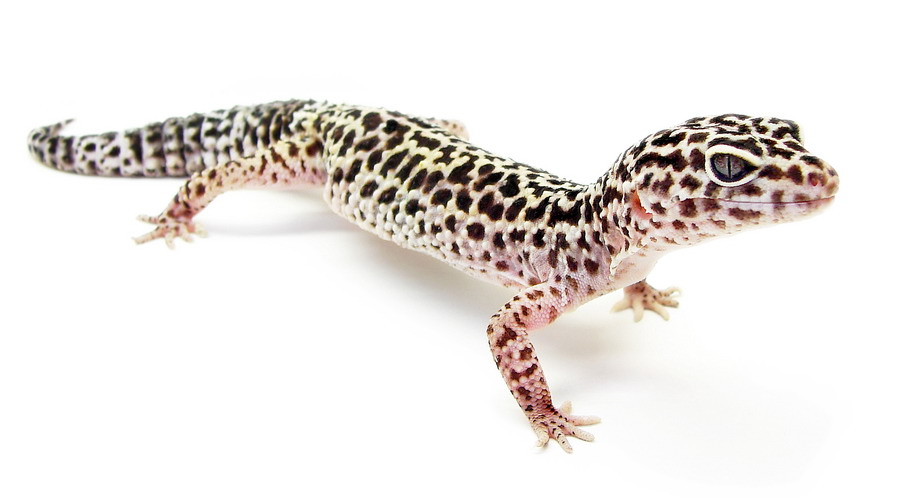
A pet leopard gecko. Note the coloration has diverged from the spotted wild type due to selective breeding.

Leopard geckos are one of the most popular lizard pets, second only to the bearded dragon.[40] They are possibly the first domesticated lizard species.[41][42] They are easy to breed under captive conditions, so most sold are captive-bred rather than wild-caught.[43][44][45] Due to extensive captive breeding and artificial selection, captive animals display a range of colors and patterns. Those found in the wild typically have more dull colorations than those kept in captivity as pets.[5]

See also

[edit]

References

[edit]
Revisions and contributorsEdit on WikipediaRead on Wikipedia
from Grokipedia
The leopard gecko (Eublepharis macularius), also known as the common leopard gecko, is a small to medium-sized, ground-dwelling belonging to the Eublepharidae, characterized by its movable eyelids—a unique trait among s—and lack of adhesive toe pads, which prevents it from climbing smooth surfaces. Native to the arid and semi-arid landscapes of southwestern , including , , northwestern , , and parts of , this nocturnal to crepuscular species thrives in rocky deserts, dry grasslands, and scrublands, often seeking shelter in burrows, under rocks, or in crevices during the day. Measuring 17–25 cm (7–10 inches) in total length, with males typically larger than females, it features a robust body, a thick used for storage, and a variable coloration dominated by or tan backgrounds with black spots and bands that provide in its harsh environment; the can be voluntarily detached and regenerated as a defense mechanism against predators, though the regenerated tail is rounder and often differs in color and pattern from the original. As an insectivorous predator, the leopard gecko primarily feeds on a diet of such as , beetles, grasshoppers, spiders, and scorpions in the wild, occasionally supplementing with small vertebrates like or nestling birds, using its keen and labial-licking to detect prey. Its includes territorial displays among males, involving tail waving and vocalizations, while females exhibit maternal care by guarding eggs; reproduction is oviparous, with females reaching at 1–2 years and laying 1–2 clutches of 2 hard-shelled eggs per season from late winter to early fall, incubated for 40–60 days in humid burrows. In the wild, lifespan averages 6–8 years due to predation and environmental stresses, though captives often live 15–20 years or more with proper care. The leopard gecko has not been assessed by the , reflecting its wide distribution and stable populations across its range, with no major threats identified beyond localized habitat loss; however, its popularity as a pet since the mid-20th century has led to extensive and over 100 color morphs, reducing pressure on wild populations. This species' adaptability, docile nature, and role as a in research on regeneration and neurobiology further highlight its ecological and scientific significance.

Taxonomy

Etymology

The binomial name Eublepharis macularius derives from the Eublepharis, first described by British zoologist in 1827, and the species epithet macularius, coined by zoologist Edward Blyth in 1854. The name Eublepharis originates from words eu (meaning "good" or "true") and blepharos (meaning ""), highlighting the presence of fully functional, movable eyelids—a distinctive trait among s, which typically lack them. This feature sets eublepharids apart from other gecko lineages. The species name macularius comes from the Latin macula (meaning "spot" or "blemish") combined with the suffix -arius (indicating "pertaining to" or "having"), referring to the animal's characteristic spotted body pattern. The common name "leopard gecko" reflects the resemblance of its wild-type coloration—typically a yellowish base with dark rosette spots—to the spotted coat of a .

Classification

The leopard gecko, Eublepharis macularius, is classified within the family , order , suborder Gekkota, and class Reptilia. This family comprises eyelid geckos, distinguished from other geckos by their movable eyelids rather than fused spectacles. represent a basal lineage within Gekkota, with the family diversifying during the period (approximately 145–66 million years ago) and Eublepharis diverging from its African sister genera in the –Eocene (around 66–34 million years ago). The genus Eublepharis likely originated in following the collision of the Indian and Eurasian plates, which facilitated dispersal and isolation of populations across arid and semi-arid regions. Five subspecies of E. macularius are currently recognized, each adapted to geographically isolated ranges in southwestern : the nominotypical E. m. macularius (Blyth, 1854), distributed in Pakistan's and regions; E. m. fasciolatus (Günther, 1864), found in the region of Pakistan; E. m. afghanicus (Börner, 1976), occurring in eastern ; E. m. montanus (Börner, 1976), inhabiting northern including areas near the Baluchistan plateau; and E. m. smithi (Börner, 1981), restricted to central around . These exhibit subtle morphological variations, such as differences in dorsal scale patterning, body size, and limb proportions, correlated with their isolation by mountain ranges, rivers, and deserts that limit . A 2022 molecular phylogenetic study using mitochondrial and nuclear DNA confirmed the monophyly of Eublepharis and revealed low genetic divergence among E. macularius subspecies, consistent with recent isolation and minimal hybridization in natural populations due to their allopatric distributions.

Description

Physical features

The leopard gecko (Eublepharis macularius) exhibits a compact, ground-dwelling morphology suited to its arid habitat. Adult males typically reach a total length of 20–25 cm, while females are slightly smaller at 18–20 cm; both sexes weigh 45–65 grams on average, with males often at the higher end due to their broader build. The body is stocky and robust, featuring short limbs equipped with clawed toes rather than the adhesive lamellae present in many arboreal geckos, enabling efficient terrestrial locomotion over rocky terrain. Key anatomical adaptations include large eyes with vertical slit pupils optimized for low-light conditions, reflecting their nocturnal lifestyle, and movable eyelids fringed with small scales—a rarity among geckos that typically lack eyelids. The is notably thick and segmented, functioning as a primary fat storage reservoir for energy during periods of scarcity and capable of voluntary for predator evasion, followed by regeneration. Additionally, leopard geckos produce vocalizations such as barks and chirps, though used sparingly compared to other geckos, possibly for territorial or defensive signaling. Sensory structures enhance survival in dim environments: the , or Jacobson's organ, located in the roof of the mouth, facilitates chemoreception by analyzing chemical cues gathered via tongue flicking. Absent are heat-sensing pits found in some reptiles, but their enlarged eyes provide superior low-light vision for detecting prey and navigating at night. Coloration patterns further support among rocky substrates.

Coloration and patterns

The coloration of the leopard gecko (Eublepharis macularius) arises from specialized pigment cells called chromatophores in the dermal layer of the skin, which produce and distribute pigments to create the species' characteristic appearance. Three primary types of chromatophores contribute: melanophores, which contain eumelanin for black and brown pigmentation forming the dark spots; xanthophores, which synthesize yellow pigments such as pteridines and for the tan or yellowish base color; and iridophores, which reflect light via guanine nanocrystals to generate iridescent or silvery effects, particularly in lighter areas. These cells are fixed in position after development, preventing dynamic color shifts seen in species like . In wild-type individuals, the natural pattern features leopard-like rosettes or irregular dark spots on a yellow-tan background, evolving ontogenetically from alternating light and dark transverse bands in hatchlings and juveniles to the spotted configuration. This transition occurs as iridophores redistribute and melanophore activity intensifies during growth, with juvenile bands typically fading by , resulting in a more mottled appearance that provides in arid habitats. Regional variations among include bolder, more defined spots in the Pakistani form (E. m. macularius), compared to subtler or retained banding in forms like the Indian (E. m. griseus) or Afghan (E. m. afghanicus) . The genetic basis of base colors and involves polygenic inheritance, with multiple alleles at various loci regulating distribution and production, as evidenced by mapping in wild populations. For instance, genes like PAX7 influence melanophore differentiation and spot ing. Although leopard geckos lack physiological color change in adulthood, environmental factors such as incubation during embryonic development can modulate expression and intensity, with higher temperatures potentially leading to less pronounced banding in juveniles. Males often exhibit slightly more intense contrasts than females, though this dimorphism is subtle.

Sexual dimorphism

in leopard geckos (Eublepharis macularius) manifests in both morphological and behavioral traits, enabling differentiation between males and females as early as several months post-hatching. Males typically attain a larger body size than females, with adults reaching lengths of up to 11 inches compared to females' maximum of around 8 inches. This size disparity is accompanied by broader heads and thicker necks in males, contributing to their more robust overall build. Key morphological indicators include the preanal pores and hemipenal structures. Males possess 6-10 enlarged preanal pores arranged in a distinct V-shaped row just anterior to the , which become open and secretory by approximately 25 weeks of age; these pores are smaller and less prominent in females. Additionally, males exhibit bilateral hemipenal bulges at the base of the tail, visible as symmetrical swellings starting around 10 weeks and fully developed by 25 weeks, while females lack these bulges and instead show a smoother vent area adapted for passage with a slightly wider . Head width further accentuates this dimorphism, with males displaying proportionally wider skulls to accommodate larger jaws used in territorial displays and mating. Behaviorally, males exhibit greater territoriality, often engaging in agonistic interactions such as and scent-marking to defend resources and access to females, whereas females tend to be more solitary outside of breeding periods and display less aggressive posturing. This dimorphism in is linked to higher levels in males, influencing their activity and response to conspecifics. During breeding seasons, males may show subtle enhancements in coloration brightness, though this is secondary to structural differences. Sex determination in leopard geckos is primarily temperature-dependent during incubation, with cooler temperatures (around 26-30°C) producing females and warmer ones (32-34°C) yielding males, though genetic factors may modulate thresholds. For practical identification, vent sexing is commonly used in juveniles over 10-15 grams, involving gentle eversion of the to inspect for hemipenes and pore configuration. In adults, ultrasound imaging provides a non-invasive method to visualize reproductive organs, such as ovaries in females or testes in males, confirming with high accuracy.

Habitat and distribution

Geographic range

The leopard gecko (Eublepharis macularius) is native to arid and semi-arid regions of Southwest Asia, encompassing eastern , , northwestern (including states such as , , and ), and eastern (records unconfirmed). Recent records also indicate presence in , extending the known eastern boundary. Within this distribution, populations are fragmented by natural barriers like mountain ranges and river valleys, resulting in isolated subpopulations across the landscape. The exhibits distinct lineages corresponding to geographic regions: a western lineage in and adjacent areas, a central lineage primarily in (including arid Baluchistan), and an eastern lineage in northwestern . Although traditional recognizes such as E. m. macularius (nominal form in central arid zones) and others like E. m. afghanicus (eastern ), a 2022 phylogenetic study suggests these may represent deeper evolutionary divergences warranting species-level recognition, though as of 2025 major databases continue to list them as . The overall geographic range consists of discontinuous habitat, reflecting adaptation to isolated and pockets.

Environmental preferences

Leopard geckos (Eublepharis macularius) inhabit arid to semi-arid climates, primarily and rocky , where daytime temperatures typically range from 25°C to 40°C and can reach up to 45°C during peak summer months, while nocturnal temperatures drop to 10–15°C for . These favor habitat types characterized by sparse vegetation, clay or sandy soils, and rocky outcrops, occurring at elevations from near to approximately 2,500 m in regions such as the sub-Himalayan foothills and tablelands. In their microhabitats, leopard geckos seek loose, burrowable soil for digging shelters, relative humidity levels of 30–40% (rising slightly to 40–45% in refuge sites like caves), and protective cover under rocks or within abandoned burrows to evade predators. Their adaptability to extreme is facilitated by substantial fat reserves stored in the , enabling survival through prolonged dry periods, though they remain susceptible to habitat disruption from rare flooding events in otherwise parched environments.

Behavior and ecology

Activity and locomotion

Leopard geckos (Eublepharis macularius) exhibit primarily nocturnal and crepuscular activity patterns, with peak activity occurring at dusk and dawn when temperatures are moderate. During daylight hours, they seek shelter in burrows, rock crevices, or under vegetation to avoid excessive heat and reduce exposure to predators. Locomotion in leopard geckos is predominantly quadrupedal, involving steady walking for routine movement and short bursts of speed for evasion or pursuit, reaching up to approximately 0.66 m/s during sprints. Lacking the adhesive toe pads typical of many geckos, they rely on sharp claws to grip and climb rough, textured surfaces such as rocks and bark, enabling navigation of their arid terrain despite their ground-dwelling lifestyle. Seasonally, activity levels in wild populations decline during cooler winter months, when individuals enter a brumation-like state of reduced and sheltering in burrows for 1.5 to 2.5 months. Activity intensifies during the warmer periods in their native range, coinciding with increased prey availability and milder conditions that support . Adult leopard geckos maintain defined home ranges and display territorial behavior, particularly among males, who defend areas against intruders through agonistic displays and combat to secure resources and mates.

Defense strategies

Leopard geckos primarily defend against predators through caudal , the voluntary detachment of their at a plane when grasped or threatened. This mechanism allows the gecko to escape while the detached thrashes vigorously for a short time, distracting the predator and providing crucial time for evasion. The serves as a storage organ, so its loss temporarily reduces energy reserves, potentially impacting survival during regeneration, which typically occurs over 4-6 weeks and results in a shorter, rounder (more bulbous), cartilaginous replacement lacking the original bony structure and sensory capabilities, and often differing in color and pattern from the original. Their cryptic coloration and spotted patterns enhance , enabling them to blend seamlessly with the arid, rocky, and sandy environments of their native , thereby reducing visibility to predators like snakes and birds. This passive defense strategy relies on the dorsal yellow-to-brown hues interspersed with dark spots that mimic the irregular textures of stones and substrate, minimizing detection during rest or . When camouflage fails, leopard geckos employ vocalizations as an active deterrent, emitting high-pitched chirps or deeper barking sounds to startle approaching threats or signal alarm. These calls are particularly prevalent in juveniles, who integrate them into threat displays involving open-mouth posturing and tail waving to bluff predators, whereas adults shift toward quieter evasion tactics. For direct confrontations, leopard geckos prioritize evasion by rapidly burrowing into loose soil or climbing onto rocks and low vegetation to reach safety, leveraging their nocturnal habits for cover under darkness. serves as a last-resort defense, delivering a mild nip that poses no lethal risk to humans, though it may cause minor irritation.

Foraging and diet

Leopard geckos (Eublepharis macularius) are primarily insectivorous in the wild, consuming a diverse array of such as crickets, beetles (including their larvae like mealworms), , grasshoppers, spiders, scorpions, centipedes, and caterpillars. Occasionally, they opportunistically prey on small vertebrates, including newborn (pinky mice) and nestling birds, though such items form a minor portion of their diet. As ambush predators, leopard geckos employ a sit-and-wait , remaining motionless to detect passing prey via visual and chemosensory cues. They use rapid tongue flicks to sample airborne and substrate chemicals, allowing identification of prey from a distance without active pursuit. Juveniles, with smaller body sizes, select proportionally tinier prey items, such as small , to meet their higher metabolic demands relative to mass. In the wild, adults opportunistically every 2–3 days, depending on prey availability and environmental conditions. Calcium needs are met naturally through consumption of prey with intact gut contents (rich in minerals) or small bones, preventing deficiencies common in less varied diets. Feeding patterns exhibit seasonal variations tied to the arid habitats of their range. Prior to brumation—a period of during cooler, dry months—leopard geckos increase intake frequency and volume to accumulate fat reserves in their tails for when prey is scarce. This pre-brumation gorging aligns with post-monsoon abundance of , enhancing survival through winter inactivity. Their nocturnal habits further aid foraging by exploiting cooler evenings when are active.

Reproduction

Mating behaviors

Leopard geckos (Eublepharis macularius) exhibit distinct behaviors during their breeding season, which typically occurs from March to July in the wild, aligning with warmer spring and summer periods influenced by cycles and rising s in their native arid habitats of southwestern . These temperature cues trigger reproductive activity, with captivity studies showing that increasing ambient temperatures to 28–32°C stimulates and . Courtship begins with the approaching a receptive , often initiated by chemical cues from skin-derived pheromones secreted via , which allow sex recognition through vomerolfaction via tongue-flicks. The performs rapid vibrations to produce an audible , followed by slow advances and physical contact, such as licking or nudging the female's ; head bobbing may accompany these displays to signal intent. Females assess potential mates based on these multimodal signals, with larger —distinguished by broader heads and hemipenal bulges—often preferred in competitive scenarios. Mate guarding is common, as display toward rivals through territorial marking and agonistic postures, reducing interference during . Copulation follows successful , with the male mounting the female, grasping her neck or body with his mouth, and everting one for intromission into the ; the act typically lasts several minutes. Multiple matings per season are frequent, as females store viable in specialized oviductal crypts, enabling fertilization of successive es without repeated copulations. This polyandrous strategy enhances and , with females mating with multiple males producing more viable per compared to single matings. Post-gravid females become receptive again shortly after laying, facilitating repeated pairings within the season.

Egg laying and incubation

Female leopard geckos, Eublepharis macularius, are oviparous and produce hard-shelled eggs following mating. Gravid females exhibit nesting behavior by digging shallow burrows in loose substrate, where they deposit clutches typically consisting of one to two eggs. These eggs measure approximately 2.5–3 cm in length and have a parchment-like shell that hardens after laying. In the wild, females typically lay 2–3 such clutches per breeding season, though healthy females in optimal conditions (including captivity) may produce up to six, with oviposition occurring every two to four weeks after the initial laying. Egg incubation lasts 45–60 days, depending on environmental conditions, with optimal temperatures ranging from 28–32°C to ensure viability and proper development. E. macularius exhibits (TSD) with a female-male-female (FMF) pattern, where lower temperatures (around 26°C) and higher temperatures (around 34°C) produce predominantly females, while intermediate temperatures (30–32.5°C) yield mostly males. This TSD pattern includes a transitional range (e.g., 30–32.5°C) resulting in mixed-sex clutches. There is no parental care in E. macularius; after laying, females cover the eggs with or substrate and abandon the nest, leaving the embryos to develop independently until .

Juvenile development

Leopard gecko hatchlings emerge from eggs measuring approximately 7-10 cm in total length and weighing 2-5 grams. They are fully independent upon , with no provided, and initially sustain themselves on the absorbed for the first few days to a week. The first typically occurs within 3-7 days post-, marking the transition to active on small such as appropriately sized or mealworms. Juvenile growth is rapid during the initial months, with individuals shedding their frequently—every 2-4 weeks—to accommodate increasing body . This frequency decreases as they mature. is reached at 18-24 months of age, when body weight typically attains 35-40 grams, though this can vary based on environmental conditions and nutrition. Early vulnerabilities are pronounced, as juveniles face high predation risk from foxes, snakes, and larger reptiles, prompting immediate dispersal from the hatching site to reduce detection. Their small size necessitates consumption of appropriately tiny prey to support growth without risk of injury or digestive issues.

Conservation and captivity

Wild population status

The conservation status of the leopard gecko (Eublepharis macularius) in the wild has not been formally evaluated by the IUCN Red List. Despite this, the species is considered locally common and stable across its native range in arid and semi-arid regions of southwestern Asia, including parts of Afghanistan, Pakistan, northwestern India, and Iran. Populations are widespread in rocky deserts and dry grasslands, with no comprehensive global estimate available. The primary threats to wild leopard geckos include habitat loss and degradation driven by agricultural expansion and , which fragment their preferred rocky and grassy habitats. Historically, overcollection for the international pet trade posed a significant risk, particularly in the 20th century, leading to localized declines in accessible areas; however, the vast majority of the pet trade now relies on captive-bred specimens, reducing pressure on wild stocks. Additional risks stem from predation by , such as feral cats and dogs in human-modified landscapes, though these impacts are not quantified at a population level. The species is not currently listed under , reflecting its overall resilience but highlighting the need for monitoring in vulnerable locales. Conservation efforts focus on habitat protection and regulated collection in key range countries. In Pakistan, areas like Sheikh Badin National Park serve as protected reserves where the leopard gecko is recognized as a , aiding broader reptile conservation amid regional development pressures. Similar initiatives in India include wildlife laws that limit wild harvesting and promote sustainable practices, contributing to stable population trends with no major declines reported since 2020. These measures, combined with the species' adaptability to arid environments, support its persistence without immediate risk of .

Care as pets

Leopard geckos thrive in captivity when provided with an enclosure that mimics their arid, terrestrial habitat. The minimum recommended enclosure size for an adult is 40 gallons (approximately 36" x 18" x 18"), although many authoritative sources now recommend larger setups such as 4x2x2 feet (120 gallons) to better support thermoregulation, natural activity levels, and enrichment opportunities. Enrichment is essential for the leopard gecko's mental and physical health. This includes providing multiple hides (warm, cool, and humid), climbing structures, varied substrate allowing burrowing, live or artificial plants, and other stimuli to promote natural behaviors and reduce stress. Larger enclosures facilitate more effective and diverse enrichment, making size and enrichment complementary aspects of proper captive care—both are essential, but inadequate size limits enrichment potential, while poor enrichment in any size can lead to stress or health issues. Secure, well-ventilated setups made from or with a screen top prevent escapes and maintain appropriate conditions, while substrates such as , paper towels, or reptile carpet are recommended to minimize the risk of impaction from ingested loose material like . A is essential, with the cool side maintained at 24–27°C (75–80°F) and the warm side at 31–33°C (88–92°F) using an under-tank heater, alongside a basking spot reaching 32–35°C (90–95°F); nighttime temperatures can drop to 21–24°C (70–75°F). levels should be kept at 30–40%, with a moist hide box provided during shedding to aid in the process, and low-level UVB lighting is beneficial for vitamin D3 synthesis, though not strictly required if proper supplementation is provided. Diet in captivity consists primarily of live, gut-loaded to replicate their natural habits, with staples including , dubia roaches, and mealworms offered in variety to ensure nutritional balance and prevent deficiencies. should be dusted with a calcium without and a supplement containing D3 at each feeding, as inadequate supplementation can lead to (MBD), characterized by weakened bones and deformities. Juveniles require feeding every 1–2 days with 4–6 per inch of body length, while adults are fed 2–3 times per week with 6–10 , adjusting portions to maintain a healthy weight; should always be available in a shallow dish. Handling should be gentle and infrequent to minimize stress, supporting the gecko's body fully to avoid tail loss, with sessions limited to 10–15 minutes several times a week once acclimated; regular veterinary checkups are advised annually to monitor for common issues like impaction from poor substrate choices, respiratory infections due to excessive , or parasites. Owners should monitor captive leopard geckos for common signs of illness, which may indicate health problems requiring prompt attention. These signs include lethargy or reduced activity, loss of appetite or refusal to eat, unexplained weight loss, abnormal feces (diarrhea, mucus, blood, or undigested food), respiratory problems (wheezing, open-mouth breathing, nasal discharge), swollen eyes or mouth, retained shed, tremors or soft bones (indicating metabolic bone disease), regurgitation, and behavioral changes such as excessive hiding or aggression. Early veterinary attention is recommended if any of these signs appear. With optimal care, leopard geckos can live 15–25 years in captivity, though some reach 30 years. for morphs such as albino, , or tangerine has popularized diverse color patterns, but ethical practices demand testing for genetic health to avoid propagating defects like neurological disorders in Enigma morphs or spinal issues in certain recessive lines, prioritizing over aesthetics.

References

Add your contribution
Related Hubs
User Avatar
No comments yet.