



Community hub
Recent from talks
Contribute something
Nothing was collected or created yet.
Basel III
View on Wikipedia
| Basel Framework International regulatory standards for banks |
|---|
| Background |
| Pillar 1: Regulatory capital |
| Pillar 2: Supervisory review |
| Pillar 3: Market disclosure |
| Business portal |
Basel III is the third of three Basel Accords, a framework that sets international standards and minimums for bank capital requirements, stress tests, liquidity regulations, and leverage, with the goal of mitigating the risk of bank runs and bank failures. It was developed in response to the deficiencies in financial regulation revealed by the 2008 financial crisis and builds upon the standards of Basel II, introduced in 2004, and Basel I, introduced in 1988.
The Basel III requirements were published by the Basel Committee on Banking Supervision in 2010,[1] and began to be implemented in major countries in 2012.[2][3] Implementation of the Fundamental Review of the Trading Book (FRTB), published and revised between 2013 and 2019, has been completed only in some countries and is scheduled to be completed in others in 2025 and 2026. Implementation of the Basel III: Finalising post-crisis reforms (also known as Basel 3.1 or Basel III Endgame), introduced in 2017, was extended several times, and will be phased-in by 2028.[4][5][6][7][8]
Key principles and requirements
[edit]CET1 capital requirements
[edit]
Basel III requires banks to have a minimum CET1 ratio (Common Tier 1 capital divided by risk-weighted assets (RWAs)) at all times of:
- 4.5%
Plus:
- A mandatory "capital conservation buffer" or "stress capital buffer requirement", equivalent to at least 2.5% of risk-weighted assets, but could be higher based on results from stress tests, as determined by national regulators.
Plus:
- If necessary, as determined by national regulators, a "counter-cyclical buffer" of up to an additional 2.5% of RWA as capital during periods of high credit growth. This must be met by CET1 capital.[9]
In the U.S., an additional 1% is required for globally systemically important financial institutions.[10]
It also requires minimum Tier 1 capital of 6% at all times (beginning in 2015).[9]
Common Tier 1 capital comprises shareholders equity (including audited profits), less deductions of accounting reserve that are not believed to be loss absorbing "today", including goodwill and other intangible assets. To prevent the potential of double-counting of capital across the economy, bank's holdings of other bank shares are also deducted.
Tier 2 capital requirements
[edit]Tier 2 capital + Tier 1 capital is required to be above 8%.
Leverage ratio requirements
[edit]Leverage ratio is calculated by dividing Tier 1 capital by the bank's leverage exposure. The leverage exposure is the sum of the exposures of all on-balance sheet assets, 'add-ons' for derivative exposures and securities financing transactions (SFTs), and credit conversion factors for off-balance sheet items.[11][12]
Basel III introduced a minimum leverage ratio of 3%.[13]
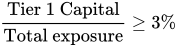
The U.S. established another ratio, the supplemental leverage ratio, defined as Tier 1 capital divided by total assets. It is required to be above 3.0%.[14] A minimum leverage ratio of 5% is required for large banks and systemically important financial institutions.[15] Due to the COVID-19 pandemic, from April 2020 until 31 March 2021, for financial institutions with more than $250 billion in consolidated assets, the calculation excluded U.S. Treasury securities and deposits at Federal Reserve Banks.[16][14][17]
In the EU, the minimum bank leverage ratio is the same 3% as required by Basel III.[18]
The UK requires a minimum leverage ratio, for banks with deposits greater than £50 billion, of 3.25%. This higher minimum reflects the PRA's differing treatment of the leverage ratio, which excludes central bank reserves in 'Total exposure' of the calculation.[19]
Liquidity requirements
[edit]Basel III introduced two required liquidity/funding ratios.[20]
Liquidity coverage ratio
[edit]The liquidity coverage ratio requires banks to hold sufficient high-quality liquid assets to cover its total net cash outflows over 30 days under a stressed scenario. This was implemented because some adequately-capitalized banks faced difficulties because of poor liquidity management.[21] The LCR consists of two parts: the numerator is the value of HQLA, and the denominator consists of the total net cash outflows over a specified stress period (total expected cash outflows minus total expected cash inflows).[22] Mathematically it is expressed as follows:

Regulators can allow banks to dip below their required liquidity levels per the liquidity coverage ratio during periods of stress.[23]
Liquidity coverage ratio requirements for U.S. banks
[edit]In 2014, the Federal Reserve Board of Governors approved a U.S. version of the liquidity coverage ratio,[21] which had more stringent definitions of HQLA and total net cash outflows. Certain privately issued mortgage backed securities are included in HQLA under Basel III but not under the U.S. rule. Bonds and securities issued by financial institutions, which can become illiquid during a financial crisis, are not eligible under the U.S. rule. The rule is also modified for banks that do not have at least $250 billion in total assets or at least $10 billion in on-balance sheet foreign exposure.[24]
Net stable funding ratio
[edit]The Net stable funding ratio requires banks to hold sufficient stable funding to exceed the required amount of stable funding over a one-year period of extended stress.

Counterparty risk: CCPs and SA-CCR
[edit]A new framework for exposures to CCPs was introduced in 2017.[13]
The standardised approach for counterparty credit risk (SA-CCR), which replaced the Current exposure method, became effective in 2017.[13] SA-CCR is used to measure the potential future exposure of derivative transactions in the leverage exposure measure and non-modelled Risk Weighted Asset calculations.
Capital requirements for equity investments in funds
[edit]Capital requirements for equity investments in hedge funds, managed funds, and investment funds were introduced in 2017. The framework requires banks to take account of a fund's leverage when determining risk-based capital requirements associated with the investment and more appropriately reflecting the risk of the fund's underlying investments, including the use of a 1,250% risk weight for situations in which there is not sufficient transparency.[25]
Limiting large exposure to external and internal counterparties
[edit]A framework for limiting large exposure to external and internal counterparties was implemented in 2018.[13]
In the UK, as of 2024, the Bank of England was in the process of implementing the Basel III framework on large exposures.[26]
Capital standards for securitisations
[edit]A revised securitisation framework, effective in 2018, aims to address shortcomings in the Basel II securitisation framework and to strengthen the capital standards for securitisations held on bank balance sheets.[27] The frameworks addresses the calculation of minimum capital needs for securitisation exposures.[28][29]
Basel III reclassifies physical gold from a Tier 3 asset to a Tier 1 asset.
Interest rate risk in the banking book
[edit]New standards for "interest rate risk in the banking book" (IRRBB) became effective in 2023. Banks are required to calculate their exposures based on "economic value of equity" (EVE) and "net interest income" (NII) under a set of prescribed interest rate shock scenarios.[30][31] The standards thereby deal with the risks associated with a change in interest rates, including interest rate gaps, basis risk, yield curve risk, and option risk.[32] The bank's exposure to IRRBB is then equal to the largest negative change in EVE across all scenarios - in essence, the theoretical risk to the economic value of a bank's equity from a change in interest rates.[33] IRRBB falls under Pillar II.[33]
Fundamental Review of the Trading Book
[edit]Following a Fundamental Review of the Trading Book, minimum capital requirements for market risk in the trading book are based on a better calibrated standardised approach or internal model approval (IMA) for an expected shortfall measure rather than, under Basel II, value at risk.[34]
Basel III: Finalising post-crisis reforms
[edit]The Basel III: Finalising post-crisis reforms standards cover further reforms in six areas:[35]
- standardised approach for credit risk (SA-CR)
- internal ratings based approach (IRB) for credit risk
- Credit valuation adjustment risk (the process through which counterparty credit is valued, priced and hedged - using a standardised approach);
- Operational risk - A standardised approach for operational risk for a bank based on income and historical losses
- Output floor - Replaces Basel II output floor with a more robust risk-sensitive floor and disclosure requirements
- Finalised Leverage ratio framework - buffer for global systemically important banks, definitions and requirements, exposure measures for on-balance sheet exposures, derivatives, securities financing transactions and off-balance sheet items.
Other principles and requirements
[edit]- The quality, consistency, and transparency of the capital base was raised.
- Tier 1 capital: the predominant form of Tier 1 capital must be common shares and retained earnings. This is subject to prudential deductions, including goodwill and intangible assets.
- Tier 2 capital: supplementary capital, however, the instruments were harmonised.
- Tier 3 capital was eliminated.[36]
- The risk coverage of the capital framework was strengthened.
- Promoted more integrated management of market and counterparty credit risk
- Added the credit valuation adjustment–risk due to deterioration in counterparty's credit rating
- Strengthened the capital requirements for counterparty credit exposures arising from banks' derivatives, repo and securities financing transactions
- Raised the capital buffers backing these exposures
- Reduced procyclicality and
- Provided additional incentives to move OTC derivative contracts to qualifying central counterparties (probably clearing houses). Where a bank acts as a clearing member of a central counterparty for its own purposes, a risk weight of 2% must be applied to the bank’s trade exposure to the central counterparty.[37]
- Provided incentives to strengthen the risk management of counterparty credit exposures
- Raised counterparty credit risk management standards by including wrong way risk
- A series of measures was introduced to promote the buildup of capital buffers in good times that can be drawn upon in periods of stress ("Reducing procyclicality and promoting countercyclical buffers").
- Measures to address procyclicality:
- Dampen excess cyclicality of the minimum capital requirement;
- Promoted more forward looking provisions;
- Conserved capital to build buffers at individual banks and the banking sector that can be used in stress; and
- Achieved the broader macroprudential goal of protecting the banking sector from periods of excess credit growth.
- Requirement to use long-term data horizons to estimate probabilities of default
- downturn loss given default estimates, recommended in Basel II, to become mandatory
- Improved calibration of the risk functions, which convert loss estimates into regulatory capital requirements.
- Banks must conduct stress tests that include scenarios of widening yield spreads in recessions.
- Stronger provisioning practices (forward-looking provisioning):
- Measures to address procyclicality:
U.S. modifications
[edit]In the U.S., Basel III applies not only to banks but also to all institutions with more than US$50 billion in assets:
- "Risk-based capital and leverage requirements" including first annual capital plans, conduct stress tests, and capital adequacy "including a tier one common risk-based capital ratio greater than 5 percent, under both expected and stressed conditions"
- Market liquidity, first based on the United States' own interagency liquidity risk-management guidance issued in March 2010 that require liquidity stress tests and set internal quantitative limits.
- The Federal Reserve Board itself conducts stress tests annually using three economic and financial market scenarios. Institutions are encouraged to use at least five scenarios reflecting improbable events, and especially those considered impossible by management, but no standards apply to extreme scenarios. Only a summary of the three official Fed scenarios including company-specific information is made public but one or more internal company-run stress tests must be run each year with summaries published.
- Single-counterparty credit limits to cut credit exposure of a covered financial firm to a single counterparty as a percentage of the firm's regulatory capital. Credit exposure between the largest financial companies is subject to a tighter limit.
- Early remediation requirements to ensure that financial weaknesses are addressed at an early stage. One or more triggers for remediation—such as capital levels, stress test results, and risk-management weaknesses. Required actions vary based on the severity of the situation, but include restrictions on growth, capital distributions, and executive compensation, as well as capital raising or asset sales.[39]
Timelines
[edit]Implementation by the Basel Committee on Banking Supervision
[edit]On 15 April 2014, the Basel Committee on Banking Supervision (BCBS) released the final version of its "Supervisory Framework for Measuring and Controlling Large Exposures" (SFLE) that builds on longstanding BCBS guidance on credit exposure concentrations.[40]
On 11 March 2016, the Basel Committee on Banking Supervision released the second of three proposals on public disclosure of regulatory metrics and qualitative data by banking institutions. The proposal requires disclosures on market risk to be more granular for both the standardized approach and regulatory approval of internal models.[41]
In January 2013, the BCBS extended not only the implementation schedule to 2019, but broadened the definition of liquid assets.[42]
In December 2017, the implementation of the market risk framework was delayed from 2019 to 2022.[43] Implementation of the Basel III: Finalising post-crisis reforms, the market risk framework, and the revised Pillar 3 disclosure requirements were extended several times and will be phased-in by 2028.[5]
Capital requirements timeline
[edit]| Date | Milestone: Capital requirement |
|---|---|
| 2014 | Minimum capital requirements: Start of the gradual phasing-in of the higher minimum capital requirements. |
| 2015 | Minimum capital requirements: Higher minimum capital requirements were fully implemented. |
| 2016 | Conservation buffer: Start of the gradual phasing-in of the conservation buffer. |
| 2019 | Conservation buffer: The conservation buffer was fully implemented. |
Leverage ratio timeline
[edit]| Date | Milestone: Leverage ratio |
|---|---|
| 2011 | Supervisory monitoring: Developed templates to track the leverage ratio and the underlying components. |
| 2013 | Parallel run I: The leverage ratio and its components must be tracked by supervisors but not disclosed and not mandatory. |
| 2015 | Parallel run II: The leverage ratio and its components must be tracked and disclosed but not mandatory. |
| 2017 | Final adjustments: Based on the results of the parallel run period, any final adjustments to the leverage ratio. |
| 2018 | Mandatory requirement: The leverage ratio became a mandatory part of Basel III requirements. |
Liquidity requirements timeline
[edit]| Date | Milestone: Liquidity requirements |
|---|---|
| 2011 | Observation period: Developed templates and supervisory monitoring of the liquidity ratios. |
| 2015 | Introduction of the LCR: Initial introduction of the Liquidity Coverage Ratio (LCR), with a 60% requirement. This will increase by ten percentage points each year until 2019. In the EU, 100% will be reached in 2018.[44] |
| 2018 | Introduction of the NSFR: Introduction of the Net Stable Funding Ratio (NSFR). |
| 2019 | LCR comes into full effect: 100% LCR. |
Country-specific timelines of implementation
[edit]The Federal Reserve implemented the Basel III standards in the U.S., with some modifications, via a proposal first published in 2011.[45] Final rules on the liquidity coverage ratio were published in 2014.[46]
The implementing act of the Basel III agreements in the European Union was Directive 2013/36/EU (CRD IV) and Regulation (EU) No. 575/2013 on prudential requirements for credit institutions and investment firms (CRR), which was approved in 2013 and replaced the Capital Requirements Directives (2006/48 and 2006/49).[47][48][49]
Impact
[edit]Projected macroeconomic impact
[edit]An OECD study, released on 17 February 2011, projected that all else equal, the medium-term impact of Basel III implementation on economic growth would be in the range of −0.05% to −0.15% per year due to increased bank lending spreads of 15 to as much as 50 basis points. The study hypothesized that the effect can be negated by a decrease in monetary policy rates of 30 to 80 basis points[50][51][52]
In June 2024, a study by PwC projected that implemented of the Basel III Endgame requirements would reduce economic growth in the U.S. by 56 basis points via reduced returns to bank shareholders and increased costs to consumers and businesses.[53]
In the United States, higher capital requirements resulted in contractions in trading operations and the number of personnel employed on trading floors.[54]
Criticism
[edit]Academics criticized Basel III for continuing to allow large banks to calculate credit risk using internal models and for setting overall minimum capital requirements too low.[55]
Opaque treatment of all derivatives contracts is also criticized. While institutions have many legitimate ("hedging", "insurance") risk reduction reasons to deal in derivatives, the Basel III accords:
- treat insurance buyers and sellers equally even though sellers take on more concentrated risks (literally purchasing them) which they are then expected to offset correctly without regulation
- do not require organizations to investigate correlations of all internal risks they own
- do not tax or charge institutions for the systematic or aggressive externalization or conflicted marketing of risk—other than requiring an orderly unravelling of derivatives in a crisis and stricter record keeping
Since derivatives present major unknowns in a crisis these are seen as major failings by some critics[56] causing several to claim that the "too big to fail" status remains with respect to major derivatives dealers who aggressively took on risk of an event they did not believe would happen—but did. As Basel III does not absolutely require extreme scenarios that management flatly rejects to be included in stress testing this remains a vulnerability.
The Heritage Foundation argued that capitalization regulation is inherently fruitless due to these and similar problems and—despite an opposite ideological view of regulation—agree that "too big to fail" persists.[57]
Basel III was also criticized as negatively affecting the stability of the financial system by increasing incentives of banks to game the regulatory framework.[58] Notwithstanding the enhancement introduced by the Basel III standard, it argued that "markets often fail to discipline large banks to hold prudent capital levels and make sound investment decisions".[58]
In comments published in October 2012, the American Bankers Association, community banks organized in the Independent Community Bankers of America, and Democratic Party Senators Ben Cardin and Barbara Mikulski and Representatives Chris Van Hollen and Elijah Cummings of Maryland, said that the Basel III proposals would hurt small banks by increasing their capital holdings dramatically on mortgage and small business loans.[59][60][61][62]
Robert Reich, former United States Secretary of Labor and Professor of Public Policy at the University of California, Berkeley, has argued that Basel III did not go far enough to regulate banks since, he believed, inadequate regulation was a cause of the 2008 financial crisis and remains an unresolved issue despite the severity of the impact of the Great Recession.[63]
In 2019, Michael Burry criticized Basel III for what he characterizes as "more or less remov[ing] price discovery from the credit markets, meaning risk does not have an accurate pricing mechanism in interest rates anymore."[64]
The Institute of International Finance a Washington, D.C.–based, 450-member banking trade association, argued against the implementation of the accords, claiming it would hurt banks and economic growth and add to the paper burden and risk inhibition by banks.[65]
Further reading
[edit]- Cecchetti, Stephen, Jeremy Kress, and Kermit Schoenholtz. 2025. "Basel Endgame: Bank Capital Requirements and the Future of International Standard Setting." Journal of Economic Perspectives 39 (3): 149–70.
References
[edit]- ^ "Group of Governors and Heads of Supervision announces higher global minimum capital standards" (PDF) (Press release). Bank for International Settlements. 12 September 2010.
- ^ "European bank deleveraging: Basel III edition". Financial Times. 24 October 2012.
- ^ "Basel III – Implementation". Financial Stability Board.
- ^ "Governors and Heads of Supervision finalise Basel III reforms". Basel Committee on Banking Supervision (Press release). Bank for International Settlements. 7 December 2017.
- ^ a b "Governors and Heads of Supervision announce deferral of Basel III implementation to increase operational capacity of banks and supervisors to respond to Covid-19" (Press release). Bank for International Settlements. 27 March 2020.
- ^ Coen, William (5 April 2016). "The global policy reform agenda: completing the job". Bank for International Settlements.
- ^ "History of the Basel Committee". Bank for International Settlements. 9 October 2014.
- ^ "Basel III endgame". PwC.
- ^ a b "Phase 3 arrangements" (PDF). Basel Committee on Banking Supervision. Bank for International Settlements.
- ^ Annual Large Bank Capital Requirements, Federal Reserve
- ^ "Basel III leverage ratio framework and disclosure requirements" (PDF). Basel Committee on Banking Supervision. Bank for International Settlements. January 2014.
- ^ Goyal, Rajesh. "Basel III Accord - Basel 3 Norms". AllBankingSolutions.com.
- ^ a b c d "Basel III transitional arrangements, 2017-2028" (PDF). Basel Committee on Banking Supervision. Bank for International Settlements.
- ^ a b Tapia, Jose Maria; Leung, Ruth; Hamandi, Hashim (2 August 2024). "Banks' Supplementary Leverage Ratio". Office of Financial Research.
- ^ Loudis, Bert; Nguyen, Daniel; Wix, Carlo (26 May 2020). "Analyzing the Community Bank Leverage Ratio". Federal Reserve.
- ^ "Federal Reserve Board announces temporary change to its supplementary leverage ratio rule to ease strains in the Treasury market resulting from the coronavirus and increase banking organizations' ability to provide credit to households and businesses" (Press release). Federal Reserve. 1 April 2020.
- ^ Rahman, Ahmad; Warusawitharana, Missaka (29 June 2023). "Impact of Leverage Ratio Relief Announcement and Expiry on Bank Stock Prices". Federal Reserve Board of Governors.
- ^ "Leverage ratio Pillar 2 requirement". 19 December 2023 – via Europa.
- ^ "Prudential Regulation Authority Rulebook". Prudential Regulation Authority. 8 December 2024.
- ^ a b c "Basel III: A global regulatory framework for more resilient banks and banking systems" (PDF). Basel Committee on Banking Supervision. Bank for International Settlements. December 2010.
- ^ a b c Glasserman, Paul; Young, H. Peyton (2 April 2024). "Liquidity Coverage Ratios of Large U.S. Banks During and After the COVID-19 Shock" (PDF). Office of Financial Research.
- ^ "Summary description of the LCR" (PDF). Basel Committee on Banking Supervision. Bank for International Settlements.
- ^ Craig, Susanne (8 January 2012). "Bank Regulators to Allow Leeway on Liquidity Rule". The New York Times.
- ^ House, Mark; Sablik, Tim; Walter, John R. (January 2016). "Understanding the New Liquidity Coverage Ratio Requirements" (PDF). Federal Reserve Bank of Richmond.
- ^ "Capital requirements for banks' equity investments in funds". Basel Committee on Banking Supervision. Bank for International Settlements. 13 December 2013.
- ^ "CP14/24 – Large Exposures Framework". Bank of England. 18 October 2024.
- ^ "Revisions to the securitisation framework" (PDF). Basel Committee on Banking Supervision. Bank for International Settlements.
- ^ "Securitisation and capital requirements" (PDF). European Parliament. January 2018 – via Europa.
- ^ "Amendments to the Basel Securitisation Framework – Alternative Capital Treatment for Simple, Transparent and Comparable Securitisations". Cadwalader, Wickersham & Taft. 3 August 2016.
- ^ "Interest rate risk in the banking book" (PDF). Basel Committee on Banking Supervision. Bank for International Settlements.
- ^ "Interest rate risk in the banking book" (PDF). Hong Kong Monetary Authority. June 2017.
- ^ Interest Rate Risk in the Banking Book, treasurers.org
- ^ a b IRRBB - Pillar 2 standardised framework - Executive Summary
- ^ "Explanatory note on the minimum capital requirements for market risk" (PDF). Basel Committee on Banking Supervision. Bank for International Settlements. January 2019.
- ^ "Basel III: Finalising post-crisis reforms". Basel Committee on Banking Supervision. Bank for International Settlements. 7 December 2017.
- ^ "Strengthening the resilience of the banking sector" (PDF). Basel Committee on Banking Supervision. Bank for International Settlements. December 2009. p. 15.
Tier 3 will be abolished to ensure that market risks are met with the same quality of capital as credit and operational risks.
- ^ "Capital requirements for bank exposures to central counterparties" (PDF). Basel Committee on Banking Supervision. Bank for International Settlements: 4. April 2014.
- ^ "Basel II Comprehensive version part 2: The First Pillar – Minimum Capital Requirements" (PDF). Basel Committee on Banking Supervision. Bank for International Settlements. November 2005. p. 86.
- ^ "Federal Reserve Board proposes steps to strengthen regulation and supervision of large bank holding companies and systemically important nonbank financial firms" (Press release). Federal Reserve Board of Governors. 20 December 2011.
- ^ "Supervisory framework for measuring and controlling large exposures". Basel Committee on Banking Supervision. Bank for International Settlements. 15 April 2014.
- ^ "The Basel Committee consults on revisions to the Pillar 3 disclosure framework". Basel Committee on Banking Supervision (Press release). Bank for International Settlements. 11 March 2016.
- ^ Sorkin, Andrew Ross (7 January 2013). "Easing of Rules for Banks Acknowledges Reality". The New York Times.
- ^ "Governors and Heads of Supervision finalise Basel III reforms". Basel Committee on Banking Supervision (Press release). Bank for International Settlements. 7 December 2017.
- ^ "Liquidity Coverage Requirement Delegated Act: Frequently Asked Questions MEMO/14/579". European Commission. Brussels. 10 October 2014 – via Europa.
- ^ Wyatt, Edward (20 December 2011). "Fed Proposes New Capital Rules for Banks". The New York Times.
- ^ "Liquidity Coverage Ratio – Final Rule". Office of the Comptroller of the Currency. 3 September 2014.
- ^ "The Basel framework: the global regulatory standards for banks". European Banking Authority – via Europa.
- ^ "Banking regulation". European Commission – via Europa.
- ^ Hinge, Daniel (7 December 2010). "Mario Draghi confirms Basel III is complete". Central Banking. Infopro.
- ^ Taylor, John B. (22 September 2012). "Regulatory Expansion Versus Economic Expansion in Two Recoveries" (blog).
- ^ Jones, Huw (15 February 2011). "Basel rules to have little impact on economy". Reuters.
- ^ Slovik, Patrick; Cournède, Boris (14 February 2011). "Macroeconomic Impact of Basel III". OECD Economics Department Working Papers. doi:10.1787/5kghwnhkkjs8-en.
- ^ Zhang, Guowei (24 June 2024). "Our Take on PwC's Assessment of the US Basel III Endgame Proposal". Securities Industry and Financial Markets Association.
- ^ Popper, Nathaniel (23 July 2015). "In Connecticut, the Twilight of a Trading Hub". The New York Times.
- ^ Lall, Ranjit (October 2012). "From Failure to Failure: The Politics of International Banking Regulation". Review of International Political Economy. 19 (4): 609–638. doi:10.1080/09692290.2011.603669. JSTOR 41697936. S2CID 154898296.
- ^ Shamdasani, Ajay (18 October 2013). "Basel III and existing banking rules are inadequate to regulate derivatives, says economist" (PDF). Thomson Reuters – via Harvard University.
- ^ Michel, Norbert; Ligon, John (23 April 2014). "Basel III Capital Standards Do Not Reduce the Too-Big-to-Fail Problem". The Heritage Foundation. Archived from the original on 21 April 2017.
- ^ a b Slovik, Patrick (11 December 2012). "Systemically Important Banks and Capital Regulations Challenges". OECD Economics Department Working Papers. OECD. doi:10.1787/5kg0ps8cq8q6-en.
- ^ "Testimony of William A. Loving" (PDF). United States House Committee on Financial Services. 29 November 2012.
- ^ Vallandingham, Samuel A. (15 July 2014). "Examining Regulatory Relief Proposals for Community Financial Institutions" (PDF). Independent Community Bankers of America (Testimony before the Subcommittee on Financial Institutions and Consumer Credit of the U.S. House Financial Services Committee).
- ^ "Comment Letter on Proposals to Comprehensively Revise the Regulatory Capital Framework for U.S. Banking Organizations" (PDF). Federal Deposit Insurance Corporation. 22 October 2012.
- ^ "FDIC: Federal Register Citations". Federal Deposit Insurance Corporation. 22 October 2012.
- ^ Reich, Robert (25 October 2011). "Wall Street is Still Out of Control, and Why Obama Should Call for Glass-Steagall and a Breakup of Big Banks". Robert Reich.
- ^ "Burry Sees a Bubble in ETFs". Guru Focus. 6 September 2019 – via Yahoo!.
- ^ "Leverage and Risk Weighted Capital Requirements" (PDF). Basel Committee on Banking Supervision. Bank for International Settlements. September 2016.
External links
[edit]- Basel III: A global regulatory framework for more resilient banks and banking systems, December 2010
- Basel III: International framework for liquidity risk measurement, standards and monitoring, December 2010
- Bank Management and Control, Springer Nature – Management for Professionals, 2020
- U.S. Implementation of the Basel Capital Regulatory Framework Congressional Research Service, April 9, 2014
- Revisions to the Basel Securitisation Framework, December 2012
- Basel III in India
- Basel III and SME Lending: Thematic Focus


Basel III
View on GrokipediaHistorical Development
Pre-Crisis Frameworks: Basel I and II
The Basel I Accord, formally adopted on July 27, 1988, by the Basel Committee on Banking Supervision (BCBS), established the first international standard for bank capital adequacy to address inconsistencies in national regulations that had contributed to competitive distortions among internationally active banks.[7] It focused primarily on credit risk, requiring banks to hold total capital equivalent to at least 8% of risk-weighted assets, with Tier 1 capital (core equity and disclosed reserves) comprising at least 4% and Tier 2 capital (supplementary items like subordinated debt) making up the remainder.[8] Assets were categorized into five risk weight buckets—0% for high-quality government securities, 20% for certain bank exposures and residential mortgages, 50% for standard residential mortgages, and 100% for most corporate and other loans—with off-balance-sheet items converted to credit equivalents before weighting.[8] Implementation was phased in, with full compliance targeted by year-end 1992, though the framework's simplicity led to criticisms for treating diverse risks uniformly and encouraging regulatory arbitrage, such as shifting assets to low-weight categories without reflecting true economic risk.[7] In response to these limitations, the BCBS initiated revisions in the late 1990s, culminating in Basel II, published on June 10, 2004, as a more sophisticated, risk-sensitive framework intended to align capital requirements more closely with underlying risks while maintaining the 8% minimum total capital ratio.[9] Basel II introduced three mutually reinforcing pillars: Pillar 1 expanded minimum capital requirements to cover not only credit risk (via standardized and internal ratings-based approaches allowing banks to use proprietary models for larger exposures) but also market risk (building on 1996 amendments) and, for the first time, operational risk (with basic, standardized, and advanced measurement options); Pillar 2 established a supervisory review process enabling regulators to impose additional capital or other measures for risks not captured in Pillar 1, such as concentration or interest rate risks in the banking book; and Pillar 3 mandated enhanced public disclosures to promote market discipline through greater transparency on risk exposures, capital adequacy, and internal controls.[9][7] While Basel II aimed to reduce procyclicality through provisions like forward-looking provisioning and allowed advanced banks to benefit from lower capital charges for better risk management, it relied heavily on banks' internal models, which assumed historical data validity and underestimated tail risks in complex instruments like securitizations.[9] National implementation began from 2007 in some jurisdictions, with the European Union adopting it via the Capital Requirements Directive in 2006, but the framework's emphasis on internal assessments without sufficient conservatism exposed vulnerabilities when asset values plummeted during the 2008 financial crisis.[7] Overall, Basel I and II marked progressive steps toward global harmonization of prudential standards, yet their calibration proved inadequate for systemic shocks, prompting the development of Basel III.[7]Triggers from the 2008 Global Financial Crisis
The 2007-09 global financial crisis originated in the United States subprime mortgage market, where lax lending standards and excessive securitization of high-risk loans led to widespread defaults starting in mid-2007.[10] This turmoil escalated into a systemic banking panic in 2008, marked by the near-collapse of Bear Stearns on March 16, 2008, which required Federal Reserve orchestration of its acquisition by JPMorgan Chase at a fraction of its market value, and the bankruptcy of Lehman Brothers on September 15, 2008, the largest in U.S. history with $639 billion in assets.[7][10] These events triggered a liquidity freeze in interbank markets, forcing government interventions including bailouts of institutions like AIG and the Troubled Asset Relief Program (TARP) in the U.S., which injected over $700 billion into the financial system.[7] The crisis revealed that major banks, despite complying with Basel II risk-weighted capital standards, lacked sufficient loss-absorbing capacity to withstand shocks from interconnected exposures in securitized assets and derivatives.[1] A primary trigger was excessive on-balance-sheet leverage, where banks maintained thin equity cushions relative to total assets, amplifying losses from asset value declines. For instance, investment banks like Bear Stearns operated at leverage ratios exceeding 28:1 by 2006-2007, meaning a mere 3-4% drop in asset values could erase equity entirely.[11] Similarly, Lehman Brothers' leverage had risen sharply, with assets expanding from $312 billion in 2003 to $691 billion by 2007 alongside increasing debt burdens.[10] Basel II's reliance on internal models and risk weights failed to constrain this buildup, as banks achieved high risk-adjusted capital ratios while accumulating unweighted leverage through off-balance-sheet vehicles and complex trading books, underestimating correlations in risks during stress.[7] This vulnerability was compounded by procyclical effects, where the framework's emphasis on current risk assessments encouraged credit expansion in booms but insufficient buffers for downturns.[1] Liquidity mismatches further intensified the panic, as banks funded long-term illiquid assets with short-term wholesale borrowing, which evaporated when counterparties withdrew amid uncertainty.[7] Pre-crisis frameworks under Basel II provided no standardized liquidity requirements, allowing reliance on unstable funding sources without adequate high-quality liquid asset holdings.[10] Poor risk management, including overdependence on credit ratings for securitizations and inadequate stress testing for systemic interconnections, exacerbated mispricing of credit and liquidity risks.[1] These deficiencies prompted the G20 summit in November 2008 to mandate stronger global standards, leading the Basel Committee to initiate reforms addressing capital quality, leverage limits, and liquidity resilience, culminating in the Basel III framework.[7]Formulation and Initial Agreement (2010)
Following the 2007-2009 global financial crisis, the Basel Committee on Banking Supervision (BCBS), hosted by the Bank for International Settlements (BIS), undertook the formulation of Basel III to remedy deficiencies in prior frameworks, including inadequate capital quality and liquidity vulnerabilities exposed during the crisis. Mandated by G20 leaders in 2009, the BCBS initiated consultations on proposed reforms, releasing initial documents in December 2009 that outlined enhancements to capital standards and new liquidity requirements, subject to public feedback from stakeholders including banks and regulators.[1] These efforts built on quantitative impact studies conducted by member jurisdictions to assess feasibility and economic effects. Throughout 2010, the BCBS refined the proposals through iterative consultations, incorporating industry input while prioritizing resilience over short-term costs. In July 2010, the committee announced broad agreement on key parameters, such as higher minimum capital ratios and countercyclical buffers, with detailed assessments of long-term impacts indicating minimal GDP effects from implementation. By September 2010, the Group of Governors and Heads of Supervision (GHOS), the BCBS oversight body, endorsed the core minimum standards, including a global minimum Common Equity Tier 1 (CET1) ratio of 4.5% plus a 2.5% conservation buffer. The initial agreement culminated on 16 December 2010, when the BCBS published the comprehensive rules text titled "Basel III: A global regulatory framework for more resilient banks and banking systems." This document, agreed upon by representatives from 27 member jurisdictions encompassing major economies, specified phased-in reforms starting 1 January 2013 and completing by 2019, covering capital adequacy, liquidity ratios, and leverage constraints to mitigate systemic risks.[12][13] The framework emphasized high-quality capital, with CET1 defined strictly to exclude hybrid instruments prevalent under Basel II, aiming for greater loss-absorbing capacity without relying on unverified modeling assumptions.[14] Implementation was left to national authorities, subject to BCBS monitoring for consistency.Core Objectives and Principles
Primary Aims for Bank Resilience
The primary aims of Basel III for bank resilience focus on fortifying individual institutions against financial shocks through enhanced capital buffers, liquidity provisions, and leverage constraints, thereby reducing the likelihood of failures that could propagate systemically. Enacted by the Basel Committee on Banking Supervision following the 2007-2009 global financial crisis, these measures address pre-crisis deficiencies in loss absorption and funding stability by mandating higher-quality capital and stricter risk coverage.[1][14] Central to resilience is the elevation of capital standards, requiring banks to hold Common Equity Tier 1 (CET1) capital equivalent to at least 4.5% of risk-weighted assets (RWAs), augmented by a 2.5% capital conservation buffer to reach an effective minimum of 7%. This framework prioritizes tangible equity instruments capable of fully absorbing losses on a going-concern basis, supplemented by total capital requirements of 8% of RWAs, with Tier 1 capital at 6%. Such provisions ensure banks retain sufficient loss-absorbing capacity during downturns, curtailing reliance on public interventions.[14] Liquidity reforms complement capital by safeguarding against funding disruptions, with the Liquidity Coverage Ratio (LCR) obliging institutions to maintain high-quality liquid assets covering projected net cash outflows over a 30-day stress scenario at a minimum of 100%. The Net Stable Funding Ratio (NSFR) extends this to structural resilience, demanding available stable funding exceed required stable funding over a one-year horizon by more than 100%. These standards mitigate rollover risks and maturity mismatches that exacerbated the 2008 crisis.[14] A non-risk-based leverage ratio, calibrated at 3% of Tier 1 capital to total exposure, acts as a backstop to prevent excessive on- and off-balance-sheet leveraging, independent of internal risk models prone to underestimation. By constraining unbridled expansion and promoting prudent balance sheet management, Basel III's integrated approach enhances banks' intrinsic stability, enabling them to endure economic stresses without amplifying broader instability.[14][5]Risk-Sensitive and Systemic Focus
Basel III advances risk sensitivity in capital requirements by refining the calculation of risk-weighted assets (RWAs), which form the denominator in key ratios such as the Common Equity Tier 1 (CET1) capital ratio. This approach mandates banks to hold capital proportional to the risk profile of their exposures, using standardized or internal ratings-based methods enhanced with more granular risk parameters for credit, market, and operational risks.[14] Reforms finalized in 2017 introduced output floors calibrated at 72.5% of standardized RWAs to curb excessive variability and undercapitalization from internal models, ensuring requirements better reflect true economic risks without over-reliance on potentially optimistic bank estimates.[15] The framework's systemic focus targets institutions whose failure could propagate widespread instability, particularly through higher loss absorbency for global systemically important banks (G-SIBs). G-SIBs, identified annually by the Financial Stability Board using Basel Committee indicators like size, interconnectedness, complexity, substitutability, and cross-jurisdictional activity, face additional CET1 buffers ranging from 1% to 3.5% of RWAs, phased in from 2016 and fully effective by 2019.[16] This surcharge internalizes negative externalities, compelling larger banks to maintain extra capital to absorb losses and reduce contagion risks observed in the 2007-2009 crisis.[14] Macroprudential overlays further address systemic vulnerabilities by introducing a countercyclical capital buffer, activated by national authorities when credit growth exceeds norms indicative of excess aggregate risk, requiring up to 2.5% additional CET1 to dampen procyclical amplification.[17] Systemic risk buffers for domestic SIBs allow jurisdiction-specific calibration, complementing G-SIB measures to mitigate build-up of system-wide risks across the banking sector.[14] These elements collectively prioritize resilience against interconnected failures, diverging from pre-crisis microprudential emphases on individual bank solvency.[1]Global Harmonization Goals
The Basel III framework, developed by the Basel Committee on Banking Supervision (BCBS), establishes minimum international standards for bank capital, liquidity, and leverage to foster a consistent regulatory environment across jurisdictions, thereby mitigating the risk of regulatory arbitrage where banks exploit differences in national rules to minimize capital requirements. These standards apply primarily to internationally active banks, aiming to create a level playing field by ensuring comparable risk management practices and supervisory outcomes globally, as articulated in the BCBS's December 2010 publication outlining the reforms.[14] [18] Harmonization is pursued through unified definitions, such as requiring Common Equity Tier 1 (CET1) capital to constitute at least 4.5% of risk-weighted assets (RWAs) by January 1, 2015, alongside supplementary buffers like the 2.5% capital conservation buffer phased in from 2016 to 2019, to promote transparency and cross-border comparability without relying on jurisdiction-specific adjustments that could undermine uniformity.[14] A core objective is to reduce procyclicality and enhance systemic resilience by coordinating tools like the countercyclical capital buffer, which ranges from 0% to 2.5% of RWAs and is calibrated based on national credit-to-GDP gaps but averaged for internationally active banks according to their exposure distributions, ensuring that global operations reflect aggregated jurisdictional risks.[14] Liquidity standards, including the Liquidity Coverage Ratio (LCR) requiring high-quality liquid assets to cover 100% of projected 30-day net cash outflows effective January 1, 2015 (with phase-in from 60% in 2015 to full implementation by 2019), and the Net Stable Funding Ratio (NSFR) mandating stable funding to exceed required amounts by over 100% from January 1, 2018, are designed for uniform application to prevent competitive distortions from divergent liquidity practices.[14] The leverage ratio, set as a non-risk-based backstop at a minimum of 3% Tier 1 capital to total exposure during a 2013–2017 parallel run, further supports harmonization by constraining excessive leverage irrespective of risk weights, with disclosures mandated from January 1, 2015, to enable peer benchmarking.[14] While BCBS standards are not legally binding, member jurisdictions—representing central banks and supervisors from 28 countries as of 2010—commit to implementation, monitored through biennial assessments to evaluate consistency and address deviations that could erode the framework's effectiveness, such as variations in internal model approvals for RWAs.[1] This approach prioritizes empirical calibration from post-2008 crisis data to avoid undercapitalization, though challenges persist from national discretions, underscoring the ongoing need for supervisory convergence to realize the full intent of global stability without fragmented outcomes.[19]Capital Requirements Framework
Common Equity Tier 1 and Tier Definitions
Common Equity Tier 1 (CET1) capital constitutes the core component of regulatory capital in the Basel III framework, defined as the most reliable form of capital capable of absorbing losses while the bank remains a going concern. It comprises common shares issued by the bank that satisfy strict criteria for regulatory classification, including full voting rights, permanent availability to absorb losses, and subordination to all other claims; retained earnings; and accumulated other comprehensive income and other disclosed reserves. Regulatory adjustments are applied to these elements, such as deductions for goodwill, other intangibles, deferred tax assets reliant on future profitability, and significant investments in financial institutions, to ensure only high-quality, unencumbered capital qualifies.[20][21] Tier 1 capital aggregates CET1 and Additional Tier 1 (AT1) capital, serving as the primary buffer against losses on a going-concern basis. AT1 instruments, such as perpetual non-cumulative preferred shares or contingent convertible bonds, must include mechanisms for loss absorption—either through conversion into common equity or principal write-down—triggered before CET1 is impaired, and they carry no maturity date or incentive to redeem. These instruments are subordinated to depositors and general creditors but rank above CET1 in liquidation. Tier 1 capital excludes Tier 2 elements and is subject to deductions ensuring it remains loss-absorbing without reliance on discretionary payments.[20][22] Tier 2 capital supplements Tier 1 as lower-quality, gone-concern capital that absorbs losses only upon bank resolution or liquidation. Eligible components include subordinated debt instruments with a minimum original maturity of five years, general loan-loss reserves up to 1.25% of risk-weighted assets for credit risk, and certain hybrid instruments meeting subordination and loss-absorption criteria. Tier 2 is capped at 100% of Tier 1 capital and phases out non-compliant instruments post-Basel III transition. Total regulatory capital sums Tier 1 and Tier 2, net of adjustments.[21][20] Basel III mandates minimum ratios of these capital tiers to risk-weighted assets (RWAs): CET1 at 4.5%, Tier 1 at 6.0% (including at least 1.5% AT1), and total capital at 8.0%. These thresholds, established in the December 2010 Basel III framework, aim to enhance resilience by prioritizing equity-like capital over debt, with phased implementation from 2013 to 2015 for core requirements, though full global adoption extended into the 2020s amid jurisdictional variations. Additional conservation and countercyclical buffers elevate effective CET1 needs to 7.0% or higher for most banks.[14][15]Risk-Weighted Assets Calculation
Risk-weighted assets (RWAs) under Basel III are determined by adjusting a bank's exposures for their inherent risks across credit, market, and operational categories, with total RWAs calculated as the sum of these components to derive minimum capital requirements.[23] The framework multiplies exposure at default (EAD) amounts by assigned risk weights or derived capital requirements, scaled by a factor of 12.5 to obtain RWAs, ensuring capital holds reflect potential losses from adverse events.[24] This approach enhances risk sensitivity compared to prior accords by incorporating more granular parameters and constraining internal model variability.[25] For credit risk, which typically constitutes the largest share of RWAs, banks apply either the standardised approach (SA) or the internal ratings-based (IRB) approach if approved by supervisors. Under the SA, exposures are categorized by counterparty type—such as sovereigns, banks, corporates, or retail—and assigned fixed risk weights based on external credit ratings from eligible agencies or predefined buckets for unrated exposures; for instance, claims on AAA- to AA- rated OECD sovereigns receive a 0% risk weight, while unrated corporates face 100%.[26] RWAs equal the exposure amount times the risk weight, net of eligible credit risk mitigation like collateral, subject to maturity adjustments and due diligence requirements to prevent over-reliance on ratings.[27] The IRB approach, permitted for larger institutions, derives risk weights via formulas incorporating bank-specific estimates of probability of default (PD), loss given default (LGD), and EAD, with maturity factors for certain exposures; risk weight functions are calibrated to PD levels, yielding lower weights for low-risk assets but higher floors to curb excessive model optimism.[28] Market risk RWAs capture potential losses from trading book positions due to adverse market movements, calculated under the Fundamental Review of the Trading Book (FRTB) framework finalized in 2016 and implemented progressively from 2023. The standardised approach employs a sensitivities-based method, aggregating delta, vega, and curvature risks across risk classes (e.g., interest rate, equity, credit spreads) with correlation assumptions, plus a default risk charge and residual risk add-ons, to determine the capital requirement before multiplying by 12.5 for RWAs.[23] Internal models, where approved, use expected shortfall at a 97.5% confidence level instead of value-at-risk, with profit-and-loss attribution tests and backtesting to validate outputs, though the framework prioritizes the standardised method's transparency and comparability.[25] Operational risk RWAs address losses from inadequate processes, people, systems, or external events, with Basel III mandating the standardised measurement approach (SMA) from 2023, replacing Basel II's varied methods to reduce variability. The SMA computes the operational risk capital requirement (ORC) as the business indicator (BI)—a proxy for operational scale derived from interest, services, and financial components—multiplied by an internal loss multiplier (ILM) that adjusts for historical losses (ranging from 0.8 to 1.3 based on loss exceedance over BI), then floored at the BI times a marginal coefficient and capped.[29] RWAs equal 12.5 times ORC, with the BI segmented into low, medium, and high cohorts by size thresholds (e.g., under €1 billion for low) to apply graduated coefficients reflecting empirical loss data.[30] The 2017 Basel III final reforms impose an aggregate output floor of 72.5%, phased in from 50% in 2023 to full effect by 2028, ensuring internal model-based RWAs do not drop below 72.5% of standardised approach equivalents, thereby limiting under-capitalization from optimistic modeling while preserving some flexibility.[15] This floor applies post-summing of risk-specific RWAs, promoting consistency across jurisdictions and mitigating procyclicality observed in the 2008 crisis.[25]Capital Buffers and Systemic Add-Ons
Basel III establishes capital buffers atop minimum requirements to enhance bank resilience by absorbing losses during stress periods and limiting procyclicality. These buffers, comprising the capital conservation buffer and countercyclical capital buffer, apply universally to banks and must be composed entirely of Common Equity Tier 1 (CET1) capital. Breaches trigger escalating restrictions on discretionary distributions such as dividends and variable remuneration, incentivizing capital preservation without immediate supervisory intervention.[31] The capital conservation buffer requires banks to hold 2.5% of risk-weighted assets (RWA) in CET1 capital, fully phased in by January 1, 2019. Its purpose is to ensure a margin of safety above minimums, enabling loss absorption while maintaining operations; distributions are curtailed linearly as the buffer depletes from 2.5% to 0%, with full prohibition at the minimum CET1 threshold of 4.5%. This mechanism addresses the 2007-2009 crisis revelation that many banks operated with insufficient cushions, relying on procyclical payouts that exacerbated downturns.[31] The countercyclical capital buffer (CCyB) mandates an additional 0% to 2.5% CET1 of RWA, set by national authorities to counter systemic risks from excess aggregate credit growth. Activation relies on indicators like the credit-to-GDP gap, with buffers built during booms for release in contractions; increases require 12 months' notice, while decreases apply immediately to support lending. Jurisdictional reciprocity ensures foreign exposures trigger buffers from the host jurisdiction, weighted by exposure shares, mitigating cross-border spillovers observed in prior crises. As of 2025, CCyB rates vary globally, with some jurisdictions at 0% and others elevated based on local conditions.[31] Systemic add-ons impose higher loss absorbency on systemically important banks to internalize externalities from potential failures. Global systemically important banks (G-SIBs), identified annually by the Financial Stability Board using scores from size, interconnectedness, complexity, and substitutability indicators, face CET1 surcharges of 1.0% to 3.5% of RWA, slotted into buckets (e.g., 1.0% for scores 130-229, up to 3.5% for 530+). These integrate into the capital conservation buffer framework, with breaches prompting remediation plans and distribution limits; transitions to higher buckets include a 12-month phase-in. In 2024, 29 G-SIBs were designated, with buffers reflecting their outsized crisis amplification potential.[32][33] Domestic systemically important banks (D-SIBs) receive buffers calibrated by national supervisors, typically 0.25% to 2.0% CET1 of RWA or higher, based on domestic impact metrics like size relative to GDP and interconnectedness. Unlike G-SIBs, D-SIB identification and rates allow jurisdictional discretion, avoiding overlap by exempting G-SIBs from additional D-SIB charges; full CET1 composition applies, with similar restriction mechanisms. This targets localized systemic risks, as evidenced by national implementations post-2012 Basel guidance.[32]Supplementary Standards
Leverage Ratio Mechanics
The Basel III leverage ratio functions as a non-risk-based supplementary measure to curb excessive on- and off-balance sheet leverage, acting as a backstop to risk-weighted capital requirements by capturing potential risks not adequately reflected in risk-based metrics. It is computed as the capital measure divided by the exposure measure, multiplied by 100 to yield a percentage, with a binding minimum of 3% Tier 1 capital effective from January 1, 2018, following a monitoring period starting in 2011.[34] [35] The numerator, or capital measure, comprises Tier 1 capital as defined under the Basel III capital standards, encompassing Common Equity Tier 1 and Additional Tier 1 components, subject to deductions and prudential filters that ensure high-quality, loss-absorbing capacity.[35] This aligns with the risk-based capital framework to maintain consistency, though monitoring has considered alternatives like restricting to CET1 for enhanced conservatism.[34] The denominator, or exposure measure, aggregates exposures without risk weighting to provide a standardized, comprehensive gauge of leverage. On-balance sheet items are valued at accounting amounts, less impairments and specific deductions such as investments in own Tier 1 capital or those of financial institutions exceeding thresholds; general provisions that reduce Tier 1 capital are also adjusted.[36] Derivative exposures incorporate current replacement cost (positive mark-to-market) plus potential future exposure via an add-on amount, scaled by a 1.4 factor to approximate counterparty credit risk, with bilateral netting permitted only under enforceable master netting agreements but no reduction for collateral received.[36] Securities financing transactions (SFTs) include the gross SFT assets plus counterparty credit risk exposure, allowing limited counterparty netting if documented and legally robust, excluding potential future exposure add-ons.[36] Off-balance sheet exposures apply credit conversion factors (CCFs) calibrated from 10% for unconditionally cancellable commitments to 100% for direct credit substitutes like guarantees, with 50% for transaction-related contingencies and 20-40% for certain commitments, ensuring contingent risks contribute proportionally without uniform treatment.[36] 2016 revisions refined these mechanics, adopting standardized approaches for derivative add-ons aligned with counterparty credit risk methods, adjusting CCFs for consistency, and mandating inclusion of regular-way trades pending settlement while clarifying provision treatments to avoid understating exposures.[37] Certain sovereign and central bank exposures may qualify for exclusion if they exhibit minimal credit risk and do not compromise the ratio's objectives, preventing disincentives for holding high-quality liquid assets.[34] For global systemically important banks (G-SIBs), a leverage ratio buffer supplements the 3% minimum, equivalent to 50% of the G-SIB risk-weighted surcharge (typically 1.5-3.5%), applicable to Tier 1 capital and phased in from January 1, 2022, to mitigate systemic leverage amplification.[37] Calculations occur at least quarterly on a line-by-line consolidated basis, with supervisors able to require more frequent assessments; breaches trigger restrictions on distributions once buffers are depleted.[35] This framework, unchanged in core calibration post-2016 quantitative impact studies, underscores a deliberate simplicity to enhance transparency and comparability across jurisdictions.[37]Liquidity Coverage Ratio (LCR)
The Liquidity Coverage Ratio (LCR) requires banks to maintain a stock of unencumbered high-quality liquid assets (HQLA) sufficient to cover total net cash outflows over a 30-calendar-day stress scenario, promoting the short-term resilience of a bank's liquidity risk profile.[38] This standard addresses vulnerabilities exposed during the 2007-2009 financial crisis, where rapid withdrawal of short-term funding led to liquidity strains, by mandating that the ratio of HQLA to projected net outflows equals or exceeds 100%.[38] The stress scenario assumes simultaneous idiosyncratic and market-wide shocks, including partial loss of retail deposits, unsecured wholesale funding runs, and off-balance-sheet exposures materializing.[38] The numerator, the stock of HQLA, comprises Level 1 assets—such as coins, banknotes, central bank reserves, and certain sovereign or public sector entity debt securities eligible for central bank operations with 0% risk weight and no credit or liquidity risk—which face no haircut and form the bulk of the buffer. Gold bullion is not classified as Level 1 HQLA, nor as Level 2A or Level 2B HQLA, and is not recognized as HQLA at all under the Basel III framework; claims that gold will become Level 1 HQLA (e.g., as of July 2025) are inaccurate and stem from misinformation, with no official changes announced by the Basel Committee.[38] Level 2A assets, including certain government-sponsored entity debt and covered bonds with 20% risk weight, are subject to a 15% haircut and capped at 40% of total HQLA; Level 2B assets, such as investment-grade corporate debt or residential mortgage-backed securities, incur 25-50% haircuts and are limited to 15% of total HQLA.[38] Assets must be unencumbered by legal, regulatory, or operational barriers to immediate liquidity use.[38] The denominator calculates total net cash outflows as total expected cash outflows minus the lesser of total expected cash inflows or 75% of total outflows, preventing over-reliance on inflows to offset outflows.[38] Outflow rates apply standardized assumptions: 3-5% for stable retail deposits insured and under 100,000 units, 10% for less stable retail or small business deposits, 25% for operational deposits, 40-100% for unsecured wholesale funding depending on counterparty type and tenor, and 100% for other liabilities with no predetermined outflow.[38] Inflow rates cap reliable sources, such as 50-100% for operational inflows from counterparties or maturing loans to financial institutions (limited overall), while excluding uncertain inflows like undrawn credit commitments.[38] Maturity mismatches within the 30 days are addressed through runoff adjustments.[38] Implementation began with an observation period from 2011 to 2014, followed by a phased transition starting January 1, 2015, at 60% compliance, increasing by 10 percentage points annually to full 100% enforcement on January 1, 2019.[38] The standard applies to internationally active banks with consolidated assets exceeding €50 billion or equivalent, as calibrated by national supervisors.[38] Revisions in 2013 and 2014 refined calibrations based on monitoring data to balance resilience against undue constraints on lending.Net Stable Funding Ratio (NSFR)
The Net Stable Funding Ratio (NSFR) is a structural liquidity requirement introduced in the Basel III framework to ensure that banks maintain a stable funding profile relative to the liquidity of their assets and off-balance sheet exposures over a one-year horizon.[39] It addresses vulnerabilities exposed during the 2007-2009 financial crisis, where excessive reliance on short-term wholesale funding led to funding disruptions and forced asset fire sales.[39] By limiting maturity mismatches, the NSFR complements the shorter-term Liquidity Coverage Ratio (LCR) and promotes resilience against prolonged stress without curtailing intraday liquidity management.[39] The NSFR is defined as the ratio of available stable funding (ASF) to required stable funding (RSF), which must equal or exceed 100% on an ongoing basis.[39] ASF represents the portion of capital and liabilities expected to be reliable over the year, calculated by assigning factors (0% to 100%) to balance sheet items based on maturity and counterparty type.[39] RSF measures the liquidity demands of assets and off-balance sheet items, using analogous factors to estimate the stable funding needed to support them during stress.[39] ASF factors prioritize long-term, high-quality funding sources: regulatory capital receives 100%, as does liabilities with residual maturity over one year; stable retail and small business operational deposits are assigned 95%; less stable deposits and wholesale funding under six months receive 90% or 50%; and short-term or volatile funding gets 0%.[40] These weights reflect empirical assessments of funding stickiness during crises, with adjustments for insured deposits and relationship-based wholesale funding.[40] RSF factors similarly calibrate to asset liquidity profiles: cash and high-quality government securities held to maturity attract 0% or 5%; short-term loans to banks or sovereigns get 10%-50%; residential mortgages 65%; corporate exposures and equities 85%-100%; and off-balance sheet commitments like undrawn credit lines are converted at 5%-100% based on drawdown likelihood under stress.[40] Derivatives require add-ons for potential valuation changes and collateral calls, ensuring funding for encumbered or rolled-over positions.[41] Interdependent assets and liabilities, such as matched repos, may receive adjusted factors to avoid double-counting.[40] The Basel Committee on Banking Supervision finalized the NSFR standard on 31 October 2014, targeting implementation by 1 January 2018 to align with other Basel III phases.[39] Jurisdictional rollout varied due to calibration concerns and economic impact assessments; for instance, the European Union mandated compliance from 28 June 2021 for all credit institutions.[42] As of end-2024, Basel III monitoring showed Group 1 banks (internationally active with Tier 1 capital > €3 billion) maintaining weighted average NSFRs around 123-124%, all exceeding the 100% threshold, indicating broad adherence amid stable global conditions.[43] Disclosure requirements, effective alongside implementation, mandate semi-annual reporting of the ratio, ASF/RSF components, and factor breakdowns to enhance transparency.[44]Enhanced Risk Management Rules
Counterparty and Credit Valuation Risks
Basel III introduced targeted reforms to counterparty credit risk (CCR) standards to mitigate vulnerabilities exposed during the 2007–2009 financial crisis, where uncollateralized derivative exposures to failing institutions like Lehman Brothers resulted in over $600 billion in gross market value losses for major banks.[25] These reforms emphasize more conservative exposure calculations and limit reliance on internal models, requiring banks to adopt the Standardized Approach for Counterparty Credit Risk (SA-CCR) for measuring exposure at default (EAD) in derivatives, exchange-traded derivatives, and long settlement transactions.[45] SA-CCR replaces prior methods such as the Current Exposure Method (CEM) and Standardized Method (SM), incorporating a replacement cost component for current exposure and an add-on for potential future exposure, with an alpha factor of 1.4 applied to align with internal model outputs and prevent underestimation.[46] The SA-CCR methodology differentiates between margined and unmargined trades, recognizes netting sets across counterparties, and applies supervisory factors to asset classes (e.g., 0.5% for interest rate derivatives, 6% for credit), calibrated to historical data from stress periods to capture wrong-way risk without excessive complexity.[46] Banks using internal models for CCR must validate them against SA-CCR outputs, with supervisory approval required, and the framework imposes higher risk weights for central counterparties (CCPs) to account for default fund contributions.[25] These measures aim to ensure CCR capital charges reflect empirical loss experiences, where pre-reform EAD calculations understated exposures by up to 50% in volatile markets.[47] Complementing CCR exposure reforms, Basel III mandates a standalone capital charge for Credit Valuation Adjustment (CVA) risk, which captures mark-to-market losses from adverse changes in a counterparty's creditworthiness beyond default risk alone, as evidenced by $100–150 billion in CVA-related writedowns during the crisis.[48] The CVA framework requires banks to hold capital against the volatility of expected CVA, calculated as the difference between risk-free and credit-risky derivative valuations, with eligible banks using advanced sensitivity-based or standardized approaches that incorporate hedging effects from single-name credit default swaps.[49] For non-advanced banks, the Basic CVA approach applies a 100% risk weight to the CVA, floored at the CCR charge if material exposures are low (e.g., below €50 million portfolio threshold), while the Standardized CVA uses aggregation of sensitivities across maturity buckets with supervisory delta and correlation parameters (e.g., 80% wrong-way risk correlation).[50] Finalized revisions in 2021 refined CVA calculations to reduce excessive conservatism in hedging recognition and introduced a standardized sensitivity-based method effective from January 1, 2023, prohibiting internal models for CVA to curb model risk after evidence of over-optimization in pre-crisis approvals.[51] Empirical monitoring by the Basel Committee indicates these reforms increase average CCR and CVA capital by 20–30% for G10 banks relative to Basel II levels, enhancing resilience without relying on unverified internal assumptions.[25] Overall, the integrated CCR-CVA standards promote causal linkages between derivative exposures and systemic defaults, grounded in crisis data rather than theoretical probabilities.[47]Market Risk Reforms (FRTB)
The Fundamental Review of the Trading Book (FRTB) represents the Basel Committee on Banking Supervision's overhaul of market risk capital requirements under Basel III, finalized in January 2016 and integrated into the December 2017 Basel III post-crisis reform package.[52][25] It seeks to remedy shortcomings in the prior Basel II.5 framework, including porous boundaries between trading and banking books that enabled regulatory arbitrage, over-reliance on 10-day value-at-risk (VaR) at the 99% confidence level which failed to capture tail risks adequately, and insufficient coverage of default and migration risks in trading portfolios.[53] The reforms mandate higher capital charges for market risk, with quantitative impact studies indicating potential increases of 20-100% or more in risk-weighted assets for affected banks, depending on portfolio composition and methodology.[25] A core element of FRTB is the redefined boundary between the trading book—encompassing instruments managed on a trading desk with intent to resell or hedge short-term market risks—and the banking book, which holds assets to maturity or for long-term credit exposure.[52] Positions must be classified based on supervisory criteria, including trading desk definitions and profit-and-loss attribution tests; failure to demonstrate trading intent results in reclassification to the banking book, subjecting assets to credit risk rules under the Internal Ratings-Based approach where applicable.[52] This boundary aims to prevent arbitrage but introduces operational complexity, as evidenced by banks' reported challenges in mapping legacy positions during parallel runs.[54] Banks calculate market risk capital via two approaches: the mandatory Standardised Approach (SA), which serves as a floor and applies universally, and the optional Internal Models Approach (IMA), requiring supervisory approval based on rigorous criteria including backtesting, profit-and-loss attribution, and non-modellable risk factor (NMRF) assessments.[52] The SA employs a sensitivities-based method (SBM) that decomposes risks into delta, vega, and curvature sensitivities across risk classes (e.g., interest rate, equity, credit spread), aggregated with correlations and multiplied by risk weights, plus a separate Default Risk Charge (DRC) capturing default and migration risks via expected shortfall at 99%.[52] It also includes a Residual Risk Add-On (RRAO) for exotic or complex instruments not fully addressed by sensitivities.[52] In contrast, the IMA replaces VaR and stressed VaR with Expected Shortfall (ES) at 97.5% confidence over a 10-day horizon, incorporating stressed periods and liquidity horizons up to one year for illiquid risks, while prohibiting diversification benefits across risk classes.[52] The IMA's capital charge is the sum of ES, DRC, and NMRF charges, but output floors—set at 72.5% of the SA—constrain modellable reductions, often rendering IMA uneconomical; Basel Committee data from 2016-2019 quantitative impact studies showed SA yielding 2-3 times higher requirements than pre-FRTB models for many banks.[52][55] Implementation has faced repeated delays beyond the Basel Committee's original January 1, 2022, target date, attributed to data, system, and calibration challenges.[56] As of September 2025, full global adoption remains uneven: the European Union, via a June 2025 Commission proposal, deferred FRTB application to January 1, 2027, to allow further impact assessments, while retaining the SA but postponing IMA elements.[57] In the United Kingdom, the Prudential Regulation Authority's July 2025 consultation targets SA rollout by January 1, 2027, with IMA phased later pending approvals.[58] The United States incorporates FRTB into ongoing Basel III Endgame proposals, with federal agencies like the FDIC noting its role in stress-testing market risks but facing industry pushback on capital hikes estimated at 20-30% for trading activities.[59] Low IMA uptake—fewer than 10% of global banks projected to qualify by 2025—stems from stringent NMRF penalties (up to 100% add-ons for unmodeled factors) and validation costs exceeding $100 million per institution in some cases.[60] These reforms enhance risk sensitivity but elevate operational burdens, with causal links to reduced trading liquidity in affected markets observed in parallel run data.[61]Operational and Other Residual Risks
Operational risk under Basel III encompasses the risk of losses resulting from inadequate or failed internal processes, people, and systems, or from external events, including legal risk but excluding strategic and reputational risks.[62] This framework aims to ensure banks hold sufficient capital against such exposures, which were highlighted by events like rogue trading incidents and system failures contributing to the 2008 financial crisis. The Basel Committee on Banking Supervision (BCBS) finalized reforms to operational risk measurement in December 2017 as part of the post-crisis standards, effective from January 1, 2023.[25] Prior to Basel III finalization, banks used advanced measurement approaches (AMA) under Basel II, relying on internal models calibrated to historical loss data, but these were criticized for variability, underestimation during low-loss periods, and insufficient conservatism. The revised framework replaces all prior approaches with a single Standardized Measurement Approach (SMA) to enhance comparability, reduce reliance on bank-specific models, and impose a more robust floor on capital requirements. Under SMA, operational risk capital (K_ope) is calculated as the product of the Business Indicator Component (BIC) and the Internal Loss Multiplier (ILM), with risk-weighted assets (RWA) derived as 12.5 times K_ope.[29] The Business Indicator (BI) serves as an exposure proxy, aggregating three-year averages of the Interest, Leases, and Dividend Component (ILDC), Services Component (SC), and Financial Component (FC) from financial statements. BIC applies marginal coefficients to BI based on size buckets: 12% for BI ≤ €1 billion (Bucket 1), 15% for €1–30 billion (Bucket 2), and 18% for > €30 billion (Bucket 3), reflecting higher operational risk in larger, complex institutions. ILM adjusts BIC upward if the Loss Component (LC)—calculated as 1.5% of average annual gross operational losses over the prior 10 years (with a €20,000 threshold)—exceeds BIC, or downward if LC is lower, but capped to prevent excessive relief; banks lacking sufficient data default to BIC without ILM reduction. Supervisors may impose higher ILM for inadequate risk management.[29] Other residual risks in Basel III refer to exposures not fully captured by primary credit, market, or operational capital charges, such as those arising from complex derivatives or credit risk mitigation techniques. In the market risk standardized approach, a Residual Risk Add-On (RRAO) applies to instruments with exotic underlyings (e.g., non-standard commodities) at 1% of gross notional, or other residuals like path-dependent options (e.g., barriers, Asians) at 0.1%, added to base capital requirements to address uncaptured sensitivities. For credit risk mitigation (e.g., collateral or guarantees), residual risks—including legal, operational, liquidity, and basis risks—are recognized; if not adequately controlled, supervisors impose capital charges at 100% of unmitigated exposure or higher haircuts. These measures ensure comprehensive coverage without over-reliance on internal assessments, though critics note potential over-conservatism for low-probability events.[63][27][25]Implementation Process
Phased Rollout by Basel Committee
The Basel Committee on Banking Supervision outlined a multi-year phase-in for the initial Basel III reforms, commencing on 1 January 2013, to allow banks gradual adjustment to higher capital and liquidity standards while minimizing disruption to lending activities. Minimum Common Equity Tier 1 (CET1) capital requirements increased from 3.5% of risk-weighted assets (RWAs) in 2013 to 4.0% in 2014 and 4.5% thereafter, with full CET1 deductions phased from 20% in 2013 to 100% by 2017.[64] The capital conservation buffer was introduced at 0.625% in 2013, rising incrementally to 2.5% by 2016, resulting in combined CET1 plus buffer requirements reaching 7.0% by 2019.[64] Tier 1 capital minimums rose from 4.5% in 2013 to 6.0% by 2015, while total capital requirements remained at 8.0% but effectively increased with buffers to 10.5% including conservation by 2019.[64] Liquidity standards followed parallel transitions: the Liquidity Coverage Ratio (LCR) began at 60% in 2015, advancing in 10% annual increments to 100% by 2019, ensuring banks held sufficient high-quality liquid assets for 30-day stress outflows.[64] The Net Stable Funding Ratio (NSFR) was set for full implementation as a minimum standard in 2019, requiring stable funding to match required amounts over a one-year horizon.[64] The leverage ratio underwent a parallel run from 2013 to 2017, with public disclosures starting in 2015 and migration to a Pillar 1 binding requirement in 2017, using a non-risk-based exposure measure of at least 3%.[64] Non-qualifying capital instruments were phased out over a 10-year period starting 2013.[64] For the final Basel III post-crisis reforms published between 2017 and 2019—addressing remaining vulnerabilities in credit, operational, and market risk frameworks—the Committee specified implementation of minimum requirements from 1 January 2023, following a one-year deferral from the original 2022 date to accommodate pandemic-related challenges.[65] Full phase-in extends to 1 January 2028, with targeted transitions for specific elements.[66]| Phase | Output Floor Constraint on Internal Model RWAs |
|---|---|
| 2023 | 50% of standardized approach RWAs |
| 2024 | 55% |
| 2025 | 60% |
| 2026 | 65% |
| 2027 | 70% |
| 2028+ | 72.5% |
Global Jurisdictional Progress
The Basel Committee on Banking Supervision (BCBS) monitors global implementation of Basel III standards through its Regulatory Consistency Assessment Programme (RCAP), which assesses both timeliness of adoption and consistency with international standards across its 27 member jurisdictions.[65] As of end-September 2025, the RCAP dashboard indicates substantial progress, with final Basel III standards—including post-2017 reforms on credit risk, operational risk, and the output floor—having become effective in more than 40% of member jurisdictions within the preceding 12 months.[65] However, while progress continues, the complete set of final Basel III standards remains incomplete in several major jurisdictions, including the US, EU, and UK, where delays persist and implementation specifics continue to evolve. Approximately 80% of jurisdictions have implemented the revised credit and operational risk frameworks along with the output floor, while the credit valuation adjustment (CVA) standard is effective in about 70% and revised market risk standards in around 40%.[65] Most members have published implementing rules for standards targeted for effectiveness from January 1, 2023, though full compliance, including disclosures and remaining elements like interest rate risk and cryptoasset exposures, continues to lag in some areas.[65] In the European Union, the majority of Basel III requirements took effect on January 1, 2025, through the Capital Requirements Regulation III (CRR III) and associated directives under the 2024 Banking Package, aligning closely with BCBS timelines for core capital and liquidity standards.[57] However, the European Commission proposed in June 2025 to delay market risk prudential requirements by an additional year to January 1, 2026, citing international delays in major jurisdictions to maintain competitiveness.[57] The United Kingdom's Prudential Regulation Authority (PRA) has adjusted its Basel 3.1 rollout multiple times; as of July 2025, most standards are set for implementation starting January 1, 2027, with a four-year transitional period ending in 2031, while market risk elements under the Fundamental Review of the Trading Book (FRTB) are postponed to January 1, 2028.[67] [68] These delays stem from consultation feedback, ongoing monitoring of bank preparedness, and alignment with global peers.[67] In the United States, finalization of the Basel III Endgame rules—covering expanded risk-weighted assets calculations—remains unresolved as of mid-2025, with original proposals targeting a July 1, 2025, compliance start and three-year phase-in through 2028, but regulatory reprioritization and leadership changes have made a delay to 2026 likely.[69] [70] The Federal Reserve initiated efforts in August 2025 to develop a revised, less burdensome risk-based capital framework, potentially diverging from full BCBS calibration to address industry concerns over capital increases estimated at 16-25% for global systemically important banks.[71] Japan has achieved full implementation ahead of many peers, with final Basel III reforms applying to internationally active banks from March 31, 2024, increasing risk-weighted assets and capital pressures for major institutions, while non-internationally active banks follow by March 31, 2025.[72] Switzerland similarly completed adoption of the final standards domestically, ensuring alignment with BCBS requirements.[73] Other jurisdictions like Canada and Australia exhibit advanced progress, with most post-crisis reforms effective by early 2025, though global variations in timelines and calibrations—such as output floors and risk sensitivities—persist, potentially fostering regulatory arbitrage.[65]U.S. Adaptations and Endgame Proposals
The U.S. banking regulatory agencies—the Federal Reserve, Federal Deposit Insurance Corporation (FDIC), and Office of the Comptroller of the Currency (OCC)—have implemented Basel III standards through a series of rules tailored to domestic institutions, incorporating elements beyond the international framework to address perceived gaps exposed by the 2007–2009 financial crisis. Key adaptations include the imposition of stress testing via the Comprehensive Capital Analysis and Review (CCAR) for banks with over $100 billion in assets, introduced in 2011 and refined annually, which evaluates capital adequacy under adverse economic scenarios not explicitly required by Basel III.[74] Additionally, the U.S. applies global systemically important bank (G-SIB) surcharges calibrated to systemic risk indicators, exceeding Basel minimums for certain institutions, and mandates intermediate holding companies for foreign banking organizations to ring-fence U.S. operations.[74] These measures, enacted under the Dodd-Frank Wall Street Reform and Consumer Protection Act of 2010, prioritize resolution planning and liquidity monitoring, reflecting a causal emphasis on preventing taxpayer-funded bailouts through higher resilience rather than mere capital floors.[75] In 2018–2019, the agencies introduced regulatory tailoring under enhanced prudential standards, categorizing banks by size and complexity to reduce compliance burdens on mid-tier institutions (e.g., those with $100–$250 billion in assets), exempting them from full advanced internal ratings-based models in favor of simpler standardized approaches—a deviation from Basel's uniform application to promote proportionality and avoid stifling community lending.[74] This tailoring, upheld despite legal challenges, maintained core Basel III ratios like the 4.5% Common Equity Tier 1 (CET1) minimum and 6% Tier 1 leverage ratio but supplemented them with U.S.-specific buffers, such as the 2.5% conservation buffer, totaling an effective CET1 requirement of 7% for most large banks. Empirical data from the period show U.S. bank CET1 ratios rising from an average of 9.5% in 2009 to over 12% by 2019, preceding full Basel III enforcement in 2015–2019 phases, indicating preemptive strengthening amid economic recovery.[76] The Basel III Endgame refers to the agencies' July 27, 2023, proposal to finalize post-crisis reforms, targeting banks with $100 billion or more in assets and introducing stricter risk-weighted asset (RWA) calculations to curb reliance on internal models, which U.S. regulators view as prone to underestimation during stress.[77] Core changes include a 72.5% output floor linking advanced RWAs to the standardized approach, revised credit risk weights (e.g., higher for residential mortgages), adoption of the Fundamental Review of the Trading Book (FRTB) for market risk, and a standardized operational risk charge based on income and historical losses, projected to raise aggregate capital needs by 9–19% for affected banks, with G-SIBs facing up to 21% increases.[78][69] The proposal, intended to enhance consistency and risk sensitivity following 2023 regional bank failures like Silicon Valley Bank, envisions implementation starting July 1, 2025, with a three-year phase-in to June 30, 2028, but has drawn criticism from the industry for potentially constraining credit extension by $500–$600 billion annually without commensurate stability gains, as internal models had already aligned closely with standardized outputs in practice.[73][79] As of October 2025, the Endgame rules remain un-finalized amid political shifts and stakeholder pushback, with the Federal Reserve initiating efforts in August 2025 to re-propose a revised framework easing capital hikes, particularly for trading and operational risks, to balance stability against economic drag—potentially delaying full adoption beyond 2028 and highlighting tensions between international harmonization and U.S.-specific tailoring.[71][80] Agencies have received over 200 comment letters emphasizing compliance costs exceeding $10 billion industry-wide and risks of regulatory fragmentation if U.S. rules diverge from softer European implementations, underscoring debates over whether heightened requirements empirically reduce crisis probability or merely redistribute lending to non-bank sectors with less oversight.[81][82]Economic and Systemic Effects
Contributions to Financial Stability
Basel III reforms have enhanced financial stability primarily through elevated capital requirements, improved liquidity standards, and refined risk management frameworks, enabling banks to better absorb losses and withstand economic shocks. The Common Equity Tier 1 (CET1) capital ratio, a core pillar, mandates a minimum of 4.5% of risk-weighted assets (RWAs), supplemented by capital conservation and countercyclical buffers, resulting in aggregate CET1 ratios rising from approximately 7% in 2011 to 13-15% by 2021 across major jurisdictions.[5] Similarly, the leverage ratio increased from 3.5% to 6.5% over the same period, reducing excessive leverage that amplified vulnerabilities during the 2008 crisis.[5] These changes provide a loss-absorbing cushion, aligning incentives for prudent risk-taking by making equity holders bear more downside risk.[83] Liquidity Coverage Ratio (LCR) and Net Stable Funding Ratio (NSFR) requirements ensure banks maintain high-quality liquid assets (HQLA) to cover 30-day stress outflows and stable funding over a one-year horizon, respectively, with LCR compliance rising by about 25 percentage points globally post-implementation.[5] Empirical analyses indicate these standards bolster resilience by mitigating fire-sale risks and funding instability; for instance, regression models show LCR and NSFR positively correlate with reduced market-based risk measures like CDS spreads.[5] During the COVID-19 pandemic, banks met these ratios amid outflows, averting liquidity spirals and supporting lending, as evidenced by limited drawdowns on central bank facilities compared to 2008.[5] Macroeconomic simulations and systemic risk metrics further quantify stability gains. Dynamic stochastic general equilibrium (DSGE) models project that Basel III reduces bank default probabilities by 7.5% in the euro area and 9.2% in the US under stress scenarios, lowering crisis costs by 2.55% and 3.36% of GDP, respectively, while yielding long-term GDP uplifts of 0.6-1.6%.[84] Measures of systemic risk, such as ΔCoVaR and marginal expected shortfall (MES), declined by 30-55% post-reforms, with higher CET1 ratios showing statistically significant negative coefficients (-0.064 for ΔCoVaR).[5] Banks with initially lower capital ratios exhibited faster convergence, reducing vulnerabilities in globally systemically important banks (G-SIBs).[5] These outcomes stem from causal links where thicker capital buffers dampen contagion, though public interventions during crises like COVID also played a role in observed resilience.[5] Overall, the reforms have demonstrably fortified the banking sector against tail risks without evidence of procyclical amplification in recent episodes.[84]Constraints on Lending and Economic Growth
Basel III's higher capital requirements, mandating a common equity tier 1 (CET1) ratio of at least 4.5% plus additional buffers, elevate the cost of bank funding since equity is more expensive than deposits or wholesale debt, thereby incentivizing banks to shrink balance sheets or ration credit to maintain compliance. This mechanism directly constrains lending volumes, as banks with limited capital face a binding leverage constraint, reducing their ability to extend loans without raising additional equity. Empirical evidence from European and U.S. banks post-2008 shows that stricter capital rules under Basel III negatively affected lending growth, with undercapitalized institutions experiencing sharper contractions in credit supply.[85] In Italy, after enforcement in 2014, low-capital banks reduced lending to firms by approximately 1.5 percentage points more than high-capital peers and increased loan interest rates by 20-30 basis points. Liquidity standards, including the liquidity coverage ratio (LCR) requiring high-quality liquid assets to cover 100% of projected 30-day outflows and the net stable funding ratio (NSFR) demanding stable funding exceed 100% of required amounts, further restrict short-term and maturity-mismatched lending by tying up resources in low-yield assets. These rules compel banks to prioritize liquidity buffers over illiquid loans, amplifying credit constraints during implementation phases. A meta-analysis of macroeconomic models estimates that Basel III's capital hikes could permanently lower GDP by 0.2-0.5% through reduced investment and consumption financed by credit, with effects varying by jurisdiction and phase-in speed.[86] Substantial empirical literature corroborates that such requirements increase credit costs and curb lending, particularly in scenarios of rapid implementation.[87] The constraints disproportionately impact small and medium-sized enterprises (SMEs), which depend heavily on bank loans and face higher risk weights under standardized approaches, leading to elevated capital charges for such exposures. In 32 emerging markets and developing economies, Basel III adoption reduced SME financing access by 0.244 to 0.593 percentage points, exacerbating growth bottlenecks in credit-reliant sectors.[88] Post-crisis evaluations indicate that while overall bank resilience improved, loan growth for riskier borrowers like SMEs slowed, with some adaptation via internal models but persistent supply-side limitations.[5] These dynamics suggest a trade-off where stability gains from Basel III come at the expense of credit allocation efficiency, potentially dampening economic expansion in moderate-growth environments.[84]Observed Data and Model-Based Projections
Post-implementation data indicate that Basel III has led to substantial increases in bank capital ratios globally. By December 2023, the average Common Equity Tier 1 (CET1) ratio for Basel III Group 1 banks reached 15.9%, up from pre-crisis levels around 8-10%, reflecting the framework's minimum requirements of 4.5% CET1 plus buffers totaling up to 10.5% or more.[89] Liquidity coverage ratios (LCR) exceeded 100% on average, with many banks holding buffers well above, as evidenced by end-2022 figures showing Group 1 banks at 142%.[5] These enhancements contributed to banking sector resilience during the COVID-19 pandemic, where losses were contained and no systemic failures occurred despite economic shocks, contrasting with the 2008 crisis.[5] Empirical studies on lending impacts yield mixed results. In the United States and Europe, higher capital requirements under Basel III were associated with reduced loan growth, particularly for banks with initially low capital; a 1 percentage point increase in capital ratios correlated with 0.5-1% slower lending growth in the post-2010 period.[90] Conversely, some analyses found no robust evidence of differential loan growth suppression based on pre-reform CET1 or LCR levels, suggesting adaptation through retained earnings and risk-weighted asset optimization.[5] In Italy, enforcement in 2014 prompted low-capitalized banks to curtail credit to firms and elevate interest rates, tightening conditions for riskier borrowers.[91] Model-based projections assess long-term trade-offs between stability gains and growth costs. Basel Committee macroeconomic simulations estimate that full Basel III implementation reduces the probability of systemic crises by lowering tail risks, with a 4.5% CET1 minimum linked to a crisis probability of approximately 4.8%, though it imposes a permanent GDP output loss of 0.1-0.6% due to higher funding costs passed to borrowers.[92][84] A meta-analysis of studies projects that a 1 percentage point capital hike reduces GDP by 0.01-0.09% annually, with effects concentrated in credit-dependent sectors, but enhances resilience by mitigating crisis severity.[86] For the euro area, European Central Bank models forecast transitory GDP dips of 0.2-0.5% during Basel III finalization phase-in through 2028, offset by reduced crisis frequency over decades.[93] Projections for the 2023-2025 Basel III endgame reforms, including output floor and revised risk weights, anticipate further capital increases of 2-5% for large banks, potentially constraining lending by 1-3% in affected jurisdictions like the U.S., where proposals target compliance starting July 2025.[89] These models incorporate dynamic effects, such as banks' deleveraging responses, but vary by assumptions on crisis costs; higher estimated crisis damages amplify net benefits, while optimistic baseline growth assumptions diminish them.[84] Overall, while observed data confirm strengthened balance sheets without widespread instability, projections highlight persistent tensions between prudential buffers and credit availability, with empirical magnitudes depending on bank size and economic context.[5]Criticisms and Alternative Perspectives
Efficacy in Preventing Crises
The Basel III framework, finalized in 2010 and phased in from 2013 onward, seeks to prevent financial crises by mandating higher quality capital buffers, liquidity coverage ratios (LCR), net stable funding ratios (NSFR), and leverage constraints to curb excessive risk-taking and enhance shock absorption.[25] Macroeconomic modeling and simulations indicate that these reforms lower the probability of bank defaults and systemic distress by increasing loss-absorbing capacity and reducing procyclical amplification of downturns, with estimated reductions in crisis frequency ranging from 20-50% in calibrated scenarios.[84] Post-2008 implementation data show global banks' common equity Tier 1 (CET1) ratios rising from an average of 5.3% in 2009 to over 12% by 2022, surpassing minimum thresholds and correlating with fewer instances of severe undercapitalization during stress events.[76] Empirical studies on emerging markets affirm a positive link between Basel III adoption and bank stability metrics, such as Z-scores (a measure of distance to insolvency), with reforms associated with 10-15% reductions in failure risk through improved risk management and efficiency.[94] The liquidity standards have demonstrably mitigated short-term funding squeezes, as evidenced by stress tests revealing banks maintaining LCRs above 100% amid 2020 market turbulence, thereby averting interbank lending freezes akin to those in 2008.[6] Countercyclical capital buffers, activated in over 60 jurisdictions by 2023, have further dampened credit booms, with macroprudential tightening linked to slower asset price inflation and lower non-performing loan ratios during upswings.[95][96] Notwithstanding these advances, Basel III's efficacy remains contested, as the 2023 collapses of Silicon Valley Bank and Credit Suisse—despite partial compliance—exposed persistent vulnerabilities to rapid deposit runs and interest rate shocks, where LCR assumptions underestimated uninsured deposit behavior.[97][98] Critics, including analyses from regulatory skeptics, contend that the framework inadequately addresses too-big-to-fail distortions, with large institutions still posing systemic risks due to implicit guarantees and incomplete coverage of shadow banking activities.[99] Some econometric evidence suggests higher capital requirements do not invariably curb risk-taking, as banks may shift toward unregulated assets or game risk-weighted assets (RWAs), potentially offsetting stability gains.[100] Moreover, the absence of a major crisis since 2008 cannot be solely attributed to Basel III, given confounding factors like expansive central bank interventions and subdued leverage growth.[101] Basel Committee evaluations acknowledge that while reforms reduce crisis costs—potentially by 0.5-1% of GDP annually—they fall short of eliminating tail risks, particularly from non-bank financial intermediation or geopolitical shocks.[5]Burdens of Compliance and Overregulation
Implementation of Basel III has imposed significant operational burdens on banks, necessitating investments in enhanced data systems, risk assessment models, and reporting infrastructure to meet heightened capital, liquidity, and leverage requirements. A Basel Committee survey indicated that 85% of member jurisdictions observed banks increasing resources, particularly in staff and information technology, to achieve compliance since 2011, with the framework's multi-dimensional standards—spanning credit, market, operational, and CVA risks—adding computational complexity requiring thousands of calculation steps and extensive data inputs per risk category.[5] These efforts have elevated administrative demands, as banks must maintain parallel calculations for standardized and internal models, alongside frequent regulatory reporting and stress testing.[5] The European Banking Authority's analysis of final reforms underscores one-off costs dominated by IT upgrades and personnel for challenging components, such as the output floor (very challenging for 41% of respondents), CVA risk (36%), and standardized credit risk approaches (28%), while recurring administrative expenses remain low across categories. Over 70% of surveyed banks projected adverse effects on business models, revenues, and lending rates due to this complexity, with operational risk revisions alone boosting risk-weighted assets by 37% on average, demanding granular internal loss data and business indicator computations.[102] In the U.S., the Basel III Endgame proposal exacerbates these burdens, forecasting 16-25% CET1 capital hikes for banks over $100 billion in assets (up to 30% including G-SIB surcharges), alongside standardized approaches replacing internal models, which critics contend lacks sufficient cost-benefit justification and could impose over 900,000 annual compliance hours.[103][104] Critics from banking associations argue that such overregulation distorts resource allocation, with heightened operational risk charges and trading activity capital needs (e.g., 60% increases for certain portfolios) raising costs passed to end-users—estimated at $10.4 billion annually for hedging and derivatives clearing—while incentivizing migration to less-scrutinized non-bank entities, potentially undermining systemic oversight without commensurate risk reduction. This one-size-fits-all calibration, including uniform risk weights for diverse exposures like residential mortgages (up 20%) and non-public equities (400%), is seen as inefficient, amplifying compliance for low-risk activities and contributing to profitability pressures, as evidenced by pre-implementation studies showing potential 75 basis point ROA declines from liquidity and capital mandates.[103][105][4]| Risk Component | % Deeming Very Challenging | Key Burden Driver |
|---|---|---|
| Output Floor | 41% | IT and model recalibration for internal vs. standardized RWAs[102] |
| CVA Risk | 36% | Data granularity for valuation adjustments[102] |
| Standardized Credit Risk | 28% | Exposure classifications and currency mismatch tracking[102] |