


Community hub
Recent from talks
Contribute something
Nothing was collected or created yet.
Lostprophets
View on Wikipedia
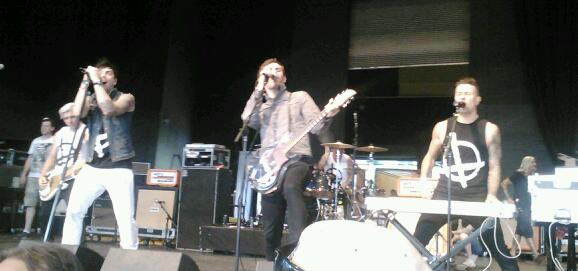
Lostprophets were a Welsh rock band from Pontypridd, formed in 1997 by singer Ian Watkins and guitarist Lee Gaze. The group was founded after their former band Fleshbind broke up. They later recruited Mike Chiplin on drums, Mike Lewis as rhythm guitarist, Stuart Richardson on bass and Jamie Oliver on turntables and keyboards.[1] Chiplin left the band in 2005, and was replaced by Ilan Rubin between 2006 and 2009, and Luke Johnson thereafter.
Key Information


Lostprophets released five studio albums: The Fake Sound of Progress (2000), Start Something (2004), Liberation Transmission (2006), The Betrayed (2010), and Weapons (2012). They sold 3.5 million albums worldwide, achieving two top-ten singles on the UK Singles Chart ("Last Train Home" and "Rooftops"), a No. 1 single on the US Alternative Songs chart ("Last Train Home"), and several Kerrang! Awards and nominations.
In December 2012, Watkins was charged with multiple sexual offences. Lostprophets cancelled all tour dates and disbanded in October 2013, before the end of Watkins' trial. Watkins pleaded guilty to several charges in November 2013, and was sentenced in December to 29 years of imprisonment plus six years of extended supervision on licence. In June 2014, the remaining members joined American singer Geoff Rickly to form a new band, No Devotion. Watkins was killed in prison in October 2025.
History
[edit]Early years (1997–2000)
[edit]Lostprophets was formed by Ian Watkins and Lee Gaze in 1997 in Pontypridd, Wales,[2] after their previous band Fleshbind disbanded. They could not find a singer, so Watkins decided he would switch from drums to be the frontman and they recruited Mike Chiplin on drums. Mike Lewis joined a few months later as bassist. Both Lewis and Watkins were also in the metalcore band Public Disturbance, until 1998 and 2000 respectively.[3][4]
Lostprophets started out as part of the fledgling South Wales scene—playing gigs at venues across Wales including T.J.'s in Newport.[2][4] From there, they went on to tour the UK circuit. The band recorded three demos during this time: Here comes the Party, Para Todas las Putas Celosas, which translates from Spanish as "For all the jealous whores", and The Fake Sound of Progress. These were produced by Stuart Richardson,[5] who joined the band as bassist for the latter recording.[4] Mike Lewis at this point switched to rhythm guitar. The Fake Sound of Progress also included the addition of DJ Stepzak, who would remain with the band for around a year.[6] The first three tracks from their third demo were refined and re-recorded for the release of their debut album of the same name: the title track, "MOAC Supreme" and "Stopquote"—the latter two were renamed "A Thousand Apologies" and "Awkward", respectively. All of the EPs are out of print, and are very rare.
The band caught the attention of the two music publishers Kerrang! and Metal Hammer magazines, receiving glancing reviews from both.[3] In 1999 they signed in with Independent label Visible Noise.[3]
The Fake Sound of Progress (2000–2002)
[edit]The band's debut album The Fake Sound of Progress was released through Visible Noise in November.[3] Recorded in less than two weeks for £4,000[2] the record drew on a wide range of influences. It would be re-released the following year through Columbia Records. Shortly after the completion of the album, DJ Stepzak decided he would not commit to the band and was replaced with musician Jamie Oliver, who was originally the band's photographer, but was told by the band's management that someone who was not part of the band or crew members could not join them on tour, so Oliver bought a set of turntables and quickly became the band's DJ.[7]
The Fake Sound of Progress featured many references to 1980s pop-culture. There was an image of Venger from the Dungeons & Dragons TV series on the album sleeve notes, as well as song titles like "Shinobi vs. Dragon Ninja" and "Kobrakai". The first song's title was a reference to the video games Shinobi and Bad Dudes vs. Dragon Ninja, while the second was an alternative spelling of Cobra Kai, the name of the karate dojo in the Karate Kid movies. Another reference is the use of the VF-1 Valkyrie in Battroid mode from the 1982 anime The Super Dimension Fortress Macross as part of the album illustration.[citation needed]
The band worked with producer Michael Barbiero to remaster the album in preparation for its release to American markets, and this new remastered version of the album was released in late 2001.[3]
During this period, Lostprophets built up a strong live following with support slots to popular acts such as Pitchshifter, Linkin Park and Deftones, as well as several headlining stints of their own.[2] They also took part in the successful Nu-Titans tour with Defenestration among other new UK metal acts of the time. Co-headlining the 2002 Deconstruction Tour in London, supporting acts included Mighty Mighty Bosstones and the Mad Caddies.[8] Lostprophets featured on a bill consisting of more traditionally punk oriented acts. This provoked hostility from certain members of the audience, who were upset at Lostprophets inclusion on such a bill. The band subsequently toured with Ozzfest, played at Glastonbury and the Reading and Leeds Festival.[2][9] They also appeared on a number of TV shows, including Top of the Pops, CD:UK and Never Mind the Buzzcocks. They also performed as part of the 2002 NME Carling Awards tour.[10][11]
The Fake Sound Of Progress has achieved Platinum status in the UK.[12]
Start Something (2003–2004)
[edit]
After the extensive touring cycle for The Fake Sound of Progress finally ended, the band took a brief break before beginning the process of writing new material for Start Something at Frontline Studios in Caerphilly, Wales.[13] They then entered Los Angeles's Barefoot Studio for a recording process that lasted from March until September 2003, with producer Eric Valentine.[13] Valentine had previously produced albums for Queens of the Stone Age and Good Charlotte.[13][14]
The first single released from the album was the song "Burn Burn", the music video for which began receiving heavy rotation on satellite and cable channels like MTV2, Kerrang! TV and Scuzz in the UK.[4][15] The song attracted some criticism, however, as the opening bore a striking resemblance to "Mother Mary", a song from the band Far's Water and Solutions album. The band themselves even conceded in interviews that the singing pattern bore an undeniable similarity to the Adamski song "Killer".[16]
"Burn Burn" was released on 3 November 2003, and was originally scheduled to be closely followed by the release of the album.[15] The release of the album was delayed several times and a headlining tour of the UK, was also postponed during this time. The band rescheduled the cancelled UK shows, with the exception of their scheduled appearance at the Reading and Leeds Festivals, stating in magazine interviews that honouring those commitments would have meant leaving the recording studio while the album was only half completed.[4]
The album's second single "Last Train Home" was released on 27 December 2003, and quickly became a smash hit worldwide. The single became the band's second single to chart in the United States, beating out other UK rock band The Darkness' single "I Believe in a Thing Called Love" (released in November 2003), charting twelve spots higher on Billboard's Mainstream Rock charts upon release in December 2003. "Last Train Home" became the highest-charting single in the United States from any UK artist released in 2003.[17] The song further gained much popularity in the United States through radio airplay and the music video saw regular rotation on MTV, generating much anticipation for the album in America.[18] The song would later be ranked #10 on Billboard's year-end rock charts in the United States.[citation needed]
The album was released in the UK on 2 February 2004, and was commercially successful, achieving number four in the UK Albums Chart and selling over 415,000 copies.[19] The album has sold over 687,000 copies in the US alone according to Nielsen Soundscan[20] although in a 2012 interview with Gigwise Lee Gaze stated it had sold 890,000 copies in the US. Worldwide the album has sold 2.5 million copies according to BBC Wales.[21] The critical response from mainstream magazines was mostly positive, though the response from rock publications such as Kerrang!, Metal Hammer and Rock Sound was sometimes tepid.[21] To promote the album, they toured North America, Europe and as part of the Big Day Out festival in Australia and New Zealand. The tour for this record culminated on 21 November 2004, at a sold-out show in Cardiff International Arena.[13][22]
Liberation Transmission (2005–2007)
[edit]
On 19 June 2005, founding member Mike Chiplin left the group to pursue other musical opportunities. Since then, he joined another band called The Unsung, and played with Accident Music until their split in 2011, which also featured Chris Morgan of Midasuno and former Funeral for a Friend guitarist Darran Smith. He has also opened up his own practice-studio for young people to start bands.[23]
The remaining members began working on material for the next album.[23] Due to the lengthy gap between The Fake Sound of Progress and Start Something, and the backlash that grew against the band because of it, the remaining band members stated in various interviews that they wanted to release their third album in early 2006.[23][24] As with Start Something, the band wrote and recorded demo tracks for the album (with Ian Watkins playing the drums) in a UK recording studio before completing the album in America.[4] Liberation Transmission was recorded in Hawaii, and saw the band work with Bob Rock. Drummer Josh Freese (of the Vandals and A Perfect Circle) recorded ten out of the twelve drum tracks for this album (Ilan Rubin recorded "Everybody's Screaming!!!" and "For All These Times Son, for All These Times").[25]
The band returned to their roots, playing a series of small venues across South Wales.[26] They also headlined Give It a Name, a two-day event with My Chemical Romance.[26] These shows featured the first live appearance of then-17-year-old Ilan Rubin on drums and the live premiere of songs "Rooftops (A Liberation Broadcast)", "A Town Called Hypocrisy" and "The New Transmission".[27] The album itself was released on 26 June 2006 (27 June in the US), and became the first Lostprophets album to reach number one on the UK Albums Chart.[28] The album saw the band adopt a more contemporary sound with far less emphasis on screaming than previous releases (exceptions being songs "Everyday Combat" and "For All These Times Son, for All These Times").
Lostprophets began a full-fledged UK tour on 3 July 2006.[29] As with their warm-up gigs prior to the album's release, the band selected South Wales-based support bands for this tour. The band followed this with another UK tour in November,[29] and then followed their UK dates with a European tour in France, Germany, and several other countries.[30] The main support for this was the Blackout. They returned to the UK for an Arena tour in April 2007, from 18 April to 22nd.[31] The scheduled venues were: Glasgow (SECC); Manchester (MEN Arena); Birmingham (NIA) & London (Wembley Arena).[31] Lostprophets also played at the Full Ponty festival in Wales on 26 May 2007.[32] The support acts included Paramore and the Blackout.[32] The album has sold over 625,000 copies worldwide.[33]
The Betrayed (2007–2010)
[edit]Writing and recording the band's fourth studio album began in early 2007. Originally the band stated that they wanted the album released in 2007; however, due to both touring and being unhappy with the results of their work in the studio, the band did not keep to their original release plan. Despite recording an entire album's worth of material with producer John Feldmann, this work was shelved[34] in favour of material they later recorded and produced themselves, with recording sessions for what would later be known as The Betrayed beginning in November 2008.[35] Consequently, the album was not released until 13 January 2010, where it reached a peak of 3 on the UK Albums Chart.
Throughout the earlier part of 2008, the band performed several dates, including Download Festival which they headlined on the Sunday night, V Festival and Rock am Ring and Rock im Park, as well as a small number of performances around the UK.[36][37] They also headlined the NME/Radio 1 tent at 2009's Reading and Leeds Festival.[38]
The band claimed that The Betrayed is "by far the finest, darkest and most real album" of their career.[39] Originally, Ian Watkins stated he wanted the new album to be "nastier" and "darker" than previous efforts, with more energy and vibe than before. In a blog post, guitarist Mike Lewis suggested that Ilan Rubin (who subsequently left the band to join Nine Inch Nails[40]) was very much a large part of the writing/recording process. Following Rubin's departure, Luke Johnson of Beat Union was officially announced as the band's new drummer in August 2009. During this time, Kerrang! published a "world exclusive" article on Lostprophets, revealing the album's title, and its release date of January 2010.[citation needed] In a later interview with Kerrang in early 2009, Watkins stated that the record was "the most honest album" the band has ever done, and that overall the record was "a lot grittier and sleazier", while also stating that did not mean "it won't be catchy", but that it would not be done "in such a twee way".[citation needed] When speaking about what the record would sound like, Jamie Oliver stated that he felt it had "the bite that Start Something had, with the song-ability of Liberation Transmission but personality of The Fake Sound of Progress".[41][42][43][44]

The first single from the new album, "It's Not the End of the World, But I Can See It from Here", was aired for the first time on BBC Radio 1 on 19 August. It was subsequently released on 12 October 2009 and reached No. 16 on the Official UK chart. This was followed by "Where We Belong", which was released on 4 January 2010.
The band commenced their UK tour with support from Kids in Glass Houses, Hexes, We are the Ocean, and Sharks, in February 2010. The Doncaster date to the UK tour was cancelled and refunded, but no reason was given for the cancellation. The Port Talbot date of the tour was postponed and moved to a different venue due to a fire at the Afan Lido leisure centre. The show took place on 1 May at the Cardiff International Arena.[45] Lostprophets confirmed that they would tour Australia.[46] The tour took place on 27 March 2010 at The Roundhouse, NSW, Sydney. The band also played at the 2010 Reading and Leeds Festival.[47]
Stuart Richardson commented in 2019 that "towards the end of 2009–2011 we realised Ian had a depressingly sad drug addiction. It just snuck up on us".[48]
Weapons (2011–2012)
[edit]In early 2011, the band rented a house in Norfolk that served as their studio while composing a demo and pre-producing for a new album. The band was also featured on British rapper/producer Labrinth's album in late 2011.[49]
In August 2011, the band went on a short UK tour, with dates in Cardiff, Bournemouth, Oxford and Norwich, as well as the two V Festival dates, and an additional appearance at the Sziget Festival in Budapest, Hungary. During this short tour, the band debuted live a new song from the upcoming album, tentatively titled "Bring 'Em Down".[50]
The band's fifth studio album, Weapons, was released through Epic Records on 2 April 2012, leaving their long-time record label Visible Noise. Supported by a subsequent tour in the UK,[51][52] Weapons was produced by Ken Andrews at NRG Recording Studios in Hollywood, California.[53] The band released a teaser track in anticipation of their new album entitled "Better Off Dead" in January 2012, though it was confirmed the song is not an official single.[54] The band played at Australia's Soundwave festival in February 2012 before heading back to the UK for an extensive tour in support of the new album in April and May supported by Modestep. The band's first official single off the album, "Bring 'em Down", was released on 6 February 2012, after debuting on Zane Lowe's BBC Radio 1 show.

On 9 April, Lostprophets announced that they had signed to Fearless Records and would release Weapons in the United States on 19 June 2012. Lostprophets played in the Cardiff Motorpoint Arena on 28 April to promote their new album Weapons, and played their second studio album Start Something in its entirety.[55] This show turned out to be a complete disaster for the band; Stuart Richardson commented in 2019 that Watkins "didn't move for the whole set" and that he "sung the wrong words".[48] This led to the band staging an intervention with Watkins, telling him that if he did not clean up his act he would be fired. They were extremely frustrated with him following this performance and even considered disbanding entirely as a result of it. Watkins checked into rehab during a two-month break in the band's touring.
Lostprophets played select shows in Vans Warped Tour 2012, playing from 12 July through 5 August.[56] Watkins relapsed into drug use during this tour and missed a show, leading to the band having to perform a set with Jamie Oliver on lead vocals. Watkins's temporary absence from the tour led to Stuart Richardson having a violent altercation with him.[48]
The band toured the UK extensively again in November 2012 to coincide with a headline performance at the Vans Warped Tour 2012 UK. They performed what would eventually become their final show at the Newport Centre, Newport, Wales on 14 November 2012.[57]
Three videos were released from Weapons. On 3 December 2012, Watkins tweeted, "En route to the big smoke to shoot our new musical video". When the band had previously debuted "Bring 'em down" on Zane Lowe's show in February, Watkins stated that the fourth single was to be a "power ballad". However, a finished video was never released.
Watkins's arrest and breakup (2012–2013)
[edit]
On 19 December 2012, Watkins was charged with thirteen sexual offences against children, including the attempted rape of a one-year-old girl.[58][59] Watkins originally denied the charges. The other band members posted a message on their website stating that they were "learning about the details of the investigation along with you" and concluding: "It is a difficult time for us and our families, and we want to thank our fans for their support as we seek answers."[60] They subsequently cancelled all tour dates.[61]
On 1 October 2013, Lostprophets announced that they were disbanding "after nearly a year of coming to terms with our heartache". The post was signed by all members of the band except Watkins.[62] On 30 November, the members released a lengthy statement in response to Watkins pleading guilty to attempted rape and sexual assault of a child under 13,[63] stating that they were "heartbroken, angry, and disgusted". They stated that they had been unaware of his crimes, and that though working with him had become "a constant, miserable challenge", they had "never imagined him capable of behaviour of the type he has now admitted". They urged any other victims to contact the authorities.[64] On 18 December 2013, Watkins was sentenced to 29 years in prison, plus six years on extended licence, with a possibility of parole after serving two-thirds of his sentence.[65][66][67]
On 25 April 2014, it was confirmed by the Thursday frontman Geoff Rickly that he would be working with the remaining band-members on their new project, from a record label perspective through his own label, Collect Records, as a producer and also joining them as a vocalist. Rickly said the material was influenced by Joy Division, New Order and the Cure.[68] The new band was named No Devotion and they released their first and second singles, "Stay" and "Eyeshadow", on 1 July 2014.[69] On 11 October 2025, Watkins was killed in prison.[70]
Musical style and lyrical themes
[edit]Lostprophets have been categorised as nu metal,[71][3][72][73][74][75] alternative rock,[76][77] hard rock,[2][74] alternative metal,[78] post-hardcore,[79][80][81] pop-punk,[82] rap rock,[83] post-grunge,[84] and pop metal.[85] Their music is termed an aggressive style of rock, blending strong driving guitars, groove and bounce, and pop elements and accessibility.[72][86][87]
The punk side to the band's music has been noted, again specifically of the pop variety.[74][87] The influence of heavy metal on their music is also noted,[72][88] although this varies from song to song.[74][89] Their music has been praised as powerful, combining softer melodies with an aggressive edge,[89] with screamed vocals and catchy riffs,[90] while some have also stated it has a derivative, formulaic or forgettable nature.[72][74][89]
Watkins's lyrics range from sombre to aggressive, and have been described as often conveying a feeling of disillusionment with topics such as relationships or social groups, albeit frequently delivered in a rousing manner even when this is the case.[86] Critics have compared his singing style to Faith No More vocalist Mike Patton,[72][89][91][92] with Watkins citing this band as his biggest influence in 2004.[93] He said, "it's not a conscious thing. But the notes I choose to sing, and the melodies (we write) come from them because I spent so much time listening growing up."[93] Lostprophets also garnered many other comparisons with more contemporary American bands of the early 2000s. Regarding the perception of them as an American-influenced band, Watkins commented in 2004 "we don't care if you think we're from Guam. Just as long as you listen."[93]
They cited influences including Dog Eat Dog, Vision of Disorder, Earth Crisis, Shelter,[94] Jimmy Eat World, Hot Water Music, Deftones, Japandroids, LCD Soundsystem, Young Guns, Cerebral Ballzy, Kids in Glass Houses, Trash Talk, Polar Bear Club,[95] Metallica,[96] the Cure, Duran Duran and Depeche Mode.[97]
Band members
[edit]- Ian Watkins – lead vocals (1997–2012; died 2025); keyboards, turntables (1997–1999)
- Lee Gaze – lead guitar, backing vocals (1997–2013); rhythm guitar (1997–1998)
- Mike Chiplin – drums, percussion (1997–2005)
- Mike Lewis – rhythm guitar, backing vocals (1998–2013); bass (1997–1998)
- Stuart Richardson – bass, backing vocals (1998–2013)[6]
- DJ Stepzak – synth, turntables, samples (1999–2000)[6]
- Jamie Oliver – vocals, keyboards, synth, piano, turntables, samples (2000–2013)
- Ilan Rubin – drums, percussion (2006–2009)
- Luke Johnson – drums, percussion (2009–2013)
Timeline

Discography
[edit]- The Fake Sound of Progress (2000)
- Start Something (2004)
- Liberation Transmission (2006)
- The Betrayed (2010)
- Weapons (2012)
Awards
[edit]Lostprophets had the most success at the Kerrang! Awards[98][99][100][101][102] and Pop Factory Awards,[103][104][105] winning six awards at both. Kerrang! Awards include: Best British Newcomer (2001), Best Single (2004) for the song "Last Train Home", Best Album (2006) for the album Liberation Transmission, Best British Band (2006 and 2007) and The Classic Songwriter Award (2010). Pop Factory Awards include: Best Live Act (2001 and 2006), Best Welsh Act (2004, 2005 and 2006) and Best Album (2006) for the album Liberation Transmission. They also won one award at the NME Awards[106] for Best Metal Act (2002). Lostprophets were also nominated for seven other Kerrang! Awards.
Kerrang! awards
[edit]| Year | Nominee / work | Award | Result |
|---|---|---|---|
| 2001 | Lostprophets | Best British Newcomer | Won |
| 2004 | "Last Train Home" | Best Single | Won |
| Start Something | Best Album | Nominated | |
| Lostprophets | Best British Band | Nominated | |
| 2006 | Liberation Transmission | Best Album | Won |
| Lostprophets | Best British Band | Won | |
| "Rooftops (A Liberation Broadcast)" | Best Videoclip | Nominated | |
| 2007 | Lostprophets | Best British Band | Won |
| 2008 | Lostprophets | Best British Band | Nominated |
| 2010 | Lostprophets | Best British Band | Nominated |
| It's Not the End of the World, But I Can See It from Here | Best Video | Nominated | |
| Lostprophets | The Classic Songwriter Award | Won | |
| 2012 | Lostprophets | Best British Band | Nominated |
NME Awards
[edit]| Year | Nominee / work | Award | Result |
|---|---|---|---|
| 2002 | Lostprophets | Best Metal Act | Won |
Pop-Factory-Awards
[edit]| Year | Nominee / work | Award | Result |
|---|---|---|---|
| 2002 | Lostprophets | Best Live Act | Won |
| 2004 | Best Welsh Act | Won | |
| 2005 | Won | ||
| 2006 | Won | ||
| Best Live Act | Won | ||
| Liberation Transmission | Best Album | Won |
References
[edit]- ^ Bryan, Beverly (1 June 2012). "Lostprophets Found: Welsh Rockers Get Their Spirits Back On Weapons". MTV Iggy. Archived from the original on 2 December 2013. Retrieved 26 November 2013.
- ^ a b c d e f Jeffries, David. "Lostprophets biography". AllMusic. Retrieved 17 February 2009.
- ^ a b c d e f "Lostprophets". BBC Wales. Archived from the original on 1 August 2009. Retrieved 17 February 2009.
- ^ a b c d e f "Lostprophets: Mike Lewis". BBC Wales. Archived from the original on 9 January 2008. Retrieved 24 June 2008.
- ^ "United They Stand". Kerrang!. 7 October 2009. pp. 22–27.
- ^ a b c "Lostprophets Family Tree". Retrieved 23 November 2009.
- ^ "Lostprophets – Jamie Oliver". BBC. Retrieved 18 February 2009.
- ^ "'Prophet Take Top Billing". NME. 5 April 2002. Retrieved 21 April 2022.
- ^ "Fest of Fun". NME. 13 March 2002. Retrieved 21 April 2022.
- ^ "A View To a Hit". NME. 8 February 2002. Retrieved 21 April 2022.
- ^ Pattison, Louis. "The Rise of Lostprophets". BBC Wales. Retrieved 17 February 2008.
- ^ "Lostprophets' Fake Sound goes platinum". Retrieved 12 August 2025.
- ^ a b c d "Lostprophets". Pure Volume. Archived from the original on 26 February 2009. Retrieved 17 February 2009.
- ^ "Lostprophets Recording Update". Absolute Punk. 5 January 2024.
- ^ a b "Lostprophets Make Fiery Return". NME. 15 September 2003. Retrieved 21 April 2022.
- ^ "Lostprophets: Burn Burn". BBC Wales. Archived from the original on 29 January 2007. Retrieved 24 June 2008.
- ^ "SLIPKNOT, METALLICA, THE DARKNESS Among 'Best Band' Nominees At KERRANG! AWARDS 2004". 25 August 2004.
- ^ "Lostprophets Fend Off Backlash, 'Make A Move' With New Single". MTV. Archived from the original on 11 May 2023.
- ^ "Album sales". Haven Music. Retrieved 30 April 2012.
- ^ "About rock music". Billboard. April 2006. Retrieved 18 February 2012.
- ^ a b McLaren, James. "About rock music". BBC Wales. Retrieved 18 February 2009.
- ^ "Lostprophets". MTV. Archived from the original on 20 December 2005. Retrieved 17 February 2009.
- ^ a b c "Lostprophets drummer quits band". London: BBC. 21 June 2005. Retrieved 18 February 2009.
- ^ "Lostprophets: The Sound of Progress". NME. 10 January 2005. Retrieved 21 April 2022.
- ^ "Lostprophets family tree". BBC Wales. Retrieved 24 June 2008.
- ^ a b "Lostprophets Announce One-off Show". NME. 19 April 2006. Retrieved 21 April 2022.
- ^ "Lostprophets steal the show at Give It a Name". NME. May 2006. Retrieved 21 April 2022.
- ^ "Lostprophets conquer album chart". London: BBC. 2 July 2006. Retrieved 18 February 2009.
- ^ a b "Lostprophets go on second UK tour of the year". NME. 17 August 2006. Retrieved 21 April 2022.
- ^ "Lostprophets forge ahead with fall tour". Soundspike. Archived from the original on 5 December 2008. Retrieved 21 April 2022.
- ^ a b "Lostprophets announce arena tour". NME. 28 March 2007. Retrieved 21 April 2022.
- ^ a b "Full Ponty 2007".
- ^ "Worldwide album sales". Retrieved 24 June 2010.
- ^ "ostprophets on Album Four". Rock Sound. October 2008.[permanent dead link]
- ^ "Lostprophets studio blog 1". 28 November 2008. Archived from the original on 5 December 2008. Retrieved 7 August 2009.
- ^ "More bands announced for Download Festival". Metal Underground. Retrieved 18 February 2009.
- ^ Crookes, Del (16 June 2008). "Lostprophets bring Download to a close". London: BBC. Retrieved 18 February 2009.
- ^ "Reading 2010". Reading Festival. Archived from the original on 10 April 2009. Retrieved 14 September 2010.
- ^ "Myspace blog". MySpace. Archived from the original on 8 August 2010. Retrieved 14 September 2010.
- ^ "Lostprophets drummer to join Nine Inch Nails full-time". NME. 18 November 2008. Retrieved 24 April 2022.
- ^ Lostprophets, Jamie [@JayLostprophets] (30 April 2009). "people are asking what the new album will sound like, whether it will be like the old stuff..." (Tweet). Retrieved 14 September 2010 – via Twitter.
- ^ Lostprophets, Jamie [@JayLostprophets] (1 May 2009). "To me it has the bite that SS had, with the song-ability of LT but personality of FSOP" (Tweet). Retrieved 14 September 2010 – via Twitter.
- ^ Lostprophets, Jamie [@JayLostprophets] (1 May 2009). "The dark element is brought by Ian and most of his lyrics... like a buff evil ninja disguised as a Male model haha" (Tweet). Retrieved 14 September 2010 – via Twitter.
- ^ Lostprophets, Jamie [@JayLostprophets] (1 May 2009). "It's a classy rock sorta heavy without sounding like bad metal. but catchy as feck, and also a little more grown up" (Tweet). Retrieved 14 September 2010 – via Twitter.
- ^ "Lostprophets cancel Port Talbot show due to fire". NME. 27 January 2010. Retrieved 25 April 2022.
- ^ "Australia The Betrayed Tour Dates". 8 January 2018.
- ^ Bhamra, Satvir (29 March 2010). "Reading / Leeds 2010 lineup announced". Amplified.tv. Archived from the original on 11 August 2011. Retrieved 16 July 2011.
- ^ a b c "Ex-Lostprophets Bassist Stuart Richardson Speaks Of The Aftermath Of Being In A Band With Ian Watkins & Beating Him Up On The 'Vans Warped Tour'". The PRP. 6 December 2019. Retrieved 17 December 2019.
- ^ "Labrinth confirms Lostpropehts collab". MTV. 21 March 2011. Archived from the original on 22 March 2011. Retrieved 16 July 2011.
- ^ "Lostprophets – bring 'em down (live at sziget, budapest 13 August 2011)". YouTube. 16 August 2011. Retrieved 26 October 2011.
- ^ "Lostprophets Announce Details of New Album". Rock Sound. 5 January 2012. Archived from the original on 11 January 2012. Retrieved 5 January 2012.
- ^ "Mayday! Lostprophets head to Cambridge". Cambridge News. 23 January 2012. Archived from the original on 1 August 2012. Retrieved 23 January 2012.
- ^ "Lostprophets begin recording new album in Hollywood". NME. 10 May 2011. Retrieved 24 April 2022.
- ^ "Lostprophets announce extensive UK and Ireland tour for April – ticket details". NME. 23 January 2012. Retrieved 24 April 2022.
- ^ "Start Something complete set list". Setlist Fm. 29 April 2011. Retrieved 28 April 2012.
- ^ Playing at Vans Warped Tour Archived 30 March 2012 at the Wayback Machine Vans Warped Tour
- ^ "Lostprophets Setlist at Newport Centre, Newport, Wales". setlist.fm. Retrieved 18 December 2019.
- ^ Hall, John (19 December 2012). "Lostprophets singer Ian Watkins remanded in custody after appearing in court accused of conspiring to rape one-year-old girl". The Independent. London. Retrieved 19 December 2012.
- ^ Morris, Steven (19 December 2012). "Lostprophets singer remanded in custody charged with child sex offences". The Guardian. ISSN 0261-3077. Retrieved 18 March 2025.
- ^ "Lostprophets release statement on Ian Watkins charges". BBC News. 20 December 2012. Retrieved 20 December 2012.
- ^ Evans, Natalie (20 December 2012). "Lostprophets band members in "state of shock" after frontman Ian Watkins accused of plotting to rape a baby". Mirror News. Retrieved 22 May 2013.
- ^ "To our fans". Facebook. 1 October 2013. Archived from the original on 12 December 1998.
- ^ "Lostprophets rock star Ian Watkins in court on child sex charges". BBC News. 19 December 2012. Retrieved 20 December 2012.
- ^ McConnell, Kriston. "Lostprophets Release Statement On Ian Watkins' Child Sex Guilty Plea". Under The Gun Review. Archived from the original on 16 December 2013. Retrieved 14 December 2013.
- ^ "Lostprophets' Ian Watkins sentenced to 35 years over child sex offences". BBC News. 18 December 2013. Retrieved 19 April 2017.
- ^ "Lostprophets Ex-Singer Ian Watkins sentenced to 29 Years for Child Sex Crimes". People. 18 December 2013. Archived from the original on 26 April 2017. Retrieved 20 April 2022.
- ^ "Ian Watkins Lostprophets child-abuse-trial". Archived from the original on 12 March 2016. Retrieved 29 June 2014.
- ^ Crane, Matt (25 April 2014). "Geoff Rickly (Thursday) addresses rumors of working with Lostprophets members". Alternative Press.
- ^ "No Devotion rise from ashes of Lostprophets". Teamrock.com. 1 July 2014.
- ^ "Lostprophets singer Ian Watkins dies after attack in prison". Sky News. 11 October 2025. Retrieved 11 October 2025.
- ^ "Lostprophets | Biography, Albums, Streaming Links". AllMusic. Retrieved 21 June 2021.
- ^ a b c d e O'Neil, Brian. "The Fake Sound of Progress". AllMusic. Retrieved 17 February 2009.
- ^ Unterberger, Andrew (10 September 2004). "Top Ten Nu-Metal Bands". Stylus Magazine. Archived from the original on 9 October 2004. Retrieved 25 September 2014.
- ^ a b c d e MacNeil, Jason (27 April 2004). "Lostprophets: Start Something". PopMatters. Retrieved 24 April 2022.
- ^ "Lostprophets". IGN. Archived from the original on 22 July 2009. Retrieved 17 February 2009.
- ^ Hohnen, Mike (2 October 2013). "Lostprophets Officially Break Up After Singer's Baby Rape Charges". Music Feeds. Retrieved 13 December 2015.
- ^ Hathaway, Jay (7 December 2015). "Taylor Swift Single Ends Up Back on Spotify Disguised As Track by Pedophile-Fronted Band". New York. Retrieved 24 April 2022.
- ^ "Lostprophets's Ian Watkins Gets Beat Up In New "Bring 'Em Down" Video, Bloc Party Remixes Song". WHFS. 16 March 2012. Archived from the original on 22 December 2015. Retrieved 13 December 2015.
- ^ Writer, Staff. "Lostprophets Members Join Forces With Thursday Vocalist". The Music. Retrieved 14 November 2025.
- ^ Interviews, Clash Magazine Music News, Reviews &; Murray, Robin (13 January 2010). "Lostprophets To Play In Old School". Clash. Retrieved 14 November 2025.
{{cite web}}: CS1 maint: multiple names: authors list (link) - ^ Brannigan, Paul (30 April 2014). "Six Vocalists Who Could Front A New-Look Lostprophets". Loudersound. Retrieved 30 April 2022.
- ^ Stoner, Rick (7 October 2004). "LostpRophets keep hardcore roots". The Badger Herald. Retrieved 30 April 2022.
- ^ "The Sound of Progress!". NME. 11 July 2003. Retrieved 30 April 2022.
- ^ Apar, Corey. "Liberation Transmission - Lostprophets". AllMusic.
- ^ "Lostprophets are finding their way to pop success". The Scotsman. 1 December 2006. Retrieved 30 April 2022.
- ^ a b Apar, Corey. "Liberation Transmission". AllMusic. Retrieved 17 February 2009.
- ^ a b Grischow, Chad (21 July 2006). "Lostprophets - Liberation Transmission". IGN. Archived from the original on 7 March 2012. Retrieved 24 April 2022.
- ^ "Lostprophets". The Times. 5 July 2006. Retrieved 30 April 2022.
- ^ a b c d Loftus, Johnny. "Start Something". AllMusic. Retrieved 17 February 2009.
- ^ Moriarty, Colin (26 May 2004). "Lostprophets - Start Something". IGN. Archived from the original on 31 August 2011. Retrieved 24 April 2022.
- ^ Miller, Kirk (14 January 2004). "Start Something". Rolling Stone. Archived from the original on 12 October 2007. Retrieved 20 May 2012.
- ^ "Lostprophets: Start Something, PopMatters". PopMatters. 27 April 2004.
- ^ a b c "Herald-Journal". Herald-Journal – via Google Books.
- ^ "Lostprophets". www.punktastic.com. Retrieved 14 November 2025.
- ^ "Lostprophets". www.punktastic.com. Retrieved 14 November 2025.
- ^ "Lostprophets find themselves on Nintendo Fusion Tour". Daily Titan. 10 October 2004. Retrieved 14 November 2025.
- ^ Newton, Steve (27 November 2013). "My interview with Lostprophets' Ian Watkins, the most hated man on earth | Georgia Straight Vancouver's source for arts, culture, and events". The Georgia Straight. Retrieved 14 November 2025.
- ^ a b "The Kerrang! Awards review 2004 (Page 4)". ILikeMusic. Retrieved 18 February 2009.
- ^ a b Brown, Mark (25 August 2006). "Lostprophets on their metal as they top the Kerrang! awards". The Guardian. London. Retrieved 18 February 2009.
- ^ a b "The Kerrang! Awards review 2004 (Page 5)". ILikeMusic. Retrieved 18 February 2009.
- ^ a b "The Kerrang! Awards review 2004 (Page 10)". ilikemusic.com. Retrieved 18 February 2009.
- ^ a b "The Kerrang Awards 2010-And the winners are". Kerrang!. Archived from the original on 24 October 2010. Retrieved 16 July 2011.
- ^ a b "Pop Factory Awards Winners 2002". tourdates.co.uk. 26 November 2002. Archived from the original on 29 September 2012. Retrieved 18 February 2009.
- ^ a b "Pop Factory Awards 2006". The Pop Factory. Archived from the original on 20 February 2007. Retrieved 18 February 2009.
- ^ a b "Visible Noise News". Visible Noise. Archived from the original on 7 December 2008. Retrieved 18 February 2009.
- ^ a b "NME awards: The winners". London: BBC. 25 February 2002. Retrieved 18 February 2009.
External links
[edit]
- Lostprophets at AllMusic
- Lostprophets discography at Discogs
- Lostprophets at IMDb
| International | |
|---|---|
| National | |
| Artists | |

Lostprophets
View on GrokipediaHistory
Formation and early years (1997–2000)
Lostprophets formed in 1997 in Pontypridd, Wales, emerging from the punk band Public Disturbance, with Ian Watkins on vocals and Mike Lewis on guitar as initial members from their local school circle.[10] The group expanded that year to include guitarist Lee Gaze and drummer Mike Chiplin, all Pontypridd natives who began as a casual project influenced by nu metal acts such as Limp Bizkit, initially focusing on covers rather than original material.[10][11] The band played their first gig in Cardiff in late 1997, alongside occasional small local shows, while recording informal demos primarily to share with friends rather than pursue professional distribution.[12] As Watkins later described, "It was just us having a laugh, really - recording demos to give to our friends, and playing small gigs in Cardiff now and again. We never really thought anything would come of it."[12] By 1999, they recruited bassist Stuart Richardson and added Jamie Oliver on keyboards, turntables, and backing vocals, solidifying the core lineup and transitioning toward original compositions in a post-hardcore direction.[10] That year, Lostprophets produced a four-track demo that attracted notice from UK music publications like Kerrang! and Metal Hammer, culminating in a signing with independent label Visible Noise Records.[10] These early efforts established a foothold in the Welsh and British hardcore scenes without major-label involvement, emphasizing self-recorded material and grassroots performances prior to their debut release in 2000.[10]Breakthrough with The Fake Sound of Progress (2000–2003)
In early 2000, following the positive reception of their demo tape featured in Kerrang! magazine, Lostprophets signed with the independent UK label Visible Noise, which released a four-track EP titled The Fake Sound of Progress in June 2000.[13][14] The EP showcased the band's nu metal-influenced sound and helped secure wider attention, leading to the full debut album of the same name being recorded on a modest budget of approximately £6,000 at DEP International Studios in Wales, initially conceived as an extended demo rather than a commercial release.[15] The album The Fake Sound of Progress was released on 27 November 2000 through Visible Noise in the United Kingdom, marking the band's entry into the rock scene with tracks blending aggressive riffs, electronic elements, and melodic vocals.[16] It garnered immediate underground acclaim within the UK rock community, driven by airplay on stations like BBC Radio 1 and publications such as Kerrang!, eventually achieving gold certification for 100,000 units sold and platinum status a decade later after sustained sales.[17][18] The record's international distribution, including a 2001 US release via Columbia Records, expanded its reach beyond the UK indie circuit.[19] Key singles from the album propelled its breakthrough; "Shinobi vs. Dragon Ninja," inspired by arcade games and released on 19 November 2001, served as the debut single and gained traction in rock media for its high-energy hooks.[20] Follow-up "The Fake Sound of Progress," issued on 11 March 2002, peaked at number 21 on the UK Singles Chart, confirming the band's commercial viability and boosting album sales through MTV2 rotations and Kerrang! TV exposure.[10][21] From 2001 to 2003, Lostprophets built momentum through relentless touring, supporting established acts on UK and European bills to cultivate a dedicated fanbase. Notable slots included opening for Linkin Park on their 2003 Meteora UK tour dates, such as performances at Manchester Evening News Arena on 21 November and National Indoor Arena in Birmingham on 24 November, where the band's setlists drew from the debut album to energize crowds.[22][23] These opportunities, alongside festival appearances and club shows, solidified their presence in the post-grunge and nu metal scenes, transitioning from local Welsh act to national rock contenders.[24]Commercial peak with Start Something (2003–2005)
Start Something, produced by Eric Valentine at the NRG Recording Studios in Los Angeles, represented Lostprophets' evolution toward a more expansive sound blending nu-metal aggression with post-hardcore melodies and pop-infused hooks.[25] Released on 2 February 2004 through Visible Noise Records in the United Kingdom, the album debuted at number 4 on the UK Albums Chart, marking the band's highest domestic chart entry to that point.[26][21] In the United States, it entered the Billboard 200 at number 33 following its March 2004 release via Columbia Records, eventually selling over 500,000 copies there.[27] The lead single "Burn Burn," issued in November 2003, introduced the album's material and achieved moderate UK success, entering the Top 40 and building anticipation through radio play and live performances.[28] "Last Train Home," released in August 2004, became the album's breakout hit, peaking at number 8 on the UK Singles Chart while topping the US Billboard Alternative Songs chart and reaching number 10 on the Mainstream Rock Tracks chart, driven by its anthemic chorus and music video rotation on MTV.[29][30] International expansion accelerated with extensive touring, including appearances on the 2004 Vans Warped Tour across North America, which exposed the band to larger US audiences and boosted album sales beyond 1 million copies worldwide by mid-2005.[31] The record's polished production and radio-friendly tracks solidified Lostprophets' position within the nu-metal and post-hardcore scenes, enabling arena-level shows and features in media outlets like Kerrang! and NME, though critics noted a shift from raw energy to more commercial accessibility.[32] By the period's end, Start Something had surpassed 2.5 million global sales, cementing the band's commercial viability.[33]Mid-period albums: Liberation Transmission and The Betrayed (2005–2010)
Lostprophets released their third studio album, Liberation Transmission, on 26 June 2006 through Visible Noise Records in the UK.[34] The album debuted at number one on the UK Albums Chart, marking the band's first chart-topping release and displacing Keane from the summit after one week.[35] Produced by Bob Rock, it featured singles such as "Rooftops (A Liberation Broadcast)", which propelled promotional efforts amid the band's established post-hardcore sound. Following the album's launch, Lostprophets commenced a full UK headline tour on 3 July 2006, supported by regional acts, and maintained activity through festival appearances and shared billing at events like the inaugural Give It a Name festival alongside My Chemical Romance.[36] The band sustained lineup stability with core members Ian Watkins, Lee Gaze, Mike Lewis, Jamie Oliver, Stuart Richardson, and Ilan Rubin during this era, enabling consistent output despite transitional creative shifts. Touring remained robust in the UK, with regular slots at domestic festivals and arenas, though US market penetration showed signs of plateauing after earlier breakthroughs from Start Something, as subsequent albums failed to replicate prior Billboard gains.[37] In 2010, Lostprophets issued their fourth album, The Betrayed, on 18 January via Visible Noise and Sony Music, which entered the UK Albums Chart at number three.[38] The lead single, "It's Not the End of the World, But I Can See It from Here", preceded the album's release in September 2009, garnering radio play and supporting the band's push into alternative rock territories.[39] The ensuing The Betrayed Tour focused on UK and European dates, reinforcing domestic fanbase loyalty through headline shows and festival performances, while international expansion, particularly in North America, yielded limited additional commercial traction compared to peak years.[40]Final album Weapons and touring (2010–2012)
Lostprophets released their fifth studio album, Weapons, on 2 April 2012 through Epic Records in the United Kingdom, with a North American release following on 19 June 2012. [41] The album debuted at number 4 on the UK Albums Chart.[42] Featuring a heavier, more aggressive sound characterized by driving guitars, heavy drums, and distorted elements, Weapons marked a shift toward intensified rock influences compared to prior releases.[43] [44] The lead single, "Bring 'Em Down," preceded the album on 23 March 2012, followed by "We Bring an Arsenal" on 4 June 2012.[45] These tracks exemplified the album's anthemic style, blending high-energy riffs with Watkins' vocals. To promote Weapons, the band undertook European and US tours, including appearances at major festivals such as Download Festival and Hard Rock Calling in the UK, as well as the Vans Warped Tour in the United States.[46] They also performed at the Heineken Jammin' Festival in Milan on 6 July 2012.[47] Amid these activities, internal band dynamics showed signs of strain, with reports of escalating conflicts involving lead singer Ian Watkins. Former bassist Stuart Richardson recounted a physical altercation, including a fist fight with Watkins, highlighting tensions over creative control and personal behavior.[48] Bandmates noted Watkins' odd behavior increasingly altered relationships within the group during this period.[49] These frictions, attributed in part to Watkins' dominant role, contributed to underlying instability as the band reached a commercial peak with Weapons.[48]Ian Watkins' arrest and charges (2012)
On December 17, 2012, Ian Watkins, the lead singer of Lostprophets, was arrested by South Wales Police in connection with allegations of child sexual offenses, following an investigation prompted by online communications and reports from concerned parties.[50] [51] Authorities searched Watkins' home in Newport, Wales, seizing computer equipment and other materials containing thousands of indecent images of children, some categorized as extreme pornography.[52] [50] Two women, identified as fans who had interacted with Watkins online and supplied him with access to infants, were arrested as co-conspirators in the alleged offenses, which involved attempts to sexually abuse babies under the age of two.[53] [52] Watkins appeared at Newport Magistrates' Court on December 19, 2012, where he faced initial charges including three counts of conspiracy to rape a child under 13 (specifically involving a one-year-old girl), possession of 19 indecent images of children, and possession of an extreme pornographic image.[54] [55] The conspiracy charges spanned from May 1 to December 17, 2012, while the image-related offenses covered August 12 to December 17, 2012; Watkins did not enter pleas and was remanded in custody without bail due to the severity of the accusations.[50] [56] Over the following months, additional charges were filed, bringing the total to 24 counts related to sexual activity with children, including further conspiracies involving infants and possession of child abuse material.[52] In response, the remaining members of Lostprophets issued a statement on December 20, 2012, expressing profound shock and stating they had "no knowledge of these events" and found the allegations "unbelievable," while pledging full cooperation with authorities and announcing the immediate suspension of all band activities.[57] The band's management canceled upcoming tour dates and promotions, emphasizing their distress and commitment to supporting the police investigation.[57]Conviction, sentencing, and band dissolution (2013)
On 1 October 2013, the remaining members of Lostprophets announced the band's disbandment via an official statement on social media, stating that after a "year of heartache," the group could no longer continue due to the irreparable damage caused by the allegations against frontman Ian Watkins.[58] The announcement followed the band's indefinite hiatus since Watkins' arrest in December 2012, emphasizing the profound personal and professional toll on the members.[59] Watkins pleaded guilty on 26 November 2013 to 13 counts of sexual offenses against children, including attempted rape of an infant and conspiracy to rape a child under 13.[60] On 18 December 2013, he was sentenced at Cardiff Crown Court to a total of 35 years' imprisonment, with the judge describing the offenses as "disgusting" and noting Watkins' lack of remorse.[5] [6] The sentence included a 10-year extended license period, effectively requiring a minimum of 29 years before parole eligibility, as later clarified in judicial reviews.[61] In a statement released on 1 December 2013, shortly after Watkins' guilty plea, the former bandmates expressed profound shock and disgust, asserting they had no knowledge of his crimes and had never suspected him capable of such acts.[62] They described the revelations as haunting them for life and appealed for any additional victims to come forward, underscoring the emotional devastation while distancing themselves from Watkins' actions.[63]Post-dissolution activities and Watkins' death (2014–2025)
Following the band's dissolution in October 2013, surviving members Lee Gaze, Mike Lewis, Jamie Oliver, Stuart Richardson, and Luke Johnson formed the alternative rock band No Devotion in collaboration with Geoff Rickly, former frontman of Thursday.[64] [65] The group released their self-titled debut album on 25 September 2015 via Collect Records, featuring tracks produced by Rickly and emphasizing post-hardcore and indie rock elements distinct from Lostprophets' sound.[65] Lineup changes occurred thereafter, with drummer Luke Johnson departing in January 2015 citing inability to meet touring commitments, followed by the exits of Lewis, Oliver, and Johnson prior to further releases, while Richardson remained as bassist.[66] [67] Individual members pursued separate endeavors without attempting to reform Lostprophets under its original name, given the irreparable damage from Watkins' crimes.[68] Lead guitarist Lee Gaze, a co-founder of Lostprophets, contributed to No Devotion before releasing solo material and announcing in July 2025 plans for a new solo record expected the following year.[69] Rhythm guitarist Mike Lewis, also an early No Devotion member, transitioned to managing smaller bands post-2013.[70] Bassist Stuart Richardson continued with No Devotion and took on touring bassist roles for other acts. Keyboardist Jamie Oliver's post-dissolution activities remained limited to initial No Devotion involvement, with no prominent solo pursuits documented.[69] Ian Watkins, imprisoned since his December 2013 sentencing to a minimum of 29 years for 13 child sex offenses including attempted rape of infants, died on 11 October 2025 at HMP Wakefield from a stab wound to the neck sustained in an alleged prison attack.[9] [71] [72] An inquest confirmed the cause as sharp force trauma, with two men charged with murder and additional arrests made for conspiracy related to the incident.[73] [74] Gaze responded publicly to fan support following the news, expressing gratitude but no intent to revive the original band.[75]Musical style and lyrical themes
Core genre and influences
Lostprophets' primary genre encompassed nu-metal fused with punk and hardcore elements, positioning them as one of Britain's early credible acts in the style during the late 1990s rock landscape.[10] Their sound emphasized aggressive, melodic structures driven by heavy guitar riffs and hard-rock dynamics, often incorporating rap-rock vocal deliveries reminiscent of influences like Dog Eat Dog.[10][76] The band's influences spanned metal, punk, and 1980s pop, including thrash metal from Anthrax, the anthemic versatility of Faith No More, and melodic sensibilities from new wave acts such as Duran Duran, the Cure, and Depeche Mode.[10][77] Ian Watkins cited these diverse sources for blending catchy hooks with harder-edged instrumentation, creating a hybrid appealing to underground rock audiences.[77][76] Emerging from Pontypridd in the Welsh punk and hardcore scene, Lostprophets refined their approach through initial performances in local small venues, building on a metal-punk-hardcore foundation while rejecting strict genre boundaries.[10][78] This regional context, rooted in the broader British underground circuit, informed their early raw energy and commitment to eclectic songwriting unbound by scene expectations.[76][10]Evolution and production techniques
Lostprophets' debut album The Fake Sound of Progress (2000) featured a raw, aggressive production characterized by heavy guitar riffs, rapid drumming, and nu-metal elements such as DJ scratching, reflecting the band's early post-hardcore and alternative metal roots recorded at DEP International Studios.[79][80] Subsequent production shifted toward greater polish with Start Something (2004), where Eric Valentine handled engineering, mixing, and production, emphasizing cleaner tones, layered vocals, and tighter arrangements that amplified the band's melodic hooks while retaining energetic breakdowns.[81][82] This trend continued on Liberation Transmission (2006), produced by Bob Rock, who applied a high-fidelity approach to enhance spacious guitar work, soaring choruses, and rhythmic precision, resulting in a more arena-ready sound with increased emphasis on anthemic melodies over raw aggression.[83][84] Liberation Transmission's successor, The Betrayed (2010), marked a move toward self-production led by bassist Stuart Richardson alongside engineer Justin Hopfer, allowing the band greater control over dynamics, including punchier breakdowns and refined electronic accents, though still drawing on external mixing for cohesion after forgoing Bob Rock's involvement.[85][86] The final album Weapons (2012), produced by Ken Andrews with co-production from Romesh Dodangoda, incorporated synth layers for atmospheric depth—evident in tracks like "Can't Get Enough"—while prioritizing streamlined hooks, mid-tempo grooves, and hybrid breakdowns blending rock and electronic influences, signaling further production independence through in-house experimentation at NRG Studios.[87][88][89]Lyrical content and themes
The lyrics of Lostprophets, predominantly written by vocalist Ian Watkins, center on motifs of emotional alienation, strained interpersonal dynamics, and yearning for escape from personal or societal constraints. Tracks frequently portray regret in romantic entanglements, exemplified by "Last Train Home" from the 2004 album Start Something, which articulates unspoken grievances and the ache of parting through lines like "So much time that's passed away / And so many words we didn't say," interpreted by listeners as a meditation on relational missed opportunities and confusion over commitment.[90] Similarly, "4 AM Forever" evokes heartbreak and futile hope with phrases questioning whether "my heart will ever mend" after allowing a partner to "slip away," underscoring persistent themes of loss and unresolved longing.[91] Escapism emerges as a counterpoint to relational strife, often framed through defiant or redemptive narratives, as in "Rooftops (A Liberation Broadcast)" from Liberation Transmission (2006), where calls to "break out, break out" against oppression serve as anthems of personal agency, though underlying lyrics hint at evasion from overwhelming pressures rather than pure triumph.[92] Watkins himself described songs like "Another Shot" from The Betrayed (2010) as explorations of craving renewal in doomed connections, acknowledging the internal conflict of pursuing what one rationally rejects.[93] This pattern extends to self-exhortations against stagnation, such as in "Heart on Loan" from the same album, intended as a motivational push to overcome perpetual emotional paralysis.[94] Alienation extends beyond romance to societal critique, with Watkins citing unfiltered expressions of frustration toward cultural conditioning in his writing process, evident in raw depictions of isolation amid conformity, as in "A Better Nothing" from Weapons (2012), which confronts "a dark place in the light of this city" and buried inner turmoil refusing retreat.[95][96] The band's aggressive, stadium-ready vocal style often amplifies these themes into empowering choruses, masking subtler vulnerabilities; fan readings emphasize triumphant resilience, while textual analysis reveals escapist undertones without explicit indicators of deeper personal pathologies. Lyrical evolution trended toward introspection across albums, shifting from the debut The Fake Sound of Progress (2000)'s visceral rebellion—focusing on external defiance—to later works like The Betrayed and Weapons, where self-doubt and internal reckoning dominate, as critiqued for occasional clumsiness yet praised for raw honesty in conveying buried emotions.[97] This progression reflects Watkins' stated aim for candid, producer-free lyricism, prioritizing direct confrontation of alienation over polished abstraction.[95]Band members
Former members and roles
Ian Watkins served as the lead vocalist for Lostprophets from the band's inception in 1997 until its dissolution in 2013; he died on October 11, 2025, from a stab wound sustained during a prison attack while serving a 29-year sentence for child sex offenses.[9][72] Lee Gaze contributed lead guitar and backing vocals from 1997 to 2013 as a founding member alongside Watkins.[64]| Name | Primary role(s) | Notes |
|---|---|---|
| Mike Lewis | Guitar, occasional bass | Co-founded No Devotion with other ex-members in 2014.[7][65] |
| Stuart Richardson | Bass | Joined later in the band's career; co-founded No Devotion; subsequently worked as a producer and mixer.[64][7] |
| Jamie Oliver | Drums | Handled drumming duties after early lineup changes; co-founded No Devotion.[64][65] |
| Luke Johnson | Drums | Replaced prior drummers toward the band's end; co-founded No Devotion.[64][65] |
Membership changes over time
The core lineup of Lostprophets, comprising vocalist Ian Watkins, lead guitarist Lee Gaze, rhythm guitarist Mike Lewis, bassist Stuart Richardson, and keyboardist Jamie Oliver, remained unchanged from the band's formation in 1997 through its active period until dissolution in 2013.[10][7] This stability extended to no permanent departures among these members, though the drummer role experienced the only shifts, initially filled by touring substitutes in the pre-album era before Mike Chiplin assumed full-time duties for early recordings.[98] Chiplin exited in 2005, prompting Ilan Rubin to join for the 2006 album Liberation Transmission and related tours, during which he contributed to the band's evolving nu-metal and alternative rock sound.[99] Rubin departed in late 2008 to join Nine Inch Nails, after which Luke Johnson was recruited in 2009 as the permanent drummer, performing on the final album Weapons (2012) and concluding live commitments.[10][100] These transitions did not disrupt the quintet's continuity, and no sources indicate member exits driven by irreconcilable frictions prior to the 2013 breakup. Following dissolution, the surviving members dispersed into separate projects without pursuing a Lostprophets reunion.[64]Discography
Studio albums
Lostprophets released five studio albums between 2000 and 2012, primarily through UK-based Visible Noise in partnership with international distributors.[1]| Album title | Release date | Label(s) | UK Albums Chart peak |
|---|---|---|---|
| The Fake Sound of Progress | 27 November 2000 | Visible Noise | #28 |
| Start Something | 2 February 2004 | Visible Noise | #4 |
| Liberation Transmission | 26 June 2006 | Visible Noise / Columbia | #1 |
| The Betrayed | 18 January 2010 | Visible Noise | #3 |
| Weapons | 2 April 2012 | Epic | #4 |
Singles and EPs
Lostprophets released 14 singles between 2001 and 2012, all tied to their studio albums, with peak positions on the UK Singles Chart ranging from number 8 to 99.[3] The band's most successful singles were "Last Train Home" from Start Something, which reached number 8 in 2004 and topped the UK Rock Chart, and "Rooftops (A Liberation Broadcast)" from Liberation Transmission, peaking at number 8 in 2006.[3] Eleven singles entered the UK Top 40, reflecting consistent radio and sales performance in the alternative rock genre during the mid-2000s.[3]| Single Title | Album | Release Year | UK Peak Position |
|---|---|---|---|
| Shinobi vs. Dragon Ninja | The Fake Sound of Progress | 2001 | 41 |
| The Fake Sound of Progress | The Fake Sound of Progress | 2002 | 21 |
| Burn Burn | Start Something | 2004 | 17 |
| Last Train Home | Start Something | 2004 | 8 |
| Wake Up (Make a Move) | Start Something | 2004 | 18 |
| Last Summer | Start Something | 2005 | 13 |
| Goodbye Tonight | Start Something | 2005 | 42 |
| Rooftops (A Liberation Broadcast) | Liberation Transmission | 2006 | 8 |
| A Town Called Hypocrisy | Liberation Transmission | 2006 | 23 |
| Can't Catch Tomorrow (Good Times) | Liberation Transmission | 2007 | 35 |
| 4:AM Forever | Liberation Transmission | 2007 | 34 |
| It's Not the End of the World... | The Betrayed | 2010 | 16 |
| Where We Belong | The Betrayed | 2010 | 32 |
| For He's a Jolly Good Felon | Weapons | 2012 | 99 |
Certifications and chart performance
Lostprophets' second album Start Something (2004) was certified gold by the British Phonographic Industry (BPI) on 20 February 2004 for sales exceeding 100,000 units in the United Kingdom, followed by platinum certification on 14 January 2005 for 300,000 units.[33] The same album received a gold certification from the Recording Industry Association of America (RIAA) in the United States for shipments of 500,000 copies.[104] Their debut album The Fake Sound of Progress (2000) achieved platinum status with the BPI in July 2010 after surpassing 300,000 units sold in the UK.[18] In the United Kingdom, Lostprophets secured one number-one album on the Official Albums Chart with Liberation Transmission (2006) and four top-ten placements overall across their studio releases.[3] The band notched multiple top-20 singles, including "Last Train Home" at number eight and entries for "Rooftops (A Liberation Broadcast)" and "Wake Up (Make a Move)" in the top ten.[21] Earlier singles like "Shinobi vs. Dragon Ninja" (2001) peaked at number 41, while "The Fake Sound of Progress" (2002) reached number 22.[21]| Album | UK Peak Position | US Peak Position (Billboard 200) |
|---|---|---|
| The Fake Sound of Progress (2000) | — | — |
| Start Something (2004) | 4 | 33 |
| Liberation Transmission (2006) | 1 | — |
| The Betrayed (2010) | 3 | — |
| Weapons (2012) | 3 | — |
Awards and nominations
Kerrang! Awards
Lostprophets achieved notable success in the Kerrang! Awards, an annual ceremony honoring rock and metal acts primarily through readers' polls conducted via the magazine's readership. The band's wins underscored their popularity among UK fans during the mid-2000s rock scene.[106] In 2004, they won Best Single for "Last Train Home," a track from their album Start Something that resonated widely with voters for its anthemic post-hardcore energy.[107][108] The group secured consecutive victories in the Best British Band category in 2006 and 2007, defeating competitors such as Muse and Bullet for My Valentine in reader votes that highlighted their domestic dominance.[109] In the same years, Lostprophets also claimed Best Album honors: Liberation Transmission in 2006 for its polished production and hooks, and again in 2007, reflecting sustained reader enthusiasm for the record's impact.[106][110] These accolades, totaling at least five confirmed wins, demonstrated robust grassroots support in the UK alternative music community, where Kerrang!'s audience favored accessible, high-energy rock over more niche genres.[111]| Year | Category | Result | Nominated work |
|---|---|---|---|
| 2004 | Best Single | Won | "Last Train Home" |
| 2006 | Best British Band | Won | — |
| 2006 | Best Album | Won | Liberation Transmission |
| 2007 | Best British Band | Won | — |
| 2007 | Best Album | Won | Liberation Transmission |