


Community hub
Recent from talks
Contribute something
Nothing was collected or created yet.
Military terminology
View on Wikipedia
Military terminology refers to the terms and language of military organizations, personnel, and military doctrine. Much like other forms of corporate jargon, military terminology is distinguishable from colloquial language by its use of new or repurposed words and phrases typically only understandable by current and former members of the military or associated companies and agencies.
Common understanding
[edit]The operational pressure for uniform understanding has developed since the early 20th century with the importance of joint operations between different services (army, navy, air force) of the same country. International alliances and operations, including peacekeeping,[1] have added additional complexity. For example, the NATO alliance now maintains a large dictionary[2] of common terms for use by member countries. Development work is also taking place[3] between NATO and Russia on common terminology for extended air defence, in English, French and Russian.
Criticism
[edit]Some claim military terms serve to depoliticise, dehumanise, or otherwise abstract discussion about its operations from an actual description thereof. Similar to "legal terminology" and related to "political terminology", military terms are known for an oblique tendency to incorporate technical language. In many cases, it reflects a need to be precise. It can also reflect a perceived need for operational security, giving away no more information than needed. It can also serve to disguise or distort meaning as with doublespeak. "Kinetic activity" as a buzzword for combat, in use since the inception of the war on terror, has been criticized as a don't-ask-don't-tell policy for murder.[4]
See also
[edit]Notes
[edit]- ^ Colonel Andrei Demurenko and Professor Alexander Nikitin, Basic Terminology and Concepts in International Peacekeeping Operations: An Analytical Review (translated Robert R. Love) in Low Intensity Conflict & Law Enforcement, Volume 6, Summer 1997, Frank Cass, London accessed at Foreign Military Studies Office, Fort Leavenworth, US [1] July 28, 2006
- ^ DOD Dictionary of Military and Associated Terms accessed on Defense Technical Information Center (DTIC), US website, July 28, 2006
- ^ Robert Bell, Ballistic Missile Threats:A NATO-Russia Strategic Challenge in Krasnaya Zvezda, Feb 23, 2003 accessed at NATO on-line Library [2] July 28, 2006
- ^ Woodward, Paul (February 14, 2012). "The U.S.-Israeli don't-ask-don't-tell policy on murder". War in Context. Archived from the original on April 2, 2013. Retrieved March 6, 2013.
One man uses a bomb to kill another and he's a terrorist. Another does the same and it's a form of kinetic activity. I guess that makes the latter a kineticist.
External links
[edit]Military terminology
View on GrokipediaDefinition and Purpose
Core Concepts
Military terminology encompasses the standardized lexicon of terms, definitions, and abbreviations used by armed forces to denote concepts, doctrines, equipment, and procedures with exactitude. This specialized language supplements general English dictionaries by assigning precise meanings within operational contexts, thereby minimizing ambiguity and enhancing mutual comprehension across military components. The U.S. Department of Defense (DoD) maintains an official dictionary of such terms, which serves as the authoritative reference for unclassified issuances, ensuring uniformity in correspondence, policy, strategy, doctrine, and planning.[7][1] A foundational principle is precision, which demands that terms convey singular, context-specific interpretations to avert miscommunication in dynamic, high-consequence environments. For instance, words like "target" or "engagement" acquire rigorous definitions distinct from civilian usage, such as a target being "an entity or object considered for engagement" under DoD guidelines, to support accurate decision-making in combat. This clarity is vital for command and control, where even minor interpretive variances can cascade into operational disruptions or casualties, as standardized terms underpin joint publications and field manuals.[8][9] Standardization forms another core tenet, promoting interoperability among services, branches, and coalition partners by coordinating terminology across entities like the U.S. armed forces and NATO allies. The Chairman of the Joint Chiefs of Staff Instruction (CJCSI) 5705.01G outlines procedures for this coordination, emphasizing dissemination to align definitions and prevent discrepancies that could hinder multinational exercises or campaigns. Criteria for inclusion in the DoD dictionary prioritize terms essential for joint activity, excluding obsolete or niche jargon unless broadly applicable.[10][11] Brevity complements these by favoring acronyms and shorthand—such as "ROE" for rules of engagement—to expedite transmission in time-sensitive scenarios, like radio communications during maneuvers. This efficiency, rooted in the need for rapid information flow, is codified in doctrinal references, where brevity codes reduce cognitive load and transmission errors under stress. Collectively, these concepts underscore terminology's role as a tool for causal efficacy in warfare, where linguistic reliability directly influences mission outcomes.[1][12]Operational Necessity
Military terminology arises from the imperative of operational environments, where rapid, unambiguous communication directly impacts mission accomplishment, unit cohesion, and survival. In combat or high-stakes maneuvers, personnel must convey complex tactical situations, orders, and status updates instantaneously, often under noise, stress, or electronic interference; vague or civilian language risks misinterpretation leading to friendly fire incidents or operational delays, as evidenced by analyses of historical engagements where communication failures contributed to casualties.[13] Standardized terms mitigate these risks by providing a shared lexicon that transcends dialects, ranks, or services, enabling commanders to issue directives with minimal words—such as "exfil" for extraction under fire—reducing transmission time on vulnerable channels.[14] Doctrinal publications underscore this necessity, defining terminology as a core element of effective operations: it conveys precision in expressing ideas, serving as the "linchpin" for synchronized actions across echelons.[15] For instance, Joint Chiefs of Staff Instruction 5705.01G mandates standardization of Department of Defense terms to enhance internal communication and interoperability with allies, citing operational inefficiencies from inconsistent usage in multinational exercises like those under NATO, where mismatched definitions have prolonged planning cycles by days.[10] Precision extends to symbology and acronyms, functioning as professional shorthand that accelerates decision-making; Marine Corps doctrine notes that without it, graphics and reports devolve into subjective interpretations, eroding command intent in fluid battlespaces.[16] This operational driver also informs legal and ethical boundaries, as terminology delineates permissible actions under military necessity—defined in doctrine as urgent measures aligned with legitimate objectives, not excess—ensuring compliance with laws of war while pursuing victory.[17] In joint operations, such as those in Iraq from 2003 onward, adoption of unified terms like "ISR" (intelligence, surveillance, reconnaissance) facilitated real-time data sharing among services, reducing coordination errors by up to 30% in reported after-action reviews.[18] Evolving threats, including cyber and hybrid warfare, amplify this need, prompting updates to glossaries for terms like "domain awareness" to address gaps in multi-domain operations, where imprecise language could cascade into strategic vulnerabilities.[19]Historical Development
Ancient and Early Modern Origins
Military terminology originated in ancient civilizations to denote organizational structures, tactics, and roles essential for coordinating large-scale warfare. In ancient China, Sun Tzu's The Art of War, composed circa 512–496 BCE during the Spring and Autumn period, introduced precise concepts such as the "five factors" (wuzheng)—moral influence, weather, terrain, command, and doctrine—which framed strategic planning and operational methods.[20] These terms emphasized deception (qi) versus direct assault (zheng), influencing enduring military discourse on indirect approaches.[21] In Archaic Greece (c. 750–500 BCE), hoplite warfare developed terminology tied to equipment and formations, with hoplites deriving from hoplon, the heavy round shield central to the phalanx—a dense, interlocking infantry line likened to finger joints (phalanges).[22] This system, evidenced in Spartan and Athenian practices, required terms for ranks like lochos (file) and syntagma (subunit) to maintain cohesion in shield-wall combat, as described in Herodotus' accounts of the Persian Wars (499–449 BCE).[23] The phalanx term itself predates Greek adoption, possibly from Near Eastern influences, but became synonymous with Greek heavy infantry tactics by the 7th century BCE.[24] Roman military vocabulary built on these foundations, with the legio—a levy unit established around Rome's founding in 753 BCE—subdivided into maniples (handfuls of 120 men) for flexible manipular tactics by the 4th century BCE. Late antique writer Vegetius, in De Re Militari (c. 383–450 CE), codified terms like centurio for century leaders and emphasized training drills (exercitatio) to preserve Republican-era discipline amid imperial decline.[25] These Latin terms, focusing on logistics and fortification (castrametatio), transmitted via manuscripts to later eras. Early modern Europe (c. 1500–1800) saw terminology evolve with professional standing armies and gunpowder innovations during the Military Revolution. Niccolò Machiavelli's Dell'arte della guerra (1521) advocated reviving Roman legioni as self-contained infantry units of 3,000–6,000, integrating pikemen and arquebusiers to counter cavalry dominance.[26] The Spanish tercio, formalized in the 1530s under Charles V, introduced mixed-arms jargon for pike-and-shot formations, enabling linear tactics that spread via Habsburg armies.[27] By the mid-17th century, England's New Model Army (1645) standardized terms like "regiment" for homogeneous units, with "army" denoting permanent forces post-1647.[28] Siege engineering yielded "sapper" from sap (undermining trench), reflecting trace italienne fortifications' demands.[29] These developments prioritized doctrinal precision amid rising state capacities, bridging ancient precedents to modern standardization.Industrial and World War Era Evolution
The Industrial Revolution, beginning in the late 18th century, introduced mechanized production and transportation that transformed military operations, necessitating new terminology to describe innovations in logistics, weaponry, and organization. Steam-powered locomotives enabled rapid troop and supply movements, leading to terms like "railhead" for forward supply depots, first prominently used during the American Civil War (1861–1865), where railroads facilitated the Union Army's strategic maneuvers, such as the Virginia Central Railroad's role in sustaining armies of over 100,000 men.[30] Similarly, naval terminology evolved with ironclad warships, exemplified by the USS Monitor's 1862 engagement with CSS Virginia, which popularized phrases like "ironclad" for armored vessels resistant to shellfire, reflecting a shift from wooden sailing ships to steam-driven, armored fleets capable of sustained blockades.[31] These developments emphasized standardization in doctrine, with terms like "supply train" emerging to denote organized industrial logistics chains, as mass conscription swelled armies to unprecedented sizes, requiring precise language for coordinating industrialized warfare.[32] World War I (1914–1918) accelerated terminological evolution amid static trench warfare and emerging technologies, birthing jargon that captured the grueling realities of industrialized conflict. Terms such as "no man's land" described the barbed-wire-strewn killing zones between trenches, while "over the top" referred to infantry assaults from parapets, both arising from the Western Front's attritional battles that consumed millions of shells daily by 1916.[33] Chemical warfare introduced "gas mask" and "mustard gas" after the German chlorine attack at Ypres on April 22, 1915, which killed or injured over 15,000 Allied troops, prompting rapid doctrinal terms for protective gear and retaliation protocols.[34] Aviation spawned slang like "archie" for anti-aircraft fire and "blimp" for nonrigid observation airships, as aerial reconnaissance became integral, with Britain deploying over 200 squadrons by war's end; the secretive naming of "tank" in 1916 disguised tracked armored vehicles from German spies during factory production.[35] Radio communication's advent demanded concise phrasing, fostering abbreviations like "SOS" for distress signals, standardized internationally by 1912 but ubiquitously applied in wartime signals traffic exceeding millions of messages.[36] In World War II (1939–1945), the scale of global mechanized warfare and bureaucratic coordination exploded the use of acronyms and doctrinal terms, reflecting Allied and Axis integration of industrial output into combined arms tactics. The German "Blitzkrieg," coined in 1939 for lightning-fast armored thrusts supported by airpower, as seen in the 1940 Fall of France where 2,500 tanks overran defenses in six weeks, influenced English military parlance for rapid offensives.[37] Proliferation of radar and sonar technologies yielded terms like "ASDIC" (Allied Submarine Detection Investigation Committee, 1917 origin but WWII widespread), enabling convoy protections that reduced U-boat sinkings from 7.8 million tons in 1942 to under 1 million by 1944.[38] Backronyms such as "SNAFU" (Situation Normal: All Fucked Up), emerging in 1940 U.S. military circles to denote logistical chaos amid production of 300,000 aircraft, captured the era's frustrations while masking profanity for official reports.[39] Naval glossaries expanded with over 1,000 abbreviations by 1946, including "DE" for destroyer escorts vital in Pacific operations, underscoring how industrial complexity—evident in the U.S. producing 86,000 tanks—demanded codified language for multinational commands like SHAEF (Supreme Headquarters Allied Expeditionary Force).[4] This era marked a transition toward formalized, tech-specific lexicon, prioritizing brevity and security in radio and cipher traffic.[40]Post-1945 Standardization and Globalization
The establishment of the North Atlantic Treaty Organization (NATO) in 1949 marked a pivotal shift toward standardized military terminology among Western allies, driven by the need for interoperability in potential collective defense scenarios against Soviet expansion. NATO's founders recognized that divergent national doctrines and vocabularies from World War II had hindered joint operations, prompting the creation of the Military Agency for Standardization (MAS) shortly thereafter to develop common concepts, procedures, and definitions. This effort culminated in the issuance of Standardization Agreements (STANAGs), normative documents ratified by member states to enforce uniform practices, including terminology for command, logistics, and operations. By the 1950s, over 1,300 STANAGs had been promulgated, covering aspects like communication protocols that implicitly standardized key terms such as "flank" or "maneuver" across languages.[41][42][43] A cornerstone of this standardization was the NATO Glossary of Terms and Definitions (AAP-6), formalized through STANAG 3680 in 1970, which provided bilingual (English-French) definitions for approximately 2,000 terms initially, expanding over editions to encompass operational, logistical, and strategic vocabulary. Updated annually via the NATO Terminology Office, AAP-6 ensures ratification by the NATO Council and integration into national doctrines, with terms like "center of gravity" or "rules of engagement" achieving consensus to minimize ambiguity in multinational exercises. The U.S. Department of Defense Dictionary of Military and Associated Terms, revised periodically since 1948, explicitly incorporates NATO-approved definitions, reflecting American doctrinal primacy within the alliance—evident in field manuals like FM 3-0, which influenced allied adaptations during Cold War contingencies.[44] Globalization of these standards accelerated post-Cold War through NATO's Partnership for Peace program (initiated 1994), which extended STANAG compliance to non-members like Sweden and Finland (pre-accession) and partners in Asia and the Middle East, fostering adoption in coalition operations such as the 1991 Gulf War and International Security Assistance Force in Afghanistan. Over 40 nations now participate in NATO standardization, with STANAGs influencing non-Western militaries via arms exports and joint training; for instance, U.S.-led initiatives under the Security Assistance Program have disseminated AAP-6-aligned terms to recipients in Latin America and Africa, prioritizing empirical interoperability over ideological alignment. This diffusion, while rooted in Western dominance, has not erased divergences—e.g., Russian forces retain distinct terminology from Warsaw Pact legacies—but has established English-derived phrases as de facto global norms in hybrid warfare contexts, as seen in UN peacekeeping glossaries referencing NATO equivalents.[41][43]Classification and Types
Formal Doctrinal Terms
Formal doctrinal terms encompass the precisely defined vocabulary codified in authoritative military publications, such as the U.S. Department of Defense Dictionary of Military and Associated Terms (Joint Publication 1-02), which establishes mandatory standards for terminology across the Armed Forces to promote interoperability and clarity in joint operations.[8] These terms originate from joint doctrine, directives from the Office of the Secretary of Defense, and Chairman of the Joint Chiefs of Staff issuances, ensuring a unified framework that supplements standard English dictionaries while addressing unique operational contexts.[1] Their primary function is to facilitate mutual understanding among U.S. military components, combatant commands, and multinational partners, including alignment with NATO standards via agreements like STANAG 3680, thereby reducing ambiguity in planning, execution, and assessment.[8] The development and maintenance of these terms occur through the DoD Terminology Program, managed by the Joint Staff, which vets submissions for doctrinal relevance and updates the dictionary periodically to reflect evolving threats and capabilities, with the 2001 edition (amended through 31 October 2009) serving as a foundational reference.[1] Terms marked with an asterisk (*) denote NATO interoperability, underscoring their role in coalition environments where precise language prevents miscommunication that could compromise mission success, as evidenced in operations requiring synchronized multinational efforts.[8] Formal doctrinal terms differ from service-specific or colloquial usage by prioritizing joint applicability, mandating their use in official documents to maintain operational coherence without infringing on commanders' authority.[1] Key examples illustrate their application in strategic and operational planning:| Term | Definition |
|---|---|
| Center of Gravity | The source of power that provides moral or physical strength, freedom of action, or will to act.[8] |
| Commander's Intent | A clear, concise expression of the purpose of the operation and the desired end state that serves to guide subordinates in the absence of orders.[8] |
| Decisive Point | A geographic place, specific key event, or enabling system that allows commanders to gain a marked advantage over an enemy and toward mission accomplishment.[8] |
| Operational Level of War | The level of war at which campaigns and major operations are planned, conducted, and sustained to achieve strategic objectives in an operational area or theater.[8] |
| Effects-Based Operations | A process-oriented approach to planning, executing, and assessing operations to achieve desired strategic outcomes through the deliberate creation of specific effects on the adversary.[8] |
Acronyms and Abbreviations
Acronyms and abbreviations permeate military terminology to achieve brevity and precision in communication, particularly under conditions of urgency, noise, or limited bandwidth, such as tactical radio exchanges or encrypted dispatches where full phrases would delay transmission or increase error rates. This compression of language minimizes misinterpretation in dynamic combat scenarios, where seconds can affect outcomes, and supports interoperability across multinational forces by establishing a shared lexicon. Empirical evidence from military doctrine underscores their utility: for example, during World War II radio operations, abbreviated codes reduced message length by up to 70% compared to plain language, correlating with lower interception risks and faster relay times.[3] Standardization efforts mitigate risks of ambiguity, with national militaries and alliances maintaining authoritative glossaries. The U.S. Department of Defense compiles acronyms in operational and financial documents to ensure consistency across services, as seen in annual reports listing terms like AFR (Agency Financial Report) and ANSF (Afghan National Security Force). NATO's AAP-15 provides a bilingual (English-French) reference for allied use, covering civil and military abbreviations to facilitate joint operations, with updates reflecting doctrinal evolution as of 2013. These resources prioritize phonetic clarity and avoidance of homophones, drawing from first-hand operational feedback to refine entries.[46][47] While most acronyms derive from doctrinal or technical necessities, their proliferation—estimated at over 10,000 in U.S. military usage alone—can pose training burdens for new personnel, potentially leading to errors if familiarity lapses. Classification schemes, as analyzed in linguistic studies of English military lexicon, divide them into categories like personnel (e.g., AWOL for Absent Without Leave), equipment (e.g., UAV for Unmanned Aerial Vehicle), and operations (e.g., AAR for After Action Review). The following table illustrates select examples across domains:| Acronym | Expansion | Context/Application |
|---|---|---|
| IED | Improvised Explosive Device | Asymmetric threats in counterinsurgency, emphasizing ad hoc munitions.[3] |
| UAV | Unmanned Aerial Vehicle | Remote surveillance and strike platforms, integral to modern air operations.[48] |
| AAR | After Action Review | Post-mission debriefs for tactical lessons learned.[49] |
| NAC | North Atlantic Council | NATO's principal political decision-making body.[50] |
| DoD | Department of Defense | U.S. executive department overseeing military affairs.[51] |
Jargon and Slang
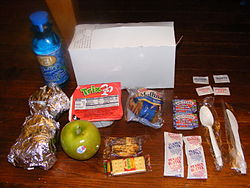
Military jargon consists of technical terms and abbreviations designed for concise, unambiguous communication in operational contexts, whereas slang encompasses informal, often irreverent expressions—including acronyms, nicknames, and euphemisms—that emerge organically among service members to build camaraderie, cope with hardship, and critique inefficiencies.[3] [52] These elements of language evolve rapidly in response to combat experiences, technological changes, and cultural influences, with slang particularly thriving in prolonged conflicts to maintain morale.[53] Historically, military slang traces roots to ancient warfare but proliferated in the 20th century amid industrialized conflicts; World War II GIs popularized backronyms like SNAFU ("Situation Normal: All Fucked Up"), used from 1941 to mock routine disarray, and FUBAR ("Fucked Up Beyond All Recognition"), denoting total operational failure, reflecting widespread frustration with logistics and command structures.[54] [55] Vietnam-era terms like BOHICA ("Bend Over, Here It Comes Again") captured recurring adversities, while post-9/11 operations in Iraq and Afghanistan introduced slang blending pop culture, such as "Haji" for locals (deriving from Arabic hajj pilgrimage) or "kinetic" for active combat, adapting to asymmetric warfare.[53] [56] Slang's functional role lies in its brevity for rapid transmission under duress—e.g., "bird" universally signaling a helicopter—and its psychological utility in diffusing tension through humor or irony, though it can exclude outsiders and perpetuate branch rivalries, as seen in Navy "squids" deriding sailors or Air Force "flyboys" for pilots.[53] [57] Branch-specific variants persist: Army personnel use "FNG" (Fucking New Guy) for rookies, Navy slang includes "skivvies" for underwear, and Marines apply "bag nasty" to distasteful sack lunches comprising cold sandwiches, fruit, and drinks served during field exercises or deployments.[54] [58] Common categories of slang include equipment nicknames (e.g., "Black" for depleted ammo or fuel supplies), personnel descriptors (e.g., "E4 Mafia" for savvy junior enlisted in the Army), and situational critiques (e.g., "Big Voice" for base-wide announcements via loudspeakers).[53] [59] These terms enhance unit cohesion by signaling shared ordeals but risk miscommunication if over-relied upon without doctrinal context, as evidenced in training manuals emphasizing standardization alongside informal usage.[3] Modern digital communication via apps and social media accelerates slang dissemination, with terms like "FAFO" (Fuck Around and Find Out) entering broader lexicon from 2020s military discourse on consequences in engagements.[52]Key Examples and Applications
Communication in Combat
In combat environments, military terminology facilitates rapid, unambiguous exchange of critical information among units, minimizing transmission duration to evade enemy detection and interception while reducing the risk of misinterpretation that could lead to operational failures or casualties. Standardized phraseology, such as procedure words (prowords) and brevity codes, ensures brevity and clarity over radio frequencies, where noise, interference, or stress can distort plain language. For instance, U.S. military doctrine emphasizes that tactical radio operations rely on these terms to maintain circuit discipline and command authority, as prolonged transmissions increase vulnerability to electronic warfare.[60][61] Brevity codes, formalized in documents like NATO's APP-7(E) and U.S. multi-service publications, condense complex tactical data into single words or short phrases; examples include "Tally" for visual acquisition of a target, "Fox One" indicating an infrared-guided missile launch, and "Cease Fire" to halt engagement while tracking ongoing threats. These codes, derived from allied procedural publications and updated periodically—such as the 2025 U.S. Space Force brevity guide—apply primarily to air operations but extend to joint environments, enabling pilots and ground controllers to coordinate strikes without verbose descriptions that could compromise positions.[62][63][64] Empirical evidence from tactical analyses shows that such standardization cuts radio traffic by up to 70% in high-tempo scenarios, preserving bandwidth for essential updates and enhancing situational awareness.[65] Radiotelephone procedures further enforce terminology's role through prowords like "Roger" (message received and understood), "Wilco" (will comply), and "Out" (conversation ended, no reply expected), which structure transmissions to avoid overlap and confirm receipt without redundancy. Allied Communications Publication 125(G), adopted by NATO and U.S. forces, mandates these for single-service or joint operations, prioritizing brevity to counter jamming or direction-finding by adversaries.[66][67] The phonetic alphabet (e.g., "Alpha" for A, "Bravo" for B) complements this by spelling out callsigns or coordinates phonetically, reducing errors in degraded conditions; studies of combat recordings indicate it prevents approximately 20-30% of potential miscommunications in noisy environments.[68] In practice, these terms integrate with encryption and frequency-hopping technologies, but their lexical precision remains foundational, as hardware alone cannot resolve semantic ambiguity—causal chains of failed coordination, such as friendly fire incidents, often trace to imprecise language rather than technical faults. Doctrinal training, per U.S. Army ATP 6-02.53, drills personnel on these protocols to internalize them under duress, yielding measurable efficacy in exercises where coded comms correlate with 15-25% faster response times versus ad-hoc phrasing.[60][69] Non-adherence, conversely, has contributed to historical setbacks, underscoring terminology's role in causal operational success.[70]Training and Doctrine Integration
Standardized military terminology, as defined in official doctrine publications, forms the foundational language for integrating training programs with operational principles, ensuring personnel achieve consistent comprehension and application across units. In the United States Department of Defense (DoD), the DoD Dictionary of Military and Associated Terms serves as the authoritative source, supplementing standard English to promote precise communication and mutual understanding in joint and combined operations.[1] This integration begins with doctrine manuals, such as those from the Joint Chiefs of Staff, which articulate terms derived from policy and strategy, enabling trainers to embed them into curricula for exercises and simulations.[10] The U.S. Army's Training and Doctrine Command (TRADOC) exemplifies this process through regulations like TR 25-36, which governs doctrine publishing to align terminology with training requirements, facilitating adaptive leader development and unit readiness.[71] Field Manual (FM) 7-0, updated in June 2021, outlines training methodologies that incorporate doctrinal terms to build proficiency in full-spectrum operations, emphasizing standards-based instruction where ambiguous language is minimized to prevent errors in high-pressure scenarios.[72] Trainers use these terms in after-action reviews and mission rehearsals, reinforcing causal links between precise vocabulary and effective decision-making, as evidenced by the manual's focus on mission-essential tasks tied to doctrinal definitions.[73] Internationally, NATO's Allied Administrative Publication (AAP)-6, the NATO Glossary of Terms and Definitions (Edition 2020), standardizes terminology for interoperability, with terms approved annually by member states to support multinational training.[74] Under Standardization Agreement (STANAG) 3680, AAP-6 integrates into exercises like those conducted by NATO Response Force units, where doctrinal terms ensure seamless coordination among allies, reducing friction from linguistic variances observed in pre-standardization eras.[8] Empirical outcomes include enhanced operational tempo, as standardized phrases in command-and-control protocols during simulations correlate with fewer misinterpretations, directly attributable to doctrine-driven training regimens.[75] This doctrinal-terminological alignment extends to specialized training, such as joint professional military education, where programs mandate familiarity with glossaries to foster causal realism in scenario-based learning—prioritizing verifiable outcomes over interpretive flexibility. DoD Instruction 5025.12 further prescribes revalidation of terms to maintain relevance, ensuring training evolves with technological and strategic shifts without diluting precision.[76] Overall, such integration mitigates risks inherent in military ambiguity, as historical analyses of command failures underscore terminology's role in averting cascading errors during execution.[77]Controversies and Critiques
Claims of Euphemism and Obfuscation
Critics argue that military terminology systematically employs euphemisms to abstract the visceral realities of violence, thereby reducing psychological barriers to its execution and public acceptance. This obfuscation, they claim, transforms lethal acts into bureaucratic or technical processes, distancing decision-makers and soldiers from moral consequences. For example, "collateral damage" refers to civilian casualties incidental to combat operations, a phrase introduced during the 1991 Gulf War and widely used thereafter to frame unintended deaths as mere byproducts rather than human tragedies.[78] [79] In interrogation contexts, terms like "enhanced interrogation techniques" have been applied to practices such as waterboarding—simulated drowning—and prolonged stress positions, which a 2007 analysis described as deliberate linguistic veils to circumvent prohibitions against torture under international law, including the UN Convention Against Torture ratified by the U.S. in 1994.[80] Proponents of this critique, including linguists studying war rhetoric, assert that such phrasing objectifies victims and normalizes coercion, as evidenced in declassified CIA documents from 2004 detailing over 100 waterboarding sessions on detainees.[81] Operational jargon further exemplifies these claims, with "neutralizing a target" substituting for killing an enemy combatant and "kinetic military action" denoting airstrikes or ground assaults, terms that surged in usage during NATO's 2011 Libya intervention to portray bombings—resulting in an estimated 72 civilian deaths per Human Rights Watch reports—as precise, non-aggressive maneuvers.[82] [79] Analysts contend this abstraction fosters ethical detachment, akin to George Orwell's 1946 critique in "Politics and the English Language," where vague phrasing enables atrocities by evading direct confrontation with their nature.[83] Additional examples include "friendly fire" for fratricidal incidents, which caused 23% of U.S. casualties in the 1991 Gulf War according to Pentagon data, and "surge" for rapid troop deployments, as in Iraq's 2007 escalation involving 30,000 additional soldiers, criticized for masking escalation as temporary adjustment.[82] These practices, per media studies, promote "social double-thinking" by downplaying violence's scale, potentially eroding oversight and prolonging conflicts, as seen in the 20-year Afghanistan engagement ending in 2021.[78] [84] While military defenders maintain such terms ensure clarity in high-stakes environments, detractors from outlets like The Nation highlight their role in sustaining narratives that obscure strategic failures, such as the 2003 Iraq invasion's unsubstantiated weapons claims.[79][85]Propaganda and Psychological Dimensions
Military terminology frequently incorporates euphemisms and specialized phrasing that serve propagandistic purposes by shaping perceptions of violence and operational outcomes, thereby influencing both domestic support and adversary morale. For instance, terms like "collateral damage" for civilian casualties during airstrikes minimize the perceived ethical weight of such incidents, fostering a psychological distance that sustains public approval for military actions.[86] This linguistic strategy, rooted in cognitive framing, has been shown experimentally to reduce moral condemnation of harmful acts compared to direct descriptors like "killing civilians," as participants in controlled studies rated euphemized scenarios as less objectionable.[86] In psychological operations (PSYOP), terminology is deliberately crafted to exploit enemy vulnerabilities, such as disseminating propaganda leaflets or broadcasts using loaded phrases to erode combat effectiveness and induce surrender. U.S. Army doctrine defines PSYOP as planned communications to influence foreign audiences' emotions, motives, and behaviors, often leveraging culturally resonant or fear-inducing terms to amplify doubt and fatigue among opposing forces.[87] Historical applications, including World War II efforts where "psy-war" replaced overt propaganda to demoralize Axis troops through targeted messaging, demonstrate how such language avoids alienating neutral observers while achieving coercive effects without kinetic engagement.[88] Critics argue that internal military jargon, including slang like "blue on blue" for friendly fire incidents, functions as a form of self-propaganda by normalizing errors and trauma, potentially hindering accountability and exacerbating psychological strain on personnel. Research on war reporting indicates these euphemisms objectivize adversaries and warfare methods, promoting a detached worldview that can lead to societal "double-thinking" where violence is intellectually sanitized.[78] While intended to preserve unit cohesion and operational focus, this opacity has drawn scrutiny for masking the human costs, as evidenced by analyses of post-combat veteran distress linked to euphemism-driven emotional suppression.[89] Externally, the export of military terminology via media amplifies propaganda reach, with acronyms and jargon embedding narratives of technological superiority—such as "precision-guided munitions"—to project inevitability and deter resistance. This mirrors broader psychological warfare tactics outlined by RAND, where language manipulates attitudes to align with strategic objectives, though empirical scrutiny reveals variable efficacy dependent on audience predispositions.[90] Institutional analyses, including U.S. Department of Defense reviews, distinguish PSYOP from domestic information operations precisely to navigate legal and perceptual boundaries, underscoring terminology's role in delineating permissible influence.[91]Empirical Defenses and Evidence of Efficacy
Specialized military terminology, including doctrinal terms, acronyms, and brevity codes, facilitates precise and concise communication in high-pressure operational environments, thereby minimizing misunderstandings that could compromise mission success. A study analyzing Navy messages found that the use of terms with specific meanings is essential for accurate transmission and brevity, enabling operators to convey complex information efficiently without ambiguity.[92] Similarly, research on military abbreviations demonstrates their role in reducing communication duration, curtailing errors, and accelerating decision-making processes during training and combat.[93] These attributes enhance situational awareness and interoperability among units, as evidenced by personnel interviews confirming streamlined interactions and fewer procedural lapses.[93] The NATO phonetic alphabet exemplifies empirical validation through its development to address radio transmission errors, where ambiguous letter pronunciation historically led to miscommunications; post-adoption in 1956, it standardized spelling protocols, demonstrably improving clarity in noisy or multilingual settings.[94] Brevity codes, designed solely for message shortening rather than concealment, further underscore efficacy by compressing tactical instructions—such as air-to-surface directives—into single words, which doctrinal analyses link to faster response times and reduced cognitive load on operators.[95] In multinational contexts, unified terminology in NATO strategic communications has been shown to boost planning efficiency and execution coherence across agencies.[96] Empirical assessments of military English training programs, incorporating specialized terminology, report consistent gains in participants' proficiency, communication accuracy, and operational readiness, with scoping reviews of over 30 years of research indicating positive impacts on skills transfer to real-world scenarios.[97] Quantitative insights from operational studies attribute enhanced team performance to jargon standardization, including reduced error rates in joint exercises and improved doctrinal adherence, as precise terms align actions with intent without requiring lengthy explanations.[93] These findings counter critiques of obfuscation by highlighting causal links between terminological rigor and tangible outcomes, such as fewer friendly fire incidents attributable to verbal miscues in historical analyses.[13]References
- https://en.wiktionary.org/wiki/Appendix:Glossary_of_military_slang